The talk of the town this week, of course, is the mayhem that occurred on the Plaza Saturday night, when several hundred young people rampaged from one part of Kansas City’s “crown jewel” to the next.
Fortunately, only one person was seriously injured — a teenage boy who apparently was thumped on the head with a pipe in the Winstead’s parking lot. A Grandview couple, in their 20s, was robbed, and a group of about 15 young men kicked and punched the man until the woman threw herself on him to protect him.
OK, Kansas City, we’ve got a problem, that much is clear.
So, how has The Star — the best equipped, most authoritative news-gathering organization — covered this so far? My grade on the coverage, through today, is a “B.” The paper started out slowly, but it caught up Tuesday and today, in a big way, with excellent front-page stories. Perhaps criticism from some local bloggers (this is the first time I’ve weighed in) may have contributed to the upswing in coverage, but, whatever the reason, the paper picked up the tempo.
Reasons for caution
Before we look at the specifics of the coverage, here’s some context.
First, consider the stakes. As a friend of mine said in an e-mail, the economic health of the Plaza is on the line: “As beautiful and historic as the Plaza is, when the money stops flowing in from shoppers and other money spenders, it’s over. If you spook the cupcake eaters from the carriage trade, and put fear into the mix, you can turn off the lights.”
In fact, the carriage ride shut down early last Saturday night.
The Star folks are well aware of the stakes, of course, and, consequently, they know it’s a huge story. For The Star, however, this story is in some ways a nightmare. That’s because it turns on two elements that have long flummoxed the paper — the sensitive matter of race and the marketing muscle of the Plaza.
The young people who have been running amok on the Plaza are black. Until today, you wouldn’t know what race the kids were from reading The Star, and, to some extent, the race of the troublemakers isn’t important. Nevertheless, it’s an underlying issue that The Star has to deal with.
Threatened boycott
The Star has squirmed in the face of racially based stories carrying negative implications for more than 20 years. The seminal event in paper’s cautious approach to racial matters occurred more than 20 years ago when a group of black ministers — a powerful lobbying group on behalf of African-American interests in Kansas City — protested coverage of one thing or another by coming onto Star property with signs calling for a boycott of the paper. The ministers paraded around the fountain, on Star property, just outside the front doors at 18th and Grand. The Star could have called police and had the ministers removed to the sidewalk. But, as I recall, The Star, not wanting to inflame the situation, let the demonstration wind down to a natural, peaceful conclusion. I believe that the editor at the time, the late Joe McGuff, invited at least some of the ministers inside to talk things over. Ever since then, The Star has tread ever so lightly when it comes to stories turning on racial matters.
Regarding the Plaza — Kansas City’s sine qua non of tourist attractions –the owners, Highwoods Properties now and the J.C. Nichols Co. before that, have long fought to minimize bad publicity. I remember that years ago, when we would write about crimes occurring “near the Plaza,” Plaza officials would hammer at the door, demanding that we run the address or intersection and leave the Plaza’s name out of it.
The editors would not acknowledge it, but the Plaza is one several “sacred cows” — institutions that the paper handles delicately. The Nelson Art Gallery is another example. While the Nelson and the Plaza don’t get a pass on negative coverage, the editors certainly proceed carefully on stories that smack of negativity.
Weekend coverage
That brings us to late Saturday night. The Star sent Tony Rizzo, a very capable police and courts reporter, to the scene. Working on a very tight deadline, Rizzo filed an adequate story — covering the main points, including the boy’s serious head injury — which the editors put on page B-2 Sunday morning. My only beef with the story is its placement: It should have been on the section front. But that, in my opinion, is where considerations of race and the iconic nature of the Plaza prompted editors to err on the side of caution. It’s a fact of life in the newspaper business that it’s easier to defend down-page or off-front placement of controversial stories than it is to defend against charges of inflammatory or unfair journalism.
Strangely, The Star carried no follow-up story on Monday, at least that I could find. In my opinion, the paper should have run a short story, at the very least, elaborating on the incident outside Winstead’s. Why didn’t The Star do anything for Monday’s paper? I put that question — and several others — to Managing Editor Steve Shirk in an e-mail Monday afternoon, but I didn’t hear back. So, I’m left to speculate. Again, I think caution — let the matter settle down a bit — was a factor. Also, to mount a major Monday follow-up would have meant calling in several reporters and editors on Sunday, and, frankly, The Star doesn’t do that very often.
I didn’t look at The Star’s Web site on Sunday, but I understand a follow-up story was there. The paper did have a substantive Web follow-up Monday, and that story, also by Vendel, was the foundation for Tuesday’s big throw on A-1.
Rising to the occasion
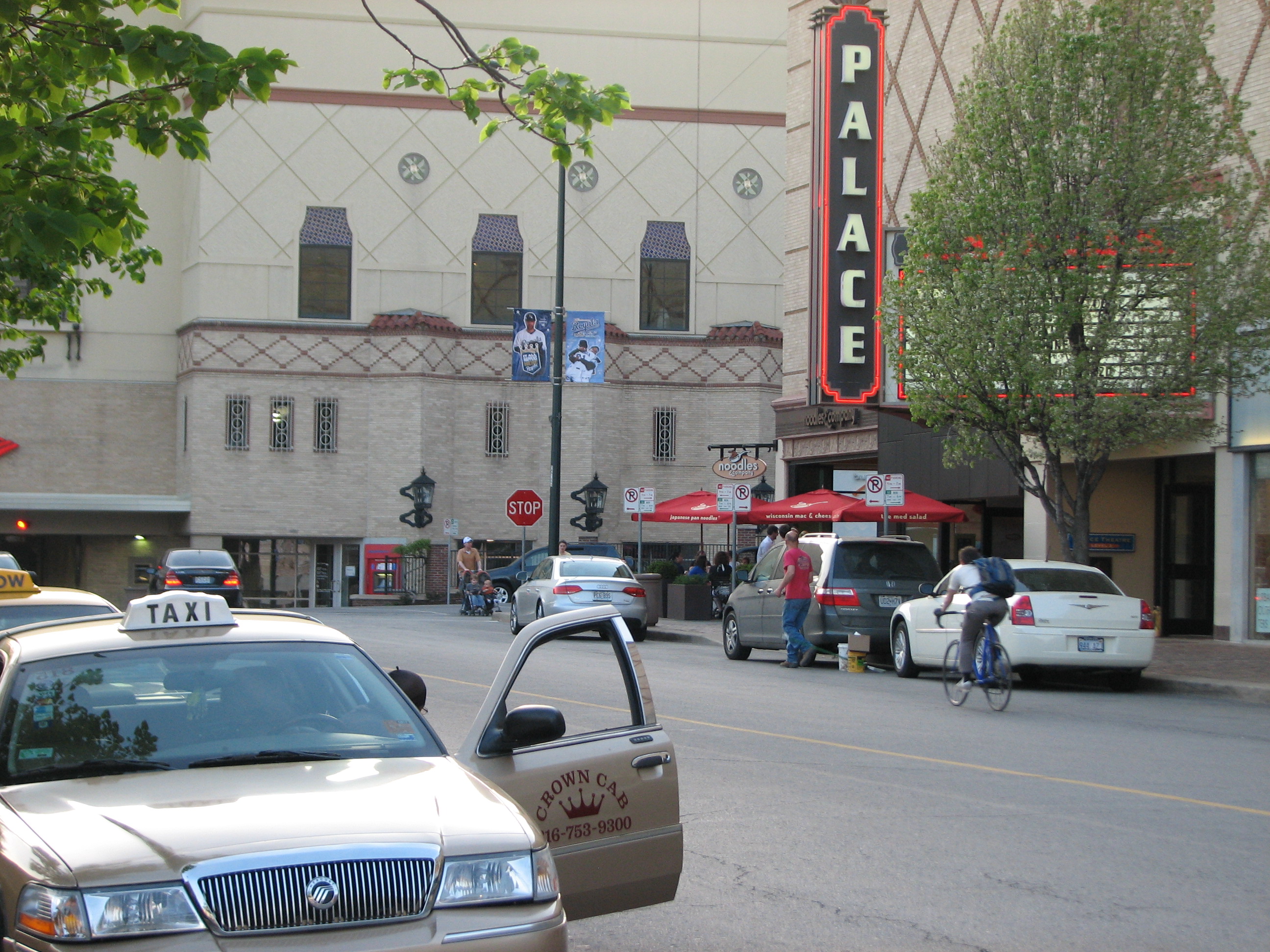
Tuesday evening on the Plaza
I’ve got to tell you I breathed a sigh of relief when I opened Tuesday’s paper and saw that Tuesday’s story led the front page — one and a half columns wide, upper-right placement. To its credit, The Star had kicked into high gear. Including a sidebar (a short story about teens communicating through social media), the story consumed more than 50 column inches. The account was chock full of details, such as the fact that youths “maliciously pushed a high school student wearing her prom dress into a restaurant patio fountain.” Among other things, it talked about the Police Department’s plans to counteract the problem, including using horse-mounted officers, and it informed readers about a change in admission policy at Cinemark The Palace theaters that probably is contributing to the problem.
Today’s story addresses the racial dimension head-on and reports that city, police, the NAACP and representatives of various community groups will be meeting Monday to try to provide more constructive activities for kids.
All in all, I believe the paper has risen above the twin towers of race and sacred cow, and readers now are getting all the information they need and deserve on this very important and super-sensitive story.
 JimmyCsays: At the juncture of journalism and daily life in KC
Jim,
Excellent points, all. As the Star continues to lose readers, they have to consider that the reading public within the city limits is becoming more attuned to minority issues. How do you cover the story, without leaving management open to charges of racial bias or racial profiling. I certainly don’t envy management right now.
And, if you let your mind wander, the only item more sacred than the Plaza is the Power and Light District. What happens if the chaos spreads???
The Star is really taking the story in a good direction the last couple of days, Willie, that, is emphasizing constructive change — how to fix the problem. That seems to be the goal of all officials with a stake in the issue. The paper always likes to “advance” a story — move the focus from the past to the future. I think the editors have very smartly, and really rather quickly, switched from defense to offense. Jim