In two recent New York Times columns, Arthur Brisbane, whose journalistic ribs were tempered in Kansas City, has some good advice for news outlets that are hell bent on being first with The Big Story.
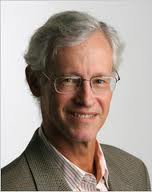
Brisbane
Brisbane, who served two stints at The Kansas City Star — one as a columnist and later as editor and then publisher — is now The Times’ “public editor.” In that capacity, one of his duties is to comment when he thinks The Times excels and when he thinks it falls short.
In Op-Ed columns on Jan. 16 and last Sunday, Jan. 30, Brisbane put the magnifying glass to The Times’ coverage of the Tucson shootings that left six people dead and several others, including U.S. Rep. Gabrielle Giffords, seriously injured. His conclusion, essentially, was that The Times should have been content to provide the most authoritative coverage of the tragedy instead of trying also to be among the first outlets to report breaking developments.
What fed Brisbane’s reflection was a major reporting snafu the day of the shootings.
For about 10 minutes that day, Jan. 8, The Times reported in its online story that Giffords was dead. In going with that, The Times was relying on reports from NPR and CNN, not its own reporters, who were not yet on the scene.
Brisbane described how the ignominious error occurred:
“It was hectic in the newsroom with many news reports flowing in as Kathleen McElroy, the day Web news editor, was trying to decide whether The Times was ready to report Giffords’ death. She decided against it and was telling Web producers to hold off reporting it in a news alert when J. David Goodman, who was writing the story, told her he had a few changes he wanted to make.
“Ms. McElroy said, ‘I should have looked at every change,’ but she thought Mr. Goodman was referring to small stuff. Mr. Goodman…erred by reporting Representative Giffords’ death in the lead as though The Times itself were standing behind the information. In any event, Ms. McElroy had said O.K. without seeing that change, so Mr. Goodman pushed the button.”
Now, let me interject here that for Goodman to tell his editor he had “a few changes to make,” without telling her that one of the changes was that Giffords was reportedly dead (if, in fact, that’s what Goodman told McElroy) is unbelievable. If I had been writing that story and heard or read a report that Giffords had died, I would have been yelling so loud that passersby on the street outside would have heard me.
At any rate, the result for The Times, Brisbane said, was a news story “with changes that were not edited.”
Which is also inexcusable.
Philip B. Corbett, The Times’ “standards editor” (he’s in charge of corrections, among other things), told Brisbane, “Everything should go through an editor. Ideally, it should go through two editors.”
In the rush these days to get the story “up” as soon as possible, however, the copy-review process — even at a great paper like The Times — sometimes gets truncated. (And haven’t we all experienced, perhaps only on the basis of e-mails, how easy it is to “push the button” before we’ve thought everything through and are sure that our electronic message will come across as we intended it?)
Just as the pitfalls of casual correspondence have gotten deeper for everyone, for journalists the rush to be first has made the reporting and publishing process significantly more problematic.
As Brisbane said in concluding his Jan. 16 column: “Whether covering the basic facts of a breaking story or identifying more complex themes, the takeaway is that time is often the enemy. Sometimes the best weapon against it is to ignore it, and use a moment to consider the alternatives.”
The italics are mine because I think what Brisbane said is so important for today’s journalists.
On Sunday, Brisbane returned to the same theme in a column titled “Speed and Credibility.”
Noting the incredible volume of digital news, Brisbane said that news organizations, like The Times, that built their reputations on being authoritative are now being forced to reconsider how much of their reputations they should lay on the line in the name of being first with the news.
For Brisbane, the call isn’t too difficult.
“Put me down as a skeptic,” he wrote. “It’s understandable, given the gung-ho mentality that journalists adopt, to want to blow right by the choice (between what is known and what is uncertain) — to try to be both first and most credible. But for The Times, which arguably brings the top-rated brand for authoritativeness to this battlefront, the approach is fraught with danger.”
Everyone he talked to, he concluded, agreed that it was “always better to be second and right than first and wrong.”
Now there are words that should be displayed above the doors of every newsroom in the country.
 JimmyCsays: At the juncture of journalism and daily life in KC
The Goodman/McElroy fandango rings true; we would have not heard this level of detail otherwise.
And even though this is the Times, as you mentioned it’s unbelievable for Goodman to have done that (to both his editor and the paper at large). To my mind it means he intentionally led with Gifford’s presumptive death against McElroy’s instructions/advice, surely a firing offense?
Jimmy,
Credibility is a newspaper’s only remaining attraction, isn’t it? We can get wrong news anywhere.
You’ve asked in past posts what will keep newspapers from folding. Nothing will, if what we read in the paper isn’t, at bare minimum, accurate.
That the NY Times — the Times! — stampeded off with the bellowing herd almost makes me weep. Or laugh. I’ll laugh.
Point me now — who’s left to trust?
Laura
Laura and Nick — Even the best make mistakes. I’m willing to give the paper, as a whole, some slack on this. They’ll learn from it. It was an extraordinary situation, with a member of Congress being the main target of a mass shooting, and it had to be wild in that newsroom. Maybe not wild as in reporters running around hysterically, but at least nervous as hell and trying to maintain their composure.
In fact, I’d bet that the attempt to keep a cool veneer was at the root of the Goodman-McElroy miscommunication. He was probably trying to be “professional” and stay calm under pressure, and, as a result, said less than he should have. I was always the “Holy shit!” type of reporter, and it would have behooved Goodman and his paper if he’d let a notch or two out of his belt that day.
And, yes, Nick, I wouldn’t be looking for Goodman’s name on the promotion list. Maybe he’d be better off in insurance sales, where he could quietly crunch the numbers in a corner office and then send the prospective client a proposal.
Jim
And what was The Times excuse for transforming a lunatic who laughed at a fellow student who had an abortion into a pro-life terrorist? Was that a function of its rush to judgment, or just another of the multitude of “journalists” who attempted to use this tragedy to promote a political agenda.
Kudos locally should go to Mary Sanchez for focusing in on the real issue with the shooter, his mental illness, in a wonderfully written column and Lee Judge who did not throw his first amendment rights to a rigorous, even vicious, discussion out the window. His cartoons, disagree with them though I may, were hard hitting and never let up. Why on earth would we alter the nature of our political discourse based on the conduct of one demented lunatic?
By the same token, brickbats go to Dave Helling for his pathetic slam at local talk show host Darla Jaye. Not only did lefty Helling try to make the issue look like the tragedy was a function of conservative talk shows long after we knew better, he even managed to screw up Jaye’s quotes despite the fact they were emailed to him. Apparently, the cut and paste function was laid off at the same time the copy editors at The Star were fired. His drivel was exactly why many of us have come to hate the very newspapers this society depends on to protect and preserve our democracy.
Bottom line is that the establishment media looked like fools through out this horrendous tragedy and only through the digging of many bloggers across the country did we start to find out many of the real background that exposed their political agenda. My favorite were those that poked huge holes in the idiocy that somehow Sarah Palin’s map, and isn’t she to blame for all of society’s problems, was somehow the culprit behind the shooting. That pattern of abuse, even more than making an error in the rush for a scoop, is what is killing professional American journalism.
Davy Crockett was quoted as saying, “Be sure you’re right, and then go ahead.”
Apparently The Times’ editors never wore coonskin caps. Might be a good idea.
Quit whining. Jeeze, things move fast now; we could be looking at this http://www.chicagotribune.com/news/politics/chi-chicagodays-deweydefeats-story,0,6484067.story