The red-light-camera controversy, which ignited on Tuesday when The Star published a front-page story under the headline “Red-light cameras don’t add to safety,” is very weird.
Almost inexplicably weird.
Almost, I said, and that’s why I suggest you read on.
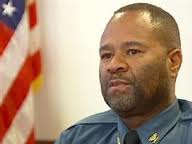
Darryl Forte
It appears to me, based largely on Wednesday’s follow-up article, which exposed some glaring mistakes in the study, that Police Chief Darryl Forte has taken his first belly flop into the mud since taking office last year.
I also believe that the Police Department came out with this badly flawed study because it was eager to make the traffic-camera program — which City Hall, not the Police Department, initiated two years ago — look like a big money grab by the city.
The real damage, unfortunately, was done by The Star’s first story, the one on Tuesday, which blared the tainted results of the Police Department study. That story was not only on the front page, it was the A1 “centerpiece,” accompanied by an image of a big traffic signal, with statistics printed inside the red, yellow and green lights.
The corrections — “additional data,” as the police called it — came out in a Star story on Wednesday. The problem is that the follow-up article was “buried” on page A4, where it probably was seen by a third or less of the number of people who saw Tuesday’s front-page story.
In my opinion, KC Star editors should have put the follow-up story on the front page, too. It wouldn’t have had to be a centerpiece story, exactly matching the proportions of the first story, but the errors and omissions in the first article were so significant that the “fix” should at least have made the front page.
But the biggest transgressor here is not The Star; I don’t think the editors understood the significance of the screw-ups and what was behind the curious release of a police study bashing the traffic-camera program.
No, the biggest crook here is the Police Department, which conducted and released the study.
That’s where Forte comes into the picture. He wasn’t quoted or mentioned in either article, but certainly he reviewed the study and signed off on it before it was released.
Let’s take a step back now and look at two of the biggest problems with the study:
First: The initial version did not include the fact that “wrecks caused by red-light runners at the 17 intersections (where cameras are located) dropped from 52 wrecks before the cameras’ arrival to 24 wrecks in the second year after their arrival.”
That’s from the second-day story.
The gist of the first-day story was that the total number of wrecks at the 17 intersections increased after the cameras were installed. But that seemingly damning statistic took into account all wrecks — not just those resulting from red-light running. Many wrecks were rear-end jobs and or from right turns on red. Those types of wrecks result in far fewer serious injuries than the T-bone crashes caused by red-light runners.
The big problem at the camera-monitored intersections — and the main safety reason for installing the cameras — was to reduce red-light running and, consequently, the incidence of wrecks resulting from red-light running.
Holy crap! If the number of wrecks caused by red-light runners went down by more than half (which it apparently did), that alone justifies the installation of the cameras, in my opinion. Red-light runners are some of the most dangerous sons-of-bitches on the road, except for the criminals trying to elude police — and they’re running red lights, of course.
Second: The police study reported that officers had written about 200,000 camera-related tickets since January 2009. “At $100 a ticket,” The Star’s first story said, “these fines could bring in $20 million.” But officials with a private company that has a contract with the city to run the program, told the Board of Police Commissioners on Tuesday that police had issued about 150,000 tickets, which, at an average fine of $100, would have generated about$15 million.
Indeed, the program has proved to be a cash cow for the city, but apparently 25 percent less so than the police department portrayed it.
…And that brings us to this: Why would the Police Department want to trumpet the fact that the program is a cash cow for the city? And why would the department be so careless with numbers that portray the windfall as much bigger than it actually is?
My theory is that it stems from the ongoing bitterness between City Hall — which pays for the Police Department but has little say in its operations — and the Police Department, which thumbs its nose at the city and is run by a board of commissioners appointed by the governor.
For decades , the city has wanted to wrest control of the department from the state (a situation that goes back to the Pendergast days) so that it can hold the department’s feet to the fire on expenditures, priorities and policies.
Currently, City Hall and the Police Department are tangling over the issue of whether the PD should join the city’s health insurance plan, which would save the city, i.e., taxpayers, big bucks.
In an opinion piece last week, The Star’s Yael T. Abouhalkah wrote: “This has been discussed for years at City Hall, yet the goal of saving money for taxpayers has never gained traction with police officers who consider themselves special and want to keep their own insurance plan.”
The police, of course, want to keep things just as they are — less interference from that nettlesome city, don’t you know — and the chances of the Missouri General Assembly relinquishing state control of such a large and important function are probably about zero. I can’t foresee any circumstances under which the state would hand over the reins to KCMO.
So, here’s the scenario that is running through my head…
The traffic commander, whoever he is, brings the study to Chief Forte, and says, “Lookie here, chief, this traffic camera enforcement turns not to be all it was cracked up to be…wrecks everywhere and the money is pouring into City Hall.”
(Remember, as noted above, the private company that runs the program has a contract with the city, not the Police Department.)
And Forte replies, “Well, well, well, let’s put this report out as soon as possible; we’ll show Kansas Citians that our friends across the street are motivated only by the money they take in.”
Maybe I’m wrong, I don’t know. Maybe the chief just didn’t ask enough questions of the traffic commander and wanted to go along with division leaders who had put a lot of time and effort into the study.
All I know is that it does make sense if mutual mistrust and teeth gnashing is at the root of it. The two things that the cops look for in trying to solve murders are what? Motive and opportunity.
They had both in “The Case of the Flawed Study.”
Get Sherlock Holmes in here.
 JimmyCsays: At the juncture of journalism and daily life in KC
I read the whole article waiting to be informed about prostitutes moving into your “ole neck of the woods.”
Well, I guess the power of the headline is just as important as ever.
Forget Sherlock Holmes. We need John Holmes because we’re all getting screwed.
Aside from the obvious, the ineptitude and animosity between the PD and City Hall probably costs us thousands of dollars a day. I do find it odd that the state still controls the PD but given the leadership we’ve had a City Hall over the past couple of decades I can understand why the state retains control.
I agree that the Star should have featured the second article on page one. I’m sure most people did catch the corrections. One thing that should be taken into account are the “rear enders” that occur at these intersections as a result of people slamming on their brakes to avoid getting caught in the red light. I’ve witnessed that type of accident at least twice at 71 highway and Gregory.
Great “lead,” Smartman.
Smart analysis and probably mostly correct: “Follow the money” is always sage advice.
If the cash was flowing directly to the KCPD, as you intimated, the study would have never seen the light of day.
That said, it’s worth noting that other, larger cities have dumped the program for the exact same reasons – I posted a recent item on LA doing so just last summer…
One thing red light camera programs ARE good for is readership; I posted a small guide to fighting these tickets just over 3 years ago and still receive daily email daily from folks who either found it helpful or just now have read the information and plan on using it…long tail indeed.
Nick: I was thinking the same thing…the subject might get a lot of readership because there are strong feelings on both sides. I’m all for the cameras, as you probably can tell. But that’s from a driver who’s wife is constantly urging him to press the pedal firmly enough to get up to the speed limit.
heh
i’ve the exact opposite issue with my better half, Jimmy…
I’d like to meet you, Nick, but I hope it’s not at a camera crossing.
Now now; don’t get all Art Brisbaney on me – I just inferred I drove rapidly, not that I ran red lights…
; ‘ )
No reflection intended on the quality of your driving, Nick. Just a smart-ass comment.
Is anyone surprised that the city wants more time to “study the issues”? There’s no way, NO WAY, the city will allow a $15 million (or $20 million) revenue stream to just disappear.
The city could have (more honestly) said: “We want time for people to forget this study, so we can keep mailing tickets to everyone….
Hey Jimmy Testudinidae,
We certainly would not need “time lapsed” photography to catch you passing thru an intersection – driving or walking!
;=)
Good one, Donovan; I had to look it up.
we had a circuit judge here in st. louis refuse to pay the $100.00 red light ticket because he declared that they could not prove their case that it was him driving the car. he went to muni court and all the traffic court judges disqualified themselves because they knew him. most people here just blow off the tickets because they can’t enforce them, they get sent to a collection company who gets a percentage of the cut. the only thing the lights have done here is cause drivers to stop at a yellow light because they don’t want to get caught in the intersection when the camera goes off, the yellow light means “gun it”…
While back down here in Joplin for a couple of days, I’ll have to check and see if there are any red light cameras left, assuming they had some going into May 22. Anyway, being the type who prefers to look at the underlying problems and not so much the symptoms, the entire red light controversy simply shines the spotlight on stoplights when we perhaps should be pausing long enough to at least ask this question: What does it say about us as a society when we have more and more people who are in more and more of a hurry to get somewhere? But I digress. Getting back to your original statement, Jim, I’m in agreement with you – The Star probably should’ve run the follow-up story on Page One and not inside.