Feeds:
Posts
Comments

Archive for April, 2015

I didn’t expect to be going to the Royals’ home opener today. My daughter Brooks and I wanted to go badly, and I put in for the ticket lottery a few months ago.

But a few weeks later I got an e-mail from the Royals saying my name was not among those who had won the privilege of buying tickets.

That was that, I thought. But then, unbeknownst to me and Brooks, my wife Patty went into action. Both my birthday and Brooks’ are in March, and on Brooks’ birthday, Patty gave us each a water container with Royals’ logos. That wasn’t all, though. Inside each container was a ticket to opening game. Patty had gone to one of the online ticket-selling sites and paid who knows how much for good seats for me and Brooks.

Of course, we were thrilled and had been looking forward to this day for a long time. As it turned out, the occasion more than met our lofty expectations.

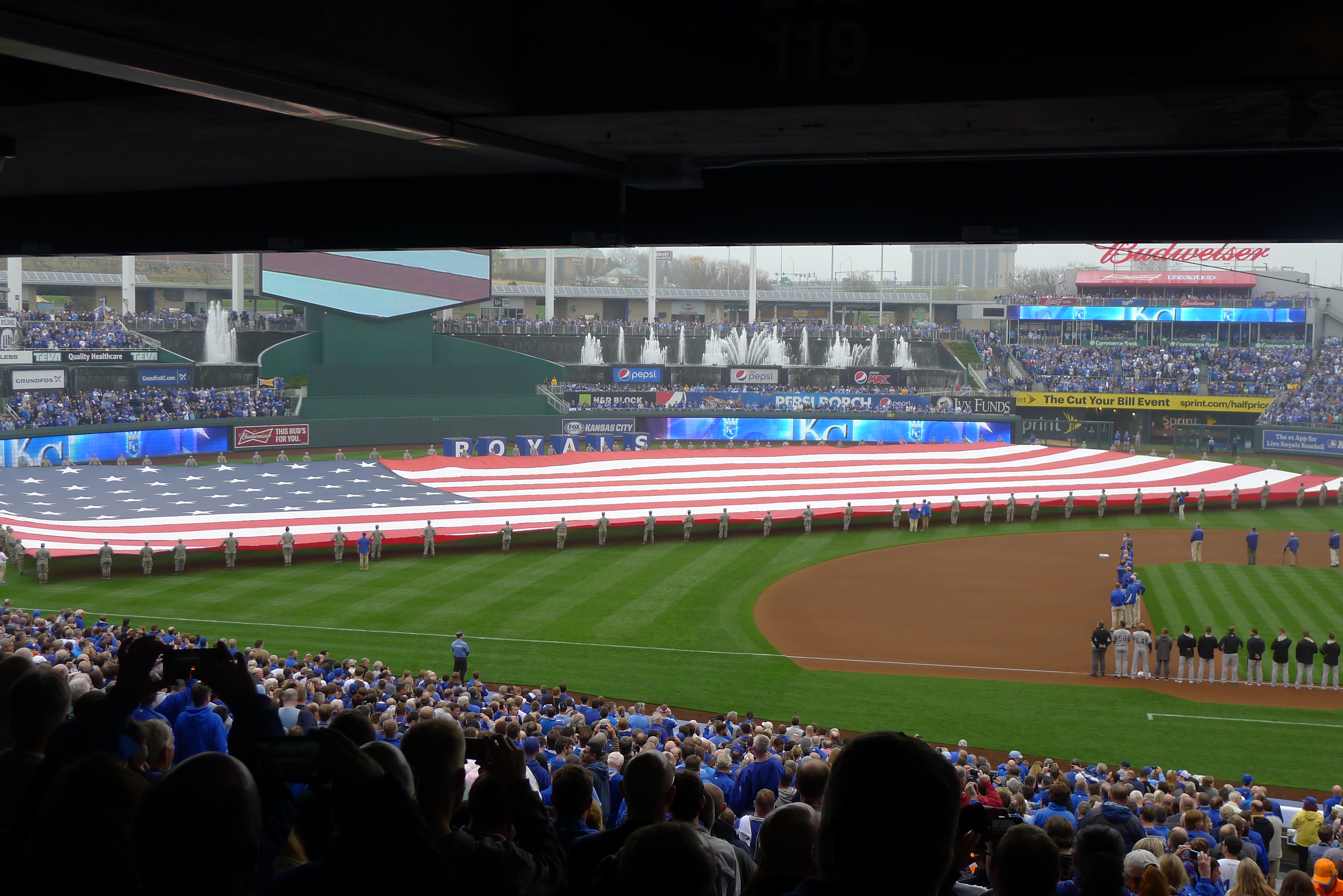
Despite a long wait to park and a light mist falling through the first seven innings, the occasion was one to savor and remember. We missed much of the pre-game festivities, but we were there in time for the Kansas City Symphony’s performance of the National Anthem, and we took our seats moments before the first pitch.

As you know by now, the Royals beat the White Sox 10-1, winning their season opener for the first time in seven years. Their previous opening-day victory was March 31, 2008, at Detroit. It had been a long opening-day drought, but I think almost everyone in the stadium today fully expected the Royals to win.

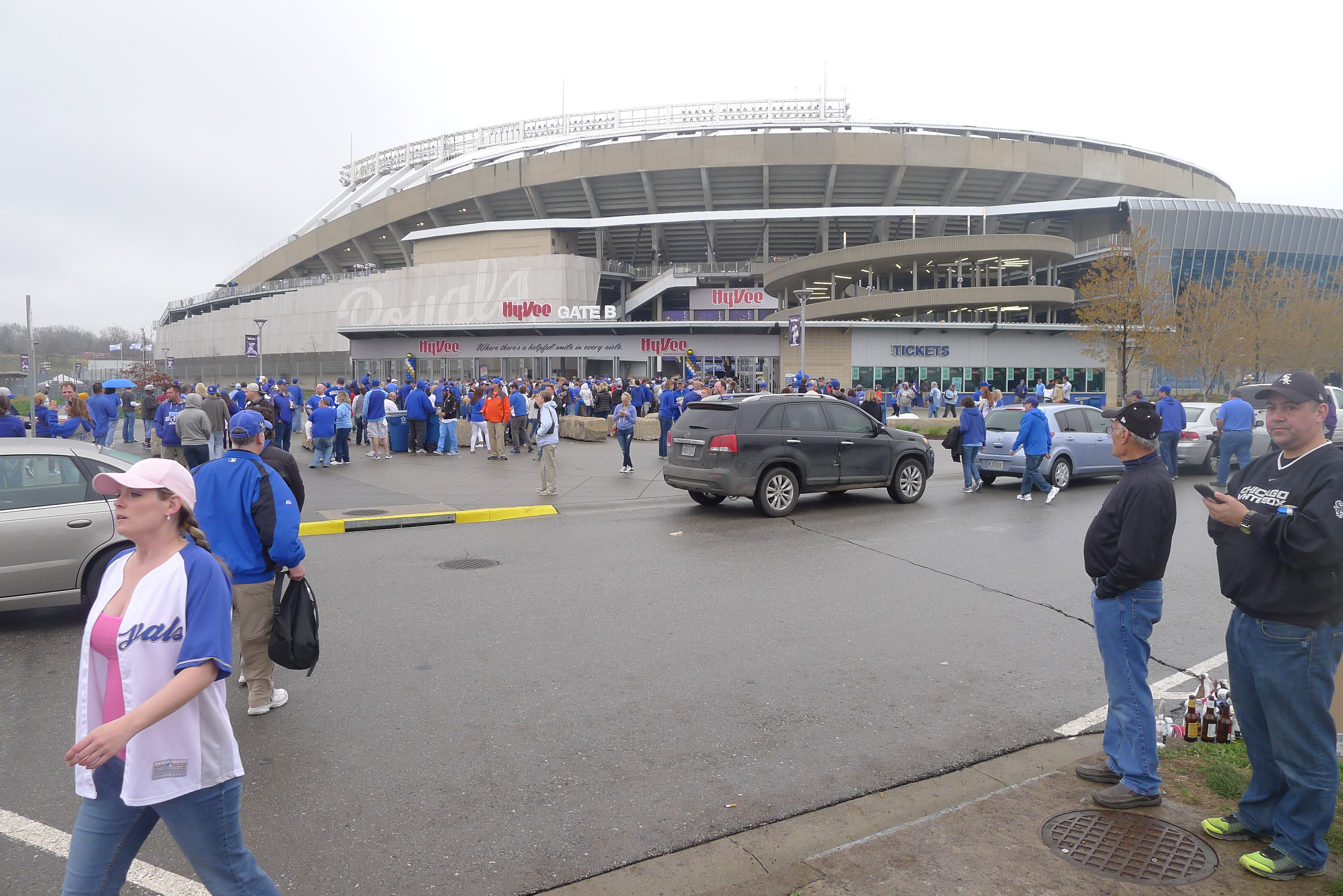
Naturally, I took my camera so I could document the occasion. Here’s what it looked like at “The K.”

P1040698

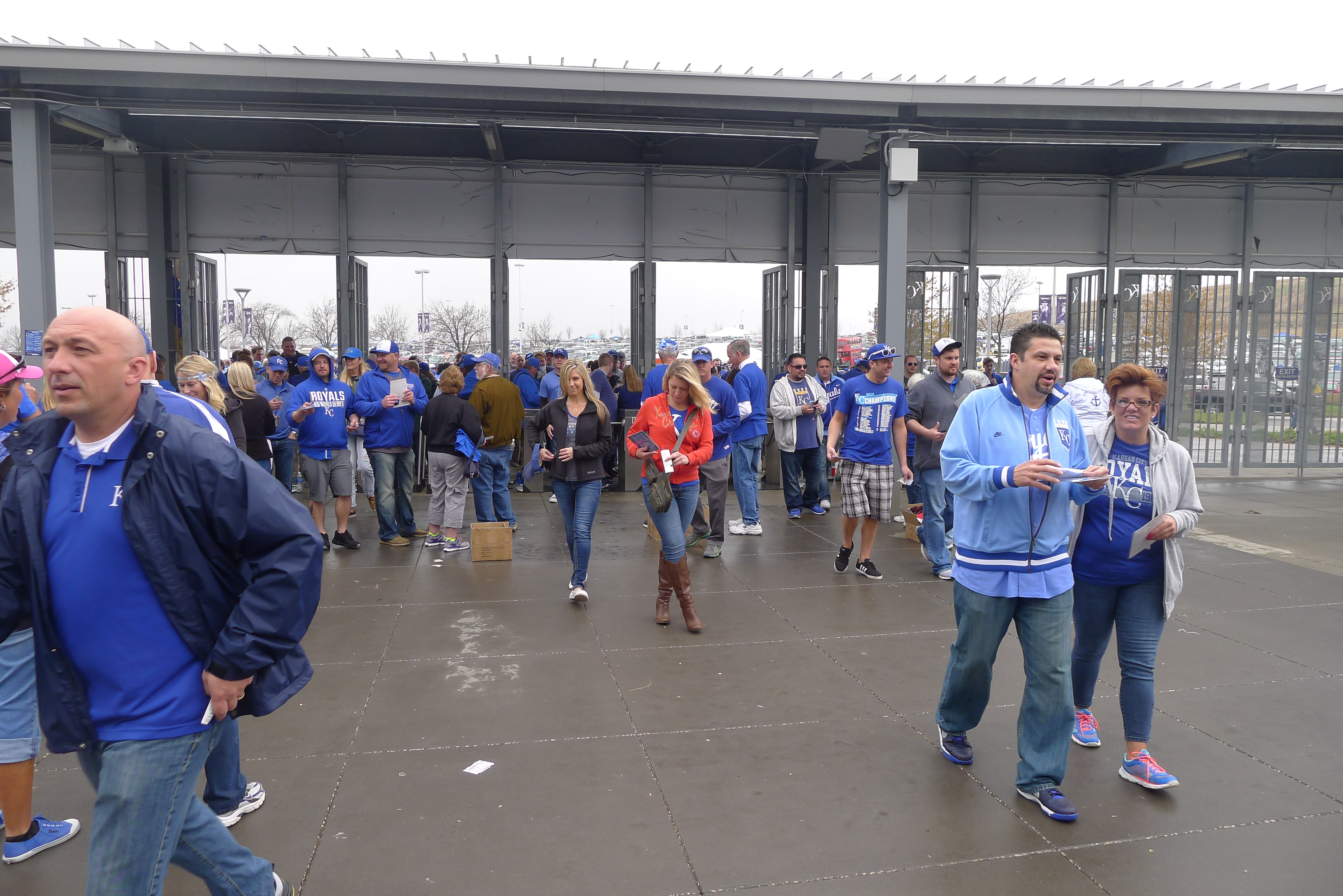
The scene outside, before the game.

P1040700

A few people got an early start.


P1040701

Gotta get in there for the first pitch!


P1040702

P1040705

P1040709

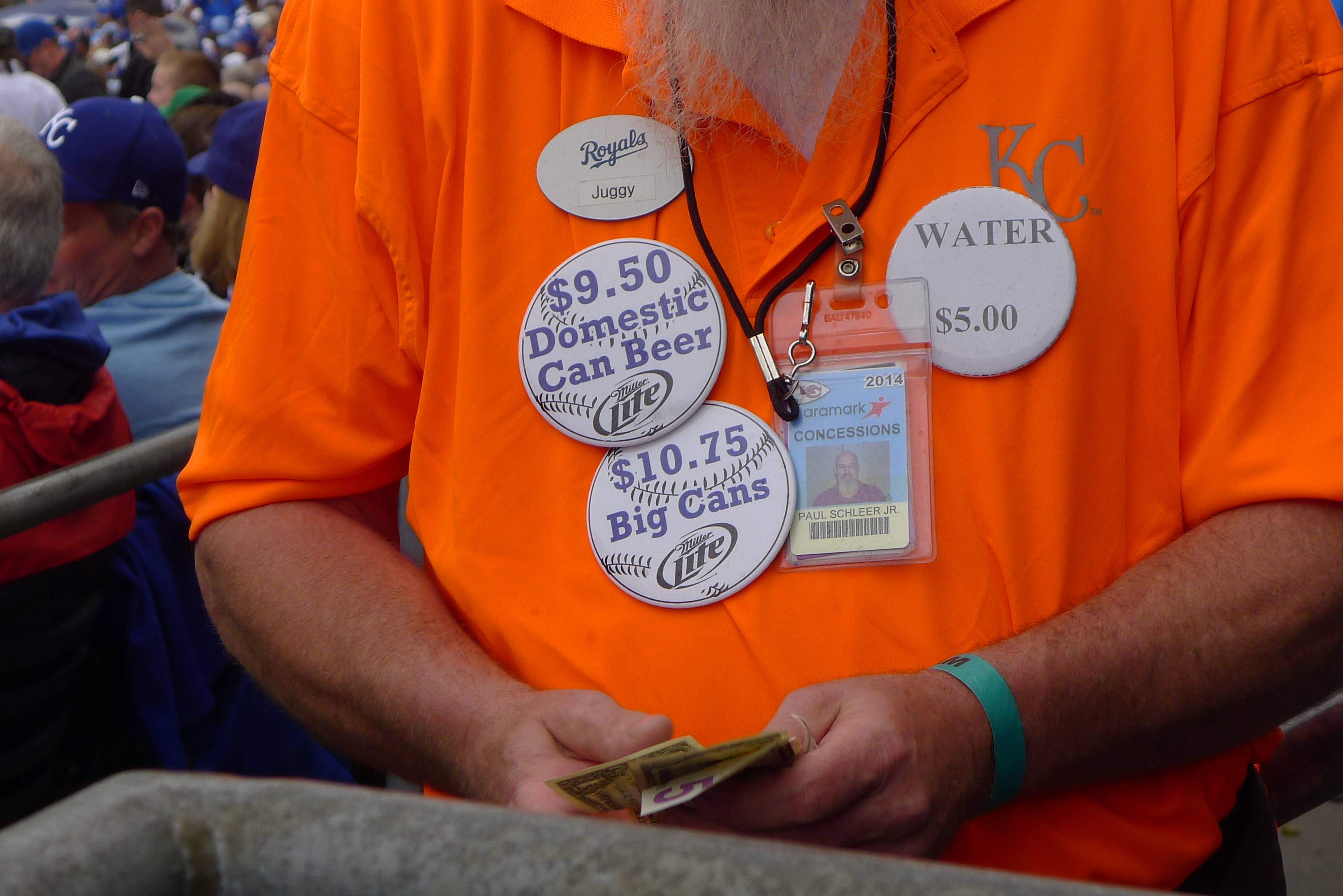
Some great bargains on beverages.


P1040714

Alex warms up before the start of an inning.


P1040716

The view from Row AA of Section 211, where we were fortunate enough to sit.


P1040719

Ruby, ruby, ruby!


P1040725

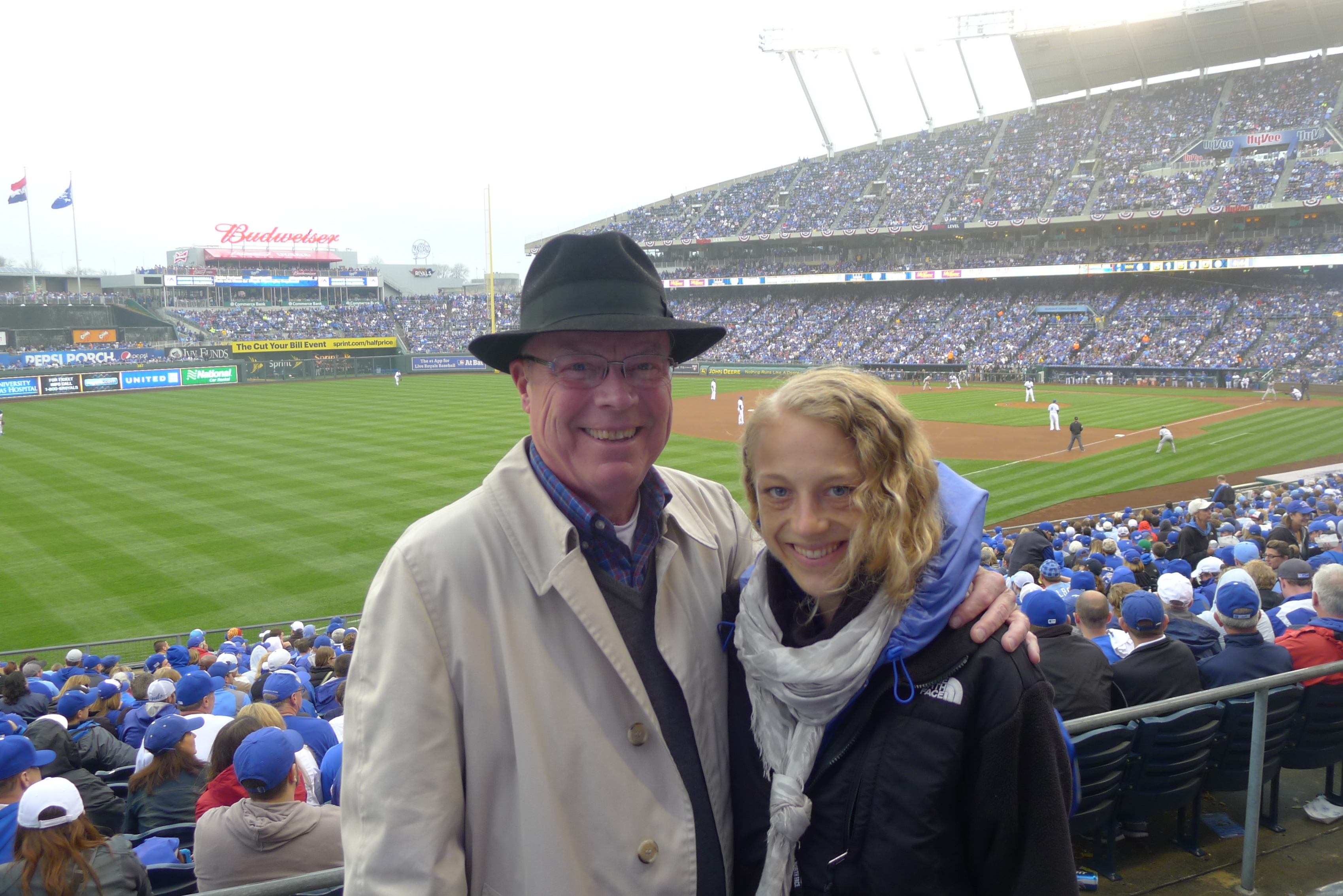
Brooks and the blogger.


P1040728

Lookin’ good from top to bottom.


P1040733

“KC” (lower left) hangs the “W,” below the 1985 World Championship flag (right), the 1980 American League Championship flag (left), and the 2014 league championship flag, which was raised before the game.


Read Full Post »

You could see this coming four months ago: The Rolling Stone story’s about “Jackie,” the otherwise anonymous University of Virginia student who claimed to have been gang raped at a fraternity party has officially and completely blown up in the magazine’s face.

Rolling Stone today retracted the story and published on its website a 13,000-word report written by three people with the Columbia Graduate School of Journalism. Rolling Stone asked the journalism school to investigate the story last December, after other publications, including the Washington Post, raised significant questions about its credibility.

The journalism school’s report said the magazine failed to engage in “basic, even routine journalistic practice” to verify details of the alleged assault, which supposedly occurred at the Phi Kappa Psi fraternity house on Sept. 28, 2012.

The Rolling Stone writer, Sabrina Rubin Erdely. relied almost exclusively on Jackie’s account and made only token attempts to verify it.

sabrina_bio

Sabrina Rubin Erdely

In abandoning basic journalistic methods, Erdely not only anonymously quoted three of Jackie’s former friends who supposedly knew about the assault but also used quotes, supposedly from the friends, that Jackie provided. Erdely didn’t get the quotes herself; she let Jackie put words in their mouths and published those words!

Jackie refused to give Erdely the full names of the three friends, and Erdely did not attempt to independently contact them. The writer and her principal editor, Sean Woods, got around the identity problem by using pseudonyms for the friends. They did the same thing for the alleged organizer of the gang rape, a man Erdely referred to as “Drew,” whom Erdely inquired about but also failed to contact.   

Failing to contact the friends, the investigative report said, was a key element in the story’s faulty foundation.

“In hindsight,” the report said, “the most consequential decision Rolling Stone made was to accept that Erdely had not contacted the three friends who spoke with Jackie on the night she said she was raped. That was the reporting path, if taken, that would have almost certainly led the magazine’s editors to change plans.”

**

I wrote about this back in December, when Rolling Stone acknowledged that there were “discrepancies” between Jackie’s account and facts that had been uncovered since the article appeared.

In response to a comment at the bottom of that post, I wrote this sentence: 

My guess is that Jann Wenner, co-founder of the magazine and still the editor in chief, will fire just about everyone who was involved in reporting and editing the story.

Unbelievably, astonishingly, Wenner told The New York Times that no one would lose their jobs — not Erdely, not Woods, not managing editor Will Dana, who raised no objections.

The Times said that Wenner “acknowledged the piece’s flaws but said that it represented an isolated and unusual episode.”

will

Will Dana

For his part, Dana said the following in a three-paragraph introduction to the Columbia School of Journalism report:

“We are…committing ourselves to a series of recommendations about journalistic practices that are spelled out in the report. We would like to apologize to our readers and to all of those who were damaged by our story and the ensuing fallout, including members of the Phi Kappa Psi fraternity and UVA administrators and students.”

Tonight, I read the Columbia report, and it is appalling.

Consider this excerpt, for example:

Stronger policy and clearer staff understanding in at least three areas might have changed the final outcome:

Pseudonyms…Pseudonyms are inherently undesirable in journalism. They introduce fiction and ask readers to trust that this is the only instance in which a publication is inventing details at its discretion. Their use in this case was a crutch – it allowed the magazine to evade coming to terms with reporting gaps. Rolling Stone should consider banning them. If its editors believe pseudonyms are an indispensable tool for its forms of narrative writing, the magazine should consider using them much more rarely and only after robust discussion about alternatives, with dissent encouraged.

Checking Derogatory Information. Erdely and Woods made the fateful agreement not to check with the three friends. If the fact-checking department had understood that such a practice was unacceptable, the outcome would almost certainly have changed.

The report also lambasted Woods, the principal editor, and Dana, the managing editor.

Of Woods, the report said:

sean-woods

Sean Woods

“Sean Woods…might have prevented the effective retraction of Jackie’s account by pressing his writer to close the gaps in her reporting. He started his career in music journalism but had been editing complex reported features at Rolling Stone for years. Investigative reporters working on difficult, emotive or contentious stories often have blind spots. It is up to their editors to insist on more phone calls, more travel, more time, until the reporting is complete. Woods did not do enough.”

Of Dana, it said:

“Dana might have looked more deeply into the story drafts he read, spotted the reporting gaps and insisted that they be fixed. He did not.”

**

What a horrible day for journalism. And, perhaps more important, what a fateful day for Rolling Stone.

By itself, the phony story would have badly damaged Rolling Stone’s credibility for a long time to come. But by failing to fire any or all of the three principal players in this journalistic fraud — the writer, the story editor and the managing editor — the magazine has effectively followed its admission of cheating with a kick to the readers’ and the public’s face.

For me, an Arizona resident summed it up best in a comment posted on The New York Times’ website:

“It’s pretty obvious that nobody at Rolling Stone thinks they actually did anything wrong. This should disqualify them from ever being considered a ‘news source’ again.” 

Read Full Post »
There’s an obituary in today’s Kansas City Star that probably won’t register with the vast majority of area residents.

But for those of us who have been around 30 or 40 years or so and who have followed the news closely during that time, this particular obit is of keen interest.

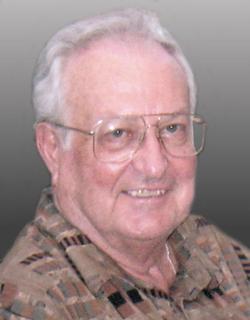
pete

Pete Tamburello

Below a photo of a smiling, gray-haired man with large-rimmed glasses is the name Peter Joseph Tamburello. Mr. Tamburello lived to the ripe age of 83. His obit starts out like this:

“Peter was a lifelong Kansas city resident, a graduate of Northeast High School, and an Eagle Scout. He served in the United States Army during the Korean conflict.”

Ah, yes, an Eagle Scout and a war veteran.

But wait, there’s more!

It’s not in the obit, but Pete — I’m switching to the more familiar mode now because I sort of met him once (more on that in a minute) — also was:

:: A “soldier” in the Kansas City’s La Cosa Nostra during the mob’s “glory years” in the 1970s.

:: A close associate of the longtime Kansas City mob boss Nick Civella.

:: A twice-convicted felon. Once for his role in a Las Vegas casino money-skimming scheme and another time for attempting, along with Civella, to bribe a prison official to get favorable treatment for a Civella nephew who was incarcerated.

Pete served several years in prison. I couldn’t find the lengths of the prison terms, but I think they were significant, especially in the casino-skimming case.

**

Last December, I wrote about my 1980 encounter with Pete and Nick. It was at Game 5 of the 1980 World Series — the series the Royals lost in six games to the Philadelphia Phillies.

In brief, Nick and Pete attended the game with tickets that a friend had finagled from state Sen. Harry Wiggins. Early in the game, Wiggins went to the seats to see who the friend had given them to and, to his shock, found Civella and Tamburello in the seats.

Wiggins called The Star, and an editor got ahold of me (I was on assignment at Kauffman Stadium). A photographer and I then approached Civella and Tamburello, and I interviewed Civella — with Tamburello standing beside him — in the lower concourse, down the first base line.

The encounter got a little testy. During the interview, Tamburello shoved a camera being held by a KMBC-TV cameraman, and Civella slapped at the Star photographer’s camera. After the interview, the two men returned to their seats but left the game a short time later. It was one of my most invigorating days as a reporter, and the story was on the front page the next day.

At the time, both Nick and Pete were awaiting trial on the bribery charges.

There were two skimming cases — the Tropicana and the Argent — where the mob muscled into ownership and exacted a portion of the revenue. The mob’s share was paid out regularly, in cash, to trusted couriers. Pete was charged, along with several other mobsters, in connection with both cases.

In the Tropicana case, a grand jury indicted 11 people in November 1981. Pete was the only one to be acquitted. In the Argent case, which was a few years later, he pleaded guilty.

Civella also was indicted in the Tropicana case but was never prosecuted because he was in prison on the bribery conviction, dying of cancer. He died in March 1983, six months before indictments were handed down in the Argent case.

**

Back to that obit…After returning from the Korean War and getting his discharge, Pete operated a plumbing supply business before entering the restaurant business.

“He owned and operated several restaurants…including Antonio’s Pizzeria, Hello Dolly’s, Taco Pete’s, Georgie Porgie’s, Sir Kenneth’s Fish & Chips and Marty’s BBQ.”

Antonio’s Pizzeria, which had its beginning on Troost just south of 47th Street, was a nexus for KC’s mobsters. After one or more of his arrests, Civella listed his occupation as part owner of Antonio’s Pizzeria. I don’t know if Civella ever made any of the pizza, but it was damn good; I was a regular there in the early ’70s.

…And so, on Monday, Pete will be laid to rest after a Mass of Christian Burial at St. Patrick Catholic Church in the Northland.

I’d like to hear the eulogy, but I don’t think I’ll attend. Just like at Game 5 of the World Series, there will be a lot of eyes on people who aren’t part of the immediate and extended families.

Read Full Post »

Late last year, Jeb Bush said he knew how a Republican could win the White House in 2016.

“…(I)t has to be much more uplifting, much more positive, much more willing to…’lose the primary to win the general’ without violating your principles,” he said.

Then, he added, “That’s not an easy task.”

No, it sure isn’t. Not with the religious right running around supporting a law in Indiana and a bill in Arkansas that would give private businesses the right to refuse service or do business with people whose lifestyles or religious principles they don’t agree with.

Fortunately, at least for his party’s chances of winning the presidency, Bush appears to mean what he said when he talked about being willing to “lose the primary to win the general.”

On Wednesday, Bush did an about-face on the Indiana “religious freedom” law, which triggered a storm of outrage. (The Indiana and Arkansas governors are now urging their respective legislatures to clean up the mess.)

A New York Times report said that at a Silicon Valley fund-raiser, Bush told a small group of potential supporters that a “consensus-oriented” approach would have been better at the outset.

The Times story went on to say:

“Mr. Bush’s comments were strikingly different in tone and in scope from what he said on Monday night in an interview with the conservative radio host Hugh Hewitt. In that interview he praised Gov. Mike Pence of Indiana for doing the ‘right thing’ and said that the new law was similar to one in Florida and to a law signed by President Bill Clinton in 1993.”

Similar, yes, but with key differences. For one thing, the Indiana law gives businesses the ability to use the law to defend themselves against civil-rights suits brought by individuals. That’s a key divergence from the federal “Religious Freedom Restoration Act,” which lets people use that law to defend themselves against civil-rights suits brought by the government.

The Indiana law — as currently written — opens the door for situations like those being cited in media coverage, where a bakery could cite the law in defending itself against a legal claim brought by a gay couple for whom the bakery refused to make a wedding cake.

To his credit, Bush saw that he could get whipsawed if he remained intransigent. He realized that the Indiana law was an overreach that presented individuals, and some businesses, with the option of discriminating against certain groups and individuals. And he reversed course.

It’s the kind of mess that John McCain in 2008 and Mitt Romney in 2012 probably wouldn’t have had the good sense to extricate themselves from. Fearing the wrath of the religious right, they probably would have closed their eyes and let their sleds go careening over the cliff, instead of jamming their toes into the snow.

To get himself off the margins and back in the mainstream, Bush said that while religious freedom is a core value of our country” and a basic right, “we shouldn’t discriminate based on sexual orientation.”

That was good — but not as good as what Republican Gov. Asa Hutchinson of Arkansas said.

By now, I’m sure, you know that Hutchinson’s son Seth, a 31-year-old union organizer in Texas, had told his father that he objected to an Arkansas bill similar to the one in Indiana. He even signed a petition urging his father to veto it.

Seth’s entreaty helped the elder Hutchinson see the light.

“The issue has become divisive,” the governor said, “because our nation remains split on how to balance the diversity of our culture with the traditions and firmly held religious convictions. It has divided families and there is clearly a generational gap on this issue.”

…Any Republican presidential candidates who refuse to acknowledge the generation gap on gay rights will find themselves, in the short term, in the religious right’s good graces. But that’s not where the Republican nominee needs to be in November 2016, in my opinion.

So, I applaud Jeb Bush for looking past the madding crowd of right wingers on the issue of “restoring religious freedom.” It’s an indication that he won’t let himself be browbeaten into taking positions that make him look like foolish to the 21-to-40 set, who — if roused from their political apathy — could have their way at any time.

Read Full Post »

« Newer Posts