Many police departments now find themselves reeling under waves of outrage against excessive violence against demonstrators, including the use of tear gas, rubber bullets and choke holds.
KCPD has taken a rightful place among those departments. During the local protest demonstrations, we saw KCPD officers overreact on at least three occasions last weekend:
— On Saturday, May 30, hundreds of peaceful protesters who had gathered at Mill Creek Park were laced with tear gas and pepper spray and intimidated with “flash-bang grenades.” Our old-school police chief, Rick Smith, rationalized the attack, calling the gathering “an unlawful assembly,” which is utter balderdash.
— The same day, police gassed two protesters on the Plaza after one of them stepped off the curb and into the street. Moments earlier, the man had yelled, “If you ain’t got the balls to protect the streets and protect and serve like you was paid to do, turn in your damn badge.” Video of the incident, which Smith described as an “extraction” arrest, has been viewed by millions of people.
— The most serious injury was inflicted on 32-year-old Sean Stearns, Kansas City, who took a rubber bullet, or something like it, in the eye at the May 30 demonstrations. With his girlfriend, Sydney Ragsdale, he had taken shelter behind a Mill Creek Park tree when he was struck. He has lost most of the vision in the eye, and a doctor told him he could lose sight in it altogether.
(Later, I read that a 38-year-old man suffered a badly broken leg in the May 30 demonstrations when he was struck by a tear-gas cannister fired by police.)

Stearns and girlfriend Sydney Ragsdale before May 30 demonstrations

…after
**
Against that backdrop, it was very encouraging to read that Mayor Quinton Lucas, at a large demonstration yesterday outside City Hall, signed onto a list of demands to reform the police department, including local control.
Leading the newfound push for local control are three significant organizations: the Urban League of Kansas City, the local branch of the NAACP and MORE2, that is, the Metro Organization for Racial and Economic Equity.
On Wednesday, those three groups issued an extraordinary, joint statement calling for Smith’s ouster and also taking control of the department away from the governor’s office and putting it in the hands of the mayor, the City Council and the city manager.
Here are two key points in the statement:
:: “The Board of Police Commissioners behaves as if they were appointed by the Governor to protect and serve the police chief and police officers rather than to ensure that the department is committed to fair and impartial public safety strategies, dedicated to the principles of fairness, equity and accountability and working actively to build bridges that lead to substantial change. Approximately 70% of the City’s operating budget is allocated to public safety with over $250 million dedicated to the police department, yet the City of KCMO has no authority over KCPD decisions, policies, practices, and procedures.”
:: “Recent news reports detailing police-board-approved, multimillion-dollar out-of-court settlements for police involved shootings, homicides, and excessive force incidents along with the recent uptick in police involved shootings and homicides of African American men have heightened the level of our distrust in Chief Smith. We have no confidence in his ability to lead this department in a manner that respects and values the humanity of all Kansas Citians, irrespective of race, ethnicity, and socio- economic status.”
“No confidence.” That says it all, does it not?
**
As I have written several times before, wresting control of the police department from Jefferson City will be a steep climb. My understanding is it could be done in one of three ways:
:: A successful, statewide initiative petition followed by voter approval (again, statewide).

Sinquefield
:: The Missouri General Assembly passes a bill, signed by the governor, authorizing an election to change state law to give control of the police department to the city.
:: The General Assembly passes a bill, and the governor signs it into law, authorizing local control in Kansas City.
Any of those options would be very challenging. The General Assembly is Republican and rural dominated, and most of the senators and representatives don’t look kindly on measures giving St. Louis or Kansas City more power at the expense of the state. I think the current governor, Mike Parson, would not have a favorable view of such a change, either.
An initiative petition would be a massive undertaking. It would require procuring the signatures of 5 percent of registered votes in six of Missouri’s eight congressional districts. That means paying a small army of people to collect signatures, which, in turn, requires a big benefactor.
In St. Louis, a powerful, conservative activist and political contributor, Rex Sinquefield, largely financed a successful petition drive in 2011 and early 2012, and that resulted in voters statewide approving local control of the St. Louis Police Department in November 2012.
I doubt that Sinquefield would be willing to make that kind of investment on the western side of the state, and I can’t think of anyone else who might be willing to step up and fund a statewide petition drive. (James B. Nutter Sr., mortgage banker and big-time contributor to Democratic politicians, might have done it, but unfortunately he died three years ago.)
Nevertheless, with the events of the last two weeks, I am much more optimistic than I have ever been about the prospect of local control of KCPD.
**
In the shorter term, I think Smith’s time as chief can now be numbered in months, not years. I believe he will be out by year’s end.
Reforms to KCPD will be coming soon, but whatever they are, they will not be sufficient to stop the push for local control or Smith’s ouster. I doubt he will have the stomach to go on. He’s had a long career, a hefty pension awaits.
And even if he should want to go on, things have changed so much in the last couple of weeks that a majority of the five-member police board may now be thinking about the wisdom of a change at the top. Under state law, a Missouri police chief can only be fired “for cause,” which sets a high bar. Nevertheless, if a majority of the police board was bent on making a change, it would be uncomfortable for Smith to try to stay.
Here’s how change at the top could occur…
The board consists of the mayor and four people appointed by the governor. The four appointed members are private investor and multi-millionaire Don Wagner; retired lawyer Cathy Dean; Mark Tolbert, pastor of an African-American church; and lawyer Nathan Garrett.
As board officers, Wagner (president), Tolbert (vice president) and Dean (treasurer) would probably hold sway in regard to Smith’s future, along with Lucas.
Lucas has not said directly if he supports Smith, but by signing on to the NAACP/MORE2/Urban League demands, he has effectively said he does not support him.
There’s one solid vote against Smith.

Dean
Of the other board members, I have only met Cathy Dean, and it was totally unrelated to her board service. Nevertheless, she strikes me as someone who would be very concerned about this situation and receptive to calls for major reform.
That could be another vote against Smith.
 It’s almost a given that Tolbert will side with the groups demanding that Smith leave.
If Dean was of like mind, that would be three votes, a majority.
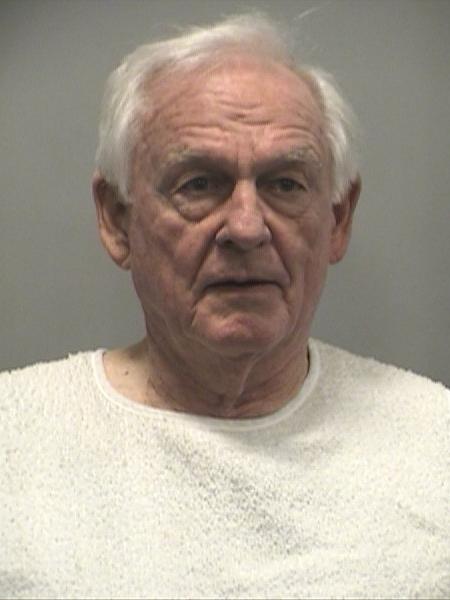
 Then, there’s Wagner, board president. He is rich (made a fortune in the steel-tank business), elderly and probably in his waning years of civic service. I don’t see why he would feel beholden to either Smith or even Gov. Mike Parson. He might envision himself — or come to envision himself — as the man who presided over a much-needed and critical change of direction at the police department.
Readers, it’s almost a done deal: Rick Smith is on the way out.
Editor’s note: I amended the sections pertaining to local control and firing the police chief after learning more about state law pertaining to both issues.



 JimmyCsays: At the juncture of journalism and daily life in KC
You must be logged in to post a comment.