If 2020 was bad from the standpoint of driving many of us to stay put in our homes for much of the year, it was worse on the streets of many American cities, including Kansas City.
Much worse.
Back in March, after people started realizing how bad Covid-19 was promising to be, I thought one positive byproduct of it would be that, with more people staying home, there would be less crime overall and fewer murders in particular.
On March 23, I sent Sgt. Jake Becchina, a KCPD public affairs officer, an email asking if crime had decreased in the previous few weeks. He wrote back saying: “We have some analysts looking at some data as it corresponds to crime being up or down associated with the coronavirus conditions….In the meantime, I would say that I think it’s too early to tell for sure if there has been an appreciable difference. My sense, in what I’ve seen, (is) there has been little difference.”
He said homicides were up (but not by a lot at that point), as were non-fatal shootings.
A month later, on May 25, George Floyd was killed in Minneapolis by Officer Derek Chauvin, and after that the homicide rate surged here and elsewhere.
When it all came to a smoking, blazing end on Dec. 31, Kansas City had a record 180 homicides for 2020. That it was a record wasn’t even close. The previous high was 155 in 2017.
But KC had plenty of company in the record-homicide category. Take, for example, my hometown of Louisville, KY. Before last year, the most homicides it had experienced in a given year was 117 in 2016. When 2020 came to a close, it had recorded 173 homicides…and it is a smaller urban area than Kansas City.
I guess we can take solace in the fact that Kansas City is not Memphis…That city, with a population of about 651,000 people (compared to slightly less than 500,000 in KC), had a whopping 332 homicides. That was more than 100 higher than the previous record of 228 in 2016.
In some other big cities where the homicide rates had been falling in recent years, the needle jumped back up. Chicago, for example, was down to 495 homicides in 2019, but the number jumped to 769 in 2020. Another very big city, Houston, went from 280 homicides in 2019 to slightly more than 400 last year.
So, what has caused these big spikes in homicides? Theories abound.
Michael-Sean Spence, director of community safety initiatives for the national nonprofit Everytown for Gun Safety, told the Louisville Courier-Journal that Covid-19 was a factor in that it disrupted critical services and programs that traditionally connect people in low-income communities with what they need. He also cited a huge increase in firearms sales during the pandemic…The theory being, I suppose, that if more people are buying guns, more guns are getting stolen and finding their way to the streets.
The founder of a Louisville nonprofit that tracks gun violence and supports victims, Christopher 2X, offered another theory on how the pandemic has increased, rather than reduced, the homicide rate.
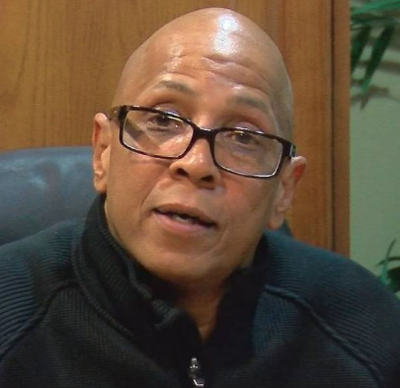
Christopher 2X
2X told the Courier-Journal that young people involved in shootings had told him that with people staying closer to home, assailants had more opportunities to find their targets to seek revenge and settle disputes. “Sadly so, but that’s what the young ones are talking about,” 2X said. “Not being in community centers, not being in schools means it’s easier for someone to find who they’re looking for.”
Besides Covid-19, the other major factor that undoubtedly contributed to the murderous upswing in many cities were the protests and social unrest that came on the heels of George Floyd’s murder.
In a September commentary in The Washington Post, Richard Rosenfeld, a criminologist at the University of Missouri-St. Louis, said that violent crime tends to increase during periods of social unrest, especially over police brutality.
“We saw this during the urban unrest of the 1960s and again five years ago amid the protests against police violence in Ferguson, Mo., Chicago, New York and elsewhere,” Rosenfeld said. “When tensions flare between the police and the communities they serve — especially disadvantaged communities of color — ‘police legitimacy’ suffers. And if trust and confidence in the police fall far enough, street justice replaces law enforcement, and rates of violence increase.”

Richard Rosenfeld
Rosenfeld said bringing violent crime under would be a two-step process. The first, he said, is “subduing the pandemic.” The second is bringing about police reform, which, Rosenfeld said, “would help restore confidence in the legitimacy of law enforcement agencies nationwide.”
He concluded with this…
“The Black Lives Matter movement has shined a bright light on police violence. The urgent task now is to convert protest ideals into workable public policy. That effort in turn will require more effective mechanisms, both inside and outside police departments, to hold officers accountable for violations of their training, agency policy and criminal law.”
Let’s hope that in 2021 we can at least accomplish step No. 1, subdue the pandemic.
 JimmyCsays: At the juncture of journalism and daily life in KC
You must be logged in to post a comment.