Feeds:
Posts
Comments

Archive for the ‘journalism’ Category

It’s on days like this that only The Kansas City Star can put everything in context.

I’m talking, of course, about the Chiefs incredible win over the Packers yesterday in Romeo Crennel’s debut as head coach of the Chiefs.

I was yelling and screaming at the TV like I haven’t done in a long time. Like everyone else in town, I really wanted the Chiefs to win that game and for Crennel to have a great start after three years of suffering through that screwball Todd Haley, who most of the time looks like he stepped out from under a bridge with a cardboard sign.

But once the victory was in hand, there was nowhere to turn, immediately, for the reinforcement and analysis that would make the win complete.

Len Dawson and Mitch Holthus, as good as they are on the game broadcasts, can’t deliver the type of overview and analysis that a game like yesterday’s calls for. When Mitch asked Len for his reaction to the game, Len said, “I’m surprised; I really am.”

Uh, that’s not quite what we were looking for, Len…

The 101 The Fox post game show absolutely sucks. For one thing, you have to sit in torment through about 20 minutes of post-game advertisements just to get to “The Turning Point Play of the Game,” which, of course, was Jackie Battle’s fourth-quarter touchdown.

Then there’s another 10 to 15 minutes of ads, and along comes the inimitable Art Hains — he of the sonorous voice but vacant mind.

If you tuned in to Metro Sports, Channel 30 on Time Warner Cable, you got some fairly decent commentary from former Chiefs players Danan Hughes and Rich Baldinger. While it beats the heck out of 101 The Fox, Metro Sports still doesn’t give you any truly satisfying insight into the big questions, like, “Does this seal the deal for Crennel?” and “Is Orton now the long-term quarterback?

So, what to do? If you’re like me, you turn off the radio, turn off the TV, enjoy the glow of victory and wait for Monday’s Star.

And when the paper hits the pavement, there it is, just what you’ve been waiting for — Sam Mellinger’s column, down the left side of the paper, above the fold, under a headline that reads, “In Big Win, KC Finds a Leader.”

He recounts the Gatorade bath, which prompted the first smile from the serious-minded Crennel, and then he tells me something I didn’t know — that Crennel wiped tears from his eyes as he walked off the field. (With that fatherly and comforting countenance, Crennel is already irresistible, but to know that he shed a tear or two makes you want to call Scott Pioli and demand that he immediately name Crennel as permanent head coach.)

Then, in his “nut graph,” Mellinger sums up what yesterday’s win meant to the organization.

“Three critical developments, in ascending order of importance, emerged from Sunday’s improbable upset: The Chiefs maintained a sliver of playoff hope, reminded a city that football can be fun and almost certainly found their new head coach.”

From Mellinger’s column, you go to the Sports Daily, where you find five full-length stories about the game and dozens of sidelights, including the “Do Tell the Truth” feature, which says of Crennel: “He is experienced, calm and popular. More than that, he showed Sunday that he’s an outstanding football coach.”

The “report card,” a popular fixture in reports of Missouri, Kansas, Kansas State and Chiefs games, gives the Chiefs an “A” in the coaching category.

“Romeo Crennel may have shown more true leadership in six days than Todd Haley did in three years,”  the report says.

The two stories on the section front go right to the heart of the two big questions posed above. The headline on the top story is “Romeo wins players’ hearts,” and the second story, about Orton, carries this sub-head: “Who will be quarterback next year? Picture just got more complicated.”

In the story about Crennel, The Star wisely picked up the coach’s opening line from the post-game news conference:

“The Chiefs played a very good game today. They played the way I would like to see the Chiefs play all the time. They followed the game plan, they had energy, they had effort, and they played their hearts out.”

It struck me immediately, when I first heard him say it, that he didn’t say “we.” It was “they,” giving full credit to the players.

Sunday was a great day for the Chiefs, for Romeo Crennel and for Kyle Orton…And Monday was a great day for The Kansas City Star.

Congratulations, hometown paper! You made this former employee proud.

Read Full Post »

Being a news-business junkie, I was very surprised at a business-front story in today’s New York Times announcing that Janet L. Robinson, chief executive of The Times the last seven years, was “retiring.”

Robinson, who will long be remembered as the person who oversaw The Times’ conversion from a regional to national newspaper in the 1990s, didn’t seem like a candidate for retirement.

She is only 61, and there had never been any talk of a succession plan, as far as I know. Also, her “retirement” and its imminence — effective in two weeks — caught nearly everyone, even Times employees, by surprise.

It wasn’t until the ninth and tenth paragraphs that the veil of puzzlement was lifted.

“Last Friday, Mr. Sulzberger called a meeting with Ms. Robinson on the 15th floor of the company’s Manhattan headquarters. He raised the issue of installing a different type of leadership at the company, according to people familiar with the meeting who declined to be identified discussing confidential company business.

“Both Ms. Robinson and Mr. Sulzberger declined to comment.”

Mr. Sulzberger is Arthur Sulzberger Jr., chairman of The New York Times Co. and Times’ publisher.

So, Sulzberger fired Robinson; it’s that simple.

Today, the Internet is full of speculation about why she was let go.

The Wall Street Journal, a competitor of The Times, said:

“The company’s struggles during the worst of the (newspaper industry) downturn had prompted some members of the Sulzberger family to question whether Ms. Robinson was the right person to guide the company in a digital world, according to people briefed on the family’s thinking.”

Adam Clark Estes of The Atlantic Wire (part of The Atlantic magazine) said The Times “needs a technologist” instead of a chief executive steeped in print journalism.

“You’d be hard pressed to find a media pundit who wouldn’t agree that the Grey Lady needs a kick in the pants from someone who understands technology,” Estes wrote.

Still, as The Washington Post (with Bloomberg) reported on its website, The Times, under Robinson, has had an excellent roll-out of its online pay wall.

The Post said: “In March, the company began charging users for full online access to the paper’s content. By the end of September, it had 324,000 paying digital subscribers, bringing Times’ combined paper and online subscribers to 1.2 million. Digital advertising now makes up 14 percent of total revenue, up from 8 percent in 2006.”

Those are impressive numbers, and many media analysts think The Times set up a very smart pay-wall system: People who go to the site (NYT.com) can read 20 articles a month without paying. After that, they have the option of buying one of three digital news packages.

The “first-20-free” system is intended, The Times has said, “to draw in subscription revenue from the most loyal readers while not driving away the casual visitors who make up the vast majority of the site’s traffic.”

Despite the many achievements in Robinson’s portfolio, the main negative factors — the ones that probably most affected “the family’s thinking” — were significant drop-offs in advertising and circulation in recent years.

As a Women’s Wear Daily web story said, “For the first time in its history, the Times had to cut from its newsroom, which resulted in more than 200 job losses in the last three years. Additionally, the Times had to eliminate sections in the paper…close a printing press, take out a mortgage on its new skyscraper and take an onerous loan from Mexican billionaire Carlos Slim.”

The fortunes of virtually every major U.S. daily also fell off a ledge, however, so it’s hard to see how Robinson could have been held responsible.

Who knows? Whatever the case, she had a great run at The Times; hers was an exceptional career. She started at The Times in 1983 and worked her way up the business and advertising side until reaching the top, or at least very near the top.

And here are a couple of things about her that warm my liberal-arts heart: Before joining The Times, she was a public school teacher in Newport, Rhode Island, and Somerset, Massachusetts.

Furthermore, she received a B.A. degree in English from Salve Regina College, Newport, RI, where she graduated cum laude in 1972.

I tell you, it’s hard to top those English majors.

Read Full Post »

By now, many of you know that I have a keen eye for unusual corrections in newspapers.

That’s mostly because, as a reporter for 25 years and and editor for almost 12, I lived in fear of winding up on the correction page. (It happened more often than I care to admit.)

Occasionally, I would wake up in the night and either fear or realize that I had made a mistake in a story and that it was too late to correct it. Sometimes, before going to bed, I would call the copy desk and make sure that my mind was not playing tricks on me and that I had written something the way I remembered having written it.

Then, there was one nightmarish correction — like one I’m going to tell you about — where I had to write a correction to a correction. That night, I’ll never forget, the night city editor said, “Fitz, I bet you’ll be glad to get this one behind you.”

No shit.

But it happens. It evens happens to The New York Times.

A correction that ran in The Times on page A2 yesterday was a doozy. It started out like this:

“An article on Thursday about a push to ban horse-drawn carriage rides in Central Park misstated part of the name of an organization to which an upstate New York veterinarian belongs…”

After correcting the organization’s name, it went on to the more embarrassing mistake: The original story had referred to the carriages as “hansom cabs,” and that, as it turned out, is a misnomer.

As the correction noted, “…the carriages have four wheels, and therefore are not ‘hansom cabs,’ which are two-wheeled. An accompanying picture caption, as well as a subheading in some editions, and a correction in this space on Friday repeated the error about the cabs.”

So, there’s the correction to the correction. But there’s more…

The last line of the correction, in parentheses, went like this:

(A reader pointed out this inaccuracy in a letter published in The Times in 1985, but this is the first correction of numerous such references through the years.)

Think about that…The Times had referred to carriages as hansom cabs “numerous” times over the last 26 years, despite a reader’s best effort to get the paper on the right path in 1985.

Well, at least The Times was big enough to acknowledge a 26-year track record of screw-ups on the same subject.

To its credit, The Times is anal about accuracy, and that’s a good thing, isn’t it?

And one thing I can guarantee you is that Emily B. Hager, who wrote that front-page story, is now an authority on the distinction between horse-draw cabs and carriages.

Now, as I trot off to bed, I’ll leave you with what a hansom cab looks like…

And its cousin, a horse-drawn carriage…

Read Full Post »

The braggadocio and downright impudence of some political crooks before they are convicted often amazes me.

Take the case of former Illinois Gov. Rod Blagojevich, who was sentenced Wednesday to 14 years in federal prison for his conviction on 18 felony counts of corruption.

As you’ll recall, Blagojevich was charged in April 2009 with, among other things, trying to sell former U.S. Sen. Barack Obama’s seat to the highest bidder after Obama was elected President.

Here’s what Blagojevich, 54, said at the time that U.S. Attorney Patrick Fitzgerald announced the charges.

“I’m saddened and hurt, but I am not surprised by the indictment. I am innocent, I now will fight in the courts to clear my name.”

Yes, he would clear his good name! He’d been slandered, don’t you know, and that could not stand.

A year later, perhaps reflecting how dismissive he was of the charges, he appeared as a contestant on Donald Trump’s “Celebrity Apprentice” TV show.

Then, last year, after a federal jury convicted him of just one count — lying to the FBI — and hung up on 23 other counts, Blagojevich not only turned defiant but goaded Fitzgerald.

“The government threw everything but the kitchen sink at me,” Blagojevich said, “and on every charge but one, they could not prove that I broke any laws except one, a nebulous charge from five years ago.

“We have a prosecutor who has wasted and wanted to spend tens of millions of dollars of taxpayer money to take me away from my family and my home.”

Fitzgerald didn’t take the bait and simply said Blagojevich would be retried…The second trial ended in June with his conviction on 17 additional counts.

That brings us to yesterday, when U.S. District Judge James Zagel sentenced Blagojevich.

Former Illinois Gov. Rod Blagojevich returned a copy of his book, which he had signed for a supporter, after he returned home from his court sentencing Wednesday in Chicago (AP photo)

And what did he say in court, at his sentencing?

“I’ve had plenty of time to reflect on all that’s happened. I’m here convicted of crimes, and I am accepting of it, acknowledge it.”

That prompted Zagel to respond, “It comes late.”

Blagojevich also said:

“I have nobody to blame but myself for my stupidity and actions, words, things that I didn’t that I thought I could do.”

Now, why didn’t Blagojevich temper his comments when he was first charged and again last year after he was convicted on one count?

It goes back to the Achilles’ heel of many a figure in Greek literature — pride, hubris. Blagojevich thought he was above the law; he got a fat head because several million people voted for him and put him in the governor’s office.

He should have read some Greek tragedies; it would have better prepared him for his downfall. Then, again, maybe he did read some Greek tragedies and concluded, “That’ll never happen to me.”

****

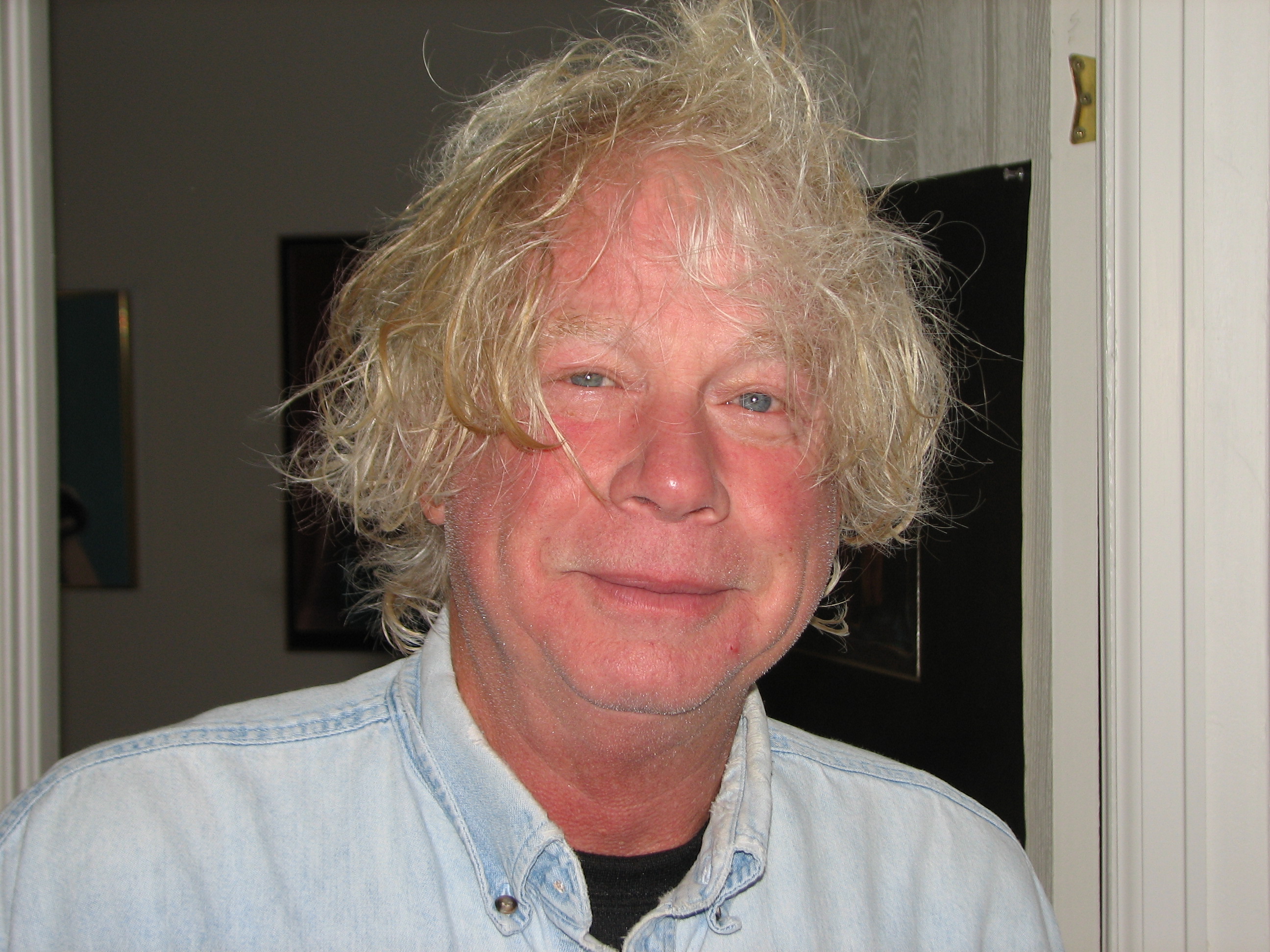
You will see below that my lifelong friend Hubartos vanDrehl — the Prince of Paonia, the Mystic of the Mountains — comments on the respective hairdos of Mr. Blagojevich and Mr. Trump. It is only fitting, in my opinion, that I show you a photo of Mr. vanDrehl’s inimitable ‘do…

vanDrehl

Read Full Post »

Seventeen months ago, I wrote this about Kansas City International Airport:

“KCI is the dullest, dreariest major airport I’ve ever seen, and it’s horribly inefficient as far as check-in, security and concessions. A move to a single terminal — an inevitability — can’t happen soon enough for me.”

In that blog, I also said, “A new, all-in-one terminal would inject energy into Kansas City, just as construction of the Power & Light District energized downtown.”

Five readers commented on that blog, and each of them defended the existing three-terminal design — which is now nearly 40 years old — because of its efficiency.

Now, if you happened to read Lynn Horsley’s excellent, front-page story about KCI in Sunday’s Kansas City Star, you’ll know that the existing KCI’s days are numbered.

Yes, folks, quaint and cozy Kansas City Insipid Airport is on the way to becoming a trucking or freight terminal and a facility “for businesses needing ample parking and airport access.”

What’s the matter with KCI?

For starters, it’s dull and dark, and its retail and food options are pathetic.

Oh, and did you know that because of its layout, with no central security point and no “spokes” to gate areas, probably hundreds of thousands of dollars a year are wasted on excess security people and other personnel who need to be deployed throughout three different terminals?

But here’s the clincher: In terminal A, only eight of 27 gates are being used. In Terminal C, only 12 of 24 gates are being used. In Terminal B, meanwhile, where Southwest Airlines holds sway, 20 of 24 gates are in use.

As Horsley aptly put it, “Terminals A and C sometimes resemble ghost towns.”

That’s ridiculous. If we want to remain a major-league city in every respect, we must have a modern terminal — one that is not only efficient but hums with activity and sends a signal that you have arrived (or are leaving) a place that holds out the prospect of activity and excitement.

As usual, U.S. Rep. Emanuel Cleaver gets the picture. One role of airports, he told Horsley, is to function as “glamorous ports of entry into a community.”

Mark VanLoh, city aviation director, has a clear view, too. “The situation with the three terminals is getting worse. It’s a mess…It (a new terminal) is going to happen regardless of whether our citizens want it to happen.” He estimates that a new terminal will open within 10 years.

Plans are for the new terminal, which would cost $1 billion to $2 billion, to be located south of the existing airport on city-owned land. It would use the same runways, but the terminal would be four miles closer to people arriving from the south — the direction that the vast majority of airport users come from.

The new terminal would be about 700,000 square feet, compared to the current terminals’ 1.2 million square feet. The reduction, Horsley said, would mean “big savings on utilities, while still accommodating 15 million passengers or more per year.”

And that bulging price tag? No tax increase necessary. “The money…would come from federal aviation dollars, the airlines themselves and taxes and fees paid by airline customers,” The Star’s story said.

The Aviation Department is one of two “enterprise” departments, along with the water and pollution control, that pays for itself through customer fees.

Those among us who are having trouble giving up the “curb-to-gate-is-best” philosophy need to think this through and consider what we want our city to be in the future. Do we want to continue being a destination city, like Denver, St. Louis and Indianapolis, or do we want to be an also-ran, falling farther behind other major cities with newer, first-class airport terminals.

Jerry Orr, the aviation director in Charlotte, NC, where the airport serves nearly 40 million passengers a year, told a visiting contingent from the KC chamber of commerce this fall that with a new terminal Kansas City could get more direct, international flights.

In other words, KCI could actually be an international airport, deserving of its name.

Read Full Post »

Lots of news today. Let’s get right to it…

:: The New York Times reports that “Grandpa Joe” Paterno “transferred full ownership of his house to his wife, Sue, for $1 in July, less than four months before a sexual abuse scandal engulfed his Penn State football program and the university.”

Hmmm. Now, why would Pa-Pa want to put into his wife’s name the house that they had jointly owned since 1969?

The Times quoted Wick Sollers, a lawyer for Pa-Pa, as saying that the Paternos had been engaged in a “multi-year estate planning program” and that the transfer was “simply one element of that plan.”

The Times also interviewed Lawrence A. Frolik, a law professor at the University of Pittsburgh who specializes in elder law.

“I can’t see any tax advantages,” The Times quoted Frolik as saying. “…It sounds like an attempt to avoid personal liability in having assets in his wife’s name.”

Looks like Grandpa Joe did what any guy would do if he’s expecting a run on his bank account — disperse the assets.

:: Closer to home, The Star reports that Bishop Robert Finn slipped the criminal noose in Clay County and has agreed to enter into a diversion program with the Clay County prosecutor for covering up the Shawn Ratigan child-porn case for at least five months.

The agreement calls for Finn “to meet face to face” with Clay County Prosecutor Daniel L. White or his successor every month for the next five years “to discuss any allegations of child sex abuse levied against clergy or diocesan staff within the diocese’s Clay county facilities.”

That would include churches, schools, gyms, among other buildings.

Don’t you just love it that the mighty bishop of Kansas City-St. Joseph is going to have to report to the prosecutor like a wayward kid would report to the principal? The bishop, who has dozens of many minions at his disposal at diocesan headquarters, 20 W. Ninth St., trucking up to Liberty once a month, with his big hat in his hand? SWEEEET!

I fully expect Jackson County prosecutor Jean Peters Baker to follow suit and put Finn in a separate diversion program. That means he’d have to grab his mitre and staff and head to the Jackson County Courthouse once a month, too.

Finn couldn’t have screwed things up any more than he did with the Ratigan case, but I bet he’s going to be a model enforcer from now on…Of course, he’s still a disgrace and would leave office if he really cared about the institution and people he’s supposed to be serving.

:: The Star also reports that Local 42 of the International Association of Fire Fighters lost its battle to get full, retroactive, city pension benefits for about 300 ambulance workers who formerly worked for MAST. (MAST received city funds but was not directly under its jurisdiction.)

An arbitrator ruled that the city would not have to provide pensions that had been estimated to cost $30 million over 10 years. In June, the City Council voted to give the employees supplemental pensions estimated to cost $6 million to $10 million over 20 years. So, if the ruling holds, taxpayers should be off the hook for at least $20 million.

Wright

It’s not often that Local 42 and its president, Louie Wright, don’t get what they want. But just about any time they don’t, it means Kansas Citians should celebrate because tax money is being saved.

For his part, Louie told The Star’s Lynn Horsley that he was “extremely disappointed.” Naturally, a lawsuit in Jackson County Circuit Court is a possibility.

With Louie and Local 42, it’s never over until all remedies have been exhausted.

:: Now here’s something unusual. Louisville football Coach Charlie Strong said that the Cardinals lost to Pittsburgh last Saturday because the players were “more focused on a video game than they were on Pittsburgh.”

A new video game — “Call of Duty: Modern Warfare 3” — was released recently, and Strong said the players got preoccupied with the game, instead of the game.

The things coaches have to deal with these days….

Read Full Post »

At least one person in the state of Pennsylvania was not intimidated by Joe Paterno and the high-on-a-pedastal Penn State football program.

The residents of Pennsylvania can thank Republican governor and former state attorney general Tom Corbett for the firing of Paterno and university president Graham B. Spanier.

I don’t know about you, but I was surprised and impressed with the quick and decisive action by the school’s board of trustees.

The story about former defensive coach Jerry Sandusky and two senior university officials being charged in connection with a long-running child-abuse scandal broke last weekend. Almost immediately, Paterno’s failure to do anything more than report a 2002 sex-abuse incident to former athletic director Tim Curley was called into question.

On Wednesday morning, Paterno announced that he would retire at the end of the season. That probably would have satisfied a lot of people, especially the student body, most of which rallied behind Paterno.

But it wasn’t nearly enough — thank God — for Governor Corbett, who this week fiercely lobbied the board of trustees to oust Paterno and Spanier immediately.

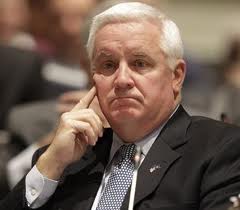
Pennsylvania Gov. Tom Corbett

Now, let’s take a step back. Here’s how Corbett’s involvement in the case unfolded, according to a great, front-page story yesterday in The New York Times.

In 2009, officials at a Pennsylvania high school reported that Sandusky had molested a boy at the school. However, the county prosecutor cited a conflict of interest and referred it to the attorney general’s office.

“Here, he (Corbett) had a wildly popular football coach and a program which in Pennsylvania was revered, and this case lands in his office and without flinching he went down that path,” Times’ reporter Jo Becker quoted a Republican lobbyist as saying.

Corbett convened a grand jury and prosecutors took testimony. As the case proceeded, more victims turned up, and Corbett and his investigators became appalled at the university’s lack of action.

“We talked about how this would be a real shock to people, and how shocking it was to us,” Becker quoted a former assistant attorney general as saying.

Corbett went on the win the governor’s race. After he left the attorney general’s office he had to adhere to grand-jury secrecy rules that prohibited him from talking about the case, other than with a few people he had brought with him from that office.

One person who stayed close to the case was Frank Noonan, whom Corbett had appointed state police commissioner. Before that, Noonan had been chief of investigations in the attorney general’s office.

Periodically, The Times’ story said, Corbett would ask Noonan how the sex-abuse investigation was going, and Noonan would tell him it was going well, although he couldn’t share details.

Finally, after the story broke last week, Corbett, who is a member of the Penn State board of trustees, was free to roll into action.

“Privately,” The Times’ story said, “he worked to move the board in what he believed was the right direction. He called multiple members, including Vice Chairman John P. Surma, the chief executive of U.S. Steel, and told them that the country was watching, that a change at the top was needed, and that the issue was about more than a football program.”

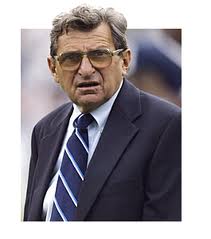
Paterno

The board called an emergency meeting on Wednesday night, just hours after Paterno had announced his retirement plans.

The board exhibited no forbearance and summarily removed Spanier and Paterno.

“Afterward,” The Times’ story said, “the trustees said they had acted independently. But they conceded, without being specific, that the board had received some unsolicited encouragement about what action to take.”

Bravo, Governor Corbett!

Here’s my final thought on this: If Gov. Corbett announced his intention to seek the Republican nomination for president, he would immediately jump to the top of the list.

He won’t do that, of course, but I hope we hear more from him on the national scene in the future; the country needs more politicians who move decisively instead of wetting a finger and holding it up in the breeze.

Read Full Post »

Today, JimmyC is taking a break and turning over the controls to former Kansas City Star reporter Mike Rice. Mike worked at The Star from 1988 to 2008, when he was laid off. At the time of the World Trade Center disaster, one of Mike’s “beats” was Kansas City International Airport. Yesterday, he felt compelled to compile his recollections of that day. His story follows.

***

I woke up early on Sept. 11, 2001, because I had to walk from my house in Waldo to the Firestone store at 75th and Wornall to pick up my car. On the day before, one of the front tires blew out as I was parking at Calvary Lutheran School’s daycare center to drop off our son, Jeremy.
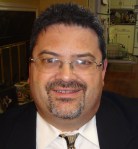
Mike Rice

It was sunny out and walking the half-mile or so to the Firestone actually put me in a good mood for a change.  2001 had been a very rough year, particularly in my wife Catherine’s family. In January, her father died suddenly from a heart attack at age 60, and on the Fourth of July her brother’s 18-month-old daughter got extremely ill and died a few hours later in the emergency room of a Leavenworth hospital. Our 5-year-old son, Nathan, had just started kindergarten at St. Elizabeth School and was having a tough time adjusting. He had gone to pre-school and day care at Calvary and was now separated from friends who had been with him since infancy.  But upon picking up our 1991 Chevy Lumina with its two new tires, I had a sense that life was looking up despite the tragedies and periods of adjustment that we were going through.

I got home, showered and got dressed for work. I was assigned to The Star’s Northland bureau. My beats were Kansas City International Airport and three municipalities — Gladstone, North Kansas City and the ever-growing northland portion of Kansas City, MO. It was Tuesday so I needed to spend the morning finishing a story for the paper’s weekly Neighborhood News edition, which came out every Wednesday.

I dropped the boys off. Jeremy was a few days away from turning a year old. It was 8 o’clock or so. I needed a soda fix so I stopped at our home on 72nd Terrace to get a Dr Pepper. I still felt a sense of life returning to normalcy. Then I got back in the car and turned on the radio.

***

Why I had KMBZ 980 AM on, I can’t remember. But I did, and reporter Noel Heckerson (now retired) was talking about breaking news from New York City: A second aircraft had hit the World Trade Center. Both towers had been hit. Holy shit!

My commute to work was long, as my office was at Barry Road and North Oak Trafficway. The Bruce R. Watkins Drive downtown link had not opened yet, which made the trip even longer. I listened to the reports of heavy smoke coming out of both towers and the speculation that there could be multiple casualties. As I passed downtown and crossed the Missouri River, speculation was growing that this could be some kind of attack. I was starting to get scared, and it seemed like it was taking forever to get to the office.

As I drove on U.S. 169 past Englewood Road, Heckerson announced that an aircraft had slammed into the Pentagon. There was absolutely no doubt now that, for the first time in 60 years, our country was under attack. I wanted to put the pedal to the metal but police constantly had speed traps on 169.

Finally, around 8:40, I got to the office. In the meeting room, the advertising folks hovered around the television. That was my first viewing of the burning towers. I went into the bureau chief’s office where there was another television. Several other people were in there already. We watched in absolute horror and disbelief. Then my pager went off. An editor in the downtown office had sent me a text instructing me to go up to the airport — pronto. Before I headed out, however, I caught another glimpse of the TV footage. One of our advertising execs told me that the World Trade Center had just collapsed. It was at that point where I said to everyone, “We’re going to war.” It turned out that I was right.

***

I headed off to KCI. I turned on the radio. A plane had crashed in Pennsylvania. Perhaps, I thought, someone had forced down the plane. Reports said all air traffic was being grounded. That meant that numerous transcontinental flights were probably being diverted to KCI. It was going to be a long day.

As I approached KCI, I saw a crescent-shaped contrail, a mark that planes were being diverted. I don’t remember which terminal I went to but believe it was the one where United was. I had never seen this airport so crowded. I began interviewing travelers, the few who weren’t on their cell phones trying to find out what the hell was going on.

I did not have a cell phone back then so I had to call my editors the old-fashioned way — the pay phone. I learned that The Star (which had become a morning paper about a decade earlier) was going to produce a special afternoon edition, so I had to interview people, call another reporter and dictate information to him.

Emotional scenes were playing out in the terminal: Passengers hugging airline employees, passengers trying to book hotel rooms, some speculating that another big city was coming under attack and others just completely bewildered. Some of the travelers that I spoke to said they were going to rent cars to drive home.  One guy I talked to was from Babylon, NY. He had just gotten off the phone with his son, who lived in Cincinnati. The son told him that he was going to get in his car and drive to Kansas City to pick him up and drive him back to New York.  That vignette was one of the few of mine that made the printed edition.

***
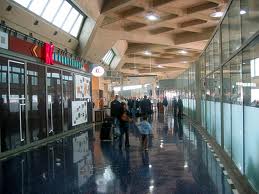
A KCI concourse

I went over to a press conference at the Kansas City Aviation Department around 11 a.m. One department official had a hand-held GPS device that showed a map of the United States and a handful of dots. The dots represented the number of planes in the air. Normally, the map was filled with those dots.

By noon, 89 planes were parked on the runway at KCI. Some were parked at the TWA overhaul base.  I went back to the bureau where I typed up all the facts and quotes that I had gathered. I stepped into the bureau chief’s office to catch a peek at the ongoing news coverage. By now, the country had learned how Middle Eastern terrorists had overtaken the planes they were on by stabbing the crew with box cutters.  It was getting more horrifying by the hour.

By mid-afternoon, rumors had started that gas prices were shooting up. At a Star-Mart across the street from us, cars were lining up. My God! People were panicking, and that is never good.

I went back to the airport around 5 p.m. And it was there that I saw what will stay with me until the day I die.

Five o’clock in the afternoon is typically a bustling time at the airport. But it was empty. All the stranded passengers had left. They went to hotels, got rental cars and headed home, or got picked up by good Samaritans.

Huge 767 jets — something you don’t see much at KCI — sat on the tarmac. The only vehicles on the circular drives outside the terminals were some police cars and a TV news truck. I went inside one of the terminals. The only person inside was a janitor who was waxing the floor with a buffing machine. I went back outside. It was downright spooky and, I dare say, apocalyptic.

Outside one of the terminals, I came across a man named Greg Simpson, of Ransom, KS. He was waiting for his father to pick him from Hays. He was to have flown to Cedar Rapids for a trade show in Illinois. “This shows what can (bring) this country to a halt,” he told me.  That quote ended the article about the stranded passengers at KCI that appeared in The Star the next day.

***

After that, I drove to The Star newsroom downtown where management had bought barbecue for its staff because of the long day.  Reporter Mike Mansur and I had our by-lines on the story in which Simpson’s quote appeared. I was proud to have been part of the news team that helped bring readers a local perspective to that tragic day. Needless to say, I was going to be very busy for the next few weeks. But, at that moment, I was drained and wanted to go home.

At home, Catherine and her sister were in the living room trying to get Jeremy to walk. He finally started walking eleven days later, which happened to be his first birthday. Nathan’s day at school was a little better. I’m not sure how much about that awful day was sinking into him. After putting the kids to bed, I went downstairs and watched the non-stop reports on TV. That was the first I had seen the horrifying images of the planes slamming into the towers, people jumping to their deaths and the towers coming down.

***

Ten years have passed. And, sadly, our nation has not recovered from the horrible events of that day. Sept. 11 gave a misguided presidential administration the opportunity to run amok. It allowed a right-wing propaganda network, along with a cadre of AM radio troglodytes, to spread their messages of fear and intolerance across the airwaves.  We went to war in a country that a segment of our population wrongly believed was responsible for the attacks. The economy went into a tailspin, and many people, including myself, lost their jobs.

Today, many U.S. citizens of Middle Eastern descent are looked upon with suspicion. Others who express views about why we were attacked or differ about how we reacted are accused of being unpatriotic. Some say 9/11 united us. Maybe it did for a few weeks. But I believe that it divided us. Saddest of all is that the sense of normalcy I felt before I turned on the radio in my car that September morning 10 years ago is gone.

Mike Rice is working on his paralegal certification at Johnson County Community College and will finish in December. He works part-time at a bankruptcy law firm in Overland park, and on weekends he drives for a limo company, mostly taking people to and from KCI. He and his wife Catherine have three children.


Read Full Post »
I don’t know how many people noticed (probably not too many because The Star didn’t publish it, to the best of my knowledge), but The Star is losing another key cog in its editorial operation.

Anne Spenner, who has been assistant managing editor/metro the last few years, is leaving later this month to become vice chancellor of marketing and communications.

In UMKC’s website announcement on Aug. 30, Chancellor Leo Morton put Spenner’s title in capital letters and said, “Anne will direct UMKC’s marketing, branding and communications efforts and will play a key role in developing a comprehensive strategic communications plan.”

Well, you get the idea: She’s going to be the school’s chief flack.

Anyway, good for her; she’s getting out at a good time after a nice run of more than a decade at The Star.

Among other accomplishments, she founded the paper’s online Midwest Democracy Project, a successful vehicle for keeping abreast of political developments and linking readers to local blogs of interest (including this one, sometimes).

Spenner’s defection follows that of former Metro Editor Randy Smith by two years. Smith, who had moved on to the paper’s business side a few years in about 2007, joined MU in 2009 as the first Donald W. Reynolds Endowed Chair in Business Journalism. His job involves, among other things, developing, testing and writing about new digital models of journalism and advertising.

When Smith resigned, The Star did not write about it. I thought they should have run at least an item because of the high profile he had enjoyed at the paper.

Although Spenner maintained a lower profile, I think that her move also merited at least a mention in the paper. The metro editor is a mid-level manager who comes into contact with many members of the public and whose name is recognized by more people than any other desk editor.

My personal theory on why neither Smith nor Spenner got a mention is that The Star is embarrassed about the defections of high-ranking people. It’s another sign that the ship at 18th and Grand continues to take on lots of water.

***

Hendricks

Congratulations to Mike Hendricks, who had an outstanding A1 story Tuesday on the KCK elephant that seemingly cannot be brought to the ground — the old Indian Springs Shopping Center.

To the readers’ benefit, Hendricks has been doing a great job since he returned to full-time reporting recently after years as a metro columnist. He was the lead reporter on the Kansas City curfew story a few weeks ago, and yesterday he jumped the state line to report on an issue that continues to flummox Wyandotte County’s Unified Government.

Among other things, Hendricks contrasts the mushrooming growth out west — at the Legends shopping center and the adjoining Village West development — with the frustrating situation at Indian Springs, I-635 and State Avenue.

The Unified Government thought it had a deal worked out for redevelopment of the shopping center a few years ago, and it borrowed $11.4 million to get things going. Unfortunately, the deal fell through, partly because of the Great Recession.

Now, only about 30,000 square feet of the mall is occupied — all, or almost all of it, accounted for by city-related programs — but the city is paying $635,000 a year in debt payments on the loan. That amount will jump to $1 million in 2015, Hendricks reported, “whether there’s an income stream of sales tax revenue from the project or not.”

In Kansas City, it’s the still-new-looking Power & Light District that’s draining millions of dollars away from neighborhood and community services. In KCK, it’s a moribund, 40-year-old shopping center. Let’s hope it comes down within at least a few years of the razing of the World’s Worst Development Gone Awry — the West Edge project on the Plaza.

Read Full Post »

Many of you may recall the stories I wrote July 21 and 29 about Jason Noble, The Star’s former Jefferson City correspondent.

Noble made four significant errors in an attempted “gotcha” story about a Republican state senator from St. Joseph.

Noble wrote the story on the way out the door, apparently after he had accepted a job with The Des Moines Register, where he started early last month.

If it’s any solace to Jason, he’s not alone in the multi-correction arena.

Burns

Even the very best reporters sometimes manage to litter their stories with errors. Take, for example, John F. Burns, The New York Times’ London bureau chief.

Burns, 66, has won two Pulitzer prizes. He appears frequently on PBS, and Wikipedia says he has been called “the dean of American foreign correspondents.”

If Burns was flying high lately, he came crashing down to earth recently after the Times published a 781-word story by Burns about CNN talk show host Piers Morgan’s possible involvement in the telephone-hacking scandal in England.

The story ran on Aug. 5.

Yesterday, Aug. 31, The Times published a 271-word correction that consumed 6.5 column inches. That’s a half inch less than Noble’s infamous correction.

Actually, the printed correction should have been longer than it was because the online version of the correction tacked on yet another screw-up in the story. (Maybe the final error was discovered after Wednesday’s paper had gone to press.)

If I’m reading the correction — the online version — correctly, Burns made seven errors in the story.

Morgan

The errors ranged from incorrectly naming the newspaper (The Daily Mirror, not  The Mirror) that Piers Morgan once worked for to reporting incorrect details about an alleged hacking of a phone message from Paul McCartney to his former wife, Heather Mills.

Burns, whose name I’ve seen in The Times but whose work I’m not particularly familiar with, has some controversy in his background.

He was awarded the 1993 Pulitzer Prize in International Reporting for his “courageous and thorough coverage of the destruction of Sarajevo and the barbarous killings in the war in Bosnia-Herzegovina.”

However, the Wikipedia article about Burns says: “Some of Burns’s reporting in Bosnia and Herzegovina was later put in doubt for using questionable sources. Within the book “Media Cleansing: Dirty Reporting Journalism & Tragedy in Yugoslavia,” Burns is criticized extensively, accused of journalistic malpractice by its author Peter Brock.”

Burns won his second Pulitzer in 1997, that time for “his courageous and insightful coverage of the harrowing regime imposed on Afghanistan by the Taliban.”

Burns joined The Times in 1975 as a metropolitan section reporter. Wikipedia says he “has been assigned to and headed several of The Times’ foreign bureaus.”

It’s pretty disturbing, don’t you think, that a reporter with that much experience and such lofty credentials could be so casual and careless?

You know, I love The Times, and this doesn’t change my opinion a bit. But it goes to show you that even the best, when they “mail it in” — as Burns obviously did — can fall in the deepest of mud puddles.

Today, Burns has mud caked all over him, and it’s going to take him a long time to clean up.

Read Full Post »

« Newer Posts - Older Posts »