Feeds:
Posts
Comments

Archive for the ‘journalism’ Category

The Kansas City Star is now three weeks into its new rotating metro columnist system, and, while it’s far too soon to judge the success or failure of the initiative, it’s a good time to take a closer look at the concept.

Personally, I think it’s going to be difficult for any of the six new columnists (there are three carryovers, C.W. Gusewelle, Steve Kraske and Mary Sanchez) to gain traction with readers. That’s the whole idea of columnists, you know — to have them become trusted, if controversial, voices whose work becomes a destination point for readers.

Maybe this is an experiment designed to cull the reporting ranks for a new, marquee columnist or two, but this move strikes me as more of a money-saving mishmash, a cheap alternative to hiring or promoting at least one new, permanent columnist.

But I certainly don’t claim to have a perfectly clear perspective on this, so I sought the views this week of two top, former editors who have deep wells of experience in newsroom leadership and organization.

One is former KC Star executive editor Mike Waller, who went on to become publisher at The Baltimore Sun; the other is Mike Jenner, former editor at The Bakersfield Californian, who last year was named the Houston Harte Endowed Chair at the Missouri School of Journalism. At MU, Jenner focuses on innovation in journalism.

***

Before we hear from them (and more from me), let’s back up and look at how all this evolved.

Setting the stage for the columnist shake-up, The Star lost two longtime columnists within three weeks. First, Steve Penn, an African-American who frequently wrote about African-Americans and developments in the black community, was fired in mid-July for plagiarism.

On Aug. 3, Mike Hendricks, a Lenexa resident who often donned his white, suburban columnist hat, announced that he was returning to full-time reporting.

The same day, next to Hendricks’ column, The Star ran a graphic laying out the new lineup. Here it is:

Gusewelle continues on Sunday, the only day there is a stand-alone Local section;

Sanchez runs on Monday and Thursday (as well as on the Op-Ed page on Tuesday);

James Hart (police blogger); Alan Bavley (medical writer); and Joe Robertson and Mara Rose Williams (education reporters) alternate on Wednesdays;

Christine Vendel (KCMO cops), Glenn Rice (who primarily covers the Northland) and Mark Morris (federal courts reporter) alternate on Friday;

Kraske (politics) moves from Sunday to Saturday.

Of those nine, Gusewelle, Kraske and Sanchez have the strongest name identity with readers. While the names of the six others, all reporters, will ring bells with many regular readers, they’re not well known.

In addition to their regular duties, those six reporters will write periodic columns — columns, that you can expect to be rooted in developments and stored knowledge from their respective “beats.”

For example, I don’t expect Christine Vendel, longtime KCMO cops reporter, to suddenly start writing about the Kansas City nightlife scene. Ideally, she’ll be giving the readers an inside look at investigations and operations at 12th and Locust.

Now it’s time for our experts to weigh in.

Mike Waller

Waller (in an e-mail):

“I have two thoughts:  Having nine columnists is about four or five too many, if only because there aren’t that many good columnists on any paper!

“Writing a column is an art, and it takes a couple of years to get really good at doing it.  My second thought is…rotating nine columnists means that none other than Gusewelle, who is already established, will be able to get much of a following.  Readers need regularity and consistency. So do the columnists.

“This is simply a bad idea.”

Mike Jenner

Jenner (in a telephone interview):

“I’m intrigued by their approach. It is kind of unusual…Certainly some of them (the six reporters new to the mix) are going to generate a following and some are not.”

Jenner, who worked with Waller years ago at the Hartford Courant, said The Star’s strategy, as suggested earlier, might be to see if a few of the new columnists can “separate themselves and gain a following.” If so, The Star might reduce “the mix” and field one or more of them as marquee columnists.

Jenner added that one element that major metropolitan papers badly need these days — and which marquee columnists can provide — is personality.

“There’s not enough personality in newspapers,” he said. “In the old days the staff writers got to have their own brand, or cache, and I think that was a good thing.”

In general, then, Jenner puts The Star’s move in the “innovative” category rather than the penny-inching category.

“We tend to cling to the traditional,” Jenner said, “but the traditional is not necessarily moving us forward.”

***

Me? Well, I put in 37 years as a reporter and editor at The Star, and my instincts have run along the traditional lines. More and more, however, as the newspaper business, in general, continues its downward spiral, I recognize the need for innovation.

So, if I were editor of The Star, here’s what I would try…The best and most recognized columnist at the paper now is sports columnist Sam Mellinger, who succeeded Jason Whitlock, after Whitlock was dumped last year.

Mellinger, a young guy with amazing perspective relative to his limited experience, is The Star’s only marquee columnist. Recognizing that, the editors have started to run his column, from time to time, on the front page of the paper, not just on the front of SportsDaily.

Just last Saturday, for example, his column about the fight between Kansas City Chiefs’ veteran Thomas Jones and rookie receiver Jonathan Baldwin ran at the top of Page One. That was a bold, smart move by the editors, in my opinion.

For years, it has been a truism at The Star that reports of Chiefs games and developments within the organization are the one sure thing that causes newspaper sales to spike. When I was at The Star, box sales always took a big jump on Mondays after Chiefs’ games.

My idea, then? Give Mellinger a foothold on the front page every Sunday and let him write about whatever sports subject is on his mind. Last year, if you’ll recall, The Star made a huge mistake when it commissioned Whitlock, the marquee columnist at the time, to write a weekly Op-Ed column in addition to his sports columns. The column dribbled away after a few weeks.

So, have Mellinger stick to sports. It’s one news product that sells now.

Think about it: In most big cities, good sports coverage — intermingled with insight and strong opinion — is about the only thing that people relish or want any more from their local papers.


Read Full Post »

I was shocked when I opened Sunday’s paper and saw, on the front of the Local section, that a stunt pilot working the control stick of a biplane had crashed and died during an airshow Saturday at Wheeler Downtown Airport.

I hadn’t paid any attention to the news Saturday, so photographer Rich Sugg’s fiery, section-front photo really took my breath away. The headline was excellent, too: “Thousands see crash that kills veteran pilot.”

With my attention riveted, I proceeded to gobble up the story, written by Mike Hendricks and Glenn E. Rice. Appropriately, the story took up more than half of the section front and included a photo of a couple embracing after witnessing the tragedy.

One or both of the reporters did a good job of trying to profile the pilot, Bryan Jensen, who had been a stunt pilot the past 15 years. About six inches of text was on the section front, under a sub-head that said, “Air show closes for day after biplane spirals to ground, bursts into flame.”

Bryan Jensen and his plane

More information about the crash and quotes from witnesses took up the first two columns of the jump.

Then, out of the blue, the story took an odd, sharp turn. After an awkward transition recounting an earlier rain delay, the story proceeded to describe some attractions that people attending the show had seen earlier Saturday. That material consumed the final eight inches of the story, which ended with no further mention of the crash.

The story was totally bifurcated: The fiery crash and tragic loss of death on one hand, and, on the other, an account of people cheering the U.S. Army Golden Knights parachute team hours before the crash…followed by more drivel.

It was incongruous and inappropriate.

What happened, obviously, is that  Glenn Rice, whose name followed Hendricks’ on the byline, was dispatched to the airshow in the morning to write a feature story. Then, immediately after the crash, Hendricks probably was called in from home — or perhaps he had drawn a Sunday shift — to cover the aftermath of the crash.

So, both reporters came back to the office, each with divergent material. The next step — again obvious to anyone who knows how a newsroom works — is that an editor asked each of them to write up their material. Then, the editor made Hendricks’ material about the crash the “lead” or top part of the story and dropped in Rice’s material after the awkward transition.

In my opinion, the decision to include the mundane material about what had transpired earlier in the day was ridiculous. It was disrespectful to Jensen, his family and the other, grieving airshow participants. The crash rendered everything else irrelevant.

Airshow officials had the good sense to shut the show down immediately after the crash. Star editors should have had the good sense to shut down their story at the conclusion of the crash account.

***

Now here’s a mystery for you.

In Sunday’s New York Times, two section fronts carried stories with almost identical headlines and similar, large photos.

Leading the Styles section was a picture of young people partying at a nightclub under multicolored lights. The accompanying story was about the summer party scene in the Hamptons, a seaside resort on Long Island. The headline on the story was “The Night is Young.”

A section or two removed from Styles, the Business section was led by a story about how the good times are rolling in Silicon Valley, despite the overall economy.

The lead photo, also stripped across the top of the page, was of young people dancing under red-tinted lights in a tent that had been transformed into a nightclub setting. The headline said: “In Silicon Valley, the Night is Still Young.”

Were the mirror-like sections intentional or a blunder?

At first, I was convinced it was a big screw-up; that the weekend editors missed seeing the forest for the trees.

But later, my wife Patty, who often picks up subtleties faster than I do, said the sections fronts were too similar not to have been coordinated. She liked it. She also pointed out the wording of the headlines, with one saying, “The Night is Young” and the other saying, “The Night Is Still Young,” as if one played off the other.

I sent an e-mail to Art Brisbane, public editor of The Times and former Kansas City Star publisher, to see if he had the answer to the mystery. Brisbane, who is not involved in day-to-day operations at The Times, replied last night that he didn’t know.

On Sunday afternoon, I picked up one indication that the parallel presentations could have been accidental: On its website, The Times had substituted a different photo with the Silicon Valley story than the one that appeared on the section front. The new photo showed three young entrepreneurs, standing on chairs and talking to people attending the party. But the guys were the only people in the photo, making it very different than the original party pic.

I asked Art to let me know if he solved the mystery today. I’ll keep you posted.

Read Full Post »

Jason Noble, The Kansas City Star’s Jefferson City correspondent the last several years, has resigned and is moving to Des Moines to take a reporting job with The Des Moines Register.

Noble, who has been with The Star about seven or eight years, ran into a buzz saw earlier this month, when inaccuracies undermined an attempted “expose” that Noble wrote about Republican State Sen. Rob Schaaf. After Schaaf wrote a three-page letter of complaint to The Star’s political editor, the paper published a four-part correction.

In a brief telephone interview from his Jefferson City office Thursday, Noble confirmed a report I picked up on Wednesday that he was parting ways with The Star.

“I am leaving The Star and going to The Des Moines Register, and it’s entirely my own volition,” Noble said.

He declined to elaborate or to discuss the correction, but it is obvious that the move to The Register was in the works well before July 10, when the Schaaf story was published.

The application, interviewing and screening process involved in selecting a reporter for a salaried position at a major metropolitan daily customarily takes at least two to three months.

A man who answered the phone on The Register’s Metro desk yesterday said that Noble’s first day of work would be Aug. 9.

In one way, Noble was very fortunate: He landed a new job before, or about the same time as, the Schaaf story came crashing down around his head. In another way, he was unlucky: The snakebit story will overshadow his years and his good stories at The Star.

After Metro columnist Steve Penn was fired for plagiarism a few weeks ago, I wrote a blog entry under the headline “A horrible way to pack up your pencils.”

Same applies for Noble. A cloud accompanies him to his new job; he’ll be watched like a hawk.

***

Missouri State Sen. Rob Schaaf

The damning story led the Sunday, July 10, edition of The Star. Ten days later, The Star published a seven-column-inch piece on Page A2 correcting three key facts in the main story and one in a sidebar.

Any reporter will tell you that while one factual error in a story is regrettable, having to correct several errors in one piece of work is ignominious.

The story was an attempted “gotcha” of Schaaf, a first-year senator from St. Joseph.

Noble sought to establish in the story that, during the last legislative session, Schaaf had steered a bill he didn’t like to a committee where he is vice chairman.

There, the bill — which would have more strictly regulated Missouri’s medical-malpractice insurance industry — died.

The story implied that Schaaf, a 54-year-old physician, was dead-set against the bill because he has a significant financial interest in a company called MoDocs that which insures physicians. The bill that died in Schaaf’s committee, Noble wrote, “would have required his company to substantially increase its cash surplus and rewrite its policies for charging customers.”

On its face, the story gave the clear impression of a legislator acting out of, and motivated by, self-interest.

Ah, but a really nasty devil was lurking in the details.

In several interviews with Noble before the story was published, Schaaf did his best to defend himself — saying he did not recall talking to Senate leader Rob Mayer about the bill and correcting Noble several times after Noble referred to him in conversation as “co-owner” of MoDocs.

After the story appeared, Schaaf said, he talked with Noble and disputed several things that Noble had written. Getting no satisfaction from Noble, he said, he and his 22-year-old son, Robert, a recent Harvard University graduate, laid out Noble’s grievances in a three-page letter, which they sent to Bill Dalton, The Star’s political editor.

Schaaf, who previously served eight years in the Missouri House, said he got Dalton’s name and title from a Senate staff member.

The letter, which Schaaf posted on his state website, is measured and direct.

After laying out his objections, Schaaf said: “In conclusion, I again ask that the Star print a public apology and retraction. Mr. Noble reported very dishonestly…”

Schaaf said he later spoke with Dalton, who has been a KC Star editor for many years, and that Dalton told him the paper was planning to run a four-part correction. Other than that, Schaaf said, Dalton essentially told him, “We stand behind the story.”

That’s exactly what I would expect an editor to say under such circumstances. Similarly, when I asked Noble yesterday why he didn’t want to talk about the correction, he replied, “The correction speaks for itself.” Nothing he says about it now will make any difference or lessen the gravity of the errors.

The correction appeared on Wednesday, July 20. Among other things, it said that Schaaf was not “co-owner” of the insurance company but “co-founder, secretary, treasurer and chairman of the board.”

Where his co-ownership comes into play is with a holding company that has a contract to supervise MoDocs’ day-to-day operations.

The correction also acknowledged that Noble’s story had incorrectly stated the manner in which Schaaf receives compensation for his MoDocs-related work.

In addition, very damningly, Noble had reported that after the bill had been introduced “lawmakers recalled that Schaaf rushed to the office of Senate leader Rob Mayer, who is responsible for assigning bills to committee.”

Turns out, though, it was just one lawmaker — not two, three or several — who, under the cloak of anonymity, told Noble he had seen Schaaf hurry off to Mayer’s office.

Along with the sloppy errors pertaining to Schaaf’s corporate ownership and compensation (and a third one about a previous medical-malpractice reform bill that had been assigned to Schaaf’s committee) the facile and incorrect conversion of the singular “lawmaker” to the plural “lawmakers” gave the distinct impression that Noble was out to skewer Schaaf.

You can’t do that. You can’t do that. You can’t do that!

When a reporter sets out to expose someone’s perceived wrongdoing, he or she had better have all the facts down pat — double verified — and then keep the story free of anything that looks like he or she has it in for the subject. Errors of the magnitude that Noble made tend to indicate he was in such a hurry to stick the knife in Schaaf that he plundered through the reporting like he was knocking over bowling pins.

The result: Schaaf wins, and The Star looks like crap.

“The article about me was so over the top that it just feels like they were out to get me,” Schaaf told me yesterday. “…The whole thing is just a hatchet job.”

Read Full Post »

An extraordinary correction popped up in Wednesday’s Kansas City Star.

Usually, when you see a correction, a single fact is corrected. Occasionally, you see a double-barreled correction. But not often does it occur that a correction addresses three or four facts in a story.

That’s what happened Wednesday — a grand slam correction; four in one.

It all stemmed from a July 10 story by Jason Noble, The Star’s Jefferson City correspondent. The story, which led the front page, was a “gotcha” on state Sen. Rob Schaaf, who, in the last legislative session, apparently steered a bill he didn’t like to a committee where he is vice chairman.

There, the bill — which would have more strictly regulated Missouri’s medical-malpractice insurance industry — died.

And why was Schaaf dead-set against the bill? In his story, Noble reported that Schaaf, a Republican from St. Joseph, is “co-owner of the Missouri Doctors Mutual Insurance Co., known as MoDocs.” The bill that died in Schaaf’s committee, Noble wrote, “would have required his company to substantially increase its cash surplus and rewrite its policies for charging customers.”

One of the pivotal, substantiating points that Noble made to help demonstrate Schaaf’s keen interest in getting the bill assigned to his committee was this:

“When Senate Bill 302 was read into the record on Feb. 21, lawmakers recalled that Schaaf rushed to the office of Senate leader Rob Mayer, who is responsible for assigning bills to committee.” (Note that Noble said “lawmakers,” plural.)

As you can see, this is a story that made Schaaf look very bad. The senator did his best to defend himself in the story, saying the bill was “a bad idea,” but at the same time asserting that “I doubt I had much influence on the trajectory of the bill.”

It was after the story appeared, however, that Schaaf apparently mounted his strongest counter attack.

From the looks of this seven-column-inch correction, I would guess that Schaaf might have had the help of a lawyer. Schaaf obviously lit into Noble and his editors very aggressively.

This is the type of situation a reporter absolutely hates to get into, especially when you’ve screwed up key parts of a story. You go from being on the offensive to completely on the defensive.

Working through Schaaf’s counter allegations and Noble’s self-defense must have taken several hours over several days inside the newsroom. The fact that the correction appeared 10 days after the story was published tells you it was a very sticky situation.

The deputy managing editor for Metro, Anne Spenner, was undoubtedly involved, and I’m sure Managing Editor Steve Shirk was involved, too. Editor Mike Fannin was probably alerted.

So, here are the points that needed to be corrected:

— It was just one lawmaker, not two or more, who told Noble that Schaaf  “rushed to the office” of the senate leader…When you’re doing a “hit” story, you have to be very careful and precise, and in this case Noble overreached, sliding from the singular to the plural. That goes beyond soppy; it’s intellectually dishonest.

— Noble said Schaaf is “co-owner” of MoDocs. He’s not. He is co-founder, secretary, treasurer and chairman of the board. A nonprofit, MoDocs is owned by the members it insures…That mistake was the result of sloppiness, laziness and being in a hurry to close in for the kill.

— Noble’s story indicated that all previous medical-malpractice insurance reform bills had been referred to another committee, never Schaaf’s. It turns out, though, that at least one other such bill had been assigned to Schaaf’s committee…More laziness.

— Finally, in an accompanying, or “sidebar,” story, Noble screwed something up regarding a holding company that Schaaf co-owns. Because of the way the correction is worded, however, it’s impossible to tell exactly what the problem was.

Another interesting part of this correction is that it exposed the weakness and inherent silliness of The Star’s longstanding policy of not repeating, in corrections, the erroneous parts of original stories.

Usually, all you get is head-scratching corrections that give you new information but don’t put it in the context of what was wrong in the first place.

In this case, however, the policy came back to bite The Star right in the ass.

In the first three parts of the correction, The Star had to repeat the erroneous items in order for the correction to make any sense at all. I mean, can you imagine the correction simply saying, “The story should have said a lawmaker recalled that Schaaf rushed to the office of Senate leader Rob Mayer.” It would have left the readers completely befuddled.

But, then, in the fourth and final part of the correction, The Star stupidly reverted to its policy of not repeating the original error, and the reader was left to try to figure this out:

“An accompanying story…should have said that a holding company co-owned by Schaaf that provided management services to the insurance firm collected a maximum 10-percent surcharge on the firm’s employee payroll expenses.”

What the hell does that mean? What’s the context? Unfortunately, the sidebar is no longer available online, so the reader can’t possibly tell where it was wrong or lacked clarity.

Oh, and one more thing: As of late Wednesday night, the online version of the story had not been altered, and no correction was appended.

There are two lessons here:

Jason Noble needs to be watched very closely. (He probably faces some disciplinary action, perhaps a suspension.)

The Star needs to get out of the Dark Ages with its corrections policy and acknowledge, each and every time, exactly how it screwed up. That’s what The New York Times does, and there’s no shame in following the lead of the nation’s best paper.

Read Full Post »

On the evening of July 17, 1981, I was in the Kansas City Star newsroom when word came in that a skywalk (later clarified to two skywalks) had collapsed in the lobby of the Hyatt Regency Hotel at Crown Center.

I spent the next several hours taking phone calls from reporters at the scene and fashioning what they gave me into one of at least two front-page stories we had on the disaster the next morning.

Even though I was just four blocks north of the scene of the chaos, I could just as well have been a thousand miles away. I felt completely disconnected. But I had been assigned to a very important job — the editors had enough confidence in me to pull a multifaceted story together — and so I did the best I could.

Looking back, however, I wish that on that night I hadn’t been a reporter but, instead, a citizen who happened to be there and who was fortunate enough to survive. I would like to have been a part of what Councilwoman Jan Marcason described at a memorial service today as “a defining moment in our city.”

If you’re a Kansas Citian, it is impossible to forget that day. One hundred fourteen people killed and more than 200 injured. A simple tea dance. How could it turn into a nightmare? How could a major element of a nearly brand new hotel lobby come crashing down, crushing people gathered underneath?

Everyone — young and old — should carry the memory of the Hyatt Regency skywalks collapse in their hearts for the rest of their lives. It is a powerful connecting point among us, and succeeding generations need to carry the link and the memory forward.

Some of those attending today's Hyatt skywalks memorial ceremony

Toward that end, about 150 people gathered this afternoon under a tent at 22nd and Gillham — all intent on remembering and seeing a lasting memorial built across the street, just east of the deadly scene.

Speaker after speaker, including Marcason, went to the microphone to talk about the importance of a lasting memorial.

John Sullivan, a board member of the Skywalk Memorial Foundation, said, “If we don’t do this now, I can assure you nobody else will do it. This is our job…It’s our moral responsibility to finish this.”

Sullivan’s mother died in the collapse, and he said that when his daughter — his mother’s namesake — was born seven years ago, he determined that a permanent memorial was needed.

The memorial foundation is now well on its way toward reaching its goal: It has a site (the north end of Hospital Hill Park, across from the Hyatt);  a detailed plan and design; and $350,000 of the approximately $800,000 it will take to build and maintain the memorial.

Several doves were released during today's ceremony

The movement for a memorial began five years ago when Frank Freeman, who was himself injured and lost his partner in the collapse, stood outside the Hyatt on the 25th anniversary of the disaster and brandished a sign calling for a memorial.

Now president, founder and director of the memorial foundation, he is convinced that success is well within reach. And next year, on the 31st anniversary of the collapse, he intends to see the completed memorial dedicated.

I, too, am confident it’s going to happen.

Rising to the challenge, The Kansas City Star is perhaps the most galvanizing and influential force behind the movement. This morning’s editorial page featured an editorial headlined “Time is now for tribute.”

“…the disaster…left deep scars in this metropolitan area,” the editorial said. “We have a responsibility 30 years later to mount a sincere effort to pay tribute to all those affected by it.”

Several people wrote notes for a time capsule to be part of the memorial

Even more impressive was a compelling, beautifully crafted front-page story by general assignment reporter Matt Campbell, who artfully interspersed people’s memories and experiences from that night with the story of the push for the memorial.

Accompanying the story was a clear and dramatic, two-panel illustration showing exactly what happened that night. That was the work of Dave Eames, head of The Star’s art department. As a rule, I don’t normally push the paper’s financial interests, but in this case, I urge all of you — if you don’t get the paper — to go out and buy one so you can see this story in its full context. The web doesn’t do it justice. This is one of those days when you need the printed product in your hands.

As a result of today’s story and editorial — and in concert with the powerful tribute at Hospital Hill Park — I believe that money will start pouring in for the memorial. I think Freeman and his Skywalk Memorial Foundation will have the needed $400,000 within weeks. Even executives with the Hyatt corporation, I believe, will come to their senses donate to the memorial.

And next year on July 17, we’ll cry for joy as well as in pain.

Editor’s Note: Kevin Murphy, a former Star reporter, said that a good way people can contribute toward the memorial is by purchasing a new book about the Hyatt disaster, “The Last Dance: The Skywalks Disaster and a City Changed.” Murphy was the book’s chief writer.

The book, published by The Star’s book division, sells for $29.95. Doug Weaver, head of the book division, said that all royalties — the part that normally would go to the author — will go to the memorial foundation. The book is available at The Kansas City Store at Union Station and online at thekansascitystore.com. Also, it should be in local book stores soon.

Read Full Post »

What a terrible day at The Kansas City Star.

For the editors to have to cut loose a longtime, reliable columnist and employee is crushing. I wholeheartedly believe editor Mike Fannin when he said, “We value Steve’s many years of service to The Star.”

He was talking about Steve Penn, longtime Metro columnist who got the axe Thursday.

It’s even more crushing for Penn; he’s finished as a big-time journalist.

***

First, let me explain why I’m a bit late weighing in on this. I was very busy today, and while I brought the paper in the house this morning, I didn’t open it until late this afternoon. I was out of e-mail contact, too, and when I finally got into it, I had three e-mails about Penn’s firing, including one from the ever-curious Mike Waller, a former Star executive editor, who is now retired and living in South Carolina.

At that point, I grabbed the paper…and my heart just sank.

After reading the story, however, (Page A5), it was abundantly clear that Penn gave the editors no choice: He was guilty of blatant plagiarism.

It was interesting to me, however, that the story didn’t use the “p” word — the last word any writer wants attached to their name. In that regard, the story went easy on Penn, who, I’m almost certain, is The Star’s first and only black Metro-front columnist at The Star.

One of the three e-mails I received about Penn came from a retired Star reporter who chastised The Star for subjecting Penn to “public humiliation” by detailing three specific plagiarism incidents.

However, a current reporter at The Star told me that in a case like this, with a high-profile columnist being let go, it was essential for The Star to lay out the reasons “chapter and verse.”

One reason for taking that route is that Penn almost certainly has a big following in the black community, and if The Star failed to lay out exactly how Penn had screwed up, The Star could have been (and still might be) subjected to the thing that strikes absolute terror into Star management — a black boycott. It happened one other time, way back, and ever since then, The Star has tread ever so lightly when it comes to the treatment of high-profile black people’s public transgressions.

As a prime example, I cite an infamous case involving former Kansas City Mayor Emanuel Cleaver. Less than six months after being elected mayor in 1991, Cleaver took his family to Disney World on city funds, claiming it was a city-related business trip. The Star’s Kevin Murphy and Marty Connolly (both are no longer with the paper) exposed it as a sham. What did Cleaver do? Blamed his secretary!

We (The Star) could have and should have hammered Cleaver so hard that he’d never see the light of another election day. Connolly and Murphy certainly did their part, but the editors watered down the story and played it very low and light on the front page…Editors have many ways to take the air out of a sensitive story, and they really slashed the tire on that one. Murphy and I, City Hall reporters at the time, never felt quite as confident about the paper’s motives and mission after that.

Cleaver, caught red-handed, was essentially let off the hook and went on, of course, to be re-elected in 1995 and later was elected U.S. representative, the post he still holds.

In the Penn case, then, the editors knew they had to be very, very careful to do all they could to avoid upsetting black readers.

In my opinion, The Star didn’t go far enough. It got the chapters right but not the verses.

Here’s my beef: The story included, word for word, two long paragraphs that Penn used in separate columns within the last four months. The story said that, in both cases, the words Penn used were “nearly identical” to the wording of two press releases he had received.

The story failed, however, to include the exact wording from the press releases. I believe the story should have included the press-release wording so that readers could judge for themselves the extent of the plagiarism.

I don’t doubt that it was “nearly identical,” I’d just like to see the variations side by side, or one after the other.

But here’s the saddest part of this, in my opinion: Penn’s journalism career is shot at 53. Oh, he might be able to scrape something up at the Pitch or The Call, but he’ll get nothing at a major metropolitan daily (not that he’d consider leaving Kansas City at this stage, anyway).

To some degree, I can understand how the debacle unfolded, but however it happened, it’s inexcusable.

My understanding comes from watching many a columnist grapple with the twice-weekly (in Penn’s case, I believe) or thrice-weekly deadline. The challenge is to come up with fresh, interesting material time after time, and the deadlines never stop. You finish one column, and it’s time to start thinking about the next one.

That’s one reason I was too much of a coward to ever seek a Metro-front column job; I didn’t want that much pressure. I wanted to write a lot of stories — I was extremely prolific — but I felt a lot more comfortable covering news developments rather than having to start with nothing and build a sand castle two or three times a week…Even with the blog, while I love to write frequently, I’m not under the gun to produce a certain number of posts every week or even entry month; I write when I feel like it and when I have something I think is substantive.

The pressure on columnists, then, is tremendous, and frequently the temptation arises to cut corners, use some readily available material that lands in your lap. Some of you will recall the late Gib Twyman, a sports columnist for The Star back in the 70s and possibly the early 80s. He, too, plagiarized and paid for it with his neck.

I don’t say this to detract from columnists in general, but some, as they get older (like Twyman and Penn) tend to get lazy. They push the deadline and push the deadline, and then they’re up against the wall; it’s 8 p.m., and the column has to be in by 9. What to do? Well, there was that press release about the Duke Ellington family stepping forward to help U.S. military veterans…

***

One day in the newsroom years ago, I was chatting once with Jim Fisher, one of the best reporters and columnists The Star ever had. We were talking about our longevity at the paper and how we expected things to unfold for us. I remember him asking me what my goals were at The Star. I didn’t immediately answer, and he said, “Keep your powder dry?”

I nodded, realizing he had hit it on the head. That’s exactly what I wanted to do; like any reporter or journalist who has been at the game a long, I wanted to make a career in journalism and leave on my own terms.

As time passed, I wasn’t able to keep my powder completely dry, but dry enough, and I was able to hold on for a 37-year career at The Star. I retired five years ago, at 60, on my own terms (although I have my critics out there who get their kicks asserting — always anonymously — that I was forced out).

I’m very sorry that Steve Penn, whom I like a lot and enjoyed working with, couldn’t make a career of it.

He came close, but the dreaded “p” word laid him low.

Read Full Post »

While waiting for Congress to raise the debt ceiling, Rupert Murdoch to open a Sunday edition of the Sun (replacing his folded News of the World), and Greece to drag the Euro into the abyss…

A few tidbits:

Speaking of Greece, in this week’s edition of The New Yorker, financial writer James Surowiecki lays out one of the major reasons that the country is waiting on a handout from the other countries in the Euro zone.

Surowiecki

“According to a remarkable presentation that a member of Greece’s central bank gave last fall,” Surowiecki said, “the gap between what Greek taxpayers owed last year and what they paid was about a third of total tax revenue, roughly the size of the country’s budget deficit.”

The reason? “A culture of tax evasion” afflicts Greece.

“Greece, it seems, has struggled with the first rule of a healthy tax system: enforce the law. People are more likely to be honest if they feel there’s a reasonable chance that dishonesty will be detected and punished. But Greek tax officials were notoriously easy to bribe with a fakelaki (small envelope) of cash. There was little political pressure for tougher enforcement. On the contrary: a recent study showed that enforcement of the tax laws loosened in the months leading up to elections, because incumbents didn’t want to annoy voters and contributors. Even when the system did track down evaders, it was next to impossible to get them to pay up, because the tax courts typically took seven to ten years to resolve a case. As of last February, they had a backlog of three hundred thousand cases.”

Three hundred thousand…

Surowiecki went on to say that the new Greek government is trying hard to change things, but it’s going to be a tough slog. A successful transformation, he said, would require not only a policy shift but a cultural shift.

“Pulling that off would be quite a feat,” he concluded. “But the future of the European Union may depend on it.”

After reading that, I say thank God for the IRS and the willingness of a majority of Americans to pay their fair share of taxes. 

***

Speaking of The News of the World closing (Sunday was its last edition), Alan D. Mutter, a newspaper industry guru in San Francisco, had an interesting blog on July 5 titled “Why newspapers can’t stop the presses.”

“Fifteen years after the commercial debut of the Internet,” Mutter wrote, “publishers on average still depend on print advertising and circulation for 90 percent of their revenues. Stop the presses and newspaper companies are out of business. It’s just that simple.”

Noting that the Gannett newspaper chain laid off 700 employees last month, Mutter said the move was an indication not that the company was preparing to phase out any of its newspapers but that Gannett is “aimed at staying healthy long enough to build truly robust and sustainable digital publishing businesses.”

To succeed in the digital world, Mutter said, “publishers know they have to find bold, new ways to leverage the power of their brands, content-creation capabilities and large local sales teams…

“”Until those new initiatives achieve critical mass, however, print will continue to be the lifeblood of the newspaper business.”

Thin as the weekday paper is, I hope The Star keeps publishing every day for a long time.

***

Continuing with The News of the World saga, I’m sure you’ve read about the outrage over News of the World reporters and private investigators hired by the paper “hacking” into the cellphone voice mailboxes of relatives of terrorist-attack victims, a murdered 13-year-old girl (before her body was found) and others.

You may have wondered, like I did…Just how is that done?

On Thursday, The New York Times had a “sidebar” story explaining the techniques.

Hackers, wrote reporter Ravi Somaiya, “took advantage of default codes — like 1111 or 4444 — that cellphone providers in Britain gave users to retrieve their voice mail. Many customers did not change this standard number to a more secure code, allowing hackers to use it in one of two ways.”

In one method, a reporter would call the intended victim’s phone, engaging the line. Then, a second reporter, or person, would call simultaneously and would be directed to the voice mail system, where he would enter the default code, allowing access to the messages.

In the case of the missing girl, Milly Dowler, reporters or others went so far as to delete some messages when her cellphone mailbox was full to allow more messages, giving the reporters fodder for more stories and, more important, giving her relatives false hope that she was still alive.

Somaiya said that if any of the intended victims had changed their codes,” the hackers would resort to what they called ‘blagging’ — calling cellphone companies, pretending to be authorized users or company insiders, and requesting that the access code be reset to the default.”

Brooks and Murdoch

(As an aside, Rebekah Brooks, a former editor of News of the World, says she knew nothing about the hacking. Uh-huh. Despite a chorus of calls for her ouster, she has managed, through her good offices with Murdoch, to hang on as chief executive of News International, Murdoch’s British subsidiary.)

On the positive side, Somaiya said that Britain’s major cellphone companies have tightened their  voice mail access procedures since the early 2000s, “the heyday for phone hacking.”

This is a huge black eye for journalism worldwide; it gives the “dead-tree-journalism” cynics lots of fresh ammo.

Read Full Post »

What a scandal in Britain.

Here’s the gist of it, in case you haven’t been following it closely. (And there’s a good reason that Kansas City area residents might not be following it closely. More on that in a minute.)

The revelations of cellphone hacking and police payoffs by reporters and editors at The News of the World, Britain’s top-selling newspaper, are probably going to bring down Prime Minister David Cameron.

Murdoch

Cameron is chummy with media baron Rupert Murdoch, whose News Corp. holdings provide a significant portion of the world’s flow of information, print and electronic.

Today, Andy Coulson, former editor of The News of the World (which is printed only on Sunday), was arrested in connection with allegations of phone hacking and paying police for sensitive information when he was editor of the paper.

The problem for the government’s Conservative Party, which is in power now, is that Coulson had most recently worked as chief spokesman for Cameron, the prime minister.

Anticipating Coulson’s arrest, a front-page New York Times story today said: “His arrest…would be a huge blow not just to Mr. Murdoch, but to the government and to Mr. Cameron’s Conservative Party. The prime minister has always vouched for Mr. Coulson’s  integrity and said he believed Mr. Coulson’s assurances that he had cone nothing wrong (at The News of the World).”

This story is one that cries out for wall-to-wall coverage, and The Times is delivering. Today, it had five stories that covered more than two full pages.

The story has it all: corruption, outrage, political entanglement and, yes, an attractive and bodacious woman.

Brooks

The bodacity comes in with Rebekah Brooks, chief executive of News International, the British subsidiary of Murdoch’s News Corp. Yesterday, rather than heed calls to fire Brooks, who was editor at The News of the World when a lot of the phone hacking was taking place, Murdoch and his son, James Murdoch, opted to close The News of the World.

(Sunday will be its final edition; its 200 employees have been cut loose to try to find jobs at other Murdoch papers or elsewhere.)

The Times’ coverage today of the scandal included a 48-column-inch story on Page A8 about Brooks. The story says, in part:

“Her closeness to Mr. Murdoch, who is said to regard her as a kind of favorite daughter (although he has four actual daughters), has protected her during the recent scandal engulfing the company, even as legislators called on her to resign.”

The story quoted an unnamed source as saying, “Rupert Murdoch adores her — he’s just very, very attached to her. To be frank, the most sensible thing that News Corp. could do would be to dump Rebekah Brooks, but he won’t.”

So, yesterday, when Brooks called a staff meeting in offices of The News of the World, many staff members assumed Brooks would be announcing her resignation.

“Instead,” the front-page Times story said, “she announced that she was to stay and they were to go.”

***

I mentioned at the top that there was a good reason that many Kansas City area residents might not be following this explosive story closely.

Today’s Kansas City Star devoted exactly one paragraph to the story, on Page A3. Here it is:

“Paper Folds: The Murdoch media empire abruptly killed off the muckraking News of the World tabloid Thursday after a public backlash over the illegal tactics used by Britain’s best-selling weekly newspaper to expose celebrities.”

Oh, my. Oh, my. I am ashamed for my former paper, which I still love in spite of its downhill spiral.

Is it any wonder people have been dropping the paper by the thousands for several years?

As a side note, I couldn’t tell what kind of coverage Thursday’s print edition gave the story because my paper was absolutely soaked from the morning rain, even though the paper was in a thin plastic bag.

Yesterday morning I went online to report a wet paper and was informed that I would get a replacement today, along with today’s paper.

Well, I got today’s paper, but yesterday’s was nowhere to be found…Patiently, I wait.

Read Full Post »

For a decade or more now, people in and out of the newspaper business have been trying to figure out what caused the bottom to drop out of the industry.

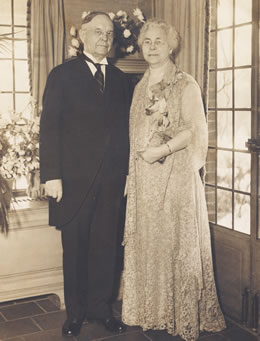
Gardner Cowles Sr. and Florence Cowles

Was it the rise of the Internet? The cashing in by all but a couple of the renowned newspaper families, such as the Binghams in Louisville, the Cowleses in Des Moines, the Chandlers in Los Angeles? The rapacious demands of Wall Street after many major newspapers were snapped up by publicly owned companies?

All of those and other factors have been fingered by various experts as the bogeyman that did in a lot of top-tier newspapers.

And now comes another viewpoint, presented by Jim O’Shea, a former top editor at both The Chicago Tribune and The Los Angeles Times. O’Shea’s new book, “The Deal From Hell: How Moguls and Wall Street Plundered Great American Newspapers,” was reviewed in the SundayBusiness section of this week’s New York Times.

The reviewer, Bryan Burrough, says this:

“Mr. O’Shea argues that what’s killing newspapers isn’t the Internet and other forces, but rather the way newspaper executives responded to those forces.”

Burrough goes on to quote from O’Shea’s book: “The lack of investment, the greed, incompetence, corruption, hypocrisy and downright arrogance of people who put their interests ahead of the public’s are responsible for the state of the newspaper industry today.”

Now that’s an angry and eloquent sentence.

O’Shea backs up his assertion largely by chronicling a newspaper deal that went terribly wrong and wrecked what once had been two great chains — Tribune (Chicago Tribune and others) and Times-Mirror (Los Angeles Times and others). Suffice it to say the papers ended up in the hands of a goofy Chicago investor named Sam Zell, who knew nothing about newspapers and who hired a bunch of former radio DJs and executives to run the chain.

He’s now out, but the Tribune chain is in bankruptcy, and the 10 daily papers in the Tribune chain are a shadow of their former selves.

Papers like The Kansas City Star, the Omaha World-Herald and the St. Louis-Post Dispatch are lucky in that they have managed to avoid the clutches of thoroughly greedy people…although they, too, have fallen far and fast.

I have a different perspective on the implosion of newspapers. I think the crumbling of demand for the daily, local paper was as inevitable as the rise of “riverboat casinos.”

The winds of change started rather slowly but accelerated to the point that we in the newspaper business (I’m a 37-year veteran) were swept up and away, and there was little we could have done to prevent it.

The advent of the Internet? Yes, that definitely played a part. But what set the stage for that?

The pace of society was already gaining steam before the Internet came along. More people were relying on TV for information and entertainment, people were working longer hours, more and more women were going into the work force, people had less time to read newspapers and they were less interested in reading newspapers.

Ask any circulation supervisor at just about any paper in the country and he or she will tell you this sentence is what they hear most often when people call in to cancel their subscriptions: “I don’t have time to read it.”

We in the business couldn’t grasp the climate change because writing the paper and reading it was our business; it was what our lives revolved around. You bet we had time to read the paper; that’s where most of our story ideas came from.

Yes, some greedy people got in there and made the situation a lot worse and sullied the reputations of some formerly high-class papers. But, in retrospect, I don’t think anything could have stopped the overall implosion. Even if we had reacted quickly and embraced the Internet and started charging for online content at the outset, I think circulation, advertising and readership still would have plummeted.

I mentioned that it was the demand for the local, daily paper that hit the skids. Meanwhile, national papers like The Times, the Wall Street Journal and USA Today are still doing relatively well. And even though the New York Times Company (NYT) is a public company, the Sulzberger family still holds a majority interest and has the resources to run the paper as it should be run, putting lots and lots of money into the editorial side.

Many people, like me, who still need a substantive paper with a heavy emphasis on world and national news have gravitated to The Times. I take The Star, which I read first, and then I turn to The Times. I’ve got the time (retired five years ago), and my interest in newspapers has never flagged.

But the time is a luxury that most people don’t have, and the interest is… well, it’s an interest that many people just don’t have any longer.

I’m not saying that’s bad, that’s just the way it is, and that’s what’s responsible for the state of the newspaper industry today.

Read Full Post »

It’s a truism in journalism that the most interesting stories don’t always end up on Page 1.

Take, for example, a story on page A23 of the Sunday New York Times. An irresistible story, accompanied by two captivating photos, was ensconced five pages from the back of the section.

Titled “A Gangster’s Gal Was Loyal to the End Of Life on the Lam,” it was about Catherine Greig, the 60-year-old girlfriend of notorious Boston gangster James (Whitey) Bulger, who was arrested along with Greig outside their Santa Monica, Calif., apartment last week.

Bulger, 81, and Greig had been on the run for 16 years, having left Boston after an FBI agent with whom Bulger had been cooperating tipped Bulger off to the fact that he was about to be arrested.

The FBI finally got Bulger, who is charged with 19 murders, among other crimes, following a tip that came in after the FBI ran TV ads in several large markets, asking people to be on the lookout for Greig.

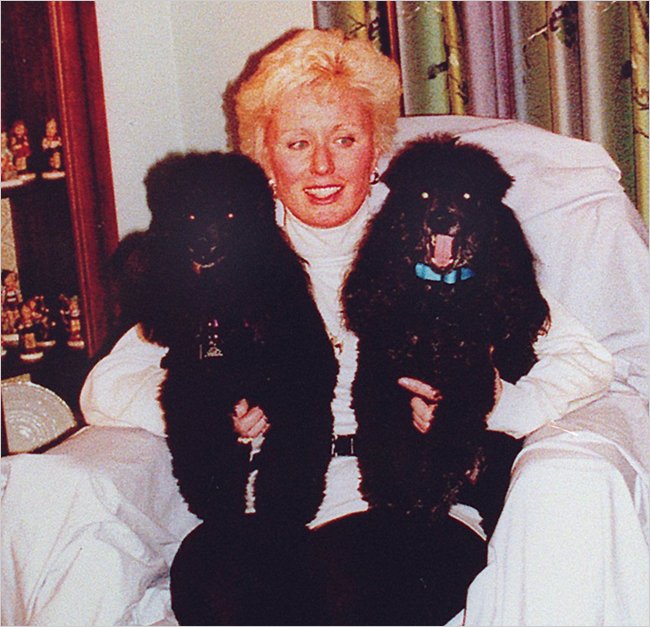
Catherine Greig, in happier times, before she went on the lam with James (Whitey) Bulger

From photos, it appears that Greig was a good-looking woman at one time, with platinum hair and pleasing features. She was proud of her appearance, too.

“She had her teeth cleaned once a month and frequented hair salons, even on the run,” wrote Katharine Q. Seely, one of The Times’ top-tier reporters. “…She also underwent numerous plastic surgeries, including breast implants, a nose job and a face lift, according to the FBI.”

She and Bulger, who were going by the names of Carol and Charlie Gasko in California, paid for everything in cash; more than $800,000 in cash was found in their apartment.

Seelye described Greig as “a supporting character in the long-running Bulger crime drama, overshadowed by her larger-than-life companion and always dutifully subordinate.”

Indicative of the twisted roots to their relationship, Bulger was carrying on with Greig back in Boston while he was living with another woman, named Theresa Stanley. Furthermore, Greig had previously been married to a Boston firefighter who had two brothers who were members of a rival gang to Bulger’s. Bulger or his henchmen killed both men.

As Seelye put it, “It was a sign, perhaps, that if she could overlook his (Bulger’s) possible involvement in the deaths of her two brothers-in-law, she could overlook a lot more.”

Makes you gulp, doesn’t it?

When the tipping point came in 1995 — after the FBI agent informed Bulger he was about to be arrested — he unceremoniously dumped Theresa Stanley, dropping her off in a parking lot and saying, “I’ll call you.”

Well, as Van Morrison says in his great song “Domino,” “If you don’t hear from me, that just means I didn’t call.” And that was the end of that.

Bulger then picked up Greig “and they disappeared into rural America,” Seelye wrote, leaving behind Grieg’s beloved poodles, whom she had pampered and  kept well groomed.

All along, Bulger had Greig firmly under his thumb, and for some reason — money? fear? perverted loyalty? — she put up with it.

Bulger and Greig, before they were arrested last week in Santa Monica

A man who knew the couple in Louisiana, where they stayed for a while, told The Boston Globe that Bulger believed that “women should be seen and not heard.”

“He (the man who knew them) added that Mr. Bulger had boasted that all he had to do was clap his hands and Ms. Greig would jump,” Seelye wrote.

When they were arrested last week, Greig’s hair had gone white…but still well coiffed.

Greig is now charged with harboring a fugitive and faces five years in prison. With Bulger undoubtedly headed to prison for good, the most interesting tentacle of this story to follow after the trials and sentencings will be this:

Who Greig team up with next?

Read Full Post »

« Newer Posts - Older Posts »