Feeds:
Posts
Comments

Archive for the ‘journalism’ Category

In the last four days, the picture has grown dimmer for Bishop Robert Finn, and the evidence of wrongdoing at the highest levels of local Catholic hierarchy has grown stronger.

And all because of two articles in The Kansas City Star.

The first was a thoroughly researched and beautifully written profile of the Rev. Shawn Ratigan, who stands charged with three felony counts of possessing child pornography. It ran on Page 1 on Saturday.

The second was an “As I See It, ” Op-Ed piece by Pat O’Neill a respected marketing consultant in Kansas City. It ran on Page A-11 on Monday. O’Neill, a practicing Catholic, called for the resignations of Finn and Vicar General Robert Murphy, and he challenged prosecutors to bring charges against the two.

The profile and the opinion piece served as a one-two punch that took a lot of  steam out Bishop Finn’s time-killing initiative two weeks ago, when he appointed former U.S. Attorney Todd Graves to investigate the diocese’s handling of sex-crimes cases, including the Ratigan case.

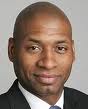
Morris

Rice

First, let’s look at the profile, which bore the by-lines of federal courts reporter Mark Morris and Northland reporter Glenn E. Rice. Rice has been on the Ratigan-Finn story from the start; this story represented Morris’ first work on the story.

Two of the main points that Morris and Rice established were, first, that Ratigan is — like Finn — a crusading, pro-life cleric, and, second, that Ratigan and Finn have spent time together.

The fact that they have more than a passing relationship could well indicate that after lewd photos of young girls were found in Ratigan’s laptop computer, Finn was loath to turn in a priest whom he knew quite well and who shared his pro-life stance. That’s been my conviction ever since Mike Rice, a former KC Star reporter, wrote a comment on this blog May 20, saying that he knew of people who had stopped attending Mass at Ratigan’s Northland parish because of his conservative ideology.

Regarding the Finn-Ratigan relationship, Morris and Rice dug up records revealing that in January 2007, Finn joined Ratigan and 40 high school students from St. Joseph for a bus ride to Washington, D.C., for the annual March for Life rally.

One of the most fascinating glimpses of Ratigan’s pro-life zeal was that he had his Harley-Davidson motorcycle decorated with themes that celebrated life.

“The gas tank bore the image of an angel bringing a baby down from heaven,” the story said, “while another spot carried a cross emblazoned with a ribbon reading, ‘Pro-Bikers for Life.’ ”

The entire story is a great read, but it contains, in particular, two killer paragraphs.

One is about Ratigan’s propensity to gamble. (He played the Missouri Lottery, for example.)

“In December 2010,” the story said, “whether he realized it or not, Ratigan placed one of the lowest percentage bets of his life when he handed his laptop computer to a repair person. Would the technician notice the allegedly lewd photos of girls under the age of 12? And if so, would he mention the photos to anyone?”

Wisely, the reporters let the questions hang in the air because everyone knows the answers.

The second memorable paragraph spelled out what happened after church officials seized Ratigan’s computer.

“The next day, Ratigan, the son of a man who suffered from profound depression, retreated to his garage, fired up the pro-life Harley and waited for death.”

We all know how that episode came out, too.

***

O’Neill’s column carries a tremendous wallop in no small measure because he is well known in Catholic circles and even served for a time as communications consultant to the Diocese of Kansas City-St. Joseph and the Archdiocese of Kansas City in Kansas.

O'Neill

In his piece, O’Neill showed that he, too, can turn a phrase. Consider this:

“When Bishop Finn arrived here in 2005, he was one of a new wave of American bishops charged with turning the tide of public opinion away from the abuse scandals and back to core conservative Catholic values and respect for the church and its priestly vocations. Instead, Bishop Finn is up to his collar in a flood of renewed scrutiny and anger.”

O’Neill went on to point out that despite hundreds of reports of priest sexual abuse over the last two decades, “only a handful of pedophile priests and no complicit church supervisors have been subjected to civil punishment, i.e., jail time.”

The column concluded with a flourish:

“The time has come for us to harness our collective anger and embarrassment and use that energy to change the way our church and our dioceses operate, once and for all.

“After all these years, it is starkly obvious to me that there will be no change for the better in the Kansas City diocese until men like Bishop Robert Finn and his Vicar General Robert Murphy are forced to resign, and criminals in collars are subject to secular trial and incarceration.”

In the p.r. battle that is being waged between Bishop Finn and his supporters on one hand and his critics on the other, the advantage has once again shifted to the critics, partly because of a great news story and a damn good p.r. man.


Read Full Post »

Three short items today…

The Kansas City Star and writer Judy Thomas, in particular, wrung their hands today about the United States Conference of Catholic Bishops’ failure to significantly change their head-in-sand policies on child sex abuse.

Meeting in Bellevue, Wash., Thursday, the American bishops voted 187-5 to essentially stick with the policy that they adopted in 2002.

“We are dismayed that the new policy is almost identical to the current policy, despite horrifying recent evidence in Kansas City and Philadelphia that the church’s current policies are dangerously lenient and full of loopholes,” Terence McKiernan, president of BishopAccountability.org, was quoted as saying.

It was the lead story in the paper and ran under a one-inch headline that said “Bishops Resist Changes.”

All who are surprised please raise your hands.

Anyone who has any idea of how the Catholic Church operates — and that’s the vast majority of people — knows that the church’s turnaround time on major issues is usually a century or two, not a month or so.

The bishops’ assembly was probably set two years ago, and their position on the sex abuse policy was probably determined months ago.

Rigali -- another pomp and circumstance bishop

The Philadelphia scandal — where Bishop Justin Rigali allowed 37 accused priests to continue working around children in Catholic parishes — took place earlier this year.

I predict it’s going to take decades for the church to come around to the idea that the correct action in priest-accusation cases is to call the police immediately — not mull it over, meet with and warn the priests and try to persuade them to get on the right path.

The Star’s headline and story smacked of hyperventilation.

Maybe it was just a vehicle to run a big photo of the Rev. Shawn F. Ratigan, the local priest who got his kicks by taking “up-skirt” photos of elementary-school girls.

Ratigan, who is in jail, was photographed in Clay County Circuit Court, where he made a brief appearance Thursday. Nothing happened in his case Thursday; the fact that he appeared was, correctly, worth only a paragraph in today’s story.

The story probably deserved front-page play, but certainly not top of the page with a four-column photo.

***

Here’s a funny correction from Wednesday’s New York Times…

Leona and Trouble

“An article on Friday about the death of Leona Helmsley’s dog, Trouble, misstated the reason that Trouble’s inheritance from Ms. Helmsley’s estate was reduced to $2 million from $12 million, the amount specified in the will. A judge determined that the greater amount exceeded that necessary to care for the dog, not that Ms. Helmsley was of unsound mind when she made the will.”

I guess the issue of the late Ms. Helmsley’s state of mind is still up in the air, eh?

***

Then, the Thursday Times carried an item that is one of the most dreaded events in newsrooms: the correction to a correction.

“A correction in this space on Tuesday misstated the size of the (Irish Fianna Fail) party’s Dublin delegation…there were 18 members, not 47.”

Ouch.

Read Full Post »

Talk about continuing the youth movement at The Kansas City Star.

Wow.

The woman who will become the new publisher later this month is 40.

She succeeds Mark Zieman, who was 47 when he was named publisher three years ago.

And…Mike Fannin, the editor, is only 44.

Parrish

The new publisher of the McClatchy-owned paper is Mi-Ai, Parrish, who has been publisher of the company-owned Idaho Statesman since July 2006.

Parrish, whose first name is pronounced MEE-uh, had been deputy managing editor for features and visuals at the Minneapolis Star Tribune before being tapped for the Idaho post.

I sure hope that Parrish works out, and I wish her the very best. But putting a 40-year-old person with five years of publishing experience — especially small-market experience — looks like a rather big roll of the dice to me.

On the plus side, reporter Mark Davis reports in a story on The Star’s website that Parrish led the Statesman’s effort to “transform and diversify business operations, introduce new print and digital products, grow digital traffic and revenue while improving the core newspaper and enhancing its reputation for quality journalism.”

This year, for example, the Statesman rolled out a new product called Business Insider, a weekly business-to-business magazine. And in 2008, the Statesman was named a Pulitzer Prize finalist in the breaking news category for its coverage of events triggered by the men’s room arrest of former Idaho Sen. Larry Craig in Minneapolis.

But look at some statistics.

The Star has an average Monday-Friday circulation of 210,000 and a Sunday circulation of about 300,000. By comparison, the Statesman, in Boise, has an average weekday circulation of about 50,000 and Sunday circulation of about 73,000. (Sunday circulation has been up slightly the last two years, while daily circulation has declined each of the last four years.)

So, The Star is about four times larger than the Statesman. That’s quite a jump.

Parrish also will be tested right off the bat with her choices for top managers. Among other things, she’ll have to decide whether to keep vice presidents such as Editor Mike Fannin and advertising executive Tim Doty in place.

On the digital side, her youth should work to her advantage because that appears to be where the future lies for newspapers. But her youth could work against her on the personnel side, unless she gets some very good advisers.

On that front, my recommendation would be that, in the newsroom, she turn to long-time managing editor Steve Shirk, a tried and true leader at The Star for more than 35 years.

Steve’s an old guy — about 60. He’s got the wisdom and the temperament to help a new publisher make a safe jump from a small pond into the churning waters of the Lake of the Ozarks.

Read Full Post »

Former Kansas City Star publisher and now New York Times public editor Art Brisbane took his paper to the woodshed Sunday in an Op-Ed piece about The Times’ increasing tendency to get caught up in (or pulled down into) entertainment and gossip-scene coverage.

As public editor, Brisbane is accountable essentially to no one at The Times: He is free to write as he sees fit about what he thinks the nation’s premier paper does well and what he sees as its shortcomings. He can only be fired for 1) not writing or 2) violating the paper’s code of ethics.

Surely, one of the last things that many reporters and editors at The Times want to see in their e-mail in-box is a memo from Brisbane asking them to explain why they wrote this story or that story or why they approached it the way they did.

Brisbane

On Sunday, Brisbane took on not just one or two stories but an increasing, overall tilt toward covering gossip-related material. Brisbane opened his story with this brilliant lead:

“The culture is headed for the curb, and The New York Times is on the story.”

He cited, among others, a recent article about the media coverage of the women in the Arnold Schwarzenegger and Dominique Strauss-Kahn cases and a story about “pay-to-play” tabloid journalism in the digital age.

Brisbane said in his piece that he can appreciate the newspaper’s attempt to walk a fine line between maintaining its “dignified brand” and covering events and culture “wherever they may lead.”

But he chided the paper for including “the seamy stuff” in the Schwarzenegger/Strauss-Kahn story.

The seamy stuff included repeating an assertion made by the gossip website TMZ that the household staff member whom Schwarzenegger impregnated “decked herself out as a sexy swashbuckler for Halloween” a year before she gave birth to the boy.

The story also quoted a blogger on Forbes.com as having said that the housekeeper, Mildred Patricia Baena, “would never appear on the cover of Maxim magazine.”

By regurgitating lurid and derogatory statements, Brisbane said, “the story took a kind of anthropological approach, donning  latex gloves to report on how others were reporting the story — chronicling, as it were, others’ low standards.”

In other words, Brisbane implied,The Times wanted to appear to be including the juicy stuff, not for its prurient value, but to seemingly acquit itself of its duty to publish “All the News That’s Fit to Print.”

Brisbane cited several other stories, which, he concluded, constituted “loitering at the edge of propriety.”

At the root of the increasing tendency of The Times to venture into the previously off-limits garden of gossip, he said, was “the strong tug on The Times and other mainstream news media to follow society, sometimes eagerly, to its fringes.”

And then, in his very measured and tasteful way, Brisbane delivered the hammer:

“My preference would be to see more restraint. True, other media are indulging in questionable journalism, and it is difficult to resist the downward revision of standards. But The Times could just as easily pull back, recognizing that its readers don’t need and aren’t relying on it to chronicle these badlands. Other news outlets are more than willing to go there.”

In other words, Brisbane is urging the Grey Lady to stay true to its colors and not turn blue or purple.

I’m in full agreement. As a subscriber, I want my New York Times to be high road, not low brow.

Read Full Post »

Time to assess the initial coverage of the incredible Joplin tornado by The Kansas City Star and local TV stations.

The highest grade, an A+, goes to KMBC, Channel 9, which had at least two reporters and one or more camera crews on the scene and devoted at least the first 15 minutes, it seemed to me, of its 10 p.m. newscast to the disaster.

Anchor Lara Moritz and chief meteorologist Brian Busby stood on the set and delivered the news in front of a backdrop of video from the storm. Their positioning — not sitting behind the desk — sent a clear signal that something big was afoot.

Amazingly, The Star had no one on the scene last night, at least no one who was reporting for the morning edition. It relied on “staff and wire reports,” with the staff reports being provided by two reporters, Brian Burnes and Eric Adler, who made calls from Kansas City.

From this corner, The Star gets a grade of D-minus.

The Star did send a reporter, Brad Cooper, to Reading, Kan., to cover that city’s tornado, which struck Saturday night. But only one person died in that tornado, and it’s a very small town, near Emporia.

By contrast, Joplin — with 50,000 people in the city and 174,000 in the area — lost at least 89 people, and the level of destruction was jaw dropping. (At 4:15 p.m., CNN was reporting that the death toll was 116.)

More details…

I didn’t learn about the storm until 9:58 p.m., when I saw it on CNN’s website. The CNN story quoted an American Red Cross official as saying, “I would say 75 percent of the town is virtually gone.”

I gasped…But it was a gross exaggeration. On a CNN video report today, an official-sounding person says that 25 to 30 percent of the town suffered “major or significant damage,” and Channel 9 was saying last night that the southern third of the city suffered major damage. There’s a big difference between 75 percent and 25 or 30 percent (or even 33 percent).

After scanning the lead CNN story, I ran to the TV and started flipping channels. It was clear that KMBC, the top-rated station in Kansas City, was well ahead of at least two others — KSHB Channel 41 and  KCTV5.

I’m not much of a TV news devotee, so in my haste to get the best report, I overlooked FOX4.

Today, representatives of all three stations — 4, 5, and 41 — said they had crews in Joplin last night and that they aired reports on the 10 p.m. newscasts.

Peggy Phillip, news director at KSHB Channel 41, said that her station sent one crew at 6:45 p.m. — 45 minutes after the tornado struck and put another on the road about half an hour later. KSHB’s coverage led off at 10 p.m., she said, with “a multi-media journalist reporting live (by phone) over video” from The Weather Channel.

By 10:15, Phillip said, the station had one of its journalists on camera, at the scene.

Someone on the assignment desk at KCTV5 told me today that they had four people on the scene last night, but, in my channel flipping, I was underwhelmed by the station’s coverage. As I recall, they were emphasizing local weather at the top of the hour. For a station renowned for hyperventilating about even the prospect of bad weather, Channel 5’s coverage seemed totally disproportionate to its usual hyperbole.

Now, more about The Star’s coverage…

The danger of using “staff and wire reports,” instead of sending reporters to the scene is that you get a lot of second-hand information.

Sure enough, in the third paragraph of today’s front-page story, The Star picked up the CNN quote from Kathy Dennis of the American Red Cross: “I would say 75 percent of the town is virtually gone.”

Even as I gasped when reading that on CNN’s site, I was skeptical. The Red Cross official could not have surveyed the entire town, so how could she say 75 percent of it was gone?

It was irresponsible and very unwise of The Star to run that comment without having its own reporter on the scene, and the quote draped a shroud of skepticism over the entire story.

Perhaps more ignominiously, The Star relied on The Wichita Eagle, a fellow McClatchy-owned paper, for significant coverage. The credit line at the end of the lead story attributed the reporting to The Associated Press and The Eagle, as well as Burnes and Adler.

The Star’s coverage also included a stand-alone, 12-column-inch story on Page A-8 by The Eagle’s Beccy Tanner, from Joplin.

Why is this important?

Well, according to MapQuest, it’s 184 miles from Wichita to Joplin. From Kansas City to Joplin, it’s 157 miles. Who has the quicker, easier access?

But, no matter, The Star was all over that tornado in Reading, Kan. — population 231.

Read Full Post »

Congratulations are in order to Mark Zieman, who has been promoted from KC Star publisher to vice president of operations for parent company McClatchy Co.

Today, I want to talk about his leadership and also about the competition that is about to take place to replace him.

Zieman, 50, has had a very successful, upward-bound, 25-year career at The Star. The paper apparently has continued to do well financially during Zieman’s three-year watch as publisher, despite the bottom falling out of the newspaper industry.

I haven’t liked everything Zieman has done at The Star, but, in my opinion, he has earned this opportunity to prove or disprove himself at a higher level. He inherited a successful enterprise from previous publishers, including the late James H. Hale, and he has managed to hold it together, at least financially.

He has held it together almost entirely through cost-cutting, however. There’s less of the paper, literally, than there used to be, and there are far fewer employees, including quite a few valuable editorial employees.

I said that I haven’t liked everything Zieman has done. What bothered me most was that when the layoffs began three years ago, Zieman donned rose-colored glasses with each round of layoffs and issued statement after statement about how better times were just around the corner. That went on until earlier this year, when he struck a note more of resignation and hope, instead of certainty, about light at the end of the tunnel.

When I wrote about his cheery, public position, I said that I was losing confidence in him as publisher. That was probably an overstatement, although I’m sure that most, if not all, of the employees who have been laid off would express a similar sentiment. Also, as a retired reporter and assignment editor at The Star, I was looking at it through the eyes of someone who could have experienced the same fate, had I not gotten out two years before the axe started falling. (It was just plain luck that got me out the door, I have to admit, not prescience.)

Now, Zieman is going to be under more pressure than ever. He will oversee 14 daily papers, including The Star, in several states. McClatchy paid way too much — $4.6 billion — for the Knight Ridder papers in 2006, and they may never be able to pay off the debt they took on to swing the deal.

Last year, a Morningstar analyst wrote, “Our fair value estimate on McClatchy’s shares is $0.” (For the record, it’s about $2.75  per share now.)

The analyst said he believed that the balance eventually would tip from stockholders’ interests to creditors’ interests and that stockholders would be left empty-handed.

So, that’s the spare meal that Zieman will sit down to at McClatchy headquarters in Sacramento.

CEO Gary Pruitt and other top executives undoubtedly will look to Zieman for fresh ideas on digging out of deep holes. He will face expectations, probably, to devise plans to cut costs and somehow generate new revenue, perhaps through imaginative uses of the web.

So, I wish him luck. He’s definitely going to need it, and I think we can look for that graying hair to lose what is left of its dark luster within a few years — if McClatchy lasts that long.

***

Now, back at the ranch…several Star vice presidents, certainly would like to be considered for the publisher’s job. Among them could be Mike Fannin, editor; Chris Christian, v.p for circulation; Chris Piwowarek, v.p. for human resources; and Miriam Pepper, v.p. of the editorial page.

I think McClatchy will look closely at the prospect of naming a woman as publisher, which would guarantee Piwowarek (pronounced pee-va-vorek) and Pepper a close look. However, I think all of the people mentioned above are long shots for the following reasons.

Christian and Piwowarek because their kingdoms are relatively narrow. Pepper because her background is on the editorial side. Fannin because most of his background is in sports and also because it has come to light since he was named editor in 2008 that he has two d.u.i convictions and a 1994 misdemeanor assault conviction in Texas, where he formerly worked.

Another long shot, from the newsroom, would be managing editor Steve Shirk, who has provided steady and confident leadership in every post he has held in his approximate 35-year career at the paper. Working against him, however, is the fact that, like Pepper, all his experience is on the editorial side.

Without completely ruling out an inside promotion, I tend to think that McClatchy will bring in someone from outside. I think they will promote a current publisher at a smaller paper in the chain.

That’s what they recently did in Lexington, Ky., at the Lexington Herald-Leader. There, Rufus M. Friday, president and publisher of the Tri-City Herald in eastern Washington, will replace long-time Herald-Leader publisher Tim Kelly, who is retiring at the end of this month.

I think McClatchy will want to continue planting seeds of hope with its current publishers, on the outside chance that the company will find its way out of the long tunnel.

Read Full Post »

Aided by a change in the way circulation statistics are calculated, The Kansas City Star was able to get its Sunday circulation figure back up over the 300,000 benchmark for the six-month period ending March 31.

Overall, however, considering the direction of newspaper advertising, the picture for the newspaper industry remains grim.

Figures released earlier this week by the Audit Bureau of Circulations (ABC) show that The Star’s Sunday circulation was 305,113 for the period ending March 31, compared to 290,302 for the period that ended last Sept. 30. (The figures for both periods include digital subscriptions, which make up more than 10 percent of circulation.)

When the 290,000 figure came out last fall, it shocked many Star watchers because it was the first time in the modern newspaper era that circulation had fallen below 300,000.

At least partly to mitigate the ongoing circulation declines around the nation, ABC, which is run by publishers, changed the rules to include distribution categories that, until now, have not been included in the “top line” circulation figure. Among those categories are newspapers distributed through newspapers in education (NIE) programs and copies sold in bulk to places like hotels and restaurants.

Where ABC’s top line formerly was “total average paid circulation,” it is now “total average circulation.”

Because of the changes, ABC cautioned against making direct comparisons of the March data with data from earlier reporting periods.

The Star’s two other circulation categories — daily (Monday through Friday) and Saturday — also benefited from the change. For the most recent period, daily circulation stood at 209,258, compared with 206,441 for September, and Saturday circulation was 215,961, compared with 211,966 for September.

Unfortunately for the St. Louis Post-Dispatch, the rules changes weren’t sufficient to give that paper a bump over last September’s Sunday figures.

Like The Star, the Post-Dispatch fell below a key benchmark — 400,000 Sunday sales — last year, when circulation dipped to 365,589. The comparable ABC figure for March 31 was 360,450.

However you look at it, it’s fair to say that circulation revenue at The Star, the Post-Dispatch and the vast majority of daily newspapers in the U.S. is continuing to fall. And when that fact is combined with the unrelenting decrease in newspaper advertising, it should make the most ardent of believers in newspapers avert their gaze.

Alan D. Mutter, who writes the Reflections of a Newsosaur blog out of San Francisco, reported recently that “although television, online, radio and even magazine ad revenues all moved into positive territory by the end of 2010, newspaper (ad) sales dropped 6.3 percent.”

One of the worst first-quarter showings was turned in by The Star’s owner, McClatchy Co., where ad revenue fell 11 percent from the first quarter of 2010.

For the industry as a whole, Mutter said that annual print and digital newspaper ad sales have now dropped nearly 50 percent from the all-time high of $49.4 billion in 2005.

As an example of the dreadful collapse, Mutter pointed to automotive advertising. “Publishers, who collectively sold more than $5 billion in automotive classifieds as recently as 2004, booked a mere $1.1 billion in the category in 2010,” Mutter said.

During the same period, auto advertising on local TV stations jumped nearly 54 percent, to $2.6 billion, and online auto advertising rose nearly 14 percent to $2.8 billion.

“Because a growing number of well-informed consumers make their decisions before contacting dealers,” Mutter said, “the point of sale has moved to the web, not the showroom. Dealers don’t need newspapers to remind consumers they are there, because empowered consumers know who the dealers are, know what models are in stock and know how much they should be paying for a car.”

So, in many case, the information “vehicle” — the newspaper — is cut out.

For consumers, the change has been fantastic. For newspapers, it’s been very tough, and the road ahead doesn’t look any better.

Read Full Post »

The New York Times op-ed page Saturday was a thing of beauty and wonderment.

Beauty because in separate pieces, columnists examined three of the biggest problems America faces: Lack of integrity on Wall Street; the political right’s fixation with Barack Obama’s place of birth and religious affiliation; and many states’ hell-bent determination to bar the doors against reasonable handgun controls.

Wonderment because some of the facts and information contained in the articles were absolutely jaw dropping.

Consider:

1) Op-ed columnist Gail Collins, who has one of the wickedest wits in the writing business, sarcastically lit into two states — Utah and Arizona — whose legislatures recently spent valuable time naming “official” state weapons. For its part, Utah went with the Browning pistol as its official state firearm. Arizona, meanwhile, bestowed the same honor on the Colt Single-Action Army pistol.

Collins

Fighting an uphill battle, on the other hand, was U.S. Sen. Frank Lautenberg’s push for a bill that would make it more difficult to sell guns to people on the terror watch. Lautenberg’s bill has gone nowhere, Collins reported, stating: “Opponents point out that the terror watch list is not always reliable, and the bill might therefore force innocent Americans to go through an entire additional step while purchasing armaments and explosives.”

Collins went on to note that so far this year no state has passed a law prohibiting colleges from banning guns on campus.

“This is pretty notable,” Collins wrote, bitingly, “since failure to require that institutions of higher learning be gun-friendly is the only thing that stands between some states and a perfect 100 percent rating from the National Rifle Association.”

2) Charles M. Blow compiled key statistics from four recent surveys about Obama’s birthplace and religion. At least 900 people responded to each survey. Blow focused on the answers that people who identified themselves as Republicans provided.

Blow

— A New York Times/CBS poll asked respondents if they thought Obama was born in the U.S. or another country. The result: 45 percent of Republican respondents said they believed he was born in another country; 22 percent said they were unsure.

— A Fox News poll asked respondents if they thought Obama was born in the U.S. or not. The result: 37 percent of Republicans said they did not think he was; 16 percent were unsure.

— The Pew Forum on Religion and Public Life asked respondents if they thought Obama was Christian, Jewish, Muslim, Buddhist, Hindu, atheist, agnostic or something else. The result: 31 percent of Republicans said they thought he was Muslim; 39 percent said they didn’t know.

— A Time magazine poll asked respondents if they believed that Obama was a Muslim or a Christian. The result: 46 percent of Republican respondents said they thought he was Muslim; 24 percent didn’t answer or said they didn’t know.

Blow concluded that the effort by some Republicans, such as Donald Trump, to mine the birthplace and religious affiliation issues is intended to “distract and deceive” voters. Why?

“Because the right’s flimsy fiscal argument — that if we allow fat cats to gorge, crumbs will surely fall — is losing traction” among almost all groups, Blow said, including families strapped by $4-a-gallon gas.

3) In a column titled “The Party’s Over For Buffett,” Joe Nocera derided Warren Buffett’s self-proclaimed commitment to ethical dealings by saying: “For someone who has said repeatedly that he would rather lose money than even a shred of reputation, his actions have been inexplicable.”

Nocera

He was referring, of course, to the case of Buffett’s trusted aide, David Sokol, who bought $10 million worth of stock in a company (Lubrizol) days before convincing Buffett to buy the company. Buffett disclosed the impropriety but he allowed Sokol to resign — and praised his overall record at Buffett’s firm, Berkshire Hathaway — rather than fire him.

Nocera wrote that what Sokol deserved was “a kick in the rear” instead of “a pat on the back.”

“What moved him,” Nocera wrote of Buffett, “to pre-emptively clear Sokol, who had so clearly violated Berkshire’s code of conduct, of wrongdoing? What does that tell us of possible flaws in Buffett’s character?

Nocera closed by saying that if they’re smart, “Buffett and his shareholders will view this fiasco as a wake-up call.”

Thank you, Gail, Charles and Joe for putting a penetrating spotlight on some facets of contemporary American life that should concern most of us.

Read Full Post »

Yesterday, I went looking for possible sites for big, new office buildings on the north side of 47th Street, east of Broadway.

I’m not a developer, let me assure you; I’m just a 4th District, Kansas City resident who is, and long has been, interested in what happens on the Country Club Plaza, the distinctive and true jewel of the city.

I went looking for possible construction sites because, if The Cowardly and Lame Duck City Council does what a lot of people expect it to do tomorrow, we could be seeing several more new office buildings between Broadway and J.C. Nichols Parkway in the coming years.

The issue tomorrow will be rezoning a site behind the Balcony Building, where the Neptune Apartments now sit, on the northeast corner of 47th Street and Broadway. Highwoods Properties, which owns the Plaza is seeking the rezoning to allow for construction of a high-rise office building, to be used by the Polsinelli Shughart law firm or perhaps another tenant, if Polsinelli Shughart can’t make the timing work.

The Neptune Apartments (background), proposed office tower site

In an interview yesterday, Vicki Noteis, a former city planning director who is advising the rezoning opponents, a group called Save the Plaza, warned that the rezoning could be precedent setting; it could mark the beginning of the end of the 1989 Plaza Urban Design and Development Plan, which essentially limits commercial development to the west and northwest parts of the Plaza.

Everywhere else, retail holds sway. Retail, which makes the Plaza a fun place to spend time and generates the bulk of pedestrian traffic, including our beloved visitors from Iowa, Nebraska and other Midwestern states.

“It’s really important to hold the line on this,” Noteis said. “It you break this line, I think you’ve got a problem. You have to respect a line someplace.”

If that line is trampled in the sand…

Well, how would you like to see a big, new office building on the site of Fogo de Chao, the Brazilian steak house between Wornall and Wyandotte? Or at the site of the Commerce Bank Building and P.F. Chang’s, between Wyandotte and J.C. Nichols Parkway?

Fogo de Chao, east of Wornall and east of Houston's

Could happen. It would take more rezoning, but, once the line is blurred, what’s to stop commercial creep from breaking into a run?

Highwoods, which bought the J.C. Nichols Co. more than 10 years ago, is primarily in the business of owning and leasing commercial properties — office buildings, that is. Its aim, said Noteis, is “higher density” on the Plaza. That means fewer low-level retail buildings and more high-rise office buildings.

And that’s exactly what opponents of this ill-conceived plan — including me — believe would ruin the character of the Plaza.

It’s true, of course, that Highwoods, which owns the place, has a right to put its vision forward. But we, the Kansas City residents who honor and appreciate what we see as the greater vision of the late Jesse Clyde Nichols and his son, the late Miller Nichols, should have something to say about what happens there.

If this deal goes through, the opponents will mount an initiative petition, which would put the rezoning to a public vote. If you’ll recall, voters rejected another grandiose plan — the Sailors project, on 47th, east of Main Street — in the 1980s.

I would expect a similar result on this issue.

***

Keep in mind that The Cowardly and Lame Duck City Council is taking up this issue three days before its collective term expires.

Seven of the 13 council members are leaving office. They are Mayor Mark Funkhouser, Deb Hermann, Bill Skaggs, Sharon Sanders Brooks, Beth Gottstein, Terry Riley and Cathy Jolly.  The other six — Ed Ford, Russ Johnson, Melba Curls, Jan Marcason, Cindy Circo and John Sharp — are going into their second terms and will be prohibited, by the city’s two-term limit, from seeking re-election in 2015.

Essentially, then, these council members — with the exception of any that might run for mayor in the future — can jam this rezoning down the throats of the public with impunity. There will be no way for city residents to hold them accountable at the polls in the foreseeable future.

Council members who are considered almost certain to vote “yes” are Skaggs, who is sponsoring the ordinance; Hermann; Ford; Johnson; Marcason; Circo; and Jolly.

That’s seven, which is what it takes to approve the rezoning.

Commerce Bank, east of Fogo de Chao

The proponents say they want to insure that Polsinelli Shughart and its 500 employees stay in KCMO. Ironically, however, it might not be Polsinelli Shughart that takes advantage of the rezoning. The firm needs to be out of its present building, on 47th Street west of Broadway, by the end of 2013, and a referendum easily could push the completion of construction well past that time.

So what we could see, Noteis pointed out, is The Cowardly and Lame Duck Council approving a rezoning for no particular tenant, just a neatly wrapped present for Highwoods to use whenever it wanted down the road.

“The city’s responsibility,” Noteis said, “is to find a site for Polsinelli Shughart, not to rezone property for Highwoods…The city fell headlong into the (Highwoods) trap. There’s no reason to push this through on behalf of Highwoods.”

***

It’s very odd that the rezoning charge is being led by Skaggs, who lives in the Northland, as far as you can get from the Plaza and still be in the city. The two council members who should have the greatest interest in the issue — Marcason and Gottstein, who live in the 4th District — have largely been AWOL.

Gottstein

Last week, when the council’s Planning and Zoning Committee took up the issue — and recommended passage on a 3-1 vote — Gottstein abstained, saying she had a conflict because her fiance, a physician, has an office on 46th Terrace, near Wornall. To that, I say LAME!

Marcason is not on the Planning and Zoning Committee, but she, too, has been “nowhere to be found,” as the narrator on “The First 48” frequently intones when referring to missing suspects.

In a check of The Kansas City Star’s electronic library, I found only two stories in which Marcason, who was re-elected without opposition last month, was quoted on the rezoning issue.

Early this month, after Polsinelli Shughart said it was pulling out of the plan to build on the site of the Neptune, Marcason was quoted as saying, “I think we were going to have a pretty thoughtful discussion. We just didn’t have the chance to work them through to a conclusion.”

Marcason

Last summer, after Highwoods and Polsinelli Shughart came forward with a redesigned plan — one that spared the Balcony Building, which faces 47th Street — Marcason was quoted as saying that the revised plan “looks very good.”

Yesterday afternoon, I put in a call to Marcason, and I spoke with her this afternoon. (She called this morning, but I didn’t pick up her message until late this afternoon. My apologies for the belated addition of her comments.)

She said she intended to vote for the rezoning for several reasons, including her desire to stop the loss of Missouri businesses to Kansas. “For us to say no, no, no (to the prospect of business expansion and development in Kansas city), I just don’t think that’s the message the council can afford to send at this time,” she said.

To the contrary, she said, Kansas City should be holding up a sign — figuratively speaking — that says, “Kansas City is not closed for business.”

Marcason also said that if the Polsinelli Shughart plan did not go forward because of the law firm’s time frame, Highwoods would have to bring any new proposal for the 47th and Broadway site back to the council for new approval.

Marcason said that the issue has become a tinder keg because of the badly flawed, initial plan that Highwoods and Polsinell Shughart came out with last year. That plan, which called for leveling the Balcony Building, turned many of the Save the Plaza people irrevocably against any subsequent plan that came forward. (The original plan has been amended twice.) Highwoods’ initial mistake, bad as it was, should not be held against the firm, Marcason said.

I appreciate Marcason’s comments, and I think her intentions are good and that she will vote on her conviction that the rezoning is in Kansas City’s best interests.

Still, to me, the greater concern is the “march of the office buildings” across Broadway. I think it’s a bad deal. I don’t like Highwoods; I don’t trust Highwoods; and I want Polsinelli Shughart to do the right thing and go to the West Edge.

I’m convinced that the new West Edge ownership team and the Polsinelli firm could come to terms that are financially acceptable to both sides.

Read Full Post »

A paper is fortunate, indeed, if it has one or more reporters who can assess the passing parade of stories, reach in and pluck out the occasional ones that have the potential to be something special.

Such a reporter is The Star’s Mark Morris, who has been a courts reporter the last 13 years and before that was a City Hall reporter and, earlier, an assistant metro editor.

From the outset, Morris has covered, with great perspective and clarity, the story of “Okies run amok” at the University of Kansas ticket office as several KU employees (now former employees) raped and pillaged the ticket cache under the un-watchful gaze of former KU athletic director Lew Perkins.

Last week, a different type of story piqued his interest. It was a follow-up to breaking news from March 29, when an Independence police officer shot and killed a career criminal, 41-year-old Lonnie Moore, after the criminal shot at the officer.

The story didn’t get a lot of attention when it happened: the goofball, driving a stolen car, began firing at the officer; the officer fired back and fatally wounded him.

Had the officer been wounded or killed, or if one or more bystanders had been injured or killed, it would have been a very big story. As it was, the TV and radio stations played it routinely, quickly consigning it to history.

Morris

But Morris, an award-winning investigative reporter, saw the glimmer of a good story. Just who was this Lonnie Moore? What was his background? What led up to the fatal encounter? And why would he choose to draw his personal and final line in the sand  “on a patch of Interstate 70 overlooking the Bass Pro Shop”?

So, on the front page of Saturday’s paper, Morris gave us the full, strange portrait of Lonnie Moore. It was the picture of an aimless, rootless, apparently poorly educated soul — the child of a single mother — who was convicted of his first felony when he was 18. It was the picture of a man who woke up most days with no goal in mind other than how he might create an illegal opportunity to come into possession of someone’s else’s property or money.

In the first few paragraphs, we learn that Moore was a longtime car thief, who usually surrendered quickly and quietly when the cops closed in on him.

In the fourth paragraph, the last one that appeared on the front page before the story “jumped” to an inside page, Morris set the hook: “The afternoon of March 29 was different.”

When you go to the jump, you find out that, within the last year, Moore had  upped his game from car thief to bank robber: He was the prime suspect in seven area bank robberies, the last one taking place in mid-March.

That revelation makes it clear why Moore drew that fateful line in the sand, and it also set the stage for the flashback that fleshes out “The Lonnie Moore Story.”

Like a jeweler slowly bringing out the finest stones, Morris unveils many rich nuggets about Moore that draw the reader closer to this strange fellow, whom you wouldn’t have wanted within arm’s length in real life.

Among the details:

— He was born in Chillicothe and moved to North Kansas City when his mother got a job with the Total Petroleum co.

— His mother died in 1995 at age 46. Moore had two brothers, neither of whom Morris could run down.

— At some point, Moore moved to the state of Washington and married a woman 28 years older than he.

— After being apprehended trying to break into a van in Milton, Wash., in 2003, Moore told police that he needed the van to visit his sick son in a Seattle hospital. But he didn’t know which hospital.

— Four months later, when he was stopped in a stolen car, he was carrying 15 “jiggler” keys, which had been shaved to fit in different car ignitions.

— In 2006, his wife filed for divorce and he moved to the town of Duluth, Minn., where he became “a regular police-blotter figure in the county’s weekly paper.”

— Wanted for probation violation, Moore left Minnesota last June, returned to the Kansas City area and apparently began robbing banks.

Oddly, and perhaps as a sign that he knew his walk on the wild side was nearing an end, he never showed a gun during the robberies and never disguised himself.

As Morris reported, “At least two sets of surveillance photos clearly show his face.”

So, on March 29, along I-70, Moore had nothing to hide and no realistic hope of remaining free.

It was the end of a rotten, pointless life that cost the taxpayers a considerable amount of money along the way but, fortunately, did no lasting damage to any innocent people, as far as we know.

And, thanks to Mark Morris, it was a life that made for interesting reading and reflection.

Read Full Post »

« Newer Posts - Older Posts »