Feeds:
Posts
Comments

Archive for the ‘journalism’ Category

With each passing day, the Fourth Estate, as the newspaper industry has been deferentially referred to for about two centuries, is becoming less of an estate and more like common ground.

(FYI, the term seems to date to the 1700s, when there were three “estates” of Parliament — the Lords Spiritual, the Lords Temporal and the House of Commons.)

Newspapers used to be the great purveyors of information. The big-city papers operated out of hulking fortresses, their minions scrambling around inside to meet deadlines and their delivery trucks spoking out for a hundred of more miles to deliver the precious product onto the lawns and to the newsstands for the waiting masses.
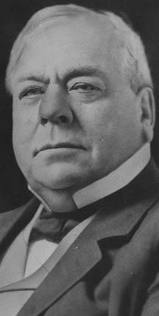
Some of the papers wore their hubris under their mastheads…like the Chicago Tribune, which for many years claimed the mantle of “World’s Greatest Newspaper.”  Then, there’s our own Kansas City Star, which still uses as its slogan the imperious words of founder William Rockhill Nelson: “A Paper for the People.”

(Doesn’t it just make you want to cry out, “Oh, thank you, Mr. Nelson, thank you!” ?)   

Others, like The New York Times, touted (and still do) their earnest and hard-working approach — “All the News that’s Fit to Print” — or, in the case of the Atlanta Journal, their mission — “Covers Dixie Like the Dew.” 

For outsiders — those not baptized in black ink — it was, and still is, difficult to get over the moat and into the fortresses. To peel a layer from the old saying about Las Vegas, what went on behind those walls stayed behind those walls.  

Over the years, though, and particularly in recent years as the news-gathering business has feathered and fractured with the galloping expansion of the Internet, some papers have gotten humility and have realized it’s time to descend from the stratosphere and get down to street level, where people are inhaling the exhaust fumes.

The Star, for example, has its Midwest Voices program of contributing columnists, and it also periodically invites area residents to The Star building at 18th and Grand to sit in on the editors’ afternoon news conferences to learn more about the paper’s inner operations.

Now, a Connecticut newspaper has taken things to an entirely new, egalitarian level. Peter Applebome reported in The Times on Thursday that The Register Citizen in Torrington, CT, has a sign out front inviting residents to the Newsroom Cafe for coffee and muffins.

The paper also circulates fliers around town, inviting members of the public to attend the daily 4 p.m. news conferences, where editors discuss and evaluate the stories that are in various stages of development. A sign on a newsroom wall, near the conference area, says, “Newsroom story meetings — 4 p.m. daily. Right here. Public welcome.”

Applebome says the open-arms approach reflects the paper’s commitment to the new, online-dominated journalism. John Paton, chief executive of the paper’s parent company, “has become a hero to new-media gurus,” Applebome said, “by taking a newspaper company emerging from bankruptcy and turning it into a company militantly focused on the Internet.”

The paper’s slogan says it all: “Digital first. Print last.”

Obviously, The Star and other big-city, mainstream papers are not going to be able to turn their ships around as fast as small operations like The Register Citizen. But they’d better start spinning the wheel faster, while there’s still time to salvage the evolving and weakening link between newspaper and reader.

With a few notable exceptions, like the Sulzberger family that controls a majority interest in The Times, industry leaders are no longer aristocrats. They are business people scrambling to figure out how to save an industry and what they can do to get lost readers back.

In my opinion, it’s important for newspaper editors and publishers to do whatever they can to shed the fortress, high-on-the hill image and to give the public more access to their buildings and their inner workings…within reason, of course.

The Star has taken the first baby steps, but I think it’s time for a more courageous move, one that tampers with the paper’s very origins.

Here’s my idea.

For those of you who subscribe, when you look at the bottom of the Op-Ed page, what do you see? Next to the masthead, listing the names of the top editors and executives, looms the frowning visage of William Rockhill Nelson, next to his words, “A Paper for the People.”

I say, get rid of the photo. Off with his head! That high-collared shirt, bulbous nose and icy frown send the wrong message in this day and age. The collar, the nose, the frown — they don’t make people want to buy the paper; they push people away!

I know this is a bold step. But The Star has taken bold steps before. Why, until about the early 1980s, the words “The Kansas City Star” were followed by a period on the flag (the top) of the paper. Some of you may remember. A period. Nobody understood it, but it was sacrosanct. 

Then, a publisher named Jim Hale, who had come along after a media conglomerate bought the paper in the late 1970s, decided one day to do away with the period. And so, poof, it disappeared. No one (or very few people, anyway) said a word.

The highfalutin photo of Nelson could disappear just as quickly and quietly. So could the slogan.

Read Full Post »

Today, I’m going to follow the lead of a popular Kansas City blogger and run a “girlie” picture.

I submit, however, that this photo is twice as alluring and titillating as any photo that my fellow blogger (sorry, not going to name him; gotta keep the focus on the photo) has ever put on his site.

Now, you fellows out there, put your eyes back in your sockets and compose yourselves.

And everyone — ladies, as well as gentlemen — get ready for a quiz.

I will tell you this about the photo: It was taken at Elaine’s, a legendary New York City bar and restaurant that has long attracted celebrities. Elaine’s has been in the news lately, since its owner, Elaine Kaufman, died Dec. 3.

The photo was reprinted Sunday in The New York Times style section, along with a story by Times reporter Tim Arango, who used to frequent Elaine’s. 

Now for the quiz.

1) This picture was taken when?
A–1990s
B–1970s
C–1960s
D–1950s

2) Who is the woman?
A–Olivia de Havilland
B–Jayne Mansfield
C–Candace Bushnell
D–Tina Brown

3) Who is the distinguished-looking man standing in the background?
A)John Updike
B)Prince Philip
C)George Plimpton
D)Gay Talese

4) Who’s the man kissing the lady’s ankle?
A)Jack Kerouac
B)Arthur Sulzberger Jr.
C)one lucky guy
D)Jack London

OK, here are the answers: ACDC. (Pure coincidence…I swear.)

If you’re at all like me, this is a picture that, when seen for the first time, makes you want to know more about it. It was taken by a New York photographer named Jessica Burstein. Burstein’s web site says that she began her career in 1974 as the first female staff photographer for the NBC network.

She now is a freelancer whose work has appeared in many publications and magazines. Among other things, she has worked as the official photographer for the Law & Order franchise, and she was the New York Yankees’ official photographer for construction of the new Yankee Stadium.

On Sunday, I sent an e-mail to Burstein, telling her how much I liked the Elaine’s photo and asking her if she would mind telling me more about how the photo came about.

Yesterday, Burstein phoned me from her home in New York, and we talked about that photo and her photography in general.

Burstein has been a regular at Elaine’s for many years and was a very close friend of Elaine Kaufman. In 1992, Kaufman asked her to document the bar in photographs, and she has been taking photos there ever since.

The night that she took the photo of Bushnell, author of “Sex and the City” and other novels, was “just another night at Elaine’s,” Burstein said.

“Candace was a few sheets to the wind,” Burstein said. “She would admit that.”

Not only that, but she was angling to have her picture taken. 

Burstein said she noticed the interplay between Bushnell and the two men — magazine writers — and that Bushnell made eye contact with her. “She knew exactly what she was doing,” Burstein said. 

In the frame immediately before the seminal one, Burstein said, both of Bushnell’s legs are raised (although not as high as the right one seconds later), but the man on the left is not kissing her ankle. Also, Bushnell’s hair is not shrouding as much of her face. 

When the scene changed slightly, Burstein was ready: “I saw it and caught it,” she said. 

To me, one of the many points of interest in the photo is the contrast between the bacchanalian scene in the foreground and the serious conversation going on in the background, with writer Gay Talese at the center of that facet of the picture.      

Another noteworthy point is that the photo was taken in black and white, which gives the photo a timeless quality. Burstein said she used black and white film exclusively until switching to digital photography in 2004. One advantage of black and white photography, she said, is that it eliminates “color distractions.”

At the time of the photo, Bushnell was about 39 and single. In 2002, she married New York City Ballet principal dancer Charles Askegard.

“She calmed down a lot,” said Burstein, who got to know Bushnell at Elaine’s. 

The photo first appeared in New York magazine as part of a retrospective, called “The Place To Be,” about Elaine’s.

Asked where the photo ranked on her list of personal favorites, Burstein said that for a long time it was “just another of my Elaine’s shots,” but that she has come to appreciate it more in recent years.

I asked her if she ever got any feedback from Bushnell.

“Yes,” Burstein said. “She said to me, ‘Jessica, you’re brilliant.’ ”

Jessica Burstein, Elaine Kaufman and Peter Khoury of The New York Times, 2008

Read Full Post »

Eight days have passed since the head-on car crash that resulted in the death of 16-year-old Zach Myers, a junior at Olathe Northwest High School.

And the public is still without an official explanation regarding the circumstances of the crash, which occurred on a narrow residential street about a mile north of a downtown trade school where Zach took some classes.

So, taking up where I left off on Monday — trying to get answers about this tragedy — I spent part of Wednesday surveying the crash scene and interviewing neighbors.

But first, here’s the latest from Sgt. Johnny Roland, public information officer for the Olathe Police Department. Roland said Wednesday afternoon that he did not expect the traffic unit’s report to be ready at least until next week, and perhaps later. (When it is finished, it will be a matter of public record.)

“There’s tons of data and information to gather,” Roland said, adding that it was “not uncommon” for a fatality investigation to take two or more weeks.

He said he did not know if toxicology tests were being conducted on any of the three survivors —  the two boys that Zach was with and the 20-year-old woman who was driving the other car. No one was seriously injured besides Zach, who suffered a head injury. 

The head-on collision occurred shortly before 10:30 a.m. Dec. 1 in the 600 block of North Iowa Street. Zach was in the back seat of what a neighbor said was a grey Hyundai Elantra, which was northbound, apparently headed from the technical school to Olathe Northwest on College Boulevard. 

The woman, southbound toward downtown, was driving a small red car, the neighbor said.

Everyone involved in the crash apparently was wearing a seatbelt, including Zach. 

The neighbor who described the cars, 35-year-old Kathleen McElliott, said she heard the crash and thought that her parked vehicle had been struck. She hurried outside, while her domestic partner was on the phone with a 911 operator. When McElliott looked inside the boys’ car, Zach was struggling to breathe. At that point, the belt was off Zach, she said, but she noticed that blood was on the lap part of the belt. “It looked like he was (had been) wearing at least the lap part of the seat belt,” she said.

She saw no blood on the shoulder harness, however, raising the possibility that that part of the belt was not around Zach’s torso at the time of the crash.

McElliott said she did not remember or notice if air bags deployed in the boys’ car but that the air bag in the woman’s car did deploy.  

Zach did not have an open head wound, McElliott said, adding that an emergency medical technician who was at the scene and visited her house a day or two later told her that his injuries were internal.

McElliott said she strongly suspected that excessive speed was a factor. The posted speed limit on that part of Iowa is 25 mph.

“It’s my opinion that at least one of them (the drivers) — I don’t know who — had to be speeding,” McElliott said. “There’s no way that a collision at 25 miles per hour would take a life.”

Like everyone else who has come in close contact with the case, McElliott said her heart went out to the Myers family. “I am deeply sorry for their loss,” she said. “Our kids to go school with them (the boys who were involved.)”

Wednesday, looking south on Iowa

The crash occurred on a section of Iowa that is two lanes, divided by intermittent yellow lines, and where Iowa curves and rises slightly. At the crash site, narrow gouges are visible in the street on both sides of the yellow line. The roadway had been cleaned with a solution that left a large, bleached-out-looking spot in the road.

McElliott said that on the morning of the crash, a large truck was parked on the west side of the street and that the woman who was southbound in the red car could have been trying to navigate around the truck. 

McElliott said a lot of drivers exceed the speed limit on Iowa. Indeed, as I was interviewing another neighbor, a car sped by at 45 miles an hour or more. “That’s part of the problem,” said the man I was talking to at his front door.

McElliott said that although she did not know Zach, she is haunted by the incident. “I wish I could have done something more,” she said.

The reason she didn’t, she said, is that the 911 operator had told her partner — who, in turn, had told McElliott — not to move him and to wait for emergency responders to arrive.

Read Full Post »

Zach Myers’ soft, beckoning smile jumped out at readers from Page 8 of Saturday’s Kansas City Star.

The vitality of that smile — the glimmer in those happy eyes — stood in stark, awful contrast, however, to the news that accompanied the photo: Myers, a 16-year-old junior at Olathe Northwest High School, had died from injuries he suffered in a car crash last Wednesday.

Zach

The story, which did not bear a by-line, said Zach had been in a vehicle with two other boys; that a head-on collision had occurred on Iowa Street in Olathe about 10:30 a.m. Wednesday, Dec. 1; that neither of the other boys nor the woman driving the other vehicle suffered serious injuries 

The story said that Zach, in addition to being a student at Northwest High, attended the Millcreek Center, a career and technical school in Olathe. The story quoted a statement from the district that described Zach as a well-liked student “with a caring heart whose wit and charm touched many lives.”

As far as it went, the story was satisfactory. But it left so many questions unanswered. 

Not just unanswered, but, worse, apparently unasked.

As a former reporter, as a parent, as a curious human being, I wanted to know more. 

For example, were the boys in school that day? And, if so, why were they out driving on the street at 10:30 a.m.? Where, exactly, did the crash occur? Was speed a factor? Were drugs or alcohol involved? Did one of the vehicles cross over into the path of the other? Were the occupants of both vehicles wearing seatbelts?

The Star’s story addressed none of those questions. 

It’s not every day that the life of a beaming, 16-year-old student is snuffed out in the Kansas City area, and when it does happen, in my view, it deserves more than a cursory story from the area’s leading news-gathering force.

Readers should expect a lot more than what they got on Page 8 of Saturday’s paper.

So, I set out to expand the record and set it as straight as I could. Here’s what I did and what I found. 

:: I checked the school calendar, which indicated school was in session that day.

:: I called the school district public relations office to verify that school was in session and to try to find out why the boys might have been out on the streets. I was told that the district spokesperson was not in but that someone else would call me. That was about 9 a.m. I haven’t heard back.

:: I went to Mapquest and discovered that Iowa Street is a north-south street that runs from Santa Fe, near downtown Olathe, to just south of 119th Street, west of Woodland.

:: I called the police department and spoke with Sgt. Johnny Roland, police spokesman. 

Roland said he believed the boys were on their way from Millcreek Center, near downtown Olathe, to Northwest, which is about five miles from Millcreek, at College Boulevard and South Lone Elm. He said Iowa, a logical route for the trip north, was a two-lane street, where cars parked on either side.  

Roland said the crash was under investigation and that he had not seen a report. Knowing the street, he said he could understand how a head-on crash could happen there, but he said he didn’t know if either vehicle crossed over.

He also said he did not know what kind of car the boys were in; if Zach or the other boys — or the woman driving the other vehicle — were wearing seatbelts; and if excessive speed was a factor. When I asked him if drugs or alcohol were involved, he said, “I don’t believe so.”

:: I called the Myers’ home in Lenexa. At first, I spoke with Zach’s mother, Kimberly Myers. I explained to her who I was and what I was doing, extended my sympathy and asked her if she was willing to talk about the crash. Before turning the phone over to her husband, John, she told me that Zach had been in the back seat of the vehicle and that he had been wearing a seatbelt.

When John Myers, a 21-year- veteran of the Olathe Fire Department, got on the line, I again offered my sympathy and explained who I was and why I was calling. We talked — amicably, I thought — for about five minutes.

He said all three boys were wearing seatbelts and that the other two suffered only scrapes and bruises. Like Sgt. Roland, that he didn’t know what kind of vehicle the boys were in. The other boys were classmates, he said, but he didn’t believe Zach was particularly close friends with them. Myers said he had not spoken with family members of the other boys.

He said Zach customarily spent part of school-day mornings at Millcreek and then went to Northwest about 10:40 a.m. or 11. So, the timing of the crash, as well as the route they were taking, he said, would indicate they were on their way to Northwest. He said the crash occurred about a mile north of Millcreek. 

Myers said that Zach, whose survivors include an older brother, suffered a head injury, but Myers said he didn’t know how he struck his head or on what. I noted that it sounded rather flukish — that everyone else walked away from the wreck, while Zach, buckled in the back seat, suffered mortal injuries. 

Myers agreed, saying: “We’re curious as well. We’re at a loss as to how this could happen.”

He said that the family was eager to get answers to their questions, but, at the same time, he did not want the investigation to be rushed.

“Frankly, I want them to take their time,” Myers said. “I want them to investigate this thoroughly.”

So, the Myers family and other people who would like to know more about this tragedy must wait. I certainly hope The Star will follow up. The loss of what appears to be a fine, 16-year-old boy should not be allowed to drift out of public awareness without explanation.

*****

A post script is in order. 

As I said in the text, I thought my conversation with John Myers was amicable. He spoke with understandable sadness in his voice but never gave an indication he wanted to cut off the conversation. Before we signed off, I again expressed my sympathy and sorrow on his behalf.

About an hour afterwards, however, I got a call from Officer Michael Bussell of the Lenexa Police Department who told me to stop harassing the Myers family. I told him that John Myers had spoken freely and had given me no indication that he wanted to end the conversation.

Bussell took my “information” — name, address, d.o.b., telephone numbers, blog address — and said that if I attempted to contact the Myers family again, I could be charged with harassment.

…Such is the lot of a blogger who dusted off his reporter’s hat and tried to satisfy his curiosity — and perhaps the curiosity of members of the public –about a case that got short shrift from “the paper of record.”

Read Full Post »

The beauty of running a blog or a web site is getting to write or post whatever you want.

The flip side, for some bloggers and operators, is what might be called the scourge of the troll.

A troll is someone who anonymously (or pseudononymously) posts inflammatory, derogatory or downright ridiculous messages in public forums.

Fortunately, I don’t have that problem on JimmyCsays. Maybe it’s because I have relatively few readers. (I’m a teacher, and I tell people a full classroom is all the audience I need.) Maybe it’s because I have a sophisticated following. (Of course, that’s it!)

But it’s a big issue for a lot of  sites, including several local ones, and an op-ed column in Tuesday’s The New York Times explored the issue in depth.

Writer Julie Zhuo, a product design manager at Facebook, used her column to urge content providers to put their feet down and click the “delete” button on anonymous comments. She deplored trolling, essentially, as aberrant behavior under the cover of darkness. To me, she hit the nail on the head when she said, “…most trolls wouldn’t have the gall to say to another person’s face half the things they anonymously post on the Internet.”

She called on site operators to moderate their comments and forums and to do whatever they could to “improve the quality of engagement on your site.”

All of us bloggers and web site operators crave feedback and engagement, but we have varying views on how to best monitor and manage that engagement.

Being a relative newcomer (nine months) on the blogging scene, I did some research and solicited the views of others who have a lot more experience with anonymous comments than I. 

Here, then, are observations from Derek Donovan, readers representative at The Star; John Landsberg, operator of Bottom Line Communications (bottomlinecom.com); and Hearne Christopher of KC Confidential (kcconfidential.com).

Derek Donovan

Donovan hasn’t responded to my e-mails since I quoted an e-mail from him in which he tabbed me — a 36-year, former Star reporter and editor — as an “anti-Star blogger.” However, he has addressed the comments issue several times in his Ad Astrum blog.

Several months ago, he wrote that the No. 1 complaint he gets as readers rep is “about bad behavior” in the comments.

“It’s a Catch-22,” Donovan said. “People want to make their thoughts heard, but not many are willing to attach their real names to it, and there’s no way to force people to — especially in these days where so many are waking up to very real concerns about online privacy.

“So the imperfect system goes on. I know it’s frustrating, but I don’t see a better solution anywhere else. My personal hunch is that anonymous online comments may continue to exist around the Web, but fewer people will pay attention to them as time goes on. I know I never even glance at them any longer unless a reader points one out to me as problematic.”

John Landsberg

At Bottom Line, readers cannot directly post comments on the site. Instead they can send e-mail “feedback,” which John monitors and decides whether to publish.

I solicited John’s views in an e-mail, and this is how he responded.

“I will allow anonymous comments on my site because many journalists and very credible sources do not want to jeopardize their employment, but I will not simply allow trolls to come on and take cheap shots. To me, my site (and me) lose credibility when I allow some folks to simply spew personal venom.

“It is a tough call sometimes. I think anonymous comments can lead to some very honest discussions, but sometimes they can be destructive.  It is a balancing act.”

Hearne Christopher

Hearne, who, like me, is a former Star employee, has a particularly interesting situation at this time. With the help of a designer, he recently changed from a blog to a Web site.

(Disclosure: Hearne publishes a lot of my posts. My only requirement is that he include a tag line crediting JimmyCsays, where my posts almost always appear first. I receive no payment from him.)

Under Hearne’s former format, commenters could parachute in with virtually no restrictions or filters and say whatever they wanted and have their comments appear moments later.

Now, they have to register first, using their e-mail addresses (not displayed, of course) and establish a user name and password. Then, they have to write headlines for their comments, and they are limited to one paragraph. Granted, the paragraph can be as long as the writer pleases, but it does tend to reduce mush-mouthed rambling. Commenters can still uses pseudonyms, and most do.

Hearne doesn’t like the new comments format and has been prodding his designer to change it back to the old, fast-and-loose system.

In an e-mail, Hearne said: “Our comments section doubles as content for arguably some of our less sophisticated (but still important) readers.

“Filtering out comments robs those readers who find snarky retorts and opinions entertaining and/or informative. Believe it or not — and as writers we’d undoubtedly prefer not to — readers have told us on a number of occasions that they often find the comments more entertaining than the stories.

“So, rather than eliminate them as some who find them distasteful or insignificant suggest, our feeling is that the same standards apply to would-be comment killers as to the rest of the readership. If you don’t like something, don’t read it. In other words, turn the channel. It’s not like comments are required reading.”

Unlike bottomline.com and JimmyCsays, KC Confidential accepts paid advertising, and Hearne looks at the issue through a different lens. 

Since going to the new format several weeks ago, he said, “our traffic went down by nearly 20 percent. The comments themselves plummeted probably by 70 to 80 percent.”

Obviously, when the number of views goes down at his site, ads could follow suit. 

Yet, I believe — and I’ve told him this — that the designer did him a favor by making the commenters more accountable. I think the caliber of his site, as well as the caliber of the comments, is much improved and that his viewership numbers will rebound. 

He still gets some boring commenters who insist on writing three, four, five or more messages on the same post — more afterthoughts than genuine engagement in many cases — but, overall, the tone is not as reckless and ugly as it frequently was.    

My posts have been — and continue to be — the object of some vitriolic messages on Hearne’s site, but that’s not the reason I favor a more restrictive comments environment, at his site or elsewhere.

To put it simply, I’m in favor of conversation, personally and online, that is as substantive and high-road as possible.

I side with Julie Zhuo, who said: “Raising barriers to posting bad comments is…a smart first step. Well-designed commenting systems should also aim to highlight thoughtful and valuable opinions while letting trollish ones sink into oblivion.”

Read Full Post »

Taken together, a series of stories in The Star and a Sunday take-out in The New York Times offer up a volatile cocktail that makes the future of our country look loopy. 

The Star’s three-part series, “A Generation in Free Fall,” began Sunday and concluded today. It explores, in troubling detail, the diminished career opportunities that people in their early 20s are facing.

As writers Scott Canon and Diane Stafford put it, “It’s a generation stalled, exiled from an economy hung over from a crash set off by house-flippers, mortgage scammers and Wall Street shell games.”

The unemployment rate for Americans 20 to 24, Canon and Stafford report, is 15 percent — twice as high as 10 years ago.

The counterpoint to Canon’s and Stafford’s fine stories is Matt Richtel’s front-page centerpiece, in Sunday’s Times, headlined “Growing Up Digital, Wired for Distraction.”

The photo above the headline tells the story: Three California school girls are sitting shoulder to shoulder at an outdoor table during lunch, but they are not eating and they are not talking. Each is texting. 

Richtel gets to the guts of the matter in the fifth and sixth paragraphs:

“Students have always faced distractions and time-wasters. But computers and cellphones, and the constant stream of stimuli they offer, pose a profound new challenge to focusing and learning.

“Researchers say the lure of these technologies, while it affects adults too, is particularly powerful for young people. The risk, they say, is that developing brains can become more easily habituated than adult brains to constantly switching tasks — and less able to sustain attention.”

Richtel knows this subject well. Earlier this year, he won a Pulitzer Prize for National Reporting for a 2009 series called “Driven to Distraction,” which is about the problems inherent in driving and multitasking, including texting.

For his latest piece, Richtel interviewed a 14-year-old girl who sends and receives 27,000 texts in a month and can carry on as many as seven text conversations at a time.

Another student, a boy, said  the lure of the Internet kept him from finishing either of his two summer reading books. “My attention span is getting worse,” he admitted.

So, look at the deadly dilemma here: Fewer jobs available for the foreseeable future and millions of kids who can’t, or choose not to, focus on their school work.

Now, I realize that the distraction of the Internet, video games and cellphone usage is not causing the job shortage. But it seems to me that distracted youths are at a distinct disadvantage when they have the chance to interview for the jobs that are open. And when the job tourniquet eases, many youths might find themselves complaining not that jobs aren’t available, but that they just can’t land them. Or, if they’re able to land them, they can’t hold onto them. 

Anyone who has a college degree can testify that higher education requires great focus. And everyone who has ever had a good job knows how important focus and attention to detail are to success in the workplace.

So, what’s going to happen with this generation of young people with their 15-second attention spans? It’s not promising, is it?

It is a part of the decline, in my view, of the American culture. Other evidence of that decline is the ebbing of manners and the rise of road rage and boorish behavior.

I’m a substitute teacher in the Shawnee Mission School District. I frequently catch students texting in class — a prohibited activity, of course. I tell violators to put the phone away. The second time I catch someone, I usually send him or her to the office with a referral slip.

Is that going to change their behavior? Probably not. I understand that. But teachers and other responsible adults have a responsibility, in my opinion, to try to get students to practice self-control and to tune out the distractions. 

Frequently, I ask students how they like whatever book they’re reading in their English classes. (That’s the subject I usually teach.)

“Boring!” is often the refrain that comes back at me.

I’ve heard students say that about Mary Shelley’s “Frankenstein,” Mark Twain’s “The Adventures of Huckleberry Finn,” Truman Capote’s “In Cold Blood” and other great works. Why do they say such books are boring? It has nothing to do with the stories, of course; it has to do with many students’ inability or unwillingness to sit still for 10 minutes and give themselves a chance to get into the stories.

It’s easier and more tempting to fire off another text, or turn to a video game, or search for something light and breezy on YouTube. 

I hate to overstate this, and I sure hope I’m wrong, but when I look down the road — at the future of our country and the prospective caliber of our citizens – I don’t like the view.

Read Full Post »

After four decades, we have the probable answer as to why black political leader Leon M. Jordan was killed outside his Green Duck  tavern early on July 15, 1970.

We also know now, in all likelihood, who arranged the killing.

Did the answer come from police? No.

The FBI? No.

It came Sunday from Kansas City Star reporters Mike McGraw and Glenn E. Rice, who have spent months, if not years, examining the case and clawing for answers.

Their riveting, almost breathtaking story (breathtaking if you love a murder mystery entwined with great journalism) appeared on Sunday’s front page. Today (Monday) the Star will have a follow-up story.

The Jordan case has long frustrated and intrigued politicians, law enforcement officials and devotees of Jackson County politics. Part of the frustration ended Sunday with McGraw’s and Rice’s conclusion that Jordan’s murder was the product of a “freelance” hit job by a lower- to mid-level mobster who may have been seeking “to curry favor with the leaders of organized crime.”

The reporters’ theory is that the person who commissioned the crime — an inner-city liquor store owner named Joe “Shotgun Joe” Centimano — hired black men for the job to make the killing look like something other than a mob killing. Traditionally, of course, the mob doesn’t entrust such work to outsiders because 1) they usually get caught, and 2) they usually talk.

The local Mafia kingpin was Nick Civella, who ended up in prison and died in 1983. He is not believed to have ordered the hit but might have taken satisfaction in Jordan being killed. Civella’s political arm in Kansas City’s North End was the late Alex Presta, who would not have been in a position to order a killing.

It is likely that Presta — and Civella by extension — would have viewed Jordan as an irritant, at the very least, as he organized black voters under the umbrella of the Freedom Inc. political club. Jordan and the late Bruce R. Watkins founded Freedom Inc., which remains a political force, in the mid-1960s.

In a September story, McGraw and Rice reported that a month after the murder, Orchid Jordan, Jordan’s widow (now deceased), told FBI agents that she thought her husband was killed because Freedom Inc. could deliver 12,000 votes and threatened the power of some potentially violent members of white political groups. She told police that whoever arranged the killing could easily have hired blacks as the triggermen.

We still don’t know who fired the fatal shotgun blasts that morning: Witnesses said three lack men in a late-1960s-model Pontiac comprised the killing corps. But McGraw and Rice might yet put the entire puzzle together.

Their September story prompted police to reopen the investigation.  

McGraw, a career investigative reporter, already has one Pulitzer Prize under his belt for an early 1990s examination of shoddy practices at the U.S. Department of Agriculture. Rice, who has been a reporter at The Star at least 25 years, covers the Northland primarily, but he also has spent a lot of time working in the inner city.

This story should put McGraw in the hunt for a second Pulitzer and Rice in the running for his first.

What is so wonderful and exciting about this, to me, is that it’s rare these days to see journalists putting forth theories on unsolved murders.

It wasn’t so unusual in the 30s, 40s and 50s, when journalism was played more dangerously and, yes, recklessly. Over the years, newspapers pulled back on their risk-taking, largely because of  fear of libel cases, and started to defer to officialdom — police and prosecutors, mainly.

To its credit, The Star has really gone out on a limb with this story. But McGraw and Rice put the paper on sound footing. A major reporting breakthrough occurred recently when The Star asked the Independence Police Department for a 1965 report on the theft, in a burglary, of the shotgun that later was used to kill Jordan.

The report, The Star said Sunday, “came with an unexpected bonus. Attached was a supplemental report filed a few months after the burglary.”

The report said that a confidential informant told police the shotgun was sold through a “North End Italian fence.” The story goes on to quote two named persons who had given statements previously and one new, anonymous source as saying that Centimano later obtained the shotgun and gave it to the men he hired to carry out the killing.

McGraw and Rice cited a report in the original investigation that characterized Centimano as “a small time hoodlum who associated with both the North End and criminal elements in the black community.”

Today’s story will shine a spotlight on Centimano, the man who, at last, can be considered the main culprit in the murder of Leon M. Jordan.

Read Full Post »

For the first time in the modern newspaper era, The Kansas City Star’s Sunday circulation has fallen below 300,000.

In all probability, Sunday circulation has not been below 300,000 since it crested that number, perhaps around 1950 or earlier.

According to the most recent report, issued Monday, by the Audit Bureau of Circulations, The Star’s Sunday circulation fell to 290,302 for the April-September reporting period.

That represented a 5.7 percent dip from the previous year (when Sunday circulation stood at 307,974) and a 10.6 percent drop from 2008.

The Star has been battling desperately to prop up Sunday circulation. In recent years, for example, the company has been providing Sunday papers to subscribers of The Olathe News, which The Star bought several years ago. More recently — and more surprisingly — it  began providing Sunday papers to subscribers of a competitor, The Examiner, which distributes in Independence and the fast-growing suburbs of Blue Springs and Grain Valley.

This coming Sunday, The Star is starting a special promotion — featuring 3-D images in parts of the paper. Each copy will contain special glasses. 

The Star has good company in falling circulation, of course. The Audit Bureau showed that average weekday circulation at 635 newspapers declined 5 percent compared with 2009.

The St. Louis Post-Dispatch was another major paper to fall beneath a long-time Sunday benchmark — 400,000. Its Sunday circulation fell 8.9 percent, from 401,425 to 365,589.

If there’s any good news in the overall report, it’s that circulation is not falling as fast as it was a few years ago.

The “decreasing decrease” in circulation mimics the trend in advertising, which also fell off a cliff a few years ago and is still trending downward, but not as sharply. 

The Newspaper Association of America, a trade group, reported recently that newspaper advertising revenues were on track this year to hit a 25-year low of about $26.5 billion. That would be less than half the revenue ($49.4 billion) that newspaper advertising generated as recently as 2005.

The only truly hopeful sign for publishers is that online advertising has climbed almost 50 percent, to $1.5 billion, during the last five years. 

Circulation, of course, is the horse that pulls the advertising cart. When circulation falls, it puts downward pressure on ad rates.

The fact that circulation and advertising losses are diminishing — and that online advertising is increasing — offer the only light at the end of what has turned into an extremely long tunnel for newspapers. Had circulation and advertising continued to drop the way they were a few years ago, a lot more newspaper companies would not be publishing print editions at this point.  

Regarding The Star’s situation, I sent K.C. Star publisher Mark Zieman an e-mail Wednesday morning, seeking a comment, but I got no response.

A former Star executive told me a year or so ago that Zieman sees his overriding mission as saving the The Star’s print edition. If that is the case, his relative youth — he’s about 50 — could work against him. 

The Star’s weekday and Saturday circulation also fell. Daily circulation was down 4.5 percent — to 206,441 — and Saturday circulation was off a whopping 7.8 percent.

As recently as 2000, The Star mounted a marketing campaign designed to propel weekday circulation above 300,000. My, how aspirations have changed in the last decade.

The ABC figures include electronic, as well as print, subscriptions. Electronic subscriptions now comprise 12 percent of The Star’s total weekday circulation.

According to ABC, a trade group, The Wall Street Journal has the highest average daily circulation, with slightly more than 2 million papers sold daily. USA Today is second, at 1.8 million, and The New York Times is third at 876,638.

Rounding out the top five were The Los Angeles Times (600,449) and The Washington Post (545,345).

The New York Times has the highest Sunday circulation, at 1.3 million. The Wall Street Journal and USA Today do not publish on Sunday.

Read Full Post »

I’m afraid it’s almost inevitable that Missouri voters will approve Proposition A a week from Tuesday.

At its core, Prop A is an insidious scheme designed to appeal to voters’ selfish inclinations at the expense of Kansas City and St. Louis, which make the state the special place that it is.

I’ve often quoted former mayor and now-Congressman Emanuel Cleaver, who used to rally the troops at City Hall by saying, “This isn’t some podunk town along I-70; this is Kansas City!”

But if Kansas City and St. Louis lose their one-percent earnings taxes and falter badly because of it, the podunk element will grow in prominence, and the urban dimension will diminish.   

The podunk element — my apologies to rednecks across the state — is going to vote in full force for Prop A, which would eliminate the prospect of an earnings tax anywhere in the state except Kansas City and St. Louis.

Then, it will come down to this: If Kansas City and St. Louis want to retain their earnings taxes, they will  have to hold renewal local elections every five years. The tax is applied to the net profits of corporations in the two cities and to the wages of individuals who either work or live in those cities. 

What should deeply concern Kansas City residents is that the e-tax generates more than $200 million a year, about 36 percent of the city’s $560 million general fund.

And, by the way, here’s one of the main reasons Mayor Mark Funkhouser should be given his walking papers: Late last year he said he was “open” to the idea of eliminating the earnings tax. He later came to his senses, but the mere fact that he was willing to entertain the notion of eliminating the e-tax shows how far off beam he is.  

On Sunday, The Star had an excellent front-page story — “Whither city services?” — that, I hope, will make Kansas Citians more aware of the nature of the threat posed by elimination of the earnings tax.

The story, written by longtime City Hall reporter Lynn Horsley and intern Seth Putnam, addressed, among other things, a so-called “Doomsday List” of cuts the city might have to make if the earnings tax goes away. 

Included on the list were $58 million from the Police Department and $20 million from trash collection, curbside recycling, bulky-item pickup and leaf and brush services.   

Do you remember, several years ago, when the raging debate about the earnings tax was whether city residents were entitled to free trash bags indefinitely?

I dare say, many people would welcome the return of that debate, instead of the current issue of whether to do away with the tax altogether.

Ironically, it’s outsiders, for the most part, who are agitating for repeal of the earnings tax. 

The chief chef, the man who concocted this nasty stew, is Rex (Down the Drain) Sinquefield, a multi-millionaire who apparently lives in Osage County, near Jefferson City, but has strong ties to St. Louis.

Sinquefield

Sinquefield is president of a non-profit organization called the Show-Me Institute, a conservative and libertarian think tank. On its web site, the institute says that its work “is rooted in the American tradition of free markets and individual liberty.”

The group’s chairman is R. Crosby “Chris” Kemper III, director of the Kansas City Public Library. Kemper and Sinquefield have argued for years that the earnings tax hurts growth and employment.

In a recent KC Star article, political reporter Dave Helling said Sinquefield, who has made himself invisible in this campaign, is a retired businessman whose income “appears to be based on business holdings and dividends, which are not subject to the earnings tax.”

OK, maybe he’s not motivated by self-interest. But he sure is posing a threat to Missouri’s two biggest cities. So far, according to a recent Kansas City Star article, Down the Drain has spent nearly $11 million of his own money to get Prop A on the ballot and fuel the campaign against it.

Cozad

The assistant chef, working for Prop A on our side of the state, is former Missouri Republican chairman (Knock On) Woody Cozad, a lawyer who lives in Platte City. Cozad is a regular panelist on the KCPT program “Ruckus.”

A couple of years ago, describing Republicans, Knock On Woody said, “We don’t like government  in general.”

Down the Drain obviously shares that philosophy, and, so, his and Cozad’s approach with Prop A essentially is, “Let’s put a big hole in the financing of city government so there will be a lot less of it.”   

Strategically, I must admit, Down the Drain has hatched a brilliant plan. By attacking the earnings tax statewide — and pitting rural against urban — he’s given himself an odds-on chance of winning. Why would the vast majority of outstate Missouri voters have a very strong reason to vote “no”?

A big incentive for outstate residents is that not only does it not affect them (as long as they don’t care about the stature of the state’s two biggest cities, anyway),  it would prevent an earnings tax from ever being visited upon them.

For the earnings tax to survive in Kansas City and St. Louis, then, it will come down to local elections next year. Earnings-tax proponents will have the challenging job of trying to convince voters to be unselfish and to think, first and foremost, about what kind of city they want and what kind of municipal services they want.

Two recent letters to the editor in The Star framed the issue very well.

In an Oct. 15 letter, Mack Tilton of Kansas City called Proposition A “a trick,” with the trick being that “if we want to keep the tax we’d be asked to decide again every five years.”

“It would be very hard,” he continued, ” for the city to borrow money or make any long-term plans knowing that a primary source of its income would be challenged every five years.”

In other words, it would be more difficult for the city to commit to big projects like development of the Power & Light District, which has helped resurrect downtown and keep Kansas City on the map as a convention destination. 

Last Thursday, Joel Pelofsky, a former city councilman and former Kansas City school board member, wrote: “The fact that people who do not live in Kansas City but work here and pay the tax is only fair. Many of the city services benefit them, as do cultural and entertainment facilities maintained by tax revenues.

“Nobody likes to pay taxes,” Pelofsky concluded, “but it is a reasonable price to pay for living in a great city.”

If you live in Kansas City and you want to see it continue to grow and prosper, I urge you to vote “no” on Prop A next week. But, more important, be ready to vote “yes” on retention of the e-tax next spring.

You can’t say this about many taxes, but it’s a beautiful thing.

Read Full Post »

Another day, another development and time once again for Kansas City Star employees to be thankful that they’re not working at a paper owned by Chicago-based Tribune Company.

On Wednesday, Tribune Company, which publishes The Chicago Tribune and several other major newspapers, indefinitely suspended Chief Innovation Officer Lee Abrams because of a company-wide memo he sent out on Monday, linking to lewd videos.

The Chicago Tribune reported today that the e-mail “spurred a rash of employee complaints.”

The Trib’s story noted that the Abrams incident followed by less than a week a New York Times front-page story that said Tribune Company managers who took over after an ownership sale in December 2007  had fostered a sexist “frat house” in Tribune Tower, which houses Tribune corporate offices as well as The Chicago Tribune. 

I blogged yesterday about The New York Times story, a well-reported and illuminating piece by David Carr about a once-proud company that has lost its way.

Randy Michaels, chief executive of Tribune Company, said in an e-mail announcing the suspension: “Lee recognizes that the video was in extremely bad taste and that it offended employees…This is the kind of serious mistake that can’t be tolerated; we intend to address it promptly and forcefully.”

It was none other than Michaels, however, who at one time was associated with 61 Country radio in Kansas City, who signed off a couple of years ago on an eye-opening rewrite of the employee handbook.

“Working at Tribune means accepting that you might hear a word that you, personally, might not use,” the new handbook said. “You might experience an attitude you don’t share. You might hear a joke that you don’t consider funny. That is because a loose, fun, nonlinear atmosphere is important to the creative process…

“This should be understood, should not be a surprise and not considered harassment.”

In light of this week’s developments, I guess Michaels, Abrams and other top managers got a little more of a “nonlinear” climate than they wanted.

Today’s Chicago Tribune story says Abrams apologized Tuesday “to everyone who was offended” by the Monday e-mail memo, which contained a link to a video newscast parody labeled “Sluts.” The video included female nudity.

Like Michaels and many others who became top Tribune managers in 2008, Abrams has a background in radio. He was chief programming officer for XM Satellite Radio (now Sirius-XM) before moving to Tribune Company.

A Forbes blogger asked yesterday how Abrams “could have been so reckless as to send a company-wide memo touting a lewd video at a time when he and his fellow executives were already under fire for behaving like frat boys?”

The blogger quoted Dan Neil, a Pulitzer Prize-winning former columnist for the Tribune-owned Los Angeles Times, as saying, “Lee Abrams is an idiot.”

Neil, who now writes for the Wall Street Journal, said that part of Abrams’ job was to send out weekly “Think Pieces,”  theoretically aimed at boosting morale among the troops.

“No one could ever figure out what those Monday morning missives meant,” Neil was quoted as saying. “And all I can say is that at least one of them finally had a positive effect.”

Read Full Post »

« Newer Posts - Older Posts »