Feeds:
Posts
Comments

Archive for the ‘Uncategorized’ Category

At least one person in the state of Pennsylvania was not intimidated by Joe Paterno and the high-on-a-pedastal Penn State football program.

The residents of Pennsylvania can thank Republican governor and former state attorney general Tom Corbett for the firing of Paterno and university president Graham B. Spanier.

I don’t know about you, but I was surprised and impressed with the quick and decisive action by the school’s board of trustees.

The story about former defensive coach Jerry Sandusky and two senior university officials being charged in connection with a long-running child-abuse scandal broke last weekend. Almost immediately, Paterno’s failure to do anything more than report a 2002 sex-abuse incident to former athletic director Tim Curley was called into question.

On Wednesday morning, Paterno announced that he would retire at the end of the season. That probably would have satisfied a lot of people, especially the student body, most of which rallied behind Paterno.

But it wasn’t nearly enough — thank God — for Governor Corbett, who this week fiercely lobbied the board of trustees to oust Paterno and Spanier immediately.
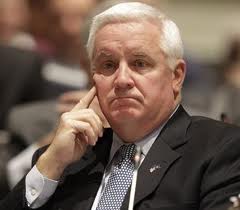
Pennsylvania Gov. Tom Corbett

Now, let’s take a step back. Here’s how Corbett’s involvement in the case unfolded, according to a great, front-page story yesterday in The New York Times.

In 2009, officials at a Pennsylvania high school reported that Sandusky had molested a boy at the school. However, the county prosecutor cited a conflict of interest and referred it to the attorney general’s office.

“Here, he (Corbett) had a wildly popular football coach and a program which in Pennsylvania was revered, and this case lands in his office and without flinching he went down that path,” Times’ reporter Jo Becker quoted a Republican lobbyist as saying.

Corbett convened a grand jury and prosecutors took testimony. As the case proceeded, more victims turned up, and Corbett and his investigators became appalled at the university’s lack of action.

“We talked about how this would be a real shock to people, and how shocking it was to us,” Becker quoted a former assistant attorney general as saying.

Corbett went on the win the governor’s race. After he left the attorney general’s office he had to adhere to grand-jury secrecy rules that prohibited him from talking about the case, other than with a few people he had brought with him from that office.

One person who stayed close to the case was Frank Noonan, whom Corbett had appointed state police commissioner. Before that, Noonan had been chief of investigations in the attorney general’s office.

Periodically, The Times’ story said, Corbett would ask Noonan how the sex-abuse investigation was going, and Noonan would tell him it was going well, although he couldn’t share details.

Finally, after the story broke last week, Corbett, who is a member of the Penn State board of trustees, was free to roll into action.

“Privately,” The Times’ story said, “he worked to move the board in what he believed was the right direction. He called multiple members, including Vice Chairman John P. Surma, the chief executive of U.S. Steel, and told them that the country was watching, that a change at the top was needed, and that the issue was about more than a football program.”

Paterno

The board called an emergency meeting on Wednesday night, just hours after Paterno had announced his retirement plans.

The board exhibited no forbearance and summarily removed Spanier and Paterno.

“Afterward,” The Times’ story said, “the trustees said they had acted independently. But they conceded, without being specific, that the board had received some unsolicited encouragement about what action to take.”

Bravo, Governor Corbett!

Here’s my final thought on this: If Gov. Corbett announced his intention to seek the Republican nomination for president, he would immediately jump to the top of the list.

He won’t do that, of course, but I hope we hear more from him on the national scene in the future; the country needs more politicians who move decisively instead of wetting a finger and holding it up in the breeze.


Read Full Post »

In an appearance at the University of Missouri-Columbia last night, a distinguished editor and publisher gave more than 100 journalism students a lot to think about as they mull career options in an ever-changing field.

Mike Waller, former editor of The Kansas City Star and former publisher of the Hartford Courant and the Baltimore Sun, told the students that despite the waning influence and prospects of major American dailies, newspapers still offer great opportunities to young people seeking careers in journalism.

“I was in the business 42 years, and I didn’t have 42 bad days,” said Waller, now retired and living in South Carolina. “…I still don’t think you can go wrong working for a newspaper. You will learn in two to three years the skills of the way to do reporting that will hold you well for the rest of your life.”

Among the qualities and skills that young reporters can develop at newspapers, Waller said, are honesty and integrity and how to relate to and work with people.

Mike Waller and Randy Smith

He also cautioned the students, assembled at the Donald W. Reynolds Journalism Institute on campus, not to try to rush up the career ladder. It is vital, he said, for young journalists to learn the basics — reporting, verification and solid writing — before seeking to advance.

“Don’t cut corners in your career,” Waller said. “They (the fundamentals) are all building blocks to something; you don’t know what.”

Waller, 70, spent yesterday and today on campus as the guest of Randy Smith, professor and Donald W. Reynolds Endowed Chair of Business Journalism at MU. Smith spent many years at The Star, including about 10 as deputy manager editor-metro. Smith and I both worked with Waller before he left for Hartford in 1986.

While still bullish on careers in journalism, Waller voiced significant concerns that should give pause to prospective journalists thinking about careers at major metropolitan dailies.

After one student asked him if he thought there was any correlation between the credibility of a newspapers and their ability to generate revenue, Waller noted that The New York Times has held those up as its twin goals since its founding.

He added, however: “Today almost nobody operates on that premise…I don’t really believe most (major metropolitan) papers are pursuing excellence. They’re pursuing survival; they’re pursuing cash flow and revenue.”

Those aren’t encouraging words for students thinking about working for what used to be “destination” papers, such as The Star, the St. Louis Post-Dispatch, the Louisville Courier-Journal, the Denver Post, the Chicago Tribune or any of dozens of other second-tier papers. (By second tier, I mean those right under the “Big Three” national papers — The New York Times, the Wall-Street Journal and USA Today.)

But if students are willing to start out at any number of small- to mid-size dailies, Waller said, opportunities abound.

Waller with visiting scholar Thomas Gao of China

There are about 1,200 such papers that are doing quite nicely,” Waller said.
“The big thing about those papers is that the Internet is not a big threat to them.”

If residents of small- to mid-size towns don’t take the local paper, he said, they “haven’t got a prayer” of finding out what’s going on in their areas.

“Those small papers, I think are going to be with us forever,” Waller said.

Circling back to the subject of the major metropolitan papers, Waller said it was the loss of classified advertising to the Internet that thrust them in a persistent downward spiral.

“That revenue is never going to return,” he said, adding that, right now, no one appears to have the answer as to what it might take to revive the fortunes of the bigger papers.

“Somebody’s going to come up with the answer, I’m convinced,” he said. “Will it be too late for a lot of papers? Probably, probably.”

***

Editor’s Note: Waller’s most recent book, Blood on the Out-Basket: Lessons in Leadership from a Newspaper Junkie, is available online through The Kansas City Star Store, Amazon or any of several bookstores, including Rainy Day Books in Fairway. The 135-page paperback sells for $16.95.

Read Full Post »

The latest Audit Bureau of Circulation figures must have publisher Mi-Ai Parrish and other top KC Star executives squirming.

Daily circulation (Monday to Friday) has hit a new low in the modern era.

For the first time since the paper passed the 200,000 mark on the way up to that level — probably 60 or 70 years ago — it now is below 200,000.

According to the figures, released on Tuesday, The Star’s total average daily circulation was 199,222 for the six-month period ending Sept. 30. That figure includes digital subscriptions.

Daily circulation had been 209,258 for the six-month period ending March 31 of this year.

The dip below 200,000 hurts in more than just the pride category: Those big, round, benchmark figures are important to advertisers. Where a little over 200,000 weekday circulation might draw a shrug from advertisers, the new low would likely draw some frowns and consternation..maybe even a re-evaluation of ad placements and an attempt to negotiate lower rates.

Another shaky development was on Sunday circulation, which is now above the 300,000 mark by the thickness of a piece of newsprint, at 300,450.

For the previous six-month period, total average Sunday circulation was 305,113.

Actually, Sunday circulation dipped below 300,000 at one point last year, but it regained the 300,000 plateau in the spring, after a an ABC rules change allowed papers to include in their figures newspapers distributed through Newspapers in Education (NIE) programs and copies sold in bulk to places like hotels and restaurants.

Now, it would appear, Sunday circulation will fall below 300,000 next March, barring unforeseen, favorable developments.

As recently as March 2009, Sunday circulation stood at 333,000.

Despite the lower numbers, The Star’s circulation still looks pretty good when compared to that of The St. Louis Post-Dispatch. Although it has the benefit of being in a much larger market, the P-D’s daily circulation, at 191,631, is less than The Star’s.

The P-D is still above 300,000 on Sunday, at 332,825.

***

Back on the journalistic front, The Star’s Glenn E. Rice had an exceptional story in Wednesday’s paper about the comings and goings of Lisa Irwin’s parents the night she disappeared.

Rice

Rice, who has been in on the story from the beginning, hit a home run with his straight-to-the point lead paragraph.

“The night before her 10-month-old daughter disappeared, Deborah Bradley spent several hours talking with a friend, smoking cigarettes and drinking five to 10 glasses of wine.”

From there, Rice gave a no-frills, right-down-the-line account of what took place in the Bradleys’ house that night…well, everything, of course, besides what happened to Lisa.

Wisely, Rice kept his voice out of the story and simply let the facts spill out. (Rice relied on an anonymous source who was “familiar with the family’s recollection of events from Oct. 3 and 4.”)

From the story, it appears to me that neither of them attempted to cover up anything that night. I now tend to think it was either an abduction — perhaps by someone familiar with Deborah’s drinking habits and Jeremy Bradley’s working schedule — or maybe a “baby giveaway.”

Maybe Lisa was interfering with Lisa’s wine-drinking sessions and had simply become too much of a bother for her. Also, if Deborah was drinking as much as she said the night of Oct. 3, I don’t think she would have had her wits about her enough to engineer, God forbid, the murder of her child without leaving any telltale evidence.

Of course, we don’t know everything that the police have — and they seem to think Deborah had something to do with the disappearance — but the fact that the mystery has gone on this long tends to indicate that clues are in short supply.

Read Full Post »

The New York Times’ media writer, the iconoclastic David Carr, sawed away mercilessly Monday at two of the nation’s major newspapers chains, Gannett and Tribune Co.

In his weekly column, Carr said that current and former executives at those two companies (and, really, you could lump in several others, including McClatchy, which owns The Star) were just as guilty of corporate greed and self-enrichment as Wall Street bankers.

He cited the case of Craig A. Dubow, who resigned recently as Gannett’s chief executive.

“His short six-year tenure was, by most accounts, a disaster,” Carr wrote. “Gannett’s stock price declined to about $10 a share from a high of $75 the day after he took over; the number of employees at Gannett plummeted to 32,000 from about 52,000, resulting in a remarkable diminution in journalistic boots on the ground at the 82 newspapers the company owns.”

And was Dubow shown the door for that miserable performance? Oh, no, He retired on his own volition and “walked out the door with just under $37.1 million in retirement, health and disability benefits.

“That comes on top of a combined $16 million in salary and bonuses in the last two years,” Carr continued.

Carr said: “Forget about occupying Wall Street; maybe it’s time to start occupying Main Street, a place Gannett has bled dry by offering less and less news while dumping and furloughing journalists in seemingly every quarter.”

The same words could be spoken about McClatchy, which has bled The Star dry, with its overall employment going from about 2,000 several years ago to about 750 now.

It’s even worse at the Tribune Co., which owns The Los Angeles Times, The Chicago Tribune and The Sun (of Baltimore), among others. Sam Zell, a blunderbuss with a background in radio-station ownership, bought Tribune in 2007 and quickly ran it into the ground — and bankruptcy court.

More than 4,000 people have lost their jobs at Tribune properties, and the Zell-appointed leaders who remain are eligible for a bonus pool of $26.4 million to $32.4 million under the current plan to exit bankruptcy.

Carr summed up the situation this way…

“No one, least of all me, is suggesting that running a newspaper is a piece of cake. But the people in the industry who are content to slide people out of the back of the truck until it runs out of gas not only don’t deserve tens of millions in bonuses, they don’t deserve jobs.”

…What a disgrace. What a terrible plague “corporate journalism” has afflicted on the newspaper industry. My heart goes out to the thousands of good, honest journalists who didn’t get in the business to get rich but who are getting the shaft from executives doing just that.

***

Now, observations on a couple of strictly local stories…

:: You know how The Star rates the regional college football teams each week?

Well, the Southwest Early College football coach gets a big, fat “F” this week for failing to call police after someone shot holes in the side of the bus after a game last Friday at the former Southeast High School football field at Meyer Boulevard and Swope Parkway.

According to a story in Thursday’s Star, coach Tim Johnson told police he waited until Sunday morning to file a police report because he had thought district administrators were going to report it.

WTF??!!

The bus starts to leave the Southeast grounds; shots are fired; kids on the bus are yelling and ducking under the seats; and the bus manages to get away without anyone on the bus being shot.

Then, the after the bus arrives back at Southwest, everybody piles out and checks out the bullet holes, and, apparently, the coach either bids the boys goodnight and sends them home, or he reports the incident to an administrator and then sends the boys home.

Holy shit! How would you entrust your kid’s safety to a guy like that? Did he fail to pick up the phone and call police? Or did he talk to an administrator and the administrator said, “Yeah, yeah, don’t worry, I’ll take care of it.”

Either way, it looks to me like the coach should be fired, and, if he reported it to an administrator — and the administrator didn’t report it immediately — the administrator should be fired, too.

Unfortunately, we’re talking about the Kansas City School District, where screw-ups are the norm.

:: Mary Sanchez wrote a nice piece yesterday about plans to raze Kemper Arena, which was built in the early 1970s.

She talked about some of the great musical artists who performed at the arena, including Paul McCartney and Wings in 1976.

My God, do I remember that night!

It was May 29, 1976 (I had to look it up) — a warm, beautiful evening. I was covering the Jackson County Courthouse for The Star, and the country assessor sold me his tickets…The county manager fixed me up with the sister of a friend…I was set.

I picked up the young lady, and we had some drinks and, as I recall, smoked a couple of joints. Our seats were down low, close to floor level, about halfway back from the stage, which was softly lighted in shades of blue, red and yellow.

From the first chords, the music was incredible. Just about the time McCartney and his wife Linda and the band got cranked up, though, my date told me she was feeling bad and was going to the restroom.

McCartney poured on, great song after great song — “Maybe I’m Amazed,” “Jet,” “Let Me Roll It,” “Lady Madonna,” “The Long and Winding Road,” “Blue Bird,” “Listen to What the Man Said,” “Hi, Hi, Hi,” and the incomparable “Band on the Run.”

After a few songs, I was torn between the music and thoughts about my date, suffering in the restroom. I walked up to the concourse and found her outside the restroom, looking pale and weak, and I asked her what she wanted to do. Selflessly, she told me to go back and watch the concert, assuring me she would be OK.

Well, I don’t know whether this was the right thing to do, but…I followed orders. I went back and watched the rest of the greatest concert I’ve ever seen. I whooped and hollered and swooned and felt like I’d been transported to a magical world.

I don’t remember much about the aftermath of the concert. I hooked up with my date and took her home…Pretty sure I didn’t get kissed. And, of course, that was the only date I ever had with her.

She was a nice kid; her name was Kathy. I’m sure she was a good catch for some guy.

If for no other reason than that concert, I will never forget Kemper Arena. I sloshed through the muddy grounds of the place many times, going to lousy Kansas City Kings basketball games, circuses and other stupid events, but the event I’ll always remember was Wings Over America!

Read Full Post »

The subject of today’s post is my favorite dartboard figure, Kansas City-St. Joseph Bishop Robert Finn.

To get into it, I’m going to borrow the template of local sports commentator and blogger Greg Hall, who has made a name for himself locally with his “Off the Couch” columns.

Greg’s schtick is quoting what somebody says and following it with his own observations. As fuel for my bonfire, I’m going to use Sunday’s lead story in The Kansas City Star, which appeared under this headline: “How Will KC Diocese Heal?”

The story was written by Judy Thomas, Mark Morris and Glenn E. Rice, all of whom have covered aspects of the child-porn case of Rev. Shawn Ratigan, a priest who is charged with felonies for allegedly taking and distributing lewd photos of young girls.

On Friday, Finn and the Kansas City diocese were indicted on misdemeanor charges related to his and the diocese’s failure to report, for five months, reasonable suspicions of child abuse. If convicted, Finn could be sentenced to up to a year in jail and fined up to $1,000.

So, here we go with a special edition of JimmyCsays. (All introductory quotes were taken directly from people whom the reporters interviewed.)

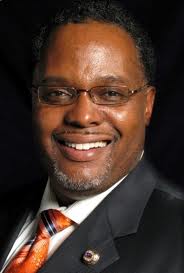
Jim Dougherty

Jim Dougherty, a member of St. Louis Parish on Swope Parkway: “I think he has taken action. I don’t know more of what he can do…I believe that Bishop Finn demonstrated integrity and Christ-like virtue in repeatedly admitting his failure and undertaking significant change throughout the diocese.”

JimmyC: What more could Finn have done? Uh, how about getting his head out of the sex-abuse sand and vowing, when he became bishop six years ago, that he would not tolerate it in his diocese? As for “undertaking significant change,” yes, he definitely has done that. Unfortunately, it has involved railing against abortion and drawing a sharp, horizontal line between the clergy (the top layer of Finn’s cake) and the laity (the lowest layer).

(P.S. I’m pretty sure that Dougherty is former director of DeLaSalle Education Center.)

Jason Berry

Jason Berry, author of “Render Unto Rome: The Secret Life of Money in the Catholic Church: “His credibility is shot. But I would be very surprised if Finn is withdrawn. The pattern is they dig in their heels and stand by their man.”

JimmyC: Tammy Wynette couldn’t have said it better. The International Business Times quoted a Vatican spokesman as saying Sunday that Pope Benedict XVI and the Vatican would not attempt to interfere with the legal process. “We have no intention of intervening in that procedure,” Vatican spokesman Federico Lombardi said. “Any intervention could be interpreted as interference.” Yes, the Vatican would hate to involve itself in a case that affects the most vulnerable of God’s children.

Becky Summers, diocesan spokeswoman: “(Finn) continues to perform his pastoral duties with energy, dedication and enthusiasm…As part of his pastoral duties, he meets with priests every day. And, I would imagine that he will be discussing (the criminal allegations) with them.”

JimmyC: And here’s how one of those conversations might go…Priest: “Say, bishop, what’s up with that criminal charge against you?” Bishop Finn: “It’s a bunch of bullshit, Father. I’m continuing to perform my pastoral duties with energy, dedication and enthusiasm. Now, get back to preaching against abortion.”

Pat O'Neill

Pat O’Neill, public relations consultant and a member of Visitation Parish: “My guess is that (diocesan) fundraising is in limbo and will remain that way until there’s some resolution in the criminal case, and some definitive determination of what happens to Bishop Finn.”

JimmyC: Do you hear that thunderous, clapping sound? It’s Catholic wallets slamming shut.

Jim Caccamo, chairman of the diocese’s Independent Review Board: “Most of our priests are honorable, trustworthy, loving, committed me who have served the church and the parishioners for years. It has got to make them feel terribly sad.”

JimmyC: Many of them undoubtedly do feel that way, and most in that group probably are liberal priests whom Finn has relegated, for the most part, to small and remote parishes.

Carolyn Cook, a Kansas City Catholic: “Moving him somewhere else won’t help. He needs to be taken from the church. He’s an educated person and can go teach.”

JimmyC: A-men.

Read Full Post »

If you’re interested in leadership — and who isn’t? — I’ve got a book to recommend.

Blood on the Out-Basket: Lessons in Leadership from a Newspaper Junkie was written by a friend, Mike Waller, a former editor of The Kansas City Star and The Kansas City Times. It’s a 135-page paperback, which sells for an affordable $16.95.

Before I get into more about the book, I want to relate a couple of stories about Waller, who went on to become editor of The Hartford Courant and then publisher and c.e.o. His last position was publisher and c.e.o. of The Sun in Baltimore. He retired in late 2002 and now lives with his wife, Donna, in South Carolina.

Story No. 1: At least once when I was a reporter at The Star, Waller came over, sat down beside me and tilted his head back so he could see the words on my computer monitor through the lower part of his glasses. After studying the text for a minute or so, he said something like, “Are you sure that’s what you want your lead (first paragraph) to be?”

We then discussed the gist of the story for a couple of minutes. I don’t remember whether I made any changes or not (probably did), but, regardless, Waller was the only editor of a paper that I ever saw who would sit down beside reporters and read and discuss stories as they were being written. I’ll tell you, it was a wonderful feeling to have the top editor taking an interest in your story while it was under construction.

Story No. 2: I remember a time, back in the 80s, I believe, when Gil Bourk, then chairman of the Convention and Visitors Bureau, lied to me about the executive director’s salary. The CVB, mostly funded by the city, wasn’t used to getting attention from the press, and Bourk thought he could conceal the salary information, which, actually, was subject to the Missouri Sunshine Act.

After I got the records and found that the director’s salary was significantly higher than what Bourk had told me, I began writing a story about it, saying, right off the top, that Bourk had misrepresented the salary.

It being a touchy situation and Bourk being a well-known civic leader, an assistant city editor, Bob Lynn, and I sought Waller’s counsel. He suggested that we present it as a misunderstanding. At first, Lynn and I reluctantly agreed, but after I turned in the story, Lynn said, “This is bullshit,” and went straight to Waller’s office.

When he came back, he said he had convinced Waller to let us tell the story like it was — that Bourk had misrepresented the director’s salary.

That incident showed me and Lynn that our top editor was willing to change his mind and also willing to buck the establishment. It just elevated our admiration of him.

While this book is rooted in Waller’s journalistic experiences, its messages and lessons apply to every type of business and organization — profit or nonprofit, public or private.

The book’s theme is the exercise of effective leadership, including the importance of teamwork, integrity, innovation and, perhaps most important, listening to employees.

Along the way, Waller relates some compelling stories from his years in journalism, including how The Star executed its Pulitzer-Prize-winning coverage of the Hyatt Regency disaster in July 1981.

But back to his managerial philosophy. Following are a few excerpts on various subjects.

** Sharing of power:

“The more you use it, the more you lose it. So choose carefully when to exercise power.

“The source of power is people, not position. Power is granted to you by those who work for you, not by those for whom you work. Your title will only carry you so far.

“Power flows in the direction of hope. Your job is to prevent powerlessness, which produces despair, stifles enthusiasm and saps energy. Put everyone in charge of something. You can share power and knowledge and wind up being more powerful than ever.”

** Respecting employees:

“Leaders respect employees by trusting them, communicating honestly with them, coaching them and celebrating their achievements.”

** Teamwork:

“Learn to get your satisfaction through the success of others. Be prepared to make sacrifices for the team’s overall good. Build up your teammates, not yourself. Honor your commitments and help to build trust.”

** Listening:

“Pay attention when someone is speaking to you. Don’t prepare what you’ll say while they’re talking. Look people in the eye. Before responding, repeat the message you think you’ve just heard to avoid misunderstandings. Remember that many people are not expecting answers; they just want someone to listen.”

After reading this book, my first thought was that I sincerely wish someone had given me some management training along these lines before I became an assistant city editor, running the Kansas City, Kansas, bureau in 1995…It would have spared me, not to mention the reporters I supervised, a lot of grief.

You can purchase Waller’s book online through The Kansas City Star Store, Amazon or any of several bookstores. I got mine through Rainy Day Books in Fairway.

Wonderful book, Mike. You’re the greatest!

Read Full Post »

The tag line on my blog says, “At the juncture of journalism and daily life in Kansas City.”

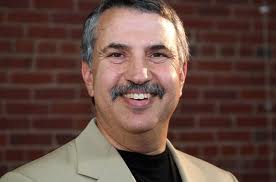
Today, though, I’m going to reach a little higher and take a look at our national situation, as viewed through the eyes of incisive New York Times op-ed columnist Thomas L. Friedman.

Friedman has been like a laser in his last two columns — last Wednesday and Sunday. In those pieces, he painted a bleak picture of where we are as a nation and offered no light at the end of the tunnel.

Friedman

In Wednesday’s column, Friedman’s theme was that next year’s presidential election — given the Republican field and the Obama incumbency — would be a battle between the Democratic left and the Republican right.

That was assured, he said, after New Jersey Gov. Chris Christie decided not to run.

A race between polarized candidates, Friedman said, is a huge loss to the country because Christie, a  moderate Republican, would have pushed Obama closer to the center.

With Christie, Friedman said, “we would have had a race between the Democratic center, independents and the Republican center. Then the whole country would win. Because whoever captured the presidency would have a mandate to actually implement some version of the Grand Bargain needed to get growth going again — and growth is the only sustainable cure for unemployment, the deficit and inequality.”

The Grand Bargain that Friedman referred to is the deal that Obama and House Speaker John Boehner toyed with briefly before right-wing Congressmen jerked Boehner’s chain and said there would be no such deal because it involved some tax increases, along with huge budgetary cuts.

At the same time, Friedman said, Obama made “a huge mistake” by reverting to a narrow, tax-the-rich approach and failing to try to convince the public that a Grand Bargain was the best way to spur job growth, trim entitlements and put the nation back on sound footing for the long term.

Emboldened by his reasoning in Wednesday’s column, Friedman wrote about the missed opportunity again on Sunday. Pegging his ideas to the passing of Steve Jobs, Friedman said:

“We cannot bail or tax-cut our way to prosperity. We can only, as Jobs understood, invent our way there. That is why America needs to be for the world in the 21st century what Cape Canaveral was to America in the 1960s: the place were everyone everywhere should want to come to start up and make something — something that makes people’s lives more productive, healthy, comfortable, entertained, educated or secure.”

Friedman juxtaposed the national curiosity and enthusiasm of the 60s with our nation’s current stagnant state.

“What is John Boehner’s vision?” he asked rhetorically. “I laugh just thinking about the question. What is President Obama’s vision? I cry just thinking about the question. The Republican Party has been taken over by an antitax cult, and Obama just seems lost.”

So, Friedman concluded, the public also has lost and is lost.

“Sometimes the news is in the noise,” Friedman wrote, “like the Wall Street protests or the Tea Party. But sometimes the news is also in the silence. To me, the biggest protest in the country today is that when the Tea Party insanely blocked any G.O.P. participation in a Grand Bargain that involved taxes, most Americans were silent.

“Why? Because they didn’t think Obama was offering a big plan from his side, either — one that rose to the true scale of our problems and aspirations, one that would push us out of our comfort zone and make us great.”

It’s enough to make you wring your hands and hang your head and cry, isn’t it?

Read Full Post »

Sprint Center is outstanding; Arrowhead and Kauffman stadiums are exceptional sports venues; the Bloch Building at the Nelson-Atkins Museum is a thing of beauty; and the Art-Deco-Style Municipal Auditorium still offers the best basketball environment you can find.

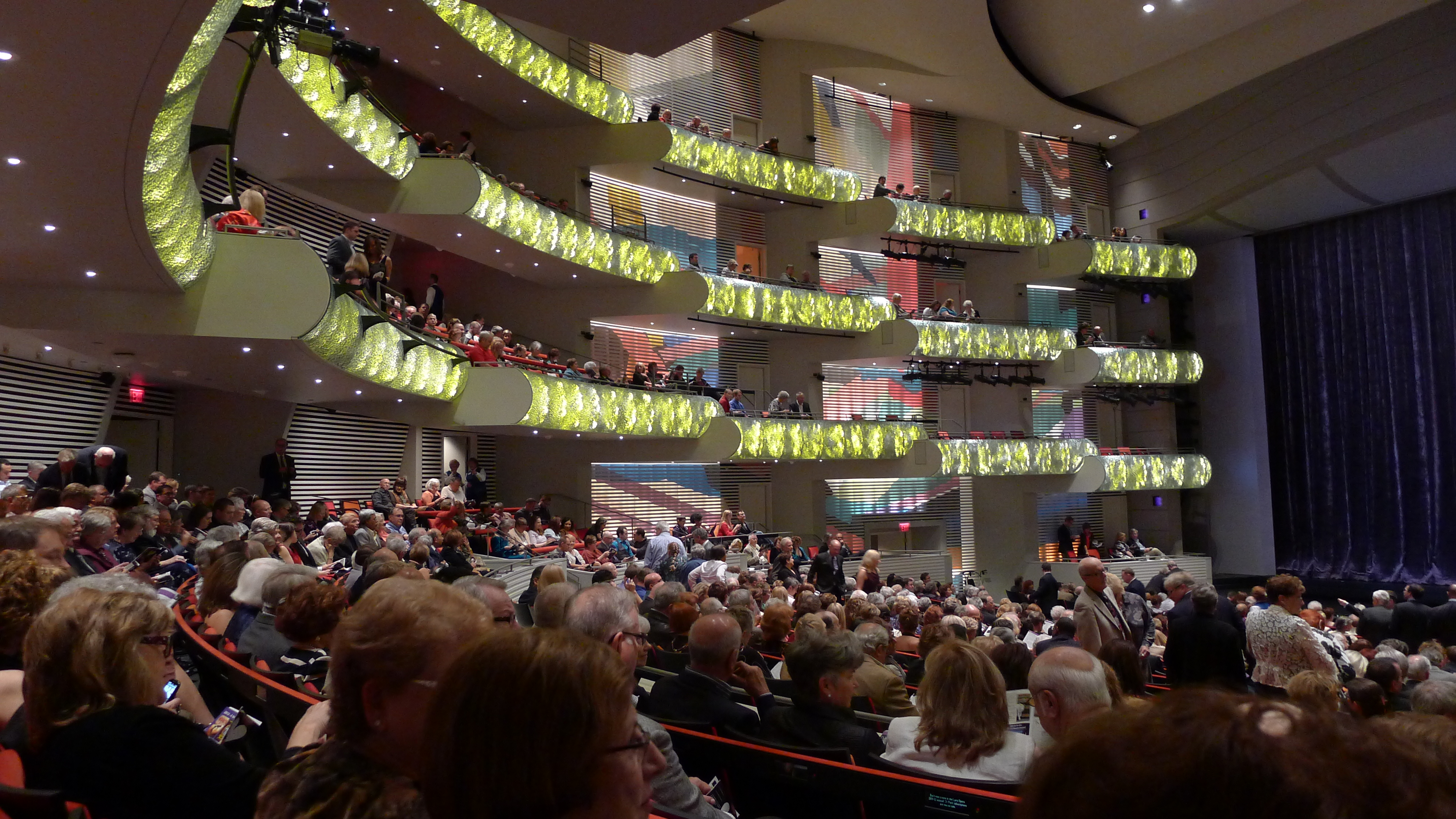
But the Kauffman Center for the Performing Arts? Spectacular…the biggest step ahead for Kansas City in who knows how long.

I know I’m a late comer to the awed-and-amazed party, but I didn’t get my first look at the center’s interior until last night, when my wife Patty and I and a group of friends went to a performance of the opera Turandot.

I’m sure I’m speaking for all the members of our group when I say it was truly an enchanted  evening, and we came away not only uplifted but also proud to be Kansas City area residents. (I wish I could say we are all Kansas Citians, but you know how it goes with these suburbanites.)

We started the evening with dinner at the Nelson’s fabulous Rozzelle Court…From there, well, I hope the pictures will tell the story.

Our group, from left: John and Susan Parker, JimmyC and Patty, Dale Mutchler and wife Nancy Robinson, Dr. Carla King and husband Bart Strother

Partially obscured in the group photo, Bart gets (and deserves) his own space

Helga and Bruce, a couple we happened upon in the Kauffman Center parking garage

The glass curtain

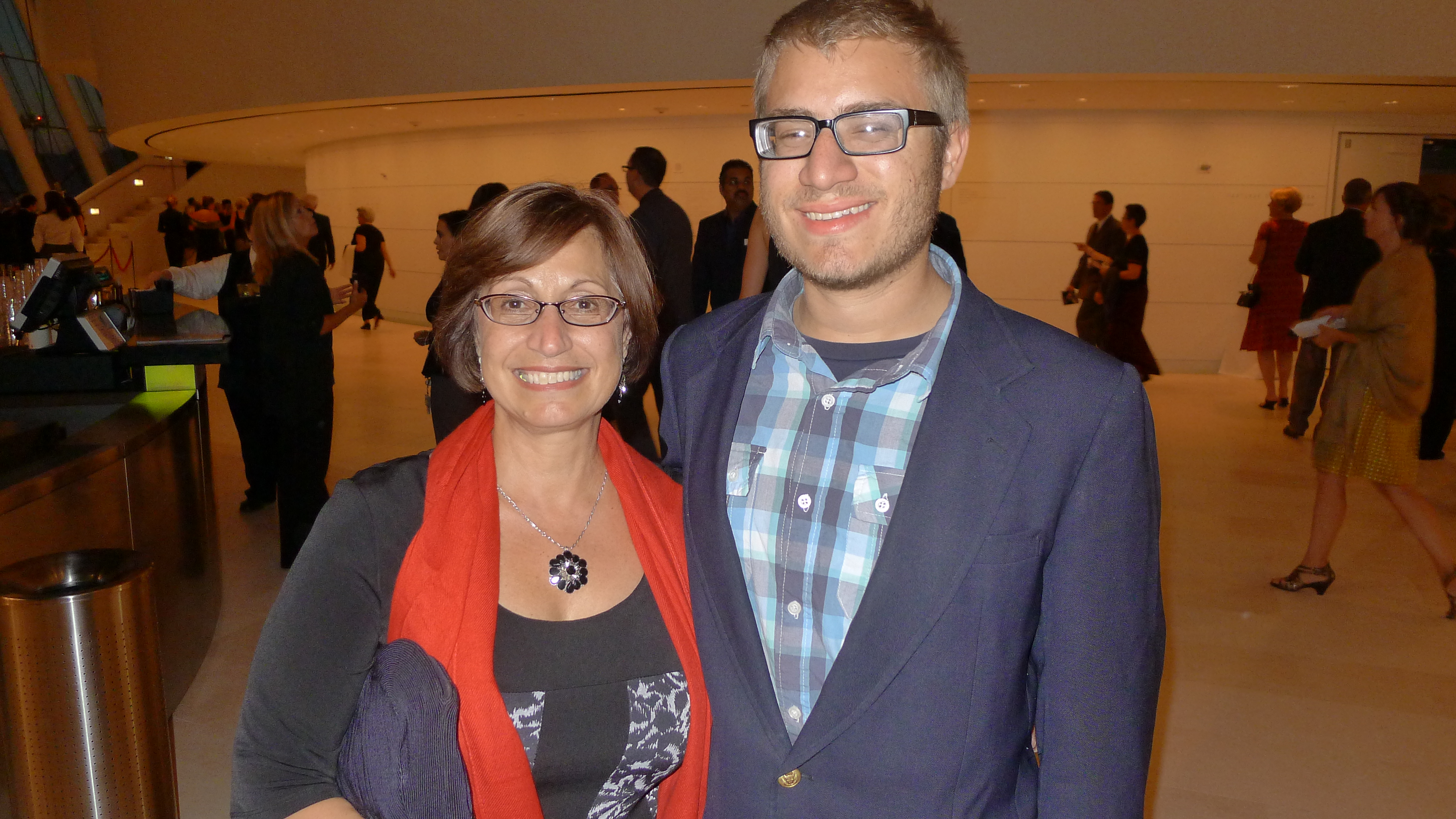
Mary Leonard and son Tommy

The Muriel Kauffman Theatre

Ace KC Star courts reporter Mark Morris and his wife Carolyn Cupp

Humble blogger and wife Patty, business owner and personality nonpareil

Retired assistant city attorney John Ingraham and his wife Ileana

Afterglow

Read Full Post »

The Star’s announcement today that Greg Farmer will be the new metro editor is another signal that the paper is continuing to push its digital offerings.

When Anne Spenner, the former metro editor, left recently to take a job at UMKC, I was convinced that her successor would be Charles (Chick) Howland, who has worked as an assistant state and metro editor and currently is news editor, recommending, among other things, which stories should go on Page 1.

(For the record, I’m not even sure that Howland applied, but I’d be surprised if he didn’t.)

I worked with Howland in The Star’s Johnson County bureau (now closed) in 2004 and 2005, and he succeeded me as Johnson County bureau chief after I was transferred to the Independence bureau, where I finished my career.

Howland has an even temperament and is widely admired by the reporting staff.

Problem is, his background is on the print side.  So, when I saw that Farmer was selected, it said everything about the paper’s direction and intention. Farmer, 40, has been an assistant managing editor, with emphasis on developing website content.

In the story about Farmer’s elevation, Editor Mike Fannin and Managing Editor Steve Shirk credited Farmer with cultivating strong growth in traffic at KansasCity.com.

“Greg will not so much be leaving the Web world as he will be working to better integrate an urgent, digital-first strategy,” the editors wrote.

I am sure that The Star’s new publisher, Mi-Ai Parrish, had the final voice in this appointment, and I feel sure, again, that she put her blessing on Farmer because of his website experience.

At her previous paper, the Idaho Statesman, Parrish introduced new print and digital products and increased digital traffic.

And, like Farmer, she is 40. (At least she was when she was named publisher in June.) Howland, by contrast, is probably about 50.

So, as the printed product continues to shrink, look for the website to expand and get stronger.

It’s the trend, of course, with all papers, including the best of all, The New York Times.

The Sept. 11 edition of The Times carried an interview that Art Brisbane, former Star publisher, did with Jill Abramson, the paper’s new executive editor.

In the interview, Brisbane noted that Abramson was detached from her regular duties as managing editor last year to study the digital product.

“What struck you most?” Brisbane asked.

“…I have been saying for years,” she replied, “that The Times was so far ahead and so smart in integrating the Web and print, but the reality was there was still something that everybody here called ‘the Web newsroom.’ I was very determined that we have just one newsroom that is integrated, where people are comfortable in both the print and digital realms.”

With Farmer’s appointment in Kansas City and Abramson’s in New York, the newspaper industry continues to reflect the new reality: As the print product continues to shrink, newspaper managers are pushing their ink-stained wretches (who still are legion) either out the door or into the digital wave.

Read Full Post »

Stop the presses!

I got a letter to the editor in The New York Times! The Sunday New York Times, at that.

OK, I’m sorry; I got a little carried away there. Keep the presses rolling; I’ll just tell the story in this humble space, where there’s no deadline and it costs nothing to insert a big, late-breaking story.

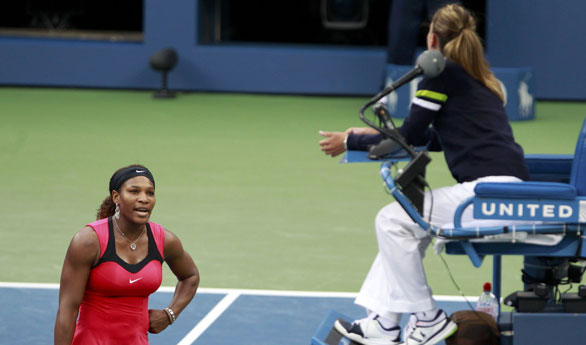
So, here’s the deal…I’ve written letters to the editor of The Times several times, but before yesterday never had one published. On Friday, I got an e-mail from weekend sports editor Patty DeLuca saying that a letter I had written about Serena Williams’s tantrum in the women’s final of the U.S. Open on Sept. 11 would be published on Sunday (yesterday).

And, indeed, there it was — one of five letters, all about Williams, that appeared on Page 10 of Sports Sunday.

Four of the letters, including mine, were very critical of Williams’ borderline-threatening, verbal assault on the umpire who called her for a “hindrance” after she hit a ball and loudly exclaimed “Come on!” while opponent Samantha Stosur attempted to hit a return. The penalty cost Williams a game point, and she flew into a rage, just as she did two years ago when a lineswoman called her for a foot fault.

Two years ago, Williams directly threatened the lineswoman, saying, “I swear to God I’ll fucking take the ball and shove it down your fucking throat.”

She also said, “You don’t know me…,” as if to say, “Those who do will tell you that I’ll do exactly what I said I’d do.”

This year, she told the umpire: “If you ever see me walking down the hall, look the other way, because you’re out of control. … You’re a hater, and you’re just unattractive inside…Really, don’t even look at me, don’t look my way.”

Here’s what my letter, the last of the five, said:

“Serena Williams’s verbal assault on a lineswoman in the 2009 United State Open certainly didn’t seem like an aberration, although many hoped that it was. Confirmation that the incident wasn’t an aberration came in last Sunday’s final against Samantha Stosur.

“Williams is a spoiled individual who resorts to threatening people who stand between her and what she wants.”

Serena Williams cuts loose at umpire Eva Asderaki

Williams’ lone defender among the five letter writers was Sandra Roche of New York. She said: “When John McEnroe behaved outrageously during his playing years, we accepted it as the overenthusiastic response of a champion caught up in the heat of competition.

“Why is Serena Williams being judged by a different standard? McEnroe’s behavior toward chair umpires was far more disrespectful than hers.”

Because I’m  not going to have a chance to rebut Ms. Roche before 1.3 million subscribers to the Sunday Times, I guess I’ll have to do it here — before my core readership of 200 to 300 people. (I appreciate your patronage, dear readers.)

So, why is Williams held to a different standard? Is it because of her color? Nooooo. Is it because she’s a woman? Nooooo.

It’s because McEnroe, while he insulted officials and put them on the spot in front of national TV audiences, NEVER THREATENED AN OFFICIAL…to the best of my recollection. Yes, his behavior was out of line, but there’s a huge difference between calling an umpire “the pits of the world,” as McEnroe once did and threatening to shove a ball down his or her throat.

As happy as I was that The Times published my letter I was twice as happy that Stosur, an Australian, defeated Williams in straight sets.

My curse on her (besides the one in the headline, which I paraphrased from Carnac the Magnificent) is this:

May you never win another major tournament, and may your sister Venus (who’s out of action with an autoimmune disease) come back to defeat you.

Read Full Post »

« Newer Posts - Older Posts »