Feeds:
Posts
Comments

I’m just back from Washington D.C. and Baltimore on a sightseeing trip. It was my first time ever to Baltimore and first time to Washington since the early 1970s. On that trip, I was drinking heavily and chasing girls (yep, girls), and the only “landmark” memory I have is of being on the National Mall.

I was so out of touch with the historical importance of D.C. that I didn’t even remember the relative positioning of the Washington Monument and the Capitol.

But after three full days of navigating the streets and landmarks of D.C., I now have a beautifully full perspective of what’s there and what’s where.

I also know that I’ve never seen traffic like that anywhere else…I’ve never driven the streets of New York, so I can’t say Washington is the worst anywhere, but it’s really bad.

On Friday, after a heavy, early-morning rain, it took us a about 90 minutes to go about five miles on 16th Street, as we drove south from Silver Spring toward D.C. Exasperated, I had my traveling companion drop me off at Dupont Circle and took the Metro into town. He headed off to the National Air and Space Museum’s exhibit at Washington Dulles International Airport, and I got to the Voice of America building at 3rd Street and Independence Avenue about noon.

Now, you might be wondering, “JimmyC, what the hell are you doing driving in D.C., when you should be taking the Metro rapid transit system?”

Well, yes, renting a car (a ridiculous, two-door Mustang convertible) was unwise…but necessary. My companion has a bone-on-bone right knee, and he was only good for about 100 yards at a time walking. Problem was he didn’t realize how bad his knee was until he got there and started walking around. Thus, I did a lot of dropping off, parking and picking up.

We stayed in Silver Spring, which is about 10 miles north of D.C. and home to an old and dear friend, Ernie Torriero, a reporter for The Kansas city Times from 1981 to 1985. He’s now a Web editor at the Voice of America. VOA is a massive operation, which purveys news around the world in 44 languages. It’s got the equivalent of several metropolitan-daily newsrooms. The different “desks” look just like newspaper newsrooms, with employees sitting in cubicles, tapping away at keyboards.

As I said, we also visited Baltimore, spending the first and last days (Wednesday and Sunday) in the Baltimore Harbor area.

In contrast to Washington, Baltimore’s tourist attractions are relatively accessible by car. One of the highlights of the harbor area is Fell’s Point, a historic waterfront neighborhood along the harbor’s north shore and east of the Inner Harbor, a big tourist area. With its cobblestone streets, brick sidewalks and rows of bars and restaurants, Fell’s Point has “the air of a seafaring town,” as Wikipedia describes it.

Another great harbor attraction is Fort McHenry, home of “the-dawn’s-early-light” bombardment by the British in the War of 1812. (My knowledge of U.S. history is about as deep as a teacup, and at the fort I learned that neither side really won the War of 1812. Rather, the U.S. “won the peace,” holding off those nasty redcoats in their campaign to retake America.)

Well, enough narrative and historical reflection…On with the photos!
P1030708

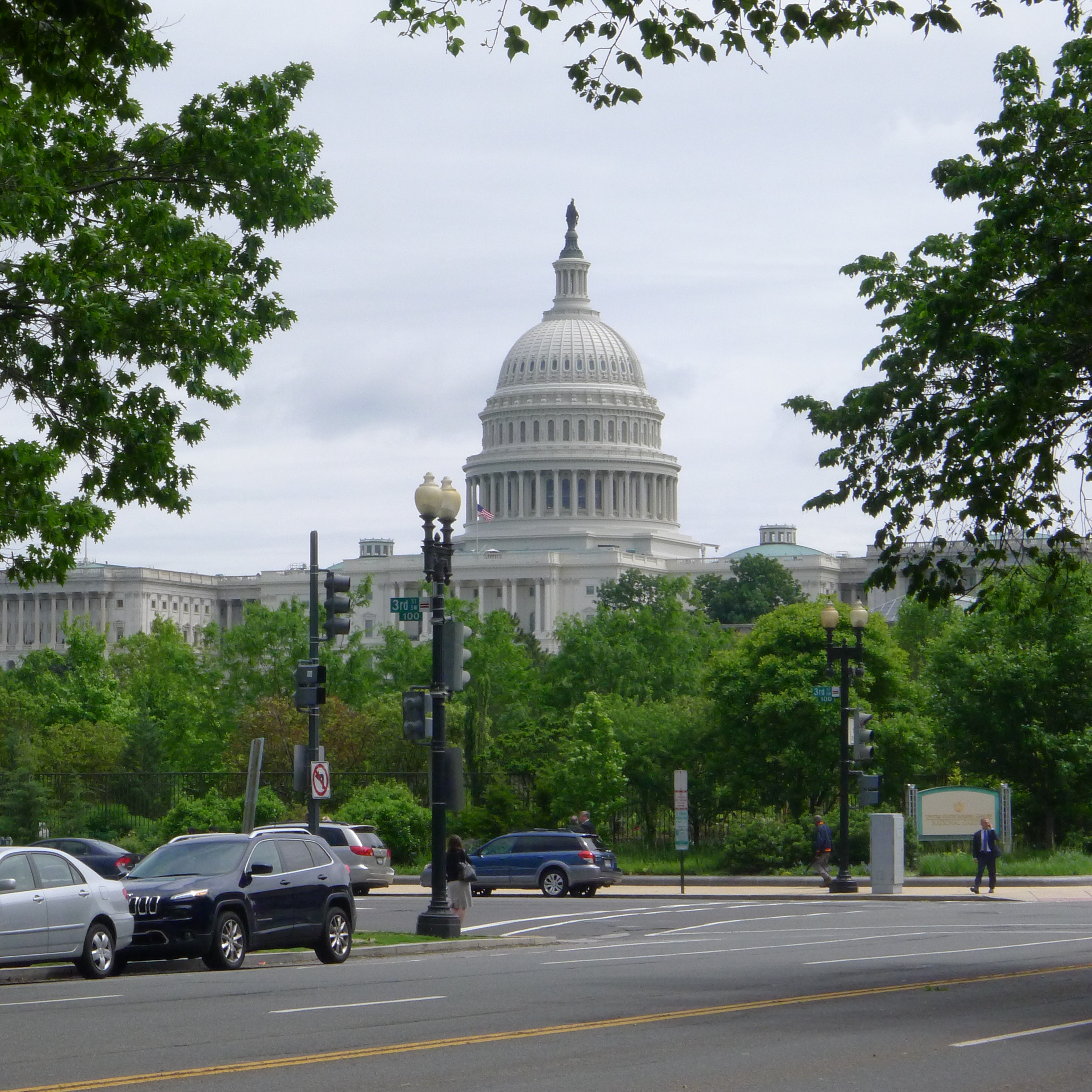
The Capitol dominates the east side of the National Mall from up close and…
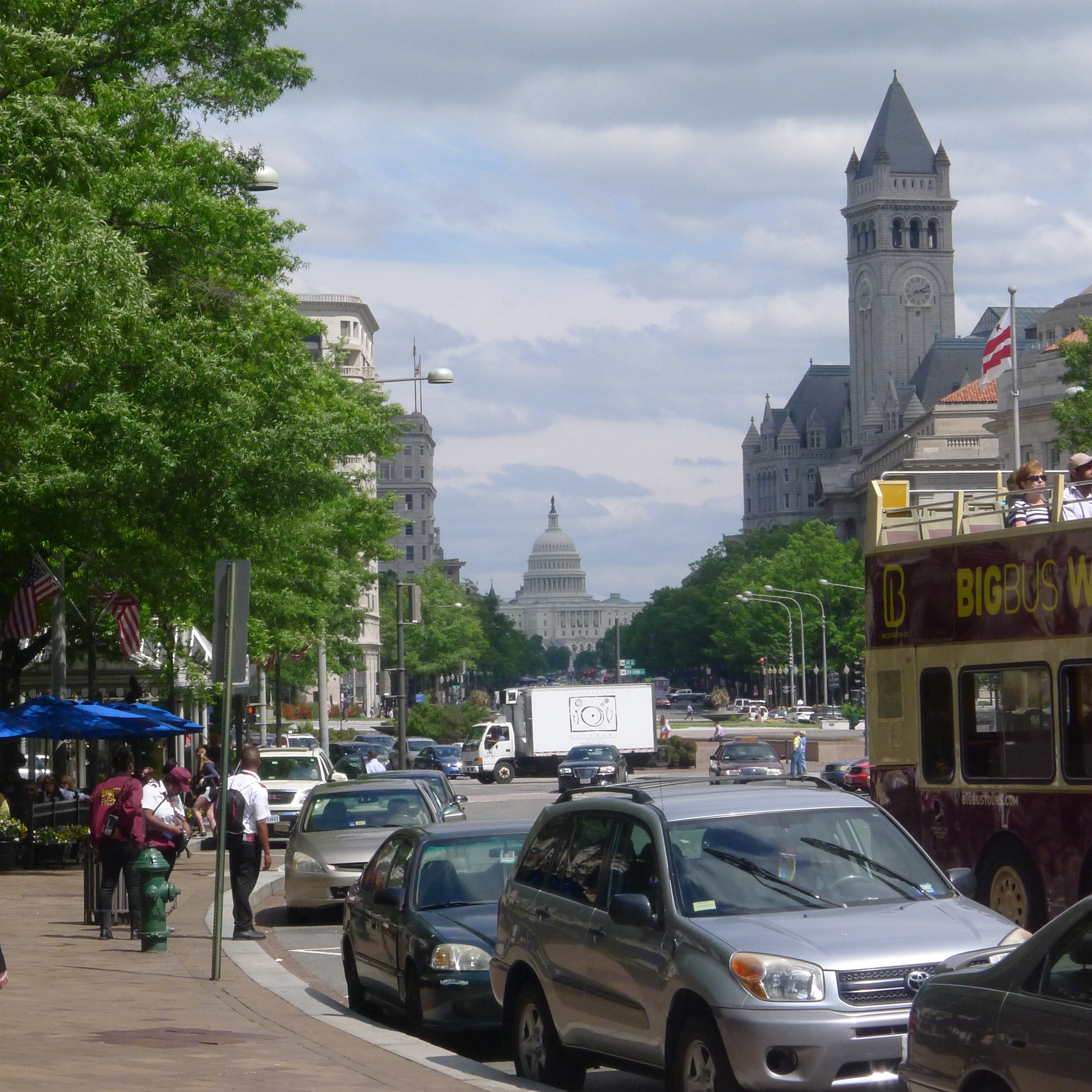
P1030716

…afar.

P1030720

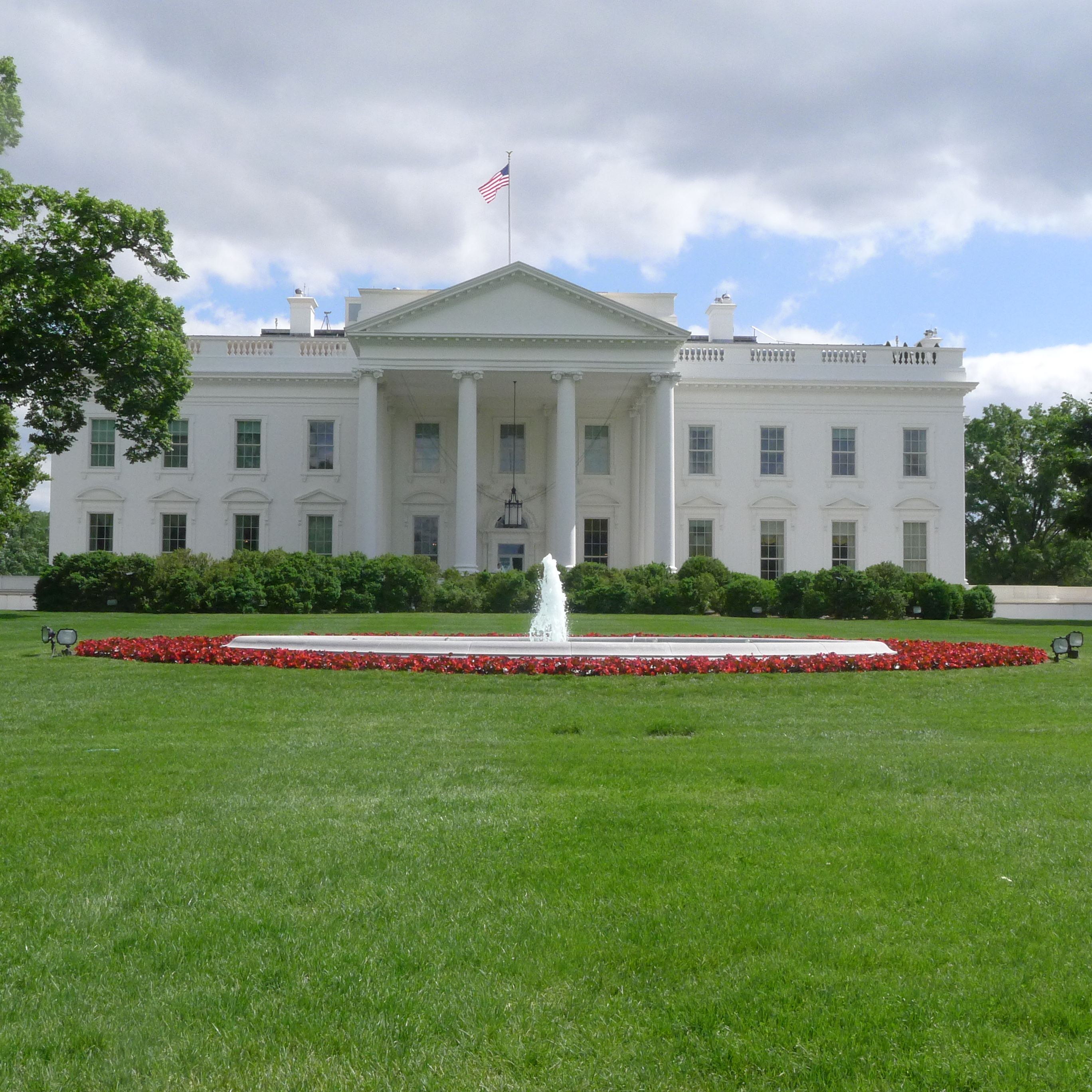
This house can be difficult to spot and get to.
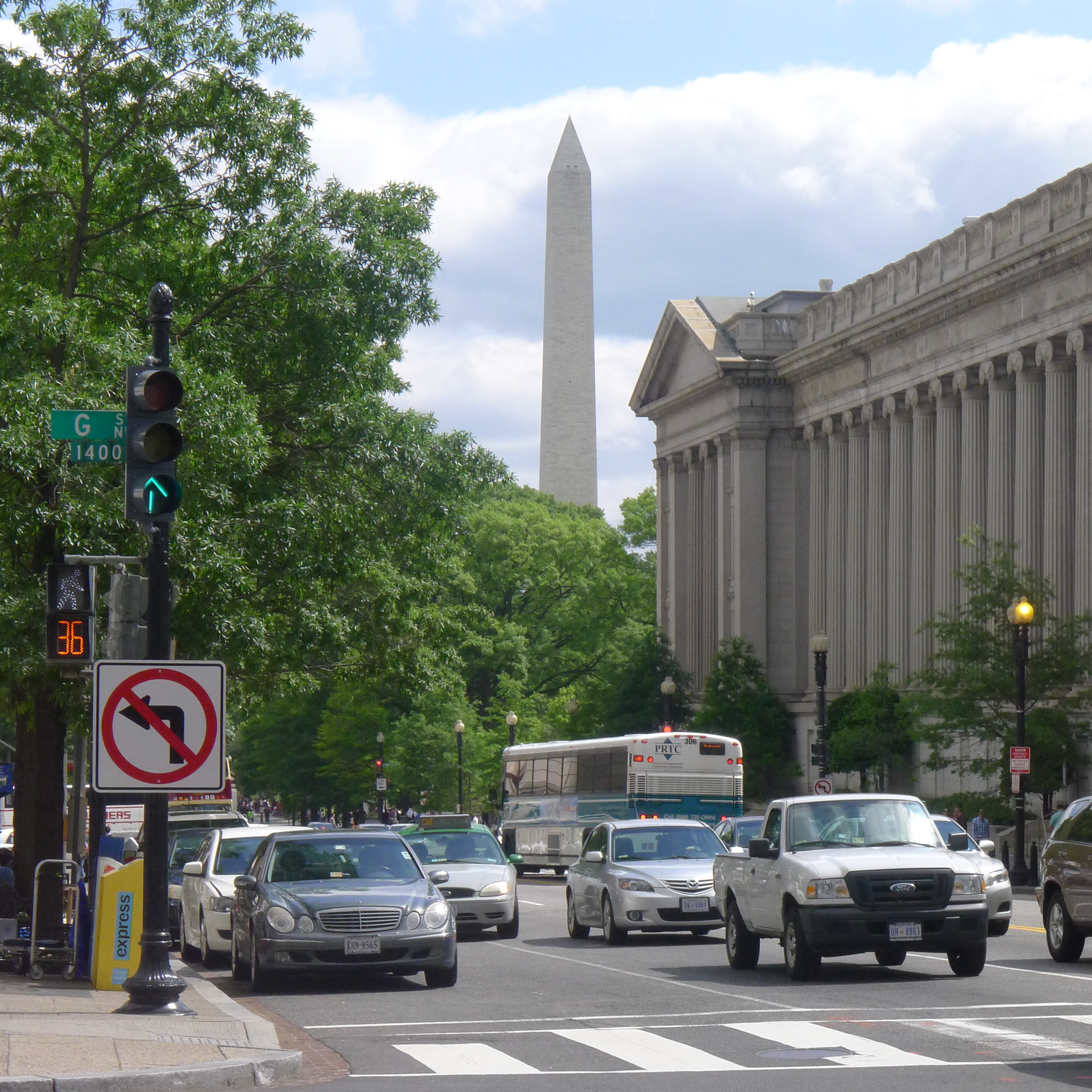
P1030725

The Washington Monument anchors the west end of the Mall.
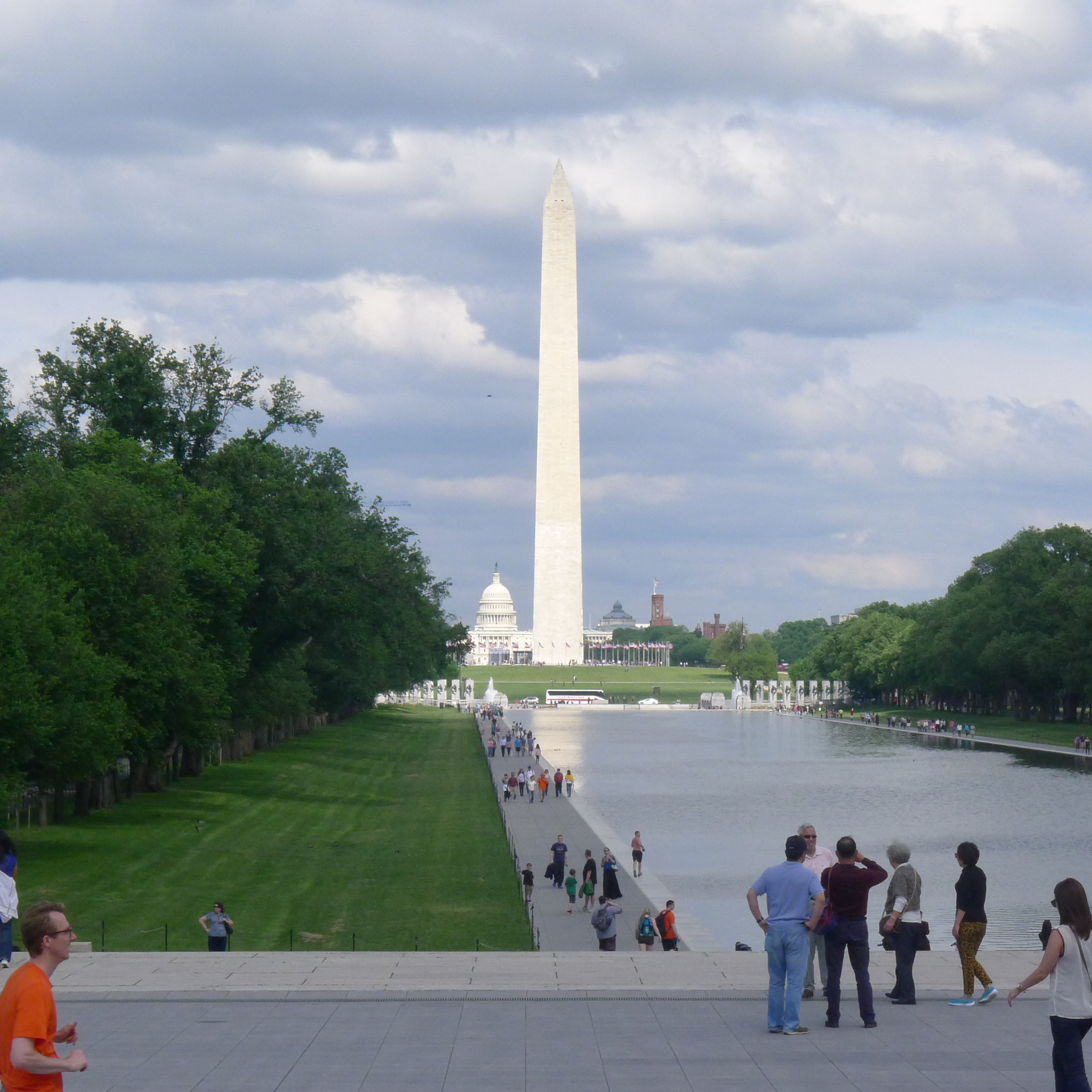
P1030728

Trite to say, but it’s awesome.

P1030676

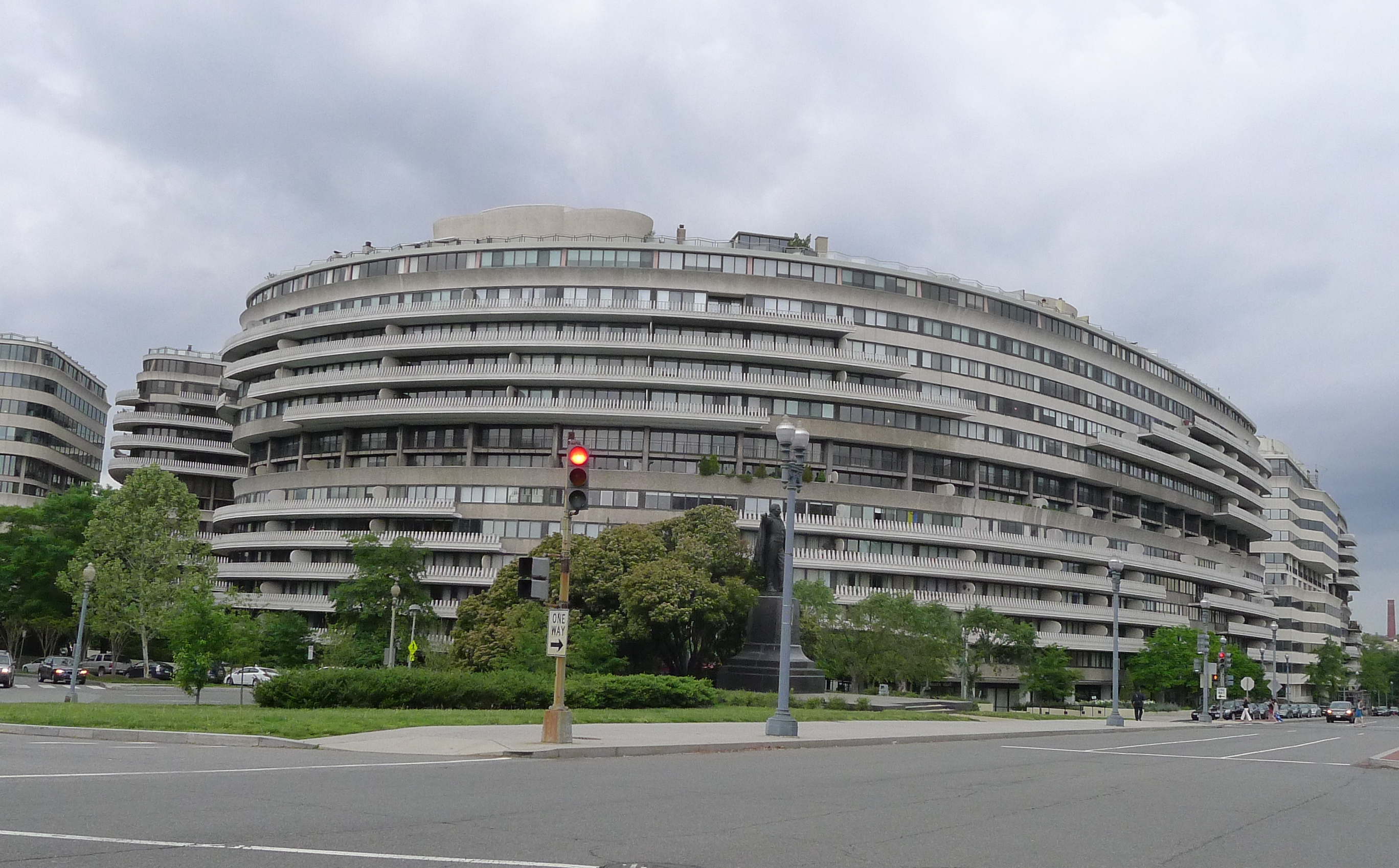
As much infamous as famous…the Watergate building.
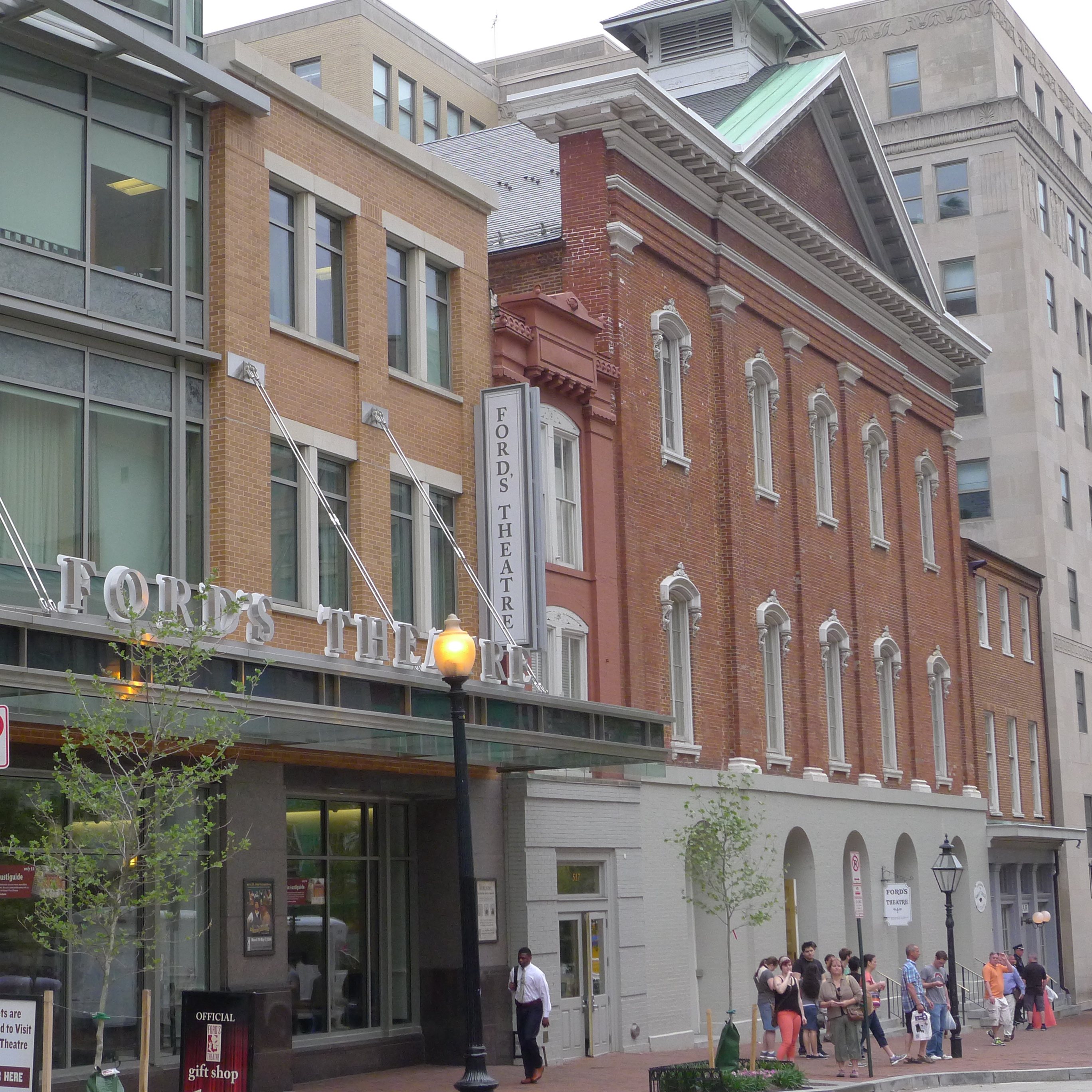
P1030674

Same for this building…Ford’s Theatre.
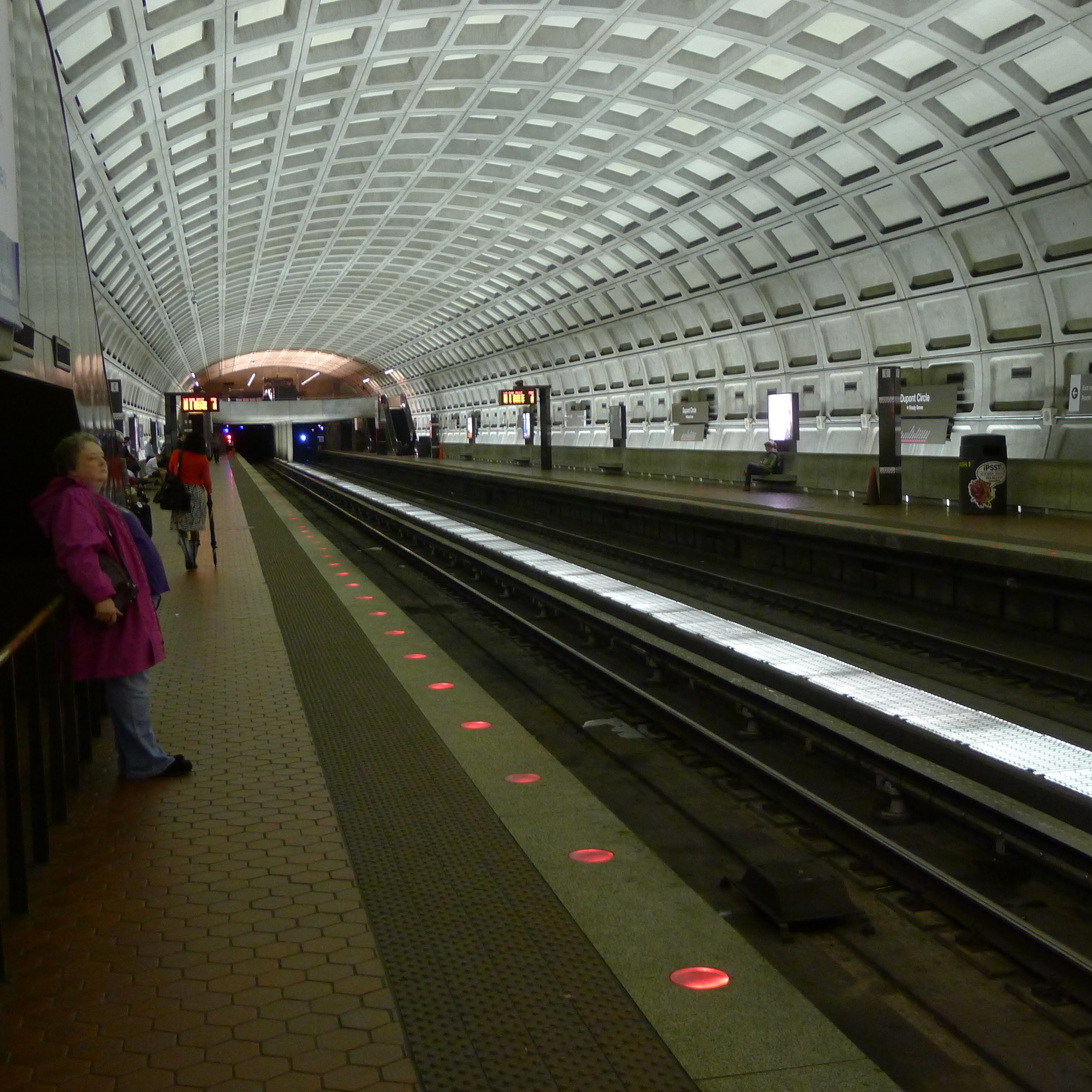
P1030700

An underground attraction — the Metro rapid transit system. This is the Dupont Circle station.
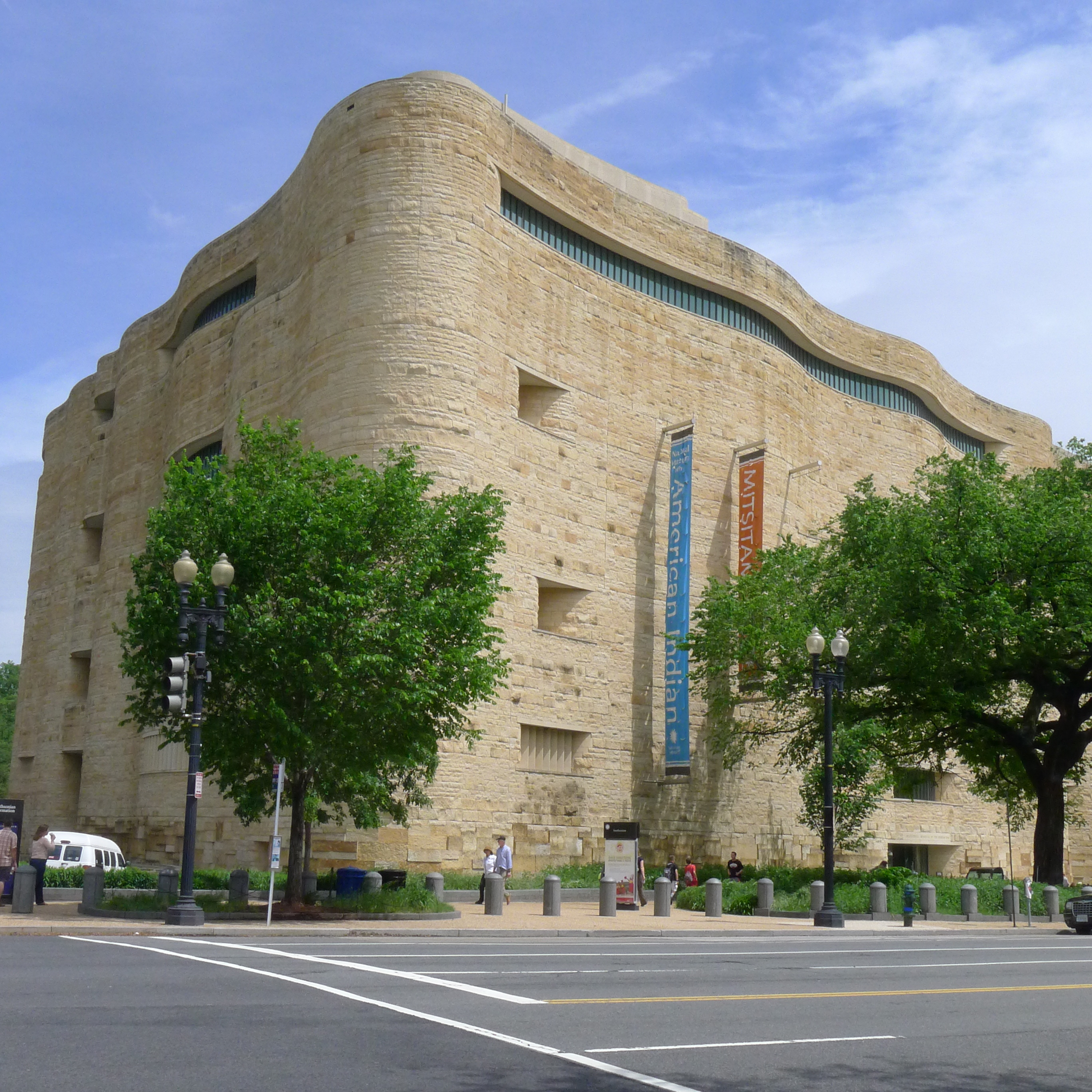
P1030707

One of the Smithsonian museums, the National Museum of the American Indian.

P1030715

The Spirit of St. Louis, at the Smithsonian’s National Air and Space Museum.
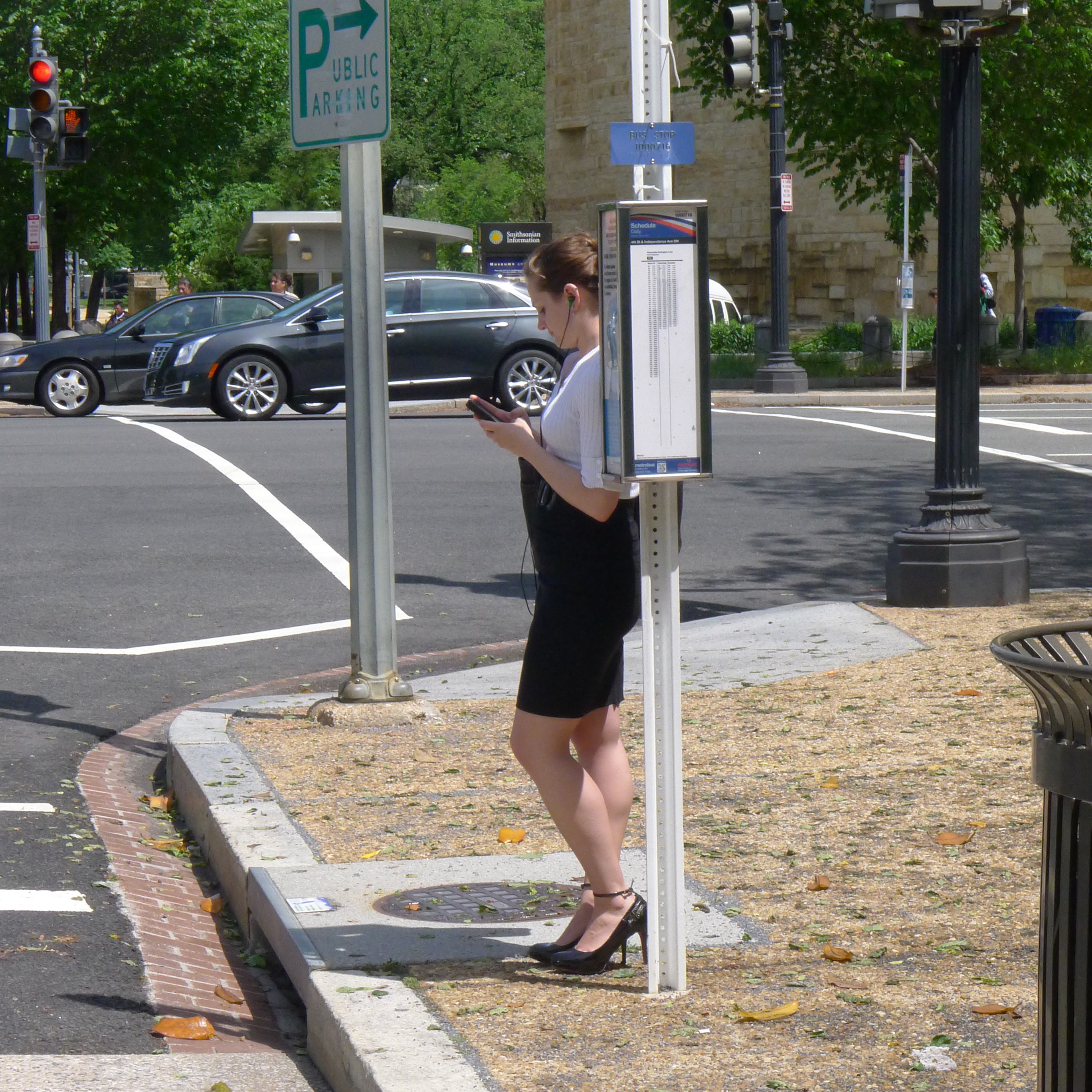
P1030705

This is where we take a break from museum hopping.
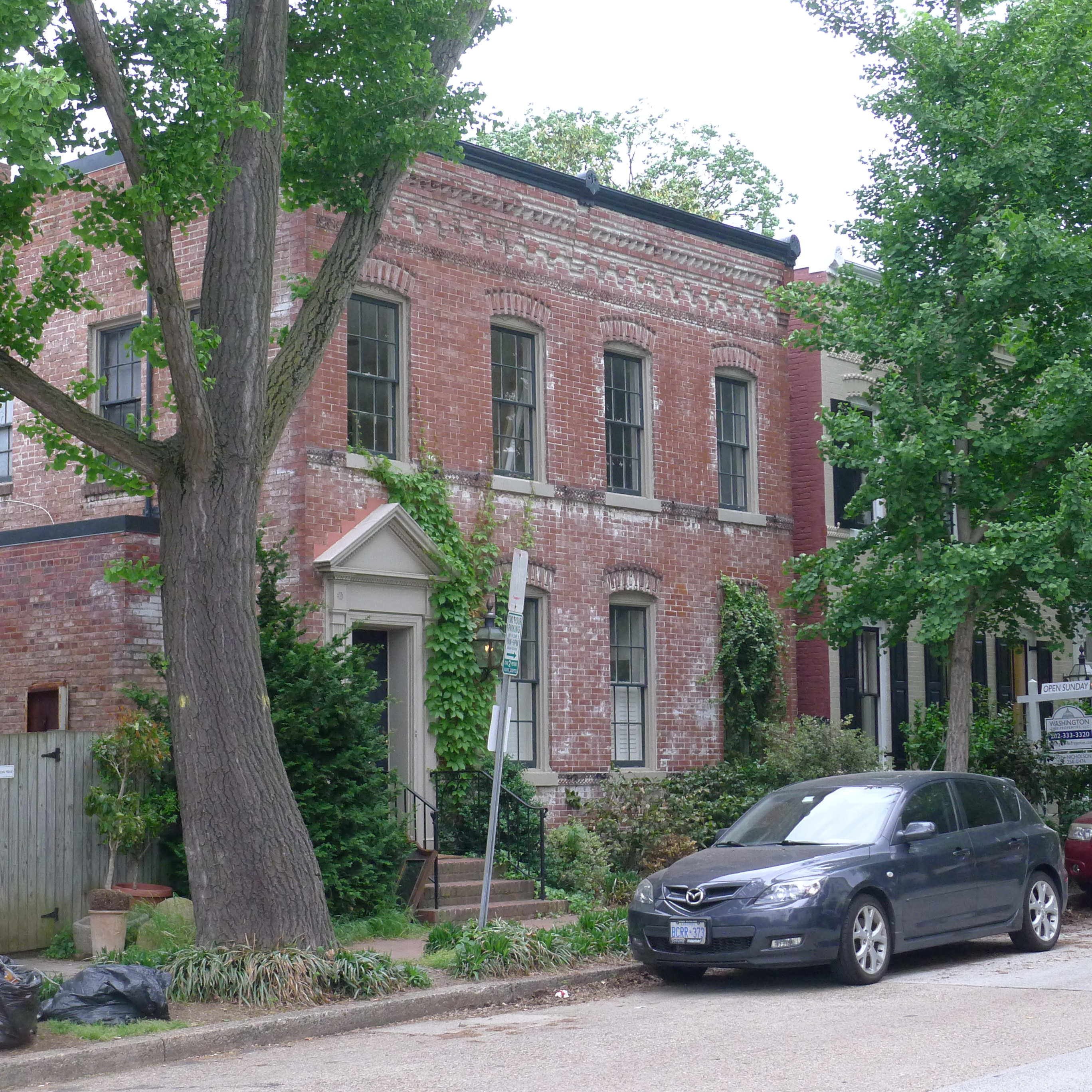
P1030678

On to the exclusive Georgetown area.

P1030697

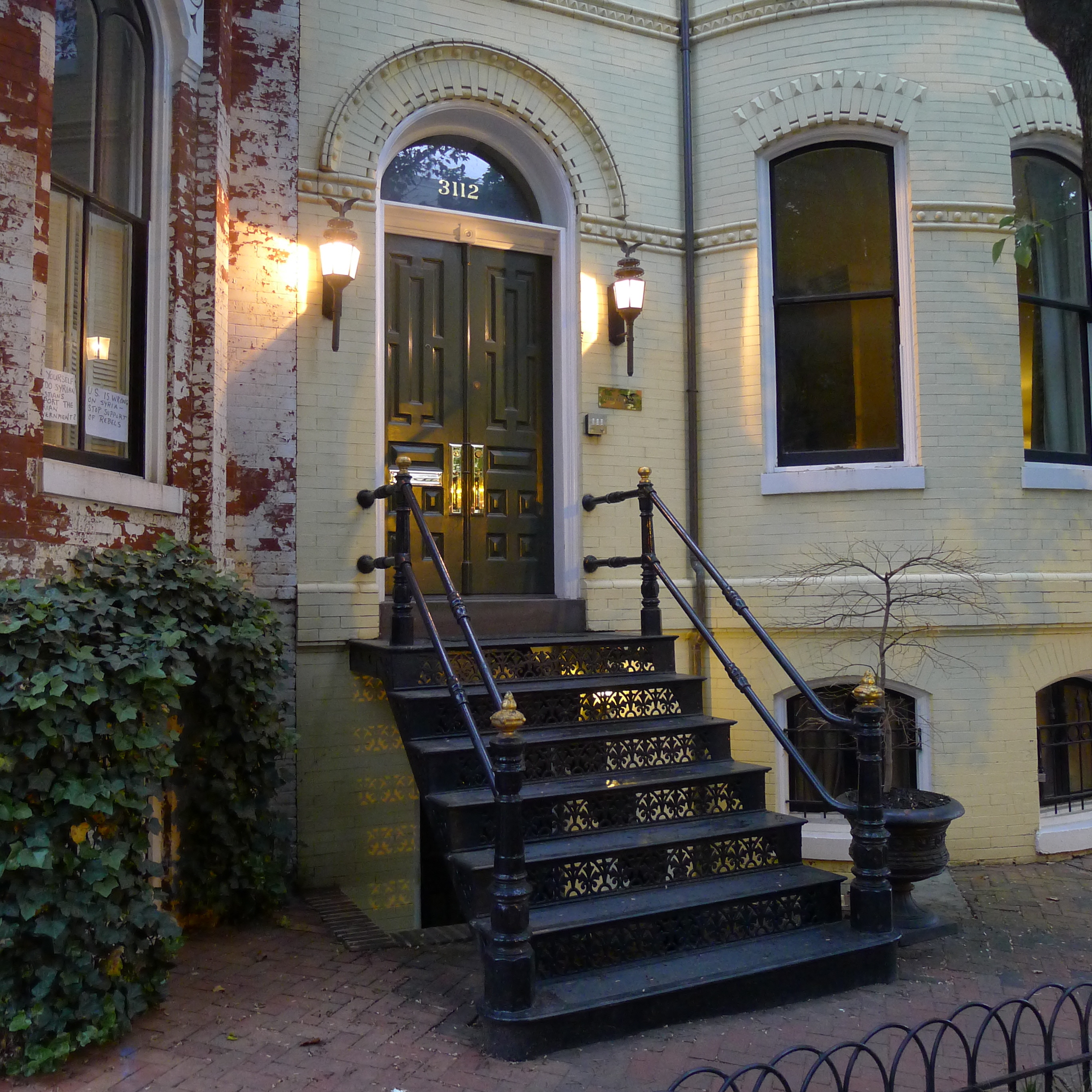
Cast-iron steps are a Georgetown hallmark.
P1030692

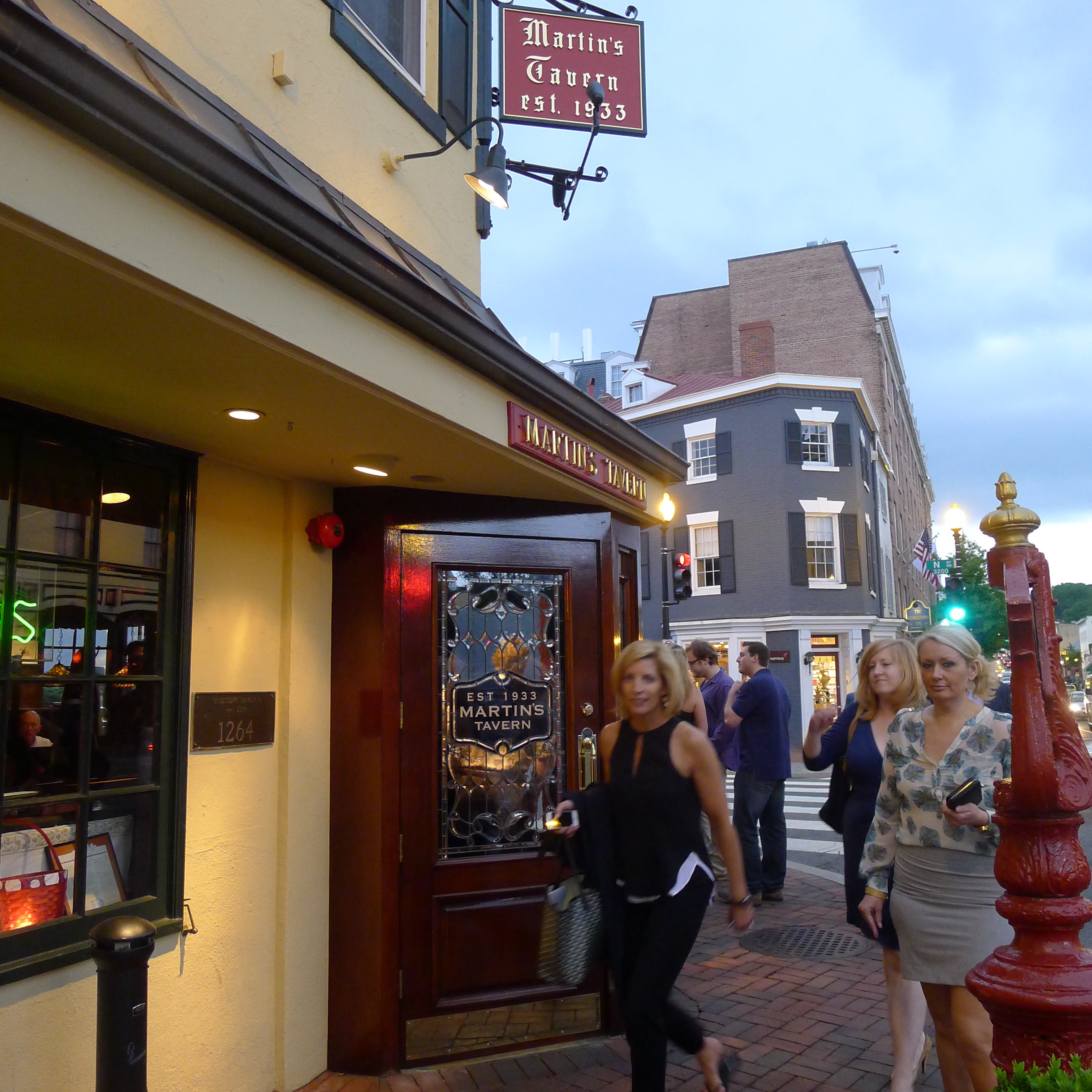
One of JFK’s favorite restaurants was Martin’s Tavern in “downtown” Georgetown. He proposed to Jackie here. A plaque in the booth attests to it.
P1030748

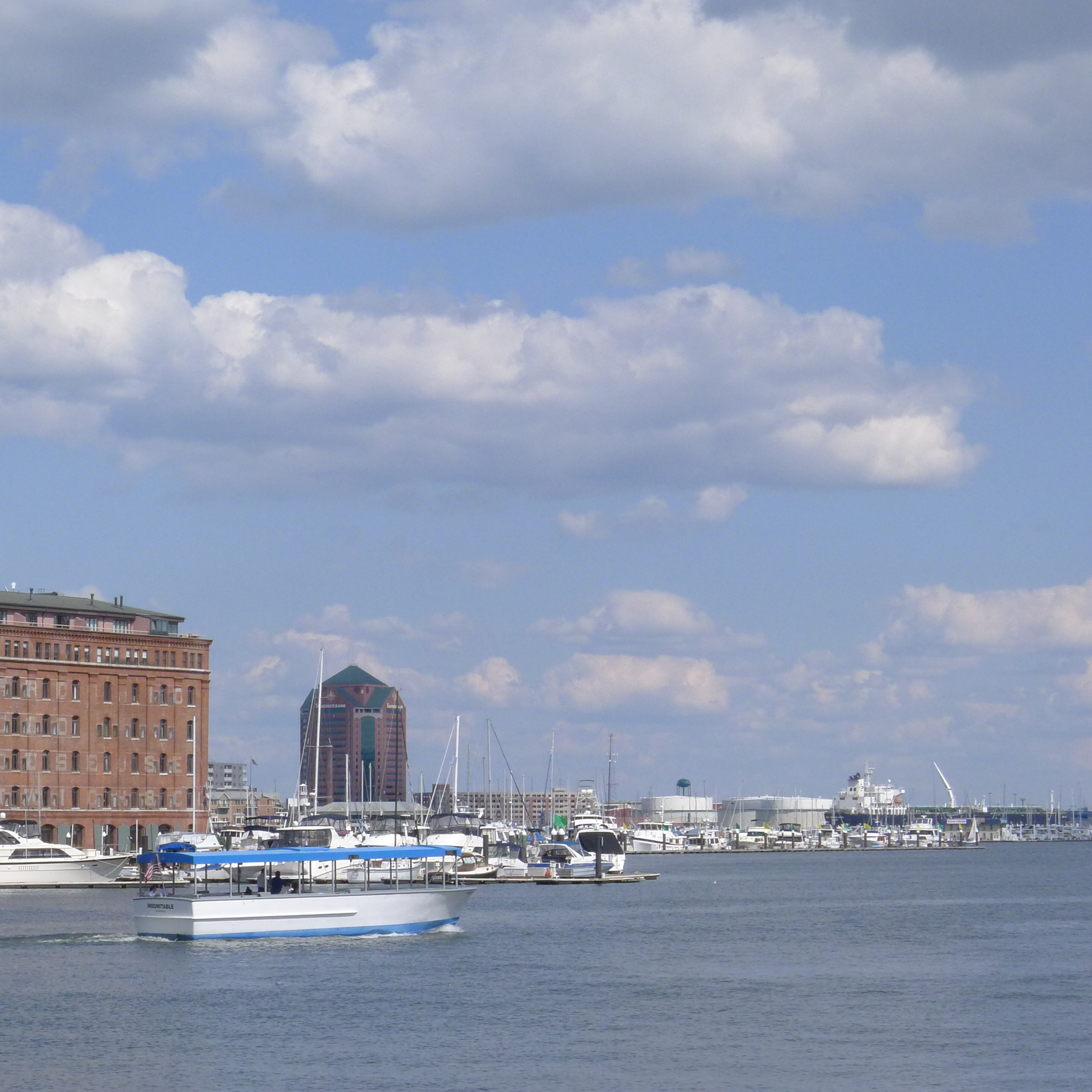
We shift to Baltimore — the harbor, at Fell’s Point, just east of the Inner Harbor.
P1030755

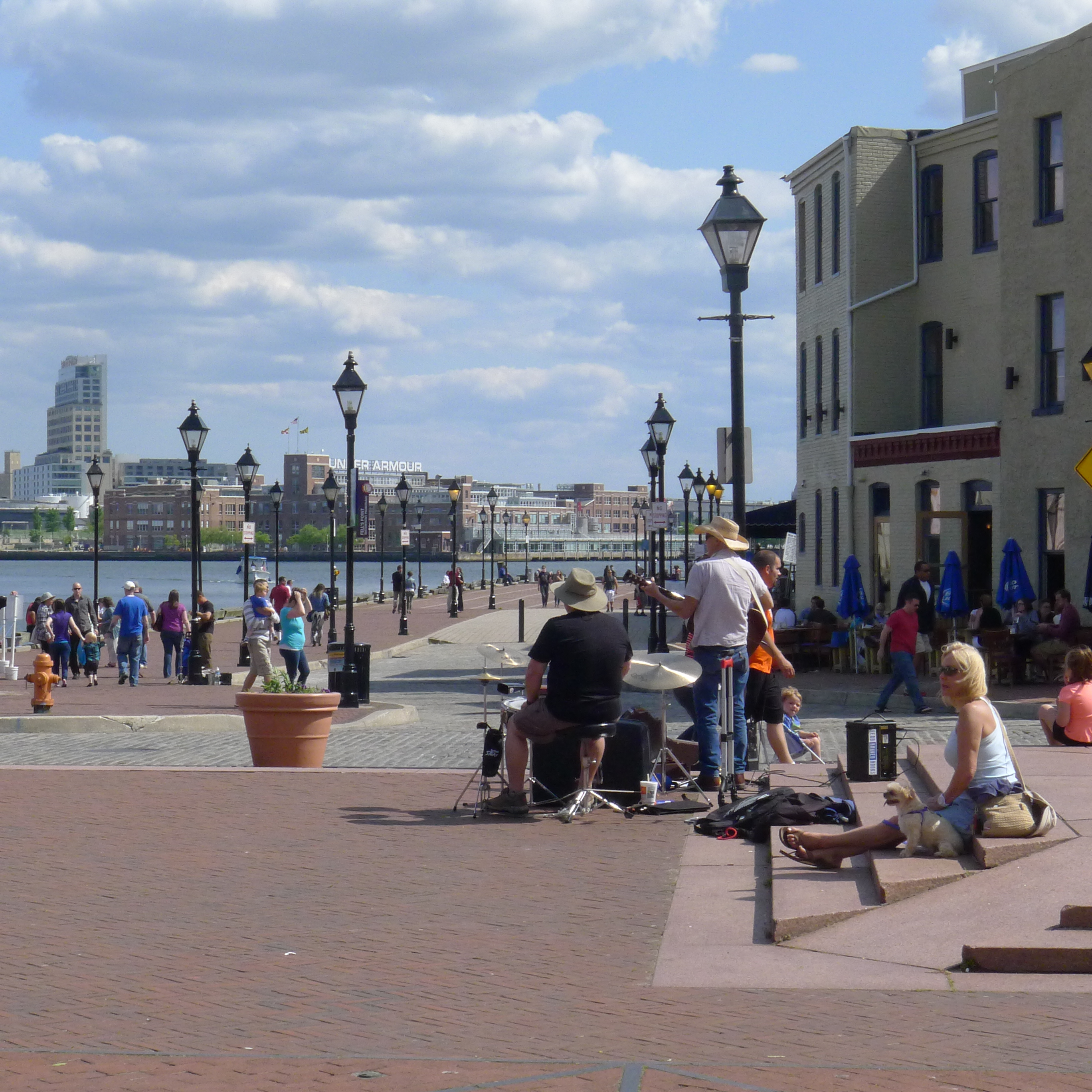
“Broadway Square” at Fell’s Point.

P1030758

The cobblestone streets contribute to a seafaring atmosphere. P1030635
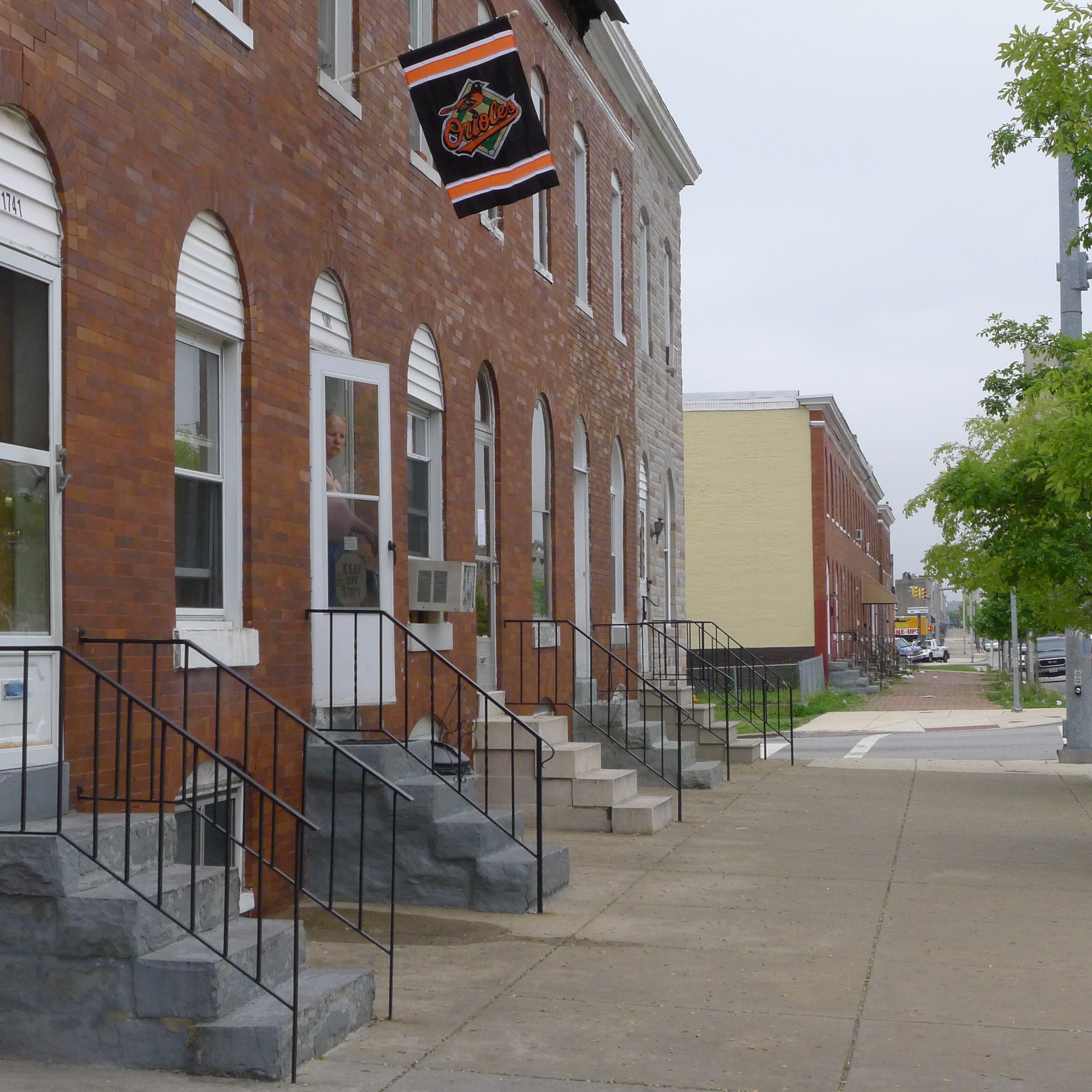
This is the first photo I took on the trip, after we missed a turn and ended up in a decayed row-house area in Baltimore.
Remember when Kansas City made the deal for Sprint Center with Anschutz Entertainment Group, and Anschutz promised to try to get either a National Basketball Association team or a National Hockey League team as the anchor tenant for the new center?

To the chagrin primarily of the Talk Sports Radio fellas, it never happened…hasn’t even come close to happening.

But you know what? We should all be grateful that neither the NBA nor the NHL has come to town.

I’m going to tell you the main reason in a minute, but first here are a couple of things to consider:

The NHL is about a dozen years behind the National Football League in terms of head injury awareness and prevention…And the NFL was about a dozen years behind the curve when it got its head out of the sand. So, the way I see it, the NHL is — or will be in several years — about a generation behind.

The NHL still condones pugilism on ice. The people who run the NHL can’t pull themselves back from indulging those fans who buy tickets primarily to see guys drop the gloves and duke it out. The game itself is good, partly because the action is fast and almost continuous, and it’s a beautiful thing to watch those players glide, skid and do 360s on the ice. But overall, it sucks because league officials put fighting over safety.

Then, there’s the NBA. My, God.

The Los Angeles Clippers franchise, the doormat of the league, is worth $500 million to $1 billion? Hell, we’re going to get a single terminal at KCI for that much!

Business Insider reported last year that the average ticket price for a non-premium seat in the NBA was $50.99 per seat…As tennis great John McEnroe would say, “You CANNOT be serious!”

But here’s the kicker.

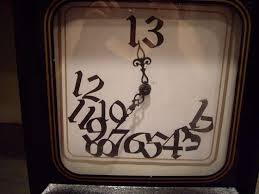
The SportsMonday centerpiece in today’s New York Times was about how the final minutes of NBA playoff games drag on interminably. The headline was “An Eternity in Seconds,” and the headline was an illustration of a large sundial inscribed with the Latin words “Terminus Est Aeturnus,” or, The End is Eternal. (I believe the correct spelling is “aeternus,” with a second “e,” not another “u.”)

clockReporter Richard Sandomir said that in a recent game between the Brooklyn Nets and the Toronto Raptors, it took nearly 18 minutes to make it through the final 60 seconds of the game.

Eighteen minutes for one minute of play! Aeternus, indeed.

The culprits were timeouts and TV commercials. Sandomir wrote:

“Action on the court unfolded in two-, four-, six- and nine-second bursts, save for one sequence that flowed for all of 33 seconds.

“The six timeouts requested in the game’s final 22.5 seconds illustrated how the clock bent to the vagaries of coaching strategy and TV’s dominion over big-time sports.”

Sandomir cited a second example: The final  one minute and 23 seconds of last Friday’s game between the Clippers and the Oklahoma City Thunder took 12 minutes and 43 seconds.

Of course, the NBA isn’t the only pro sport in which games go on and on. Baseball games have gotten progressively longer — although, thank God, they are not governed by a clock. And National Football League games, which used to be played in under three hours, now last an average of about three hours and 15 minutes.

Here’s a statistic for you: A 2010 Wall Street Journal study of four NFL broadcasts showed that the average amount of time the ball is in play on the field during an NFL game is about 11 minutes.

Holy Mother of the Hour Glass!

Let us count our blessings, then. At Sprint Center, let’s go forward with a steady diet of concerts, circuses and college basketball games. Even without the NBA or the NHL, it’s still one of the most successful arenas in the country.

Makes me think those Anschutz people knew what they were doing all along.

The death Thursday of former Missouri Gov. Joe Teasdale saddened me but also brought back memories of days in the early 1970s, when Teasdale was an up-and-coming politician and I was an up-and-coming political reporter.

What I remember most about Teasdale is his showmanship and authentic personality when he was prosecutor. Even though he was elected governor — mostly on the strength of a nickname, Walkin’ Joe — his best days in politics were as prosecutor. I think he’d tell us that, too, if he was alive today.

Teasdale was first elected prosecutor in 1966, after a few years as an assistant U.S. attorney in Kansas City.

In the prosecutor’s office he oversaw a talented group of lawyers, some of whom were personal friends. Teasdale didn’t try many cases himself; he was content to let his assistants do the heavy lifting. And those assistants didn’t lose many cases, which really helped Teasdale politically.

teasdaleOur paths first intersected in 1971 when I got my first “beat” at The Kansas City Times (the morning Star at the time). I was named Jackson County Courthouse reporter, and, boy, was I excited. Before that I had been a “general assignment” reporter, which involved responding to wrecks, shootings and other mayhem and covering mostly mundane presentations and speeches. It was pretty unsatisfying work, but I was paying my dues. (I also got at least a couple of dates out of those speech-covering assignments.)

When I was named courthouse reporter, my shift changed from 4 p.m. to 12:30 a.m. to noon to 8 p.m. That was much more conducive to an active social life, which revolved around the Westport bars.

Fortuitously for me, a shocking murder had taken place in November 1970, and I inherited coverage of the trial.

A low-ranking mobster named Johnny Frankoviglia, known as Johnny Franks, had undertaken — reportedly without authorization from mob bosses — the killing of a scrap-metal dealer named Sol Landie.

In August 1970, Landie had testified before a special grand jury investigating organized gambling in Kansas City, and he was scheduled to testify against several men who were subsequently charged. In November, four young men whom Franks had recruited invaded Landie’s south Kansas City home, shot and killed Landie and terrorized his wife. They tried to make it look like a burglary and robbery but — amateurs that they were — failed miserably. The hiring of rank amateurs was the main reason authorities believed Franks had acted on his own.

There was a lot of pre-trial publicity, and because of that, the trial was moved to St. Louis County. It was held in March 1972.

Teasdale took about half his staff over to Clayton, MO, for the trial, and he assigned an assistant named Dave Freeman — long since deceased — to be “first chair” prosecutor. Freeman, a dour, sloop-shouldered sort, had a deep and penetrating voice and steely eyes. He was a tiger in the courtroom, taking dead aim on each defendant, and he couldn’t stand losing.

The trial lasted a full week, and I was writing for the morning Kansas City Times and the afternoon Star. (The two papers collaborated at the time.)

I have never written so much copy and covered a story so intensely. I would sit in on testimony in the morning, leave the courtroom about 11, write and dictate my story for the afternoon paper. I would return to the courtroom after the lunch break, stay through the end of testimony and start the writing and dictating process all over again. Seldom did I get away before 7:30 or 8 p.m.

(In addition, I accepted an offer from the Associated Press to file stories for them at the end of each day’s testimony. Foolishly, I didn’t ask the assigning editor how much I would be paid, and, when it was all said and done, I got a $25 check for 12 to 15 hours of work.)

My stories were getting great play in The Times and Star, however — front page or on the page featuring local news, and I was “eating my bylines for breakfast,” as an assignment editor once described my ardor for stories.

As I recall, Teasdale, who had a commanding presence and powerful voice (this was before his notorious, chronic throat clearing set in), made the opening statement for the prosecution. I don’t remember it being particularly compelling, but, then, opening statements seldom are.

He also questioned one or more prosecution witnesses, sticking closely to an outline prepared by his assistants…It was clear that the boss was there to be seen and that he and his assistants didn’t want to jeopardize the case by having him do more than he was capable of.

At the close of the trial, however, a shocking thing happened — shocking to me, anyway. Teasdale delivered one of the most powerful and riveting closing arguments that I ever heard. Again, I don’t remember a lot of it, but I recall clearly how he zeroed in on Johnny Franks. At one point, Teasdale loomed over Franks, pointing at him menacingly and boomed, “He doesn’t represent the Italian community that I know!”

The jury returned its guilty verdict on a Saturday — the outcome was never in question — and Teasdale and his crew partied late into the night. I don’t remember what I did, but when I knocked on Teasdale’s hotel room door on Sunday morning, he answered bleary-eyed and groggy. Graciously, he ushered me in and gave me an interview.

The last of my week-long run of stories — the interview with Teasdale — ran on the front page of the Monday Kansas City Times. It put a nice bow on a great week for me, as well as for the prosecutor’s office and Teasdale personally.

A few months later he was traipsing around the state (actually riding in an RV most if the time) campaigning for governor. He lost that round, but four years, later — in 1976 — he ran again and pulled off one of the most memorable political upsets in Missouri history, defeating incumbent Gov. Christopher S. “Kit” Bond, a Republican.

Teasdale was a disaster as governor — totally ill suited for managing a large, multi-faceted organization. Bond came back and beat Teasdale in 1980, and Teasdale returned to Kansas City, where he attempted,  unsuccessfully, to adjust to life as an average citizen.

This didn’t come out in The Star’s obit, and you probably won’t read it anywhere else, but Teasdale suffered from depression and bipolar disorder most of the rest of his life.

On Thursday, he died from complications of pneumonia.

We never know how the arcs of our lives are going to travel. All we can hope for is more good days than bad along the way. Joe Teasdale had a lot of good, memorable days on the ride up; it’s just that for him, the ascent and time at the apex were way too short.

But this former reporter will never forget the wild, seven-day ride he enjoyed on that ambitious prosecutor’s coattails.

I popped over to Salina tonight (this will post in early morning) for the Martina McBride concert — the first of 21 dates McBride will play on a tour that continues until Nov. 1.

I first heard her in concert about two years ago, when she opened for George Strait at Sprint Center. She was every bit as professional as Strait and much more energetic than the cowboy who this year is riding away as a concert performer.

McBride delivered the goods again last night, giving a stirring hour and a half performance that had the sellout crowd of about 1,300 standing, cheering and whooping at various points.

The concert was at the Stiefel (pronounced stee-ful) Theatre, a former Art-Deco-style movie theater that closed in the late 1980s and reopened in 2003 after an extensive restoration. It is a beautiful place, with great sight lines, comfortable seats and a slope that affords a good view, even if you’re unlucky enough to be seated behind someone wearing a baseball cap or, worse, a cowboy hat. In fact, a guy down the row from me never removed his cowboy hat…I guess he’s either mighty proud of it or feared a head chill.

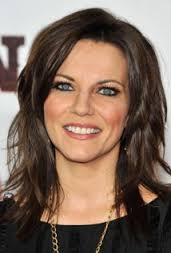
martinaFor McBride, the concert was a homecoming. She was born in Sharon, KS, a small town west of Wichita, where a park is named for her. In her late teens, she performed in a local rock band in Wichita, and she moved to Nashville in 1989, when she was 22 or 23.

She has recorded 12 albums, including “Everlasting,” which was released last month.

“Everlasting” is a very unusual album for a country western singer because it consists primarily of cover songs made famous by great pop artists. The cuts on the album include “If You Don’t Know Me by Now” by Harold Melvin & the Blue Notes; “What Becomes of the Broken Hearted” by Jimmy Ruffin; “Do Right Woman, Do Right Man” by Aretha Franklin; “Suspicious Minds” by Elvis Presley; “Bring it on Home to Me” by Sam Cooke; and “Wild Night” by Van Morrison.

But McBride is nothing if not an experimenter. She continually stretches her musical reach and embraces risk. She has a tremendous sense of song arrangement and what goes over well with audiences. Also, while she puts out a big sound, it is never overwhelming. With her last night were three back-up singers and a band that included piano, lead guitar, bass guitar and drums, and a horn section consisting of trombone, baritone sax, tenor sax and trumpet.

The pianist, guitar players and drummer were dressed in iridescent blue sport coats, with black pants, white shirts and skinny black ties. The brass players wore vests, also iridescent, instead of the sport coats. Bending and blowing behind low, musical podiums with stylized “M” logos, the brass players looked like hyped-up escapees from the Lawrence Welk Orchestra.

McBride, a lissome beauty, wore a wine-colored, form-fitting jacket; black blouse; skin-tight leather pants; and heels that were about 10 inches high. (I guess it could be five, but I sure would like to have measured.)

In style, McBride seems to me like Janis Joplin, Linda Ronstadt and Dusty Springfield all wrapped up in one. She combines Joplin’s sheer energy with Ronstadt’s pure tonality and Springfield’s soulfulness. In fact, her four-song encore included a low-down rendition of Springfield’s “Son of a Preacher Man,” which just about launched me out of my chair.

In addition to several songs from “Everlasting,” McBride did some of her old standbys, including the powerful “Wild Angels” and her hallmark song, “Independence Day.”

McBride was clearly having fun. She pointed and waved to individuals in the audience, and at one point she crouched down and got into a “selfie” photo that a young woman was taking of herself with her back to the stage. The woman cheerily gave McBride a high five.

Toward the end of the concert, McBride talked convincingly about the power of live performance. The dynamics and thrill of live performance cannot be downloaded, she noted, and only live performance leaves the artist and audience with distinctive memories.

It certainly was a memorable night for me…If you would have asked me in January what the chances were of me having a memorable night in Salina in 2014, I would have said, “Slim to none.”

But there you go, that’s one of the joys of life — unexpected pleasures popping up in unlikely places.

From your comments, it is clear that you are interested in the make-up of Mayor Sly James’ KCI advisory committee and how the 24 members voted yesterday.

Each member was asked to fill out a voting sheet, and the votes were all public under the Missouri Open Meetings Law.

The members were presented with options. They are listed below, just as they appeared on the voting sheet:

Alternative 1: Expand and repurpose existing separate terminals with each terminal converted to a secure space with centralized processing and security checkpoints. (Each terminal remains separate from any other terminal requiring bus transportation between terminals and security re-entry from one terminal to the next.)

Alternative 2: Construct a new centralizing structure connecting the separate terminals and repurpose existing terminals such that the entire terminal complex is connected secure space. (Each of two or three terminals are connected for security purposes with some type of people mover to expedite moving within the terminals.)

Alternative 3: Construct a new terminal replacing and eliminating the three separate terminals.

Nineteen members voted for alternative 3; two voted for alternative 2; and one put down both 2 and 3. Two members abstained, saying they didn’t have enough information on costs and other factors.

Here, then, are the members and how they voted:

bobb

Berkebile, committee co-chairman

Bob Berkebile, architect and principal at BNIM — 3.

David Fowler, retired from KPMG — 3.

Jesse Barnes, executive director of the Bruce R. Watkins Cultural Heritage Center — 2.

Zulema Bassham, philanthropist — 3.

Forestine Beasley, commercial real estate broker with Greg Patterson and Associates — 2.

David Byers, c.e.o. of CARSTAR — 3.


fowler

Dave Fowler, co-chairman

Chuck Caisley, vice president of marketing, KCP&L — 3.

Dan Cranshaw, an attorney with Polsinelli — 3.

Prentiss Earl III, entrepreneur in residence, Kauffman Labs — 3.

John FIerro, c.e.o. of Mattie Rhodes Center — 3.

Kevin Koster, president of Sandweiss Koster Inc. and founder of SaveKCI.org — abstained.

John McDonald, president of Boulevard Brewing Co. — 3.

Mike McKeen, director of development for Briarcliff Development Co. — 3.

Paula Meidel, account executive at Oracle Corp — 3.

Nikki Newton, senior vice president of Waddell and Reed — 3.

Mark Pederson, vice president of Lockton Companies — 3.

Joe Reardon, former mayor of the Unified Government of Wyandotte County/Kansas City, Kansas — 3.

Nia Richardson, director of business development for DuBois Consultants Inc. — abstained.

Bill Skaggs, former Kansas city Council member and former chairman of the council’s Aviation Committee — 3.

Alicia Stephens, executive director of the Platte County Economic Development Council — 3.

Reginald Thomas, president of Kansas City Laborers Union No. 264 — 2 or 3.

Qiana Thomason, vice president of Blue Cross and Blue Shield of Kansas City — 3.

Sheila Tracy, president of the Northland Chamber of Commerce — 3.

Donna Wilson Peters, attorney with Husch Blackwell — 3.

**

This morning, I met with Councilman Russ Johnson, chairman of the council’s Transportation and Infrastructure Committee. He said that the airlines ultimately would decide how much could be spent on a new terminal because they will be paying the gate and landing fees, which will be used to retire revenue bonds that would be issued (with voter approval) to finance construction.

Johnson predicted the final tab would be less than the Aviation Department’s $1.2 billion estimate, and he said he believed the airlines would support passage of the bond issue because their executives realize that a new terminal is needed.

**

Note: Thanks to KCMO public information officer Chris Hernandez for providing me with a disk containing all 24 score sheets, and thanks to frequent commenter John Altevogt for turning up a list of the committee members, which both KCUR-FM and The Pitch ran last year when the group was appointed..


Kansas City, we have a winner!

It’s the KCI Terminal Advisory Group, which today stood up to the head-in-the-sand crowd that would like to keep Kansas City International Airport just as it is, even though it has become a veritable aero-saur.

After painstakingly sifting through studies, testimony and recommendations for the last year, the 24-member committee recommended razing KCI’s three terminals and building a single new one.

…Everyone who is now wearing a hat, please take it off and throw it in the air!

Ah, I see a sky full of hats…Good to know.

…Well, maybe my glasses need cleaning, but I hope there are more hats in the air than there would have been a year ago, before this process got started.

We’ve seen lots of letters to the editor on both sides of the issue, and the committee’s deliberations have placed a spotlight on KCI — and it isn’t pretty.

When you load all the factors in a mixing bowl — including the estimated $1-billion-plus price tag for a single terminal on one hand and the quickly deteriorating, existing terminals on the other — the unavoidable conclusion is that Kansas City is stuck with an airport that no longer adequately serves the needs of modern aviation or the pace of society.

KCI, unfortunately, was becoming an antique about a decade after it was built. Remember those nice, quaint parquet floors? I loved ’em, but, hell, they were totally impractical — a maintenance nightmare.

You probably don’t remember this (I do because I was covering City Hall at the time) but there was a big to-do over what company was going to get the right to install photos of Kansas City — the Plaza, Crown Center, Arrowhead Stadium, etc. — in the late 80s.  But we never got any good promotional photos in the airport — at least none that really stood out in those curving concourses.

So, now, let’s get rid of it. Those who insist on clinging to the “but-it’s-so-convenient argument” need to get on board and help us get a light-and-bright, modern airport, with a smooth-flowing, central security station and plenty of retail and food options.

I am sick of going to places like Denver, Chicago, Nashville and Louisville and walking through modern, energizing airports and then coming back to dingy, dull KCI.

…Yes, razing the terminals and building a large new one is going to cost a lot of money. But one thing many people don’t understand is that it’s not going to require a tax increase. The $1 billion plus price tag would be paid for primarily by the airlines, through gate rentals, landing fees and other fees. Of course, the airlines will pass the cost on to the airport users — the flying public — but that’s the way to do it.

If voters approve, the city would issue “revenue bonds,” which would be issued to finance the project. Revenue generated by the new project would be used to retire the bonds. The city would not ask residents to approve a new sales tax or a new property tax.

I think that is a very winnable issue at the polls.

As my friend Anita Gorman, former president of the Kansas City Board of Park and Recreation Commissioners, used to tell me whenever the park board went to voters with a ballot measure:

“Jim, if we can educate the voters, if we can explain to them exactly what they’re going to be getting and how we’re going to pay for it, they will go along with us.”

It’s all about educating the voters — showing them images of what a superior, modern airport would look like; laying out how it would surpass what we’ve got; and assuring them it would be paid for one airline ticket at a time.

Get on board, everyone. With any luck, KC could be flying high in several years.

We returned to Kansas City last night after spending the weekend in Louisville and attending the 140th Kentucky Derby.

Whenever masses of people determined to have fun and be seen come together, you can count on a spectacle, and the Derby never disappoints in that sense.

Over the years, the event has become too commercialized, especially with a huge, new video board pummeling you — at seemingly stratospheric decibel levels — with advertisements and various promotions. Of course, it would be naive to expect anything else. Maybe it’s a sign of age, but I’m starting to wonder if I’ve reached the point where the event is becoming more of an endurance contest than an opportunity to kick up my heels…Really, I can’t get very far off the ground any more.

Enough complaining and philosophizing, however, let’s get to the photos…

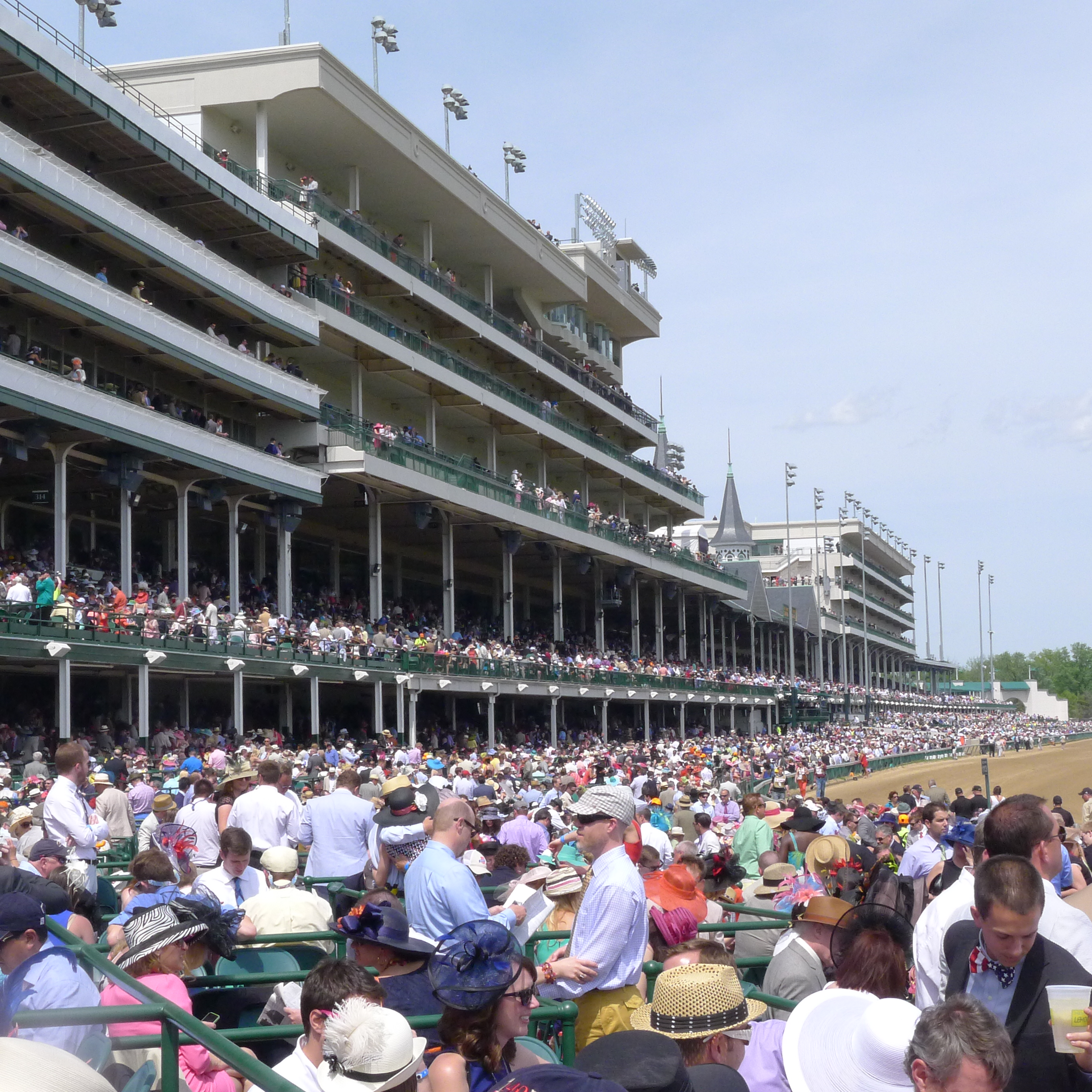
P1030582

The crowd. (Note that the Twin Spires, Kentucky’s No. 1 landmark, are getting dwarfed by the high-rise construction of top-dollar seating facilities on either side.)


P1030589

An alluring look always accentuates a beautiful hat.

P1030624

Sophistication doesn’t have a monopoly on the proceedings, however.


P1030611

Two of our “boxmates” — Adam and Eva, from the Chicago area. (Adam and Eva…I swear.)


P1030597

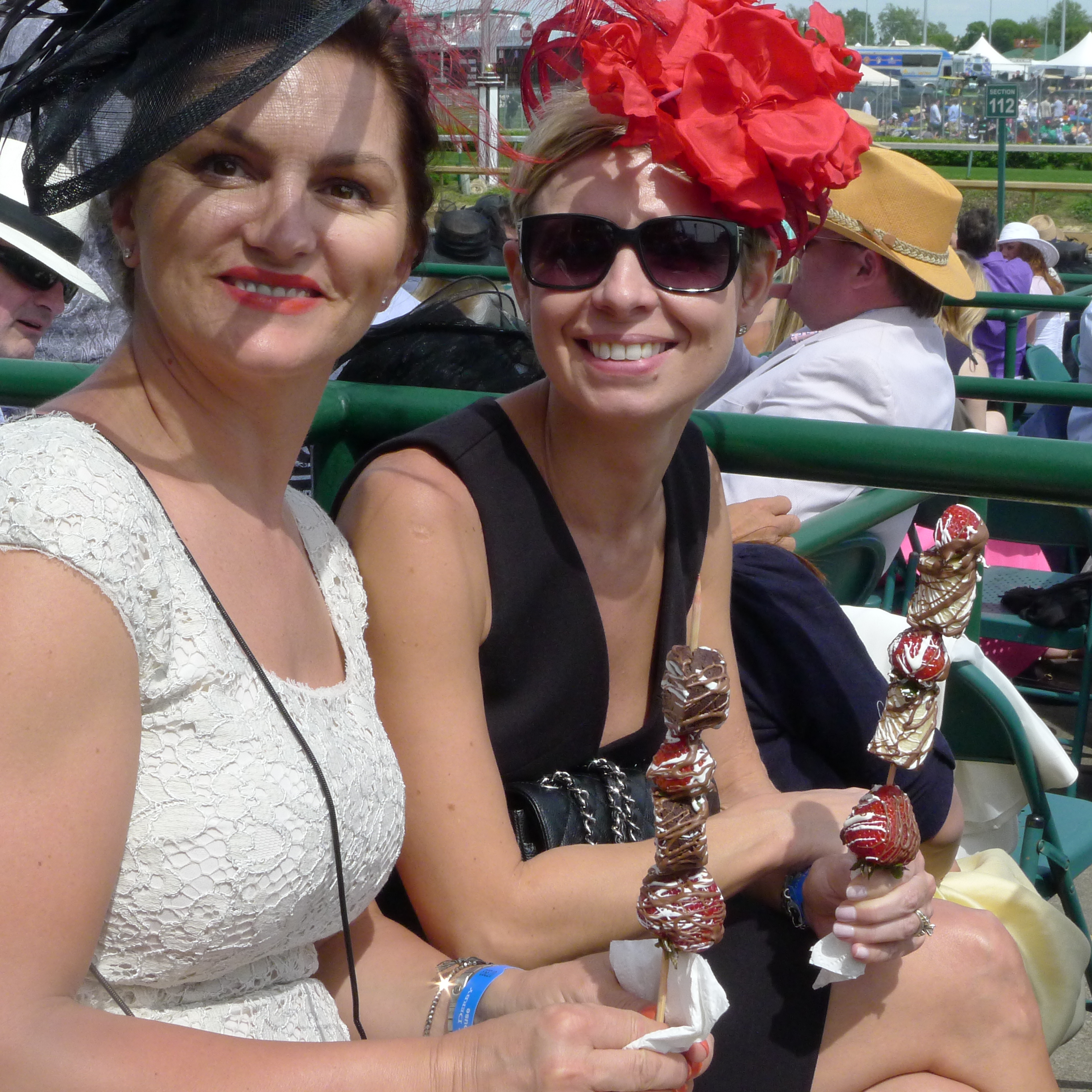
Eva (right) and Ella, another boxmate, with tasty treats.


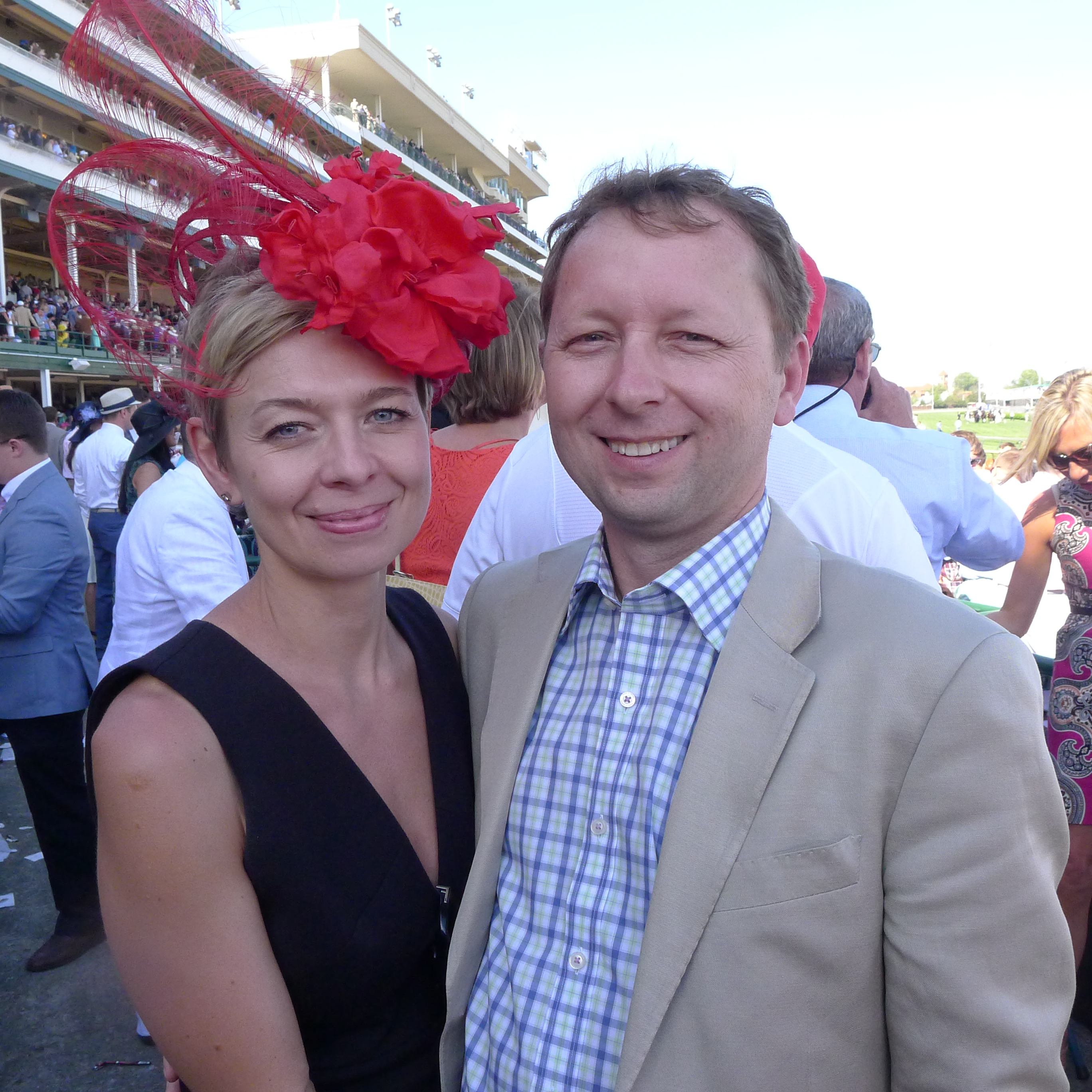
P1030609

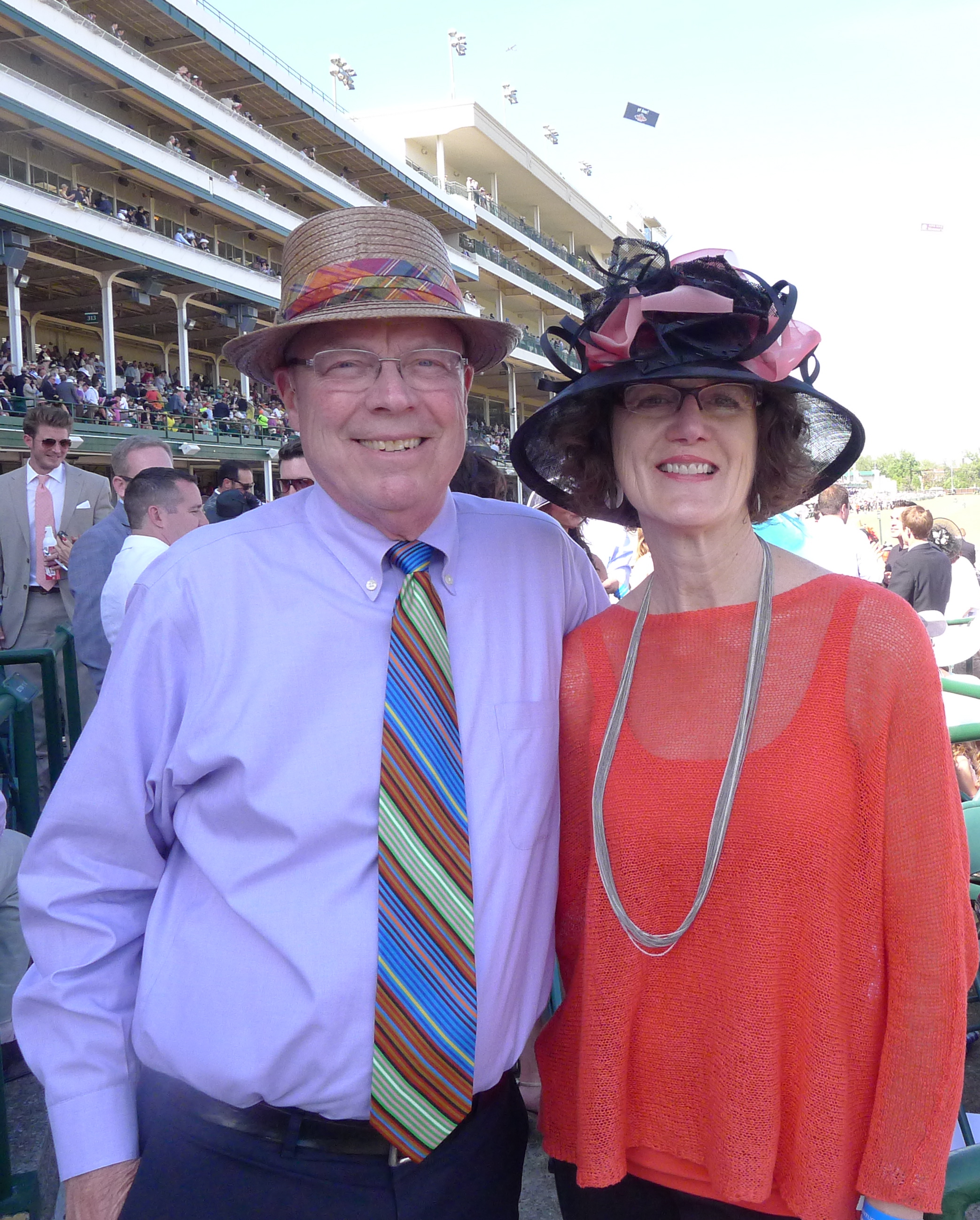
Mr. and Mrs. Jimmy C. Fitzpatrick of Kansas City, Missouri.


P1030606

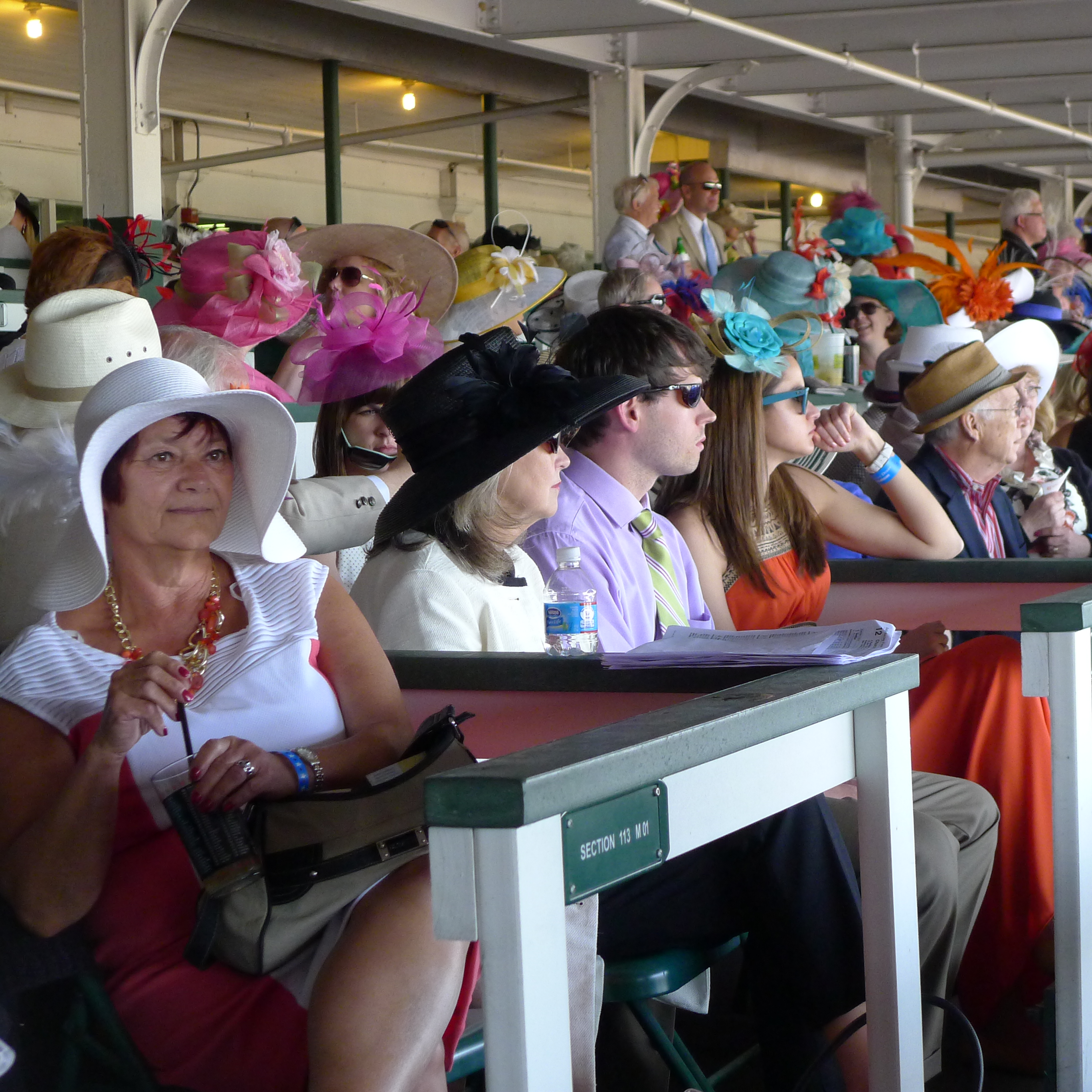
Under cover, in the First Floor Clubhouse.


P1030604

Not all the hats are special.


P1030573

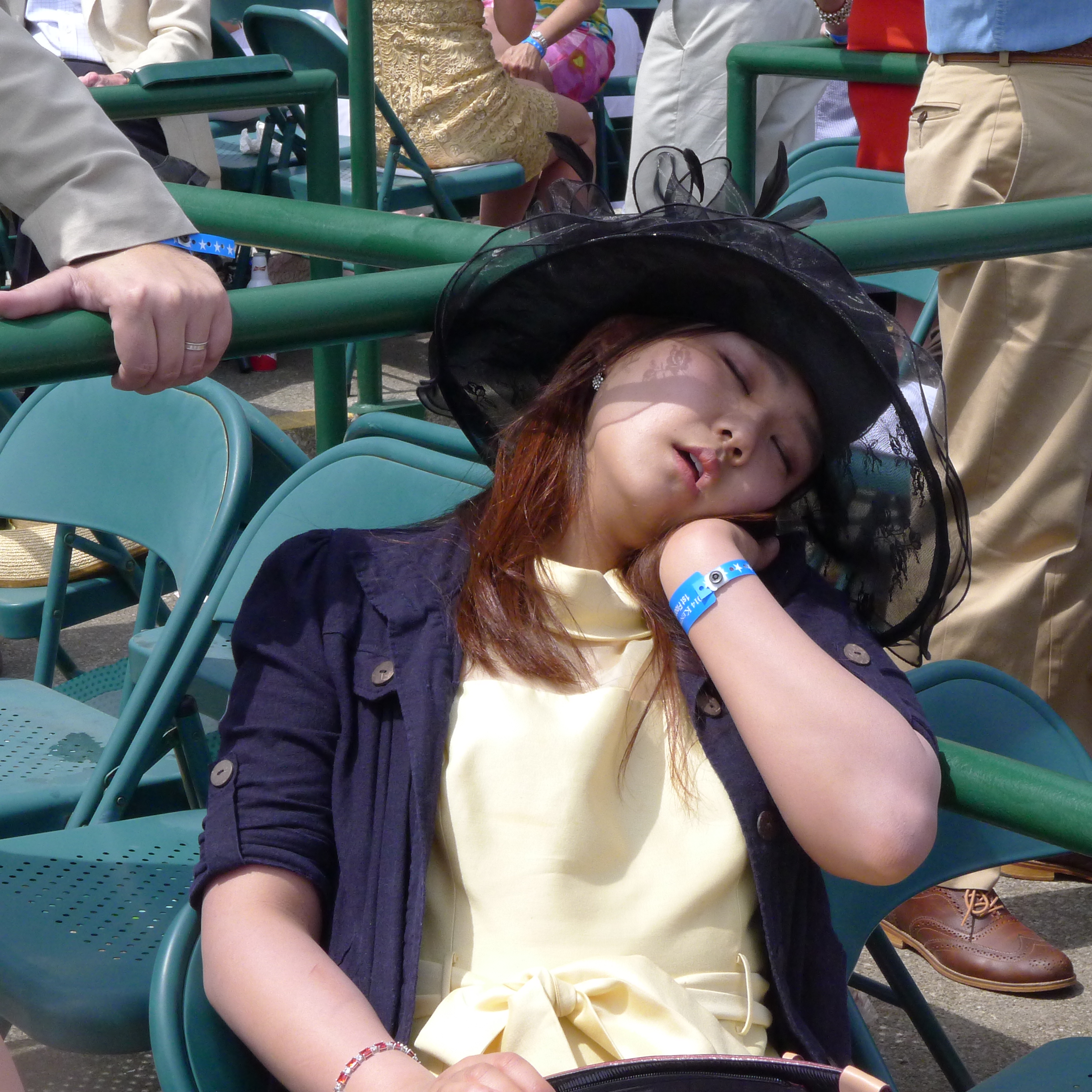
It can be difficult to maintain the pace.


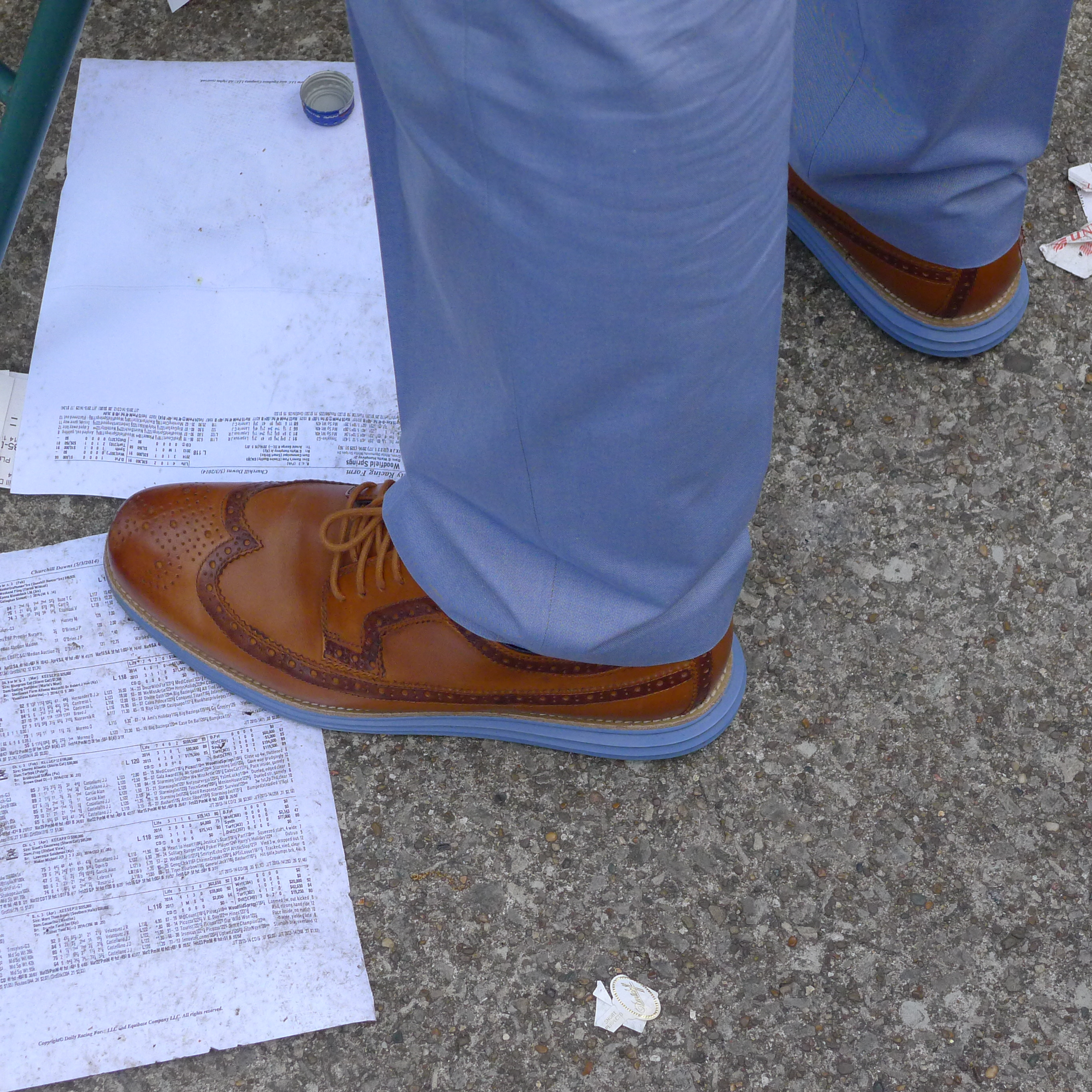
P1030617

Sometimes it’s the shoes that stand out.


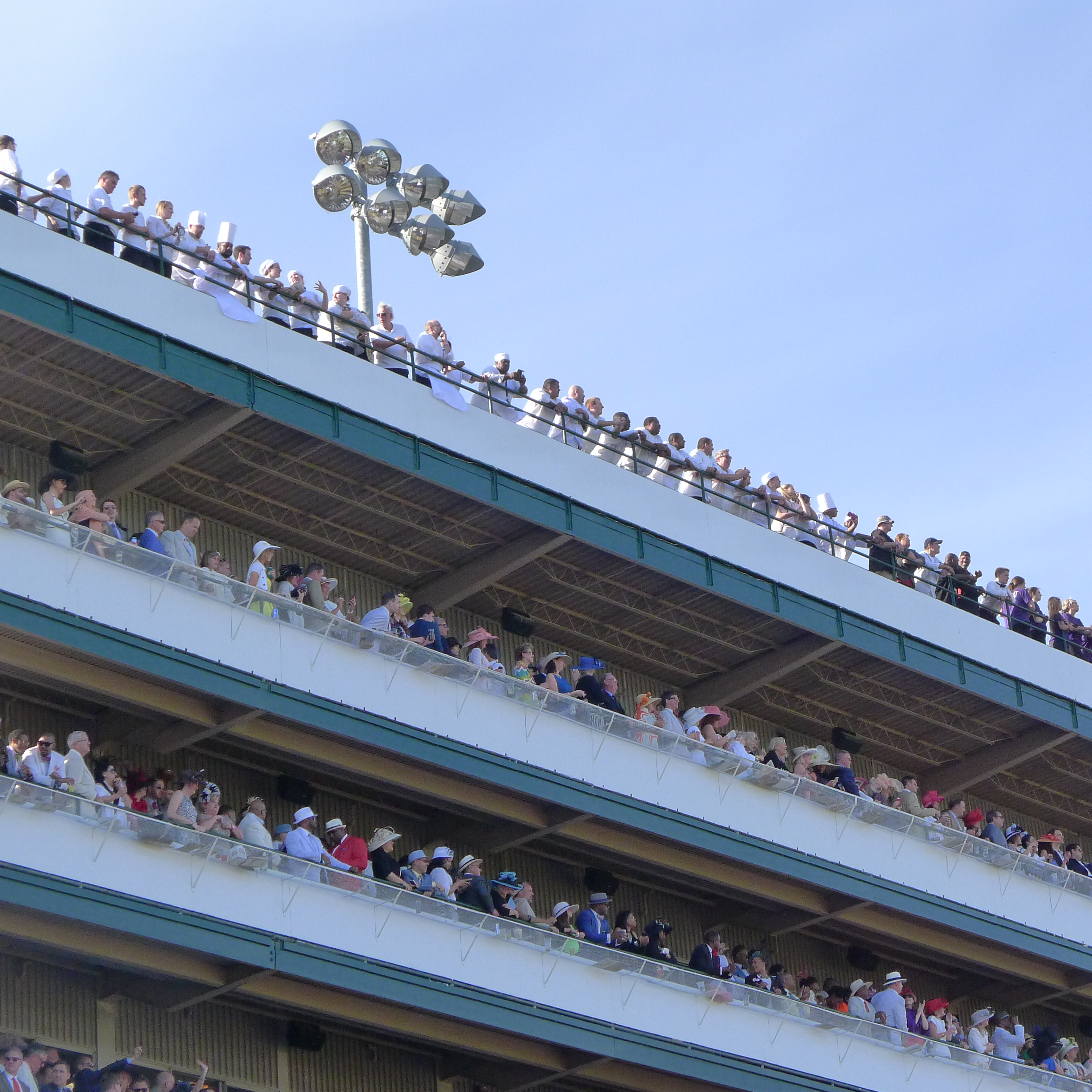
P1030619

Before the Derby race, even the chefs (note the two or three tall hats in the top tier) stop what they’re doing to watch the horses come over from the stables.


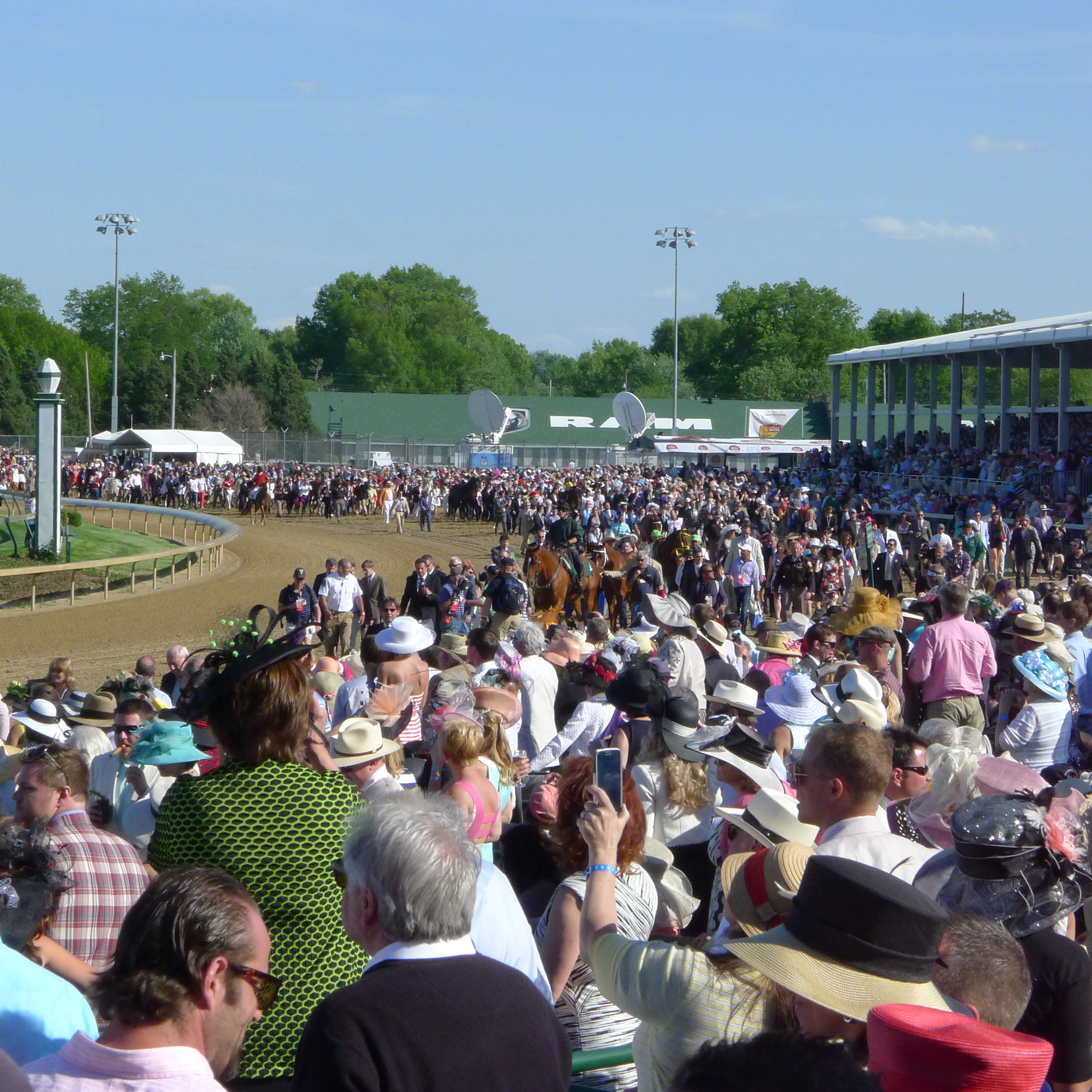
P1030616

The “walkover” from the stables is one of the great Derby scenes. Horse trainer Bob Baffert once called it “an out of body experience.”


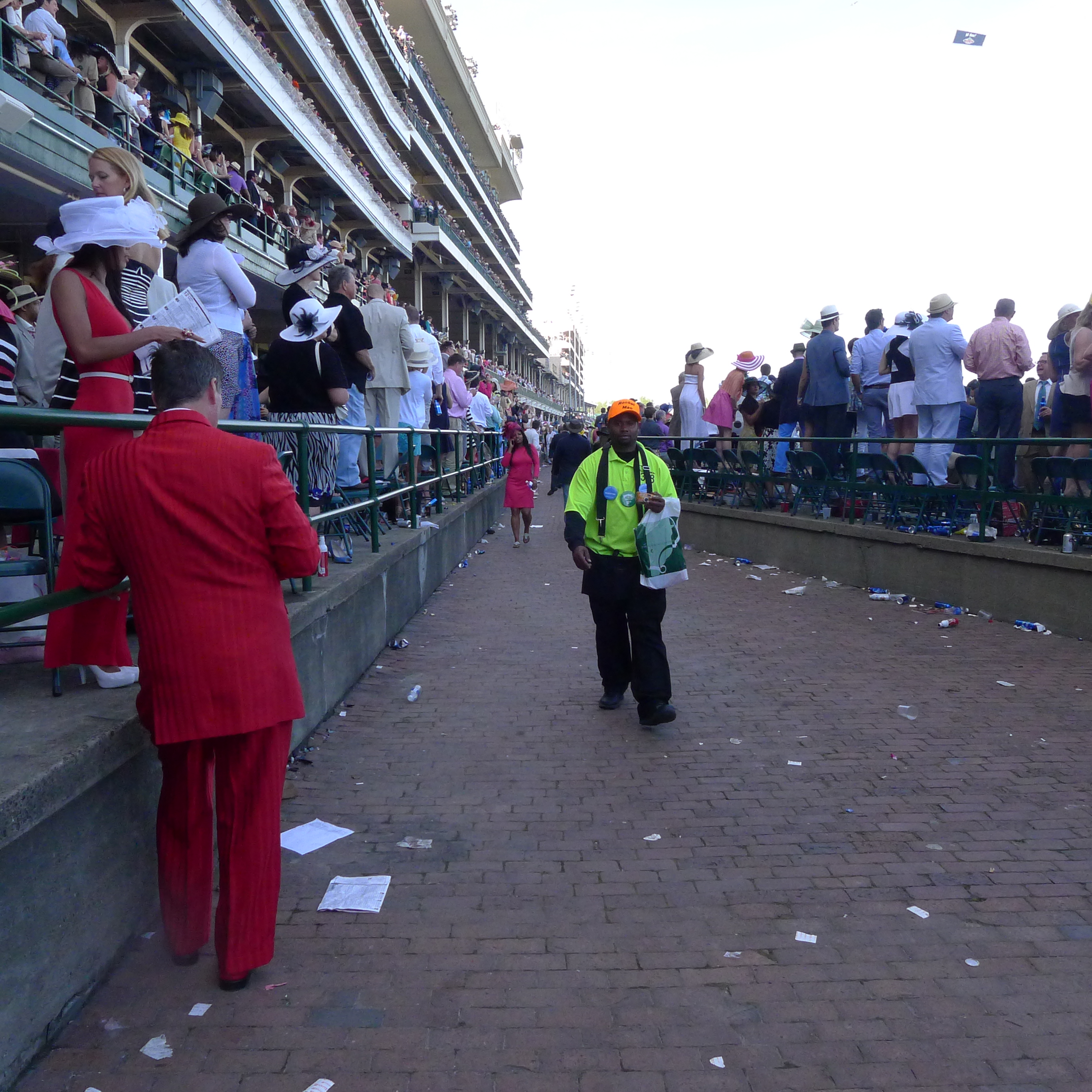
P1030620

Immediately after the race, even the bright reds start to pale.


P1030631

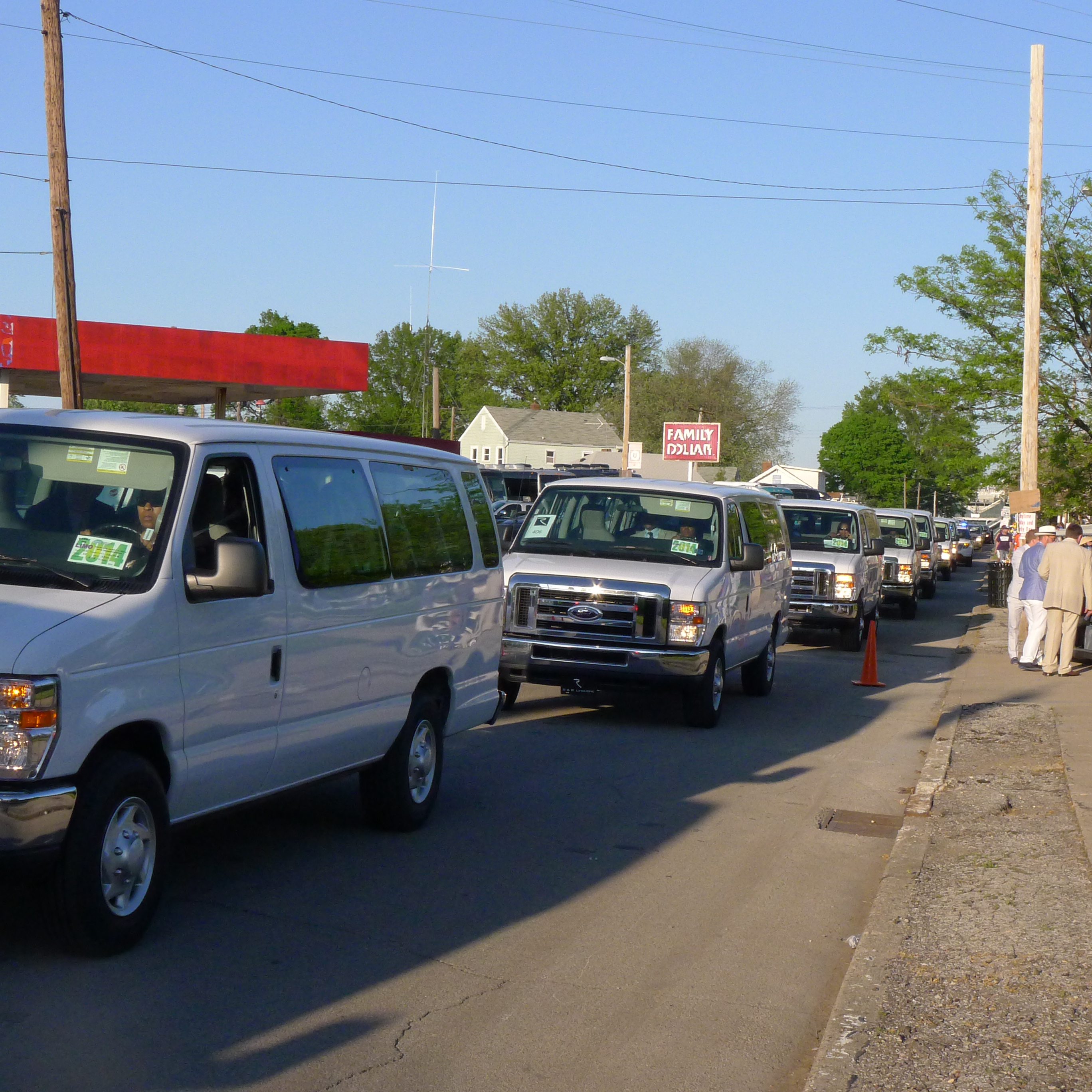
Then, 164,000 people have to get out of the track and its environs.


P1030634

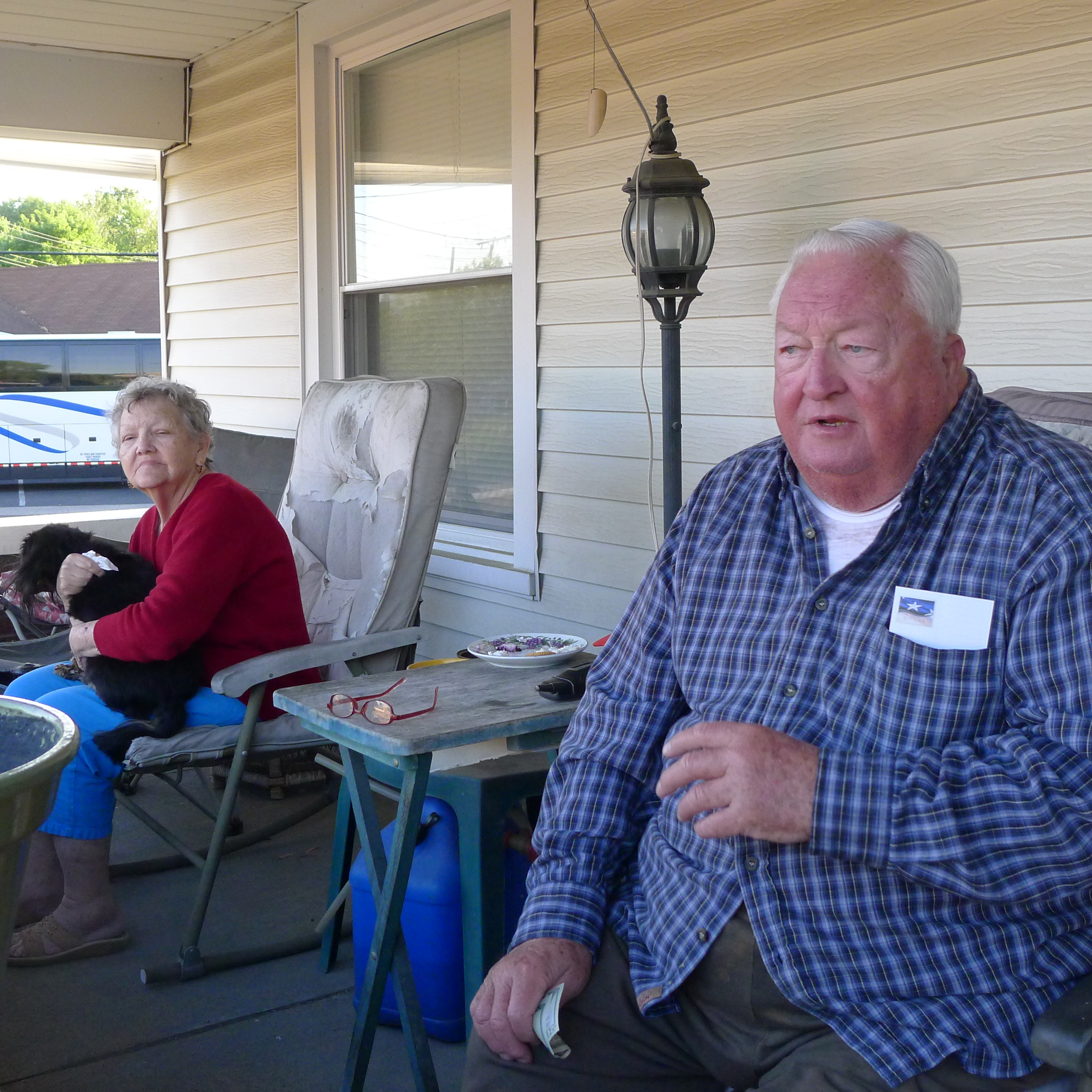
No van for us…We park with Charlie and his wife Barbara, who live a few blocks from the track. See you next year, Charlie…God willing.

Oklahoma, already recognized as one of the most backward states in the nation, tried to execute a guy tonight and failed.

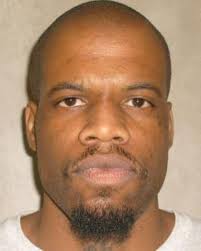
lockett

Lockett

Tulsa TV station KJRH said the supposedly lethal drug combination that officials were using to kill 38-year-old Clayton D. Lockett didn’t work and he died of a heart attack.

But not before he “was writing on the gurney and shaking uncontrollably.”

Here’s the “execution” timeline that KJRH reported:

6:23 p.m. – The injection process begins. Lockett has heavy, slow blinks, laid still.

6:29 p.m. – Consistently closed his eyes.

6:30 p.m. – First check of consciousness; still conscious.

6:33 p.m. – Announced Lockett was officially unconscious.

6:34 p.m. – Lockett started to move his mouth.

6:36 p.m. – Lockett began convulsing and mumbling.

6:37 p.m. – Lockett sat up and said, “Something’s wrong.”

6:39 p.m. – Prison officials lowered the blinds.

7:06 p.m. – Lockett dies of massive heart attack.

The second part of a scheduled “doubleheader” execution was postponed, sparing 46-year-old Charles F. Warner, at least for now.

The scene of this certifiable disaster was the Oklahoma State Penitentiary in McAlester.

State corrections director Robert Patton halted the attempted execution about 20 minutes after the first drug was administered. He said there was a vein failure.

This was almost too predictable. Death-row inmates in both Missouri and Oklahoma have appealed their sentences in recent months, questioning the make-up of the drug “cocktails” being used in executions.

Nevertheless, executions in both states went forward, until tonight.

This is pathetic. Horrifying.

I don’t care what Lockett or any other death-row defendant did — Lockett was convicted of shooting a 19-year-old woman in 1999 and having her buried alive, and Warner raped and killed an 11-month old girl — we as a society do not and should not endorse the application of cruel and unusual punishment under any circumstances.

And we cannot in good conscience engage in torture, intended or unintended. (Former President George W. Bush and Vice President Dick Cheney disagree with that, of course, but then they are who they are.)

About the only good thing that this debacle will accomplish, in all likelihood, is end death penalty in most states except Texas, where, I fully expect, execution as spectator sport will continue unabated.

Before the scheduled executions in Oklahoma, corrections department spokesman Jerry Massie told reporters that the state had never used the drug cocktail that was to be used in Lockett’s and Warner’s executions. As a result, he said, it was unclear how long the executions might take.

How prescient! Massie didn’t know…

Fact is, none of the Okies involved in the slaughter knew much of anything; they just plowed ahead, believing it was their official duty to put Lockett and Warner to death, however ugly that might turn out to be.

And, God, was it ugly.

I am happy to report that longtime Kansas City Business Journal and Kansas City Star business reporter Dan Margolies will be returning to the journalistic fold on Monday as managing editor of health care coverage at local public radio station KCUR-FM.

Margolies, 61, has been out of journalism the last five years since leaving a job with Reuters in Washington D.C. Since then he has done stints in the insurance business (underwriting media insurance, primarily) and video production.

“I couldn’t be more thrilled…I’m really jazzed,” Margolies said Friday in an interview at Latte Land, 79th and State Line Road.

“I never thought the opportunity (to get back into journalism) would arise again. Here we have a news organization, KCUR, that not only is not shrinking but is expanding its news operation. That appealed to me. I had come to admire KCUR tremendously, and the chance to work with them was too good an opportunity to pass up.”

P1030546

Margolies

Margolies said he would do some on-air work but primarily would help oversee and coordinate health news coverage. The plan is for KCUR to collaborate with KCPT-TV; KHI News Service (which is affiliated with but independent of the Kansas Health Institute); possibly  KPR (Kansas Public Radio); and other “partners” to establish a solid base for regional health-news reporting.

The job developed over a period of months after Margolies met and spoke several times with a former assistant KC Star business editor, Donna Vestal, who is director of content strategy at KCUR, which is operated by the University of Missouri-Kansas City.

Vestal took the lead in developing a project called Harvest Public Media, based at KCUR. It is a collaborative, public-media project that reports on agriculture in the Midwest. Funded by a grant from the Corporation for Public Broadcasting, Harvest Public Media includes six regional NPR-member stations.

Margolies (pronounced mar-guh-leez) said that the “Health Care Hub” project that he will be instrumental in developing will essentially follow the Harvest Public Media template, except that the Health Care Hub will extend its reach beyond public radio stations.

“We will be trying to do with health-news reporting what Harvest Public Media has done with food, agriculture and fuel issues,” he said.

Margolies’ educational and career credentials are superior. After graduating from Shawnee Mission East High School, he went to Washington University in St. Louis, where he earned a bachelor’s degree in philosophy. He then went to law school at Boston University, after which he practiced law for a few years in Kansas City and Boston.

“I decided it (practicing law) wasn’t the life for me,” he said, prompting a return to Boston University, where he got a master’s degree in journalism in a special, one-year program for people changing careers.

He had his introduction to workaday journalism at a small paper in Rhode Island, and then he returned to Kansas City to take a job in 1984 with the fledgling Kansas City Business Journal, one several business papers that were starting out under the umbrella of American City Business Journals, which has mushroomed into a nationwide network of 40 papers and websites.

He worked at the Business Journal for 15 years before taking a job with The Star in January 2000. He came on board The Star after it had significantly expanded its business coverage, in no small measure because of the Business Journal’s success.

At The Star, Margolies covered legal affairs, courts, financial matters, the media and general business stories. As part of his media coverage, Margolies wrote about significant personnel changes at The Star, including the comings and goings of publishers and top editors.

He left The Star in October 2009 to take the Reuters position, where his main assignment was to cover white-collar crime.

But it didn’t work out.

“I wasn’t all that happy with the nature of wire service reporting,” he said. “It was not a good fit.”

He returned to Kansas City and in 2010 joined some friends in a start-up insurance business called ThinkRisk. After the company was bought out, he went to work for two friends who had started a video production company called Curious Eye Productions in Parkville. Margolies was director of project development.

He stayed with Curious Eye until the KCUR opportunity emerged.

Margolies and his wife, Deborah, live in Overland Park. They have two grown sons, a grown daughter and four grandchildren.

As happy as Margolies is to be back in journalism, Kansas City area residents should be equally gratified that such an outstanding journalist will be back in the field that he was cut out for.

“I want to do something I’m enthusiastic about, passionate about, that I love,” he said.

If you haven’t read it, I strongly recommend The Pitch’s story this week about The Kansas City Star’s decline and sagging fortunes.

Posted on The Pitch website Tuesday, the story is titled “Dimming Star: Things just get less and less bright at the city’s shrinking daily paper.”

The print edition of The Pitch is available at restaurants, coffee shops and other places where the paper is carried.

the pitchWhat used to be written off as merely an “alternative weekly,” The Pitch has been getting increasingly stronger in recent years, like many publications that have flourished in the Internet era, while the influence and power of “old media,” that is, most metropolitan dailies, have waned.

While I’m not a regular Pitch reader — still “old media,” you know — I have become familiar with at least two Pitch reporters, and both have struck me as first rate.

One is Steve Vockrodt, who did a great job of covering the campaigns for and against the proposed half-cent-sales-tax increase for translational medical research last fall. While The Star’s Mike Hendricks nipped around the edges and came in and out of the picture, Vockrodt was all over it.

The other reporter I’ve gotten to know — just by talking to him on the phone — is David Hudnall, who interviewed me for The Star story.

He spent several months developing the story, while working on other stories, too, and his exhaustive, methodical reporting paid off in a big way. He produced a seven-take piece of tremendous depth and breadth.

Among other things, the story covers 1) the sharp decline in editorial employees and the accompanying morale dropoff; 2) the McClatchy Co.’s ill-advised, almost disastrous, purchase of The Star and the other Knight Ridder papers in 2006; and 3) emerging journalistic models, such as the St. Louis Beacon. (The Beacon was founded by a former St. Louis Post-Dispatch reporter and editor in 2008. Late last year, the Beacon merged with St. Louis Public Radio, which, according to Hudnall, now “rivals the declining Post-Dispatch.”)

Very interesting stuff, all seven takes of it.

…I have to give myself a little promo at this point, because one of the most striking quotes in the story came from none other than JimmyC.

It comes in the first half of the story, where Hudnall is chronicling the various ownership changes at The Star.

I’ll let Hudnall take it from there:

(The Star) hasn’t been locally owned since 1977, when it was sold to New York–based Capital Cities Communications, which later merged with Disney, which in 1997 sold the Star to Knight Ridder. In June 2006, Knight Ridder sold the Star, along with 20 other newspapers, to the McClatchy Co., a Sacramento-based newspaper chain, for $6.5 billion. After the sale, McClatchy CEO Gary Pruitt came to Kansas City to give a customary newsroom pep talk.

“He’s standing up behind this podium, giving this big spiel about how great of a purchase it was,” says Jim Fitzpatrick, a former Star bureau chief in Wyandotte and Johnson counties, who was with the paper for 36 years. “When in fact McClatchy had bought all these papers at the exact wrong time and had taken on all this debt to do so. The previous few years with Knight Ridder had been pretty rough — lots of buyouts and layoffs. So I raised my hand and asked if he was planning any buyouts. He just laughed and said they were planning on expanding, not contracting. I just remember thinking, ‘How the fuck am I gonna get out of here?'” (Fitzpatrick retired later that year.)

…Actually, I was a little shocked to read my own four-letter-word quote. I didn’t specifically remember saying that, but I’m sure I did because I was rambling along pretty loosely in the interview, not doing much self-editing as I went. I’m kind of a reporter’s dream in that way because I sometimes speak before I think. Oh, well, c’est la vie; it added to the story.

***

Since we’re piling on The Star today, I’ve got a beef about this morning’s paper.

It’s about the front-page, JJ’s “back from the ashes” story by reporter Joyce Smith.

Overall, it’s an interesting and informative story, but Smith unfortunately failed to include the fact that a plaque honoring 46-year-old Megan Cramer, who died in the Feb. 19, 2013, explosion will be placed in the new JJ’s, which will be in the Plaza Vista development across the street from the old location.

cramer

Cramer, with young friend

I learned about the plaque after sending an e-mail to David Frantze, who owns JJ’s, along with his brother Jimmy. In the e-mail, I said I hoped that a plaque or another form of recognition was in the plans. He said it definitely was and that the plaque had been announced at the Wednesday news conference that Smith covered.

Either Smith decided that it wasn’t important enough to include in the story, or, less likely, she included it and her editor cut it.

Here’s the thing: Megan Cramer died because Missouri Gas Energy employees failed to follow simple, basic safety rules. She should be with us today and should be going back to work at JJ’s when it reopens later this year. Her name, life and death are inextricably linked to the explosion, and the fact that the Frantzes are going to honor her with a permanent plaque in the new restaurant definitely should have been part of The Star’s story. Very disappointing.