Feeds:
Posts
Comments

It’s been intriguing to me to watch how House Republicans are stewing in their own juices on the immigration bill.

Speaker John Boehner says no proposal will come to the House floor unless a majority of Republican reps approve it.

Well, that makes it pretty difficult because a majority have their heads in the sand and either don’t want illegal immigrants already here to have a path to citizenship or they’re not satisfied with the Senate bill’s steps to reduce illegal immigration. That, in spite of the fact that 66 percent of respondents in a newly released Quinnipac poll said they believed illegal immigrants should be allowed to stay. Plus, 54 percent of respondents said illegal immigrants should be given a path to citizenship.

David Brooks, the most reasonable and thoughtful of the conservative columnists, in my opinion, had a great column Friday about the foolish opposition of a majority of House Republicans.

Among other things, he said that the Senate bill fulfills the main conservative objectives, including that it would:

— Spur economic growth.

— Reduce the federal deficit.

— Significantly reduce illegal immigration.

(If you want more about Brooks’ reasoning on those points, see his column.)

reformBrooks said that a chief complaint of conservatives is that “Republicans should not try to win back lower-middle-class voters with immigration; they should do it with a working-class agenda.”

Working-class, of course, is political speak for the white lower-middle-class people. In other words, conservative Republicans are inclined to cast their lot with the traditional, white voting bloc instead of the rapidly expanding ethnic melting pot.

Then, Brooks brought down the cudgel:

“Whether this bill passes or not, this country is heading toward a multiethnic future. Republicans can either shape that future in a conservative direction or, as I’ve tried to argue, they can become the receding roar of a white American that is never coming back.”

As another New York Times columnist, Charles Blow, said in an op-ed piece before the 2012 general election, conservatives “are on the wrong side of demographics.”

The immigration bill offers a golden opportunity for conservatives to take a step toward the right side of demographics. If they want to remain competitive politically, they should heed Brooks’ advice: “Pass the bill.”

***

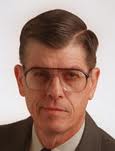
Here’s something I wanted to let you know about. Three of my former colleagues at The Star have established a scholarship fund at the University of Missouri in memory of the late Jerry Heaster, longtime Kansas City Star business columnist, who died last year.
jerry

Heaster

The Jerry Heaster Business Journalism Scholarship Fund will be administered by the Missouri School of Journalism’s Office of Development.  Each year, a special committee established by the journalism school will award a scholarship to a deserving student who plans to study business journalism.

The founders of the scholarship fund are former Kansas City Star Editor Mike Waller; former assistant managing editor Randy Smith; and current managing editor Steve Shirk.

Waller, who is now retired and living in South Carolina, went on from The Star to become publisher of the Hartford Courant and the Baltimore Sun. Smith teaches business journalism at Mizzou, his alma mater, and he is the first person to hold the position of Donald W. Reynolds Endowed Chair in Business Journalism at MU.

If you are interested in contributing to the fund or learning more about it, please send e-mail to Waller (mikeewaller@aol.com), Smith (smithrandall@missouri.edu) or Shirk (sshirk@kcstar.com). Or you could send me an e-mail, jim.fitzpatrick06@gmail.com, and I will send it along to one of them.
Well, now we’re talking…

The Star came out yesterday with an editorial endorsing a single-terminal airport.

Mincing no words, the editorial began:

“Building a modern, fully functional airport is a high priority for the Kansas City area, residents and many local companies.

“Here’s one clear vision of what a new Kansas City International Airport would feature: a single terminal with convenient passenger drop-off zones, efficient security lines, quick walks to gates, and a wider variety of desirable restaurants and shops.”

The editorial is great news for backers of a new terminal, which is estimated to cost upwards of $1 billion.

Voters will be asked to approve revenue bonds to finance construction, and, despite the waning power of print, The Star still leads the way on community issues. I worked for The Star, as many of you know, for nearly 37 years, and it has always looked out for what is in the best interests of the public. It’s a non-vested-interest institution that the vast majority of area residents trust, even if they don’t like the paper’s left-tilting political endorsements.

So, the “Save KCI” crowd just caught a bad break: They are now in for a likely losing battle against the Chamber of Commerce, the Civic Council, the Aviation Department, the airlines, the political consultants (who stand to make big bucks off the campaign), KC Star jackhammer editorial writer Yael Abhoulkah…and, of course, the very influential JimmyCsays.

A 24-member panel appointed by Mayor Sly James is holding hearings and meetings on the issue, and you can expect this to be a slow process. That’s partly because a lot of people are wedded to the hopelessly archaic and sentimental idea that the three-terminal set-up — with its dark, vapid, curving concourses — is the best airport layout ever invented. “By God, it’s ours, and you can’t take it from is,” might as well be their schoolyard campaign slogan.

So, the powers that be — no dummies at shaping public opinion — will wait out the brunt of the opposition and will chip away at educating the electorate. going education.

The Star’s editorial now has this project poised to lift off, eventually.

P1020617

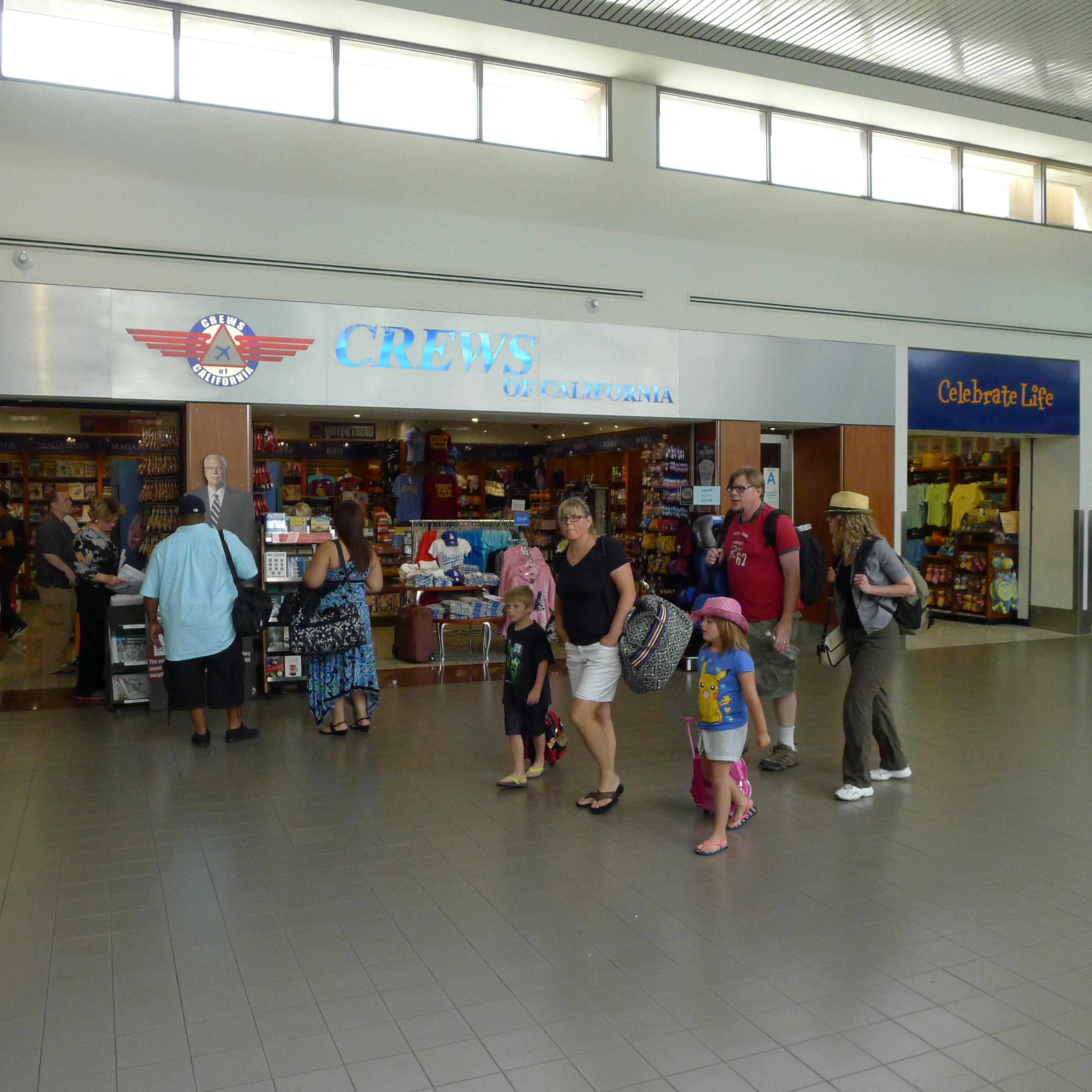
LAX…A single terminal KCI could have concourses that look something like this…”Hey, Mom, it’s bright in here, and there are plenty of places to buy souvenirs and eat!”

Wisely, The Star isn’t swallowing whole the $1.2 billion plan proposed by the Aviation Department. In the editorial, the paper encouraged the study panel to “investigate other ideas that have been proposed to ‘save’ the current KCI and especially its convenient passenger drop-off feature.”

The Star also said the cost estimate needs to be trimmed. Many opponents are shrieking about the price tag and saying that it’s a big waste of money and would detract from, and perhaps supersede, other high-dollar projects, such as repairing streets and bridges and upgrading the antiquated water and sewer system.

The Star parried that groundless objection by explaining:

“In reality, Kansas City already has a solid list of projects aimed at improving public services, and all are being done with dollars that would never be spent to build a better KCI.”

In other words, not all the project are being financed from a single fund, with various projects competing against one another for financing.

Consider:

— The water and sewer upgrades are being financed in large part by the water and sewer rates that the city high-handedly jacked up a year or so ago, when it went to monthly bills instead of bi-monthly…with the monthly bills being about the same as the bi-monthly bills had been.  (Those bills are headed ever higher, by the way.)

— Street and bridge repairs come out of general operating funds and the city’s capital improvements sales tax.

— Two other voter-approved sales taxes are paying for fire and police department improvements, including new facilities.

Don’t let the whiners intimidate you with their squawking refrain, “We can’t afford it!”

Yes, we can. This is a big city and it takes big bucks to keep a big city humming.

I feel a lot more confident today than I did yesterday. I can almost hear the humming of the power tools at work on a new, single terminal in Platte County, MO.

James Atlas, a contributing opinion writer for The New York Times, had an excellent article in the Times’ Sunday Review section.

The gist of it is that the ever-widening gap between the haves and the have-nots is reflected in airline travel, just as it is in daily life.

“This stark class division should come as no surprise,” Atlas wrote. “What’s happening in the clouds mirrors what’s happening on the ground. Statusization — to coin a useful term — is ubiquitous, no matter what your altitude.”

Despite the fact that the airlines logged about a billion passenger trips last year, Atlas continued, “We’re all going everywhere and nowhere at the same time.”

atlas

Atlas

Atlas quotes from historian Niall Ferguson’s new book, ‘The Great Degeneration,” in which Ferguson noted that the United States once “was famed as a land of opportunity, where a family could leap from ‘rags to riches’ in a generation.”

“Now,” Atlas said, extending the thought, “it can’t even leap from economy to business. You can make some progress in small ways: the gold club members get to board before the silver club members. The passenger who earns a certain number of miles is rewarded with a complimentary drink. But those in the back of the plane can fight all they want over their status. They’re still not getting any more leg room.”

I’m sure Atlas is correct, but in my travels I really haven’t noticed the gap widening as much as he describes. I was on one flight recently — Frontier, to Denver, I think — where the leg room was extremely tight. But on Southwest, which I try to use almost exclusively, it still seems OK. And I don’t see anyone getting preferential treatment once on their planes.

***

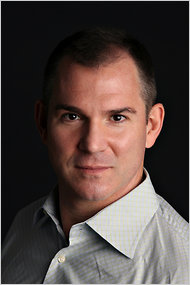
Also in The Times’ Sunday Review, our friend Robert Finn, bishop of the Kansas City-St. Joseph Diocese, got a mention from op-ed writer Frank Bruni.

Frank-Bruni-articleInline-v3

Bruni

Bruni’s main topic was New York Cardinal Timothy Dolan, who as archbishop of Milwaukee several years ago, got permission from the Vatican to transfer $57 million into a trust for Catholic cemetery maintenance, where it might be better protected “from any legal claim and liability,” in his words. He was trying to shield the funds, of course, from awards in priest sexual-abuse cases.

Bruni wrote:

”…Over the last few decades we’ve watched an organization that claims a special moral authority in the world pursue many of the same legal and public-relations strategies — shuttling around money, looking for loopholes, tarring accusers, massaging the truth — that are employed by organizations devoted to nothing more than the bottom line.

“…In Kansas City, Mo., Rebecca Randles, a lawyer who has represented abuse victims, says that the church floods the courtroom with attorneys who in turn drown her in paperwork. In one case, she recently told me, ‘the motion-to-dismiss pile is higher than my head — I’m 5-foot-4.’

“Also in Kansas City, Bishop Robert Finn still inhabits his post as the head of the diocese despite his conviction last September for failing to report a priest suspected of child sexual abuse to the police. This is how the church is in fact unlike a corporation. It coddles its own at the expense of its image.”

Come on, Bishop Finn, the gig is up: Get outta here!

***

A recent Gallup poll had some interesting statistics regarding what Americans consider their main source of news. Fifty-five percent said TV; 21 percent said the Internet; nine percent said print; six percent said radio; and two percent said word of mouth. The survey was conducted June 20 to 24, and 2,048 adults were surveyed.

Poor print…It just keeps on a fadin’. I could cry a river.

***

In the barber shop yesterday, I was reading the paper while waiting my turn, and a guy in one chair said something like, “Is it my imagination or has the paper gotten narrower?”

The barber and I said, yes, we thought the width of The Star had been shrunk, once again, relatively recently.

To which, the guy in the chair immediately responded:

“First, they cut the news out of the paper, then they cut the comics out of the paper, and now they’re cutting the paper out of the paper!”

It was hyperbole, of course, but wickedly funny…

***

P1000331Last, we come to Charlie Wheeler, the former mayor who is getting kicked out of his house west of Loose Park because he is far behind on his mortgage payments to James B. Nutter & Co. A couple of months ago, after the The Star reported on the situation, Jim Nutter Sr. gave Wheeler a one-month reprieve, with an evacuation deadline of July 1. I’ve been going by Wheeler’s house periodically, and yesterday the front window coverings were open and it looked like the house might be fairly clear on the inside. But a car that I believe belongs to Wheeler’s son Graham was in the driveway, so I was pretty sure that Wheeler, his wife Marjorie and Graham were still living there.

Later in the day, I saw Charlie’s and Marjorie’s daughter, Marian, at Cosentino’s Market in Brookside, and I asked her what the story was. She said her parents had received another extension, this time until Aug. 1.

I swear, it won’t surprise me if Charlie doesn’t leave until the sheriff’s deputies show up with an eviction notice and accompanied by heavy lifters hired by Jim Nutter.

Come on, Charlie, think about your good name…Get outta there!

It’s hard to get enough of California, isn’t it? So, by popular demand (well, I’m sure Smartman wants to see photos from the Reagan Library), here are more photos from our recent trip to LA and vicinity.

(By the way, if some of you could not open yesterday’s post, with the first round of photos, I apologize. I don’t know what was wrong; I just hope this one poses no problems…If you’d like me to send you a link to yesterday’s post, send me an e-mail at jim.fitzpatrick06@gmail.com. Maybe that will work.)

In light of the “new airport” controversy in Kansas City, I want to start off with four photos from LAX. Then, we’ll move on to recreation.

P1020615

This is how a modern terminal building should look — open, welcoming and featuring plenty of natural light.

P1020621

This is how a modern-airport food court should look.

P1020620

This is the kind of airy, natural-looking bar area that a modern airport should have.

P1020627

This is how an entrance to a major terminal — with one, large security area — should look.

P1020640

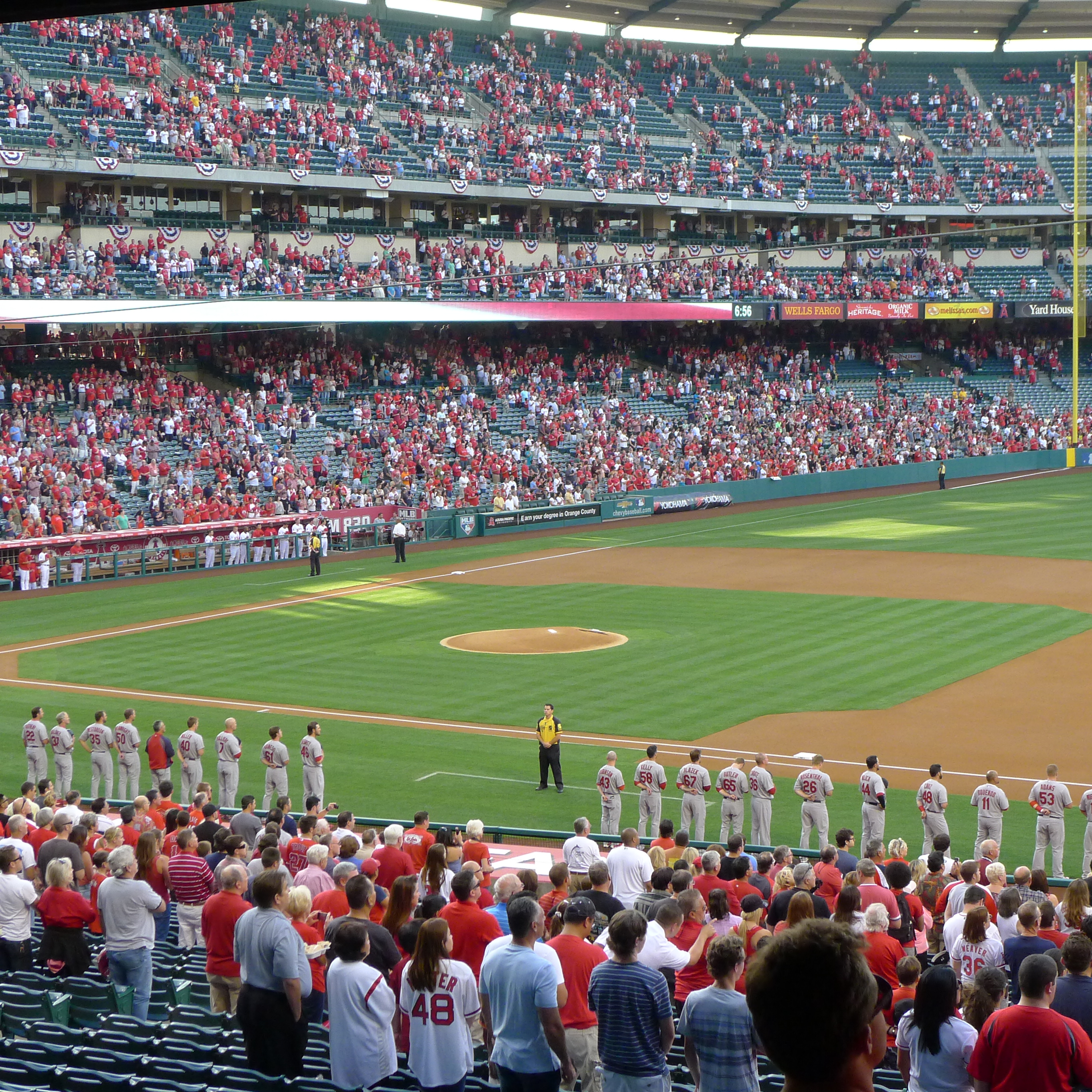
Ceremonies before the Angels-Cardinals game in Anaheim on July 2. Don’t be misled by the number of empty seats. Attendance exceeded 39,000. (The Angels won 5-1.)

P1020641

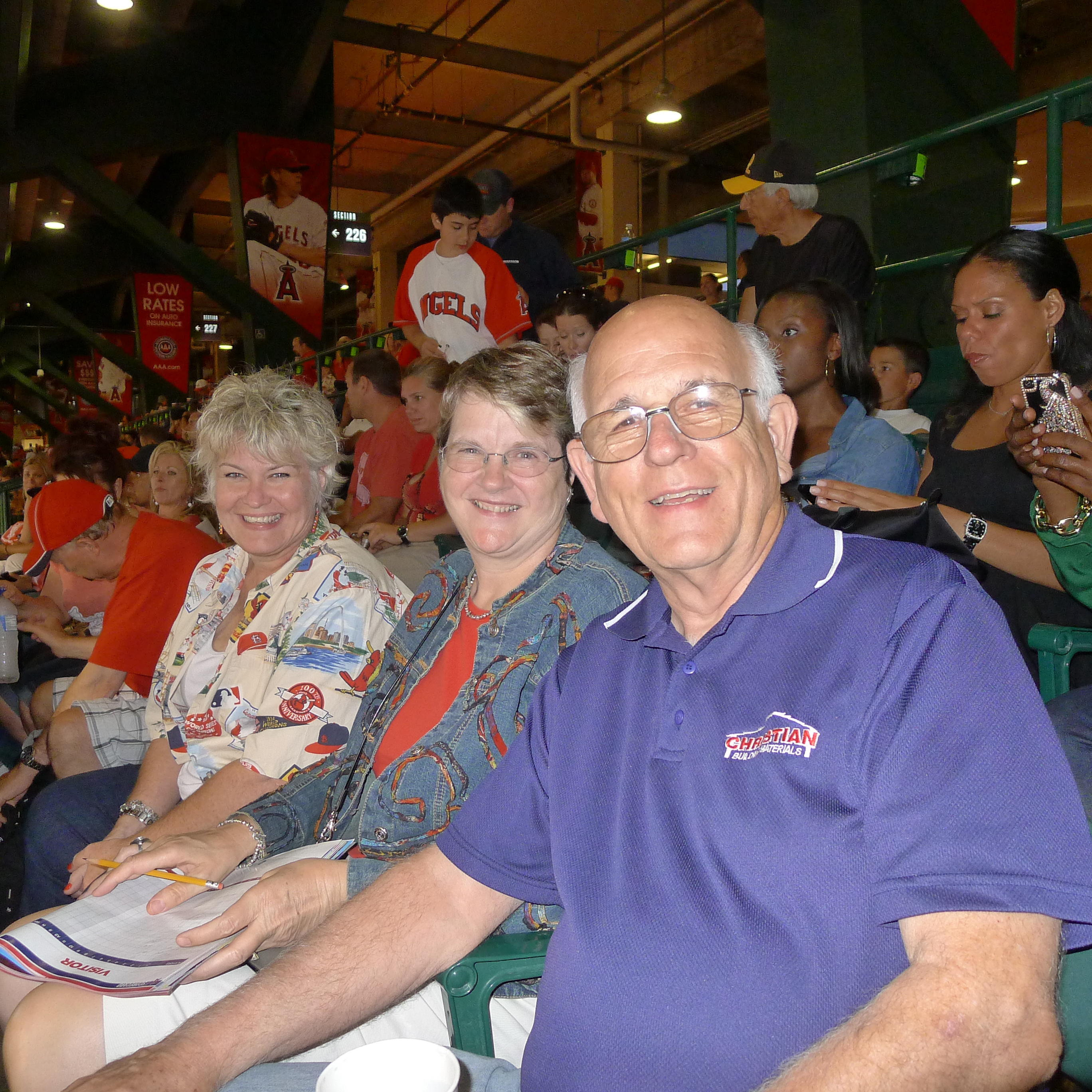
Our gracious hosts during our trip, Roger and Suzanne Johnson of Arcadia, and a friend from St. Louis, Mary Buttice. (Arcadia is in north central Los Angeles County.)

P1020643

The group behind us…Movie stars, I’m sure.

P1020738

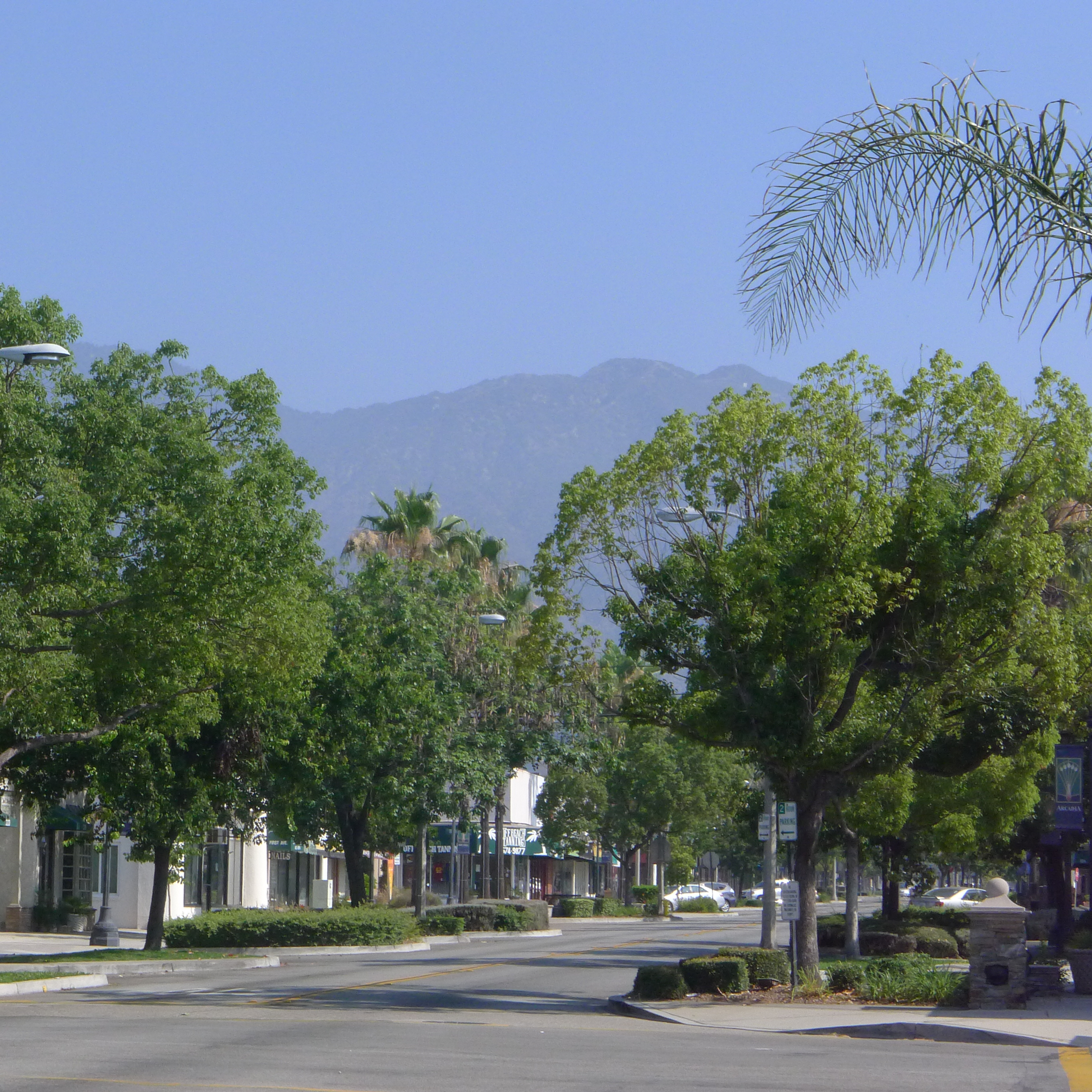
A street in Arcadia.

P1020648

Independence Day, Arcadia.

P1020771

At the entrance to the Ronald Reagan Presidential Library in Simi Valley. (Simi Valley is northwest of Los Angeles.)

P1020747

Reagan’s 1984 presidential parade limo.

P1020748

A jet engine on Reagan’s Air Force I plane. The plane takes up an entire section of the library facility.

P1020764

While recovering in the hospital from John Hinckley’s assassination attempt, Reagan was on a breathing tube for a few days and couldn’t talk. So, he communicated by writing notes. This one says, “What does the future hold. Will I be able to do ranch work, ride etc.”

P1020755

On a plaza, just behind the library building, a section of the Berlin Wall.

P1020756

A view of the surroundings from behind the library. As Smartman said in a recent comment regarding the library, “The exterior panaromic views are spectacular.”


Just back from Los Angeles and vicinity Sunday night.

Among other things, we went to a Los Angeles Angels-St. Louis Cardinals baseball game, the Laguna Beach Festival of Arts and the Ronald Reagan Presidential Library.

What a great area, Los Angeles. It’s got the mountains, the sea and beaches, the professional sports, the weather and the unheard hum of ceaseless energy. The only bad part, at least from a visitor’s standpoint, is the one- to two-hour commute to just about any special destination. But when you’re on vacation, it’s hard to get real worked up about traffic delays.

Oh…I forgot to mention the Los Angeles Times, which, despite the Tribune Co.’s trip through bankruptcy, remains an outstanding paper.

Speaking of the Times, I noticed an interesting Kansas City connection that turned up on the front page of the Sunday paper.

One of three bylines on the lead story, about the San Francisco airport crash that killed two people, was that of one Laura J. Nelson. Laura is one of two daughters of Michael “O.J.” Nelson, a former assistant managing editor at The Star, and Christie Cater, another former Star employee. (O.J. and I were roommates in the 1970s, before he married Christie and I married Patty.)

Laura, a 2012 graduate of Southern Cal, is the Times’ transportation writer. She’s off to a flying start in journalism, as is her sister, Libby A. Nelson, who covers federal policy for an online publication called Inside Higher Ed. Libby graduated from Northwestern University in 2009. Both are Shawnee Mission East graduates.

It’s a credit to these young ladies’ dedication to journalism — as well as that of their parents — that they are already finding success in a field that has not offered young people a very promising career for about the last decade.

Congratulations to Laura and Libby and to O.J. and Christie.

…And now, if you will look over at the SMART Board, you’ll see some scenes from the Laguna Beach Festival of Arts, an annual event that runs from late June through August. The highlight of the festival is the Pageant of the Masters, where real people, all volunteers, pose to fill the roles of their counterparts in original works of art.

P1020671

Looking back up Laguna Canyon Road, near Laguna Beach.

P1020702

The Laguna Beach Festival of Arts is at three separate venues, including this one, which has sawdust for ground cover.

P1020716

A sampling at one of scores of booths.

P1020714

A big seller?

P1020685

A chance conversation led to the discovery that at least one former Kansas Citian was on the grounds. That’s Wes Fielder and his girlfriend, Kim Whiting, of Del Mar, CA. Wes’s father founded the Smaks hamburger chain.

P1020726

Attitude

P1020690

A world-famous photographer and his able assistant

P1020706

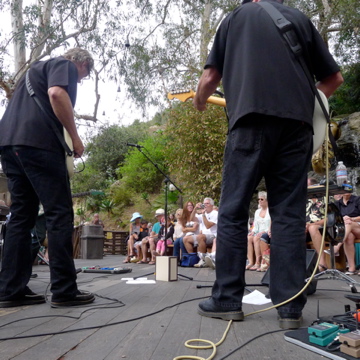
For festival goers’ listening pleasure, it’s a hard-driving instrumental band called The Eliminators.

P1020722

Natives

P1020721

Arrested…the photographer’s eye, that is.

P1020686

Quick getaway

How many of us get to have our last words transcribed and published?

No, not many. An intriguing exception are the men — and occasional woman — executed in the state of Texas. (I say “state of” because that place is truly a state unto itself; it’s not just another of “these United States.”)

In the Sunday New York Times, reporter Manny Fernandez wrote about the state’s tradition of transcribing inmates’ last words before they are injected with lethal chemicals as they lie strapped to a gurney.

Fernandez wrote:

“The state’s execution record has often been criticized as a dehumanizing pursuit of eye-for-an-eye justice. But three decades of last statements by inmates reveal a glimmer of the humanity behind those anonymous numbers, as the indifferent bureaucracy of state-sanctioned death pauses for one sad, intimate and often angry moment.”

For example, these were the last words of Thomas A. Barefoot, who was executed in 1984 for murdering a police officer:

“I hope that one day we can look back on the evil that we’re doing right now like the witches we burned at the stake.”

Full of irony, wouldn’t you agree? If I interpret him correctly, he condemned execution as “evil” but didn’t mention murder.

Texas gurney unit

Texas gurney unit. Note microphone above headrest.

Texas inmates being executed speak their last words into a microphone hanging above the gurney. Listening to their statements are lawyers, reporters, prison officials, inmates’ families and victims’ relatives — at least those relatives who want to be there, or can stand to be there.

Fernandez explained that the final statements are not recorded but transcribed by staff members listening in the warden’s office.  The statements are posted on the Texas Department of Criminal Justice website, www.tdcj.state.tx.us/stat/ (click on “executed offenders”), and they are also posted on a blog called Lost Words in the Chamber.

A brief digression: One classic statement that is on the blog but that Fernandez did not use in his story was uttered by one Douglas Roberts in 2005…

“Yes, sir, warden. Okay, I’ve been hanging around this popsicle stand way too long. Before I leave, I want to tell you all: When I die, bury me deep, lay two speakers at my feet, put some headphones on my head and rock and roll me when I’m dead. I’ll see you in Heaven someday. That’s all, warden.”

Beneath these often curious and compelling final statements lies the question: What is the effect, if any, of these words? As Fernandez noted that “the power of their words to change the system or even heal the hearts of those they have hurt is uncertain.”

Fernandez quoted Robert Perkinson, the author of a book about the Texas prison system, as saying, “Most people about to be executed haven’t had a lot of success in school or life. They’re not always so skilled at articulating themselves…But I think many of these individuals are also striving to say something poignant, worthy of the existential occasion.”

To me, these statements are mesmerizing and read like a good novel that is hard to put down. And yet, it gives me an odd feeling because I know that the words have been preserved at the expense of innocent people having lost their lives. It certainly doesn’t seem fair that the words of the killers — each of whom have prison i.d. numbers — are immortalized, while the victims are reduced, in a sense, to little more than numbers.

But that’s the way it is in this instance, so, here you go…here are some more of these ultimate statements. Meanwhile, I think I’ll get to work on my own “final statement.”

***

“I deserve this.” Charles William Bass, convicted of murdering a Houston city marshal.

“Tell my son I love him very much. God bless everybody. Continue to walk with God. Go Cowboys! Love y’all, man. Ms. Mary, thank you for everything that you’ve done. You, too, Brad, thank you. I can feel it, taste it, not bad. Please.” Jesse Hernandez, convicted of killing an 11-month-old boy with a flashlight.

“Sir, in honor of a true American hero, ‘Let’s roll.’ Lord Jesus, receive my spirit.” David Ray Harris, convicted of shooting a man to death after trying to kidnap the man’s girlfriend.

“My death began on August 2, 1991, and continued when I began to see the beautiful and innocent life that I had taken. I am so terribly sorry. I wish I could die more than once to tell you how sorry I am. I have said in interviews if you want to hurt me and choke me, that’s how terrible I felt before this crime.” Karl Eugene Chamberlain, convicted of sexually assaulting and killing a 29-year-old woman.

Are we excited about the latest prospect for downtown redevelopment?

We should be…If you’re not worked up already, I’ll try to get you in the mood to run out into the streets, yelling at the top of your voice.

The reason we need to bang all drums is that Julia Irene Kauffman, daughter of the late Muriel and Ewing Kauffman, is once again putting up big bucks to boost Kansas City.

Kauffman

Kauffman

Apparently not satisfied to let the awe-inspiring Kauffman Center for the Performing Arts stand as her only signature mark on Kansas City, the foundation that she heads and that bears her mother’s name is putting up a $20 million challenge grant to help move the UMKC Conservatory of Music and Dance to a site near the performing arts center.

If this comes to pass — and I definitely believe it will — it could make downtown Kansas City one of the nation’s top cities in terms of center-city artistic venues.

Don’t underestimate the impact of this move: It would be akin to the Unicorn Theatre catapulting to the level of the Missouri Rep, or the Missouri Mavericks hockey team (which plays in the 5,800-seat Independence Events Center) jumping to the National Hockey League. (Well, maybe not quite that big, but BIG, nevertheless.)

In 2011, The Star’s Kevin Collison wrote this: “Backers would expect the conservatory to achieve a top 10 ranking in the nation and attract 2,000 students within five years of opening the new campus.”

As it is, the conservatory has more than 700 students and staff and stages many public performances, at very reasonable admission prices, mostly at White Recital Hall, 4949 Cherry St., home of the Missouri Repertory Theatre.

Imagine more…and more elaborate…performances, still at reasonable prices, but downtown. That’s a key area where the public would benefit from this bold move.

In announcing the challenge grant on Wednesday — at the Kauffman Center, of course — Ms. Kauffman said:

“The conservatory is a vibrant community resource, and we believe the Downtown Arts Campus project has the potential to bring excitement and broad revitalized economic development to downtown, to the Kauffman Center and to other arts groups located downtown.”

Reporting on Ms. Kauffman’s announcement, Collison said two possible sites were under consideration. One is east of the Kauffman Center and covers two blocks from Wyandotte to Main, between 16th and 17th streets. The other includes sections of the blocks at the northwest and southeast corners of 17th and Broadway. The Kauffman Center is positioned right between those two sites.

julia

As for the financing, here’s how that would work, as best I understand it.

It’s an $85 million to $90 million project. About half would come from the state, although the Missouri General Assembly has not yet allocated funds. The rest — another $40 million to $45 million — would be raised privately. With the Muriel McBrien Kauffman Foundation putting up $20 million, that would mean private contributions of $20 million (the matching part) would make the project viable.

The corporate community can be expected to greet the challenge grant eagerly. The Greater Kansas City Chamber of Commerce has been gung ho on the project for more than two years, having included it in its 2011 “Big 5” wish list for Kansas City. Other “Big 5”  ideas include making Kansas City the nation’s most entrepreneurial city and significantly upgrading the inner city.

It’s safe to say that, among the five big ideas, moving the UMKC conservatory downtown is far and away the leader in the clubhouse.

This is a project that, if sold correctly, could attract a lot of money from people of average means, as well as from the usual, deep-pocketed corporate leaders.

Just tell me where to send the check.

OK, now, get out into the streets and start whooping and hollering, as if the Royals had just won the pennant.

The Kansas City Star put us on warning yesterday: Obamacare is just around the corner.

It’s the biggest unknown domestic program that the government has sent our way in decades.

So, how are you feeling? Anxious, fearful, disgusted, hopeful, excited? However you feel, it’s time to start preparing. Personally, I am hopeful and excited. Here’s why. For  the last three years, our 25-year-old daughter Brooks has suffered from anorexia nervosa.

She has been in and out of treatment facilities and transitional living places. Blue Cross Blue Shield of KC has covered perhaps $200,000 in medical bills, and Patty and I have shelled out perhaps $50,000 for uncovered bills and housing. (There was one bill alone for $17,250, which I appealed to the state insurance division but lost.)

Brooks and our 23-year-old son Charlie, who’s healthy as a horse, are on my individual plan — which is a supplement to my Medicare coverage.

The problem is, as most of you probably know, after Brooks turns 26 next St. Patrick’s Day, she can no longer be on my plan; she will be on her own.

Naturally, that is worrisome. As things stand now, without the Affordable Care Act, Brooks undoubtedly would have great difficulty getting medical insurance because of her costly “pre-existing condition.” If she did find an insurer that would take her, I’m sure it would be very, very expensive.

A Huffington Post article in March said that because the Affordable Care Act outlaws discriminating against anyone with a pre-existing or chronic condition, as of January 1 next year, “no one can be turned away by plans in the marketplace or charged more because they’re in poorer health…And every health insurance plan in the Marketplace will cover a standard set of essential health benefits that includes, among other benefits, hospital stays, prescription drug coverage, preventive services, oral and vision care for kids.”

So, just as Brooks is about to fall off of my plan, it appears that Obama and the ACA are riding in to the rescue…At least, that’s the way I hope, and foresee, it coming about.

The Star’s story, by medical writer Alan Bavley and business writer Diane Stafford, noted that yesterday, June 23, was the 100-day mark (Oct. 1) “when uninsured people can begin applying for health insurance and premium subsidies through the law’s new state and federal marketplaces.”

The story said that the goal was to reach the estimated 30 million Americans who qualify for enrollment through the marketplaces. If all goes according to plan, people like Brooks should be able to go online, compare plans and prices (hopefully there will be at least two plans in any given jurisdiction) and sign up. Coverage starts Jan. 1, but enrollment will continue through March 31.

Meanwhile the government is mobilizing to educate U.S. residents about the program. Much of the heavy lifting must be done by the Department of Health and Human Services. Among other things, the department is set to announce a redesign of its HealthCare.gov website, and in August it is supposed to announce which insurance plans will be offered in each state and the various rates.

One reason I think this is going to go better than many people believe is that I have a lot of confidence in Health and Human Service Secretary Kathleen Sebelius.

Yes, she probably should not have approached health industry officials, asking for financial contributions to help with the effort to implement the ACA, but that seems to have blown over. And, besides, she did so only after Congress repeatedly rejected the Obama administration’s requests for start-up funds.

To me, Sebelius has always been a serious-minded, effective public servant. She’s energetic, authentic and not looking ahead, in my opinion, to her next professional or political position. I think she’s committed to getting Obamacare off to a good start, and I think she will handle the inevitable glitches professionally and even-handedly.

…Call me a cock-eyed optimist, but I am counting on relatively smooth implementation of the Affordable Care Act, until and unless I see it not happening.

And that, unfortunately, is what a lot of Obama haters want — a big disaster — so they can say, “I told you so.”

If the program succeeds, as I expect it to, it’s going to further marginalize politicians like Senator Mitch McConnell and representatives John Boehner and Paul Ryan.

It’s not the Democrats who need to be worrying now; it’s the Republicans.

When we cheer our new, much-improved downtown — as we have every right to do — we cannot do so unreservedly.

We already knew that because taxpayer dollars are underwriting the Power & Light District to the tune of about $10 million a year, and that number apparently is headed higher before it will come back down and finally go away.

But The Star’s Kevin Collison reinforced the reservations about downtown redevelopment on Sunday with a close look at the dramatic loss of jobs and the sharp upswing in vacant office space downtown.

Collison’s A1 story said that while attractions like the P&L District and the Sprint and Kauffman centers have prompted “more people to live and play downtown,” it’s a different story on the business front. “U.S. Census data shows that from 2001 to 2011…greater downtown lost 19.6 perrcent of its private employees,” Collison reported. “That’s 16,237 fewer private jobs.”

Reflecting the decline in jobs, Collison continued, the vacancy rate for Class A and B office space stood at 27 percent in the first quarter of 2013, compared to 19 percent for the same quarter 10 years ago.

Those are striking statistics, I’m sure you’ll agree. Collison said part of the problem is that downtown has lost employees and businesses to the Kansas suburbs and to the Country Club Plaza. To see the impending impact of the Plaza, all you have to do is look at the Plaza Vista project that is coming together on the Plaza’s west side. That will be the new Kansas City area home of the Polsinelli law firm, which currently has big presences on the Plaza and downtown.

Collison quoted one developer, Tim Schaffer of RED Brokerage, as saying that despite the high vacancy rate, downtown needs more modern office space.

Some of the highest vacancy rates are in some of the oldest buildings, including One Kansas City Place, Town Pavilion and City Center Square, all of which were built in the 1970s and 1980s. In other words, it’s kind of like our airport situation: We’ve got an airport that is convenient and manageable, but it is not appealing to many users, to the airlines and to the government, which has to provide an overabundance of security employees because of the dated three-terminal set-up.

Just as with the airport, we need to kick into high gear on new or rehabbed downtown office buildings. It’s going to require some developers to stick their necks out and bet on the future of downtown.

I’m betting on it…but, then, that’s easy for me to say because I’m not putting any money on the table.

Nevertheless, here’s the main reason I’m betting on it. Collison quoted Bill Dietrich, president of the Downtown Council, as saying…

“We are trying to change attitudes that have developed over 30-plus years…But the enhancements in downtown have saved downtown. It would have been a lost cause and we’re poised to recover.”

p&lHe’s absolutely right. Think of what downtown would be like if we still had the nasty bars on 12th and Main streets, the windowless massage parlors on 14th and the crumbling sidewalks on Baltimore at 12th. Think of what downtown would be like without the Kauffman Center for the Performing Arts, Sprint Center, the Power & Light District and the new H&R Bloch building.

Without those changes, there is no way we could lay claim to being “a great city.” We would be bathed in shame and ignominy. We would be an apple rotting from the inside out…I, for one, would have been tempted to bail to another midwestern city that was on the move, like Denver or Indianapolis. (I don’t know if I could have talked Patty into it, but I believe I would have given it a major effort.)

But with the Sprint Center packing people in for concerts and basketball tournaments; the Kauffman Center filling up for symphony and opera performances; and the P&L bars, restaurants and stores serving up energy and excitement, we are in pretty good shape; we can take a lot of pride in our transformed downtown.

We just need a young version of Larry Bridges, or a few people like him. Remember? Bridges’ goal was simple: All he wanted to do was build tall buildings. It helped, of course, that he had the late Frank Morgan’s money behind him.

So, it’s not like snapping your fingers. We need people with money…people with money and vision. Then, we would really take off.

Oh, and give me that new airport terminal, too.

Here’s a truism from Newspaper Reading 101….from which I took a “withdrew passing” grade:

If you read the paper with a close eye and an open mind, you will almost always stumble upon something that sticks with you, at least for a day or two.

Reading the paper the last few days — with no agenda and no axe to grind — I have culled the following odds and ends, which struck a chord with me. See if you agree.

:: Headline at the top of Tuesday’s sports page: “The Royals’ joy of six.”

The “joy of six” headline — a play on the 1972 book “The Joy of Sex” — is the most overworked headline in journalism, seen primarily on the sports pages.

The morning after the Chicago Bulls won their sixth NBA championship (1998), the Pioneer Press in St. Paul, MN, used that headline in letters that covered about half of the sports front. I was at the newspaper’s offices at the time for a conference, and even the newspaper’s editor at the time, Walker Lundy, was aghast. “Could you have made the headline any bigger,” Lundy sarcastically asked the sports editor at the morning news meeting.

:: Notable quote: “Somebody once asked me if our officers have a quota they have to meet regarding tickets. And I told them no, they can write as many as they like.”

That from Police Chief John Simmons of Mission, KS, where ticket writing pays for a lot of the city’s bills.

:: Patty, Brooks and I were at the Royals game on Sunday afternoon, when Patty pointed to I-70 and said, “I wonder why the traffic is backed up on the interstate?”

Frame from YouTube video

Frame from YouTube video

The lady is observant — could have been a reporter, but she comes from a line of entrepreneurs (thank God).

In Wednesday’s paper, police reporter Christine Vendel reported the whole thing. A group of about 40 motorcyclists blocked traffic while videotaping each other performing various stunts. One biker was arrested after he crashed into the back of a police car on U.S. 40, while the officer was trying to pull over a truck containing several people who were recording the stunts.

Those bikers rank very high in the “lacking grey cells” category, and some of them undoubtedly are going to lose all their grey cells when they fly out of the saddle.

:: “Wreck leads to fatal shots” — Page A7 headline in Tuesday’s paper

OK, I want to know more about that…Tell me what happened?

A minor wreck in which a moving car struck a parked car occurred Saturday night on Kansas City’s East side. On one of the streets, either College Avenue or 58th Terrace, two large outdoor parties were taking place. The driver of the car that struck the parked car was related to one of the two men who were subsequently shot to death.

Got it. So what happened after the wreck? Well, this quote from Police Capt. Tye Grant says about all we need to know:

“Things went downhill from there.”

:: Those baseball guys love to tag nicknames on each other. The Royals’ first-round draft choice, a 6 foot, 4 inch shortstop named Hunter Dozier, was at Kauffman Stadium for Monday night’s game against the Detroit Tigers and got to meet the Royals players and coaches. 

In the course of the day and evening, somebody tagged him “Bull”…as in Bull Dozier. Now that’s a nickname.

:: Kevin Collison, The Star’s outstanding development reporter, wrote in Tuesday’s Star Business Weekly about the controversial proposal to build a new $1.2 billion terminal at KCI.

As you know, I firmly believe we need a new terminal, if for no other reason than we deserve a lot better than what we’ve got with those three enormous funeral parlors grouped together off I-29.

Collison

Collison

Amid the hysterical war of words taking place on this issue (see “Letters to the Editor), Collison called for “a clear-eyed, thoughtful discussion about the future of KCI.”

“The answer,” he said, “is probably somewhere between the Aviation Department’s billion-dollar vision and the knee-jerk, populist reaction of the current ‘Save KCI’ petition drive.”

I’m willing to take a deep breath and consider that.

(By the way, because of the issue’s importance and the amount of money involved, hysteria might be the appropriate tone for this conversation…My late father, quoting from some philosopher or wiseacre, used to tell me, “If you can keep your head while everyone around you is losing theirs, you probably don’t understand the issue.”)

:: When a reporter or columnist gets “hot,” he or she often becomes the rage, and you start seeing their stuff everywhere.

And so it is with David Carr, The New York Times media columnist, who has been smoking hot the last few years. He even was the focus of a 2011 documentary movie, “Page One: Inside The New York Times.”

David Carr

David Carr

But no columnist can hit it out of the park every week. Carr’s most recent column, which The Star picked up on Tuesday, was a goofy piece about two Hollywood gossip columnists — Nikki Finke and Sharon Waxman — who have been flailing away at each other on their respective Web sites. (The battle kind of reminds me of my days on active duty in the Army Reserve, when we would go at each other with padded “pugil sticks.”)

Here’s my point: There can’t be more than a couple of hundred people in KC who know or care about the Finke-Waxman face-off. So, why is it in The Star? And, why, even, was it on the front page of Monday’s New York Times business section?

It was in The Times because Carr is Carr, and he can write about whatever he wants, and The Times will run it in his usual spot — on the front page of the Monday business section.

The Star picked it up because…well, a big, fat hole was sitting there on the “Business Forum” page of Tuesday’s business section, and something had to fill it. So, why not the red-hot David Carr?

***

Editor’s Note: This is my 300th post since starting JimmyCsays in March 2010. It’s been a great run of three years and three months. Thanks for your patronage. I hope to remain “At the juncture of journalism and daily life in Kansas City” for at least 3 1/4 more years.