Feeds:
Posts
Comments

The Star’s announcement today that Greg Farmer will be the new metro editor is another signal that the paper is continuing to push its digital offerings.

When Anne Spenner, the former metro editor, left recently to take a job at UMKC, I was convinced that her successor would be Charles (Chick) Howland, who has worked as an assistant state and metro editor and currently is news editor, recommending, among other things, which stories should go on Page 1.

(For the record, I’m not even sure that Howland applied, but I’d be surprised if he didn’t.)

I worked with Howland in The Star’s Johnson County bureau (now closed) in 2004 and 2005, and he succeeded me as Johnson County bureau chief after I was transferred to the Independence bureau, where I finished my career.

Howland has an even temperament and is widely admired by the reporting staff.

Problem is, his background is on the print side.  So, when I saw that Farmer was selected, it said everything about the paper’s direction and intention. Farmer, 40, has been an assistant managing editor, with emphasis on developing website content.

In the story about Farmer’s elevation, Editor Mike Fannin and Managing Editor Steve Shirk credited Farmer with cultivating strong growth in traffic at KansasCity.com.

“Greg will not so much be leaving the Web world as he will be working to better integrate an urgent, digital-first strategy,” the editors wrote.

I am sure that The Star’s new publisher, Mi-Ai Parrish, had the final voice in this appointment, and I feel sure, again, that she put her blessing on Farmer because of his website experience.

At her previous paper, the Idaho Statesman, Parrish introduced new print and digital products and increased digital traffic.

And, like Farmer, she is 40. (At least she was when she was named publisher in June.) Howland, by contrast, is probably about 50.

So, as the printed product continues to shrink, look for the website to expand and get stronger.

It’s the trend, of course, with all papers, including the best of all, The New York Times.

The Sept. 11 edition of The Times carried an interview that Art Brisbane, former Star publisher, did with Jill Abramson, the paper’s new executive editor.

In the interview, Brisbane noted that Abramson was detached from her regular duties as managing editor last year to study the digital product.

“What struck you most?” Brisbane asked.

“…I have been saying for years,” she replied, “that The Times was so far ahead and so smart in integrating the Web and print, but the reality was there was still something that everybody here called ‘the Web newsroom.’ I was very determined that we have just one newsroom that is integrated, where people are comfortable in both the print and digital realms.”

With Farmer’s appointment in Kansas City and Abramson’s in New York, the newspaper industry continues to reflect the new reality: As the print product continues to shrink, newspaper managers are pushing their ink-stained wretches (who still are legion) either out the door or into the digital wave.

Stop the presses!

I got a letter to the editor in The New York Times! The Sunday New York Times, at that.

OK, I’m sorry; I got a little carried away there. Keep the presses rolling; I’ll just tell the story in this humble space, where there’s no deadline and it costs nothing to insert a big, late-breaking story.

So, here’s the deal…I’ve written letters to the editor of The Times several times, but before yesterday never had one published. On Friday, I got an e-mail from weekend sports editor Patty DeLuca saying that a letter I had written about Serena Williams’s tantrum in the women’s final of the U.S. Open on Sept. 11 would be published on Sunday (yesterday).

And, indeed, there it was — one of five letters, all about Williams, that appeared on Page 10 of Sports Sunday.

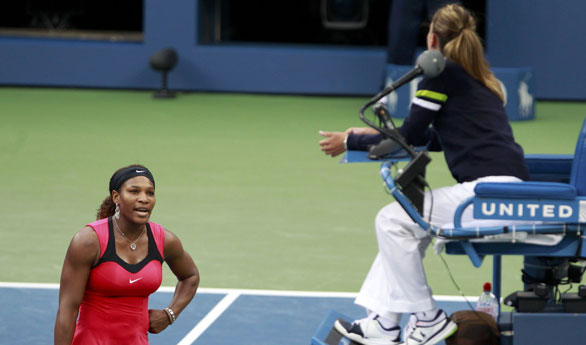
Four of the letters, including mine, were very critical of Williams’ borderline-threatening, verbal assault on the umpire who called her for a “hindrance” after she hit a ball and loudly exclaimed “Come on!” while opponent Samantha Stosur attempted to hit a return. The penalty cost Williams a game point, and she flew into a rage, just as she did two years ago when a lineswoman called her for a foot fault.

Two years ago, Williams directly threatened the lineswoman, saying, “I swear to God I’ll fucking take the ball and shove it down your fucking throat.”

She also said, “You don’t know me…,” as if to say, “Those who do will tell you that I’ll do exactly what I said I’d do.”

This year, she told the umpire: “If you ever see me walking down the hall, look the other way, because you’re out of control. … You’re a hater, and you’re just unattractive inside…Really, don’t even look at me, don’t look my way.”

Here’s what my letter, the last of the five, said:

“Serena Williams’s verbal assault on a lineswoman in the 2009 United State Open certainly didn’t seem like an aberration, although many hoped that it was. Confirmation that the incident wasn’t an aberration came in last Sunday’s final against Samantha Stosur.

“Williams is a spoiled individual who resorts to threatening people who stand between her and what she wants.”

Serena Williams cuts loose at umpire Eva Asderaki

Williams’ lone defender among the five letter writers was Sandra Roche of New York. She said: “When John McEnroe behaved outrageously during his playing years, we accepted it as the overenthusiastic response of a champion caught up in the heat of competition.

“Why is Serena Williams being judged by a different standard? McEnroe’s behavior toward chair umpires was far more disrespectful than hers.”

Because I’m  not going to have a chance to rebut Ms. Roche before 1.3 million subscribers to the Sunday Times, I guess I’ll have to do it here — before my core readership of 200 to 300 people. (I appreciate your patronage, dear readers.)

So, why is Williams held to a different standard? Is it because of her color? Nooooo. Is it because she’s a woman? Nooooo.

It’s because McEnroe, while he insulted officials and put them on the spot in front of national TV audiences, NEVER THREATENED AN OFFICIAL…to the best of my recollection. Yes, his behavior was out of line, but there’s a huge difference between calling an umpire “the pits of the world,” as McEnroe once did and threatening to shove a ball down his or her throat.

As happy as I was that The Times published my letter I was twice as happy that Stosur, an Australian, defeated Williams in straight sets.

My curse on her (besides the one in the headline, which I paraphrased from Carnac the Magnificent) is this:

May you never win another major tournament, and may your sister Venus (who’s out of action with an autoimmune disease) come back to defeat you.

Congratulations go out to The Star today on two fronts:

::: Coverage of the 10th anniversary of 9/11 was outstanding. Especially riveting was Hector Casanova’s breathtaking illustration of the New York skyline. At the top of the illustration, the Manhattan skyscrapers loomed in red, white and brown tints, with huge cranes working at the site of the World Trade Center’s twin towers.

In the foreground, the shadows of the buildings were reflected in dark tones on the waters of New York Harbor — with one exception: Ghostly, white reflections of the twin towers projected eerily down through the body of the illustration.

A New York native, Casanova was the perfect person to do the illustration…I predict we’re going to hear more about this illustration: It’s almost certain to be a prize winner, and, to me, it deserves to win some big prizes.

Inside the A section, The Star devoted five pages of mostly locally produced coverage. One of the highlights was a “double-truck,” two-page spread, featuring 11 people from our area with direct or indirect connections to 9/11. The head-to-toe photos of those people, against white backdrops, were expressive and eye-catching.

::: In a very smart move, The Star put Sam Mellinger’s column about Sunday’s Chiefs’ game on the front page, above the fold.

Some of you may recall that a couple of weeks ago, in a piece about the paper’s reshuffling of its columnists, I suggested that The Star give Mellinger a Sunday-front column every week.

Giving him a Monday front-page (or day-after-Chiefs-game) column might be an even better idea. As I said in the earlier post, newspaper box sales have long jumped by the thousands on Mondays after Chiefs games. It’s important that those day-after stories or columns be above the fold so that prospective buyers looking through box window can see the Chiefs story.

In one above-the-fold sentence, Mellinger characterized the 41-7 defeat at the hands of the Buffalo Bills an “epic failure.” That’s terrible for the Chiefs but almost irresistible bait for prospective newspaper buyers.

I hope The Star continues to do this throughout the season.

And speaking of the Chiefs….

Even looking years down the road, I am dubious about the team’s prospects under the combined leadership of owner Clark Hunt and general manager Scott Pioli. (Don’t even want to talk about coach Todd Haley, who strikes me as the weirdest coach we’ve ever had).

Hunt and Pioli are nepotistic (had to look that one up) flag bearers — Hunt from his father Lamar Hunt and Pioli from his very successful father-in-law Bill Parcells — and neither seems to be an inspiring leader or have much personality.

Tell your friends that on Monday, Sept. 12, 2011, JimmyC said: The Chiefs need new ownership.

Probably isn’t going to happen, though, so be prepared for continued bad football…indefinitely.

Today, JimmyC is taking a break and turning over the controls to former Kansas City Star reporter Mike Rice. Mike worked at The Star from 1988 to 2008, when he was laid off. At the time of the World Trade Center disaster, one of Mike’s “beats” was Kansas City International Airport. Yesterday, he felt compelled to compile his recollections of that day. His story follows.

***

I woke up early on Sept. 11, 2001, because I had to walk from my house in Waldo to the Firestone store at 75th and Wornall to pick up my car. On the day before, one of the front tires blew out as I was parking at Calvary Lutheran School’s daycare center to drop off our son, Jeremy.

Mike Rice

It was sunny out and walking the half-mile or so to the Firestone actually put me in a good mood for a change.  2001 had been a very rough year, particularly in my wife Catherine’s family. In January, her father died suddenly from a heart attack at age 60, and on the Fourth of July her brother’s 18-month-old daughter got extremely ill and died a few hours later in the emergency room of a Leavenworth hospital. Our 5-year-old son, Nathan, had just started kindergarten at St. Elizabeth School and was having a tough time adjusting. He had gone to pre-school and day care at Calvary and was now separated from friends who had been with him since infancy.  But upon picking up our 1991 Chevy Lumina with its two new tires, I had a sense that life was looking up despite the tragedies and periods of adjustment that we were going through.

I got home, showered and got dressed for work. I was assigned to The Star’s Northland bureau. My beats were Kansas City International Airport and three municipalities — Gladstone, North Kansas City and the ever-growing northland portion of Kansas City, MO. It was Tuesday so I needed to spend the morning finishing a story for the paper’s weekly Neighborhood News edition, which came out every Wednesday.

I dropped the boys off. Jeremy was a few days away from turning a year old. It was 8 o’clock or so. I needed a soda fix so I stopped at our home on 72nd Terrace to get a Dr Pepper. I still felt a sense of life returning to normalcy. Then I got back in the car and turned on the radio.

***

Why I had KMBZ 980 AM on, I can’t remember. But I did, and reporter Noel Heckerson (now retired) was talking about breaking news from New York City: A second aircraft had hit the World Trade Center. Both towers had been hit. Holy shit!

My commute to work was long, as my office was at Barry Road and North Oak Trafficway. The Bruce R. Watkins Drive downtown link had not opened yet, which made the trip even longer. I listened to the reports of heavy smoke coming out of both towers and the speculation that there could be multiple casualties. As I passed downtown and crossed the Missouri River, speculation was growing that this could be some kind of attack. I was starting to get scared, and it seemed like it was taking forever to get to the office.

As I drove on U.S. 169 past Englewood Road, Heckerson announced that an aircraft had slammed into the Pentagon. There was absolutely no doubt now that, for the first time in 60 years, our country was under attack. I wanted to put the pedal to the metal but police constantly had speed traps on 169.

Finally, around 8:40, I got to the office. In the meeting room, the advertising folks hovered around the television. That was my first viewing of the burning towers. I went into the bureau chief’s office where there was another television. Several other people were in there already. We watched in absolute horror and disbelief. Then my pager went off. An editor in the downtown office had sent me a text instructing me to go up to the airport — pronto. Before I headed out, however, I caught another glimpse of the TV footage. One of our advertising execs told me that the World Trade Center had just collapsed. It was at that point where I said to everyone, “We’re going to war.” It turned out that I was right.

***

I headed off to KCI. I turned on the radio. A plane had crashed in Pennsylvania. Perhaps, I thought, someone had forced down the plane. Reports said all air traffic was being grounded. That meant that numerous transcontinental flights were probably being diverted to KCI. It was going to be a long day.

As I approached KCI, I saw a crescent-shaped contrail, a mark that planes were being diverted. I don’t remember which terminal I went to but believe it was the one where United was. I had never seen this airport so crowded. I began interviewing travelers, the few who weren’t on their cell phones trying to find out what the hell was going on.

I did not have a cell phone back then so I had to call my editors the old-fashioned way — the pay phone. I learned that The Star (which had become a morning paper about a decade earlier) was going to produce a special afternoon edition, so I had to interview people, call another reporter and dictate information to him.

Emotional scenes were playing out in the terminal: Passengers hugging airline employees, passengers trying to book hotel rooms, some speculating that another big city was coming under attack and others just completely bewildered. Some of the travelers that I spoke to said they were going to rent cars to drive home.  One guy I talked to was from Babylon, NY. He had just gotten off the phone with his son, who lived in Cincinnati. The son told him that he was going to get in his car and drive to Kansas City to pick him up and drive him back to New York.  That vignette was one of the few of mine that made the printed edition.

***

A KCI concourse

I went over to a press conference at the Kansas City Aviation Department around 11 a.m. One department official had a hand-held GPS device that showed a map of the United States and a handful of dots. The dots represented the number of planes in the air. Normally, the map was filled with those dots.

By noon, 89 planes were parked on the runway at KCI. Some were parked at the TWA overhaul base.  I went back to the bureau where I typed up all the facts and quotes that I had gathered. I stepped into the bureau chief’s office to catch a peek at the ongoing news coverage. By now, the country had learned how Middle Eastern terrorists had overtaken the planes they were on by stabbing the crew with box cutters.  It was getting more horrifying by the hour.

By mid-afternoon, rumors had started that gas prices were shooting up. At a Star-Mart across the street from us, cars were lining up. My God! People were panicking, and that is never good.

I went back to the airport around 5 p.m. And it was there that I saw what will stay with me until the day I die.

Five o’clock in the afternoon is typically a bustling time at the airport. But it was empty. All the stranded passengers had left. They went to hotels, got rental cars and headed home, or got picked up by good Samaritans.

Huge 767 jets — something you don’t see much at KCI — sat on the tarmac. The only vehicles on the circular drives outside the terminals were some police cars and a TV news truck. I went inside one of the terminals. The only person inside was a janitor who was waxing the floor with a buffing machine. I went back outside. It was downright spooky and, I dare say, apocalyptic.

Outside one of the terminals, I came across a man named Greg Simpson, of Ransom, KS. He was waiting for his father to pick him from Hays. He was to have flown to Cedar Rapids for a trade show in Illinois. “This shows what can (bring) this country to a halt,” he told me.  That quote ended the article about the stranded passengers at KCI that appeared in The Star the next day.

***

After that, I drove to The Star newsroom downtown where management had bought barbecue for its staff because of the long day.  Reporter Mike Mansur and I had our by-lines on the story in which Simpson’s quote appeared. I was proud to have been part of the news team that helped bring readers a local perspective to that tragic day. Needless to say, I was going to be very busy for the next few weeks. But, at that moment, I was drained and wanted to go home.

At home, Catherine and her sister were in the living room trying to get Jeremy to walk. He finally started walking eleven days later, which happened to be his first birthday. Nathan’s day at school was a little better. I’m not sure how much about that awful day was sinking into him. After putting the kids to bed, I went downstairs and watched the non-stop reports on TV. That was the first I had seen the horrifying images of the planes slamming into the towers, people jumping to their deaths and the towers coming down.

***

Ten years have passed. And, sadly, our nation has not recovered from the horrible events of that day. Sept. 11 gave a misguided presidential administration the opportunity to run amok. It allowed a right-wing propaganda network, along with a cadre of AM radio troglodytes, to spread their messages of fear and intolerance across the airwaves.  We went to war in a country that a segment of our population wrongly believed was responsible for the attacks. The economy went into a tailspin, and many people, including myself, lost their jobs.

Today, many U.S. citizens of Middle Eastern descent are looked upon with suspicion. Others who express views about why we were attacked or differ about how we reacted are accused of being unpatriotic. Some say 9/11 united us. Maybe it did for a few weeks. But I believe that it divided us. Saddest of all is that the sense of normalcy I felt before I turned on the radio in my car that September morning 10 years ago is gone.

Mike Rice is working on his paralegal certification at Johnson County Community College and will finish in December. He works part-time at a bankruptcy law firm in Overland park, and on weekends he drives for a limo company, mostly taking people to and from KCI. He and his wife Catherine have three children.


I don’t know how many people noticed (probably not too many because The Star didn’t publish it, to the best of my knowledge), but The Star is losing another key cog in its editorial operation.

Anne Spenner, who has been assistant managing editor/metro the last few years, is leaving later this month to become vice chancellor of marketing and communications.

In UMKC’s website announcement on Aug. 30, Chancellor Leo Morton put Spenner’s title in capital letters and said, “Anne will direct UMKC’s marketing, branding and communications efforts and will play a key role in developing a comprehensive strategic communications plan.”

Well, you get the idea: She’s going to be the school’s chief flack.

Anyway, good for her; she’s getting out at a good time after a nice run of more than a decade at The Star.

Among other accomplishments, she founded the paper’s online Midwest Democracy Project, a successful vehicle for keeping abreast of political developments and linking readers to local blogs of interest (including this one, sometimes).

Spenner’s defection follows that of former Metro Editor Randy Smith by two years. Smith, who had moved on to the paper’s business side a few years in about 2007, joined MU in 2009 as the first Donald W. Reynolds Endowed Chair in Business Journalism. His job involves, among other things, developing, testing and writing about new digital models of journalism and advertising.

When Smith resigned, The Star did not write about it. I thought they should have run at least an item because of the high profile he had enjoyed at the paper.

Although Spenner maintained a lower profile, I think that her move also merited at least a mention in the paper. The metro editor is a mid-level manager who comes into contact with many members of the public and whose name is recognized by more people than any other desk editor.

My personal theory on why neither Smith nor Spenner got a mention is that The Star is embarrassed about the defections of high-ranking people. It’s another sign that the ship at 18th and Grand continues to take on lots of water.

***

Hendricks

Congratulations to Mike Hendricks, who had an outstanding A1 story Tuesday on the KCK elephant that seemingly cannot be brought to the ground — the old Indian Springs Shopping Center.

To the readers’ benefit, Hendricks has been doing a great job since he returned to full-time reporting recently after years as a metro columnist. He was the lead reporter on the Kansas City curfew story a few weeks ago, and yesterday he jumped the state line to report on an issue that continues to flummox Wyandotte County’s Unified Government.

Among other things, Hendricks contrasts the mushrooming growth out west — at the Legends shopping center and the adjoining Village West development — with the frustrating situation at Indian Springs, I-635 and State Avenue.

The Unified Government thought it had a deal worked out for redevelopment of the shopping center a few years ago, and it borrowed $11.4 million to get things going. Unfortunately, the deal fell through, partly because of the Great Recession.

Now, only about 30,000 square feet of the mall is occupied — all, or almost all of it, accounted for by city-related programs — but the city is paying $635,000 a year in debt payments on the loan. That amount will jump to $1 million in 2015, Hendricks reported, “whether there’s an income stream of sales tax revenue from the project or not.”

In Kansas City, it’s the still-new-looking Power & Light District that’s draining millions of dollars away from neighborhood and community services. In KCK, it’s a moribund, 40-year-old shopping center. Let’s hope it comes down within at least a few years of the razing of the World’s Worst Development Gone Awry — the West Edge project on the Plaza.

Many of you may recall the stories I wrote July 21 and 29 about Jason Noble, The Star’s former Jefferson City correspondent.

Noble made four significant errors in an attempted “gotcha” story about a Republican state senator from St. Joseph.

Noble wrote the story on the way out the door, apparently after he had accepted a job with The Des Moines Register, where he started early last month.

If it’s any solace to Jason, he’s not alone in the multi-correction arena.

Burns

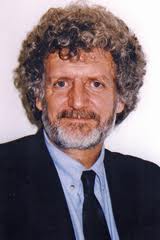
Even the very best reporters sometimes manage to litter their stories with errors. Take, for example, John F. Burns, The New York Times’ London bureau chief.

Burns, 66, has won two Pulitzer prizes. He appears frequently on PBS, and Wikipedia says he has been called “the dean of American foreign correspondents.”

If Burns was flying high lately, he came crashing down to earth recently after the Times published a 781-word story by Burns about CNN talk show host Piers Morgan’s possible involvement in the telephone-hacking scandal in England.

The story ran on Aug. 5.

Yesterday, Aug. 31, The Times published a 271-word correction that consumed 6.5 column inches. That’s a half inch less than Noble’s infamous correction.

Actually, the printed correction should have been longer than it was because the online version of the correction tacked on yet another screw-up in the story. (Maybe the final error was discovered after Wednesday’s paper had gone to press.)

If I’m reading the correction — the online version — correctly, Burns made seven errors in the story.

Morgan

The errors ranged from incorrectly naming the newspaper (The Daily Mirror, not  The Mirror) that Piers Morgan once worked for to reporting incorrect details about an alleged hacking of a phone message from Paul McCartney to his former wife, Heather Mills.

Burns, whose name I’ve seen in The Times but whose work I’m not particularly familiar with, has some controversy in his background.

He was awarded the 1993 Pulitzer Prize in International Reporting for his “courageous and thorough coverage of the destruction of Sarajevo and the barbarous killings in the war in Bosnia-Herzegovina.”

However, the Wikipedia article about Burns says: “Some of Burns’s reporting in Bosnia and Herzegovina was later put in doubt for using questionable sources. Within the book “Media Cleansing: Dirty Reporting Journalism & Tragedy in Yugoslavia,” Burns is criticized extensively, accused of journalistic malpractice by its author Peter Brock.”

Burns won his second Pulitzer in 1997, that time for “his courageous and insightful coverage of the harrowing regime imposed on Afghanistan by the Taliban.”

Burns joined The Times in 1975 as a metropolitan section reporter. Wikipedia says he “has been assigned to and headed several of The Times’ foreign bureaus.”

It’s pretty disturbing, don’t you think, that a reporter with that much experience and such lofty credentials could be so casual and careless?

You know, I love The Times, and this doesn’t change my opinion a bit. But it goes to show you that even the best, when they “mail it in” — as Burns obviously did — can fall in the deepest of mud puddles.

Today, Burns has mud caked all over him, and it’s going to take him a long time to clean up.

Now that the volcanic ash has started to settle from last week’s eruption at 12th and McGee, I’m starting to think that some good might come out of the three-day debacle.

Some good…

despite John Covington intentionally (I feel sure) squirting lighter fluid on the always-burning-embers of the Kansas City school board;

despite school board member Arthur Benson flying off the handle and accusing board president Airick Leonard West of causing the eruption;

and despite West apparently dabbling in the mechanics, at least, of a proposed multi-million-dollar bid that was supposed to be the province of the superintendent.

And how, you ask, might some good come out of this?

— It helped, I think, to bring into full public view the fact that significant problems exist between Benson and West and that those two bookends must reconcile their differences if the board is to move forward effectively.

— It showed that West has to be watched closely and has to learn, if he can, to resist the temptation to dip his hands in contractual matters that are off limits to the board until those matters are brought to the board for discussion and approval.

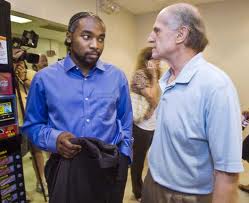
West and Benson

On the first point, Benson said on Friday — the day Covington accepted a new job in Michigan —  that he felt Covington had “used” him and that he was “completely distraught.”

What he apparently didn’t say to West, at least in public (if The Star’s front-page story is a guide) is “I’m sorry.” Those were the words that he should have spoken to West in the wake of his call for West to resign, when he obviously believed that Covington resigned because of West’s meddling.

However, even though Benson might not have apologized publicly, the front-page photo of him with his right arm around West’s shoulder at a Friday news conference spoke volumes.

These two guys need each other, and Kansas City needs for them to work well together. They’re both very bright; one has the benefit of years of experience; the other has the benefit of youth, vigor and good political instincts.

As for the second point — West dipping into matters that are supposed to be left to the administration — an Aug. 26 story by The Star’s Joe Robertson and Dave Helling contained a very disturbing section.

The story said:

“…e-mail records show Covington made a Sunshine Law request earlier this week seeking copies of correspondence between West and bidders hoping to win an $85 million project to modernize the energy efficiency of all district buildings.”

“West provided copies of e-mails to The Star that he believed were responsible for the concerns. Bidders were alerted in the project bid regulations not to have any contact with board members.

“The e-mails, from Peter Hinkle with Schneider Electric, shared a list of best practices and questions to ask in assessing such an energy services contract. Hinkle also shared concerns about the process in an e-mail that records show West forwarded to Covington.

“West wrote Covington, saying, ‘I contacted these folks because I thought they had questions about whom to contact regarding district projects. As it turned out, they wound up being more informative to me…’ “

The company found West to be “more informative” than Covington. Why, West must have been amazed that Schneider officials were so solicitous to him — little old Airick, just one of a handful of people who would ultimately decide who got the contract.

Everybody, even those with limited vision, can see the potential problems with a vendor cozying up to the board president.

I sure hope that West, who is 31 and doesn’t have much in the way of career achievements, can stay on the right side of the road. He’s got a lot of potential, but it could all flood away in an instant if he let temptation and greed get the better of him.

So now things now will settle down at 12th and McGee, and The Star won’t be dedicating as many column inches to the situation there. Nevertheless, Kansas City school district patrons, civic leaders and Star readers will be counting on Joe Robertson, KCMO school district reporter, to keep plenty of sun shining on school board proceedings and behind-the-scenes developments. There’s nothing like a nosy reporter to help keep people honest and alert.

West and Benson should provide another layer of public protection: As they work on their relationship, each will be watching the other like they’d scrutinize amoebae under a microscope.

All right, let’s quit wringing our hands about John Covington up and quitting as KCMO schools chief after two years on the job and two weeks into the new school year.

F___  him. (My wife suggested that I strike the full word.) Good riddance.

Sorry about the language, but this is really irritating.

Like many superintendents we have had in the past, he’s not really interested in giving the kids a good education; he’s looking out for No. 1.

He smells bigger money and a loftier post.

The afternoon, The Star reported on its website that Covington was being interviewed in Detroit today as the sole candidate to become chancellor of a new special school district in Michigan. Later, the Detroit Free Press reported that Covington had been named chancellor of the Education Achievement Authority, a statewide school system that will oversee the lowest-performing schools in the state.

Now we know what those “other opportunities” were that he talked about in explaining his resignation.

But enough about the crafty, opportunistic Covington. Now, let’s take a look at what direction the district might go from here to try to take the next step forward and possibly get some continuity in the super’s office.

As I look back at the list of superintendents since 1977 — eight acting or interim and 10 full-fledged — something jumps out: The Kansas City district has never had a woman as full-fledged superintendent.

Now, let’s take a look at the Kansas City, Kan., school district. According to its website, it has had 12 superintendents, including current superintendent Cynthia Lane, since 1886. Maybe that’s a misprint. Maybe it’s 12 since 1986, but I don’t think so.

Shackelford

In addition, the district has had a female superintendent since 2005. The first woman to head the district was Jill Shackelford, who served five years before retiring and moving back to her native Oklahoma. She was wildly popular.

At her going-away party, school board member Vicki Meyer said: “You brought true our hopes and our dreams. We couldn’t have asked for anyone to represent our heart and soul better.”

And where did the KCK school board find this diamond in the rough? Why, right in the district’s ranks. Shackelford had been with the district since 1995, and before that she had worked for the nearby Turner School District.

Last year, the KCK school board turned to another insider, Cynthia Lane, who has now been with the district 24 years.

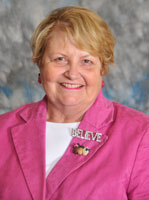
Lane

Before becoming superintendent, Lane was a special education teacher, a principal, director of the Wyandotte Comprehensive Special Education Cooperative and assistant superintendent.

You see where I’m headed?

I think KCMO should turn to a woman. In general, I think, women are better grounded and more nurturing than men and they better understand the rhythms and needs of children.

Also, if at all possible, I think the school district should hire from within.

Surely, there are several fine, accomplished women down at 12th and McGee who have shown, over a period of years, that their first interest is, indeed, the children and that they have excellent managerial and communications skills.

That’s a recipe worth trying: A woman whose first interest is the children, knows the district and can communicate well.

By the way, Covington, for all his presence and dynamism, butchered the King’s English. He should have taken some English classes at Metropolitan Community College.

The Kansas City Star is now three weeks into its new rotating metro columnist system, and, while it’s far too soon to judge the success or failure of the initiative, it’s a good time to take a closer look at the concept.

Personally, I think it’s going to be difficult for any of the six new columnists (there are three carryovers, C.W. Gusewelle, Steve Kraske and Mary Sanchez) to gain traction with readers. That’s the whole idea of columnists, you know — to have them become trusted, if controversial, voices whose work becomes a destination point for readers.

Maybe this is an experiment designed to cull the reporting ranks for a new, marquee columnist or two, but this move strikes me as more of a money-saving mishmash, a cheap alternative to hiring or promoting at least one new, permanent columnist.

But I certainly don’t claim to have a perfectly clear perspective on this, so I sought the views this week of two top, former editors who have deep wells of experience in newsroom leadership and organization.

One is former KC Star executive editor Mike Waller, who went on to become publisher at The Baltimore Sun; the other is Mike Jenner, former editor at The Bakersfield Californian, who last year was named the Houston Harte Endowed Chair at the Missouri School of Journalism. At MU, Jenner focuses on innovation in journalism.

***

Before we hear from them (and more from me), let’s back up and look at how all this evolved.

Setting the stage for the columnist shake-up, The Star lost two longtime columnists within three weeks. First, Steve Penn, an African-American who frequently wrote about African-Americans and developments in the black community, was fired in mid-July for plagiarism.

On Aug. 3, Mike Hendricks, a Lenexa resident who often donned his white, suburban columnist hat, announced that he was returning to full-time reporting.

The same day, next to Hendricks’ column, The Star ran a graphic laying out the new lineup. Here it is:

Gusewelle continues on Sunday, the only day there is a stand-alone Local section;

Sanchez runs on Monday and Thursday (as well as on the Op-Ed page on Tuesday);

James Hart (police blogger); Alan Bavley (medical writer); and Joe Robertson and Mara Rose Williams (education reporters) alternate on Wednesdays;

Christine Vendel (KCMO cops), Glenn Rice (who primarily covers the Northland) and Mark Morris (federal courts reporter) alternate on Friday;

Kraske (politics) moves from Sunday to Saturday.

Of those nine, Gusewelle, Kraske and Sanchez have the strongest name identity with readers. While the names of the six others, all reporters, will ring bells with many regular readers, they’re not well known.

In addition to their regular duties, those six reporters will write periodic columns — columns, that you can expect to be rooted in developments and stored knowledge from their respective “beats.”

For example, I don’t expect Christine Vendel, longtime KCMO cops reporter, to suddenly start writing about the Kansas City nightlife scene. Ideally, she’ll be giving the readers an inside look at investigations and operations at 12th and Locust.

Now it’s time for our experts to weigh in.

Mike Waller

Waller (in an e-mail):

“I have two thoughts:  Having nine columnists is about four or five too many, if only because there aren’t that many good columnists on any paper!

“Writing a column is an art, and it takes a couple of years to get really good at doing it.  My second thought is…rotating nine columnists means that none other than Gusewelle, who is already established, will be able to get much of a following.  Readers need regularity and consistency. So do the columnists.

“This is simply a bad idea.”

Mike Jenner

Jenner (in a telephone interview):

“I’m intrigued by their approach. It is kind of unusual…Certainly some of them (the six reporters new to the mix) are going to generate a following and some are not.”

Jenner, who worked with Waller years ago at the Hartford Courant, said The Star’s strategy, as suggested earlier, might be to see if a few of the new columnists can “separate themselves and gain a following.” If so, The Star might reduce “the mix” and field one or more of them as marquee columnists.

Jenner added that one element that major metropolitan papers badly need these days — and which marquee columnists can provide — is personality.

“There’s not enough personality in newspapers,” he said. “In the old days the staff writers got to have their own brand, or cache, and I think that was a good thing.”

In general, then, Jenner puts The Star’s move in the “innovative” category rather than the penny-inching category.

“We tend to cling to the traditional,” Jenner said, “but the traditional is not necessarily moving us forward.”

***

Me? Well, I put in 37 years as a reporter and editor at The Star, and my instincts have run along the traditional lines. More and more, however, as the newspaper business, in general, continues its downward spiral, I recognize the need for innovation.

So, if I were editor of The Star, here’s what I would try…The best and most recognized columnist at the paper now is sports columnist Sam Mellinger, who succeeded Jason Whitlock, after Whitlock was dumped last year.

Mellinger, a young guy with amazing perspective relative to his limited experience, is The Star’s only marquee columnist. Recognizing that, the editors have started to run his column, from time to time, on the front page of the paper, not just on the front of SportsDaily.

Just last Saturday, for example, his column about the fight between Kansas City Chiefs’ veteran Thomas Jones and rookie receiver Jonathan Baldwin ran at the top of Page One. That was a bold, smart move by the editors, in my opinion.

For years, it has been a truism at The Star that reports of Chiefs games and developments within the organization are the one sure thing that causes newspaper sales to spike. When I was at The Star, box sales always took a big jump on Mondays after Chiefs’ games.

My idea, then? Give Mellinger a foothold on the front page every Sunday and let him write about whatever sports subject is on his mind. Last year, if you’ll recall, The Star made a huge mistake when it commissioned Whitlock, the marquee columnist at the time, to write a weekly Op-Ed column in addition to his sports columns. The column dribbled away after a few weeks.

So, have Mellinger stick to sports. It’s one news product that sells now.

Think about it: In most big cities, good sports coverage — intermingled with insight and strong opinion — is about the only thing that people relish or want any more from their local papers.
I was shocked when I opened Sunday’s paper and saw, on the front of the Local section, that a stunt pilot working the control stick of a biplane had crashed and died during an airshow Saturday at Wheeler Downtown Airport.

I hadn’t paid any attention to the news Saturday, so photographer Rich Sugg’s fiery, section-front photo really took my breath away. The headline was excellent, too: “Thousands see crash that kills veteran pilot.”

With my attention riveted, I proceeded to gobble up the story, written by Mike Hendricks and Glenn E. Rice. Appropriately, the story took up more than half of the section front and included a photo of a couple embracing after witnessing the tragedy.

One or both of the reporters did a good job of trying to profile the pilot, Bryan Jensen, who had been a stunt pilot the past 15 years. About six inches of text was on the section front, under a sub-head that said, “Air show closes for day after biplane spirals to ground, bursts into flame.”

Bryan Jensen and his plane

More information about the crash and quotes from witnesses took up the first two columns of the jump.

Then, out of the blue, the story took an odd, sharp turn. After an awkward transition recounting an earlier rain delay, the story proceeded to describe some attractions that people attending the show had seen earlier Saturday. That material consumed the final eight inches of the story, which ended with no further mention of the crash.

The story was totally bifurcated: The fiery crash and tragic loss of death on one hand, and, on the other, an account of people cheering the U.S. Army Golden Knights parachute team hours before the crash…followed by more drivel.

It was incongruous and inappropriate.

What happened, obviously, is that  Glenn Rice, whose name followed Hendricks’ on the byline, was dispatched to the airshow in the morning to write a feature story. Then, immediately after the crash, Hendricks probably was called in from home — or perhaps he had drawn a Sunday shift — to cover the aftermath of the crash.

So, both reporters came back to the office, each with divergent material. The next step — again obvious to anyone who knows how a newsroom works — is that an editor asked each of them to write up their material. Then, the editor made Hendricks’ material about the crash the “lead” or top part of the story and dropped in Rice’s material after the awkward transition.

In my opinion, the decision to include the mundane material about what had transpired earlier in the day was ridiculous. It was disrespectful to Jensen, his family and the other, grieving airshow participants. The crash rendered everything else irrelevant.

Airshow officials had the good sense to shut the show down immediately after the crash. Star editors should have had the good sense to shut down their story at the conclusion of the crash account.

***

Now here’s a mystery for you.

In Sunday’s New York Times, two section fronts carried stories with almost identical headlines and similar, large photos.

Leading the Styles section was a picture of young people partying at a nightclub under multicolored lights. The accompanying story was about the summer party scene in the Hamptons, a seaside resort on Long Island. The headline on the story was “The Night is Young.”

A section or two removed from Styles, the Business section was led by a story about how the good times are rolling in Silicon Valley, despite the overall economy.

The lead photo, also stripped across the top of the page, was of young people dancing under red-tinted lights in a tent that had been transformed into a nightclub setting. The headline said: “In Silicon Valley, the Night is Still Young.”

Were the mirror-like sections intentional or a blunder?

At first, I was convinced it was a big screw-up; that the weekend editors missed seeing the forest for the trees.

But later, my wife Patty, who often picks up subtleties faster than I do, said the sections fronts were too similar not to have been coordinated. She liked it. She also pointed out the wording of the headlines, with one saying, “The Night is Young” and the other saying, “The Night Is Still Young,” as if one played off the other.

I sent an e-mail to Art Brisbane, public editor of The Times and former Kansas City Star publisher, to see if he had the answer to the mystery. Brisbane, who is not involved in day-to-day operations at The Times, replied last night that he didn’t know.

On Sunday afternoon, I picked up one indication that the parallel presentations could have been accidental: On its website, The Times had substituted a different photo with the Silicon Valley story than the one that appeared on the section front. The new photo showed three young entrepreneurs, standing on chairs and talking to people attending the party. But the guys were the only people in the photo, making it very different than the original party pic.

I asked Art to let me know if he solved the mystery today. I’ll keep you posted.