Feeds:
Posts
Comments

I went to bed early last night and, unfortunately, missed Salvador Perez’ historic, second-game-in-a-row grand slam against the Seattle Mariners.

I read about it — and the Royals’ 12th inning victory — on kansascity.com when I got up this morning, but I’ve got to tell you it was an extremely disappointing read.

For years, The Star had a history of hiring great baseball writers, like Bob Nightengale (now a baseball columnist for USA Today) and Bob Dutton (now retired), but since 2018 it’s been a different story.

Just like the quality of the writing in the rest of the paper, the quality of Royals’ reports has gone south.

Perez became the first Royals’ player to hit home runs in consecutive games, and those two smashes were electrifying to Royals’ fans. Somehow, though, Royals’ beat writer Lynn Worthy managed to make it sound perfunctory.

Here’s how Worthy, who’s been on the beat the last three seasons, started his story about Perez’ heroics:

While in the midst of a career season and a year likely to make history for a player at the game’s most grueling position, Kansas City Royals All-Star catcher Salvador Perez has continued to attain new levels of amazement.

He has more home runs (three) than strikeouts (two) in his past three games dating back to Wednesday. In his last two games, he has four hits, eight RBIs, two grand slams and just one strikeout.

Perez became the 24th player in the history of the American and National leagues to hit grand slam home runs in back-to-back games when he hit one for the second consecutive night to help the Royals to an 8-7 extra-inning win on Friday night in Seattle.

Even more appalling was the caption on a photo accompanying Worthy’s story. The caption — which Worthy was not responsible for — read:

Kansas City Royals’ Salvador Perez points skyward as he heads home on his grand slam against the Seattle Mariners in the fourth inning of a baseball game Friday, Aug. 27, 2021, in Seattle.

Patty laughed out loud when she read that. She came into the house from the patio, screeching “…in the fourth inning of a baseball game?!”

Point being it was pretty obvious from the photo, with Perez rounding the bases with a grin on his face and his right index finger raised high, that this, indeed, was a baseball game.

Patty was equally disgusted with Worthy’s soporific account of the game, and I told her that just for fun I’d try to come up with a version that did justice to Perez’ feat.

So, I sat down at the computer and in about 15 minutes came up with this:

With the Royals trailing 5-1 against the Seattle Mariners last night and the bases loaded, Salvador Perez had the chance to become the first Royal ever to hit grand slams in back-to-back games.

On the third pitch from Logan Gilbert, Perez swung hard at a ball low and over the outside part of the plate. He connected, and the ball sailed deep toward centerfield. Mariners’ outfielder Jarred Kelenic ran back and climbed the wall but sank back in futility as the ball fell into the extended hands of fans a few rows up.

With one swing, Perez had not only set a Royals’ record but had tied the game and positioned the Royals to go on and win the game 8-6 in 12 innings.

We’re watching an MVP-style season with what’s going on here with this guy,” Royals manager Mike Matheny said after the game.

**

Now, I’m not going to run out and apply to become Royals’ beat writer for The Star — I’m sure most of the staff regards me as a pain in the ass anyway — but I ask you: Doesn’t that go a long way toward capturing the thrill of that event? And wouldn’t it make you want to go on reading?

That’s what the first sentence, or the first few sentences of a story are supposed to do — draw the readers in and “hook ’em” from the get-go.

Poor Lynn Worthy and poor KC Star…For the most part, they’ve lost one of the most important dimensions of reporting: vibrant writing.

**

You can see Perez’ home run here.
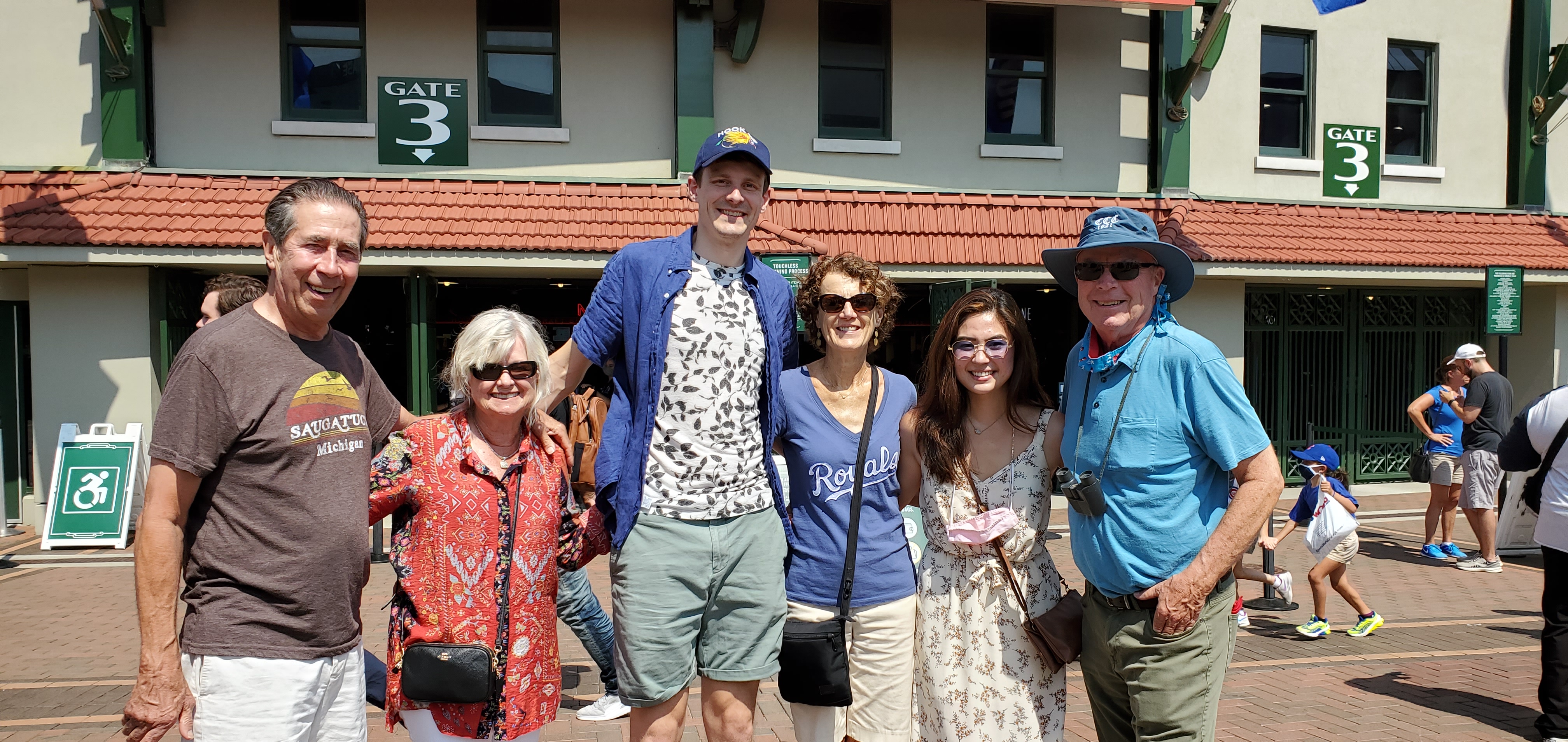
After a week in Cape Cod, it could have been time to head home, but, no, it was on to Chicago to meet up with friends from Louisville and visit our son Charlie, who’s been living there a couple of years and working at the University of Chicago Medical Center.

On Thursday, we caught a late flight from Logan to O’Hare, and by the time we got to our hotel and into the bed it was past midnight.

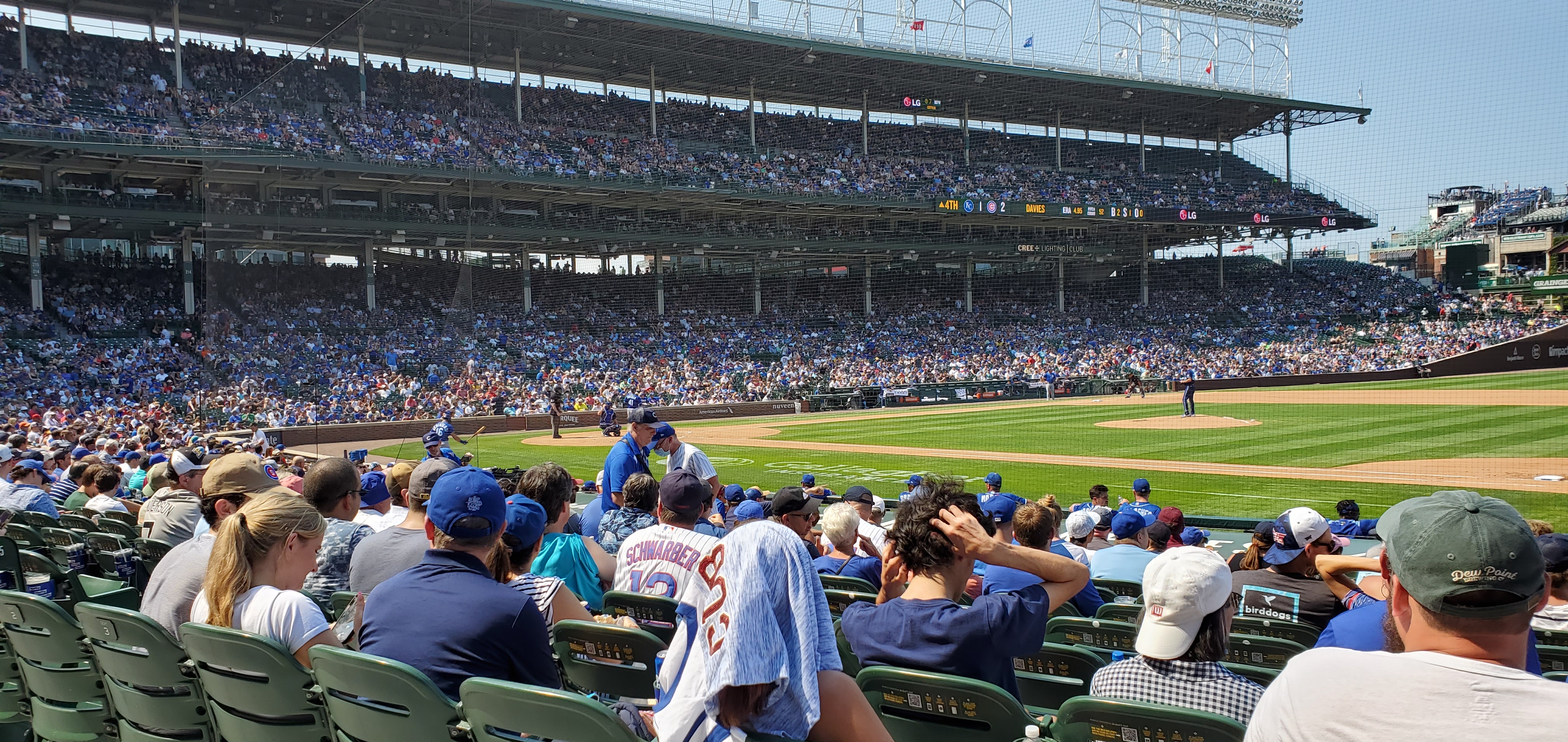
We had to fire up quickly Friday, however, because our friends from Louisville, Bill and Denise, had lined up tickets to the Royals-Cubs game at Wrigley Field.

This was only the second time I was at Wrigley. The first was many years ago, before the stadium had been improved and all home games were played in the daytime.

Let’s get to the photos…

Here we are outside the stadium. From left are Bill, Denise, Charlie, Patty, Charlie’s girlfriend Sabrina and me.
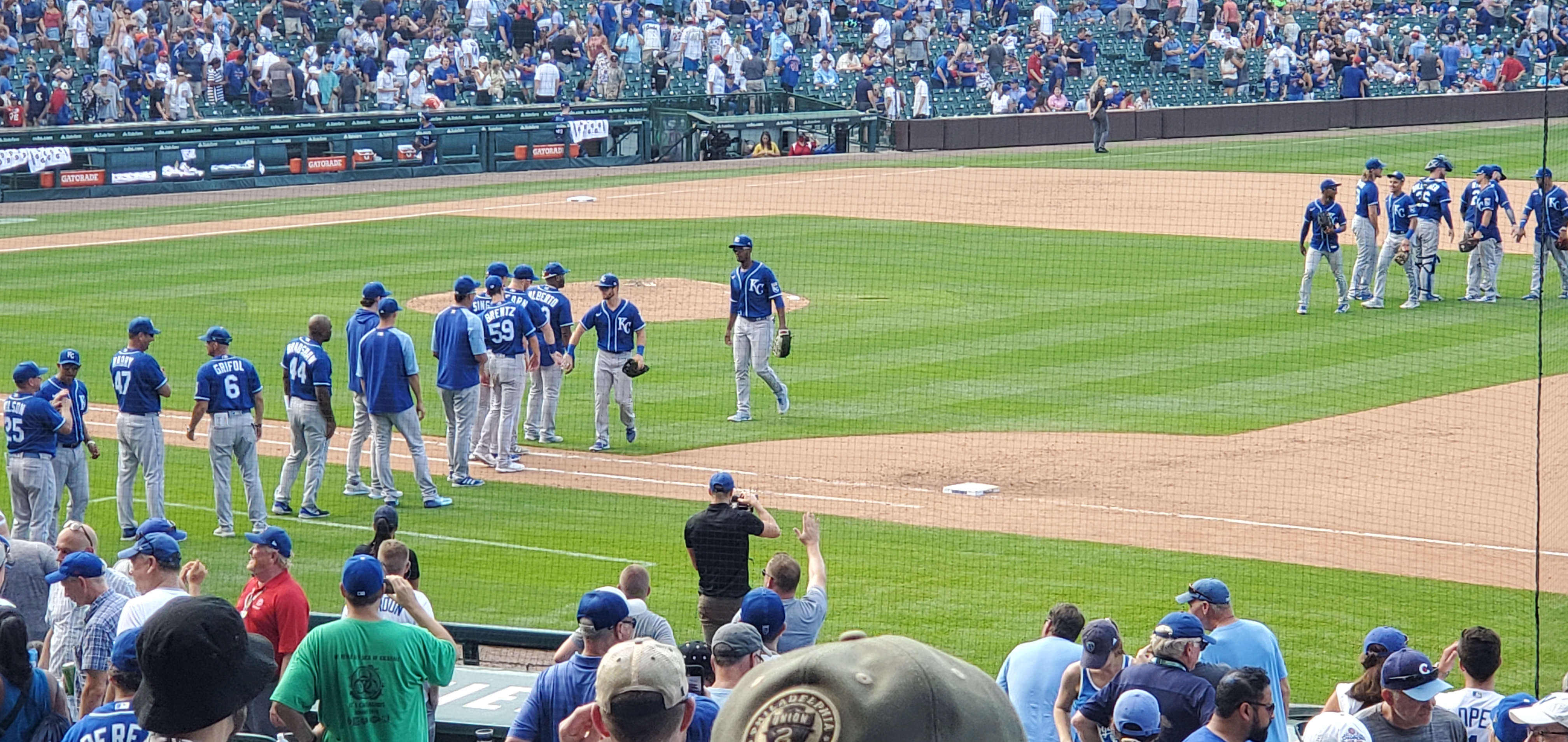
I mean to tell you, it is really exciting to attend a game at Wrigley. The fans pour in, and the air is electric. The atmosphere probably had a lot to do with it, but this was the most exciting Royals game I’ve seen since 2015. The game was tied 2-2 going into the top of the 6th, when Salvador Perez hit a scorching line-drive into the left field seats to put the Royals ahead. One out later, Andrew Benintendi followed with a scorcher to right, putting the Royals up by two. There was no doubt about either, and from contact to landing I was yelling my fool head off.
The Cubs couldn’t come back, and pretty soon it was victory formation. The Cubs fans began clearing out at the bottom of the seventh, and that electricity had faded everywhere except with the small pockets of Royals fans on hand.
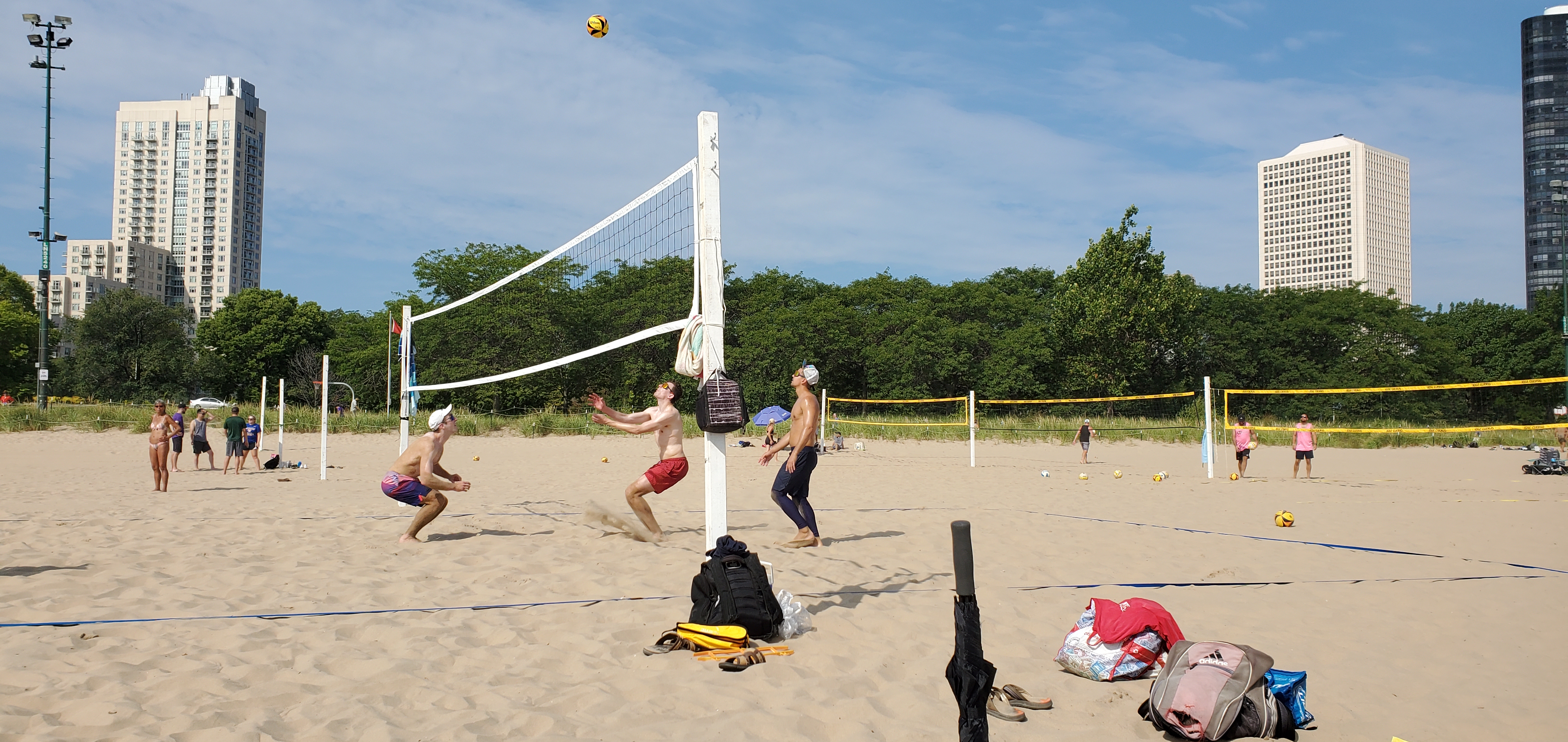
On Saturday morning, Charlie had a volleyball game on the Lake Michigan beach. He’s played since he was 12 or 13, and he’s very good. The fact that he’s 6-7 helps. That’s him in the red shorts, waiting for a shot to descend. My job — taken on voluntarily — was to run down the errant balls. That was enough to wear me out.
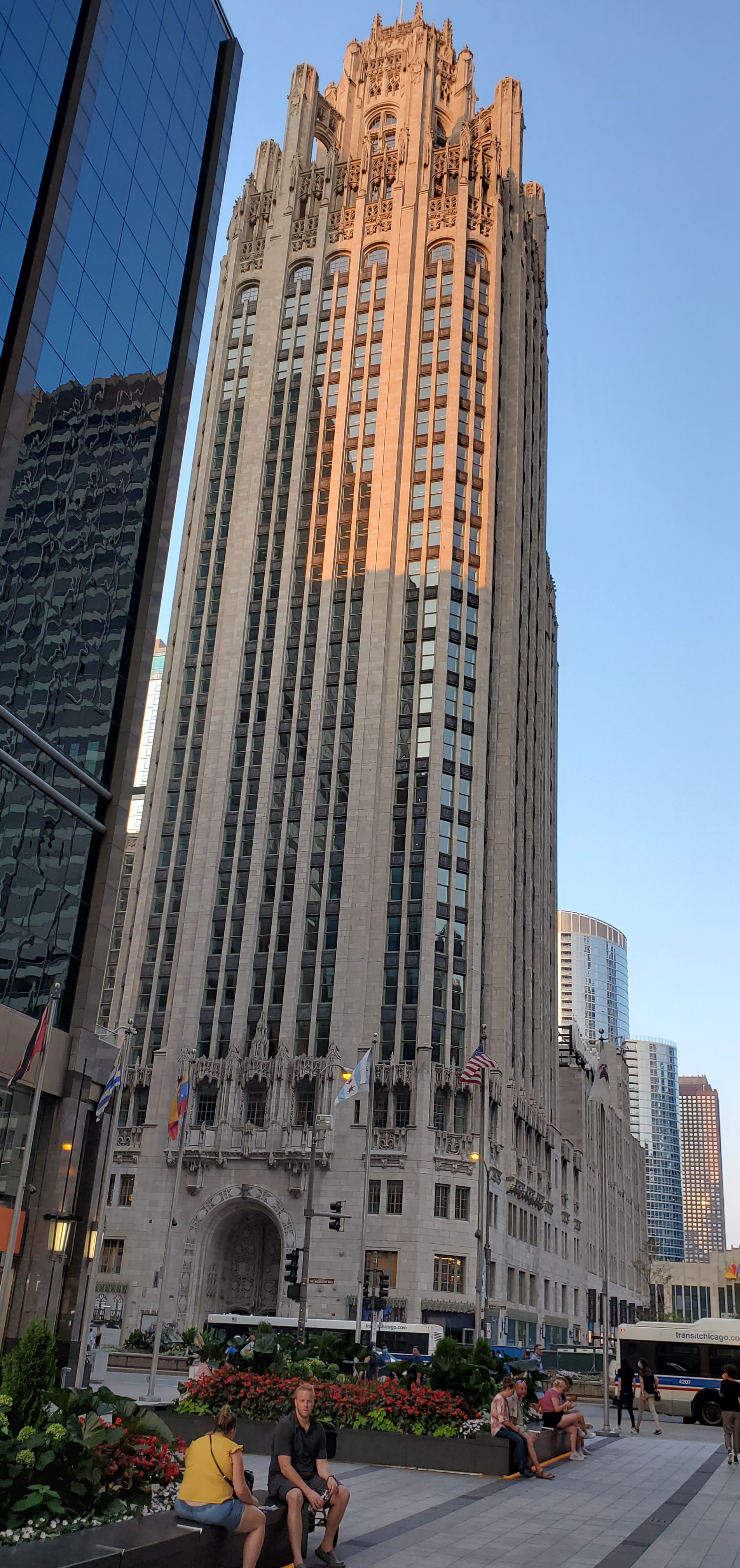
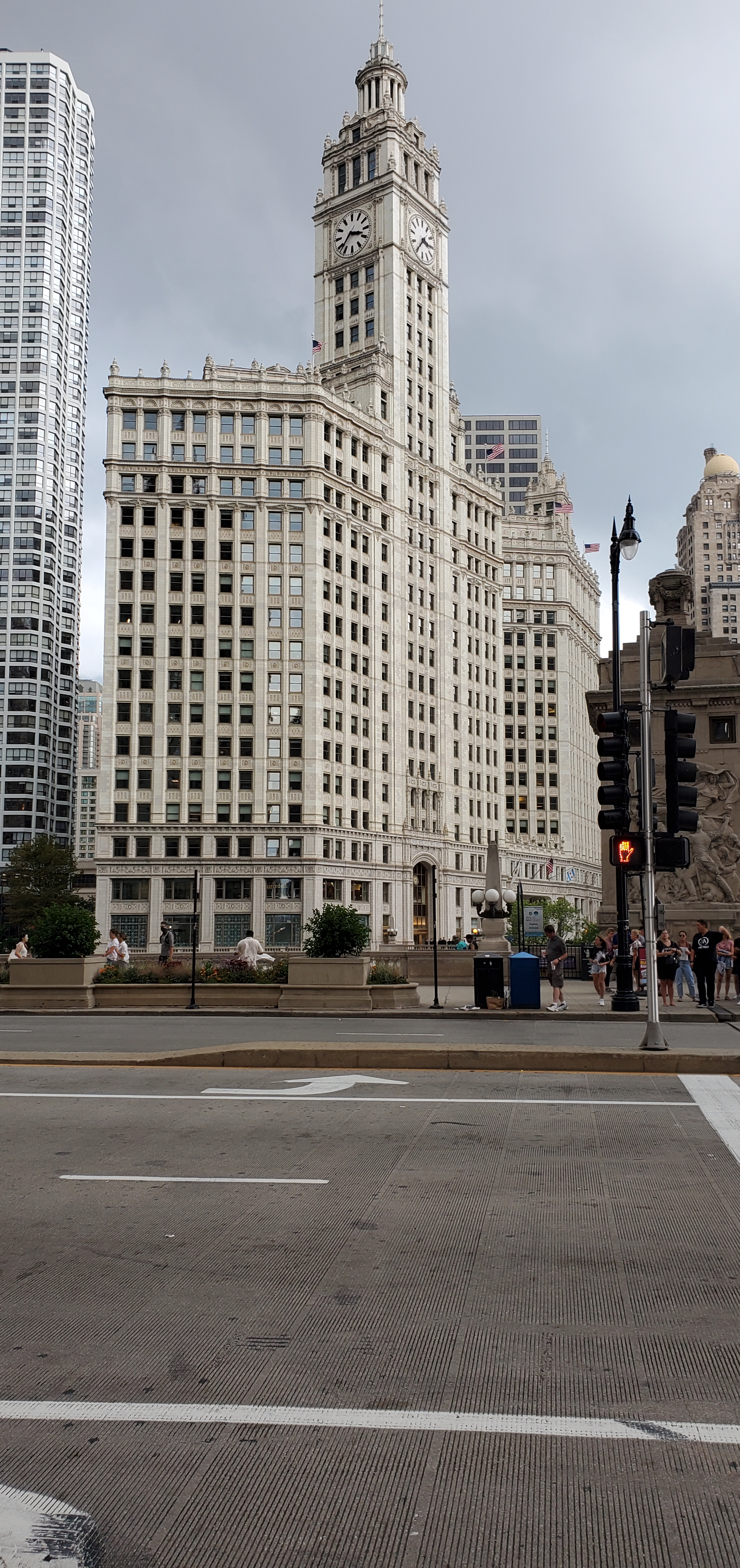
What would a trip to Chicago be without some skyscraper shots? Here’s the Tribune Tower, near the Chicago River. The Chicago Tribune moved out a few years ago, but it remains a stunning structure.
Put the Wrigley Building, across the street, in the same category. Fabulous.
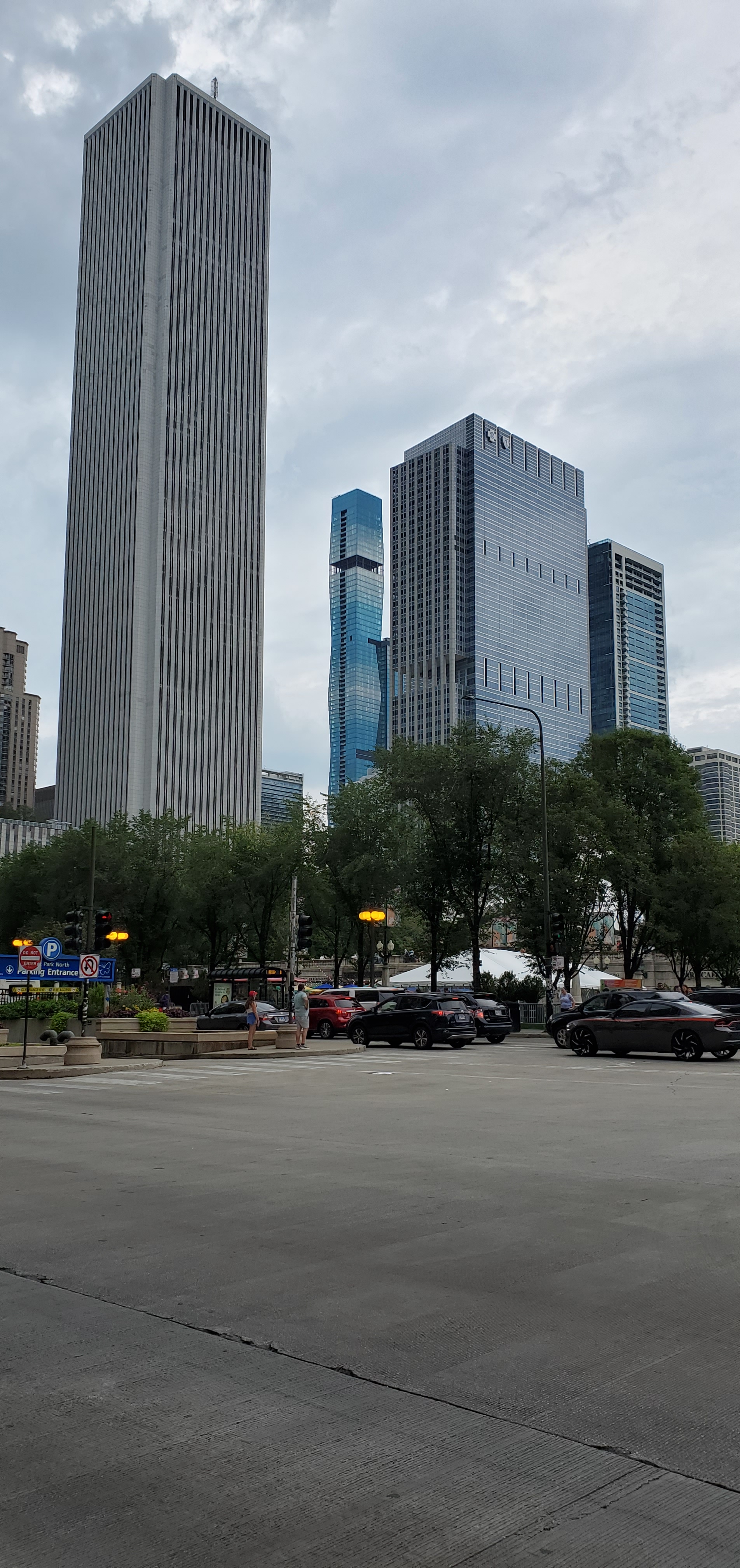
A building that I have emotional ties to is the Aon Center, formerly the Standard Oil Building, fondly known back then as “Big Stan.” A good friend worked there for a year or two back in the early 1980s, and he took me up to his office one day — way up toward the top. My friend was unhappy in Chicago and came back to Kansas City. He was unhappy here, too — more than that, terribly depressed — and committed suicide on Aug. 3, 1984. Every time I’m in Chicago, “Big Stan” brings back the horror of that day and the ensuing days.
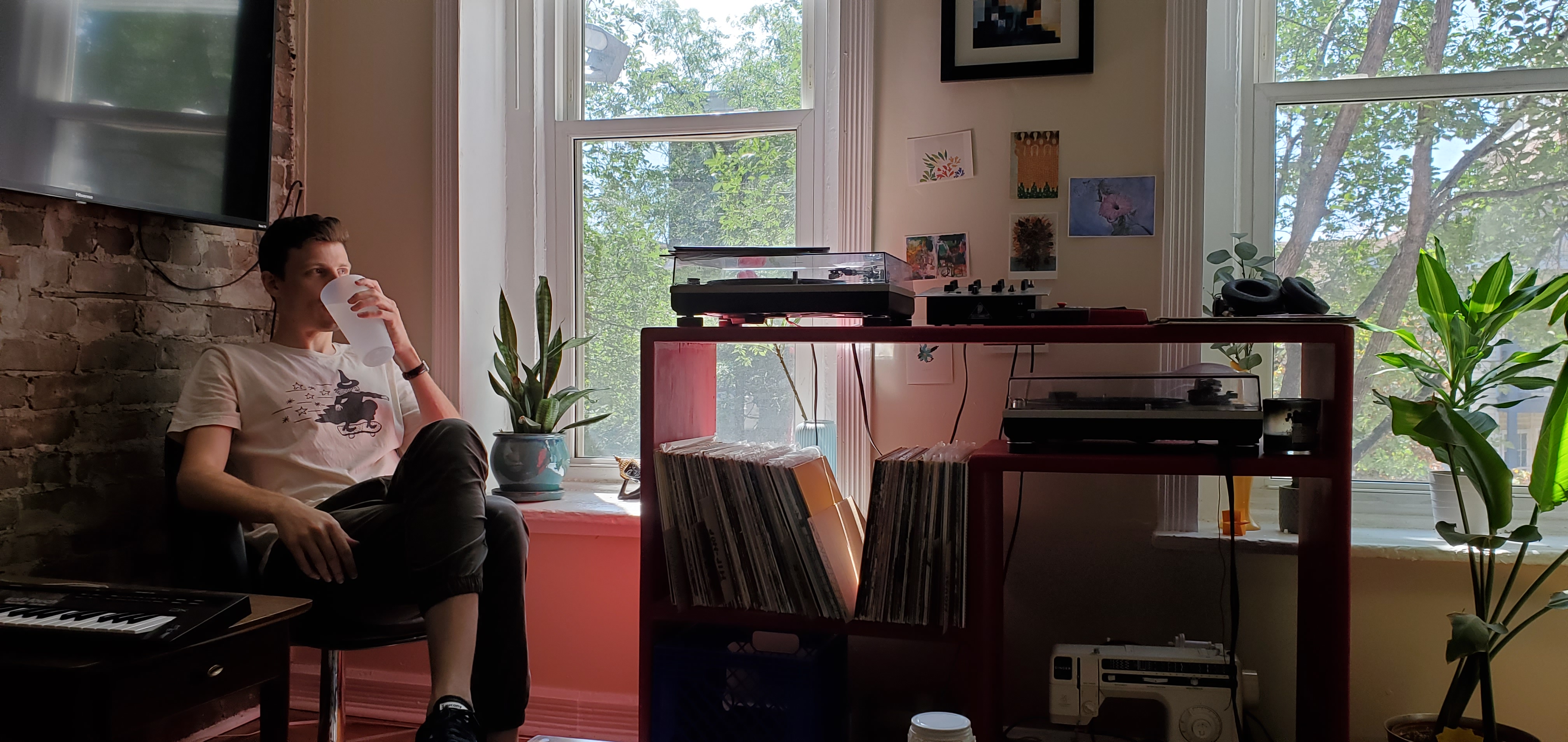
Charlie has an apartment in the Pilsen Historic District, a lively neighborhood on the Lower West Side, not far from downtown. In the late 19th century, Pilsen was inhabited by Czech immigrants, who named the district after Pilsen, the fourth largest city in Czechia, that is, the Czech Republic.
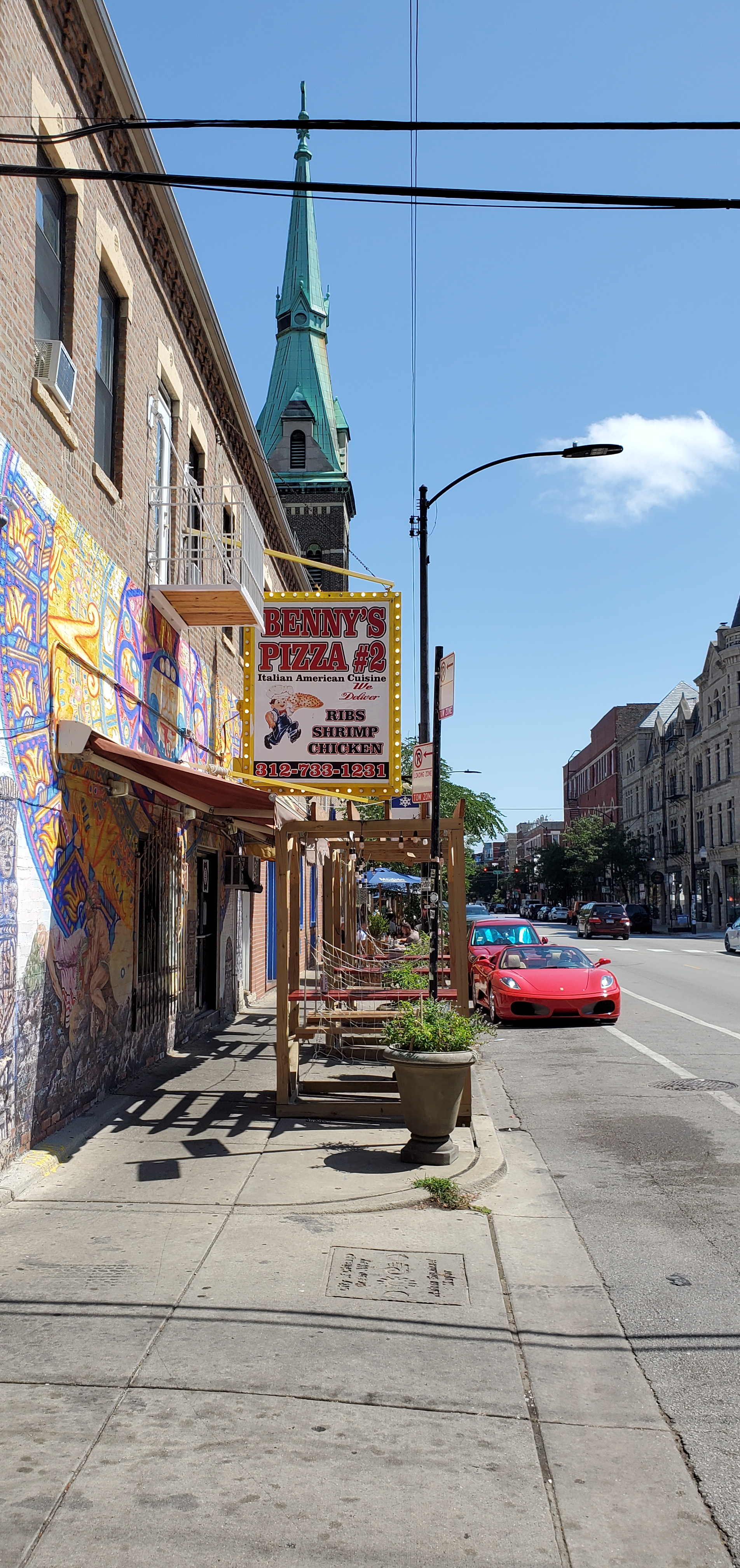
This is one of many restaurants along 18th Street in Pilsen.

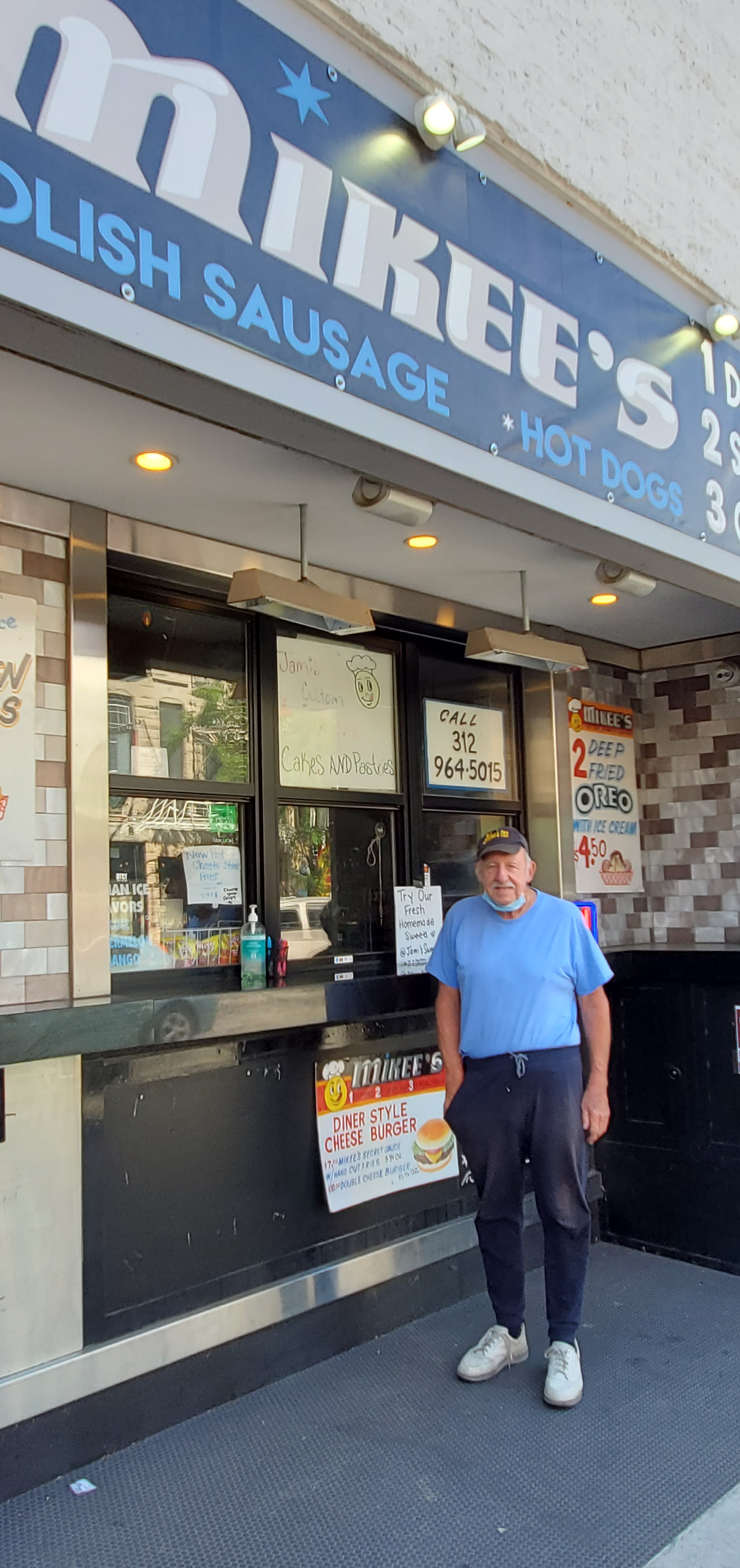
Here’s one of my favorite spots in Pilsen, Mikee’s hotdog and hamburger stand, also on 18th Street. While Charlie and I were eating our hotdogs at a table on the sidewalk, this guy came along with two containers of bleach and handed them to the lady running the window. When he sat down at the table next to us, we noticed his cap bore the word Mikee. Charlie surmised it was the owner, and, naturally, I asked. Mikee then posed for this photo. He gave Charlie a primer on how he selects and cooks hotdogs. I couldn’t hear over the traffic, but I can attest that the hotdogs are great, and the hand-cut fries (free with a hotdog or hamburger) are incredible.
After Pilsen and a quick trip to the Jewel-Osco grocery, it was on to Union Station to catch the 2:50 p.m. train to KC. The train always sounds romantic, but it does mean tolerating the vagaries of human nature. Patty asked a couple of passengers to put on their masks — it’s required by Amtrak — and they kindly did. One of them, a guy who had gotten drunk in the observation car, came back to the coach car and talked loudly the last hour of the trip. Oh, well, you can’t expect perfection. Great trip…Can’t wait to go back to Chicago.

Decades ago, one of five branches of the Fitzpatrick family (my father and his four siblings) ended up in New England. It’s always been a bit perplexing to me how this branch of the family — which, like the rest of us, had its roots in Louisville — ended up so far away. But that’s what a good job with a big company — GE — will do.

Over the years, I’ve had several opportunities to visit the Boston area and Cape Cod, and I’ve come to really appreciate the best of New England, that is, Cape Cod.

Boston is okay, but I’d take Kansas City over it any day. At least two of the times we’ve been there, it’s been as hot or hotter than Kansas City, and the public transportation system is not good for a city its size — except for the Silver Line buses that run between the city and Logan International Airport.

Recently, we spent a week in Cape Cod for the second family reunion held there in recent years, and it was a wonderful and gratifying occasion. At one time I had six aunts and uncles and many cousins. I still have all but one of those cousins — the one died way too early — but I’m down to a single aunt in the generation ahead of me.

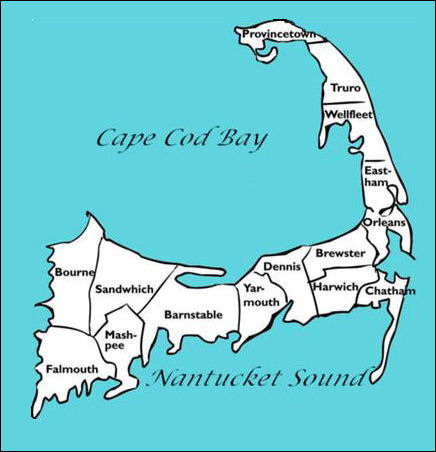
Aunt Nanette turned 91 earlier this year, and is in good health. She lives in Needham, outside of Boston, but one of her sons has a house in Yarmouth, in the mid-Cape area. Yarmouth was reunion headquarters, but Patty and I took the opportunity to drive all the way to Provincetown, at the eastern tip.

Here are some of the photos I took…

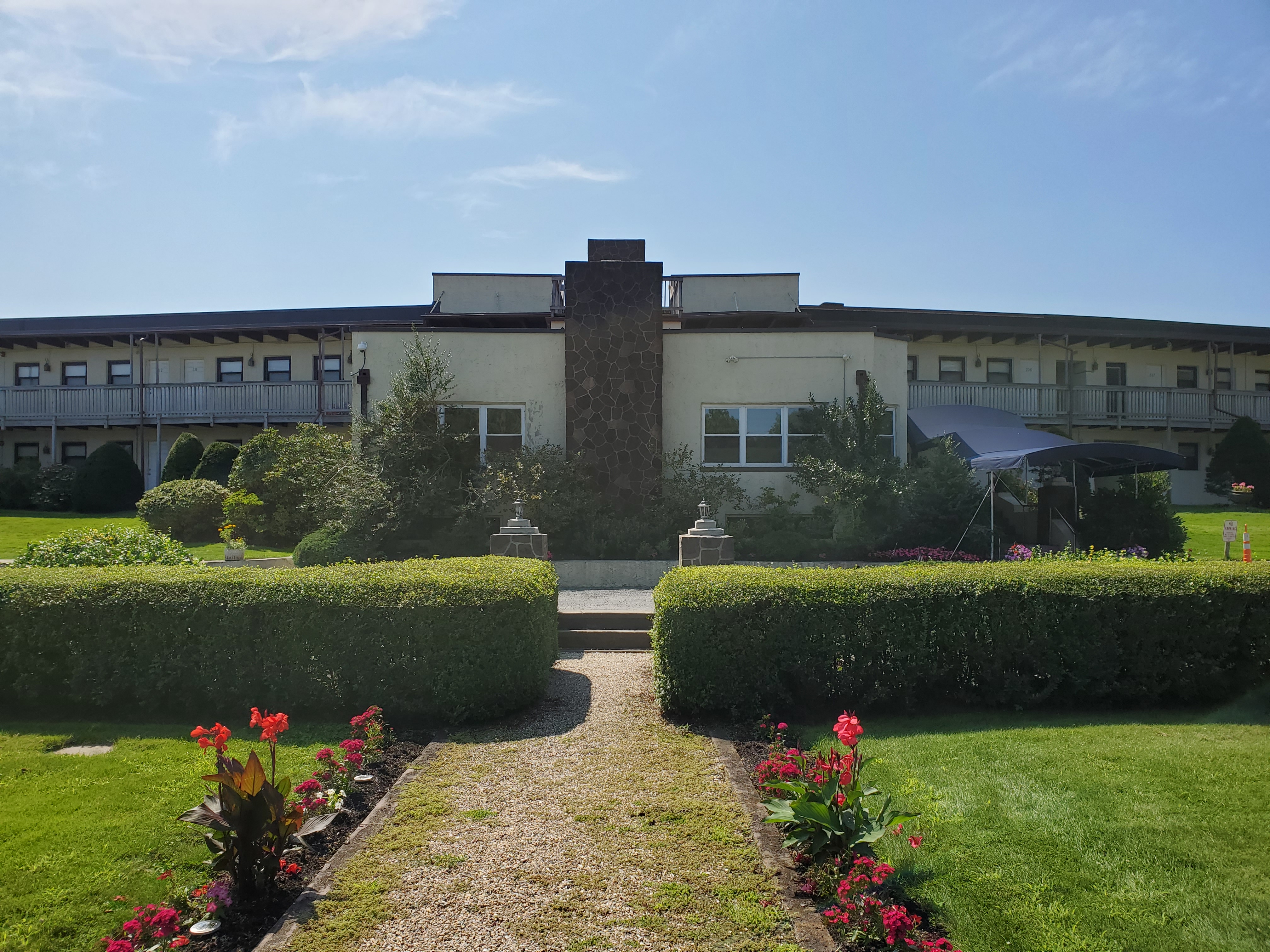
We stayed at the Surf and Sand Motel on Nantucket Sound, that is, the fringe of the Atlantic Ocean. This is the street side of the motel. When we pulled up, we weren’t too impressed, but our opinion quickly changed.

The ocean side of the motel (which I called the back and Patty called the front) featured a beautiful and soothing expanse of grass and a walkway going down to the beach. We spent a lot of time on this patio, studying the horizon and the parade of human traffic.
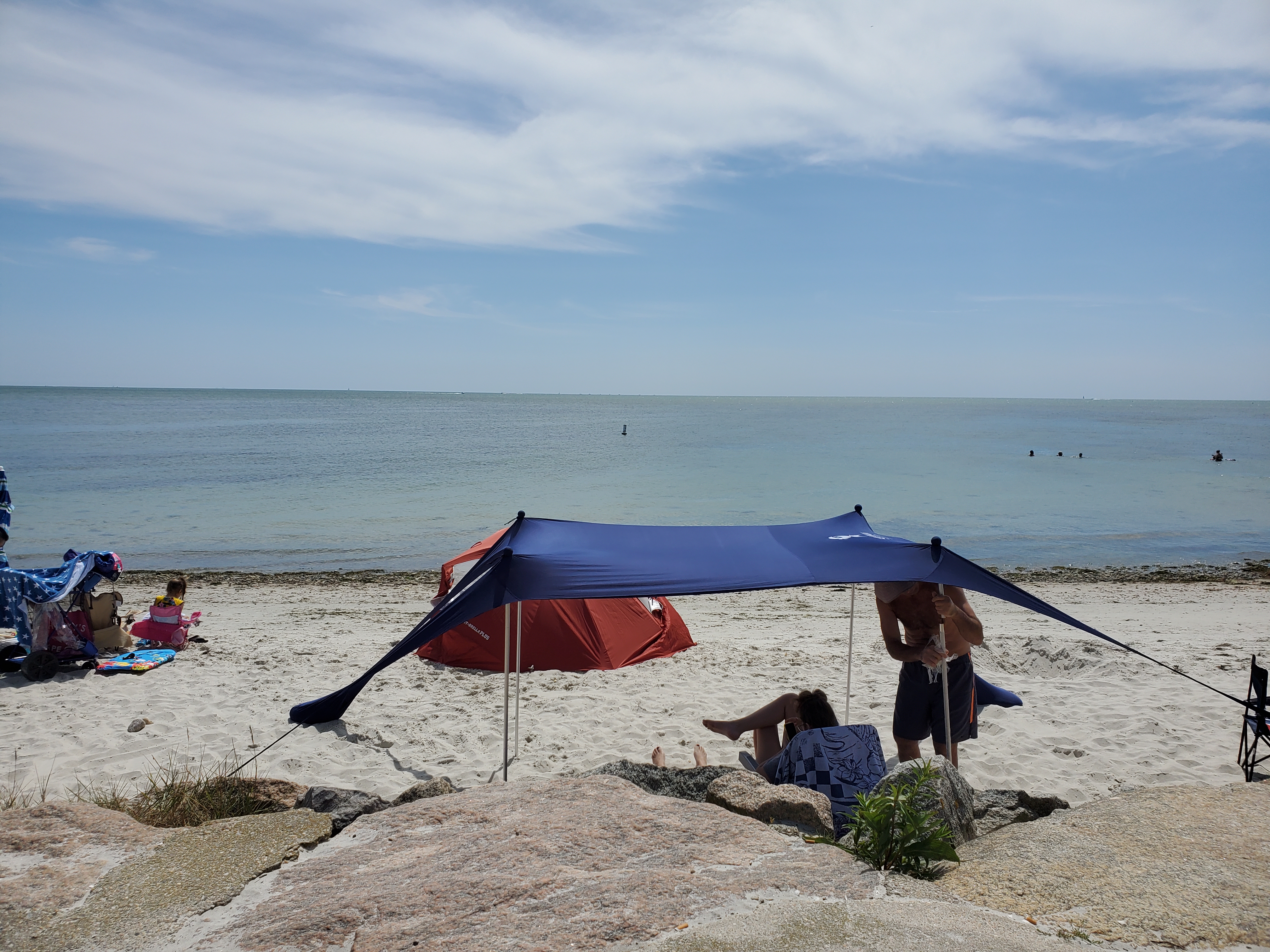
Down the road about half a mile, at the end of what I would call lodging row, was this beach.
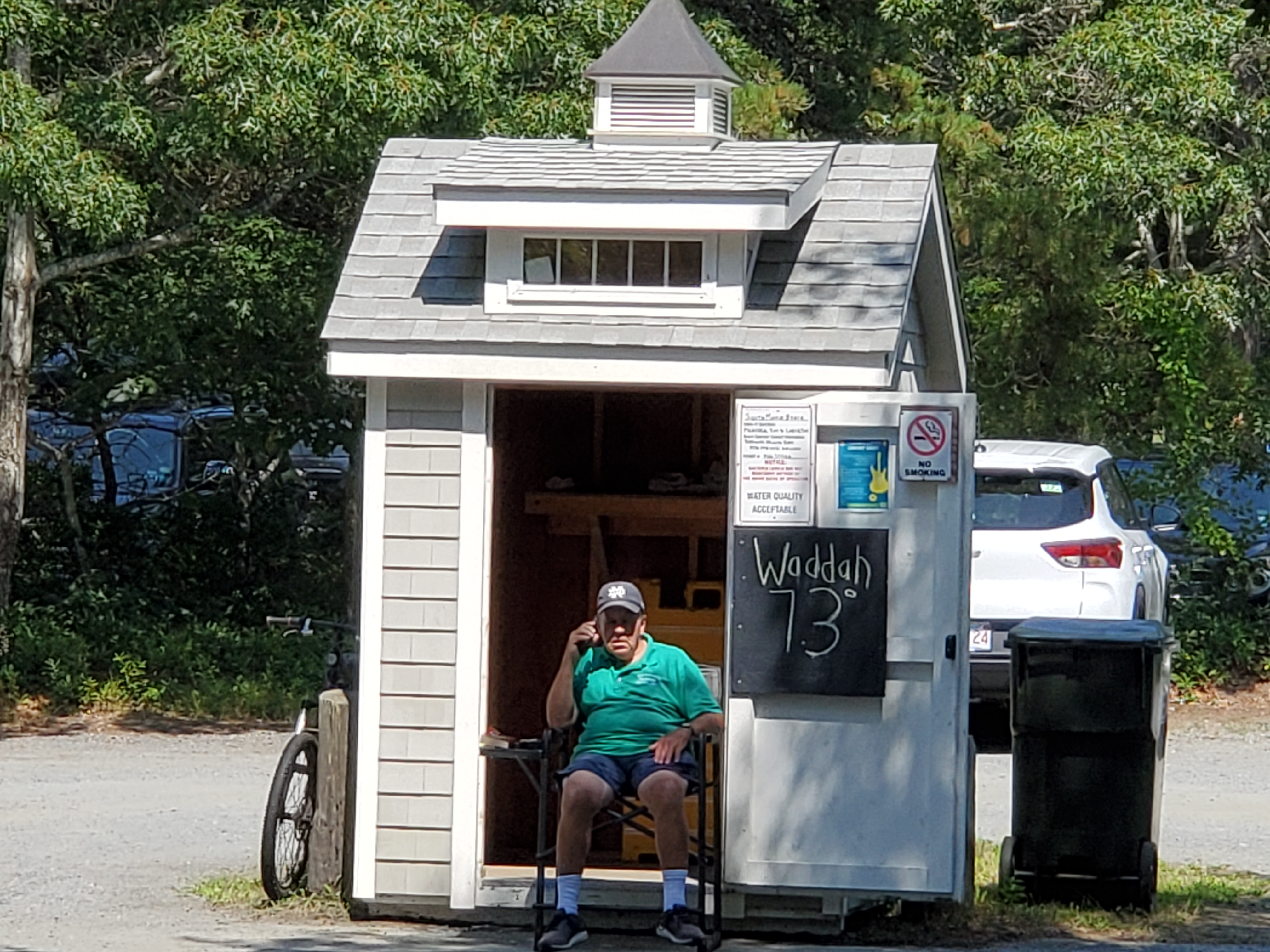
A sign outside a parking-lot hut informed beach goers how warm the “waddah” was.
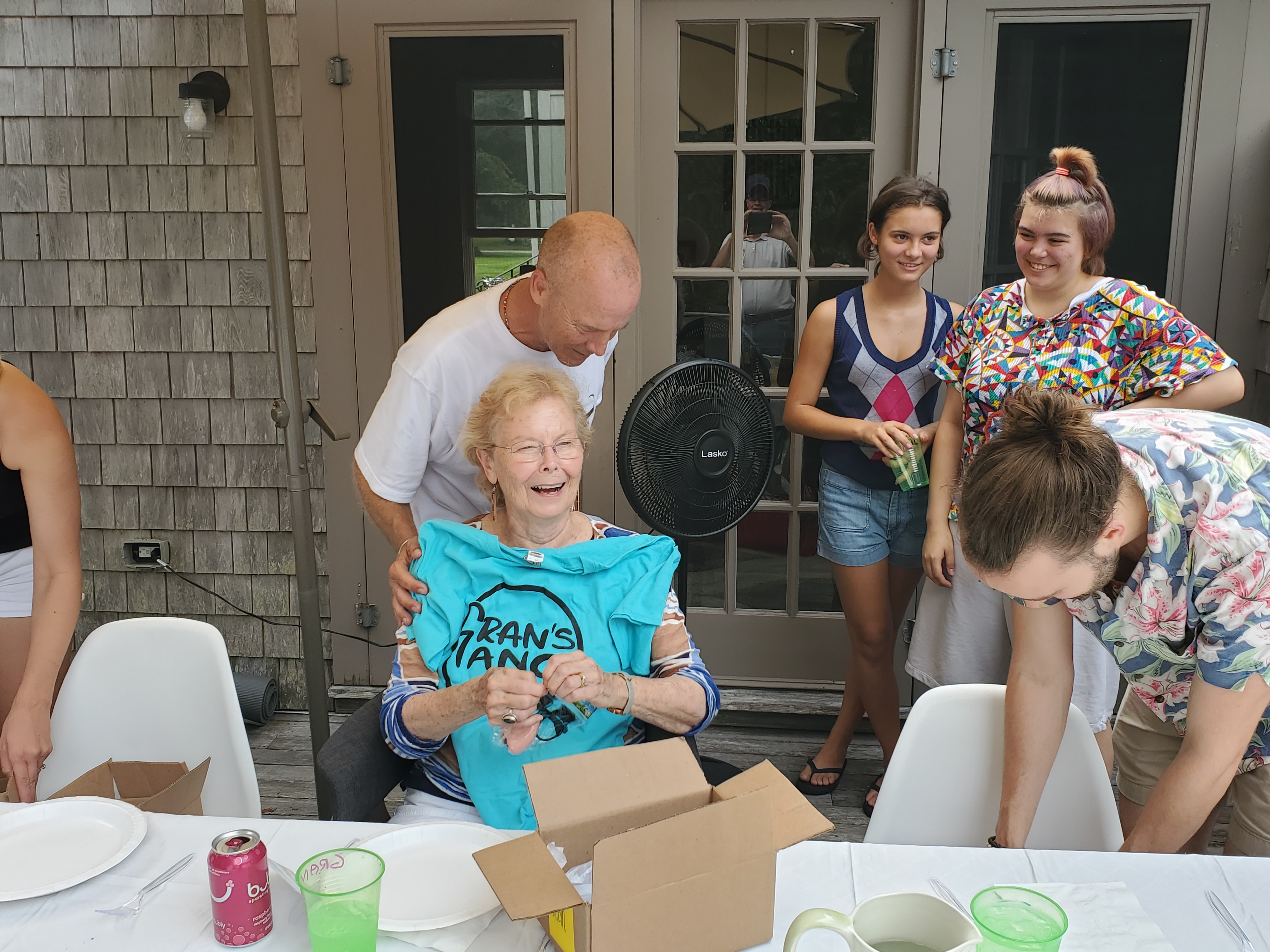
But, like I said, we were also there on “family business.” Here Aunt Nanette had just opened a box with a T-shirt bearing the words “Gran’s Gang.” Son Bob made the presentation, and his daughters, Mailina (left) and Lola, looked on.
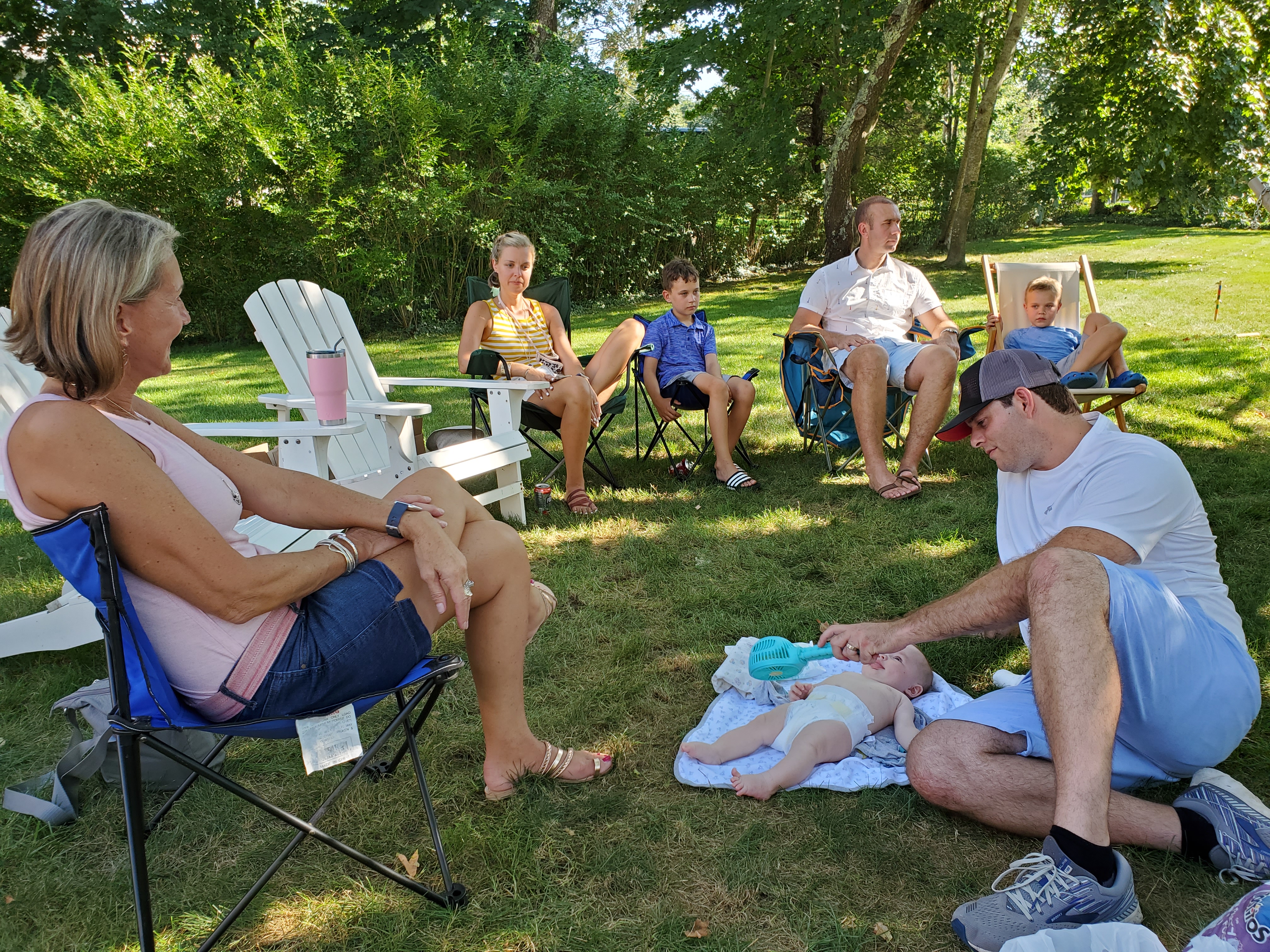
We spent a lot of time under a big tree in the side yard of Bob’s house. The youngest of us was five-month-old Nolan, being attended to here by father Andrew.
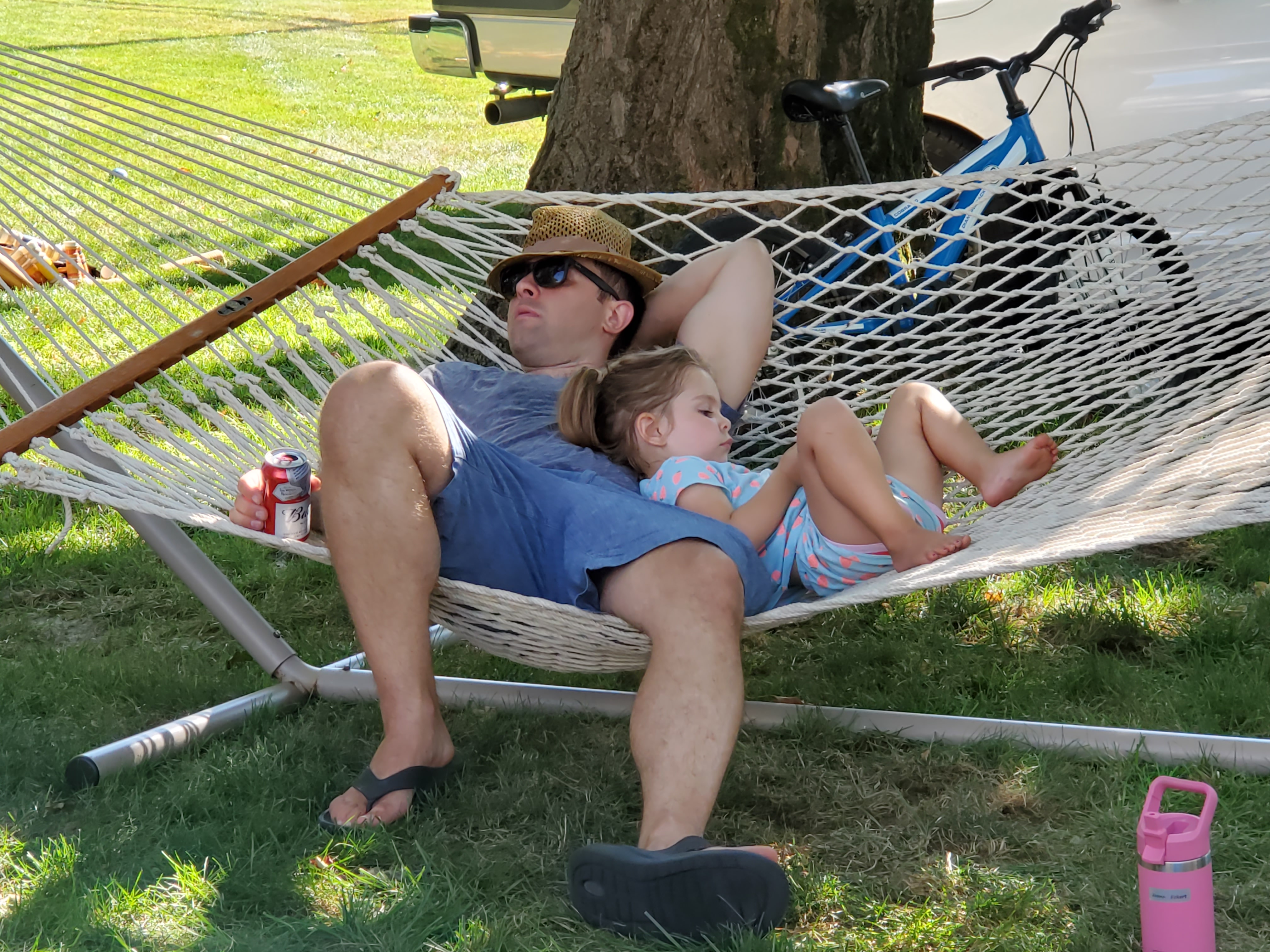
This is one of Nanette’s grandsons, Jimmy, and his daughter Joanna.
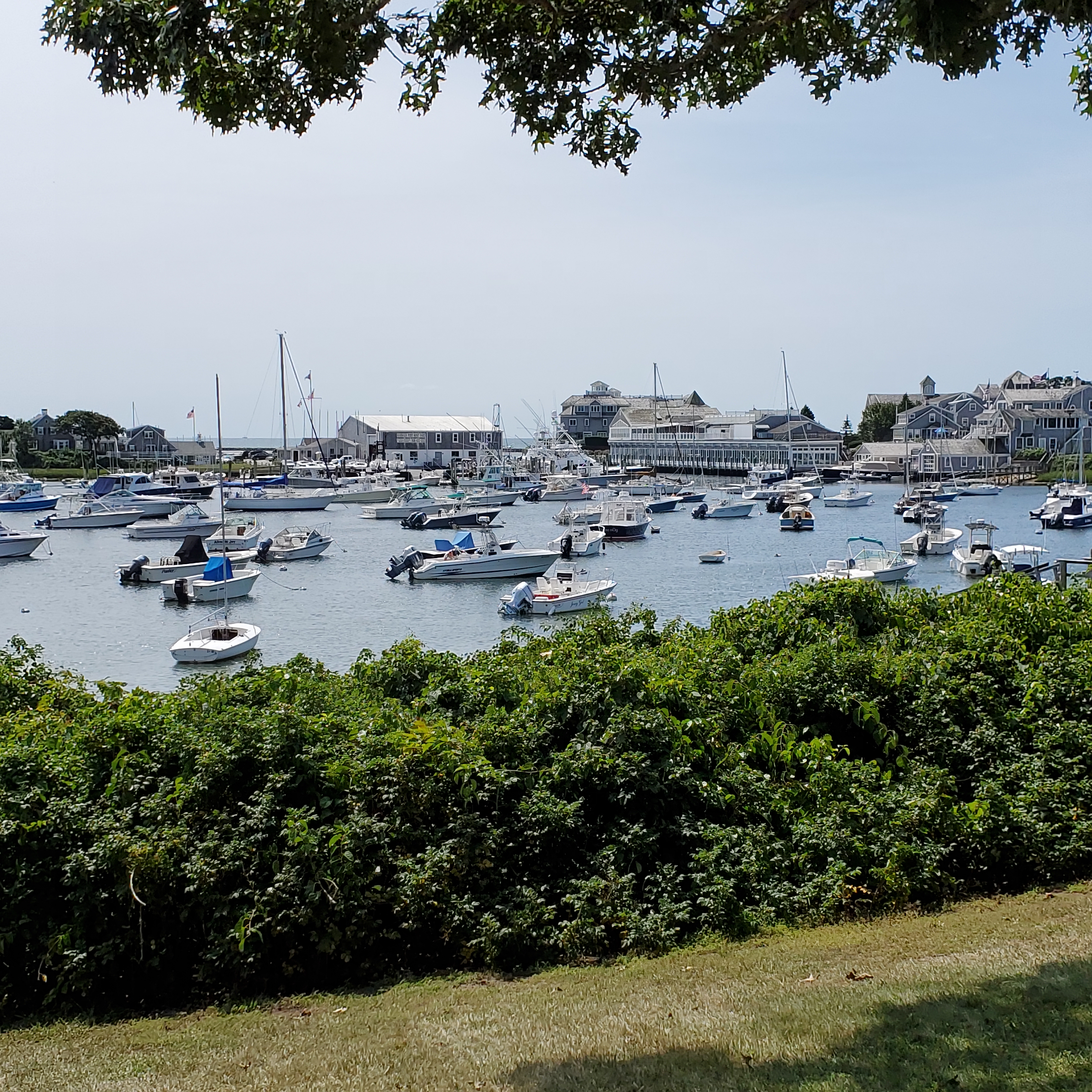
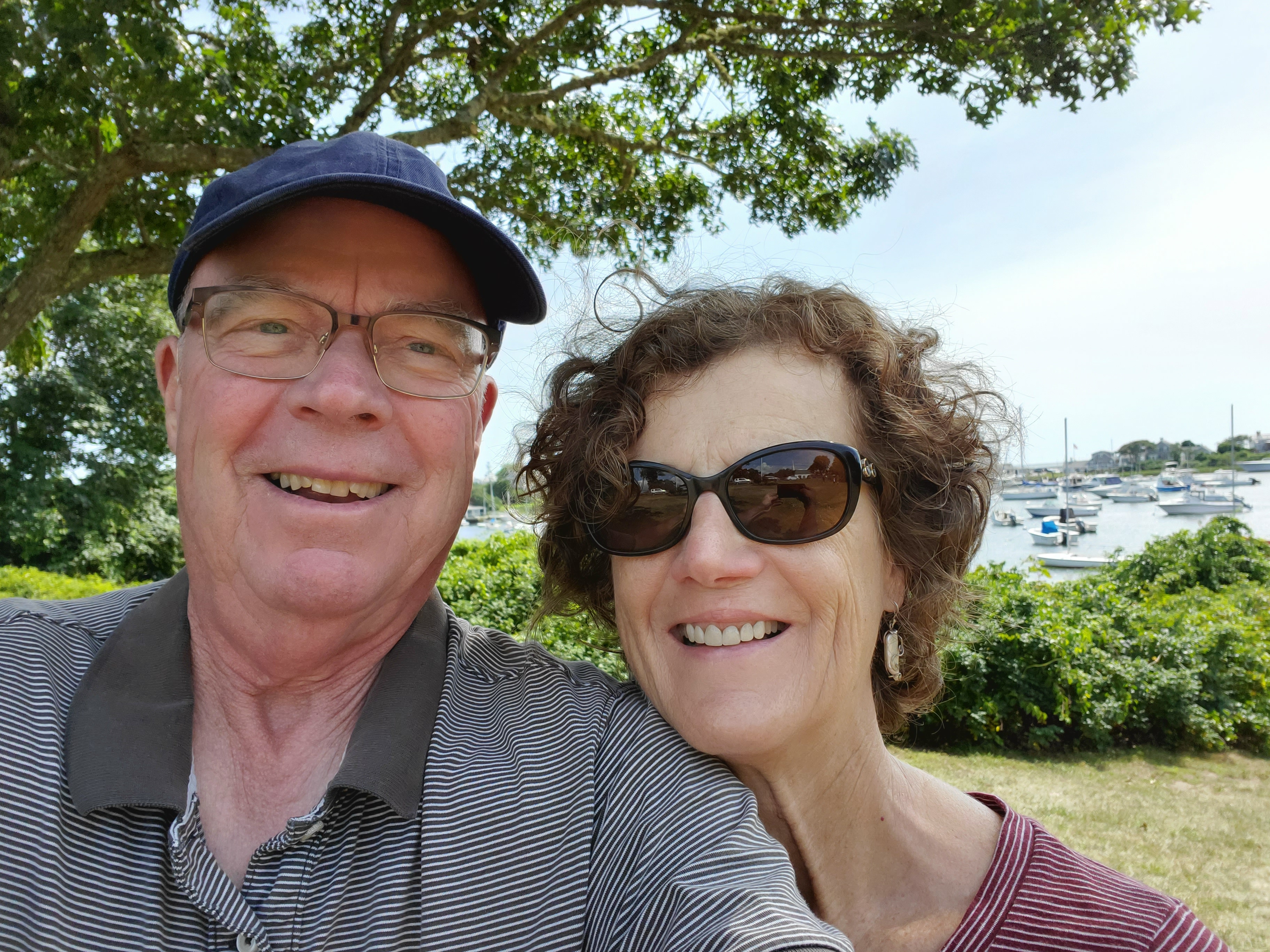
The day Patty and I went to Provincetown, we made a stop at this harbor east of Yarmouth. (I think the town was Harwich, but I’m not sure.)
I know Patty and I would have looked good on one of those boats, but this shore selfie had to suffice.
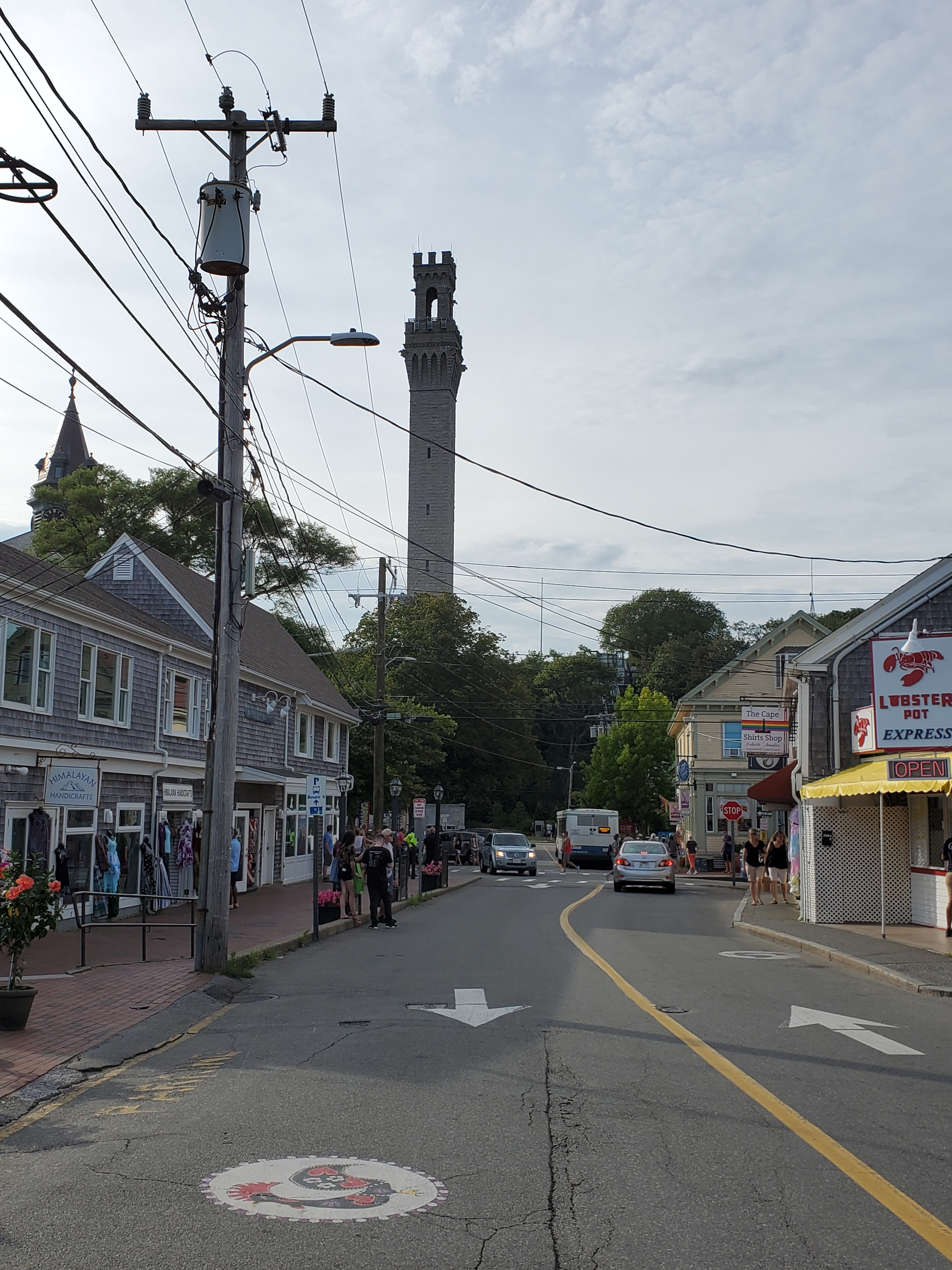
Pilgrim Monument towers over Provincetown. Built between 1907 and 1910, it commemorates the first landfall of the Pilgrims in 1620 and the signing of the Mayflower Compact, the first governing document of the Plymouth Colony. At 252 feet, the monument is the tallest all-granite structure in the United States, according to Wikipedia.
The largest yacht based at Provincetown is “Scout,” which was built in 2019 and is owned by a man named James Berwind. Scout can accommodate 10 guests and a crew of 14. Five generations ago, the Berwind family founded the Berwind Corp., which at first flourished in the coal mine industry and now invests in real estate and chemicals, among other things. The yacht is named after one of Berwind’s dogs.
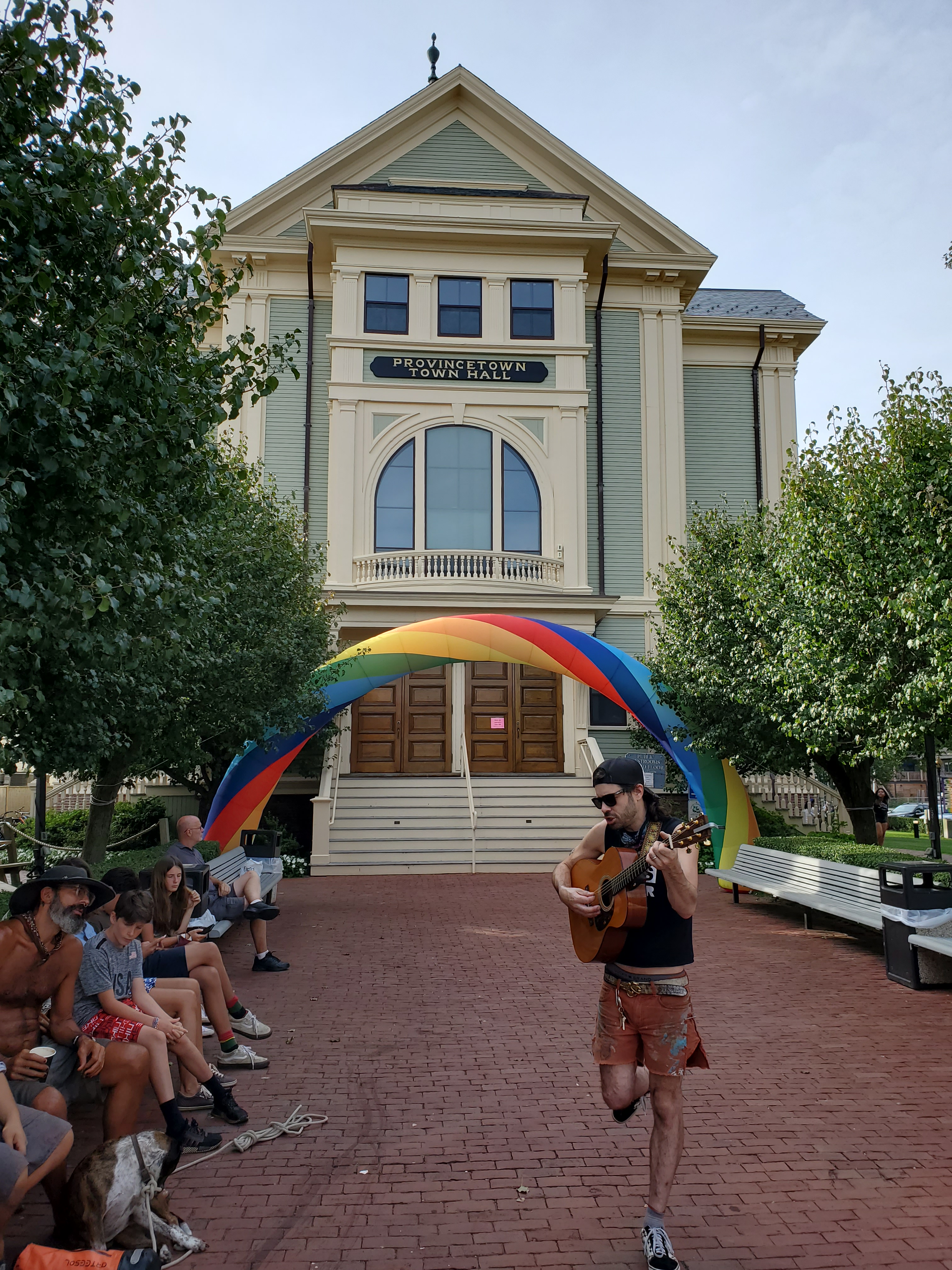
Outside City Hall, a street musician entertained.
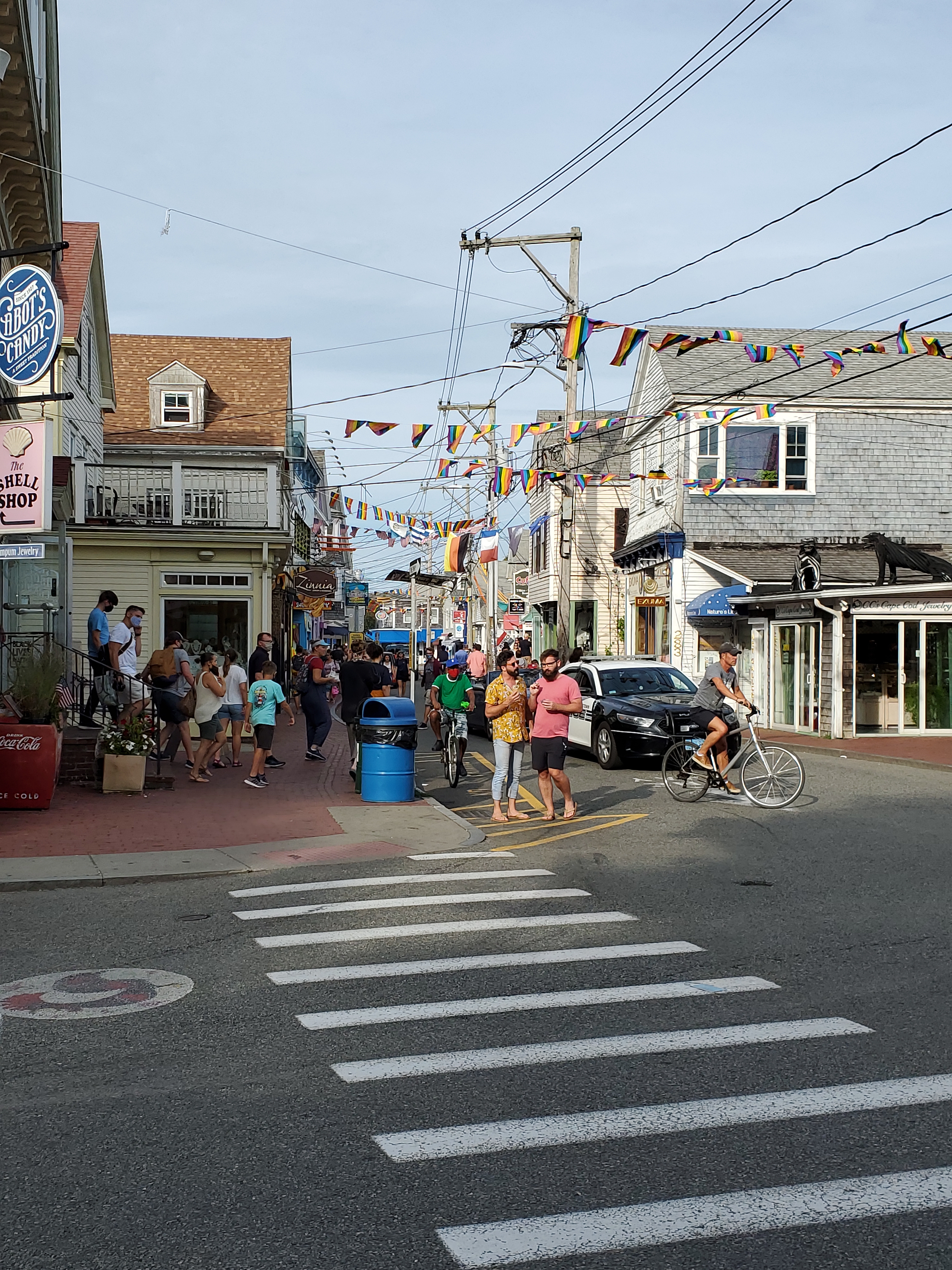
During the summer, Commerce Street is usually packed with people, and it’s quite a show.

Nearly two years ago, then-29-year-old Anthony J. Dorsey tried to elude the Kansas Highway Patrol, which had been pursuing him for an outdated vehicle registration, on westbound I-70.

When the chase, which had begun in Wyandotte County, neared the toll checkpoint just west of Kansas 7 in Leavenworth County, Dorsey wheeled his gray SUV around and began speeding east in the westbound lane.

More often than not, such situations end in big trouble, and this one did.

Nineteen-year-old Nathan Pena of Brookfield, IL, a western Chicago suburb, was heading west on the Turnpike, bound for Colorado to visit a friend. Pena saw the gray SUV do an about-face and start heading in his direction. In the seconds he had available, he whipped the steering wheel of his red vehicle to the right, toward the shoulder of the highway and a grassy incline.

Nathan Pena

As I wrote back on Oct. 7, 2019, Dorsey also took evasive action, but, maddeningly, he turned the same way. His SUV, larger than Pena’s vehicle, struck the red car nearly head on. Although Pena was wearing a seat belt, the impact killed him. And as sometimes happens in such tragedies, the bad guy was not seriously injured.

Dorsey was charged with first-degree murder, and it took nearly two years for resolution. This morning, in Leavenworth County District Court, Dorsey, now 31, pleaded guilty to second-degree murder. He is scheduled to be sentenced Sept. 17 and could get nearly 50 years in prison.

As it turned out, Dorsey had previous convictions for aggravated robbery and attempted aggravated robbery, and he was a parole violator at the time of the crash. There is no indication, however, that the highway patrol officer or officers giving chase knew at the time anything more than that the SUV had an expired plate.

The Star pointed out that the highway patrol policy at that time (I don’t know if it has changed) required the responding officer to undertake a pursuit only if he or she believed the risk to the public is lower than the immediate danger from the suspect remaining at large.

In this instance, obviously, the immediate risk to the public outweighed the danger posed by Dorsey remaining at large, at least for a while longer.

Scene of the crash

I’m not sure if the highway patrol continued the pursuit after Dorsey turned around. I hope not. In any event, the pursuit should have ended earlier. It had to be pretty clear to the officers Dorsey was only going to be stopped by a crash or — best case scenario — stop sticks.

I don’t think there’s a parent alive who would say, if it was their son or daughter who had died, that the continued pursuit was a good idea.

Among those left to grieve Pena’s loss were his parents Jennifer and Alex; sister Lauren; and grandfather John Pena and his wife Chris Meier and grandmother Alice Iankav.

Four days ago, having just learned of my October 2019 post, Jennifer Pena wrote me an email, saying, “The police were in the wrong for engaging this high-speed pursuit as well as the driver who fled police and killed my son.”

These are always judgment calls. But too often, up to this point, officers seem to err on the side of pursuit rather than public safety. The trend, and policies, needs to change.

In a story today about the Dorsey plea, The Star reported that between 2014 and 2019, at least six innocent people were killed and several others seriously injured in police pursuits throughout the metro area. The story said experts had told the paper that people evading police are more likely to reduce speed and drive less recklessly if they think police have stopped chasing them.

**

Below the 2019 obituary that appeared on the website of the Hitzeman Funeral Home in Brookfield is a string of condolences.

A woman named Alexandra Montgomery wrote: “Nathan was an amazing person. I am beyond grateful and blessed to have known him. He made working at Best Buy a million times better. He always knew how to make me laugh and could always make me feel better. He is going to be greatly missed, but his spirit will live on.”

Another woman, Anna Eich, wrote: “Nathan was a good friend to my daughter Linnea when they were at Park (Junior High). They were in band together. I remember Nathan as a good and kind-hearted young man. My heart goes out to your entire family.”

What a tragedy…It shouldn’t have happened.

Note: On Friday, Sept. 17, Anthony Dorsey was sentenced to 49 years and four months in prison.

It’s good news that Kansas City police have arrested one person in connection with the theft of Chinese artist Kwan Wu’s sculpture of an Osage woman from the Francois Chouteau Monument in Kansas City North, near Chouteau Trafficway and Parvin Road.

The arrest, probably the result of someone bragging about the theft, will discourage copycats.

The bad news is the 7-foot-tall, 400-pound sculpture was, predictably, found in pieces, having been sawed up with the intention of selling it for scrap.

The $80,000 sculpture might have brought $1,000 or so on the scrap market, assuming a dealer would have agreed to take the material. Bronze is 90 percent copper and 10 percent tin, thus its appeal to thieves.

The sculpture of the Osage woman was at left. (Another figure was added late last month, so the monument still has three figures.)

Mark McHenry, a member of the organization that has been raising money for the not-completed monument, said most of the parts have been found and that if all are found, the local fabricator who constructed the sculpture originally might be able to reconstruct it.

But if pieces are missing, it would be considerably more difficult.

The theft has been the subject of much gnashing of teeth among us members of the City of Fountains Foundation, whose mission is to promote and advocate for fountains, sculptures and monuments primarily in Kansas City.

Our organization maintains endowments for about 40 fountains, sculptures and monuments, and the Chouteau endowment currently has about $100,000. It is possible some of that money could be used to reconstruct the Osage woman or, if that can’t be done, to replace it.

Although this is the most brazen case I’ve ever heard of relating to a sculpture or bronze theft, it’s hardly the first.

Fairly recently, I believe, a bronze plaque at the Children’s Fountain, also in the Northland, was wrenched from its base, and one of our board members, Jocelyn Ball-Edson, a former Parks Department manager, suggested it might have been “nicked as practice” by the same group that made off with the Osage woman.

Jocelyn recalled another incident years ago when four 7-foot-long plaques disappeared from the base of a tall flagpole in Swope Park. Jacob Loose, businessman and philanthropist, had donated the plaques in 1912. One of the plaques bore the text of the Declaration of Independence, another the words of The Star Spangled Banner and a third the text of Lincoln’s Gettysburg Address. The fourth was the dedication plaque.

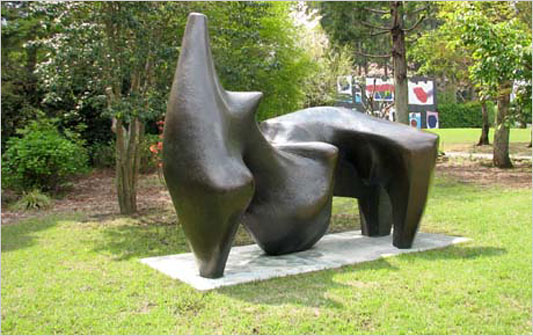
Perhaps the most outrageous incident of outdoor art theft took place in 2005, when thieves used a crane to steal a 12-foot-bronze statue created by Henry Moore from the grounds of the sculptor’s former home near London.

The sculpture, called “Reclining Figure,” was worth an estimated $4.5 million. After an international hunt, police determined in 2009 that the piece was likely melted down, shipped abroad — first possibly to Rotterdam and then further east — and eventually sold for as little as $2,300.

Henry Moore’s “Reclining Figure”

It’s too bad that we have to worry about our public art being stolen instead of enjoyed. Jocelyn, of our board, said that back in the 1980s, a Parks Department supervisor once wrote a memo about the bronze plaques that were being stolen and suggested that the department should “just take everything down and put it all in storage until society improves.”

As Jocelyn then said in an email to me…we’re going to be waiting a long time for that.

Note: This post originally said police had arrested three people. As of Friday night, it is apparently just one person.

It was very moving to see President Joe Biden talk today about the Congressional Gold Medals being awarded to the Capitol Police and D.C. Metropolitan Police Department for their heroic defense of the U.S. Capitol on Jan. 6.

Biden spoke slowly, almost painfully. He looked intently at officers and others in the audience during the ceremony in the Rose Garden. At one point he brushed a tear from his left eye.

“We have to understand what happened…We have to face it,” he said.

During and after the signing ceremony, he chatted easily with every person who approached him. He also treated the children of officers on hand as if they were his own grandchildren, looking and speaking to them directly and occasionally putting a hand on one of their shoulders.

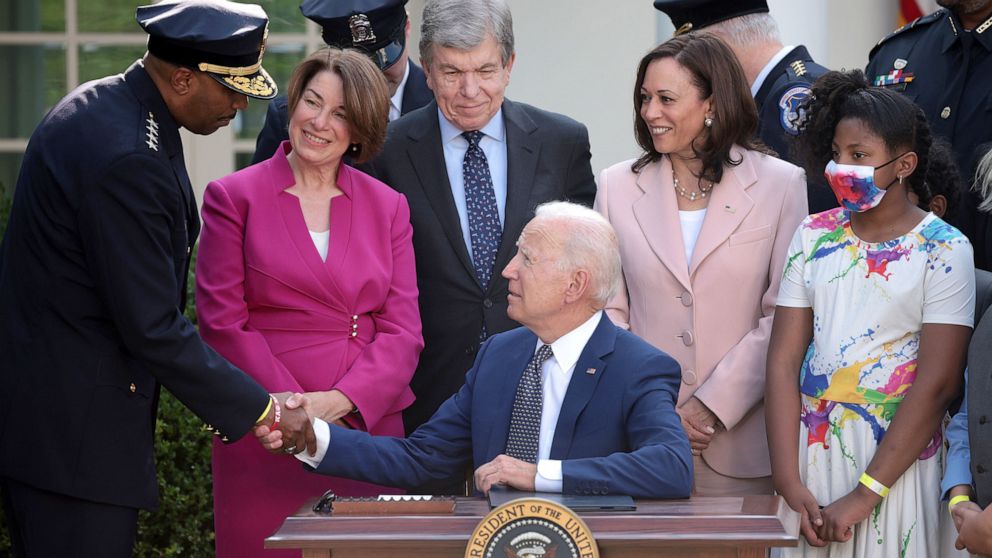
Senators Amy Klobuchar, Roy Blunt and Vice President Kamala Harris looked on today as President Biden greeted either a U.S. Capitol or D.C. police officer.

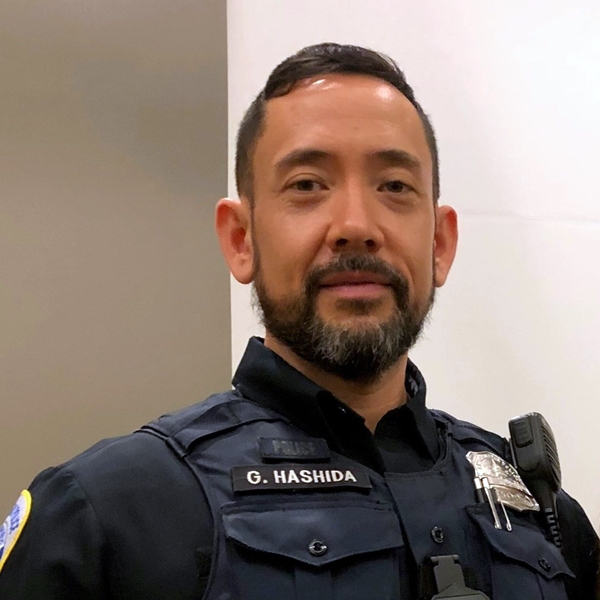
The emotional and physical toll the insurrection took on those officers that day is becoming ever clearer. Two police officers died by suicide in the days soon after the event, and a third officer, Capitol Police Officer Brian Sicknick, collapsed and died after engaging with the protesters. Then, last week, the Metropolitan Police announced that two more officers who had battled the rioters had committed suicide. Officer Kyle DeFreytag was found dead on July 10 and Officer Gunther Hashida was found dead in his home a week ago today.

Gunther Hashida

But the toll goes well beyond the dead. In a January 27 story in The Washington Post, former Kansas City Star reporter Tom Jackman unveiled these statistics…

:: About 65 Metropolitan Police officers were injured, including several who suffered concussions from head blows from various objects, such as metal poles ripped from inauguration-related scaffolding and a pole with an American flag attached. Others suffered swollen ankles and wrists, bruised arms and legs, and irritated lungs from bear and pepper spray.

:: At least 81 Capitol Police officers were assaulted during the siege, according to legal filings that did not detail specific types of injures.

:: Thirty-eight Capitol Police employees, mostly officers and supervisors who responded to the riot, tested positive for Covid-19.

…I have found it increasingly difficult to watch video clips of the pitched battle that day, seeing those officers fighting back against overwhelming odds. It’s come to the point I either avert my gaze or change stations, but I’m sure most of us have put ourselves in the shoes of those valiant officers and wondered what it would have been like and how there would have been no alternative but to fight.

And to hear those officers talk last week to members of the House Select Committee investigating the event brought home with no uncertainty the fragile state of mind many of those officers are now experiencing — and may experience for months or years.

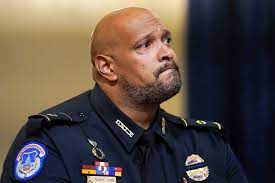
Capitol Police Officer Harry Dunn told the committee he was subjected to racial slurs — “fuckin’ nigger,” to be precise — and physically assaulted and has been in counseling since the event.

Officer Harry Dunn testifying last week

The House hearing made me so proud of those officers and so grateful for the incredible fight they put up against a mob of crazed and crazy people, many of them thugs — including some female thugs.

At the same time, it is galling that the Capitol Police administrators did not adequately present a strong enough force that day, even though they had information indicating an onslaught might be coming.

It is also galling that after the riot began some high-rankers at the Pentagon — some with ties to Donald Trump — intentionally dragged their feet and delayed sending in troops.

The whole thing was galling and shameful. And who paid the price? The officers on that painfully thin front line, most of whom had never been subjected to anything like that. No wonder many of them will never be the same.

At least now, after today, people will be reminded of those officers’ heroism when they see Congressional Gold medals displayed at the Capitol Police headquarters, the Metropolitan Police Department, the U.S. Capitol and the Smithsonian Institution.

Biden put it in context today, when he said: “My fellow Americans, let’s remember what this was all about. It was a violent attempt to overturn the will of the American people, to seek power at all costs, to replace the ballot with brute force.”

He also said something that, over time, must drown out the alternate reality the sheep herders at Fox News are continually trying to prod into the minds of their hopelessly lost flock.

“We cannot allow history to be rewritten.”

I was struggling to come up with a third topic of interest today when the Kansas City Royals came through for me.

So here is that breaking news, along with a couple of other stories that caught my attention.

:: Mercifully, the Royals have traded Jorge Soler, one of the most annoying baseball players I’ve ever seen. This afternoon, less than an hour before the 3 p.m. trading deadline, the Royals sent Soler to the Atlanta Braves in exchange for minor-league pitching prospect.

One reason I’ve watched so few Royals’ games this year (besides the fact that they’re very bad) is that it pains me to watch Soler. Not only is he a terrible hitter (batting average .192, which is less than two hits for every 10 at-bats) but, as I’ve said before, it looks to me like he’s not very interested. He has zero intensity, makes an adventure out of playing the outfield and, then, of course, there’s his ridiculous insistence on keeping his back left pants pocket turned inside out. He’s bush league all the way, and it’s great that we won’t have to watch him any longer.

We can all be thankful that Soler’s bat got hot the last week or so and that he hit a bunch of home runs. Had that not happened, no team probably would have been tempted. Before today, I thought majority owner John Sherman would very likely fire General Manager Dayton Moore at season’s end. That still could happen, but at least this is an admission by Moore that the acquisition of Soler from the Chicago Cubs in 2016 (for Wade Davis) was a huge mistake. Although Moore and Royals’ fans are catching a break with Soler’s departure, it might be too late for Moore.

Dayton Moore (left) and John Sherman

:: While waiting in a doctor’s office this morning, I was reading a New York Times story about former Catholic Cardinal Theodore McCarrick having been charged with sexually assaulting a teenage boy in 1974. Suddenly, a line brought me to a halt. The line was: “Mr. McCarrick, who now lives in Missouri, was charged with three counts of indecent assault and battery on a person age 14 or over and is expected to appear for arraignment on Sept. 3.”

Now you know what startled me: the 91-year-old McCarrick lives lives among us in Missouri. I put down the paper and quickly began Googling McCarrick and Missouri. A few stories in, I found a USA Today story that said McCarrick lives at the St. John Vianney Renewal Center in Dittmer, MO. Next, I Googlemapped Dittmer and found that it’s about 30 miles southwest of St. Louis…At least he’s not in our area!

The USA Today story said the renewal center was a home for “troubled priests” and “clerics who have committed sexual abuse.” It said eight registered sex offenders live at the center. A story I read later on the BishopAccountability.org website referred to the center as “Club Ped” and said it is run by an order of Catholic priests called the Servants of the Paraclete.

Now, McCarrick was a high-profile pedophile before these criminal charges were brought, having been expelled from the priesthood in 2019. Yet, here he is living in Missouri, with the church still providing him room and board and a nice lifestyle. The website said, “Residents enjoy an outdoor Jacuzzi, hiking trails, picnic tables, basketball hoops, satellite TV, maid service and cooking staff.”

That just makes you sick, doesn’t it? All I can say is that if you ever get a solicitation from the Servants of the Paraclete, put it straight into the recycling.

:: I don’t write about or read The Star very much these day because, like Soler, it’s bad and annoying.

In recent days, though, I found myself scouring the website for news and commentary about the ground-breaking story of Texas and Oklahoma jumping from the Big 12 (actually 10) to the superpower SEC. The sports side of the paper has eroded slower than the news side, and I thought columnists Vahe Gregorian and Sam Mellinger, or at least longtime college reporter Blair Kerkhoff, would bring some enlightenment. Hasn’t happened. To the best of my knowledge, neither Gregorian nor Mellinger has devoted a column to it, and I’ve only seen one Kerkhoff story on the subject.

Picking up the slack has been Kellis Robinett, who covers K-State for The Star. And his stuff hasn’t been particularly insightful.

The most authoritative reports I’ve seen have come from Dennis Dodd, a former Star sports reporter, who has been with the CBS Sports since 1998. From The Star, I remember Dodd as an intense young man with a head of black hair. Now he’s mellowed and, like me, is bald. (Funny how it’s shocking for me to see his bald head but not for me to see mine.)

Dennis Dodd

Dodd, who still lives in the KC area, says he thinks the Longhorns and Sooners will join the SEC by the year 2023, even though they are contracted to stay through 2024-’25. He says he expects the two teams to be met with “a lot of rancor and a lot of bitterness” when they go up against the remaining Big 12 teams in sporting contests before they depart. “The more they play in this conference, the uglier it’s going to get,” he said.

And as for the Big 12, he’s not bullish on its future as a stand-alone conference. “I think the dominoes are going to start falling quickly,” he said.

…That’s it for today, readers. Have a nice weekend, slow down on the roads and pray for rain.

My favorite street in the Kansas City area, by far, is State Line Road.

First of all, how many cities have a State Line Road? Ours is the only one I’ve ever heard of. On top of that, it’s so damned interesting, cleaving through several cities and featuring all manner of residences; at least one park and one golf course; a wide range of businesses; and one massive institution.

But let me clarify something: When I say State Line Road is my favorite street, I’m not talking about all of it. I’m talking only about the two-lane part that starts at 75th on the south and trails off at Eaton Street on the north, near 35th Terrace.

South of 75th, where it becomes four lanes, it’s just another big road taking you where you need to go. And the north bookend, where it resumes in the West Bottoms, has little to commend it.

The most variegated part is that 40-block stretch I’m talking about, where it’s two lanes and bordered by seven cities, by my count. (Besides KCMO, the bordering cities are Prairie Village; Mission Hills; Westwood Hills, KS; Westwood, MO; Westwood, KS; and Kansas City, KS.)

So, are you ready for a tour? Alright, then, hop in the hybrid, put on your seatbelt and let’s go!

I admit it doesn’t start off in very good fashion at 75th, where, on the Missouri side, there are two convenience stores. (Both were charging the same price, $2.89, for a gallon of gas today.)
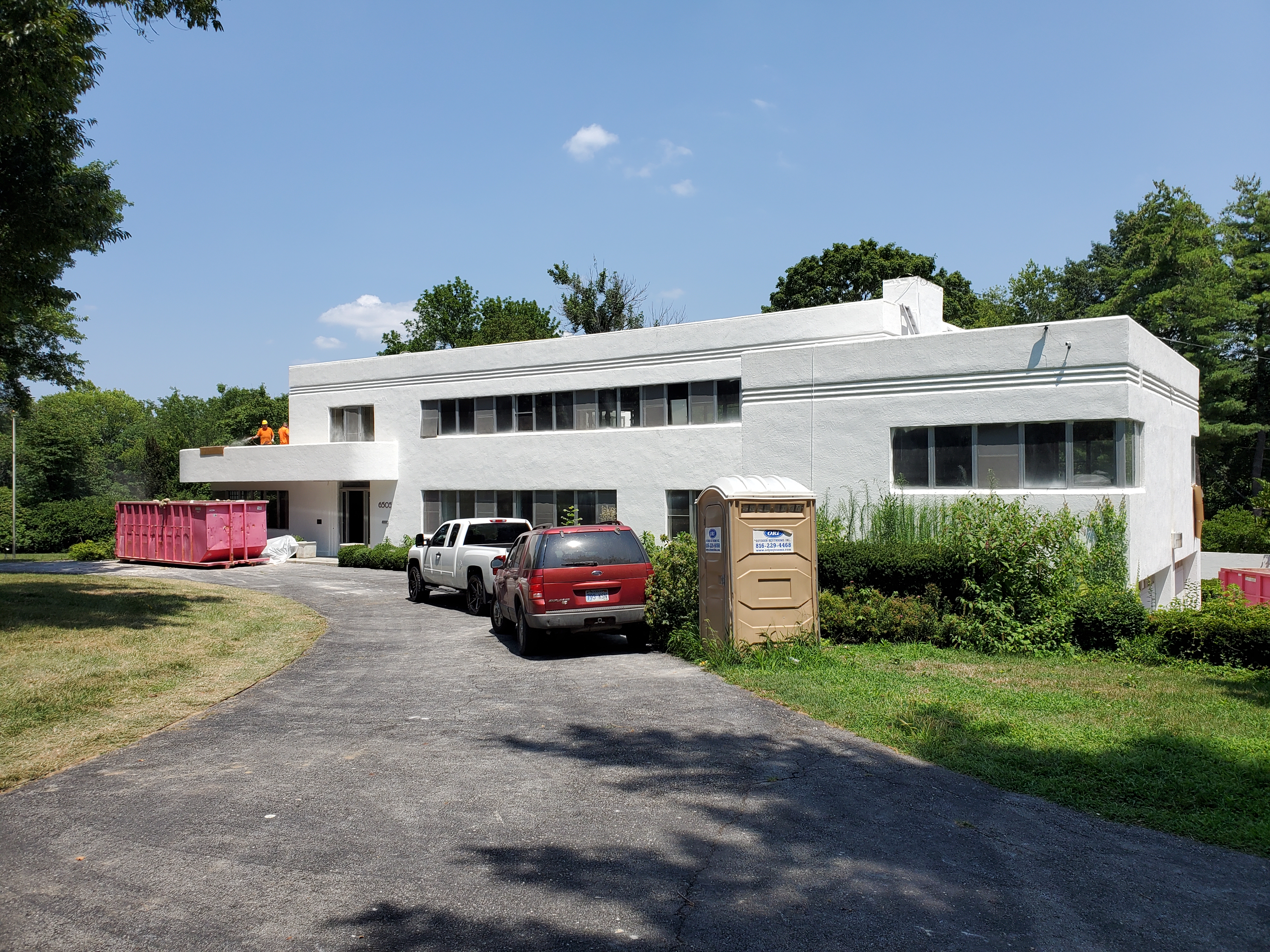
Just south of 64th Terrace, on the Missouri side, is what is known as “the Bixby House,” because it was commissioned by the late Walter E. Bixby Sr., who helped establish Kansas City Life. The house was the setting for some scenes from the 1990 movie “Mr. and Mrs. Bridge,” which starred Paul Newman and his wife Joanne Woodward. The house, which we in the neighborhood call “The Ship,” was for sale for more than a year before being purchased within the last few months. It has been gutted, and a remodeling is underway.
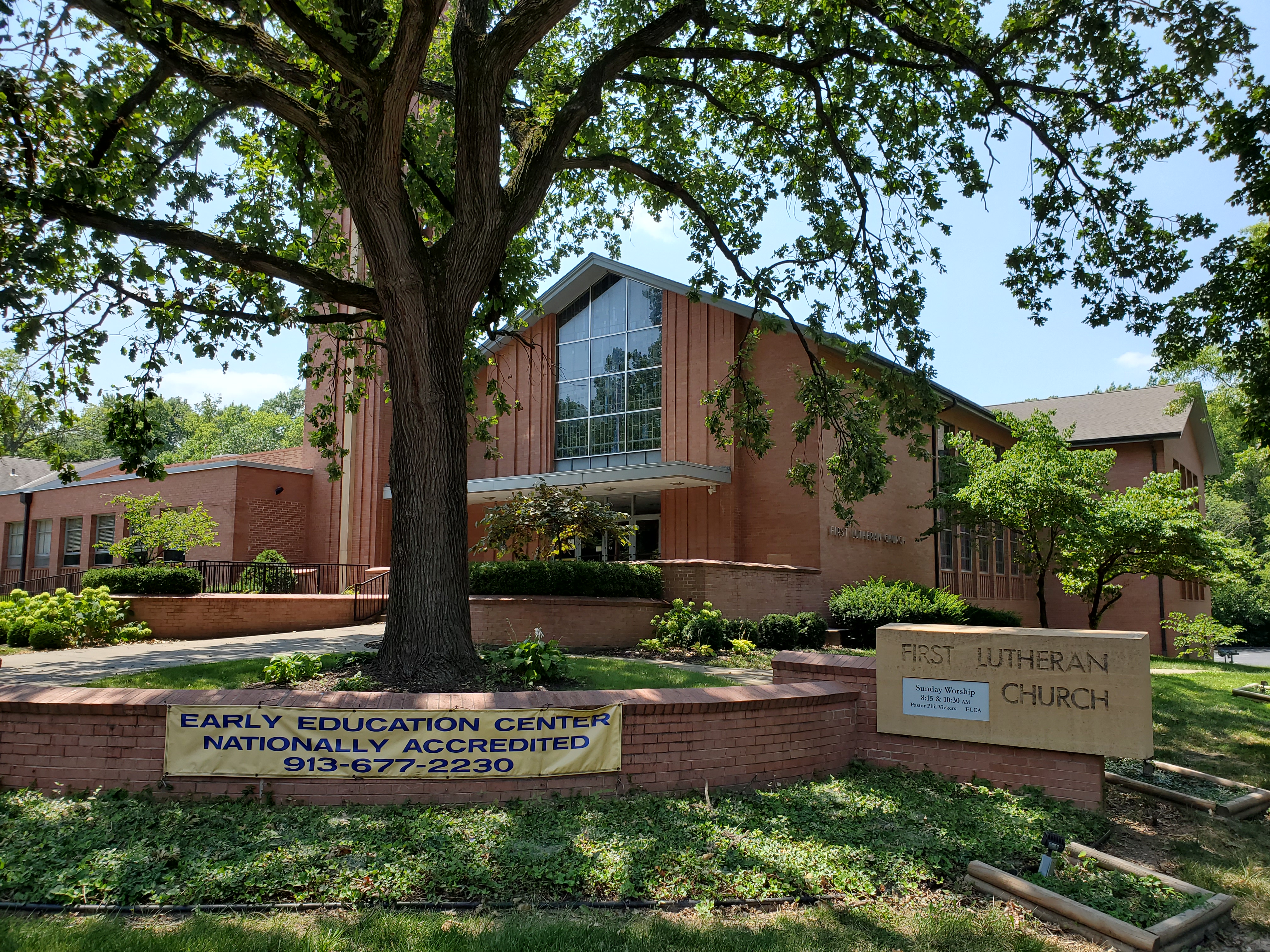
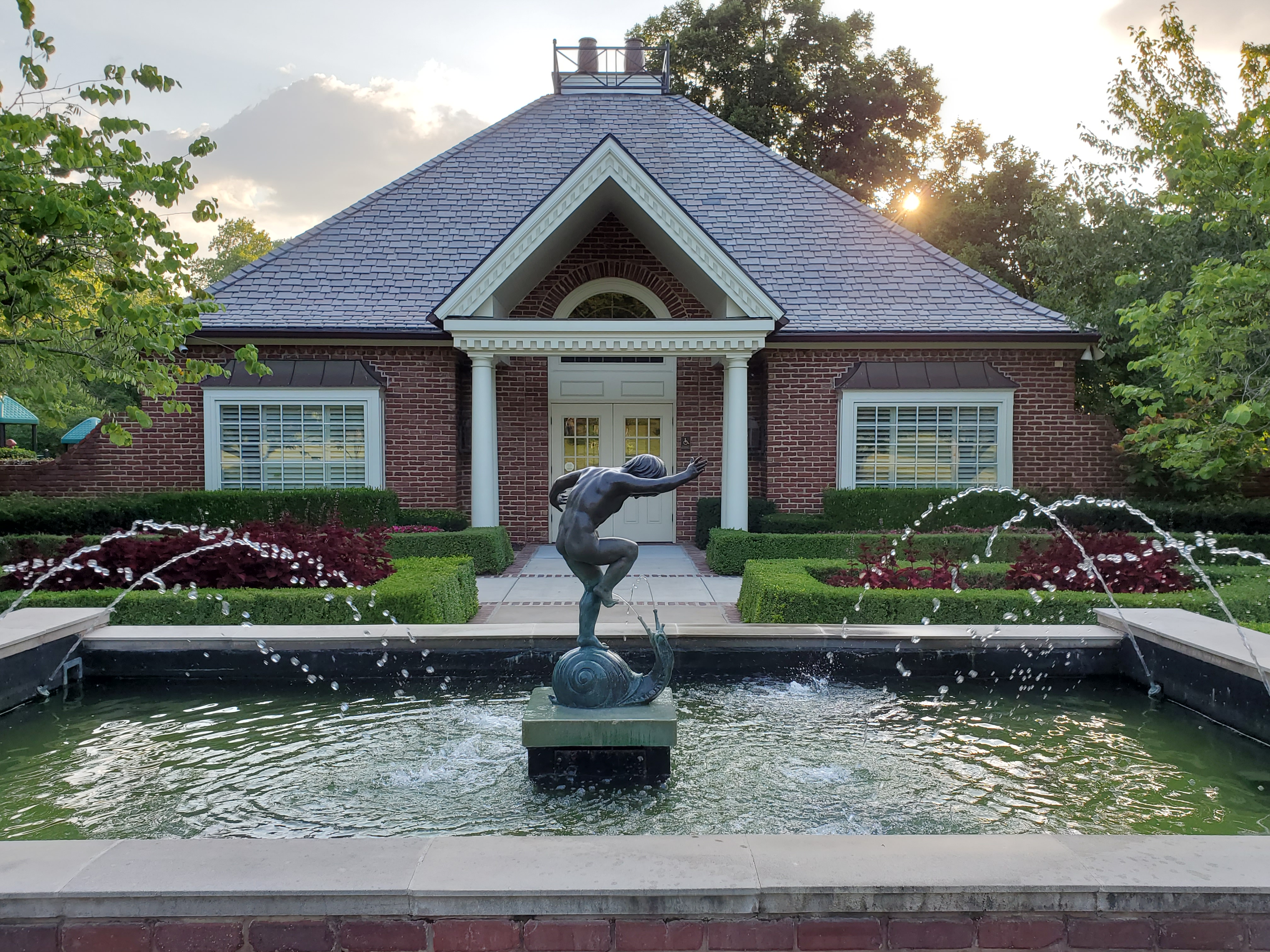
On the southwest corner of 63rd Terrace — in Mission Hills — is the First Lutheran Church.
North of the church, across 63rd Terrace, which becomes Tomahawk, is Mission Hills City Hall. (No identification sign needed; this is Mission Hills.)
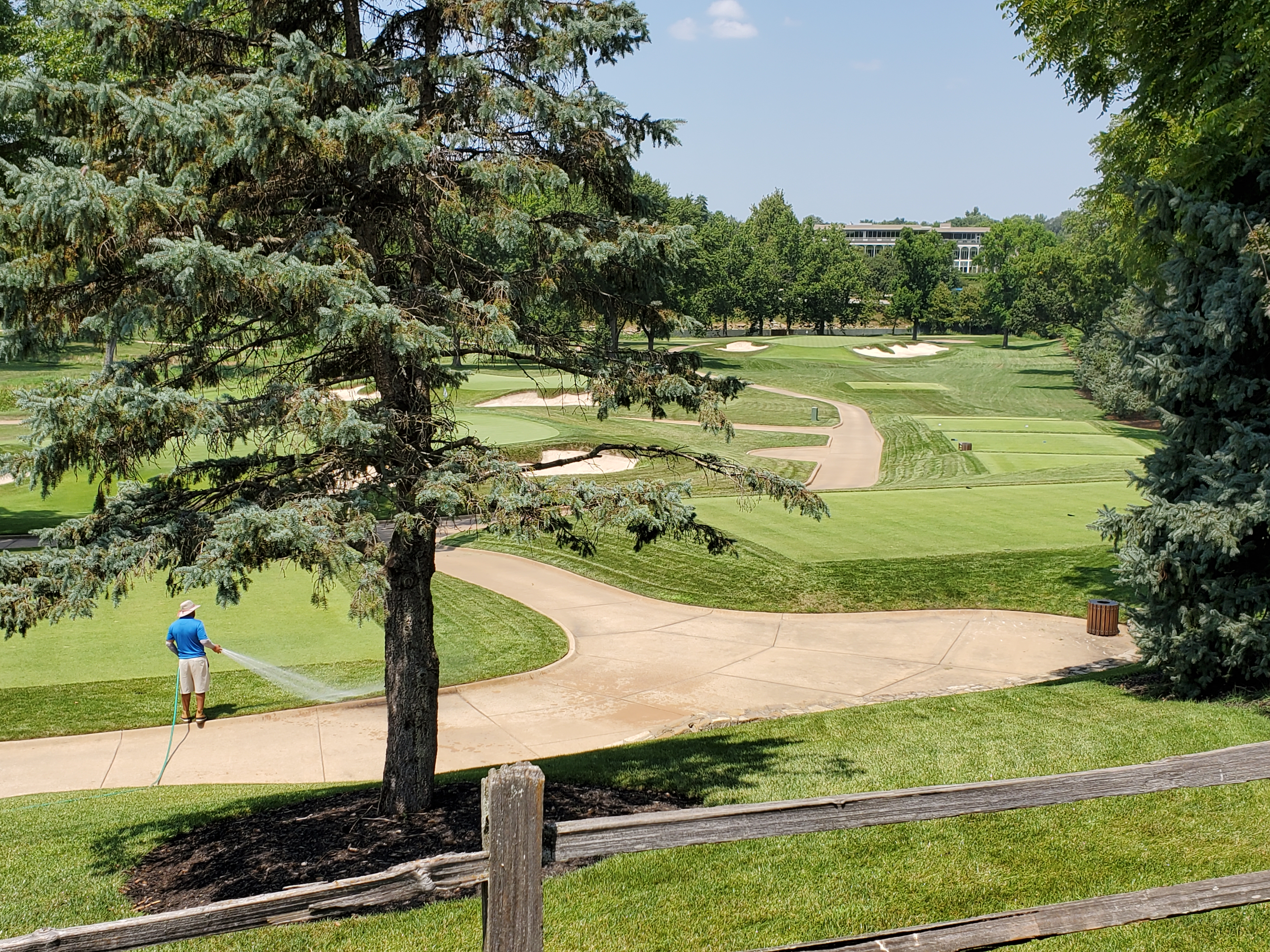
At Mission Drive, just south of Shawnee Mission Parkway, there are two private clubs. One is Mission Hills Country Club. Other than attending a golf tournament there once, this is as close as I ever get to the course.
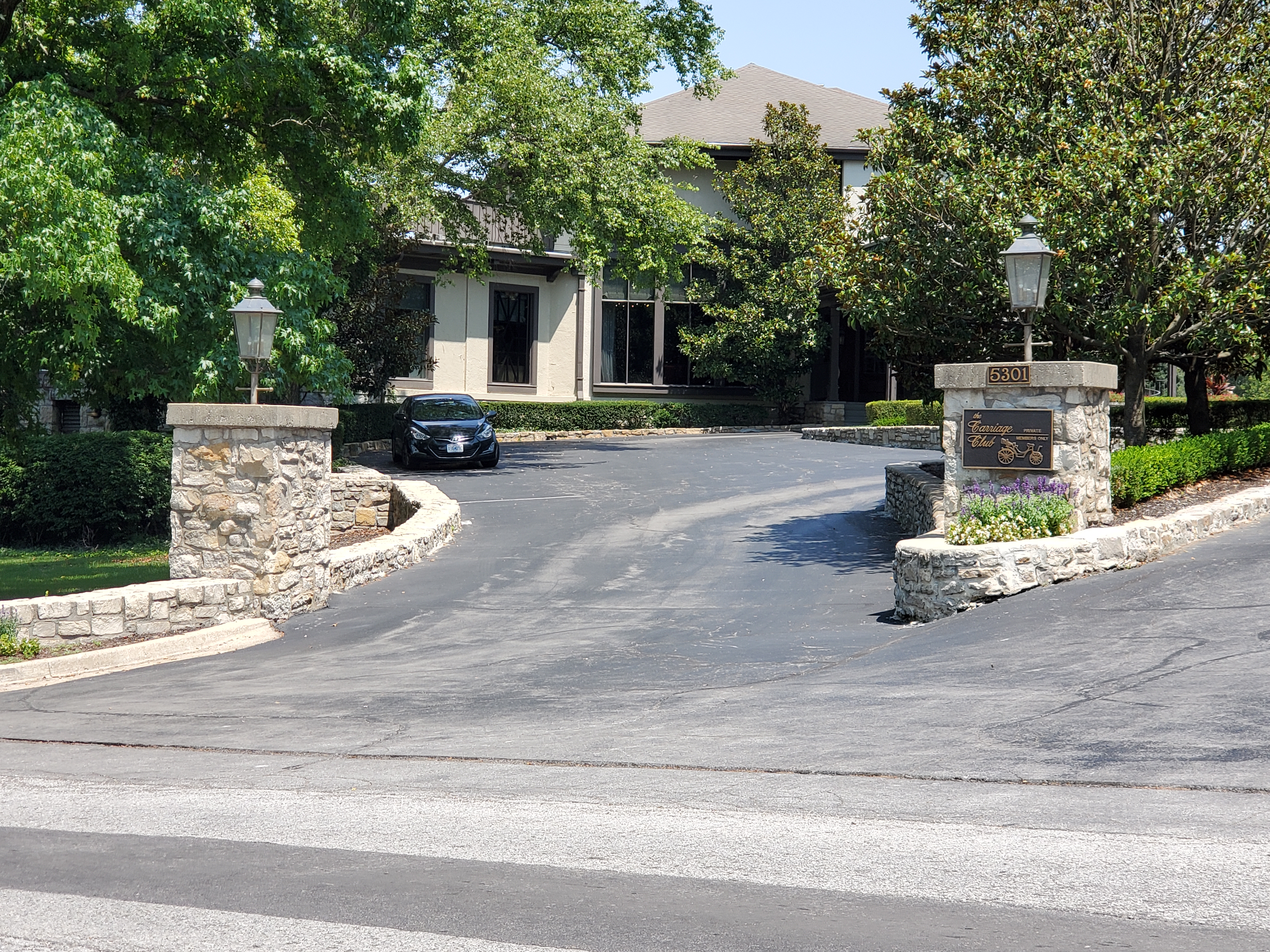
On the Missouri side is the Carriage Club. I’ve been to one or two events inside the clubhouse, and I once ice skated on their rink, but I’ve never played on their tennis courts or swum in their pool.
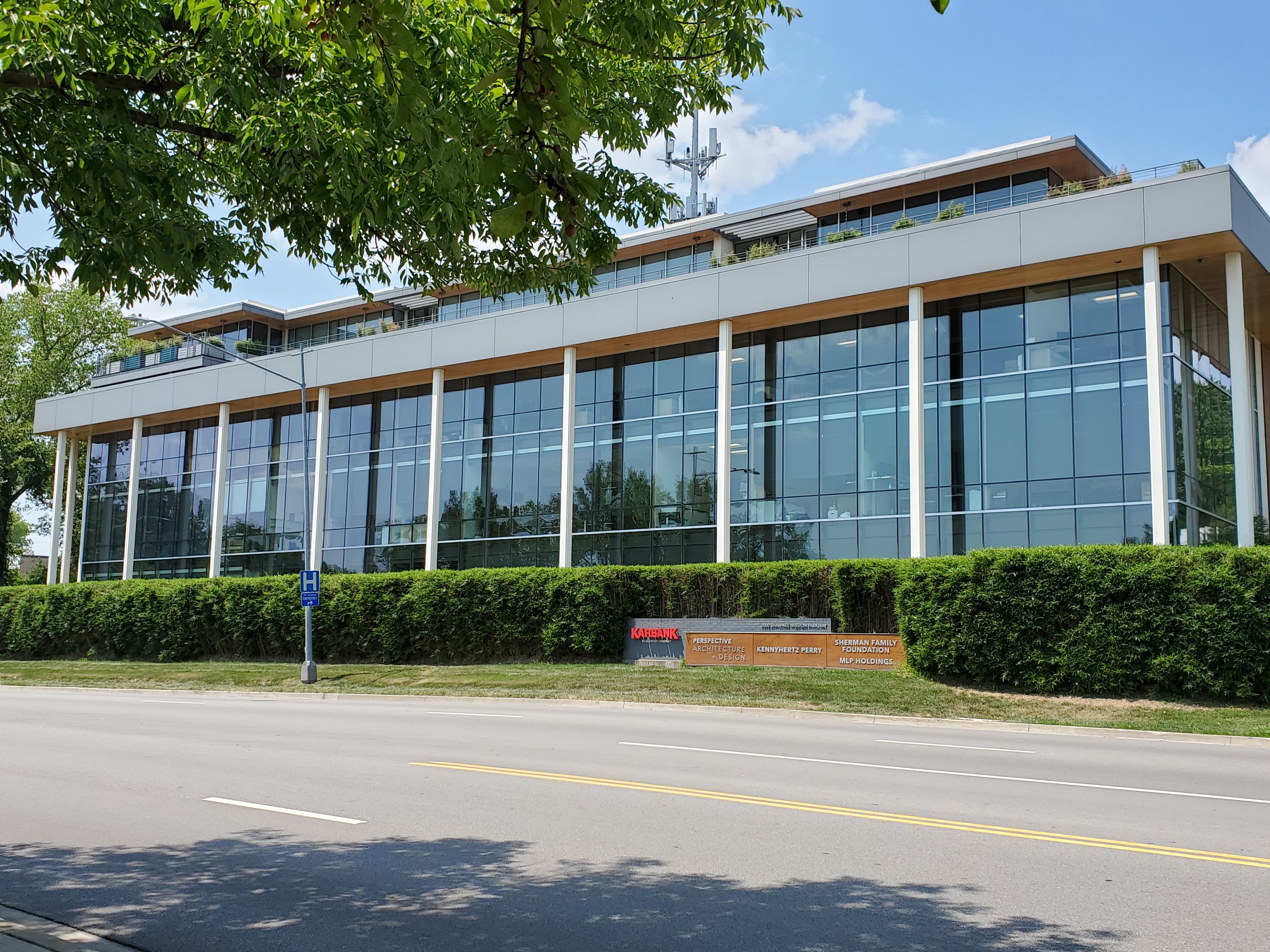
Shawnee Mission Parkway is the biggest intersection, by far, that this stretch of State Line Road crosses. On the southwest corner is the Mission Hills branch of Country Club Bank. Across from the bank is the “The Barney Building,” a.k.a., the Karbank Real Estate building, named for company founder Barney A. Karbank, who died in 2005.
On the northeast corner of Shawnee Mission Parkway is Pembroke Hill School, one of the most exclusive private schools in the KC area.

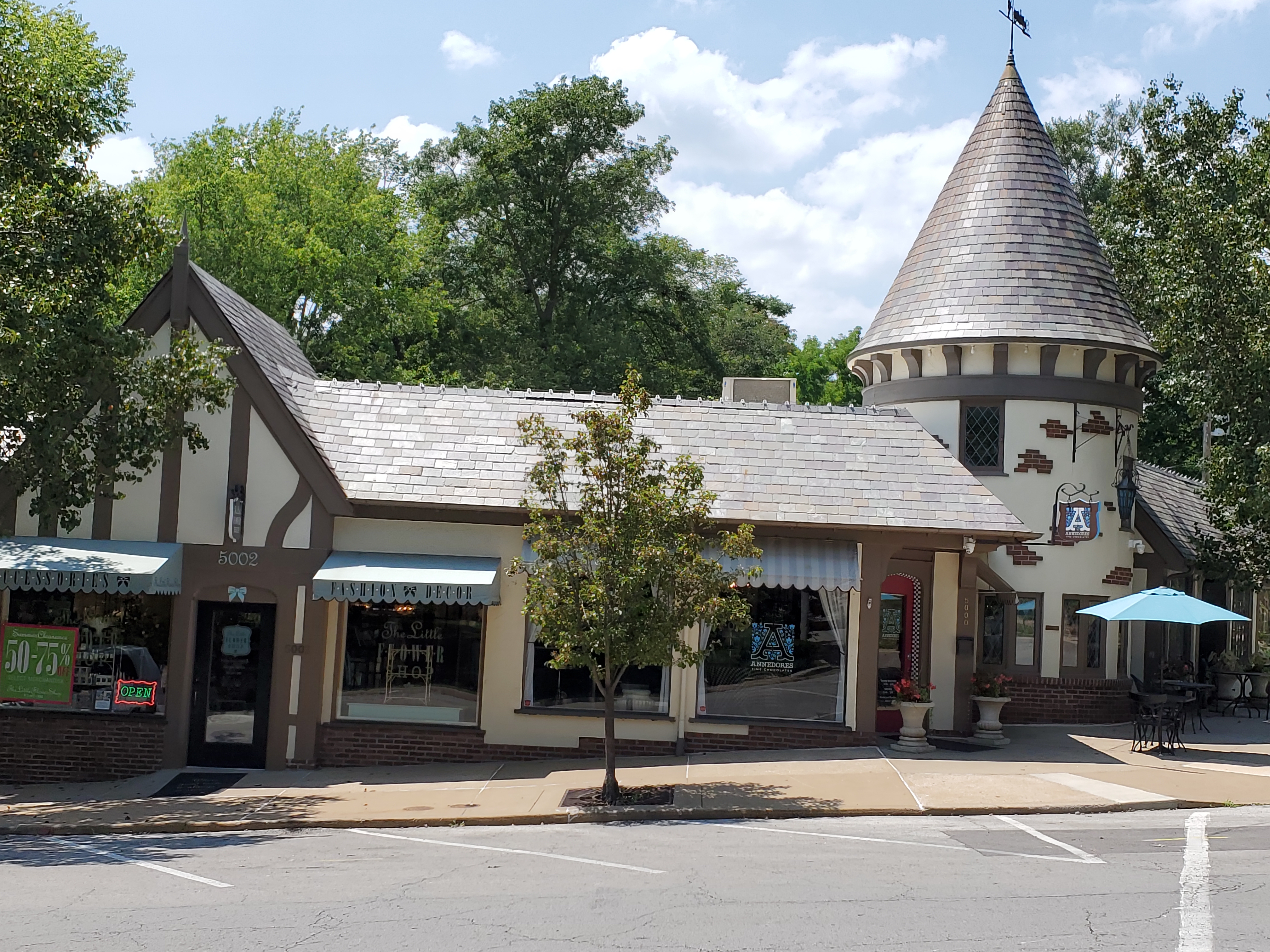
At 50th Street are the Westwood Hills shops, anchored, if you will, by Annedore’s Fine Chocolates (first awning at right). Another claim to fame for these shops is that George Brett’s wife Leslie once operated a business out of one of these store fronts.
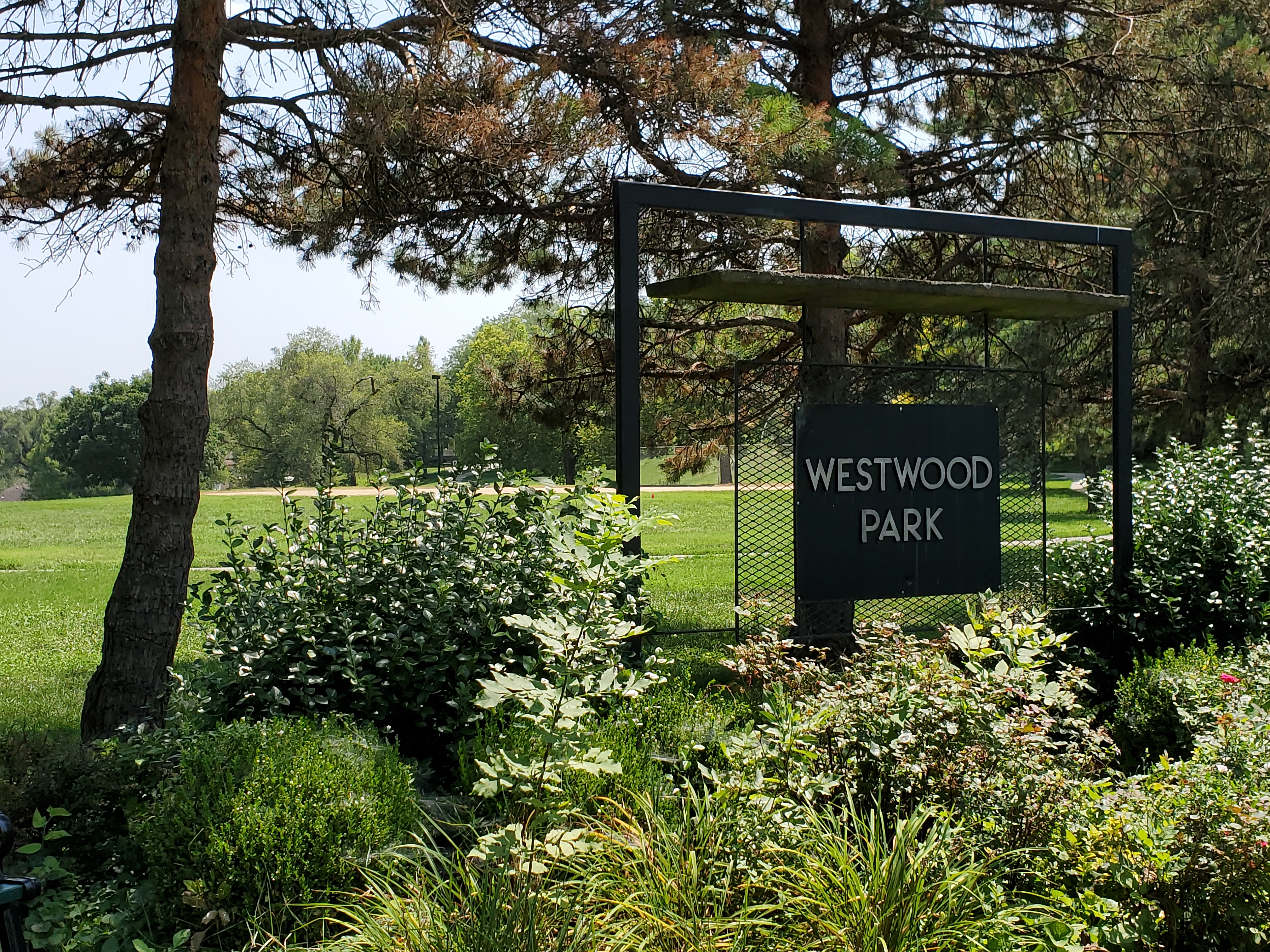
On the northeast corner of 47th Street is Westwood (MO) Park. On the Kansas side, 47th Place goes up a steep hill to the Woodside club, formerly Woodside Racquet Club. I played there many times years ago and was a member for a year or two.
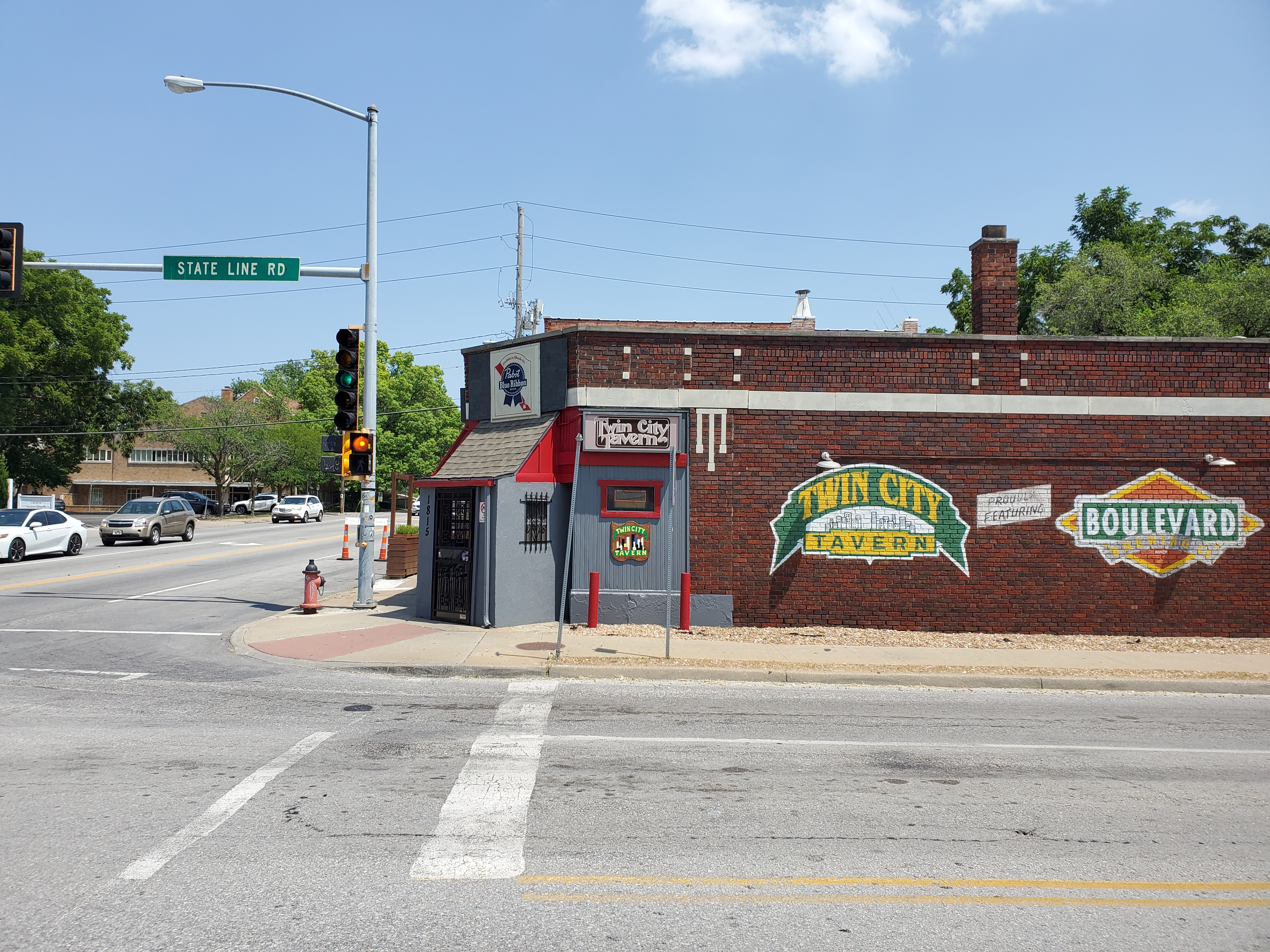
At 43rd Avenue, which picks up where Westport Road ends, is the Twin City Tavern, so named because it is in KCMO but borders KCK. As much time as I’ve spent on Westport Road, I’ve never been inside Twin City Tavern, at least not that I remember. For several years after I arrived in Kansas City, I drank a lot, and I cannot recall all my explorations during those years.
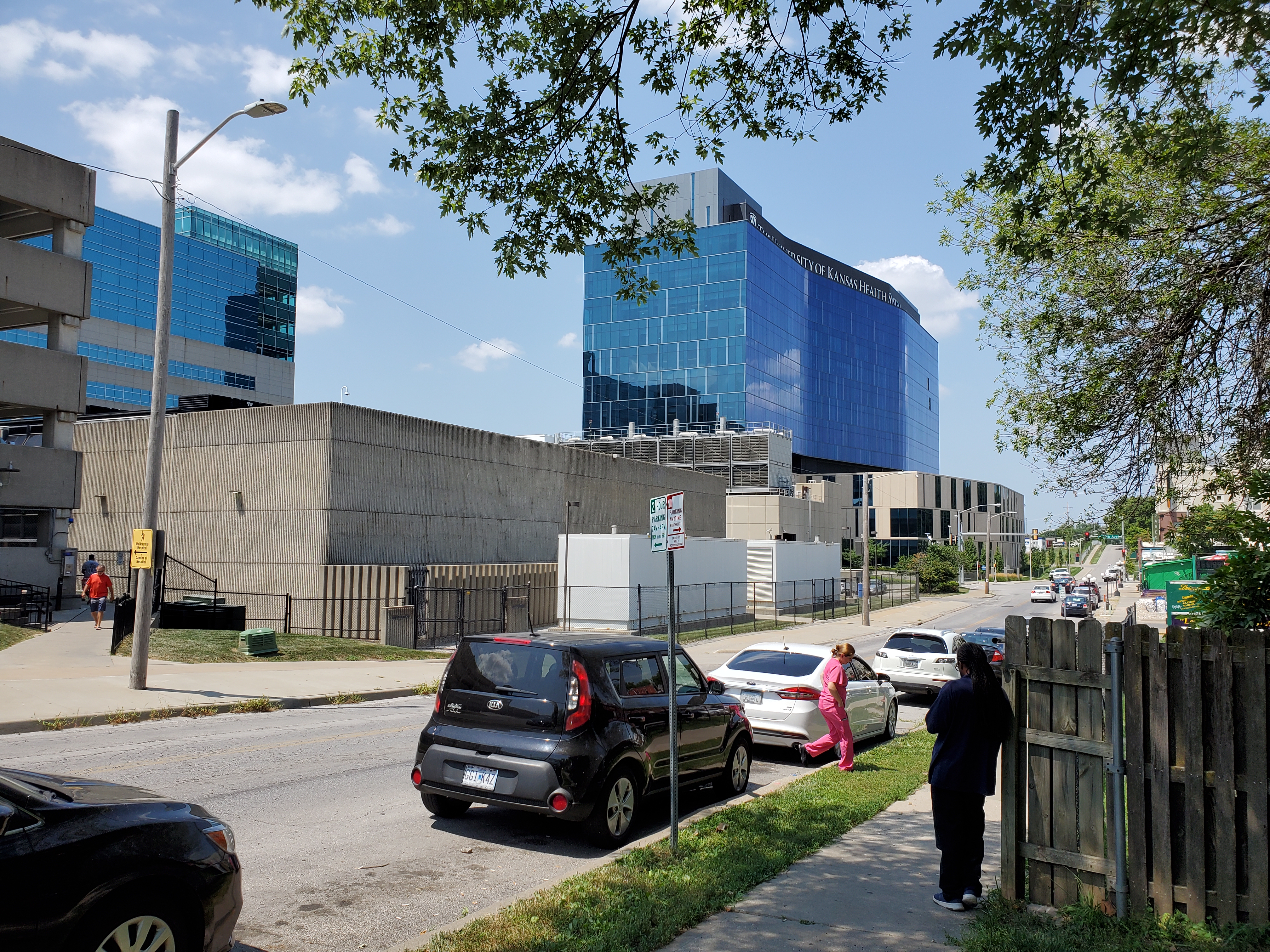
Approaching 39th Street (39th Avenue on the Kansas side), the University of Kansas Health System commands the ground and the sky. The “campus” continues north of 39th, enveloping the northwest corner of 39th Avenue and State Line Road. A block or so to the west, the campus snakes down the hill on Rainbow Boulevard. When I arrived in Kansas City in 1969, about all there was to KU Med Center was the main building on the southeast corner of 39th and Rainbow.
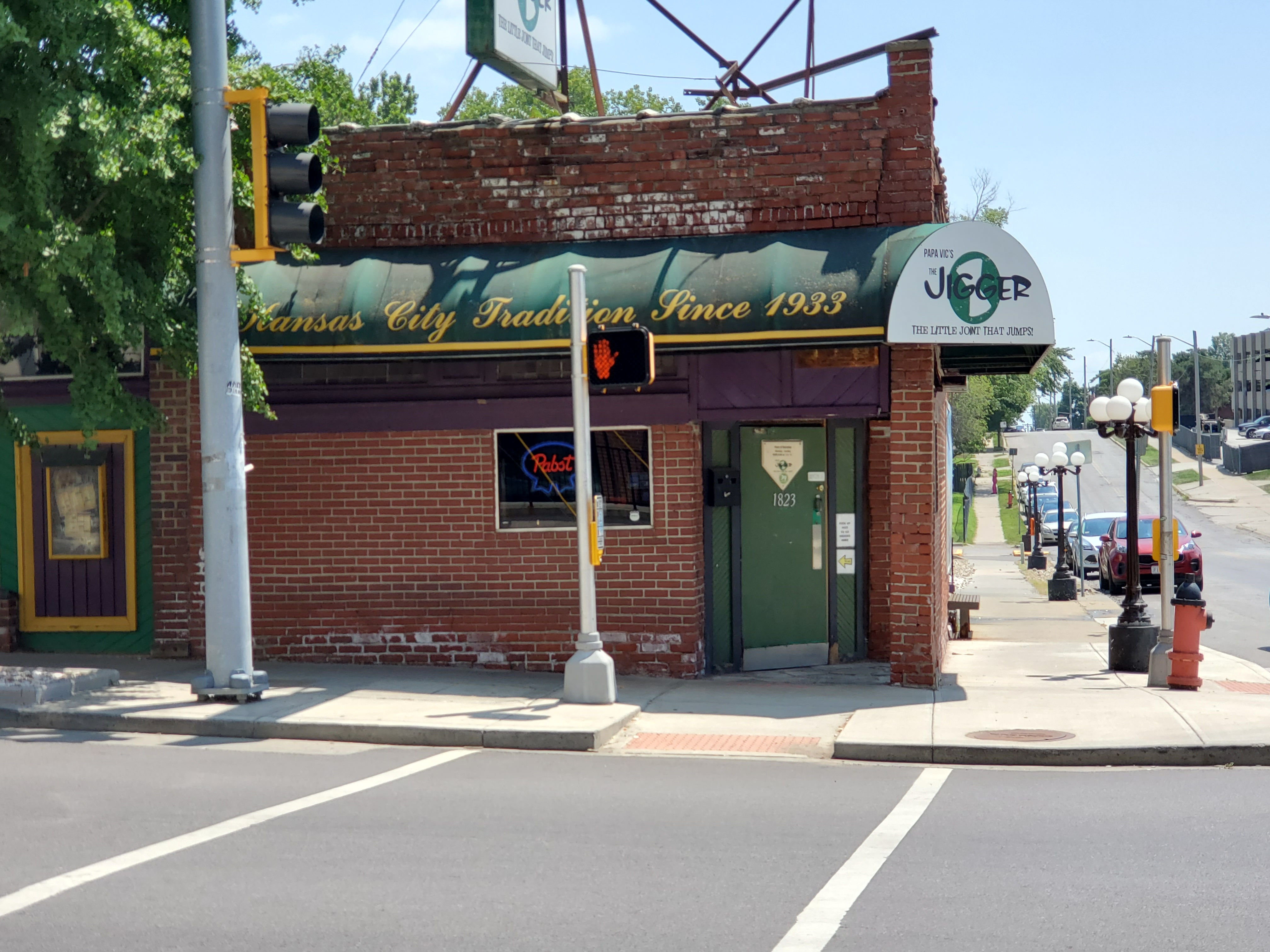
Now here’s one of my old haunts. When I first came to Kansas City, one of the first bars I went to was Jimmy’s Jigger, on the southeast corner of 39th Street. For years, all it consisted of was the bar and several booths on the westernmost wall (to the right of the front door). In the ’70s, it began expanding to the east, and a dance floor, a small stage and an upper bar were added. I remember meeting a very nice girl there — name was Nancy Gillespie — who was crazy about me and which I failed to appreciate until it was too late…The place is now called Papa Vic’s Jigger. For many of us, The Jigger it will always be.
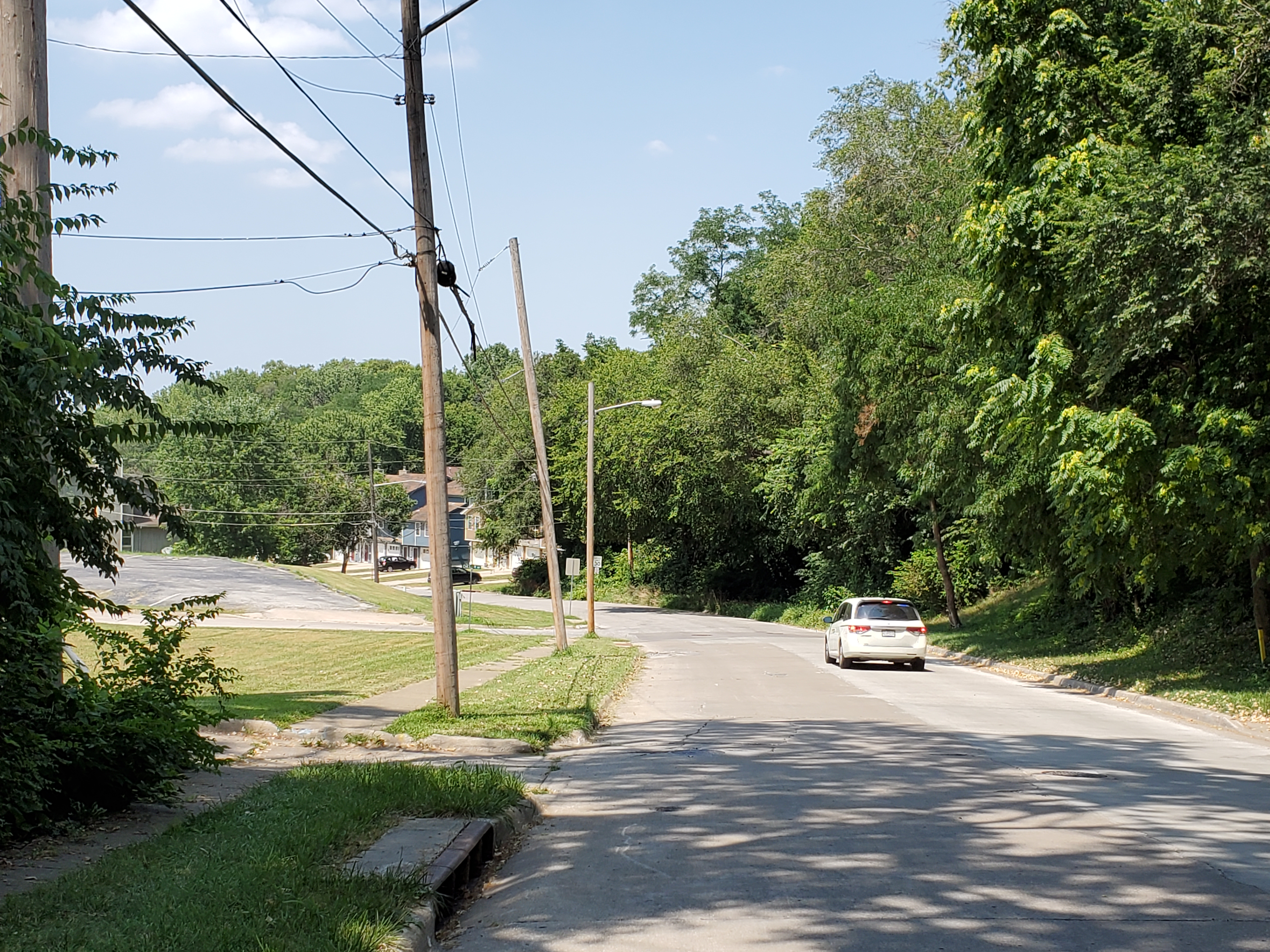
North of 39th, State Line Road starts petering out. All of a sudden, there’s far less traffic and not much to look at. Past 35th Terrace, the road curves to the left and becomes Eaton Street. (Eaton starts a few car lengths north of where the white vehicle is.) It’s an anticlimactic but fitting interruption point for a singular road.

A Republican judge in Cole County and our small-town, pea-brain state legislators got their comeuppance today.

In case you haven’t heard, the Missouri Supreme Court unanimously reversed a lower court decision nullifying a voter-approve Constitutional amendment expanding Medicaid to low-income residents.

The court’s 14-page decision said eligibility criteria for the expanded program “are valid and now in effect.”

That puts the state in a position to receive a 90-percent match from the federal government to help pay for the added coverage.

At this year’s legislative session, as most of you know, the Republican-and-hick-dominated Missouri General Assembly refused to authorize funds to finance the expansion, which voters approved by a 53-to-47 percent ratio…Refused to authorize funding, I might add, despite the state sitting on a $2 billion surplus when the 2020-2021 fiscal year ended June 30.

Despite the August 2020 voter mandate — and having plenty of money — Missouri has been one of only about a dozen states that had refused to expand Medicaid to low-income residents.

In addition to the General Assembly defying the clear will of the voters, our governor, “Farmer” Mike Parson did not stand up to the legislature but went along with the good-ol’-boys and withdrew an application with the federal government for the expanded program.

Then, after three women who would have been eligible for the more inclusive program sued, Parson and pals found a friend in Cole County Circuit Court Judge Jon Beetem, who ruled the ballot initiative was not “validly enacted” in the first place because the amendment did not include language that provided for funding of the expanded program.

Circuit Judge Jon Beetem

It will come as no surprise to you that Beetem is a Republican. He was first elected in 2006 and re-elected in 2012 and 2018.

But good-ol’-boy, winky-dinky politics only carried Parson and his legislative collaborators only so far.

Just as former President Donald Trump discovered when his absurd, stolen-election assertion reached the U.S. Supreme Court, Parson and Co. found their road blocked when they got to the highest level of the Missouri court system.

Missouri Supreme Court Chief Justice Paul C. Wilson of Columbia

…And in case your wondering, three judges on the high court were appointed by Democratic governors and four by Republican governors.

What we will likely see now is the General Assembly go to the bob-and-weave, game-delay defense. It seems almost certain, however, that whatever games the legislators and governor might play, they will get smacked down by the courts. (As a side note, it is unlikely the U.S. Supreme Court would take this case because it is a state-based constitutional issue, not federal.)

Before any more legislative legerdemain unfolds, however, the matter will go back to a chastened and humbled Jon Beetem, whose task it is to direct the Department of Social Services to start preparing to expand Medicaid coverage. About 275,000 additional Missouri adults will be eligible.

**

I read the St. Louis Post Dispatch’s coverage of the Supreme Court ruling and enjoyed some of the comments posted by more than 80 readers.

Here’s a sample:

Susan Nuetzel, Green Bay, WI: “As usual, the Republican-inspired ruling was not only obviously wrong, but cruel. Overruled.

Derek Plummer (no city listed): “Missouri Republican legislators’ sphincters just violently contracted at this news.”

Terry Knies, Balwin, MO: “Winning their little obstructionist victories is more important than serving the people.”

Susie Simmons, St. Louis County: “(T)hanks to the yahoos in Jeff City who felt they did not need to obey the will of the voters, we had to go through this exercise.

Bob Feld (no city listed): “No surprise here. Even a first-year law student would have known the ballot initiative was constitutional.”
From the way a City Councilwoman and the attorney for Casino KC gushed in a news story about a $40-million renovation to the former Isle of Capri Casino, you would think this was one of the most outstanding redevelopments projects Kansas City has seen in a long time.

In a CitySceneKC article, Jerry Riffel, attorney for Casino KC, was quoted as saying:

“This casino has a long history in Kansas City; it was one of the first in Missouri…It’s very clear based on the history of the casino and incredible progress we’ve made on the riverfront that this is a huge step forward.”

“This is a fabulous project,” chimed in Councilwoman Teresa Loar.

Even the story’s author, Kevin Collison, a friend and former colleague at The Star, contributed to the enthusiastic tone, writing, “The $40 million Casino KC upgrade comes at a time when the downtown riverfront has seen a boom in development after decades of dormancy.”

Well, this project might generate more “gaming taxes” for the city, and it might boost the casino’s overall “economic impact,” but let’s be clear about something: Behind the bells, whistles and flashing colors, the casino business is pretty grimy, and it preys, for the most part, on the addicts and those who can least afford to lose.

I am familiar with a regular casino goer. He’s a middle-aged African American man who assists the man who cuts my grass. The assistant goes by either of two first names, Charles or Larry. Patty and I just call him Charles-Larry.

The only other thing I know about him is that he goes to a casino (I believe Casino KC) every day. One day, when my lawn guy, Jimmie, arrived later than usual, he was without Charles-Larry. When I asked Jimmie where he was, Jimmie said, “Oh, this time of day he’s at his office” — meaning, of course, the casino.

Now, Jimmie says he doesn’t know if Charles-Larry wins or loses, but when you go to the casino every day, there’s only one way you can come out in the long term. So, here’s Charles-Larry, earning what must be a fairly low hourly salary, taking his money to the casino…every day.

And, of course, Charles-Larry is the typical casino patron.

An article in The Pitch back in the year 2000 captured the tenor of casinos, and the nature of the players, in a beautiful turn of phrase, calling them a “place to chain-smoke and salivate over spinning lemons.”

(Yes, Charles-Larry is a smoker.)

**

When I was at The Star, I was always proud that our editorial board took a strong stand against casino gambling and that on both the news and editorial sides we refused to use the euphemism “gaming.”

Sometimes the editorial board members were even rude to casino promoters who came in for meetings, which bothered me a bit, but the board’s hostility toward casino gambling proved to be prescient.

I remember vivdly the 1993 pitched battle for who would get the rights to build the first casino in Kansas City. It was a high-stakes competition, to be decided by what was then the Kansas City Port Authority (now PortKC).

On one side was Hilton Gaming Corp., which proposed building in a difficult-to-get-to location at the foot of Grand Boulevard, next to the steam plant. The front man for Hilton was a short guy with a French accent named Marc Rousseau. Rousseau famously told the Port Authority members Hilton would do or pay “whatever it takes” to win the rights to KC’s first casino.

On the other side was Boyd Gaming, which later changed its name to Sam’s Town Casino. Boyd’s front man was one of the Boyds, the family that founded and owned the company.

Both companies hired local p.r. firms and/or attorneys with strong political connections. The p.r. firm representing Boyd Gaming was called Sherman, Bergfalk, Goeltz. “SBG,” as it was known, had helped Emanuel Cleaver II get elected mayor in 1991, and one of the SBG principals, Peter Goeltz, was particularly close to Cleaver.

Because of the Cleaver connection, the betting odds were decidedly with Boyd.

Ah, but on the day of decision, no one in the audience knew the fix was in.

The meeting room — I don’t remember where it was — was packed, and there was no joking around or light banter; it was all business; the stakes were very high. Both sides made presentations to the five-member Port Authority, which was headed by a guy named Elbert Anderson. When it came time for the vote, two members voted for Boyd and two for Hilton, leaving Anderson to cast the deciding vote.

Most people in the room were holding their breath when Anderson said, “Hilton.”

And then, in the weeks and months that followed, it all fell apart. A criminal investigation was launched to try to determine if Hilton had bribed Anderson. Charges were never filed because law enforcement officials could not establish that a payoff actually took place, although there was a very suspicious $250,000 payment to a company with close ties to Anderson.

But Anderson didn’t slip the noose: He was later convicted of bribing a City Councilwoman, D. Jeanne Robinson, and a county legislator, the Reverend James Tindall, to steer business to his public relations firm, and he was sentenced to two years in prison.

After Anderson was released from prison, he worked for a while as manager of the Peachtree Buffet restaurant when it had a location at The Landing, 63rd and Troost.

**

There were two other offshoots to this story.

One is that Anderson helped the feds in their bribery investigation, and Hilton ended up surrendering its state gaming license and paying $650,000 in fines.

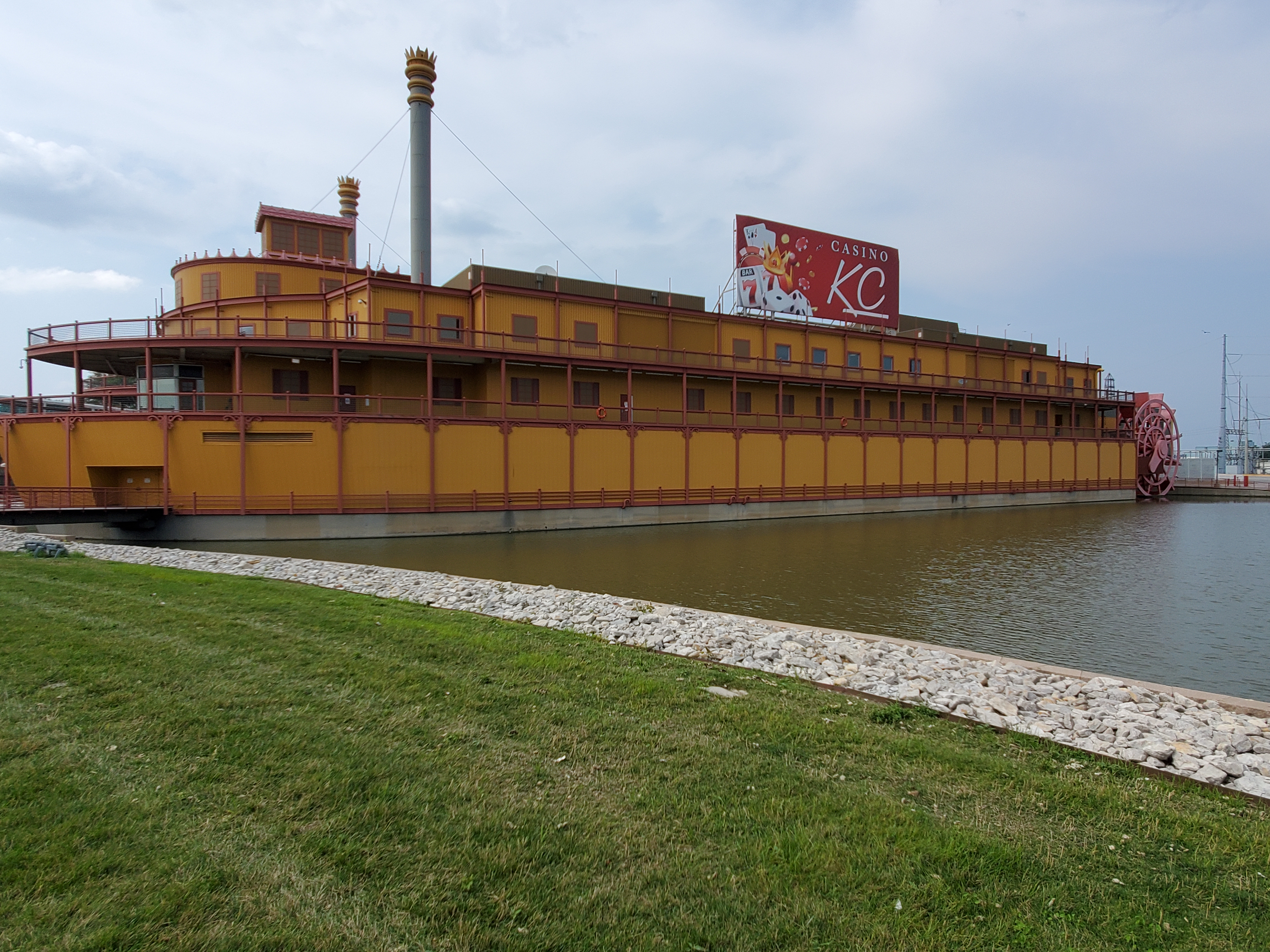
The other is that not long after winning the casino rights, Hilton switched gears and decided the foot of Grand Boulevard was a bad location. So, when the Hilton Flamingo casino opened in 1996, it was at the site Boyd had proposed, below the Paseo Bridge. In 2000, the Hilton Flamingo became the Isle of Capri, and now it’s Casino KC, about to get a $40 million facelift.

No problem for Bally, the new owner of Casino KC. It probably will get that money back in a few years…at the expense of the thousands of Charles-Larry’s out there.

And Jerry Riffel was right about one thing: Casino KC sure does have “a long history in Kansas City.”

Outside the casino entrance this afternoon