Feeds:
Posts
Comments

Less than two weeks ago, Mayor Quinton Lucas took a knee, along with Police Chief Rick Smith, in memory of George Floyd.

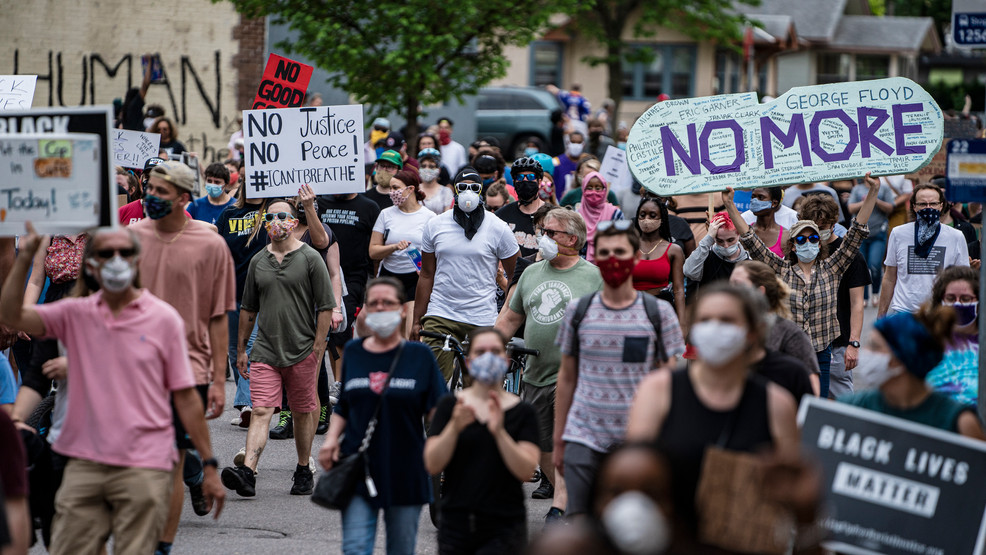
A week ago today, Lucas told a big crowd of protestors at City Hall he was on their side and supported their list of demands, including local control of KCPD.

Wednesday, in a “Dear-Members-of-the-Kansas-City-Police-Department” letter, he praised officers “for the tough work you perform each day.”

“I thank you for your work, your patience in trying times and your commitment to our city,” he said.

When I first read the letter, hurriedly, I thought it was a love letter, that Lucas was completely capitulating to the police union, which supported him in last year’s mayoral race — just as he capitulated recently to the fire fighters’ union on its quarter-cent sales-tax proposal. (The fire union also supported him over opponent Jolie Justus last year.)

But as I read the two-page letter more closely last night, I saw hints that Lucas might be paving the way to pick up the leadership mantle in pushing for local control. Intertwined with his praise for police officers (and he seemed to be talking directly to them), he alluded four times to the possibility of substantive change.

Lucas at last Friday’s protest outside City Hall (Dan Cohen/KSHB TV)

Here are three examples; read these words closely…

:: I also want to make clear that as we evaluate policies in the future, any critiques I share — and I would hope other electeds may voice — relate not to the tough work you perform each day, but instead to political choices made by myself and my predecessors in some cases long before you swore an oath.

:: Those of us in politics and leadership have much work ahead to address public sentiment, as is our job in this system.

:: We will discuss policing a great deal over the months and years ahead.

When Lucas became mayor last August, he had a reputation for equivocating and being unduly influenced by the last people he spoke to on controversial issues.

In office for less than a year now, he has yet to prove he has the guts to put the public interest above political considerations.

For example, during the campaign, he said he would take a tougher approach on tax incentives and that he did not favor any new taxes.

But four months after being sworn in, he caved to developers and voted in favor of a controversial, $35-million incentive package to help Waddell & Reed to move more than 900 jobs to a new building at 14th and Baltimore.

Then, two weeks ago, he came out in favor the the Fire Department sales-tax increase, one of the most brazen tax ambushes any City Council has pulled off in recent history. (The ordinance authorizing the election was proposed one Thursday and passed the next, with just one public hearing that few members of the public knew about.)

…So, here we are again, and this time with the thorniest issue that has surfaced in the Lucas administration: how to get a go-it-alone police department out from under state control.

As I’ve said several times, local control can only be achieved in one of three ways: 1) a successful, statewide initiative petition followed by a statewide vote; 2) a state law authorizing a statewide vote; 3) a state law ceding control to the city.

Succeeding on any of those options is going to require, among other things, an unrelenting push by the mayor, strident insistence from organizations like Freedom Inc. and the Urban League of Kansas City, and a vigorous editorial campaign by The Kansas City Star.

It will meet with stiff opposition from several vested interests: the Republican- and rural-dominated General Assembly; Gov. “Farmer Mike” Parson; the Fraternal Order of Police, Lodge 99; probably Local 42 of the fire fighters union, which often runs interference for its law enforcement counterpart; and possibly the Board of Police Commissioners, appointed by the governor.

**

Is Quinton Lucas up to this challenge? Does he have the intestinal fortitude to stand up to the two most important unions that supported him? In his letter to police officers, is he sticking a finger up to see how the wind is blowing, or is he laying the groundwork for the most important initiative he could take as long as he is mayor?

Those are open and nagging questions. I think he is certainly the best person to have in the mayor’s office now, with race relations and racial injustice at the hands of law enforcement having thrust itself head, shoulders and chest above all other issues.

Yet Lucas has a lot to prove, and not just to me.

Another skeptic is my friend Clinton Adams Jr., perhaps the shrewdest and most unblinking City Hall analyst around.
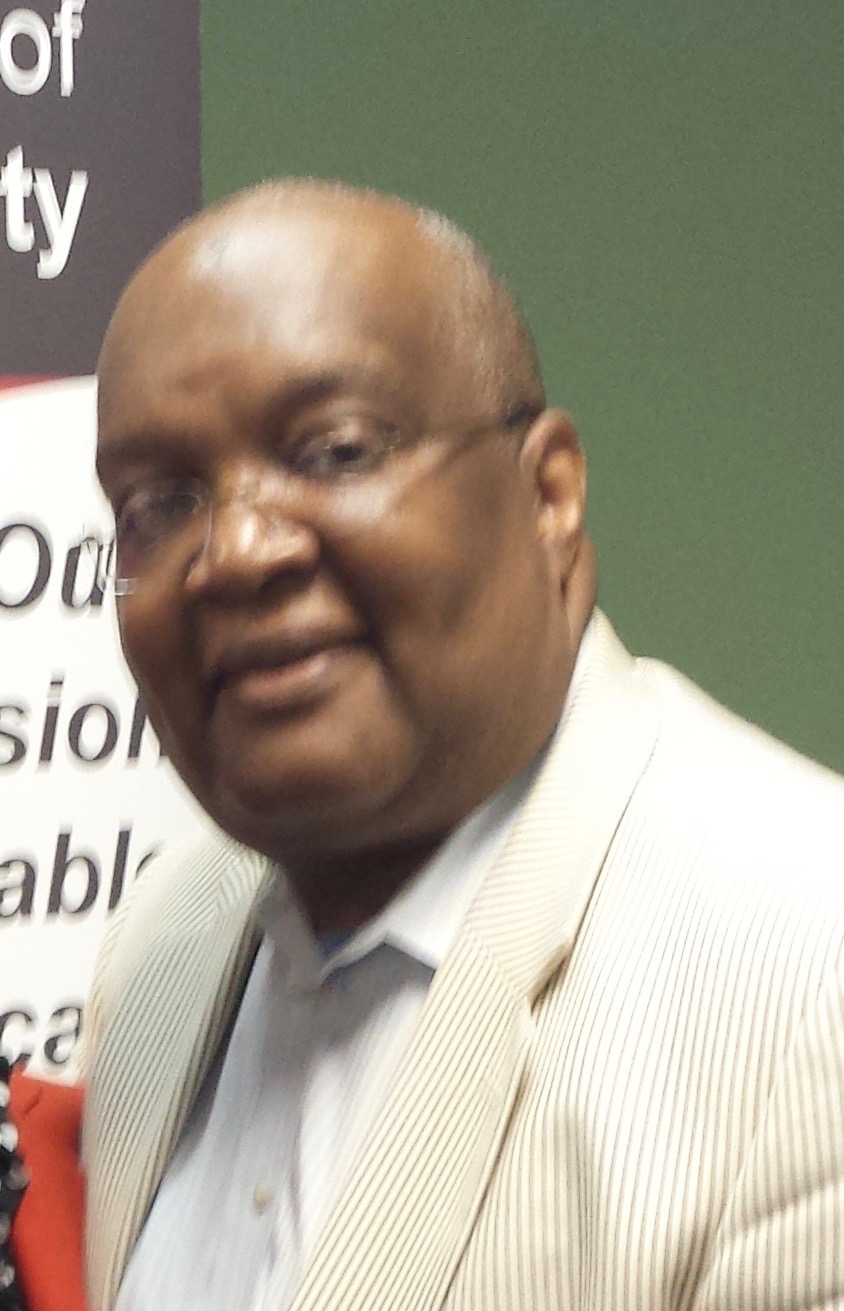
Clinton Adams Jr.

In a series of text exchanges yesterday, Adams called Lucas “feckless” and “duplicitous” and said that while he was “a better option than Jolie (Justus), he’s no Kay Barnes or Emanuel Cleaver.

Adams, former attorney for Freedom Inc., went on to say…

Some people find the pandering to police offensive. He’s waffling on local control. The F.O.P. supported him because privately he is opposed or will not fight for it…He can’t be in both camps. Rank and file officers (who comprise the largest of two police unions) are the ones who abuse and brutalize; who harass and stop for driving while black; who use excessive force. It’s generally not commanders.

Now, there’s a tough and clear-eyed assessment; there’s a challenge laid down.

On June 2, in the wake of Lucas’ role as a peacemaker in the protests, a Kansas City Star editorial was headlined, “KC Mayor Quinton Lucas has met this moment. Will Police Chief Rick Smith join him there?”

I think a bigger question by far is, “Does Quinton Lucas have the heart to lead an all-out battle against the General Assembly and the governor over control the Kansas City Police Department?”

This is his best opportunity to take a stand on behalf of the public at the risk of losing the support of the F.O.P. and maybe Local 42. He’s less than a year into his first term. If he fails, all could be forgiven by 2023. If he wins, he never loses an election in Kansas City or Jackson County, and he could even go on to compete for a statewide office.
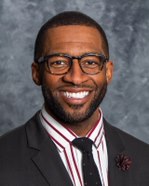
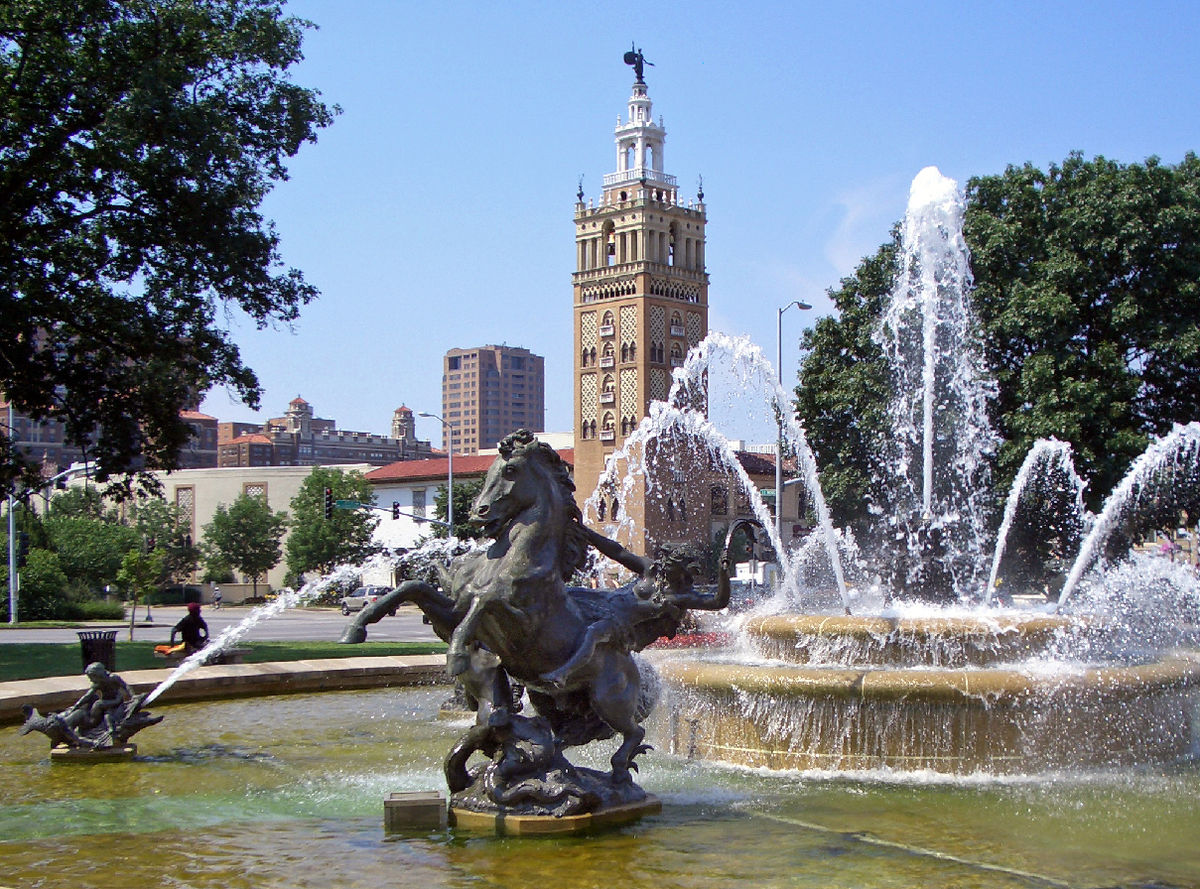
In a move sure to spark controversy, Kansas City parks board member Chris Goode today formally proposed removing the name of Kansas City’s most prominent real estate and neighborhood developer from the city’s most visited fountain and the adjacent parkway.

If the five-member Board of Parks and Recreation Commissioners should give its approval after a process that will take at least 30 days, the J.C. Nichols Memorial Fountain and J.C. Nichols Parkway would be renamed Dream Fountain and Dr. Martin Luther King Jr. Parkway.

Chris Goode

Goode submitted his proposal to the other board members in a memo last Thursday, and he made it official at today’s park board meeting, which was conducted via video conference.

(Members of the public can view the video meetings on Skype, and they have an opportunity to speak toward the end of each meeting. I was among those listening in, but neither I nor any other member of the public spoke during the public comments segment.)

Goode cited the recent protests in the area of Mill Creek Park and the Nichols Fountain — at the south end of the park — as a motivating factor behind his proposal.

In the memo, he said, “Having seen our beloved Mill Creek Park become the backdrop for the reactionary protests and visual displays of pain and frustration, I…find myself compelled to act.”

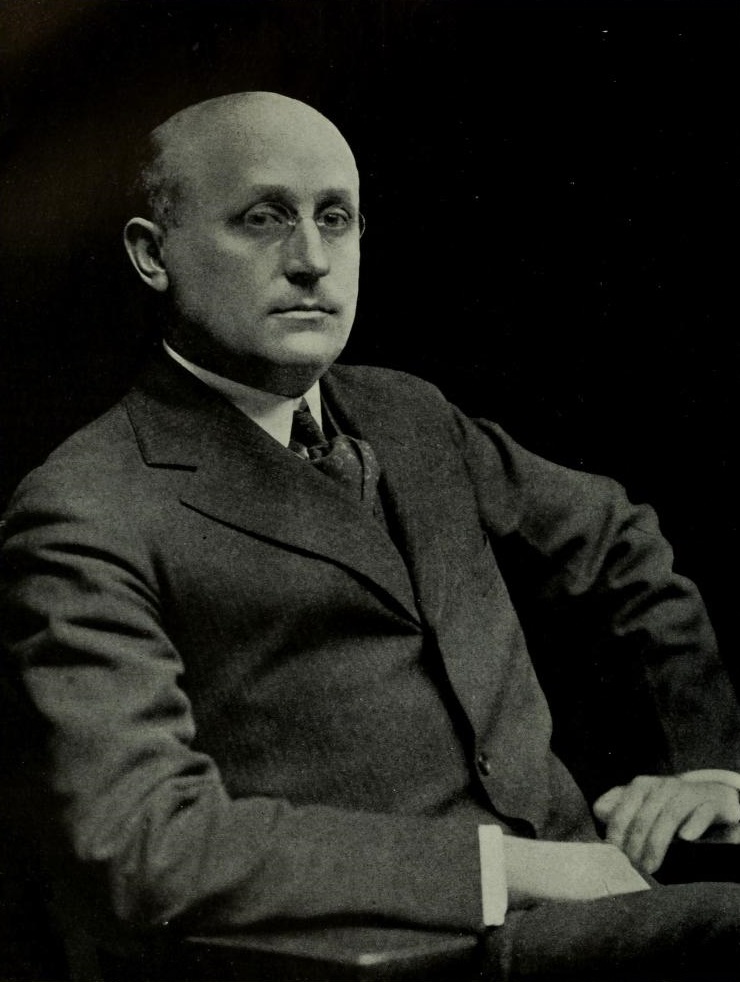
Jesse Clyde Nichols

He also lashed out at the legendary J.C. Nichols, who developed the famed Country Club Plaza and many neighborhoods south of the Plaza on both sides of the state line but whose reputation was badly stained by racially and ethnically restrictive covenants Nichols insisted be included in the deed restrictions of the many neighborhoods his company developed.

At today’s meeting, Goode said: “We find ourselseves celebrating the legacy of a man who didn’t stand for all people. He spoke for a very singular group of people, and he created broadspread division.”

A 1993 Missouri law banned the offensive covenants, but the language nevertheless remained in the deed restrictions of many neighborhood associations years afterward. In 2006, after a Kansas City Star expose, the General Assembly passed a bill that became law calling for homeowners associations “to delete violative restrictive covenants.”

And yet, some of the prohibited language undoubtedly remains in some neighborhood deed restrictions, albeit without legitimacy.

The Plaza, modeled after Seville, Spain, opened for business in 1923. The 80-foot-wide Nichols fountain was dedicated in 1960, 10 years after J.C. Nichols died. At some point, the adjacent parkway, then named Mill Creek Parkway, was renamed to honor Nichols.

The parkway extends four long blocks, from 47th Street to 43rd Street, where it becomes Broadway.

Goode’s proposal set in motion an established board process providing for two public hearings within the next 30 days. Under current policy, the board could not take final action during the review period.

A time and place for the first public hearing was not set today, but park board President Jack Holland asked parks department staff to make recommendations within about a week.

Goode, who owns the restaurant Ruby Jean’s Juicery, urged the board to take action as soon as possible. He said that “every second” the board allows the Nichols name to adorn the fountain and the parkway, “we are standing for racism as a body, as a board.”

“We need to get it going now,” Goode said. “The longer we wait, the more pain we allow…the more blood we allow to flow through our city’s borders.”

None of the other four park board members indicated whether they favored or opposed Goode’s proposal, but three members said it was important to hold hearings and give the public plenty of opportunity to weigh in. One board member, former City Councilman Scott Wagner, noted that the timing of Goode’s proposal was excellent.

Scott Wagner

“Now more than ever, symbols are important,” Wagner said, “and names tell a story as to what is important to a community and what is not.”

**

Goode, Wagner, Holland and former Councilwoman Mary Williams-Neal were appointed park commissioners last year by Mayor Quinton Lucas. Lucas also reappointed Northland resident David Mecklenburg, whom former Mayor Sly James had appointed.

The board meets every other Tuesday at 2 p.m., but it can also schedule special meetings.

Correction: When first publishing, I incorrectly reported that Commissioner Goode was proposing renaming the Nichols Fountain “Dr. Martin Luther King Jr. Fountain.” It would be “Dream Fountain.”

I’m just as mad about George Floyd’s murder as anyone, but I’m also realistic about the way our court system works.

So, I hope we don’t have more gnashing of teeth and bleeding in the streets after some of the former Minneapolis officers charged in his death are not convicted of the most severe charges against them.

We’ve all seen, maddeningly, juries acquit one officer after another of criminal wrongdoing after facing criminal charges in the deaths of black people…even in cases when it looked guilt was obvious.

Let’s consider, then, each of the defendants in the Floyd case and what could transpire.

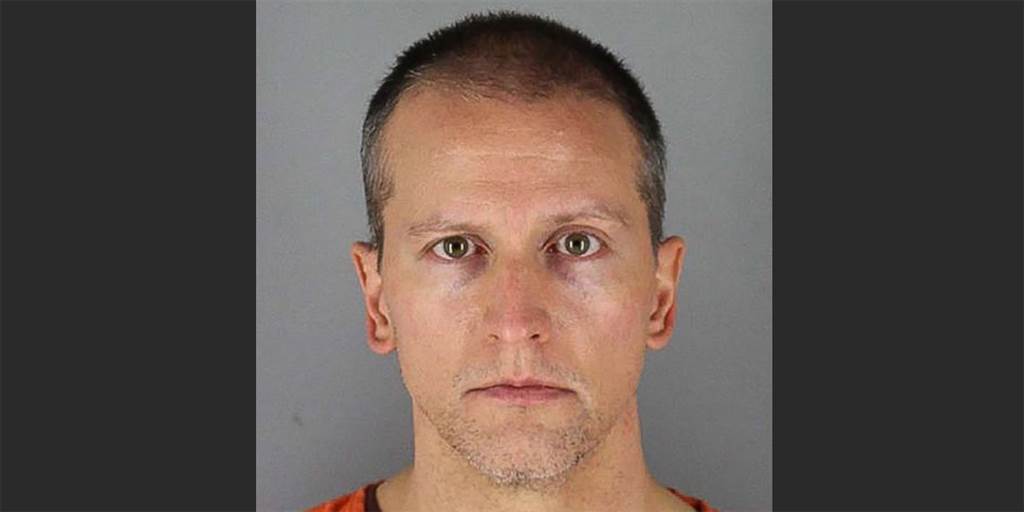
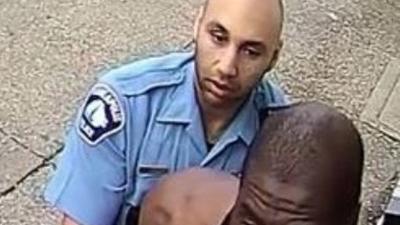
Derek Chauvin, 44

I believe we will see Chauvin, one of the most revolting people to ever wear a law enforcement badge, convicted of one of the two most serious charges against him: second-degree murder without intent or third-degree murder.

He had 19 years on the police force and was by far the senior officer on the scene that fateful day. He faced 17 complaints as an officer.

…Chances are Chauvin will seek a plea deal because, after all, what kind of defense can his attorney put up? It’s all there on the video, and there’s nothing that makes it look like anything but murder. His only chance to avoid spending the next 30 to 40 years in prison would seem to be pleading to one of the two big charges, accepting full responsibility, exhibiting genuine remorse (including a vale of tears) and hoping the judge will give him a sentence in the 20- to 25-year range. If he insists on a jury trial, he’s going away for either the rest of his life or most of it.

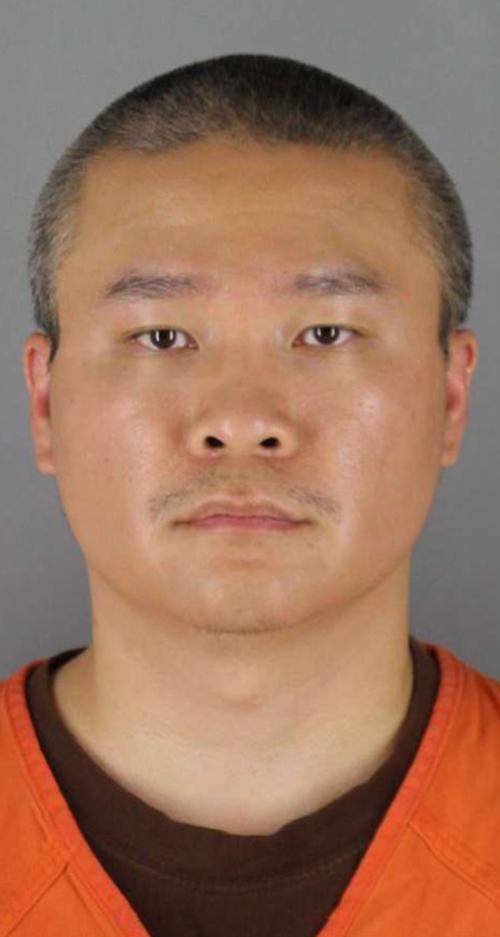
Tou Thao, 34

Thao was Chauvin’s partner and the second most experienced officer of the four.

He dropped out of college in about 2008 and soon after caught on as a community service officer for the Minneapolis department before being laid off for budgetary reasons in December 2009, three days after becoming a full-fledged officer. He was rehired in 2012. Over his career, Thao has faced at least six complaints.

He and the third and fourth officers are charged with aiding and abetting second-degree murder and aiding and abetting second-degree manslaughter.

Of the three officers who were at the scene, Thao, it seems to me, is the one who would have been most likely to take aggressive action to stop Chauvin. And judging from Chauvin’s impassive demeanor and insistence on keeping his knee on Floyd’s neck, it would have taken aggressive action, like shoving Chauvin to the ground.

Only Thao knows why he didn’t do that, but you know he’s wishing with all his heart he’d done exactly that. How many times do you think he’s replayed the scene in his mind, with him shoving Chauvin and maybe even punching him?

…Thao has been cooperating with investigators, and I believe he, too, will seek a plea deal, perhaps to the lower charge, aiding and abetting. I would guess he’ll end up getting a sentence of at least 10 years.

J. Alexander Kueng, 26   

Kueng graduated from the University of Minnesota in 2018, with a degree in law enforcement. By then he was working part-time as a community service officer for the Minneapolis department. He joined the police academy early last year and became an officer last December. There are no records of complaints against him.

Kueng’s attorney said in court last week that Chauvin was his client’s main training officer. Even though police records show he had become an officer in December, his lawyer said he was in just his third shift as a full-fledged officer the day Floyd was killed.

…With Kueng being a rookie and having been under Chauvin’s wing earlier, it is hard to imagine he would have had the courage or nerve to knock the 19-year veteran off Floyd. In addition, his lawyer said in court that both Kueng and the other junior officer urged Chauvin more than once to ease up on Floyd. I think he will plead guilty to aiding and abetting or to a lower charge, and be sentenced to five years or less.

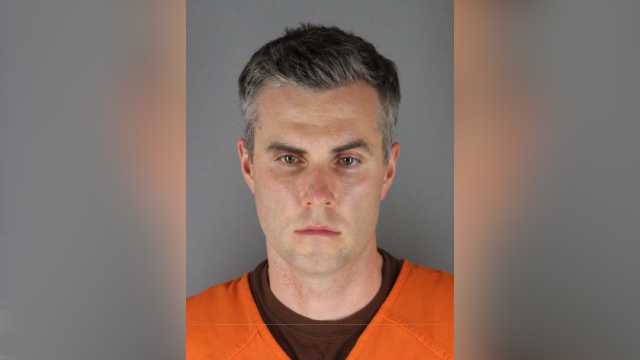
Thomas K. Lane, 37

Lane came to police work relatively late. He graduated from the University of Minnesota in 2016 with a bachelor’s degree in the sociology of law, criminology and deviance. (I wonder if he recognized signs of deviance in Chauvin.)

He started working in the criminal justice system as an assistant probation officer for juveniles and as a juvenile correctional officer. In January 2019, he was accepted to the police academy and, like Kueng, became an officer in December, according to records.

During his court appearance last week, his lawyer, Earl Gray, said Chauvin had also trained Lane.

Gray said: “They’re required to call him ‘Sir.’ He (Chauvin) has 20 years’ experience. What is my client supposed to do but to follow what the training officer said? Is that aiding and abetting a crime?”

Gray also said the day Floyd died was Lane’s fourth day on the force.

(I don’t really understand how Kueng and Lane were on their third or fourth days after having graduated from the academy five months ago, but I trust we will get more details in due course.)

…Lane and Kueng appear to be in the same boat — rookies beholden to and probably afraid of Chauvin. I expect Lane to plead to whatever charge Kueng pleads to and also get five years or less.

That’s the way I see it, through binoculars and 439 miles from Minneapolis. Let’s see how it plays out.

Last week, I took out an online subscription to my hometown paper, The Courier Journal in Louisville, KY. (If you’re interested, the rate was 99 cents a month for the first three months and $8.99 a month for the next nine months.)

Like Kansas City, large demonstrations have been taking place there, and Louisville, unfortunately, had a homicide, when police killed a 53-year-old barbecue-restaurant owner after he stupidly fired a handgun out the door of his restaurant in the direction of police. (The New York Times had a gripping story about that incident, if you’re interested.)

But Louisville also had an extremely uplifting story over the weekend — an account by staff photographer Michael Clevenger about five people who came to the aid of a police officer who found himself surrounded by a group of protesters. Most or all of the people who helped the officer were protesters themselves.

One of the unusual elements of this story — besides its premise — is that Clevenger is a photographer, not a reporter. In this case, he not only took several excellent photos of the action but later pulled together a compelling story.

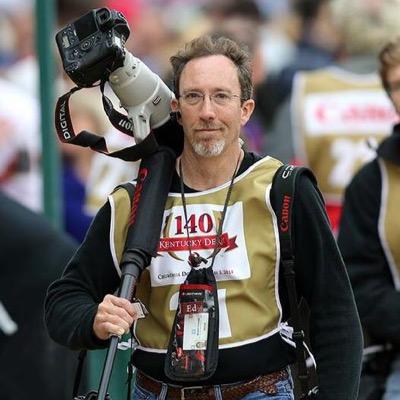
Michael Clevenger

Clevenger is a longtime Louisville resident who attended the University of Kentucky. He has won national awards for his horse racing photography.

I think you will enjoy reading Clevenger’s story, so here it is in its entirety…

**

LOUISVILLE, Ky. — Officer Galen Hinshaw heard the call over the radio. One of his fellow officers was in trouble.

A crowd of protesters had marched to Second and Main streets and surrounded a police cruiser at the base of the Clark Memorial Bridge. The officer inside radioed for help as protesters — strobed in blue and red patrol car lights — banged on the car’s hood and windshield.

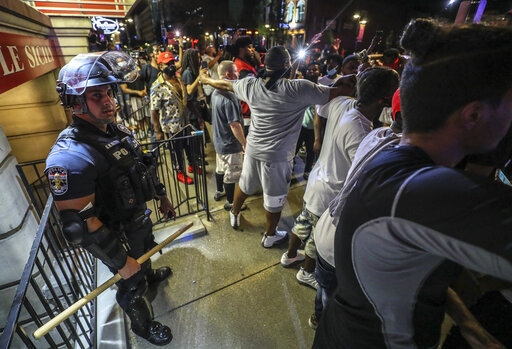
Hinshaw, a Fourth Division patrol officer and part of Louisville Metro Police Department’s Special Response Team, drove as close as he could to the scene. As he got out of his cruiser, he was immediately surrounded by protesters.

Some yelled profanities. Others balled their fists.

He made his way through the crowd wearing 40 extra pounds of safety gear — a baton, vest, helmet and body armor.

He was alone.

As the crowd grew, Hinshaw detoured to the front of Bearno’s pizzeria so he could keep his back to the wall. He needed a place to stop and reassess the situation — to be sure that nobody could get behind him. He also needed to keep an eye on his trapped colleague.

Overhead, a police helicopter kept watch and occasionally flooded the intersection with a spotlight. Sirens pierced the air, and protesters chanted ever louder.

Hinshaw’s nearest help was still blocks away.

The crowd moved closer, and the yelling got angrier. Protesters hurled questions at him.

“Are you one of the good ones?”

“How do you think we feel?”

One women screamed, “All gas, no brakes!”

He tried to respond but was drowned out by the cacophony of sirens and yelling.

“We do care, man, we do care,” he said.

Hinshaw tried to reason with the crowd.

“I’m sorry, I’m sorry you feel this way,” Hinshaw yelled, trying to make his voice heard over the anger of the crowd.

The 32-year-old was scared.

It was only going to take one person, and everyone would jump in, he knew.

The Special Response Team trains once a month, but that hadn’t quite prepared Hinshaw for what was in front of him. If the protesters decided to attack him, there were just too many of them.

“Here we go,” he thought. “I’m preparing to be injured.”

Hinshaw kept his voice calm as he radioed in: “Charlie 12, this is a 10-30. We need help.” 10-30 is code for officer needs help.

He watched people’s hands in the crowd, making sure nobody had a weapon and scanning for things thrown from protesters in the back.

It was at this moment that a man emerged from the crowd in a red University of Louisville mask covering the lower half of his face. He put himself between the closest protester and Hinshaw.

The Courier Journal captured the moment in a photograph that has now been shared across the nation.

Local entrepreneur Darrin Lee Jr. spotted Hinshaw and the advancing crowd and linked arms with the stranger in the red mask.

“Once I saw the guy with the red mask step up, I said, ‘I gotta step up,’” said Lee, who also runs a child care center. “It was reactive. I just went.”

He had no idea what would happen next.

“I really thought at that moment, ‘Protect him. It really isn’t his fault.'” Lee said.

Lee was also worried that Hinshaw would react and hit him from behind, so he turned to reassure the officer that they were going to protect him.

“He was looking nervous and scared,” Lee said. “If he panicked, then there was gonna be a war out there.”

Suddenly, the protesters seemed to turn on Lee. One man who had marched with him for nearly the whole protest was surprised. Another shouted in Lee’s face: “How can you protect him!”

Lee got nervous.

Ultimately, five men formed a human shield to protect Hinshaw. All of them strangers to one another. Nobody knew the name of the man to his left or to his right. Three were black, one white, one Dominican —all linking arms to keep harm away from Hinshaw, himself half-Pakistani.

Protesters surrounded Officer Galen Hinshaw on Thursday, May 28, but five people a human shield formed around Hinshaw after one protester called for the crowd not to harm him. (Michael Clevenger/The Courier Journal)

“A human was in trouble, and right is right,” said Ricky McClellan, a factory worker from Old Louisville who was locked onto Lee’s left arm.

After reaching the bridge and watching some protesters throwing rocks at police cars, McClellan spotted Hinshaw as he walked around the group and thought, “Whoa, you’re by yourself?”

McClellan watched as the crowd around Hinshaw grew larger and louder. Then he heard Lee yell, “Lock arms! Lock arms!”

That’s when Julian De La Cruz saw the men locking arms and jumped in.

“I saw the guys link up and I saw a weak spot,” De La Cruz said, and took up a position on the end of the line.

He was nervous, scared.

“Things could’ve gotten really bad,” he said.

The entire scene lasted no more than two minutes.

It felt much longer to those who were there.

Hinshaw’s squad arrived, and Lee escorted him back to his unit. Hinshaw thanked him.

Julian De La Cruz

For De La Cruz, a local businessman, the moment was about accountability.

“If I can hold my brothers accountable, if I can march with my brothers and turn against them to say, ‘This isn’t right,’ that’s where the accountability comes in,” he said.

“In the end, that’s all that we are asking for,” said De La Cruz, whose uncle is a police officer. “What we need is for those great cops to hold their brothers and sisters accountable at all times.”

As proud as De La Cruz is of that night, he shakes his head and says that this shouldn’t be an extraordinary event.

“This should be the norm,” he said. De La Cruz also feels that media images of violence, vandalism and looting misrepresent Louisville and the protest.

“What happened that night with us linking arms was just one of many heroic acts that night,” he said.

He hopes that those are the moments that define Louisville.

That is Louisville,” De La Cruz said.  “Louisville showed up that night.”

Lee agreed.

“Nobody knew anybody but we just stood up and did that,” he said. “If the officer was black we would’ve done the same thing. He’s somebody else’s son. He’s somebody else’s loved one.”

Hinshaw has reached out to the men through social media and texts. But he’s looking forward to meeting them all and thanking them in person.

George Timmering, co-owner of Bearno’s, said he’ll buy the pizza when they’re ready to meet.

“Those guys, they saved me,” Hinshaw said. “There’s no doubt about it. And I am beyond thankful. If it wasn’t for them intervening and recognizing that I was in trouble and helping me, I am sure that I would’ve been assaulted in one form or another.

“If they didn’t intervene, something was gonna happen to me.”

Hinshaw continues to be moved by the moment.

“I’ve cried over that incident,” he said.

“It was a moment where strangers came together to help another stranger, and that stranger was me.”

Many police departments now find themselves reeling under waves of outrage against excessive violence against demonstrators, including the use of tear gas, rubber bullets and choke holds.

KCPD has taken a rightful place among those departments. During the local protest demonstrations, we saw KCPD officers overreact on at least three occasions last weekend:

— On Saturday, May 30, hundreds of peaceful protesters who had gathered at Mill Creek Park were laced with tear gas and pepper spray and intimidated with “flash-bang grenades.” Our old-school police chief, Rick Smith, rationalized the attack, calling the gathering “an unlawful assembly,” which is utter balderdash.

— The same day, police gassed two protesters on the Plaza after one of them stepped off the curb and into the street. Moments earlier, the man had yelled, “If you ain’t got the balls to protect the streets and protect and serve like you was paid to do, turn in your damn badge.” Video of the incident, which Smith described as an “extraction” arrest, has been viewed by millions of people.

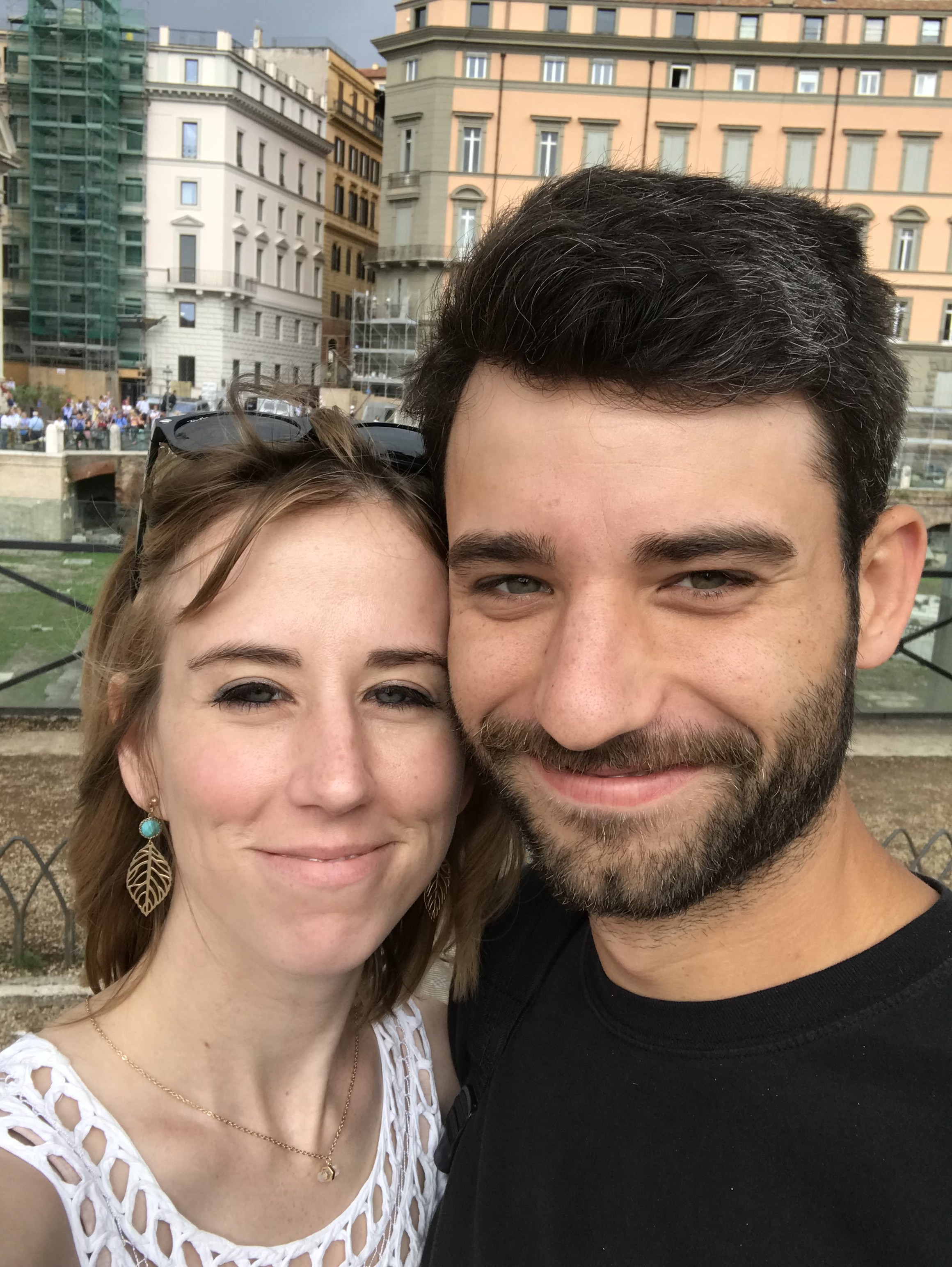
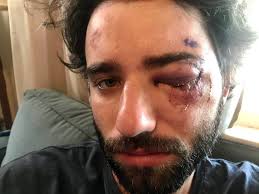
— The most serious injury was inflicted on 32-year-old Sean Stearns, Kansas City, who took a rubber bullet, or something like it, in the eye at the May 30 demonstrations. With his girlfriend, Sydney Ragsdale, he had taken shelter behind a Mill Creek Park tree when he was struck. He has lost most of the vision in the eye, and a doctor told him he could lose sight in it altogether.

(Later, I read that a 38-year-old man suffered a badly broken leg in the May 30 demonstrations when he was struck by a tear-gas cannister fired by police.)

Stearns and girlfriend Sydney Ragsdale before May 30 demonstrations

…after

**

Against that backdrop, it was very encouraging to read that Mayor Quinton Lucas, at a large demonstration yesterday outside City Hall, signed onto a list of demands to reform the police department, including local control.

Leading the newfound push for local control are three significant organizations: the Urban League of Kansas City, the local branch of the NAACP and MORE2, that is, the Metro Organization for Racial and Economic Equity.

On Wednesday, those three groups issued an extraordinary, joint statement calling for Smith’s ouster and also taking control of the department away from the governor’s office and putting it in the hands of the mayor, the City Council and the city manager.

Here are two key points in the statement:

:: “The Board of Police Commissioners behaves as if they were appointed by the Governor to protect and serve the police chief and police officers rather than to ensure that the department is committed to fair and impartial public safety strategies, dedicated to the principles of fairness, equity and accountability and working actively to build bridges that lead to substantial change. Approximately 70% of the City’s operating budget is allocated to public safety with over $250 million dedicated to the police department, yet the City of KCMO has no authority over KCPD decisions, policies, practices, and procedures.”

:: “Recent news reports detailing police-board-approved, multimillion-dollar out-of-court settlements for police involved shootings, homicides, and excessive force incidents along with the recent uptick in police involved shootings and homicides of African American men have heightened the level of our distrust in Chief Smith. We have no confidence in his ability to lead this department in a manner that respects and values the humanity of all Kansas Citians, irrespective of race, ethnicity, and socio- economic status.”

No confidence.” That says it all, does it not?

**

As I have written several times before, wresting control of the police department from Jefferson City will be a steep climb. My understanding is it could be done in one of three ways:

:: A successful, statewide initiative petition followed by voter approval (again, statewide).

Sinquefield

:: The Missouri General Assembly passes a bill, signed by the governor, authorizing an election to change state law to give control of the police department to the city.

:: The General Assembly passes a bill, and the governor signs it into law, authorizing local control in Kansas City.

Any of those options would be very challenging. The General Assembly is Republican and rural dominated, and most of the senators and representatives don’t look kindly on measures giving St. Louis or Kansas City more power at the expense of the state. I think the current governor, Mike Parson, would not have a favorable view of such a change, either.

An initiative petition would be a massive undertaking. It would require procuring the signatures of 5 percent of registered votes in six of Missouri’s eight congressional districts. That means paying a small army of people to collect signatures, which, in turn, requires a big benefactor.

In St. Louis, a powerful, conservative activist and political contributor, Rex Sinquefield, largely financed a successful petition drive in 2011 and early 2012, and that resulted in voters statewide approving local control of the St. Louis Police Department in November 2012.

I doubt that Sinquefield would be willing to make that kind of investment on the western side of the state, and I can’t think of anyone else who might be willing to step up and fund a statewide petition drive. (James B. Nutter Sr., mortgage banker and big-time contributor to Democratic politicians, might have done it, but unfortunately he died three years ago.)

Nevertheless, with the events of the last two weeks, I am much more optimistic than I have ever been about the prospect of local control of KCPD.

**

In the shorter term, I think Smith’s time as chief can now be numbered in months, not years. I believe he will be out by year’s end.

Reforms to KCPD will be coming soon, but whatever they are, they will not be sufficient to stop the push for local control or Smith’s ouster. I doubt he will have the stomach to go on. He’s had a long career, a hefty pension awaits.

And even if he should want to go on, things have changed so much in the last couple of weeks that a majority of the five-member police board may now be thinking about the wisdom of a change at the top. Under state law, a Missouri police chief can only be fired “for cause,” which sets a high bar. Nevertheless, if a majority of the police board was bent on making a change, it would be uncomfortable for Smith to try to stay.

Here’s how change at the top could occur…

The board consists of the mayor and four people appointed by the governor. The four appointed members are private investor and multi-millionaire Don Wagner; retired lawyer Cathy Dean; Mark Tolbert, pastor of an African-American church; and lawyer Nathan Garrett.

As board officers, Wagner (president), Tolbert (vice president) and Dean (treasurer) would probably hold sway in regard to Smith’s future, along with Lucas.

Lucas has not said directly if he supports Smith, but by signing on to the NAACP/MORE2/Urban League demands, he has effectively said he does not support him.

There’s one solid vote against Smith.

Dean

Of the other board members, I have only met Cathy Dean, and it was totally unrelated to her board service. Nevertheless, she strikes me as someone who would be very concerned about this situation and receptive to calls for major reform.

That could be another vote against Smith.

It’s almost a given that Tolbert will side with the groups demanding that Smith leave.

If Dean was of like mind, that would be three votes, a majority.


Then, there’s Wagner, board president. He is rich (made a fortune in the steel-tank business), elderly and probably in his waning years of civic service. I don’t see why he would feel beholden to either Smith or even Gov. Mike Parson. He might envision himself — or come to envision himself — as the man who presided over a much-needed and critical change of direction at the police department.

Readers, it’s almost a done deal: Rick Smith is on the way out.

Editor’s note: I amended the sections pertaining to local control and firing the police chief after learning more about state law pertaining to both issues.

I haven’t forgotten about either of our co-Public Enemies No. 1 in the Kansas City area.

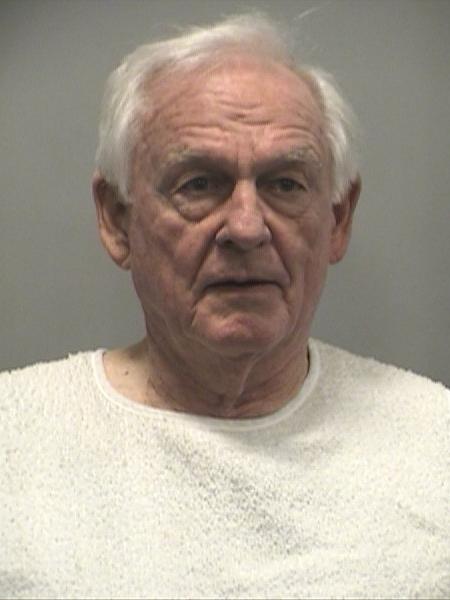
A year ago, I had David Jungerman, who probably killed lawyer Thomas Pickert, as Public Enemy No. 1. Now I’m giving equal status to Kylr Yust, who probably killed Kara Kopetsky and Jessica Runions.

Both of these guys have been in jail more than two years now — Jungerman in Jackson County and Yust in Cass County — and their murder cases have been inching along painfully.

Here are the latest developments…

The Yust case

The trial was scheduled to start July 27, but at a video conference Tuesday, Judge William B. Collins said he would grant a defense motion for a continuance (date to be determined), partly because previously unknown information pertaining to some other possible suspects surfaced recently.

In one instance, a VHS tape was discovered during the cleaning of a desk formerly occupied by a Belton police lieutenant. The tape contained material about someone who apparently was interviewed at some point about the Kopetsky murder. (She was killed in 2007, Runions in 2016.)

Tuesday’s hearing, which I watched via WebEx, included Yust, his three St. Louis-based public defenders and Cass County Prosecutor Ben Butler and Assistant Prosecutor Julie Tolle.

One of the people listening in, as I did, was John Runions, who must be related to Jessica.

Yust was videoed while seated in a room at the Cass County Sheriff’s Office. A couple of times before the hearing began, he waved at the camera, either to acknowledge his attorneys or indicate he could see all the other parties. He did not smile when he waved.

As soon as the hearing got underway, Judge Collins showed his frustration at the belated surfacing of new information, including the VHS tape, and also at the Sheriff’s Office failure to produce a report on prison calls various parties had had with Yust.

With the corners of his mouth often drawn up tightly, Collins, in casual attire, said…“It’s troubling. I’m asking the same questions, and we’re not getting quick answers from law enforcement agencies about these requests” for documents and reports.

“I need to find out what is exactly happening.”

Collins said that in hopes of moving the case along, he intended to appoint a retired judge as a “special master,” whose job it would be to sort through the “discovery” issues, that is, the puzzle of the VHS tape and other late-surfacing information about additional witnesses.

Prosecutors and defense attorneys wholeheartedly agreed on the importance of getting access whatever information the Belton Police Department failed, for whatever reason, to forward to the Cass County Prosecutor’s Office. The defense is entitled to see any evidence the state has, so it works both ways.

…What I am worried about is that this case might have been too complex for small-town Belton Police Department. It is the biggest case Cass County has seen in decades, and Belton PD might have been in over its head. If that’s so, it could ultimately and fatally compromise the state’s case.

It will be a tragedy if the Belton PD’s failure to consolidate and hand over information in timely fashion allows Yust to one day go free.

**

The Jungerman case

Trial was scheduled to begin last week but has been pushed back to Oct. 5.

It does not appear as muddled as the Yust case but, it, too, is bogged down in various motions.

Among them:

— A defense motion to set a bond for Jungerman so he could get out of jail while awaiting trial. This motion was filed March 20, and Judge John Torrence has not ruled. Currently, Jungerman, now 82 years old, is being held without bond, and I think the chances of Torrence setting a bond are one in a million.

— A defense motion to suppress items recovered from an Oct. 25, 2017, police traffic stop of Jungerman and subsequent statements he made while police interviewed him. (That was the day Pickert was gunned down in his front yard in Brookside.) Defense attorneys filed the motion to suppress last week, and the state has requested additional time to respond.


It’s election day, so let’s lighten up a bit while we wait to see if Local 42 of the International Association of Fire Fighters slips another turd (a quarter-cent sales tax increase) past a citizenry that is preoccupied with a pandemic, a recession and angry demonstrations in the streets.

…If you’ll recall, the comments board “lit up” on May 24, after I wrote about Star sports columnist Sam Mellinger’s flawed ranking of the “50 most influential people in KC sports history.”

The 41-(or so)year-old columnist failed to include such pivotal figures as Dick Howser, who managed the 1985 World Champion Royals, and Jack Steadman, the iron-fisted president of the Chiefs under owner Lamar Hunt.

More recently, the sports desk has been doing another “best of all time” series, this one the biggest plays in Kansas City sports history.

The team of Pete Grathoff, the laziest sports reporter at The Star, and Blair Kerkhoff, one of the most industrious, has been doing these stories in blocks of five plays at a time. I haven’t paid close attention to all 25, but I read with interest in Monday’s print edition the duo’s story on plays Numbers 1 to 5.

And I’ve gotta say, they nailed it.

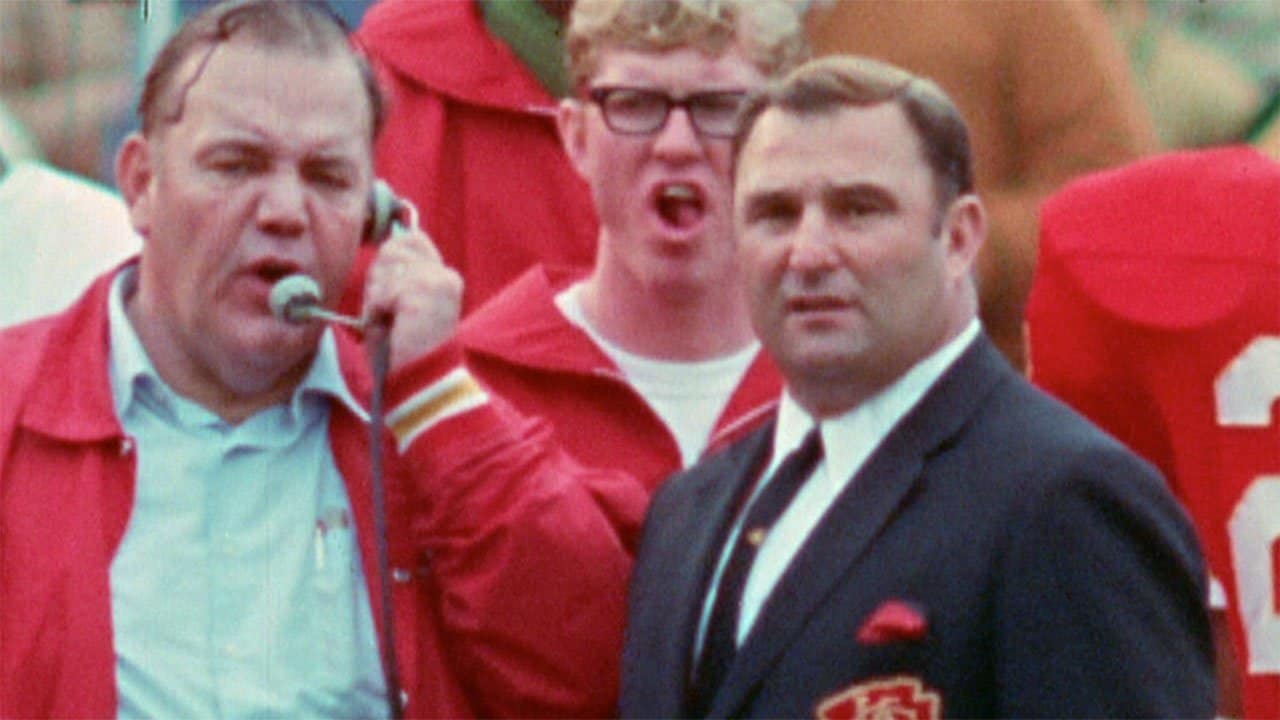
No. 1. Who can forget the spine-tingling 65 Toss Power Trap, called by chiefs’ Coach Hank Stram in Super Bowl IV, Jan. 11, 1970, when the Chiefs beat the Minnesota Vikings? The play almost immediately catapulted into the annals of pro football because of NFL Films, which had wired Stram for sound.

When inspiration struck, Stram grabbed Chiefs’ wide receiver Glocester Richardson and said, “Glocester tell (Len Dawson) 65 Toss Power Trap. It might pop wide open.”

“The Mentor,” calling 65 Toss Power Trap in Super Bowl IV

Grathoff and Kerkhoff wrote, “The trap caught so many Vikings players out of position (Mike) Garrett could have walked into the end zone.”

Stram is then seen and heard cackling and exulting and saying, “Was that there, baby?”

If the world is around 100 years from now, that video will still be sending chills down people’s spines.

No. 2. Fast forward to the Chiefs’ next Super Bowl victory, an even 50 years later, when Chiefs’ quarterback Patrick Mahomes asked offensive coordinator Eric Bieniemy, “Do we have time to run ‘Wasp?’ ”

Next thing you know Chiefs’ running back Tyreek Hill was wide open 44 yards down the sideline, and Mahomes’ high, floating dropped out of the sky and into his clutching arms…And the Chiefs were on their way to beating the San Francisco 49ers 31 to 20.

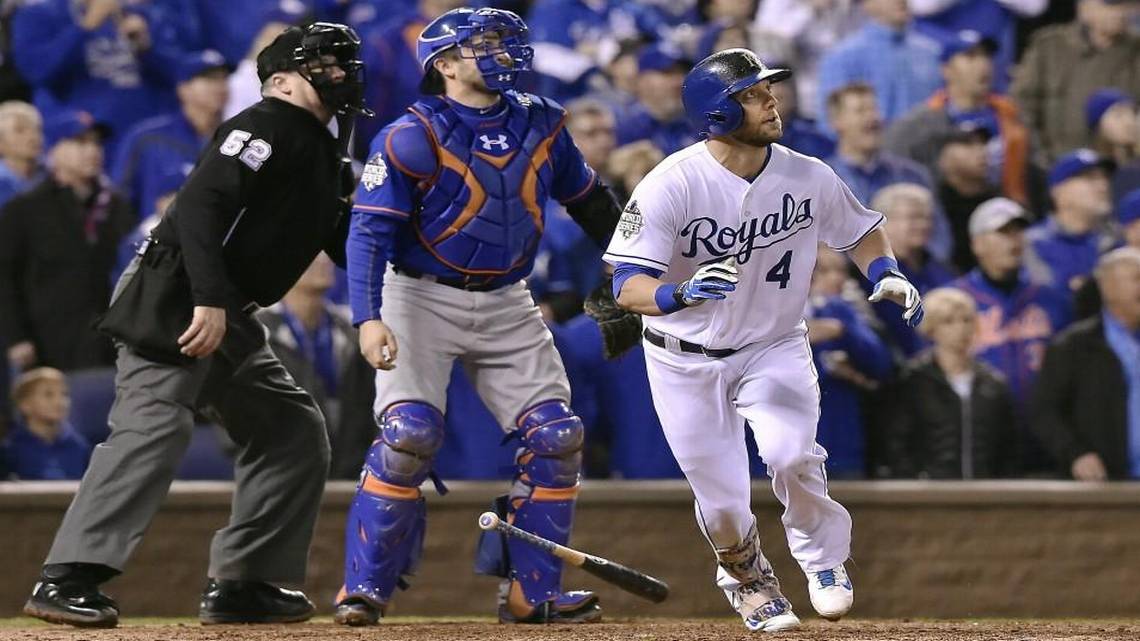
No. 3. On Oct. 27, 2015, when it looked like the New York Mets were on their way to winning Game 1 of the World Series here in Kansas City, Royals’ outfielder Alex Gordon stepped to the plate against the Mets’ dominating closer Jeurys Familia.

Gordon watches his homer head toward the center field wall.

I think just about everybody thought Familia was going to get Gordon out. But with Royals trailing 4-3 in the bottom of the ninth and the count 1-1 on Gordon, Familia took an abbreviated windup and tried to quick-pitch him. Having watched Familia quick-pitch the previous batter, Gordon was ready. He crushed the pitch, and the ball headed deep toward straightaway center field. When the ball disappeared over the wall, the crowd went crazy. The Royals, of course, went on to win the game and the series. It was the most important home run in Royals’ history.

No. 4. In the 2008 NCAA Tournament Finals, Memphis led KU by three points with 10 seconds remaining. Point guard Sherron Collins dribbled to the three-point line and handed the ball off to the other guard, Mario Chalmers, who swished a three-pointer with 2.1 seconds remaining. That sent the game into overtime, when the Jayhawks pulled away to a 75-68 victory.

No. 5. This was another incredible Royals’ play, almost more astounding than Gordon’s homer off Familia. In the bottom of the 12th inning of the American League Wild Card Game on Sept. 30, 2014, the Royals and the Oakland A’s were tied 8-8 at Kauffman Stadium.

With the potential winning run on second base in the person of Christian Colon, Royals’ catcher Salvador Perez was battling A’s reliever Jason Hammel. With the count 2-2, Hammel threw the right-handed-hitting Perez a pitch way outside the strike zone. Perez, a notorious sucker for bad pitches, bent way over, reached out and managed to get the bat on the ball. Somehow, Perez pulled the pitch to his left, down toward third base. A’s third baseman Josh Donaldson dove to his left but just missed the ball, and Colon sped home with the winning run.

The team went on to the World Series that year but lost, memorably, to the San Francisco Giants in Game 7.

…Ah, great stuff.

Hats off to the “-hoff” team, Grat and Kerk.

Few things are more gratifying to a columnist than seeing other columnists jump on the bandwagon they set in motion.

So I took great joy and satisfaction this morning when I opened The Star and saw that KC Star editorial board member and op-ed columnist Melinda Henneberger had taken a cudgel to our do-nothing, afraid-of-his-shadow police chief, Rick Smith.

It was 10 months ago that I first said Smith liked to hide behind his blog post and his public information officers, instead of answering reporters’ questions face to face or even holding news conferences. I accelerated the criticism in January, focusing on the need for local control of KCPD. Last week, as many of you will recall, I wrote saying local control had become a matter of urgency with Smith and his predecessor, Darryl Forte, at the helm.

Now, I don’t know if Henneberger, a Pulitzer Prize finalist in each of the last two years, even reads my posts (I’m honored if she does), but in today’s column she certainly picked up on my theme.

Her lead sentence summed up the situation in funnier and more penetrating words than I have been able to come up with. (She’s not a Pulitzer finalist for nothing.) She wrote…

“I was about ready to see if we couldn’t put Kansas City Police Chief Rick Smith’s face on a milk carton: Have you seen this man?”

Bravo, Melinda, you nailed it!

I know a lot of you readers don’t have subscriptions to The Star and might not be able to open the above link to her column. So, here are some of the highlights…These are direct quotes:

(U)ntil Sunday, when he finally appeared at a news conference at Kansas City Mayor Quinton Lucas’ personal invitation, Smith had said zero words publicly about the sight of George Floyd pleading for air and for his mama, as dying men have always done.

For six days, Smith had no comment on the officer who’d held his knee on Floyd’s neck for 8 minutes and 46 seconds. For five days, he kept to himself his thoughts on the protests Floyd’s murder had set off in other cities. For two days, he said nothing about protests here in Kansas City.

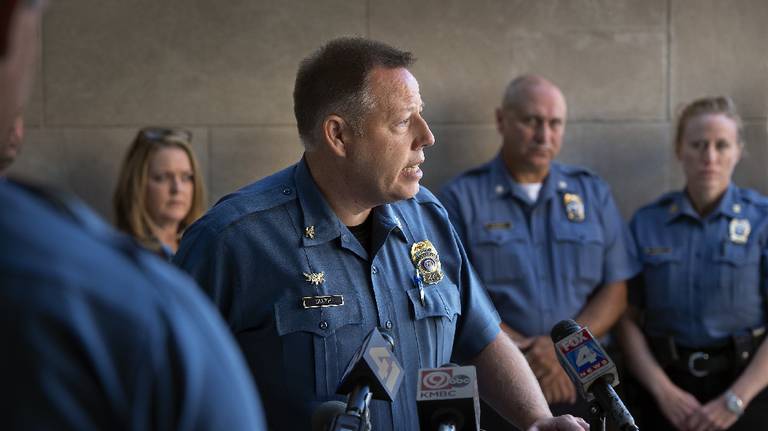
Smith didn’t have the week off or anything; he was at the protests, though not visible, working from the police command center. But it was Capt. Dave Jackson, a public information officer, who was sent out to speak. That’s not leadership.

When Smith finally did show himself on Sunday, and was asked why it had taken him six days to make a sound, this was his answer: “I think we put out a statement when it happened.

— And still, he couldn’t bring himself to say these two words: George Floyd.

Kansas City should be better than this, he said to protesters, and he’s right about that; breaking glass and throwing rocks helps nobody. But Kansas City also deserves better than this, better than a police chief in hiding.

**

I think Henneberger’s column could be a breakthrough in terms of how the public and The Star’s editorial board views Smith and the issue of local control.

The public doesn’t pay much attention to the chief, or the police department in general, until they start to worry about their personal safety. It’s not really a major concern to most people when they read reports of high murder rates, as long as they don’t feel threatened themselves. But with what has been taking place on the streets the last few days, it’s starting to become personal. People can’t help but wonder what might happen to them if they’re out in their cars and encounter a seething group of protesters.

Protesters in Kansas City

The editorial board, on the other hand, has been sitting back watching Smith, giving him the benefit of the doubt, since he was named chief in July 2017. Unlike me on my little blog, the editorial board has to be extremely cautious, because once it collectively decides to shift positions, it’s hard to turn back.

That’s why I say this could be a turning point.

Also, I hope the Kansas City Board of Police Commissioners is paying attention and not hiding behind their big titles, bestowed by the governor.

Maybe, if they don’t have their hands over their eyes and plugs in their ears, this will be the beginning of the end of a guy who is clearly a bad police chief.

Maybe, even, a significant number of people will start wondering if local control (which would be difficult to attain) isn’t such a bad idea.

It’s a damn shame that Lucas is just one member of that five-member board and has a minor, though important, voice in who we have as police chief. As I’ve said before, the other commissioners (lawyers Nathan Garrett and Cathy Dean, minister Mark Tolbert and businessman Don Wagner), as well as commissioners before them, have been virtual rubber stamps for the chief.

Damn it, that’s got to stop. As they’re saying on the streets, enough is enough. Rick Smith must be sent packing, and we need local control of KCPD now more than ever.

…And, finally, thank you, Melinda, for calling out our commander-in-hiding.

In fire houses all across Kansas City today, fire fighters must be cheering, shouting and raising toasts of sparkling grape juice.

Why? For the first time I can remember, The Kansas City Star did not weigh in with a Sunday editorial before voters were poised to vote on a city tax proposal the following Tuesday.

It appears to me Kansas City Question 1, which asks voters to increase the Fire Department sales tax from a quarter-cent to a half-cent, is poised to pass on Tuesday, despite the absence of any significant public discussion or justification for a tax increase.

Although voter turnout is expected to be less than 10 percent Tuesday, fire fighters, their friends and family members will turn out in large numbers. With no significant opposition — and no Sunday editorial against it — Question 1 stands a very good chance of being approved Tuesday.

It’s a damn shame this proposal has been getting a pass, because it’s a big deal and would hit poor people the hardest. The additional quarter-cent would generate about $21 million a year, or about $315 million by 2036, when the full half-cent tax would be scheduled to expire.

The money would go primarily for fire station improvements and equipment, including new trucks, pumpers and ambulances.

The Star’s Dave Helling had a stinging op-ed piece about Question 1 in January, but otherwise the editorial board has been largely silent on the matter. Nevertheless, I fully expected to see an opposing editorial today. Instead, what I found was another editorial relating to Gov. Mike Parson’s tepid response to public protection from the coronavirus.

Wanting an explanation, I sent an email to editorial page editor Colleen McCain Nelson. She replied that an editorial on Question 1 would be published tomorrow, Monday.

Monday? One day before the election, in the dullest paper of the week?

That is extremely unusual. Probably since its inception in 1880, The Star has reserved its strongest voice for the Sunday paper. It is the week’s biggest and best paper, even as a shadow of its pre-internet self.

Look at the numbers: According to the latest figures, Sunday’s print circulation is 77,468; Monday’s is 61,249. In addition, longtime subscribers, which includes those most likely to vote, are conditioned to seeing political endorsements the Sunday before an election.

I don’t know why Nelson decided to hold off ’til tomorrow…I sent her a follow-up email seeking an explanation, but she hasn’t written back.

**

Years ago, a City Council majority gave up putting up any meaningful fight against Local 42 of the International Association of Fire Fighters, and now, it would seem, so has The Star.

I realize that everyone at The Star has been preoccupied with developments relating to the pandemic the last two and a half months, but surely the editorial board could have found time to hammer at the dishonesty of this brazen ploy by the fire union and departmental leaders.

All you need to know to tell you this is a trap-door election is that the ordinance approving Tuesday’s vote was introduced and approved in one week.

City Councilwoman Katheryn Shields, a longtime FOF (friend of fire fighters) and the shrewdest Council member, introduced the ordinance on Jan. 16. The press didn’t pick up on it, and six days later, the ordinance had its only public hearing. The hearing was held, naturally enough, in Shields’ finance committee, and the committee unanimously voted in favor.

The next day, Jan. 23, the Council approved the ordinance on a 10-2 vote.

Mayor Quinton Lucas was conveniently absent the day of the vote. Afterwards he told a reporter he needed to be convinced of the need for an increase in the fire tax.

Let’s put his hedging in context. Before last year’s City Council and mayoral elections, Lucas had told The Star he was against any new taxes. In those elections, Lucas had the backing of Local 42, and it helped him defeat Councilwoman Jolie Justus, who had won the primary.

So how does Lucas feel about the Fire Department tax increase now? Not surprisingly, he’s quoted in today’s paper as saying he’s for it. Interestingly, however, he said it’s not because Local 42 or Fire Department management made a strong case for it.

“I don’t know if they so much made a case as the conditions have,” he said.

Whaaa?

I guess that’s supposed to mean the coronavirus has demonstrated that the Fire Department needs tens of millions of additional dollars for bigger and better stations, and new ambulances and trucks, so it can better respond to people calling 9-1-1 with virus symptoms.

Balderdash.

**

Here’s how it is, sadly. The Star no longer has the willpower or firepower to challenge Local 42 in a big way. And with the paper unable to hold the union or City Council members’ feet to the fire, the union goes its merry way and will continue to get about whatever it wants.

My guess is tomorrow we’ll see an equivocal editorial that ultimately recommends a vote against Question 1. It will be too little, too late. It would have taken a hard-hitting, methodical campaign by the editorial board to defeat this measure.

Yael Abouhalkah, longtime former editorial page writer for The Star and steadfast defender of taxpayer interests, must be grinding his teeth and pulling his hair out.

**

Here’s the ballot language…

Shall the City of Kansas City impose a sales tax of 1/2% to expire on December 31, 2036, for the purpose of providing revenues for the operation of the Kansas City Fire Department which will include making capital improvements to, and purchasing equipment for, such Department as authorized by Section 321.242 of the Revised Statutes of Missouri and which will have the effect of increasing the existing sales tax from 1/4% to 1/2%?

I’m afraid we’re about to see a blink-and-you-just-missed-it sales tax election in Kansas City.

That is unfortunate and discouraging.

On Tuesday, a very low number of people will go to the polls to vote on Question 1, which would increase the existing Fire Department sales tax from a quarter-cent to a half-cent. (An election board official told me today he was estimating a 6 percent to 8 percent voter turnout.)

I expect the proposal to pass. That, too, is discouraging.

Like many incremental sales taxes, this one sounds like it doesn’t amount to much. It does.

:: If voters approve Question 1, the sales tax in much of Kansas City would go from 8.61 percent to 8.86 percent, or nearly 9 percent. It is higher in certain commercial areas, including the Plaza and Downtown.

:: An extra quarter-cent would raise about $21 million a year, or about $315 million by 2036, when the full half-cent tax would be scheduled to expire.

(And, believe me, it probably won’t expire then; once these taxes are set, voters almost always renew them.)

This is a bad, bad tax proposal, one of the worst I’ve seen in my 50 years in Kansas City. The City Council, which hurriedly approved putting this on the ballot, should be ashamed of itself. But it’s not because, as usual, a Council majority fears retribution at the polls from Local 42 of the International Association of Fire Fighters.

Along with the African-American group Freedom Inc., the fire fighters control the largest block of votes in the city. And Freedom is arm-in-arm with the fire fighters on this proposal. The organization either has been paid or will be paid tens of thousands of dollars by a committee affiliated with Local 42 to help get out the vote on Kansas City’s east side.

This is a bad proposal for two main reasons:

:: The sales tax is the most regressive tax of all; it hits hardest those who can least afford to pay. And yet its often the easiest one to get passed.

:: This is an ambush by the fire fighters and a large majority of the City Council, including Mayor Quinton Lucas, who was out of town when the Council approved the election and refused to speak out against it. (He had told The Star before he was elected mayor that he was against any new taxes.)

The ambush aspect is particularly galling. Let me walk you through the elements of this lightning bolt…

Shields

— At the Jan. 16 City Council meeting, Councilwoman Katheryn Shields, now in her 13th year on the Council (two terms earlier and second term this go-round) introduced an ordinance calling for an election on this issue. As far as I know, no one in the media picked up the story, and, as a result, the vast majority of the public had no idea it was on the Council’s radar.

— The following Wednesday, Jan. 22, the ordinance came before Shields’ finance committee, and Fire Chief Donna Maize told the committee the department needed nearly $80 million for immediate and long-term station improvements and for equipment, including new trucks, pumpers and ambulances. The committee unanimously approved the ordinance, and The Star had its first story about the tax proposal that afternoon.

— The next day, Jan. 23, seven days after the ordinance was introduced, it went to the full Council and was approved on a 10-2 vote. (Voting “yes” — besides Shields — were Kevin O’Neill, Heather Hall, Teresa Loar, Dan Fowler, Brandon Ellington, Lee Barnes Jr., Kevin McManus, Andrea Bough and Ryana Parks-Shaw. Voting “no” were Melissa Robinson and Eric Bunch. And, as I said, Lucas was absent.

Normally, tax proposals emerge from City Hall after weeks or months of planning, deliberation and public discussion.

The fact that this measure blew through the Council like a tornado, with little or no public input, clearly shows the goal was to keep the measure under wraps as much as possible.

Years ago, The Star would have sniffed this out and exposed it when it surfaced, but, as we all know, The Star has lost the bulk of its editorial staff, as well as much of its core readership.

Where The Star used to stand as a bulwark against government-launched “trick plays” and other abuses, its influence is now greatly diminished. I expect The Star’s editorial page to come out against Question 1, but here we are four days before the election and it hasn’t happened yet. And now it’s probably too late.

**

In addition to successfully rushing this measure onto the ballot, the Council majority and the fire fighters got another favorable break with the spread of the coronavirus. As it should, the pandemic has taken front and center in everyone’s lives, and few people are paying attention to local government, except how it is dealing with the epidemic.

As a result, many people, I’m sure, are not even aware of Tuesday’s election, much less Question 1. Furthermore, many of those who are aware of it are probably leery about going to the polls. It’s possible we’ll see a record low turnout, possibly less than 10 percent of registered voters.

But I’ll tell you who will be going to the polls — the fire fighters, their relatives, their friends and others who are connected to them in any way. They are a powerful and relentless political force, and they vote in their interests. Along with Freedom Inc.’s help on the East Side, they should carry the day.

The firefighters have been sending out full-color mailers (see example below) focusing not on the tax but on how “our fire fighters are responding to the pandemic” and how voters can safely vote on Tuesday.

It is an ingenious approach — minimizing the tax and maximizing what the fire fighters are known for, ensuring public safety.

It’s also a con. But the fire fighters have just as much experience swaying the public as they do protecting it.

For what it’s worth, I strongly recommend a “no” vote on Tuesday. We should not let the fire fighters and the Council members who brazenly rammed this proposal onto the ballot play us for fools.