Feeds:
Posts
Comments

I have no doubt that KCPD has many excellent officers.

I had an encounter with two last year when our daughter had a wreck late one night last year, and the responding officers were outstanding. Brooks wasn’t injured, just shaken up, but her car was totaled.

In addition, a member of the police Public Information Office who lives in our homes association is top of the line, and everyday police and press relations have improved since he joined the unit.

At the same time, however, I am very troubled — and I’ve said this before — about the direction of the organization in general.

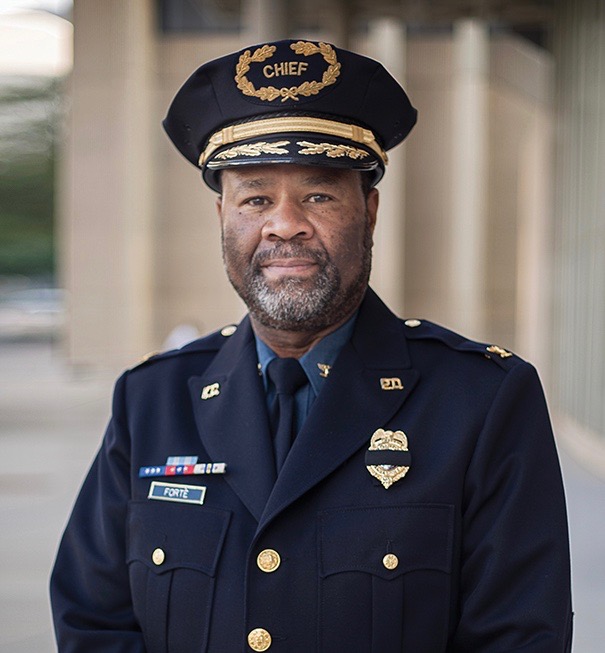
Under the last two chiefs — Darryl Forte and now Rick Smith — we have seen a disturbing tilt toward increasing secretiveness and insulation.

For example:

:: When Forte retired unexpectedly in 2017, he slipped out the back door with $500,000 in accrued vacation, sick leave and comp time, and he refused to talk to the press about it.

:: Twice last year, Smith hindered the Jackson County Prosecutor’s Office in investigating incidents involving questionable police responses. In one, two officers beat up a transgender woman, Brianna Hill, who was resisting arrest. In the other, an officer shot and killed 26-year-old Cameron Lamb under opaque circumstances.

:: Smith has chosen to communicate with the public and the media primarily through his blog, instead of phone calls and in-person interviews.

:: The department appears to be dead set against buying body cameras, which would be of immense help in determining appropriate and inappropriate police actions in controversial and deadly incidents.

Smith

Forte

While there are many specific problems with the police department, nearly all are rooted in a basic problem: Governance of KCPD has been a certifiable disaster since the demise of the Pendergast organization in Kansas City.

Follow along on a bit of interesting (you bet!) police department history.

Some time after the Civil War, the Kansas City and St. Louis police departments came under state control. In 1932, however, boss Tom Pendergast’s political machine challenged Missouri law to regain local control of Kansas City’s department. The move was successful, and Pendergast added the police department to the list of other departments that were reservoirs of patronage, with the boss’s lieutenants doling out jobs to reward political support and insure loyalty.

After Pendergast went to prison for tax evasion in 1939, the General Assembly passed a bill, which the governor signed, returning control of the department to the state. The law put the department under the control of a five-member Board of Police Commissioners, consisting of the mayor and four citizens appointed by the governor.

Significantly, the law gave the board the power to hire and fire the police chief, but it made the city responsible for paying for police department operations. Thus, in the case of police body cameras, the mayor and Council cannot force the police department to buy them because it has little say regarding the department’s budget.

An even bigger problem is that police boards have long coddled and rubber-stamped the chiefs. The citizen board members, who have a 4-1 advantage over the mayor, generally are very flattered to serve, and they tend to put the police department’s interests above the interests of the general public.

For example, The Star’s editorial board recently called for the department to allow an outside agency to conduct use-of-force investigations — which makes obvious sense — but Police Board President Nathan Garrett (a lawyer, wouldn’t you know it?) refused.

The Star quoted Garrett as saying, “No one has shown me convincing evidence that our practice has resulted in a miscarriage of justice.”

Of course not. When you’re wearing blinders, you don’t see anything you don’t want to see.

**

The only sure way to cure the adversarial relationship between the police department and City Hall, and to flush the police department from the cave it’s been in for decades, is for the city to gain control of the department.

It would be difficult but not impossible.

One way is by initiative petition, which would entail getting signatures of five percent of registered voters in six of Missouri’s eight congressional districts. That would be a very expensive proposition because signature procurers have to be paid, and even if the drive was successful, the proposal would be put to a statewide vote.

Another way would be for the General Assembly to pass a bill authorizing a statewide vote on local control. That’s what happened in 2012 with St. Louis. Political agitator and conservative supporter Rex Sinquefield reached an arrangement with then-Mayor Francis Slay, and Sinquefield bankrolled a $2 million statewide campaign. Voters then approved it overwhelmingly.

The day after the election the St. Louis Post-Dispatch ran a story saying:

“With the victory of Prop A, Kansas City will be the only city in the country that still lacks control of its police force. Kansas City Mayor Sly James said his city wasn’t yet ready to be included as part of Prop A.”

The only city in the country…

It was a huge mistake for James not to try to piggyback on the St. Louis measure. Kansas City was ready then, and we are desperately ready now.

Call the EMT’s. Get the best doctors available; this is an emergency.

Sam Mellinger, The Star’s lead sports columnist, is very sick. I feel sure he’s been feverish for several days and very little oxygen is getting to his brain. He’s a COVID-19 candidate, for sure.

Mellinger

Nothing else could explain a couple of jaw-dropping decisions he made in compiling “the 50 most influential people in KC sports history” in today’s Kansas City Star.

He got some of the obvious ones right, such as Lamar Hunt (No. 1), Ewing Kauffman (No. 2), Len Dawson (No. 5), Andy Reid (No. 6), Hank Stram (No. 12) and Tom Watson (No. 18).

But, as I perused the list, I was thunderstruck by two things:

:: Mellinger had Ned Yost, who guided the Royals to a World Series Championship in 2015 and to Game 7 of the World Series the year before, down at No. 46. He almost didn’t make the cut!

:: More outrageous, Dick Howser, who led the Royals to the 1985 World Series Championship, didn’t make the cut! Perhaps an even greater manager than Yost, Howser was “nowhere to be found.”

Let’s take a closer look at these two unforgivable miscalculations…

**

Ned Yost

Yost, in Mellinger’s esteemed view, merited no better placement than between current Kansas City Chiefs’ assistant coach Eric Bieniemy (No. 45) and former Chiefs offensive lineman Will Shields (No. 47).

Is there any way Bieniemy and Shields will be remembered longer in Kansas City than the great Ned Yost?

…Consider some of those ranked well ahead of Yost:

:: The team of Neal Patterson and Cliff Illig, co-founders of Sporting KC. Somehow, they made No. 9.

:: Former Unified Government Mayor Carol Marinovich, who laid the groundwork for the conversion of I-435 and I-70 into a sporting and entertainment destination. She came in at No. 15.

:: Matt Besler, a Sporting Kansas City defender since 2009. He stood at No. 17.

:: Evelyn Gates, whom Mellinger described as a “sports official and advocate for KC-area girls sports for 45 years.” Mellinger placed her at No. 29, even though the vast majority of area residents have probably never heard of her. (I haven’t. Have you? This is a joke, right?)

Yost

Now, Marinovich and the team of Patterson and Illig certainly belong in the top 50, but their achievements don’t approach those of Yost, in my opinion. He should at least be in the top 20, maybe the top 15.

Some people contend that the manager’s role is overrated in baseball. I disagree. It’s the ultimate managerial challenge. The manager has to keep the egos in check, maintain as much harmony as possible in the clubhouse and keep the players focused and energized through the interminable 162-game season. And when it comes to the World Series, he’s got to keep his wits about him when the sporting world is watching and do whatever he can to help the players keep theirs.

Yost was incredible in his relentless optimism and equanimity. When we fans would be pulling our hair out over something like Salvadore Perez striking out on a pitch he couldn’t possibly reach, Yost would be leaning against the dugout railing, expressionless, hand never moving from his chin.

**

Dick Howser

For Mellinger to completely overlook Howser is maddening and disgraceful, not to mention insulting to Howser’s family and the tens of thousands of Royals fans who cherish the memory of Kansas City’s first-ever World Series-winning team.

That was a phenomenal achievement, promised by Ewing Kauffman and delivered by the humble and unflappable Howser.

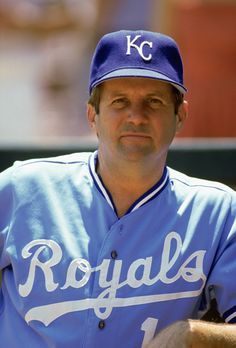
Howser

One thing in particular stands out in my memory of Howser. I once read what Howser told the team before Game 7, when the Royals beat the St. Louis Cardinals 11-0 at Kauffman Stadium.

Howser wasn’t a bit worked up and he made no effort to fire up the team in the clubhouse. He was calm and realistic. According to relief pitcher Dan Quisenberry, now deceased, Howser said something like: “This is going to be difficult; they’re a good team. But we can do it. We’ve just got to play our game, be smart and stay focused.”

Just like Yost 30 years later, Howser’s equanimity carried the day and brought the championship flag to Kansas City.

Tragically, less than two years later, the beloved Howser was dead at age 51. He died at St. Luke’s Hospital on June 17, 1987, after battling a brain tumor for about a year.

(The closest thing I have to a personal memory of Howser is covering the 1985 World Series parade down Grand Avenue. The players and team officials rode in low-riding, classic cars, some of which caught fire after wadded up paper got stuck underneath. Howser and his wife Nancy were among those who had to bail out. I peered into the Howser car and saw a woman’s shoe, just one, in the back seat.)

**

Regarding Yost and Howser, I don’t know what Mellinger’s problem is. With Yost it’s obviously a serious miscalculation.

With Howser, perhaps the omission has to do with the fact that Mellinger, who is about 41, was about six years old when the Royals won their first World Series.

If Mellinger was 41 and not from the Kansas City area, I could better understand why he might underrate Howser. But he grew up in Lawrence and got his first newspaper job when he was about 16, so he heard plenty about the 1985 Royals and their legendary leader, Howser.

…As I said at the outset, the only logical explanation is illness. The sports editor should call 9-1-1 and have Mellinger transported to the ER. And when he’s recovered, fire him.

The McClatchy Co., which has been mired in bankruptcy proceedings the last three months, is continuing to slash payroll and shove veteran newspaper people off its merry-go-round.

The latest cost-saving move was announced Wednesday: At the Tacoma (WA) News Tribune, both the publisher and the editor, with a combined 57 years of newspaper experience, were dumped.

Phelps

The ousted editor, Dale Phelps, has deep Kansas City roots. He graduated from Center High School and William Jewell College and spent 17 years in The Star’s sports department. For many of those years he was assistant sports editor.

Now, at about 60 years old, Phelps is faced with the prospect of retiring early or looking for work elsewhere. (I can tell him from experience that 60 is a good age at which to retire. Plenty of good golf left, if your health holds up.)

Phelps was appointed editor about three years ago by another Kansas City Star veteran, David Zeeck, who had risen to publisher of the News Tribune. Zeeck was lucky: He got to retire in December 2018, after 24 years in Tacoma. He and his wife, Valerie, purchased a home in Kansas City last year. (It wouldn’t surprise me if Phelps moved back, too.)

The ousted publisher in Tacoma was Rebecca Poynter, who succeeded Zeeck in January 2019. Poynter’s run in the publisher’s job turned out to be a measly 16 months. Like Phelps, Poynter, who is about 53, is faced with an uncertain future in the news business.

Last month, McClatchy announced the elimination of four executive positions, including another person who earned his spurs in Kansas City, Bryan Harbison. Harbison, a Kansas City area native, formerly was vice president of finance at The Star.

In recent years, McClatchy has fixed on a money-saving M.O. in which it replaces the editor and the publisher of a given paper with a new leader, who gets the title of president.

That’s what McClatchy did in Kansas City in October 2019, when Mike Fannin, then editor of The Star, was named president, and publisher Tony Berg was shuttled off to Wichita to become “president” of the Wichita Eagle.

The Star lost tons of credibility in its handling of Berg’s demotion by never mentioning Berg’s name or saying what happened to him in its story about Fannin’s ascension. Berg magically vanished.

Pedersen

McClatchy employed the same 1-for-2 tactic with its Tacoma move. The News Tribune’s new president is Stephanie Pedersen, who, according to her LinkedIn page, has exactly nine years of journalistic experience. She is about 35.

Before being catapulted into the top job at Tacoma, she was an editor for five years at the Ledger-Enquirer in Columbus, GA, and was executive editor at The Sun News in Myrtle Beach for four years. (Both are McClatchy papers.)

**

All this moving and shaking within McClatchy is just a prelude to what could happen if and when McClatchy’s biggest creditor, the hedge fund Chatham Asset Management, takes control of the company. Things seem to be moving in that direction.

A Feb. 14 story in The Washington Post summed up how bad things had gotten for McClatchy since its $4.5 billion purchase of the Knight Ridder chain in 2006…

“From the 2006 acquisition to 2018, McClatchy cut its operating expenses by nearly 60 percent. By mid-2019, it had cut 82 percent of full-time workforce from the time of the deal — shedding reporters, editors, photographers and other staffers across the country — going from 15,378 to 2,800. At the same time, advertising revenue fell by 80 percent and total daily print circulation fell 59 percent.”

Total number of employees down to 2,800. That’s just a few hundred more than The Star had as recently as about 15 years ago.

And watch out if Chatham decides to operate the chain rather than sell it off as a whole or sell individual properties.

If it looks grim now, it could be much worse in a year or two. There might not be anything left of the merry-go-round except the sound of a calliope.


For all the wrong reasons, people from Kansas, Oklahoma and Kansas City, MO, made The New York Times today.

Let’s run down the list…

Kansas

Secretary of State Mike Pompeo, whose other home is in Wichita, is coming under increased scrutiny for reportedly having State Department underlings do such things as pick up restaurant takeout meals, pick up his dry cleaning and walk his dog.

Another issue is the propriety of wife Susan making overseas trips with him (at taxpayer expense, of course) and exercising Secretary-of-State-type authority. (That will smack a familiar refrain with Kansas City residents who recall the role former Kansas City Mayor Mark Funkhouser’s wife Gloria Squitiro played in his ignominious administration.)

The Pompeos

Regarding Pompeo, let’s just say he’s the worst secretary of state since…well, at least since Rex Tillerson, whom President Trump fired two years ago. (Now there was a match made in hell. In one meeting with senior administration officials, Tillerson reportedly referred to Trump as “a moron.” And later, after firing him, Trump said Tillerson was “dumb as a rock.”)

The Times story says Tillerson “was perceived as aloof and dismissive.”

Pompeo, on the other hand, is smug and crooked.

Last week, at Pompeo’s request, Trump fired the State Department inspector general, who was investigating Pompeo’s alleged misuse of personnel. Today, Pompeo said the firing of Inspector General Steve Linick was not an act of political retaliation because he didn’t know beforehand that Linick was investigating allegations that Pompeo had an aide run personal errands for him.

Yeah, uh-huh, the guy just wasn’t living up to Pompeo’s high expectations of a high-ranking public official.

Oklahoma

Here we go again with another self-anointed, white, neighborhood watchdog detaining (but at least not killing) a black man.

Miller

Forty-three-year-old Travis Miller Sr., an appliance and furniture deliveryman, had completed a delivery in the Oklahoma City suburb of Edmond on May 11 when the president of the gated community’s homeowners association blocked Miller’s truck as he approached the exit gate.

The association president, David Stewart, approached Miller’s truck and said he would move his car if Miller told him where he and his co-worker, also black, were going. Miller, who was wearing a uniform bearing his name, called his supervisor and then started recording the incident on Facebook Live. In the 37-minute video, which has been viewed more than half a million times, Miller says, “I’m trying to leave, and I got Super Neighbor over here blocking me in, so I’m going live.”

Here’s one of the more interesting exchanges that took place between Miller and Super Neighbor:

Miller: You do realize this is unlawful detainment, right? You have absolutely no reason and no right to hold me here and block me with your car.

SN: All I need to know is why you’re here.

Miller: You don’t need to know anything.

SN: I own one-eighteenth of what you’re sitting on. This street is private. This is not city property. This street is maintained by the people that live in here.

Miller: You’re being nosy. That’s all you’re doing. You’re trying to use privilege, and you’re not getting it from me. Just move your car. Unlawful detainment.

Finally, the customer who had taken the delivery from Miller came along and spoke to Stewart, and Stewart allowed Miller to pass.

…I wonder, just wonder, who David Stewart plans to vote for in November. That would be interesting to know, wouldn’t it?

Kansas City

Last week The Star reported that two KCPD officers had been indicted on misdemeanor charges after being caught on video using excessive force to arrest Breona Hill, a transgender woman, last May 24. The story is on Page A21 of today’s NYT.

The police department was not cooperative with the Jackson County Prosecutor’s Office. Prosecutor Jean Peters Baker said in a news release that her office was “prevented from filing the charge independent of a Grand Jury” after the police department declined to submit a probable cause statement to the prosecutor’s office.

(When charges are filed on the basis of “information,” the probable cause statement provides the rationale for charges. A grand jury can indict on the basis of testimony it hears and evidence presented; “probable cause” is not a factor.)

Hill

In response to Baker, Police Chief Rick Smith said the department didn’t submit a probable cause statement because investigators determined there was “no probable cause to conclude the officers broke the law.” He added, however, that the department submitted the case file to the prosecutor’s office, to federal prosecutors and to the FBI.

To be sure, this is an odd case. Hill had created a ruckus at a beauty supply store before police were called, and she might well have been mouthy with police, and maybe she even put up some resistance. But there is no reason for the officers to have slammed her face against the sidewalk and kneed her in the face, torso and ribs, as the indictment and video indicate.

The officers — Matthew Brummett and Charles Prichard — could be fined $2,000 and sentenced to a year in jail if they are convicted of the low-level assault charges.

I would imagine that the video will be the main evidence if the case goes to trial. That’s because there’s another oddity to this case: The victim, Hill, was shot to death in an unrelated incident last October. A suspect has been charged in that case.

…Regardless of what kind of lifestyle Hill was living, Brummett and Prichard almost certainly went too far last May 24. And it’s just another instance of KCPD playing down and covering up cases of excessive force.

If it wants to start regaining public confidence, this department should do three things: Start being more forthcoming with the press and public, start holding its officers to a higher standard of conduct, and come up with a plan to try to reduce the incredibly high murder rate.

As it is, this department is looking increasingly hidebound and reactive.   

We’ve got to have one of the worst state legislatures in the nation.

The rural, Republican-dominated Missouri Senate and House are so bad on so many fronts, but here are just two issues where they are jaw droppingly off kilter.

Restrictive voting

The House and Senate, as well as Secretary of State Jay Ashcroft, have shown no interest whatsoever in allowing “no-excuse” absentee voting, expanding early voting or taking steps toward allowing voting by mail.

For Christ’s sake, even hidebound Kansas has early voting and voting by mail! What the f___?

In a recent article for The Beacon, freelance reporter Barbara Shelley said the Missouri Association of County Clerks and Election Authorities “has for years unsuccessfully sought to allow Missourians to vote absentee without an excuse.”

The plea has fallen on deaf ears. Among the deafest are those of Ashcroft, son of John Ashcroft, who was the stiffest and most boring politician I ever met. (Nevertheless, he served as Missouri attorney general, governor and U.S. senator before ending his career as U.S. Attorney General.)

Jay Ashcroft

In an interview with Shelley, Jay Ashcroft said he would be open to legislation that somewhat eases restrictions on absentee voting, but then added: “I’m not certain how to do it or what exactly the language should be.”

The guy has been secretary of state almost four years now and has no idea how to ease restrictions on absentee voting?

Excuse me, but he’s got his head up his ass.

Clean Missouri

Two years ago, Missouri voters overwhelmingly approved a constitutional amendment, called Clean Missouri, designed to make redistricting fairer (so the outstate rubes could no longer gerrymander the vast majority of House and Senate districts to their taste) and significantly tighten ethical factors, such as limiting campaign contributions and revolving-door activity.

Specifically, on the ethical front, the amendment bans all lobbyist gifts worth more than $5 and requires legislators to wait at least two years after the conclusion of the session of the General Assembly in which they last served before becoming lobbyists. It also lowers the $2,600 campaign contribution limit for state legislative candidates and requires legislative records and proceedings to be subject to the state’s open records law, known as the Sunshine Law.

Who can argue with any of that?

It’s hard to, and voters in deep-red Missouri agreed when they approved the amendment 62 percent to 38 percent.

I say again, who can argue with any of that?

Well, Republicans in the House and Senate, of course! They don’t like it one damn bit. It makes them sputter and fume and their faces puff up like their shirts are a size too small in the neck.

Both the House and Senate have now approved a proposed constitutional amendment that would repeal Clean Missouri and substitute a weaker version, and the repeal amendment will go on a statewide ballot later this year.

For once, though, the good ol’ boys who almost always get their way in Jeff City are on the defensive. To voters, it’s almost surely going to look like a simple proposition: If we vote down “Clean Missouri,” what’s the alternative? Dirty Missouri?”

Rocky Miller

At least one prominent Republican House member acknowledged publicly on Monday that advocates of repeal are peering up a very steep hill. “This will go down in flames if it goes on the ballot,” said Rep. Rocky Miller of Lake Ozark.This will not pass at all.”

Thank you, Rocky.

The story of 25-year-old Ahmaud Arbery’s murder in southeastern Georgia may well have been just a whisper in the wind without a couple of key points of connection and a reporter’s determination to pursue a tip.

Ahmaud Arbery

By now, almost everyone who follows the news has heard about Arbery being chased while jogging, then cornered, shot and killed by an overzealous father-son team who suspected Arbery of being a burglar.

Richard Fausset, a New York Times correspondent based in Atlanta, broke the story on April 26. The story appeared under the headling “Two weapons, a Chase, a Killing and No Charges.”

It is a story that is telling and troubling — telling in that it evokes memories of lynchings and other extra-judicial killings of unarmed black people in the Deep South and troubling in that such unprovoked killings continue to happen.

Thanks to Fausset’s story, however, this particular killing might not be whitewashed. The story was picked up by other media and caused such an uproar that the case, which a compromised district attorney had written off as justifiable homicide, was re-examined. Now, the killers — Gregory McMichael, a former police officer and retired prosecutor’s investigator, and his son Travis — are in jail, charged with murder.

A grand jury is expected to be impaneled to hear the case when it is again safe (because of the COVID-19 pandemic) to convene a grand jury.

**

As I said at the outset, the Arbery story is very troubling, and you can read it on the link above and can learn more about it by listening to Monday’s edition of “The Daily,” a popular New York Times podcast.

My primary interest here today, however, is to lay out how Fausset got onto the story — and how it could have easily slipped away if either Fausset or the person who brought the story to his attention had not taken action.

There were two key steps that led to Fausset pursuing the story.

The first step was recounted in a new Times email feature called The Morning. Dave Leonhardt, who compiles The Morning, said that more than a month after Arbery’s death, an actor and writer named JL Josiah Watts sent an email to a Times food writer named Kim Severson, who is also based in Atlanta. Watts and Severson had met several years ago while Severson was reporting a story.

Watts told Severson about his cousin having been chased, shot and killed by two white men and that neither had been arrested. “This is like something from the ’50s,” Watts wrote. “I’m very angry.”

The second key step in the story was Severson forwarding Watts’ email to Fausset and telling him it sounded like something that should be investigated.

On “The Daily,” Fausset told host Michael Barbaro about getting the email and temporarily setting it aside because he was busy covering the coronavirus.

Fausset said…

Richard Fausset

“I learned about this story in early April. I was up to my eyeballs in coverage of the coronavirus, along with my other colleagues on the national desk. And on April 2, my colleague Kim Severson, the food writer for The Times here in Atlanta and a dear friend of mine, sent me a very brief note, and it said, ‘Look, you are busy. But this one’s looking pretty troubling.’

“She included a link to a story in the Brunswick News, down in Brunswick, Georgia. It looked to be a story of two armed white men who were chasing an unarmed black man by the name of Ahmaud Arbery through their neighborhood and that that chase ended with a confrontation and with the black man being killed…Although the shooting occurred on Feb. 23, here we are in April, and no one had been arrested for it.

“It was very disturbing and it seemed like there were a lot of unanswered questions, and I really didn’t know if I could answer them. I had to set it aside for a while because we had this avalanche of news rolling in. So, 10 or 11 days after getting this initial email from Kim, I started filing a flurry of open records requests.”

After getting several documents — one of which was particularly eye opening — he and his editors decided he would make the 4 1/2 hour drive from Atlanta to Brunswick, on the Atlantic Coast, for a one-day reporting trip. Most Times correspondents are not traveling during the pandemic, but the editors agreed to the trip on the condition that Fausset not spend the night in a hotel.

Fausset describes his reception, and how the story unfolded, on “The Daily.” I hope you will take time to listen; it’s well worth your time.

For the journalistic standpoint, what this boils down to is diligence and good instincts.

If Severson, the food writer, had not passed on the tip…If Fausset had not filed the tip away vowing to come back to it…If he had not made the effort to get those public documents…If his editors had rejected the idea of a nine-hour round trip to a small coastal town…Ahmaud Arbery might have remained just a name on a headstone and a tragic loss to his family and friends.

Whatever happens from here, we can thank Kim Severson, Richard Fausset and New York Times editors for bringing this important story to the nation’s attention.

On Thursday I wrote about the 2020 Pulitzer Prizes and made special note of my hometown paper, The Courier Journal in Louisville, KY, having won one for a series of articles on Gov. Matt Bevin’s shocking pardoning of criminals as Bevin was leaving office.

That got me thinking about another Pulitzer Prize the Courier Journal, long ago. The story was titled “Pfc. Gibson Comes Home.” It is one of the most incredible writing jobs — and most riveting stories — I have ever seen in a newspaper. I keep a print-edition copy of it (from a 2003 Courier Journal reprint my late father sent me) in my desk.

It is a story about an Army private named James “Little Duck” Gibson, of Knott County in southeastern Kentucky, who died in the Vietnam War. The Gibson family allowed Courier Journal writer-photographer John Fetterman to be present when Gibson’s body came home and when he was buried.

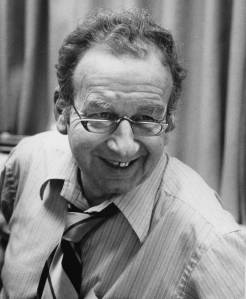
Fetterman’s story was published in the July 28, 1968, edition of the CJ Sunday Magazine. It won the 1969 Pulitzer Prize for  a category that was then called local, general, or spot-news reporting.

Fetterman died of a heart attack in 1975, when he was only 55. His daughter, Mindy Fetterman, has had a long career in journalism, including management positions at The Dallas Morning News and USA Today.

Today, I am running Fetterman’s story here, in its entirety. (This is a longer-than-usual post, but I believe you will find it worth your time.)

**

It was late on a Wednesday night and most of the people were asleep in Hindman, the county seat of Knott County, when the body of Private First Class James Thurman (Little Duck) Gibson came home from Vietnam.

It was hot. But as the gray hearse arrived bearing the gray Army coffin, a summer rain began to fall. The flat raindrops glistened on the polished hearse and steamed on the street. Hindman was dark and silent. In the distance down the town’s main street, the red sign on the Square Deal Motor Co. flashed on and off.

Private Gibson’s body had been flown from Oakland, Calif., to Cincinnati and was accompanied by Army Staff Sgt. Raymond A. Ritter, assigned to escort it home. The body was picked up in Cincinnati by John Everage, a partner in the local funeral home, and from that point on it was in the care of people who had known the 24-year-old soldier all his life.

At Hindman, the coffin was lifted out while Sgt. Ritter, who wore a black mourning band on his arm, snapped a salute. One funeral home employee whispered to another:

“It’s Little Duck. They brought him back.”

Most of his life he had been called Little Duck; for so long that many people who knew him well had to pause and reflect to recall his full name.
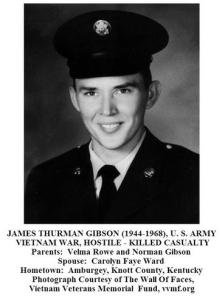
By Thursday morning, there were few people who did not know that Little Duck was home — or almost home. During the morning the family came: his older brother, Herschel, whom they called Big Duck; his sister, Betty Jo; and his wife, Carolyn.

They stood over the glass-shielded body and let their tears fall upon the glass and people spoke softly in the filling station next door and on the street outside.

The soldier’s parents, Mr. and Mrs. Norman Gibson, waited at home, a neat white house up the hollow which shelters Flax Patch Creek, several miles away. Mrs. Gibson had been ill for months, and the family did not let her take the trip to Hindman. Later in the morning, they took Little Duck home.

Sweltering heat choked the hills and valleys as Little Duck was placed back in the hearse and taken home. The cortege had been joined by Maj. Lyle Haldeman, a survival assistance officer, sent, like Sgt. Ritter, to assist the family. It was a long, slow trip — over a high ridge to the south, along Irishman Creek and past the small community of Amburgey.

At Amburgey, the people stood in the sun, women wept and men removed their hats as the hearse went past. Mrs. Nora Amburgey, the postmistress, lowered the flag in front of the tiny fourth-class post office to half-mast and said, “We all thought a lot of Little Duck.”

At the point where Flax Patch Creek empties into Irishman Creek, the hearse turned, crossed a small wooden bridge and drove the final mile up Flax Patch Creek to the Gibson home. The parents and other relatives waited in a darkened, silent home.

As the coffin was lifted upon the front porch and through the door into the front living room, the silence was broken by cries of grief. The sounds of anguish swelled and rolled along the hollow. Little Duck was home.

All afternoon and night they came, some walking, some driving up the dusty road in cars and trucks. They brought flowers and food until the living room was filled with floral tributes and the kitchen was crammed with food. The people filled the house and the yard. They talked in small groups and members of the family clasped each other in grief.

They went, time and time again, to look down into the coffin and weep.

The mother, a sweet-faced mountain woman, her gray hair brushed back and fastened behind her head, forced back the pangs of her illness and moved, as in a trance, among the crowd as she said:

“His will will be done no matter what we say or do.”

The father, a tall, tanned man, his eyes wide and red from weeping, said:

“He didn’t want to go to the Army, but he knew it was the right thing to do so he did his best. He gave all he had. I’m as proud of him as I can be. Now they bring him home like this.”

Around midnight the rain returned and the mourners gathered in the house, on the porch and backed against the side of the house under the eaves.

The father talked mostly of his son.

“I suppose you wonder why we call him Little Duck. Well, when the boys were little they would go over and play in the creek every chance they got. Somebody said they were like ducks.

“Ever since then, Herschel was `Big Duck’ and James was `Little Duck.’

“You work hard all your life to raise your family. I worked in a 32- inch seam of coal, on my hands and knees, loading coal to give my family what I could.

“There never was a closer family. Little Duck was born here in this house and never wanted to leave.”

Other mourners stepped up to volunteer tributes to Little Duck.

“He never was one to drink and run up and down the road at night.”

“He took good care of his family. He was a good boy.”

Little Duck also was a big boy. He was 6 feet 5 1/2 inches tall and weighed 205 pounds. His size had led him to the basketball team at Combs High School where he met and courted the girl he married last January.

Little Duck was home recently on furlough. Within a month after he went down Flax Patch Creek to return to the Army he was back home to be buried. He had been married six months, a soldier for seven.

The Army said he was hit by mortar fragments near Saigon, but there were few details of his death.

The father, there in the stillness of early morning, was remembering the day his son went back to the Army.

“He had walked around over the place, looking at everything. He told me, “Lord it’s good to be home.”

“Then he went down the road. He said, `Daddy, take care of yourself and don’t work too hard.’

“He said, `I’ll be seeing you.’ But he can’t see me now.”

An elderly man, walking with great dignity, approached and said, “Nobody can ever say anything against Little Duck. He was as good a boy as you’ll ever see.”

Inside the living room, the air was heavy with the scent of flowers. Little Duck’s mother sat with her son and her grief.

Her hand went out gently, as to comfort a stranger, and she talked as though to herself:

“Why my boy? Why my baby?”

She looked toward the casket, draped in an American flag, and when she turned back she said:

“You’ll never know what a flag means until you see one on your own boy.”

Then she went back to weep over the casket.

On Friday afternoon Little Duck was taken over to the Providence Regular Baptist Church and placed behind the pulpit. All that night the church lights burned and the people stayed and prayed. The parents spent the night at the church.

“This is his last night,” Little Duck’s mother explained.

The funeral was at 10 o’clock, Saturday morning and the people began to arrive early. They came from the dozens of hollows and small communities in Letcher, Knott and Perry counties. Some came back from other states. They filled the pews and then filled the aisle with folding chairs. Those who could not crowd inside gathered outside the door, or listened beneath the windows.

The sermon was delivered by the Rev. Archie Everage, pastor at Montgomery Baptist Church, which is on Montgomery Creek near Hindman. On the last Sunday that he was home alive, Little Duck attended services there.

The service began with a solo, “Beyond the Sunset,” sung by a young girl with a clear, bell-like voice; then there were hymns from the church choir.

Mr. Everage, who had been a friend of Little Duck, had difficulty in keeping his voice from breaking as he got into his final tribute. He spoke of Little Duck “following the colors of his country.” He said Little Duck died “for a cause for which many of our forefathers fought and died.”

The phrase touched off a fresh swell of sobs to fill the church. Many mountain people take great pride in their men who “follow the colors.” It is a tradition that goes back to October of 1780, when a lightly regarded band of mountaineers handed disciplined British troops a historic defeat at Kings Mountain in South Carolina, and turned the tide of the Revolutionary War.

Shortly before Little Duck was hit in Vietnam, he had written two letters intended for his wife. Actually the soldier was writing a part of his own funeral. Mr. Everage read from one letter:

“Honey, they put me in a company right down on the Delta. From what everybody says that is a rough place, but I’ve been praying for the Lord to help me and take care of me so really I’m not too scared and worried. I think if he wants it to be my time to go that I’m prepared for it. Honey, you don’t know really when you are going to face something like this, but I want you to be a good girl and try to live a good life. For if I had things to do over I would have already been prepared for something like this, I guess you are wondering why I’m telling you all of this, but you don’t know how hard it’s been on me in just a short time. But listen here, if anything happens to me all I want is for you to live right and then I’ll get to see you again.”

And from another letter:

“Honey, listen, if anything happens to me I want you to know that I love you very, very much and I want you to keep seeing my family the rest of their lives and I want you to know that you are a wonderful wife and that I’m very proud of you. If anything happens I want Big Duck and Betty Joe to know that I loved them very much. If anything happens also tell them not to worry, that I’m prepared for it.”

The service lasted two hours and ended only after scores of people, of all ages, filed past the coffin.”

Then they took Little Duck to Resthaven Cemetery up on a hill in Perry County. The Army provided six pallbearers, five of whom had served in Vietnam. There was a seven-man firing squad to fire the traditional three volleys over the grave and a bugler to sound taps.

The pallbearers, crisp and polished in summer tans, folded the flag from the coffin and Sgt. Ritter handed it to the young widow, who had wept much, but spoken little, during the past three days.

Then the soldier’s widow knelt beside the casket and said softly, “Oh, Little Duck.”

Then they buried Little Duck beneath a bit of the land he died for.
John Fetterman

The 2020 Pulitzer Prize winners were announced on Monday, but a lot of Kansas City area residents might not know about it: I don’t think a single local media operation ran a story.

Just like last year, The Star published a maddeningly narrow story, saying that editorial board member Melinda Henneberger was a finalist, as she was in 2019.

And just like last year, The Star’s story was misleading, in that, for much of the story, it sounded like Henneberger, as a finalist, was still in the running for the big prize.

It was not until the twelfth paragraph that the story indicated the competition was over and that someone else — Jeffery Gerritt of the Herald Press in Palestine, TX — had won the prize in editorial writing.

In equally maddening and parochial fashion, The Star did not report the winners in any other category.

(Note: Today’s print edition, which was delivered after this post was published, carried a story about three Kansas writers who were recognized in the fiction, nonfiction and feature writing categories.)

…Prizes were awarded in 13 different journalistic categories for work published in 2019. Here are the winners in several categories.

Breaking News

The award went to my hometown paper, The Courier Journal, in Louisville, KY. The CJ’s staff uncovered how last-minute pardons by Kentucky’s departing governor, Matt Bevin, were made unilaterally and violated legal norms. More than a dozen Courier Journal staffers were involved in the coverage, which included an ambitious digital presentation of Bevin’s actions and his explanations and a racial breakdown of those whose sentences he commuted. Two days before Christmas Eve, the newsroom also produced an eight-page special section. The CJ is owned by Gannett.

Public Service

The winners were The Anchorage Daily News and Pro Publica for a year-long investigation of sexual violence in Alaska.

Investigative Reporting

Thirty-one-year-old Brian M. Rosenthal of The New York Times received the award for a five-part series on how reckless loans, handed out by a group of taxi medallion owners, put thousands of immigrants in debt while bankers made huge profits.

Explanatory Reporting

The staff of The Washington Post prevailed for a series on global warming. The series demonstrated how parts of the earth have already warmed by 2 degrees Celsius, a threshold scientists consider dangerous.

Local Reporting

The staff of the Baltimore Sun won for exposing illegal self-dealing by Mayor Catherine Pugh. The reporting resulted in the mayor’s resignation and her being sentenced to three years in prison.

National Reporting

Two organizations were honored. Three Pro Publica reporters won for an investigation of a series of accidents in involving America’s 7th Fleet, and four Seattle Times reporters took similar honors for coverage that exposed design flaws in Boeing’s 737 Max.

Audio Reporting

This American Life got the first Pulitzer awarded for audio journalism for a story that focused on the Trump administration’s “Remain in Mexico” policy and how it affected asylum seekers.

International Reporting

The staff of The New York Times won for a series of stories that exposed Russian President Vladimir Putin’s predatory regime, including its successful effort to destabilize elections.

Commentary

Nikole Hannah-Jones

Nikole Hannah-Jones of The New York Times won for her Times Magazine spread, “The 1619 Project,” which re-evaluated and re-centered the role of African-Americans, including enslaved people, in American history. (Her project took up most or all of one magazine issue.)

Editorial Cartoons

The winner was Barry Blitt, who has contributed cartoons to The New Yorker for more than 30 years. He was honored for a series of unflattering caricatures of President Trump, like this one…


**

One more thing about The Star…It took a mighty swing at a Pulitzer in the investigative reporting category with its “Throwaway Kids” series, about foster children and problem-plagued, state foster-care programs.

It was a good series, but it seemed to me to have been mapped out primarily with the goal of winning a Pulitzer. The reporters, as well as Editor/President/Publisher/Zoom-conference-coordinator Mike Fannin, must be smarting; the series not only didn’t win, it was not one of two other finalists. (As I said above, Brian Rosenthal of The Times was the winner in the investigative category.)

Here is a complete list of the 2020 winners in all categories.

Now, class, I’ve got three graphics to show you today, so don’t doze off on me.

The first is the number of new coronavirus cases in the Kansas City area as of Monday. The area includes Kansas City and Jackson, Clay and Platte counties in Missouri and Johnson and Wyandotte counties in Kansas. On Monday, according to The Star, the area saw its “sharpest rise in the number of new COVID-19 cases.”

That’s not the sharpest in the last week or so — the sharpest since the outbreak of the COVID-19 pandemic.


The next graphic shows the number of new cases in the New York City metro area.

The last graphic shows the number of new cases in the rest of America.

Now, if I was President…or governor of Missouri or Kansas…or a mayor in any of the municipalities in our metro area, I would be hard pressed to tell my constituents, “OK, let’s get about opening things up.”

And yet, state by state, area by area, we are reopening. Clay County and Platte County began opening the gates Monday; Kansas City is having a “phased reopening” starting today and expanding on May 15. Jackson, Johnson and Wyandotte counties are “closed” until Monday, and I’m not sure what’s going on with those jurisdictions after that.

I understand the pressure our elected officials are under to reopen businesses and let people get back to work so they can start getting paid again. And I understand, to a lesser degree, the libertarians who fuss and fume and say, “You can’t shackle me!”

But, my God, I fear the price. Nationwide, we are now at more than 71,000 deaths officially, and the real number is probably a lot higher. We’ve all heard the predictions of a much higher incidence of new cases and additional deaths, and with this stampede to reopen it looks to me like we could easily be at 140,000 deaths by the end of June of middle of July.

…Well, Patty and I are not among those champing at the bit to go back to the restaurants, department stores, box stores, even the grocery. I learned my lesson March 24, which was Day 1 of Kansas City’s lockdown. I wrote blithely about going to six stores that day…Yes, six! A few readers rightly chastised me, including our son Charlie, who works at the University of Chicago Medicine. One reader told me to limit myself to one store once a week and added, “Be a good citizen.”

The rebukes hit me like a bucket of water in the face, and I immediately reformed. Since then, I’ve averaged no more than one store a week, and, for the most part, we have relied on Instacart for our groceries.

Most of the people who are screaming to get out of jail free are younger and less vulnerable to COVID-19 at its worst. I sense that most older people, like me, are more willing to wait another one, two or three months to make sure the case numbers have been going down instead of staying steady or rising.

Before this pandemic hit, I didn’t know much at all about the 1918 Spanish flu pandemic, but we’ve all heard a lot about that now. And we’ve all heard, haven’t we, about the pandemic’s deadly second wave — more deadly than the first — and the third wave in 1919?

History is staring us in the face, and it has presented us with a gun, which we’re holding in our collective hands…It looks like we’re about to squeeze the trigger.

**

There is only one perverse positive element to this situation…It is Baby Boomers, by and large, who elected President Trump, and it is they who will suffer the most from these premature reopenings. If it gets grim, as I suspect it will, more and more people of my generation will turn on Trump.

It’s not much to cling to because I think Trump has already done himself in. But it’s the only glimmer I see on the dim horizon.

What to make of this Joe Biden problem?

Along with a lot of other Democrats, I’ve been struggling with that question the last couple of weeks.

If there’s not an outright fire, a lot of smoke is swirling around former aide Tara Reade’s assertion that Biden pinned her against a Senate building wall in the spring of 1993, kissed her neck, put a knee between her legs and penetrated her vagina with his fingers.

Reade said that when she resisted the advances, Biden said, “Aw, man, I heard you liked me.” Then, she alleged, he pointed a finger at her and said, “You’re nothing to me.” And, finally, according to her account, Biden shook her by the shoulders and said, “You’re OK, you’re fine” before walking away.

Reade, who had begun working for Biden in December 1992, was fired in August 1993.

Let’s take a look at some of the probable incriminating factors in this case and also at some of the possible exculpating and curious factors…(These are not all of the factors in this case.)

Incriminating

:: Reade’s account just sounds plausible, in the details and especially the terminology: “Come on, man, I heard you liked me.” That’s the way Biden talks; everyone has heard him say, “Come on, man,” or something like that.

:: Speaking to The New York Times a few weeks ago on the condition of anonymity, two friends of Reade corroborated parts of her story. One said Reade had told her about the alleged incident in 1993. The other recalled Reade telling her in 2008 that Biden had touched her inappropriately and that she had experienced a traumatic event while working in his office.

:: Last week, two more people came forward to corroborate parts of Reade’s story in interviews with a publication called Business Insider. Lynda LaCasse, a former neighbor in California, said Reade described the incident to her in 1995 or 1996. “This happened, and I know it did because I remember talking about it,” LaCasse was quoted as saying. Adding to LaCasse’s credibility is her party affiliation. “I personally am a Democrat, a very strong Democrat,” she said. “And I’m for Biden, regardless. But still I have to come out and say this.”

:: The other woman who came out last week, Lorraine Sanchez, worked with Reade in the office of a California state senator in the mid-1990s. Sanchez said Reade told her at the time that Biden had harassed her and that, because of that, she had been fired.

:: Also last week, video emerged of an unnamed woman Reade says was her mother calling into a 1993 broadcast of CNN’s “Larry King Live.” The show was about the culture of Washington, DC. The woman claimed her daughter had run into unspecified “problems” with a U.S. senator. She said: “My daughter has just left there, after working for a prominent senator, and could not get through with her problems at all, and the only thing she could have done was go to the press, and she chose not to do it out of respect for him.” The call came from San Luis Obispo, CA, and CNN has confirmed that Reade’s mother, Jeanette Altimus, now deceased, lived in San Luis Obispo around that time.

:: Biden waited five weeks before addressing the issue publicly and in person. (On MSNBC’s Morning Joe show last Friday, he said, “I’m saying unequivocally it never, never happened.”)

Exculpating and curious

:: Last year, Reade was one of several women who came forward with complaints of Biden hugging or touching them in ways that made them uncomfortable, but Reade did not go public with her assault accusation until March 25. She says she tried to share her story with the media earlier but got “shut down.”

:: Reade is the only woman who has claimed Biden sexually assaulted her.

:: The two friends who spoke to The New York Times would not go on the record.

:: No former Biden staff members have corroborated any details of Reade’s allegation.

:: Reade said she filed a general harassment complaint against Biden with a Senate office in 1993, it has not turned up.

:: Reade’s brother, Collin Moulton, confirmed parts of Reade’s account to a publication called The Intercept in March, but, for whatever reason, he would not speak to the Times, which did the most extensive investigation. Moulton spoke to The Washington Post and said Reade had told her in 1993 that Biden had touched her neck and shoulders, but he said nothing about an alleged assault in the interview. In a text message days after the interview, however, he told the Post he also recalled Reade saying Biden had put his hand “under her clothes.”

:: In the past, Reade wrote and posted tweets praising Russian President Vladimir Putin. Recently, she has backtracked, saying she is not a fan of Putin and that her comments were “misguided.”

**

Back to the issue I posed at the beginning: What to make of all this?

Here’s my read…

Some Democrats, maybe a lot, are doing the equivalent of putting their hands over their eyes, plugging their ears and humming loudly to blank out anything suggesting Reade’s story might be true.

A comparable approach (what a friend of mine prefers) is blaming this on a Republican conspiracy to drag Biden down. One of many problems with that theory is if this is a giant, well-planned conspiracy, it would have to have been launched in 1993, when Reade’s mother made that call to Larry King.

If this was a felony prosecution and I had listened to the evidence that’s come out so far, I would say the prosecution had not proved its case “beyond a reasonable doubt.” On the other hand, based on what I’ve read and heard, I think it’s more likely than not that Biden did what Reade says he did. Regardless of how strongly he has condemned sexual harassment, I can envision how lust, impulse and a sense of entitlement — especially in a much younger Joe Biden — could have co-mingled and prompted an aberration.

That said, am I going to abandon Biden and vote for Trump? Of course, not. Like LaCasse, “I’m for Biden, regardless.”

Nevertheless, this tumult has, at the very least, diminished Biden. He can say it ain’t so, but, like me, a lot of other people are looking at him more circumspectly than they did two months ago.