Feeds:
Posts
Comments

In a recent court filing, Jackson County prosecutors have set out a definitive line of argument they intend to use at trial against David Jungerman.

At the request of prosecutors, Judge David Michael Byrn swept aside the strenuous and persistent objections of Jungerman’s lead defense attorney and given the state the right to secure testimony from officials at two banks, UMB and Blue Ridge Bank and Trust, where Jungerman apparently keeps millions of dollars in assets.

It has been clear from the beginning of this case that prosecutors cannot physically place Jungerman near the Brookside front yard of lawyer Thomas Pickert, who was gunned down Oct. 25, 2017, while talking on his cellphone after walking his two young sons to school.

Prosecutors do have, however, a mountain of circumstantial evidence — some of it created by Jungerman as he shuffled assets in an attempt to shield them after Pickert won a $5.75 million civil judgment against him while representing a trespasser Jungerman shot in 2012.

As a result of the shooting, the trespasser, Jeffery Harris, had to have a leg amputated.
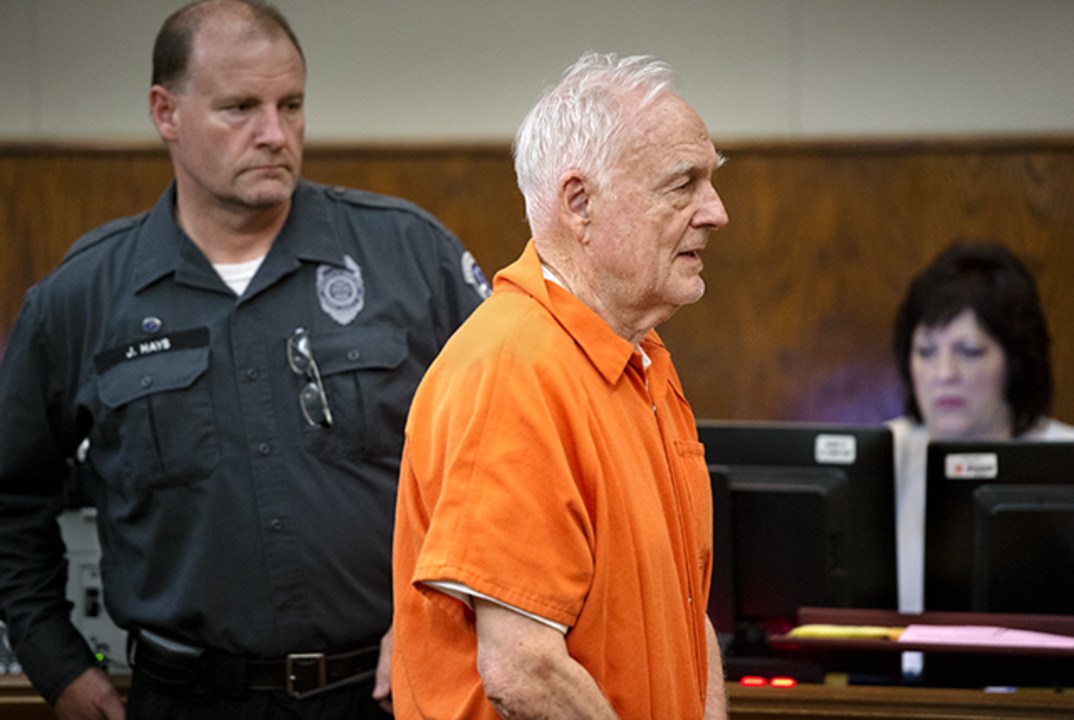
David Jungerman at a court hearing last May

Within days of the July 2017 civil verdict, Jungerman began moving money held in his name and that of his business, Baby Tenda, which produces baby high-chairs.

Specifically, prosecutors said in the recent filing, “He began opening and closing accounts, creating purported ‘irrevocable’ trusts, and transferring money and real property to his daughter, Angelia Buesing, his ex-wife Sandra Jungerman, and to other third parties.”

For decades, Jungerman, a gun nut, has lived by the conviction that he can take matters into his own hands whenever he feels someone represents a threat against him, his property or his money. He has shot at least three trespassers outside his Baby Tenda business in northeast Kansas City since 2012, and decades ago he detained at gunpoint a group of teenagers who were trespassing on property he owns in Raytown.

A hallmark of Jungerman is his off-the-charts recklessness in deed and word. That recklessness has not abated since he was jailed last March. Recently, prosecutors divulged that they had assembled 122 pages of notes from phone calls Jungerman made from the Jackson County Detention Center.

At the beginning of every call, a recording warns that inmate calls are monitored. That didn’t deter Jungerman from making scores of calls concerning the movement of money and property among various individuals, trusts and accounts.

This from the state’s recent filing…

The vast majority or all of the accounts and all of the persons listed in the subpoenas are discussed repeatedly by the Defendant himself on his jail calls. The Defendant discussed his interests at UMB as recently as May 29, 2018, and at Blue Ridge Bank as recently as November 2, 2018. He repeatedly referenced transfers to his daughter Angelia Buesing, and her daughter, Julianne Kiene, and to his ex-wife, Sandra Jungerman.

The State believes that this evidence strengthens the State’s motive evidence by showing how obsessed the Defendant is with his money, and the abnormally extensive lengths to which the Defendant will go to protect his money even in the face of legal judgments.

**

As I’ve said before, Jungerman got very lucky the day Pickert was shot with a rifle by someone sitting in a van parked across the street his home. No one can positively put Jungerman at the scene. But…

Two people said they saw an older, gray-haired man and a white van in the area…Jungerman has gray/white hair and a white van.

In addition, KCMO detectives have been able to piece together video from “traffic cameras, businesses, residences and two ATA buses” indicating Jungerman’s van was driven from Raytown to the Brookside area an hour before the shooting and driven back to Raytown after the shooting…Jungerman told police the van was on his Raytown property that morning and went nowhere. 

The evidentiary coup de grace, though, is a recording police obtained of Jungerman confessing to the crime while talking to one of his employees.

That was another instance of his recklessness: He had inadvertently left an audio recorder running after having turned it on earlier to record part of a court hearing in an unrelated criminal case, which was later dropped.

The way I see it, assuming the prosecution makes no fatal legal missteps, David Jungerman is going to spend the rest of his life behind bars. In addition, that $5.75 million judgment will be paid, and Thomas Pickert’s survivors will probably win millions in their wrongful-death civil suit.

The murder trial is scheduled to start Feb. 25.
Boston and environs

Patty and I spent last weekend in the Boston area, where we were visiting my last living aunt, Nanette Eckert.

At one time, I had six sets of aunts and uncles — two on my mother’s side and four on my father’s. Back in my 30s and 40s, I couldn’t imagine the day when it would be down to a single aunt or uncle. But, alas, the day arrived.

Nanette, my late father’s sister, is 88 — a healthy and active 88, luckily. Her husband, Jim, died Oct. 27. They are originally from Louisville, where all my family is from. Nanette and Jim moved to the Boston area more than 40 years ago when he was transferred by his career-long employer, General Electric.

We had three days with Nanette, who lives in a retirement complex in Needham, and on Sunday evening we went to another suburb, Acton, to spend a night and part of Monday with a longtime friend, Ellen Oak, who lived and worked in Kansas City decades ago.

The time with Nanette and Ellen was gratifying. While they were the focal points of our visit, we also were able to go to Boston’s Museum of Fine Arts, and twice we made it to Boston’s North End, the city’s oldest residential area and home to numerous, fine Italian restaurants. We had one lunch at a cramped and quirky place called The Daily Catch, which features seafood and pasta. Another day we ate at La Famiglia Giorgio’s, a more spacious and traditional restaurant.

I didn’t get as many photos as I would have liked, but I got enough for a decent representation.

I hope you like them…

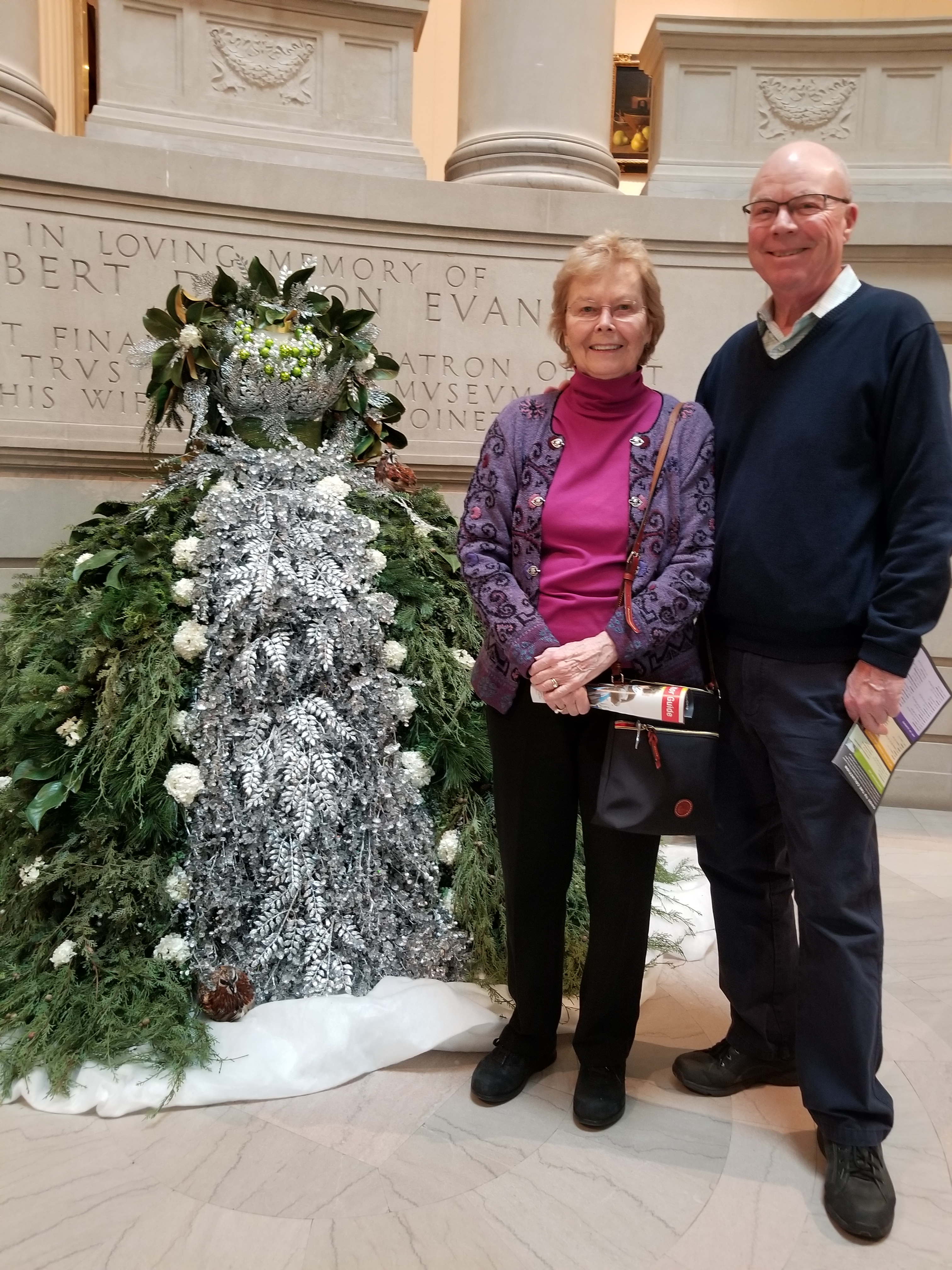
Nanette and I, next to a beautifully outfitted tree/woman at the Museum of Fine Arts

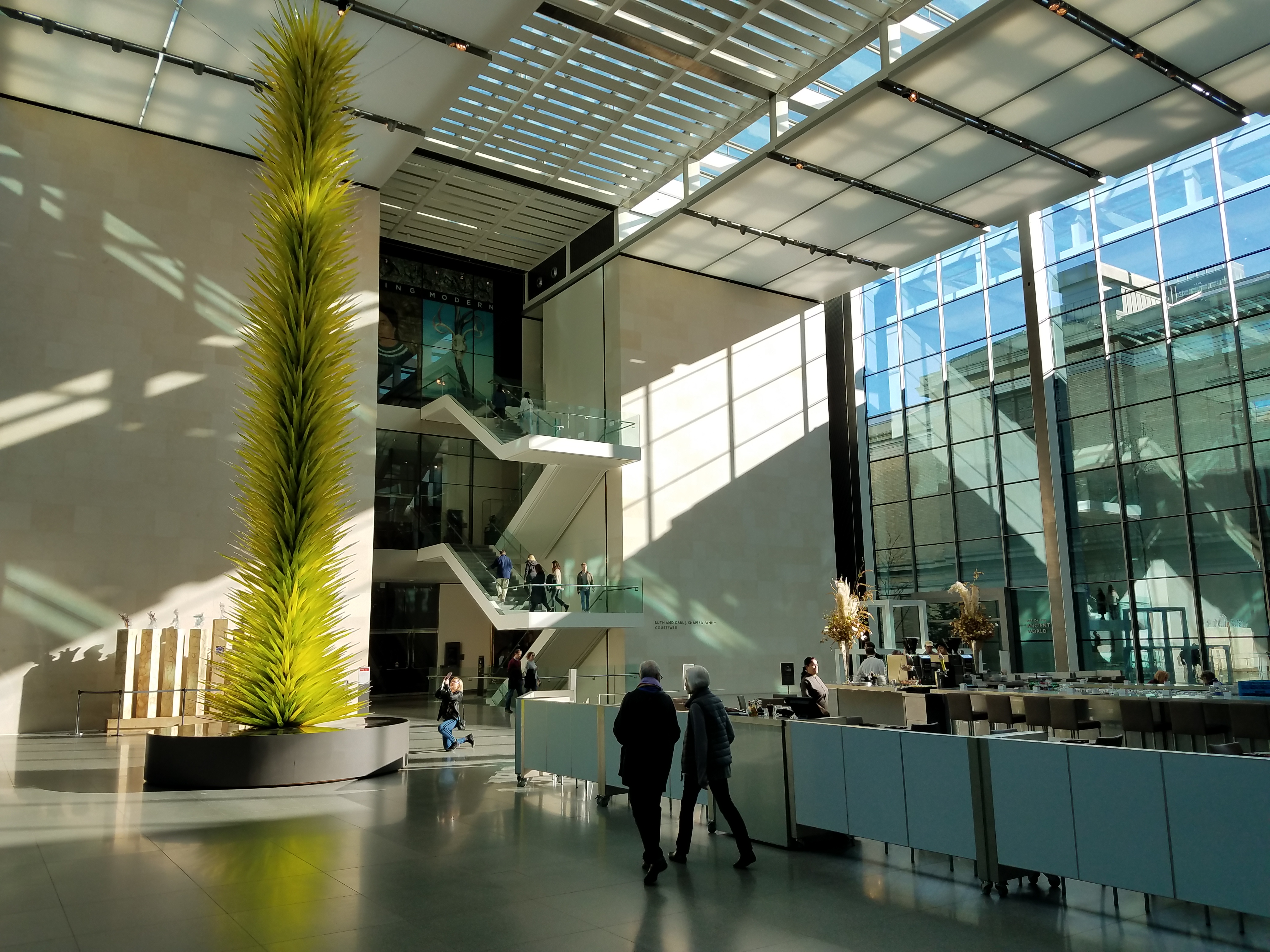
The MFA lobby

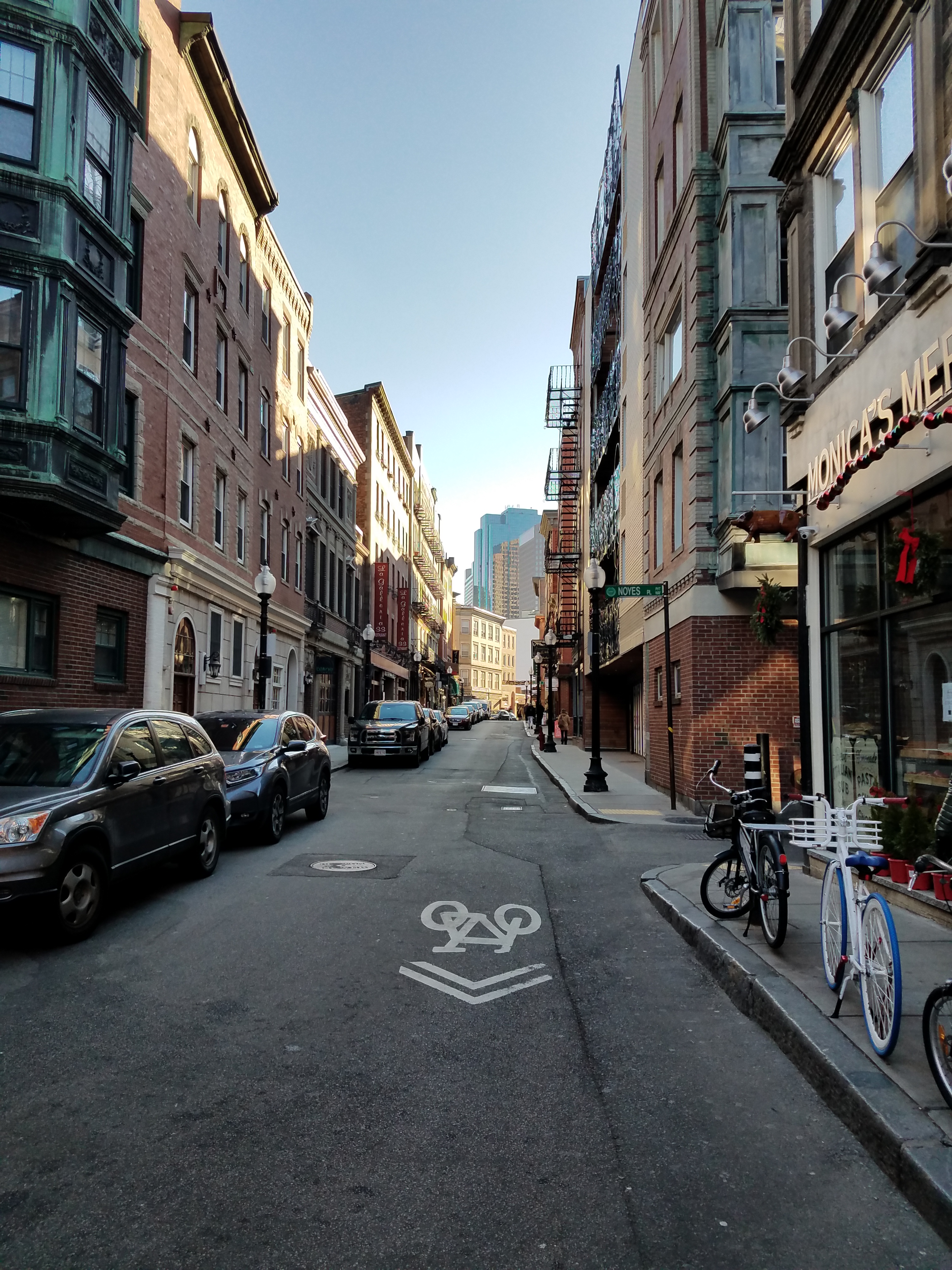
Salem Street — one of two streets, along with Hanover Court, that comprise the heart of the North End

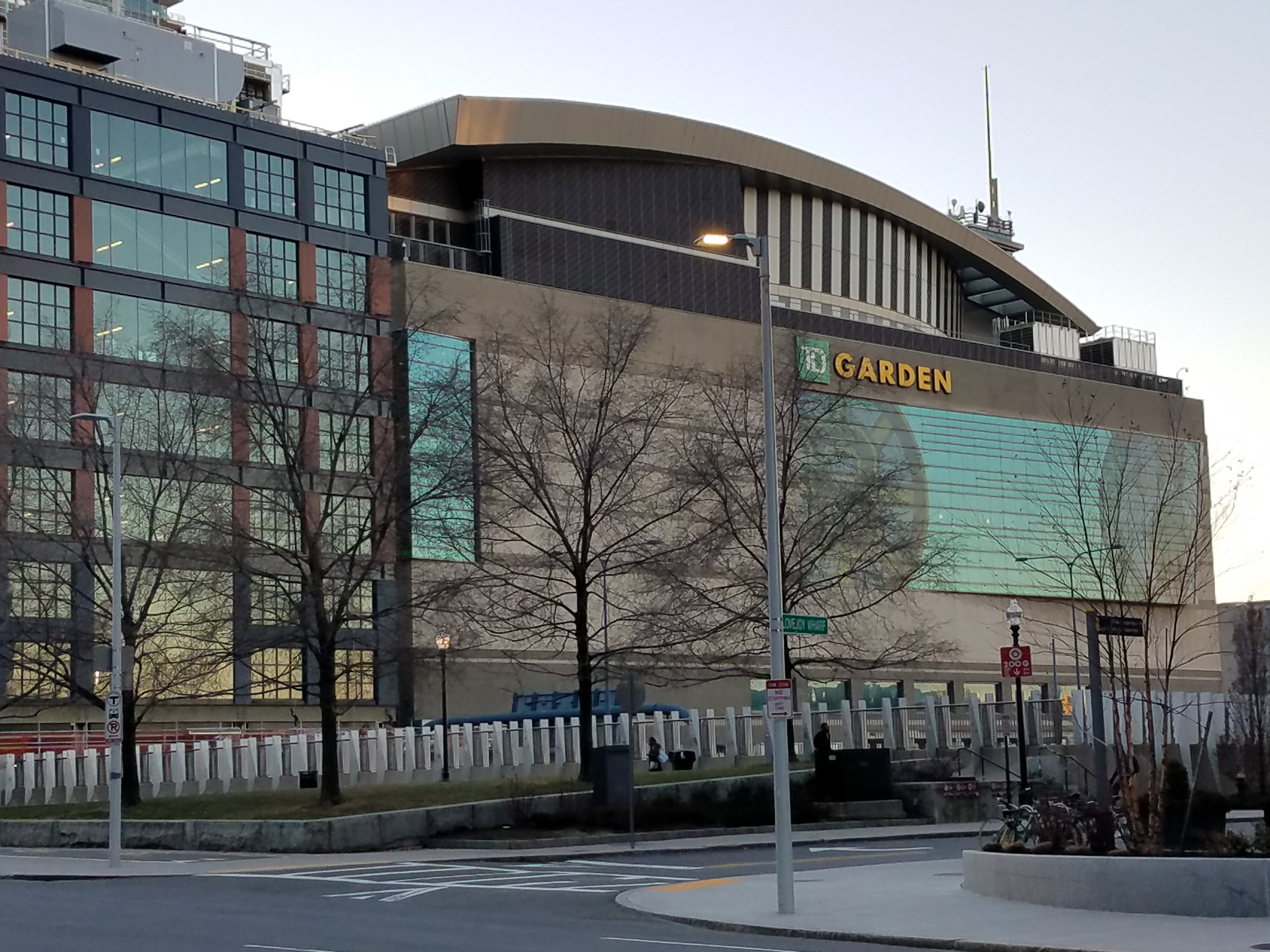
TD Garden, which about 20 years ago replaced the legendary Boston Garden, where such Boston Celtic stars as Bill Russell and Bob Cousy played.

This is a retail operation at Volante Farms in Needham. The “farmstand” features, among, other things, a gourmet deli, a butcher shop, homemade pastries and locally roasted coffee.

Some of the goodies in the bakery

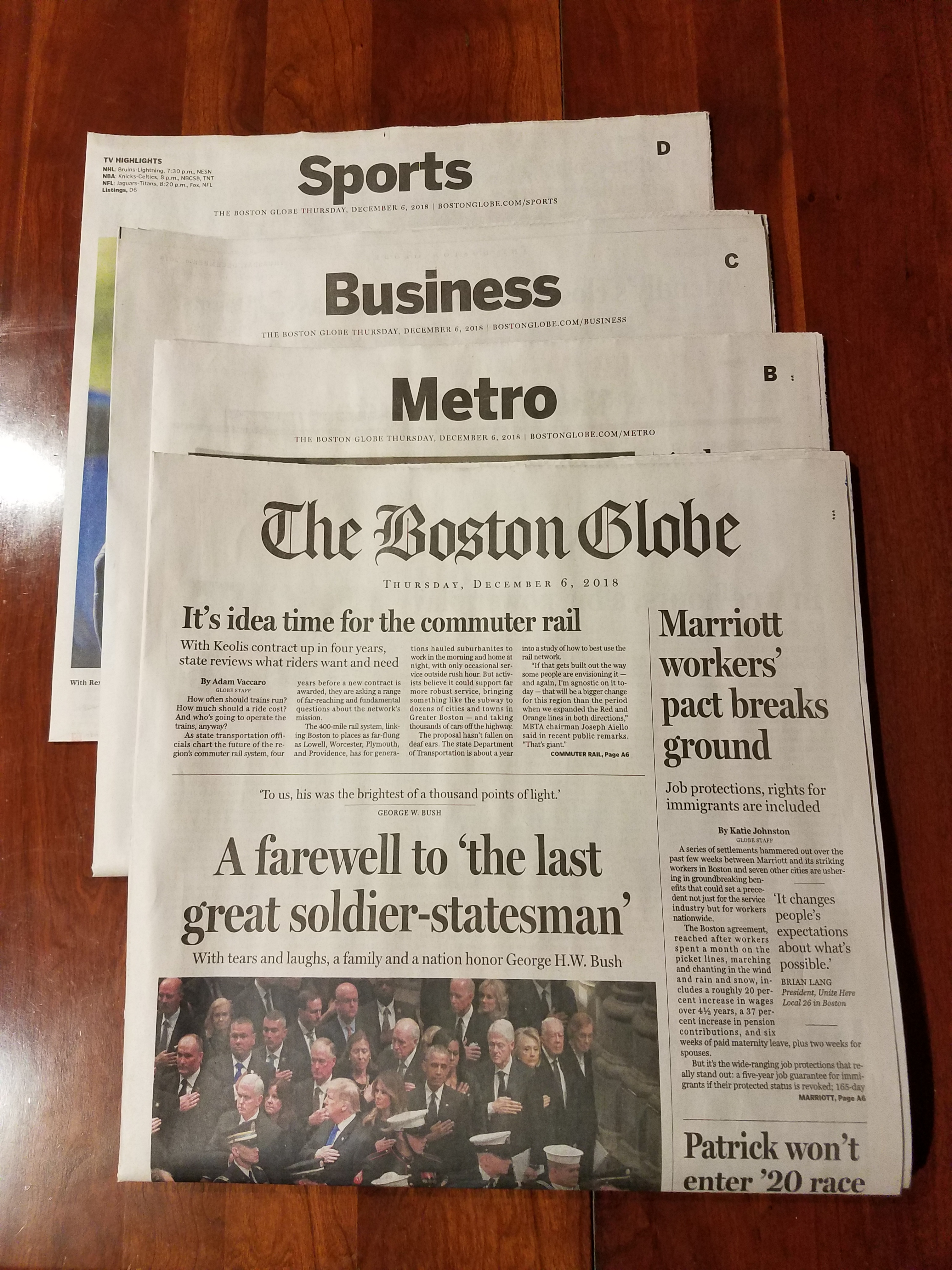
Finally, here’s something that warmed my heart: A full, four-section, daily paper. In 2013, Boston Red Sox principal owner John W. Henry bought the paper for $70 million. As of Sept. 30, The Globe had nearly 100,000 digital subscribers — more than 10 times as many as The Kansas City Star.


Thursday afternoon’s news that Tribune Publishing’s board of directors had rejected a purchase offer by the McClatchy Co. has to come as a relief to most readers and employees of McClatchy’s 29 daily papers, including The Star.

McClatchy has been trying to cut its way to profitability since it purchased the Knight Ridder chain for $4.5 billion in 2006, and its print-to-digital effort has not gone well. And so, the prospect of McClatchy — some $800 million in debt — acquiring a significantly larger newspaper company just didn’t make sense.

Somehow, though, the company managed to put together what some reports called “a fully financed offer” that included $15 a share in cash and the rest in stock. Tribune’s shares closed slightly down Thursday, at $13.58, while McClatchy shares rose 6.5 percent to $8. (It was about $50 a share when it purchased Knight Ridder.)

The company obviously was able to tap into a funding source — perhaps a hedge fund — but I think it lost its edge after Patrick Soon-Shiong, who holds a 25 percent share in Tribune decided against throwing in with McClatchy. Earlier this year, Soon-Shiong, a surgeon, entrepreneur and philanthropist, purchased the Los Angeles Times and San Diego Union-Tribune from Tribune for $500 million.

Patrick Soon-Shiong (left) walking through the Los Angeles Times newsroom

In the heady weeks after that purchase, he reportedly was interested in teaming up with McClatchy to buy Tribune largely because of McClatchy’s string of California papers. The New York Post reported late last month, however, that Soon-Shiong had cooled to that prospect because of a declining print and digital audience in LA. In other words, he got a taste of the new reality that McClatchy has been dealing with since 2006.

With McClatchy out of the picture, the odds-on favorite to purchase Tribune is the combined team of the Donerail Group, headed by former hedge fund Will Wyatt, and AIM Media, a fast-rising company that owns papers in Texas, Ohio, Indiana and West Virginia.

AIM is headed by Jeremy Halbreich, former president of the Dallas Morning News and former chairman of the Chicago Sun-Times.

When I asked a local investment banker a couple of months ago what he thought was going on with McClatchy’s seemingly low-percentage attempt to buy Tribune, he said, “It’s a way to reorganize without going through bankruptcy.”

To me, this looked a lot like a Hail Mary pass. A desperate attempt to make some waves and start over with something resembling a clean canvas.

But now, with the pass falling short and given the depressing way things have been going, bankruptcy appears all the more likely for McClatchy.

As far as I know, no other chain is up for sale, and it would be difficult, anyway, to simply switch streams and reach out for another chain. Should McClatchy file for bankruptcy, it could either be purchased wholly or broken up, with its papers sold individually or in smaller groupings.

A break-up is the scenario I’m hoping for because it would offer the best chance of a deep-pocketed “angel” swooping in, buying it and attempting to restore it to its former status as a key element in the Kansas City fabric.

**

Reaction to Thursday’s development on the Kansas City Star Bylines Facebook page was not sympathetic.

Duncan Moore, a former Star reporter who now lives and works in Chicago posted this:

“Lucky for us here in Chicago. All we need is another absentee corporate owner that’s going down the tubes!”

And Les Weatherford, a good friend who worked on The Star’s copy desk for many years before being laid off after the McClatchy purchase, wrote, “Boo hoo hoo.”

No, McClatchy hasn’t won many fans here in Kansas City — nor, I would imagine, in any of the other cities that had Knight Ridder papers.

Not that being owned by Knight Ridder was a bowl of cherries, but I don’t believe there were any layoffs during the years KR owned The Star.

And in the end, Knight Ridder got lucky: Its board decided to sell after a major, disgruntled stockholder agitated for it, complaining that Knight Ridder stock was not performing as well it should have.

In the sale to McClatchy, Tony Ridder, Art Brisbane and other top KR executives made millions and walked away contentedly. At The Star (and the other KR papers) we didn’t realize it at the time, but the misery was just starting.

Kansas City Star employees and readers should be watching closely the next few days or weeks to see what happens with regard to its corporate owner, the McClatchy Co.

Common sense says there’s no way McClatchy, which owns 29 daily papers, could buy the larger (in financial terms) Tribune Publishing Co., which owns the Chicago Tribune and several other papers, and yet I keep seeing reports that McClatchy is in the hunt.

Just yesterday, Keith J. Kelly of the New York Post reported that McClatchy executives were “visiting some of the papers involved in a potential sale.”

Kelly quoted an anonymous source as saying “if it (a deal) doesn’t happen this week, it may not happen at all.”

…I tell you, those of you who still have two good knees (not me) should get down on them and pray that McClatchy doesn’t get control of Tribune.

McClatchy is a certifiable disaster as a journalistic enterprise and has been since it paid $4.5 BILLION for the Knight Ridder chain in 2006. That was at the precise time the newspaper industry was starting down what has turned out to be an amazingly steep slope.

I’d like to call on Congress — before it goes on Christmas break — to quickly pass a bill prohibiting any company with an $800 million debt from buying another company.

Not just that…McClatchy also has cut thousands of jobs at its papers and has reduced its print editions to shells of what they used to be.

And yet, if Keith Kelly is correct, this dolphin of a newspaper chain has its little jaws open and is chasing another whale.

It’s not clear if a wealthy individual or a hedge fund — or some other entity – is backing McClatchy’s bid, but it certainly can’t swing such a deal on its own. To me, it’s far-fetched from every possible vantage point.

More likely, from my way of thinking, is that Tribune ends up in the hands of a team of two men who have teamed up on a competing bid.

Heading that team are Will Wyatt, a former hedge fund manager, and Jeremy Halbreich, chairman of a fast-growing, private company that owns papers in Texas, Ohio, Indiana and West Virginia. Halbreich’s main claim to fame is resuscitating the Chicago Sun-Times several years ago.

Keith Kelly reported a couple of weeks ago that the Wyatt-Halbreich team had the financial backing of Texas billionaire H. Ross Perot. If that’s the case, Wyatt and Halbreich would seem to be holding a very strong hand.

According to Kelly’s New York Post story of Tuesday, Wyatt and Halbreich would be employing a “buy to bust it up” strategy, that is, selling off most of Tribune’s papers but keeping the Chicago Tribune as flagship.

On the other hand, I assume McClatchy would be buying with an eye to hold onto the new properties.

**

From The Star’s standpoint, not much good can come out of this particular deal, however it turns out.

If Wyatt and Halbreich emerge the winners, McClatchy regroups and continues trying to cut its way to profitability.

If McClatchy somehow pulls the deal off, it extends its failing print-to-digital strategy to another dozen or so papers.

Either way, it continues stumbling and fumbling along.

The best scenario, in my view, is bankruptcy, with a “bust up” that frees 29 daily papers from the grasp of company that has been tanking for a dozen years.

It’s hard to imagine how any other course could be worse than continued ownership by McClatchy. So I say, death to McClatchy, liberty to its newspapers.

A couple of weeks ago, one of my old Louisville buddies, John Blakeney, who now lives in Florida, posted a comment asking about the “status or progress of the new airport in Kansas City.”

“You were so wound up about it a few years ago,” John wrote. “Your comments now would be interesting to me, and probably a lot of your readers.”

Because the comment was unrelated to the post at hand, I moved it to the trash. But his prodding stuck with me because what he said was true: I lobbied hard for council and voter approval of a new airport, and I haven’t written about it in several months, despite a series of mostly troubling developments.

So today, it’s back to the airport, although, frankly and unfortunately, I don’t have a lot of insight to give you. Instead, it’s mostly opinion and frustration. But come along, anyway…

At this writing, the estimated cost of a new, single terminal has risen from $964 million to $1.64 billion since 2015. As The Star said recently, much of the price increase has been due to “expanding gates and holding rooms.”

That’s a 70 percent jump. SEVENTY PERCENT!

Here, then, are my main thoughts, which I’ll explain individually.

:: This has all the appearances of a bait-and-switch deal.

:: Nevertheless, because of the path Mayor Sly James and the rest of the City Council chose to go, there’s very little we, the public, can do at this point. Our hands are tied, and the Council has limited flexibility.

:: My biggest concern now is not cost, which is largely out of our control, but what the airport is going to look like and how it will function. Again because of the path the Council embarked on, we and the Council will have limited input into design and functionality.

Let’s take a closer look at each of those points.

Bait and switch

As we all know, it took several years for the single-terminal idea to come into focus. Because they will pay for it, the airlines were intimately involved from the outset. That means there was no shortage of planning time.

The original plan called for 35 gates, four more than the city currently leases to airlines at KCI. At the time, 35 struck some people as surprisingly low. Passenger traffic has been going up steadily for years, the metro area continues to grow, and people have grown accustomed to paying the much higher fares that have come with airline deregulation.

It wasn’t until April, five months after voters overwhelmingly approved construction of a new airport, that the airlines came forward and said, oh, we miscalculated…traffic has been going up faster than we realized and we need more gates. Now it’s up to 39, with the ability to expand to 42.

A KC Star story in April said this: “Officials said the expanded plans took shape over the last two months…As initial design work started, the city, Edgemoor (the winning contractor) and the airlines said they re-examined original assumptions to make sure they were sound.”

You don’t have to be Ebenezer Scrooge to scoff at the assertion that the “original assumptions” changed within a couple of months. The hard-to-avoid suspicion is that some city officials and the major airlines floated a very conservative number to induce a “yes” vote from the public.

If that was the intention, it worked. But it has cost the city, Edgemoor and the airlines a lot of credibility. I don’t know how they go about regaining significant credibility at this point, but it would certainly help if the three parties were to resolve the current problems in short order and get the show on the road.

The chosen path

I have said from the beginning — and I testified to this effect before the City Council’s Aviation Committee in 2017, well before the public vote — that the city should have gone about this process the tried-and-true way. That is, the city should have solicited proposals for a comprehensive design, approved a design and then advertised for construction bids based on the design. That way the city — the owner of the airport — would have been clearly and unequivocally in charge of the project.

Not to mention that the public would know what the hell the building would look like!

But, no. Desperate to get off dead center, Sly and two other council members — Jolie Justus and Mayor Pro Tem Scott Wagner (both of whom are mayoral candidates now) — jumped at a seductive but overpriced proposal from local company Burns & McDonnell to build the airport on a no-bid contract.

From there, The Star’s editorial board pushed hard to allow other companies to submit proposals, and that’s what happened. What the editorial board should have done, however, was call for the Council to throw up the stop sign and go back and adopt the traditional design-first, build-second process.

This flawed process is now so far down the line it’s almost impossible to reel it back. And it’s a mess. So far, Sly has not been able or willing to exert sufficient pressure to push the airlines to hammer out a deal. Even more problematic, once the airlines decide how to apportion expenses among themselves and the start of construction nears, the balance of power will shift to Edgemoor. Because the city threw the project out to contractors like a piece of red meat, Edgemoor essentially will be able to dictate construction terms and run the tab up for the inevitable “change orders” that accompany all major construction projects.

Design

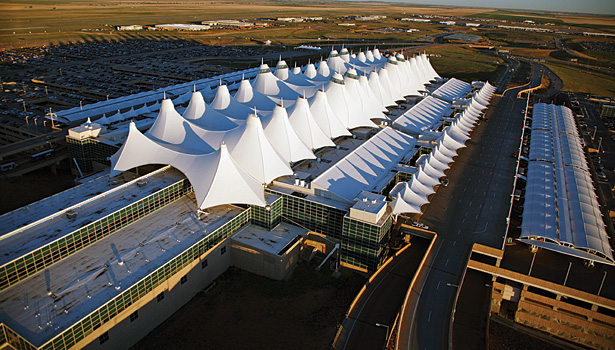
Never did I expect anything as singular and spectacular as the white “tents” — mimicking snow-capped peaks — above the terminal at Denver International Airport. But with the backassward way the city has gone about this, I’m just hoping we will end up with something that isn’t visually awful.

Instead of being the first consideration, design is bringing up the rear. Edgemoor’s primary consideration will be budget. It won’t be building to a city-specified design; it’ll be building to an agreed-upon price. That means the design will probably be pretty simplistic. I’ll be extremely surprised if it’s anything above plain-jane-mundane. I hope it will be at least functional, with plenty of natural light.

What we have seen so far from Edgemoor, in the way of design, is so rudimentary it’s laughable. There’s the rendition of the main building with a curving roof, but the focus is on a big airplane parked at a gate. (How unique!) Then, there’s a rendition of the interior with people walking about under ribbon-like ceiling panels interspersed with views of the sky. (We can only hope the interior approximates the blend of cover and natural light.)

**

The gist of all this is that Edgemoor managing partner Geoff Stricker is in the cockpit, and the rest of us — including the City Council, the Aviation Department and the airlines — are along for the ride.

Keep your seatbelts fastened, everybody; it’s going to be a long ride, with lots of turbulence.

Geoff Stricker

Journalism attracts and produces some quirky personalities, and one such person was Giles Fowler, who spent 24 years at The Star before heading off into to a second lengthy career in academia.

He taught journalism for one year at Kansas State University and then moved on to Iowa State, where he spent more than 20 years before retiring in 2002.

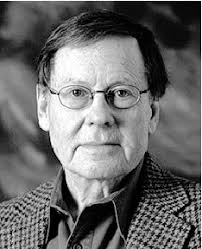
Giles Fowler

I had heard earlier this month that Giles had died in Ames, IA, and his obituary finally appeared in The Star today. (The timing of an obit is strictly up to the family.)

The obit was as quirky and singular as Giles and perfectly befitting a colorful journalist. It began like this…

Giles Merrill Fowler, father, husband, journalist, author, teacher and cheerful troublemaker, died riding a deep and emphatically requested morphine wave Nov. 3 at Israel Family Hospice House in Ames. He spent most of 84 years indulging his appetites for life’s finer pleasures, particularly stimulating company and a bottle or four of the good stuff, with infectious verve and vigor. He fought the indignities of aging with a witty, vinegary constitution. The cause of his demise was a tooth infection that led to respiratory and cardiac complications.

Giles was married and divorced twice. His first wife, Jane Pecinovsky Fowler, lives in Overland Park. She also worked at The Star.

Richard B. Fowler

Fowler was a journalistic blue blood. His father, Richard B. Fowler, spent his career at The Star, ultimately rising to editor and president. I never met Richard Fowler; he retired in 1968, the year before I arrived in Kansas City. In retirement, Richard spent much of each year in Mexico but continued to contribute stories to The Star on the politics and economics of Mexico. While visiting Morelia, Mexico, he was killed in an automobile accident on August 19, 1978, at the age of 76.

The writer of Giles’ obit said, “Giles was doomed to follow his father into that disreputable but joyous trade.”

**

At The Star, Giles worked as a reporter, film and theater critic and, finally, as editor of the Sunday magazine, which for decades was a substantive and excellent publication.

I was never close with Giles, but he was one of those newsroom personalities who stood out. He was a relatively short man, wore tinted glasses, talked fast and moved around quickly — sort of like Groucho without the forward tilt.

The only significant interaction I ever had with Giles occurred in about 1979, a year after I had left the Jackson County Courthouse beat and had moved to the features section on the morning Kansas City Times. Over a period of a few years, I had written two or three freelance stories for the Sunday magazine (before Giles became its editor), and when a magazine writing position opened up, I was very interested. I applied, and Giles invited me for an interview at the magazine office, which was across 18th Street in what we used to call the Topsy building.

Going into the interview, I thought I was a virtual lock for the job. I couldn’t imagine who at the paper might beat me out.

I sat across the desk from Giles, and he leaned back casually and smoked a cigar as we chatted. Picking up on his demeanor, I got pretty casual myself. In fact, I had a cigar with me and pulled it out and lit it up…There we were, sitting across from each other, smoking cigars and chatting idly about who would fill a relatively important position that was up for grabs.

My feeling of self-content and confidence soon began to ebb, however, when Giles started talking about another reporter who had applied for the job. He didn’t name the other reporter but said something like, “He’s a very sensitive writer.”

I couldn’t imagine who he was talking about, but as he went on about that reporter, my cigar started losing its lustrous aroma. By the time I left, I knew I had just lost out on the first internal promotion I had applied for.

Word came out a week or so later that the winning applicant was a Star-side reporter (we had both The Times and The Star until 1990) named James Kindall.

I knew Kindall as a quiet sort of person who let his writing do his talking. He was outstanding — and far better qualified than me for a feature-writing, magazine position.

I clearly remember one story he wrote, although I don’t remember if it was for the magazine or the newspaper itself. It was about Sam Walton and Kindall’s exhaustive effort to find him and interview him. The story was titled something like “On the hunt for Sam Walton.”

James Kindall

Kindall went to Bentonville, Wal-Mart’s headquarters, determined to talk with Walton. He first went to his office but was told Walton didn’t give interviews. Kindall then started talking to Bentonville residents, who assured him Walton was always out and about and that Kindall would certainly come across him somewhere. One place Walton frequented, Kindall learned, was the coffee shop at the local Holiday Inn. Kindall went there a couple of mornings but had no luck.

Then, early one morning, about 5 a.m., Kindall went back to Wal-Mart and pulled in the parking lot, outside the executive offices. Soon, an older-model car pulled up in the darkness, and a man got out of the car and started walking toward the door. Kindall jumped out of his car and intercepted the man as he reached the door and said, “Mr. Walton?”

At last, he had homed in on his target. Walton invited Kindall into the office and told him he was impressed with his perseverance but that, nonetheless, he would not give him an on-the-record interview. They chatted a while, and Kindall left, returning to Kansas City with an intriguing story about Walton.

**

Within a year or two of hiring Kindall, Giles Fowler left the paper for a one-year teaching post at Kansas State, and then he went on to Iowa State.

Kindall stayed on the magazine a few years and then went to Long Island Newsday, where he worked for nine years. For about the last 20 years, from what I can determine, he has been a freelancer, writing under the handle “Have Pen Will Travel.” He still lives on Long Island.

I continued writing features for The Kansas City Times until I returned to my political reporting roots. I got the City Hall “beat” in 1985 and stayed there 10 years, before becoming an assignment editor, the post I retired from in 2006.

Several years back, I would see Giles occasionally at Laura Hockaday’s annual KC Star reunion at the Kansas City Country Club. But now Laura’s gone, Giles is gone, and, I believe, the reunion is gone. I will never forget that day, though, I sat in Giles’ office, smugly smoking that cigar, convinced I was on the cusp of becoming a magazine writer.

John Carnes, one of the Kansas City area’s most colorful and checkered political figures, is back in the news for alleged shady dealings. And, in typical fashion, Carnes is defending himself with glib and sardonic comments.

Carnes, who is in his mid-60s, is a convicted felon who served two years in federal prison more than 25 years ago for bribing an Independence councilman. He himself is a former Independence councilman, as well as a former member of the Jackson County Legislature.

Since getting his law license back in 2006 — he was disbarred after his 1989 conviction — Carnes has stayed under the radar, for the most part, in Independence.

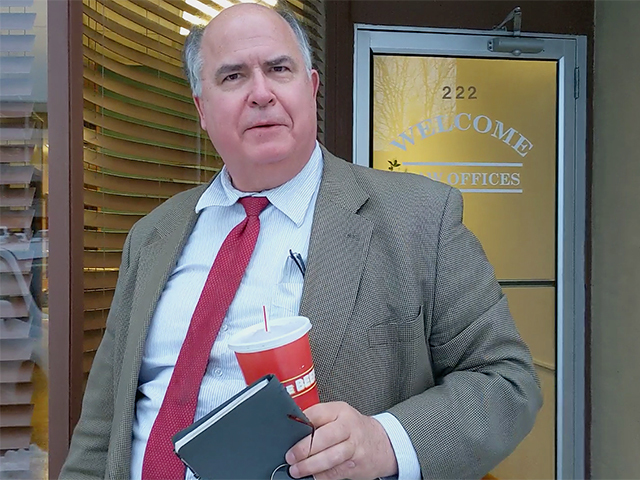
John Carnes, now…

On Wednesday, however, KSHB-TV published an investigative piece, saying that Carnes participated in some “backdoor meetings” that led up to the Independence Council approving deals that cost the city millions of dollars. In one of those deals, a council majority awarded a $9.7 million contract to a politically connected St. Louis firm, Environmental Operations Inc., to buy, demolish and remediate the city’s old power plant.

One of two council members who voted against the contract said the old power plant, located in a desolate area of Missouri City, had been deemed safe by the EPA. “EPA was not requiring us to do anything, so my position was, why spend $10 million?” Councilman Scott Roberson said.

As journalistic investigations go, this is pretty thin. The biggest smoke cloud the reporters were able to generate revolves around this paragraph, which was well down in the story…

While digging through city records, the 41 Action News investigators found a dinner receipt that shows within days of Environmental Operations meeting exclusively with the City Council, council members Curt Dougherty, Tom Van Camp and John Perkins met with John Carnes about the project.

That meeting took place in 2016. The council approved the contract with Environmental Operations in 2017. Carnes told Channel 41 he was involved in the meeting because he had a client who was interested in financing the clean-up. That explanation seems ludicrous, however, in light of City Manager Zach Walker telling reporters that outside financing was never considered for the project.

Channel 41’s story does not quote any law enforcement officials, and it is unknown if officials are looking into the deals — or if they might do so as a result of the station’s story.

**

I go way back with John Carnes. We aren’t exactly friends, but we’ve been acquaintances for decades. I’ve always found him to be funny and engaging.

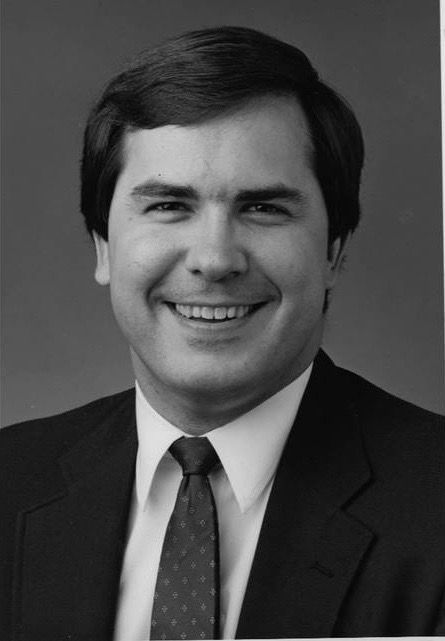
…and then.

I remember him when he was young and handsome and a budding politician. For a while he dated a woman I knew through my City Hall connections. One summer night, according to my friend from the city (and she was in a position to know), Carnes and his date got drunk and took a dip in the Meyer Circle Fountain. It bordered on scandalous, given that he was a lawyer and on the fringe of politics, but nothing came of it.

To the best of my knowledge, I never wrote about him; he was involved with Independence and later Jackson County while I was covering City Hall, but I would cross paths with him occasionally. After he got out of prison, I ran into him one night — I think it was a New Year’s Eve — at the old Jimmy and Mary’s Steakhouse, 34th and Main, and I said, “You’ll probably be back in politics pretty soon.”

He smiled and said, “I doubt that.”

More than any other disgraced, local politician, Carnes has always stood out for his contentious, unrepentant statements in the face of personal — and self-inflicted — adversity.

Here’s a sampling of some of his public responses…

:: After being sentenced to five years for bribery in 1989, Carnes told reporters (this is not exact but close to it): “At least the judge didn’t sentence me to spend five years with you guys.”

:: When asked, on the same occasion, if he had learned his lesson, he said (again, this is not exact but close), “No, I’m having so much fun it makes me want to go out and commit more crimes.”

:: At a county courthouse ceremony when he was sworn back in as an attorney after regaining his law license, he acknowledged that his problems were of his own making but couldn’t keep from lashing out at a political enemy. Former Independence Mayor Barbara Potts belonged in “the rat hall of fame,” he said because she had cooperated with investigators.

:: When approached recently by a Channel 41 reporter about his role in the Missouri City contract, he told the reporter, “I’d rather stand out in a snow drift than talk to you.”

:: He later put out a statement that read: “The negative comments of my critics are fiction and fantasy. However, these comments directed toward me on your newscast concern me because it will increase a demand for my legal services at a time that I am attempting to retire.”

:: He capped that statement with this sentence: “It should be noted that vendettas, feuds and grudges are recreational activities in Independence.”

**

Carnes looks a lot different now than he did when he was young and handsome and doing laps in the Sea Horse Fountain. Video of him taken outside an office by a Channel 41 camera person shows him to be paunchy, balding and a bit disheveled.

In the video, which is not accompanied by sound, he pulls off his sunglasses, removes a cigar from his mouth and gestures toward a reporter as if to say, “Get out of here!” Then he pulls on the office door to go inside.

Alas, the door doesn’t open; it’s locked.

Let’s hear it now…How many of you are expecting big, explosive results from Attorney General and U.S. Senator-elect Josh Hawley’s investigation of clergy sex abuse in Missouri?

I said, let’s hear it now…but all I’m hearing is the silence of this cold November night.

I think the vast majority of us — whether we be liberals, libertarians, moderates or conservatives — are expecting to hear nothing more than a pop, at best, out of Hawley’s investigation.

There will be no boom because Hawley already got what he wanted — and why he might have promised an investigation in the first place. On Nov. 6, he handily beat Claire McCaskill, and his sights are now clearly set on Washington, where he’ll team up with Missouri’s incumbent Republican senator, Roy Blunt.

Of course, Hawley must continue acting and saying his investigation will be vigorous and thorough because, well, if he said anything other than that, he’d be acknowledging the investigation was politically motivated all along.

It’s no wonder, then, that he responded strongly to an op-ed piece in the St. Louis Post-Dispatch that suggested his investigation was a lot of hot air.

Rebecca Randles

In the opinion piece, attorney Rebecca Randles, who has represented hundreds of clergy sex abuse victims, and David Clohessy, former director of the Survivors Network of those Abused by Priests, said they had heard nothing from Hawley’s office during the three months since he announced his investigation.

“It’s hard to give Hawley the benefit of the doubt when he refuses to even make a simple phone call to those with considerable knowledge of the scandal in Missouri…” Randles and Clohessy wrote.

They also wrote that Hawley’s reliance on the “voluntary cooperation” of bishops was “laughable.”

“Like us,” Randles and Clohessy said, “these prelates have also been involved in the abuse issue for decades. Unlike us, they’ve devoted considerable time, energy and resources into keeping this horror hidden, disclosing only when essentially forced to do so by courageous victims, investigative reporting or pending cases, both criminal and civil.”

Hawley responded on Twitter, saying, “We have spoken with the current president and executive director of SNAP multiple times, as well as former leadership of SNAP. We have spoken with other victims groups, those representing victims and dozens & dozens of victims and witnesses.”

…We shouldn’t have to wait too long to find out who’s right about this because Hawley will be sworn in as a senator on Jan. 3. He’s got less than six weeks to deliver the results of his investigation, unless he intends to subcontract it to his successor, Eric Schmitt, who will take over immediately upon Hawley’s departure. And if Hawley does that, we will know for sure that his “investigation” was never a serous undertaking.

**

Another day and another inscrutable correction in The Star. The correction in Tuesday’s paper related to a Nov. 24 op-ed piece by Steve Rose.

The Star, as I’ve written before, has a ridiculous policy of not repeating the incorrect information it published. The editors decided, mistakenly, long ago that it was only necessary to publish the correct information in corrections. The result is often a muddle because the correct information usually makes no sense without the context of what was incorrect.

So, here’s how the correction read..

The column by Steve Rose in the Nov. 24 Opinion section should have said that campaign materials for Johnson County Commission candidate Janee Hanzlick stated that they were paid for by the Kansas Democratic Party. There was no such wording on campaign literature for county commission candidate Becky Fast.

I read that two or three times, trying to make sense of it, but it eluded me. I had to go back to Rose’s column (I still had Saturday’s paper, fortunately) to put Humpty Dumpty back together. His column said that in the recent election campaign both Hanzlick and Fast, who were running in nonpartisan races, had said in printed ads that the ads were paid for by the Democratic Party. (Rose’s point was if the races were nonpartisan, it was odd that they would align themselves with one party or the other.)

Sooooo, the correction was supposed to tell the readers that while only one of the two candidates had invoked the name of the Democratic Party, Rose had incorrectly written that both had done so.

…I ask you: Wouldn’t it have cleared the waters to just write this:

A column by Steve Rose in the Nov. 24 Opinion section mistakenly said Johnson County Commission candidates Janee Hanzlick and Becky Fast cited the Kansas Democratic Party as the funding source for campaign materials they used in their campaigns. In fact, only Hanzlick cited the Democratic Party as the funding source.

The length is almost identical to the correction The Star published Tuesday…and it is 100 percent clearer.

The Star’s stubborn insistence on writing tortuous corrections reflects its unwillingness to use the words, like “incorrectly” or “mistakenly,” that acknowledge full responsibility. When it comes to saying, “We were wrong,” The Star would rather not.

Thanksgiving Day is winding down. The dishes are clean (two rounds in the dishwasher), the food that was not consumed is either in the refrigerator or sent home with guests, and the trash and recycling are curbside.

Time, then, for a few passing thoughts and anecdotes…

:: We turned on the TV to watch the Plaza Lighting Ceremony but we missed the flipping of the switch by a minute or two…I’ve written about this before. I used to go to the ceremony almost every year but lost interest when they added the fireworks. The Plaza Association took what had been a distinctive, utterly sublime event and dumbed it down into essentially into another fireworks show. The cacophonous discharges serve only to disrupt and quash the deep stillness of the minutes following the light-up. Ooohs and aaahs and hypnotic gazes have given way to Pow! Bam! Kaboom!

When the Plaza changed hands a few years ago, going from Highwoods to a partnership headed by the Taubman company out of Michigan, I wrote to CEO Bobby Taubman, asking him to consider dropping the fireworks. He sent back a personal letter that was one step above a form letter, saying it would be evaluated. Of course, nothing happened, and the fireworks have continued.

I hate to say it, but I think my days of going to the Plaza Lighting Ceremony are over. I would go back if they dumped the fireworks, but I don’t see that happening. In this age of high technology and low attention spans, many people have come to need almost continuous entertainment — the louder and more obnoxious the better, it would seem.

So tonight, instead of going to the Plaza, I walked out into my front yard and took a good long look at the totally mesmerizing full moon rising in the southeastern sky. It was a satisfying substitute for an event that now revolves around artificial, exploding colors.

:: The Star’s Eric Adler had an irresistible Thanksgiving story today about a kindly, 66-year-old homeless man whose base of operation, if you will, is a Little General Store on Woods Chapel Road in Blue Springs.

Steve Arnold doesn’t beg, and partly because of that people open their wallets and hearts to him. He lives in the woods in a blue tent that someone gave him. It’s big enough for him to stand in and replaced a red pup tent.

The manager of another Blue Springs convenience store summed up Arnold’s innate appeal, saying: “He’s very down to earth. He’s very quiet, very polite. He doesn’t ask people for money. Just very humble. Very thankful all the time. Gives people hugs. He’s such a sweet guy.”

What a contrast to the ubiquitous guys (and some women) who position themselves at major intersections, holding up their requisite cardboard signs, often staring  down motorists stuck at the red lights.

After this story, it wouldn’t surprise me if someone gave Steve Arnold a nice little house or set him up in an apartment with a year’s rent paid in advance.

:: Peg Nichols, widow of Dick (Nick) Nichols, a longtime KC Star copy editor who died several years ago, was thinking about an experience long ago at a KU football game. Maybe it was because of the football on TV today. I don’t know, but anyway, here’s what she wrote…

Nick was never a student there himself (sent several kids), but he loved KU sports. I didn’t have that college experience, but when we were first married, Nick took me to a KU football game. It was cold, a thick haze surrounding everything. Just as we stepped into the bleacher area, the fans got to the Rock Chalk Jayhawk chant. I was transfixed. Of course you have heard it but probably not the way in which we heard it. At that time the entire chant continued in a monotone, clear up to the last “U.” The beginning of the “U” was in the same monotone, until the very last second when it dropped, probably an octave. The drop toward the last of the “U” was so unexpected it just sent a shiver through my body. Unless you’re heard it yourself, it’s hard to describe. It was like a dire warning to the opposition: “You think you know us, but you don’t know us at all.”

I don’t know when the change occurred. At some point the fans began singing in a monotone until the beginning of the “U.” The drop came, as one might expect, at the beginning of the “U,” — totally predictable and losing all the fearsome power of the earlier version.

Peg and I think alike. As I’ve written before, my favorite part of KU football (when I went to those) and basketball games (I go to a few women’s games every year) is the longstanding tradition of the band playing a languid, soul-stirring rendition of “Home on the Range” as the fans head to the exits at game’s conclusion. Me, I don’t go anywhere. I stand and wait, my attention fixed on the band. And when the last note of that great song has faded away, I’m always tempted to join in when the band leader yells, “What kind of day is it?” and the band shouts back as one, “It’s a great day to be a Jayhawk!”

UMKC Chancellor Mauli Agrawal’s relatively quick and strong response to a Kansas City Star investigation of a university pharmacy professor is a promising sign that the school might be starting to shed its bunker mentality.

On Tuesday, two days after The Star published the latest UMKC expose by the reporting team of Mara Rose Williams and Mike Hendricks, Agrawal, who came to UMKC from the University of Texas-San Antonio five months ago, met with The Star’s editorial board and told its members he had suspended Professor Ashim Mitra with pay.

He also said that depending on the results of an internal investigation, Mitra could face further disciplinary action.

Look for Mitra to either resign or be fired in the coming months for using PhD pharmacy students as slave labor, leaning on them to do such things as house and pet sit.

Mauli Agrawal

Agrawal’s timely response has to be reassuring to area residents who want to see the school continue to grow and prosper. People expect and deserve truth and transparency from institutions whose goals include seeking truth, and his handling of this matter should go a long way toward gaining the confidence of students and the public.

He acknowledged precisely that in his response when he said, “We want to send a clear message to our students that they are our most important asset.”

At the same time, the school’s response was not perfect. For one thing, Agrawal, who is in his mid- to late 50s, did not personally respond to The Star’s accusations before publication of the story. Instead, he delegated that task to Barbara A. Bichelmeyer, UMKC’s provost and executive vice chancellor.

It is disappointing that Mauli, as the school’s top official, did not stand up, front and center, to address the situation before publication.

In addition, in interviews and written responses before publication, university officials did not divulge that the school had embarked on an internal investigation of Mitra. Why they didn’t divulge that is hard to figure out. It seems to me it would have made the school look like it was more on top of the situation.

Nevertheless, the school’s acceptance of responsibility Tuesday marked a night-and-day difference to how UMKC responded to an even bigger scandal four years ago. That was when the same reporting team, Williams and Hendricks, reported and wrote a blockbuster detailing how leaders of UMKC’s Henry W. Bloch School of Management had cheated their way to getting the management school named the No. 1 business school in the country.

Back then, the university chancellor was Leo Morton, who had taken the reins at the school in 2008 after a career in business. He had no previous administrative experience in education.

Leo Morton

Not only did Morton not respond to the charges, he delegated the job of defending the indefensible to his P.R. department, which includes, to the best of my knowledge, two former Kansas City Star editors and one former Star reporter.

In a written P.R. department statement, the school not only defended the professor at the center of the scandal but attacked a professor who had blown the whistle on the fraud, calling the professor “a disgruntled Bloch School faculty member” who had been passed over for promotion.

It took seven months — and the resignation of the professor at the heart of the scandal — for Morton to step forward and accept responsibility.

And when Morton finally did swallow his pride and do his mea culpas, he did so, not to The Star, but on KCUR-FM, which is licensed to the University of Missouri Board of Curators but is otherwise independent of the university.

On KCUR’s “Up to Date“ program, Morton said, “This is very serious to me because this is not what we are about, and I want everyone to know that we are addressing it in a very serious way.”

It’s tough to convince people you’re serious when it takes seven months to respond to a crisis.

Morton resigned in May 2017, and, unfortunately, in a story about his retirement it was The Star’s turn to go timid.

Mara Rose Williams wrote a fawning story and failed to point out that what was probably the biggest scandal in UMKC history took place on Morton’s watch. The lead sentence of the story called Morton “a champion for Kansas City.”

…With Tuesday’s acknowledgement and action, Agrawal demonstrated that in a short time he has brought UMKC a long way from where it was four years ago.

We can only hope this is the dawn of a new era at UMKC. If Agrawal wants the trust of UMKC students and Kansas City area residents and business leaders, he needs to continue along this path. It would also help if the school could avoid another scandal in a few years.