Feeds:
Posts
Comments

Wanted: Five to 10 good men and women to leave The Kansas City Star newsroom right away.

That’s the “classified ad” The Star recently posted as it continues to probe how to publish a respectable news product with as few reporters, editors and photographers as possible.

With they buyout comes a few months’ severance pay and maybe the coveted sheet-cake party. (The sheet-cake party really should be written into the buyout deal because it helps lessen the indignity of the often-premature departure.) I’m told today is the deadline to apply for the buyout, and if I hear what happens, I’ll let you know.

The buyouts come on the heels of — according to a source — 26 layoffs in other divisions in recent weeks.

…By my last count, The Star was down to about 20 Metro reporters, and I hate to think what would happen if that number went down to, say, 15.

But slow asphyxiation does not appear to be a major concern of The Star’s owner, the McClatchy Co. of Sacramento. It has been trying to slash its way to greater profitability eight of the 10 years it has owned The Star.

Of course, that’s exactly what a one billion dollar debt will make a company do — gasp for air every day it operates.

The local template for this type of downward spiral was established many years ago with a company many of you will remember — Payless Cashways. Payless had been publicly owned and decided to take itself private. A group led by c.e.o. David Stanley (dubbed “Minnesota Dave” because he tried to run Payless while maintaining his permanent residence in Minnesota) bought the operation but made the fatal mistake of paying way too much. After a few years of treading water, the company went under. Dave flew back to Minnesota from KC for the last time, and Sutherlands took over some of the stores.

As I’ve said many times, McClatchy was a relatively small fish in the newspaper industry back in 2006, when upper management made the unwise decision to swallow the much larger Knight Ridder Co., which owned 32 papers, including The Star. Unlike McClatchy’s then-c.e.o. Gary Pruitt, Knight Ridder’s Tony Ridder saw the cliff that the newspaper industry was heading toward, and he pulled up at just the right time, making himself and several other top managers millions of dollars. Former Star publisher Art Brisbane, who had joined the corporate office, was one of the beneficiaries.

The Knight Ridder deal closed in 2006, and two years later McClatchy began laying people off. (In the most fortuitous move of my 36-plus-year career at The Star, I retired June 30, 2006, three days after the deal closed.)

I have no idea what’s ahead for McClatchy and The Star. I would love to see McClatchy sell The Star to someone who values newspapers and has deep pockets — someone like Warren Buffet, who has bought one chain, Media General, as well as the Omaha World-Herald and The Buffalo News — but I doubt that’s going to happen. The Star, I believe, has been and will continue to be the biggest moneymaker in the McClatchy chain, and McClatchy probably will continue to bleed it for cash as long as it can.

The main reason The Star has been able to maintain a good return on investment is this is a good advertising market and for many years The Star has managed to desensitize advertisers to very high print advertising rates. (Just last year, I demonstrated my belief in the power of print ads by spending several thousand dollars of a benefactor’s money on political ads agitating for a $15-an-hour minimum wage in Kansas City.)

Another place The Star is making good money is on its contract print operation. At its still relatively new and modern press building, which also opened in 2006, The Star is printing several other publications, including the Topeka Capital-Journal, the Lawrence Journal-World, the Pitch and the regional editions of the Wall Street Journal and USA Today. Just this week, The Star and The Wichita Eagle announced that The Eagle would be transferring its printing and packaging operations to The Star’s printing plant.

As a result, The Eagle is eliminating 74 full- and part-time positions, and it is planning to sell its downtown buildings.

Now, that’s fine and dandy for The Star but not good at all for The Eagle’s print subscribers. The Eagle’s evening deadline probably will move up to about 7 p.m., to allow time for the papers to be printed and hauled the 200 miles back to Wichita. Print subscribers will get little, if any, breaking night-time news in their morning papers.

The reasoning behind this move is to advance McClatchy’s strategy of weaning print readers to the electronic subscriptions. The problem is online advertising isn’t nearly as profitable as print. But being latecomers to the electronic waterfall, McClatchy and other chains really have no choice at this point.

It’s a shame that, in announcing the change, Eagle publisher Roy Heatherly — who honed his semantics at Gannett before switching to McClatchy last year — didn’t just come out and say that. Instead, he said:  “We’re not abandoning print at all. We remain absolutely committed to providing a high-quality newspaper to our loyal print-edition readers while also focused on serving our rapidly growing digital audience. This is strictly a move to position us for growth. We are strong. We are profitable. We are committed to Wichita. And we are committed to downtown Wichita.”

Well, I’ll be curious to see what The Eagle does after selling its three-story building downtown. Wouldn’t surprise me if it rented space somewhere. McClatchy’s got to stay light-footed for whatever dance numbers it next choreographs.

**

Many of you have probably heard this, but a longtime Star editor, Kirk Weber, died Sunday. Kirk was an assignment and story editor, first on the former state desk and later the Metro desk. As a rule, compulsive personalities are plentiful in newsrooms — I was most assuredly in that category — but Kirk, with his affable, relaxed manner, was an exception. He got along with everyone, and I think it’s safe to say that just about every reporter who ever worked for and with him admired and liked him. Health problems plagued him on and off since he was in his 40s, but he pushed on without complaint. Among others, he leaves two daughters and a son. He was 65. Rest in peace, Kirk.

Patty and I returned home last night from the Bay Area, where we spent six days, partly on WomenSpirit business and partly to visit relatives and friends.

We spent most of our time in Berkeley, San Francisco and Napa, where one of my cousins lives. Patty was displaying her robes, blouses and other clergy vestments at two Berkeley seminaries on a very steep hill just west of the University of California campus. Home to several seminaries, it is known as “Holy Hill.” We spent four nights at Church Divinity School of the Pacific, an Episcopal seminary, and two in the East Bay community of El Cerrito, where two good friends live.

Patty goes to Holy Hill almost every year, and this is the second time I’ve gone in the last few years. If I had to live in California (I’ll never leave Kansas City, of course), I would live in the East Bay, which includes, Berkeley, Oakland, Richmond and other municipalities. Much of the East Bay is more affordable than San Francisco, but San Francisco is a relatively short train ride away.

But enough of the commentary…On with the photos!

P1060061

If you fly into the Oakland airport, one of your first views after getting off the tram that takes you to the BART (Bay Area Rapid Transit) station is the Oakland Coliseum, home of the loathsome Raiders…An adjacent roofing supply company is the perfect accompaniment to this eyesore of a stadium.

P1060065

The sightseeing gets a lot better in Berkeley, home of the University of California. This is looking toward the library.

P1060067

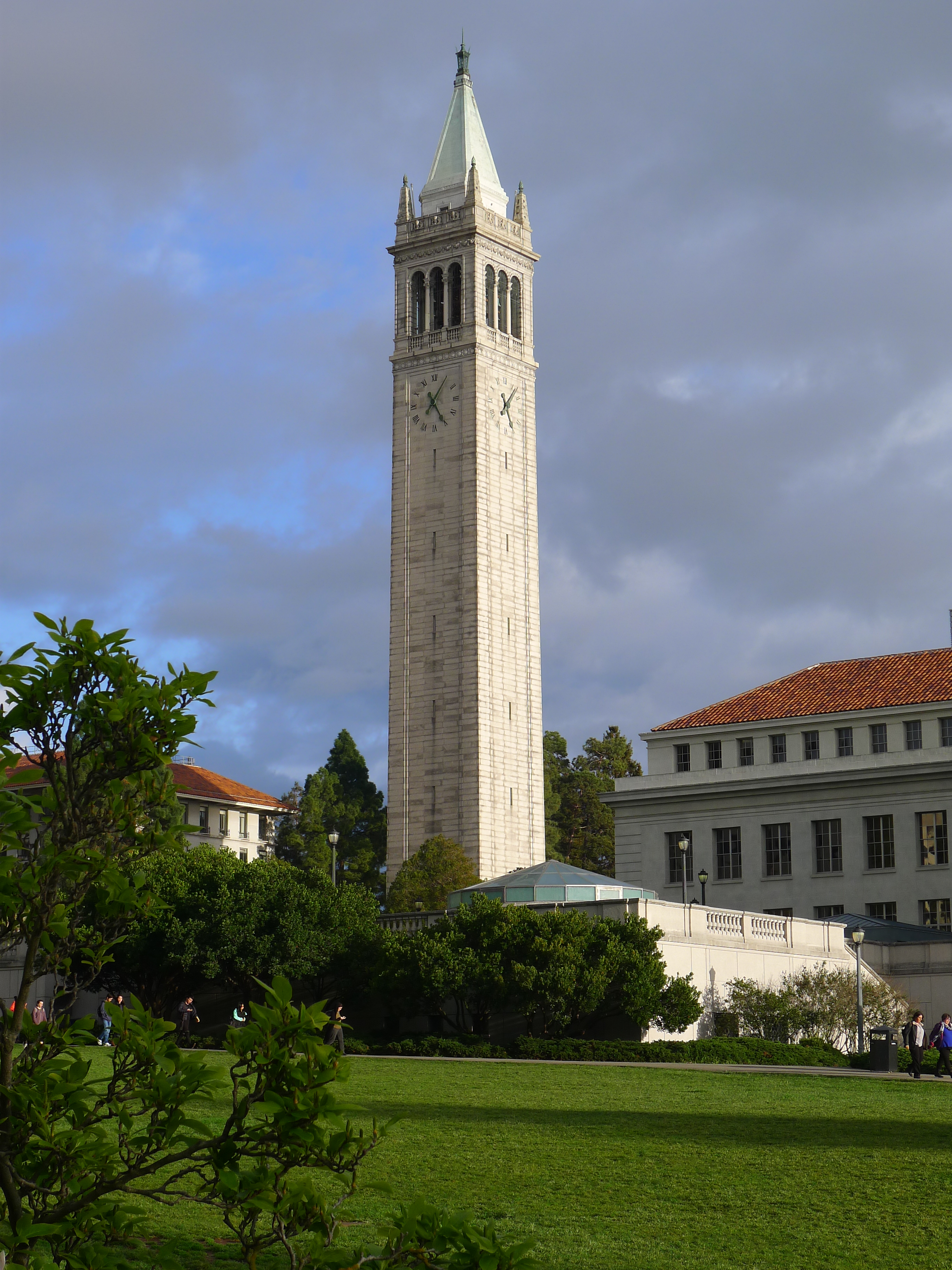
The majestic clock tower.

P1060072

South Hall, the oldest building on campus — built in 1873.

P1060075

A campus pathway that winds down the hill toward downtown Berkeley.

P1060082

The heart of Berkeley, Shattuck and Cente.

P1060179

We jump to San Francisco and its broad Market Street, which cuts southwest from The Embarcadero through downtown and out to the hills. After a 26-year-old civil engineer named Jasper O’Farrell proposed the street widening in the 1840s, opponents suggested a lynching, literally, and O’Farrell fled to Sonoma, where he remained until passions cooled.

P1060101

Ah, those cable cars. Here’s a major turnaround at Powell and Market.

P1060105

Heading up the hill from Market. The idea for the cable cars originated with a man named Andrew Hallidie after he saw a horse-drawn streetcar slide backwards down a wet hill in 1869, killing five horses. Hallidie had experience with wire-rope technology and used it to beat the fearsome hills of San Francisco.

P1060108

I took the cable car to Fisherman’s Wharf. That’s the Bay Bridge in the distance.

P1060109

The wharf offers a great view of the Golden Gate Bridge, which leads to Sausalito and the North Bay.

P1060113

Alcatraz…The only inmates to escape were Clarence Anglin, John Anglin and Frank Morris, who at least made it down to the water in June 1962. Chances are their homemade — make that prison-made — raft didn’t make it to across the Bay. But no one knows for sure. Their bodies were never found.

P1060116

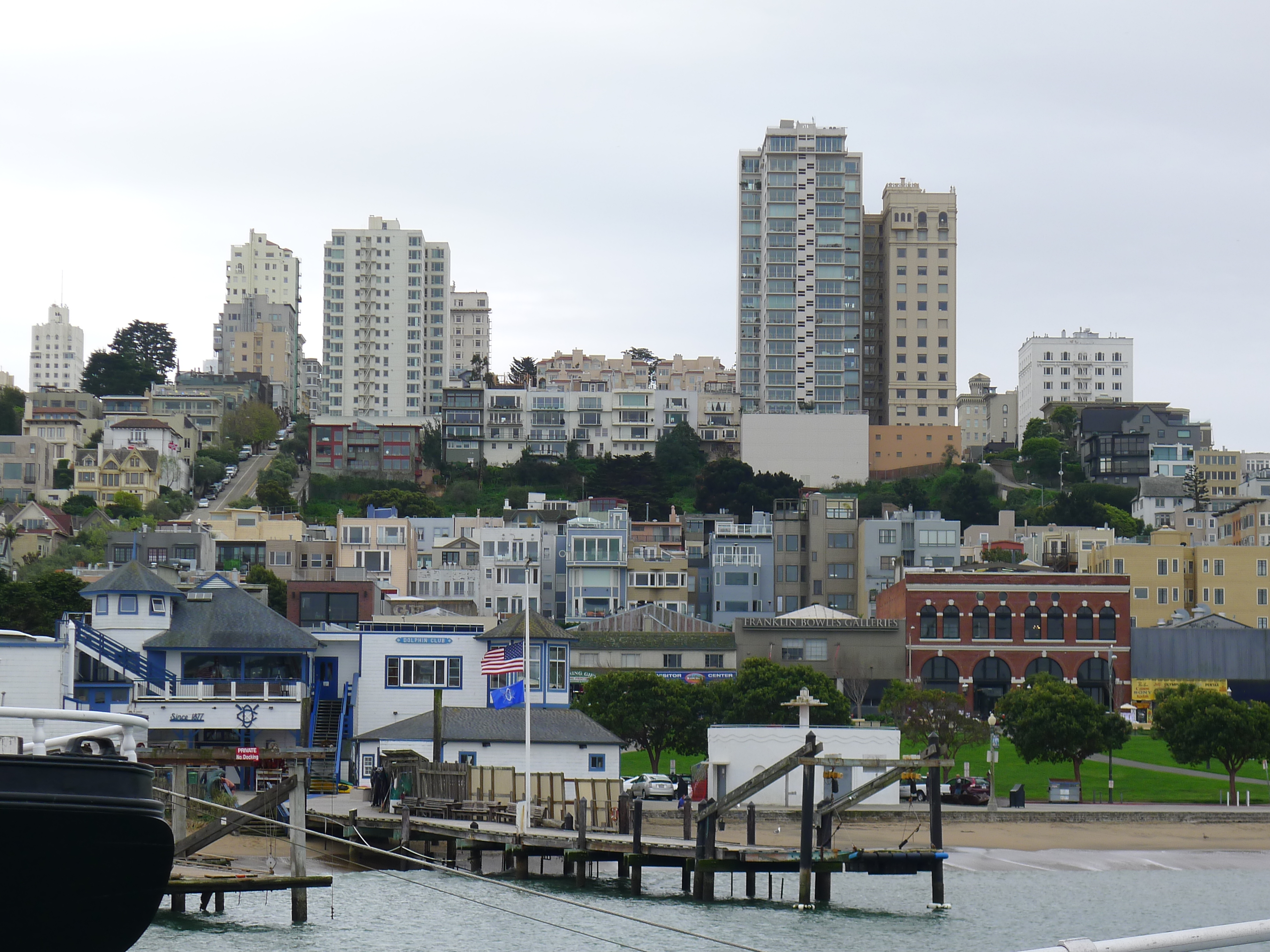
Looking toward the hills of San Francisco from Hyde Pier at Fisherman’s Wharf.

P1060119

The top of famous Lombard Street, a twisting, brick street that would be largely inaccessible were it not for cable cars and motorized vehicles.

P1060121

Not everyone was riveted to the sights from the cable car.

P1060125

This is from a streetcar, heading toward the Ferry Building at The Embarcadero.

P1060131

A windshield view of Market Street.

P1060136

The San Francisco streetcars have an old-time feel and look, but they sparkle inside and and out.

P1060137

This one was about to leave the Terminal Building.

P1060139

The Golden Gate Ferry, at The Embarcadero, moves a lot of people across the bay.

P1060141

The Bay Bridge, from the ferry terminal.

P1060148

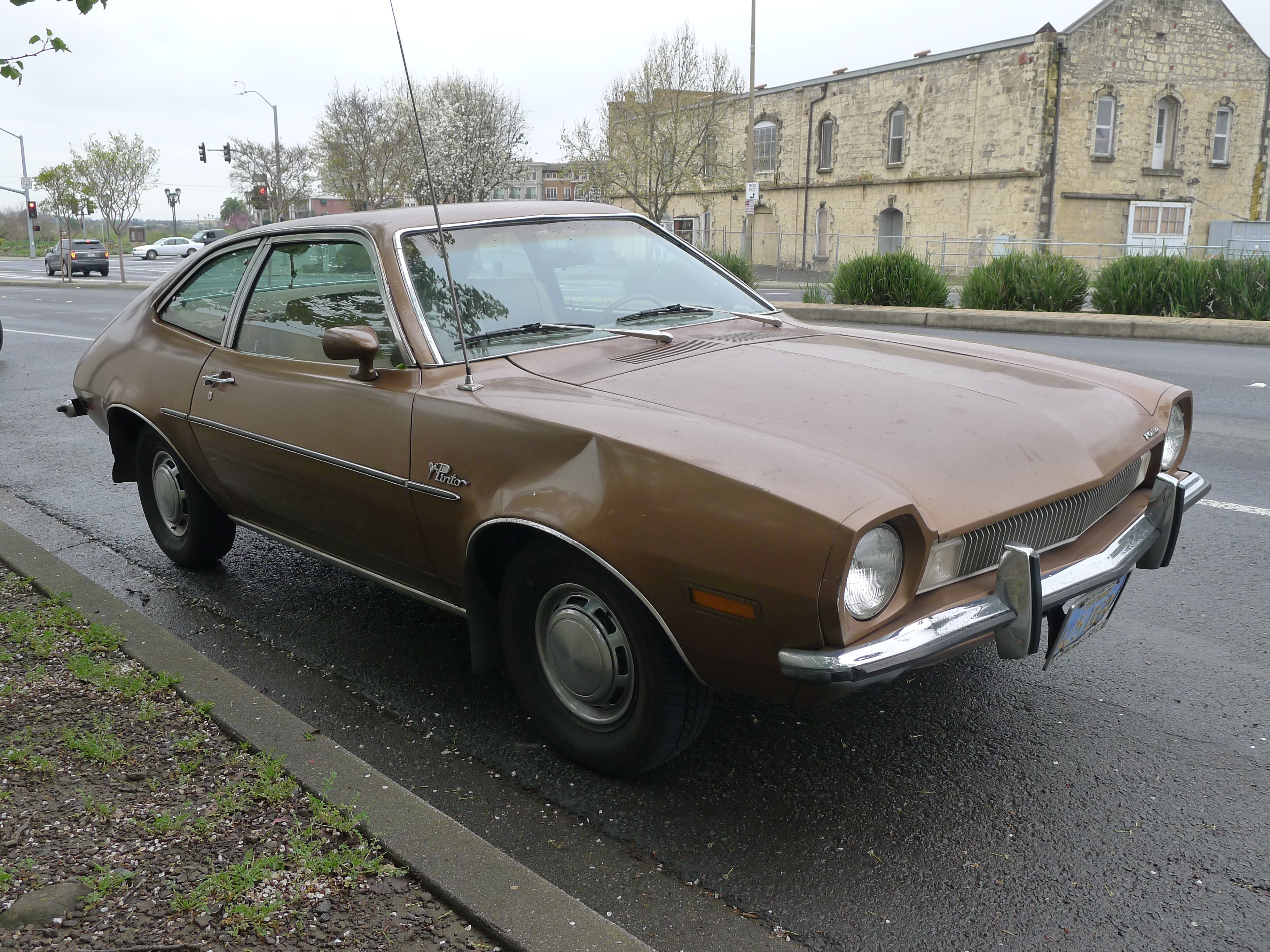
Somehow I came away from Napa, about an hour up the coast, with no photos of vineyards but one of a battered and beaten Pinto.

P1060154

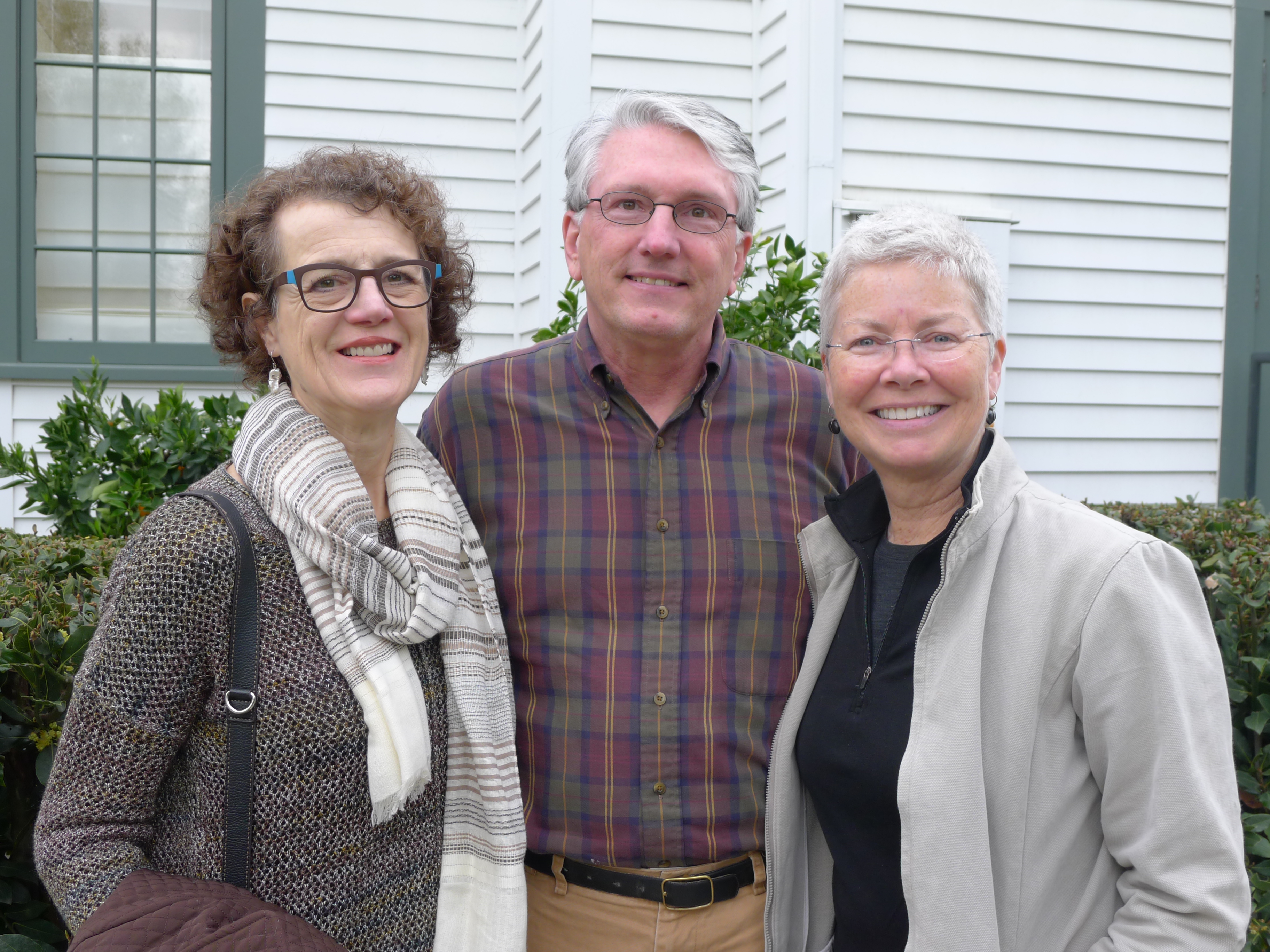
Patty (left), my cousin Laura Eckert and her husband Doug Parker. Doug is president and c.e.o. of the Land Trust of Napa County. Laura is the self-anointed, unofficial chairwoman of the Sanders for President movement in Napa County.

P1060170

Back in Berkeley at a well-known breakfast and lunch spot, Bette’s Oceanview Diner. I told the man who greeted us I thought I recognized him from the last time we were there. That could well be, he said, seeing as how he has owned the place for 34 years.

P1060157

From our perch at the counter, we saw an amazing amount of mouth-watering food leave the cooking area.

P1060171

Back on the BART for another trip in to San Francisco, a group of young men working for tips entertained us with some fancy footwork and gymnastic moves.

P1060176

I tipped them and gave the guy on the left my black straw hat…Don’t worry, it wasn’t my only hat.

P1060177

I don’t know why Patty was protesting this great selfie on the BART. (I bought the cap at Goorin Bros. hat shop in Berkeley the day before.)

P1060210

On Saturday, the day before we returned home, we went to Sausalito and Muir Woods, both of which are north of San Francisco, across the Golden Gate Bridge. At Sausalito Harbor, the masts were as thick as the redwoods at Muir Woods.

P1060211

These houseboats front the street. Great view either way.

P1060212

A distinctive house in the Sausalito hills.

P1060202

Muir Woods National Monument is a remnant of the redwood forests that blanketed many northern California coastal valleys before the 1800s. In 1908, President Theodore Roosevelt used the 1906 Antiquities Act to proclaim the area a national monument…Thank you, Teddy!

P1060207

And with this, we drift away…(For reference value, below is an overview of the Bay Area.)

bayoverview_map


I am out of town but just heard from a good friend about an awful tragedy that has befallen a notable Kansas Citian and his family.

Madeline McDowell, 23-year-old daughter of architect Steve McDowell, of the BNIM firm, died a week ago today apparently of complications from a tonsilectomy the day before.

From what I’m told, Madeline, a criminal justice student at Metropolitan Community College, underwent routine surgery on Wednesday, March 2, went to bed about 8 p.m. that night and never woke up.

Just like that, in the full bloom of young adulthood, she was gone…I cannot imagine the pain her parents, Steve and Mary Anne McDowell, and her brother, Kilohy Stephen McDowell, must be enduring. In addition, there’s another intimately close person feeling incredible pain — Madeline’s birth mother, Laurie Stinson. What a tragedy for her, too, and imagine the whirlwind of feelings she must be experiencing.

Madeline’s obituary is in The Star today, and you can also get it online, of course. From the obit, it sounds like she was a kind and caring person. She was an accomplished chef and aspired to be a police officer. The obit says that had she lived, “she would have continued to give and make the world a better place.”

…I’ve met Steve McDowell but don’t know him well. His firm has left its imprint all around KC and elsewhere, and I’m sure the entire BNIM family — including partners Bob Berkebile, Tom Nelson and David Immenschuh — is in deep mourning.

In case you don’t know, the firm was founded in 1970 as Patty Berkebile Nelson Love Architects (PBNL). In 1987, Patty, Berkebile and Nelson formed a new firm — PBNI — with Immenschuh. Among other structures, they designed One Kansas City Place, which, according to Wikipedia, is the tallest building in Missouri.

In 1991, McDowell joined Berkebile, Nelson and Immenschu, and BNIM came into being. The firm has offices in Kansas City, Houston, Des Moines, LA and San Diego.

…I’m sure my readers and commenters join me in sending heartfelt condolences to the McDowell and BNIM family. Our hearts are heavy today.

In a post two weeks ago, I alluded to the hazards of a major metropolitan newspaper operating without a managing editor, the person who functions in the newsroom as the chief personnel and editorial gatekeeper for all departments, including Metro, Features and Sports. (I would have included Business, but The Star disbanded its business desk last year.)

I noted the absence of a managing editor in the context of questioning how an ill-advised sports column by Sam Mellinger was able to make its way into print. (If you want to know more about that column, you can read about it in that two-week-ago post.)  I said that if a managing editor had been in place, he or she might well have derailed that column. As it was, the void in upper management allowed that column to slip through.

Well, management must have been paying attention because this week Greg Farmer, assistant managing editor in charge of enterprise and investigative journalism, was named managing editor.

This is a good appointment, and Farmer is highly qualified for the job. As The Star’s story about the appointment said:

“Farmer has been a story editor and digital editor and has run the newspaper’s metro department. He has been page one editor and news editor.”

He’s been with The Star more than 15 years and has an undergraduate degree from KU and a master’s from the Bloch School of Management at UMKC.

Greg Farmer

Greg Farmer

One of the managing editor’s roles is to preside at the daily, afternoon news meetings, where the various department heads talk about the stories they have for the next day and beyond. I don’t know who’s been presiding over those meetings — maybe it was Farmer — but it must have been awkward for whoever was doing it. Awkward because the presider could essentially only process the information he or she was getting, instead of being able to throw up a hand and say, “Wait a minute. Are we sure we want to go in that direction?”

Without a managing editor, the person holding the stop sign would be editor Mike Fannin. I doubt he was presiding at the news meetings. More than keeping the trains moving on time and making sure they’re on the right tracks, the editor’s job is to plan the overall editorial direction of the paper. On a daily basis, the editor’s involvement is usually limited to big stories — certainly anything that needs legal review or involves criticism of high-profile people, companies or institutions.

Oddly, The Star had gone nearly a year without a managing editor after the retirement of Steve Shirk. I don’t have hard evidence of this, but I believe the goal was to save money. If that wasn’t the goal, then surely upper management would have appointed a successor right away. I don’t know what led to the decision to finally fill the M.E. job, but I wonder if Tony Berg, the new publisher, had a hand in it. Fannin was the appointing authority, but why would he wait a full year to fill the job, unless the previous publisher, the do-nothing Mi-Ai Parrish, directed him to hold off?

At any rate, The Star has taken the right step by filling the second most important editorial position, and I think we’ll see a better editorial product because of it.

**

Unfortunately, my praise for this positive development is accompanied by a caveat…In trying to reach Tony Berg this morning, to ask him about Greg Farmer’s appointment, I discovered The Star’s dial-by-last-name directory was not accessible.

I called the main number — (816) 234-4141 — several times and got the same result each time. The automated recording prompts callers to press 9 and the pound sign if they know the person’s extension or they want to get to dial-by-last-name directory. After pressing those keys, however, I was met with a recording about a subscription-renewal issue that must be plaguing the paper. (Surprise, surprise, eh?)

The recording goes on to offer other options, but none led to the dial-by-name directory.

This is another setback for The Star in the area of customer service. Customers and readers should be able to leave phone messages for specific people…I sent Tony Berg an email this morning, explaining the nature of the problem. He wrote back a few minutes ago saying he was looking into the problem and apologizing for it.

…Regarding any role he might have played in the Farmer’s appointment, he ducked…”I appreciate your support of Greg’s promotion,” Berg said. “It’s a result of his work and commitment to great journalism for The Star. The Star is fortunate to have him a part of the team. Anything else I can do to be of assistance please do let me know.”

I’ve had a lot of mixed feelings about Hillary Clinton the last several years, including declaring I was through with her after the email scandal erupted. But it should come as no surprise I’m back in the fold now that Donald Trump is steaming toward the Republican nomination.

Super Tuesday is upon us, and it appears hand-wringing, gnashing of teeth and screams of anguish will be the order of day tomorrow night, after the votes are counted.

As you well know, those screams will not be coming from Democrats; they will be from what’s left of the mainline Republican Party, i.e., Mitch McConnell and the other Republican Congress members who have fallen in line behind McConnell’s obstructive, do-nothing leadership.

Maybe you’ve heard that McConnell has just about thrown in the towel as far as his party’s chances of winning the presidency this year.

An excellent story in the Sunday New York Times, said McConnell was holding out hope for a Marco Rubio victory but had “begun preparing senators for the prospect of a Trump nomination, assuring them that, if it threatened to harm them in the general election, they could run negative ads about Mr. Trump to create space between him and Republican senators seeking re-election.”

The story went on to say, “Mr. McConnell has raised the possibility of treating Mr. Trump’s loss as a given and describing a Republican Senate to voters as a necessary check on a President Hillary Clinton, according to senators at the lunches.”

The story also said that at a recent presentation, political advisers to billionaire conservatives Charles G. and David H. Koch “characterized Mr. Trump’s record as utterly unacceptable, and highlighted his support for government-funded business subsidies and government-backed health care, according to people who attended.”

At this point in the political campaign, with the general election still eight months away, nothing could make me happier than seeing Mitch McConnell and the Koch brothers bitter and blue, with the Democratic frontrunner seemingly on the way to an easy victory in November.

A couple of days ago, in a reply to a commenter, I said the only way Trump could beat Hillary is if every registered African-American and Hispanic voter stayed home on election day. (In the 2012 presidential election, 45 percent of the people who voted for Obama were racial minorities, and many of them will be back to vote for Hillary this year.)

Going back much farther, I went out on a fairly long limb when I made this this prediction in a Nov. 7, 2012, post:

My first feeling, after learning Tuesday night that Barack Obama had won re-election, was that happy days aren’t just here for four more years but quite possibly 12. And for the additional eight years of prospective, Democratic control of the presidency we can thank Obama for naming Hillary Clinton as Secretary of State when he took office. If this 12-year scenario comes to pass, Rush Limbaugh might well be dead before the Republicans regain the White House.

Damn, people, I’m only eight months away from being dead on!

(I swear on my children’s college diplomas, though, this is the last time I’m going to mention that prediction…unless Trump somehow reduces Hillary to jello and beats her in November. Then, I’d eat 100 inches of electronic space.)

**

While Bernie Sanders appears to be a delusional candidate with his prediction of a voter “revolution,” the Democratic race has at least been anchored in constructive debate and an atmosphere of respect and dignity. Sanders is smart, quick and does not embarrass himself. Hillary is also fast on her feet, and more poised, polished and credible than Sanders.

On the Republican side? Wow. From the outset, it’s been a damn circus. The enormity of the egos and the volcanic level of the bluster have not only made it hard to watch but have made many of us turn away in shame and pain. Why? Because we know, inside, that we’re a better people than what that field of candidates has projected.

We may well be in for more shame and pain when we watch Trump flail away at Hillary, but, for most rational people, that’s going to quickly turn to anger. And then those angry, rational people are going to storm the polls on Tuesday, Nov. 8, and the rout will be on.

Well, our beloved hometown paper blew it today — not on one of its two front-page stories (that’s all we get now on the front page any more) but on both.

Let’s take the screw-ups in order of egregiousness…

“Kansas City board votes to close three schools”

This story was at the bottom of the page but, obviously, extremely important. It isn’t often that a school board votes to close schools, and it’s always big news, especially in the depleted Kansas City district.

So, look at that headline again and prepare yourselves for a pop quiz:

What’s the first thing you would be looking for as you jumped into that story?

A) What time the sun sets in Kansas City these days?

or

B) Which three schools are closing?

You all get an “A” on the quiz because the answer is “B.”

How long did it take, then, for reporter Mara Rose Williams to tell the readers which schools are closing?

The story takes up part of six columns, two on A1 and four on 11A. Williams doesn’t name any of the three schools on the front page, and it’s not until the first column of the “jump” that she names one of the three.

She doesn’t name the other two until the sixth and last column, and those are included in a throw-away series of “bullets” that wrap up the story.

Not only does Williams fail to give the readers the “news” in straightforward fashion but she gives no other information about any of the three schools, such as where they are located and how long they’ve been open.

Ok, ok…I know many of you are wondering by now which schools are closing and where they are. Here you go:

Wendell Phillips Elementary School, on 24th Terrace just west of Woodland Avenue

Southwest Early College Campus, 65th and Wornall

Satchel Paige Elementary School, on 75th Street just west of Indiana

…I have no idea what Williams was thinking here, but she could not have been very focused on the task at hand. And more surprising is the fact that Williams is one of The Star’s top reporters. In July 2014, for example, she and Mike Hendricks collaborated in exposing the UMKC business school’s lofty rankings as the result of orchestrated fraud and misrepresentation.

But good reporters sometimes lose their way; it happens to the best. And that’s why there are editors…So, where were the editors on this story?

Sadly, they, too, were in a coma.

Another thing about that story…Williams says in the second paragraph that school board members Amy Hartsfield and Marisol Montero voted no. That begs the question who voted yes? Do all readers know the names of the other school board members? Hell, no! It drives me crazy when, on big votes — whether it be school boards, city councils or state legislatures — The Star doesn’t tell the readers who voted “yes” and who voted “no.”

…I tell you, this kind of reporting is unacceptable in a major metropolitan newspaper. It cheats the readers and makes the paper look amateurish.

**

“Bernie Sanders rallies his faithful fans in KC”

This was the lead story in the paper — the centerpiece — with good reason. Sanders’ campaign has generated tremendous enthusiasm, particularly among young people.

The story itself — written by Scott Canon and Dave Helling — was good as far as it went, but the event cried out for a sidebar story. There should have been a second story, inside the paper, about the size of the crowd; how crowd flow was handled; and who controlled access to the convention center.

Crowd size was an important element of this story because, obviously, it reflects the depth of local interest in the Sanders campaign. And access was important because thousands of people were stacked up outside the convention center waiting patiently to get in. 

As I said in yesterday’s post, the size of the crowd was amazing. When my daughter Brooks and I arrived on the scene about 11:30, Bartle Hall was completely surrounded on all four sides. That’s four blocks of people — thousands.

When we first arrived, it didn’t look like the crowd was moving, but later we could see people advancing slowly through the entrance on 13th Street and then through metal detectors before going into the convention hall. I counted about five metal detectors — which seems like a very small number relative to the crowd size — but there could have been more.

Brooks and I gave up shortly after noon, and when we left Bartle Hall was still completely encircled by people.

In their online story, Canon and Helling said, “Sanders took the stage about 1:15 p.m., 15 minutes late but with still scores outside trying to clear security and crowd in with the upstairs throng.”

In today’s print edition, the only reference to a crowd estimate of 7,500. Gone was any reference to the outside line.

In a phone conversation this morning with Kansas City’s top convention center officials — executive director Oscar McGaskey Jr. and deputy director Michael C. Young — I learned a lot more about how the event was handled.

First, the Convention and Entertainment Facilities Department was not in charge of anything; all it did was host the event for the Sanders team. From there, the Secret Service was in charge of security and access. “The Secret Service managed the entry point from start to finish,” Young said. “Our staff and our subcontractors were not involved.”

Young would not say how many metal detectors were in use. (Naturally, that’s why it’s called the “Secret” Service.)

Surprising to me, Young said it appeared that almost everyone who was waiting outside got in for most or all the candidate’s speech. The lobby was empty, Young said, when he arrived 15 minutes after Sanders had started speaking.

Young said the size of the crowd exceeded the Sanders team’s expectations, and he admitted that he, too, was impressed.

“It was something to see,” he said.

Yes, and it would have been something for The Star to write about…if the editors had planned properly.

**

I want to add a quick, personal anecdote here…On Tuesday, Patty and I observed our 31st wedding anniversary. Feeling pretty giddy about that, I approached her at one point, put my arm around her and said, “Tell me, do you think I’m about the best damn husband who ever came along?”

She paused for a moment and said, “For me…yes.”

Regardless of who you’re for or whether you’re conservative, liberal or independent, this presidential race is getting mighty interesting, isn’t it?

How can your pulse not quicken when a showman and political outsider like Donald Trump is hurtling at supersonic speed toward the Republican nomination? And how can you avoid gasping when you see, as I did today, masses of young people waiting patiently outside Bartle Hall to get inside to see Democratic candidate Bernie Sanders?

If your pulse is not quickening and your breath not taken away by such developments, you’re mired in a quarry where you’re hearing nothing but the echo of your own thoughts.

Daughter Brooks and I went downtown today with the idea of seeing Bernie, but when we drove by, we could see long, long lines of people waiting on the west, south and north sides of the convention center. The concentration of humanity didn’t appear to be moving. After parking a few blocks away, we walked back to the convention center and then walked around the entire perimeter. To our amazement, we found the line also wrapped around the east side of the building — the one side we couldn’t see when we had approached from the west side.

When we looked closely, we could see that within the amorphous mass, two distinct lines appeared to be snaking toward the 13th Street entrance — one from Broadway on the west, the other from Central Avenue on the east. The people farthest away from the entrance, on 14th Street, appeared to be able to choose either the Broadway or Central line and then inch northward. In any event, it was the largest and most confusing line — or lines — I’ve ever seen outside an arena or convention center. So confusing, and so seemingly impossible, that Brooks and I decided to return to the car and give up on attending the event.

P1050973

A small part of the crowd that waited outside Bartle Hall today

That was shortly before noon. When we reached the northwest corner of 12th and Broadway, where the dock entrance to the convention center is located, we noticed a flurry of activity — police cars arriving and an officer directing traffic — and we sensed that the Bernie Cavalcade was about to arrive.

Sure enough, within five minutes, a few blue KCPD cars approached quickly, followed by at least two tan Chevy SUVs. As the SUVs flashed by, we caught a glimpse of a man with a distinctive shock of white hair and a distinctive sloop of the shoulders looking straight ahead, a cellphone to his right ear. The SUVS raced up the dock driveway and disappeared. Behind it, incongruously, came a full-length Kincaid bus, full of media members.

Had we just glimpsed the next president? Well, a guy who had positioned himself across the street, with camera, certainly thought he had. He began jumping up and down, clapping his hands above his head.

We went back home and watched Sanders’ rousing speech on the Internet. Thousands of people were packed into the room where Sanders spoke, and they gave him numerous ovations and waved “A Future to Believe In” signs.

…This all made me wonder if Sanders just might win the Missouri primary on March 15. And made me wonder if Hillary Clinton would attract such a throng if she came to Kansas City. I certainly doubt that an older crowd that size would have waited outside for hours — as these young people did — on a cold, windy, late-winter day. It was impressive.

**

On the Republican side, with Trump’s victory last night in the Nevada caucuses, the situation is coming into crystal-clear focus. Millions of Republicans are energized by Trump’s anything-goes, turn-it-loose personality and his upend-the-card-table approach to campaigning.

Nicholas Confessore, a New York Times, reporter who specializes in campaign finance, may have hit the nail on the head when he wrote:

“Mr. Trump is undeniably a showman. Unlike virtually all of his competitors, who repeat the same stump speech in the hopes of getting a poll-tested message across, Mr. Trump always surprises.”

The two men trailing him, Marco Rubio and Ted Cruz, are flailing in water over their heads. Next to Trump’s 3-D persona, they look like cardboard cutouts. And both are getting flagellated in the press.

Consider what NYT columnist Frank Bruni said about Cruz today:

“He directs you to his halo as he surreptitiously grabs a pitchfork…As Matt Flegenheimer reported in The Times this week, Cruz hired a campaign manager, Jeff Roe (a Missourian), who is widely known for destructive gossip, for malicious tactics — and for winning.”

And consider what another outstanding Times columnist, Paul Krugman, said of Rubio:

“So when Mr. Rubio genuflects at the altars of supply-side economics and hard money, he isn’t telling ordinary Republicans what they want to hear — by and large the party’s base couldn’t care less. He is, instead, pandering to the party’s elite, consisting mainly of big donors and the network of apparatchiks at think tanks, media organizations, and so on.”

Those guys, Cruz and Rubio, are doomed. After Super Tuesday on March 1, Cruz can return to the Lone Star State, which is growing increasingly isolated from the rest of these United States, and Rubio can get back to the Florida sun.

And the rest of us? We get to sit back and enjoy the show. It could supplant Ringling Bros. as The Greatest Show on Earth.

It seems pretty clear in retrospect that Donald Trump’s candidacy for the Republican nomination for president effectively rendered Jeb Bush’s candidacy superfluous.

Once the Big Jet started gaining altitude, Jeb was reduced to contrail.

And yet, at least one national reporter assigned to cover him has written movingly that she will miss him for his earnestness and sincerity, his vulnerability and awkwardness.

…Here’s another example of where The New York Times stands head and shoulders above the other news organizations. In a story posted tonight, reporter Ashley Parker wrote a compelling story about the many ways in which Bush endeared himself to her and other reporters following him.

Here’s an excerpt:

“Even as he stumbled as a candidate, he was, in many ways, a reporter’s dream.

“He held news conferences so frequently — nearly daily — that their absence felt newsworthy. And he seemed constitutionally incapable of not answering questions, even those he should not have. As aides tried to hustle him away, he would often pause and turn back, or roll down his car window, to give a final response, throwing political caution to the wind.”

“He gave out his email address easily and freely and, early on, even responded to queries sent there.

“…He talked with deep passion about space travel, and spoke to kids as if they were grown-ups, offering 8- and 9-year-olds treatises on the nation’s debt.”

Jeb Bush

What made Bush so enjoyable to cover, Parker wrote, was “he was deeply, impossibly human.”

She continued…

“In a cycle where so many other candidates were able to toggle effortlessly between soaring speeches and masterful debate performances, between well-rehearsed outrage and manufactured indignation, Jeb almost seemed to think aloud in real time, and we got to watch him muddle and bumble through, just like any real person.

“He was deeply self-aware, talking openly about how bad he was at debates and explaining, honestly, that his problem was answering the moderators’ questions too directly.

“He was atrocious at bragging in a year when self-aggrandizement was king.”

Parker said that in almost every speech he made, Bush talked about a severely disabled girl he had met while campaigning for Florida governor. And she recounted how, at one of his final events in South Carolina, a Times of London columnist who had been following the campaign, offered an observation before posing a question. The reporter said: “I haven’t heard any other candidate give a long period of their speech to talking about people with learning disabilities, people at the bottom of the pile. Whatever happens to your campaign, sir, that part you should be really proud of.”

…Amid Trump’s fulminating and the battle for second place between Ted Cruz and Marco Rubio, there wasn’t much about the Bush campaign that grabbed my attention — or that of most observers, I suspect. So, I’m very glad Ashley Parker took the time to reflect deeply, for public consumption, on the man she has spent hundreds, maybe thousands, of hours covering in recent months. With her felicitous writing and insight into Bush’s personality and character, Parker showed clearly that while Jeb Bush had a losing campaign, he was, and is, anything but a loser. He can walk away extremely proud that he presented himself humbly and honestly and came across “just like any real person.”

Like many other KC Star readers, I’ve admired the skills of sports columnist Sam Mellinger, a relatively young guy (don’t know his age) who has been growing into the void-filling role left by the departure a few years ago of Jason Whitlock and, before him, Joe Posnanski.

A couple of years ago, The Star made a great hire in Vahe Gregorian as the counterpart to Mellinger.

Gregorian, a sports reporter at the St. Louis Post-Dispatch for many years, has a lot more experience in the business than Mellinger, and I said in a post last Sunday that Gregorian is “perhaps The Star’s most sensitive writers.” (That was in reference to a column he wrote about Otis Taylor’s sister, Odell, who is nursing the former Chiefs’ star to his death).

The difference in experience and sensitivity between Gregorian and Mellinger was on full display in Mellinger’s column today about former Chiefs’ pass rusher Jared Allen, who on Thursday announced his retirement from football after 12 seasons in the NFL.

Mellinger constructed the column around a jarring, troubling, long-ago incident in which Allen — with the willing participation of a radio personality — goaded a woman to put Tabasco sauce in her eyes. Her incentive was two tickets to the next Chiefs home game.

The point of this anecdote was to establish what an off-kilter personality Allen is and that he has a weird sense of humor that knows no bounds…Now, I don’t really understand the point of using the occasion of Allen’s retirement to establish that he’s a weird personality, but in any event relating the Tabasco-in-the-eyes stunt was unnecessary and in questionable taste.

Here’s how Mellinger described the reaction of the woman who put the Tabasco sauce in her eyes…

“Her screams of pain were exactly as loud and terrifying as you’d expect, and Allen doubled over in laughter, unable to speak until they broke for commercial and some people start(ed) dousing the woman’s swollen eyes with water.”

…Think about that for a minute. What do you think a physician might have said, had one been in the audience that day, when the woman stepped forward to put Tabasco sauce in her eyes????

In my opinion, we have three stupid people here — Allen; the radio guy, who went along with the “gag”; and, of course, the woman.

And now there’s one other party to the episode — the columnist who lacked the good judgment to veto the anecdote. By going with it, instead of digging deeper to come up with something else, Mellinger reduced himself and his column to sophomoric indulgence.

Certainly, Mellinger must have reflected on whether the anecdote was appropriate. Probably out of laziness — yes, even the best succumb when they’re itching to get a story “up” on the Web or facing the next morning’s deadline — he went with what he had. Big mistake.

**

This is not all “Monday-morning quarterbacking” on my part. I tried to stop it. As soon as I saw this story on the website yesterday afternoon — before 4:30 p.m. — I sent an email to Mellinger, telling him I was disappointed he had chosen to go the route he had. I urged him to change out the anecdote for today’s print edition. I heard nothing back. About half an hour later, I sent another email to sports editor Jeff Rosen, saying the anecdote made both Allen and the radio guy “look like jerks and idiots” and made Mellinger appear “sophomoric for getting sucked into the stupidity.”
I heard nothing back from Rosen, either.

…Also, this episode reflects a bigger problem at 18th and Grand. For 10 months, The Star has not had a managing editor. The managing editor is the person who functions as the chief personnel and editorial gatekeeper for all departments. Where Rosen would have made the first call on Mellinger’s column, a managing editor could have ordered it pulled or changed. For financial reasons, however, The Star decided not to fill the post of managing editor after Steve Shirk retired last year. When Shirk left, a lot of experience and good judgment went out the door with him, and it wasn’t replaced.

Without a managing editor, there’s a significant gap in the review process. The next level is the editor, whose job is more focused on planning and overall direction of the paper, rather than review of individual, daily stories. The editor, of course, is Mike Fannin, and my guess is he didn’t read the story before it either went up on the website or appeared in today’s print edition.

**

One final thought on the Jared Allen story. Yes, he was a great pass rusher, but he only played for the Chiefs for four years, from 2004 through 2007. He followed that up with six seasons in Minnesota and one in Chicago, before wrapping up with a split season at Chicago and Carolina this year. As far as most Chiefs’ fans are concerned, Allen is a distant memory. I don’t think he even deserved a column. A straightforward, 15-inch sports story, recounting his record here and elsewhere, would have sufficed.

There’s no way a weirdo and long-forgotten person like him deserved 47 inches of valuable space in The Kansas City Star.

At lunch one day last week, former city councilman and now real estate development attorney Jerry Riffel recounted an interesting anecdote to me and another friend, Janet Redding, Riffel’s former council aide.

Riffel said that while waiting recently for a flight out of Kansas City International Airport, a man sitting next to him — someone from out of town — asked Riffel if he was from Kansas City. When Riffel said yes, the man commented, “This is kind of a quaint airport you’ve got here, isn’t it?”

Riffel responded, “I take it you don’t mean that in a complimentary way.”

“That’s right,” the traveler said.

I haven’t done any sample surveys, but I would think that’s how many people from elsewhere view KCI. Quaint.

Now, how many of us want as a key part of our metro fabric an airport that is considered dowdy? That does not make us attractive — not at all — to casual travelers, business flyers or convention planners.

Frankly, it’s just embarrassing. And it’s time to get on with building a new, single terminal. As I’ve said before, I want Kansas City to be first class in every way. We’ve got a tremendously successful downtown arena; in Power & Light, we’ve got an entertainment district that helped revive a long-decrepit downtown; and we’ve got a stunning performing arts center that may be the best in the country.

About the only remnant of our inferiority complex and our cowtown image — which plagued us into the early 1990s — is that damned airport.

I was up there a couple of weeks ago to catch a flight to Tampa, on the way to Havana, and I was stuck, as usual, with hundreds of people in one of the cramped waiting areas, where you get routed after going through security. Naturally, people had to use the restrooms, and people were lined up single file, waiting impatiently. Several people in line grimaced and exchanged looks that said, “This sucks.”

I felt the same way, but, having good political instincts, I said loudly several times, “Vote for the new airport! Vote for the revenue bonds.”

That lightened the mood. Several people laughed and nodded their heads in agreement.

If you asked that group how much of a priority they placed on the convenience of getting to and from their gates — the reason many people cite for wanting to keep KCI much as it is — I don’t think convenience would have rated very high.

**

After an aberrant digression toward renovation of one of KCI’s horseshoe-shaped terminals, we are talking once again about a new, single terminal. As far as I’m concerned, renovation went down the tubes with the Aviation Department’s analysis of the “Crawford plan,” which erroneously estimated that an existing terminal could be adequately expanded and renovated for about $336 million.

I could have gone for that if the cost estimate was viable, but the consultants dismissed the plan almost out of hand, saying the architects who put it together — at the request of Councilwoman Theresa Loar — grossly underestimated and didn’t understand what all had to be done.

At this point, I put a lot more trust in the patient, methodical approach Mayor Sly James has taken to try to nudge citizens toward the idea of radical change.

Two proposals for a single are on the table. One would cost an estimated $964 million, the other about $972 million. The Star’s Eric Adler last week wrote an in-depth story about those two proposals, as well as two other terminal-renovation proposals. But a special committee appointed by the mayor — and headed by highly regarded architect Robert Berkebile — concluded in 2014 that building a new terminal was the best way to go, and that’s the lead I believe we citizens should follow. Building a new terminal is the most practical and efficient way to have a single security checkpoint; to allow for incremental gate expansion; and to expand and reposition concessions and retail shops.

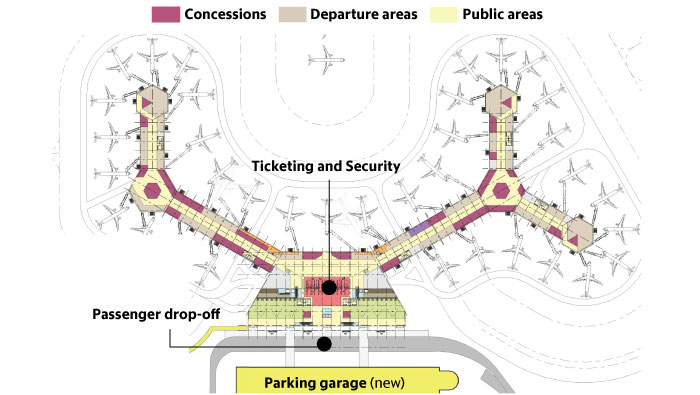
Take a look at the schematic drawings for the two new-terminal proposals.

Option 1 would raze now-closed Terminal A and start afresh. The new terminal would have 35 gates, with the ability to expand to the south along two concourses — east and west. Concessions would be concentrated near the entrance, past the central security point, and in the central section of the two northern concourses.

KCI option 1


Option 1 is modeled on Indianapolis International Airport, which opened its new $1.1 billion facility in 2008. Here’s that layout.

indianapolis-IND-terminal-map


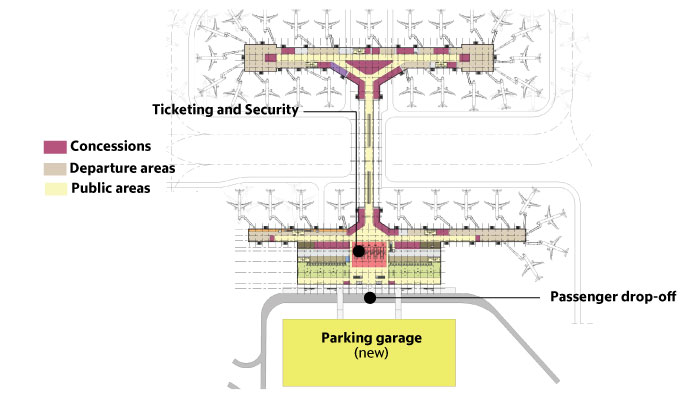
Option 2 would raze Terminal B and start afresh. It would also have 35 gates, with expansion possible to the south on one of two concourses. Like Option 1, arriving passengers would be picked up on the lower level, while outgoing passengers would enter on the upper level. In both Option 1 and 2, baggage claim would be on the lower level, as it is at most modern airports.

NTB_desktop

I would vote for either option, but my preference is Option 1, simply because I like the idea of concourses running at right angles to the terminal trunk. In addition, Adler said the gate areas “would be shaped like antlers.” After all the trouble of getting a new airport, I would hate to hear it referred to as “the antler airport.” 

**

Perhaps the biggest single challenge to consigning the existing terminals to the wrecking ball is clearing up the misapprehension that the hundreds of millions of dollars that would go for construction of a new terminal could be better spent on basic needs, like road and bridge repairs, park improvements and demolishing abandoned houses. The fact is, the Aviation Department is one of two city “enterprise departments,” along with the Water Department, that pay their own way with revenue generated from their operations.

If voters approved the issuance of airport revenue bonds, they would be retired with money generated exclusively from airport-related operations. The biggest of those would be airline gate leases, a percentage of concession revenues and a relatively small increase in airfares. The revenue could not be used for any purpose other than building and operating a new terminal. And by the same token, no money from the city’s general operating fund — financed by such things as earnings, sales and property taxes — could go toward expenses related to the new terminal.

Yes, $1 billion is a big number, an intimidating number. But Indianapolis and many other big U.S. cities have been able to bite that much off in recent years and give their metro areas new, attractive, more efficient airports. We can, too. The issue probably will be on an election ballot early next year. I can’t see this going on the general-election ballot in November. Proponents probably would prefer a special election, when a voter-education campaign would not have to compete with the presidential election.

It will take a well-financed, really good campaign. As my friend Anita Gorman used to say when she campaigned for proposals as president of the Kansas City Board of Park and Recreation Commissioners, “If we explain to the voters what we are doing and how it will benefit them and the city, they will be with us.”

More than once, I thought Anita was off her rocker, but I don’t think she ever put forward a parks proposal that went down to defeat. I’m betting that in the end, with a well-run campaign, a majority of Kansas City voters will see the light on KCI.