Feeds:
Posts
Comments

I wasn’t monitoring The Star’s website closely this morning, so instead of learning about Missouri House Speaker John Diehl’s sexual indiscretions from reporter Jason Hancock’s online story, a friend told me as we were driving to Bryant’s for lunch.

One of my first thoughts — besides what a fool John Diehl must be — was that Diehl is the third Missouri House speaker to lose his reputation in the last 20 years, either because he was on the take or couldn’t control his sexual predilections.

Speakers before him who took deep dives into shallow water were Rod Jetton (another Republican) in 2009 and Bob Griffin, a Democrat, in the 1990s. ** In case you haven’t read the Diehl story and would like to, click here.

diehl2

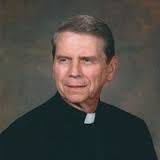
Diehl

The gist of it is Diehl, a 49-year-old Republican from St. Louis County, took up with a Missouri Capitol intern who’s finishing her freshman year at Missouri Southern University. Missouri Southern recently shut down the intern program a month before it was scheduled to end and pulled its four interns out of the Capitol.

One of the most disturbing parts of this story is that Diehl is married and has three sons, whose ages I wasn’t able to find.

In any event, it’s extremely disappointing that three House speakers in recent memory have been brought down by thievery and indiscretion. In 2011, Jetton pleaded guilty to a reduced charge of misdemeanor assault after admitting he struck a woman in the face and choked her before and during sex at her Sikeston home in November 2009.
jetton

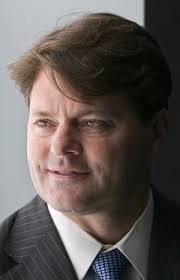
Jetton

According to reports, the two had agreed to use a “safeword” (green balloons) if the sex got too rough. Hours after the incident, Jetton allegedly told the woman, “You should have said ‘green balloons.’ “

The woman, who reported the incident two days later, said she had drunk a glass of wine Jetton had prepared for her and then began ‘fading’ in and out. She lost consciousness several times.

A judge placed Jetton on probation and ordered him to pay $950 restitution to the victim.

Then there was Griffin, speaker from 1981 to 1995. During the early 90s, it was well known by many in Jefferson City that when Griffin was approached by people seeking favors or contracts, he referred them to a consultant friend named Cathryn Simmons. If the solicitors followed his recommendations and hired Simmons, they could expect to get what they wanted. And Griffin was making out because he was taking kickbacks from Simmons.

In October, 1996, less than a year after leaving office and returning to his home in Cameron, a grand jury indicted Griffin on six charges of bribery, two of mail fraud one of violating the Racketeer Influenced and Corrupt Organizations Act, commonly known as RICO.

In the first trial, a jury cleared him of three charges and could not reach a verdict on six others, including the RICO count. In the second trial, Simmons testified against him, and on the second day of the trial Griffin pled guilty to a count of bribery and a count of mail fraud.

In December 1997, he was sentenced to four years in prison and fined $7,500.

On Jan. 20, 2001, however, Griffin got a break: On his way out the door of the White House, President Bill Clinton pardoned 140 criminals. Griffin was among them.

**

With headline-grabbing cases like those, it’s little wonder why many people view all politicians as crooks or people who are motivated by power and prestige.

So, why does Missouri seem to have more than its fair share of these slimy characters? I don’t have the answer, but, at the same time, I don’t think it’s entirely coincidental that the St. Louis Post-Dispatch has on its website today a story bearing this headline: “Free food fills Missouri Capitol’s hallways as ethics bill dies.”

The story, by longtime P-D political reporter Virginia Young, began with her reporting that legislators, lobbyists and others queued up for a Gates Bar-B-Q lunch Tuesday outside the office of state Sen. Kiki Curls of Kansas City.

While the legislators were living it up, an ethics bill that includes limits on lobbyists’ gifts was dying in the closing days of the legislative session. Young’s story included a quote from none other than Diehl, who claims he supports the bill. Diehl told Young that the measure, if it became law, would “get rid of the excesses.”

…I had to hit the pause button there for a few seconds to fully absorb the irony.

Clearly, Missouri legislators are very accustomed to their excesses and aren’t about to give them up. And isn’t it likely that because gifts, junkets, meals and tickets to sporting and other entertainment events rain down on them that some feel they can reach with impunity for just about anything they fancy, including nubile college freshmen?

It looks like simple addition to me.

I heard from a mildly pissed off Mike Burke this morning.

If you read my last post, you know that I applauded the recent announcement of a deal between the city and a Burke-led development group to build a new $300-million convention hotel at 16th and Wyandotte, cater-corner from the Kauffman Center for the Performing Arts.

In that post, I also speculated that Burke — whom I supported to the tune of $5,000 in the 2011 mayor’s race — may have known he was going to lose that race against Sly James and went out of his way to keep the campaign clean in order to leave the door open for future business opportunities with the James administration.

Burke objected to that, as well as to my criticism of part of the hotel deal that would give Hyatt — the prospective hotel operator — an exclusive, 15-year catering contract with the Kansas City Convention Center’s Grand Ballroom. Currently eight caterers service the convention center.

Let’s take these points in order…

On his kid-glove treatment of James in the mayor’s race, Burke said he resented the implication that he went easy on James with an eye toward future business opportunities, such as the hotel deal that is in the works.

The clean-campaign pledge, Burke said, was a “pre-primary, mutual agreement” between him and James, in which both candidates agreed to stay out of the mud.

“He kept his word, and I kept mine,” Burke said.

Burke also said he campaigned vigorously right through election eve and expected to win the election. He didn’t have enough money for any pre-election polling, he said.

In addition, Burke said, he and James had agreed that whichever of them emerged victorious “would use the other in some productive capacity” in his administration.

It was that agreement, apparently, that led to James appointing Burke to head a city committee aimed at turning the Google Fiber network into business opportunities benefitting the Kansas City area.

On the proposed exclusive catering contract at the convention center, Burke said Ronnie Burt, president of the Kansas City convention and visitors bureau, had told him that Bartle Hall is the only major convention center he knew of that did not have an exclusive catering contract. (I’ve got a call in to Burt on that point.)

Granting one hotel operator an exclusive contract, Burke said, serves to significantly reduce the city’s “direct-cash” subsidy of the hotel deal.

One of Kansas City’s “extremely tough parameters,” Burke said, was its determination to commit no General Fund money to the project. (The city wanted to avoid a situation like that with the Power & Light District, where the city has ended up with multi-million-dollar-annual payments to retire bonds issued to finance the project.)

With an exclusive caterer, then, the city saves money at the expense of higher prices at the convention center’s Grand Ballroom. (The exclusive contract applies only to the Grand Ballroom, not the other convention center elements, like Bartle Hall’s exhibition area.)

**

Here’s my response to those two points…

First, I was aware all along that Burke and James had agreed to run a clean campaign and probably overstated the situation when I said in my earlier post that Burke “was careful to stay in Sly’s good offices.” I accept that both men complied with a “gentlemen’s agreement.”

I still believe, however, that Burke — a very smart man — probably was operating with the idea that, if he lost, it would behoove him down the road to not alienate James in any way during the campaign. As a development attorney, Burke had brought business before the City Council for many years, and he certainly did not want to jeopardize that.

Second, I still don’t like the idea of giving Hyatt an exclusive catering contract. As I said in the earlier post, the higher food prices that will result from such a contract could cost the city some big conventions. Convention planners are smart shoppers, you know, and have very sharp pencils.

And, again, what if food provided by the Hyatt sucks? The convention center — and those attending conventions — could be stuck, at least until the situation got remedied. Burke said the contract will include “safeguards” protecting the convention center’s interests, but, nevertheless, I see significant risks in the convention center’s lack of options.

I still believe that if this deal gets traction with the City Council, which it should, changes could be made to the catering deal without the development group walking away. Like I said, there’s way too much money on the table. The developers want to get as much out of it as they can, and the city has to be careful not to give away too much.

When the Cordish Co. came along with the P&L deal during the Kay Barnes administration, the city was desperate: Downtown was a certifiable disaster, and the city was not in a strong position to get concessions.

It’s different now: Downtown is humming; the Sprint Center is one of the most successful arenas in the country; and the PAC, with its shell design and angled glass face, is a beckoning jewel.

It’s a new day in Kansas City, and it’s plain to see we have a lot to offer convention planners.

I was excited and surprised to read in Saturday’s Star that, after years of speculation and hand wringing, a tentative deal for a new $300 million, 800-room convention hotel is in place.

City officials and the development group did a good job of keeping this under wraps. As far as I know, no city official gave any public inkling that a deal was close.

As recently as mid-March, Mayor Sly James was quoted in The Star as saying, “The hotel will happen when we get the right deal and I’m speaking financially.”

Behind the scenes, obviously, things were moving quickly.

Assuming the new hotel comes to fruition, this will be huge for Kansas City. In combination with Sprint Center, the Power & Light District, the downtown streetcar line and the Kauffman Center for the Performing Arts, the hotel will, in my opinion, be the capstone of Downtown renewal.

P1040877

The block on the right is where the new convention hotel would be built. I took this photo from 16th and Wyandotte, looking north on Wyandotte. At left is the southern extension of the Kansas City Convention Center. (The Kauffman Center is directly behind me.)

What was little more than a decade ago a lifeless, rundown area that attracted few suburbanites, much less tourists, has become a veritable magnet for the young, the cultured and basketball fan-atics. Add the new hotel and you’ve got a downtown that could rival any other in the Midwest besides Chicago.

Now, let’s take a closer look at this deal…One aspect of it took me completely off guard, and another is very troubling.

Michael/Mike Burke, developer 

I was momentarily bewildered when I read in Diane Stafford’s thorough story that one Michael Burke was the leader of the hotel development team.

I thought she must be referring to some Michael Burke besides the Mike Burke whom I supported for mayor against Sly James four years ago.

But, no, it wasn’t someone different; it was my Mike Burke — former city councilman and development attorney — who ran in 2011 but very wisely ran a dirt-free campaign.

As a result of keeping it clean, Burke stayed in James’ favor after the election. In fact, James appointed him to some volunteer position — can’t remember what — at City Hall.

In recent months, obviously, Burke switched roles, going from development attorney to developer.

It was he, Stafford said in her story, who assembled a group now called KC Hospitality Investors LLC, consisting of investors from the East and West coasts. That group, the story said, is putting up a majority of the $300 million in private funds that will largely finance the project.

City Manager Troy Schulte said the city’s only direct financing would be $2 million a year for 25 years from the city’s Convention and Tourism Tax, which isn’t available for general city expenses, anyway. The city also will provide land worth an estimated $13 million.

Of course, tax abatement under Missouri’s Tax Increment Financing statute is also involved. The usual suspects — the head-in-the-sand, we-can’t-afford-it crowd — will screech about the TIF, but wisely the city is not exposing itself, as it has done on other projects, to open-ended financial obligations. (The city is subsidizing P&L, for example, to the tune of about $14 million a year.)

But back to Mike Burke…Maybe you caught my drift a few paragraphs earlier when I noted that Burke was careful to stay in Sly’s good offices. Had he not done so — had he fired off a nasty mailer in the closing days of the 2011 mayoral campaign in a desperate attempt to win — Sly would never have blessed him as the lead developer on the convention hotel. And you cannot develop a convention hotel without the mayor’s blessing.

It occurs to me now — boing! (sometimes I’m a little slow) — that Burke probably knew he was going to lose the 2011 election and made sure he kept himself on Sly’s good side so he could capitalize on future city-related opportunities.

With the hotel deal, he has reinvented himself as an entrepreneur and probably stands to make millions on this deal.

Hats off, then, to Michael/Mike Burke — developer, former city councilman, onetime mayor wannabe and, I trust, still “good guy.”

Catering contract

One part of the deal that looks highly suspect is that Hyatt, as the deal is proposed, would be the sole caterer for events held across from the hotel in the Kansas City Convention Center’s Grand Ballroom. The Hyatt’s “exclusive” would last 15 years.

To me, that stinks. And the City Council — which will have the final say on this deal — should pull the plug on that part of it.

As it is, according to Stafford’s story, eight caterers service the Grand Ballroom. That insures competition and makes it more likely that conventioneers are going to get good food and that the prices will be at least somewhat competitive.

Let’s assume the City Council approves this exclusive catering deal. Suppose the food is not good? (You wouldn’t think that would be the case, but it’s certainly possible.) That, in itself, could end up costing Kansas City big conventions. The word would surely spread quickly in the hospitality industry that the food at the Grand Ballroom sucks.

In addition, what would stop Hyatt from charging ridiculous prices for its fare? Maybe it would decide to charge $100 each for meals at the Grand Ballroom, instead of, say, $35 to $40.

The promise of an exclusive for Hyatt appears to me to be a wishin’-and-hopin’ horseshoe toss by Burke and KC Hospitality Investors. I can’t imagine that if the City Council stood firm and said “no” to the Hyatt exclusive that the investors would walk away. There’s too much money on the table.

The council that considers this deal — probably the council that will be seated after the June 23 municipal elections — needs to be extremely vigilant about the public interest on all aspects of this deal. It also needs to make sure that the catering contracts remain competitive.

I certainly intend to make my voice heard at City Hall on this important point.

…I’m wondering, do you think the fact that I contributed $5,000 to Michael/Mike Burke’s mayoral campaign will help me get his ear on this?

I returned yesterday from Louisville, my hometown, where I went to the 141st Kentucky Derby.

It was a beautiful Derby Day, as you’ll see in a minute, and a record crowd of 170,000 turned out.

The Derby is a permanent sellout, with the vast majority of Grandstand and Clubhouse seats owned by corporations or people who have held the seats for decades.

One time I was able to buy tickets by writing to Churchill Downs months in advance — and those seats weren’t very good. Usually, I buy tickets outside the track. That was the case this year, and because I was on my own, I had no trouble.

Immediately upon arriving at a track-perimeter gate, I was able to buy a clubhouse ticket for $200 — $10 over face value — from a guy who was standing around trying to sell a couple of tickets he had acquired. The fact that I arrived at the track very late — about 2;30 p.m. — helped me get a ticket at close to face value. At that point, I was the only person around looking for a ticket.

But I have lots of photos for you, so let’s get the show on the road!

P1040795

This is from the first-floor clubhouse, the area where I try to get tickets. You can’t see much of the race live, but you can see the races on a large video board in the infield…Note the famous Twin Spires between the two upper-level sections.


P1040812

A closer look at the Clubhouse , which essentially consists of the seats in the area near the finish line. The first elevated level is the third floor. Above that are the “Millionaires’ Row” levels — very pricey and virtually impossible to come by without serous connections.


P1040814

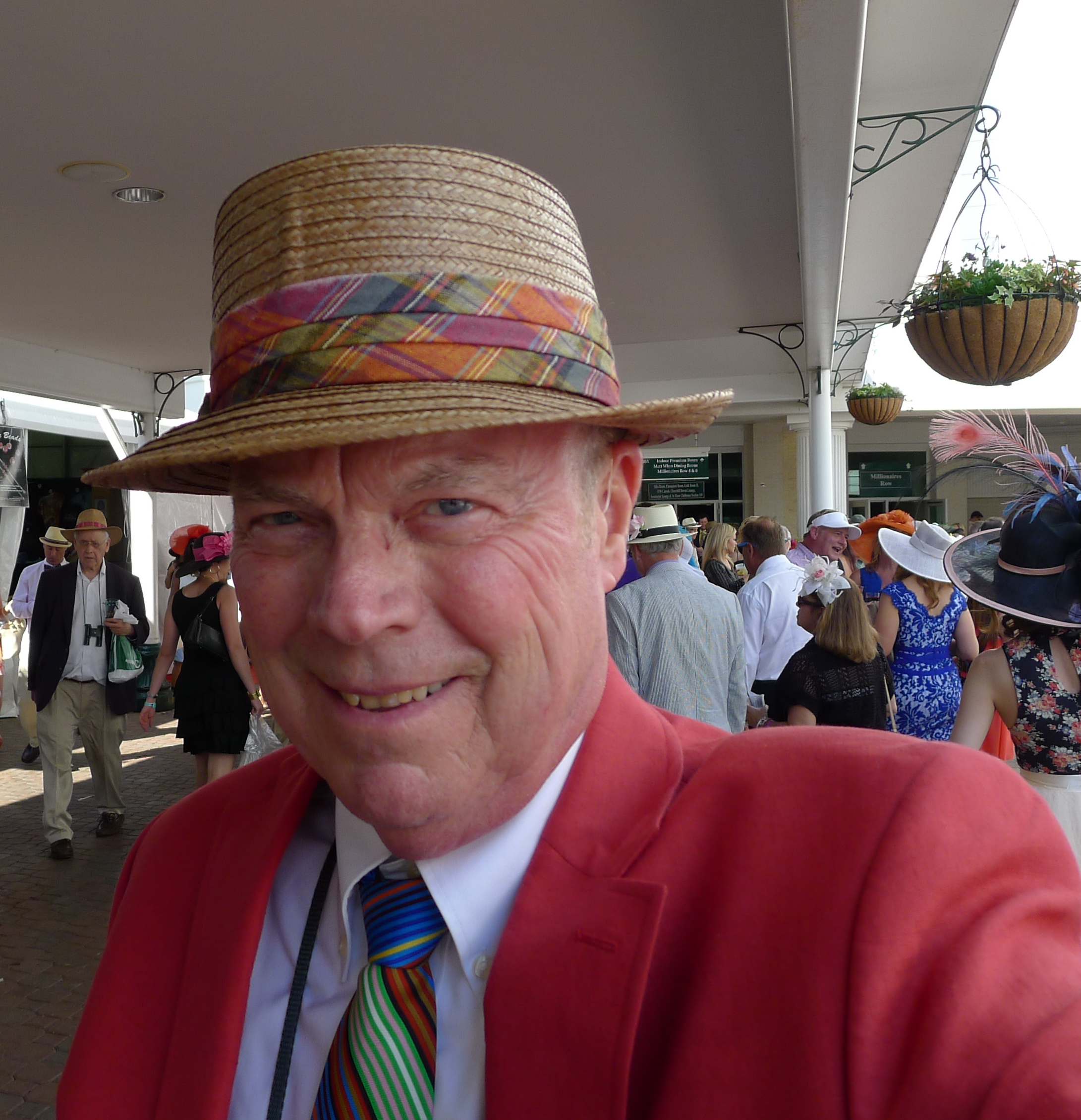
A most wonderful hat.

P1040822

More hats and a collection of Derby glasses. (When you buy a mint julep, for about $9, it comes in that year’s Derby glass.)


P1040818

The Derby isn’t all glamor.

P1040775

Ditto.

P1040813

The men seem to come up with the most bizarre outfits.

P1040830

Ditto.

P1040816

Now there’s an outfit. That guy came all the way from Kansas City, I understand.

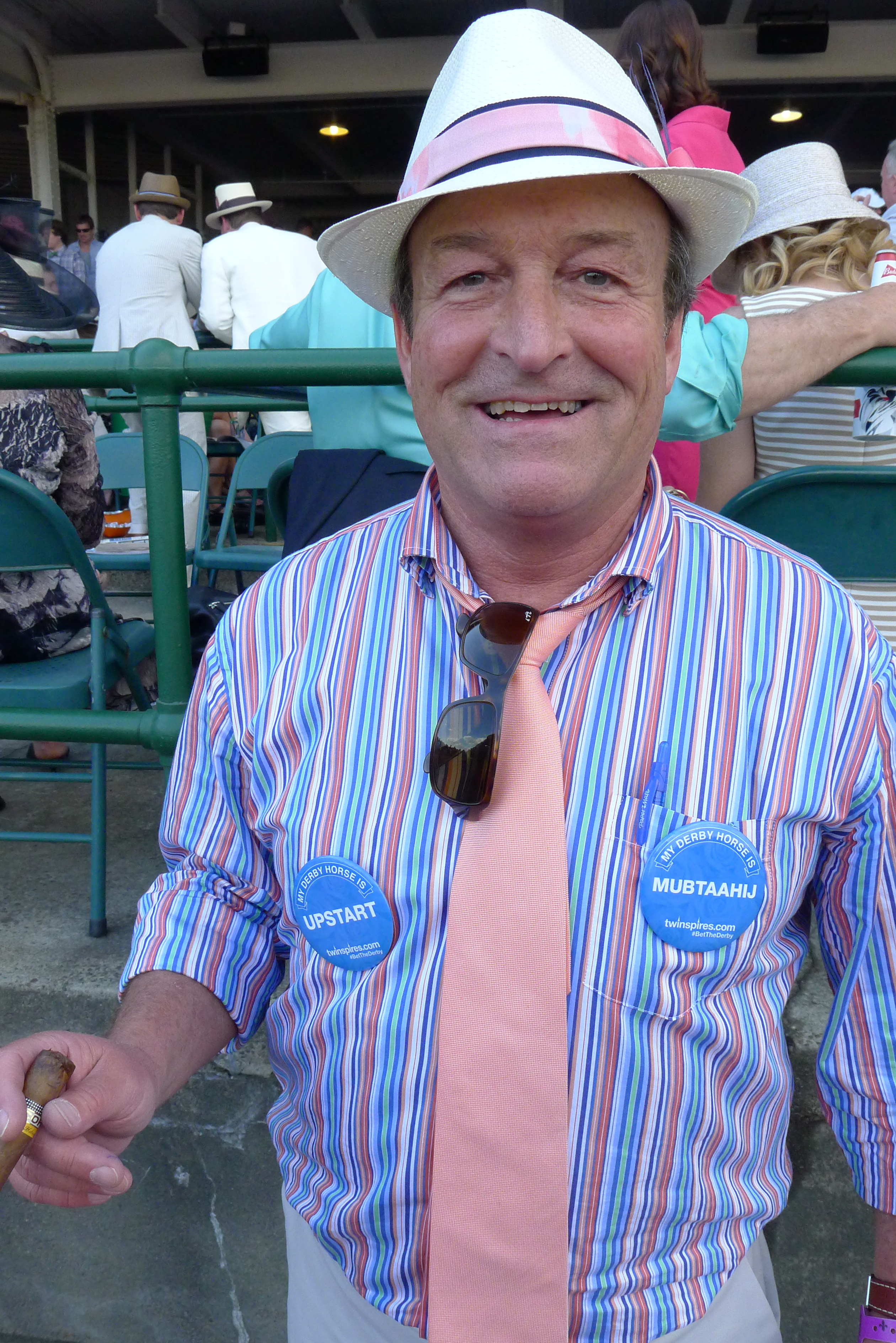
P1040824

This guy and I both liked Mubtahiij, an Irish bred, who finished eighth.

P1040857

Happiness abounds.

P1040836

Amid all the hubbub and excitement, sometimes you just need to collect yourself.

P1040831

This is called the “walkover,” when the horses — accompanied by throngs of people with connections to the owners — are led from the stables to the paddock area. The No. 4 horse is Tencendur, who finished well back.

P1040851

This is the Post Parade, where the horses come onto the track about 15 minutes before Post Time. No. 18 is the eventual winner, American Pharoah.

P1040864

The horses have just passed the finish line for the first time and are heading into the Clubhouse turn. That’s Dortmund (8) leading on the rail. (He finished third.) Firing Line (10), who finished second, is next to him, and American Pharoah is third. It’s unusual for the horses leading in the first turn to stay up front all the way around the track, but that’s how it went Saturday.

P1040865

After the Derby is prime time for people who live near the track to sell barbecue, hamburgers, hot dogs, beverages and other items to hungry and thirsty people headed to their cars. the infield video board and a small section of the racetrack stands are visible behind the utility poles and at far left. P1040868

I’ve been parking for several years with Charlie and Barb, who make their side yard available to a limited number of people. They used to jam cars into every part of the yard but stopped doing that a few years ago.

P1040873

And then…it’s all done.


Over the course of almost 25 years, the 1982 murder of David Harmon became the most spell-binding crime story in the history of Olathe.

Harmon, 25, was beaten to death with a crowbar. While sleeping in his bed, he was struck 12 to 14 times with such force that one of his eyeballs was knocked from its socket and ended up on the floor several feet from the bed.

markm

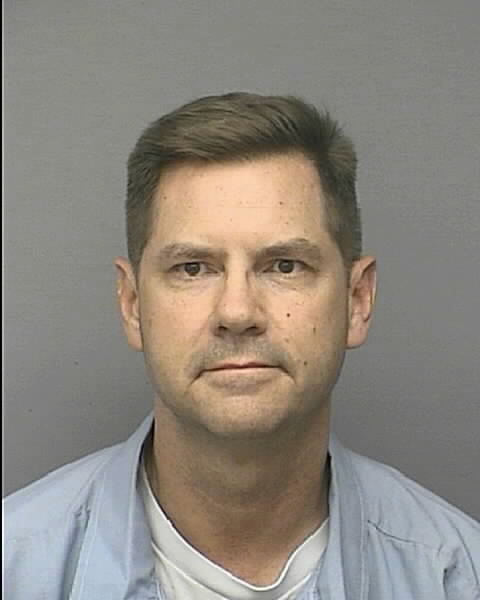
Mangelsdorf (KS Dept. of Corrections photo)

When the beating began, his 24-year-old wife, Melinda Harmon, was in beside him in the bed. Wielding the blows was Mark Mangelsdorf, a man with whom Melinda Harmon had become intimate.

The crime should have been solved in a few days, but it took 24 years to bring the perpetrators to justice.

During that time, both Melinda Harmon and Mark Mangelsdorf went their separate ways, married (he twice), had children and put the events of Feb. 28, 1982 behind them.

Tomorrow, after nine years behind bars, Melinda Raisch will be released from a Topeka prison.

Kansas City Star police reporter Tony Rizzo had an excellent story about Raisch’s pending release in Monday’s paper. Rizzo has followed the story over the years and understands how it deeply resonates, particularly in Johnson County.

Over the years, the story has received national attention, including being the subject of a compelling book, “A Cold-Blooded Business,” written by Marek Fuchs, a former reporter for The New York Times and now a writing teacher at Sarah Lawrence College.

Because of space constraints, Rizzo was not able to explain why it took so long to solve the crime.

harmon

Harmon

The thread that linked David and Melinda Harmon and Mark Mangelsdorf was the Nazarene Church and MidAmerica Nazarene University, then MidAmerica Nazarene College, in Olathe.

The Nazarene Church, or its teachings, also may have held the key to the motive, too. Fuchs suggests in his book that, to Melinda and Mark, murder may have been preferable to Melinda seeking a divorce from Mark. The Nazarene Church strongly discourages divorce.

**

In 1982, Olathe was not the booming suburban city that it has become. It was, frankly, a podunk town along I-35 that was only distinguished area-wide by the presence of the Nazarenes and their college.

Melinda Harmon’s father, J. Wilmer Lambert, was a high-ranking official with the Nazarene Church, and it was he, ultimately, who thwarted the police investigation.

Full of swagger and self-importance, Lambert so intimidated detectives and an assistant prosecutor that, after three cursory interviews with Melinda, police quit trying to get more from her. Largely because law enforcement officials deferred to Lambert, Fuchs wrote, “The investigation had been a board-certified disaster.”

Melinda’s cover story — incredibly lame, as the police recognized — was that two black men entered her and David’s apartment and demanded that David turn over the keys to a bank where he worked. The men then killed David and knocked her to the ground, leaving a slight bruise on her cheek.

Wanting to interview Melinda at length, Detective Roger LaRue and another investigator went to a home where Melinda and her father were staying after the murder. Melinda agreed to go to police headquarters for an interview, but Lambert announced he was coming along.

Here’s how Fuchs, in his book, describes what occurred next:

When the group got to police headquarters, stashed in a building with other city offices, they took the elevator to the fifth floor. When they stepped off the elevator, LaRue attempted to separate Melinda from her father.

LaRue told Lambert, “Melinda’s going to have to be questioned closely. And read her rights.”

“The hell she will,” said Lambert. “She’s coming home with me and right now, you bumbling pieces of shit,” he said, advancing at LaRue, pushing a forefinger into his chest, again and again and again.

At that point, an assistant district attorney rushed out of a nearby office and worked out a compromise, allowing Lambert to be present for the interview. Fuchs wrote that during the standoff with Lambert, Melinda “observed the events around her passively, like a bystander at an accident.”

Before the interview began, LaRue informed Melinda she was a suspect. With that, Lambert grabbed his daughter by the shirt, walked her to the elevator, and they left the building.

And, until two cold-case detectives approached Melinda at her Ohio home in December 2001, she was not interviewed again.

That 2001 interview, which Melinda Raisch willingly agreed to, set the stage for her subsequent first-degree murder conviction and Mangelsdorf’s plea to a charge of second-degree murder.

In 2006, each was sentenced to 10 to 20 years in prison. David Harmon’s father, 83-year-old John Harmon, was at first pleased with the plea deal but changed his mind after learning that both defendants would be eligible for parole in less than six years. “In a real sense, she destroyed my family,” Rizzo quoted Harmon as saying.

Raisch, now 57, is planning to return to Ohio, provided that Kansas and Ohio officials approve.

Mangelsdorf, 55, is eligible for parole in May 2016.

**

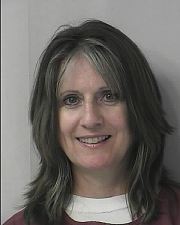
In every Kansas Department of Corrections mug shot I have seen of Melinda Raisch, she is smiling. Below are corrections department photos from 2010 (left) and from a few days ago.

raisch

0086089001

Accompanying an early mug shot of Raisch in Fuchs’ book is this caption: “Always smiling, she invested in presenting a good front.”

It’s just another oddity in a wholly confounding and ultimately frustrating case that many Kansas City area residents will never forget.

From what I’ve heard the last couple of days, I was overly optimistic that common sense would prevail in the immediate wake of Bishop Robert Finn’s firing/resignation.

There have been several disappointing, unofficial developments — disappointing from my personal perspective and that of tens of thousands of Kansas City area Catholics yearning for more enlightened Catholic leadership.

Among the developments —

:: Interim Administrator Archbishop Joseph Naumann has decided to stand behind the pending reassignment of the Rev. Richard Rocha, currently director of diocesan vocations, to pastor at St. Thomas More in south Kansas City. Rocha, a conservative priest, will succeed Thomas More’s extremely popular pastor of six years, Rev. Don Farnan, who is widely considered a liberal and progressive priest.

:: Farnan has not budged from his decision to decline a transfer to the parishes in Gallatin and Hamilton, Missouri, and instead will take a leave of absence. (He told me last week that he had also given consideration to going in a different direction altogether, perhaps working with missions or Catholic Relief Services, the “humanitarian agency” of the Catholic Church in the United States.)

:: Rev. Vincent Rogers, pastor at St. Andrew the Apostle Church in Gladstone, will, indeed, take over at Visitation Church in the South Plaza area. The prospect of an arch-conservative pastor like Rogers has so upset many in the Visitation community that the outgoing pastor, Rev. Pat Rush, who is retiring, sent an e-mail to parishioners saying, in effect, “calm down and be prayerful.”

For the majority of parishioners at Visitation and St. Thomas More, those developments are — or will be, when officially confirmed — extremely disappointing.

In my last post (and thanks again to the thousands of people who read it and the dozens who commented) I speculated that Naumann, stepping into a huge controversy, would rescind the transfers of Farnan and Rogers and reconsider Finn’s desperate, out-the-door machinations.

I guess I should have known better…A former diocesan priest who is a good friend, sent an e-mail about that post, saying: “I have a lot of doubts that Naumann will rescind the appointment of Rogers and Rocha… Naumann and Finn are in the same ideological camp.”

It appears, then, that as far as the diocese’s interim leader is concerned, it’s “full speed ahead” with the orthodoxy and rigidity that ultimately played a big role in bringing Finn down.

This is very unfortunate, but, as is always the case with Catholic Church administration, little or nothing can be done about it.

But all is not lost. It’s important, I think, for disillusioned Catholics in the Diocese of Kansas City-St. Joseph to focus on the larger picture because several rays of sunshine are peeking through the cloud cover.

Consider, for example —

:: “King Finn” is dead, and in Pope Francis the Church is finally blessed with a forward-thinking leader who is steadily loosening the vise that his predecessor tightened around the heads of the faithful.

Marie-Collins-Proposal-717x450

Collins

:: Crux, the Boston Globe’s online site “covering all things Catholic,” reported recently that the Vatican’s special commission on clergy sexual abuse has given Pope Francis a proposal on how to discipline bishops who fail to protect minors from sexual abuse by clergy under their oversight. Marie Collins, a member of the commission, would not divulge any details but said, “It’s gone to the Holy Father and it’s up to him when he makes a decision.”

blase

Cupich

:: The Archdiocese of Chicago recently got a new leader, Archbishop Blase Cupich, a former pastor in Omaha, who is thoughtful, intellectual and moderate. (Cupich succeeded the now-deceased Archbishop Francis George, one of Pope John Paul’s arch-conservative henchmen.)

Here’s a taste of Cupich’s approach. In April 2011, he spoke at a two-day conference at Marquette University law school. His subject was “Harm, Hope and Healing: International Dialogue on the Clergy Sex Abuse Scandal.”

Among other things, Cupich said it was essential that church officials maintain a “visceral connection” to the pain and damage done to those abused by priests, and that bishops needed to continue soul-searching or risk “regression or complacency.”

Can you imagine Finn saying anything like that? Urging church officials to put themselves in the shoes of victims of clergy sexual abuse?  Hell, no! His perspective was always looking down from his lofty perch, from where he ruled with mitred head and croziered hand.

Let’s hope Francis will assign Kansas City a bishop like Cupich, someone whose eyes are open and heart is big. If that happy circumstance should come to pass, the diocese could truly get on with shedding the suit of armor that Finn has cloaked the diocese in the last 10 years.

With the papal firing of Bishop Robert Finn, at least two significant diocesan issues have been left swaying in the wind.

They revolve around Finn’s recent reassignment of some priests. Two of those reassignments were immediately controversial, and they probably will be one of the first orders of business taken up by the diocese’s interim administrator, Archbishop Joseph Naumann of the Kansas City, Kansas, archdiocese.

Every year, the bishop reshuffles some priests, usually those who have been at their existing parishes at least six years. This year, Finn announced the reassignments several weeks earlier than usual, which, in itself, raised eyebrows.

Under Finn, the reassignments have always been heavily tinged with diocesan politics; it can be a nasty business for those not in Finn’s good graces.

john w

Rev. John Wandless

Listen to the assessment of Rev. John Wandless, a retired priest who lives in the South Plaza area. (For the record, Father John and I are friends and have worked on a couple of political campaigns together.)

“I thought something was going on two weeks ago when Bishop Finn made some scorched-earth pastor assignments sending ultra-conservative pastors to moderate parishes and pastors from moderate/liberal parishes to the boondocks… In other words he was putting his boys into choice assignments — just before he was called to Rome — without regard, it seems to me, for the best interests of the parishes.”

**

One of the controversial reassignments was the proposed transfer of Rev. Don Farnan from heavily populated St. Thomas More Church in south Kansas City to parishes in Gallatin and Hamilton, Missouri. (Hamilton is directly east of Cameron; Gallatin is northeast.)

Fr_Don_color

Rev. Don Farnan

Farnan, regarded as part of the diocese’s liberal contingent, is a jewel of a priest. He has a remarkable pastoral touch, combining compassion and eloquence with common sense and terrific leadership ability. (Indicative of his giving nature, not long ago he donated one of his kidneys to a young boy he had never met.) To dispatch him to the hinterlands — while it would have been a godsend for Catholics in Gallatin and Hamilton — would have been a tremendous under-usage of his talents.

This morning, Farnan graciously granted me a telephone interview and laid out the details of the brouhaha over his reassignment.

Here’s how it went:

On March 12, Farnan and Finn spoke briefly at the diocese, where Farnan had gone on other business. Finn told Farnan he was thinking about transferring him but didn’t say where. Farnan, who is in his ninth year at St. Thomas More, said that he had been thinking for a couple of years about what he might want to do next as a priest.

He told Finn he’d prefer to stay at St. Thomas More but that he was open to anything else, except that he’d like to take a sabbatical before accepting a new assignment.

Finn told him that wasn’t possible, that the diocese could not pay his salary while he was on sabbatical. Farnan dismissed the financial consideration, saying that wasn’t a problem for him.

On March 28, diocesan vicar general Rev. Charles Rowe called Farnan and informed him he would be transferred to Gallatin-Hamilton. Farnan told Rowe, as he had told Finn, that he intended to take a leave of absence before accepting any transfer.

Finn called Farnan on Holy Thursday, April 2, and they had what turned out to be a testy conversation.

They talked again about Gallatin-Hamilton, and Farnan repeated that he was not prepared to accept the transfer at that time.

“He sort of went off,” Farnan said, referring to the bishop. Finn ended the ensuing conversation by saying, “We can communicate through the vicar.”

That was Farnan’s last communication with Finn.

Farnan said he believes his situation is one of several issues that Naumann will address before Pope Francis names a permanent successor to Finn.

My guess — and this is strictly my speculation — is that Farnan will end up staying at St. Thomas More for another year to allow the dust to settle. After that, it’s anybody’s guess, but I would think that Naumann and the next bishop will be more solicitous and considerate of Farnan’s wishes.

**

Another priest-transfer controversy pertains to Visitation Church, 52nd and Main, where the Rev. Pat Rush, a widely admired priest and a former vicar general, is getting set to retire. Rush is also in the liberal contingent.

As Rush’s successor, Finn had appointed a priest named Vincent Rogers, whose unfortunate claim to fame, publicly at least, was getting arrested in a prostitution sting operation in 2003. His attorney at the time, John P. O’Connor, told me today that Rogers was not convicted. O’Connor said he didn’t remember any other details of the resolution, such as whether Rogers was ordered to take part in a diversion program.

Rogers has been pastor at St. Andrew the Apostle Catholic Church in Gladstone for several years. The announcement of his transfer to Visitation has thrown that parish — one of the diocese’s most prosperous parishes, along with St. Thomas More — into an uproar.

rogers

Rev. Vincent Rogers

Another unsettling factor to Visitation parishioners, besides the prostitution sting, is that Rogers is one of a handful of priests who, as Farnan put it, “most reflect Finn’s style and personality.” That is, they are ultra-conservative.

The sting operation involved 20  law enforcement agencies in Kansas and Missouri. About 100 people were arrested after answering Internet and newspaper ads from what appeared to be escort services.

An archived Kansas City Star story from 2003 about the operation says that Rogers, then pastor at a St. Joseph parish, told then-Bishop Raymond J. Boland that he had been arrested on suspicion of soliciting a prostitute.

The story goes on to say, “Rogers reportedly told Boland that he made telephone calls to arrange for a massage and he was taken into police custody when he arrived for the appointment.”

Boland placed Rogers on administrative leave but said he had not received any complaints of “similar misconduct” during his decade as a priest.

**

My personal feeling about Rogers is that even if he was convicted, it should not bar him from serving at Visitation, assuming he has had no subsequent legal problems. If he has cleaned up his act — and remember, that was a dozen years ago — I applaud him. It goes without saying that celibacy is a difficult way of life for most people.

Still, I can understand how the arrest would be unsettling to Visitation parishioners. And I can understand, even more, parishioners’ reservation about drawing an ultra-conservative pastor.

To the best of my knowledge, the parish has never had an ultra-conservative pastor since its founding in 1909. It has been home to such great pastors as the late Msgr. Arthur Tighe, the late Richard Carney and former priest Tom Minges, who is now a minister in the Christian Church (Disciples of Christ).

Overall, a conservative priest is not a good fit for Visitation. It is a progressive congregation with many young families, a goodly number of whom are drawn to the parish because of its excellent school.

I suspect Vincent Rogers will not be going to Visitation. If I had to guess, I’d say he, like Farnan, will be staying at his current parish for another year or two.

Let’s hope Naumann rescinds these two transfer orders soon.

**

Note: If you’re waiting for an explanation from the Vatican as to why the pope “accepted Finn’s resignation,” don’t hold your breath. the announcement was made yesterday in a one-sentence news-of-the-day-type roundup. It was written in Latin…A story in today’s KC Star quotes Rev. Thomas J. Reese, senior analyst with the National Catholic Reporter, as saying: “This is typical of the way the Vatican works. It doesn’t like to explain things. It hopes that people will just be satisfied with the fact that they got rid of him.” I don’t know about you, but it’s certainly satisfactory for me!

The long-anticipated move out of Rome — the move that I had nearly given up hope on — has come to pass.

Kansas City Bishop Robert Finn — reviled by thousands of area Catholics since being convicted of failing to report priest sexual abuse in the Kansas City-St. Joseph Diocese — is out.

Hallelujah! Hosanna in the Highest!

Break out all the cliches. And, more important, break out the hats and hooters (the party variety): Those dispirited Catholics, as well as the rest of us who have watched this sorry spectacle drag out for three years, are in a mood to party.   

A good friend of ours who has worked at the Catholic chancery for 20 years texted me and Patty the thrilling news at 6:36 a.m. The message:

“And Finn is out of here! And the crowds roar!”

That last sentence was figurative, of course, but so fitting.

Archbishop Joseph Naumann of the Diocese of Kansas City in Kansas will serve as “Apostolic Administrator” until Pope Francis appoints a new bishop.

Naumann met with employees at 10:15 a.m at the chancery, 20 W. 9th Street. His first words, our friend at the chancery said, were: “How about those Royals?”

**

For the record The Kansas City Star does not have a story in today’s printed edition. Early this morning it posted an Associated Press story on its website. Shortly after 7 a.m., The Star posted a local story under the lead byline of the very able and knowledgeable Judy L. Thomas. Here’s that link…http://www.kansascity.com/news/local/article19121754.html

The New York Times also has a story…http://www.nytimes.com/2015/04/22/us/missouri-bishop-convicted-of-shielding-pedophile-priest-resigns.html?hp&action=click&pgtype=Homepage&module=first-column-region&region=top-news&WT.nav=top-news&_r=0

The National Catholic Reporter has been leading the way on the story. Here’s the link to today’s report…http://ncronline.org/news/accountability/us-bishop-finn-symbol-churchs-failure-sexual-abuse-resigns

Yesterday, NCR had the “scoop,” with a speculative story that ran under the headline “Kansas City swamped with unsubstantiated rumors of Finn’s resignation.” http://ncronline.org/blogs/ncr-today/kansas-city-swamped-unsubstantiated-rumors-finns-resignation

Another journalistic note here: Based on yesterday’s NCR story, The Star should have had a story in today’s paper. It dropped the ball, in my opinion.

In addition, it’s my opinion that if Mark Morris, The Star’s brilliant former courts reporter, had not retired last month, The Star would have had a story yesterday. (See his disclaiming comment below.)

Morris not only covered the bench trial in which Finn was convicted of a misdemeanor in the Shawn Ratigan case, but he also tracked diocesan developments closely, reading NCR and other Catholic-related publications regularly. (Mark’s byline appears on today’s web story by Judy Thomas because before leaving the paper he wrote extensive background copy to help the paper be ready for today’s turn of events.)

finn

Our former bishop

I have not had a chance to fully read either NCR story, but I’m going to tell you what the chancery employee told me about the lead-up to Finn’s ouster.

A week ago Tuesday night, chancery employees got an e-mail saying Finn was canceling a confirmation (one of Catholicism’s “seven sacraments”) the next day, apparently because he was going out of town.

“He would never cancel a confirmation,” the insider said. “It (the e-mail) didn’t say where he was going or why.”

Suddenly, the atmosphere in the chancery, where morale had been lower than low, began to lift. A feeling that change could be imminent was in the air.

In about 24 hours, Finn was back. And word began to spread in the chancery that the bishop had been summoned to Rome for a meeting. That was big; it might not have signaled a change at the top, but what else could have precipitated such an urgent meeting at the Vatican?

I had heard elsewhere that after returning from Rome, Finn was glum. He’s basically a sourpuss, but apparently he was more glum than usual.

The chancery employee said that since Finn’s return, “I’ve had a steady stream of priests in my office, talking.”

And what was the employee’s overall reaction to the upheaval?

“I want to go to work today…It’s a good day; it’s going to be a good day.”

Understandably, much of Kansas City — including the Fitzpatrick household — has been in a near frenzy since Friday’s Royals-Oakland A’s game, when A’s third baseman Brett Lawrie barreled into Royals’ shortstop Alcides Escobar with spikes high, spraining Escobar’s left knee.

Lawrie’s intimidating and dangerous move set off a retaliation sequence that probably won’t end with the last out of Sunday’s game, which the Royals won 4-2, thanks to dramatic eighth-inning doubles by Lorenzo Cain and Kendrys Morales.

I was at Sunday’s game, and it was one of the most intense regular-season games I have ever seen.

But after thinking about all that happened during the three games and reading reports by Royals’ and Athletics’ reporters, I am afraid that the Royals ultimately sacrificed the moral high ground, if you will.

On the Kansas City end, the refrain from Kansas City Star reporters and Royals TV and radio commentators is something like, “These Royals will not back down.” (That’s the headline on Vahe Gregorian’s column on The Star’s website tonight.)

Not surprisingly, Oakland reporters see it through a different-colored lens.

Consider this from a blog post tonight by John Hickey, A’s beat reporter for the Oakland Tribune.

The Royals were the best feel-good story of 2014, a scrappy, hustling team that put a full-court press on opponents and ran them out of the gym, in the process running themselves into the World Series.

Six months later, the Royals have an entirely different persona. They’ve become angry. They’ve become nasty.

With hostilities unresolved and clashing perspectives abounding, the next Royals-A’s series — in Oakland at the end of June — is likely to be very ugly. There will almost surely be some hit batters, and it wouldn’t surprise me at all if there’s a big fight.

The Royals ceded the high ground, in my opinion, with two specific actions — one Saturday and one Sunday.

Incident No. 1

Everyone within a two-hour drive of Kansas City is now aware that Royals’ pitcher Yordano Ventura plunked Lawrie in the elbow in Saturday’s game, which the A’s won 5-0.

Ventura was perfectly justified in hitting Ventura to even the score for Lawrie’s reckless slide into Escobar the night before.

But here’s where Ventura screwed up — and, perhaps tellingly, I got this from an Oakland reporter’s account, not from anything I heard or read in in local reports:

Ventura apparently smiled at Lawrie after hitting him…Not smart.

One of the worst things a player can do under baseball’s unwritten rules is to show up an opponent. It’s OK to exact non-lethal revenge against an opponent, but you can’t give him the “gotcha” smile when you do it. You keep a straight face, turn your back and act like nothing out of the ordinary happened.

But Ventura, a young and emotional guy, indulged himself in obvious delight when he evened the score.

Lawrie, for his part, was professional. He didn’t even look at Ventura. He was expecting to be hit; took the pitch in the elbow; and headed straight to first base.

Normally, that would have been the end of the skirmish: You got us; we got you.

But it resumed anew on Sunday, and — who knows? — maybe that damned smile was responsible.

Incident No. 2

I arrived in the bottom of the first inning, and as I walked along the concourse behind the seating area, thunderous booing was underway. I looked up at a monitor in time to see Royals’ manager Ned Yost giving an incredible ass chewing to home plate umpire Greg Gibson. Their faces were so close that if Yost had bad breath, Gibson would be able to report if it was from onions or bananas.

After Gibson gave Yost the heave-ho, I asked a bystander what I had missed. I was told A’s pitcher Scott Kazmir had hit Cain with a pitch…Hit him in the foot, I learned later.

I also learned later that pitching coach Dave Eiland had gotten tossed before Yost. Apparently both were arguing — probably sprinkling their assertions with the verboten “f” word — that Kazmir should be thrown out out of the game, just as Ventura had been kicked out Saturday after hitting Lawrie.

Ejecting Kazmir might have calmed things down, but he stayed in the game, and the Royals decided more retaliation was in order.

It came in the top of the eighth. With Lawrie at the plate and the game tied 2-2, Royals’ reliever Kelvin Herrera threw a low and inside pitch that made Lawrie do a little jump-back. Watching from my seat behind the netting on the first-base side of home plate, I thought that might be sufficient.

kelvin

Kelvin Herrera being ushered off the field Sunday

But no. On the next pitch Herrera threw a fastball behind Lawrie’s head. Gibson, the home plate umpire, immediately threw Herrera out of the game. Just as quickly, Herrera gave up the ability to claim the wild pitch was accidental: On the way to the dugout, glowering at Lawrie, he pointed to his own head and mouthed some words.

Lawrie and the rest of the A’s interpreted that to mean Herrera had intended to hit him in the head. “He needs to pay for that,” Lawrie said after the game.

For his part, Herrera said he yelled, “Think about it,” at Lawrie while making the finger-to-head motion.

…Two problems for the Royals here: First, you should never throw at or near a player’s head intentionally. Obviously, that could result in serious injury or even death. That’s going over the line…And then, to point to his head, regardless of what message he was trying to send to Lawrie, was incredibly ill advised.

More than protecting his teammates — which is what a retaliatory pitch is intended to do — Herrera put his teammates in harm’s way. When the Royals go to the Oakland Coliseum in June, I will be watching and cringing with every A’s pitch to — or at — Royals’ batters.

More and more, the idea of building a new, single terminal at KCI seems to be wafting into the clouds. Up, up and away…

After the mayor’s special task force on KCI last year endorsed construction of a single terminal, eliminating the antiquated three-terminal model we have had for more than 40 years, absolutely nothing has happened.

It was clear that public sentiment runs strongly against significant changes at KCI, and, as a result, political advocates of a single terminal — such as Mayor Sly James — found it in their best interests to pipe down.

And on Wednesday the c.e.o. of Southwest Airlines, the biggest user of KCI, probably snuffed out any remaining hopes of Kansas City getting a modern, attractive airport for the next 15 to 20 years.

Gary Kelly, who was in town on unrelated aviation business, suggested that a major redesign of KCI would cause airline fares to increase significantly. Low costs for the airlines, Kelly said, mean low prices for customers.

He didn’t mention, of course, that Southwest has been raising fees so fast that it’s now almost undeserving of the title “low-cost airline.” Two or three years ago, a research firm named Topaz International conducted a survey of 100 routes flown by Southwest. Here’s what it discovered:

When comparing airfare only, competing airlines were lower than Southwest Airlines over 60% of the time, and higher than Southwest Airlines 35% of the time. This result is surprising given the perception in the marketplace, and with many travel managers, that Southwest Airlines is in fact the low-cost carrier in all markets they serve.

Although cost considerations are paramount for Kelly at KCI, it was a different story a few years ago at Dallas’ Love Field, where Kelly was completely behind a $500-million-plus renovation. But that was Dallas, where Kelly resides and Southwest has its headquarters.

…My interpretation, then, of Gary Kelly’s comments is: We want to keep costs down so we can continue raising prices and increasing our profit margin. So, don’t bother us with talk of a modern airport with amenities that most other big cities have.

**

I think it would be a great thing if Academie Lafayette and the Kansas City School District would team up and develop a progressive “early college” school on the Southwest High School campus.

The prospect of such a collaboration fell apart a few months ago, but it has been revived — to some extent — this week, with the Stowers Foundation pledging to pay for $2 million in start-up costs.

In the long run, though, money probably won’t overcome the opposition of several community organizations, some of which are worried about “resegregation.”

23317193_BG1

Two groups that oppose the partnership are the Urban Summit, an organization spearheaded by the Baptist Ministers Union, and the Metropolitan Organization for Racial and Economic Equity, also known as More Squared.

I find considerable irony in those two groups’ opposition to an invigorated Southwest High.

MORE Squared’s website says the organization was created in 2004 “as an interfaith social justice organization reflecting different cultural backgrounds, faith traditions, skin colors and economic means.  We are united in our commitment to transforming our communities by creating a metropolitan area that embraces all people and offers everyone the opportunity to achieve their greatest potential.”

It seems to me that a racially balanced, college prep school in the Brookside area would do a lot to offer more students the opportunity to achieve their greatest potential.

The Urban Summit’s mission sounds similar. It is “to develop initiatives to foster community relations, enhance economic growth and improve the quality of life in the urban core.”

While a high-achieving Southwest High would not directly enhance the inner-city economy and quality of life, it could certainly go a long way toward fostering closer ties with the white community.

In addition, it would give a lot of African-American students the opportunity to shed the albatross that the KSPS system hangs around their necks. And surely some of those students would be inspired, after graduating from college, to do whatever they could to give other inner-city students a helping hand up.