Feeds:
Posts
Comments

In his own feeble way, Missouri Gov. Jay Nixon apparently is pushing for making I-70 a toll road between the outskirts of Kansas City and the outskirts of St. Louis.

The Star had a front-page story about this development on Saturday. The news “peg,” as we call it in the business, was that Nixon recently received a report from the Missouri Department of Transportation examining options for levying tolls on I-70.

But reporter Brad Cooper didn’t directly bring the governor into the story — quoting him, that is — until deep in the story.
jayn

Nixon

At that point, Cooper quoted Nixon as telling the transportation department, in some sort of statement, that the state’s “transportation funding is approaching a critical juncture.”

The story then paraphrased Nixon as saying that one of Missouri’s most pressing infrastructure needs is forming a belt across the country’s midsection from Utah to Maryland.

That’s the best Cooper could do regarding Nixon’s supposed backing of an I-70 sales tax. Cooper apparently made no effort to interview Nixon or get something from a spokesman.

In any event, if you’ll notice, nowhere in the direct quote or the paraphrase did Nixon actually come out and say that he either favors an I-70 toll or that he would campaign for it if a measure was put to a statewide vote.

Besides this being a lame story, my point is that the governor’s position seems equally lame.

Here’s the crux of the matter. In my view, Missouri voters probably tilt heavily against tolls on I-70 in any event, and the only possible way such a measure would pass is if Nixon put his full weight behind it (what little political weight he has left after Ferguson, anyway) and campaigned relentlessly for it.

But I cannot envision him doing that.

We’ve seen enough of Nixon to know how he operates: He throws out trial balloons occasionally; they float under the clouds for a while; and then they run out of air.

The only thing Nixon has actively campaigned for in his political career, as fas as I can tell, is his own election and re-election.

So, unless the Missouri General Assembly can impose a toll through the legislative process (predictably, Cooper’s story didn’t address that), this proposal probably won’t go very far.

**

That’s not to say, however, that it doesn’t have some merit and isn’t worth serious consideration. Missouri voters have defeated two or three sales-tax proposals in the last decade or so to boost funding of the state’s transportation needs, but voters have defeated each of them decisively.

Also, the Republican-dominated General Assembly seems completely disinterested in giving voters the opportunity to vote on a proposed increase in the state’s gas tax. The gas tax has stood at 17 cents a gallon, one of the lowest rates in the nation, since 1996. A gas tax increase is clearly the best way to fund statewide transportation projects (and what could be a better time than now, with gas prices so low?) but since when has reason and common sense prevailed in the Missouri General Assembly?

Given the political darkness that Missouri is stumbling through, an I-70 toll might be the best way to go.

usa-interstate70-map

One person who is open to that possibility is my friend Tom Shrout, leader of the committee that campaigned against a three-quarter-cent, transportation sales tax proposal that voters defeated in August by 59 percent to 41 percent.
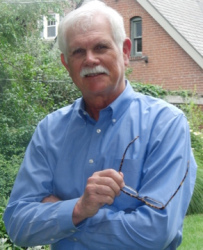
tom shrout

Shrout

For more than 20 years, Shrout was executive director of Citizens for Modern Transit, a nonprofit organization based in St. Louis.  Now, he and his wife Debra have a consulting company that organizes community support for improved public transit.

In an email, Shrout said:

“I think tolls can be sold to the Missouri electorate, but it will take a professional education campaign prior to a ‘vote yes’ campaign. I’m thinking radio, TV, newspaper in addition to community meetings. Direct mail, social media, etc. would come in the ‘vote yes’ campaign, in addition electronic and social media. Polling would be critical.”

Shrout said that a potentially deep source of campaign funds would be the Show-Me Institute, a conservative think tank headed by retired St. Louis area businessman Rex Sinquefield.

rex

Sinquefield

Sinquefield has thrown millions of dollars into several terribly bad proposals, including one to eliminate the Kansas City earnings tax (fortunately, it failed badly). But he and his Show-Me colleagues worked against the transportation sales tax and would seem to look favorably on an I-70 toll.

Shrout said that if supporters of tolls on I-70 are serious about putting it to a statewide vote, they should get cracking.

Proponents of the transportation sales tax spent $4 million last summer talking about the desperate need for increased transportation funding, and Shrout said toll-road proponents need to “build on the investment and get the funding mechanism right and the projects right.”

Another important campaign element, Shrout said, would be emphasizing how easy and practical toll collection could be.

“A few years back, Debra and I paid our toll in New Zealand over the Internet after we got back from our excursion,” he said. “You have a grace period to get it paid. Regulars have onboard transponders that automatically deduct the toll.”

**

I’d be interested to know what you readers think about the prospect of an I-70 toll. Personally, I’m ambivalent. I hate driving on the Kansas Turnpike, even when I just go between here and Lawrence. It’s not the money that bothers me; it’s feeling like I’m held hostage on I-70 and can only use the “Lawrence Service Area” to go to the bathroom or get something to drink. (The prices are inordinately high, too.)

On the other hand, I do like the fact that those who use I-70 the most — our friends, the truckers — would pay the most. Also, it seems like a fair way to pay for redoing the most important and heavily used road in the state. As Cooper’s story noted, about 60 percent of the state’s population and jobs are located within 30 miles of I-70.

So, tell me what you think. Let the informal survey begin.
In the winter, having your coat with you and, more important, getting it back after you deposit it somewhere is something you take for granted.

But anyone who has had the experience of leaving their coat on a rack or at a coat check and then finding it has disappeared when they go back for it…oh, my. It’s as bad as losing a wallet or a wedding or engagement ring.

The worst feeling when a winter coat disappears is when you think someone has stolen your coat. I mean, this is not just a piece of personal property, it’s your shield from the cold, your comfort from the biting wind, your cherished wrap that accompanies you on expeditions short and far and is always there for you.

But sometimes, unfortunately, coats disappear. And that’s just what happened on New Year’s Eve at a big party at the Wheeler Downtown Airport. Here’s what happened, as The Star reported on Saturday:

About 1,500 people paid $100 each to attend a fund-raising party for the National Airline History Museum. Good start, right? But it didn’t take long for disappointment to set in. The party promoters and organizers ran low on food and drink. Bad sign right?

And then, as the mood almost certainly turned sour because of that, people started heading for the exits.

As they went to the coat check station to get their coats, however, many people discovered, to their chagrin, that their coats weren’t there. Nowhere to be found.

One man, Matt Lugo of Blue Springs, told The Star’s Don Bradley:

“We checked four coats and they gave us three back. The missing one was my wife’s. A wool overcoat, a gift from her family. She was pretty upset.”

Museum officials told people to send in a picture of their missing coat. One man said, “I just got it for Christmas — I don’t have a picture of it.”

One woman who attended the party, Vinur Kaul, told KSHB, Channel 41, news that she was so frustrated with long wait times for a parking-lot shuttle bus, as well as the coat check and the bar service, that she and her fiance left well before midnight.

John Roper, the museum’s vice president of operations, acknowledged “problems” with the event and told Bradley that “an investigation” was underway.

The museum posted a statement on the Facebook Event Page that said, in part:

“We ask those who may have mistakenly taken the wrong coat or an additional item by mistake to please return to us so that we can get it to its rightful owner. We appreciate your patience and cooperation in this effort.”

What a sorry situation. What a debacle.

**

I was the victim of a coat theft just once, as I recall. And that occasion, which occurred more than 50 years ago, I remember like it was yesterday.

In my youth, several Catholic parishes in Louisville, where I grew up, threw mixers for teens, usually on Sunday nights. One church known for having very good mixers — that is, with a lot of girls attending — was St. Raphael. Its mixed was called “Sa-Ra-Teen.” My home church, St. Agnes called its events “Senga.”

On night when I went to Sa-Ra-Teen I had a brand-new, tan trench coat, which my parents had bought me. I mean not more than a week old. It was a primo trench coat made by the one and only London Fog, a brand that spoke of class and social acceptance.

(According to Wikipedia, two-thirds of all raincoats sold in the United States in the 1970s were from London Fog.)

Anyway, I hung my newly cherished coat on a coat rack in a corner of the school’s event space. I remember putting it on a hook, along with dozens of others on other hooks, without making any attempt to put it under other coats or in some relatively remote location. (That’s one of those things you learn with experience.)

When I went back to the rack at the end of the evening — I was one of the last to leave — the coat was gone. I knew exactly where I had put it, and it wasn’t there. I rooted through all the remaining coats, but it wasn’t there. The coats that remained were pathetic — nothing like my crisp, unblemished London Fog. I went out into the cold and went home — maybe my father picked me up — brokenhearted. My father took the news well. He didn’t get mad, didn’t obsess on it (like I would, if it was one of my kids) and didn’t even call the church the next day (as I would have done). It was no use; the coat was gone; someone else was wearing that beauty. If Dad had obsessed about it — and maybe he understood this — it would have made me feel even worse than I did. I never forgot his even-keeled reaction, even though that was an expensive coat, by 1960s standards, and it was a monetary loss that stung our middle-class family.

So, I sympathize and empathize with the folks who had their coats lost or stolen at Downtown Airport. What a disheartening, upsetting way to start the New Year. I feel their pain and frustration.

**

The Downtown Airport coat debacle immediately reminded me of an unusual coat incident that occurred in the 1970s in Independence.

The central figure in this episode was a man named Dick King, who, I believe was Independence mayor at the time — a fact that made this not only more bizarre but also newsworthy.

King and several other people went to the old Zuider Zee restaurant on Noland Road one night and found there was a relatively long wait to be seated. If King tried to use his mayoral status to get his name to the top of the list, it didn’t get him anywhere. Then, buoyed by alcohol, he went to the coat rack, swept up a large armful of coats and headed out the door. I don’t know what, if anything, his companions did or said, but, at any rate, King got out on I-70 and started flinging the coats out of the car.

The Star reported later that at least a few of the people who had their coats stolen got them back. I don’t know what shape they were in, but at least they got them back.

King later acknowledged that he had a drinking problem and cleaned up his act. He went on to become one of Kansas City’s leading development attorneys. He unsuccessfully ran for mayor in 1991, the year that Emanuel Cleaver was elected to the first of his two terms.

In 2006, King died of cancer at age 62…The coat theft, of course, was not in his obituary. But I’ll tell you this, anyone who was involved in local politics in the 1970s remembers the infamous Dick King coat caper at the Zuider Zee.

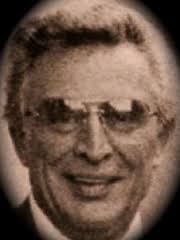
The week before last, I wrote about my interview with the late Kansas City mob boss Nick Civella, when Civella showed up at a 1980 World Series game in seats that a state senator had given to a friend, never intending for them to go to Civella.

Today, I’ll tell you about my only other interview with a mobster, the late Carl Spero, who, along with his three brothers tried, in the 1970s, battled Civella and his associates for control of local underworld activities.

Big mistake.

On the night of May 16, 1978, three heavily armed, masked men burst into the Virginian Tavern, 1315 Admiral Boulevard, where the three living Spero brothers –one had been killed gangland style in 1973 — spent a lot of time. (If a bar is still there, I don’t think it’s called the Virginian.)

With a fusillade of bullets, the intruders killed Mike Spero and wounded Joe Spero, both of whom had been sitting in a booth. Carl Spero, who was sitting at the bar, bolted for a side door when the shooting started and was struck in the back by a shotgun blast as he reached the sidewalk.

Paralyzed from the waist down, Carl was taken to Truman Medical Center, where he spent the next few weeks.

That’s where I came into the picture…

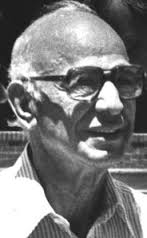
I was covering Jackson County politics and government at the time, and one night a couple of weeks after the shooting, I was chatting with Skip Sleyster (now deceased), a rough-around-the-edges but very successful commercial property owner. Sleyster also had a Democratic political club, and that’s why he was at the function that night.

Skip and I got to talking about the Spero shooting, and, Skip said he was friends with Spero and had been in touch with him. Taking me completely by surprise, Skip said, “Do you want to interview him?”

I replied, Well hell, yes!”

Skip said Spero was recovering nicely at Truman. He then glanced at his watch and said, “He watches Ironside every night at this time.”

Ironside was a popular TV drama starring Raymond Burr, who, ironically, played the role of a paraplegic chief of detectives. The show ran from 1967 to 1975 and was in reruns in 1978.

Skip set up the interview for the following Monday night, June 5.

Nervously, I went to Spero’s room — a police officer stood outside — and he welcomed me in a strong voice. He was eager to talk.

carl

Carl Spero

Sitting up in his bed, he answered questions for an hour. During that time, about six other visitors came in, and he took a few telephone calls. But for the most part he was focused on our conversation.

Among other things, he denied that he and his brothers had been trying to take control of local underworld activities. He said:

“I’ve denied that part from the get-go — the part about organized crime per se.”

(That was the first time I had heard the term “get-go,” and I’ve used it liberally ever since.)

He said he had no idea who the assailants were, and when I pressed him, saying it must have him wondering, a half-smile came over his face and he said, “It arouses your curiosity.”

After the interview, I raced back to The Star, which is just a few blocks north of the hospital, and started banging away on my IBM Selectric typewriter.

I remember that the copy editor on the story — the person who wrote the headline and put the final edit on it — was a lanky British fellow whose first name was Peter. He had just a few questions for me; otherwise the story sailed through the editing process.

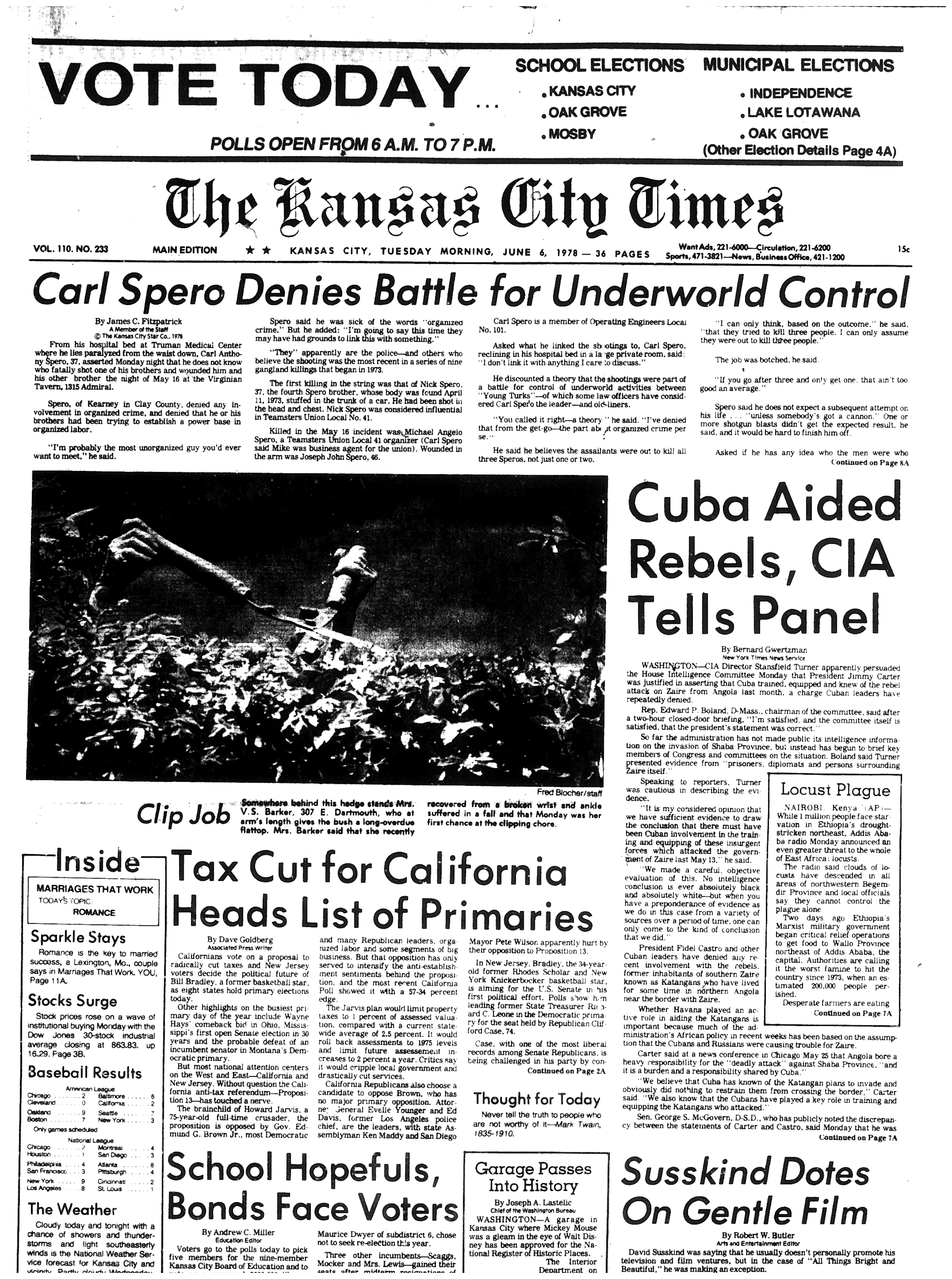
The next morning the story was stripped across the front page of The Kansas City Times, then the morning edition of The Star. It “jumped” inside, where the rest of the story took up almost half a page.

As you can imagine, it was an exhilarating experience, from the moment Skip mentioned the possibility of an interview, and it was one of my most memorable stories. Oddly, however, just as with the Civella story, I didn’t save the clipping itself. And, as with the Civella story, I had to go to the Downtown Kansas City Public Library and locate it on microfilm.

**

Now, here’s the rest of the Spero story.

At one point in the interview, I asked Carl if he expected a subsequent attempt on his life. No, he replied, “unless somebody’s got a cannon.”

I feel sure I laughed at that comment, but it turned out to be prescient, if only slightly off target.

I greatly underestimated the determination of the Civella group. They had no intention of letting Spero off the hook with paraplegia; they fully intended to finish him off.

tuffy

DeLuna

Six months after the Virginian incident, the FBI wiretapped a conversation that showed just how serious the Civella group was about killing Spero. The principals in that conversation, which took place in a Northland home, were Nick Civella; his brother Carl “Cork” Civella; Carl “Tuffy” DeLuna, who allegedly planned and participated in the tavern shoot-up; and two Las Vegas casino executives.

Nick Civella had called the conference to discuss changes in casino operations (he had a hidden interest in at least one) and to plot the demise of Carl Spero.

According to a transcript of the conversation, Nick and Cork talked of ways to get to Spero, who lived in a remote part of Clay County, with a lot that was free of trees or other landscaping.

Nick: “Them guys (some of his henchmen) been out to that house. That house is exposed for a mile. You get a car out there on that road. You start, do you say crawl and walk. The guys ain’t in that kind of shape.”

Cork: “Willie’s telling me (apparently referring to a fearsome mobster named Willie “The Rat” Cammisano) he would go out there and sit and crawl and hit him from a fuckin’ mile away. I don’t see no sense in why the guy can’t even try.”

Nick: “He’d be moving. He’s a moving target.”

Cork: “What’s the difference, fuckin’ deer’s moving.”

Nick: “Oh, no, no, Cork. Deers are standing when they get hit.”

Nick then brought the Spero conversation to a chilling close by saying to Cork:

“Let me tell you something. We’ve got the best fuckin’ bloodhounds in the United States and always did have.”

The bloodhounds got Joe Spero first. In June 1980, a bomb exploded at a Clay County storage shed, hurling him 50 yards through the wall of the shed. He died instantly.

According to The Kansas City Star: “Authorities thought Spero, 48, accidentally set off the bomb. A decade later, an FBI agent quoted an informant as saying the dynamite had been booby-trapped on orders of the Civella organization.”

In January 1984, the bloodhounds closed in on the last remaining Spero. One morning when Carl entered the office of a Northeast area used car lot owned by his cousin, a nail-bomb exploded. Carl, who had escaped with serious injuries at 38, was dead at 44.

That was just mop-up business, however, because by then Nick Civella was gone — having died a year earlier, shortly after being released from prison — and the mob was on the way to becoming a shadow of what it used to be.

**
spero3

The last few days before Christmas I had a hard time finding stories that interested me in either The Star or The New York Times. That’s unusual, but, of course, we’re talking about the one time each year when many of us both speed up (to get ready for Christmas) and slow down, as we withdraw from the day-to-day routine.

But today…bam!…the news is back. Time to fire up and roll forward.

Consider three of the more interesting subjects I found in this morning’s Star.

Women priests

A 67-year-old Kansas City woman named Georgia Walker will soon be ordained as a Catholic priest.

“How’s that?” you might be saying.

Well, the ordination will not be recognized by the Catholic Church, which, in fact, will excommunicate Walker. But nevertheless she is getting ordained. Her ordination will be performed next month by Bishop Bridget Mary Meehan, who, according to reporter Matt Campbell’s story, “travels the country ordaining women priests and deacons — 25 of them in 2014.” The ordination will take place at St. Mark Hope and Peace Lutheran Church, 38th and Troost.

To this, I say Hoo-Ray! The Catholic Church’s insistence that only men can be priests is one of the main reasons that Patty and I left the “One True Church” (ho-ho-ho) about eight years ago. (That, along with the priest sexual-abuse scandal, the church’s insistence that priests cannot marry and the arrival in Kansas City of Bishop Robert Finn.)

The “only-men-can-be-priests” rule makes no sense historically or logically.

Listen to what Donna Simon, pastor at St. Mark’s, said in Campbell’s story.

“The logic for male (only) ordination is spurious. Nowhere in the Bible does it say you may not ordain women. But because Jesus only called men, the church has leaned into this tradition that you can only call men. It hasn’t leaned into a tradition that you can only call Jewish men because all the men that Jesus called were Jewish. They just picked that one thing.”

And why did the church “just pick that one thing”?

Because, in my opinion, it sounded good and insured the men folk their decisions wouldn’t be challenged by female logic, which, as we enlightened men understand, far exceeds our own.

Bravo for Georgia Walker. She could hear my confession any day…

Dead man signing 

I was sorry to read that some people operating under the banner of my Democratic Party had phonied up signatures on a petition seeking a statewide vote on an early-voting initiative.

Certainly an aberration, right? Because we Democrats do things the right way at least 99.9 percent of the time.

But not this time. A law firm commissioned by local political consultant Jeff Roe, a Republican, found more than 2,200 fraudulent signatures that were submitted to Secretary of State Jason Kander’s office. Some of the signatures were in the names of people who were, uh, dead…They didn’t sign and then die; they died and then signed…or, you know, somebody signed for them.

More than half of the fraudulent signatures came from Boone County, home to the very liberal-leaning city of Columbia.

Even with the phonied-up signatures, the petitioners did not have enough valid signatures to get the proposal on the ballot.

The way these petition drives usually go, the organizers hire people to gather signatures, with the petition carriers getting a certain amount for each signature — say 20 cents. So, there is an incentive to cheat.

With well-organized, well-run and well-policed petition drives, the chances of a lot of fraudulent signatures getting affixed to petitions are small…I suspect this was a fast and loose petition drive.

…If an early-voting measure sounds familiar to you, in November we voted on one that the Republican-dominated legislature placed on the ballot. Like most of the stuff that the General Assembly comes up with these days, it wasn’t a legitimate early-voting proposal. It was a mishmash under which Missouri residents could have cast ballots on six business days — but not consecutive days and not weekend days — before a scheduled election. Fortunately, Missouri voters defeated that proposal by a wide margin.

This latest caper — with the fraudulent signatures — could set back the cause of early voting in Missouri. Too bad, because even Kansas has had early voting for many years.

Hurtling down the road

Reporter Brad Cooper had an excellent story citing statistics that show highway fatalities and injuries have jumped significantly since the Kansas Legislature raised the speed limit from 70 to 75 miles an hour on some roads three years ago. Cooper wrote:

“The overall number of crashes is flat, but highway deaths jumped 54 percent since 2012 on the seven highways where the speed limit was raised.”

This is another one of those urban-rural deals, where, in general, the outstate legislators want higher speed limits and urban legislators (who comprise the vast minority in Kansas) understand that the higher the speed limit, the more dangerous the highways.

Cooper got to the root of the problem when he quoted a retired bus driver named Michael Walker who said 75 wouldn’t bother him if police would enforce 75. As Walker said, however, “when they say 75…they mean 85. If you have a wreck at 85 miles an hour, you’re going to tear up a whole lot of stuff.”

Yes, like your head, your legs and your torso.

When we go out on the road, I usually drive about 65. When Patty takes over, we go 75, and I close my eyes and try to nap.

Every Friday I have lunch with my two old Army buddies — the only two I’ve got — from our years together in the U.S. Army Reserve.

Yesterday, only one of them was on hand, and we got to talking about the old mob days in Kansas City. That was back in the 70s, when the late Nick Civella, the godfather of “The Outfit” in Kansas City, held sway.

He and his boys oversaw a widespread bookmaking operation, and Civella also had a piece of a Las Vegas casino. Periodically — every few weeks, I think — one of his lieutenants would take a plane full of gamblers out to Vegas for the weekend, and the lieutenant would not only return the gamblers but also a briefcase (or maybe just a sack) full of cash, representing Civella’s cut of the casino proceeds.

nickc

Civella

Civella was also involved in the River Quay, by the City Market, for the two or three years that entertainment district was as popular or more so than Westport. It all went to hell, however, after a guy named Freddie Bonadonna, owner of a River Quay bar called Poor Freddie’s, refused to give mob members a cut of revenue from a city parking lot that he leased. After that, several establishments were burned or blown up, including Poor Freddie’s.

Before the explosions and arsons, the situation was so intense that a fearsome, Civella-linked mobster named William (Willie the Rat) Cammisano and one or more “associates” apparently killed Bonadonna’s father to show Freddie how serious they were about wanting a piece of the parking revenue. Civella reportedly gave Cammisano a wide berth to operate pretty much as he pleased.

Freddie ended up going into the witness protection program and testified against several mob guys, and Civella and his top guys ended up in prison. Civella died in March 1983, two weeks after he was released from prison because he was dying of lung cancer.

Willie the Rat succeeded Civella as crime boss, but the organization faded in the 80s, and mob activity in Kansas City, thankfully, has never been the same.

**

A lot of people have stories about interactions with Nick Civella, and yesterday I told my Army buddy about mine.

The Royals’ first went to the World Series in 1980, and they played Phillies. The first two games were in Philadelphia, and when the Sunday, Oct. 19, game came around in Kansas City, the Series was tied two games apiece.

I was a general assignment reporter for The Kansas City Times, the morning edition of The Star, and I was one of several reporters stationed at Kauffman Stadium to cover any general-interest stories that might crop up.

From a seat behind the backstop screen, I was relaxing and enjoying the game when another reporter who had checked in with the office — on a pay phone, of course — told me to call the assignment editor because something significant was going on at the ballpark.

harry

Wiggins

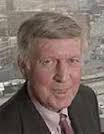
I called right away and was told that a state senator named Harry Wiggins — many of you probably remember him — had called the office and had told an editor that Nick Civella and one of his lieutenants were sitting in plaza-level seats that Wiggins initially had tickets for.

Wiggins told the editor he had swapped the plaza (lower) level tickets for seats higher up at the request of a former Kansas City councilman named Sal Capra, who told Wiggins that he wanted to help an aging and ailing friend get lower-level tickets.

Wiggins, who was a prince of a fellow, agreed and gave Capra the tickets, which he presumed Capra was going to give to his friend.

Wiggins also was a first-class glad-hander, and he couldn’t resist the opportunity to go down and introduce himself to Capra’s friend.

But when he got down to the seats, he found them occupied by Civella and Pete Tamburello, one of Civella’s enforcers. Realizing that it wouldn’t look good if it came out later that Nick Civella and Pete Tamburello had sat in his seats at the World Series, Wiggins immediately called the newspaper.

After speaking with Wiggins at the stadium, I and a photographer went down to the concourse behind the area where Wiggins’ original seats were, and we spotted Civella and Tamburello. A Channel 9 anchorman named Scott Feldman had also learned about the situation, and he and a cameraman were also in the area.

It was the bottom of the sixth inning, and the Royals were in the process of scoring two runs in a game they ended up losing 4-3. (They went on to lose the sixth and final game of that World Series two days later in Philadelphia.)

The presence of a couple of reporters and a cameraman and a photographer would create a commotion almost anywhere, and after just a few minutes, an irritated Civella and Tamburello got out of their seats and came back to talk to us. Civella told a bald-faced lie, saying that he not only got the tickets from Wiggins (he got them from Capra) but that Wiggins had delivered the tickets to his house before the game.

(Wiggins’ response to that claim later was, “I don’t even know where he lives. If I did know, I wouldn’t go.”)

During the conversation, Tamburello shoved a camera being held by Channel 9 cameraman Phil French. Civella slapped at a camera that KC Times photographer Bill Batson was holding. In addition, at least one of Civella’s sons and a few other associates — guys who seemingly materialized out of nowhere — began crowding around, hemming us in.

By then, fans in the area were calling for all of us to sit down, and Civella and Tamburello returned to their seats. Batson and I — and I believe Feldman and French — lingered in the area, and pretty soon Civella and Tamburello got up and, as far as I know, left the stadium.

I went to a pay phone and told a rewrite reporter, Mark Fraser, what had transpired.

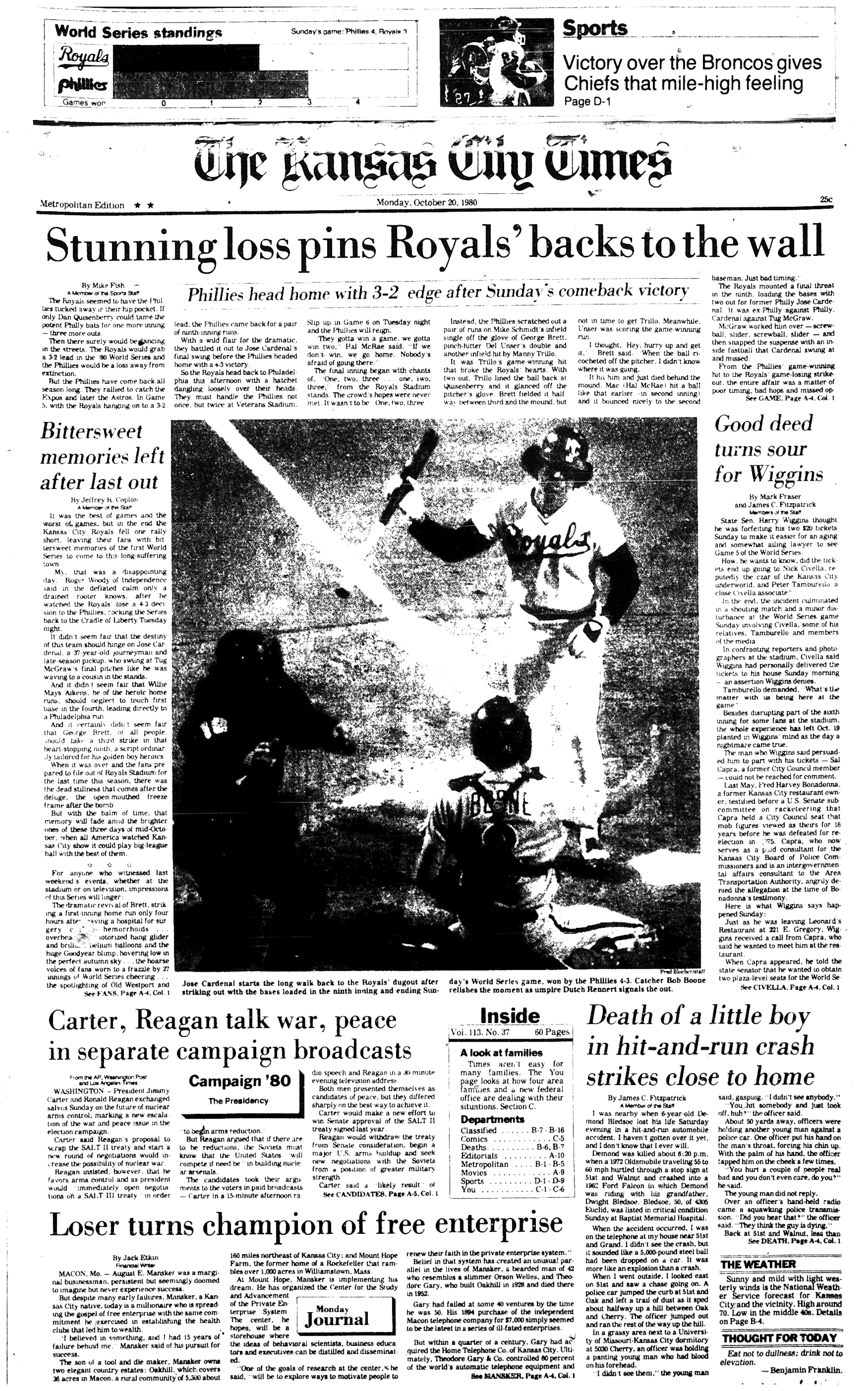
Fraser wrote it up — spicing it up with plenty of background about Capra, Civella and Tamburello — and, bingo, it ran on the front page on Monday, Oct. 20, next to a photo of Royals’ player Jose Cardenal leaving the batter’s box after striking out in the bottom of the ninth to end the game.

The headline on our story was “Good deed turns sour for Wiggins.”

Many of the principals in that incident are dead, including Civella, Tamburello, Wiggins and Batson, the photographer. Capra is still alive, and so is Mark Fraser, my co-writer on the story. I have no idea where Feldman and French are, or if they are still alive.

It was a bizarre and unforgettable story.

…One other thing about that game and that story: Those tickets for the plaza-level seat down the third base line? Their face value was $20 each! Do you know what a pair of tickets in that section would have gone for in this past World Series? Probably more than $1,000 each.

**

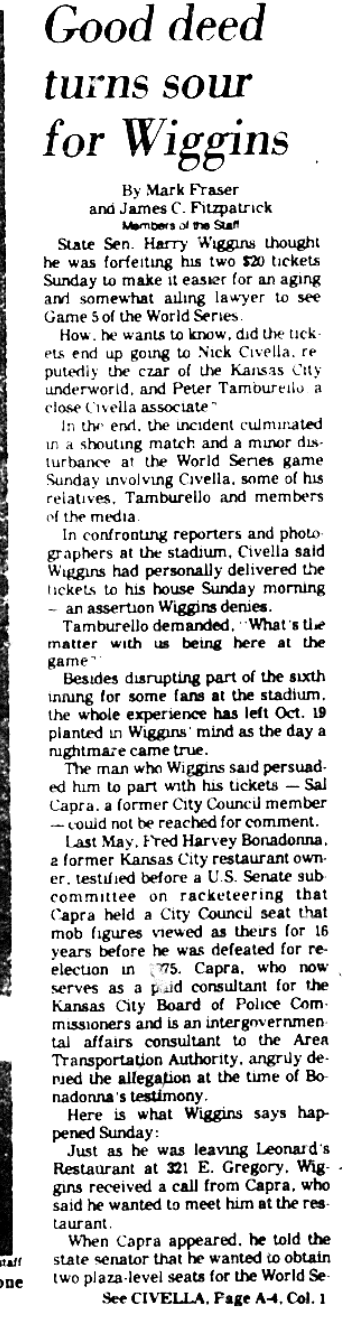
Now, here’s an image of the first part of the story — the part that appeared on the front page, before the story “jumped” to an inside page.

wiggins

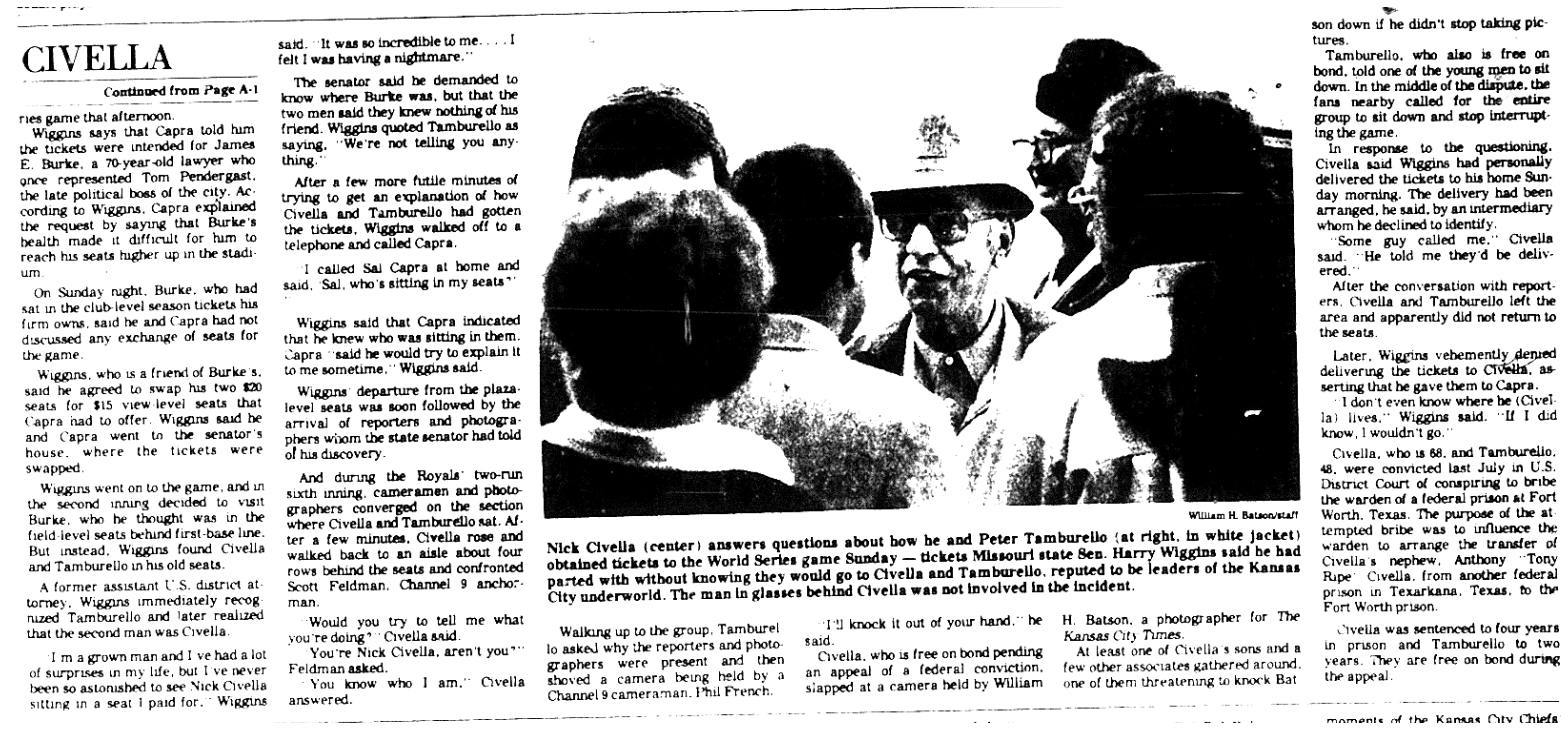
And here’s the “jump.” (Sorry, but I couldn’t size it large enough so that the words were legible.)

In the photo, Civella is in the center, facing me. Tamburello, I believe, is to my right. Batson, of course, was taking the photo.

civella1

And, finally, here is what that front page looked like…

wiggins

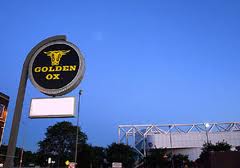
With the Golden Ox closing on Saturday, Patty and I have been wanting to go down there, for old times’ sake, to see the old haunt one last time.

So, last night was the night. We decided to meet at the bar at 6:30 and maybe have dinner there. Visions of a charbroiled steak cooked over curling flames danced in my head.

But already I jump ahead. In the back of my mind, I also looked forward to once again seeing Kemper Arena — a venue that had quietly and unnoticeably receded into my past.

When I was a young reporter — and a single young man — in the early 1970s, Kemper Arena had been a significant part of my life. As an up-and-coming political reporter, I wrote several stories about the negotiations and maneuvering to get Kemper Arena constructed. And once it was up, I began attending events there, including basketball and hockey games, American Royal events and, of course, concerts. The best concert I ever saw — Paul McCartney & Wings — took place there in May 1976.

oxI loved and hated Kemper Arena. I used to park in Lot A, which is on the west side of the arena, beneath the viaduct that peels off Cesar Chavez avenue and swings down, down, down into the lowest point of the arena grounds. Lot A is a relatively narrow hodgepodge, with pockets of parking here and there, broken up by the big concrete piers that support the curving viaduct above. As I recall, the lot was never properly paved. It was a mishmash of rocky patches, potholes and mud pools. And it was always wet down there.

But the arena, blue on the inside and with gently sloping banks of seats, offered good sight lines and was relatively comfortable. I attended many Kansas City Kings and Kansas City Scouts games there, and even though the teams were mostly bad, it was the NBA and the NHL — right there, right then — in Kansas City. For this native of Louisville, Kentucky, which had no major league franchises, it was big.

So, last night as I coursed down that viaduct and passed Lot A, I thought about the good times I had had at the arena. I did some quick calculations and figured that I had attended well over 100 events at the arena, maybe 200, maybe more than that.

200px-KansasCityScoutsAnd the structure itself. Oh, my! I had forgotten how impressive and distinctive it is, with those big, white, erector-set trusses that support the arena from above and at both ends. Circling the arena on the way to the Golden Ox, I kept peering at it from different angles. When I got to the Golden Ox parking lot, north of the arena, I got out of the car and stared at the arena for a while and thought, “No, this arena cannot be razed; it is too important a structure, with too much Kansas City history inside.”

**

The first thing I noticed at the gently curving bar of the Golden Ox was a man wearing a large, tan cowboy hat. It was like Groundhog Day for me; I cannot recall a time I have been there that I didn’t see at least one cowboy hat at the bar.

It wasn’t completely like Groundhog Day, however, because there were only about 20 people in the bar area, instead of scores of people. Also, there were no loud conversations or raucous laughter, no clouds of smoke, no guys eyeing and edging in on women seated at the bar.

A bartender — I think her name was Connie — was pouring very stiff drinks. Patty’s eyes widened as the lady held the bottle of Scotch up…and held it…as the last of the golden contents passed from the bottle into the glass that ended up in front of her.

We could see, through the bar area and off to our left, that people were seated at several tables in the dining room. It didn’t look particularly busy, and it appeared to me that we would be able to go over and get a table whenever we wanted.

Pretty soon, Patty suggested that I go arrange for a table. By this time it was a few minutes after 7. When I circled around to the reception station, I found it unmanned. One man — another prospective diner — was in front of me, and it appeared, from the bored and slightly agitated look on his face, that he might have been waiting for a few minutes already. I joined in the wait.

Two or three minutes went by. Nothing. Five minutes went by, nothing. Meanwhile, I was assessing the situation in the dining room, and it looked like people were actually eating at only one table. Always a bad sign. I looked over at the charbroiled grilling area, where, in the past, the flames danced and the steaks sizzled continuously. But now there were no steaks (that I could see), no flames, no sizzle. A lone employee — a cook, I presume, although he bore no identifying characteristics — ambled back and forth in the cooking area, but to no apparent end.

My enthusiasm for that steak that I had envisioned earlier was starting to wane. I was now anticipating poor service, a lengthy wait and, very likely, a disappointing steak.

I walked back to the bar area, told Patty that a host was nowhere to be found and gave her a one-word assessment of the dining room environment: moribund. A veteran of many restaurant “boltings,” I suggested that we consider eating someplace else. She suggested that we wait a few minutes and make another run at getting a table.

After about five minutes, I went back over to the reception area and there he was — the previously m.i.a. host, wearing black pants and a black shirt with the Golden Ox logo.

“Table for two?” I said, hopefully.

He looked at me and said, “Oh, I just seated my last table for the night. Sorry.”

By “seating” his last table, it was clear that what he meant was not that the place was full — hardly — just that he wasn’t going to seat anyone else for dinner.

I looked at my phone. It was 7:16.

“OK,” I said and retreated to the bar.

I repeated the host’s quote to Patty, who, after a few seconds’ thought, said, “OK, then, let’s go eat at Voltaire.”

Minutes later, we put on our coats, walked across the street and entered Voltaire, where the hostess met us with a smile and a gesture to an open table. Along the left-bank row of table, people were chatting and laughing. At the near end of the bar, the bartender was providing background music by playing records — vinyl LP’s, plucked from a multi-level cabinet — on an open-top turntable.

“It smells a lot better in here,” Patty said.

Just like that, we had left the past and hurtled into the present.

It’s Friday Favorites at jimmycsays. We gathered the staff together, went over some of the New York Times and Kansas City Star stories that stood out this week, and then we voted on awards in various categories.

I’ll have you (few) cynics out there know that we have an equal number of conservatives and liberals on the staff. (I’m not at liberty to reveal their names or how many there are, but trust me, it’s a pitch-perfect, ideological balance.)

To quote the late, great Jackie Gleason…”And away we go!”

Courage and Valor (1):

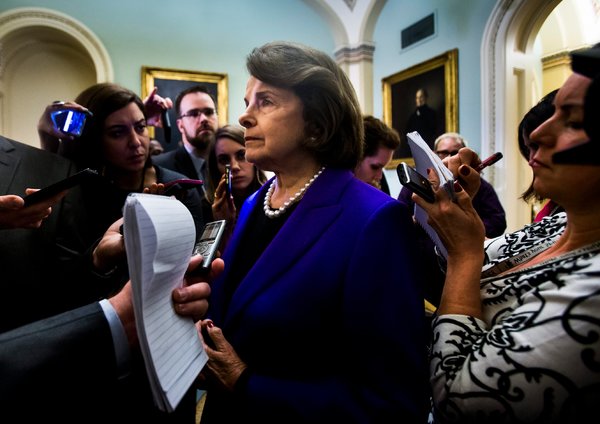
FEINSTEIN-articleLarge

Photo by Jim Lo Scalzo/European Pressphoto Agency

Sen. Dianne Feinstein chairman of the Senate Intelligence Committee. She plowed through many obstacles, including opposition from Secretary of State John Kerry, before succeeding in getting the committee’s detainee-torture report released. “My words give me no pleasure,” she said, beginning her Senate speech detailing the high(low)lights (rectal feeding???) of the report…The lady is 81 years old. Talk about personal strength…


Courage and Valor (2):

Sen. John McCain, who fought in the Vietnam War and was tortured when held hostage in North Vietnam. McCain staunchly supported releasing the report, and in so doing effectively neutralized the whining and hair-pulling opposition of some of his Republican colleagues. On the Senate floor, he argued that the U.S. shouldn’t resort to torture not just because they’re ineffective and potentially dangerous but because they undermine the nation’s values and beliefs. “I have often said, and will always maintain, that this question isn’t about our enemies; it’s about us. It’s about who we were, who we are and who we aspire to be. It’s about how we represent ourselves to the world.” If McCain had stayed true to his maverick self in 2008, he might have been elected president.

Counter Puncher of the Week

Sen. Majority Leader (soon to be Minority Leader) Harry Reid. In an interview with the New York Times, Reid indicated he was itching to go to the mat with the Republican majority that will take over Jan. 6. “They want to eviscerate Clean Air, Clean Water, E.P.A…Is there enough they can do to help Wall Street? I don’t think so. Big banks? I don’t think so. That’s where the new battle is going to be.” I can hardly wait. Uh-huh, yeah.

Scariest Boss (1)

Cho Hyun-ah, director (formerly) of in-flight service for Korean Air Lines. She blew a gasket when a flight attendant served her macadamia nuts without first asking her…and in an unopened package instead of on a plate. She summoned the chief flight attendant and grilled him on proper procedure, but he flunked. Cho ordered the plane, which was headed to the runway, to return to the gate, and then ordered the chief flight attendant off. The ensuing uproar on social and traditional media prompted Cho to resign as in-flight service director. However, Cho also happens to be the daughter of the chairman of the privately owned airline, and she kept her other job as a vice president. Bloggers ridiculed Cho for “going nuts over nuts.”

Scariest Boss (2)

Michael S. Jeffries, longtime c.e.o. of Abercrombie & Fitch. At age 70, he retired in the wake of the hip clothier’s dimming fortunes. Jeffries once said that Abercrombie was exclusionary and sought to attract only “the cool kids.” An NYT story said that employees traveling on the company’s Gulfstream jet had to greet Jeffries with “no problem” in response to any requests “and their uniform was dictated down to the boxer briefs.” I’m guessing my full-cut Dillard’s boxers would be a problem.

Judgment Call of the Week

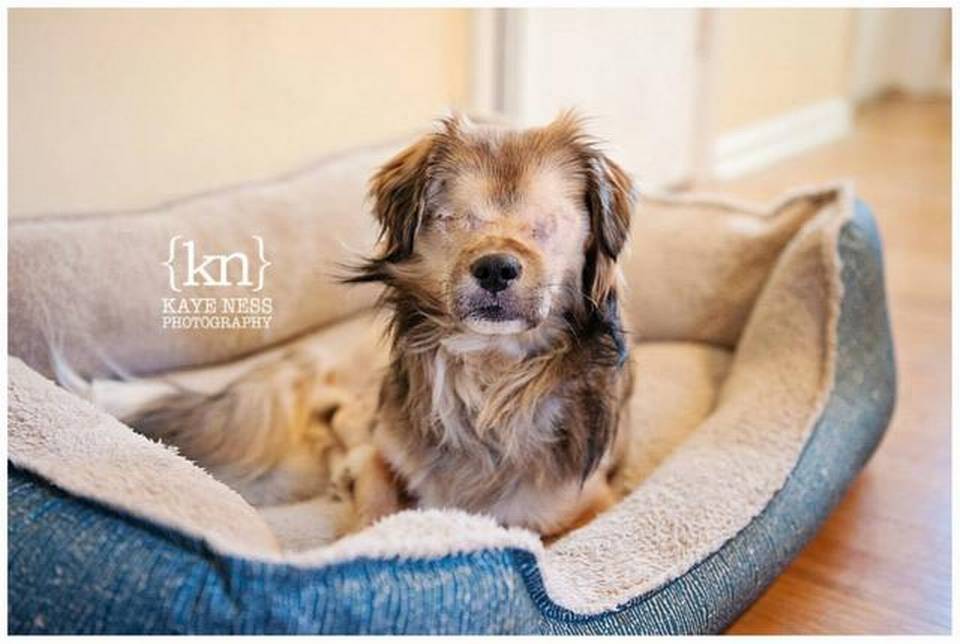
Roadrunner 12.10_1

(Just from his picture, it looks to me like this dog has spunk.)

Jackson County Prosecutor Jean Peters Baker. The Star reported Wednesday that Baker filed felony animal-abuse and animal-neglect charges against a Northeast area woman in the shocking case of a Tibetan spaniel named Roadrunner. As a result of the alleged abuse, which defendant Kimberly Anderson denies, Roadrunner had to have his eyes surgically removed and a plate inserted to repair a broken pelvis. Authorities had issued Anderson a municipal citation, which would have carried a maximum penalty of a $1,000 fine and up to six months in jail. Now, with the filing of superseding state charges, she’s facing the possibility of more than a year in prison. A KC animal shelter employee told me recently that Roadrunner is doing well in foster care and, amazingly to me, showing no signs of psychological trauma. An animal shelter employee is planning to adopt the little guy.

Local Reporter of the Week

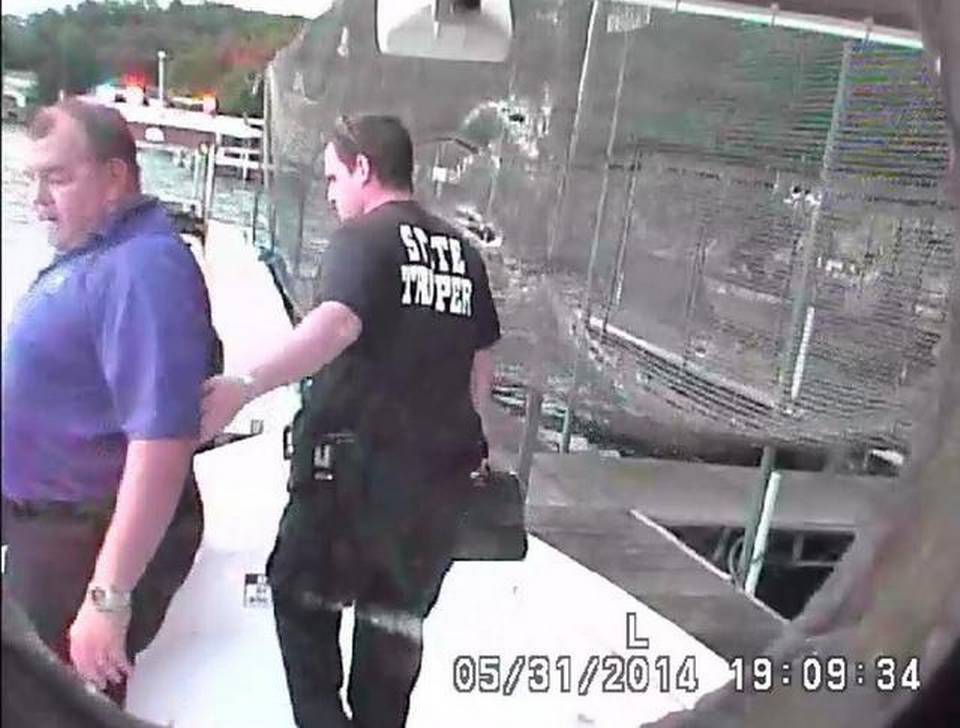
The Star’s Laura Bauer, who has relentlessly pursued the back story in the drowning of 20-year-old Brandon Ellingson of Iowa. Brandon was bounced off Missouri Highway Trooper Anthony Piercy’s patrol boat in the Lake of the Ozarks and drowned after Piercy arrested Brandon for boating while intoxicated. Bauer had an investigative piece in Sunday’s paper that clearly showed what a debacle the Highway Patrol-Water Patrol merger has been and how ridiculously little training some highway officers received before being assigned to water duty.

Bauer has done such a tremendous job overall that I think her stories could be in play for a 2014 Poo-Litzer Prize. Nevertheless, this award comes with a caveat. In Sunday’s story, Bauer lamely granted anonymity to two retired Water Patrol officers who were critical of the merger. She let them off the hook on the old “fear of repercussions” claim. Huh? What repercussions? Their public-employee pensions are as good as gold, and nobody with the state has any authority over them. That would be like somebody interviewing me for a critical story on The Star and I requested anonymity for fear of repercussions. Hah! Come and get me!


You can’t blame Sherry Ellingson for not wanting to return to Missouri after a dozen years of spending summers at the Lake of the Ozarks.

After all, the Missouri Highway Patrol killed her son, 20-year-old Brandon Ellingson, who, by all rights, should be completing the first semester of his junior year at Arizona State University.

“I don’t know that I can ever set foot there again,” Sherry Ellingson said. “I know the (civil) trial is going to happen there, and the depositions will happen there. I don’t know that I’m going to be able to do that. I can’t help, at this point, feeling disgusted.”

Yesterday, for the first time since Brandon drowned after being bounced from a Missouri Highway Patrol officer’s fast-moving boat in rough water, I spoke with Sherry – a mother who has lost her only son and whose life is forever changed.

We spoke for an hour by phone – I from my home in Kansas City, she from Scottsdale, Arizona, where she has been living since January.

Since Brandon’s drowning on May 31, I had wondered how Sherry and her husband Craig Ellingson had been holding up; what the family circumstances were; and if they had other children.

One thing I learned from our conversation is that Sherry and Craig (he has handled most dealings with reporters and law enforcement officials), have been separated since last spring – before Brandon’s drowning — and are getting divorced. Sherry resides in Arizona, as I said, while Craig has remained at their home in Clive, Iowa, just outside Des Moines. The couple has made their livelihood by owning and managing about 1,000 apartment units in the Des Moines area.

Another thing I learned is that the Ellingsons have a 22-year-old daughter, Jennifer, who is a senior at the University of Iowa, majoring in communications. She will graduate in May. One of the things that touched me deepest in our conversation was one sentence Sherry uttered about Jennifer and Brandon:

“They were the best of friends. She is really struggling with becoming an only child overnight.”

Picture1209141529_1

Jennifer and Brandon Ellingson in a photo taken in May 2013

Regarding her own struggles, Sherry said that a very difficult milestone passed last Sunday, when Brandon would have turned 21. The Ellingsons marked the occasion by arranging three simultaneous “celebrations of Brandon’s life” – in Des Moines, in Scottsdale and at the Lake of the Ozarks.

Sherry organized the one in Arizona; some of the Ellingsons’ closest friends organized the one in Des Moines; and a group of lake activists who have banded together in support of the Ellingsons organized the third one. Sherry said she has only met one of the lake supporters but that she is in contact with them daily on Facebook.

With the birthday milestone behind her, Sherry now must deal with Christmas and New Year’s. “The holidays, no question, are going to be tough,” she said.

**

Last Friday, the Ellingsons filed a civil suit in federal court, naming as defendants the Highway Patrol, patrol leaders and, of course, State Trooper Anthony Piercy, who was driving the boat the afternoon of Saturday, May 31. The Ellingsons’ suit contends, in part, that Piercy was negligent and violated Brandon’s constitutional rights.

Earlier, after a coroner’s inquest – a relatively informal proceeding — a jury ruled that Brandon’s death was accidental. In addition, a special prosecutor reviewed the case and decided not to bring criminal charges against Piercy,, who was 43 as of September.

On the latter front, however, there has been a new development. In a telephone conversation Tuesday afternoon, Amanda Grellner, the special prosecutor, said that she was once again reviewing the evidence based on new information she has received. She said a witness whom she had interviewed earlier has come forward with “more thorough” information.

Grellner did not say what the new information was but that it had prompted her to review the case in its entirety. “I want to make sure I go through every single piece of evidence,” she said.

Asked whether it was possible that she would seek to reopen the case, she replied, “It’s possible, but I cannot make any promises.” That decision, she said, would be up to the prosecutor and Circuit Court judge who appointed her months ago.

That sounds promising. The coroner’s inquest, held in early September, was a certifiable whitewash: Among other things, there was no testimony about how fast Piercy was driving the boat – up to 40 miles an hour or more, according to records – when Brandon was ejected. Also, it did not come out that while his hands were cuffed behind his back, Brandon was half-standing and half-sitting on a high bench-seat with little or nothing to hold onto; he was at the mercy of Piercy, boat speed and the waves.

Anthony Piercy (1)

Trooper Anthony Piercy, left, after Brandon Ellingson drowned May 31 while in Piercy’s custody

Piercy’s initial story was that Brandon jumped into the water. After that was exposed as balderdash, he changed his story to say he didn’t know how Brandon ended up in the water; just that he looked to his right and saw Brandon’s legs and feet going into the water.

The trooper has acknowledged that he improperly placed a life jacket over Brandon’s head and shoulders without fastening it under his arms, as it was designed to be worn. Once Brandon was in the water, the life jacket quickly slid off and floated away. Piercy said he first made several attempts to rescue Brandon without going into the water himself. He didn’t jump in right away, he said, because he didn’t know how to use the personal inflation equipment attached to his belt. When he did go in, he couldn’t hold onto Brandon, and Brandon went under for the last time.

Sherry says GPS records and witness accounts indicate that Brandon was struggling in the water for at least four and a half minutes. She said Piercy could have taken any number of steps to rescue Brandon, including grabbing a conventional life jacket – several were on the boat — before going into the water.

“He never tried to really save Brandon,” Sherry said.

**

Sherry and Craig owned a house at the Lake of the Ozarks. That’s where Brandon and seven buddies were starting to head back to after an afternoon of drinking beer and playing sand volleyball at a lake establishment called Coconuts Caribbean Beach Bar & Grill in Gravois Mills.

Picture1209141526_1

Sherry and Jennifer, in October

The Ellingsons’ house was about 12 miles from the bar, at the end of the Gravois arm. When Brandon and Jennifer were growing up, Sherry and the children spent about two and a half months at the lake each summer. Craig, a private pilot, worked in Iowa during the week and then flew down to the lake to spend weekends with the family.

They loved their time at the lake and made friends in the area. “I was proud to be a lake owner; I brought people down there all summer long,” Sherry said.

But no more. Within weeks of Brandon’s drowning, Sherry and Craig put the house up for sale. The closing took place two or three months ago.

That part of the Ellingsons’ life is over.

**

One of Sherry’s focuses these days is to keep increasing the number of people who have signed an online petition asking U.S. Attorney General Eric Holder to review the case for possible violations of federal law. About 131,000 people have signed the petition.

Sherry has not been in contact with anyone at the Department of Justice, however, and said she was not sure what the criteria would be for the department to get involved or what leverage Washington might have with regard to the Highway Patrol, which she believes is fraught with corruption and incompetence.

On the state front, a special committee of the House of Representatives recently held a series of public hearings, with an eye toward fixing or undoing the 2011 merger of the Highway Patrol and the Water Patrol. (Piercy was one of the highway officers who ended up on part-time water duty.)

The hearings, which The Star’s Laura Bauer wrote about at length in Sunday’s paper, helped reveal what a debacle the merger was and how little training some highway officers received before being assigned to water duty. For example, a retired Highway Patrol captain who spent 31 years with the Water Patrol said the patrol considered a highway trooper ready to work the water if he had a personal boat and spent time on a lake.

**

By the end of the Tuesday’s interview, it was clear to me that Sherry — along with Craig and other people who have involved themselves in the case — is going to make something happen, push state officials to make some changes, as a result of her son’s death.

I observed at one point that while she was doing a lot to call attention to the case and trying desperately to get justice for Brandon, it must frustrate her that she could not make anything specific happen through force of will.

She acknowledged that was the case but quickly put a positive twist on my observation, saying:

“However, I have to say more has happened than I thought possible, with the group of people who have come together and who are just as outraged as we are.”

**

On behalf of my readers — and thousands of other people who have been following this case — I want to say…Rage on, Sherry, rage on and carry on. And may Christmas and New Year’s bring some happiness and a measure of soul salving to you, Craig and Jennifer.

Over the years, U.S. Sen. Claire McCaskill of Missouri has deftly juggled her political stances in a way that she has maintained the solid backing of her liberal base while throwing enough bones to Missouri’s rural and conservative voters to get elected — and re-elected — to the most coveted political position below the presidency.

In 2006, for example, she successfully portrayed herself as a “pro-gun” candidate, a position that went a long way toward helping her defeat incumbent Republican Sen. JimTalent.

(More recently, in her second and probably last term as a senator, McCaskill has voted for expanded background checks for people making purchases on the Internet and at gun shows, and for stiffer penalties for “straw purchases,” when individuals buy guns for those who are barred from purchasing them.)

mccaskillShe has walked the political tightrope in admirable fashion, and I’m a fan of hers. Indications are that she will run for governor in 2016, and I hope she does so and wins. She would be a tenfold improvement over Jay Nixon, and I think even most Republicans would come to share that opinion.

But McCaskill has a problem. Since she has been in office, Missouri has gone from a swing state to solid red. As a result, McCaskill will find it more difficult than ever to walk the tightrope and gather enough Republican support to prevail.

Which brings me to this: She’s already honing her Wallenda act with a controversial position she has taken in regard to clamping down on sexual assault in the military.

Unarguably, McCaskill has exhibited strong leadership in that reform movement, as evidenced by the fact that her bill to force changes in the military’s sexual-assault policies passed 97-0 in March. The measure, which is now awaiting action in the House, would establish new rules for how victims and defendants should be treated.

**

If you haven’t been following this closely, however, it was not the slam-dunk that it appeared to be. A few days earlier, a competing bill, sponsored by New York Sen. Kirsten Gillibrand, a fellow Democrat, was defeated on a close 55-45 vote.

The major difference between the Gillibrand and McCaskill bills is that Gillibrand’s would remove from the chain of military command the decision on what charges to bring and which cases to prosecute. Instead, under Gillibrand’s bill, those decisions would be placed in the hands of independent prosecutors.

One of McCaskill’s arguments for letting military commanders continue to make those calls is that prosecutors are more interested in victories than in simply bringing cases. Thus, she says, independent prosecutors would be less inclined than commanders to file charges in cases where the evidence is equivocal.

Now, if you ask me, Gillibrand’s position makes far more sense than McCaskill’s. Having independent prosecutors make decisions on whether to bring sexual-assault charges seems far preferable than keeping commanders in charge — commanders who, in many cases, might oversee both the victim and the accuser. A strong indicator of the desirability of Gillibrand’s approach is the fact that 10 Republican senators joined 35 Democratic senators in voting for Gillibrand’s bill. Obviously, that’s no small feat in Washington’s stand-off political environment.

Among the 10 Republicans who voted for Gillibrand’s bill were three of the most high-profile members of the upper chamber: Minority Leader (now Majority-Leader-elects) Mitch McConnell of Kentucky and Sens. Ted Cruz of Texas and Rand Paul, also of Kentucky.

In a Nov. 30, New York Times Magazine story, Cruz was quoted as saying, “(W)hat they’re doing (the military) hasn’t been working, and we need to take more serious steps.”

To McCaskill’s concern, I’m sure, this issue does not appear to be firmly settled. A week ago today, Gillibrand and several other senators who favor her position (including Cruz and Paul), held a news conference and said they would push for another vote on the issue. That could happen if amendments are allowed to the National Defense Authorization Act, which outlines Defense Department spending priorities.

But that is a long shot, mainly because two men who oppose opening the door to amendments are Senate Armed Services Committee chairman Sen. Carl Levin, a Democrat from Michigan and Sen. John McCain, a Republican from Arizona. In a recent New York Times story, Levin said he worried that allowing amendments would open a “Pandora’s box” of other requests.

In any event, interesting lines have been drawn, and the battle isn’t over. If the issue is resurrected, McCaskill could come under a harsher, hotter light for her position. It could get to the point that some, or many members, of her liberal base might decide that McCaskill, while talking a good game, is actually afraid to stand up to the Pentagon.

In reality, though — at least in my view — timidity is not the issue; it’s politics. She’s just projecting how the issue will play in outstate Missouri…where it pays to be with the generals.

A couple of quotes:

The worst enemy is one whose doctrines are founded in hate and are thus beyond debate. Tobsha Learner, in her historical fiction novel The Witch of Cologne.

There is no passion more spectral or fantastical than hate. Lord Byron, in his play The Two Foscari.

Twice this year, the Kansas City area has been in the national spotlight because of horrific hate crimes.

F. Glenn Miller Jr., one of the nut cases who visited us with his particular brand of hate — anti-Semitism — came from Aurora, Missouri, southwest of Springfield.

The other, Ahmed H. Aden, was living among us.

Miller, as you know, shot and killed three people, including a 14-year-old boy, outside Jewish facilities in Overland Park in April. Recently, he told The Star’s Judy Thomas, “I wanted to made damned sure I killed some Jews or attacked the Jews before I died.” He was so blinded in his hatred that he didn’t even bother to identify Jewish people as particular targets and ended up killing three Gentiles.

abdisimad

Abdisamad

Aden, a demented Christian Somali, killed a 15-year-old Somali Muslim named Abdisamad Sheikh-Hussein…Killed him by running him down in his SUV last Thursday outside a mosque on Admiral Boulevard. He claimed he mistook Abdisamad for someone who had threatened him previously, but I’m not buying that for a minute. For one thing, why would a 15-year-old boy be threatening a 34-year-old man? No, Aden was after Muslims, that’s all.

**

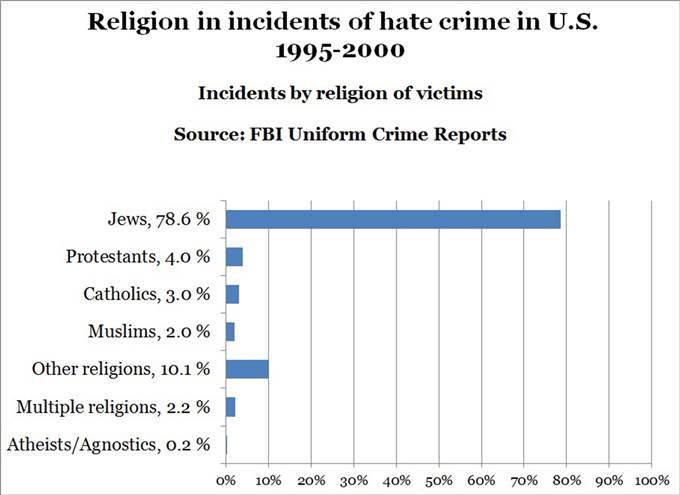
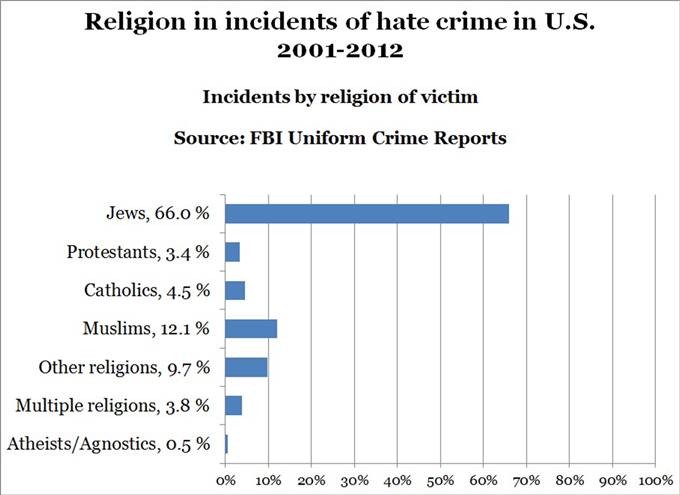
According to the FBI’s 2012 Uniform Crime Reports, most hate crime was motivated by race, accounting for 48 percent of all such reports. However, race fell significantly as a percentage of hate crimes, while sexual orientation rose.

Hate crimes motivated by religion stayed about the same, but between 1995 and 2012, the percentage of such crimes aimed at Jews dropped significantly, while the percentage aimed at Muslims rose significantly.

Take a look at these tables:

140415-hate-crimes-by-religion1-2301_8f2eb71bfa345ac0669fad850cfd4b8d.nbcnews-ux-680-520

140415-hate-crimes-by-religion2-2300_8f2eb71bfa345ac0669fad850cfd4b8d.nbcnews-ux-680-520

The shift is not surprising, considering the upheaval in the Middle East the last 20 years or so. But when you get away from the statistics and see living, breathing mad men like Miller and Aden do the things they did and think about them (and probably others like them) being among you, it is shocking and frightening.

There are a ton of goof balls out there, not to mention those who dedicate themselves to crime as a way of life, and any of us could become victims. Just because most of us don’t look like young Abdisamad, we should not feel safe. If a Caucasian youth had been standing next to Abdisamad, he might have been run down, too.

The hate that Lord Byron and Tobsha Lerner wrote about is reckless and unfocused, and it’s not limited to Iraq, Syria and Yemen. Just look at Glenn Miller’s victims, 53-year-old Terri LaManno, 69-year-old William Lewis Corporon and 14-year-old Reat Corporon. Hate does not discriminate among locale, age, gender, nationality or religion; when cut loose, it destroys whatever is in its path.