Feeds:
Posts
Comments

Posts Tagged ‘The Kansas City Star’

Even before Frank Haith has coached one game for the University of Missouri basketball team, the sun is setting on his stint at MU.

The hiring of Haith, who had been coach at the University of Miami, looked questionable when it took place, mainly because of his 43-69 record against Atlantic Coast Conference teams.

But now, in light of what came out in today’s Kansas City Star, it looks terrible.

The Star’s Mike DeArmond wrote about a far-reaching Yahoo Sports investigation in which a wealthy Miami booster — now jailbird — named Nevin Shapiro claimed to have paid a Miami recruit $10,000 to help get him to Miami.

Haith

Shapiro told Yahoo Sports that the transaction was “set up by assistant coach Jake Morton in 2007.” Furthermore, Shapiro said that Haith later “acknowledged” the payment in a one-on-one conversation.

Oh, boy, here we go again with the muck surrounding much of big-time, college sports.

Granted, Shapiro is a felon– serving 20 years for his part in a $930 million Ponzi scheme — and a braggart. That combination, crook and loudmouth, makes his credibility very questionable. But DeArmond dug up evidence that supports the fact that Shapiro had his hands and arms in the stew.

Consider this from DeArmond’s story:

“Shapiro told Yahoo that he provided dinner and a strip-club visit to Arthur Brown (a Miami recruit) and lunch and hotel rooms for Brown, his brother, parents and family adviser Brian Butler in March 2008.

“When contacted Tuesday night, Butler told The Star he and the Brown family did not realize Shapiro was a Miami booster.

” ‘We asked him are you an agent or a street agent or a booster, and he told us no, that he was not,’ Butler said.”

Let’s take a little side trip here….Doesn’t it seem like visits to strip clubs are always popping up in deals like this? It’s not enough for the big shots like Shapiro to flash the cash; no, they’ve gotta show the recruits that they can provide them with the comforts of the flesh, too.

And that’s where this story gets even seamier because the Yahoo story says that Haith himself participated in one strip-club outing with Shapiro and some Miami players.

Just this past week we saw how Missouri Lt. Gov. Peter Kinder got himself in a jam by having his photo taken with a stripper at a club in St. Louis and the photo got out into the public arena. Just doesn’t look good for a guy thinking about running for the Republican nomination for governor.

Here’s the thing about strip clubs. Any guy with half a brain knows that if you intend to patronize them, you want to slip in and out, alone, perhaps wearing a trench coat or ball cap to reduce the chances of being recognized. Then, after you’ve watched the pole dance or engaged in a lap dance or whatever, you get the hell out of there. No photos, no chumming it up with your fellow carousers. It’s in and out and back to your normal life, like your loss of dignity never happened.

I WANT TO EMPHASIZE THAT THE ABOVE SCENARIO DOES NOT COME FROM PERSONAL EXPERIENCE. I HAVE NEVER BEEN TO A STRIP CLUB. I HAVE NEVER SEEN AN X-RATED MOVIE. I HAVE NEVER EVEN LOOKED AT A PLAYBOY MAGAZINE. ONCE, WHEN I PICKED UP A SPORTS ILLUSTRATED MAGAZINE AND REALIZED THAT IT WAS THE SWIMSUIT ISSUE, I THREW IT TO THE FLOOR IN DISGUST.

No, the scenario comes from common sense. Being spotted by anyone you know at a strip club — even a neighbor you don’t care for — does not advance your good citizenship.

…Where was I? Oh, yeah, Frank Haith.

So, it looks like the guy has endorsed the paying of recruits and that he has no problem providing off-color entertainment for them.

The NCAA is investigating.

For his part, Haith said in a statement released by MU last night: “The reports questioning my personal interactions with Mr. Shapiro are not an accurate portrayal of my character.”

Hmmm. Sounds to me like he’s defending his character in general but not denying any specific allegations. Doesn’t look good, does it?

Back to my first paragraph, where I said the sun is setting on Haith’s time at MU. His supervisor is athletic director Mike Alden, who has given every indication that he’s the most straight-laced person on the face of the earth. He doesn’t brook any funny business.

Why, I bet he’s just like me — has never come close to stepping into a strip club.

This expose about Haith is really going to frost Alden. He’s got to be seething. Not only has he got a problematic basketball coach on his hands, the NCAA will be breathing down his neck for the foreseeable future.

No, I don’t like Haith’s prospects. I’ll bet he’s one (season) and done.
Read Full Post »

Jason Noble, The Kansas City Star’s Jefferson City correspondent the last several years, has resigned and is moving to Des Moines to take a reporting job with The Des Moines Register.

Noble, who has been with The Star about seven or eight years, ran into a buzz saw earlier this month, when inaccuracies undermined an attempted “expose” that Noble wrote about Republican State Sen. Rob Schaaf. After Schaaf wrote a three-page letter of complaint to The Star’s political editor, the paper published a four-part correction.

In a brief telephone interview from his Jefferson City office Thursday, Noble confirmed a report I picked up on Wednesday that he was parting ways with The Star.

“I am leaving The Star and going to The Des Moines Register, and it’s entirely my own volition,” Noble said.

He declined to elaborate or to discuss the correction, but it is obvious that the move to The Register was in the works well before July 10, when the Schaaf story was published.

The application, interviewing and screening process involved in selecting a reporter for a salaried position at a major metropolitan daily customarily takes at least two to three months.

A man who answered the phone on The Register’s Metro desk yesterday said that Noble’s first day of work would be Aug. 9.

In one way, Noble was very fortunate: He landed a new job before, or about the same time as, the Schaaf story came crashing down around his head. In another way, he was unlucky: The snakebit story will overshadow his years and his good stories at The Star.

After Metro columnist Steve Penn was fired for plagiarism a few weeks ago, I wrote a blog entry under the headline “A horrible way to pack up your pencils.”

Same applies for Noble. A cloud accompanies him to his new job; he’ll be watched like a hawk.

***

Missouri State Sen. Rob Schaaf

The damning story led the Sunday, July 10, edition of The Star. Ten days later, The Star published a seven-column-inch piece on Page A2 correcting three key facts in the main story and one in a sidebar.

Any reporter will tell you that while one factual error in a story is regrettable, having to correct several errors in one piece of work is ignominious.

The story was an attempted “gotcha” of Schaaf, a first-year senator from St. Joseph.

Noble sought to establish in the story that, during the last legislative session, Schaaf had steered a bill he didn’t like to a committee where he is vice chairman.

There, the bill — which would have more strictly regulated Missouri’s medical-malpractice insurance industry — died.

The story implied that Schaaf, a 54-year-old physician, was dead-set against the bill because he has a significant financial interest in a company called MoDocs that which insures physicians. The bill that died in Schaaf’s committee, Noble wrote, “would have required his company to substantially increase its cash surplus and rewrite its policies for charging customers.”

On its face, the story gave the clear impression of a legislator acting out of, and motivated by, self-interest.

Ah, but a really nasty devil was lurking in the details.

In several interviews with Noble before the story was published, Schaaf did his best to defend himself — saying he did not recall talking to Senate leader Rob Mayer about the bill and correcting Noble several times after Noble referred to him in conversation as “co-owner” of MoDocs.

After the story appeared, Schaaf said, he talked with Noble and disputed several things that Noble had written. Getting no satisfaction from Noble, he said, he and his 22-year-old son, Robert, a recent Harvard University graduate, laid out Noble’s grievances in a three-page letter, which they sent to Bill Dalton, The Star’s political editor.

Schaaf, who previously served eight years in the Missouri House, said he got Dalton’s name and title from a Senate staff member.

The letter, which Schaaf posted on his state website, is measured and direct.

After laying out his objections, Schaaf said: “In conclusion, I again ask that the Star print a public apology and retraction. Mr. Noble reported very dishonestly…”

Schaaf said he later spoke with Dalton, who has been a KC Star editor for many years, and that Dalton told him the paper was planning to run a four-part correction. Other than that, Schaaf said, Dalton essentially told him, “We stand behind the story.”

That’s exactly what I would expect an editor to say under such circumstances. Similarly, when I asked Noble yesterday why he didn’t want to talk about the correction, he replied, “The correction speaks for itself.” Nothing he says about it now will make any difference or lessen the gravity of the errors.

The correction appeared on Wednesday, July 20. Among other things, it said that Schaaf was not “co-owner” of the insurance company but “co-founder, secretary, treasurer and chairman of the board.”

Where his co-ownership comes into play is with a holding company that has a contract to supervise MoDocs’ day-to-day operations.

The correction also acknowledged that Noble’s story had incorrectly stated the manner in which Schaaf receives compensation for his MoDocs-related work.

In addition, very damningly, Noble had reported that after the bill had been introduced “lawmakers recalled that Schaaf rushed to the office of Senate leader Rob Mayer, who is responsible for assigning bills to committee.”

Turns out, though, it was just one lawmaker — not two, three or several — who, under the cloak of anonymity, told Noble he had seen Schaaf hurry off to Mayer’s office.

Along with the sloppy errors pertaining to Schaaf’s corporate ownership and compensation (and a third one about a previous medical-malpractice reform bill that had been assigned to Schaaf’s committee) the facile and incorrect conversion of the singular “lawmaker” to the plural “lawmakers” gave the distinct impression that Noble was out to skewer Schaaf.

You can’t do that. You can’t do that. You can’t do that!

When a reporter sets out to expose someone’s perceived wrongdoing, he or she had better have all the facts down pat — double verified — and then keep the story free of anything that looks like he or she has it in for the subject. Errors of the magnitude that Noble made tend to indicate he was in such a hurry to stick the knife in Schaaf that he plundered through the reporting like he was knocking over bowling pins.

The result: Schaaf wins, and The Star looks like crap.

“The article about me was so over the top that it just feels like they were out to get me,” Schaaf told me yesterday. “…The whole thing is just a hatchet job.”

Read Full Post »

An extraordinary correction popped up in Wednesday’s Kansas City Star.

Usually, when you see a correction, a single fact is corrected. Occasionally, you see a double-barreled correction. But not often does it occur that a correction addresses three or four facts in a story.

That’s what happened Wednesday — a grand slam correction; four in one.

It all stemmed from a July 10 story by Jason Noble, The Star’s Jefferson City correspondent. The story, which led the front page, was a “gotcha” on state Sen. Rob Schaaf, who, in the last legislative session, apparently steered a bill he didn’t like to a committee where he is vice chairman.

There, the bill — which would have more strictly regulated Missouri’s medical-malpractice insurance industry — died.

And why was Schaaf dead-set against the bill? In his story, Noble reported that Schaaf, a Republican from St. Joseph, is “co-owner of the Missouri Doctors Mutual Insurance Co., known as MoDocs.” The bill that died in Schaaf’s committee, Noble wrote, “would have required his company to substantially increase its cash surplus and rewrite its policies for charging customers.”

One of the pivotal, substantiating points that Noble made to help demonstrate Schaaf’s keen interest in getting the bill assigned to his committee was this:

“When Senate Bill 302 was read into the record on Feb. 21, lawmakers recalled that Schaaf rushed to the office of Senate leader Rob Mayer, who is responsible for assigning bills to committee.” (Note that Noble said “lawmakers,” plural.)

As you can see, this is a story that made Schaaf look very bad. The senator did his best to defend himself in the story, saying the bill was “a bad idea,” but at the same time asserting that “I doubt I had much influence on the trajectory of the bill.”

It was after the story appeared, however, that Schaaf apparently mounted his strongest counter attack.

From the looks of this seven-column-inch correction, I would guess that Schaaf might have had the help of a lawyer. Schaaf obviously lit into Noble and his editors very aggressively.

This is the type of situation a reporter absolutely hates to get into, especially when you’ve screwed up key parts of a story. You go from being on the offensive to completely on the defensive.

Working through Schaaf’s counter allegations and Noble’s self-defense must have taken several hours over several days inside the newsroom. The fact that the correction appeared 10 days after the story was published tells you it was a very sticky situation.

The deputy managing editor for Metro, Anne Spenner, was undoubtedly involved, and I’m sure Managing Editor Steve Shirk was involved, too. Editor Mike Fannin was probably alerted.

So, here are the points that needed to be corrected:

— It was just one lawmaker, not two or more, who told Noble that Schaaf  “rushed to the office” of the senate leader…When you’re doing a “hit” story, you have to be very careful and precise, and in this case Noble overreached, sliding from the singular to the plural. That goes beyond soppy; it’s intellectually dishonest.

— Noble said Schaaf is “co-owner” of MoDocs. He’s not. He is co-founder, secretary, treasurer and chairman of the board. A nonprofit, MoDocs is owned by the members it insures…That mistake was the result of sloppiness, laziness and being in a hurry to close in for the kill.

— Noble’s story indicated that all previous medical-malpractice insurance reform bills had been referred to another committee, never Schaaf’s. It turns out, though, that at least one other such bill had been assigned to Schaaf’s committee…More laziness.

— Finally, in an accompanying, or “sidebar,” story, Noble screwed something up regarding a holding company that Schaaf co-owns. Because of the way the correction is worded, however, it’s impossible to tell exactly what the problem was.

Another interesting part of this correction is that it exposed the weakness and inherent silliness of The Star’s longstanding policy of not repeating, in corrections, the erroneous parts of original stories.

Usually, all you get is head-scratching corrections that give you new information but don’t put it in the context of what was wrong in the first place.

In this case, however, the policy came back to bite The Star right in the ass.

In the first three parts of the correction, The Star had to repeat the erroneous items in order for the correction to make any sense at all. I mean, can you imagine the correction simply saying, “The story should have said a lawmaker recalled that Schaaf rushed to the office of Senate leader Rob Mayer.” It would have left the readers completely befuddled.

But, then, in the fourth and final part of the correction, The Star stupidly reverted to its policy of not repeating the original error, and the reader was left to try to figure this out:

“An accompanying story…should have said that a holding company co-owned by Schaaf that provided management services to the insurance firm collected a maximum 10-percent surcharge on the firm’s employee payroll expenses.”

What the hell does that mean? What’s the context? Unfortunately, the sidebar is no longer available online, so the reader can’t possibly tell where it was wrong or lacked clarity.

Oh, and one more thing: As of late Wednesday night, the online version of the story had not been altered, and no correction was appended.

There are two lessons here:

Jason Noble needs to be watched very closely. (He probably faces some disciplinary action, perhaps a suspension.)

The Star needs to get out of the Dark Ages with its corrections policy and acknowledge, each and every time, exactly how it screwed up. That’s what The New York Times does, and there’s no shame in following the lead of the nation’s best paper.

Read Full Post »

What a terrible day at The Kansas City Star.

For the editors to have to cut loose a longtime, reliable columnist and employee is crushing. I wholeheartedly believe editor Mike Fannin when he said, “We value Steve’s many years of service to The Star.”

He was talking about Steve Penn, longtime Metro columnist who got the axe Thursday.

It’s even more crushing for Penn; he’s finished as a big-time journalist.

***

First, let me explain why I’m a bit late weighing in on this. I was very busy today, and while I brought the paper in the house this morning, I didn’t open it until late this afternoon. I was out of e-mail contact, too, and when I finally got into it, I had three e-mails about Penn’s firing, including one from the ever-curious Mike Waller, a former Star executive editor, who is now retired and living in South Carolina.

At that point, I grabbed the paper…and my heart just sank.

After reading the story, however, (Page A5), it was abundantly clear that Penn gave the editors no choice: He was guilty of blatant plagiarism.

It was interesting to me, however, that the story didn’t use the “p” word — the last word any writer wants attached to their name. In that regard, the story went easy on Penn, who, I’m almost certain, is The Star’s first and only black Metro-front columnist at The Star.

One of the three e-mails I received about Penn came from a retired Star reporter who chastised The Star for subjecting Penn to “public humiliation” by detailing three specific plagiarism incidents.

However, a current reporter at The Star told me that in a case like this, with a high-profile columnist being let go, it was essential for The Star to lay out the reasons “chapter and verse.”

One reason for taking that route is that Penn almost certainly has a big following in the black community, and if The Star failed to lay out exactly how Penn had screwed up, The Star could have been (and still might be) subjected to the thing that strikes absolute terror into Star management — a black boycott. It happened one other time, way back, and ever since then, The Star has tread ever so lightly when it comes to the treatment of high-profile black people’s public transgressions.

As a prime example, I cite an infamous case involving former Kansas City Mayor Emanuel Cleaver. Less than six months after being elected mayor in 1991, Cleaver took his family to Disney World on city funds, claiming it was a city-related business trip. The Star’s Kevin Murphy and Marty Connolly (both are no longer with the paper) exposed it as a sham. What did Cleaver do? Blamed his secretary!

We (The Star) could have and should have hammered Cleaver so hard that he’d never see the light of another election day. Connolly and Murphy certainly did their part, but the editors watered down the story and played it very low and light on the front page…Editors have many ways to take the air out of a sensitive story, and they really slashed the tire on that one. Murphy and I, City Hall reporters at the time, never felt quite as confident about the paper’s motives and mission after that.

Cleaver, caught red-handed, was essentially let off the hook and went on, of course, to be re-elected in 1995 and later was elected U.S. representative, the post he still holds.

In the Penn case, then, the editors knew they had to be very, very careful to do all they could to avoid upsetting black readers.

In my opinion, The Star didn’t go far enough. It got the chapters right but not the verses.

Here’s my beef: The story included, word for word, two long paragraphs that Penn used in separate columns within the last four months. The story said that, in both cases, the words Penn used were “nearly identical” to the wording of two press releases he had received.

The story failed, however, to include the exact wording from the press releases. I believe the story should have included the press-release wording so that readers could judge for themselves the extent of the plagiarism.

I don’t doubt that it was “nearly identical,” I’d just like to see the variations side by side, or one after the other.

But here’s the saddest part of this, in my opinion: Penn’s journalism career is shot at 53. Oh, he might be able to scrape something up at the Pitch or The Call, but he’ll get nothing at a major metropolitan daily (not that he’d consider leaving Kansas City at this stage, anyway).

To some degree, I can understand how the debacle unfolded, but however it happened, it’s inexcusable.

My understanding comes from watching many a columnist grapple with the twice-weekly (in Penn’s case, I believe) or thrice-weekly deadline. The challenge is to come up with fresh, interesting material time after time, and the deadlines never stop. You finish one column, and it’s time to start thinking about the next one.

That’s one reason I was too much of a coward to ever seek a Metro-front column job; I didn’t want that much pressure. I wanted to write a lot of stories — I was extremely prolific — but I felt a lot more comfortable covering news developments rather than having to start with nothing and build a sand castle two or three times a week…Even with the blog, while I love to write frequently, I’m not under the gun to produce a certain number of posts every week or even entry month; I write when I feel like it and when I have something I think is substantive.

The pressure on columnists, then, is tremendous, and frequently the temptation arises to cut corners, use some readily available material that lands in your lap. Some of you will recall the late Gib Twyman, a sports columnist for The Star back in the 70s and possibly the early 80s. He, too, plagiarized and paid for it with his neck.

I don’t say this to detract from columnists in general, but some, as they get older (like Twyman and Penn) tend to get lazy. They push the deadline and push the deadline, and then they’re up against the wall; it’s 8 p.m., and the column has to be in by 9. What to do? Well, there was that press release about the Duke Ellington family stepping forward to help U.S. military veterans…

***

One day in the newsroom years ago, I was chatting once with Jim Fisher, one of the best reporters and columnists The Star ever had. We were talking about our longevity at the paper and how we expected things to unfold for us. I remember him asking me what my goals were at The Star. I didn’t immediately answer, and he said, “Keep your powder dry?”

I nodded, realizing he had hit it on the head. That’s exactly what I wanted to do; like any reporter or journalist who has been at the game a long, I wanted to make a career in journalism and leave on my own terms.

As time passed, I wasn’t able to keep my powder completely dry, but dry enough, and I was able to hold on for a 37-year career at The Star. I retired five years ago, at 60, on my own terms (although I have my critics out there who get their kicks asserting — always anonymously — that I was forced out).

I’m very sorry that Steve Penn, whom I like a lot and enjoyed working with, couldn’t make a career of it.

He came close, but the dreaded “p” word laid him low.

Read Full Post »

What a scandal in Britain.

Here’s the gist of it, in case you haven’t been following it closely. (And there’s a good reason that Kansas City area residents might not be following it closely. More on that in a minute.)

The revelations of cellphone hacking and police payoffs by reporters and editors at The News of the World, Britain’s top-selling newspaper, are probably going to bring down Prime Minister David Cameron.

Murdoch

Cameron is chummy with media baron Rupert Murdoch, whose News Corp. holdings provide a significant portion of the world’s flow of information, print and electronic.

Today, Andy Coulson, former editor of The News of the World (which is printed only on Sunday), was arrested in connection with allegations of phone hacking and paying police for sensitive information when he was editor of the paper.

The problem for the government’s Conservative Party, which is in power now, is that Coulson had most recently worked as chief spokesman for Cameron, the prime minister.

Anticipating Coulson’s arrest, a front-page New York Times story today said: “His arrest…would be a huge blow not just to Mr. Murdoch, but to the government and to Mr. Cameron’s Conservative Party. The prime minister has always vouched for Mr. Coulson’s  integrity and said he believed Mr. Coulson’s assurances that he had cone nothing wrong (at The News of the World).”

This story is one that cries out for wall-to-wall coverage, and The Times is delivering. Today, it had five stories that covered more than two full pages.

The story has it all: corruption, outrage, political entanglement and, yes, an attractive and bodacious woman.

Brooks

The bodacity comes in with Rebekah Brooks, chief executive of News International, the British subsidiary of Murdoch’s News Corp. Yesterday, rather than heed calls to fire Brooks, who was editor at The News of the World when a lot of the phone hacking was taking place, Murdoch and his son, James Murdoch, opted to close The News of the World.

(Sunday will be its final edition; its 200 employees have been cut loose to try to find jobs at other Murdoch papers or elsewhere.)

The Times’ coverage today of the scandal included a 48-column-inch story on Page A8 about Brooks. The story says, in part:

“Her closeness to Mr. Murdoch, who is said to regard her as a kind of favorite daughter (although he has four actual daughters), has protected her during the recent scandal engulfing the company, even as legislators called on her to resign.”

The story quoted an unnamed source as saying, “Rupert Murdoch adores her — he’s just very, very attached to her. To be frank, the most sensible thing that News Corp. could do would be to dump Rebekah Brooks, but he won’t.”

So, yesterday, when Brooks called a staff meeting in offices of The News of the World, many staff members assumed Brooks would be announcing her resignation.

“Instead,” the front-page Times story said, “she announced that she was to stay and they were to go.”

***

I mentioned at the top that there was a good reason that many Kansas City area residents might not be following this explosive story closely.

Today’s Kansas City Star devoted exactly one paragraph to the story, on Page A3. Here it is:

“Paper Folds: The Murdoch media empire abruptly killed off the muckraking News of the World tabloid Thursday after a public backlash over the illegal tactics used by Britain’s best-selling weekly newspaper to expose celebrities.”

Oh, my. Oh, my. I am ashamed for my former paper, which I still love in spite of its downhill spiral.

Is it any wonder people have been dropping the paper by the thousands for several years?

As a side note, I couldn’t tell what kind of coverage Thursday’s print edition gave the story because my paper was absolutely soaked from the morning rain, even though the paper was in a thin plastic bag.

Yesterday morning I went online to report a wet paper and was informed that I would get a replacement today, along with today’s paper.

Well, I got today’s paper, but yesterday’s was nowhere to be found…Patiently, I wait.

Read Full Post »

For a decade or more now, people in and out of the newspaper business have been trying to figure out what caused the bottom to drop out of the industry.

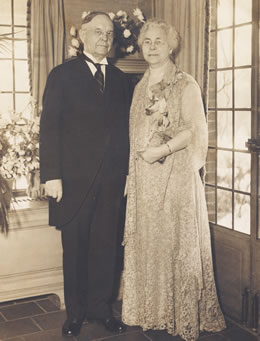
Gardner Cowles Sr. and Florence Cowles

Was it the rise of the Internet? The cashing in by all but a couple of the renowned newspaper families, such as the Binghams in Louisville, the Cowleses in Des Moines, the Chandlers in Los Angeles? The rapacious demands of Wall Street after many major newspapers were snapped up by publicly owned companies?

All of those and other factors have been fingered by various experts as the bogeyman that did in a lot of top-tier newspapers.

And now comes another viewpoint, presented by Jim O’Shea, a former top editor at both The Chicago Tribune and The Los Angeles Times. O’Shea’s new book, “The Deal From Hell: How Moguls and Wall Street Plundered Great American Newspapers,” was reviewed in the SundayBusiness section of this week’s New York Times.

The reviewer, Bryan Burrough, says this:

“Mr. O’Shea argues that what’s killing newspapers isn’t the Internet and other forces, but rather the way newspaper executives responded to those forces.”

Burrough goes on to quote from O’Shea’s book: “The lack of investment, the greed, incompetence, corruption, hypocrisy and downright arrogance of people who put their interests ahead of the public’s are responsible for the state of the newspaper industry today.”

Now that’s an angry and eloquent sentence.

O’Shea backs up his assertion largely by chronicling a newspaper deal that went terribly wrong and wrecked what once had been two great chains — Tribune (Chicago Tribune and others) and Times-Mirror (Los Angeles Times and others). Suffice it to say the papers ended up in the hands of a goofy Chicago investor named Sam Zell, who knew nothing about newspapers and who hired a bunch of former radio DJs and executives to run the chain.

He’s now out, but the Tribune chain is in bankruptcy, and the 10 daily papers in the Tribune chain are a shadow of their former selves.

Papers like The Kansas City Star, the Omaha World-Herald and the St. Louis-Post Dispatch are lucky in that they have managed to avoid the clutches of thoroughly greedy people…although they, too, have fallen far and fast.

I have a different perspective on the implosion of newspapers. I think the crumbling of demand for the daily, local paper was as inevitable as the rise of “riverboat casinos.”

The winds of change started rather slowly but accelerated to the point that we in the newspaper business (I’m a 37-year veteran) were swept up and away, and there was little we could have done to prevent it.

The advent of the Internet? Yes, that definitely played a part. But what set the stage for that?

The pace of society was already gaining steam before the Internet came along. More people were relying on TV for information and entertainment, people were working longer hours, more and more women were going into the work force, people had less time to read newspapers and they were less interested in reading newspapers.

Ask any circulation supervisor at just about any paper in the country and he or she will tell you this sentence is what they hear most often when people call in to cancel their subscriptions: “I don’t have time to read it.”

We in the business couldn’t grasp the climate change because writing the paper and reading it was our business; it was what our lives revolved around. You bet we had time to read the paper; that’s where most of our story ideas came from.

Yes, some greedy people got in there and made the situation a lot worse and sullied the reputations of some formerly high-class papers. But, in retrospect, I don’t think anything could have stopped the overall implosion. Even if we had reacted quickly and embraced the Internet and started charging for online content at the outset, I think circulation, advertising and readership still would have plummeted.

I mentioned that it was the demand for the local, daily paper that hit the skids. Meanwhile, national papers like The Times, the Wall Street Journal and USA Today are still doing relatively well. And even though the New York Times Company (NYT) is a public company, the Sulzberger family still holds a majority interest and has the resources to run the paper as it should be run, putting lots and lots of money into the editorial side.

Many people, like me, who still need a substantive paper with a heavy emphasis on world and national news have gravitated to The Times. I take The Star, which I read first, and then I turn to The Times. I’ve got the time (retired five years ago), and my interest in newspapers has never flagged.

But the time is a luxury that most people don’t have, and the interest is… well, it’s an interest that many people just don’t have any longer.

I’m not saying that’s bad, that’s just the way it is, and that’s what’s responsible for the state of the newspaper industry today.

Read Full Post »

In the last four days, the picture has grown dimmer for Bishop Robert Finn, and the evidence of wrongdoing at the highest levels of local Catholic hierarchy has grown stronger.

And all because of two articles in The Kansas City Star.

The first was a thoroughly researched and beautifully written profile of the Rev. Shawn Ratigan, who stands charged with three felony counts of possessing child pornography. It ran on Page 1 on Saturday.

The second was an “As I See It, ” Op-Ed piece by Pat O’Neill a respected marketing consultant in Kansas City. It ran on Page A-11 on Monday. O’Neill, a practicing Catholic, called for the resignations of Finn and Vicar General Robert Murphy, and he challenged prosecutors to bring charges against the two.

The profile and the opinion piece served as a one-two punch that took a lot of  steam out Bishop Finn’s time-killing initiative two weeks ago, when he appointed former U.S. Attorney Todd Graves to investigate the diocese’s handling of sex-crimes cases, including the Ratigan case.

Morris

Rice

First, let’s look at the profile, which bore the by-lines of federal courts reporter Mark Morris and Northland reporter Glenn E. Rice. Rice has been on the Ratigan-Finn story from the start; this story represented Morris’ first work on the story.

Two of the main points that Morris and Rice established were, first, that Ratigan is — like Finn — a crusading, pro-life cleric, and, second, that Ratigan and Finn have spent time together.

The fact that they have more than a passing relationship could well indicate that after lewd photos of young girls were found in Ratigan’s laptop computer, Finn was loath to turn in a priest whom he knew quite well and who shared his pro-life stance. That’s been my conviction ever since Mike Rice, a former KC Star reporter, wrote a comment on this blog May 20, saying that he knew of people who had stopped attending Mass at Ratigan’s Northland parish because of his conservative ideology.

Regarding the Finn-Ratigan relationship, Morris and Rice dug up records revealing that in January 2007, Finn joined Ratigan and 40 high school students from St. Joseph for a bus ride to Washington, D.C., for the annual March for Life rally.

One of the most fascinating glimpses of Ratigan’s pro-life zeal was that he had his Harley-Davidson motorcycle decorated with themes that celebrated life.

“The gas tank bore the image of an angel bringing a baby down from heaven,” the story said, “while another spot carried a cross emblazoned with a ribbon reading, ‘Pro-Bikers for Life.’ ”

The entire story is a great read, but it contains, in particular, two killer paragraphs.

One is about Ratigan’s propensity to gamble. (He played the Missouri Lottery, for example.)

“In December 2010,” the story said, “whether he realized it or not, Ratigan placed one of the lowest percentage bets of his life when he handed his laptop computer to a repair person. Would the technician notice the allegedly lewd photos of girls under the age of 12? And if so, would he mention the photos to anyone?”

Wisely, the reporters let the questions hang in the air because everyone knows the answers.

The second memorable paragraph spelled out what happened after church officials seized Ratigan’s computer.

“The next day, Ratigan, the son of a man who suffered from profound depression, retreated to his garage, fired up the pro-life Harley and waited for death.”

We all know how that episode came out, too.

***

O’Neill’s column carries a tremendous wallop in no small measure because he is well known in Catholic circles and even served for a time as communications consultant to the Diocese of Kansas City-St. Joseph and the Archdiocese of Kansas City in Kansas.

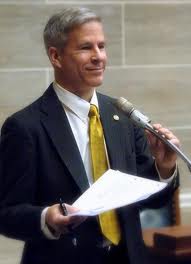
O'Neill

In his piece, O’Neill showed that he, too, can turn a phrase. Consider this:

“When Bishop Finn arrived here in 2005, he was one of a new wave of American bishops charged with turning the tide of public opinion away from the abuse scandals and back to core conservative Catholic values and respect for the church and its priestly vocations. Instead, Bishop Finn is up to his collar in a flood of renewed scrutiny and anger.”

O’Neill went on to point out that despite hundreds of reports of priest sexual abuse over the last two decades, “only a handful of pedophile priests and no complicit church supervisors have been subjected to civil punishment, i.e., jail time.”

The column concluded with a flourish:

“The time has come for us to harness our collective anger and embarrassment and use that energy to change the way our church and our dioceses operate, once and for all.

“After all these years, it is starkly obvious to me that there will be no change for the better in the Kansas City diocese until men like Bishop Robert Finn and his Vicar General Robert Murphy are forced to resign, and criminals in collars are subject to secular trial and incarceration.”

In the p.r. battle that is being waged between Bishop Finn and his supporters on one hand and his critics on the other, the advantage has once again shifted to the critics, partly because of a great news story and a damn good p.r. man.

Read Full Post »

Three short items today…

The Kansas City Star and writer Judy Thomas, in particular, wrung their hands today about the United States Conference of Catholic Bishops’ failure to significantly change their head-in-sand policies on child sex abuse.

Meeting in Bellevue, Wash., Thursday, the American bishops voted 187-5 to essentially stick with the policy that they adopted in 2002.

“We are dismayed that the new policy is almost identical to the current policy, despite horrifying recent evidence in Kansas City and Philadelphia that the church’s current policies are dangerously lenient and full of loopholes,” Terence McKiernan, president of BishopAccountability.org, was quoted as saying.

It was the lead story in the paper and ran under a one-inch headline that said “Bishops Resist Changes.”

All who are surprised please raise your hands.

Anyone who has any idea of how the Catholic Church operates — and that’s the vast majority of people — knows that the church’s turnaround time on major issues is usually a century or two, not a month or so.

The bishops’ assembly was probably set two years ago, and their position on the sex abuse policy was probably determined months ago.

Rigali -- another pomp and circumstance bishop

The Philadelphia scandal — where Bishop Justin Rigali allowed 37 accused priests to continue working around children in Catholic parishes — took place earlier this year.

I predict it’s going to take decades for the church to come around to the idea that the correct action in priest-accusation cases is to call the police immediately — not mull it over, meet with and warn the priests and try to persuade them to get on the right path.

The Star’s headline and story smacked of hyperventilation.

Maybe it was just a vehicle to run a big photo of the Rev. Shawn F. Ratigan, the local priest who got his kicks by taking “up-skirt” photos of elementary-school girls.

Ratigan, who is in jail, was photographed in Clay County Circuit Court, where he made a brief appearance Thursday. Nothing happened in his case Thursday; the fact that he appeared was, correctly, worth only a paragraph in today’s story.

The story probably deserved front-page play, but certainly not top of the page with a four-column photo.

***

Here’s a funny correction from Wednesday’s New York Times…

Leona and Trouble

“An article on Friday about the death of Leona Helmsley’s dog, Trouble, misstated the reason that Trouble’s inheritance from Ms. Helmsley’s estate was reduced to $2 million from $12 million, the amount specified in the will. A judge determined that the greater amount exceeded that necessary to care for the dog, not that Ms. Helmsley was of unsound mind when she made the will.”

I guess the issue of the late Ms. Helmsley’s state of mind is still up in the air, eh?

***

Then, the Thursday Times carried an item that is one of the most dreaded events in newsrooms: the correction to a correction.

“A correction in this space on Tuesday misstated the size of the (Irish Fianna Fail) party’s Dublin delegation…there were 18 members, not 47.”

Ouch.

Read Full Post »

Talk about continuing the youth movement at The Kansas City Star.

Wow.

The woman who will become the new publisher later this month is 40.

She succeeds Mark Zieman, who was 47 when he was named publisher three years ago.

And…Mike Fannin, the editor, is only 44.

Parrish

The new publisher of the McClatchy-owned paper is Mi-Ai, Parrish, who has been publisher of the company-owned Idaho Statesman since July 2006.

Parrish, whose first name is pronounced MEE-uh, had been deputy managing editor for features and visuals at the Minneapolis Star Tribune before being tapped for the Idaho post.

I sure hope that Parrish works out, and I wish her the very best. But putting a 40-year-old person with five years of publishing experience — especially small-market experience — looks like a rather big roll of the dice to me.

On the plus side, reporter Mark Davis reports in a story on The Star’s website that Parrish led the Statesman’s effort to “transform and diversify business operations, introduce new print and digital products, grow digital traffic and revenue while improving the core newspaper and enhancing its reputation for quality journalism.”

This year, for example, the Statesman rolled out a new product called Business Insider, a weekly business-to-business magazine. And in 2008, the Statesman was named a Pulitzer Prize finalist in the breaking news category for its coverage of events triggered by the men’s room arrest of former Idaho Sen. Larry Craig in Minneapolis.

But look at some statistics.

The Star has an average Monday-Friday circulation of 210,000 and a Sunday circulation of about 300,000. By comparison, the Statesman, in Boise, has an average weekday circulation of about 50,000 and Sunday circulation of about 73,000. (Sunday circulation has been up slightly the last two years, while daily circulation has declined each of the last four years.)

So, The Star is about four times larger than the Statesman. That’s quite a jump.

Parrish also will be tested right off the bat with her choices for top managers. Among other things, she’ll have to decide whether to keep vice presidents such as Editor Mike Fannin and advertising executive Tim Doty in place.

On the digital side, her youth should work to her advantage because that appears to be where the future lies for newspapers. But her youth could work against her on the personnel side, unless she gets some very good advisers.

On that front, my recommendation would be that, in the newsroom, she turn to long-time managing editor Steve Shirk, a tried and true leader at The Star for more than 35 years.

Steve’s an old guy — about 60. He’s got the wisdom and the temperament to help a new publisher make a safe jump from a small pond into the churning waters of the Lake of the Ozarks.

Read Full Post »

Time to assess the initial coverage of the incredible Joplin tornado by The Kansas City Star and local TV stations.

The highest grade, an A+, goes to KMBC, Channel 9, which had at least two reporters and one or more camera crews on the scene and devoted at least the first 15 minutes, it seemed to me, of its 10 p.m. newscast to the disaster.

Anchor Lara Moritz and chief meteorologist Brian Busby stood on the set and delivered the news in front of a backdrop of video from the storm. Their positioning — not sitting behind the desk — sent a clear signal that something big was afoot.

Amazingly, The Star had no one on the scene last night, at least no one who was reporting for the morning edition. It relied on “staff and wire reports,” with the staff reports being provided by two reporters, Brian Burnes and Eric Adler, who made calls from Kansas City.

From this corner, The Star gets a grade of D-minus.

The Star did send a reporter, Brad Cooper, to Reading, Kan., to cover that city’s tornado, which struck Saturday night. But only one person died in that tornado, and it’s a very small town, near Emporia.

By contrast, Joplin — with 50,000 people in the city and 174,000 in the area — lost at least 89 people, and the level of destruction was jaw dropping. (At 4:15 p.m., CNN was reporting that the death toll was 116.)

More details…

I didn’t learn about the storm until 9:58 p.m., when I saw it on CNN’s website. The CNN story quoted an American Red Cross official as saying, “I would say 75 percent of the town is virtually gone.”

I gasped…But it was a gross exaggeration. On a CNN video report today, an official-sounding person says that 25 to 30 percent of the town suffered “major or significant damage,” and Channel 9 was saying last night that the southern third of the city suffered major damage. There’s a big difference between 75 percent and 25 or 30 percent (or even 33 percent).

After scanning the lead CNN story, I ran to the TV and started flipping channels. It was clear that KMBC, the top-rated station in Kansas City, was well ahead of at least two others — KSHB Channel 41 and  KCTV5.

I’m not much of a TV news devotee, so in my haste to get the best report, I overlooked FOX4.

Today, representatives of all three stations — 4, 5, and 41 — said they had crews in Joplin last night and that they aired reports on the 10 p.m. newscasts.

Peggy Phillip, news director at KSHB Channel 41, said that her station sent one crew at 6:45 p.m. — 45 minutes after the tornado struck and put another on the road about half an hour later. KSHB’s coverage led off at 10 p.m., she said, with “a multi-media journalist reporting live (by phone) over video” from The Weather Channel.

By 10:15, Phillip said, the station had one of its journalists on camera, at the scene.

Someone on the assignment desk at KCTV5 told me today that they had four people on the scene last night, but, in my channel flipping, I was underwhelmed by the station’s coverage. As I recall, they were emphasizing local weather at the top of the hour. For a station renowned for hyperventilating about even the prospect of bad weather, Channel 5’s coverage seemed totally disproportionate to its usual hyperbole.

Now, more about The Star’s coverage…

The danger of using “staff and wire reports,” instead of sending reporters to the scene is that you get a lot of second-hand information.

Sure enough, in the third paragraph of today’s front-page story, The Star picked up the CNN quote from Kathy Dennis of the American Red Cross: “I would say 75 percent of the town is virtually gone.”

Even as I gasped when reading that on CNN’s site, I was skeptical. The Red Cross official could not have surveyed the entire town, so how could she say 75 percent of it was gone?

It was irresponsible and very unwise of The Star to run that comment without having its own reporter on the scene, and the quote draped a shroud of skepticism over the entire story.

Perhaps more ignominiously, The Star relied on The Wichita Eagle, a fellow McClatchy-owned paper, for significant coverage. The credit line at the end of the lead story attributed the reporting to The Associated Press and The Eagle, as well as Burnes and Adler.

The Star’s coverage also included a stand-alone, 12-column-inch story on Page A-8 by The Eagle’s Beccy Tanner, from Joplin.

Why is this important?

Well, according to MapQuest, it’s 184 miles from Wichita to Joplin. From Kansas City to Joplin, it’s 157 miles. Who has the quicker, easier access?

But, no matter, The Star was all over that tornado in Reading, Kan. — population 231.

Read Full Post »

« Newer Posts - Older Posts »