Feeds:
Posts
Comments

Archive for the ‘journalism’ Category

David Carr, media reporter for The New York Times, has had two intriguing pieces within the last week — a front-page news story about the implosion of the Tribune Company and a column in which he explored the “vanishing journalistic divide.”

In the column, Carr deftly used his experience in reporting and writing the Tribune story to help make his point about the ever-hastening confluence of new media and old-school journalism.

Let’s take it from the top.

Phase one.

If you think The Kansas City Star has fallen a long way, consider the plight of The Chicago Tribune and the other papers in the Tribune chain, including The Los Angeles Times, the Baltimore Sun and The Orlando Sentinel. As recently as about 10 years ago, The Chicago Tribune and The Los Angeles Times were considered to be among the country’s premier newspapers. 

Like other newspaper companies (it also owns TV stations and WGN America), Tribune fell on lean times and began unraveling financially. Publicly owned, it was sold in 2007 to a group headed by Sam Zell, described by Carr as “a billionaire deal maker,” for a price of $8.2 billion. Thing is, though, the way Zell structured the deal, he only put out $315 million of his own money.

Then he brought in some radio-industry executives to run the show. One of those executives, Randy Michaels, showed some of the old Tribune hands early on that it was a new day and a new game. As Carr tells it, Michaels ran into several other senior colleagues at a hotel next to the Tribune Tower in Chicago. Shortly after he sat down in the bar, Zell said “watch this” and proceeded to offer the waitress $100 to show him her breasts.

“The group sat dumfounded,” Carr wrote.

Michaels proceeded to conduct a management make-over, putting more than 20 former associates from the radio business in key positions. One of the management team’s first moves was to rewrite the employee handbook.

“Working at Tribune means accepting that you might hear a word that you, personally, might not use,” the new handbook said. “You might experience an attitude you don’t share. You might hear a joke that you don’t consider funny. That is because a loose, fun, nonlinear atmosphere is important to the creative process…

“This should be understood, should not be a surprise and not considered harassment.”

They might has well have put out a sign that said, “Let it all hang out!”

It didn’t take long for the boss himself, Zell, to throw at Chicago Tribune Editor Ann Marie Lipinski one of those words that she, personally, probably would not use.

In June 2008, while urging her to more aggressively pursue a story that he was interested in, Zell told Lipinski, “Don’t be a pussy.”

Lipinski, who had been the editor since 2001, resigned a month later.

Before 2008 was out, the company sought bankruptcy protection, listing $7.6 billion in assets and debts of $13 billion. And the financial woes continue. In the first half of this year, The Chicago Tribune’s weekday circulation was down nearly 10 percent, while The Los Angeles Times lost nearly 15 percent of its weekday circulation.

Zell remains chairman of the board but is no longer involved in day-to-day operations.

Phase two.

David Carr

In his column on Monday, Carr talked about the migration of print journalists to Web sites. His peg was the announcement that Howard Kurtz, long-time media reporter for The Washington Post, had resigned to become Washington bureau chief for The Daily Beast, which Carr described as “a two-year-old toddler of the new digital press.”

“More and more,” Carr wrote, “media outlets are becoming a federation of individual brands like Mr. Kurtz. Journalism is starting to look like sports, where a cast of role players serves as a platform and context for highly paid, high-impact players. And those who cross over, after years of pushing copy through the print apparatus, will experience the allure of knocking some copy into WordPress and sending it out into the world to fend for itself.”

And yet, despite its surging popularity, Carr said, digital journalism doesn’t generate a thimbleful of revenue, compared to newspaper companies. 

“The reason that newspapers put all the white paper out on the street is that we get a lot of green paper back in return,” he said. “Put out all the pixels you want, even ones that render scoops, and you will still receive pennies in return.”

Then, Carr proceeded to talk about the thrill involved in piecing together the Tribune story, working on it for months, and finally seeing it “land hard,” lighting up Twitter accounts and generating hundreds of online comments.

The ability to “land hard,” he went on, isn’t limited to The Times: “All over the country, daily regional newspapers in very diminished circumstances similarly still manage to set the civic agenda even as they struggle.”

In Kansas City, of course, The Star — beleaguered and buffeted, scorned and dismissed by many — continues to set the local civic agenda. Not Tony’s Kansas City, not KC Confidential and most certainly not JimmyCsays.

“Yes, you can make news working in your pajamas and running stuff past your cat and now one else,” Carr concluded. “But even in 2010, when a print product is viewed as a quaint artifact of a bygone age, there is something about that process, about all those many hands, about the permanence of print, that makes a story resonate in a way that can’t be measured in digital metrics. I love a hot newsbreak on the Web as much as the next guy, but on some days, for some stories, there is still no school like the old school.”
Read Full Post »

I had seen, in passing, headlines about some American soldiers alleged to have killed some Afghan civilians, but I had flitted by the stories, thinking — hoping, perhaps — that maybe it wasn’t a big deal and would pass on by.

But then came Tuesday’s front-page story in The New York Times, and I found myself quickly enmeshed.

If you haven’t heard about this story, you need to start following it. It turns conventional battlefield accounts about loss of life upside down and points to the sickness, the infestation that can afflict the ranks of the perceived “good guys.” That would be us.

It’s the story of a high-school dropout from Billings, Mont., who somehow rose to the rank of staff sergeant in the Army and now stands charged with murdering, or orchestrating the murders of, three Afghan civilians.

It doesn’t stop there, however. Sgt. Calvin Gibbs, 26, is alleged to have collected fingers from the bodies of his victims and rolled them out like dice to intimidate a fellow soldier who had reported widespread use of hashish in Gibbs’ unit. Gibbs also is alleged to have kept track, via skull tattoos on his lower left leg, of the number of “kills” he had made in Iraq and Afghanistan.

For the record, the count is six — three in Iraq to augment the three in Afghanistan.

Four other Army enlisted men — two privates first class and two specialists –also are charged with murder. Gibbs is said to have openly discussed how he might kill one of the other soldiers, Specialist Adam C. Winfield, who, Gibbs feared, might report the killings. In one scenario, Gibbs would take Winfield to the gym and drop a weight on his neck. In another scenario, he would take Winfield to the motor pool and drop a heavy piece of equipment on him.

Gibbs earned just one of 20 credits needed to graduate from high school, but it sure appears that he had a vivid imagination when it came to killing.

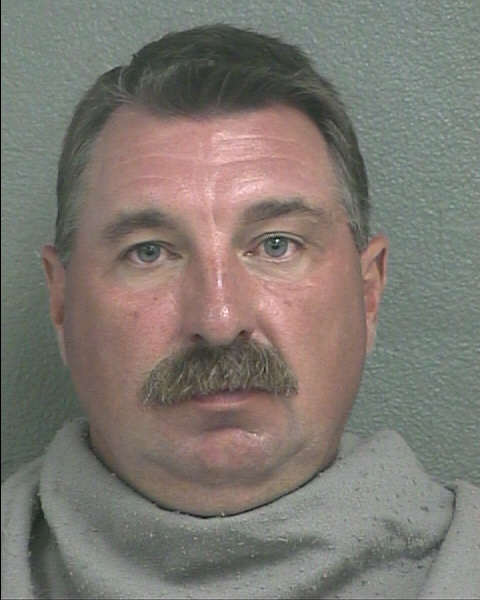
With The Times’ story, there’s a mug shot of Gibbs, smiling and wearing a plaid shirt, standing in front of a doorway. You look at that picture and see what appears to be a normal kid, whom you probably wouldn’t think twice about if you passed him on the street.

But above his photo is an excerpt of a statement from the soldier who had reported the use of hashish in the unit. The soldier is quoted as saying:

“I was just sitting there on my cot…and that is when CPL (Jeremy) Morlock (another defendant in the case) and SSG Gibbs came back into the room, they calmly sat down and ask (stet) me how my day was going. SSG Gibbs then proceeded to roll out a set of fingers onto the floor. CPL Morlock looked at me and said if I don’t want to end up like that guy then he suggest I shut the hell up and it wouldn’t be an issue for him because he already had enough practice. SSG Gibbs was just sitting there agreeing with CPP Morlock, he was being subtle and quite (stet) but didn’t get worked up. When they were done, SSG Gibbs picked up the fingers, rolled them up and stuck them back in his pocket. Then they left the room.”

Stuck them back in his pocket. The smiling guy in the photo!

As you might expect, the story drew a guttural reaction from readers. (An accompanying story detailed how two of the civilians died.) As of 2:09 p.m. Tuesday, 247 comments had been affixed to the story. At that point, comments were shut off. 

Here are excerpts of a few of the comments:

— From P. Clayton, of New Jersey: “No one wants to admit the ability to see one of our…men behaving in such an abominable way, but it has happened before in other wars that America engaged in so why not now in Afghanistan? Within this article, which probably only scratches the surface when it comes to analyzing Gibbs’ personality, there are many details that fit the profile of a soldier gone awry, including threatening his fellow soldiers and keeping records of his ‘kills’ via tattoos; how gruesome is that?”

— From JD, of Austin: “While Staff Sergeant Gibbs’s alleged actions disgust me and, if true, are a stain on this nation’s honor (one of many…), I challenge you to consider the nature of war before condemning and demonizing him so quickly. War is a nasty reality, and unless you’ve been there, you really don’t know what it’s like or what you would do. I consider myself a pretty humane and decent guy. I served two tours in Iraq, and I did things there that to this day I’m not proud of. War hardens the heart and clouds the mind. Until you’ve been in contact with the enemy, don’t be so quick to write off the soldier as a monster and a murderer.”

— From Ralph, of San Francisco: “Young men with weapons in war time do despicable things. I saw it in Vietnam. Generally, they get away with it. Investigation from the Inspector General’s office are exercises in futility. It just happens. If you vote for war, you get war. If you go to war, you learn that the morality changes.”

— From Andrew, of Minneapolis: “Completed only 1 of 20 credits in high school? Apparently the Army has been scraping the bottom of the barrel. It’s consistent with reports of greatly lowered recruiting standards following the advent of Bush’s wars.”

— From MikeLT, of Boston: “This is what we get for sending video game-loving kids to war. If the allegations are true, he’s elevated the killing in the games to real killing.”

My comment? I’m glad I never had to go to war, and I’m happy to say that the only things I’ve ever wanted in my pockets were cash, credit cards and my driver’s license.

Read Full Post »

Few things frost me more than a dirty cop.

An especially dirty cop stank up the ranks of the Kansas City, Kan., Police Department several years ago. His name is Bob Lane. Formerly, Detective Bob Lane. Three years ago, Lane was exposed as a bum (more about that in a minute), but it was only this week that the fullness of his crookedness came to public light.

But first, the backdrop. On Tuesday, The Star carried a front-page story about a federal Drug Enforcement Administration agent who beat up a Kansas City, Kan., man in 2003, seriously injuring him, in a road rage incident.

The DEA agent, Timothy McCue, thumped Barron Bowling after a minor mishap on North Tenth Street in KCK. Besides beating Bowling with his fist or the butt of his gun, McCue called Bowling an “inbred hillbilly” and “system-dodging white trash.”

It was a clear-cut case of abuse by the DEA agent, but who got charged? Not McCue. Oh, no, authorities closed ranks, and Bowling was charged with causing the wreck and leaving the scene of the accident. He later was acquitted of causing the wreck but convicted of leaving the scene. (And why wouldn’t he leave the scene? He was getting the crap beaten out of him.)

The tide eventually turned, however, and last week, a U.S. District Court judge awarded Bowling $833,250 for the beating, which, The Star said, left him with “severe brain damage and post-traumic stress.”  

The Star’s story focused partly on former KCK Detective Max Seifert, who tried, at the time, to report honestly what happened on North Tenth Street on July 10, 2003.  At the time, Seifert was overridden by other officers, who wanted to protect a fellow badge carrier. The worst was yet to come: Judge Julie Robinson, who awarded Bowling $833,000, said that as a result of his honesty Seifert was forced into retirement before he was eligible for full retirement benefits.

In her ruling, Robinson praised Seifert for his honest work, which, she said, got him “castigated by his superiors, by the prosecutor, by the DEA.” She called his treatment “shameful.”

Lane

Now, enter Bob Lane. An editorial in The Star on Wednesday said he was the first officer to arrive on the scene that fateful day. The editorial goes on to say that Lane told Seifert that DEA agents were helpful to police and the department should “cover for them.”

“Seifert rejected that warped advice and filed a thorough and honest report,” the editorial said.

But The Star failed to tie together all the elements of this sordid tale. Several years ago, Lane, while simultaneously serving on the Edwardsville City Council and the KCK Police Department helped quash two DUI tickets and related traffic tickets in exchange for carpets and a steak-house gift certificate.

To be specific: The attorney general’s office alleged that on Aug. 8, 2005, Lane received $1,200 to $1,400 worth of carpet to conceal and suppress records related to the 2004 arrest of a carpet company owner. In December 2004, Lane allegedly got a $100 gift certificate to Ruth’s Chris Steak House to hide evidence against a car dealer.  

 In 2006, Lane was charged with three felonies — two counts of bribery and one of aggravated intimidation of a witness. He also was charged with four misdemeanor counts. (The Edwardsville police chief, Steve Vaughan, also was charged in connection with the ticket fixing, but those charges were later dismissed.)   

In a 2007 deal with prosecutors, Lane pleaded no contest to the four misdemeanors, including two counts of compounding a crime.

He was sentenced to 10 days in jail and a year of probation. And, oh, yes, he resigned from the police force. (He had been placed on unpaid leave when the charges were filed.)

It’s clear, then, that Lane was running wild — in the most perverted sense — in 2003, 2004 and 2005. It’s too bad, isn’t it, that Wyandotte County District Attorney Jerome Gorman chose to drop those felony charges against Lane in 2007?

Lane is probably thanking his lucky stars he’s not behind bars, where he fully deserves to be, in my opinion.

I have another thought on this situation:

Why in the world would the KCK Police Department allow officers to serve in any kind of political post, not to mention an elected post? It seems to me that the potential for conflict of interest or abuse of power would be pronounced.

On Thursday, I spoke with KCK Police Chief Rick Armstrong, who was appointed chief in July. He said he didn’t think that, in general, allowing KCK officers to serve in political posts other than the Wyandotte County Unified Government posed a significant problem. Armstrong, whom I got to know when I was The Star’s KCK bureau chief from 1995-2004, is a good man, and I believe will be a great chief; but I disagree with him on this point.

Armstrong also took issue with Judge Robinson’s conclusion that Seifert was drummed out of the force for writing a report that put the blame on McCue.  Armstrong defended the integrity of police force operations under recent police chiefs, including James Swofford; Ron Miller, who was chief in 2003; and Sam Breshears, whom Armstrong succeeded.  

Armstrong said that earlier Thursday he had met with 21 police recruits and had talked to them about the importance of ethics, professionalism and accountability.

Let’s hope they get the message…and also that there’s not a Bob Lane among them.

Read Full Post »

Let me tell you how a great piece of investigative reporting came about.

Maybe you read or heard about the Martin-Luther King Jr.-era photographer, Ernest C. Withers, being identified as an FBI informant by The Commercial Appeal, Memphis’ major daily newspaper. 

Withers, who died in 2007 at age 85, was giving the FBI boat loads of information about King; about the sanitation workers’ strike that led up to King’s assassination; and about a Black Panther-type group called the Invaders, which operated in Memphis in the late 1960s. Withers is now credited with helping the government break up the group.

Withers also focused on mainstream figures, including King, with whom Withers had unfettered access, and he passed along tips and photographs involving politics, business and everyday life in Memphis’ black community.

He is believed to have been paid for his work, although the FBI has refused to acknowledge he was an informant or that he was paid.

Perrusquia

With that backdrop, here is how veteran investigative reporter Marc Perrusquia unmasked Withers, whose family refuses to believe he was an informant.

Perrusquia first got wind of Withers being an FBI informant more than a decade ago. A few years ago he twice requested — and was twice denied — Freedom of Information requests to copy the Justice Department’s file on Withers. 

The Justice Department not only would not allow the paper to copy the file but refused to acknowledge that it exists. The Justice Department was able to get by with that because an exemption to Freedom of Information Act law allows officials to protect the identity of informants even after death.

What the paper managed to get instead was 369 pages related to a 1970s public corruption inquiry that focused on Withers, who pleaded guilty in 1979 to extorting kickbacks from a nightclub owner while he was a Tennessee Alcoholic Beverage Commission agent.

Perrusquia began scouring those pages, which included redacted references to informants. But in one instance — just one place in all those pages — the guys with the Sharpies (or the computer-keyboard equivalent) screwed up; they failed to hide a reference to Withers’ informant number, ME 338-R.

With that, The Commercial Appeal had the combination that unlocked the vault. Here’s how the paper explained what happened next.

“…(T)he newspaper located repeated references to the number in other FBI reports released under FOIA 30 years ago. Those reports — more than 7,000 pages comprising the FBI’s files on the 1968 sanitation strike and a 1968-70 probe of the Invaders — at times pinpoint specific actions by Withers and in other instances show he was one of several informants contributing details.”

The Commercial Appeal published its big story on Sunday, Sept. 12. It was immediately picked up by other papers and news organizations throughout the country. 

In a column that also ran on Sept. 12, Commercial Appeal editor Chris Peck called the scoop “a wrinkle in history that speaks for the importance of a free press and good reporting,” and he explained why Perrusquia’s scoop was so important decades after the fact.

“Every generation wrestles with this tug between the better in us and those things that, in retrospect, seem less than our best,” Peck wrote. “Bill Clinton and Monica Lewinsky. Rush Limbaugh and prescription drugs. Barry Bonds and steroids. We cannot count on two hands and two feet all the head-scratching examples of successful men, talented men who feel compelled to go against their own best interests.

“That’s why the Ernest Withers saga is relevant today. The questions raised by his secret life as an informant seem as pertinent and nettlesome today as they were 40 years ago.”

Thank you, then, Marc Perrusquia and The Commercial Appeal for exposing a deep, closely held secret that explained a lot about the government’s inside track on Martin Luther King Jr. and the civil rights movement of the late 1960s.

Read Full Post »

Ten days ago, Arthur Gregg Sulzberger began turning out stories in his new job as Midwest correspondent for The New York Times.

Sulzberger, a fifth-generation member of the Ochs-Sulzberger dynasty that has controlled and managed The Times since 1896, was named a Midwest correspondent, based in Kansas City, in June. He moved to Kansas City within the past few weeks and alives near downtown. His grandmother, Annie Gregg, lives in Topeka.   

Sulzberger, who uses the byline A.G. Sulzberger, has had three midwestern stories since Sept. 10. The first was a provocative piece about a video war game that allows the user to become aTaliban fighter and attack American troops. The Army, Navy and Air Force have prohibited the game from being sold on their bases. The Marines had not decided whether to make it available on their bases.

The second story, which was published last Thursday, was about a Mulvane, Kan., man who built a replica of the Golden Gate Bridge over a creek on his property.

The third one, published Friday, was very special. It was a front-page feature on a 103-year-old federal judge in Wichita. Yes, Judge Wesley E. Brown is still hearing cases at a century plus three.

Sulzberger opened the story like this:

“Judge Wesley E. Brown’s mere presence in his courtroom is seen as something of a daily miracle. His diminished frame is nearly lost behind the bench. A tube under his nose feeds him oxygen during hearings. And he warns lawyers preparing for lengthy court battles that he may not live to see the cases to completion, adding the old saying, ‘At this age, I’m not even buying green bananas.’ ”

It might be an old saying, but it sure made me laugh.

As lively and polished as Sulzberger’s writing was, it was a photo that The Times used that elevated the story to a remarkably high level. The photo showed a smiling Judge Brown virtually swallowed by his big office chair and appearing to be sliding down under his big, wide desk. It’s a hilarious picture, and to use another old saying, it’s a picture that’s worth a thousand words.

Wisely, The Kansas City Star picked up the story and also ran it on the front page. Unwisely, The Star chose not to run the tell-tale photo, opting instead for a mug shot.

Before moving to Kansas City, the 29-year-old Sulzberger was covering U.S. District Court in Brooklyn. He joined The Times’ staff early last year, after reporting stints at The Oregonian and The Providence (Rhode Island) Journal.

He is the son of Times’ chairman and publisher Arthur Ochs Sulzberger Jr. He got his middle name from his mother, Gail Gregg. Young Sulzberger has a sister, Annie Sulzberger, who is not in the newspaper business.

I had the pleasure of meeting Arthur earlier this summer, and he struck me as genuine, unassuming and enthusiastic about his Kansas City-based assignment.

This is the first time that The Times has had a Kansas City-based correspondent in nearly 20 years. In my opinion, this is a great move by The Times, which, like the Wall Street Journal, is spreading its reach as a “national” newspaper. Unfortunately, while The Times and the Wall Street Journal are extending their tentacles, the nation’s second-tier papers, like The Star, the St. Louis Post-Dispatch and the Chicago Tribune, are pulling in their horns because of financial problems, and they’re losing their foothold with many readers.

For more than a year now I’ve subscribed to The Times, along with The Star. I understand that the vast majority of people either can’t afford two newspapers or they’re just not interested enough to take both (or maybe either). I would urge all of you, however, to at least try to follow Arthur Sulzberger’s writing out of Kansas City on The Times’ web site, www.nyt.com. If you just check the site every once in a while, you can put “A.G. Sulzberger” in the search box, and his stories will pop up. 

We’re lucky to have him among us. For one thing, it could elevate our profile in the eyes of the nation. So, welcome, Arthur, we hope you enjoy your time in our great city!

Read Full Post »

I frequently hear people say they’ve stopped taking The Kansas City Star because “there’s nothing in it” or “there’s nothing to it anymore.”

But once again, on Thursday, The Star showed why it’s the most indispensable news-gathering organization in our region. The shocking headline atop Page 1 said it all — “Sources: Nixon was target.”

The intended target of the whacked-out, psychologically ill 22-year-old man who stabbed a dean on Tuesday at Penn Valley Community College was none other than Missouri Gov. Jay Nixon.

The story was reported and written by police reporter Christine Vendel and higher-education reporter Mara Rose Williams. 

The scariest thing — the reason this is such a huge story — is that if Casey Brezik, the attacker, had been smarter and better organized, he just might have been able to get to Nixon. Nixon travels with Missouri Highway Patrol officers, but who would have been suspecting an attack at a junior college, where the governor was going to be talking about the benign subject of a state expansion of high-speed Internet services?    

It seems to me that Brezik easily could have caught everybody napping…long enough, anyway, to get in one thrust at the governor.

He was able to make his thrust, but it got dean of instruction Al Dimmit Jr. instead of Nixon, whose plane had just landed at Wheeler Downtown Airport. (Dimmit is in the hospital, recovering from a neck wound.) 

Nixon immediately canceled the Penn Valley visit and went on to Springfield, his next planned stop.

The Star posted its big scoop on its web site, kansascity.com, at 10:15 p.m. Wednesday, just after the 10 o’clock newscasts concluded their news reports and had moved on to weather and sports.

At that point, even if they were monitoring The Star’s web site, the TV stations would only have been able to report what The Star was reporting. They would have had to say something like, “The Kansas City Star is reporting on its web site that Gov. Jay Nixon was the intended target of an attack Tuesday that injured a Penn Valley dean.”

But pride would have stopped the TV stations from doing that; they hate to give credit to The Star, just as The Star hates to credit any other local news organization with breaking a big story. 

As of 10:30 a.m. Thursday, three of the four local TV stations, KMBC, WDAF and KSHB, were reporting the Nixon-the-intended-victim story on their web sites. Two of the stations, KSHB and WDAF, were crediting The Star. KMBC, meanwhile, had done some original reporting and was quoting police spokesman Darrin Snapp as saying that Nixon had been the intended target.

As for KCTV5 ( known for its “live, late-breaking, investigative” self-promotions a few years ago), it was carrying as its “top story” a bomb threat from Wednesday morning that forced the evacuation of a building at 23rd and Main. 

As early as Wednesday morning, The Star intimated the deeper implications of the Penn Valley incident. Its front-page account of the attack included a sub-head that read, “Man described as anarchist is charged in attack that occurred before governor’s arrival.”

Another tipoff that Brezik had bigger things in mind came in the third paragraph of Wednesday’s story, which said that Brezik was “wearing black clothes and a bullet-resistant vest.” In other words, he was prepared for a big encounter.

Fortunately — very, very fortunately — Brezik’s hoped-for, big encounter with the governor didn’t happen.   

So, while The Star is “skinnier” than it used to be, while it is lighter in the hand (except on Sunday) and contains far fewer column inches of news than it used to, it’s still the heaviest and most substantive news source around. If you want the inside information on the biggest local stories, there’s only one place to turn to. 

Hats off, then, to The Star. It truly was a banner day at 18th and Grand.

Read Full Post »

Now there’s a game that was worth losing some sleep over!

Chiefs 21, Chargers 14. Finish time: about 12:15 a.m.

It might go down in the annals of local sports as the game that put Kansas City back on the NFL map.

Isn’t it amazing how one game can lift the spirits of a town that has seen so many years of frustrating losses for its two primary major-league franchises?  

All that losing, combined with the Chiefs’ relatively poor pre-season play, had a lot of people on edge and gloomy about the team’s prospects. Why, just a few weeks ago, The Star’s Adam Teicher and Chiefs’ head coach Todd Haley had a testy exchange at a news conference, and it looked like bitterness was going to be the season-long tone out at Arrowhead.

I was one of those people who was gloomy about the team’s prospects.  On July 22, I wrote, accurately, in this space that the sun was setting on Jason Whitlock’s career at The Star. (He resigned last month.) I went on to write, terribly inaccurately, it appears, that one of the reasons Whitlock was verging on irrelevance in Kansas City was that “the Chiefs are in a sorry state.”

I went on to say: “…they have a hot-headed, yet dull-as-dirt coach in Todd Haley; they have an egocentric president, Scott Pioli, who hides in his office; and they have a sub-par group of players. So, really, what does it matter what Whitlock might write about this year’s Chiefs?”

Now, clearly, there’s a guy who didn’t know what he was talking about! There’s a blogger — the kind I like to complain about — who was just standing on a soap box and making noise. I could have, and should have, qualified it, as I learned to do in my many years at The Star, and said, “It appears that the Chiefs are in a sorry state.” That would have given me some cover.

At least, however, I was swimming in a crowded pool. And now all of us who were in that pool want out; we want out of the pool of despair and into the waters of rejuvenation because football is back in Kansas City. Once again, the Chiefs own the town…Well, I guess I better say it appears that the Chiefs own the town.

And what about Whitlock? How do you think he feels today? Wherever he’s writing now — Twitter or Foxsports.com — look for him to try to minimize this thrilling victory, to write it off as an aberration. But deep down, where his little heart is beating, I’ll bet he’s sorry that he’s not here writing about this team, with its talented, enthusiastic young players and its new, deeply experienced offensive and defensive coordinators.

If he were here, I’ll bet he’d be calling today on Chiefs’ fans everywhere to “Get on the bandwagon…This team might go undefeated!”

Read Full Post »

I’ve been whacking away at the KC Star the last several days for various journalistic offenses, including running an untimely letters to the editor page and failing to include in a front-page story the governmental-approval process needed for construction of a controversial office tower on the Plaza.

But today I’m taking off my straw hat (see “About Me” page) to you, KC Star.

A group of editors, reporters, photographers and graphic artists has put together what — halfway into it, at least — is an amazing series on the Kansas City School District.

The six-part series, which began Sunday, is beautifully written, carefully and thoroughly reported, and strikingly presented, with great photos, graphics and sidebars. Each of the three parts that appeared Sunday, Monday and Tuesday started out front and then “jumped” inside to take up two full inside, facing pages. 

For any reporter, getting a story that starts on the front and covers two full inside pages is a rarity and a thrill. I was involved in two or three such stories during my 25-plus years as a reporter at The Star.   

Paralleling “Special Report — Saving 17,000 kids” is a six-part series about the end of the line for Pinkerton Elementary School, one of 24 district schools that closed for good last May. That series was written by Eric Adler of the features desk.

To tell you the truth, I haven’t yet made the time to read Adler’s stories carefully, but from a quick scan, they look equally impressive. Tuesday’s installment, for example, profiled the school’s dynamic principal, Derald Davis. (My only beef is that Adler didn’t tell the readers whether Davis has a job in the district this year. Maybe Adler is holding that bit of information until later in the series, however.)  

Day 1 of  “Saving 17,000 kids” was largely about the failures of the past, but it pointed toward the future. “…Granted, in this pivotal year to come, success for the children could be as elusive as ever…” reporter Rick Montgomery wrote. “But at least now everyone seems to be on the same page: It is about the children.”

Day 2 featured a searing profile of Superintendent John Covington, who came to Kansas City from Pueblo, Colo., a year ago. Covington granted long-time school district reporter Joe Robertson full access to his comings and goings, his thoughts and philosophy, and it paid off for them and the readers. 

One of the highlights of the piece is Robertson’s recounting of a day that Covington went home from work exhausted, went straight to bed and woke up at 7:30, worried about being late to work. After taking a shower, he found out it was 7:30 p.m. He’d had a nap, not a full night’s sleep.

Day 3 of the series (Tuesday), featured business writer Mark Davis’ microscopic examination of the district’s financial problems, abuses and, now, vigorous attempts to set things straight. (For example, the district has pared its vendor list from 6,200 to 985.)

Davis quoted Covington, who seemingly is on a crusade to root out insider deals and employment, as saying: “We are going to make sure, under my watch, that the days for making decisions based on the best interest of adults, and this patronage and cronyism that has been so long known to have had a negative effect on how we operate public schools in Kansas City — please know that while I sit in this chair, those days are gone.”

And do you know why I believe him? Why, in one respect, I think he’s got this district moving in the right direction? 

There has not been a single mention of perennial school district sycophant Clinton Adams Jr. If Clinton has left the scene, or has been removed from it, the outlook is much more promising.

Congratulations, then, to John Covington for starting the turn-around of the Kansas City School District and to The Kansas City Star for devoting the time, space and, yes, money to tell this very important story.

Read Full Post »

Electronic subscriptions now make up more than 10 percent of the total number of paid subscriptions to The Kansas City Star.

A “consolidated media report” (CMR) generated by the Audit Bureau of Circulations shows that slightly more than 10 percent of Sunday subscriptions are of the electronic variety.

The proportion is higher during Monday-Friday, when about 13 percent of subscribers take the electronic rather than the printed edition.

The advertised price of an electronic subscription is $4.95 a month, which is about one-third the cost of the print-subscription rate.

As of March 31, the total number of Sunday subscribers was 314,449, with 31,755 of those being electronic. The number of print-edition subscriptions was 282,694.

Print-edition subscriptions to the Sunday Star have fallen by more than 100,000 since 2004, when Sunday circulation was 388,425. 

During Monday-Friday, print-edition subscriptions are below 200,000 every day except Friday. 

In the late 1990s, weekday subscriptions to the printed edition stood at about 250,000, and The Star waged a marketing campaign aimed at getting to “300,000 by 2000.” The goal (again, referring to weekday circulation) was never reached. 

On its Web site, kansascity.com, The Star advertises “E-Star” as “a clickable replica of our newspaper.” 

“The electronic edition contains all the news, photos, ads, box scores, and special sections in the printed The Kansas City Star,” the company says.

In 2008, the Audit Bureau of Circulations, an industry-funded group that is paid by publishers to audit their circulation, approved the testing and creation of a consolidated media report for member newspapers. The Star has participated in the consolidated reports from early on.

ABC says: “The report allows newspapers to provide advertisers with a comprehensive view of the newspapers ‘total media footprint’ across multiple products and channels by reporting total gross distribution data.”

While helping newspaper companies market themselves to advertisers, consolidated reports also serve another purpose: They make print-circulation losses less conspicuous than they were before the days of the “CMR.”

Read Full Post »

I love to see Kansas City area residents rise up en masse against flim-flammy plans to encroach on cornerstones of Kansas City history.

And so it was with great satisfaction that I watched the tidal wave of opposition swell all day Friday against the Highwoods Properties-Polsinelli Shughart office tower-and-money grab that would destroy the integrity of perhaps the Plaza’s most important intersection, 47th and Broadway.

The proposal to build an eight-story, $57 million office building for the Polsinelli Shughart law firm has unleashed such a fusillade that the plan probably is D.O.A. However, where the power of money is involved, you never know, so it’s probably going to take a Phil Spector-like “wall of sound” to keep this plan from going forward.  

Having covered City Hall between 1985 and 1995, I can tell you that the one sure thing that councils respond to is a roomful of people. If big crowds  show up in opposition to the proposal, the council almost certainly will kill the plan, if it gets that far.  

Here’s another thing I know about this mushroom cloud: The hysteria would not have reached such proportions (hundreds of calls, e-mails and Web comments to The Kansas City Star) and the outrage would have been more clearly focused if The Star, in its Friday morning report, had laid out the government and regulatory approvals that are needed to proceed with the project.

The project will be reviewed first, on Oct. 5, by the City Plan Commission, an appointed group, which makes recommendations to the City Council. The City Council would have the final say, regardless of what the Plan Commission did. 

Unbelievably, Collison’s story didn’t have one mention of the regulatory process or the approvals that the project requires to move ahead. Collison has been with The Star for at least a decade and is an excellent development reporter. I don’t know what happened in this case; it was just a terrible omission. When I wrote to Collison on Friday, asking about the regulatory process, he wrote back, saying, “I’ve been up to my eyeballs with the outrage over this today.”

At least two editors — probably three or four, including a managing editor — read the story, and someone should have said, “Hey, this story doesn’t say if City Council approval is needed.” That’s all it would have taken to put the situation in proper perspective and help readers channel their anger. 

As it was, the story made it look like the building was a done deal. The story had Highwoods’ and the law firm’s  chief executives exchanging oratorical high fives. I could almost smell the smoke from the victory cigar in the statement of W. Russell Welsh, Polsinelli’s chief executive, who said, “We could not be more pleased to have our own building in the center of the Plaza, where our firm began nearly 40 years ago.”  

On Saturday, Collison and The Star moved to undo the damage from Friday’s confusing story. The first paragraph of today’s story, the lead story in the paper, said: “Plans for an office development in the Country Club Plaza that includes demolishing a vintage building have ignited outrage among Plaza devotees — and they will have their day at City Hall.”

Appropriately, the story was as much a correction as it was a report of the outrage.

To me, this episode reflects a couple of things: First, we love our Plaza, with its graceful, Spanish architecture and distinctive feel, and, second, The Star has to be very, very careful — and thorough — in reporting about proposed changes to venerable Kansas City institutions like the Plaza.

The reporting and editing lapse that occurred in Collison’s Friday story is, unfortunately, happening more and more. That is almost inevitable with a diminished staff, and it demonstrates once again how The Star’s status as the area’s most powerful and authoritative news-gathering operation has slipped.

It’s still the biggest and the best, but not as big or good as it used to be.

Read Full Post »

« Newer Posts - Older Posts »