Feeds:
Posts
Comments

Archive for the ‘Uncategorized’ Category

That’s it…the headline, I mean.

That’s the slogan — christened here today on your favorite blog — for the bond-issue campaign (God willing) that will determine if Kansas City builds a new single terminal at KCI or sticks with the one we’ve had for more than 40 years.

I’m hereby giving Pat Gray, Steve Glorioso, Pat O’Neill and other political consultants carte blanche to appropriate the slogan, which, I think, says all voters need to know about why a new, single terminal is a good idea…

“Soar into the future.”

***

OK, so the campaign isn’t going to be the slam dunk I first thought it was going to be. A Save KCI group has formed, and it has a web site. Letters to the editor tilt toward maintaining the status quo, and Mayor Sly James now seems to be hedging his bets.

A front-page story in The Star yesterday said that James supports “moving forward with a study on the merits of a new terminal.” That’s a long way from being unequivocal.

Here’s what he should say…

“This is what we need, Kansas Citians; this an opportunity for us to keep pace — as did with the Power & Light District and Sprint Center — with other top-tier cities. This is an opportunity to build a 21st Century terminal that will be more efficient and will make travelers open their eyes when they arrive in our city.”

That’s what he should say, anyway, if he wants to be remembered like former Mayor Kay Barnes, who gave us Power & Light and the Sprint Center. Or like the late former Mayor Ilus W. Davis, who moved air travel out of Downtown Airport and gave us a major-league airport in Platte County.

(A quick digression: Remember how “convenient” Downtown Airport was?)  

For the campaign to succeed, it’s going to need James’ strong backing. He has built up tremendous credibility with the public. I think that’s great; that’s what enables a mayor to lead. But if James equivocates on this, or if he throws in the towel, Kansas City is hosed. Another opportunity to modernize KCI probably wouldn’t come along for another decade…at least.

***

Earlier, when I put in the mayor’s mouth the words “make travelers open their eyes,” I meant it almost literally.

Look around the next time you go to KCI…Most people are trudging around soporifically, in the dungeon that is Terminal B, looking for someplace decent to get something to eat, other than a day-old croissant or a three-day-old sandwich.

Then, watch those who are “shopping” for items for friends and relatives back home. They flip through the KU, K-State and MU caps and shirts at the news stands, and they quickly move on.

Folks, this place is not far from being a dump!

The only difference between KCI and Kemper Arena is that Kemper Arena was always a dump. It held us back on the sports front for many years. Now, with Sprint Center, we’ve got one of the most successful arenas in the country, and when we have a big concert or basketball tournament down there, the streets, bars and restaurants are filled with happy people. A beautiful sight it is, if you love Kansas City and want it to rank up there with St. Louis, Denver, Indianapolis and Louisville.
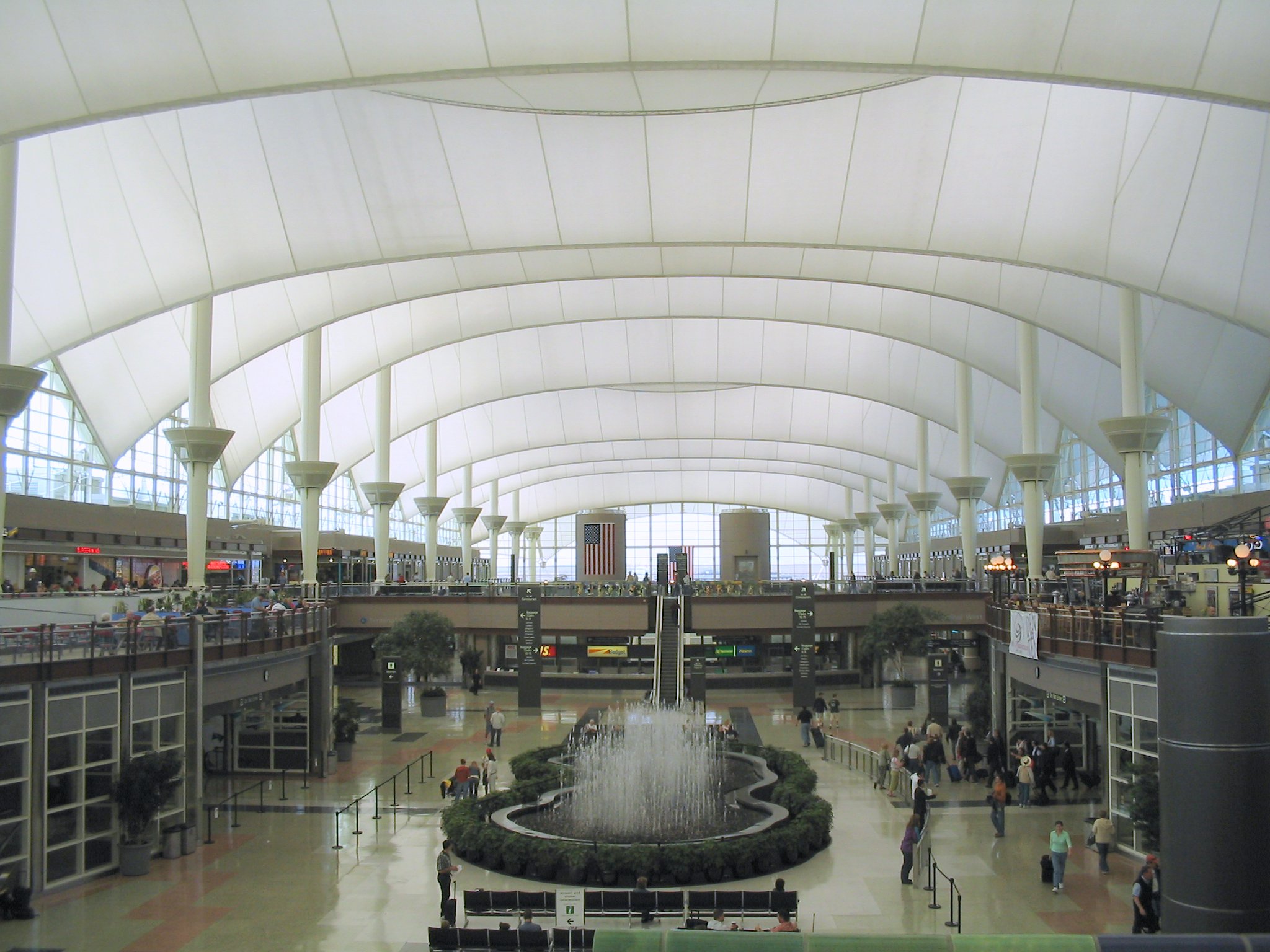
Denver_International_Airport_terminal

Denver International Airport

The important thing to realize is that the “convenience” factor, which opponents of a new, single terminal continuously harp on, is an extremely narrow view. Yes, you can get to your airline fairly easily at KCI, but once you go through one of the security checkpoints, you are a prisoner in a smaller holding area where about all you can get are yogurt cups, crackers and bottled drinks.

I was in one of the holding areas recently, and to get to the restrooms I had to walk from one end of the enclosed area to the other and then down at least one long flight of steps. Convenient? Hell, no! A lot of people, like me, don’t have the knees they once did…You should never have to go down a flight of steps to go to a restroom at an airport.

***

Here’s the best thing about a bond election that would have to be held before the city could proceed: If voters approve (by a simple majority), the bonds would be retired solely with revenue generated by the Kansas City Aviation Department.

A lot of people don’t understand this, I fear. They hear that the new terminal is going to cost hundreds of millions of dollars, and their knee-jerk reaction is, “We can’t afford it!”

Not so. Airport-construction bonds would not rely at all on the city’s General Fund, that is, on taxpayer dollars.

The Aviation Department is one of two city departments, along with the Water and Pollution Control, that do not tap the General Fund. They are called “enterprise departments'” because they pay for their operations, totally, with fees they charge.

In the case of the Water and Pollution Control Department, it’s the water and sewer bills we get in the mail every month. In the case of the Aviation Department, it’s fees charged to airlines and other businesses that rent space at the airport. The department’s largest source of income is airline “landing fees” — usually so much money for each 1,000 pounds.

I want to emphasize this point about how the bonds would be financed…Here it is again, straight from yesterday’s Kansas City Star:

“The bonds would be backed by aviation funds — paid by the airlines, passengers, tenants and other users — not general taxpayer dollars.”

No tax dollars…No, it’s not free, but the airlines and other users are paying, and they’re willing to pay because they know it will pay off for them in the long run.

***

Once again, I’m going to quote U.S. Rep. and former Mayor Emanuel Cleaver, who, I’m convinced, got Kansas City focused on the future when he was mayor, after a long period of belly-button gazing.

Here’s what Cleaver used to say — always in an insistent tone of voice:

“This is not some podunk town along I-70. This is Kansas City!”

People, it’s time to cut bait on the existing KCI, with its sodden, antiquated terminals.

Don’t look back; don’t be nostalgic. The KCI of the 70s, with its gleaming, parquet floors and its fresh, clean look, is a thing of the past. Look ahead; let’s Soar into the Future…


Read Full Post »

A good friend, Kaler Bole, a businessman who also happens to be a hell of a news hound, called to my attention yesterday a Web site that rates the “best” and “worst” jobs from one year to the next.

Knowing what you do about me and this blog, can you predict what’s coming?

Yes…”newspaper reporter” is rated the worst by CareerCast.com, which claims to be “the Internet’s premier career site for finding targeted job opportunities by industry, function and location.”

jimmyoWith a median, annual salary of $36,000 and a projected 6 percent loss of jobs across the country in 2013, newspaper reporting is far from the promising, adventurous job that it used to be — except for those who have reached the top of the ladder, such as reporters at The New York Times and the Wall Street Journal.

Naturally, the CareerCast report is disappointing to me, particularly since I never envisioned myself doing anything other than being a reporter for about the first 10 years of my working life. Thereafter, I would get a wild hair every once in a while and think about going into P.R., but nothing ever materialized. Besides, once my salary started getting pretty good, I was less interested in changing course.

Today, it’s a lot different. From the outside, newspaper reporting appears to be less interesting, less appreciated and more stressful than it used to be. And the prospects of working up to a high five-figure or low six-figure salary are low, indeed, for the average newspaper reporter. When I got out in 2006, salary suppression was well underway.

As disappointing as the CareerCast report is in regard to newspaper reporting, however, the other side of the ledger — the best job of 2013 — still looks no better, at least to me.

You’d never guess what’s No. 1…Actuary. Yeah, the people who analyze insurance risks and premiums. The median annual salary there, CareerCost.com says, is $87,650. Moreover, CareerCrest forecasts a 27-percent increase in the number of actuary jobs this year.

Follow me on a short side trip now…The worst job I ever had was working at the downtown Sears store in Louisville, KY, for about a week one summer during college. Along with two or three other young people, I sat on the edge of a huge wheel (I’m talking several feet in diameter) of index cards, bearing the handwritten names and addresses of customers who owned Sears appliances. I don’t recall exactly what we did with those cards, but I think it was basically putting them in alphabetical order.

I only made it a week, even though one of my co-workers was a really good-looking girl, who I was interested in getting to know better. Lust was no match for excruciating boredom, and away I flew.  

I have no idea what I was getting paid, but I wouldn’t have stayed if it had been $500 a week — a veritable fortune back then. Same thing goes for being an actuary now: I couldn’t and wouldn’t do it for a salary twice as large as what I made at The Star.

(I’m going to keep that actuarial info handy, though, for our 23-year-old son Charlie, who is tutoring kids in math in Tulsa. The $87,000 figure probably would get his attention.)

Anyway, back to the “best” and “worst” jobs…

These things always fascinate me for some reason, maybe because I like to think, “What if…?” What if I had gone into something else? How might that have gone?

***

For what it’s worth, then, here are the rest of “the best” jobs of 2013.

2. Biomedical engineer ($81,540 median salary; 62 percent increase in such jobs projected this year)

3. Software engineer ($90,530; 30 percent job growth)

4. Audiologist ($66,660; 37 percent job growth)

5. Financial planner ($64,750; 32 percent job growth)

6. Dental hygienist ($68,250; 38 percent job growth)

7. Occupational therapist ($72,320; 33 percent job growth)

8. Optometrist ($94,990; 33 percent job growth)

9. Physical therapist ($76,310; 39 percent job growth)

10. Computer systems analyst ($77,740; 22 percent job growth)

***

And here are the rest of “the worst.”

2. Lumberjack, ($32,870; 4 percent job growth)

3. Enlisted military personnel ($41,998 for employees ranked E-7 with 8+ years experience; job growth not predicted)

4. Actor ($17.44 per hour; 4 percent job growth)

5. Oil rig worker ($37,640; 8 percent job growth)

6. Dairy farmer ($60,750; 8 percent job loss)

7. Meter reader ($36,400; 10 percent job loss)

8. Letter carrier ($53,090; 26 percent job loss)

9. Roofer ($34, 220; 18 percent job growth)

10 Flight attendant ($37,740; no growth or loss predicted)

***

Armed with all the above information, if I were graduating from college next month, I think I’d still choose writing as a career. Probably not newspaper reporting, but some sort of writing. As you can tell, it agrees with me.

What about you…What would you do?

Read Full Post »

It’s been a while since I’ve done one of my famous travelogues, but last week Patty and I had a very fine trip to the Bay Area, and it offered some good photo opps.

The reason for our trip was business. As some of you know, Patty owns and operates a company called WomenSpirit, which designs and manufactures robes, blouses, stoles and other items for women ministers. (There’s also a men’s line, called AbidingSpirit. For more on WomenSpirit and AbidingSpirit, visit the website, http://www.womenspirit.com,)

There are three Protestant seminaries in Berkeley, and Patty and I spent one day at each seminary, displaying and selling robes and other garments to seminarians and seminary staff members.

It was not only a good trip from the business standpoint, but also from the sightseeing and touring standpoints. Combined, San Francisco, Berkeley and Oakland have about everything a person could ask for in terms of quality of life. Individually, they are fascinating and distinctive cities.

If you’ve been to Berkeley, you know everything revolves around “Cal,” that is, the University of California, Berkley, with an undergraduate and graduate enrollment of more than 35,000.

The school, which sits halfway up a big hill a couple of miles from the waterfront, generates a nearly round-the-clock flow of foot and bike traffic, which makes for a lively environment.

We also spent an afternoon in San Francisco, but having explored San Francisco in depth several years ago, I wanted to get a good look at Oakland this time.

In some ways, Oakland is similar to Kansas City. For example:

:: Oakland has about 390,000 residents; Kansas City about 460,000

:: Oakland’s downtown is making a comeback, just as Kansas City’s is

:: Both cities have high crime rates

:: Kansas City lays fleeting claim to Ernest Hemingway; Oakland prides itself on being the one-time home of Jack London (“The Call of the Wild” and “White Fang,” among other works)

In some ways, the two cities are very different:

:: Oakland has the San Francisco Bay; Kansas City, the Missouri River

:: Kansas City has the renovated Truman Sports Complex; Oakland, the stark, unattractive Oakland Coliseum

:: Oakland covers 78 square miles; Kansas City, 314

:: Oakland has an average of 260 sunny days a year; Kansas City, 120

With that lengthy lead-in, then, here are some images from the Bay Area.

P1020427

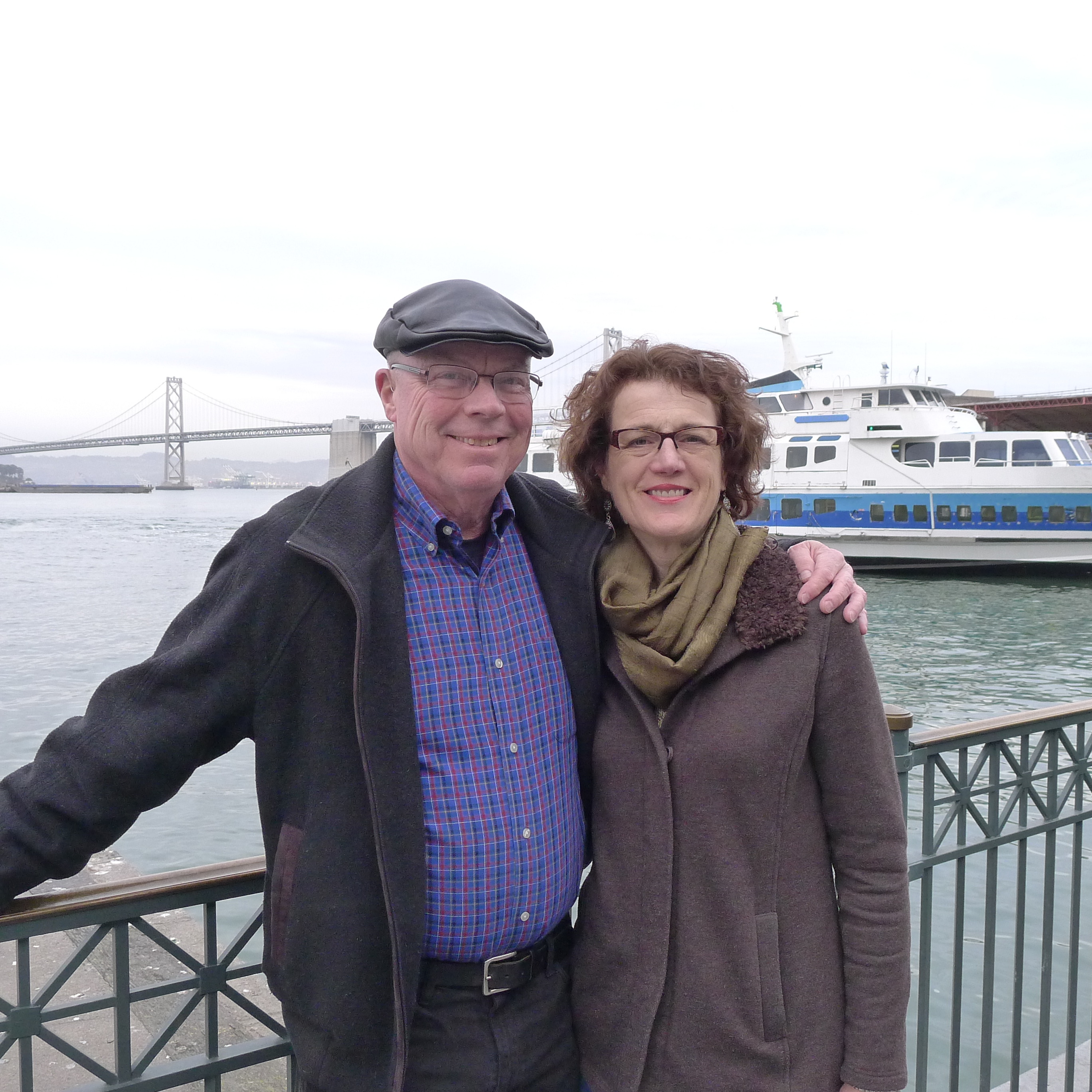
San Francisco Bay, with the Bay Bridge in the background

Happy travelers from Kansas City

Happy travelers from Kansas City

A popular restaurant inside the San Francisco Ferry Building

A popular restaurant inside the San Francisco Ferry Building

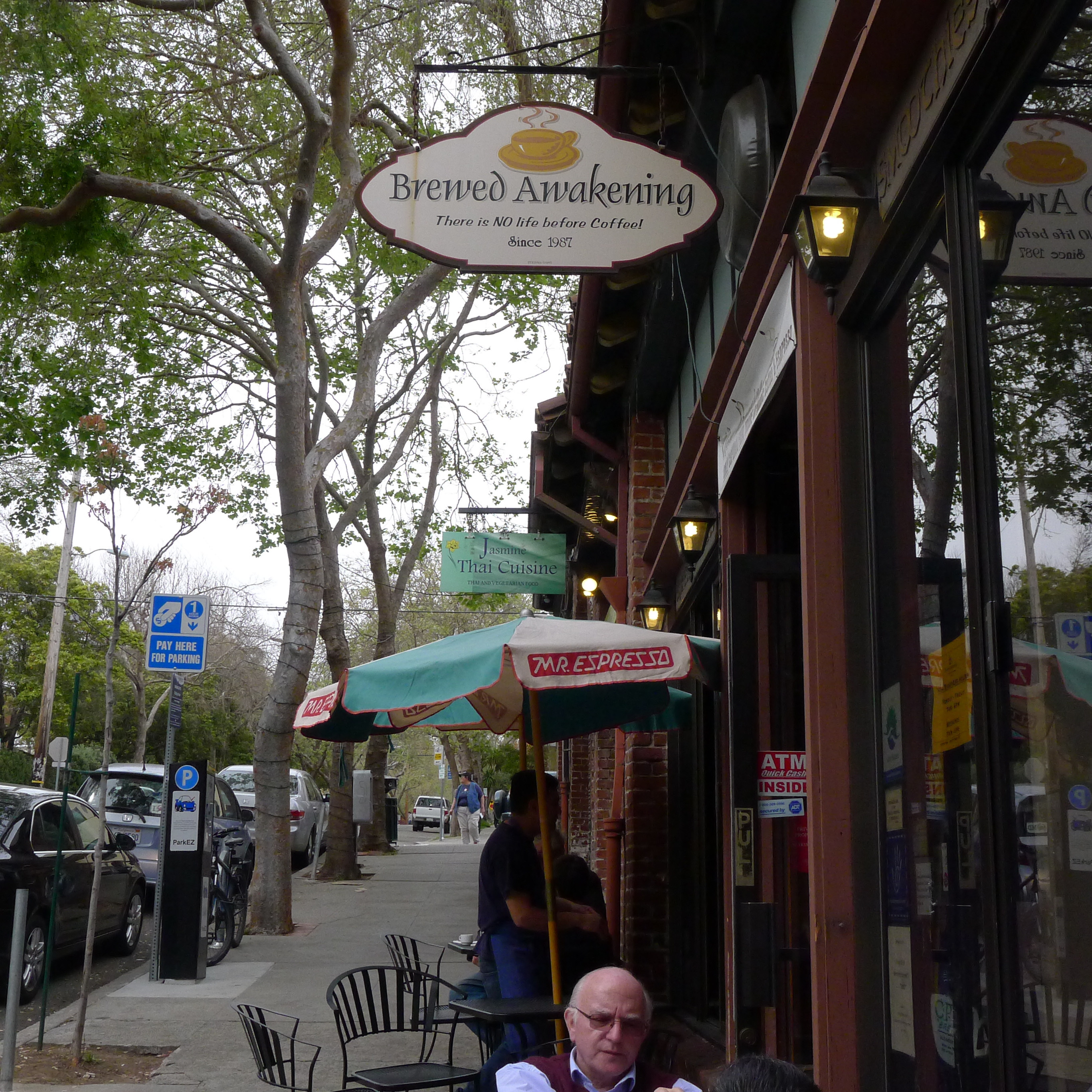
The Brewed Awakening, a Berkeley coffee shop where we started each day

The Brewed Awakening, a Berkeley coffee shop where we started each day

...we and a lot of other people

…we and a lot of other people

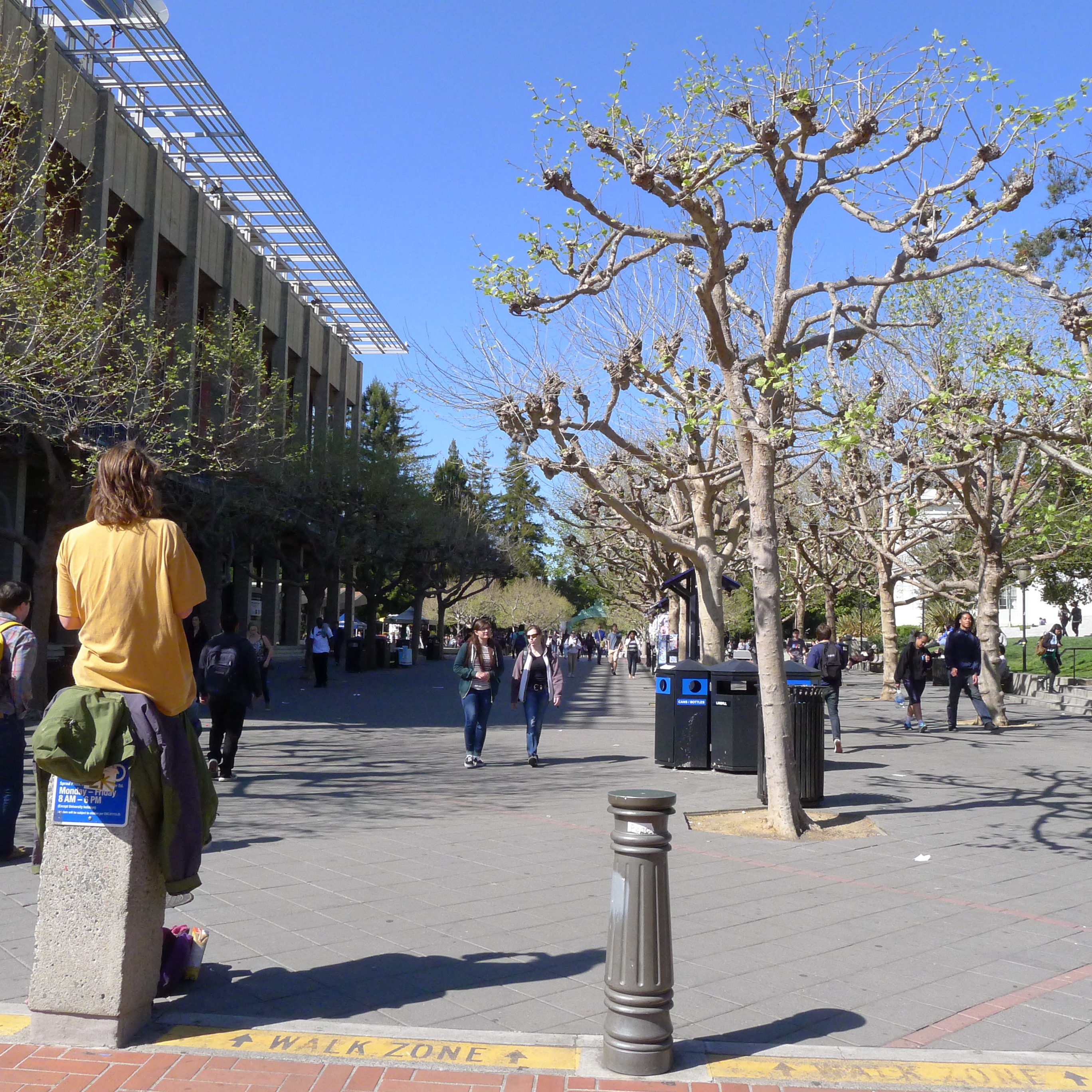
Sproul Plaza on the Cal campus

Sproul Plaza on the Cal campus

Cal isn't exactly a conservative campus

Cal isn’t exactly a conservative campus

Alice Waters' famous Chez Panisse restaurant, closed until about June because of a recent fire

Alice Waters’ famous restaurant, Chez Panisse, in Berkeley (It is closed until about June 1 because of a recent fire. We had reservations, which were canceled after the fire.)

P1020514

An entrance to Jack London Square, Oakland waterfront

Jack London: He went to high school in Oakland and spent time there before heading to Alaska for the 1897 Gold Rush

Jack London: He went to high school in Oakland and spent time there before heading to the Yukon Territory in 1897 for the Gold Rush

P1020499

Oakland City Center

City Hall

City Hall

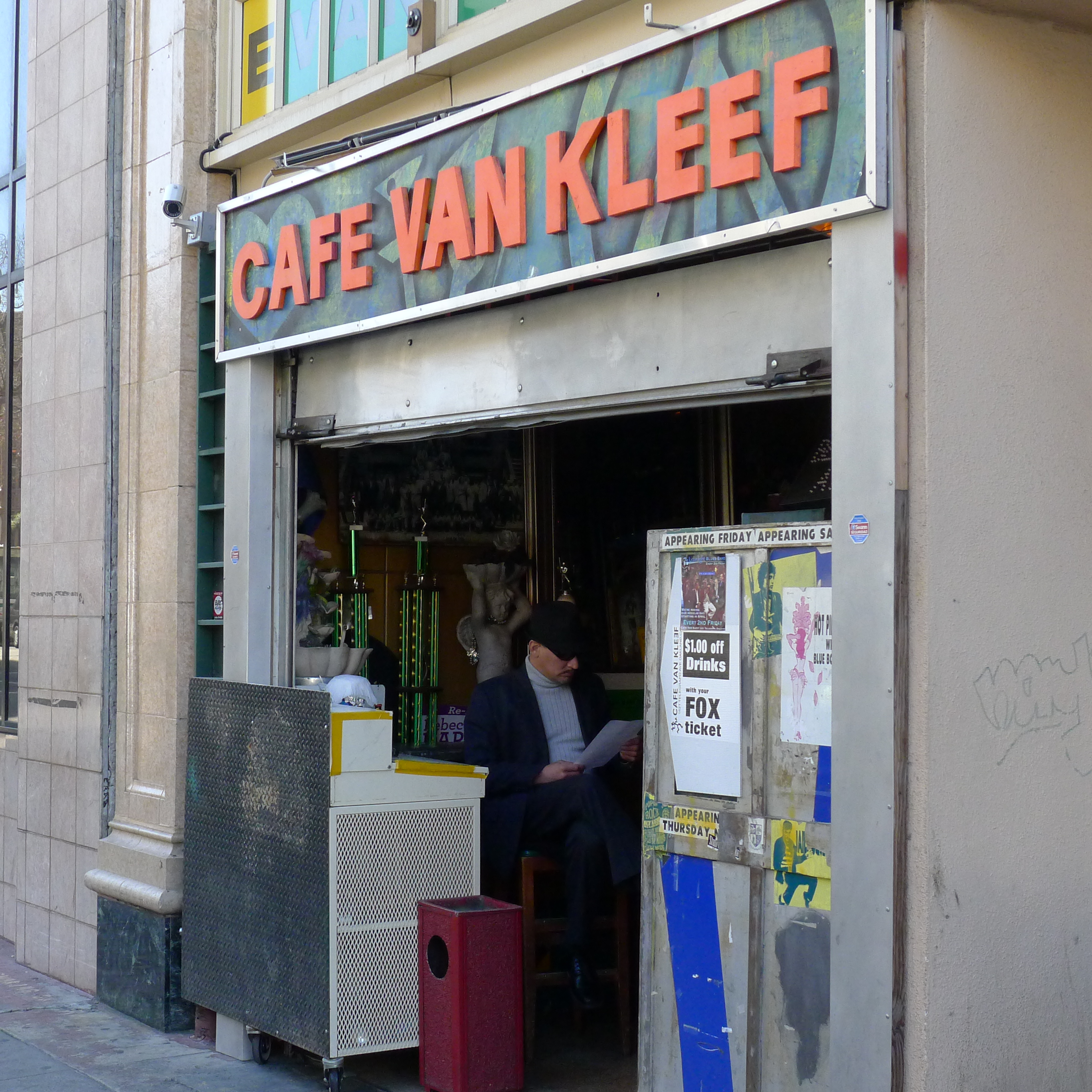
Waiting for business

Taking a break in downtown Oakland

Waiting for business

Not quite as active as the Brewed Awakening

The Art-Deco style Paramount Theatre, completed in 1931

The Art-Deco style Paramount Theatre in Oakland. (It opened in 1931.)

P1020496

Like Kansas City’s Folly Theatre, the Paramount was renovated after decades of neglect. Once again it is a major performing-arts venue.

P1020517

The Cathedral Building, the centerpiece of Latham Square

Read Full Post »

At last, nearly a month after the JJ’s explosion, the Kansas City Fire Department has acknowledged the obvious: That it is responsible for dealing with natural gas leaks.

Initially, after the Feb. 19 explosion that killed waitress Megan Kramer and injured 15 other people, Mayor Sly James infamously said in defense of the Fire Department: “(The) Fire Department doesn’t do gas.”

No more.

The Star’s Matt Campbell reported today that KCFD would change the way it responds to gas leaks.

Campbell wrote: “Fire Chief Paul Berardi said that from now on, the initial dispatch on any call about a possible natural gas leak will include a battalion chief and a fire truck equipped…to monitor gas levels in the air.

“In addition firefighters will remain on the scene and continue to consult with gas utility experts to determine whether to evacuate an area or building. They will remain there until the risk has been resolved.”

That’s the way it should have been all along. In 2010, Fire Engineering, a firefighting trade journal, had this to say on its website about natural gas leaks:

“Responding to gas leak emergencies often carries the stigma of a routine service-level call. The contrary is true, however, in that each of these incidents can easily escalate into a major emergency that could involve fire, explosion, collapse, evacuation, and any number of serious outcomes. Each of these responses must be treated as true emergencies and be handled with appropriate levels of risk management.”

Why, then, would a KCFD crew to arrive at the scene of a major gas leak, heed the advice of gas workers saying “we’ve got it under control,” and then get back on the truck and drive away?

That’s exactly what happened an hour before the JJ’s explosion. The crew left 13 minutes after they arrived and about 45 minutes before the explosion. .

It is unclear to me whether a battalion chief was at the scene, but from all I’ve heard and read it appears that the captain in charge of the truck made the call.

As one former KC firefighter told me, for whoever made the call, “It could be a career-altering move.”

Another big mistake the crew made was advising JJ’s staff to keep all ignition sources off. The crew told JJ’s employees to turn off all ignition sources but didn’t make sure it got done and didn’t help. Thus, the staff overlooked a couple of pilot lights — which I can see easily happening: Pilot lights are out of sight and somewhat out of mind, at least for the average person.

The pilot lights actually triggered the explosion, but it was what took place earlier — MGE saying it had the situation under control, the pumper truck driving away, and evacuation delayed until 10 to 15 minutes before the explosion — that truly caused the disaster.

By the way, in announcing the policy changes, Berardi said his comments would be his final statement on the matter.

This chief, who succeeded Smokey Dyer last year, has already had more than his 15 minutes of fame. He probably hasn’t had a solid bowel movement in weeks. He has not handled this debacle well, and the city and MGE — and perhaps others — are going to pay mightily for their mistakes.

A lawyer friend of mine said the litigation scenario would go like this: The plaintiffs will sue everybody — the contractor doing the digging, the fire department, MGE and maybe Time Warner Cable, which hired the contractor. Then, the defendants will file “cross claims,” each trying to cast the brunt of the blame on the other defendants.

Depositions and case filings will point toward how the blame should be apportioned. Then, the settling will begin.

Millions of dollars will change hands. In the end, though, Kansas City still will have lost a fine citizen, and area residents will forever think of the JJ’s site as the scene of a senseless tragedy.

Read Full Post »

A big, developing story that many area residents might not be paying much attention to is the future of North Kansas City Hospital.

I’ve been following the developments closely, partly because the long-running story of Northtown, as it’s called, has been mesmerizing. It goes like this:

Small, humble city on the edge of Downtown Kansas City stumbles into wealth after casino gambling comes to town, and proceeds to plow through its treasure trove and find itself in worse shape than before it got rich.

The story’s arc is like that of a modest family that wins the lottery, starts buying fancy cars and lavish homes and then finds itself in dire straits. The family members are left looking over their shoulders, saying:

“How in the hell did we let that happen?”

Long story short, North Kansas City has burned through millions of dollars in casino revenue, and city officials now want to sell the hospital, which the city owns but is under the control of an independent board of trustees.

The hospital’s value? An estimated $500 million.

Thus, a battle royal is underway: On one hand, the City Council is doing everything it can to gain the right to sell the hospital, while, on the other hand, most citizens and hospital officials are striving to build a legal moat around the facility, which was built in 1958.

***

NKCHosptitalI have a slightly more than passing interest in this battle.

First, my wife Patty and I own a building in the 1300 block of Swift Avenue, where Patty operates a clothing manufacturing business. We’ve owned the building for more than 10 years, and North Kansas City has proved to be a great place to do business…It is quiet, safe, and city services have been excellent.

Second, my primary care physician is with North Kansas City Internal Medicine, which has its offices adjacent to the hospital. Fortunately, I’ve never been hospitalized there, but it’s entirely likely that I will be some day.

If and when I am admitted to NKC Hospital, I don’t want it to be owned by a mega corporation like Hospital Corporation of America (HCA).

If I have to be in a hospital for an extended stay, I want it to be one where the emphasis is on patient care, not cookie-cutter systems designed to generate as much money as possible from operations.

That’s not to say NKC Hospital isn’t financially successful; it is big, and it generates lots of revenue.

But now…back to the riches-to-rags story of North Kansas City.

After Missouri voters approved legalized gambling in 1992, Harrah’s planted its “boat in a moat” at Chouteau Trafficway and Missouri 210 (eastward extension of Armour Road). At its peak, North Kansas City was taking in $11.5 million a year from the casino, including $1 for every person who entered the casino to gamble.

Eight months ago, The Star’s Steve Everly and Allison Prang charted beautifully Northtown’s rise and fall.

For a while, everything was great: The city was flush and city services were impeccable. (I remember several years ago, when the city put new sidewalks in on Swift, when the existing sidewalks still looked pretty good.) But after Gene Bruns was elected mayor in 1997, the city went on an extended spending spree.

Among other things, the city built a gigantic community center — perhaps the biggest in the metro area — on Armour Road, not far from City Hall; it spent $10 million for properties near Armour Road and I-35 for a mixed-use development; and it built its own fiber optic network at a cost of $13.5 million.

Here’s how those investments have fared, as reported by Everly and Prang:

— During the 2011-2012 fiscal year, the community center had revenue of $1.1 million and operating expenses of $2.6 million.

— The mixed-use development has not come to fruition.

— The fiber optic network lost more than $1 million during 2011 and 2012.

The city partied on for most of Bruns’ 12 years in office, which came to an end in 2009.

Everly and Prang were not able to reach Bruns (I wonder why), but, according Elizabeth Short, who preceded Bruns, he made his intentions clear early on.

“He told me, ‘You got the money, and I get to spend it,’ ” she recalled.

***

It’s too bad the citizens of North Kansas City didn’t catch on to Bruns earlier and nip him and his councils in the bud.

But the damage has been done, and now North Kansas City residents and their elected representatives in Jefferson City are trying to prevent the worst possible development.

Recently, state Sen. Ryan Silvey introduced a bill that would allow the hospital’s board of trustees to vote to become an independent, nonprofit corporation.  In addition, if five percent of the city’s registered voters signed a petition calling for the hospital, to go to nonprofit status, the question would be put to North Kansas City voters.

State Rep. Jay Swearingen told The Star last month that he planned to introduce a similar bill in the House.

Let’s hope that city officials and lobbyists for corporations eyeing the last big independent hospital in our area are not able to convince — or buy — the favor of a General Assembly majority.

This is a story that deserves to be watched very closely, whether you live in Kansas City or North Kansas City…Grain Valley or Pleasant Valley.

Read Full Post »

Kansas City Mayor Sly James has been praised and criticized for his handling of the explosion at JJ’s.

There is no doubt that he was assertive, but was he more concerned with appearing to be in charge than making sure he was on the side of public health and welfare?

The problem with Sly’s initial response — we’re not going to play the blame game (paraphrasing), and the fire department “doesn’t do gas” — is that he didn’t think his comments all the way through.

Instead of a measured response — we will get to the bottom of this with all deliberate speed  (paraphrasing again) — he opted for an assertive, knee-jerk reaction that made him appear to be defending the fire department and beating back the press. (Oh, the press! Those turds in the punch bowl…always asking niggling questions and trying to make us public officials look like we’re picking our noses.)

…It didn’t help that Sly was wearing a fire-engine red, KCFD shirt at the news conference. Instead of trying on shirts before the news conference, he should have been sitting in a corner, or in his car, thinking about what he was going to say and asking the Holy Spirit for guidance.

But what’s done is done, and what was said has been consigned to Google.

So, what now?

A City Councilman I spoke with this week (he didn’t want to go on the record before the results of the fire department’s investigation has been released) noted that it’s easy for a public official to make a mistake and say something wrong in the midst of a crisis. The key, he said, is for public officials not to be afraid to reverse course once they analyze a crisis in hindsight and realize they erred.

If, after the fire department investigation is made public, James comes back and says that mistakes were made…and if he lays out a plan aimed at decreasing the chances of something like this happening again, then, yes, all is forgiven. The mayor will have reassured us that our safety is his top priority.

But if he sticks to “we don’t do gas,” he’s burying his head in the trench, and he will have used up a good measure of the trough of good will that every public official starts out with.

So far, Sly has taken only a baby step toward making amends with the public. In an interview with The Star’s Dave Helling last Friday, James said:

“If it turns out that something should be tweaked or done differently, that will certainly be something we will take a look at. But I’m not looking for somebody to blame… I’m not coming in with a preordained conclusion that somebody screwed up.”

Clearly, city procedures in the handling of gas leaks need to be more than “tweaked,” and blame must be assessed, no matter how uncomfortable it makes the mayor.

Unfortunately, Sly’s comments so far have put him in the position where he has to lead from behind in order to get back to the front.

The next time he talks about JJ’s, I want to see him playing mayor not fire fighter.

Read Full Post »

The two posts in which I have held the city’s and the gas company’s feet to the fire for the way they handled (or didn’t) the JJ’s disaster last week have generated many comments and lots of interest.

A key person who just weighed in today, with two lengthy comments on the first post, was Mark McDonald, president of the North American Gas Workers Association.

Some of you will recall it was McDonald who told The Star:

“It should have taken three minutes (to shut off gas to the area), and the building wouldn’t have exploded.”

With those few words, McDonald voiced the frustration that thousands of Kansas Citians were feeling about Missouri Gas Energy’s response to the situation, as well as the failure of the gas company and the Kansas City Fire Department to evacuate people from the area before the blast.

People reported that a strong smell of gas permeated the area for an hour before the explosion, which killed one person, waitress Megan Cramer, and injured 15.

markmcd

Mark McDonald, checking for gas leaks in Boston

In today’s comments (which you can see in their entirety at the bottom of my Feb. 21 post), McDonald responded to another commenter’s call for him to elaborate on his original statement. He also responded to a commenter who accused me of playing “the blame game.”

Below, I have culled what I consider the most interesting and pertinent quotes from his two comments.

:: Regarding the commenter’s call for elaboration on shutting off gas valves…

I agree with your points about my statement being somewhat confusing to the lay person/public…I explained in length (to the reporter) and extensively about what should be available to shut down a gas leak of this magnitude…The reporters-editors decide what to write, and to what extent they decide makes enough sense to the average reader. Space in the newspaper is (at) a premium.

I will elaborate here…The gas could have been turned off at what’s known as a “critical valve” or primary valve. These are required to be in place and inspected annually under state and federal regulations to ensure they are accessible…to prevent such a disaster at JJ’s.

My understanding is the crew decided to dig a vent hole to help the gas vent into the air, instead of shutting down the critical valve. After the explosion, it appears the company had to dig out one valve at one end of the street and dig down to the main and crimp off the other end.

I hope that helps a bit. I also must point out that my comments are based on industry standards and requirements/regulations and what information I can confirm from the incident itself. I am not on-site or involved in the direct investigation, but I believe my comments were accurate in this case.

Keep in mind, when something like this happens, the media is full of questions without many answers. When asked, I try to educate the reporter on the technical basics of natural gas and what I believe are the possibilities, based on dozens of other gas explosions around the nation.

My overall goal is to ensure that information that is as accurate as possible gets out to the public — sooner than a year or so from now…when the PSC  (Missouri Public Service Commission) releases its final report of its findings.

Questions need to be asked and answered soon after the explosion. The public and the loved ones of those lost and injured deserve at least that.

***

:: Regarding another commenter’s assertion about “the blame game” and the location of shut-off valves…

If you read the state and federal regulations, it does state the location of such valves shall be positioned for a shutdown in case of an emergency, and it also states the “pressure” is one of the things to be considered when spacing these valves.

If it (the shut-off valve) is blocks away from the leak…it sounds like the company may not have placed the valve correctly in terms of safely shutting down a high pressure system.

The other factor here is (that) “main” valves used (to) be located at the end of each street (or every few blocks on longer streets)…and maintained. In my opinion, since de-regulation the gas companies have reduced their staffing by over 20 percent, while gas customers have grown by more than 20 percent.

The companies looking to cut back on costs could not maintain the main valves, nor were they directly required to by regulation. So, they were often paved over and not installed in newer installations.

Placing hundreds or even thousands of customers on one “critical/primary” valve is quite dangerous…The PSC (Public Service Commission) does take an extra step on the federal regulation requiring critical valves (to) be spaced so that a shutdown can be re-lit within eight hours.

Based on this incident and some comments here, it (the PSC) needs to go much further, especially on high-pressure gas, since it sounds like the company can’t control their own gas when it leaks.

***

Many thanks to Mark McDonald for elaborating on his understanding of the situation at JJ’s.

Everything he has said, as well as a strong feeling in my gut, has convinced me that the JJ’s explosion could have been avoided and that, at the very least, the area should have been evacuated.

If JJ’s would had exploded without any injuries or loss of life, most of us would have said, “That was a big fire.” Few people, except maybe Jimmy and David Frantze, would have questioned so strongly what responders were doing during the hour before that horrible explosion.

Read Full Post »

On a whim, I went over to Lawrence last night to attend the Kansas-Kansas State basketball game.

I’m much more likely to be found at KU women’s games, but with the Kansas men having lost three in a row, I thought a close, interesting game might be in the offing.

I arrived a few minutes after 8, the scheduled tip-off time and stationed myself in front of Allen Fieldhouse to see what was available. Within two minutes, I was able to get a $100 face-value ticket for $50. In addition, I got a chance to be a Good Samaritan: A KU student who had not exercised his option to buy athletic tickets as part of his tuition, was trying anxiously to buy a ticket from the guy who sold me one.

The young man told the seller that he had only $22 with him. The seller wanted $30. Turning to me, the seller said, “Can you help him out?” I peeled a ten from my quickly thinning layer of bills and handed it to the student, who promptly bought the ticket.

“Thank you,” he said, beaming, as we walked to the front door. “You don’t know how much this means to me.”

Seeing the joy on his face was reward enough for me. “Have a great time,” I said, as we parted ways.

***

Naturally, I didn’t sit in my assigned seat, which an usher told me was on the third level.

Instead, I went to a corner of the court, behind the K-State bench, and took an empty bleacher seat in about the 10th row. I noticed that another seat was empty behind me. At that point, the teams were just being introduced, about 15 minutes later than scheduled. (The delay probably had something to do with TV; Brent Musburger and an ESPN crew were there to broadcast.)

Just before tip-off, two guys came along, and one motioned to me that I was in their seats. The seat behind me was still open, and I deposited myself there.

I said that the guy motioned to me…That’s because it was so loud in the fieldhouse, even during the introduction of the KU players, that I couldn’t hear a word he said to me.

At that point, I knew it was time for me to break out the earplugs. I learned after attending a men’s game last year that, for me, earplugs are a necessity. I was glad I had brought them, too. I think that without them last night I probably would have lost about one percent of what hearing I have left.

KU took control of the game from the outset, and Bruce Weber, the K-State coach, crossed his arms tightly in front of his chest and adopted an expression of frustration, which he maintained most of the game.

As KU went up by 10, then 15 and then 20, KU Coach Bill Self countered Weber’s frustration with a rigid-jawed, fiery-eyed look of intensity. It was evident that he wanted his guys to not let off the gas for a minute.

***

Off to my right was an end-zone section full of arm-waving, leather-lunged KU students. Many of them spent a lot of time looking at the video board, hoping for an opportunity to get on camera. A student not too far from me waved a sign that said “Pope Jeff Withey V.” I’m sure that got on TV.

Another person who caught my eye was Sheahon Zenger, KU’s athletic director. Two years ago, Zenger succeeded Lew Perkins, who I consider one of the worst big-time collegiate athletic directors of all time. It was under his watch that a bunch of Okies who ran the KU ticket operation made off with at least $2 million in a ticket scalping scandal. Several of the Okies are now in prison, and Lew got himself a big, fat buyout on the way out the door…So what else is new, eh?

Anyway, Zenger, who came to KU from Illinois State University, is a clean-cut, earnest-looking guy who always sits at the end of a floor-level table that appears to be reserved for Athletic Department employees.

At one or two of the women’s games I’ve attended this season, I noticed that Zenger spent most of his time texting. Once in a while he’d look up for a few seconds, without changing expression, and then direct his eyes back at his phone.

I wondered if it would be the same last night. Well, your faithful reporter can tell you that he spent part of the time texting, but much less than he did at the women’s games.

Just from looking at the guy, I don’t care for him. He strikes me as a cold fish. Maybe he will be successful — his biggest hire so far has been Charlie Weis as head football coach — but it’s hard for me to see how he’s personally going to win anyone over…And, hey, Sheahon, how about getting off that fuckin’ phone and paying attention to what’s going on before your eyes????

***

When the game was over, Holly Rowe of ESPN first interviewed Bill Self and then Ben McLemore, the freshman star, who scored 30 points. After a while, Brent Musburger packed up and made his way out of the gym, smiling and exchanging a few words with people as he went along.

I hung around because I was waiting for my favorite part of KU home games. After each one, the KU Pep Band (or Marching Band during football season) waits ’til things have settled down and then eases into a rendition of “Home on the Range,” the official state song.

Last night, I positioned myself several rows below and facing the band, led by Sharon Toulouse, assistant director of KU bands. Several people standing close to the band put their arms around each other’s waists, as is the tradition, and swayed slowly back and forth as the horn section led the way into and through that beautiful, soul-soothing song.

I’m not a KU graduate, not even a Kansas resident, and am only a casual fan. But when the KU band plays “Home on the Range,” I feel myself being pulled gently, steadily westward for a few minutes, out onto the open range land, where the sky is high and mostly clear blue…and where our country separated itself from all other nations.

Read Full Post »

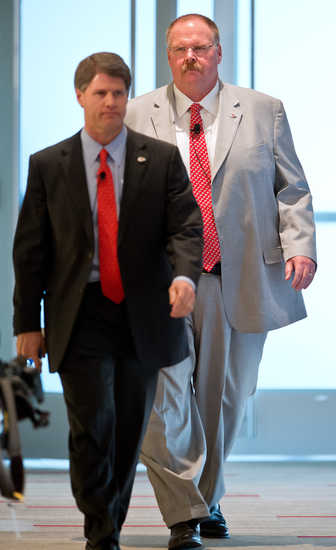
I’m startin’ to get pissed off…It’s that Andy Reid thing. Not his coaching; it’s his sartorial inadequacy.

If you didn’t see The Kansas City Star photo that I ran with yesterday’s blog, check it out. And on the sidelines, he looks worse. When I would catch glimpses of him when Eagles games were on TV, he didn’t cut a very appealing figure with that walrus mustache, ball cap and zip-up jacket.

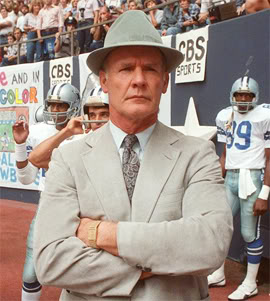
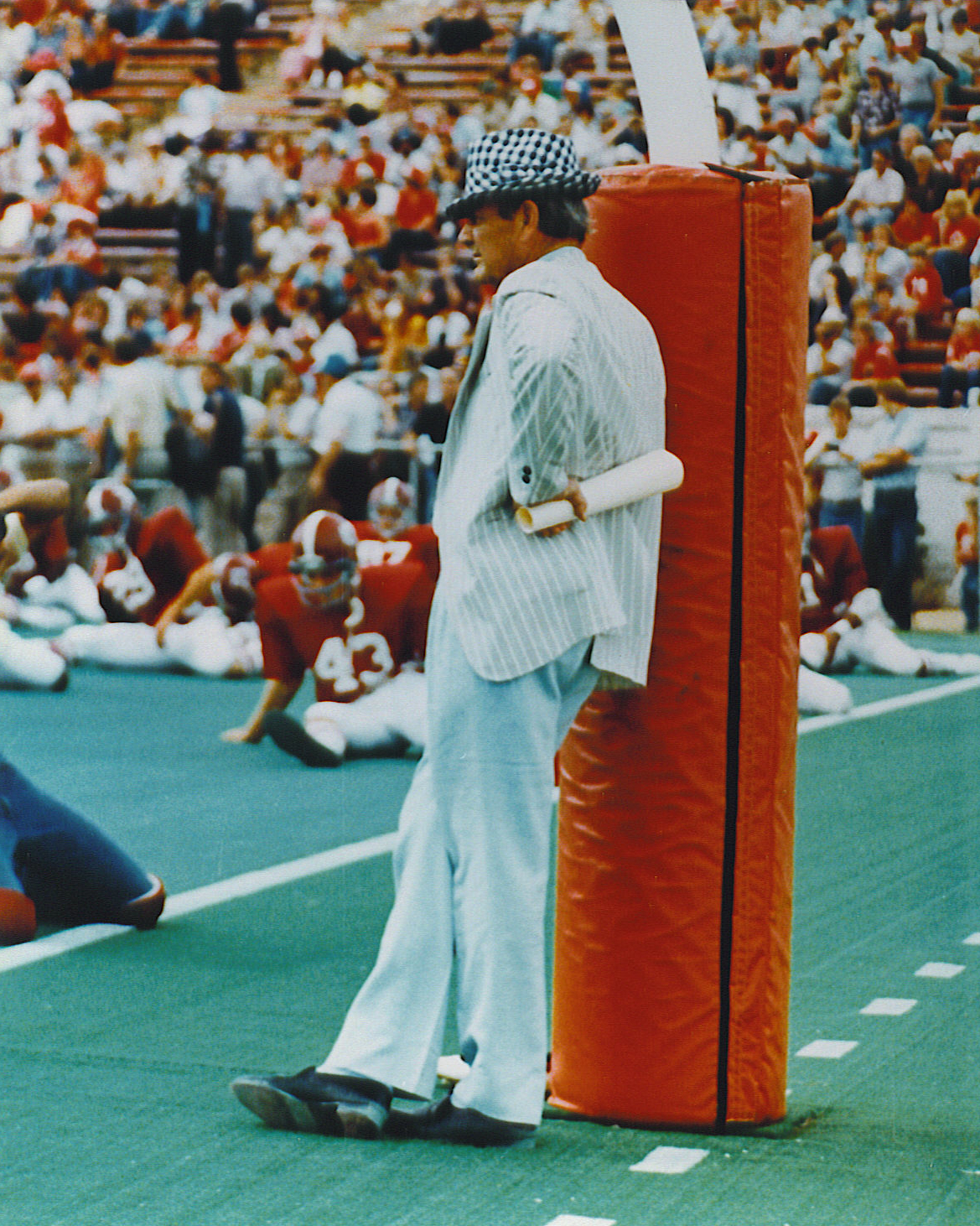
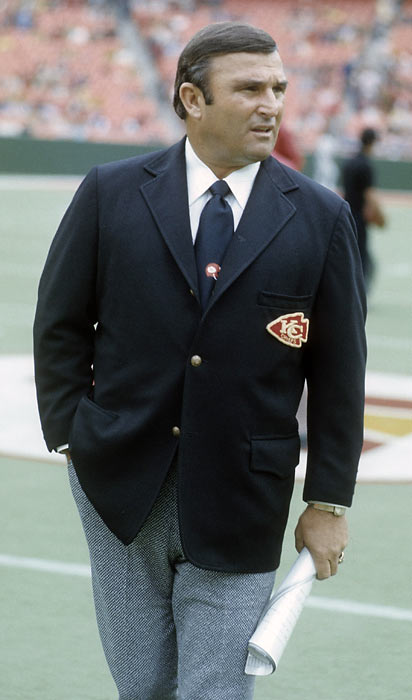
This deplorable situation got me thinking about some football coaches who really dressed well, even impeccably.

Here are the first three that came to mind, plus a throw-in…

TomLandry

Former Cowboys coach Tom Landry…A winning smile is not necessary when you’re this dapper.

paul-bear-bryant

The late, great Paul “Bear” Bryant in his trademark houndstooth hat

hank-stram-chiefs

Who needs a smile with hair like that??? I noticed when looking at these photos that Bear Bryant always had a rolled-up program in his hand. Ah-ha! So that’s where The Mentor got his inspiration.

And for the road…

paterno

If only he had been as attentive to his moral compass as he was to his sweater collection…

Read Full Post »

The last few weeks have been great for newspapers — from the news standpoint, anyway.

From Hillary Clinton’s concussion to the tax deal in Washington to the Chiefs’ lightning-bolt hire of a new coach, it’s been a windfall for us news hounds.

Today, if you’ll indulge me, I’d like to comment on a few of the stories that have caught my attention.

1) Like most Chiefs’ fans, I’m glad that Andy Reid will be coaching the team for the next few years, at least. He seems like a very down-to-earth, honest guy, and he’s got a lot of wins on his resume. But, holy smoke, did you get a load of the guy’s wardrobe? He needs a new tailor…real bad. Just because a guy is fat doesn’t mean he has to look like he’s a fabric salesman’s dream come true…

areid

Kansas City Star photo

2) Once again, the Jesuits have demonstrated that they are the best at educating our youngsters and doing everything possible to mold their students into responsible citizens.

Rockhurst High School’s new drug-testing program, to begin next summer, is bound to intercept and redirect many students who are using recreational drugs, like marijuana. Wisely and correctly, Rockhurst officials are pitching the initiative as a “health and wellness” program. The first time a student gets caught, he will be brought in for counseling; the second time, he could be disciplined and will be put on notice; and the third time…well, he’s out.

Not only does the program look excellent, but the way Rockhurst officials, including Principal Greg Harkness and President Terrence Baum, rolled it out was a thing of beauty. After two years of study and groundwork, Rockhurst officials informed faculty, students, parents and the news media in a matter of a few hours one morning last week. Then, Harkness answered questions from the media all afternoon, and several students were made available to discuss the program on the record and in front of cameras.

Congratulations to Rockhurst on skillfully planning and publicizing this unprecedented program — unprecedented in Kansas City, anyway.

3) On the national front, President Obama has chosen an outstanding person, in my opinion, to head the Defense Department. You’ve got to love it, don’t you, when a guy like Chuck Hagel, who has been in the battlefield, says he views war as the very last resort? The last thing you want in that job is some trigger-happy muscle flexer who wants to crack skulls all over the world.

I predict that the Senate will approve him. Yes, he made a big mistake in 1998 when he described a U.S. ambassador nominee as “openly, aggressively gay.” I’m sure, however, that his views on that subject have changed significantly — just like those of a lot of formerly homophobic folks. As liberal as I am, I have to admit that coming around to a “live-and-let-live” philosophy regarding homosexuality was difficult for me.

4) bloombergIn an open letter in today’s New York Times to Mayor Michael Bloomberg, columnist Joe Nocera praised Bloomberg for wielding the shrillest and most effective voice on gun control. Nocera called on Bloomberg to go to bat for gun control with his energy and his money (net worth $20 billion, says Nocera) after his third and last mayoral term ends in December.

“There is, quite simply, no one else in America who has a better chance of moving the country toward a saner gun policy than you,” Nocera wrote, addressing the mayor. “It is an effort worthy of your talents, and your money.”

5) Let’s end on a head-scratching note…In a story out yesterday, some scientists have concluded that the cause of fingers wrinkling after being in water for some time is a function of evolution. Laboratory tests have confirmed a theory that wrinkly fingers let us get a better grip on wet or submerged objects, acting like a treads on a car tire.

Now, if you’ll excuse me, I have to go bathe my hands and make a run to the Plaza to get as many coins as I can from the Mermaid Fountain.

Read Full Post »

« Newer Posts - Older Posts »