Last week, I mentioned that the late Jim Hale was the last truly high-profile publisher of The Star. (Apologies to Art Brisbane, who entered the publisher’s job with a profile that he had molded during his days as a columnist.)
If you knew Hale, you know he was quite a character. When he retired from The Star in 1992, after 15 years as publisher, he left a lot of friends and a trail of stories behind. One the things that endeared people to Hale was his easy-going, loose manner, if you will. Also, he had an endearing southern drawl that he brought with him from his native east Texas.
Hale wasn’t a bit stuffy, his door was open to everyone, and he always had time to chat, when approached. As his slow gait indicated, he never seemed to be in a hurry. You knew he had everything under control, and he delegated exceptionally well. He appointed good people to upper management jobs, and he mostly stayed out of their way.
I was lucky enough to have established a relationship, of sorts, with Hale. Whenever I felt the need or the urge, I’d go up to his third-floor office and take up with him whatever issue was on my mind. He was always receptive.
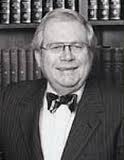 With that, I’d like to share with you a few of my favorite memories of Hale, who died in 2003.
— One or our top editors was Michael (O.J.) Nelson, who recently retired as editor of the Lincoln Journal Star in Lincoln, Neb. O.J. admired Hale so much that he patterned himself after Hale, right down to walking with shoulders hunched forward, his head slightly preceding the rest of his body. It looked odd, because where Hale was kind of dumpy and had a beer gut, O.J. was slender and had no excuse for bad posture.
At any rate, O.J. was a nervous, smothering type of editor who was always worried that he might be exposed as dispensable, so he worked very hard at seeming to be indispensable. On one occasion, there was a big screw-up in the features department, which O.J. headed, and Hale blew his top. He did that occasionally, but it was hard to tell when he was really mad and when he was just blowing smoke for effect.
As I recall, Hale either told O.J. he was fired or that he was going to be fired. That put O.J. into a frenzy. However, executive editor Mike Waller then stepped in — he knew Hale front and backward and was his equal in histrionics — and went into Hale’s office to talk him down. “If you’re going to fire O.J. you’re going to fire me, too,” he told Hale.
With that, Hale became quiet and turned his attention to other matters…And O.J. was able to continue his very successful career at The Star.
— One time when I was City Hall reporter (’85-’95), an editor either sent me to cover a board meeting of the Chamber of Commerce or I went on my own because they were taking up an issue that was on my radar. I walked into the meeting in one of the downtown office buildings and got myself a nice, leather-upholstered chair at the big table. About 20 civic big shots were gathered around, and one was Hale, who was on the board. I gave him a smile and a wave, he reciprocated.
Shortly after the meeting got underway, I notice that a few people were engaged in some whispered conversations with one of the board members, who was the manager at KMBC-TV, Channel 9, I believe.
Pretty soon, the station manager came around and asked me to step outside. In the lobby, he apologized for the interruption but told me that board meetings were closed to the press and that, unfortunately, I’d have to leave. I was taken aback but not totally surprised because I’d never been to a Chamber board meeting and didn’t know the drill.
As I recall, I was still in the elevator lobby when Hale emerged from the meeting and came up to me and said something like, “I’m leaving, too. If the place isn’t good enough for you, it’s not good enough for me, either.”
Of course, I was thrilled that the publisher had backed me up. It had to take some courage to get up and walk out of a meeting with some of the most powerful c.e.o.’s in Kansas City. Later, Hale wrote a letter to the Chamber expressing his chagrin at my ouster. I’ll never forget, too, that in the letter he referred to me as “one of our most competent reporters.”
Again, I appreciated the back-up, but from that point on, I thought that perhaps I wasn’t the hotshot that I envisioned myself. I was just competent.
— Around the same period, as I would return to The Star building at 18th and Grand from City Hall, I saw that our dark-brick building was looking very shabby because the green paint on the big window frames had faded and was peeling. I always took pride in our building and wanted it to look first class, in keeping with the paper’s standing in the community.
I marched up to Hale’s office one day, sat down and said, “Jim, our building looks like hell; the windows need painting.”
He laughed and said he’d see what he could do. It was no small project, of course, because it’s a large, three-story building with probably 100 or more windows, each of which is about six feet tall and three or four feet wide.
Within weeks, work crews were out there scraping and painting, and the building regained its eminent appearance.
A few weeks later, I was chatting with Scott Whiteside, who was our in-house attorney and sort of Haley’s right-hand man. Laughing, Whiteside remarked that I was “the most powerful reporter” at The Star because I had been able to initiate a job, not budgeted, that cost the company thousands of dollars.
— One more quickie. Back in the late 80s, I think it was, we had what would have been the first offer of buyouts. Of course, I was many years from being eligible, but it caught my attention because I heard that our architecture critic (yes, we had one back then), Donald Hoffmann — a brilliant writer and critic — intended to take the buyout, while another, much inferior, arts department writer — also eligible — meant to stay.
Once again I marched into Hale’s office. “If Donald Hoffmann leaves and so-and-so stays,” I said, “it’s a miscarriage of journalism.”
Hale leaned back and laughed and said: “There’s nothing I can do about it, Fitz. The offer is out there for anyone who is eligible, and legally we can’t pick and choose.”
As it came to pass, Hoffmann retired and the other writer stayed on.
I didn’t win that battle, but I dearly wished Hoffmann had stayed. For, to me, that was the day The Star started to go downhill.
Read Full Post »




 JimmyCsays: At the juncture of journalism and daily life in KC
You must be logged in to post a comment.