Feeds:
Posts
Comments

Late last night, I thought New Jersey Gov. Chris Christie’s expected candidacy for the 2016 Republican presidential nomination was cooked.

And yet today, after watching him brilliantly, humbly and authoritatively react to a scandal that threatened to do him in, I think he will not only push through it but also probably use the setback to make himself a smarter and stronger candidate.

Here’s the backdrop:

A story broke yesterday that a few Christie allies, including his deputy chief of staff, had conspired to create huge traffic jams on the George Washington Bridge (between New Jersey and New York) last September for a truly jaw-dropping and diabolical purpose:

To exact vengeance on the Democratic mayor of Fort Lee, NJ, for refusing to support Christie’s re-election last year.

In an almost-imagination-defying political concoction, two Christie allies on the Port Authority of New York and New Jersey, which controls the bridge, arranged with Bridget Anne Kelly, Christie’s deputy chief of staff, to deliberately inconvenience hundreds of thousands of commuters over a period of four days.

Playing “God of the Bridge,” Kelly set the stage for the mayhem with an eight-word email to a friend of the governor who worked at the authority. The email is destined to become the stuff of legend:

“Time for some traffic problems in Fort Lee.”

christie-traffic-jams

Christie, at today’s news conference

It turns out, very probably, that Christie had absolutely nothing to do with the scheme, although many people would argue that his reputation for dishing out retribution to people who cross him had created a get-even culture in his office.

Christie didn’t say much all day yesterday, except to deny previous knowledge of a trail of telling emails and to say he was “misled by a member of my staff.”

Today, though, he took the podium at a morning news conference and delivered what I consider a bravura performance.

“I am embarrassed and humiliated,” he told a roomful of reporters. He said he was “heartbroken” that the key players — friends and a key employee — had “betrayed my trust.”

He said he had fired Kelly and had cut loose his campaign manager, Bill Stepian, who knew about the scheme and had called Fort Lee Mayor Mark Sokolich “an idiot.”

He said he planned to go to Fort Lee later today and personally apologize to Sokolich.

If Christie is to be believed on this — and just because of the direct, firm way he said it, I do — he said he had no reason to try to take vengeance on Sokolich, whom he said he wouldn’t have recognized before seeing on TV last night.

“I never even knew we were pursuing his endorsement,” Christie said. “…Mayor Sokolich was never on my radar screen.”

One of the things that impressed me about Christie and his performance was that he came off as relaxed, at least as relaxed as a person could be under such circumstances. He also appeared humbled and genuine. For example, he said at one point: “I don’t think I’ve gotten to the angry stage yet. But I’m sure I’ll get there.”

After opening remarks of about 15 minutes, he took one question after another — dozens — never rushing his answers and allowing follow-ups. Despite the tension and political stakes, he conducted the news conference as assuredly as if he were conducting a regular staff meeting. Almost invariably, he called on reporters by their first names. At one point, when several reporters began speaking at once, he raised a finger and said something like, “That’s not how we do things.”

A few minutes later, when a reporter began voicing a question while Christie was still answering another one, he said, “Not finished yet, guys.”

But more than tone and manner, Christie earned my respect mainly because he conceded that it was high time for him to take a long, close look at himself and how he does business. His apology, he said, covered not only the inconvenience that commuters had to bear but also “my failure as governor to understand the true nature of this problem sooner than I did.”

If he fixes that problem, then surely he will use this setback to become a smarter politician.

In the same reflective vein, he said he was asking himself “what did I do wrong to have these folks (the people he trusted) think it’s OK to lie to me.”

If he fixes that problem, he will emerge a stronger leader and candidate.

**

Whatever you think of his politics, Christie is a person who many people are drawn to because he is plain spoken, unchoreographed, and, as he said today, the exact opposite of a “focus-group-tested, blow-dried candidate.”

In the wake of John McCain’s trap-door act in 2008 and Mitt Romney’s equivocation in 2012 — and with dull and dangerous contenders like Rand Paul and Ted Cruz looming on the horizon — I’ll take Chris Christie any day for the Republican nomination. I would even be open to voting for him for president…He’ a guy I’d like to take to Oklahoma Joe’s and have a beef brisket sandwich with.
On a cold day, like today, it helps a body to find something to get worked up about — something to get the blood flowing a little faster.

So, after lunching with a friend, I returned home and retrieved the KC Star from the sidewalk.

Within minutes — that’s how long it takes to get through the paper most days — I had found my blood-boil…I mean blood-warming…fodder.

Our good ol’ editorial-page buddy Lewis Diuguid had weighed in with a 617-word, Op-Ed Column that was simply impossible not to read. I tell you, I could not put it down!

lewis

Lewis

Seems that Lewis and his domestic parter Bette recently took a trip to the Mayan ruins. Along the way, Lewis buttonholed a bunch of people to ask what they knew about Kansas City and, if they knew about it, what they thought about it.

I gather that he was surprised at the reaction.

Sample:

“When people asked where we were from I’d proudly say, ‘Kansas City.’ Many responded, ‘Oh, I’ve never been to Kansas.’ “

Hah, hah, hah…ho, ho, ho. Good one, Lewis! Really? Some people outside our area think Kansas City is in Kansas! Well, knock me over with a strand of wheat.

Kansas, Lewis went on to say, “kept sprouting like unwanted sunflowers in conversations.”

(Lewis, buddy, I’m dishin’ out an A-plus for that simile. What felicitous phrasing!)

“People from other countries and the U.S. vacationing in Mexico wanted to know,” Lewis declared, “what one might see and do in Kansas.”

Well, I’ve got to hand it to Lewis…He must have really been on his A-1, sales-pitch game, stirring up acute interest, like he did, in what the heck is going on back in Kansas. Either that, or those vacationers he was running into were pretty damn bored with the Mayan ruins and whatnot.

So, to brighten their vacations, Lewis regaled them with vivid descriptions of the Country Club Plaza, the Negro Leagues Baseball Museum, the American Jazz Museum and Crown Center.

But wouldn’t you know it? Some yo-yo from somewhere responded by saying, “What’s a Crown Center?”

Oh, Lewis! Now there’s a knee-slapper! What’s a Crown Center? I hope you told him it was a crown with the center missing…Or a city center with a giant, rolling roof shaped like a crown. Now that would’ve drawn ’em to KC instead of the Caribbean on their next vacation, huh?

The column was building toward an incredible climax as Lewis recounted his encounter with a young archeologist at the Mayan ruins. (By the way, Lewis, how’d you like those ruins? You didn’t say. Not as impressive as Crown Center, huh?)

Subjected to Lewis’ brutal interviewing techniques — honed over decades of investigative reporting and riveting commentary — the young archeologist allowed as to how he knew Kansas City was in Missouri…In fact, he had even been here!

The archeologist proceeded to ask Bette where she was from, and, according to Lewis, she set the record completely straight. Didn’t pull one punch.

“She said the Bay Area but she now lives in Kansas City.”

Then, of all things — as Lewis tells it — the curious young archeologist asked Better whether she’d gotten used to Kansas City.

Hang on now, readers, I swear we’re closing in on the climax…

Bette proceeded to describe the vicious summer heat and the “merciless amounts of snow” in the winter. (I’m pretty sure Lewis was still talking about Kansas City, although I guess he might have inadvertently spilled over into St. Louis or Chicago.)

Pressed further by the young archeologist — just as dogged an interviewer, apparently, as Lewis — Bette allowed as to how, no, she really hadn’t gotten used to Kansas City.

“And you never will,” says the young archeologist, who, remember, HAS ACTUALLY BEEN HERE.

Then, Lewis delivered the kicker:

“Kansas City travelers have to learn to grin and bear others’ misimpressions of our great town.”

Yep. Yep. You got, it Lewie…grinning and bearing…bearing and grinning…bearing, bearing.

A lot has been going on in KC and elsewhere the last few days, and I thought I’d throw out a few things for your consideration and, perhaps, comments.

The Good:

:: After months of construction work and motorist inconvenience, the refurbishing of I-35 southwest of downtown is over.

I breezed through there at 4:37 p.m. today, on the way home from Patty’s business in North Kansas City, and I was almost giddy. The southbound traffic was dispersed among the four, repaved lanes, and there was no delay whatsoever. What a relief!

Congratulations to the Missouri Department of Transportation for completing a major upgrade.

:: I’m equally as giddy at a KC Star report that Local 42 of the International Association of Fire Fighters has finally approved a city pension-reform plan.

I know Christmas is a week away, but break out the hats and hooters.

The firefighters were the last of the city’s four major employee groups to ratify the plan, which has been in the works for more than two and a half years. Earlier, police officers, Police Department civilian employees and city employees represented by the American Federation of State, County and Municipal Employees approved the plan.

The Star’s Lynn Horsley reported on The Star’s website today that the changes “require city employees and police law enforcement — but not police civilians — to contribute a slightly higher percentage of their income to their retirement. Newly hired city workers will have to work a few years longer, with slightly lower benefits upon retirement.”

jan

Marcason

Time will tell if this plan addresses the city’s $600 million underfunded liability, but in the meantime, congratulations to the citizen advisory committee that worked so hard and patiently on this, and also to City manager Troy Schulte and Fourth District Councilwoman Jan Marcason, who played major roles in the breakthrough. Thank you, everyone involved!

:: I have been in favor of the city’s red-light camera program because I think it has prevented a ton of wrecks at major intersections. But after reading about the program’s legal problems, I’m in favor of dumping it. Under state law, running a red light constitutes a moving violation (naturally) and requires points to be assessed against the driver. Several Missouri cities, including Kansas City, have been dishing out tickets that do not require points to be assessed, however, as if running a red light is just a major parking violation.

Another problem is that under the red-light programs, people can be cited if they simply own the cars involved in the violations; they don’t necessarily have to be driving the cars. That doesn’t make much sense, does it? Time to go back to the old-fashioned system of officers watching the most problematic intersections, like Southwest Trafficway and 39th Street, and handing out lots of tickets.

Let’s get cracking, traffic division!

:: This from friend and periodic commenter Kaler Bole:

“In 1990, there were 2,262 murders in New York. In 2012, 414 murders. 2013 is on pace for the lowest number of murders in the past five decades. This year, a record 54.3 million tourist visited the city — a 54% increase since 2002. The correlation is obvious: Unprecedented crime reduction equals record-breaking tourism — which means a robust city economy and the safest big city in America. The spike in tourism is no coincidence. The unprecedented crime reduction has been accomplished through the selfless dedication and hard work of the men and women of the NYPD.”

One caveat: Mayor Michael Bloomberg’s controversial and legally questionable “stop and frisk” program, which has contributed significantly to the decrease in crime, is coming to an end under Mayor-elect Bill de Blasio. It will be interesting to see if the downward trend can continue without that program.

The Bad

:: The lead editorial in today’s Kansas City Star hammered the Unified Government of Wyandotte — particularly former Mayor Joe Reardon and City Administrator Dennis Hays — for privately working up a deal in which the Unified Government would buy Community America Ballpark, home to the T-Bones semi-professional baseball team.

joe

Reardon

It is an $8 million, public bailout that would significantly lighten the debt of the private company — Ehlert Development Corp. — which paid a reported $12 million to build the ballpark a decade ago. Ehlert, led by team President Adam Ehlert, would still owe about $4 million, The Star has reported.

The two most troubling things about this deal are, first, that the Unified Government Board of Commissioners wasn’t brought into the loop until the proposed deal was well down the road, and, second, that Reardon, whose second term ended earlier this year, refused to talk to The Star about the deal.

“Reardon did not respond to repeated requests for comment,” The Star’s Mike Hendricks said in a front-page story, which earlier this week laid out the terms of the deal.

That’s always a red flag.

Here’s the worst part, however: The veil of secrecy probably would not have been thrown up or it would have been pierced if The Star was still the powerhouse that it was until the mid-2000s.

When I was bureau chief in KCK, from 1995 to 2004, we had at least three full-time reporters in the Wyandotte-Leavenworth bureau, and we aggressively covered both Wyandotte and Leavenworth counties.

Mark Wiebe, a reporter whose hiring I pushed hard for in ’95, knew everything that was going on at City Hall, and he would have sniffed out a deal like the one Hays and Reardon cooked up. (Like me, he’s now out of the business. I retired, and he went back into mental health, where he had been before he came to work for The Star.)

These days, nobody at The Star is assigned to cover the Unified Government on a regular basis. Part-timer Steve Kraske used to jump into it once in a while, and, like I noted, Hendricks wrote the story that appeared earlier this week. Hendricks, a former Metro columnist, has become something of a roving government reporter.

When nobody is covering a major, local government, all kinds of shit can and does happen without the public’s knowledge. It’s a damn shame, but, as fellow blogger Tony Botello (tonyskansascity.com) often points out, the “Dead Tree Media” has lost its stick, at least in many major metropolitan areas.

The Star can still hit hard on select stories; it just can’t cover the metro area like it did in the “good ol’ days.” Which weren’t that long ago.

I don’t understand why The Star and Missouri Gov. Jay Nixon are pussyfooting around on the case of Chris Nicastro, Missouri education commissioner.

Nicastro, who has been education commissioner since July 2009, has twice exhibited her propensity for secretive dealing with individuals and organizations seeking to direct the course of important city and state educational matters.

The disturbing episodes took place within a few weeks of each other — close enough to discredit her in the eyes of many officials, including several state legislators who are screaming for her scalp.

She reports to the Missouri Board of Education, which consists of eight citizens appointed by the governor and confirmed by the Missouri Senate.

Our intrepid governor, Jay Nixon, got way out on the ledge at a news conference Monday and said the state Board of Education should “monitor and evaluate” the concerns raised about Nicastro. Maybe he doesn’t want to be viewed as publicly telling the Board of Education what to do, but he at least could have said that he was concerned.

Today, The Star’s editorial page, which readers look to for clear-spoken direction, came out with an underwhelming, leading editorial titled “Secrecy harms chance to help KC schools.”

Like Nixon, The Star failed to call Nicastro to account. The editorial mentioned “the questionable process” on the study and “behind-the-scenes maneuvers,” but then it lamely segued into the issue of the Kansas City School District’s attempt to gain provisional accreditation.

Let me recap Nicastro’s transgressions.

About two weeks ago, it came to light that Nicastro had conspired with an organization financed by Rex Sinquefield — a St. Louis area resident who has earned the nickname of “the meddling multimillionaire” — to craft ballot language for an initiative petition that would give Missouri voters an opportunity to eliminate teacher tenure.

Then, late last week, Kansas City Star education reporter Joe Robertson reported that emails obtained by The Star revealed “Nicastro’s wish for a statewide district to gather poor-performing schools under new leadership, with an office for innovation and charter school expansion.”

The proposed district would have enveloped the Kansas City School District, which lost its accreditation in 2012 but seemed to be on the verge of gaining provisional accreditation, based on the most recent test scores.

The emails also detailed a hurried and wired bidding process that steered a $385,000, privately funded contract to an Indianapolis firm to develop a plan for overhauling the Kansas City district’s failing schools. The Indianapolis firm was selected over three competitors with less costly bids, including one, as Robertson said, “that offered to do the work at a third of the cost” of the selected firm’s bid. On the private study, Nicastro colluded with the Kauffman and Hall Family foundations of Kansas City.

It’s clear to me that Nicastro has lost all credibility and is on the way out. My prediction is she’ll be gone by this time next week.  

The Star and the governor could have insured that result by emphasizing that Nicastro, as education commissioner, had an obligation to be straightforward and transparent in dealing with major, public educational issues.

The headline on today’s KC Star editorial should have said simply: “Nicastro must go.”

And Governor Nixon should have taken a courage pill and said, “I am disturbed and disappointed by reports of Education Commissioner Chris Nicastro’s actions, and I expect the Board of Education to review the situation and report to me by the end of this week.”

When you’ve got a top-ranking public official who has clearly compromised her integrity, it’s time for those who have the ability to hold such officials accountable to do just that.

I just returned from a four-day trip to Illinois, home to my favorite city — Chicago.

Patty and I have seen a lot of Chicago in recent years, what with our 25-year-old daughter Brooks having endured four or five rounds of in-patient treatment for anorexia at a residential facility in Lemont, IL, west of Chicago.

Brooks is on the upswing, and we hope she’ll be back home by February. In the meantime, we’ll keep making that jog east over to either St. Louis or Hannibal and then north to Chicago. (I think my next political campaign will be a push for an interstate between Kansas City and Chicago.)

This trip I made on my own. On Friday and Saturday nights, I stayed with friends in Downers (no apostrophe) Grove, also west of Chicago, but on Sunday night I went into the big city. Driving in the snow, it took me more than an hour and a half to traverse the 25 miles miles to downtown. I arrived a few minutes before curtain time for an excellent play called “Tribes” at the Steppenwolf Theatre on Halsted Street.

I spent the night at the Days Inn on the Near North Side, and on Monday I went to the Chicago Art Institute to see the museum’s fabulous collections of Impressionist paintings.

I thought about attending the Monday night football game between the Bears and the Cowboys but bowed out when I learned the temperature was going to be in the single digits.

The weather wasn’t too bad Monday morning and early afternoon, but about 2 p.m. an angry and frigid south wind started blowing. It came up while I was enjoying a deep-dish, sausage and mushroom pizza at Pizano’s on Madison Street. After lunch, I bucked that south wind and walked as fast as I could to where my car was parked, got on I-55 and headed out of town.

I spent Monday night in Springfield, where I’d never been before, and explored some of the Lincoln haunts before returning to Kansas City.

You know the saying, of course, “A picture is worth 1,000 words.” Well, I’ve written about 350 words, and I’m going to let the following photos take care of the remaining 650…

P1030164

On Sunday morning, a skater and his dog played one-on-one ice hockey in Downers Grove.

P1030176

What better time to rake the leaves? (Sunday, Downers Grove)

P1030191

Same stuff (snow), different city (Chicago), Monday morning

P1030181

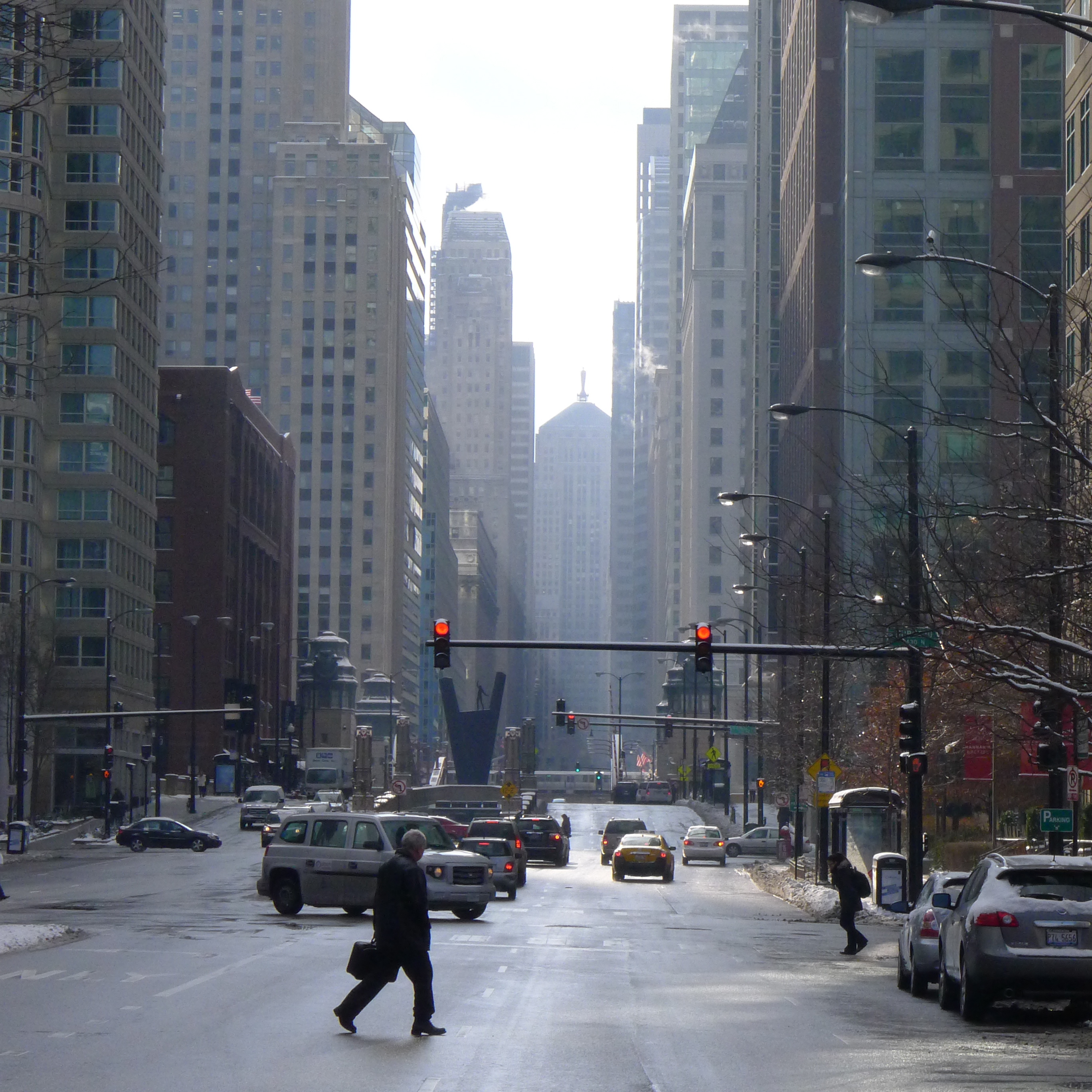
Street scene, Near North Side

P1030196

LaSalle Boulevard…That’s the Chicago Board of Trade building dead ahead.

P1030212

Michigan Avenue, near Millennium Park

P1030226

Skater: McCormick Tribune Plaza

P1030237

Bucking the frigid south wind Monday afternoon…Time to get out of town!

P1030248

The Old State Capitol in Springfield, built between 1837 and 1840. It was here that Abraham Lincoln served his last term as a state representative in 1840 and 1841. The building is distinguished by the locally quarried, yellow “Sugar Creek” limestone used to make its walls.

P1030258

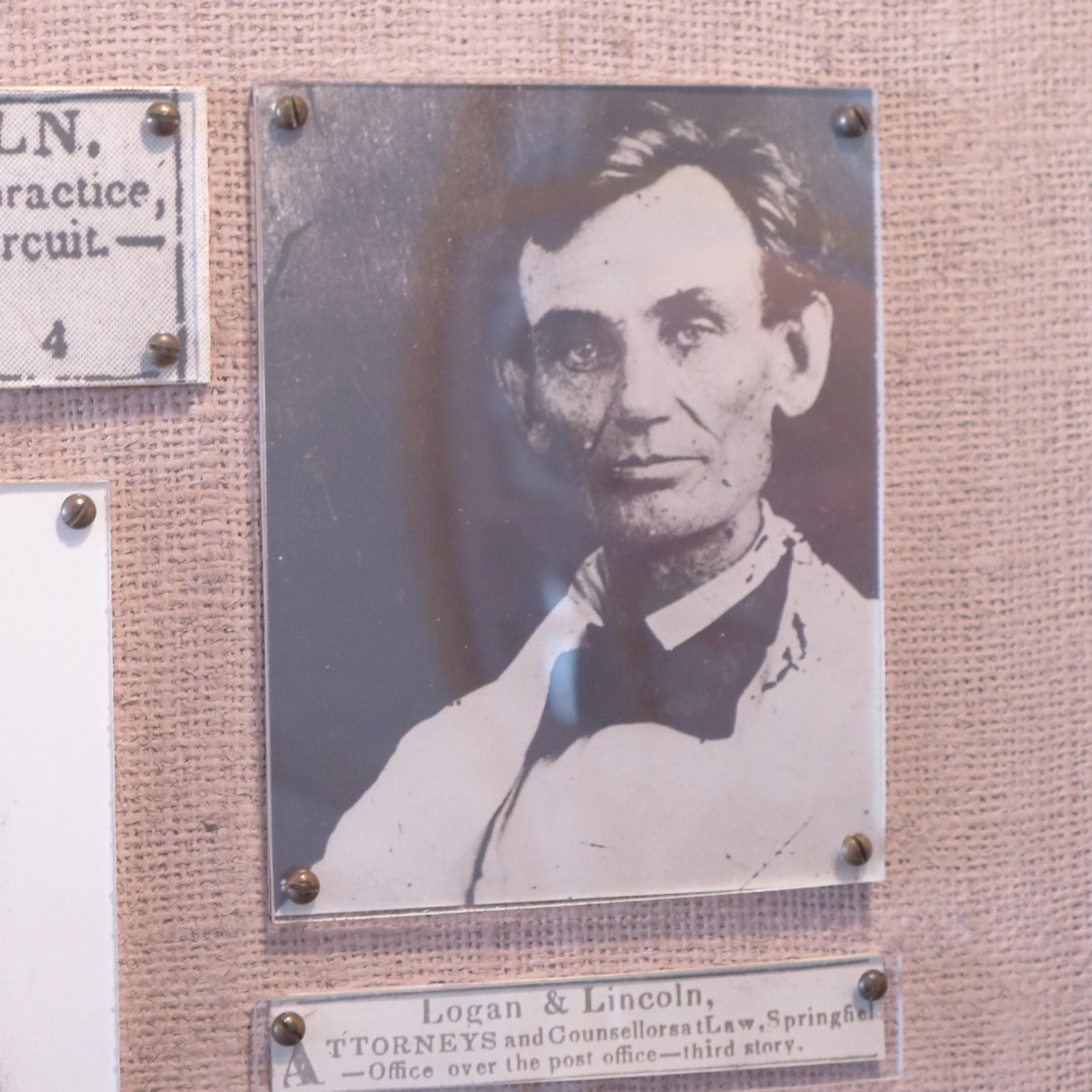
The building that housed Lincoln’s law office. It’s across the street from the Old State Capitol. Lincoln had a very successful practice.

P1030264

One of Lincoln’s first law partners was Stephen T. Logan…Thus, “Logan & Lincoln.” He later practiced with William H. (Billy) Herndon, who wrote a book about their time together.

I’m late to the game on this, but I want to congratulate The Star for changing its policy regarding online comments.

Several months ago, The Star adopted a policy requiring every commenter to have a Facebook account. That meant commenters would be identified by first and last names and, in most cases, a work affiliation would be listed.

I don’t think I’ve ever commented on a KC Star story online, so I didn’t pay much attention, but I was aware, of course, of the history of venomous and profane comments posted by hundreds or thousands of trolls out there. Maybe that’s why I never paid much attention to the comments and never bothered to comment myself.

So, with the change, I simply went on not paying attention…until today. I’m in Chicago, visiting our daughter Brooks, and I had to read the Kansas City news online instead of in print. I was keenly interested in the story about the Yankees signing former Kansas City outfielder and start hitter Carlos Beltran, whom the Royals had targeted for signing this year.

A little background…I didn’t like the idea of the Royals signing Beltran, mainly because he just doesn’t seem like a good fit for what seems to me to be a remarkably unselfish group of baseball players. 

The Royals have, in my opinion, a very rate chemistry and camaraderie. I love watching them chat and exchange ideas in the dugout, congratulate each other when things go well and give each other an encouraging tap with the glove when things go bad. I don’t know a lot about Beltran’s personality, and maybe my instinct is wrong, but it just seemed to me like he could be an albatross.

Where the Royals are a bunch of blue-collar workers, Beltran strikes me as something of a privileged player with a big reputation…despite the fact that a few years ago he struck out looking for the Mets to end a decisive playoff  game. Nothing more ignominious — and even cowardly, at least in the baseball contest  — than being called out on the final pitch of a huge game. 

Anyway, I not only read the story, which was posted yesterday, but I read all 26 posted comments.

The tone and caliber of the comments was not only impressive but, in fact, inspiring to me — real people with real names expressing thoughtful ideas. 

Take this, for example, from a commenter named Gary Brennan, owner of The Brennan Group Real Estate LLC at Re/Max:

Glad to see CB not sign with KC. He’s been the ultimate selfish player since he first got to the big leagues. KC bought him his first house, he refused to take a rehab assignment in the minors after injury and the list goes on and on. While he has great production, he wouldn’t have fit in with the core group of players that make up this roster.

Yes, Brennan happened to echo my feelings, but, still, he made an insightful comment and backed it up with evidence.

Here’s another one:

Playing for the Yankees also helps Beltran’s Hall of Fame case with the chance to have a much better offensive and defensive year with New York’s right field. Carlos remembers the K and knows that he’s an old man.
 
That from a guy named Jim Fetterolf, who has earned designation as a “top commenter” — and because of that, apparently doesn’t have to list an affiliation. (I have no idea what it takes to attain the rank of “top commenter;” I guess it’s like getting your Eagle Scout badge.)
 
The closest thing to an argument was between Fetterolf and Brian Orloff, whose affiliation is Kansas State University. 
 
After Fetterolf suggested that the Royals now target Shin-Soo Choo, a much-coveted free agent who played for the Cincinnati Reds in 2012 and 2013, Orloff came back with: “I have some stocks I’d like you to take a look at.”
 
All in good fun and good taste — the kind of give and take that makes a serious reader want to keep on reading.
 
Kudos, then, to The Star for successfully transforming the comments section from a huge negative to a huge positive. Despite its falling fortunes, The Star still does a lot of things right, and this change shows that upper management continues to take steps to insure that The Star remains the most credible, responsible and authoritative news operation in our region.


More and more, Kyle Van Winkle’s death outside Arrowhead Stadium Sunday afternoon is looking like a terrible, easily avoidable tragedy.

Here are the sad, basic facts of the incident, as I have come to understand them from various reports.

Three or four people began whaling away at Van Winkle after he mistakenly got into the wrong vehicle.

kyle

Kyle Van Winkle

How do we know it was a mistake? Well, he had arrived at the stadium in a vehicle similar to the one that he got into about 5:20 p.m.

When the punching stopped, Van Winkle, a 30-year-old college graduate who worked at a credit union, was lying unconscious against a parked bus.

A Fox 4 reporter spoke with a woman who said she checked Van Winkle’s pulse and found it strong, at first. A few minutes later, however, after someone yelled that Van Winkle was turning blue, she started performing CPR but could not resuscitate him. Van Winkle, she said, did not throw one punch.

She also said the owner of the Jeep tried to leave the scene before police could question him.

**

That brings us to why – why in the world – this case of an ordinary guy stumbling into the wrong car ended up as a homicide.

The first point that needs to be made is that all the adults involved, including Van Winkle, a Smithville resident, probably were drunk.

Tailgating revolves around drinking. The tailgaters start up in the morning and charge right through the afternoon. Too bad this was a 3:25 p.m. game because the drinkers had three hours more than usual (when games start at noon) to get wound up. If it had been a noon game, Van Winkle probably would have been breathing air and pumping blood right now.

Have you watched those assholes in the parking lot? Yes, I’m talking about all of them – all who set up their shit, start campfires and start knocking back the beers. It’s ridiculous.

Don’t they have anything else to do with their Sunday mornings? What’s the matter with leaving for the game an hour before kickoff, drinking a couple of beers at the game, and going home?

Thanks a lot, Lamar Hunt, for bringing this nasty broth to full boil in Kansas City.

But the drinking is just part of the problem. The other part is that most of those drunks come with their warpaint on – figuratively.

Pro football offers up some beautiful, breathtaking, athletic feats. But at its core it’s about violence – the crashing of helmets, the twisting of limbs and the occasional grabbing of testicles.

Is it any wonder, then, that many fans arriving for the game are in a muscular frame of mind when they arrive? In the parking lots and inside the stadium, the testosterone is flowing, and more than a few women are calling for the Chiefs to yank some scalps out from under the opposing players’ helmets.

Back to Sunday, then. As it is every game day, the environment was ripe for a rush to judgment that Van Winkle was a no-good burglar whose “crime” needed to be dealt with summarily.

How do you think the same incident might have unfolded in the parking lot at Oak Park Mall?

Here’s my guess: The owner of the Jeep, seeing someone in his vehicle, would have lurked back at a safe distance to assess the situation. He probably would have pulled out his cell phone and called 911. He might have looked for security. He might have gone back into a store to have someone call security.

Would he have gathered up three other guys nearby and proceeded to pull they guy out of the car and thrash the shit out of him? In all likelihood, no.

But that’s what we’ve got with pro football these days: players suffering concussions and way too many fans letting their primal emotions run away with them.

**

I guess you want to know if I’m a Chiefs fan. Well, I have been, but for the reasons stated above, my interest has diminished significantly the last couple of years. I haven’t been to a game this year, and, after Sunday’s tragedy, I’m not planning to go back ever again.

I guess you want to know, too, if I’ve ever tailgated at a Chiefs game. No.

I have tailgated at a couple of University of Missouri games — but on fraternity-house grounds, where most people know one another. If somebody happened to get into the wrong car there, he’d just get laughed at, not pummeled to death.

I hate to sound like a curmudgeon the day after Thanksgiving and on the “busiest shopping day of the year,” but will somebody please tell me why — why in the hell — the people who produce the Plaza Lighting Ceremony felt it necessary to add fireworks?

At first (I don’t remember or know when the “new tradition” started), I considered it a mere nuisance — something you could turn your back on and pretty much ignore as you returned to your car among the throngs of people milling about or heading out.

But now — maybe because I’m older and more prone to episodes of nostalgia — the fireworks has come to grate on me. I’ve come to regard it as a significant distraction — a definite detraction — from what otherwise is a most singular and soul-moving event.

We couldn’t make last night’s ceremony because we had invitations to two other gatherings after returning from Lee’s Summit, where we enjoyed the Thanksgiving meal with relatives. But we have been to the ceremony dozens of times, usually watching from atop the Wornall hill, which affords a great view and a speedy, easy exit.

Like millions of others over the years, I have waited with fixed gaze, trying not to blink, for the magic moment when the lights flash on. Like everyone else, I have bathed in that soft, satisfying feeling that all is right with the world and another happy holiday season has officially begun.

But the fireworks…those damned fireworks! Juxtaposed with the Plaza Lighting Ceremony, fireworks are downright pedestrian. I have no idea why the event planners decided to inject ka-booms and ka-crackles into the quiet beauty that follows the flipping of the switch, but, to me, it’s as incongruous as ketchup on the turkey and dressing.

Long ago, fireworks became all too commonplace and over-used. Now, they are a staple at Friday evening Royals’ games and dozens of other events.

In my hometown of Louisville, Ky., a gargantuan fireworks display called “Thunder over Louisville” (mercifully, I’ve never been to it) has become the lead event of the week-long Kentucky Derby Festival.

The Derby itself, of course, is another singular, thrilling tradition. For me, a native Kentuckian, it even surpasses the Plaza lights.

At least in Louisville, however, they haven’t started igniting fireworks immediately after the Derby runners cross the finish line!

fireworks

KC Star photo by freelance photographer Brian Davidson

Because we didn’t go to the ceremony last night, I was looking forward to seeing the front-page, Plaza lights photo that you can always count on from The Kansas City Star.

To my chagrin and utter disappointment, the photo, by a freelancer named Brian Davidson, featured fireworks erupting over the Ward Parkway tower at the foot of Wornall Road.

I couldn’t even enjoy the lights photographically. Fireworks have now bastardized even the journalistic portrayal of the event.

After studying the membership of the Police Governance Review Commission and the breakdown of Monday evening’s vote to keep KCPD under state control, it appears to me that the deck was tilted against local control.

The vote to retain state control was an achingly close 13 to 12, with four of the 29 members failing to attend the meeting.

At least seven of the original 30 members of the commission have or had some connection with the Police Department. And guess what? All seven voted to retain state control.

The seven were Jim Pruetting, traffic division commander for the PD; Bailus Tate and Tim McInerney, former police board chairmen; Brad Lemon, executive vice president of the Fraternal Order of Police; Hyajin Bushey and Justin Kobalt, police officers; and Sean McCauley, FOP legal counsel.

Can’t blame them, I guess, because they have vested interests or they have benefitted in some way from their PD connections.

Two others who voted to retain state control were former Missouri state representatives Tim Flook and Beth Low. I’m sure that as former legislators, they would like to see the PD stay under the state’s thumb. Why would the state want to give up control of a plumb like KCPD?

City Councilman John Sharp cast a very disappointing vote, in my view, in favor of retaining state control. Sharp is in his fourth term on the City Council, and he should know by now that state control is outdated and impractical.

**

There are four governance commission members I’d like to call out for extra special consideration, however. They are the ones who failed to show up for the meeting and did not arrange participation by conference call.

Conference-call participation in meetings is routine these days. I was on a church board a couple of years ago when we demanded the pastor’s resignation, and one board member participated by phone from out of state.

About the only excuses I would accept for not participating in Monday’s meeting would be if the missing members were either unconscious or out of the country.

Here, then, are your hall-of-shame no-show/no-voters:

Angie Stanland, a vice president at Cerner.

Eddie Gladbach, a vice president at AMC Entertainment.

Emanuel Cleaver III, senior pastor at St. James United Methodist Church. (He’s the son of U.S. Rep. and former KC Mayor Emanuel Cleaver.)

Jerry Jones, an organizer with Communities Creating Opportunities.

As I said yesterday, the City Council can overturn the committee’s recommendation, but, still, it would take approval of the Missouri General Assembly to wrest the Police Department from the state’s grip.

A majority of the General Assembly won’t even vote to expand Medicaid for the poorest among us…How could we ever expect a majority to agree to yield control of the biggest police department in the state?

It probably would take a statewide initiative petition, followed by a statewide vote. And statewide initiative petitions are about the hardest thing in politics to pull off.

The requirement is that in at least six of the state’s nine congressional districts, petitioners must collect signatures equal to 5% of the number of people who voted in the most recent gubernatorial election.

I can’t imagine anyone undertaking a job of that magnitude just to change the Police Department status quo.

But I sure wish the Governance Review Commission would have at least gotten the ball rolling in the right direction.

**

Here is the breakdown for the 25 members who voted…

For state control: Bailus Tate, Beth Low, Brad Lemon, Charles Meyers, Erika Brice, Hyajin Bushey, Jim Pruetting, John Sharp, Justin Kobalt, Pat McInerney, Sandy Skaggs, Sean McCauley and Tim Flook.

For local control: Barrett Hatches, Carol Grimaldi, Cici Rojas, Duke Dujavoich, Ed Ford, Gene Morgan, Gwen Grant, Kay Barnes, Melba Curls, Ken Novak, Sandra Aust and Sulaiman Z. Salaam.


Often, I wonder where the blue is in these “blue-ribbon committees” that make recommendations on various aspects of local governments.

I refer specifically to two Kansas City committees — whose members were appointed by Mayor Sly James — that recently submitted recommendations to the City Council on different subjects.

They were the Police Governance Committee and the City Charter Review Commission.

Let’s take them one a take them separately…

Police Governance Committee

On a 13-12 vote, the governance committee recommended to the City Council that the Kansas City Police Department stay under state control, instead of coming under the mayor and council.

State control — where the governor names several commissioners, who, along with the mayor, comprise the Board of Police Commissioners — is a vestige of the days of crooked government under the Pendergast regime.

pabstHey, commission members, Mr. Pendergast has been dead for almost 70 years! Isn’t it about time to turn the car keys over to the adults at City Hall?

St. Louis was in the same state, so to speak, until Missouri voters last year approved a change to local control.

Kansas City now has the distinction of being the only city in the state where the governor has more power over a local police department than the locally elected mayor and city council.

How can this be?

Darryl Forte seems to be a good police chief, but shouldn’t the chief be hired and fired by the mayor and council, not an appointed board controlled by the governor?

As long as we have good chiefs, the damage should be minimal, but God forbid if we got a chief who flatly refused to cooperate with the mayor and council. It’s a recipe for potential chaos.

About that vote last night…Dave Helling’s front-page story in today’s Kansas City Star said that five commission members were absent. An editorial posted on the kansascity.com website today said four members did not vote. And in an email tonight, Yael Abouhalkah of The Star told me the city today corrected the record, saying four of 29 potential voters were absent.

Hard to fathom, isn’t it? You’ve got an issue that’s decided by one vote, and four members miss the meeting?

I’ve got a call in to Jason Hodges in James’ office to try to find out who was on the committee (see comments), how the vote broke down and who was absent.

God knows you can’t get that kind of important detail from The Star. It dishes out the bare minimum on its government coverage. (As far as I can tell, The Star never published the names of the members of either the governance or charter review committees.)

The tattered-ribb…I mean blue-ribbon…committee does not have the last word on this. The City Council could vote to seek local control. But that wouldn’t end the matter: The Missouri General Assembly would make the call, short of a statewide initiative petition, which isn’t likely.

That means a bunch of rural legislators who have no use for Kansas City and St. Louis — and generally want to keep the cities under their thumbs as much as possible — would have the final say.

I think I’m gonna cry.

**

Kansas City Charter Review Commission

This commission, appointed by Mayor James, last week recommended that the City Council should have 12 people elected solely in districts, instead of the current system of six council members elected in districts and six elected city-wide.

The recommendation to change is utter balderdash: Only the mayor, the 13th member of the council, would be truly focused on the good of the entire city. Every other member would be going around — heads down, blinders on — trying to pick up crumbs of pie, instead of making sure the pie was baked properly and that it would appeal to a broad majority.

The charter panel also made two other recommendations:

1) Give the mayor the power to fire the city manager without needing the concurrence of six of the 12 other council members.

2) Move the city’s election dates from February and March to April and June. (The primary election would come first and then the general election.)

Both of those recommendations make sense. How or why a commission majority came up with the 12-districts plan is beyond me.

Fortunately, those recommendations also will go to the City Council, which will decide which, if any, recommendations to put on an election ballot.

I urge you to call or email your council members (the one in-district and the one elected at large) and tell them to drop the notion of changing the City Council make-up.

There is nothing to be gained from a chopped-up, hydra-headed council.