Feeds:
Posts
Comments

Being a news-business junkie, I was very surprised at a business-front story in today’s New York Times announcing that Janet L. Robinson, chief executive of The Times the last seven years, was “retiring.”

Robinson, who will long be remembered as the person who oversaw The Times’ conversion from a regional to national newspaper in the 1990s, didn’t seem like a candidate for retirement.

She is only 61, and there had never been any talk of a succession plan, as far as I know. Also, her “retirement” and its imminence — effective in two weeks — caught nearly everyone, even Times employees, by surprise.

It wasn’t until the ninth and tenth paragraphs that the veil of puzzlement was lifted.

“Last Friday, Mr. Sulzberger called a meeting with Ms. Robinson on the 15th floor of the company’s Manhattan headquarters. He raised the issue of installing a different type of leadership at the company, according to people familiar with the meeting who declined to be identified discussing confidential company business.

“Both Ms. Robinson and Mr. Sulzberger declined to comment.”

Mr. Sulzberger is Arthur Sulzberger Jr., chairman of The New York Times Co. and Times’ publisher.

So, Sulzberger fired Robinson; it’s that simple.

Today, the Internet is full of speculation about why she was let go.

The Wall Street Journal, a competitor of The Times, said:

“The company’s struggles during the worst of the (newspaper industry) downturn had prompted some members of the Sulzberger family to question whether Ms. Robinson was the right person to guide the company in a digital world, according to people briefed on the family’s thinking.”

Adam Clark Estes of The Atlantic Wire (part of The Atlantic magazine) said The Times “needs a technologist” instead of a chief executive steeped in print journalism.

“You’d be hard pressed to find a media pundit who wouldn’t agree that the Grey Lady needs a kick in the pants from someone who understands technology,” Estes wrote.

Still, as The Washington Post (with Bloomberg) reported on its website, The Times, under Robinson, has had an excellent roll-out of its online pay wall.

The Post said: “In March, the company began charging users for full online access to the paper’s content. By the end of September, it had 324,000 paying digital subscribers, bringing Times’ combined paper and online subscribers to 1.2 million. Digital advertising now makes up 14 percent of total revenue, up from 8 percent in 2006.”

Those are impressive numbers, and many media analysts think The Times set up a very smart pay-wall system: People who go to the site (NYT.com) can read 20 articles a month without paying. After that, they have the option of buying one of three digital news packages.

The “first-20-free” system is intended, The Times has said, “to draw in subscription revenue from the most loyal readers while not driving away the casual visitors who make up the vast majority of the site’s traffic.”

Despite the many achievements in Robinson’s portfolio, the main negative factors — the ones that probably most affected “the family’s thinking” — were significant drop-offs in advertising and circulation in recent years.

As a Women’s Wear Daily web story said, “For the first time in its history, the Times had to cut from its newsroom, which resulted in more than 200 job losses in the last three years. Additionally, the Times had to eliminate sections in the paper…close a printing press, take out a mortgage on its new skyscraper and take an onerous loan from Mexican billionaire Carlos Slim.”

The fortunes of virtually every major U.S. daily also fell off a ledge, however, so it’s hard to see how Robinson could have been held responsible.

Who knows? Whatever the case, she had a great run at The Times; hers was an exceptional career. She started at The Times in 1983 and worked her way up the business and advertising side until reaching the top, or at least very near the top.

And here are a couple of things about her that warm my liberal-arts heart: Before joining The Times, she was a public school teacher in Newport, Rhode Island, and Somerset, Massachusetts.

Furthermore, she received a B.A. degree in English from Salve Regina College, Newport, RI, where she graduated cum laude in 1972.

I tell you, it’s hard to top those English majors.

I don’t know if it strikes you this way, but it seems to me there’s an awful lot of high-level lyin’ going on these days.

Some of the stuff I’ve been reading in the papers and online seems blatantly false.

Consider these examples:

Jon S. Corzine, former MF Global chief executive, on whether he authorized the use of customer funds to beef up finances in another division of the company, a major global financial derivatives broker before going bankrupt.

“I never gave any instructions to misuse customer money, never intended to give any instructions or authority to misuse customer funds, and I find it very hard to understand how anyone could misconstrue what I’ve said as a way to misuse customer money.”

***

Joseph Amendola, former assistant Penn State football coach Jerry Sandusky’s attorney, describing his client’s waiver of a preliminary hearing as a tactical measure, not an indicator that his client might enter into a plea agreement.

“We’re ready to defend, we’ve always been ready to defend…Today’s waiver has nothing to do with conceding anything. There have been no plea negotiations. There will be no plea negotiations. This is a fight to the death.”

***

James Murdoch, News Corp. executive, on whether he knew about widespread cell-phone hacking at his company’s former News of the World newspaper.

“Any suspicion of wider spread wrongdoing, none of that was mentioned to me.”

…And after being asked about an e-mail, which he responded to, that referenced widespread phone hacking at the paper.

“I did not read the full e-mail chain.”

***

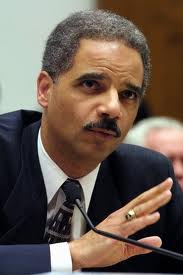
Attorney General Eric Holder on whether he or other higher-ups at the Justice Department knew about the government’s “Fast and Furious” investigation into an Arizona-based gun-trafficking network. (Investigators ended up losing track of hundreds of weapons. Many probably reached Mexico, and two were found near the scene where a Border Patrol agent, Brian Terry, was killed last December.)

“The notion that somehow or other this thing reaches into the upper levels of the Justice Department is something that. … I don’t think is supported by the facts…It’s kind of something I think certain members of Congress would like to see, the notion that somehow or other high-level people in the department were involved. As I said, I don’t think that is going to be shown to be the case — which doesn’t mean that the mistakes were not serious.”

***

Here’s a late addition to our Parade of Prevaricators…

Marine Cpl. Dakota Meyer, who recently became the 296th Marine to earn the Medal of Honor for bravery in action in Afghanistan. In a big battle, Meyer claimed to have saved the lives of 13 U.S. service members, leave his vehicle to rescue 24 Afghans and lead a final push to retrieve four dead Americans.

McClatchy correspondent Jonathan S. Landay, who was embedded with Meyer’s unit, set the record straight in a story that ran on the front page of today’s Kansas City Star. According to Landay, Meyer was, indeed, deserving of the Medal of Honor, but he greatly embellished his heroism.

***

I’m not sure any of these guys deserve to be wished a Merry Christmas.

By now, many of you know that I have a keen eye for unusual corrections in newspapers.

That’s mostly because, as a reporter for 25 years and and editor for almost 12, I lived in fear of winding up on the correction page. (It happened more often than I care to admit.)

Occasionally, I would wake up in the night and either fear or realize that I had made a mistake in a story and that it was too late to correct it. Sometimes, before going to bed, I would call the copy desk and make sure that my mind was not playing tricks on me and that I had written something the way I remembered having written it.

Then, there was one nightmarish correction — like one I’m going to tell you about — where I had to write a correction to a correction. That night, I’ll never forget, the night city editor said, “Fitz, I bet you’ll be glad to get this one behind you.”

No shit.

But it happens. It evens happens to The New York Times.

A correction that ran in The Times on page A2 yesterday was a doozy. It started out like this:

“An article on Thursday about a push to ban horse-drawn carriage rides in Central Park misstated part of the name of an organization to which an upstate New York veterinarian belongs…”

After correcting the organization’s name, it went on to the more embarrassing mistake: The original story had referred to the carriages as “hansom cabs,” and that, as it turned out, is a misnomer.

As the correction noted, “…the carriages have four wheels, and therefore are not ‘hansom cabs,’ which are two-wheeled. An accompanying picture caption, as well as a subheading in some editions, and a correction in this space on Friday repeated the error about the cabs.”

So, there’s the correction to the correction. But there’s more…

The last line of the correction, in parentheses, went like this:

(A reader pointed out this inaccuracy in a letter published in The Times in 1985, but this is the first correction of numerous such references through the years.)

Think about that…The Times had referred to carriages as hansom cabs “numerous” times over the last 26 years, despite a reader’s best effort to get the paper on the right path in 1985.

Well, at least The Times was big enough to acknowledge a 26-year track record of screw-ups on the same subject.

To its credit, The Times is anal about accuracy, and that’s a good thing, isn’t it?

And one thing I can guarantee you is that Emily B. Hager, who wrote that front-page story, is now an authority on the distinction between horse-draw cabs and carriages.

Now, as I trot off to bed, I’ll leave you with what a hansom cab looks like…

And its cousin, a horse-drawn carriage…

All the hubbub over the drawing of new lines for the six city council districts in Kansas City culminated last Thursday in a debate that I couldn’t tear myself away from.

I wasn’t there, but I watched  a rerun of the legislative meeting on Channel 2, the Kansas City government channel. I’m an old government junkie, you know, having covered the Jackson County Courthouse for seven years (’71 to ’78) and City Hall for 10 (’85 to ’95).

The debate wasn’t compelling because it was heated; it really wasn’t. It was because council members spoke fervently and eloquently about their reasons for wanting to either keep the lines that a citizens advisory committee had drawn up or make minor alterations.

The highlight of the redistricting discussion, which lasted about 30 minutes, was an impassioned speech by Mayor Sly James, who exercised his option to speak last.

The Star’s Lynn Horsley covered the redistricting debate, but, because of space limitations, she wasn’t able to get much of James’ speech in the paper. Before I lay out for you what James said, let’s back up…

In the final days of the redistricting discussion, the biggest issue was whether the former Bannister Mall area should be in the 5th District, where the citizens advisory committee had moved it, or whether it should revert to the 6th District, where it has been all along.

That was one of several significant boundary changes that the advisory committee made as it attempted to equalize population, district to district, based on the 2010 U.S. Census.

Councilman John Sharp, who does his homework and almost always makes a reasoned case for what he favors or opposes, led the charge to bring the Bannister Mall area back into his 6th District. He spoke at length in favor of an amendment that would return the site to his district.

He said that 6th District residents, having suffered through the demise of the mall, had earned the right to see the area redeveloped, if and when a good plan comes along. Then, 6th District residents could take pride in that area once again.

After Sharp and a few other council members had spoken, it was clear that he didn’t have the votes to get the mall moved back to his district, but Sharp has always been good at making a strong case in the face of overwhelming opposition.

After everyone else had had their say, James exercised his right to have the last word, and he was impressive.

Following is his speech, edited for length…

“You know, the real problem here is twofold. No. 1, we wouldn’t even have to be going through this nonsense if we weren’t a segregated city. The Voting Rights Act wouldn’t apply. But none of us are talking about that. This concept that somehow changing a line on a map disenfranchises you from going somewhere, doing something, or (changes) who you are the day before is, in my opinion, total and utter nonsense.

“We have too many people sitting here saying, “My this, my project, my district, my line, my house.”

“Let me say this: This is my city. Everything in it is my city. So I guess I’ll just ask all of my colleagues: Do you love your council district more or your city more? Because if you love your city more, we’ll put this nonsense to bed, stop worrying about all these lines that we’re using to divide us, and we’ll move on.

“Nobody’s life will change because their district lines change. I would be willing to bet you that you can walk into any district in this city and ask the first 50 people you see what district they’re in and 40 of them won’t have a clue…and won’t care.

“This is the reason that we are still struggling to do the things in this city that need to be done…Because we systematically play one district against the other so that nobody gets what they need. We’re talking about 500 people here (moving them from one district to another). If it’s that big of a nothing, then why worry about it? If it doesn’t really change that much, then what’s the big deal about not doing it?

“Why are we spending so much time talking about two parcels of land…Geez, people. The only thing that matters is this city. That is the only thing, and until we start acting like that, we will continue to have these fights and arguments over pieces of property hither, thither and yon.

“I don’t understand it. This has gotten totally off track, totally out of whack…It is time for us to change our attitude and start believing in the entirety of this city. Each and every one of us took an oath to the city, not to our council district…

“If there’s no other discussion, will the clerk please call the roll?”

The clerk did not announce the vote after the roll call, but from what I could hear, it sounded like only Sharp and Councilman Ed Ford voted for the amendment and everyone else voted “No.”

The council then took up the redistricting ordinance itself, and Sharp cast the only “no” vote.

I got to thinking a couple of days ago…

You see, the top blogger in Kansas City took a couple of potshots at the second highest-ranking blogger in town, saying No. 2’s site was sinking fast.

No. 1 used to write for No. 2, so a little “friendly” competition could lie behind the jibing.

Nobody got too bent out of shape over it, though, and I think No. 1 and No. 2 will remain on speaking terms. (I’ve always said blogging is like hand-to-hand combat every day, and you just hope the guy who’s coming at you is armed with only a keyboard.)

Anyways, like I say, that got me thinking.

Specifically, I got to wondering what the top-ranked websites in the U.S. were and where our No. 1 and No. 2 ranked nationwide.

So, I went to Alexa (alexa.com), which bills itself as “The Web Information Company” and “the leading provider of free, global web metrics.”

Here are the Top Ten most popular websites in the country, according to Alexa.

1.   Google
2.   Facebook
3.   YouTube
4.   Yahoo!
5.   Amazon
6.   Wikipedia
7.   eBay
8.   Twitter
9.   Blogspot
10. Craigslist

I think those ratings are a bit outdated, however, because I read on several websites that Facebook, which started up in 2004,  surpassed Google late last year.

The Kansas City Star’s home page, kansascity.com, ranks 1,602 nationwide. Not too shabby.

Then we get down to the slugfest for the top local blogging spot. The area’s No. 1 blogger holds the rank of 53,874, and No. 2 comes in at 67,670. No. 2’s got a ways to go to get to the top, as you can see, but never underestimate a guy who talks really fast and used to be the top-rated columnist at the biggest dead-tree publisher in town.

I know you’re dying to know the identities of No. 1 and No. 2. Well, I’m sorry, but professional jealousy just won’t allow me to do that.

You see, I thought yours truly might be right on those guys’ heels, but when I checked my ranking, I fell off my mother’s couch. (She’s dead but I’ve still got the couch.)

Those bastards at Alexa say they have “no regional data” on me, so I have no idea where I rank nationally.

They do have a worldwide ranking for me, however, and that’s kinda where the shock came in.

My worldwide ranking? 7,764,573. 

So, you see, why would I want to tout Nos. 1 and 2 when I’m little ways behind them?

I remain optimistic, however…I heard that not only No. 2 but also No. 1 is sinking fast!

Pretty soon, I suspect, you’ll be seeing me, the fantastic JimmyC, climbing up, up, up to dizzying heights on the local blogging ladder!

Popular blogger plotting and scheming how to move up the KC blogging ranks

The braggadocio and downright impudence of some political crooks before they are convicted often amazes me.

Take the case of former Illinois Gov. Rod Blagojevich, who was sentenced Wednesday to 14 years in federal prison for his conviction on 18 felony counts of corruption.

As you’ll recall, Blagojevich was charged in April 2009 with, among other things, trying to sell former U.S. Sen. Barack Obama’s seat to the highest bidder after Obama was elected President.

Here’s what Blagojevich, 54, said at the time that U.S. Attorney Patrick Fitzgerald announced the charges.

“I’m saddened and hurt, but I am not surprised by the indictment. I am innocent, I now will fight in the courts to clear my name.”

Yes, he would clear his good name! He’d been slandered, don’t you know, and that could not stand.

A year later, perhaps reflecting how dismissive he was of the charges, he appeared as a contestant on Donald Trump’s “Celebrity Apprentice” TV show.

Then, last year, after a federal jury convicted him of just one count — lying to the FBI — and hung up on 23 other counts, Blagojevich not only turned defiant but goaded Fitzgerald.

“The government threw everything but the kitchen sink at me,” Blagojevich said, “and on every charge but one, they could not prove that I broke any laws except one, a nebulous charge from five years ago.

“We have a prosecutor who has wasted and wanted to spend tens of millions of dollars of taxpayer money to take me away from my family and my home.”

Fitzgerald didn’t take the bait and simply said Blagojevich would be retried…The second trial ended in June with his conviction on 17 additional counts.

That brings us to yesterday, when U.S. District Judge James Zagel sentenced Blagojevich.

Former Illinois Gov. Rod Blagojevich returned a copy of his book, which he had signed for a supporter, after he returned home from his court sentencing Wednesday in Chicago (AP photo)

And what did he say in court, at his sentencing?

“I’ve had plenty of time to reflect on all that’s happened. I’m here convicted of crimes, and I am accepting of it, acknowledge it.”

That prompted Zagel to respond, “It comes late.”

Blagojevich also said:

“I have nobody to blame but myself for my stupidity and actions, words, things that I didn’t that I thought I could do.”

Now, why didn’t Blagojevich temper his comments when he was first charged and again last year after he was convicted on one count?

It goes back to the Achilles’ heel of many a figure in Greek literature — pride, hubris. Blagojevich thought he was above the law; he got a fat head because several million people voted for him and put him in the governor’s office.

He should have read some Greek tragedies; it would have better prepared him for his downfall. Then, again, maybe he did read some Greek tragedies and concluded, “That’ll never happen to me.”

****

You will see below that my lifelong friend Hubartos vanDrehl — the Prince of Paonia, the Mystic of the Mountains — comments on the respective hairdos of Mr. Blagojevich and Mr. Trump. It is only fitting, in my opinion, that I show you a photo of Mr. vanDrehl’s inimitable ‘do…

vanDrehl

If you read my last post, about proposed reforms to the Kansas City, MO, government pension plans, you know that I referred to the pensions that retired firefighters and other city employees get as “lavish.”

That comment prompted a critical comment from a person using the handle “Old Reliable.”

Here’s what O.R. had to say:

“From the last couple of comments, I get the impression you folks seem to know A LOT about the city employee/firefighter pension plans….In order for me to make a more informed decision about who is really getting screwed here, perhaps someone would like to give us some actual details as to these ‘lavish’ pension plans. I have a neighbor who is a recently retired KCMO firefighter and he is far from living high on some fat hog from his retirement…So, do tell, please!”

Thank you, O.R., for pushing me to get the facts. I probably should have done that in the first place!

Thanks to Rick Boersma, director of the city’s retirement systems, I got plenty of information about the firefighters’ pension plan and the plan that covers most other city employees.

Let’s look at provisions of the respective plans…

Firefighters:

:: Are eligible, regardless of age, for full pension benefits after 25 years of service. They become vested — eligible for some pension benefits — after 10 years of service.

:: Receive a pension of up to 80 percent of the average of their two highest years of base pay.

:: Get a health insurance subsidy of $240 a month. (To that fund, the city contributes two percent of firefighter base salaries, and the employees contribute one percent.)

:: Get a 3 percent, annual cost of living increase in their pensions.

Most other city employees…

:: Are eligible for full pension benefits at age 65, or when the sum of their age and years of service equals at least 80 (provided that they have worked at least 10 years). They become vested in the pension plan after five years of service.

:: Get a pension of up to 70 percent of the average of their two highest years of base pay.

:: Get a health insurance subsidy of $200 a month.

:: Get a 3 percent, annual cost of living increase in their pensions.

Either way you go — firefighter or other — it pays handsomely to be a retired Kansas City employee.

There aren’t very many private businesses — and I would suspect not one non-profit operation — where you can retire with 70 to 80 percent of the average of your highest two years of pay…plus a health benefit.

The average firefighter pay is $56,000 a year. Eighty percent of that is $44,800.

…When I retired from The Star in 2006 at age 60, I had 36 years and three months of service. My pension is $891.23 per month, or about $10,700 a year.

Don’t get me wrong; I’m not complaining. I had a great career and knew that I wasn’t going to get rich on my salary and that my pension wasn’t going to be anything to brag about.

I think it’s certainly fair to say, however, that, when compared to mine, a pension of $45,000 a year is, indeed, “lavish.”

What do you think, O.R.?

As many of you probably know, Local 42 of the International Association of Fire Fighters supported former Mayor Mark Funkhouser in his bid for re-election earlier this year.

Within a day or two after Funkhouser finished third in the primary, officials with Local 42 met with Sly James and Mike Burke, who advanced to the general election by finishing first and second respectively in the primary.

In short order, the firefighters endorsed James, who went on to win the general election handily.

With the firefighters, there’s always a price to be paid — usually a big price — for their backing.

In the coming weeks, Kansas Citians will find out just how many pounds of flesh Local 42 president Louie Wright was able to extract from James.

The telling, upcoming issue is pension reform, which will have a massive effect on city finances — one way or the other — for decades to come.

Today, the City Council Finance Committee will consider recommendations from a special Pension System Task Force, which has been meeting for almost a year, trying to devise a plan for moving the city forward on pensions in a fair but responsible way.

Task Force Chairman Herb Kohn, a lawyer with extensive political ties, will discuss the task force’s recommendations with the Finance Committee.

Naturally, Local 42 opposes the key recommended changes because they would reduce the lavish, defined pension system that firefighters — and most other city employees — enjoy.

According to the lead editorial in Monday’s Kansas City Star, task force recommendations include:

:: Increasing the employee contributions rate by a minimum of 1 percent in all four of the city’s pension systems.

:: Eliminating the 3 percent annual cost of living adjustment for many retirees and substituting one that could average 2 percent or less per year.

:: Changing the funding formula so that employees have to work a few more years before they are eligible for full pensions.

The editorial, probably written by Yael Abouhalkah, says the main thing missing is a recommendation to quickly establish a 401(k)-style plan for some workers.

The pension issue essentially will put James and the 12 other council members in the position of choosing between city and citizens’ interests on one hand and union interests on the other.

You can bet that Local 42 has been lobbying the council for weeks and that its officials laid the foundation for this battle early this year, when they decided which candidates to endorse.

You can also bet that the council members, including James, will be squirming in their seats as they try to balance any pledges they made to Local 42 with their fiduciary responsibility to the public.

James — who has had a nice, smooth, seven-month honeymoon — will be the main person on the spot. We will be able to judge by his actions on this issue if he is a mayor for the people or a mayor for the special interests.

My guess is that the task force’s decision not to push quickly for the institution of a 401(k)-style plan at City Hall was the first major concession to Local 42 and the city’s other major union, the American Federation of State, County and Municipal Employees.

Local 42 will be looking for more concessions, and they’ll be wielding the hammer of  past promises against the anvil of future endorsements:

“Vote with us, like you said you would last year…Vote with us or we’ll defeat you the next time you run.”

In its editorial, The Star laid the challenge at James’ feet.

“James and the council need to resist the pressure to protect the current arrangements. The special committee’s recommendations would go a long way to control the cost of taxpayer-financed pensions.”

Sly James…your honeymoon is about to end. The cards are being dealt; we will be watching to see how you play them.

Chicago!

We just returned from Thanksgiving Day weekend in Chicago.

The highlights were being with our friends, Edie and Paul in Downer’s Grove; bringing our daughter Brooks back to Kansas City after a four-month stay there; and visiting the fabulous Art Institute of Chicago.

Here, for your back-to-work-day enjoyment, are some of the visual highlights of our visit.

Paul, Brooks and our son Charlie under "The Bean" at Millennium Park

Aon Center (formerly the Standard Oil Building), center, and other majestic, skyline buildings (Millennium Park is in the foreground.)

The lions that flank the Michigan Avenue entrance to the Art Institute are sporting holiday manes

Paul and Patty (Mrs. JimmyC), inspect an exhibit

Brooks and Edie, across the atrium

If only Rembrandt could see this look

Along Michigan Avenue

Felicitous facade

A dollop of sun

Who is that skulking in the vestibule?

***

Here’s a photo post script, just for Smartman. (See comment below.)


Seventeen months ago, I wrote this about Kansas City International Airport:

“KCI is the dullest, dreariest major airport I’ve ever seen, and it’s horribly inefficient as far as check-in, security and concessions. A move to a single terminal — an inevitability — can’t happen soon enough for me.”

In that blog, I also said, “A new, all-in-one terminal would inject energy into Kansas City, just as construction of the Power & Light District energized downtown.”

Five readers commented on that blog, and each of them defended the existing three-terminal design — which is now nearly 40 years old — because of its efficiency.

Now, if you happened to read Lynn Horsley’s excellent, front-page story about KCI in Sunday’s Kansas City Star, you’ll know that the existing KCI’s days are numbered.

Yes, folks, quaint and cozy Kansas City Insipid Airport is on the way to becoming a trucking or freight terminal and a facility “for businesses needing ample parking and airport access.”

What’s the matter with KCI?

For starters, it’s dull and dark, and its retail and food options are pathetic.

Oh, and did you know that because of its layout, with no central security point and no “spokes” to gate areas, probably hundreds of thousands of dollars a year are wasted on excess security people and other personnel who need to be deployed throughout three different terminals?

But here’s the clincher: In terminal A, only eight of 27 gates are being used. In Terminal C, only 12 of 24 gates are being used. In Terminal B, meanwhile, where Southwest Airlines holds sway, 20 of 24 gates are in use.

As Horsley aptly put it, “Terminals A and C sometimes resemble ghost towns.”

That’s ridiculous. If we want to remain a major-league city in every respect, we must have a modern terminal — one that is not only efficient but hums with activity and sends a signal that you have arrived (or are leaving) a place that holds out the prospect of activity and excitement.

As usual, U.S. Rep. Emanuel Cleaver gets the picture. One role of airports, he told Horsley, is to function as “glamorous ports of entry into a community.”

Mark VanLoh, city aviation director, has a clear view, too. “The situation with the three terminals is getting worse. It’s a mess…It (a new terminal) is going to happen regardless of whether our citizens want it to happen.” He estimates that a new terminal will open within 10 years.

Plans are for the new terminal, which would cost $1 billion to $2 billion, to be located south of the existing airport on city-owned land. It would use the same runways, but the terminal would be four miles closer to people arriving from the south — the direction that the vast majority of airport users come from.

The new terminal would be about 700,000 square feet, compared to the current terminals’ 1.2 million square feet. The reduction, Horsley said, would mean “big savings on utilities, while still accommodating 15 million passengers or more per year.”

And that bulging price tag? No tax increase necessary. “The money…would come from federal aviation dollars, the airlines themselves and taxes and fees paid by airline customers,” The Star’s story said.

The Aviation Department is one of two “enterprise” departments, along with the water and pollution control, that pays for itself through customer fees.

Those among us who are having trouble giving up the “curb-to-gate-is-best” philosophy need to think this through and consider what we want our city to be in the future. Do we want to continue being a destination city, like Denver, St. Louis and Indianapolis, or do we want to be an also-ran, falling farther behind other major cities with newer, first-class airport terminals.

Jerry Orr, the aviation director in Charlotte, NC, where the airport serves nearly 40 million passengers a year, told a visiting contingent from the KC chamber of commerce this fall that with a new terminal Kansas City could get more direct, international flights.

In other words, KCI could actually be an international airport, deserving of its name.