Feeds:
Posts
Comments

On the evening of July 17, 1981, I was in the Kansas City Star newsroom when word came in that a skywalk (later clarified to two skywalks) had collapsed in the lobby of the Hyatt Regency Hotel at Crown Center.

I spent the next several hours taking phone calls from reporters at the scene and fashioning what they gave me into one of at least two front-page stories we had on the disaster the next morning.

Even though I was just four blocks north of the scene of the chaos, I could just as well have been a thousand miles away. I felt completely disconnected. But I had been assigned to a very important job — the editors had enough confidence in me to pull a multifaceted story together — and so I did the best I could.

Looking back, however, I wish that on that night I hadn’t been a reporter but, instead, a citizen who happened to be there and who was fortunate enough to survive. I would like to have been a part of what Councilwoman Jan Marcason described at a memorial service today as “a defining moment in our city.”

If you’re a Kansas Citian, it is impossible to forget that day. One hundred fourteen people killed and more than 200 injured. A simple tea dance. How could it turn into a nightmare? How could a major element of a nearly brand new hotel lobby come crashing down, crushing people gathered underneath?

Everyone — young and old — should carry the memory of the Hyatt Regency skywalks collapse in their hearts for the rest of their lives. It is a powerful connecting point among us, and succeeding generations need to carry the link and the memory forward.

Some of those attending today's Hyatt skywalks memorial ceremony

Toward that end, about 150 people gathered this afternoon under a tent at 22nd and Gillham — all intent on remembering and seeing a lasting memorial built across the street, just east of the deadly scene.

Speaker after speaker, including Marcason, went to the microphone to talk about the importance of a lasting memorial.

John Sullivan, a board member of the Skywalk Memorial Foundation, said, “If we don’t do this now, I can assure you nobody else will do it. This is our job…It’s our moral responsibility to finish this.”

Sullivan’s mother died in the collapse, and he said that when his daughter — his mother’s namesake — was born seven years ago, he determined that a permanent memorial was needed.

The memorial foundation is now well on its way toward reaching its goal: It has a site (the north end of Hospital Hill Park, across from the Hyatt);  a detailed plan and design; and $350,000 of the approximately $800,000 it will take to build and maintain the memorial.

Several doves were released during today's ceremony

The movement for a memorial began five years ago when Frank Freeman, who was himself injured and lost his partner in the collapse, stood outside the Hyatt on the 25th anniversary of the disaster and brandished a sign calling for a memorial.

Now president, founder and director of the memorial foundation, he is convinced that success is well within reach. And next year, on the 31st anniversary of the collapse, he intends to see the completed memorial dedicated.

I, too, am confident it’s going to happen.

Rising to the challenge, The Kansas City Star is perhaps the most galvanizing and influential force behind the movement. This morning’s editorial page featured an editorial headlined “Time is now for tribute.”

“…the disaster…left deep scars in this metropolitan area,” the editorial said. “We have a responsibility 30 years later to mount a sincere effort to pay tribute to all those affected by it.”

Several people wrote notes for a time capsule to be part of the memorial

Even more impressive was a compelling, beautifully crafted front-page story by general assignment reporter Matt Campbell, who artfully interspersed people’s memories and experiences from that night with the story of the push for the memorial.

Accompanying the story was a clear and dramatic, two-panel illustration showing exactly what happened that night. That was the work of Dave Eames, head of The Star’s art department. As a rule, I don’t normally push the paper’s financial interests, but in this case, I urge all of you — if you don’t get the paper — to go out and buy one so you can see this story in its full context. The web doesn’t do it justice. This is one of those days when you need the printed product in your hands.

As a result of today’s story and editorial — and in concert with the powerful tribute at Hospital Hill Park — I believe that money will start pouring in for the memorial. I think Freeman and his Skywalk Memorial Foundation will have the needed $400,000 within weeks. Even executives with the Hyatt corporation, I believe, will come to their senses donate to the memorial.

And next year on July 17, we’ll cry for joy as well as in pain.

Editor’s Note: Kevin Murphy, a former Star reporter, said that a good way people can contribute toward the memorial is by purchasing a new book about the Hyatt disaster, “The Last Dance: The Skywalks Disaster and a City Changed.” Murphy was the book’s chief writer.

The book, published by The Star’s book division, sells for $29.95. Doug Weaver, head of the book division, said that all royalties — the part that normally would go to the author — will go to the memorial foundation. The book is available at The Kansas City Store at Union Station and online at thekansascitystore.com. Also, it should be in local book stores soon.

What a terrible day at The Kansas City Star.

For the editors to have to cut loose a longtime, reliable columnist and employee is crushing. I wholeheartedly believe editor Mike Fannin when he said, “We value Steve’s many years of service to The Star.”

He was talking about Steve Penn, longtime Metro columnist who got the axe Thursday.

It’s even more crushing for Penn; he’s finished as a big-time journalist.

***

First, let me explain why I’m a bit late weighing in on this. I was very busy today, and while I brought the paper in the house this morning, I didn’t open it until late this afternoon. I was out of e-mail contact, too, and when I finally got into it, I had three e-mails about Penn’s firing, including one from the ever-curious Mike Waller, a former Star executive editor, who is now retired and living in South Carolina.

At that point, I grabbed the paper…and my heart just sank.

After reading the story, however, (Page A5), it was abundantly clear that Penn gave the editors no choice: He was guilty of blatant plagiarism.

It was interesting to me, however, that the story didn’t use the “p” word — the last word any writer wants attached to their name. In that regard, the story went easy on Penn, who, I’m almost certain, is The Star’s first and only black Metro-front columnist at The Star.

One of the three e-mails I received about Penn came from a retired Star reporter who chastised The Star for subjecting Penn to “public humiliation” by detailing three specific plagiarism incidents.

However, a current reporter at The Star told me that in a case like this, with a high-profile columnist being let go, it was essential for The Star to lay out the reasons “chapter and verse.”

One reason for taking that route is that Penn almost certainly has a big following in the black community, and if The Star failed to lay out exactly how Penn had screwed up, The Star could have been (and still might be) subjected to the thing that strikes absolute terror into Star management — a black boycott. It happened one other time, way back, and ever since then, The Star has tread ever so lightly when it comes to the treatment of high-profile black people’s public transgressions.

As a prime example, I cite an infamous case involving former Kansas City Mayor Emanuel Cleaver. Less than six months after being elected mayor in 1991, Cleaver took his family to Disney World on city funds, claiming it was a city-related business trip. The Star’s Kevin Murphy and Marty Connolly (both are no longer with the paper) exposed it as a sham. What did Cleaver do? Blamed his secretary!

We (The Star) could have and should have hammered Cleaver so hard that he’d never see the light of another election day. Connolly and Murphy certainly did their part, but the editors watered down the story and played it very low and light on the front page…Editors have many ways to take the air out of a sensitive story, and they really slashed the tire on that one. Murphy and I, City Hall reporters at the time, never felt quite as confident about the paper’s motives and mission after that.

Cleaver, caught red-handed, was essentially let off the hook and went on, of course, to be re-elected in 1995 and later was elected U.S. representative, the post he still holds.

In the Penn case, then, the editors knew they had to be very, very careful to do all they could to avoid upsetting black readers.

In my opinion, The Star didn’t go far enough. It got the chapters right but not the verses.

Here’s my beef: The story included, word for word, two long paragraphs that Penn used in separate columns within the last four months. The story said that, in both cases, the words Penn used were “nearly identical” to the wording of two press releases he had received.

The story failed, however, to include the exact wording from the press releases. I believe the story should have included the press-release wording so that readers could judge for themselves the extent of the plagiarism.

I don’t doubt that it was “nearly identical,” I’d just like to see the variations side by side, or one after the other.

But here’s the saddest part of this, in my opinion: Penn’s journalism career is shot at 53. Oh, he might be able to scrape something up at the Pitch or The Call, but he’ll get nothing at a major metropolitan daily (not that he’d consider leaving Kansas City at this stage, anyway).

To some degree, I can understand how the debacle unfolded, but however it happened, it’s inexcusable.

My understanding comes from watching many a columnist grapple with the twice-weekly (in Penn’s case, I believe) or thrice-weekly deadline. The challenge is to come up with fresh, interesting material time after time, and the deadlines never stop. You finish one column, and it’s time to start thinking about the next one.

That’s one reason I was too much of a coward to ever seek a Metro-front column job; I didn’t want that much pressure. I wanted to write a lot of stories — I was extremely prolific — but I felt a lot more comfortable covering news developments rather than having to start with nothing and build a sand castle two or three times a week…Even with the blog, while I love to write frequently, I’m not under the gun to produce a certain number of posts every week or even entry month; I write when I feel like it and when I have something I think is substantive.

The pressure on columnists, then, is tremendous, and frequently the temptation arises to cut corners, use some readily available material that lands in your lap. Some of you will recall the late Gib Twyman, a sports columnist for The Star back in the 70s and possibly the early 80s. He, too, plagiarized and paid for it with his neck.

I don’t say this to detract from columnists in general, but some, as they get older (like Twyman and Penn) tend to get lazy. They push the deadline and push the deadline, and then they’re up against the wall; it’s 8 p.m., and the column has to be in by 9. What to do? Well, there was that press release about the Duke Ellington family stepping forward to help U.S. military veterans…

***

One day in the newsroom years ago, I was chatting once with Jim Fisher, one of the best reporters and columnists The Star ever had. We were talking about our longevity at the paper and how we expected things to unfold for us. I remember him asking me what my goals were at The Star. I didn’t immediately answer, and he said, “Keep your powder dry?”

I nodded, realizing he had hit it on the head. That’s exactly what I wanted to do; like any reporter or journalist who has been at the game a long, I wanted to make a career in journalism and leave on my own terms.

As time passed, I wasn’t able to keep my powder completely dry, but dry enough, and I was able to hold on for a 37-year career at The Star. I retired five years ago, at 60, on my own terms (although I have my critics out there who get their kicks asserting — always anonymously — that I was forced out).

I’m very sorry that Steve Penn, whom I like a lot and enjoyed working with, couldn’t make a career of it.

He came close, but the dreaded “p” word laid him low.

While waiting for Congress to raise the debt ceiling, Rupert Murdoch to open a Sunday edition of the Sun (replacing his folded News of the World), and Greece to drag the Euro into the abyss…

A few tidbits:

Speaking of Greece, in this week’s edition of The New Yorker, financial writer James Surowiecki lays out one of the major reasons that the country is waiting on a handout from the other countries in the Euro zone.

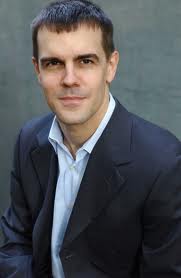
Surowiecki

“According to a remarkable presentation that a member of Greece’s central bank gave last fall,” Surowiecki said, “the gap between what Greek taxpayers owed last year and what they paid was about a third of total tax revenue, roughly the size of the country’s budget deficit.”

The reason? “A culture of tax evasion” afflicts Greece.

“Greece, it seems, has struggled with the first rule of a healthy tax system: enforce the law. People are more likely to be honest if they feel there’s a reasonable chance that dishonesty will be detected and punished. But Greek tax officials were notoriously easy to bribe with a fakelaki (small envelope) of cash. There was little political pressure for tougher enforcement. On the contrary: a recent study showed that enforcement of the tax laws loosened in the months leading up to elections, because incumbents didn’t want to annoy voters and contributors. Even when the system did track down evaders, it was next to impossible to get them to pay up, because the tax courts typically took seven to ten years to resolve a case. As of last February, they had a backlog of three hundred thousand cases.”

Three hundred thousand…

Surowiecki went on to say that the new Greek government is trying hard to change things, but it’s going to be a tough slog. A successful transformation, he said, would require not only a policy shift but a cultural shift.

“Pulling that off would be quite a feat,” he concluded. “But the future of the European Union may depend on it.”

After reading that, I say thank God for the IRS and the willingness of a majority of Americans to pay their fair share of taxes. 

***

Speaking of The News of the World closing (Sunday was its last edition), Alan D. Mutter, a newspaper industry guru in San Francisco, had an interesting blog on July 5 titled “Why newspapers can’t stop the presses.”

“Fifteen years after the commercial debut of the Internet,” Mutter wrote, “publishers on average still depend on print advertising and circulation for 90 percent of their revenues. Stop the presses and newspaper companies are out of business. It’s just that simple.”

Noting that the Gannett newspaper chain laid off 700 employees last month, Mutter said the move was an indication not that the company was preparing to phase out any of its newspapers but that Gannett is “aimed at staying healthy long enough to build truly robust and sustainable digital publishing businesses.”

To succeed in the digital world, Mutter said, “publishers know they have to find bold, new ways to leverage the power of their brands, content-creation capabilities and large local sales teams…

“”Until those new initiatives achieve critical mass, however, print will continue to be the lifeblood of the newspaper business.”

Thin as the weekday paper is, I hope The Star keeps publishing every day for a long time.

***

Continuing with The News of the World saga, I’m sure you’ve read about the outrage over News of the World reporters and private investigators hired by the paper “hacking” into the cellphone voice mailboxes of relatives of terrorist-attack victims, a murdered 13-year-old girl (before her body was found) and others.

You may have wondered, like I did…Just how is that done?

On Thursday, The New York Times had a “sidebar” story explaining the techniques.

Hackers, wrote reporter Ravi Somaiya, “took advantage of default codes — like 1111 or 4444 — that cellphone providers in Britain gave users to retrieve their voice mail. Many customers did not change this standard number to a more secure code, allowing hackers to use it in one of two ways.”

In one method, a reporter would call the intended victim’s phone, engaging the line. Then, a second reporter, or person, would call simultaneously and would be directed to the voice mail system, where he would enter the default code, allowing access to the messages.

In the case of the missing girl, Milly Dowler, reporters or others went so far as to delete some messages when her cellphone mailbox was full to allow more messages, giving the reporters fodder for more stories and, more important, giving her relatives false hope that she was still alive.

Somaiya said that if any of the intended victims had changed their codes,” the hackers would resort to what they called ‘blagging’ — calling cellphone companies, pretending to be authorized users or company insiders, and requesting that the access code be reset to the default.”

Brooks and Murdoch

(As an aside, Rebekah Brooks, a former editor of News of the World, says she knew nothing about the hacking. Uh-huh. Despite a chorus of calls for her ouster, she has managed, through her good offices with Murdoch, to hang on as chief executive of News International, Murdoch’s British subsidiary.)

On the positive side, Somaiya said that Britain’s major cellphone companies have tightened their  voice mail access procedures since the early 2000s, “the heyday for phone hacking.”

This is a huge black eye for journalism worldwide; it gives the “dead-tree-journalism” cynics lots of fresh ammo.

What a scandal in Britain.

Here’s the gist of it, in case you haven’t been following it closely. (And there’s a good reason that Kansas City area residents might not be following it closely. More on that in a minute.)

The revelations of cellphone hacking and police payoffs by reporters and editors at The News of the World, Britain’s top-selling newspaper, are probably going to bring down Prime Minister David Cameron.

Murdoch

Cameron is chummy with media baron Rupert Murdoch, whose News Corp. holdings provide a significant portion of the world’s flow of information, print and electronic.

Today, Andy Coulson, former editor of The News of the World (which is printed only on Sunday), was arrested in connection with allegations of phone hacking and paying police for sensitive information when he was editor of the paper.

The problem for the government’s Conservative Party, which is in power now, is that Coulson had most recently worked as chief spokesman for Cameron, the prime minister.

Anticipating Coulson’s arrest, a front-page New York Times story today said: “His arrest…would be a huge blow not just to Mr. Murdoch, but to the government and to Mr. Cameron’s Conservative Party. The prime minister has always vouched for Mr. Coulson’s  integrity and said he believed Mr. Coulson’s assurances that he had cone nothing wrong (at The News of the World).”

This story is one that cries out for wall-to-wall coverage, and The Times is delivering. Today, it had five stories that covered more than two full pages.

The story has it all: corruption, outrage, political entanglement and, yes, an attractive and bodacious woman.

Brooks

The bodacity comes in with Rebekah Brooks, chief executive of News International, the British subsidiary of Murdoch’s News Corp. Yesterday, rather than heed calls to fire Brooks, who was editor at The News of the World when a lot of the phone hacking was taking place, Murdoch and his son, James Murdoch, opted to close The News of the World.

(Sunday will be its final edition; its 200 employees have been cut loose to try to find jobs at other Murdoch papers or elsewhere.)

The Times’ coverage today of the scandal included a 48-column-inch story on Page A8 about Brooks. The story says, in part:

“Her closeness to Mr. Murdoch, who is said to regard her as a kind of favorite daughter (although he has four actual daughters), has protected her during the recent scandal engulfing the company, even as legislators called on her to resign.”

The story quoted an unnamed source as saying, “Rupert Murdoch adores her — he’s just very, very attached to her. To be frank, the most sensible thing that News Corp. could do would be to dump Rebekah Brooks, but he won’t.”

So, yesterday, when Brooks called a staff meeting in offices of The News of the World, many staff members assumed Brooks would be announcing her resignation.

“Instead,” the front-page Times story said, “she announced that she was to stay and they were to go.”

***

I mentioned at the top that there was a good reason that many Kansas City area residents might not be following this explosive story closely.

Today’s Kansas City Star devoted exactly one paragraph to the story, on Page A3. Here it is:

“Paper Folds: The Murdoch media empire abruptly killed off the muckraking News of the World tabloid Thursday after a public backlash over the illegal tactics used by Britain’s best-selling weekly newspaper to expose celebrities.”

Oh, my. Oh, my. I am ashamed for my former paper, which I still love in spite of its downhill spiral.

Is it any wonder people have been dropping the paper by the thousands for several years?

As a side note, I couldn’t tell what kind of coverage Thursday’s print edition gave the story because my paper was absolutely soaked from the morning rain, even though the paper was in a thin plastic bag.

Yesterday morning I went online to report a wet paper and was informed that I would get a replacement today, along with today’s paper.

Well, I got today’s paper, but yesterday’s was nowhere to be found…Patiently, I wait.

Today’s blog entry starts with a joke:

This guy dies and finds himself outside the Pearly Gates, at the end of a snaking, miles-long line of people who are awaiting their final accounting with St. Peter.

The people in line are understandably nervous, wringing their hands, wiping their brows, standing on tiptoes and craning their necks to see what’s going on up front.

St. Peter

All of a sudden, like an earthquake starting deep in the earth, the sound of thunderous cheers and jubilation begins rolling through the line. The joy is so overwhelming that people in line are getting knocked off their feet as the celebration ripples backward.

Our guy is one of those knocked down…He jumps up and screams hysterically, “What is it? What is it?”

A jubilant voice can be heard over the cacophony: “They’re not countin’ fuckin! They’re not countin’ fuckin!”

***

I’m sorry if that offended any of you, but there’s a point to it:

The Catholic Church has been so myopic over the years about issues like pre-marital sex and abortion that it lost sight of the importance of protecting children and the need to identify and cull out bad-apple priests.

In a way, I hate to keep harping on the latest priest-impropriety scandal in the Kansas City-St. Joseph Diocese, but Bishop Robert Finn’s parrying and counter punching cry out for comment. (Also, it sells…I mean, it gets a lot of views.)

First, the bishop appointed former U.S. Attorney Todd Graves to investigate the botched handling (by Finn) of the Father Shawn Ratigan child-porn case. Then, he appointed a vicar for clergy, a new position. Last week, he created another new position — ombudsman and public liaison officer — and appointed a former assistant Jackson County prosecutor.

My first reaction to this flurry of activity at 20 W. Ninth is that those of you who are looking for work might want to consider applying at the diocese. Looks like jobs aplenty down there.

I have also learned that the bishop has ordered that all diocesan employees get refresher training in a program called Protecting God’s Children, which many dioceses adopted several years ago to ensure safe environments in all parishes, schools, and diocesan programs.

The diocese website says of the program, “The focus of the FREE training is to increase awareness about the nature of child sexual abuse.”

Now, all I can figure on this retraining mandate is that it’s the old trickle-up theory: Finn must be hoping that by putting the employees through more rigorous training, the environment will become so sensitized that even he will be moved to protect God’s children.

Here’s the main reason all this foment out of diocesan headquarters is so laughable: It’s completely redundant.

As letter writer Jennifer Randle of Overland Park eloquently put it in today’s Kansas City Star:

“Why would anyone believe new procedures would help this diocese when the current ones, had they been followed, would have resulted in Father Shawn Ratigan’s activities being reported to the police when the leaders of the diocese first became aware there was a problem a year ago?”

She went on to say, “My thanks goes to The Star for giving this topic as much press as it has to point out that nothing has changed regarding the protection of priests who abuse children.”

Here’s Phase II of the story.

As I have said all along, I think nothing will really change with the church unless people vote with their feet and their wallets. When the money stops flowing, backing the hierarchy into a corner, the church will have to take drastic action.

Fortunately, there are indications that the cash funnel is narrowing. An Associated Press article on Page A12 of The Star today said that contributions to The Vatican fell nearly $15 million, or 18 percent, last year “amid tough economic times and the explosion of the priest sex-abuse scandal.”

Contributions to the Vatican from individual dioceses around the world were down from $31.5 million in 2009 to $27.36 million in 2010.

(On a positive note for the church, the report noted that the Vatican returned to profitability after three years in the red, but that simply indicates, to me, that the Vatican, like many organizations, has had to slash expenses.)

I believe the Kansas City-St. Joseph Diocese is going to see a sharp decline in contributions this year at the diocesan and parish levels. Many people, I think, will sharply curtail their giving, and, after a while, some of those who cut back their giving will leave the church.

A lot of Catholics, however, will feel compelled to remain true to the church because it’s such an integral part of their lives. And I think that one reason many of those “cultural” Catholics stay put is because, deep in their hearts, they believe the safest and surest path to eternal salvation is through “the one, true Church,” the one that has St. Peter as its foundation.

A lot of Catholics, while they believe that non-Catholics will also go to heaven, have that niggling fear that they shouldn’t leave that big, wide road they’ve been on all their lives; that any other road could lead somewhere scary.

Well now, I’m going to put on my big hat, take up my staff and speak ex cathedra — that is, invoking the doctrine of papal infallibility — and as a Catholic turned Disciple of Christ.

It’s OK to walk. Go in peace. Be not afraid.

There, that’s what JimmyC says on this Fourth of July, 2011, year of Our Lord.

The tears flowed on both sides of the aisle yesterday as 16-year-old Joshua Pena pleaded guilty in Johnson County District Court to involuntary manslaughter in the vehicular death last year of a close friend, 16-year-old Zach Myers.

As a result of a plea agreement, Pena was sentenced to 60 days in the Juvenile Detention Center and two years of supervised probation. If he fails to abide by the terms of the probation, he could be sentenced to a detention term of 18 months to three years. Also, his driving privileges were suspended for a year.

Zach Myers

Standing behind the defense table, a sobbing Pena told Judge Brenda Cameron:

“Not a day goes by that I do not pray, that I do not wish that I could take it all back and make it like it was before. I would do anything to bring Zach back. He was a great friend…I cannot describe how sorry I am.”

More than once, his attorney, Jason Billam, put his arm around Pena’s shoulders to comfort and support him.

In the audience, Pena’s parents and relatives cried on one side of the courtroom, and Myers’ parents and relatives cried on the other.

A few minutes earlier, Zach’s father, Capt. John Myers of the Olathe Fire Department, told the court that the loss of one of their two sons had been “overwhelming emotionally and physically.”

“It has left a hole in our hearts,” he said through tears and a breaking voice.

Zach, he said, “was well known for his bear hugs, and he sure wasn’t a sissy about giving them out.”

Later, Myers said: “It was an accident. We know he (Pena) didn’t mean to do it.” Turning to Pena, he said, We want you to know that we forgive you and that Zach forgives you.”

Neither alcohol nor drugs was involved in the wreck.

At the conclusion of the hearing, Pena walked back to the railing and gave his mother, Cynthia Pena, a long, tearful embrace. As he turned to leave with sheriff’s deputies, his mother told him to hug his father, standing next to her, and he did.

The father,  who, oddly, had a Bluetooth over his right ear, declined to give his first name.

Myers died as a result of a two-car, head-on collision last December. Pena was driving the car that Myers and another student were in, and Pena admitted to driving at speeds up to 75 mph on North Iowa Street, in an area where the speed limit is 25.

The boys were on the way back to their school, Olathe Northwest, after having attended classes at the district’s trade school in downtown Olathe.

Scene of the crash

The driver of the other car had pulled around a truck that was parked on the side of the street, and there wasn’t room for her vehicle and Pena’s to pass.

Myers, who was sitting in the back seat, behind Pena, was struck in the head by a flying object in the car, perhaps a book bag or backpack, Billam said.

The three boys and the driver of the other car were wearing seat belts. No one other than Myers was seriously injured.

The hearing was so emotional that even Judge Cameron had to pause a couple of times to maintain her equanimity.

“It’s hard to know the right thing to say,” she said, looking at the Myers’ family before passing sentence. “It’s hard to say what would be just or fair. I can’t order restitution or make you whole. I wish I could…I’m very sorry for your loss.”

At the same time, she said that Pena’s apology was “heartfelt.”

“I hope that you can get beyond this and go back to being a successful young man,” she told Pena. “I know the victim’s family wants you to be successful, and I do, too.”

Pena, who has close-cropped black hair, wore a tan, short-sleeved detention center uniform with the letters JDC printed on the back. A thick leather belt was around his waist.

In anticipation of the plea agreement being approved by the judge, Billam had Pena surrender to juvenile authorities early last month. Because of that, Pena got credit for 29 days served as of Friday. After serving the final 31 days, he will be ready to enter his senior year at Olathe Northwest.

Zach Myers also would have been a senior.

Billam and Assistant District Attorney Don Hymer noted that, in addition to the criminal case, a civil lawsuit was pending. Billam and Hymer said the Pena and Myers families had agreed to the terms of a settlement and that the case should be resolved soon.

Correction: This story should have said that Pena admitted to driving at speeds up to 70 mph, not 75 mph.

P.S. I wrote other entries about this case on Dec. 6, 9, 15 and 21.

For a decade or more now, people in and out of the newspaper business have been trying to figure out what caused the bottom to drop out of the industry.

Gardner Cowles Sr. and Florence Cowles

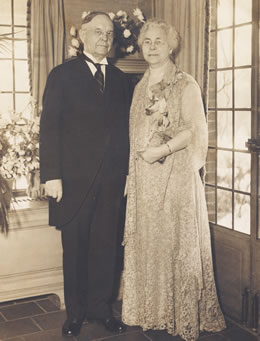
Was it the rise of the Internet? The cashing in by all but a couple of the renowned newspaper families, such as the Binghams in Louisville, the Cowleses in Des Moines, the Chandlers in Los Angeles? The rapacious demands of Wall Street after many major newspapers were snapped up by publicly owned companies?

All of those and other factors have been fingered by various experts as the bogeyman that did in a lot of top-tier newspapers.

And now comes another viewpoint, presented by Jim O’Shea, a former top editor at both The Chicago Tribune and The Los Angeles Times. O’Shea’s new book, “The Deal From Hell: How Moguls and Wall Street Plundered Great American Newspapers,” was reviewed in the SundayBusiness section of this week’s New York Times.

The reviewer, Bryan Burrough, says this:

“Mr. O’Shea argues that what’s killing newspapers isn’t the Internet and other forces, but rather the way newspaper executives responded to those forces.”

Burrough goes on to quote from O’Shea’s book: “The lack of investment, the greed, incompetence, corruption, hypocrisy and downright arrogance of people who put their interests ahead of the public’s are responsible for the state of the newspaper industry today.”

Now that’s an angry and eloquent sentence.

O’Shea backs up his assertion largely by chronicling a newspaper deal that went terribly wrong and wrecked what once had been two great chains — Tribune (Chicago Tribune and others) and Times-Mirror (Los Angeles Times and others). Suffice it to say the papers ended up in the hands of a goofy Chicago investor named Sam Zell, who knew nothing about newspapers and who hired a bunch of former radio DJs and executives to run the chain.

He’s now out, but the Tribune chain is in bankruptcy, and the 10 daily papers in the Tribune chain are a shadow of their former selves.

Papers like The Kansas City Star, the Omaha World-Herald and the St. Louis-Post Dispatch are lucky in that they have managed to avoid the clutches of thoroughly greedy people…although they, too, have fallen far and fast.

I have a different perspective on the implosion of newspapers. I think the crumbling of demand for the daily, local paper was as inevitable as the rise of “riverboat casinos.”

The winds of change started rather slowly but accelerated to the point that we in the newspaper business (I’m a 37-year veteran) were swept up and away, and there was little we could have done to prevent it.

The advent of the Internet? Yes, that definitely played a part. But what set the stage for that?

The pace of society was already gaining steam before the Internet came along. More people were relying on TV for information and entertainment, people were working longer hours, more and more women were going into the work force, people had less time to read newspapers and they were less interested in reading newspapers.

Ask any circulation supervisor at just about any paper in the country and he or she will tell you this sentence is what they hear most often when people call in to cancel their subscriptions: “I don’t have time to read it.”

We in the business couldn’t grasp the climate change because writing the paper and reading it was our business; it was what our lives revolved around. You bet we had time to read the paper; that’s where most of our story ideas came from.

Yes, some greedy people got in there and made the situation a lot worse and sullied the reputations of some formerly high-class papers. But, in retrospect, I don’t think anything could have stopped the overall implosion. Even if we had reacted quickly and embraced the Internet and started charging for online content at the outset, I think circulation, advertising and readership still would have plummeted.

I mentioned that it was the demand for the local, daily paper that hit the skids. Meanwhile, national papers like The Times, the Wall Street Journal and USA Today are still doing relatively well. And even though the New York Times Company (NYT) is a public company, the Sulzberger family still holds a majority interest and has the resources to run the paper as it should be run, putting lots and lots of money into the editorial side.

Many people, like me, who still need a substantive paper with a heavy emphasis on world and national news have gravitated to The Times. I take The Star, which I read first, and then I turn to The Times. I’ve got the time (retired five years ago), and my interest in newspapers has never flagged.

But the time is a luxury that most people don’t have, and the interest is… well, it’s an interest that many people just don’t have any longer.

I’m not saying that’s bad, that’s just the way it is, and that’s what’s responsible for the state of the newspaper industry today.

It’s a truism in journalism that the most interesting stories don’t always end up on Page 1.

Take, for example, a story on page A23 of the Sunday New York Times. An irresistible story, accompanied by two captivating photos, was ensconced five pages from the back of the section.

Titled “A Gangster’s Gal Was Loyal to the End Of Life on the Lam,” it was about Catherine Greig, the 60-year-old girlfriend of notorious Boston gangster James (Whitey) Bulger, who was arrested along with Greig outside their Santa Monica, Calif., apartment last week.

Bulger, 81, and Greig had been on the run for 16 years, having left Boston after an FBI agent with whom Bulger had been cooperating tipped Bulger off to the fact that he was about to be arrested.

The FBI finally got Bulger, who is charged with 19 murders, among other crimes, following a tip that came in after the FBI ran TV ads in several large markets, asking people to be on the lookout for Greig.

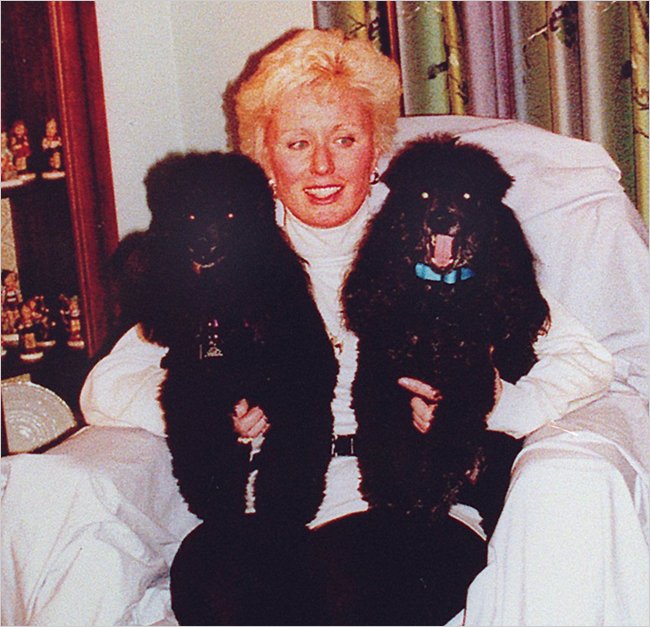
Catherine Greig, in happier times, before she went on the lam with James (Whitey) Bulger

From photos, it appears that Greig was a good-looking woman at one time, with platinum hair and pleasing features. She was proud of her appearance, too.

“She had her teeth cleaned once a month and frequented hair salons, even on the run,” wrote Katharine Q. Seely, one of The Times’ top-tier reporters. “…She also underwent numerous plastic surgeries, including breast implants, a nose job and a face lift, according to the FBI.”

She and Bulger, who were going by the names of Carol and Charlie Gasko in California, paid for everything in cash; more than $800,000 in cash was found in their apartment.

Seelye described Greig as “a supporting character in the long-running Bulger crime drama, overshadowed by her larger-than-life companion and always dutifully subordinate.”

Indicative of the twisted roots to their relationship, Bulger was carrying on with Greig back in Boston while he was living with another woman, named Theresa Stanley. Furthermore, Greig had previously been married to a Boston firefighter who had two brothers who were members of a rival gang to Bulger’s. Bulger or his henchmen killed both men.

As Seelye put it, “It was a sign, perhaps, that if she could overlook his (Bulger’s) possible involvement in the deaths of her two brothers-in-law, she could overlook a lot more.”

Makes you gulp, doesn’t it?

When the tipping point came in 1995 — after the FBI agent informed Bulger he was about to be arrested — he unceremoniously dumped Theresa Stanley, dropping her off in a parking lot and saying, “I’ll call you.”

Well, as Van Morrison says in his great song “Domino,” “If you don’t hear from me, that just means I didn’t call.” And that was the end of that.

Bulger then picked up Greig “and they disappeared into rural America,” Seelye wrote, leaving behind Grieg’s beloved poodles, whom she had pampered and  kept well groomed.

All along, Bulger had Greig firmly under his thumb, and for some reason — money? fear? perverted loyalty? — she put up with it.

Bulger and Greig, before they were arrested last week in Santa Monica

A man who knew the couple in Louisiana, where they stayed for a while, told The Boston Globe that Bulger believed that “women should be seen and not heard.”

“He (the man who knew them) added that Mr. Bulger had boasted that all he had to do was clap his hands and Ms. Greig would jump,” Seelye wrote.

When they were arrested last week, Greig’s hair had gone white…but still well coiffed.

Greig is now charged with harboring a fugitive and faces five years in prison. With Bulger undoubtedly headed to prison for good, the most interesting tentacle of this story to follow after the trials and sentencings will be this:

Who Greig team up with next?

The leader of  “Team Gray” got a touching and powerful send-off yesterday at St. Thomas More Catholic Church.

Several hundred people packed the church (standing room only) at 118th and Holmes to pay their last respects to Kevin Gray, 51-year-old president of the Greater Kansas City Sports Commission, who died of cancer last week.

Part of the crowd that attended Kevin Gray's funeral

Besides the huge crowd, a testament to Gray’s influence and popularity was the presence on the altar of six priests, led by St. Thomas More pastor Rev. Don Farnan, who was a good friend of Gray.

It’s not often that you see the chief celebrant at a funeral choke up and have his voice crack, but it happened yesterday. The first time it happened, Farnan had to stop speaking for several seconds, which triggered a flood of tears from the people in the pews.

Just four weeks ago, Farnan, one of the most popular priests in the Kansas City-St. Joseph Diocese, presided at the funeral of another well-known Kansas Citian, former City Councilman Bob Lewellen.

Lewellen was a close friend and mentor of Gray’s, and in the last week of Lewellen’s life, he and Gray rode around town looking at some of their favorite spots — some of them sports related — and sharing memories.

But back to yesterday…

The service had just the right combination of eulogies, prayerful supplications and great music, including the responsorial psalm “Shepherd Me, Oh God” and the David Haas classic “You Are Mine.”

The eulogists — Farnan, widow Katy Gray and long-time friend John Mulvihill — painted a portrait of a man who could juggle dozens of balls, who was never content to rest on past achievements and who, all the while, found ample time for family and friends.

Katy Gray, receiving condolences from a well-wisher after her husband's funeral

Katy, Kevin’s wife of 23 years, delivered an uplifting eulogy, surrounded by family members who seemed to comprise a convoy of courage.

“The outpouring of love for Kevin has been overwhelming,” Katy said. “As I look out at you today, I’m proud to say that each of you are a part of  Team Gray.” (That’s the handle that Gray gave his family, which includes four surviving daughters.)

In a light moment, Katy noted that Kevin had always said, “Everything is always black and white with you.”

“Funny,” Katy added, “that I ended up with the name Gray.”

Mulvihill, a classmate of Gray’s at Rockhurst High School, said:

“He was upbeat, honest and fun…He was the most successful politician never elected to office..The man was all about faith, family and community.”

Mulvihill went on to say that while Gray was “a man in a hurry,” he also was “a realistic guy who knew some things were going to get complicated.”

Gray’s approach to difficult and complicated challenges, Mulvihill said, was unfailingly pragmatic.

“He would say, ‘Figure it out,’ ” Mulvihill said. ‘Figure it out.’ ”

Kevin M. Gray, 1959 to 2011

In the last four days, the picture has grown dimmer for Bishop Robert Finn, and the evidence of wrongdoing at the highest levels of local Catholic hierarchy has grown stronger.

And all because of two articles in The Kansas City Star.

The first was a thoroughly researched and beautifully written profile of the Rev. Shawn Ratigan, who stands charged with three felony counts of possessing child pornography. It ran on Page 1 on Saturday.

The second was an “As I See It, ” Op-Ed piece by Pat O’Neill a respected marketing consultant in Kansas City. It ran on Page A-11 on Monday. O’Neill, a practicing Catholic, called for the resignations of Finn and Vicar General Robert Murphy, and he challenged prosecutors to bring charges against the two.

The profile and the opinion piece served as a one-two punch that took a lot of  steam out Bishop Finn’s time-killing initiative two weeks ago, when he appointed former U.S. Attorney Todd Graves to investigate the diocese’s handling of sex-crimes cases, including the Ratigan case.

Morris

Rice

First, let’s look at the profile, which bore the by-lines of federal courts reporter Mark Morris and Northland reporter Glenn E. Rice. Rice has been on the Ratigan-Finn story from the start; this story represented Morris’ first work on the story.

Two of the main points that Morris and Rice established were, first, that Ratigan is — like Finn — a crusading, pro-life cleric, and, second, that Ratigan and Finn have spent time together.

The fact that they have more than a passing relationship could well indicate that after lewd photos of young girls were found in Ratigan’s laptop computer, Finn was loath to turn in a priest whom he knew quite well and who shared his pro-life stance. That’s been my conviction ever since Mike Rice, a former KC Star reporter, wrote a comment on this blog May 20, saying that he knew of people who had stopped attending Mass at Ratigan’s Northland parish because of his conservative ideology.

Regarding the Finn-Ratigan relationship, Morris and Rice dug up records revealing that in January 2007, Finn joined Ratigan and 40 high school students from St. Joseph for a bus ride to Washington, D.C., for the annual March for Life rally.

One of the most fascinating glimpses of Ratigan’s pro-life zeal was that he had his Harley-Davidson motorcycle decorated with themes that celebrated life.

“The gas tank bore the image of an angel bringing a baby down from heaven,” the story said, “while another spot carried a cross emblazoned with a ribbon reading, ‘Pro-Bikers for Life.’ ”

The entire story is a great read, but it contains, in particular, two killer paragraphs.

One is about Ratigan’s propensity to gamble. (He played the Missouri Lottery, for example.)

“In December 2010,” the story said, “whether he realized it or not, Ratigan placed one of the lowest percentage bets of his life when he handed his laptop computer to a repair person. Would the technician notice the allegedly lewd photos of girls under the age of 12? And if so, would he mention the photos to anyone?”

Wisely, the reporters let the questions hang in the air because everyone knows the answers.

The second memorable paragraph spelled out what happened after church officials seized Ratigan’s computer.

“The next day, Ratigan, the son of a man who suffered from profound depression, retreated to his garage, fired up the pro-life Harley and waited for death.”

We all know how that episode came out, too.

***

O’Neill’s column carries a tremendous wallop in no small measure because he is well known in Catholic circles and even served for a time as communications consultant to the Diocese of Kansas City-St. Joseph and the Archdiocese of Kansas City in Kansas.

O'Neill

In his piece, O’Neill showed that he, too, can turn a phrase. Consider this:

“When Bishop Finn arrived here in 2005, he was one of a new wave of American bishops charged with turning the tide of public opinion away from the abuse scandals and back to core conservative Catholic values and respect for the church and its priestly vocations. Instead, Bishop Finn is up to his collar in a flood of renewed scrutiny and anger.”

O’Neill went on to point out that despite hundreds of reports of priest sexual abuse over the last two decades, “only a handful of pedophile priests and no complicit church supervisors have been subjected to civil punishment, i.e., jail time.”

The column concluded with a flourish:

“The time has come for us to harness our collective anger and embarrassment and use that energy to change the way our church and our dioceses operate, once and for all.

“After all these years, it is starkly obvious to me that there will be no change for the better in the Kansas City diocese until men like Bishop Robert Finn and his Vicar General Robert Murphy are forced to resign, and criminals in collars are subject to secular trial and incarceration.”

In the p.r. battle that is being waged between Bishop Finn and his supporters on one hand and his critics on the other, the advantage has once again shifted to the critics, partly because of a great news story and a damn good p.r. man.