Feeds:
Posts
Comments

What a sad day it is for Kansas City, that we have lost Royals’ great Paul Splittorff to cancer.

The 64-year-old former pitcher and, until recently, TV announcer, died at his home in Blue Springs.

I never met him, but, like tens of thousands of Royals’ fans, I always admired his grit and his class. At the end, it was his courage that stood out. One of the reasons news of his death strikes with such force is that memories and mental images of him being alive are so fresh.

He continued announcing until a few weeks ago, against all odds, simply refusing to yield to his collapsing internal systems.

It was difficult, and puzzling, to watch as his health declined, but he never sought pity or sorrow: He wanted the focus to be on the games, on his beloved Royals. When his voice started going out a few years ago, he attributed it to a viral infection, and never gave any indication the problem was significant.

Of course, as he continued to deteriorate, it was clear that the problems went much deeper than infection. Last week, Greg Hall, a former Kansas City Star writer, broke the story on KC Confidential that Splitt was dying of cancer and had entered the University of Kansas Hospital.

In comments to the piece, Hall came under a rash of criticism for allegedly violating Splitt’s and his family’s right to privacy. I think Hall’s piece was completely valid and warranted, however, especially because Splitt had decided that he wanted to keep the focus off himself by underplaying the seriousness of his problem. Clearly, it was a big story, mainly because of his stature and his public role.

Within hours of Hall’s story being posted, Splitt’s family acknowledged that he had cancer. At that point, they asked for privacy. To the best of my knowledge, the press complied.

I don’t want to overstate this, but the way Splitt decided to go out — playing his hand as best he could in front of the cameras — reminded me of the late Pope John Paul II’s protracted, very public deterioration.

For several years, when I would watch Christmas Eve Midnight Mass at St. Peter’s Cathedral in Rome, I would look at John Paul, shake my head and think, “Well, this is going to be his last Christmas Eve Mass. No way he’ll be back next year.” But he kept coming back.

God bless him, Splitt chose the same route. What an example of fortitude.

If the same fate befell me, I’m pretty sure I would just curl up, close the doors and tell everyone to leave me alone.

May you rest in peace, Paul, and reap the reward of eternal life.

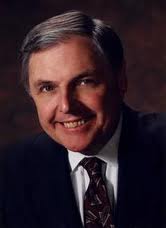
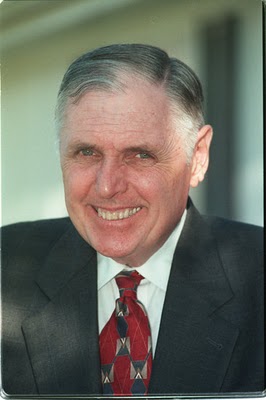
As many of you know, a great friend and promoter of Kansas City, former City Councilman Bob Lewellen, died May 18.

Berkley

His funeral was held last Wednesday at St. Thomas More Catholic Church in south Kansas City, where Bob lived.

Former Mayor Richard L. Berkley, who served on the council with Lewellen, gave the eulogy.

Here is that eulogy, edited slightly for length.

“Bob Lewellen was my friend. I feel very honored to be asked to speak at this service. What a great asset and now what a loss for his family, numerous friends and our entire community. Bob had a combination of many skills. He was a businessman and, even more, an entrepreneur. He was a politician and a very good citizen. He was an idea man and a very good one. He was a great promoter of the city. He was a sports fan, and he worked as a TV cameraman.

“He was a neighbor activist and a real estate investor. He was a humorist, a devoted husband and a great father. Many times, I would see Bob do what he thought was right or best for the city, even when it was not necessarily popular or to his political advantage. His motive was to improve Kansas City, spend wisely, try new ideas, be creative, use good business practices and search for new way to accomplish the objective.

“Another great characteristic of Bob was that he didn’t care who got the credit for an idea or new plan. He just wanted to see it succeed. When Congressman Emanuel Cleaver – then a city councilman – proposed a plan that had in it several different capital improvements projects of significance for the city, Bob supported what later became known as “The Cleaver Plan.” The plan was not inexpensive, and there was opposition to it.

“I am convinced that if Bob had opposed it, it would not have passed the council. But Bob, who, I believe, was thinking of running for mayor against likely opponent Emanuel Cleaver, supported it, knowing Emanuel would get significant good publicity as a result of the plan.

“Bob did what was best for the community – not what was best for Bob Lewellen. (Editor’s note: Lewellen did end up running against Cleaver, and lost to him, in 1991.)

“Bob, as we know, had physical problems virtually from birth, which were later made even more difficult as a result of an auto accident. Not once did I ever hear him complain about his situation. In fact, he had a quick wit and a very good sense of humor.

“On one occasion, Bob and I were having a meeting with a number of citizens who were concerned about problems that develop in working with the city. They mentioned one department head who they felt was difficult and inflexible. This department head was of German heritage, as am I. Without hesitation, Bob replied in a deep German accent, “He is on his way to Germany at this very moment to get more stubbornness lessons.” It brought down the house.

“Bob was very involved in improvements at the airport. He wanted to see more direct flights to other significant cities. He also worked on getting more freight traffic at the airport. We both came up with the same idea at the same time — after being in other airports — that we needed to have a more attractive and promotional airport by having large photographs that showed important areas of the city. Bob wouldn’t stop until that was accomplished.

“Bob devoted an extraordinary amount of time to the Leukemia Society. He told me once how many times he went to New York each year, and I was amazed. He did that for about a dozen years, maybe more. His time and effort had a major impact nationally for that organization.

“Bob was a tremendous sports fan. He worked with the Greater Kansas City Sports Commission. He again was novel in creating ways to get people involved. He generated the idea of creating honorary coaches for the NAIA Basketball Tournament, held each year in Kansas City. It was a big success.

“In his sports activities, I’m sure many of you knew of his interest but didn’t realize that at the Chiefs’ football games, the man in the tall chair with the TV camera, riding up and down the sidelines was Bob Lewellen. It was another unique way that he was involved. He loved it.

“His entrepreneurial skills were demonstrated by his involvement in developing franchises for Pizza Hut and Taco Bell. Working with Block and Co., he was the initial operator of a company that eventually had over 50 locations in this area. He was also involved in a variety of other small businesses.

“After his service on various boards and then eight years on the council, Mayor Kay Barnes appointed him to the Parks Board, which is generally considered one of the most prestigious and important appointments a mayor makes. Bob did a great amount to improve an already-top-level Parks Department.

“He particularly appreciated and helped the zoo and the Friends of the Zoo. He was able to make sure the zoo had a carousel, primarily for the kids. And it was dedicated to Ruth (his wife, who died in 2007). That was great.

“Bob was someone I had a great deal of confidence in. We didn’t always agree, but I knew his motives were right and his thinking sound. He wanted what was best and would fight for it. He was a true citizen-politician in the best sense of the term. Because of Bob, we all have had a better quality of life, as will many in the future.

“Thank you, friend.”

Time to assess the initial coverage of the incredible Joplin tornado by The Kansas City Star and local TV stations.

The highest grade, an A+, goes to KMBC, Channel 9, which had at least two reporters and one or more camera crews on the scene and devoted at least the first 15 minutes, it seemed to me, of its 10 p.m. newscast to the disaster.

Anchor Lara Moritz and chief meteorologist Brian Busby stood on the set and delivered the news in front of a backdrop of video from the storm. Their positioning — not sitting behind the desk — sent a clear signal that something big was afoot.

Amazingly, The Star had no one on the scene last night, at least no one who was reporting for the morning edition. It relied on “staff and wire reports,” with the staff reports being provided by two reporters, Brian Burnes and Eric Adler, who made calls from Kansas City.

From this corner, The Star gets a grade of D-minus.

The Star did send a reporter, Brad Cooper, to Reading, Kan., to cover that city’s tornado, which struck Saturday night. But only one person died in that tornado, and it’s a very small town, near Emporia.

By contrast, Joplin — with 50,000 people in the city and 174,000 in the area — lost at least 89 people, and the level of destruction was jaw dropping. (At 4:15 p.m., CNN was reporting that the death toll was 116.)

More details…

I didn’t learn about the storm until 9:58 p.m., when I saw it on CNN’s website. The CNN story quoted an American Red Cross official as saying, “I would say 75 percent of the town is virtually gone.”

I gasped…But it was a gross exaggeration. On a CNN video report today, an official-sounding person says that 25 to 30 percent of the town suffered “major or significant damage,” and Channel 9 was saying last night that the southern third of the city suffered major damage. There’s a big difference between 75 percent and 25 or 30 percent (or even 33 percent).

After scanning the lead CNN story, I ran to the TV and started flipping channels. It was clear that KMBC, the top-rated station in Kansas City, was well ahead of at least two others — KSHB Channel 41 and  KCTV5.

I’m not much of a TV news devotee, so in my haste to get the best report, I overlooked FOX4.

Today, representatives of all three stations — 4, 5, and 41 — said they had crews in Joplin last night and that they aired reports on the 10 p.m. newscasts.

Peggy Phillip, news director at KSHB Channel 41, said that her station sent one crew at 6:45 p.m. — 45 minutes after the tornado struck and put another on the road about half an hour later. KSHB’s coverage led off at 10 p.m., she said, with “a multi-media journalist reporting live (by phone) over video” from The Weather Channel.

By 10:15, Phillip said, the station had one of its journalists on camera, at the scene.

Someone on the assignment desk at KCTV5 told me today that they had four people on the scene last night, but, in my channel flipping, I was underwhelmed by the station’s coverage. As I recall, they were emphasizing local weather at the top of the hour. For a station renowned for hyperventilating about even the prospect of bad weather, Channel 5’s coverage seemed totally disproportionate to its usual hyperbole.

Now, more about The Star’s coverage…

The danger of using “staff and wire reports,” instead of sending reporters to the scene is that you get a lot of second-hand information.

Sure enough, in the third paragraph of today’s front-page story, The Star picked up the CNN quote from Kathy Dennis of the American Red Cross: “I would say 75 percent of the town is virtually gone.”

Even as I gasped when reading that on CNN’s site, I was skeptical. The Red Cross official could not have surveyed the entire town, so how could she say 75 percent of it was gone?

It was irresponsible and very unwise of The Star to run that comment without having its own reporter on the scene, and the quote draped a shroud of skepticism over the entire story.

Perhaps more ignominiously, The Star relied on The Wichita Eagle, a fellow McClatchy-owned paper, for significant coverage. The credit line at the end of the lead story attributed the reporting to The Associated Press and The Eagle, as well as Burnes and Adler.

The Star’s coverage also included a stand-alone, 12-column-inch story on Page A-8 by The Eagle’s Beccy Tanner, from Joplin.

Why is this important?

Well, according to MapQuest, it’s 184 miles from Wichita to Joplin. From Kansas City to Joplin, it’s 157 miles. Who has the quicker, easier access?

But, no matter, The Star was all over that tornado in Reading, Kan. — population 231.

Thanks to everyone for their thoughtful responses on “Bishop Robert Finn — hidebound prelate of Kansas City-St. Joseph.”

Now, three more questions need to be addressed.

1) Why did Finn apparently fail to review the pornographic photos found in the Rev. Shawn F. Ratigan’s laptop?

2) Why did Finn choose not to report Ratigan or turn the evidence over to police for five months?

3) Should Finn resign or be fired?

***

First, the diocese’s handling of the evidence.

I think we can safely assume that Finn did not review any of the images personally. If so, that is a complete dereliction of duty.

In his statement, released Friday afternoon, after coming under a blizzard of criticism, Finn said:

“In mid December of 2010, I was told that a personal computer belonging to Fr. Shawn Ratigan was found to have many images of female children. Most of these were images of children at public or parish events. I was told that there were also some small number of images that were much more disturbing, images of an unclothed child who was not identifiable because her face was not visible.

“The very next day, we contacted a Kansas City, Missouri, police officer and described one of the more disturbing images. At the same time, the diocese showed the images to legal counsel. In both instances we were told that, while very troubling, the photographs did not constitute child pornography, as they did not depict sexual conduct or contact.”

Now, ask yourself, what should have been Finn’s first words after hearing about such photos?

“Let me see them for myself.”

Right? Of course.

But, no, he chose to avert his eyes, turn his head and see no evil.

Why? The answer, I believe, lies in the answer to the second question that needs to be addressed. So, on we go…

***

Finn’s failure to call police about the photos, mostly up-skirt images of clothed girls 12 and younger. (The Star’s Saturday story, said, however, that at least one nude photo focused on a girl’s genitals.)

As everyone knows, Finn is a very conservative bishop — one of those that the late Pope John Paul II and his successor, Benedict XVI, have stacked the deck with. In turn, the ranks of conservative bishops have placed the most conservative priests in the biggest churches so they can set the desired tone and reach the most people.

The renegades, i.e., the liberal priests, have been relegated to the hinterlands of the diocese, for the most part. Many of those priests are simply trying to hang on until they reach retirement — not so differently than many long-time reporters and editors at The Kansas City Star.

Ratigan was in a prominent Northland parish, St. Patrick’s. What was his philosophy? I don’t know personally, but listen to what former KC Star reporter Mike Rice said in a comment regarding Friday’s post:

“I don’t know Shawn Ratigan but do know of people who stopped attending Mass at St. Patrick’s because of his religious ideologies, which I hear are similar to Bishop Finn’s. I cannot help but wonder whether Bishop Finn held back on going to authorities because he considered Father Ratigan an ideological ally.”

That evidence might be a little thin regarding Ratigan’s ideology, but I think it certainly stands the test of common sense and believe it’s safe to assume that Finn and Ratigan are fellow conservatives.

And just as it could well be more difficult for a liberal bishop to turn in a liberal priest, it seems to me that Finn, as Rice suggests, shirked his managerial responsibility because he just couldn’t bring himself to pull the trigger on a like-minded soul.

Same goes for reviewing the pictures. It was a lot easier for Finn to determine that the photos did not constitute pornography when he merely had them described to him rather than view them himself. He washed his hands of that responsibility in his statement, you might have noted, when he said that the photos “did not depict sexual conduct or contact.”

So, the answers to questions one and two, in my opinion, is one and same: Finn was giving Ratigan a huge, undeserved benefit of the doubt and trying to shield him as long as possible.

***

Finally, should Finn resign or be fired?

I’ll let an eloquent commenter to Friday’s post, concernedcatholic, make the case.

She wrote:

“Finn must resign. I hope that the media holds his feet to the fire on this. We, as Catholics, cannot tolerate this.

“Finn’s lack of judgment demands that he no longer serve as bishop. Ratigan was only reported to the police after he disobeyed the bishop’s order to stay away from children. It is not illegal to disobey the bishop. If Ratigan’s activities warranted police investigation in May, they certainly deserved investigation back in December.

“When the photos of little girls were discovered on Ratigan’s computer, how could Finn not wonder what else Ratigan might be doing? Did Finn not wonder if the photos were the tip of the iceberg? Did the parents of these children not deserve to know that their children had been exploited?

“Please join me in demanding that Finn resign. His actions are indefensible.”

Powerful stuff…especially, to me, the line about parents deserving to know that their children had been exploited.  That’s the real horror in the non-reporting for five months: Justice has been delayed for the victims, and other potential victims were exposed to the creep who was running around loose.

In any other arena, Finn would be out of a job today. Even Warren Buffet let his top guy go after an ethical transgression.

But it doesn’t work that way in the Catholic Church. It keeps making noise about the importance of sniffing out abusive priests and protecting the children. But it just doesn’t happen.

It would shock me to the core if Finn resigned. And, by the same token, Pope Benedict, who is also guilty of covering for abusive priests, certainly won’t be a hypocrite and fire him.

Expect the merry-go-round to keep on turning, then.

It’s pathetic.

Back in the March 2010, in my second-ever post, I called on Pope Benedict XVI to resign in the wake of the reignited priest-sexual-abuse scandal.

I didn’t get much response to the post (although a commenter named Rick said “your lack of respect for the religion is appalling”), and a friend who read the piece said, “You gotta get off that and get on to some local stuff.”

I took his advice but have believed since then that the Catholic hierarchy has gone so far astray that the church is no longer a viable institution in the modern era.

And now, today, here in Kansas City, we see yet another incredible, stupefying example of how the Catholic church has done all it could to shield perverted priests at the expense of the safety and well-being of children.

In case you didn’t catch The Star’s front-page story, a 45-year-old priest named Shawn Francis Ratigan — Father Ratigan, you understand — has been charged with three felony counts of possessing pornographic photos of children. He took pictures of girls as young as 3 or 4, and he took other photos up the skirts of girls under 12, according to documents filed in Clay County Circuit Court.

Ratigan

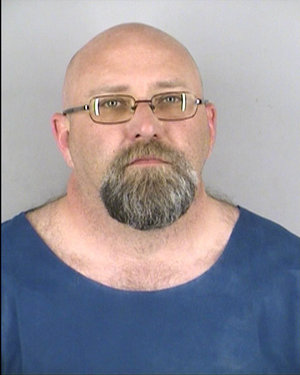
In his police mug shot, Father Ratigan looks like a creepy guy you’d want to avoid, even at the Quik Trip.

The indefensible action in this case, however, is that officials with the Diocese of Kansas City-St. Joseph learned about the photos in December but waited until last week — five months — to report Ratigan to police.

By contrast, the Clay County prosecutor filed charges within three hours of receiving the case file from police on Thursday.

The Star’s story said: “When asked why the diocese didn’t notify authorities until Friday, diocese officials said they consulted with legal counsel and ‘took appropriate steps based on the facts as we knew them.’ ”

On top of the delay, the diocese made a copy of the images found on Ratigan’s laptop and then, instead of turning the computer over to police, gave it to his family, who destroyed it. 

The diocese sent out its spokeswoman, Becky Summers, to try to explain the debacle, and Becky, a long-time acquaintance, played a terrible hand as best she could.

But let there be no misunderstanding: Although the story did not once mention his name, the guiltiest party in this fiasco — besides Ratigan — is Bishop Robert Finn, who, during his six-year tenure, has managed to set the diocese back about 50 years. I have no doubt his goal is to take the church back a full century and that he will succeed.

I greatly admired Pope John Paul II’s humility and personal courage, but he stacked the deck with cardinals and bishops who are bent on taking the church back to the pre-Vatican II era, and Pope Benedict and Bishop Finn are straight out of John Paul’s mold.

Finn set the tone here early on, when he put out orders directing, among other things, that lay members should not be near the altar during Mass; that priests should not leave the altar to mingle with the congregation at “the sign of peace” after the Lord’s Prayer; and that only “sacred” metal vessels — not crystal — should be used for the wine that Catholics believe is transformed into the blood of Christ at the consecration.

Bishop Finn in full battle regalia

In addition, every chance he gets, Finn presents himself with staff and mitre. He has his own “altar boy,” a guy in his 40s or 50s, who dresses in the throwback black cassock and white surplice.

In other words, Finn has clearly demonstrated that, to him, it’s all about symbol over substance, clergy over laity. He’s much more consumed with the aura of the clergy and making church services a big production than he is about the church ministering to the people.

It’s no surprise, then — but still shocking — that he would hold damning evidence against a priest for five months, possibly allowing the perp to drift away or the evidence to be misplaced. Fortunately, the case appears to be intact. Police have a disk — provided, kindly, by the diocese — with the pornographic images, and Ratigan was being held on $200,000 bond.

In case you’re wondering, I am a former Catholic. My wife Patty left the church about five years ago, and I left about four years ago, about the time Finn came out with his no-laity-near-the-altar and priests-shouldn’t-leave-the-altar dictums. I’m now a member of the Disciples of Christ, a denomination rooted in egalitarianism and dedicated to serving the needs of its members.

I’ve never looked back, and episodes like the handling of the Ratigan case make me almost fall to my knees in thanks that I’m not associated with an organization that does not seek to have justice served as quickly as possible, especially when the victims are children.

***

This afternoon, Bishop Finn rose to the surface and issued the following statement:

“In mid December of 2010, I was told that a personal computer belonging to Fr. Shawn Ratigan was found to have many images of female children. Most of these were images of children at public or parish events. I was told that there were also some small number of images that were much more disturbing, images of an unclothed child who was not identifiable because her face was not visible.

“The very next day, we contacted a Kansas City, Missouri, police officer and described one of the more disturbing images. At the same time, the diocese showed the images to legal counsel. In both instances we were told that, while very troubling, the photographs did not constitute child pornography, as they did not depict sexual conduct or contact.

“Immediately after the diocese became aware of these images, Shawn Ratigan attempted suicide. In the week or so after this, Shawn Ratigan survived his suicide attempt and became conscious. He went from the medical center to a psychiatric unit until it seemed that the risk of another suicide attempt was minimized.

“I then sent him for a psychiatric evaluation out of state. The psychiatrist asked for and was provided with the images we had so he could evaluate Shawn’s condition. When he returned, Shawn stayed at his mother’s home for a while until I could determine a place where he could reside, continue counseling and not be around children. The Sisters of St. Francis of the Holy Eucharist kindly agreed to have him assist them by saying Mass for the sisters. I restricted him from participating in or attending other events if there were children present. He lived at an adjoining property, the Vincentian Mission House, and paid rent. He did not have his computer or his camera in his possession during this period.

“In early March, Shawn’s family asked for Shawn’s computer to be returned. It had been kept at the offices of the diocesan legal counsel, and was given to them.

“In late March, I received some reports that Shawn was violating some of the conditions of his stay. I was told that he attended a St. Patrick Day parade and met with friends and families. He also attended a child’s birthday party at the invitation of the child’s parents. I confronted him about these things and told him again that he was not permitted to have any contact with minors.

“When Shawn continued to disregard these requirements, on May 12 ,Vicar General Monsignor Robert Murphy contacted the same police officer previously consulted to discuss his concerns. That officer facilitated our report to the Cyber Crimes Against Children Unit. Along with our report, we provided the electronic images that we had received in December. Detective Maggie McGuire began an investigation. In the past week she conducted interviews and, pursuant to a search warrant, found additional materials, which had never been in our possession and which we did not know existed, and which are alleged to constitute child pornography. On May 19, Shawn Ratigan was arrested and charged in Clay County with three counts of a C felony possession of child pornography.

“I deeply regret that we didn’t ask the police earlier to conduct a full investigation.

“Shawn Ratigan was a popular priest who had a large network of friends, and was media savvy. Many parents have called with deep concerns about their children who knew and trusted him. To any parents who have any questions or concerns about contact between their children and Shawn Ratigan, I recommend that you contact Detective McGuire at 816-584-6633.

“As a people of faith, in times of difficulty we rely on prayer and God’s grace to fortify our human efforts. I pray that the strong anger, shame, disappointment and fear that so many are feeling will be helped by our trust in Him.”

Congratulations are in order to Mark Zieman, who has been promoted from KC Star publisher to vice president of operations for parent company McClatchy Co.

Today, I want to talk about his leadership and also about the competition that is about to take place to replace him.

Zieman, 50, has had a very successful, upward-bound, 25-year career at The Star. The paper apparently has continued to do well financially during Zieman’s three-year watch as publisher, despite the bottom falling out of the newspaper industry.

I haven’t liked everything Zieman has done at The Star, but, in my opinion, he has earned this opportunity to prove or disprove himself at a higher level. He inherited a successful enterprise from previous publishers, including the late James H. Hale, and he has managed to hold it together, at least financially.

He has held it together almost entirely through cost-cutting, however. There’s less of the paper, literally, than there used to be, and there are far fewer employees, including quite a few valuable editorial employees.

I said that I haven’t liked everything Zieman has done. What bothered me most was that when the layoffs began three years ago, Zieman donned rose-colored glasses with each round of layoffs and issued statement after statement about how better times were just around the corner. That went on until earlier this year, when he struck a note more of resignation and hope, instead of certainty, about light at the end of the tunnel.

When I wrote about his cheery, public position, I said that I was losing confidence in him as publisher. That was probably an overstatement, although I’m sure that most, if not all, of the employees who have been laid off would express a similar sentiment. Also, as a retired reporter and assignment editor at The Star, I was looking at it through the eyes of someone who could have experienced the same fate, had I not gotten out two years before the axe started falling. (It was just plain luck that got me out the door, I have to admit, not prescience.)

Now, Zieman is going to be under more pressure than ever. He will oversee 14 daily papers, including The Star, in several states. McClatchy paid way too much — $4.6 billion — for the Knight Ridder papers in 2006, and they may never be able to pay off the debt they took on to swing the deal.

Last year, a Morningstar analyst wrote, “Our fair value estimate on McClatchy’s shares is $0.” (For the record, it’s about $2.75  per share now.)

The analyst said he believed that the balance eventually would tip from stockholders’ interests to creditors’ interests and that stockholders would be left empty-handed.

So, that’s the spare meal that Zieman will sit down to at McClatchy headquarters in Sacramento.

CEO Gary Pruitt and other top executives undoubtedly will look to Zieman for fresh ideas on digging out of deep holes. He will face expectations, probably, to devise plans to cut costs and somehow generate new revenue, perhaps through imaginative uses of the web.

So, I wish him luck. He’s definitely going to need it, and I think we can look for that graying hair to lose what is left of its dark luster within a few years — if McClatchy lasts that long.

***

Now, back at the ranch…several Star vice presidents, certainly would like to be considered for the publisher’s job. Among them could be Mike Fannin, editor; Chris Christian, v.p for circulation; Chris Piwowarek, v.p. for human resources; and Miriam Pepper, v.p. of the editorial page.

I think McClatchy will look closely at the prospect of naming a woman as publisher, which would guarantee Piwowarek (pronounced pee-va-vorek) and Pepper a close look. However, I think all of the people mentioned above are long shots for the following reasons.

Christian and Piwowarek because their kingdoms are relatively narrow. Pepper because her background is on the editorial side. Fannin because most of his background is in sports and also because it has come to light since he was named editor in 2008 that he has two d.u.i convictions and a 1994 misdemeanor assault conviction in Texas, where he formerly worked.

Another long shot, from the newsroom, would be managing editor Steve Shirk, who has provided steady and confident leadership in every post he has held in his approximate 35-year career at the paper. Working against him, however, is the fact that, like Pepper, all his experience is on the editorial side.

Without completely ruling out an inside promotion, I tend to think that McClatchy will bring in someone from outside. I think they will promote a current publisher at a smaller paper in the chain.

That’s what they recently did in Lexington, Ky., at the Lexington Herald-Leader. There, Rufus M. Friday, president and publisher of the Tri-City Herald in eastern Washington, will replace long-time Herald-Leader publisher Tim Kelly, who is retiring at the end of this month.

I think McClatchy will want to continue planting seeds of hope with its current publishers, on the outside chance that the company will find its way out of the long tunnel.

Not surprisingly, Highwoods Properties and its minions have launched a pre-emptive strike against the Friends of the Plaza group, which is trying to gather enough signatures to force a referendum on Highwoods’ proposed office building at 47th Street and Broadway.

A mailer that hit the boxes of frequent voters Monday urges people to “Decline to Sign” the petitions being circulated by opponents of the building.

It’s a full-color, very professional-looking piece, measuring six inches by 11 inches. It opens to an 11X12-inch inside page of facts, figures and photos.

Not surprisingly — again — some of the facts, figures and photos are misleading.

Consider:

:: The mailer says the proposed building would be seven stories.

Fact: It would be seven stories, but on top of a three-level parking garage. The height would be 163 feet, approximately as tall as the 12-story Townsend Place condos across Broadway. Each floor of the new building would be significantly taller than the customary 10 or 12 feet.

:: The piece says that “the proposed building conforms to the Plaza Plan.” That’s a reference to the Plaza Urban Design and Development Plan — approved by the City Council in 1989 — which essentially limits commercial development to the west and northwest parts of the Plaza.

Fact: The plan did not conform until a few weeks ago, when the old and new city councils adopted a resolution amending the plan. As for the actual ordinance that would rezone the Neptune site from residential to commercial, it is in abeyance while opponents are gathering signatures. Resolutions are not subject to referendum; ordinances are.

:: A photo of the Neptune Apartments, which would come down if the plan goes forward, and the Townsend Place condos was taken from the north side of the Plaza, from 46th Terrace, which could give the casual observer the impression that the Neptune is west of Broadway.

Fact: The Neptune is east of Broadway, and that is the most significant issue in this debate — office-building encroachment east of Broadway.

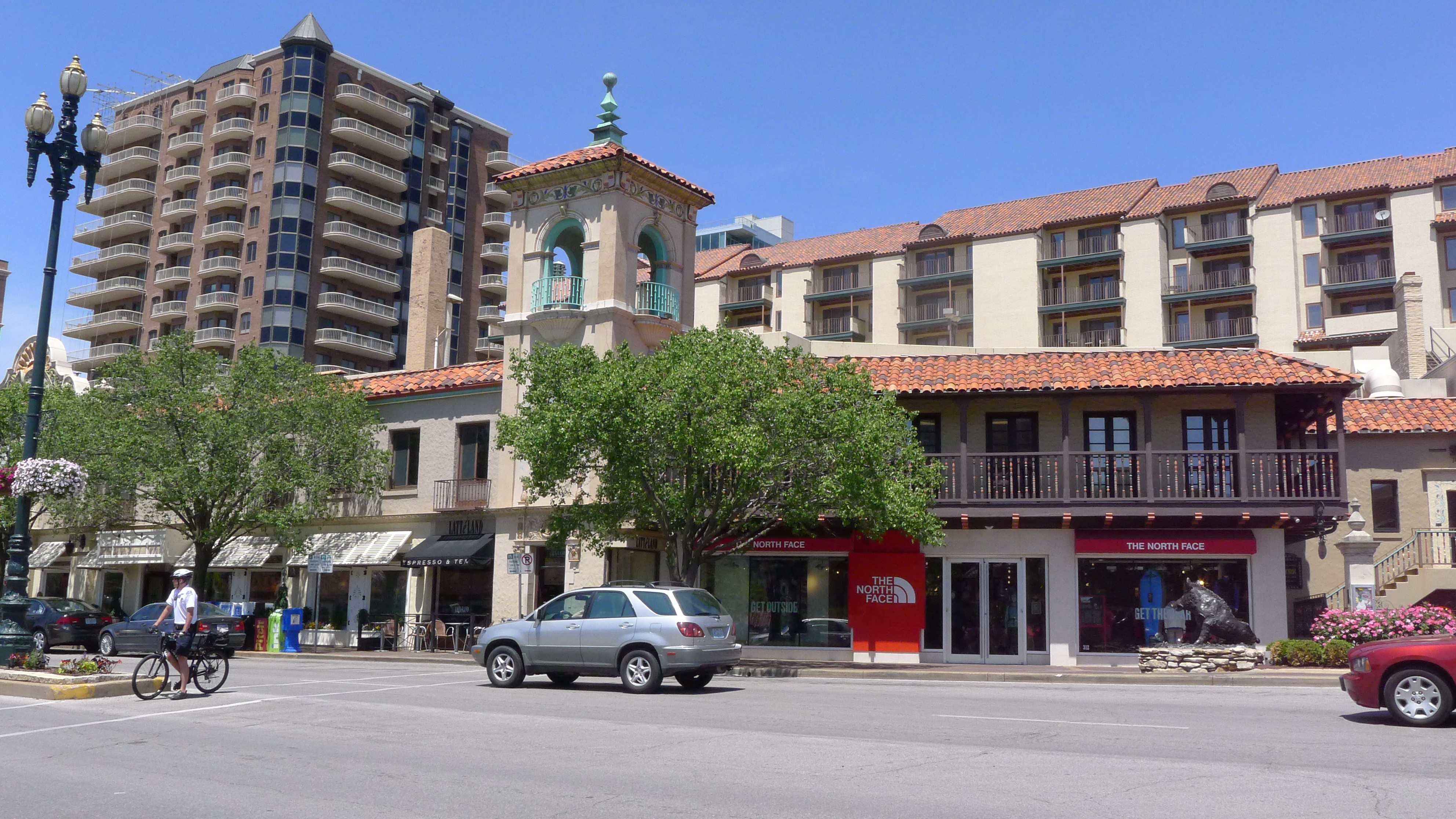
Below is the photo in the flier, and below that is the view that the vast majority of people have of the Neptune and Townsend Place as Plaza visitors stand or walk along 47th Street.


So, what we’ve got, already, is a campaign of misrepresentation and duplicity. But what else would you expect?

After all, it’s not J.C. Nichols Co. any more; it’s Highwoods, a commercial office building developer and leaser out of Raleigh, NC.

***

This afternoon, the City Plan Commission heard testimony on a related matter — a proposed “overlay” to the city’s overall zoning ordinance.

Vicki Noteis, a consultant to Friends of the Plaza, said the overlay ordinance, proposed by Councilman Ed Ford as a sop to opponents of the high rise, would put a three-story limit on the core part of the Plaza.

However, she said, two big loopholes would accompany the concession. First, if Highwoods wanted a variance from the three-story limit, it could go straight to the City Council and bypass the city’s Board of Zoning Adjustment. Second, 15 percent of the total retail space in the core of the Plaza — about 135,000 square feet — would be exempt from the restriction.

Theoretically, then, Highwoods would be free to build a 135,000 square-foot building, perhaps eight stories or more, wherever it wanted on the Plaza.

Noteis said the Plan Commission did not vote on the proposal but, instead, continued it and instructed the opposing sides to try to come to an agreement on it.

I was very saddened to read in Sunday’s paper about the death of former Kansas City Councilman Bob Lewellen.

I’m proud to say he was a friend to me personally, and, from a professional standpoint, he was a reporter’s delight. He was always thinking, figuring out how to advance the causes that were important to him, and he was a font of information and shared it liberally.

Between Lewellen and former Councilman Frank Palermo, who served contemporaneously with Lewellen, the information spilled out like the swollen Mississippi River.

I used to call Lewellen “an equal opportunity tipster” because, when he wanted to get a story out about one thing or another, he might first pitch it to a favored reporter, but if that reporter didn’t run with it, he’d tip off the next reporter on his list.

I covered City Hall for The Kansas City Times and, later, The Star, from 1985 to 1995 and had a lot of opportunities to write about Lewellen, who was on the council from 1983 to 1991.

The most memorable story I have about Lewellen came about as a result of a brouhaha over a secret, illegal meeting that took place in the late 1980s, I believe, while Lewellen was chairman of the Finance Committee.

Here’s what happened:

One of the main jobs of the Finance Committee was to recommend a proposed city budget, which the full council took up in late April every year. At about $750 million dollars (more than $1 billion now), the budget was almost always delicate and controversial. Every council member fought for a piece of the pie for his or her district, and reaching a consensus required a fine balancing act.

That particular year, the budget process was particularly fractious and difficult. Unbeknownst to the council at large, one Finance Committee member, Mary Bryant, asked Lewellen and the two other committee members — Joanne Collins and Katheryn Shields — if the committee could meet in secret at Fedora’s, an upscale Plaza restaurant.

The idea was to hash out their differences and cut up the pie outside the public eye so the committee members could wheel and deal freely.

Now, anytime that a quorum of an elected public body, or a committee of an elected body, gets together in public, it’s considered an open meeting under the Missouri Sunshine Law, requiring at least 24 hours public notice. So, this gathering was clearly illegal, and the committee members knew it.

The meeting went off as planned, with one exception: Bryant, who initiated the meeting, didn’t attend. I never found out why; he just didn’t go.

At the next regular meeting of the council, Councilman Dan Cofran, who had learned about the meeting, stood up and, in front of everyone, exposed the dastardly deed. As I recall, one of the committee members either confirmed the meeting, or none of them denied it.

I was furious. When the meeting ended, I corralled Cofran and got as much information from him as I could. I don’t remember if I was able to talk to any of the Finance Committee members, who scrambled out of the chamber as fast as they could, but I got enough to know that Cofran was on the money.

As I left my parking lot on the north side of City Hall and proceeded south on Oak, toward The Star building, Lewellen happened to be pulling out of the City Hall garage. We looked at each other. He grinned. I gave him the finger.

I wrote a story for the next day’s paper, exposing the chicanery, but that didn’t satisfy me…not at all.

I tossed and turned that night, and the next morning, still fuming, I went straight to the third-floor office of then-publisher Jim Hale. “Jim,” I said, “as you probably know by now, the City Council Finance Committee held a secret meeting at Fedora’s last week, and I think we should sue them.”

These were the days when The Star was a cash cow, and we didn’t hesitate to sue someone over a violation of the Sunshine Law.

“I think you’re right!” Hale said, without hesitating. And with that he summoned Scott Whiteside, our in-house lawyer, had me brief him on the situation and gave him the green light to set in motion a civil complaint.

Then, Whiteside and I traipsed down to the second-floor newsroom for a meeting with managing editor Monroe Dodd and other top editors. That’s when I started feeling a little awkward. After all, in going straight to Hale, I had completely jumped the chain of command, bypassing my assignment editor, the managing editor and the editor.

But I had set the wave in motion, and nothing was going to stop it. I remember that Dodd glanced at me curiously a couple of times during the meeting. Afterward, he took me aside and said, “Fitz, I wish you’d let me in on the fun sometimes!”

That reaction greatly relieved me because I could see that while he was a little miffed at being circumvented, he recognized that I had acted strictly in the interest of the newspaper and the public.

The case went to trial in Jackson County Circuit, with Lewellen, Shields and Collins as the defendants. Bryant, because he had been a no-show, slipped the noose.

I remember Lewellen’s attorney cross-examining me at length on a variety of issues that didn’t relate to the issue of the Sunshine Law having been broken.

When Lewellen was asked how the meeting came about, he said, succinctly,“The girls (Shields and Collins) wanted to get together and talk things over, and I agreed.”

The judge — whose name I can’t recall — found all three guilty. He fined Shields and Collins $100 each, and he fined Lewellen $300, hitting him harder than the others because of his leadership post. Although the fine was small, it was a clearcut win for the paper and the public and, naturally, we reported the result.

Collins and Lewellen accepted the ruling and paid their fines. Shields, with her husband, Phil Cardarella, serving as her attorney, appealed to the Missouri Court of Appeals-Kansas City District but lost.

Within days, I was back in Lewellen’s office, and we laughed and joked about the case, particularly about Bryant getting a pass. I asked Lewellen if he remembered me giving him the finger, and he said it had slipped his mind.

For both of us, the secret meeting was water under the bridge. City Hall was brimming with stories, and we needed each other too much to let a little thing like an open-meetings lawsuit lead to relation-changing resentment.

Kentucky Derby 137

Kentucky-born humorist Irvin S. Cobb said this about the Kentucky Derby: “Until you go to Kentucky and with your own eyes behold a Derby, you ain’t been nowhere and you ain’t seen nothing.”

All I can say, after attending about 25 derbies in the last 30 years, is — he’s right.

We just got back Monday night from “My Old Kentucky Home,” where we had a great time enjoying the sights and sounds of Derby Weekend and Derby Day at historic Churchill Downs.

On Derby morning, I managed to cobble together five first-floor clubhouse tickets by positioning myself outside a major track entrance and holding up a sign that said: “Need one or two…For me (Jim) and my wife (Patty).”

Usually I do need only one or two, but this year our 23-year-old daughter Brooks and 21-year-old son Charlie went with us, as did a buddy of Charlie’s from Tulsa University. So, naturally, I kept my sign aloft and continued buying after I got the first two. With a record-setting crowd of 165,000 people descending on the track, extra tickets were relatively scarce, and the prices were unusually high. To give you an idea, I paid $1,370 for the five tickets — about $400 over total face value.

It was a memorable day — as Derby Day always is — made more special because Brooks and Patty bet on the winner, Animal Kingdom, who went off at 20-1. Patty netted about $40 on the race, while Brooks made about $60. Both were thrilled, as they were entitled to be: Picking the winner out of 20 horses (19 this year because of a scratch) is a daunting challenge.

Here, then, are some of the images from Derby 137.

For this guy, Derby Day got off to a lousy start.

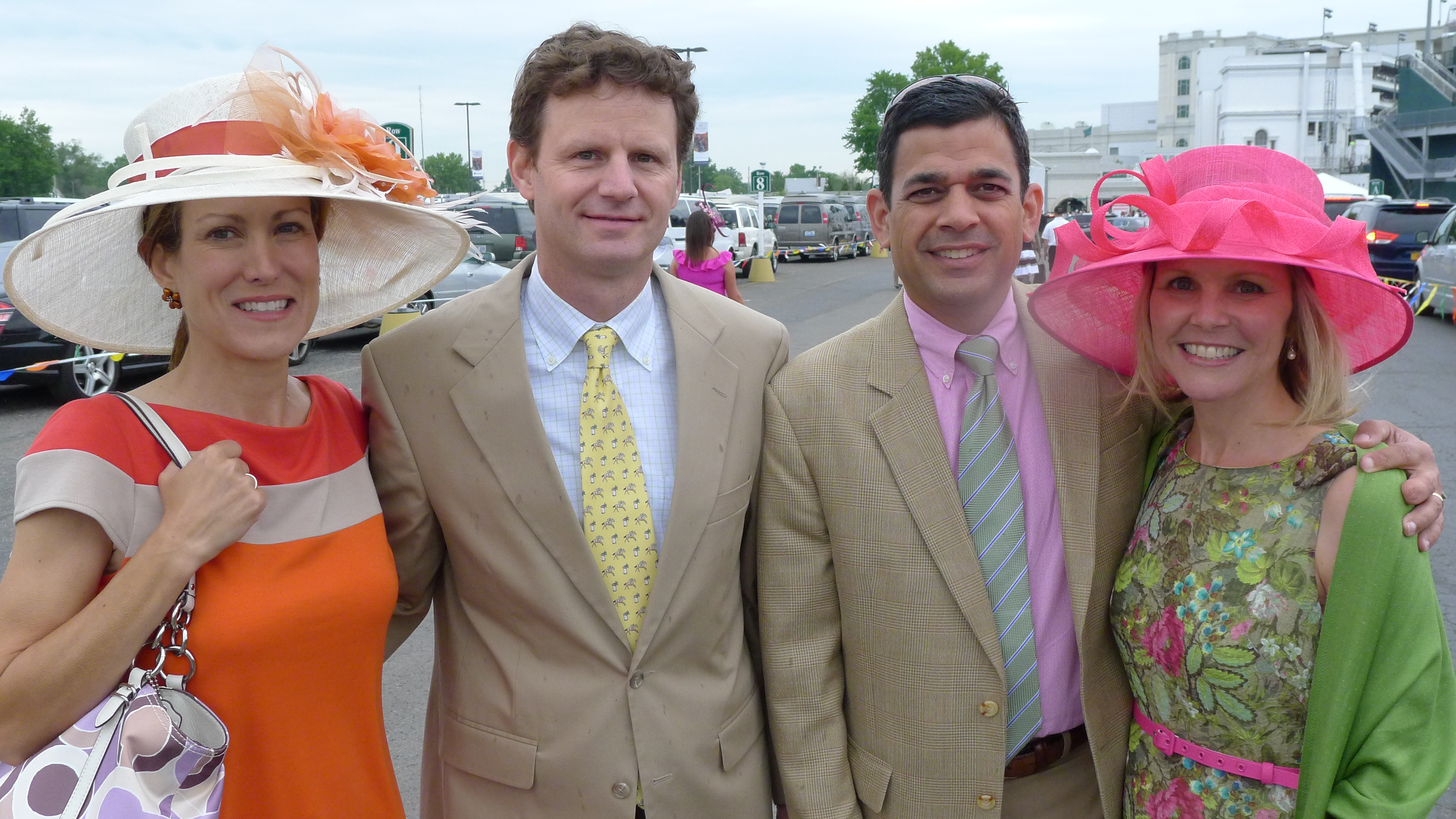
Outside the track, where I was stationed to buy tickets, I ran into my cousin, Colleen Salazar (right), her husband John and a couple they were with.

On Derby Day, people even look good in purple.

Melissa, of Seattle, made her hat. (She was sitting a couple of boxes from us.)

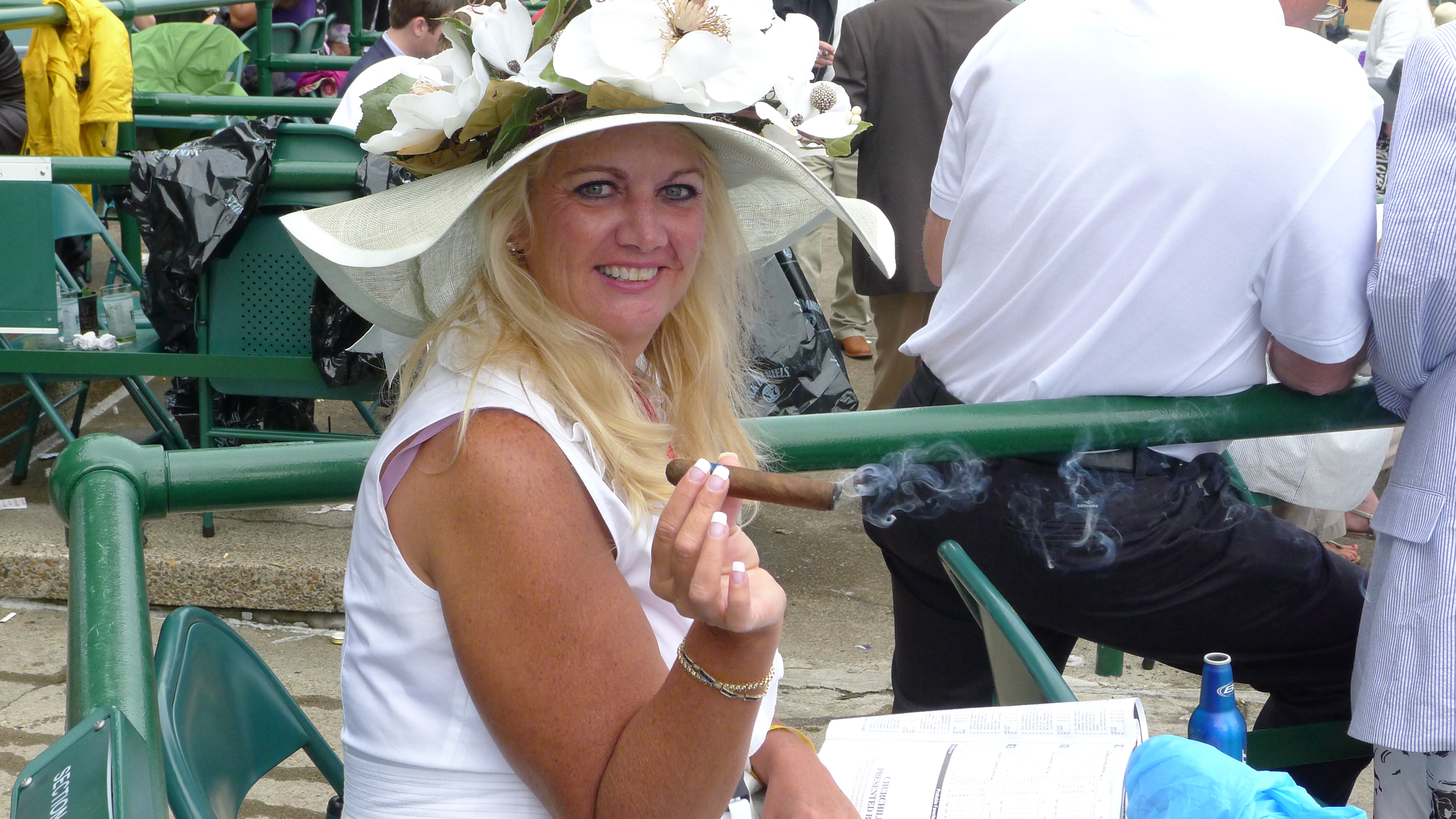
Should a gentleman offer a tiparillo to a lady? Absolutely!

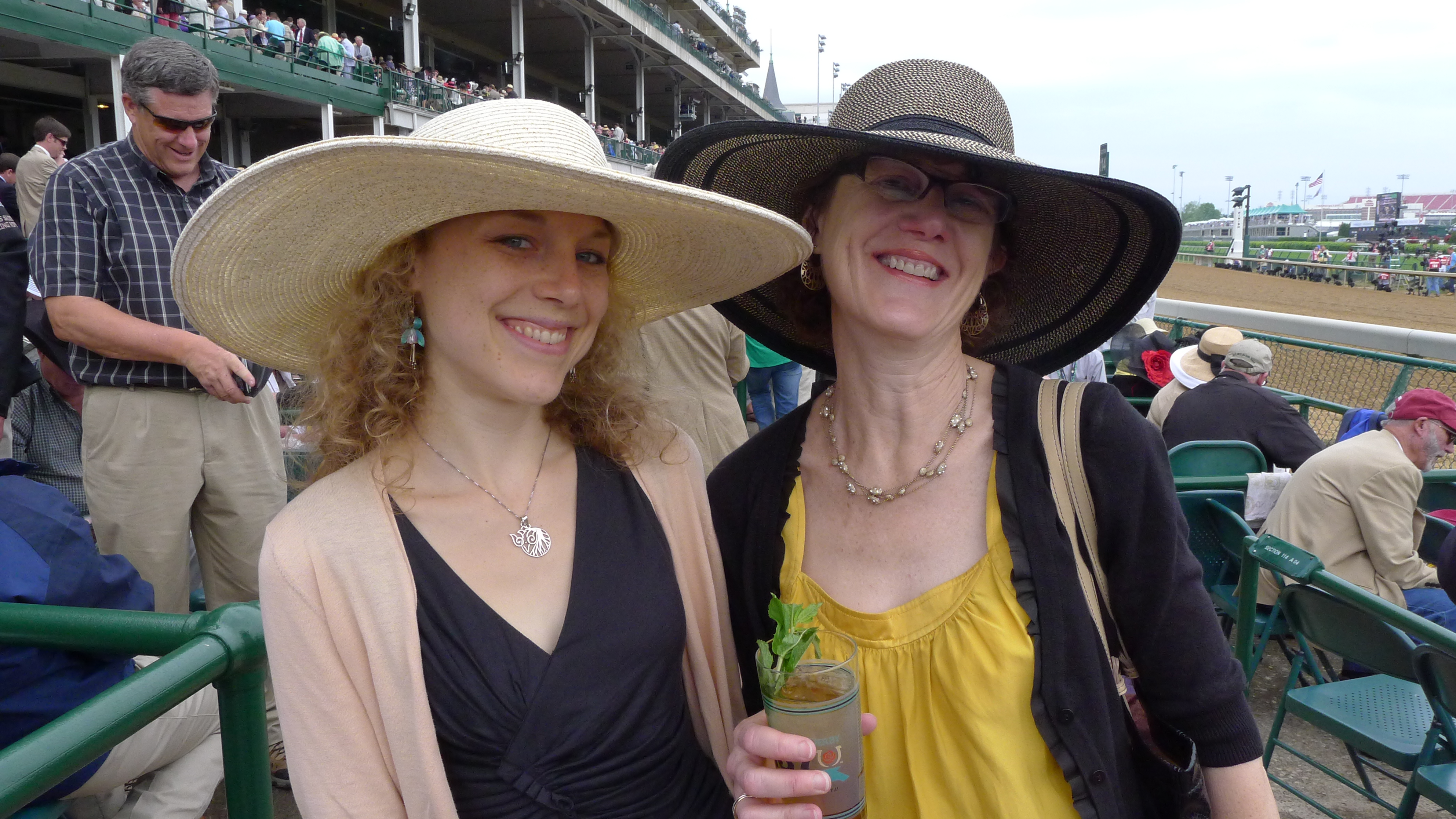
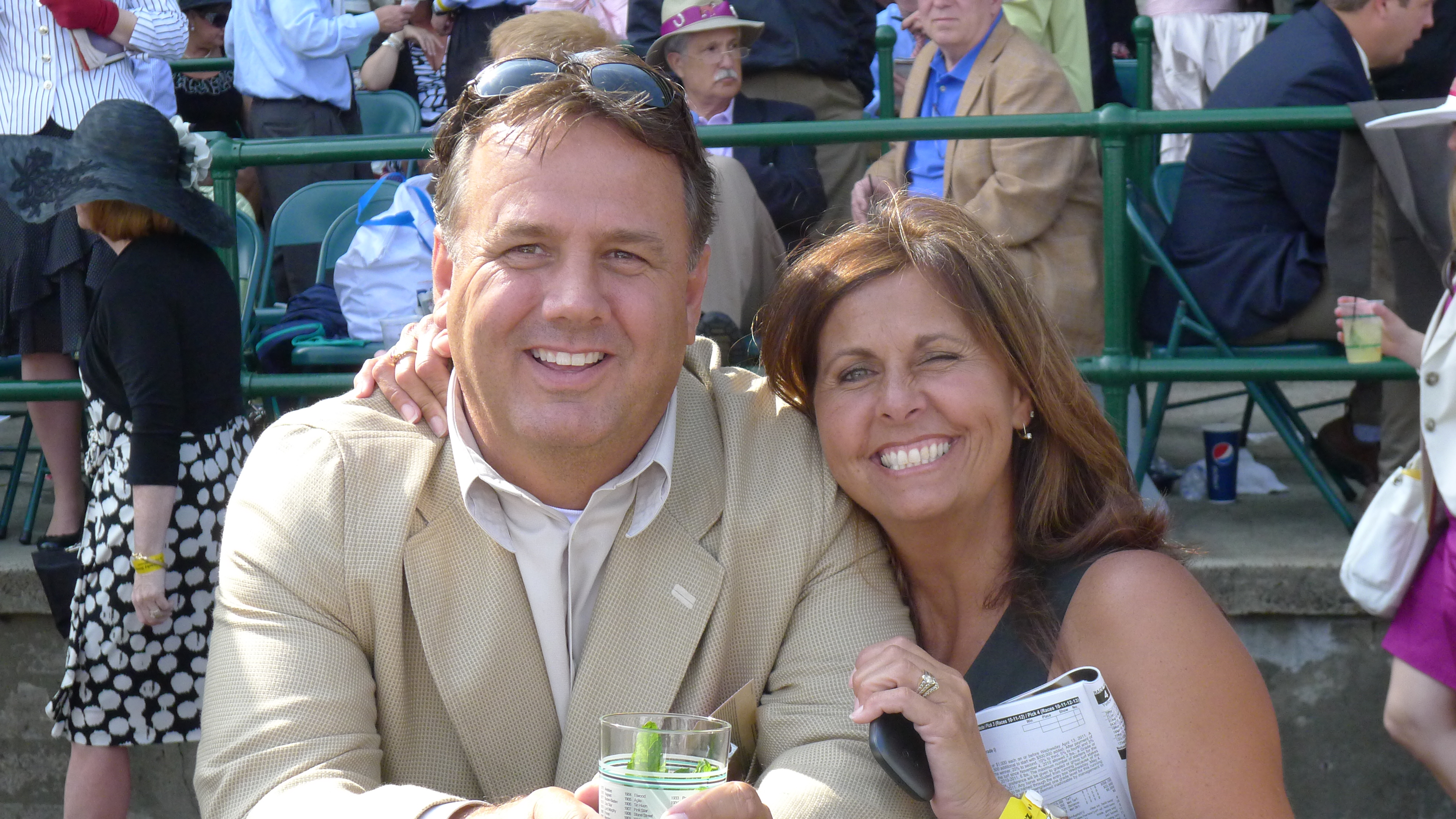
Shrewd bettors, Brooks and Patty

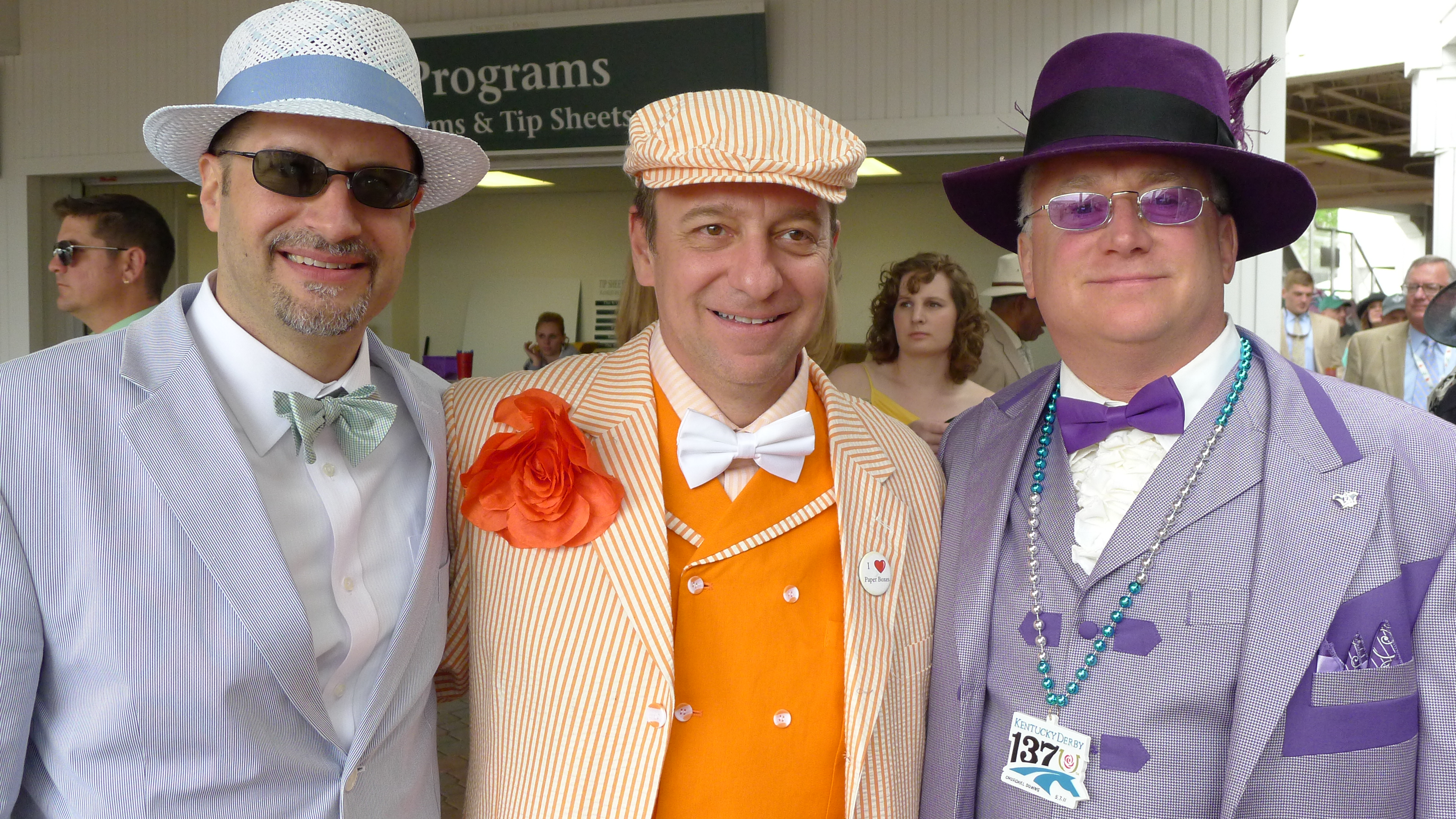
Gay blades

Fearless blogger

The lady who took my picture in the concession line -- Carolyn, I believe

Jeff and his wife Terri, of Fort Myers, Fla. He sold me the only two tickets I was able to get that were together. They graciously hosted us in their box.

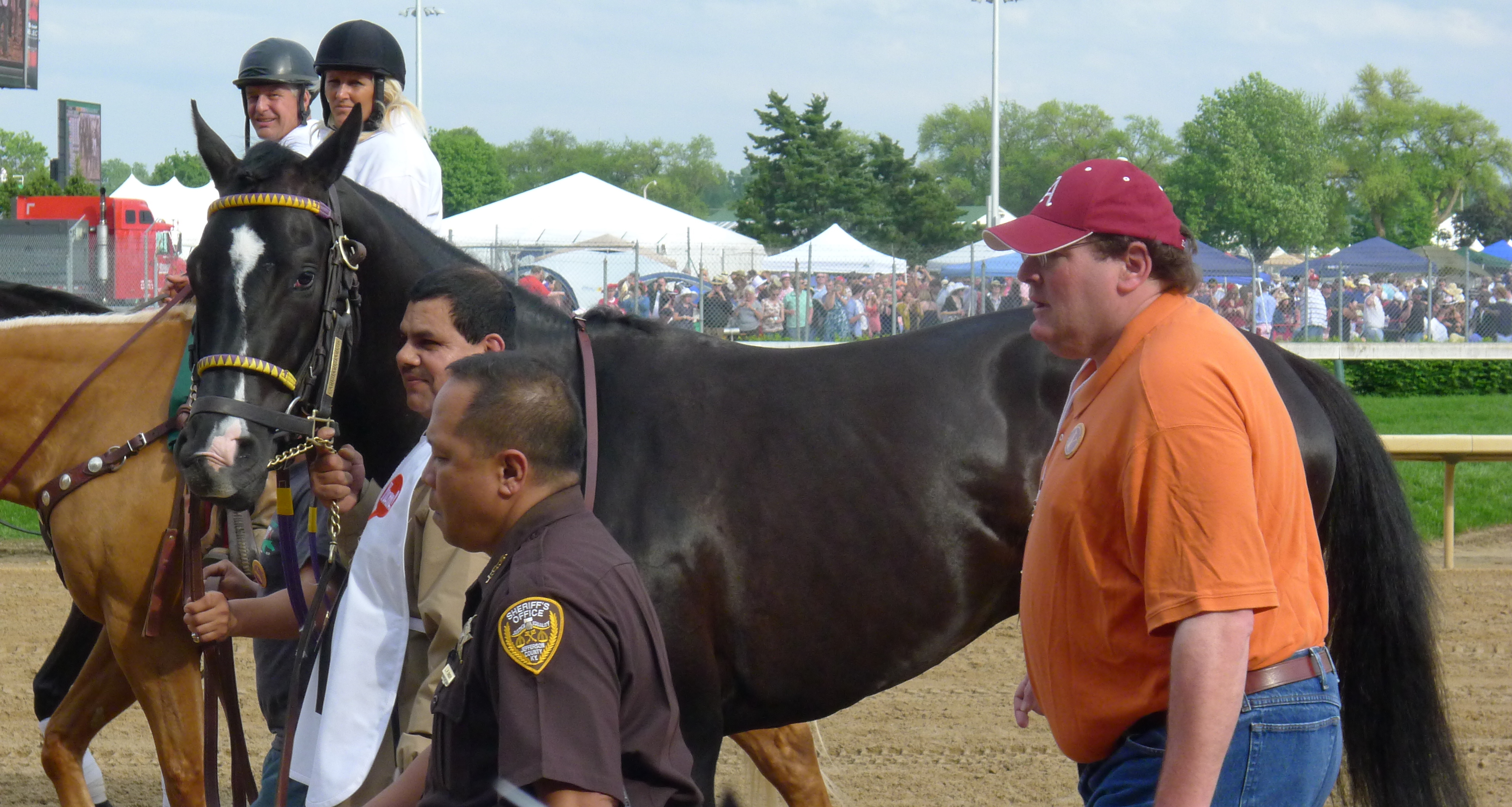
My Derby horse, Archarcharch, during the "walkover" from the barn area. "Arch" came in 15th.

The third-floor clubhouse (lower balcony) and the fourth, fifth and sixth floors -- "millionaires' row." At far right, you can see one of the famous Twin Spires.

First-floor clubhouse (to the left and right of the walkway), where we sat

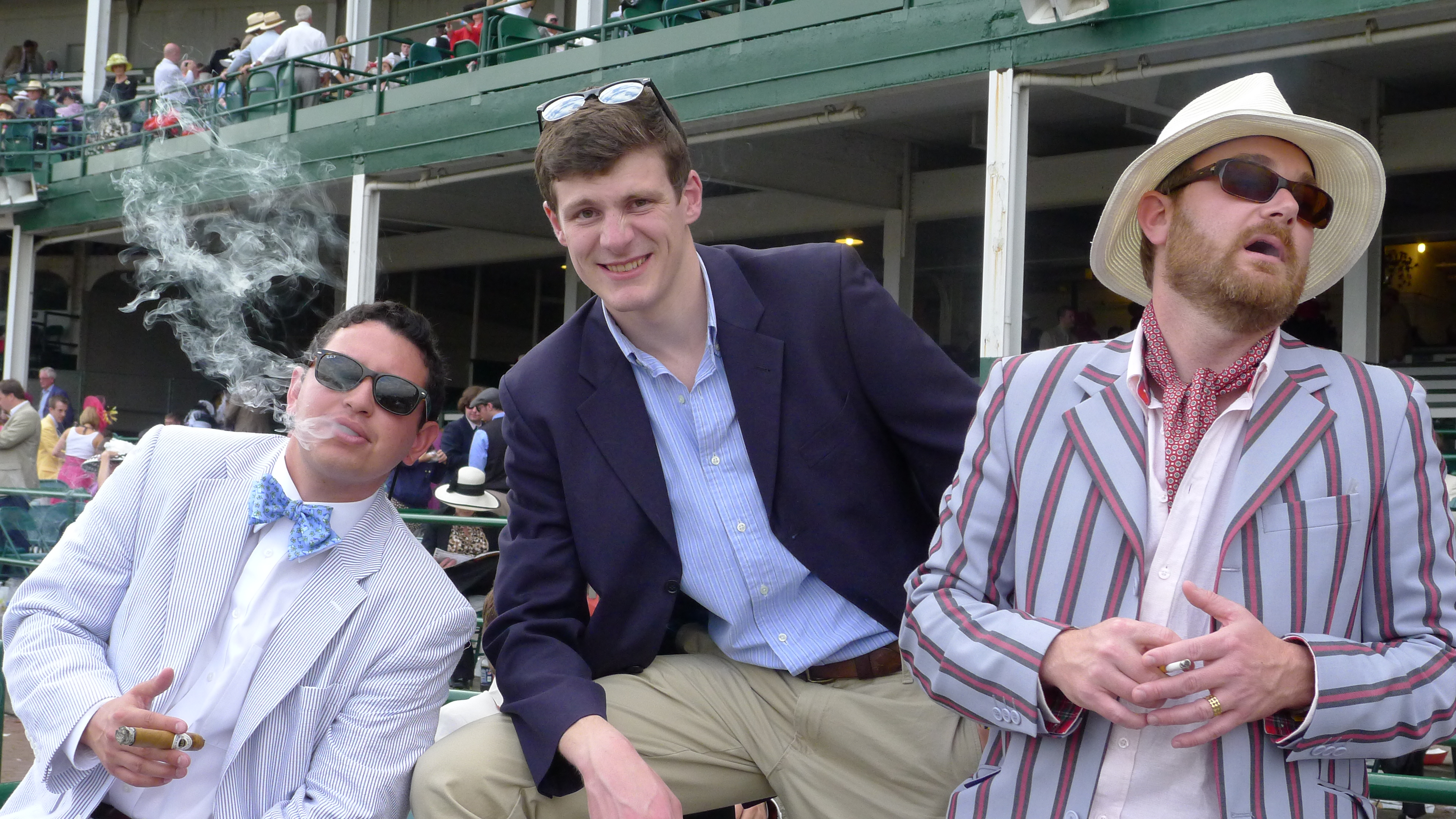
My son Charlie (center), flanked by his friend Patrick Schell (left) and Ascot Man. (I have no idea who he was, but he definitely belongs in the picture.)

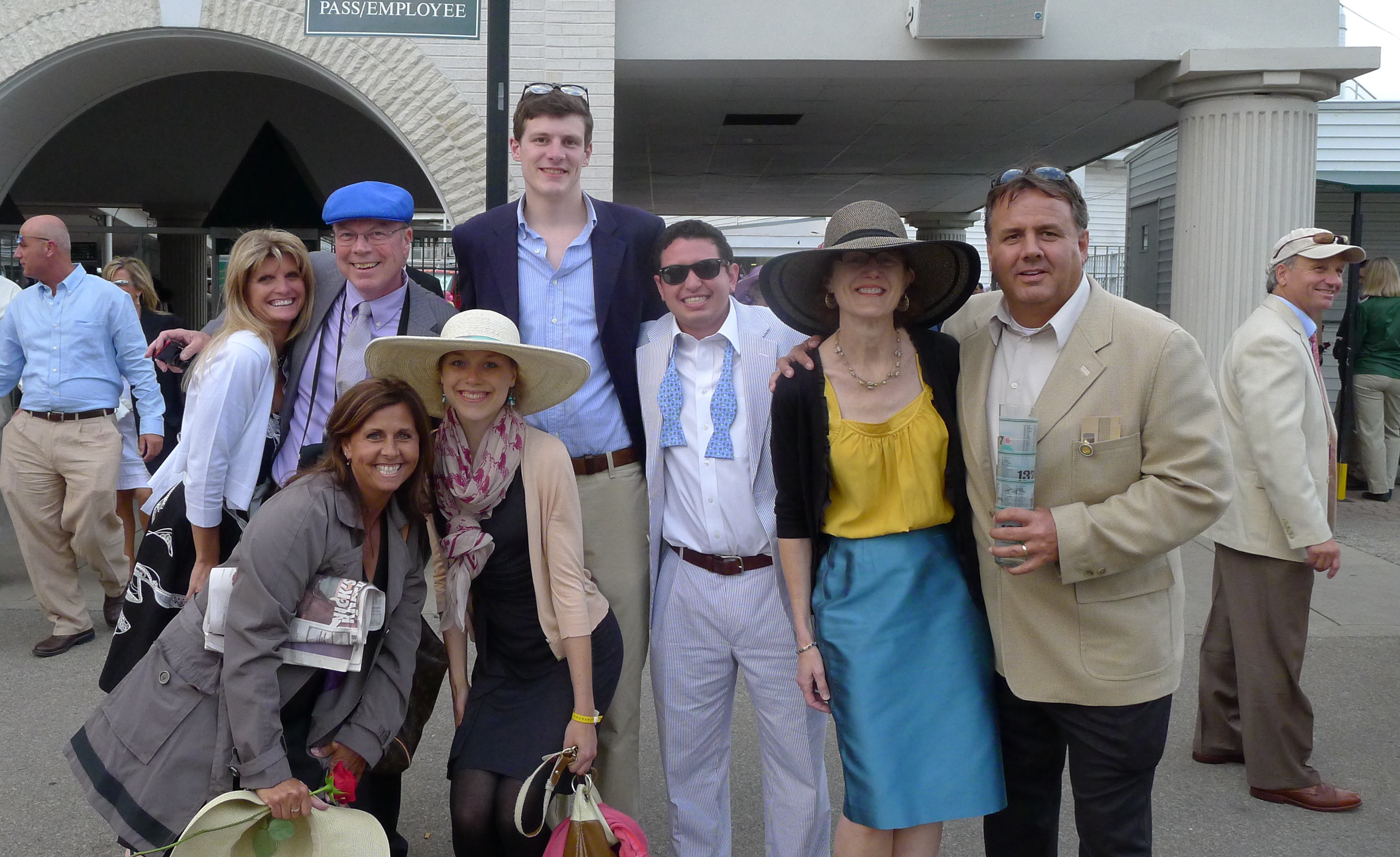
At the end of the day, our group was still smiling. Back row, from left: Judy of Fort Myers, me, Charlie, Patrick, Patty and Jeff. Front row: Terri and Brooks.

Aided by a change in the way circulation statistics are calculated, The Kansas City Star was able to get its Sunday circulation figure back up over the 300,000 benchmark for the six-month period ending March 31.

Overall, however, considering the direction of newspaper advertising, the picture for the newspaper industry remains grim.

Figures released earlier this week by the Audit Bureau of Circulations (ABC) show that The Star’s Sunday circulation was 305,113 for the period ending March 31, compared to 290,302 for the period that ended last Sept. 30. (The figures for both periods include digital subscriptions, which make up more than 10 percent of circulation.)

When the 290,000 figure came out last fall, it shocked many Star watchers because it was the first time in the modern newspaper era that circulation had fallen below 300,000.

At least partly to mitigate the ongoing circulation declines around the nation, ABC, which is run by publishers, changed the rules to include distribution categories that, until now, have not been included in the “top line” circulation figure. Among those categories are newspapers distributed through newspapers in education (NIE) programs and copies sold in bulk to places like hotels and restaurants.

Where ABC’s top line formerly was “total average paid circulation,” it is now “total average circulation.”

Because of the changes, ABC cautioned against making direct comparisons of the March data with data from earlier reporting periods.

The Star’s two other circulation categories — daily (Monday through Friday) and Saturday — also benefited from the change. For the most recent period, daily circulation stood at 209,258, compared with 206,441 for September, and Saturday circulation was 215,961, compared with 211,966 for September.

Unfortunately for the St. Louis Post-Dispatch, the rules changes weren’t sufficient to give that paper a bump over last September’s Sunday figures.

Like The Star, the Post-Dispatch fell below a key benchmark — 400,000 Sunday sales — last year, when circulation dipped to 365,589. The comparable ABC figure for March 31 was 360,450.

However you look at it, it’s fair to say that circulation revenue at The Star, the Post-Dispatch and the vast majority of daily newspapers in the U.S. is continuing to fall. And when that fact is combined with the unrelenting decrease in newspaper advertising, it should make the most ardent of believers in newspapers avert their gaze.

Alan D. Mutter, who writes the Reflections of a Newsosaur blog out of San Francisco, reported recently that “although television, online, radio and even magazine ad revenues all moved into positive territory by the end of 2010, newspaper (ad) sales dropped 6.3 percent.”

One of the worst first-quarter showings was turned in by The Star’s owner, McClatchy Co., where ad revenue fell 11 percent from the first quarter of 2010.

For the industry as a whole, Mutter said that annual print and digital newspaper ad sales have now dropped nearly 50 percent from the all-time high of $49.4 billion in 2005.

As an example of the dreadful collapse, Mutter pointed to automotive advertising. “Publishers, who collectively sold more than $5 billion in automotive classifieds as recently as 2004, booked a mere $1.1 billion in the category in 2010,” Mutter said.

During the same period, auto advertising on local TV stations jumped nearly 54 percent, to $2.6 billion, and online auto advertising rose nearly 14 percent to $2.8 billion.

“Because a growing number of well-informed consumers make their decisions before contacting dealers,” Mutter said, “the point of sale has moved to the web, not the showroom. Dealers don’t need newspapers to remind consumers they are there, because empowered consumers know who the dealers are, know what models are in stock and know how much they should be paying for a car.”

So, in many case, the information “vehicle” — the newspaper — is cut out.

For consumers, the change has been fantastic. For newspapers, it’s been very tough, and the road ahead doesn’t look any better.