Feeds:
Posts
Comments

It’s been a long time since a local politician stood up to Local 42 of the International Association of Fire Fighters, and I wasn’t surprised, reading this morning’s KC Star, to see the person standing up to them now is Jackson County Prosecutor Jean Peters Baker.

Peters Baker is one of the few Kansas City or Jackson County elected officials with a spine stiff enough to challenge the firefighters.

The issue is a new contract between the county and Local 42, which represents the assistant prosecutors working under Baker. The assistant prosecutors are one of a dozen bargaining units represented by Local 42, whose largest constituency, of course, is the 1,000-plus staff of the Kansas City, MO, Fire Department.

Two main issues are on the table. First, Local 42 wants to raise starting prosecuting attorneys pay to more than $61,000 — up from the current $50,000.

Second, Local 42 wants the Federal Mediation and Conciliation Service to handle disputes that go to arbitration, while Peters Baker wants to continue with retired judges doing the job.

Local 42 officials don’t think retired judges can be impartial because of their connection with the county, and Peters Baker, on the other hand, said the federal mediation service would be too costly.

I don’t think Local 42 is off base in asking for salaries of $61,000 or more for prosecutors — assuming, that is, we’re talking about full-time prosecutors. But her position that using the mediation service would be much more expensive than retired judges strikes me as very logical, and I hope she prevails on that point.

As usual, however, Local 42 officials are making outrageous statements and figuratively frothing at the mouth.

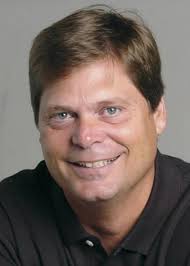
Tim Dupin

For example, Local 42 president Tim Dupin alleges Peters Baker is trying to “bust the union.”

What balderdash. (And how irresponsible for The Star to put such hyperventilation in its headline).

Overall, Local 42 might represent a couple of thousand union workers. The prosecutor’s office probably doesn’t have more than 30 assistant prosecutors. So, how in the world could a contract involving a few dozen workers “bust” a union the size of Local 42?

In its skirmish with Peters Baker, Local 42 is getting help from its umbrella organization, the Greater Kansas City AFL-CIO, which has about 50 affiliated unions. In support of Local 42, the AFL-CIO has taken the step of voting to stop contributing money to the Missouri Democratic Party, which Peters Baker has headed since last month.
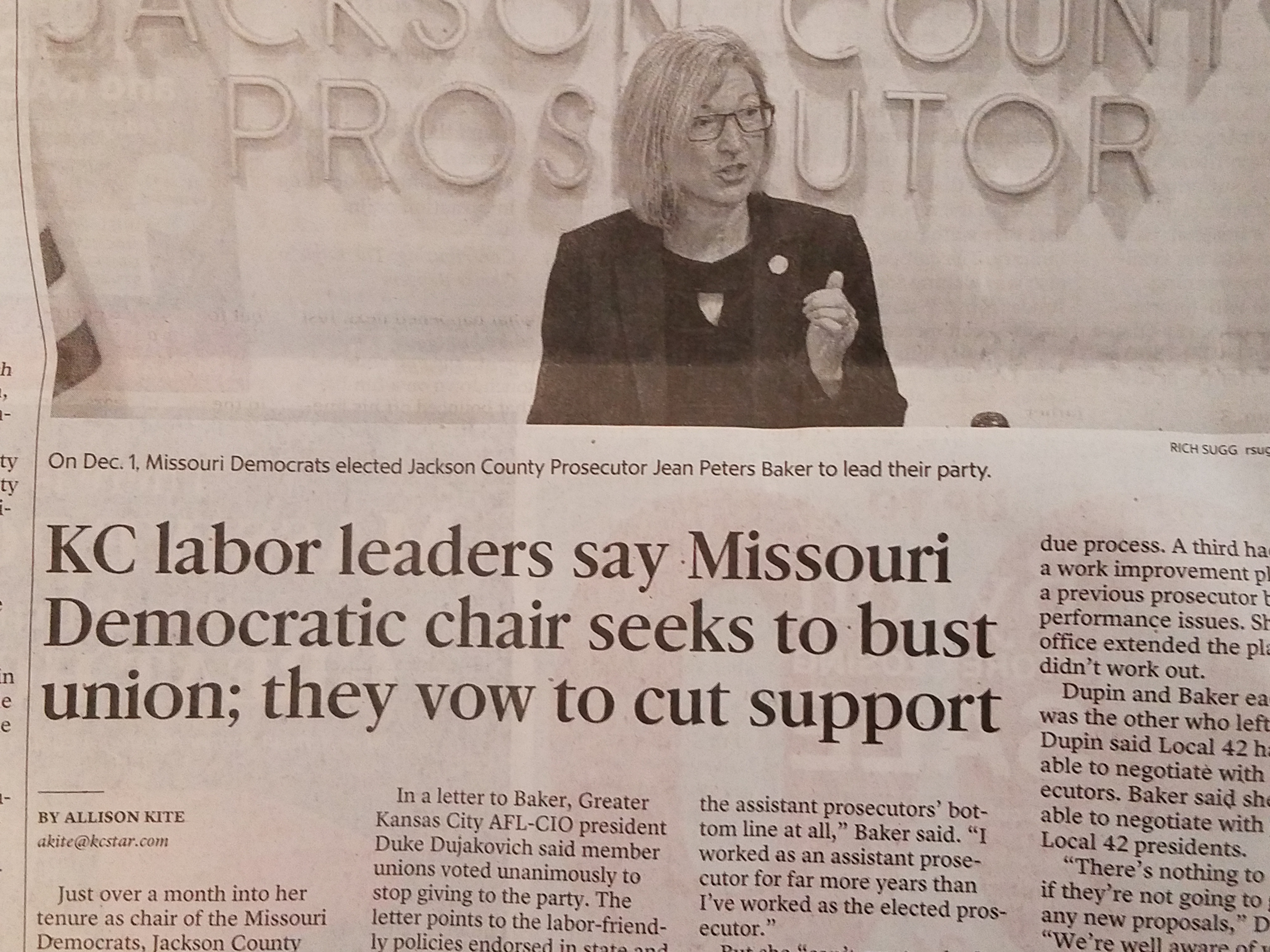
According to The Star, nearly 14 percent of the state party’s contributions last year came from unions, so if the labor stalemate continues very long, it could set the party’s fund-raising back significantly.

This could also have political ramifications for Peters Baker, who probably has statewide political aspirations. The fact that she appears to be putting the county’s interests before her own is another reason to applaud her pluck in this matter.

**

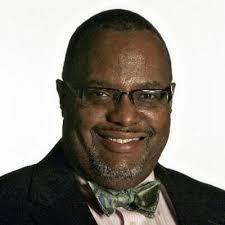
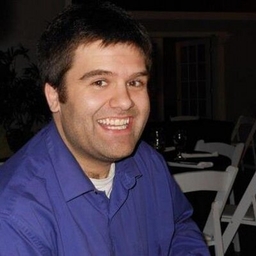
Louie Wright

Local 42 has long been used to getting its way.

Going back to Local 42 president Louie Wright, who served as union president for about 30 years before retiring in 2012, the firefighters have always played hardball, holding in their back pocket the ultimate threat of a firefighter strike in Kansas City. They went on strike in 1975 and four years later engaged in a work slowdown, and both events threw residents into a state of anxiety.

Here’s why Local 42 almost invariably prevails:

:: Their leaders are relentless. Every benefit they can extract and every dollar in pay they can get for their members benefits all current firefighters and the legions of firefighter “brothers” who come after them. One big benefit of pay raises is higher pensions, which are tied to salary levels.

:: They are a powerful political force. They vote, and they campaign hard for their candidates. More than 25 years ago the union filed and won a lawsuit that gave it and its members the right to be active politically, including contributing to candidates. (Before that, firefighters hid behind the skirts of an organization called Taxpayers Unlimited, which they contended was populated by their wives and other relatives.)

:: Most elected officials don’t want to tangle with them because…well, see above…Candidates who have the backing of Local 42 generally have better chances of winning than those who don’t. As a result, when push comes to shove, elected officials — primarily City Council members — usually back down quickly, sometimes after initially declaring they will fight tooth and nail to defend taxpayers’ interests.

:: Finally, the vast majority of bureaucrats charged with negotiating with Local 42 (such as personnel directors) don’t have much incentive to engage in a protracted fight. In most cases, the bureaucrats aren’t going to get pay or pension increases regardless of how disputes are resolved. Most bureaucrats are putting in their time and trying to keep their powder dry until they can retire and start drawing their own pensions.

**

Thus, it’s rare to see a prominent elected official go to the mat with Local 42.

But it sure is refreshing, and it warms my heart.

We Jackson County taxpayers can be grateful for Jean Peters Baker’s display of guts. She is the kind of politician who deserves our unconditional support now and going forward. I hope some day she’ll carry the title of governor or U.S. Senator.

Do you remember how quietly former Kansas City Police Chief — now Jackson County Sheriff — Darryl Forte left the police department in 2017?

He announced in March of that year that he would be retiring after six years as chief. Less than two months later, he was gone.

On his last day in office, which should have been cause to celebrate 32 years on the force, he wouldn’t even consent to be interviewed.

And what was the biggest “takeaway” from his retirement? Well, we all remember that, don’t we? A $500,000 windfall in accrued vacation, sick and comp time. Basically, Forte snuck out the back door with money spilling out of his pockets.

At the time, it was hard to figure out why he floated away so quietly, even with the half-million-dollar golden parachute wadding up around him. In the past few days, though, it has become clear why Forte didn’t want any hoopla about his departure: The lead headline on Wednesday’s front page said it all…

17 disciplined after failures in KC police children’s unit  

Had The Star chosen to add an editorial element to that headline, it would have looked like this…

17 DISCIPLINED AFTER FAILURES IN KC POLICE CHILDREN’S UNIT!!

Now, more than two years after The Star fleshed out the story it’s clear this is a scandal of epic proportions. Seven officers in the children’s unit lost their jobs; some were transferred to other units; and some were busted and put back on patrol duty.

Apparently frustrated at their heavy caseload, investigators in that unit responded by doing little or nothing. They sat on cases, ignoring them for months and twiddling their thumbs. In some cases, evidence was stuffed into desks with no notes indicating what cases the evidence belonged to. Parents of victims were left frustrated. They and the children who were victimized saw no action taken against perpetrators.

It was truly outrageous — a failure of oversight at several levels up the chain. The buck, of course, stops at the top. That would have been at Forte’s desk.

The investigators’ negligence apparently got started about the time Forte became chief, in 2011. And while he was chief it mushroomed. The way I see it, he allowed it to go on. He had to know about it. There’s no way an entire unit could have been so unproductive without him knowing about it. I believe he just turned a blind eye — didn’t want to open a can of worms he knew would bring terrible publicity down on the department.

But it was so bad it had to come out…couldn’t be contained. Like I said, that was in September 2016, thanks to The Star. And six months later, Forte announced his resignation.

Meanwhile, the police department’s internal investigation dragged on for two years. And then, after it was completed, the new chief, Rick Smith, sat on it for a year. During that year — all of 2018 — Forte was appointed sheriff to succeed Mike Sharp, who had resigned, and in November Forte was elected to serve the last two years of Sharp’s unexpired term.

All I can say is I sure hope Forte sent Rick Smith a big box of candy for Christmas as thanks for delaying release of the damning report until after the election.

There’s no reason that investigation couldn’t have been completed and a report released within a year. In California, in fact, state law requires internal police investigations to be completed within a year. If they’re not, the officer or officers involved can’t be punished.

**

Like criminal defense attorneys, police understand delay can be their friend. In criminal cases, witnesses often move away, change their minds about testifying or even die with the passage of time. Evidence gets stale. And big cases tend to lose their emotional energy.

So that’s the tack Kansas City Police Department officials did with this scandal; they let it get old, hoping most people would forget, or at least that outrage would subside.

Thankfully, The Star didn’t forget, and the editors put the “17 disciplined” story where it belonged, at the top of A-1.

I’m now waiting to see what the editorial board says about Forte and this report. In an editorial about Forte after he announced his retirement, The Star was mostly laudatory, beginning its assessment by saying Forte “will be remembered as the first African-American chief to lead the department.”

The editorial contained just one paragraph about the failures in the Crimes against Children’s unit.

What the editorial should have said was it was too soon to assess his tenure as chief; that a more thorough assessment would have to wait until all the facts surrounding the scandal had come out.

Now we know, and now we can put his years as chief in proper perspective: Darryl Forte — Jackson County Sheriff Darryl Forte — presided over the most shameful police department episode during at least the last half century.

…I don’t know if he got a pizza and sheet cake party on his last day as chief, but if he did, he didn’t deserve it. My hope now is that a good candidate will emerge to run against him in two years and shove that scandal down his throat, where it has belonged all along.

A sickly looking white man driving a red truck; an African-American woman going with her three daughters to a convenience store for breakfast supplies in the darkness of a Houston morning; shots ringing out and penetrating the car.

That chaotic confluence of vehicles, people and weapons exploded recently into a frenzied reaction to an event in which a 7-year-old girl named Jazmine Barnes was killed in a drive-by shooting.

Jazmine

The shooting not only took the life of a happy second-grader, it also triggered a rally — attended by hundreds — with seething racial overtones, the participants believing it had been a straight-up, white-on-black hate crime.

As it now stands, however, this was a case of one horrible mistake on top of another. First, the sickly looking white man — so described by an occupant of LaPorsha Washington’s car, the car in which Jazmine was riding — apparently had nothing to do with the crime. Police now believe he might simply have been in the wrong place at the wrong time. After or during the shooting, he drove off. Police are still looking for him to find out what he knows.

Second, it was a black man, being driven by another black man, who shot into Washington’s car. They — and here’s the most maddening thing about this heartbreaking and opaque tragedy — attacked because they mistook the car for one whose occupants they had argued with hours earlier.

After the Dec. 30 shooting, Washington, who was wounded in the arm, told The Houston Chronicle she believed the attack was racially motivated, and the case whipped up attention from civil rights activists across the country.

“I have no tint on my windows or anything so you can see there is a mother — a black mother — with daughters, beautiful children,” Washington told CNN. “You took my baby from me and you have no care in the world.”

LaPorsha Washington at a rally in Houston on Saturday

Nothing in that quote was inaccurate, but within the context of her allegation that the shooter was white, it whipped many people into a frenzy.

And then things started to turn.

Shaun King, a social justice activist and journalist, got a tip that the the shooting had been a case of mistaken identity and that the initials of the men involved in the shooting were “LW” and “EB.” The tipster said the two men did not realize they had shot into the wrong vehicle until they saw TV news reports the night of the shooting.

On the basis of the tip, investigators arrested 20-year-old Eric Black Jr. Saturday after stopping him for a lane-change violation. On Sunday he was charged with capital murder after telling police he had been driving the vehicle and a companion had shot into Washington’s car. The second man has been identified as 24-year-old Larry Woodruffe. He was already in custody on drug charges and is likely to be charged in Jazmine’s killing.

…And then there’s the confounding element of the sickly looking white man driving the red truck. After the shooting, police distributed a composite sketch of the man and considered him a suspect on the basis of a description given by 15-year-old Alxis Dilbert, Washington’s oldest daughter, who had been sitting in the front passenger seat, directly in front of Jazmine.

Alxis told police she noticed a red truck pull up beside their vehicle. She described the driver as a blue-eyed white man wearing a black hoodie and looking sickly. She didn’t think much about the truck until it changed lanes, moving around to the driver’s side of the Washington vehicle. The girl said the man then opened fire.

As they should have, Harris County Sheriff’s Department investigators released the composite sketch (below left), as well as a frame from a video that showed the red truck (below center).


After the incident started coming into clearer focus, Harris County Sheriff Ed Gonzalez pointed out something we all know — that in an instantly developing accident or crime, it is very easy for witnesses and victims to form erroneous impressions of what took place.

“It went down very quickly when the gunfire erupted,” Gonzalez said. “You’re talking about small children; they witnessed something very traumatic, and it’s very likely the last thing they did see was indeed that red truck — and the driver in that red truck — and that’s what they remember last.”

**

Now, after all the tumult and all the ramped-up feelings, we’re left with one problem that has been with us a long time and will be with us for a long time to come: race relations.

The other thing we’re left with: the loss of an innocent girl who was barely old enough to be thinking about becoming a teenager, much less the possibility of a violent death.

We truly are a broken people, aren’t we?

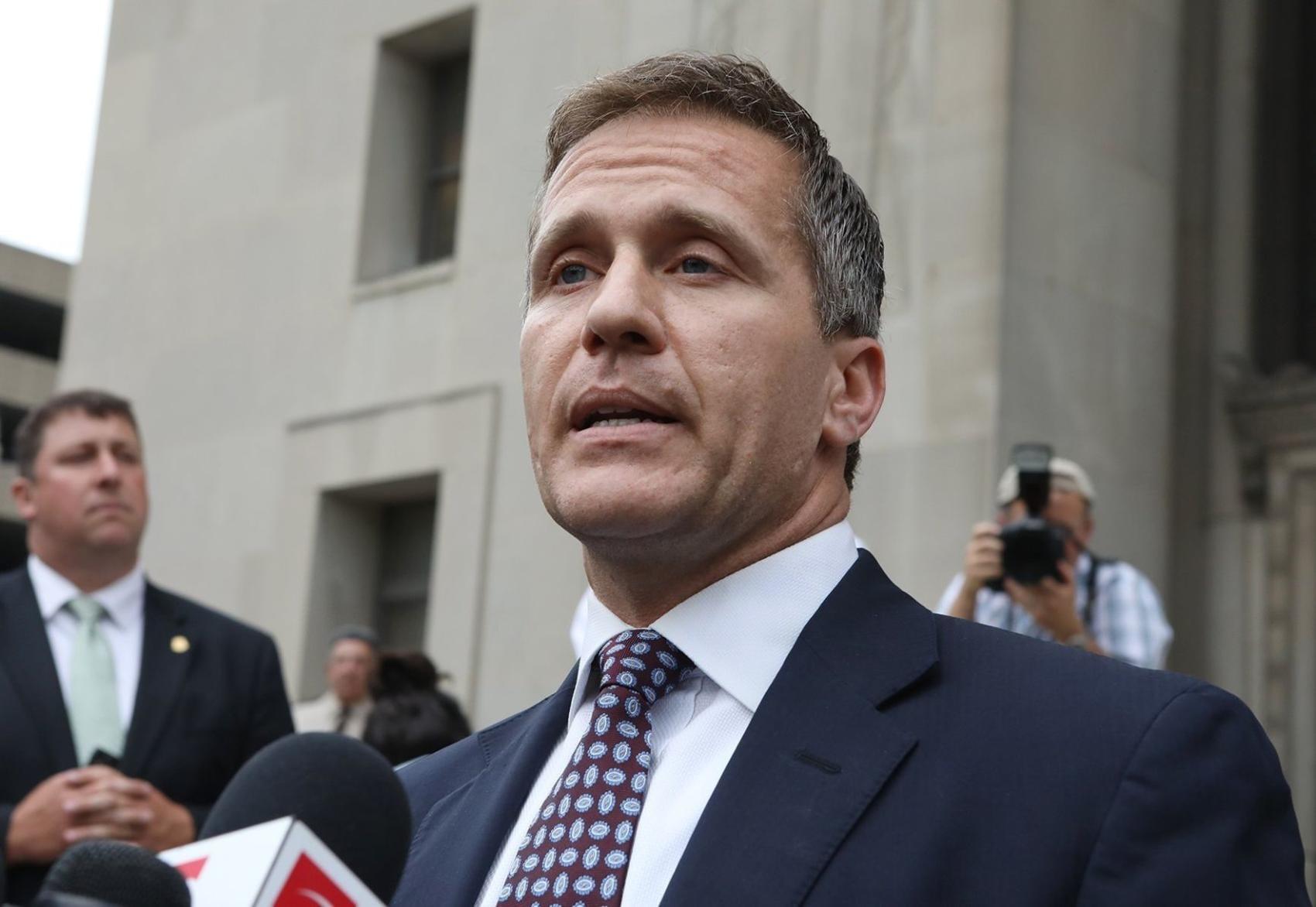
With the passage of time, it is becoming increasingly clear how lucky former Gov. Eric Greitens was.

Last spring, two criminal charges against him were dropped — one because he agreed to resign, the other because of prosecutorial overreach — and last week fellow Republican and Missouri Attorney General Josh Hawley dropped investigations into two possible misuse-of-funds cases.

It is absolutely galling to see such a loathsome individual walk off into the sunset with so much scandal in his wake. He certainly appears to be one of the crookedest people to reach Missouri’s highest elective office in many decades.

Just to recap…

:: On May 30, St. Louis Circuit Attorney Kim Gardner announced her office has reached a deal to dismiss a felony charge of computer data tampering against the governor. That was a day after Greitens announced he was stepping down.

:: Earlier in May, Gardner dropped another felony charge in the wake of accusations she had failed to properly oversee a special investigator who investigated an allegation that Greitens had taken a compromising photo of a woman with whom Greitens had had an extramarital affair.

:: Last Friday, with Hawley on his way out as attorney general (he’ll be sworn in today as a U.S. Senator), his top assistant cleared a veterans’ nonprofit group, The Mission Continues, which Greitens founded, of allegations it had illegally supplied its donor list to Greitens’ gubernatorial campaign. (The donor list was also at the root of the computer-tampering charge.)

:: Hawley’s top assistant also cleared Washington University of St. Louis of possible wrongdoing pertaining to an academic grant. Greitens’ campaign was suspected of using part of a $362,000 grant from WashU and the John Templeton Foundation to pay political staff as he began his run for governor. The A.G.’s office said there was no evidence anyone with the university knew about or participated in any misappropriation.

…Yesterday, in its lead story, The Kansas City Star built up false hopes that somehow, some way, Greitens could still end up being held accountable for some of his suspected chicanery. The story reported the release of a report prepared by a special committee of the Missouri House of Representatives.

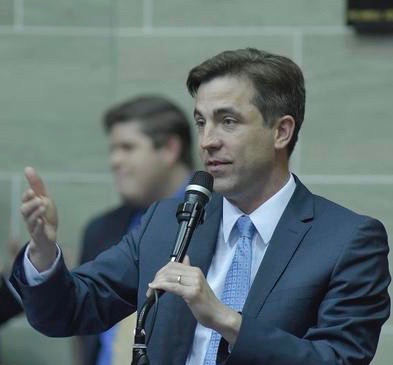
Even though the committee’s jurisdiction over the matters involving Greitens  ended with his resignation, the chairman of the special committee, Republican Jay Barnes of Jefferson City, said he hoped the Missouri Ethics Commission would “take appropriate action to endorse Missouri’s campaign finance laws against Eric Greitens.”

Jay Barnes

I applaud Barnes for not wanting to bring the hammer down on Greitens, but it is laughable to suggest that the Missouri Ethics Commission might take meaningful action. Although the Ethics Commission can refer complaints to prosecuting authorities, it mostly levies fines for campaign finance violations.

In one of its last significant actions, dating to 2012, it fined two Freedom Inc. officials about $3,000 each for financial irregularities. It also fined the organization’s former treasurer a little more than $500 for failing to keep accurate records.

What can we expect the Ethics Commission to do about Greitens?

Don’t hold your breath. Don’t cross your fingers, and don’t give it another thought. If it does anything, we’ll read about it in a very short story in a year or two. In all likelihood, however, Greitens will keep distancing himself from his past legal troubles.

Our best hope for him getting any kind of comeuppance is that, having emerged legally unscathed from his appallingly scandalous governorship, he resumes his reckless behavior and gets caught in some new, legally questionable foray.

What a turd. At least we can be thankful that when we closed the books on 2018, he was out of the picture.

What I didn’t tell you in my New Year’s Eve post yesterday was that my goal on New Year’s Eve is always to find the closest thing to Times Square in Kansas City.

And that’s what I had in mind when I mentioned that after having dinner in Parkville, I wanted to stop by KC Live! and Union Station — the two places where the biggest stroke-of-midnight crowds would be assembled.

Minutes after I published that post, Patty firmly rejected the idea of KC Live!, saying it was going to be too cold. I didn’t argue but thought, OK, there’s still Union Station.

Union Station had been advertising its annual “New Year’s Swingin’ Eve” celebration — $120 per person — in the Grand Plaza, formerly the North Waiting Room.

We had never been to that event, and I’d long wanted to see what it was like. To my surprise, however, Patty started balking at that idea, too, saying, “I don’t want to go there; it’s going to be too loud.”

I countered by saying yes, it would be loud, but it would be a big, boisterous gathering where we undoubtedly would run into people we knew.

“We won’t see anybody we know,” Patty said flatly.

“Oh, yes, we will,” I said, “and I’ll bet you ten dollars we do.”

“I’ll take that bet,” she said.

At that point, I figured that even if I lost the bet, I had prevailed in the “go-don’t go” argument.

With that backdrop, here’s the story of our New Year’s Eve…

**

We arrived at Cafe des Amis a little before 8:30 and were soon joined by longtime friends Cindy and Bill Molini, who live in Lawson.

Cafe des Amis is quite a treasure for Parkville. It’s a 30- to 45-minute drive from Brookside, depending on traffic, but it’s a warm and cozy place, and the food is excellent. It’s owned and run by a French couple named Ingrid and Guillaume Hanriot. Ingrid is in charge of the kitchen, and Guillaume oversees the tables areas and serves customers, along with several other wait-staff members.

As I expected, the restaurant was bustling and busy. Our table was in a room that had five or six tables, and it was quite loud. Even with my hearing aids turned up a notch, I had to cup my ear to hear Cindy and Bill across the table.

The principal offenders in the noise department were two of three people who were sitting at a table 8 to 10 feet from us. At one point, the lady was on the Internet reading something off her phone. She was talking at such a level that she might as well have been announcing at Arrowhead Stadium.

After a few glasses of wine, her husband assumed the announcing chores. Toward the end of our (and their) two-and-a-half hour stay, he was bellowing about Jesus (whom he liked) and President Trump (whom he didn’t like). The third person at the table, an elderly man who didn’t seem to say much, functioned as the loud couple’s audience.

Fortunately, the couple’s commentary was subsumed, for the most part, by the lively conversation of people at the other tables in the room. Only at the end, after most of the other people had left the restaurant, did the Jesus fan’s voice become insufferably loud. That’s when I said, “Let’s get out of here.”

Time had whizzed by, and to my surprise it was almost 11:40 by the time we left the restaurant and started back to town. To my dismay, I realized we weren’t going to make it to Union Station for midnight and that, for the first time, in our 33-year marriage we would be observing the turn of the calendar in an automobile.

Traffic was light, and we moved right along, but still at 11:58 we were on Broadway approaching Pershing Road. Patty, being very resourceful, had been punching buttons on the radio looking for a station that featured something akin to a New Year’s Eve observation. To our delight, 90.9 FM, “The Bridge,”was playing Frank Sinatra’s recording of”New York, New York.” So, we celebrated the first moments of the new year singing along with Frank and exchanging a quick kiss while stopped at the light at Broadway and Pershing.

The front Union Station parking lot was full, but I manufactured a spot, and as we walked into Union Station, men in coats and ties and women in glittering dresses were already starting to trickle out of the Grand Plaza. As I expected, no one was checking people in or collecting money at that point, so we walked right in.

Lights were flashing, hundreds of people were drinking and mingling and scores were dancing to the music of Dave Stephens and the Kansas City Jazz Orchestra. We navigated through the crowd and got close to the stage and dance floor. Even though the sound in that cavernous room is always terrible, it was an enthralling scene and, indeed, it was as close as I was going to get, in Kansas City, to Times Square.

We stayed until the last song, Puttin’ on the Ritz (written by Irving Berlin in 1927), and then started working our way back toward the front of the room to leave.

**

Out of Patty’s view, I pulled a $10 bill out of my wallet as we walked and held it in my left hand…Unless we saw someone we knew within the next minute or two, I was going to owe her $10.

Moments after I had pulled out the bill, she turned to me and said, “Have you seen anybody you know?”

I extended my hand, holding out the folded $10 bill. She looked at it and said, “What’s that?”

Then she remembered. “Oh,” she said and reached out and took the bill.

We hadn’t walked more than another 20 to 25 feet when Patty slowed and approached a waitress who was standing off to one side. Patty handed the waitress the $10 bill and exchanged a few words with her. Nodding and smiling, the woman thanked Patty.

When Patty caught up with me, she said, “Those people look so tired.”

I looked at her, put an arm around her and said, “That’s one of the many things I love about you; you’re always paying it forward.”

**

Yes, it was a great New Year’s Eve. Every day is great when you’re with someone like that.

New Year’s Eve is probably my favorite day of the year.

Sure, I love Christmas and Christmas Eve, and July 4 and my birthday and Kentucky Derby Day. But to make it to the doorstep of a new year has always been most exciting for me.

If you’re fortunate enough to be in good health and of sound mind, the new year sprawls out like a long carpet. You don’t know where it will lead; all you know is that carpet is not going to be nearly as straight as it looks on New Year’s Eve and New Year’s Day. There will be a lot of digressions and diversions, bumps and rolls. But it’s exciting to peer ahead, nevertheless.

One of my favorite parts of New Year’s Eve is the Times Square Ball Drop. Patty and I don’t always get to see it because we like to go out and be out for the turn of the calendar. (I expect that to be the case tonight. We’re meeting friends for a late dinner in Parkville and on the way back might drop by KC Live! in the Power & Light District and then Union Station.)

On Dec. 30, 2003, workers tested a 1,070-pound, six-foot diameter Waterford Crystal ball. The ball is suspended from a 77-foot flagpole atop the One Times Square building, about 400 feet above Times Square.

For me, the Times Square Ball Drop captures an uninhibited, unconditional embrace of the new year. The beaming faces on those tens of thousands of people (the vast majority of them young and with strong bladders) says everything about the joy of being alive at the end of one year, poised to plunge into the new one.

Another thing about the Ball Drop that warms my heart — and many of you might be only vaguely aware of this — is that we owe its existence to journalism, particularly to The New York Times.

Blogger Kate Kelly tells the story of how the tradition got its start…

The first New Year’s Eve celebration in Times Square occurred in 1904, just after The New York Times had relocated to a new building in what had been known as Longacre Square. Publisher Adolph Ochs had successfully pushed for a renaming of the district, and the triangular area where the new building sat at the intersection of 7th Avenue, Broadway, and 42nd Streets has since then been known as Times Square.

That year Ochs sponsored a party to beat all parties to celebrate the new location. An all-day street festival was capped off with a fireworks display, and there were thought to have been 200,000 people in attendance. The Times continued to sponsor a New Year’s Eve event in the area, and New Yorkers soon began going to Times Square instead of ringing in the new year at Trinity Church as had been the previous custom.

The Times soon outgrew the building in the heart of Times Square and has since moved a couple of times. It is still in the area, however, and, more important, the name of the world’s best newspaper has and always will be associated with the biggest New Year’s celebration of all.

**

Tonight, fittingly, a group of journalists will ring in the New Year in Times Square.

As the official special guests, the group will appear on stage with the Committee to Protect Journalists and will push the button that starts the lowering of the great ball, which is covered with 2,688 Waterford Crystal triangles and illuminated by 32,000 LED lights.

Perhaps the best known journalist on stage will be NBC’s Lester Holt, the anchor who interviewed President Donald Trump in May about his firing of FBI director James Comey. (One of the more remarkable quotes from that interview was this from Trump: “I said, you know, this Russia thing with Trump and Russia is a made up story.” Later, of course, he denied that the Russia investigation had anything to do with his firing of Comey.)

When I watch the ceremony, however — whether it be live or recorded — I’ll be focusing on lower-profile journalists like Karen Attiah and Alisyn Camerota.

Attiah is the global opinions editor of The Washington Post. In that role she oversaw the work of Jamal Khashoggi, the Washington Post contributing writer who was murdered and dismembered in the Saudi consulate in Istanbul two months ago.

Camerota is an anchor at CNN, the network that in September was among targets of explosive devices allegedly mailed by a wild-eyed, unhinged Trump supporter named Cesar Sayoc.

**

Of all the crazy forays President Trump has embarked on — like insisting on building “The Wall” and refusing to acknowledge global warming — his attempt to denude and emasculate our free press might represent the biggest threat to the future of our democracy.

Tonight, then, in addition to celebrating the dawning of a new year, let’s give thanks for a free press. And tomorrow and for all of 2019, let’s do all we can to support the continuation of that cherished and invaluable American institution.

Happy New Year, everyone! Whatever you do tonight, have a great time and stay as safe as you can…

Just six months ago, David Jungerman was seeking an accelerated trial date and complaining he was wasting much of what remains of his life in jail.

Now, though, with his Feb. 25 trial date much closer than it was then, Jungerman seems to have changed his tune.

Four days before Christmas, his attorney filed a motion asking for a mental competency determination from the Missouri Division of Mental Health.

Specifically, the motion seeks a determination as to “whether the defendant has the capacity to understand the proceedings against him or to assist in his own defense” and “an opinion as to whether the defendant has a mental disease or defect and the duration thereof.”

We could see this coming, couldn’t we?

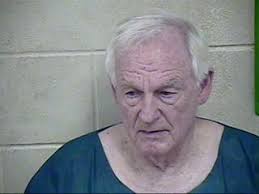
Jungerman

The way this dangerous old man has conducted himself the last 30 years stands as strong evidence that he is an irrational person who flagrantly flouts not only societal norms but also the law. Consider that he has…

— shot at least three people encroaching on his northeast Kansas City business

— fired a warning shot at a man he believed had stolen pipe from his property

— held several teenagers at gunpoint after he caught them on his property in Raytown

And, finally, since March he has stood charged with first-degree murder in the fatal shooting of Kansas City lawyer Thomas Pickert, who had won a big civil award for one of the prowlers Jungerman had shot.

…You’ll note I said Jungerman is irrational. That’s not to say he is suffers from a mental disease or that he doesn’t know what he’s doing.

I believe in each instance he knew exactly what he was doing. His problem is he believes that if someone — anyone — does anything he views as a threat to his money or his property, he’s entitled to go into offensive mode, locked and loaded.

He told me so himself, after a court hearing in an unrelated case earlier this year. Outside the courthouse in Nevada, MO, he said he firmly believed in “the castle doctrine,” which he succinctly described this way: “You come in my house, I’m going to blow your ass away.”

Jungerman thinks he’s funny, too. For example, when police asked him whether he was shooting at the man he believed had stolen pipe from him, Jungerman insisted it was a warning shot, saying, “Missing him would have hurt my pride.”

Only when it suits his needs does he claim to have mental problems…In the civil trial where Thomas Pickert represented one of the men Jungerman had shot (resulting in the man losing a leg to amputation), Jungerman claimed his thinking had been cloudy since he fell and hit his head on concrete several years ago.

Yeah, sure.

Judge David Byrn has not ruled on the motion for a mental exam. I think he almost certainly will grant the motion, however, and I also believe state psychiatrists will conclude he suffers from no apparent mental disease or defect and will find him competent to stand trial.

If, by some chance, they determine he does suffer from mental disease or defect, do not worry; this man is not going free. He would change his plea from “not guilty” to “not guilty by reason of mental disease or defect.” If a jury found him not guilty for that reason, he would be committed to the Fulton State Hospital, the facility for defendants found not guilty, or unable to stand trial, by reason of mental disease or defect.

This change of direction by Jungerman looks to me like the start of a delaying action. When the state has overwhelming evidence — which I think it has in the Pickert case — a defendant’s best option is to delay, delay, delay. Let evidence get stale, hope witnesses get cold feet. Whatever. Just forestall prosecution as long as possible.

Maybe I’m wrong. Maybe this trial will still start Feb. 25, as scheduled. But don’t be surprised if it doesn’t.

I meant to write earlier about the death of Lloyd “Jim” Kissick III, president of Kissick Construction Co., but got sidetracked on other things.

Yesterday, though, after running into his nephew and business partner Pete Browne, whom I’ve had the privilege of getting to know in recent years, I came away knowing I had to pay written tribute to Jim.

This is a two-part story. The first is about Jim; how I met him; and his rise as a contractor. The second is about my final “encounter” with Jim. It occurred, oddly enough, after his death. (I know it sounds crazy but, please, read on.)

**

Like everyone who knew Jim, I was shocked to hear he had died suddenly on Saturday, Dec. 8, at his Leawood home. He was only 68 and had been in good health. (Pete says he has not heard if a specific cause of death has been determined.)

I met Jim when I was a young reporter covering the Jackson County Courthouse from 1971 to 1978. In the mid-70s, Jim, an MU graduate, became Jackson County Public Works director, which meant he was in charge of all county facilities and oversaw county infrastructure projects, such as road and bridge construction. At the time, he was in his mid- to late-20s and was overseeing a staff of more than 100 people.

I recall Jim as friendly, handsome and modest. He carried himself with confidence, and he was serious about his work. A lot of good-looking, smart women worked at the courthouse, and such a one was Cece Ismert, an animated blond, who was a receptionist in the county executive’s office.

Cece hadn’t been at the courthouse very long before Jim moved right in on her. They were an instant match; they married in 1979; and they remained married for the next 39 years. Along the way, they had three sons and six grandchildren.

Jim Kissick (left) and Pete Browne

On the career front, Jim took a pivotal step in 1994, when he and Pete started Kissick Construction. Jim’s obit says, “Taking a gamble on himself, he decided to take a leap of faith and invest nearly every dollar he had into starting the company, despite having three young children at home.”

The gamble paid off. Over the years, Kissick Construction expanded steadily. It is now a $100-million-dollar-a-year firm with more than 400 employees, specializing in earthwork, utilities, structural concrete and foundation piling.

From a distance, I admired the growth of Kissick Construction. Whenever I would see a Kissick truck, with the strong and distinctive, black and gold logo, I would think about how far he had come as an entrepreneur.

**

That brings me to my final encounter, if you will, with Jim.

I knew from the obit that the funeral was taking place at 10 a.m. last Saturday at St. Peter’s Catholic Church. I flirted with the idea of going but ended up not going. So, I forgot about it.

When Saturday came along — warm and sunny — I decided to play golf at Swope Memorial.

About 11:30 I started from home, going east on Meyer Boulevard. When I got to Holmes Road, where the church is, barriers were blocking passage on Meyer, police were standing around and a funeral procession was getting started.

‘Kissick!” it dawned on me.

Briefly I felt guilty about going to play golf when Jim was being hauled to his grave. But my thoughts quickly switched to surmounting this unexpected inconvenience. (Funny thing about golf…Once you decide to play, you become 100 percent consumed with getting to the first tee and sticking the tee in the ground.)

In seconds, I came up with Plan B. I knew this was going to be a long procession and didn’t want to wait. So, I went north a block to 63rd Street and headed east, planning to take that a few miles to Swope Parkway and then go south to the Meyer Boulevard entrance to Swope Park.

I raced along (by my slo-go standards, anyway), convinced I was going to outrun the procession. But — confound it! — after making the turn onto Swope Parkway I saw the funeral procession. It had beaten me to the park entrance by a minute or two.

Now, I was really up against it. But knowing that area like I do, I was determined not to be thwarted. A new plan quickly came together: I would retreat to 63rd Street and take it all the way to I-435. Then I’d go south on 435 to Gregory and then enter the park through the “back door,” going west on Gregory.

Off I went, really speeding now, going all of maybe 40 to 45 miles an hour…Got to 435; made a right; got off at Gregory and headed west.

I hadn’t been on Gregory for 15 seconds when I saw, straight ahead of me, coming eastbound — YES! — the damned funeral procession. (Sorry, Jim.)

It was the very front of the procession, and a motorcycle policeman was energetically waving me and a few other cars to the shoulder of the road.

At that point I surrendered. I relaxed in my seat and thought: I am destined to watch Jim Kissick’s funeral procession…So be it.

In short order I was most grateful I had lost my race against the procession. Leading the procession were big, white Kissick construction trucks — some GMC, some Ford, but each one big, powerful and impressive.

One after another they came. Most carried several people, a few had one or two. I was counting at first, and then I quit counting. There were 60…80, maybe more. The stream of white trucks went on almost 10 minutes. What a testament, I realized, to what Jim had accomplished — along with the entire Kissick team, which he so valued and loved.

In a minute, I had gone from a frustrated driver to a humbled admirer of Jim Kissick’s legacy. As the last cars came by (several regular vehicles brought up the rear), I pulled back onto the roadway and slowly headed the last mile to the golf course.

Minutes later, I was standing on the first tee, breathing easily on a beautiful, Indian summer afternoon. About the same time, a fine man whom I had met more than four decades earlier was being laid to rest in Mount Olivet Cemetery on Blue Ridge Boulevard in Raytown.

It was good to have known you, Jim. I’m still racing, and, in the scope of things, not very far behind you.


I pound The Star a lot, but I think it’s clear my biggest beef is with its corporate owner, McClatchy. Most daily papers in the U.S. have depreciated and struggled with the overall downturn of the newspaper industry, but I have a particular, grating dislike for McClatchy because of what has happened to my and your daily paper under its watch.

But there are some good things taking place at The Star. Recently, for example, the paper has begun adding small bio boxes about the writers of local stories. Accompanying the text are photos of the writers and, in some cases, their phone numbers.

This is a small change, but it helps personalize the connection between reader and writer. I don’t know if it’s a McClatchy idea or a Star idea, but it’s refreshing, and I hope it helps The Star and McClatchy with their difficult transition from print to digital.

Here are several examples of the bio boxes that have begun appearing…

Cronkleton

Robert A. Cronkleton gets up very early in the morning to bring readers breaking news about crime, transportation and weather at the crack of dawn. He’s been at The Star since 1987 and now contributes data reporting and video editing.

Joe Robertson specializes in reporting on criminal and social justice. He works to tell the stories behind the stories, while covering breaking news of all kinds.

Tony Rizzo covers federal and state courts for The Kansas City Star, where he has been a reporter for more than 30 years. He is a Kansas City native and veteran of the U.S. Army.

Rice

Glenn E. Rice covers crime, courts and breaking news for The Kansas City Star, where he’s worked since 1988. Rice is a Kansas City native and a graduate of the University of Central Missouri.

Katy Bergen covers Kansas education for The Kansas City Star. She is a graduate of the Missouri School of Journalism.

Lynn Horsley reports on Johnson County for the Kansas City Star, focusing on government, politics, business development and battles over growth and change in the county. She previously covered City Hall in Kansas City for 19 years and has a passion for helping readers understand how government affects their lives

Mark Davis writes about business for The Kansas City Star with attention to Sprint, investing, the economy and scams. He has been a winner and finalist in national competitions held by the Society for Advancing Business Editing and Writing.

Kite

Allison Kite reports on City Hall and local politics for The Star. She joined the paper in February 2018 and covered Midterm election races on both sides of the state line. She holds a bachelor’s degree in journalism with minors in economics and public policy from the University of Kansas.

Gary Bedore covers all aspects of Kansas basketball for The Star — the current team as well as former players and coaches and recruiting. He attended KU and was born and raised in Chicago, as well as Lisle, Ill.

Alex Schiffer has been covering the Missouri Tigers for The Star since October 2017. He came in second place for magazine-length feature writing by the U.S. Basketball Writers Association in 2018 and graduated from Mizzou in 2017.

Lynn Worthy covers the Kansas City Chiefs and NFL for The Star. A native of the Northeast, he’s covered high school, collegiate and professional sports in various regions of the country. He’s won awards for sports features and sports columns.

Pryor

Brooke Pryor covers the Kansas City Chiefs for the Kansas City Star, where she works to give readers a deeper understanding of the franchise and the NFL through daily stories, game coverage, and player profiles. She attended the University of North Carolina at Chapel Hill and grew up in Winston-Salem, N.C.

Jesse Newell — He’s won an EPPY (Editor & Publisher award) for best sports blog and previously has been named top beat writer in his circulation by AP’s Sports Editors; has covered KU sports since 2008. His interest in sports analytics comes from his math teacher father, who handed out rulers to Trick-or-Treaters each year.

Pete Grathoff — From covering the World Series to the World Cup, Pete has done a little bit of everything since joining The Star in 1997. He writes about baseball and has a quirky blog that augments The Star’s coverage of area teams.

Kerkhoff

Blair Kerkhoff has covered sports for The Kansas City Star since 1989.

**

Not much has to be said about Blair…Just about every Star reader knows who he is.

Slip slidin’ away

In ways big and small, The Star is not serving its readers well.

Let’s start with the big…

Health reporter Andy Marso must be one of the most frustrated reporters in America these days. He’s been onto a potentially big story for months, but he hasn’t had a shred of support from management to break the story open.

Andy Marso

Now, in the wake of his editors (and possibly McClatchy management) sitting on their hands, he’s in the unfortunate position of watching another paper, USA Today, break details of the story, even though it got to it long after Marso.

The gist of the story is that a 66-year-old Kingston, MO, man named Dale Farhner died as a result of an altercation last May with a VA Medical Center police officer.

Based on limited information, Marso has had two stories about this strange case, but neither story has run on the front page. They haven’t made the front page primarily because the VA has stonewalled The Star on records pertaining to the case, essentially tying Marso’s hands.

Marso got a tip about Farhner’s death the same month it happened, in May, and he has been hounding the VA to release records, including submitting a Freedom of Information Act request shortly after the incident occurred. The VA informed him it has 18 pages of written records, a video and an audio recording, but it has refused to turn over any information, citing the “open/pending status” of the case.

After several more denials during the intervening months, Marso had a story last Tuesday saying U.S. Senators Claire McCaskill and Roy Blunt were seeking answers about Farhner’s death from VA Secretary Robert Wilkie.

Recently, USA Today got in on the story, and on Saturday Marso was reduced to reporting that paper’s account of what happened last May 10.

According to USA Today, the altercation started after an unnamed VA officer spotted Farhner driving the wrong way on the medical center grounds on East Linwood Boulevard. An internal report that USA Today got ahold of said Farhner “began making inappropriate gestures and physically threatening motions with his arm.” After Farhner struggled, the officer took him to the ground and handcuffed him. In the struggle or when he went to the ground, Farhner apparently suffered bleeding around the brain. He was treated at the VA and then transferred to KU Hospital, presumably where he was declared dead.

A significant part of Marso’s Saturday story was dedicated to his concerted effort to get the VA to turn over some or all of its records pertaining to the case. You can feel his frustration just reading the story.

So, what should The Star — and McClatchy, by extension — have done to help him?

It’s simple….simple but costly, and that’s why it hasn’t happened. As soon as the VA refused to hand over the records, The Star should have sued. Its chances of getting those records would have jumped appreciably if they’d hired an attorney.

Filing a suit is what the paper would have done back when The Star was under more aggressive and determined ownership — back when ownership took seriously its mission to uncover the truth about troubling situations like the one that occurred May 10 on East Linwood.

But now The Star has a broken-down, corporate owner that is limping along and that would probably hire a lawyer only to get itself a property tax break — like it did in 2015 when it sought a tax-abatement extension on its $200 million printing plant. But hire an attorney to force a government agency to hand over documents that are clearly in the public interest? No way!

…I tell you, it makes me sick. And I’d bet anything Marso lies awake at night thinking about his paper doing nothing while USA Today belatedly scratches and claws to get to the bottom of what should have been his story.

**

Now let’s turn to a couple of smaller examples, although just as telling in some ways.

Example No. 1

On Saturday, The Star ran a story on page 2A about a 30-year-old man named Antoine W. Anderson being charged with several felonies after he and another man broke into the home of a woman they had bought a car from the day before. It was a terrifying incident in which the woman was robbed and sexually assaulted at rifle point and her purse was taken. Like a lot of other readers, I’m sure, I wanted to know where this occurred. But from reporters Tony Rizzo and Glenn E. Rice, each of whom has about 30 years experience with The Star, all we learned was this occurred in Kansas City.

At 319 square miles, Kansas City is one of the largest cities in the country, geographically, and just saying Antoine Anderson “is accused of forcing his way into a Kansas City home” isn’t good enough. Rizzo and Rice are excellent reporters, but that’s just laziness.

Granted, a Jackson County Prosecutor’s Office press release does not say where in Kansas City the crime took place, nor does a “probable cause” statement filed by the Prosecutor’s Office. It would have been easy enough, however, to call the Kansas City Police Media Office, like I did, and ask for the location of the crime.

For the record...it took place in the 5500 block of East Smart Avenue, which is in far northeastern Kansas City, east of I-435 and just south of Winner Road.

(Fox4 TV has reported that Antoine Anderson’s brother, Antonio Anderson, has also been charged.)

Example No. 2

On Sunday and Monday, The Star ran on its front pages a two-part investigative story about widespread sex abuse in fundamentalist Baptist churches across the country. It’s a big story and well worth the space dedicated to it.

But, but, but…get this: The name of the main reporter on each story is Sarah Smith, and under her byline is her email address — ssmith@star-telegram.com.

I wonder, how many KC Star readers know where the Star-Telegram is?

And, I wonder, how many readers thought that with the word “star” in the email address The Kansas City Star was somehow involved?

Not a word in either story indicates the paper is in Fort Worth, TX. Like The Star, the Fort Worth Star-Telegram is a McClatchy paper. That, too, is not indicated at the beginning or end of either story.

I would bet that if 100 Star subscribers were called at random and asked where a paper called “the Star-Telegram” is located, fewer than 15 would be able to give the correct answer.

…It would have been so simple — and so helpful to readers — to include a sentence at the top or bottom of each story, saying something like: “This report was prepared by the Fort Worth Star-Telegram, which, like The Star, is owned by the McClatchy Co.”

But when a newspaper is in decline, this is the kind of stuff you see. Big and small tell the same story.