Patty and I returned Friday night from an exhausting but exhilirating three-week trip to Europe.
Two of the first people I spoke with after returning asked me the same question: What was the highlight?
It’s impossible to say. If you’ve been, you know Europe is a highlight reel, where you go from one spectacular place to another.
Our trip began with a week-long cruise up the Rhone River from Avignon to Lyon in southern France. From there, we took the fast train to Paris, where we spent five days. Then it was on to Bruges, Belgium, for three days and finally Amsterdam for the last three days of touring.
I always say real life has a way of interjecting itself into vacations, and this was no exception. A few days into the cruise, one of our traveling companions came down with Covid. A couple of days later, her husband got it, and the day we traveled to Paris I got it. Only Patty, who had it several months ago, was spared. Fortunately, none of us had a particularly bad case. I spent one day in bed in our Airbnb but was back on the streets the next day.
…I’ve got quite a few photos to show you, so let’s get right to them, and I’ll continue the travelogue as we proceed.
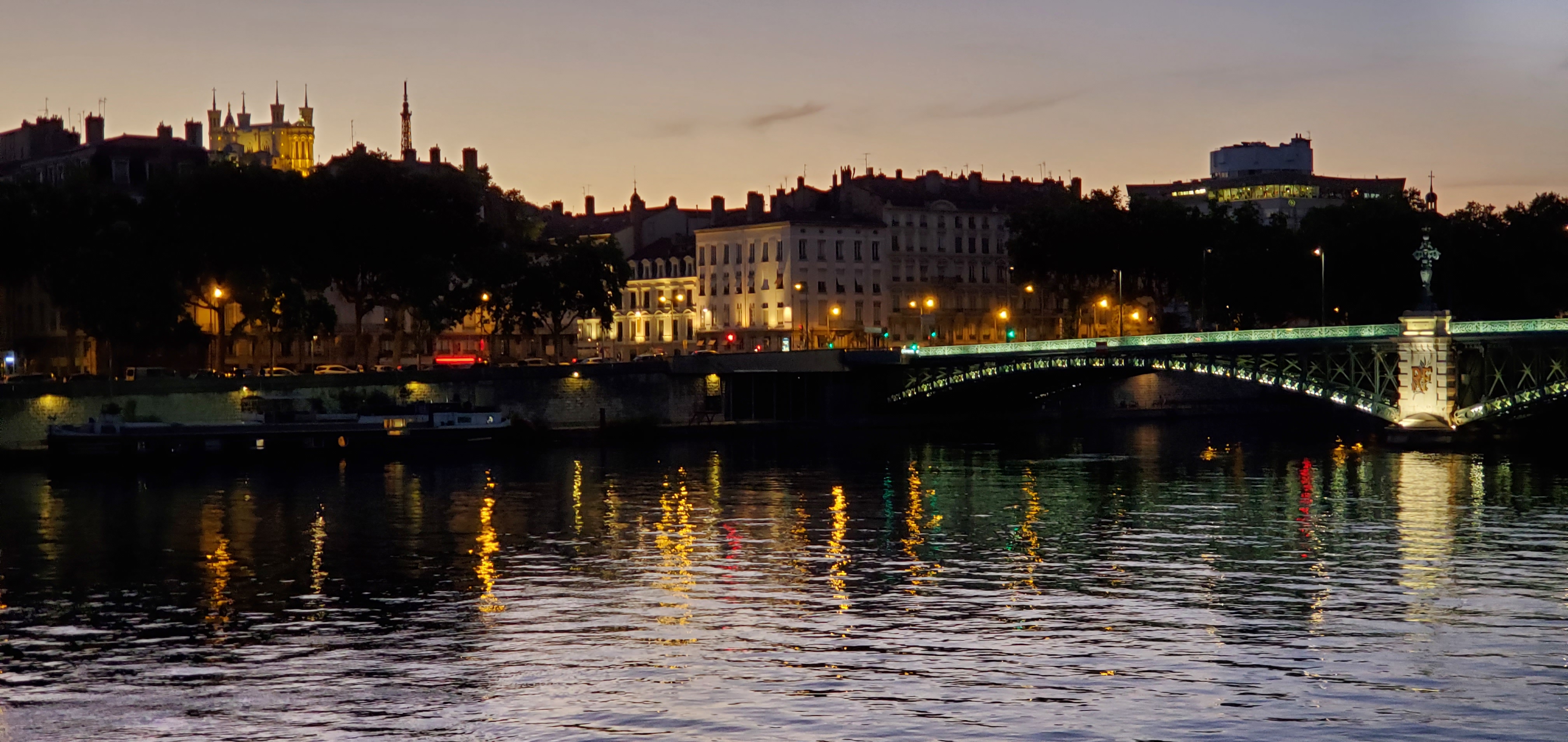
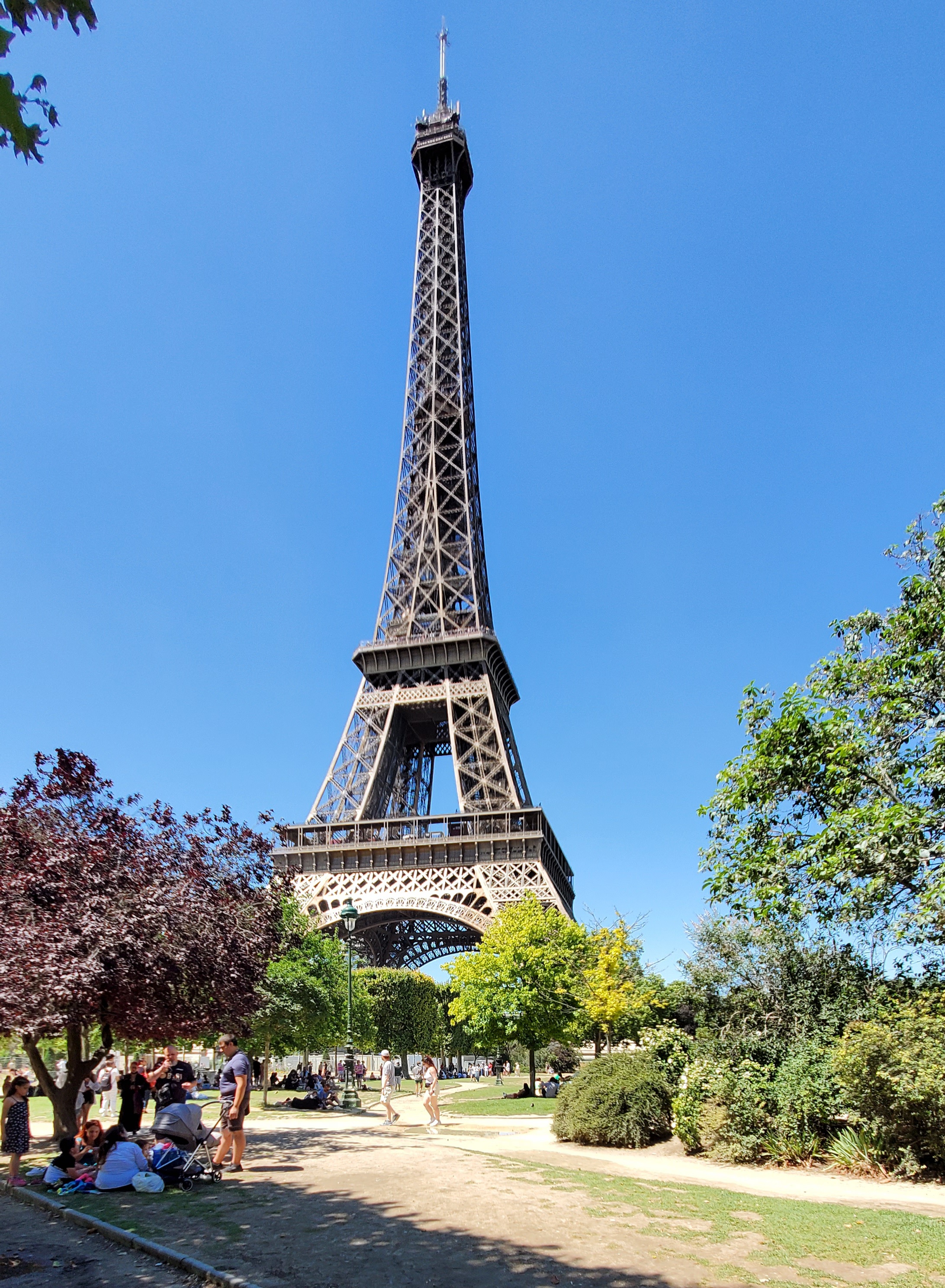
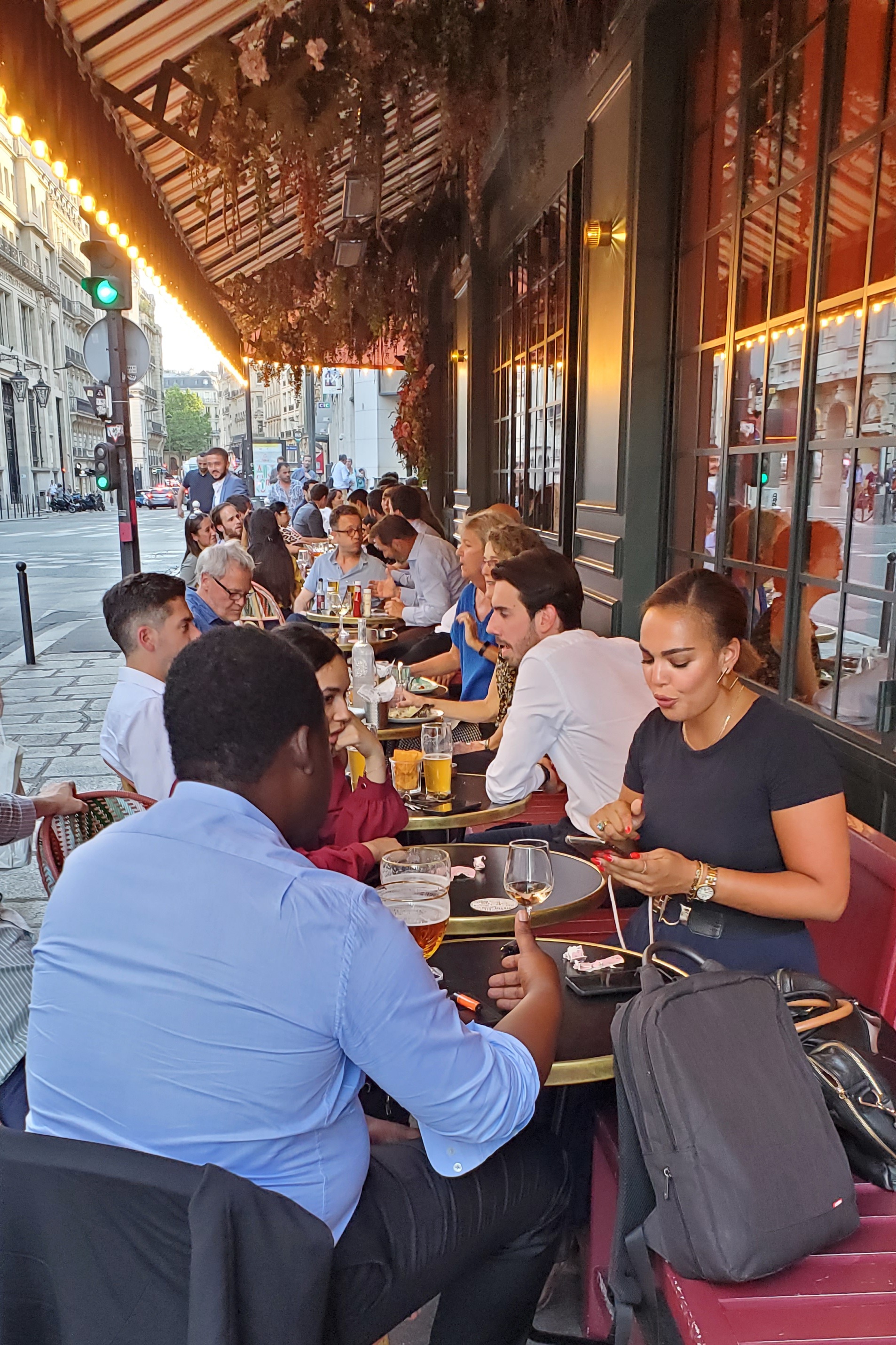
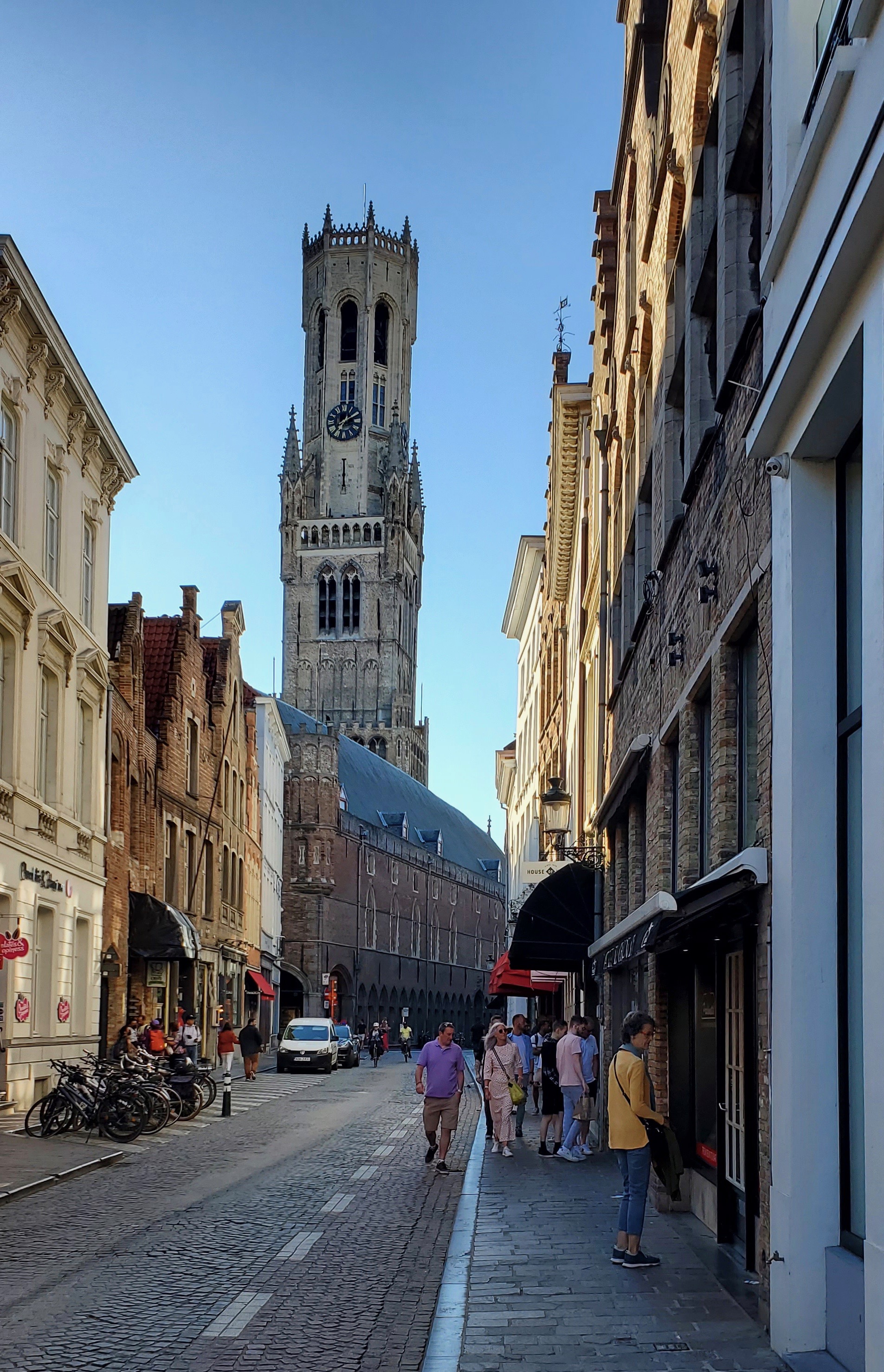
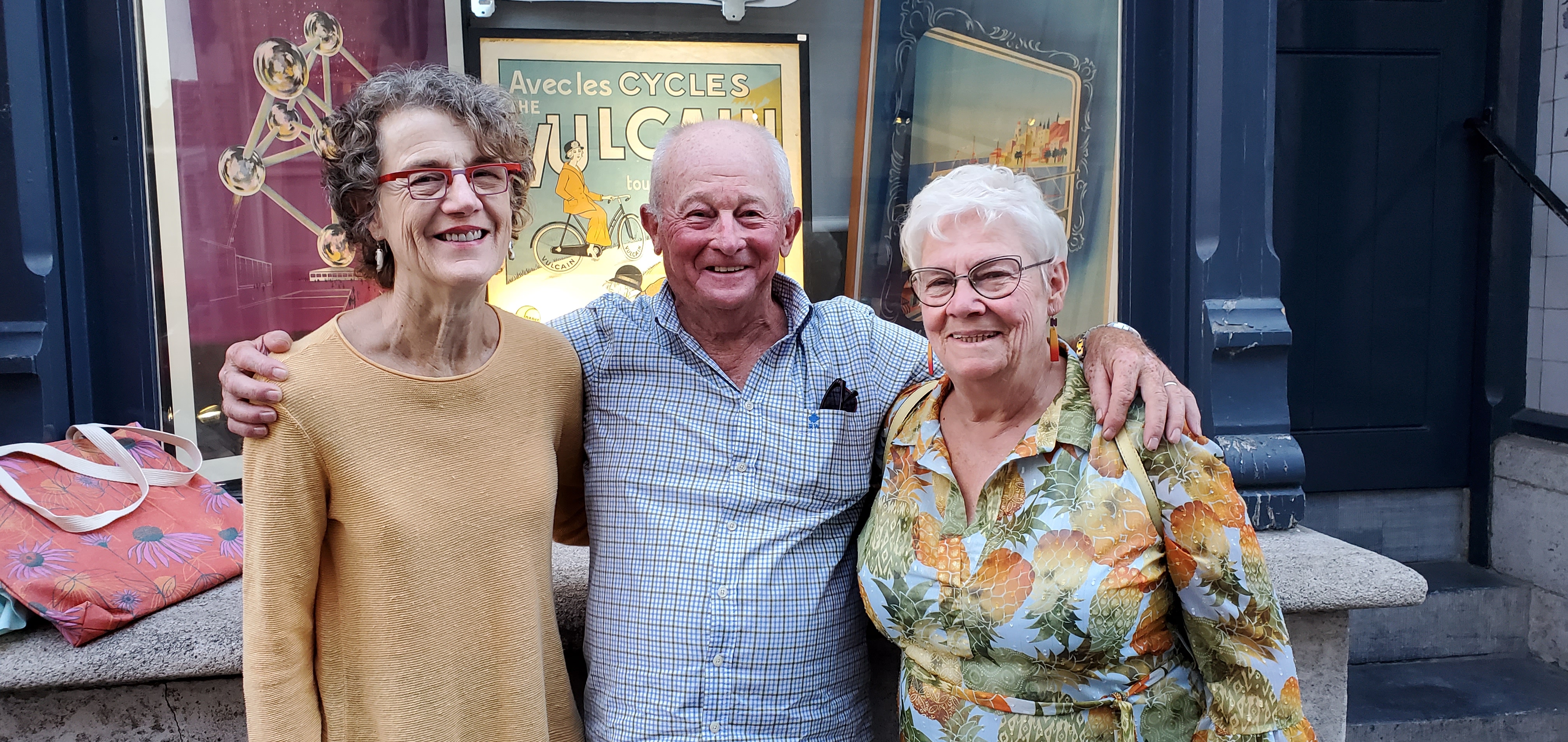
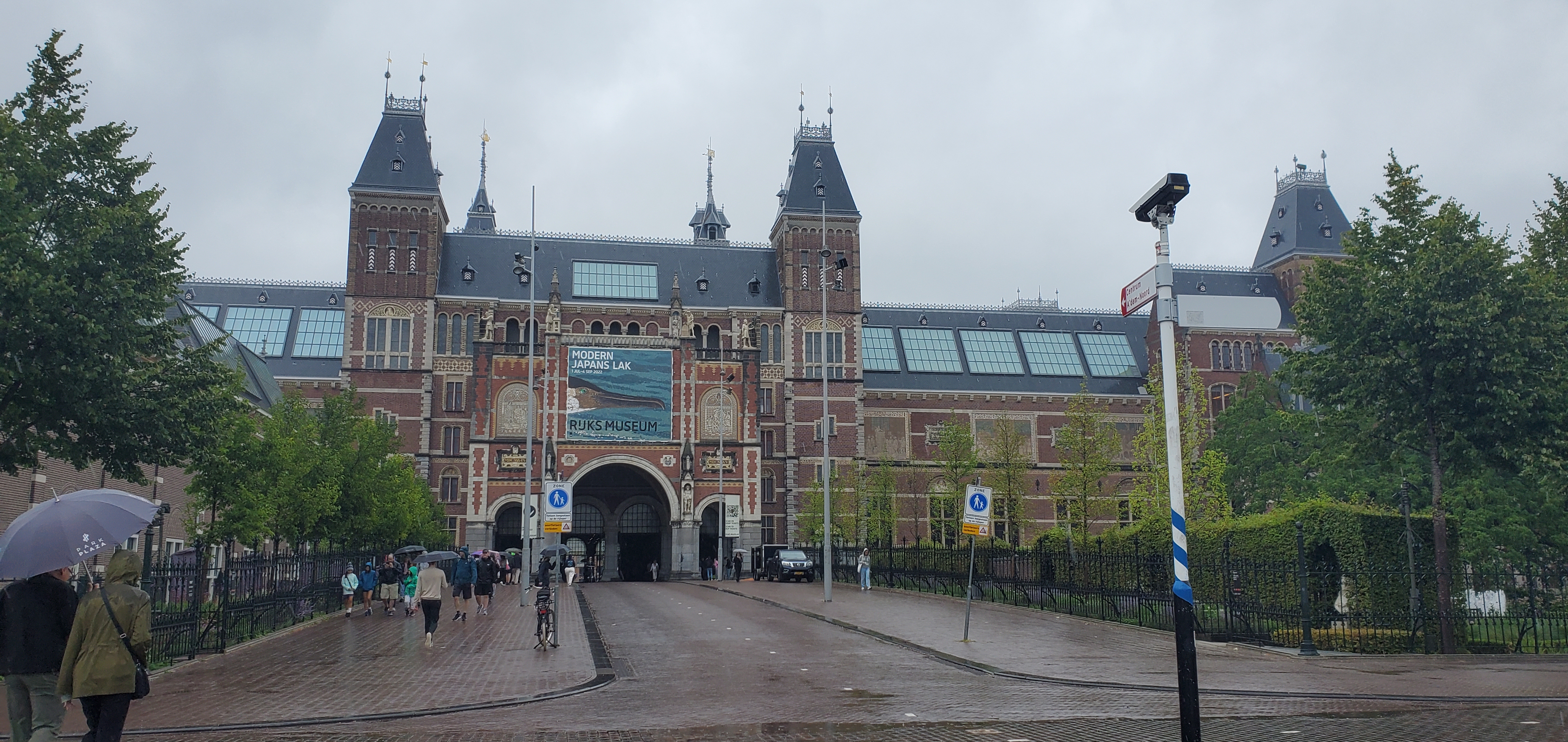
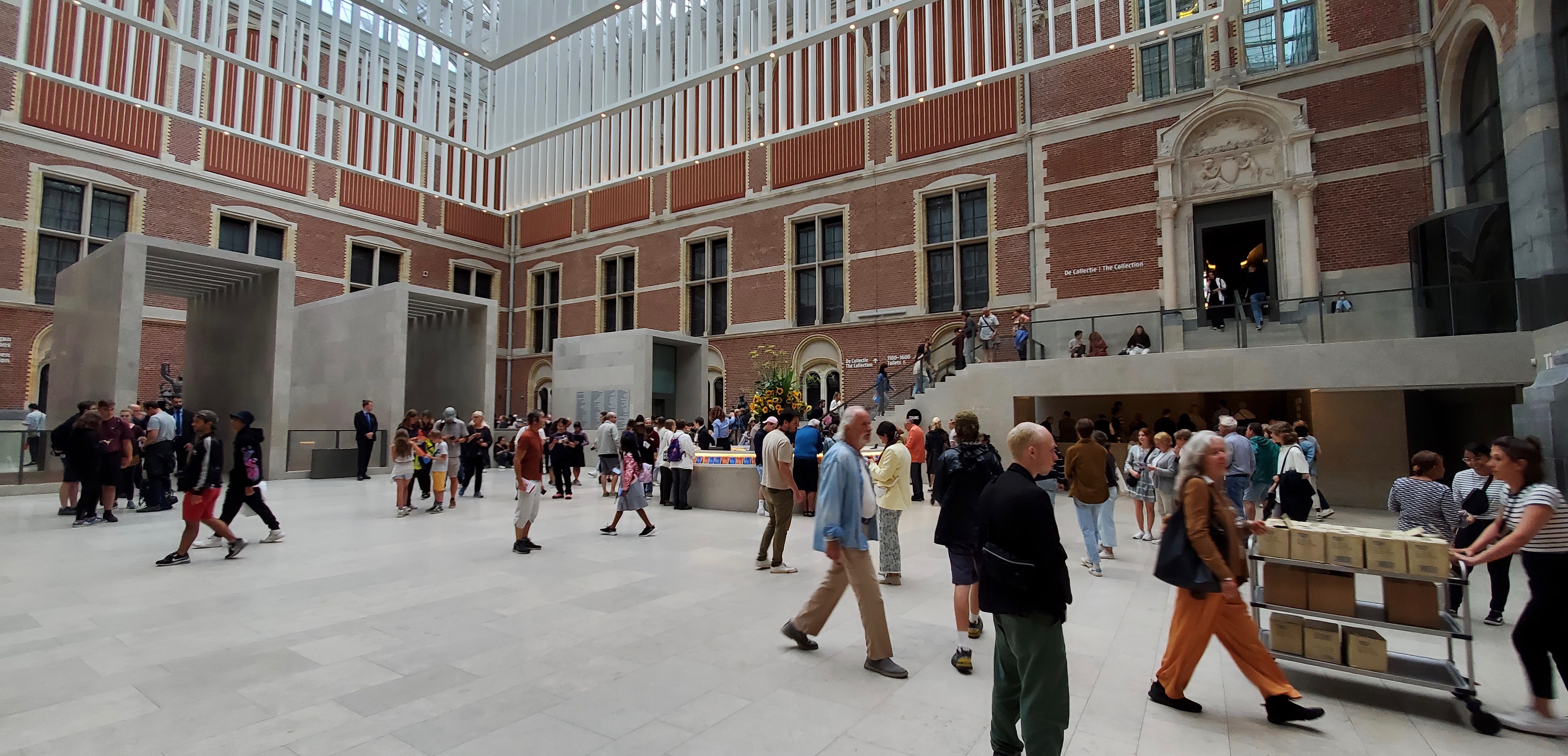
Here’s our group — me, Patty, Julie and Jim — on the Viking Buri, a river boat that holds about 190 passengers.It doesn’t get dark until about 10 p.m. in Europe during the summer. I took this photo from the upper deck of our boat.The cruise began at Avignon, northwest of Marseille.If I hadn’t said we were in France, you might have guessed from this photo, which I took in Vienne.Lyon is the third largest city in France, after Paris and Marseille. Its prominent landmark is the Basilica of Notre-Dame de Fourviere, on the hill at left. The basilica is sometimes called “the upside down elephant.”Covid knocked me out of action on Monday, July 11, but Tuesday the 12th I was back on my feet, walking near one of the world’s great landmarks.Paris is famous for, among other things, its cafes and continuous fashion show on the streets. Suffice it to say, jeans and athletic shoes are not in vogue…Paris, while not to be missed, is also maddening because of the hordes of residents and visitors. Patty summed it up perfectly when she said, “Paris is mayhem.”Topping Montmartre, a large hill in Paris 18th “arrondissement,” is the Basilica of the Sacre-Coeur. Somehow, I made it up Montmartre’s many steps. Having “conquered” the hill, we took the funicular back down.Looming above the city of Bruges, Belgium, is its Belfrey, which formerly housed a treasury and the municipal archives and also served as an observation post for spotting fires and other dangers. We went to Bruges primarily because Patty is of Belgian descent. We had made arrangements to see several of Patty’s relatives, but after telling them about our cases of Covid, we were able to meet only two of her cousins, Ivan and Rita Bossuyt, who joined us for dinner in Bruges on two successive nights.Then we were in Amsterdam, my favorite European city. It is much easier to navigate than Paris, and many of its streets, like this one, have a singular charm.At a “brasserie,” a lady enjoyed a smoke and her newspapers.The most spectacular and distinguishing element of Amsterdam is its ring of canals, which provide an important transportation link as well as boat tours for tourists. Amsterdam, which was founded in 1250, got its name from the dam that was constructed in the city’s center. “Aeme Stelle Redamme” is Medieval Dutch for “Dam in a Watery Area.” People own the houseboats that line some of the canals, and the owners also pay rent to the city for the space.This is the confluence of the Amstel River and the Prinsengracht canal (flowing into the river under the bridge in the background).Owing to their age, some of Amsterdam’s buildings lean.The Rijkesmuseum, above, and the nearby Van Gogh Museum are two of Amsterdam’s most popular attractions, along with the Anne Frank House…We went to both museums but unfortunately had to pass on the Anne Frank House — which I’ve been to before — partly because 80 percent of the tickets are sold online two months in advance. Tickets cannot be purchased at the museum itself, so if you ever go to Amsterdam and want to tour the house — a must — be sure to research the ticket situation.This is Rijkesmuseum’s airy and welcoming entrance hall. On April 13, 2013, the main building was reopened after a 10-year renovation that cost 375 million euros. Rijkesmuseum has about 8,000 art and historical objects on display, including Rembrandt’s “The Night Watch,” which is famous for three things: its colossal size (12 by 14 1/2 feet), the artist’s dramatic use of light and shadow, and the perception of motion in what would have traditionally been a static military-group portrait.The final photo is of these two women who waited on us at the Eetcafe Blaubrug, where we had one of our last meals. I didn’t get their names, but in addition to being great servers, they suggested we take the ferry to “Amsterdam Noord.” North Amsterdam is a trendy area that features, among other things, the Street Art Museum, which opened in 2012. Nowhere else in the world is graffiti elevated to such a level. Viva Amsterdam!
In an article published early this morning, KC Star reporter Mike Hendricks recounted a six-month-long, cloak-and-dagger tale highlighted by three dramatic meetings leading up to the decision to fire RobbieMakinen as president and CEO of the Area Transportation Authority.
As it turns out, the main reason Makinen will either be fired today or asked to resign is that he had strongly resisted the city’s extraction of federal Covid-relief funds from the ATA to pay for a $20 million, improved street-lighting program.
The first of the three pivotal meetings was in January when Kansas City Public Works Director Michael Shaw, one of 10 members of the ATA’s Board of Commissioners, met with Makinen and supposedly told him, “I have already committed to LED streetlights, and I don’t have the money to pay for them, so you’re going to.”
I have a passing familiarity with Shaw and have a hard time envisioning him making such a declaration, but I suppose it’s possible. He could have been emboldened by the fact that he is married to a City Council member, Ryana Parks-Shaw, and that the Council had approved the street-light plan.
However it was conveyed, Makinen decided to fight, and fight he did, including by pushing unsuccessfully for a bill in the Missouri General Assembly that would have short circuited the city’s money grab.
That effort failed, as did an appeal to the Federal Transit Administration, and as time went on Mayor Quinton Lucas and City Manager Brian Platt, who were behind the street-light financing plan, decided he had to go.
The second pivotal session took place recently, according to Hendricks, when Platt met with the ATA board chairman and vice chairman. Hendricks’ story quoted Platt as telling them, “If Robbie Makinen isn’t fired, we will send out an RFP and we will find somebody else to handle our bus service in Kansas City.”
Brian Platt
…That meeting and that astonishing statement represent, by far, the most assertive and risky policy position Platt has staked out since coming to Kansas City from Jersey City 17 months ago.
It was risky because it would be extremely difficult to find a comparable agency to the ATA that could handle the bus service in Kansas City, much less the metro area. But it must have worked because the ATA chairwoman, Melissa Bynum of Wyandotte County, and the vice chairman, Reginald Townsend of Cass County, fell in line.
While some people undoubtedly will view Platt’s action as heavy handed and dictatorial, consider his position. The City Council had approved the $20 million plan and expected it to be funded. If Platt failed to find a funding source, his job could well have been on the line.
From Platt’s persepective, it was either him or Makinen. It was political brinkmanship at its highest level.
**
The third and final meeting took place last week when Louie Wright, another KC-appointed ATA board member, informed Makinen that a commission majority would either accept his resignation or fire him.
I’ve known Louie Wright a long time, and my dealings with him have been, for the most part, unpleasant. As president of Local 42 of the International Association of Fire Fighters, he staked out an anti-Star, anti-City Hall position and fought for what he thought was best for the union – that is, more firefighters, higher firefighter pay and better benefits. The rub, however, is that what is in the union’s best interest is not always in the city’s and the public’s best interest. But that was of no concern to Wright.
He went on to get a law degree and become a lawyer but has always stayed close to Local 42. He owes his spot on the ATA board to Local 42’s political activism and, specifically, to the fact that the union endorsed Lucas for mayor three years ago.
…In closing, all I can say is the last place in the world I’d want to be, besides a trench in eastern Ukraine, is in a room with Louie Wright telling me I was being fired.
Today may well be Robbie Makinen’s last day as head of the Area Transportation Authority.
On June 16, I reported that I’d heard Mayor Quinton Lucas wanted Makinen out and also wanted Tom Gerend, executive director of the Streetcar Authority, to replace him.
I think it’s likely that at least the first half of that equation will come to fruition at a special 1 p.m. meeting tomorrow of the ATA Board of Commissioners.
The board today published a meeting notice with only one main item of business: “adjourning to executive sessions” to discuss “any issues relating to personnel, performance, litigation and legal actions with legal counsel.” Those issues, the notice said, could include “negotiated contracts.”
It doesn’t look good for Makinen, who has led the ATA the last several years and, before that, served as chairman of the ATA board — an unpaid position.
Robbie Makinen
Whether or not Gerend gets appointed tomorrow is another matter, but the fact that the ATA agenda calls for “executive sessions” — plural — tells me a one-two punch could be coming. By law, the board might not be able to address both issues in the same closed session.
**
I heard the rumor about Makinen on June 16, a day after The Star published a long and troubling story about significant problems at the ATA, including service cuts and long wait times for buses.
If Makinen is ousted, he will be best remembered for pushing for bus service to be free to the public. The ATA went to zero fares in 2020, with the support of Lucas and the other City Council members.
In June 2019 appearance on Steve Kraske’s “Up to Date” show on KCUR, Makinen said, “Public transit needs to be free.”
Lucas, who had recently been elected mayor, posted on Twitter: “Robbie’s right. Let’s make it happen.”
Just because they agreed on that, however, doesn’t mean they were joined at the hip. I don’t know when the service problems got serious, but I suspect it was after the onset of zero fares.
The ATA has a budget of more than $100 million a year. It operates RideKC bus service, the MAX Bus Rapid Transit service, Flex demand-response routes, RideKC Freedom paratransit service for the elderly and persons with disabilities, and RideKC Van, a ride pooling service.
**
Here’s how the politics of the ATA works. The agency is run by a 10-member board, with five members from Missouri and five from Kansas. I’m not sure how many members Lucas appoints, but one person he appointed is Michael Shaw, director of the city’s Public Works Department.
Michael Shaw
Another member — whom Lucas may have appointed — is Louie Wright, an attorney and former president of Local 42 of the International Association of Fire Fighters, which supported Lucas in the 2019 general election when he defeated Councilwoman Jolie Justus.
Louie Wright
The ATA board chairwoman is Melissa Bynum, a member of the Wyandotte County Unified Government Board of Commissioners. The vice chairman is Reginald Townsend, a member of the Raymore City Council.
Although Lucas doesn’t appoint a board majority, he is the most powerful political figure in the Kansas City area, along with U.S. Rep. Emanuel Cleaver, whose popularity is off the charts.
…In the wake of that June 16 post, no one told me I was off base or it was a bad rumor. The report has stood uncontested for the better part of two weeks. I don’t believe Makinen will be sleeping very well tonight.
From out of nowhere, virtually, Democrats appear to have a chance to win the U.S. Senate seat currently held by Roy Blunt, who is retiring.
The tumultuous developments of the last few days revolve around 85-year-old, former U.S. Senator John C. Danforth, a Republican centrist who loathes Donald Trump and the Republican senatorial candidates, all of whom have been madly scrambling for the crown of “most conservative, most MAGA Republican.”
CNN reported this afternoon that a “super PAC” led by Danforth has raised more than $5 million, with the goal of supporting a moderate Republican to run as an independent.
You get my drift? The independent would be third-party candidate who would be on the ballot in November along with the Democratic and Republican nominees.
Follow along with me now…
Let’s say Eric Greitens or Vicki Hartzler was the Republican nominee and Trudy (Big Bucks) Busch Valentine was the Democratic nominee. Greitens or Hartzler would almost certainly lose a lot of moderate Republican voters to the independent candidate, possibly allowing Valentine to pass through the parted waters of the “red sea.”
Danforth told CNN, “The message of the super PAC is America is too polarized now…The center really has been cut out of American politics.”
Danforth
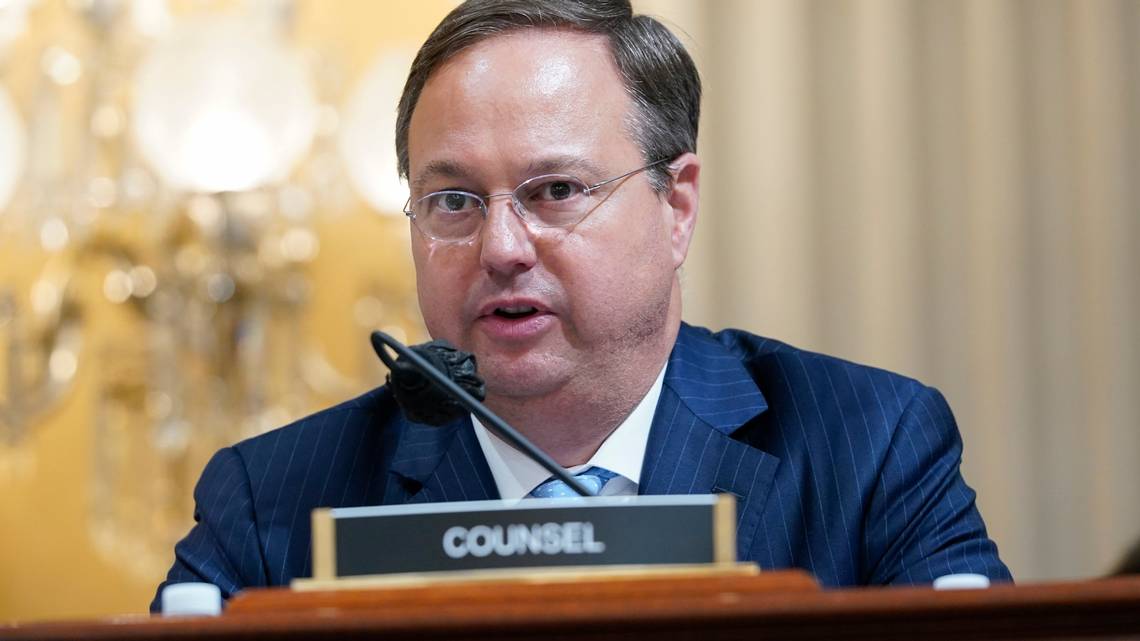
The center-right candidate whom Danforth is backing is John F. Wood, who, is leaving his post this week as senior legislative counsel to the House select committee investigating Jan. 6, 2021. Wood is believed to be resigning primarily because of Danforth’s encouragement to run for the Senate.
Before becoming a lawyer, Wood worked on Danforth’s staff. He also clerked for Supreme Court JusticeClarence Thomas and at the U.S. Court of Appeals, Fourth Circuit, for retired Judge J. Michael Luttig, who testified before the Jan. 6 commission this week.
I said at the outset that this development comes out of nowhere. Actually, I exaggerate, as I sometimes do.
A Monday St. Louis Post-Dispatch story said that Danforth predicted back in February that a center-right independent would file to run for U.S. Senate in Missouri.
“He based his prediction,” the PD story said, “on the results of a poll suggesting an independent candidate — one who promotes a message of unity instead of division — would have a strong chance of winning the general election.”
The story didn’t cite the poll. I didn’t see the story or the poll, and while I don’t trust the poll, it is entirely logical that a moderate Republican would draw some moderate Republican votes and maybe even some conservative Democratic votes.
**
The problem with Danforth’s rationale, as I see it, is it’s hard to believe a stuffy-looking lawyer like Wood would be a strong and appealing candidate.
See what I mean?
Maybe I’m judging too much on first impressions, but how could a guy who has been embroiled in legalities for years suddenly remove his pin-striped suit, jump into the phone booth and emerge as Superman.
You know what, though? Danforth might be envisioning the same thing.
I’ll bet he’s thinking, what’s to lose? He can tout Wood as vigorously and relentlessly as he touted Clarence Thomas for the Supreme Court (oh, my!), and even if Wood loses, it might precipitate defeat for any of the right-wing nut jobs Danforth despises.
**
I traveled with Danforth in 1976, when I was a reporter covering him and his Democratic opponent, former Missouri Gov. Warren Hearnes, in the general election campaign for the Senate seat. (U.S. Rep. Jerry Litton, who won the Democratic nomination but died in a plane crash the night he won the primary, would have defeated Danforth, but Hearnes was easy pickings for Danforth.)
Danforth is an honorable and smart guy — one of my all-time favorite Republicans, despite the Clarence Thomas debacle. He knows what he’s doing.
These stomach-wrenching fools who are running for the Republican nomination — Greitens, Hartzler, Billy Long, Eric Schmitt & Co. — may now be losing sleep as they contemplate the prospect of that big Missouri red sea parting, and Trudy Busch Valentine dancing through to victory.
Trudy Busch Valentine
To paraphrase the inimitable Jackie Gleason…How sweet it would be!
I’ve got two things for you today — both of the utmost urgency and importance.
Let’s deal with Mike Fannin, KC Star president and editor, first. As most of you know, he was arrested in Johnson County last week on suspicion of drunk driving. It was his third DUI arrest in about the last 15 years. I think this one took place in Olathe, and I submitted an open records for the arrest report. The Police Department records custodian replied promptly, saying that “arrest information is considered criminal history record information and therefore is mandatorily closed.”
Well, now, if something ismandatorilyclosed, they surely don’t want some damn blogger getting his hands on it.
The writer went on to say, “I can neither confirm nor deny the existence of the information for the person…you named in your request.”
For that sentence, I want to give records custodian Karri Barker an A+ for grammar because a majority of Americans have no clue how to correctly use neither/nor.
At any rate, I said in my June 9 post that I wouldn’t be surprised to see McClatchy upper management put Fannin on a leave of absence while the case worked its way through the courts.
Apparently, that hasn’t happened. If it has, The Star is not reporting it, and I have found nothing on the internet.
If he manages to avoid getting placed on leave, there are two points to be made. First, Fannin is the the luckiest DUI guy on the face of the earth and, second, McClatchy, owned by a New Jersey hedge fund, just doesn’t care.
When I told a friend, retired Kansas City regional manager at the national accounting firm KPMG, about Fannin and his three arrests, my friend’s immediate reaction was, “He’s out!”
Well, that’s the way it would have been at KPMG but apparently not at McClatchy, which makes me suspect that McClatchy managers are betting that if they can make Fannin more indebted to them than he already is, he’s likely to comply with any request they make of him down the road…Fire 10 reporters? Yes, boss, gone yesterday!
**
I’m sure most of you didn’t see it, but The Star published a long and comprehensive story yesterday about significant problems at the ATA, including service cuts and long wait times for buses.
Interestingly, several hours before I saw that story, a longtime friend with good political connections told me he had been told Mayor Quinton Lucas wanted to see ATA president and CEO RobbieMakinen replaced with Tom Gerend, executive director of the Kansas City Streetcar Authority.
Robbie Makinen
I wasn’t extremely surprised at that because while the ATA is old hat, the streetcar is the new, hot and hip way to get around. It’s going to be even hipper once cars start running along the extension from Union Station to UMKC. And Gerend, younger and hipper (I guess) than Makinen, is the beneficiary.
Tom Gerend
Once I saw The Star’s story, the Gerend-replacing-Makinen rumor took its proper context. With that, I pored over the story for clues to the political machinations….and I found one. Instead of Makinen speaking to The Star on behalf of the ATA, he delegated the reaction role to ATA vice president Dick Jerrold.
While Jerrold did a nice job of explaining the ATA’s position (he contended finances were a big part of the problem), I would have expected the “top gun” to be out front on a story of this magnitude. I theorized that if, indeed, Makinen thought his job was at stake, he was reluctant to be out front on a critical story for fear he’d say something Lucas could use against him later.
In a series of tweets yesterday about the ATA problems, Lucas gave no indication he was dissatisfied with Makinen but did allow as to how he would “continue to work to address (the problems) with the ATA board.”
Now, Lucas can’t fire Makinen. The ATA’s 10-member board of commissioners hires and fires the CEO. There are five commissioners from Missouri and five from Kansas, appointed by various governmental units. Lucas appoints some board members of the board, although I don’t know how many.
**
Makinen, who is blind, has been president and CEO several years. Before that he was chairman of the ATA board — an unpaid position.
Personally, I would like to see Makinen turn the situation around and stay on. It seems to me he’s provided good leadership of the sprawling bus service. But if Lucas wants him out, he probably has good reasons.
I don’t have a strong preference on this; I just want you to know what could be going on behind the scenes. It helps when you know who the players are and what they might be up to.
Okay, students, journalism class is now in session.
No belching, farting or carbonated drinks. I can tell you students from experience that carbonated drinks in the classroom can be a problem. Once, in a post-graduate class, I spilled a bottle of soda and spent 15 minutes running to the restroom for paper towels while the teacher did his best to ignore the debacle on the far side of the room.
Also, put those phones away. No! I said away! Not on your desks…in your pockets or purses.
Okay, now we can begin.
Today we’re going to dissect a news analysis written by Peter Baker, one of The New York Times’ top reporters.
Everybody likes a dissection, right, whether it’s a frog or a news story?
We’ll be talking about Baker’s Friday-morning analysis of the U.S. House committee’s hearing the night before on the Jan. 6 insurrection at the Capitol.
Now, we all know, right, that you’ve got to get the reader’s attention right up top?
Baker does that beautifully with his first paragraph…
In the entire 246-year history of the United States, there was surely never a more damning indictment presented against an American president than outlined on Thursday night in a cavernous congressional hearing room where the future of democracy felt on the line.
Note the two adjectives, “damning” and “cavernous.” The first lends gravity to the charge against the former president; the other transports you into the hearing room momentarily.
In the second paragraph, Baker advances the theory that “the future of democracy” might be on the line…
Other presidents have been accused of wrongdoing, even high crimes and misdemeanors, but the case against Donald J. Trump mounted by the bipartisan House committee investigating the Jan. 6, 2021, attack on the Capitol described not just a rogue president but a would-be autocrat willing to shred the Constitution to hang onto power at all costs.
If, for some reason, you glided over the first paragraph — and I don’t know how you could — Baker grabs you by the throat with Paragraph 2.
Moving ahead, what exactly did Trump do that could be viewed as attempting to shred the Constitution? Baker explains…
According to the panel, he lied to the American people, ignored all evidence refuting his false fraud claims, pressured state and federal officials to throw out election results favoring his challenger, encouraged a violent mob to storm the Capitol and even signaled support for the execution of his own vice president.
At that last phrase, even though you knew the situation was bad on Jan. 6, you’re inclined to exclaim, “What — support the execution of the vice president?”
Then, Baker introduces Liz Cheney, the lead Republican on the panel, describing her “unwavering” prosecution of Trump and repeated her withering, seminal quote…
I say this to my Republican colleagues who are defending the indefensible: There will come a day when Donald Trump is gone but your dishonor will remain.
Those words could hardly have been more damning if a sonorous voice from above had broken the clouds with them.
Baker then takes a step back and gives the hearing a striking contrast by quoting a pre-hearing, social-media post by Trump in which he said, “January 6th was not simply a protest, it represented the greatest movement in the history of our Country to Make America Great Again.”
Switching back to the hearing, Baker acknowledges that the damning indictment delivered by the select committee probably will not move public opinion very much. “With a more fragmented media and a more polarized society,” he said, “most Americans have decided what they think about Jan. 6 and are only listening to those who share their attitudes.”
Nevertheless, he points out that one person who had to be paying close attention, Attorney General Merrick Garland, holds the power to bring charges against Trump.
That set up Baker’s kicker. Even if Garland did not bring charges and the select panel’s hearings turned out to be Trump’s only days in court…
“Ms. Cheney and her fellow committee members were resolved to make sure that they will at least win a conviction with the jury of history.”
**
There, students, you have a seasoned journalist capturing the depth, breadth and historical significance of an event that lived up to its high expectations, proving to be momentous.
…Okay, the bell’s about to ring, so get your things together, and I’ll see you next Tuesday. And remember, keep those phones away when you’re in this classroom!
Well, hell, this latest development is nothing to be smug about, even though I’m not a fan of Kansas City Star President and Editor Mike Fannin.
The Star reported yesterday that Fannin, 55, of Olathe, was arrested in Johnson County Tuesday night on suspicion of DUI.
Fannin
The story gave no other details, including what city the arrest took place in, other than to note that Fannin has two previous DUI convictions. Melody Webb, a spokesperson for Johnson County District Court’s criminal division, told me today the case had not yet appeared in the court’s computer system, so it probably is, or was, with the jurisdiction where the arrest took place.
One of the previous convictions was in Wyandotte County in 2006. I don’t know when or where the other one was.
So, what to make of this? Here are my thoughts and observations…
:: First, you’ve got to think that with three DUI arrests Fannin has a significant drinking problem. Maybe he quit at some point, since he apparently went many years between arrests, but to have been busted three times in the course of a lifetime for being over the limit is pretty damn telling. If not tragic, this is at least very, very challenging for Fannin personally and whatever family he has.
:: Second, this is possibly career ending. Fannin has been with The Star since 1997 and has been the editor since 2008, two years after I retired. He was named president in 2019 after then-publisher and president Tony Berg went to the Wichita Eagle either voluntarily or involuntarily. I would not be surprised to see a story within the next week announcing that Fannin was taking a leave of absence. The person who will determine Fannin’s immediate fate is probably Tony Hunter, who was named CEO of McClatchy, The Star’s owner, in 2020 after a New Jersey hedge fund took control of the company out of bankruptcy court.
:: Third, this must be terribly roiling and frustrating for The Star’s remaining 100 or so employees. Those employees have been looking over their shoulders for years, as the paper has lost readership, stature and relevance, and they have been badly managed (from my perspective) under Fannin. To wit, in an era when most major metropolitan dailies are struggling to cover breaking news and basic beats like cops, courts and local government, Fannin and Co. have had several of their most senior reporters on “detached” status, letting them spend months or years on “enterprise” stories of questionable consequence in the hope of winning Pulitzers or other major journalistic prizes. At least the employees knew, until yesterday, that McClatchy supported their top leader. Now, the question mark hanging over his head also hangs over theirs. (Footnote: A former Star reporter, who left the paper in recent years, told me Fannin “fought pretty hard to make hires” — which is not the case with many newspaper editors working for corporate owners these days.)
:: I wonder if this will delay or change McClatchy’s plan to inhabit 8,500 square feet of space in a Crown Center office building. The lease was announced last year, but I understand The Star has not yet moved in. With Fannin’s future very murky, is Melchiorre having second thoughts about the lease?
**
The first person to write about this story, after The Star reported the news, was the godfather of KC bloggers, TonyBotello, proprietor of Tony’s Kansas City. In his report, Botello made a strikingly insightful comment, writing, “The Star really isn’t the paper it was years ago and there’s no reason to dwell on the misfortune of this far less important newspaper dude.”
Unfortunately, that is indeed the case. Whatever happens at The Star these days — short of going out of business — it does not rate big headlines.
A most puzzling situation appears to be nearing a critical stage regarding one of Kansas City’s most popular tourist attractions — the Steamboat Arabia.
The Arabia, a City Market fixture since 1991, seems to be headed to St. Charles, MO, and Kansas City officials are all but shrugging their shoulders.
Recently, Steamboat Arabia owner David Hawley signed a letter of intent to work exclusively with St. Charles over the next six months to develop a plan to move the museum there. Surprisingly, this significant development has not made many waves, either publicly or in the news media.
Now, I haven’t been to the Arabia in many years, and for local people it’s something of one-time-and-you’re-done experience, but it sure draws a lot of out-of-town visitors to the City Market — visitors who are spending money and boosting the economy.
While the Arabia is a far cry from the Nelson-Atkins Gallery of Art and the National World War I Museum, TripAdvisor ranks it Kansas City’s third top tourist attraction, behind those two and ahead of places like Union Station, Kauffman Stadium, the zoo and the Plaza.
On May 28, KCUR had a story in which it reported that Hawley had told the economic development director in St. Charles that Kansas City officials had informed him they did not intend to renew his lease after the current one expires in 2026.
Each of the four local TV stations has had at least a website story, while The Star has had nothing — at least that I could find through its website search box.
Shining the brightest light on the Arabia situation has been Kevin Collison and his subscription-based CitySceneKC. When it comes to breaking news, particularly on business developments, CityScene is the most aggressive outlet in KC.
Collison’s first story on the Arabia situation appeared on Friday, May 27 (a day before KCUR’s story), and he has another one today. Today’s story stresses city officials’ apparent disinterest in the Arabia’s possible departure. Collison wrote…
Neither City Manager Brian Platt nor Kathy Nelson, head of VisitKC, the regional tourism organization, could be reached for comment. The manager of the City market, KC Commercial Realty, said they couldn’t discuss the lease.
Very strange.
Amplifying the city’s lack of interest was Ryan Cox, a commenter on Collison’s first story, who said: “If it’s such a huge tourist draw, it seems very odd the city seems to not care that they’re leaving. Is there more to the story?”
Undoubtedly there is…Here are some possibilities, as I see it:
David Hawley has rubbed city officials the wrong way.
City officials have decided they’re unwilling to give Hawley another square foot of space for expansion he has been pushing for.
Some out-of-towners coming to the Arabia drive RV’s, which exacerbates the City Market parking problem.
The Arabia’s stay in KC has run its course and it’s time to move on.
David Hawley
I don’t think this is a case of Hawley using the threat of going elsewhere as a bargaining chip. Otherwise, city officials would be saying things like, “We’ve been in discussions with Mr. Hawley and are trying to find a solution” or, “We value our long relationship with the Arabia and hope it remains in Kansas City.”
Instead, nothing. The silence is deafening.
What that silence tells me is that this is probably “Bye-bye, Arabia.” It’s been a good run. Maybe David Hawley needs St. Charles more than KC. Certainly, the Arabia would be more important to St. Charles than it is to KC.
In any event, thanks to Kevin Collison for giving an appropriate amount of attention to this important story. When the captain calls out, “Anchors Aweigh,” CityScene readers won’t be surprised.
The man who ushered in the era of corporate journalism — in which family- and employee-owned newspapers gave way to conglomerates and then hedge funds — died last Wednesday at his home in Rye, NY.
Thomas S. Murphy, who initiated corporate creep with his company’s purchase of The Kansas City Star and Times for $125 million in 1977, was a business genius as chairman and chief executive of then-little-known Capital Cities Communications. He was 96.
Tom Murphy
When Cap Cities, as it was known, bought the employee-owned Star, it owned mostly mid-level metro newspapers, along with TV and radio stations, and operated out of a small office in New York.
Murphy’s biggest coups came in two giant Monopoly-board steps, the first in 1985 when Cap Cities acquired the much larger American Broadcasting Co for $3.5 billion, the second in 1995, when he decided to sell CapCities-ABC to Disney for $19 billion.
Each move rocked the media world and made Murphy and many Cap Cities-ABC shareholders very wealthy.
In a news story about Murphy’s death last week, Douglas Martin of The New York Times wrote…
Mr. Murphy’s business success can be summed up in a single statistic: Capital Cities stock increased in value 2,000 times between 1957, when the company first sold stock to the public, and 1995, when Disney bought it.
**
That’s the overarching, national story, but now let me give you the up-close story from my perspective as a Star employee who started in 1969 at a salary of $550 a month.
When I arrived as a general assignment reporter, working from 4 to midnight, I didn’t really understand the significance of employee ownership, that is, that the owners, working in the newsroom every day, were in charge of the paper’s destiny.
A secretary named Grace Grafton used to meet annually with individual employees and ask us how much of our salaries we wanted to dedicate to stock ownership. I would always shrug, Grace would suggest a number, and I would go along.
Between 1969 and 1977, I built up $10,000 worth of stock. Other employees, many of whom had been at the paper for decades, had accumulated tens or hundreds of thousands of dollars worth of stock.
When Capital Cities and Tom Murphy came knocking in 1977, it rocked the newsroom. All of a sudden we lowly employees realized that things would be changing in a big way. Most of us were not happy about it and would have preferred that the paper remain employee owned, but, on the other hand, Cap Cities was offering $2 for every $1 worth of stock.
As suddenly as I realized big changes would be afoot, I also realized I was going to have more money than I’d ever thought about having. (After the sale, I used the $20,000 I cleared from the Cap Cities purchase to make a healthy down payment on a house at 51st and Grand. It was my first opportunity to buy a home.)
The company’s seven directors, who owned 11 percent of Star stock, agreed to the deal, and the other employees who had significant stakes followed their lead.
A group of 20 or so employees became overnight millionaires. After the deal closed, Cap Cities brought in James H. Hale, a Texan who was publisher of the Fort Worth-Star Telegram — which Cap Cities had bought in 1974 — to run The Star and The Times. Hale subsequently hired an editor named Gerald Garcia, who, on a Monday, called those nascent millionaires into a room and told them they were all fired. Within a year or so, Garcia himself was out — akin, it seemed in retrospect, to the Mafia hiring a hit man and then eliminating him after he’d accomplished his task.
Hale brought in excellent editors, for the most part, including Mike Davies and Mike Waller from The Courier-Journal in my hometown of Louisville, and the two papers began excelling both journalistically and financially. (A third editor who came from Louisville wasn’t so good. He was a chubby guy named Chris Waddle, who pronounced his name wa-dell in order, I believe, to disassociate himself from the way he walked and the way his last name probably was meant to be pronounced.)
Those were the days when owning a major metropolitan paper, and running it with any degree of skill, was like printing money. The Star and Times went from making about $5 million a year to making something like $30 million to $40 million a year.
The good times rolled for 19 years, until 1995 when Murphy engineered the blockbuster sale to Disney.
Despite Michael Eisner, Disney c.e.o. coming to The Star’s newsroom and saying he did not intend to sell the paper (the morning and afternoon papers had merged in 1990), the paper was on the block a year later.
We employees felt things would get back on the right track when Knight Ridder, a respected, all-newspaper company, purchased The Star and the other papers Disney had picked up with ABC.
Things went along fairly well for several years, but then in 2006, Knight Ridder — pressed by an unhappy, major stockholder — decided to sell out. That’s when McClatchy, which owned a majority of its papers in California, bought the Knight Ridder papers for $4.5 billion and took on $1 billion in debt, including the $199 million cost of The Star’s glass printing plant that opened the year of the transaction.
**
By then I’d had enough. We were coming under new ownership for the third time in 10 years, and while I didn’t see on the horizon the precipitous decline that ensued (not only with The Star but at most major metropolitan dailies) the future looked cloudy to me.
It turned out I left at the most fortuitous time: Two years later the layoffs started, and they continued for 11 years, until 2019. Had I stayed, there would have been no sheet cake and pizza party for me; I would have been unceremoniously bounced like scores of other employees, I feel sure.
The trend Tom Murphy started in 1977 picked up steam in the 1980s, with such legendary papers as The Courier-Journal, owned by the Bingham family, and The Des Moines Register, owned by the Cowles family, being sold to the nation’s largest newspaper chain, Gannett.
Now, the journalistic landscape is littered with papers, like The Star, that are shells of their former selves.
I don’t blame Tom Murphy for what transpired. If it hadn’t been he, it would have been somebody else. And, like I say, he believed in putting out quality products that made good money because they were well managed.
Moreover, I feel sure he never envisioned the day when hedge funds would own slews of newspaper, including The Star.
**
Tom Murphy was a brilliant businessman, and we who worked for him — indirectly — had a good run under Cap Cities.
My only regret is that sometime back in the mid- to late-1980s, during a period when the stock market was languishing, I sold all my Cap Cities stock. Of course, the price soon jumped back up and continued its meteoric rise. I left a lot of money on the table.
I made another financial mistake in 2006 when, despite those clouds in the crystal ball, I bought thousands of dollars of McClatchy stock, only to see it plunge to a fraction of its per-share value in a few years.
I learned from those two mistakes, though, and will leave you with this tip:
Buy NYT. You don’t have to bother to look up what the stock-market experts have to say. In a sea of tattered and torn newspapers, that is one that has consistently been good and is one of very few that remains family controlled.
The Sulzbergers would never have sold to Tom Murphy. They might be the only newspaper people who are as smart today as he was back then.
It’s become painfully clear the past couple of days that the Texas Department of Public Safety is all hat and no cattle.
Or, in the alternative, all cowboy but no law enforcement.
Check this out…
Those boys with the 10-gallon hats, gray suits and red ties look pretty dang formidable don’t they?
Well, I think it was guys like those — at least in spirit, if not attire — who held their ground in Uvalde on Tuesday while an 18-year-old with an AR-15 was inside an elementary school killing 19 children and two teachers.
Not only wouldn’t “law enforcement” enter the building, they wouldn’t let a specially trained cadre of Border Patrol agents go in… agents who had arrived within half an hour of reports of an “active shooter” and were champing at the bit to be cut loose to go get the turd with the semi-automatic rifle. They had to cool their heels for about 45 minutes before Texas authorities gave them the green light.
For the first couple of days after the shooting, this was an all-out “cover-your-ass” effort by Texas law enforcement authorities.
It took two days for them to officially retract the bogus report that a school security guard had confronted the shooter when he entered the school. Remember that business about “confusion” over whether the guard and the shooter had exchanged gunfire?
Not only was there no exchange of gunfire, there was no guard!
The shooter entered through an unlocked door — a fact that is probably going to cost the school district, or its insurance company, millions of dollars.
Then there was NRA-lapdog Gov. Greg Abbott’s initial reaction.On Tuesday, several hours after the shooting, he took to the podium in Uvalde (this was after attending a fund-raiser in a county north of Houston, which showed what he’s really made of) and praised law enforcement’s response to the shooting…
“As horrible as what happened, it could have been worse. The reason it was not worse is because law enforcement officials did what they do. They showed amazing courage by running toward gunfire for the singular purpose of trying to save lives.”
What they showed, in truth, was amazing cowardice.
On Friday, The Washington Post quoted Texas state Rep. Richard Raymon, a Democrat, as saying: “If I were the governor, when you have something this terrible affecting so many lives, I would want to make sure my information is rock solid. You can’t fumble this one.”
Abbott, who is running for re-election this year, didn’t just fumble the ball; he never made it to the huddle. He just went on stage and ad libbed.
It remains to be seen if Texas voters will hold Abbott responsible for the Department of Public Safety’s meltdown. My guess is they won’t because, as I’ve said, before — or at least intimated — Texas is probably the worst state in the country.
Many elected officials in Texas, like Abbott, are horrible. One of the good ones, Democratic U.S. Rep. Joaquin Castro put it on Abbott when he told The Post that the erroneous statements from state leaders and law enforcement had “shaken Texans’ confidence in state government and in the governor.”
Castro also accused Abbott of having made state “more dangerous by making it easier for dangerous people to get a gun.”
Among other things, a year ago Abbott signed into law a bill allowing Texans to carry handguns without a license or training. Salvador Ramos may have directly benefited from that.
**
In Wednesday’s post, I ran a couple of graphics that illustrate how disproportionate the homicide and mass-shooting rates are in the U.S., compared to other wealthy and developed countries.
Here’s another graphic that my friend Lonnie Shalton, a retired attorney with the Polsinelli firm, sent me yesterday. It shows how the number of mass shootings in the U.S. have skyrocketed in recent decades.
All the arguments made by advocates of few or no restrictions on gun purchasing — arguments like it’s a mental-health problem or we need to increase prison terms for violent criminals — pale beside this and similar graphics.
Back in the 1980s, mass shootings looked, on this chart, like a rifle shot. Now they look like a shotgun blast…And the body count reflects the evolving horror.
And now, to wrap up this grim treatise, I want to quote New York Times columnist Michelle Goldberg, whose latest piece was published online today under the headline “America May Be Broken Beyond Repair.”
The last paragraph is the gut punch.
“The real nightmare is not that the repetition of nihilist terrorism brings American politics to an inflection point, but that it doesn’t. The nightmare is that we simply stumble on, helpless as things keep getting worse.”
Read it again, then get to bed (it’s after midnight) and sleep as tight as you can.





















 JimmyCsays: At the juncture of journalism and daily life in KC
You must be logged in to post a comment.