Feeds:
Posts
Comments

I took a trip back into the mid-20th Century today.

After attending the 9 a.m. service at Country Club Christian Church, where I’ve been a member several years, I attended the 11:30 a.m. Mass at St. Rose Philippine Duchesne Catholic Church on Rainbow Boulevard in Westwood, KS.

St. Rose Philippine parish is perhaps the only Catholic parish in the Kansas City area where all Masses are celebrated in Latin.

What prompted me to attend was Pope Francis’ recent apostolic letter, which placed new restrictions on where and by whom the traditional Latin Mass can be celebrated.

From news stories about the letter, it appeared the celebration of the Latin Mass might be significantly reduced. A story in The New York Times said: “Many analysts see Francis’ pontificate as the restoration of engagement with the modern world after three decades of leadership by conservative popes.”

However, the letter contained an important escape clause for Latin Mass advocates: Such Masses can continue to be take place with the approval of local bishops.

The bishop in the Archdiocese of Kansas City in Kansas is Joseph Naumann, one of many conservative bishops in the U.S. Conference of Catholic Bishops, and I knew Naumann would not be putting a halt to Latin Masses.

Archbishop Joseph Naumann

Nevertheless, I felt sure the issue would be addressed at Sunday Masses at St. Rose Philippine, and I wanted to hear what the reaction was.

I was a Catholic from birth until about 12 to 15 years ago, and I was an altar boy in parochial grade school, so l knew about what to expect.

When I got to the church (below) at about 11:20, the pews were filling up, and people were sitting or kneeling very quietly. The crowd consisted of young, old and middle-aged people, families and singles. The women had their heads covered with either hats or veils, mostly veils. Along the right wall, next to the pews, a line of people, mostly young, stood stone faced. I couldn’t understand why they were standing when seats were available, but concluded it was because they were prepared to stand throughout the Mass in case the pews filled completely.

Ultimately, the pews did nearly fill up, and I would estimate about 300 people were on hand. When the priest came out, he was wearing a green robe with gold trim and a black biretta, which is a square cap with peaks and a tuft on top. Accompanying him were two altar boys in black cassocks and white stoles and about 10 smaller, younger altar boys, also outfitted in black and white.

The priest, the Rev. Jonathan Heinricy, a slim man with a goatee, got things started by walking down the center aisle sprinkling the congregants with ample amounts of holy water.

Father Heinricy and the two other priests at St. Rose Philippine are members of the Priestly Fraternity of St. Peter (FSSP), which is active in 39 dioceses in the United States and seven in Canada. After the sprinkling, Father Heinricy removed his hat and began the business of performing Mass in Latin, facing the altar, with an altar boy kneeling on either side of him.

Even though I had a “missal” with the Latin-to-English translation, it was very difficult for me to keep track of where the priest was in the text. The Latin rolled off his lips like it was his first language, and very seldom did I hear a phrase I could identify.

One phrase I did recognize was, “Dominus vobiscum,” which means, “The Lord be with you.”

The response from the congregation was, “Et cum spiritu tuo,” i.e., “And with your spirit.”

For the most part, though, the congregants listened and mumbled a few muted responses. The priest and the ritual were the central elements of the goings-on.

The only respite from the Latin was the Epistle, the first reading, and the Gospel. Both were read by another priest, Rev. Joshua Houck. After the readings, Father Houck addressed the papal letter and said that Archbishop Naumann had sent a letter to the parish insuring that the Fraternity of St. Peter’s order could continue providing pastoral care in the archdiocese, “especially to those who desire to participate in the Latin Mass.”

In other words, Father Houck said, “I think it’s reasonable to assume things will continue to go along as they have been.”

The congregants gave little reaction, although the woman sitting in front of me turned to her male partner and smiled softly.

When it was time for communion, the congregants began filing up to the altar rail and kneeling as Father Heinricy placed the hosts on their extended tongues. To his right, an altar boy held a gold-colored paten under the recipients’ chins. After each pass down the row, Father Heinricy walked quickly back to the head of the row, where a fresh line of people were supplanting those getting up and heading back to the pews.

After communion, there was a lengthy clean-up on the altar, and then Father Heinricy turned to the congregants and said, “Ite missa est” — “Go, you are dismissed.”

The congregation responded, “Deo gratias” — “Thanks be to God.”

I thought it was over, but, no, Father Heinricy again kneeled facing the altar and started in on some final prayers, but this time in English.

The first was the Hail Mary, which, with the Our Father, is the most common Catholic prayer.

When Father Heinricy finished the lead-in to the Hail Mary, “…blessed is the fruit of thy womb, Jesus,” I was astounded at the congregants’ full-throated response: “Holy Mary, mother of God, pray for us sinners now and at the hour of our death. Amen.”

It was as if, after an hour of their voices being stifled, the congregants had been given a signal to cut loose. I almost expected a few veils to be thrown into the air, but, of course, that would have been heretical.

After a few more prayers in English, Father Heinricy walked briskly off the altar, exiting right, the flock of altar boys in his wake.

Then and only then did people began slowly leaving the pews and walking down the center aisle.

There’s one and only one way to end this post…

Pax vobiscum.

I was on the real-estate-development beat yesterday with an update on the new KCI, so I’m going to stay on it one more day with an equally fascinating, if less significant, story about a longstanding eyesore in Waldo.

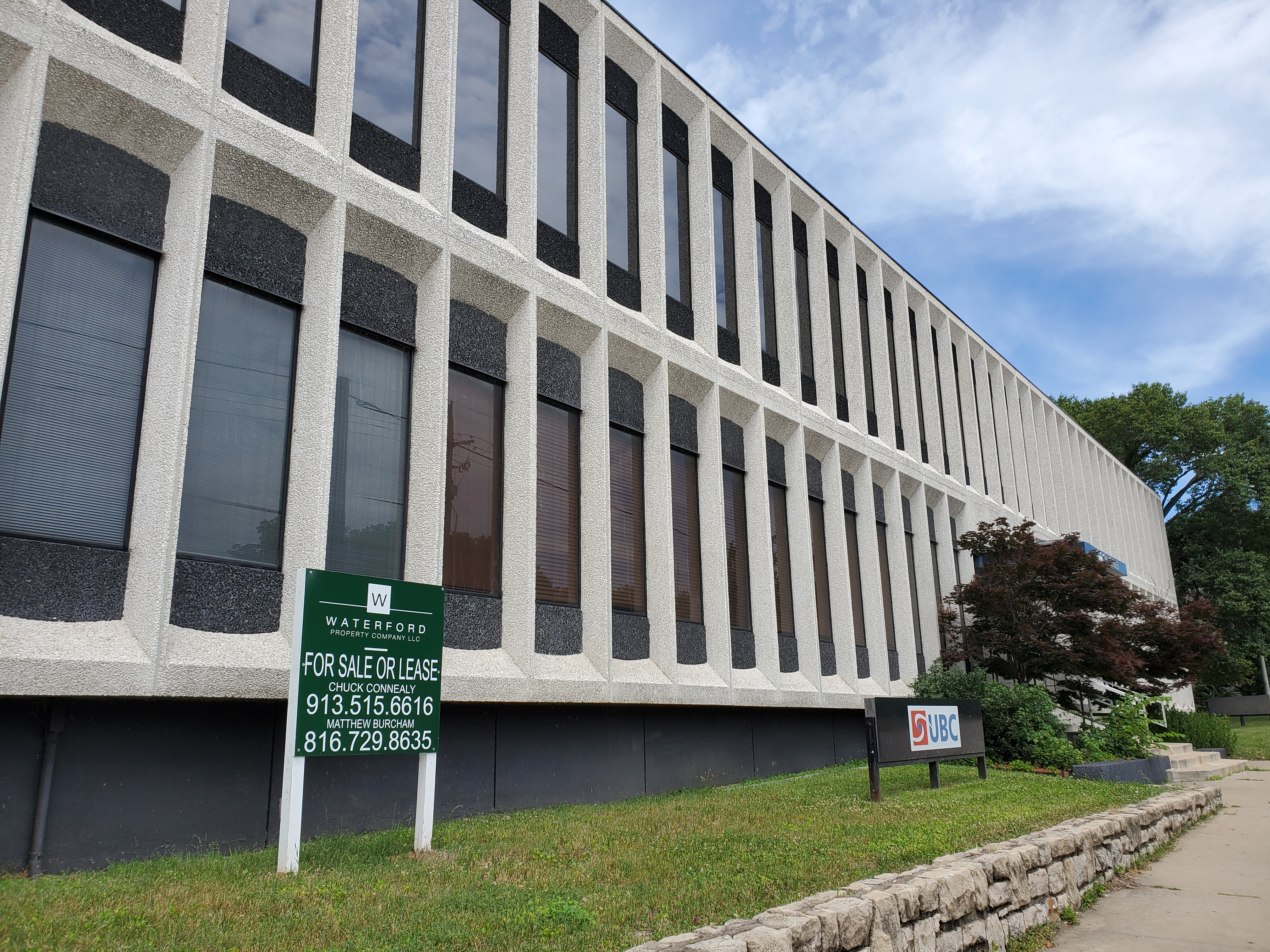
Many of you, I’m sure, are familiar with the old BrandsMart building on the southwest corner of Gregory and Wyandotte. If you can’t place it from the name, I’m sure you’ll recognize it from this photo…

I have no idea when this monstrosity was built, but it is a classic white elephant, owned by a relatively small-time developer named Nicholas Abnos. Abnos redevelops residential and commercial properties under the name Abdiana Properties.

To his credit, Abnos has some successes under his belt, including apartment buildings in Waldo and the Plaza. He also owns the historic Firestone Building at 20th and Grand, which has a few commercial tenants.

But the BrandsMart building is another story…a very long-running story.

Two years ago, The Star’s Joyce Smith wrote that Abnos had purchased the building in 2005, “with big plans to renovate it for retail, restaurants and residential.”

With more than a touch of irony, Smith said: “He’s still at it.”

And now, two more years have passed, and, of course, he’s still at it.

I see this building a lot because I frequent the Post Office on the southeast corner of the intersection, as well as some nearby businesses, including Sutherlands, a block south on Wornall.

For years, nothing was happening at the building, but then, a couple of months ago, I noticed that several workers were at the site, moving things around, digging holes and such. It was unclear, however, what the objective was.

So yesterday, when I drove by the building to take a photo (below), I saw a couple of workers on the east side of the building (the Post Office side). After getting back in the car and preparing to go, I saw one of the workers walking toward me. I concluded it was Abnos, even though I had never met him.

When he got within several yards, I yelled out the car window, “What is it going to be?”

“A Turkish whorehouse,” the man shouted back, with a broad smile.

I yelled back, “You’re Abnos!

“No,” he replied.

“Yes, you’re Abnos!” I repeated.

Still smiling, he motioned for me to get out of the car and said, “Come. I’ll show you.”

Well now, that was an offer I couldn’t resist, so I parked the car and walked over to him.

“What’s your name?” he said.

“Fitzpatrick,” I said. “Jim Fitzpatrick.”

“Oh,” he said, “I know you.”

“I was with The Star for many years,” I said.

“I know,” he said. “I read your stories.”

“What’s your first name?” I asked.

“Nicholas,” he replied, confirming my educated guess.

With that, he put his hand on my shoulder and proceeded to give me a 20-minute tour of the building.

The real plan, he said, was to develop seven spaces for retail on the ground floor and 14 apartments on the upper levels.

Although he and his crew have done quite a bit of work inside, it’s still very rough. The metal framing is up for the apartments, and some fancy tubs are standing around, but living units are a long way from a reality.

As you might have gathered from our initial exchange, Abnos is quite the personality and quite a charmer. At 72, he’s also quite nimble. As we wove through the building’s narrow corridors and across its largely unfinished floors, he maintained a brisk pace. It was a bit dark in some places, and I stepped carefully and rather slowly. At one point, as we were traversing uneven flooring, he gently took my hand and led me along.

I asked him why the redevelopment was taking so long and why the building had sat virtually unattended for years. His answer: It was all because the owner of an automotive shop (a former car dealership) next door had sued him over a sewer line, and the case had lasted nine years.

To tell you the truth, I made no attempt to verify that, so I have no idea if there was a lawsuit and if it persisted for nine years. When I asked him how the case had finally been resolved, he flashed a proud grin and said: “I won. He had to pay me.”

Along the way, Abnos kept saying, “I’m a small guy,” to distinguish himself from the big-time developers, those who routinely seek TIF assistance and property tax abatements.

“I’ve got no loans; it’s all me,” he said, tapping his chest animatedly.

He admitted that he was embarrassed about the long delay and the lack of progress but insisted all would work out.

“At the end of the day,” he said, “I’m going to do something nice.”

**

To my great regret, Abnos would not let me take his photo. Twice I asked, and twice he waved me off.

Only time will tell if, in regard to this project, Abnos is a con man, a dreamer or a visionary.

Like the residents of Waldo, I hope it’s the latter, but I fear it’s more likely one of the former.

**

Correction: This story originally said Abnos had redeveloped the Firestone Building into apartments, but that was incorrect. Kevin Collison, proprietor of the CitySceneKC wewbsite told me it remains fairly empty, with just a few commercial tenants.

I’ve wanted to get a close look — as close as possible, anyway — at construction progress on the $1.5 billion Kansas City International terminal for a long time, but I’d never had the occasion or the time to roam around the development site.

That changed this morning, when I took Patty to the airport for a trip to New York.

After I dropped her off at Terminal C, I thought I might as well roam around the airport grounds and see how close I could get to the construction area. Surprisingly, I did pretty well.

My first stop was the main construction entrance on Bogota Avenue, which is north of the existing terminals. Here’s what greeted me there.

This is as far as I went because all those signs say something like, “Authorized Vehicles Only,” and my Camry hybrid was not such a one.

Nevertheless, you can see the multi-level parking garage on the left and the shell of the terminal building, with the Y-shaped support beams.

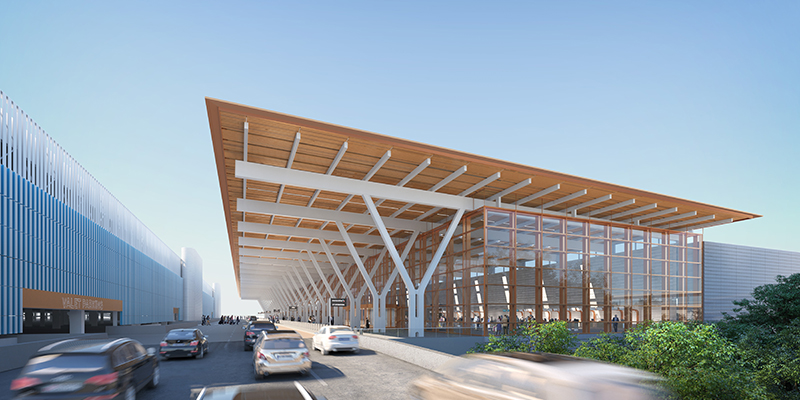
For comparison’s sake, here is a rendering of what the terminal is supposed to look like when it’s finished.

Now, I was afraid I might not be able to get any closer than the “authorized vehicles only” entrance, but, being an adventurer, I pushed on, going farther along Bogota Avenue.

After about a quarter of a mile, I reached an open gate that was clearly restricted to authorized vehicles, but there was no security, so I parked across the street and walked through the gate. I didn’t go very far but far enough to get this photo of the back side of the terminal, with the KCI tower in the background…

To the right of the white truck, I saw the long corridor that people will go down to get to their gates.

One thing I can tell you for sure is work is going on in earnest. I saw dozens of workers and dozens of vehicles going into and moving around the site. It was impressive.

Outside the gate where I took the photos were two cement storage silos owned by Clarkson Construction Co., a longtime Kansas City company that is one of the four main contractors on the job. (The upraised truck — owned by a St. Joseph, MO, company — also contains cement, I believe.)

Clarkson is a family-owned firm that was founded by G.G. (George) Clarkson in the 1880s and is now run by Bill Clarkson Jr., whose father, William E. Clarkson, oversaw construction of the Truman Sports Complex for Jackson County.

The bulk of Clarkson’s business is highway and bridge building and asphalt work.

The other three main construction companies involved in the job are Edgemoor Infrastructure and Real Estate of Bethesda, MD; Clark Construction Group, which is affiliated with Edgemoor; and The Weitz Co. of Des Moines.

Through the city’s one-percent-for-art program, about $5.5 million will be spent on art projects in and around the terminal. One of the art projects is a digital fountain, called Fountain of Resonance, that will capture and reflect natural light in the retail area near Concourse A. Here’s a rendering of the make-believe fountain.

…From a distance and from renderings, the new terminal looks good. I hope it’s more than good; I hope it’s jaw dropping. We won’t know, though, until at least early 2023, the projected completion date.

If you’re compulsive, like me and many others, you know how hard it is to get to a place where you feel at peace, enveloped in a sense of well-being, anxiety having drifted away.

For the first time in a long time I got to that place yesterday. And it carried over to today.

Here’s how it unfolded…

For the month of June, I’d been sick — struck low by a cold virus and sore throat I thought would never end. The symptoms finally started passing a week or so ago with the help of antibiotics and steroids.

So, as the Fourth of July weekend approached, I was in a fairly negative frame of mind, even though I was feeling better and thinking I might actually return to normal.

In addition to feeling subpar, I do not like fireworks…especially the loud, obnoxious, amateurish stuff that envelops Kansas City every Independence Day. So, there it was coming at us again — more haze, endless ka-booms! and worrying about how to calm the dog.

But a few days before the big day, we caught a break: Good friends Jim and Julie, who live in Midtown, asked us if we wanted to join them at their 100-acre “farm” in northern Missouri, west of Bethany and a mile or two from New Hampton, population 280.

Our daughter Brooks volunteered to spend the night at our house and take care of the dog and cat. So, on Sunday morning, we packed overnight bags and plenty of good food, including sausages and hot dogs from the Broadway Butcher Shop, and headed north.

We got to the farm about 1 or 1:30 and had lunch. Then we started in on the serious business — sitting on their porch and looking out at acre after acre of tall grass, stands of trees and the point on the horizon where the green melded into the blue sky. The only man-made thing in sight was the New Hampton water tower far out in the distance.

The only other human being we saw was a stocky farmer who, in late afternoon, showed up in a big tractor and began cutting the hay on the land next to Jim and Julie’s. On his first pass, he gave us a wave. He proceeded to cut for an hour or so and, after a break, he returned with a baling machine and proceeded to bale for an hour or so. Instead of being disruptive, though, the rise and fall of the droning engines seemed perfectly attuned to the setting.

We talked, of course. At one point, Julie reminisced about a family vacation when she and her brothers and sisters were young. They had gone to a rural area where there was nothing to do and one of her sisters complained about Dad having taken the family to a place where there was nothing to do but “watch the ground crack.”

So I started looking closer at the ground, at the part where the grass was cut fairly low around the cabin, to see if I could spot any fissures.

Julie, “Skipper” and Patty relaxing on July 4 in northern Missouri

We spent a lot of time talking about — and obsessing about — ticks. They were out in force, invisible of course.

Jim, who was in the grass more than the rest of us, got several. After spotting them on his skin, he would pluck them off, pull a pair of pliers out of his pocket and squish them mercilessly. Even though the area was infested with them, he felt an obligation to reduce their ranks as best he could.

Late in the afternoon, Jim fired up the charcoal grill, and we had a veritable feast built around hot dogs and sausages. (For the record, Patty had a vegetarian sausage.)

When it began to get dark, we wondered if there would be any fireworks out in the distance. A while later, at the edge of the horizon, where the trees met the nighttime sky, sporadic eruptions of coordinated colors began appearing. It was the gentlest fireworks display I’ve ever beheld: First came the splash of colors. Three to five seconds later came gentle, muted booms. We could watch, talk over it or ignore it…whatever we wished.

Then there was the all-natural nighttime show: Fireflies that winked and blinked at us from 20 yards away and a sky full of stars that did the same from millions of miles away.

I slept well last night, no ticking through “things to do” today.

When we got up this morning, we ate breakfast and started packing up pretty quickly: Jim and Julie were due at the Lake of the Ozarks in the afternoon to meet family members.

Still, I made it a point to sit down and look at the ground for a few minutes to check for signs of cracking and to make sure the long, green vista was intact and the blue picked up where the green ended.

My, my, there’s a lot of news going on pertaining to Missouri and Kansas City and the city’s two major sports franchises.

Let’s jump right in…

**

:: A Cole County Circuit Court judge ruled today that the Medicaid expansion plan that voters approved last August was unconstitutional, basically because, as proposed, the constitutional amendment did not provide for how the state would pay for the cost of expansion.

This is the second setback this year, the first, of course, being the General (Republican) Assembly’s failure to implement expansion.

Even though voters said they clearly wanted it, our head-in-sand political leaders are bent on defying the mandate.

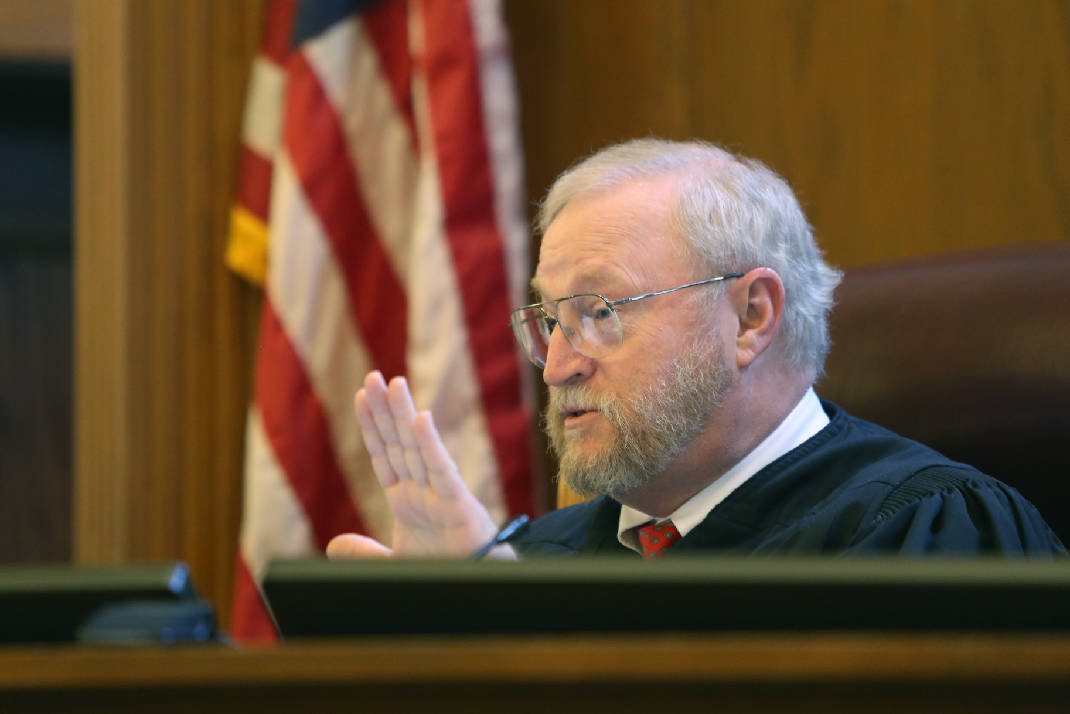
And in the case of today’s ruling, the politicians are getting a boost from Judge Jon Beetem, who, no surprise, also flies under the GOP banner.

Not that you’d find his political affiliation noted in any news stories because, you know, it’s just not fair to question those guys and gals in those hot, intimidating black robes…is it, now?

But here it is: Beetem was first elected (as a Republican) in 2006 and re-elected (as a Republican) to new, six-year terms in 2012 and 2018. (Cole County is not one of five Missouri counties where judges are appointed as part of Missouri’s nonpartisan court plan.)

Judge Jon Beetem

Today’s ruling is not the end of the case, though, because Chuck Hatfield, an attorney for the plaintiffs said he would file an appeal. “As all observers predicted, the issues around Medicaid expansion will be decided in the Court of Appeals,” Hatfield said. “We are disappointed in today’s ruling, but believe the Court of Appeals will disagree.”

Let’s hope the appellate court puts more weight on the will of the people than a technicality over how to fund expansion…How would the state pay for the expansion? Why, out of the state budget! And, if necessary, how about a tax increase to cover the cost? Oh, I apologize, that’s anathema to our “fiscally conservative” legislative majority.

**

:: I wish the failure to expand Medicaid was the only outrage taking place at the state level, but, of course, it’s not. Before the General (Republican) Assembly adjourned last month, it failed to approve a routine bill to renew taxes that finance a large portion of the state’s current, narrow Medicaid program.

The taxes, known as the federal reimbursement allowance (FRA), are assessed on hospitals, nursing homes and other health-care providers. In the budget year starting July 1, the taxes were projected to generate $591 million for the state and $1.5 billion in federal matching funds.

Here’s the crime: During the legislative session, efforts to extend the taxes bogged down when anti-abortion lawmakers argued over proposed amendments limiting contraceptives and tying the hands of Planned Parenthood.

So, on Tuesday, “Farmer” Mike Parson, our esteemed governor who hails from Bolivar (population 11,000), called a special legislative session, which started Wednesday. And now all the hicks from podunk towns like Bolivar packed their bags dragged their asses back to Jeff City to try to pass a routine tax that should never have been in jeopardy.

What a state…

**

:: Closer to home — well farther away if you take it literally — KC Chiefs’ defensive lineman Frank Clark set an amazing example for local youths when he was arrested in California Sunday for having a concealed Uzi submachine gun in his vehicle. Get this: It was the second time this year he’s been arrested for driving around and illegally concealing a weapon. The Star reported that Clark was arrested for a similar violation in March, the only difference being the first time officers found a rifle and a handgun. (A rich football star driving fancy cars and wearing lots of jewelry can’t be too careful, you know!)

Clark was booked on a felony charge after each incident and released on bond.

In an editorial published today, The Star said that “if he’s charged and convicted in the case, or pleads guilty to a lesser charge, the Chiefs should release him from the team.”

If the Chiefs had any sense, they would have released him already, but we know nothing — NOTHING — comes ahead of putting the strongest, fastest and most versatile players on the field, regardless of how they conduct themselves off.

I mean, how else can you explain Tyreek “You-need-to-be-terrified-of me-too-bitch” Hill still being on the team?

**

:: Oh, God, the Royals. What a sad sack of a team. Their two biggest power hitters, Jorge Soler and Hunter Dozier, are hitting .181 and .159 respectively, and yet both remain in the starting lineup.

Above and beyond his pitiful numbers, Soler looks like he doesn’t care. In addition, in my opinion, he disrespects the uniform by insisting on keeping his left-side back pocket turned inside out. I’ve heard that some players do that to indicate they are not pinching snuff. But I don’t care what the message is supposed to be, it’s a cornball look.

If I was the ump, I’d say, “You’re outta here!”

…And if I was John Sherman, I’d be seriously considering firing General Manager Dayton Moore. What a pathetic hand Moore has dealt Manager Mike Metheny.

**

I’m sorry I don’t have anything good to report today — like a cat plucked from a tall tree or a puppy rescued from a storm drain — but that’s the way it is this June 23, 2021.

QuikTrip management finally came to its senses: The company’s proposal of late last year to build a store adjacent to the northwest corner of 39th and Southwest Trafficway is officially dead.

I had not heard anything about the project in months, after writing two posts about the proposal last December. The company had gone silent, as had its local attorney, Patricia Jensen.

But when I noticed recently that a “for sale or rent” sign was up, I knew something was afoot because QT had had an option to buy the vacant building on the site.

Last Friday, I sent an email to Aisha Jefferson, a QT spokesperson, asking, “Has QT abandoned plans to build a store at the location?”

The answer came this morning: “Yes we have.”

This was not surprising news because nobody other than QuikTrip was in favor. Opponents included the surrounding neighborhood associations; 4th District City Council representatives Katheryn Shields and Eric Bunch; and Historic Kansas City Foundation, which is now strongly advocating a tax-incentive plan to redevelop the former Katz drugstore at Westport Road and Main Street. (The Council is expected to vote Thursday on a 10-year, 75-percent tax-abatement ordinance.)

Nevertheless, news of QT pulling the plug was a welcome relief to area residents.

Tosha Lathrom, immediate past president of the Roanoke Homes Association, told me today she had learned weeks ago about QT’s capitulation from Jackson County Legislator Scott Burnett, who lives in the area.

“We are all very happy about it,” Lathrom said. “We hope they (QT) move on farther east where there are no QuikTrips.”

That’s a nice wish but not likely to happen. QT seems to studiously avoid East Side locations. I know of at least one East Side (not very far east) location they abandoned many years ago: 75th and Holmes, which became a Conoco store and which, I believe, is now a Phillips 66.

It’s hard to argue with QT’s philosophy, however, because their formula has made them arguably the best and unarguably one of the most successful convenience-store chains in the country.

As of last year, the privately owned company was taking in more than $11 billion a year, with 850 stores in 11 states. Its strategy, stated on it website, explains why it steers clear of potentially problematic locations: It strives to be the dominant convenience/gasoline retailer in each market and to reach that level not through sheer numbers of stores but through key, high-volume locations.

And that’s precisely why it wanted to develop a big store at 39th and the Trafficway, even though it has two other locations — one on Westport Road and one on Main Street — within a few miles of the Trafficway.

The Westport Road and Mercier location

Talk about high volume…According to the Kansas City Public Works Department, the average daily traffic volume at 39th and Southwest Trafficway was 72,818 vehicles a day in 2017. That made it the busiest intersection in all of Kansas City, running about 1,500 vehicles a day ahead of the second-busiest intersection, 31st and Southwest Trafficway.

In the end, I think, it was smart of QuikTrip to back down. Had it kept pushing, it would have incurred a lot more bad publicity, and it would have sapped some of the goodwill it has enjoyed throughout much of the city, despite battles over store expansions here and there, including both the Main Street and Westport Road locations.

It’s good to know the tenor of that wonderful midtown neighborhood will now be preserved, at least for the time being, and that Missie B’s — “Kansas City’s premier gay bar” — will remain the liveliest spot in the immediate area..

The roots for the hostilities that exploded recently between the two Kansas Citys — the Northland and that part of the city south of the Missouri river — were planted 75 years ago.

The teeth-grinding by the Northlanders started with a 1946 pitched battle between KCMO and North Kansas City to annex part of the Northland.

The story of how the battle played out was the subject of a “KCQ” (Kansas City question) article in The Star on May 5.

It is a fascinating story that revolves around a brilliant city manager, L.P. Cookingham, and it helps explain the persistent tension between north and south.

Before 1946, Kansas City was entirely south of the Missouri River. Cookingham, who had been hired in 1940 to bring the city out of the corruption of the Pendergast regime, understood that with suburban expansion, Kansas City would be left behind if it could not expand to the north, with downtown the central hub.

After learning in 1946 of North Kansas City’s intention to annex part of Clay County, he quickly initiated a similar process in KCMO. North Kansas City got its proposal to the ballot box first, on Sept. 10, 1946, when North Kansas City residents voted 801 to 33 to annex part of the unincorporated area.

Kansas Citians voted on Nov. 5, 1946, and the measure squeaked by on a vote of 39,978 to 37,920. (In both elections, the residents of the area subject to annexation could not vote, and Northland residents, who favored North Kansas City, didn’t like it one bit.) Because almost everyone at City Hall was under the impression that a three-fifths majority was needed for passage, it was assumed the proposal had gone down to defeat.

One person, Cookingham, did not believe that was the case. The morning after the election, he went to Mayor William Kemp and said: “I’m not satisfied with this. Let’s go down to the law books and take another look.”

All morning Cookingham pored over law books and finally concluded the three-fifths provision was not there. When a city attorney challenged him Cookingham said, “Show it to me.”

The KCQ article then says: “Upon deeper examination, it was learned that the three-fifths rule for annexation had been changed to a simple majority requirement in 1920 and not been reenacted when the state Constitution was amended in 1945.”

So Cookingham was vindicated…But there remained the matter of NKC having voted first.

Again, Cookingham had the hole card: He apparently knew from his legal research that the determining factor was not when the vote was held but which city’s annexation proposal had been introduced first.

Kansas City had introduced its proposal on Aug. 19. NKC had introduced its proposal a few days later.

After three years of litigation, the Missouri Supreme Court sided with KCMO, and, as the KCQ article said, “Kansas City had officially moved into Clay County.”

Had KCMO not won that battle, who knows what would have ensued? More annexations followed, but maybe North Kansas City, emboldened and empowered by an initial success, would have been more aggressive and would have grown rapidly.

But now it’s KCMO that is one of the largest cities in the country, encompassing 320 square miles, while landlocked North Kansas City consists of just 4.5 square miles.

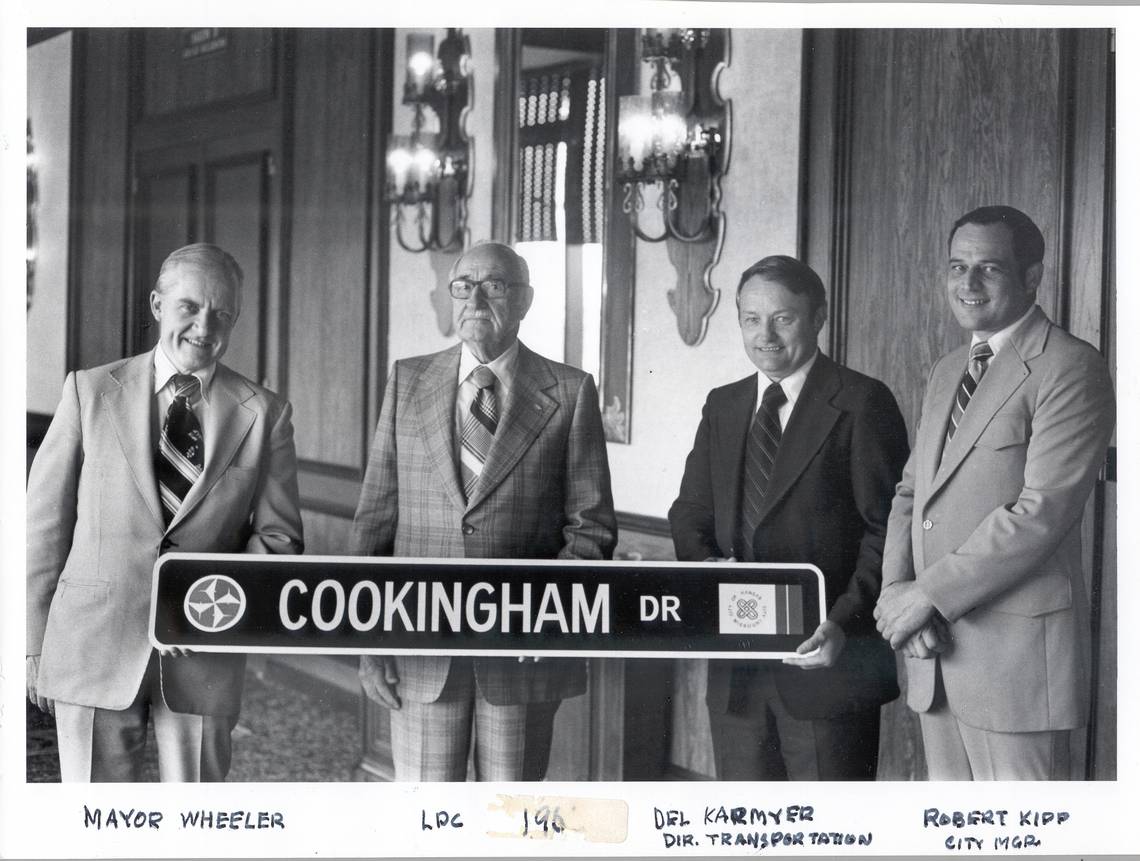
In 1977, the throughfare passing through Kansas City International Airport was renamed Cookingham Drive to honor the legendary city manager’s contributions to Kansas City. LABUDDE SPECIAL COLLECTIONS, UMKC UNIVERSITY LIBRARIES. Pictured from left were then-Mayor Charles B. Wheeler, former City Manager L.P. Cookingham, then-Transportation Director Del Karmeier, and then-City Manager Bob Kipp.

**

I was fortunate to have the opportunity to meet and cover Cookingham, who was affectionately known as “Cookie.”

When I was assigned to cover City Hall for The Star in 1985, Cookingham, then 88 or 89, was president of the Board of Parks and Recreation Commissioners. Also on the board were Anita Gorman and Ollie Gates.

Gorman succeeded Cookingham as board president in 1986, and Gates succeeded Gorman in 1991.

Cookingham spent his last years at Kingswood Manor, 100th and Wornall. He died July 22, 1992, at age 95. He may well have been the best city manager Kansas City ever had, certainly the most visionary.

We can live with the tensions between north and south; the most important thing is there is a north and south. “Cookie” made sure of that.

I always know when the Pulitzer Prizes have been awarded because a story pops up on The Star’s website saying Melinda Henneberger of the editorial page was once again a finalist.

And so it was today that Henneberger is, for the third year in a row, a PP finalist.

Now, this is a big deal for The Star and for Henneberger, and it’s too bad she’s been a bridesmaid three successive years. For the life of me, however, I don’t understand why The Star does these blinkers-on stories, year after year, without listing the actual winners of the Pulitzers.

That is a much bigger deal than The Star finishing second, and it reflects, once again, how parochial the hometown paper has become under Mike Fannin’s leadership and, more broadly, under the old and new McClatchy management.

It’s also a big reason why circulation has been in free fall and why the paper doesn’t have anything close to the influence it used to have over such things as civic projects, local elections and state and local government. It’s a shell of what it used to be.

I’m not going to harp on it any more because this has been unfolding before our eyes the last decade or so. But it’s worth noting, and I hope my constructive criticism will be noted somewhere down at 16th and McGee…at 16th and Mcgee until the end of the year, when the last of the paper’s employees there will be moving someplace else.

You wouldn’t know it from The Star, but the Pulitzer Prizes reflect the ongoing strength of traditional and non-traditional media nationwide. (Perhaps the most noteworthy non-traditional recipient of a Pulitzer this year was the publication Runner’s World.)

With that in mind, let’s move on to the Pulitzer Prize winners, who were announced announced today at a ceremony at Columbia University.

And I am pleased to report that we did have one local winner, Chris Haxel of KCUR, who contributed a podcast to the Guns & America national reporting project. Haxel was one of four NPR correspondents who shared the prize for Audio Reporting.

Here are the others…

Special Citation: Darnella Frazier, who was 17 when she recorded George Floyd being asphyxiated under the knee of Minneapolis police officer Derek Chauvin. She testified at Chauvin’s trial, and her video contradicted the initial police account of Floyd’s death.

Darnella Frazier

Breaking News Reporting: The staff of The (Minneapolis) Star Tribune for coverage of Floyd’s death and the reverberations that followed.

Investigative Reporting: Matt Rocheleau, Vernal Coleman, Laura Crimaldi, Evan Allen and Brendan McCarthy of The Boston Glove for reporting that uncovered state governments’ systematic failure to share information about dangerous truck drivers.

Explanatory Reporting: (Two sets of winners) Ed Yong of The Atlantic for a series of pieces on the COVID-19 pandemic, and Andrew Chung, Lawrence Hurley, Andrea Januta, Jaimi Dowdell and Jackie Botts of Reuters for an examination of the legal doctrine of “qualified immunity” and how it shields police who use excessive force from prosecution.

Local Reporting: Kathleen McGrory and Neil Bedi of the Tampa Bay Times for reporting that exposed how a powerful and politically connected sheriff built a secretive intelligence operation to earmark children who might “fall into a life of crime” based on factors like whether they’d been abused or received a failing grade in school.

Paul Tash, Chairman and CEO of the Times Publishing Company, left, Tampa Bay Times Executive Editor Mark Katches, reporters Kathleen McGrory and Neil Bedi, and former Deputy Editor of Investigations Adam Playford watch as McGrory and Bedi are announced as the winners of the Pulitzer Prize for Local Reporting on Friday, June 11, 2021, for their groundbreaking series about a Pasco County law enforcement initiative that harassed local residents. (Photo by Douglas R. Clifford, Tampa Bay Times)

National Reporting: The staffs of The Marshall Project, Alabama Media Group, The Indianapolis Star and the Invisible Institute for a yearlong investigation of K-9 units and the damage that police dogs inflict on Americans.

International Reporting: Megha Rajagopalan, Alison Killing and Christo Buschek of BuzzFeed News for a series of stories that used satellite imagery, architectural expertise and interviews with two dozen former prisoners to identify a vast new infrastructure built by the Chinese government for the mass detention of Muslims.

Feature Writing: (Two winners) Nadja Drost, freelance contributor to The California Sunday Magazine (which went out of business last October) for an account of global migration documenting a group’s journey on foot through the Central American Darién Gap, one of the most dangerous migrant routes in the world, and Mitchell S. Jackson, freelance contributor to Runner’s World, for an account of the killing of Ahmaud Arbery that shed light on systemic racism in America.

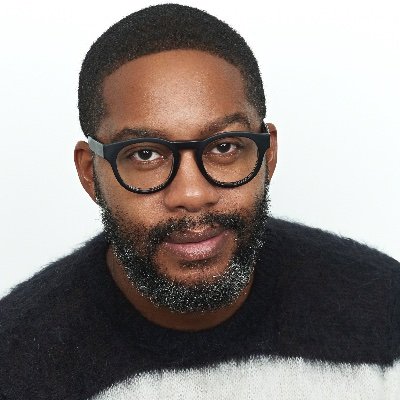
Mitchell S. Jackson

Commentary: Michael Paul Williams of the Richmond (Virginia) Times-Dispatch for columns that led Richmond, a former capital of the Confederacy, through the painful and complicated process of dismantling the city’s monuments to white supremacy. (In this category, Henneberger was a finalist for “tenacious and deeply reported columns on failures in the criminal justice system.” One of her columns column was about Kansas City Police Chief Rick Smiths failure to utter a word about George Floyd’s death for six days and then not naming him when he did talk about it.)

Criticism: Wesley Morris of The New York Times for criticism on the intersection of race and culture in America.

Editorial Writing: Robert Greene of the Los Angeles Times for editorials on policing, bail reform, prisons and mental health in Los Angeles.

Breaking News Photography: The staff of The Associated Press for a collection of photographs from multiple U.S. cities capturing the country’s response to Floyd’s death.

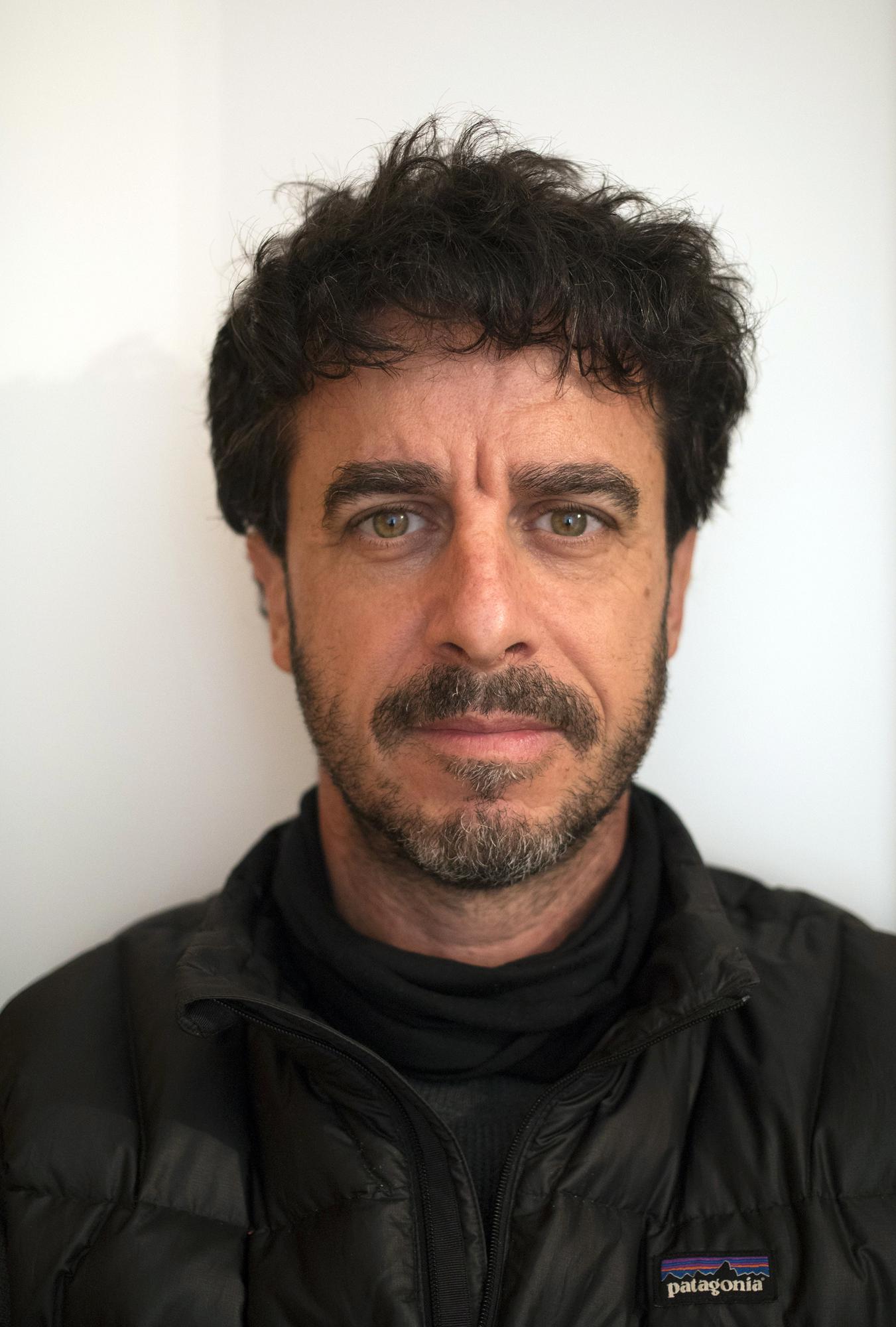
Feature photography: Emilio Morenatti of The Associated Press for a series of photographs that took viewers into the lives of elderly people in Spain struggling during the pandemic.

Emilio Morenatti

Audio Reporting: Chris Haxel, Lisa Hagen, Graham Smith and Robert Little of NPR for an investigative series on no-compromise gun rights activists that illuminated the deepening schism between American conservatives.

Public Service reporting: The New York Times for sweeping coverage of the coronavirus pandemic that exposed racial and economic inequities, government failures in the U.S. and beyond, and filled a data vacuum that helped local governments, health care providers, businesses and individuals to be better prepared and protected.

Kansas City’s Black elected officials — U.S. Rep. Emanuel Cleaver and those on the City Council — are determined to make the 18th and Vine Jazz District succeed as a tourist attraction.

Back in 2016, the City Council approved $7 million for a new round of improvements, and if there was any doubt about Black elected officials’ determination to go even bigger, it was erased this week when $6 million was included in the U.S. House of Representatives’ surface transportation bill.

Eighteenth and Vine is one of five projects totaling more than $18 million Cleaver was able to get included in the INVEST in America Act, which the House Transportation and Infrastructure Committee has begun to consider.

The transportation bill, which comes up every five years, marks the the return of Congressional “earmarks,” in which senators and representatives are able to direct funds to specific projects in their states and districts.

Earmarks went away a decade ago after they became synonymous with corruption, but now they are back with a fresh start and a chance to create projects that will give cities and states a lift.

If this particular earmark would put 18th and Vine on the map again, as more than an East Side attraction, it would be a great thing for Kansas City. As we’ve all seen, redevelopment at the legendary jazz district has proceeded in fits and starts. It’s still a long way from becoming a reliably strong tourist area, where people of all races converge to have fun, but the new project could be a big step forward.

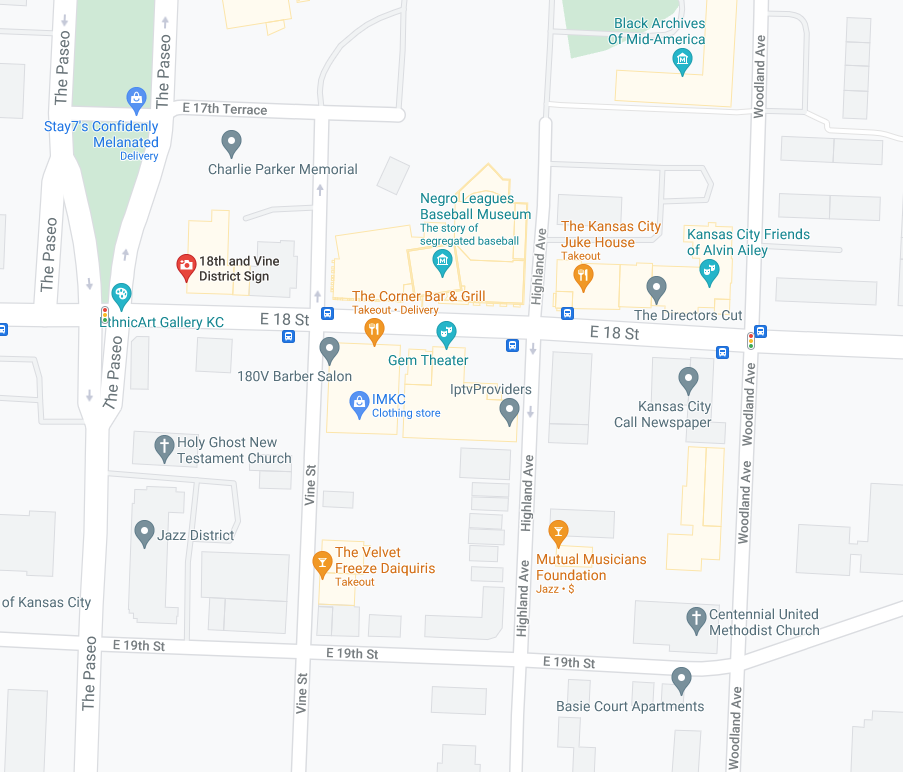
It provides for creation of a “pedestrian plaza,” which would involve closing 18th Street to vehicles along a two-block stretch, from the Paseo to Highland Avenue. Here’s the area in question.

Supporters of the plaza envision farmers markets, festivals, outdoor concerts and more along the plaza.

Cleaver, brandishing his usual optimism, said, “The plaza area is going to be one of the most beautiful spots in Kansas City.”

Who can say for sure it won’t be? Several outstanding attractions are there now, headed by the Negro Leagues Baseball Museum, and the area is ripe with possibilities.

The district will never go big-time, however, unless people feel safe going there. A big setback on the safety front took place April 25 when a 34-year-old personal trainer named Gary Taylor was killed in a bout of gunfire.

Twenty-nine-year-old Jerronn Anderson has been charged with first-degree murder in the case.

It was just the kind of incident that is all too common on Kansas City’s East Side streets. Court documents say Taylor was walking south on Vine Street with two of his friends. As the group approached 19th Street, Taylor stopped and turned toward the north. Anderson approached the three from that direction, and as Taylor turned away, Anderson brought out a handgun and fired. As Taylor fell to the ground, his two companions pulled out guns and fired toward Anderson, who later showed up wounded at an area hospital.

Now, that’s not a prescription for success, but that’s not to say the problem can’t be brought under control. It’s easy to say, “It’ll never happen,” but stranger things have happened, and millions of dollars of investment have produced some impressive results so far.

To me, the pedestrian plaza idea is worth a try. If that area could one day be something akin to Westport, it would be a remarkable feat. If that happened, as you traveled around the country, you’d hear a lot more people in other cities singing Wilbert Harrison’s immortal words, “Goin’ to Kansas City, Kansas City here I come.

**

Besides 18th and Vine, here are the other Cleaver-sponsored projects that made it into the surface transportation bill…

:: $6 million for the KCATA to purchase zero-fare electric buses. (Kansas Rep. Sharice Davids filed a separate request for an additional $4.5 million.)

:: $2.16 million for improvements to Cliff Drive Scenic Byway in northeast Kansas City.

:: $3.1 million to replace a bridge in Lawson.

:: $900,000 for infrastructure improvements in downtown Odessa.

Time for another news digest, bringing you up to speed on what’s going on in KC and the region.

:: Once again, our governor, “Farmer” Mike Parson, has shown how much he detests Kansas City. (Same for St. Louis, he just hasn’t exhibited that in a while.)

There’s been story after story about wrongly convicted Kevin Strickland, the Kansas City man who has been imprisoned for more than 40 years for a 1978 triple homicide that prosecutors are now convinced he did not commit.

Jackson County Prosecutor Jean Peters Baker’s hands are tied until a new law takes effect in August, when she and other prosecutors will be able to start asking judges to overturn convictions in cases of erroneous convictions. But Farmer Mike’s hands are not tied; he has the power to pardon. This week he pardoned 36 people, but he passed over Strickland, whose case he knows about.

Parson’s failure to act prompted Tricia Rojo Bushnell, director of the Midwest Innocence Project to say: “It’s hard to imagine how everyone can know someone’s innocent and he’s still there. At this point, no one with power has done the things to let him out.”

Farmer Mike doesn’t seem to care. His police board is going to war, legally, with Kansas City over the City Council’s decision to redirect $42 million that is part of the Police Department’s budget. That and Strickland’s plight are just two instances of how Parson and his Republican cohorts — most of them hailing from towns of 10,000 or less — like to hold the largest city in the state hostage to their whims and biases.

For the record, Parson, when he’s not in Jefferson City, lives in Bolivar, a town of about 10,500.

:: The new McClatchy Company, now owned by a New Jersey-based hedge fund, didn’t fight a unionization effort by the approximately 40, non-management editorial employees at The Star. This week, McClatchy said it would voluntarily recognize the Kansas City News Guild, which formed last month under the leadership of longtime columnist and reporter Mike Hendricks.

I suppose the reason McClatchy didn’t fight it was twofold: First, it would make the company look even more shark-like than it already is, and, second, McClatchy recognized fighting the movement would be a losing effort because the vast majority of eligible employees were on board.

You won’t see any more reporters hired as a result of this development — or more substantial coverage of local news — but at least those remaining employees will have some leverage with management.

The Star union will become a unit of the NewsGuild-CWA, the nation’s largest union for journalists and other news industry employees. The News Guild is a sector of the Communication Workers of America, representing about 24,000 journalists.

:: In the interests of linking downtown “islands” with downtown proper, several U.S. cities have removed, or are removing, some of parts of downtown interstate loops. One city that has done so with great success is Rochester, NY, which, in 2013, won a nearly $18 million grant from the Obama administration that enabled it it to remove a segment of its inner loop. In an exhaustive report about loop extractions, The New York Times said…

“People have already moved into townhouse-style apartments where the highway once stood. Scooters and bicycles share space with cars along the new Union Street corridor, a once unlikely sight. Several cross-streets cut off by the highway have been reconnected, encouraging more walking in the area. And the big fear of removing a highway — terrible traffic — hasn’t materialized.”

Could it happen here in Kansas City? Sure, and I hope it does. Kevin Collison, who for several years has written and published the website CityScene KC, reported this week that the Washington D.C.-based Congress for The New Urbanism (CNU) had published a report that advocated removal of part or all of Kansas City’s North Loop, which separates downtown from the River Market and the Columbus Park neighborhood.

As envisioned, the approach to the Heart of America Bridge, also known as the Missouri 9 bridge, would be lowered to grade, reuniting the River Market and Columbus Park neighborhoods and establishing easy access to Independence Boulevard.

A related idea is to fill in and cover up to four blocks of the South Loop with a downtown park. That would establish a seamless connection between Downtown and the Crossroads district.

Both ideas are just in the conceptual stage, but sooner or later one or both of those hideous loops will be going away, replaced by multi-lane roads that move traffic but allow easy access to the downtown, the River Market and the Crossroads.

For people like me, who are always looking for ways to avoid freeways, it will be a godsend.

:: The final step toward resolving the honoring of Dr. Martin Luther King Jr. will take place this weekend as city Public Works crews will place Dr. Martin Luther King Jr. Boulevard signs along Volker Boulevard and sections of Swope Parkway and Blue Parkway. A KCMO news release said the project will involve switching out of 37 standard street-name signs, as well as five traffic signal signs equipped with LED lighting at Volker and Oak, Swope Parkway and Prospect and Blue Parkway and Eastwood Trafficway.

If, like me, you are a supporter of the legacy of businessman and philanthropist William Volker, don’t worry: A nonresidential section of Oak Street between 45th Street (the Nelson Gallery) and 52nd Street (near UMKC) will be renamed Volker Boulevard.

:: Last but not least, we finally have a new trial date for 83-year-old David Jungerman, who is charged with murdering Kansas City lawyer Thomas Pickert outside Pickert’s Brookside home on Oct. 25, 2017. Jackson County Circuit Judge John Torrence recently scheduled jury selection to start on Monday, Dec. 13, with the trial beginning immediately after a jury has been sworn in.

Even though Jungerman, a mean and hateful man, has been safely off the streets for more than three years now, it will be good to see him finally brought into court and facing the assistant prosecutors and police investigators who have worked so hard to bring him to justice.

Dec. 13 will be a gratifying day for many people, assuming Jungerman doesn’t die in the Jackson County jail before then.

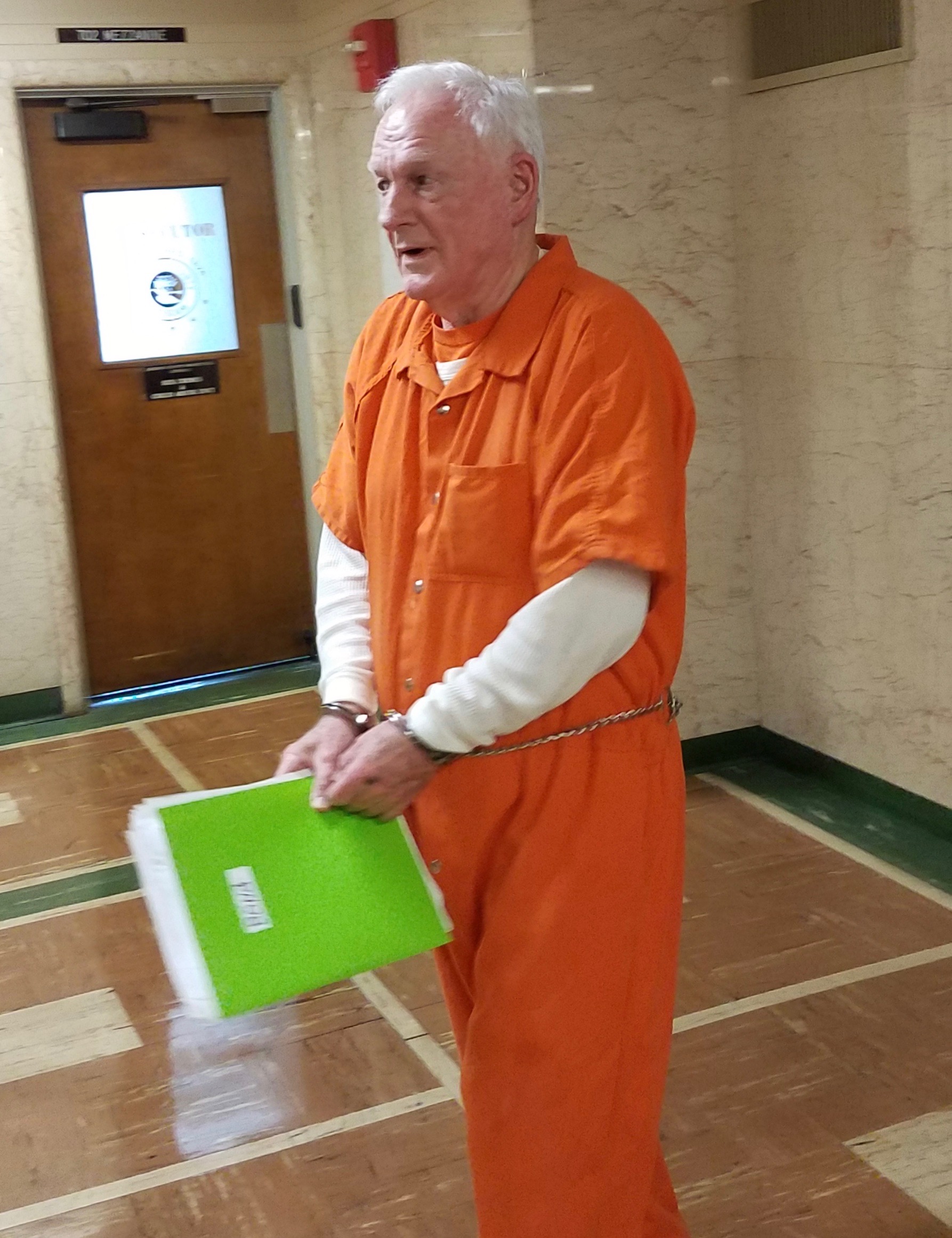
Here’s a photo of him from 2019.