Feeds:
Posts
Comments

I’m sure I speak for all of us when I say I’m shocked and appalled that Kansas City didn’t make Amazon’s Top 20 list for its secondary headquarters.

I’m almost at a loss for words, other than to say, as the unforgettable Seinfeld lawyer Jackie Chiles would have couched it: “It’s outrageous, egregious, preposterous.”

…What could these Amazon people have been thinking? They must have had scales on their eyes, blinding them to some of our greatest upsides, including:

:: A start-up streetcar system that runs two miles. (We might even get it extended a few miles, if we can wade through a miasma of legal complications.)

:: A new airport on the way. (If you squint, you can see it dimly in the far horizon. See it there, with the two-story fountain in the main concourse?)

:: One of the most successful arenas in the country. (“WWE Smackdown Live” coming Feb. 6. Don’t get shut out; tickets start at $18!)

**

But enough of the sarcasm, eh? Nobody, not even Mayor Sly James in his wildest dreams, thought KC would make the Top 20. It was an exercise in pseudo chest thumping and inevitable disappointment.

Of, course, we had to do it. Every self-respecting city had to do it, had to try. If we hadn’t submitted an application, we’d be saying we’re a shitty, undeserving city and all our residents should pack up and look for someplace better.

And by no means is that what we are or what the vast majority of KC residents think we are.

We are a great city. We are vastly, monumentally improved over the last 15 years or so, since former Mayor Kay Barnes embarked on her crusade to reinvigorate Downtown and make it a worthy leg in the River Market/Downtown/Crown Center/Plaza corridor. (The corridor will be significantly strengthened, of course, if we can get the streetcar expansion up and running.)

Nevertheless, we don’t come close to matching up with the priorities Amazon was looking for, including:

— An advanced transit system

— Strong higher education institutions

— A highly trained technical force

— Financial incentives

On the latter point, A KC Star editorial today noted that Newark, NJ, which made the cut, offered an incentive package of $7 billion — many times bigger than Kansas City was able to offer.

On that point, the editorial said: “Matching New Jersey’s $7 billion would have been foolish. Amazon’s HQ2 is an important project, but not that important.”

**

One point that jumped out from the list of cities that made the cut is that most are in the Eastern Time Zone.

So, this much is starting to become clear: With its headquarters in Seattle, Amazon is probably looking for a counterbalancing HQ in the East. That would make all the sense in the world from a business standpoint.

Here’s a list of the cities that were selected to go on to the next phase:

Atlanta, Austin, Boston, Chicago, Columbus, Dallas, Denver, Indianapolis, Los Angeles, Miami, Montgomery County Maryland, Nashville, Newark, New York City, Northern Virginia, Philadelphia, Pittsburgh, Raleigh, Toronto and Washington D.C.

Before today, I thought Denver had a great chance to be get the nod for HQ2, but now I think the odds on Denver have risen quite a bit, despite all it has to offer. It’s in the Mountain Time Zone, just an hour ahead of Seattle.

Among the other cities, two in particular pique my interest…

Nashville

I’ve been there a few times and love it. One big advantage it appears to have over several of its competitors is a thriving public K-12 school system. According to Wikipedia, Metropolitan Nashville Public Schools has about 89,000 students. As of the 2013-2014 school year, the make-up was 37 percent Caucasian, 43 percent African-American, 15 percent Hispanic, 3 percent Asian and 2 percent other. (KCPS, by jaw-dropping comparison, has just 15,568 students, with a racial make-up of 57% black, 28% Hispanic, 9% white and 6% other.)

Another selling point for Nashville is Vanderbilt University, which The Star called “one of the most well-regarded private universities outside of the Ivy League.”

And yet, while Nashville is in the hunt, I doubt if it will win. Going back to that time-zone thing, it’s in the Central Time Zone, like us.

Columbus 

Even though I grew up not too far away in Louisville, Ky., I had never paid any attention to Columbus (which is in the Eastern Time Zone) or given it much thought until Patty and I went there for the denominational convention in 2015.

(Patty, for those of you who don’t know, has a business that designs and manufactures clergy garments, and she had a booth in the convention center’s exhibition hall.)

It was an eye-opening experience. Columbus’ assets include Ohio State University, one of the largest public universities in the country; unique and attractive neighborhoods with a variety of restaurants; and the seemingly ubiquitous Nationwide insurance.

With an estimated 2016 population of 860,090, it is the third most populous state capital in the United States, after Phoenix and Austin. Among midwestern cities (yes, it’s considered Midwest), it has the second highest population, after Chicago.

According to Wikipedia, Money Magazine ranked Columbus as one of “The 6 Best Big Cities” in 2016, calling it the best in the Midwest and citing a highly educated workforce and excellent wage growth. In 2013, Forbes gave Columbus an “A” rating as one of the top cities for business in the U.S. and later that year included the city on its list of Best Places for Business and Careers.
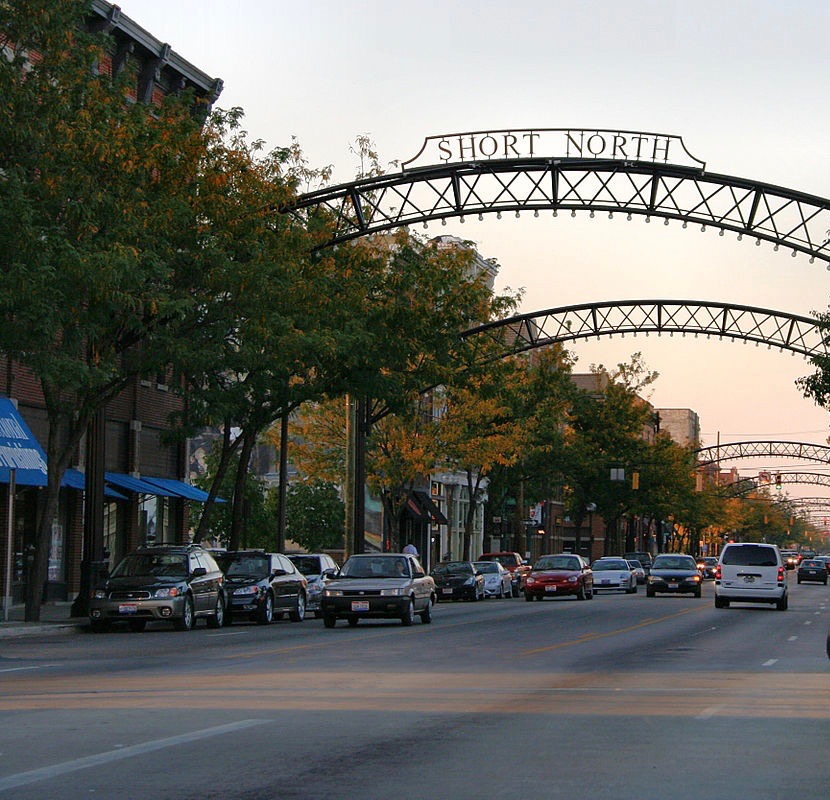
Iron arches announce the entry to Columbus’ Short North Arts District

Concentrated downtown, within walking distance, are the Nationwide Arena, the sprawling but navigable Greater Columbus Convention Center; and the alluring “Short North Arts District,” which is similar to (but, frankly, not as good as) our Crossroads Arts District.

**

It will be fascinating to see how this competition plays out and which city lands HQ2. In a way, it’s a relief that Amazon won’t be establishing a second beachhead in Kansas City. Can you imagine the upheaval that would have generated throughout the metro area?

Among other things, think about traffic congestion and the soaring cost of homes, apartments and condos. For the privilege of having a huge headquarters building here, we would be guaranteeing ourselves a ton of inconveniences.

When I think about things like this — glittering baubles you’re tempted to reach out for — I often go back to Warren Beatty’s character John McCabe in the movie McCabe & Mrs. Miller. He’s in love with Julie Christie’s character, Constance Miller, whom he brings into a fledgling mining town to operate a whorehouse.

But things don’t go entirely smoothly, either on the business or romantic front (she’s addicted to opium), reducing Beatty to muttering one night, under the influence of alcohol, “Money and pain. Pain and money…Money…Pain.”

Can’t think of a better way to describe the prospect of Amazon plopping down here in KC.

Editor’s Note: On Friday morning, I changed the ending of this post.
 

Thursday was a big news day in Kansas City, with Ronnie Burt resigning as convention and visitors bureau C.E.O. for allegedly bullying and harassing female employees and Gov. Eric Greitens in the grasp of political self-destruction for allegedly threatening to blackmail a woman with whom he had an affair in 2015.

But another story that surfaced yesterday could well have longer-lasting and deeper ramifications for Kansas City than either of the others. That was KC Star reporter Mark Davis’ story that local technology company DST Systems Inc. has agreed to be purchased by a Connecticut-based rival, SS& Technologies Holdings, for $5.4 billion.

DST employs 14,400 people worldwide and 4,000 in the Kansas City. Just as important as its large employee base, however, is the fact that it has played a huge role in Downtown redevelopment, particularly Downtown’s west side.

It is unclear how the SS&C acquisition affect DST’s employment and presence here, but, as we all know, consolidation and personnel reductions almost always follow corporate takeovers.

In addition, and perhaps of more concern, it seems unlikely DST will continue to maintain the high civic profile it has achieved as a planter of seeds for exciting Downtown projects. Undoubtedly, DST has made a lot of money for its stockholders — it’s a publicly traded company — but it has also made civic betterment, and specifically a revitalized Downtown, a top priority. An essential element of its corporate philosophy was that what was good for Kansas City was good for business.

Consider some of its civic contributions:

:: Conversion of a 104-year-old building at 10th and Central into the extremely successful Crossroads Academy charter school.

:: Assembling the land for the majestic Kauffman Center for the Performing Arts at 16th and Broadway.

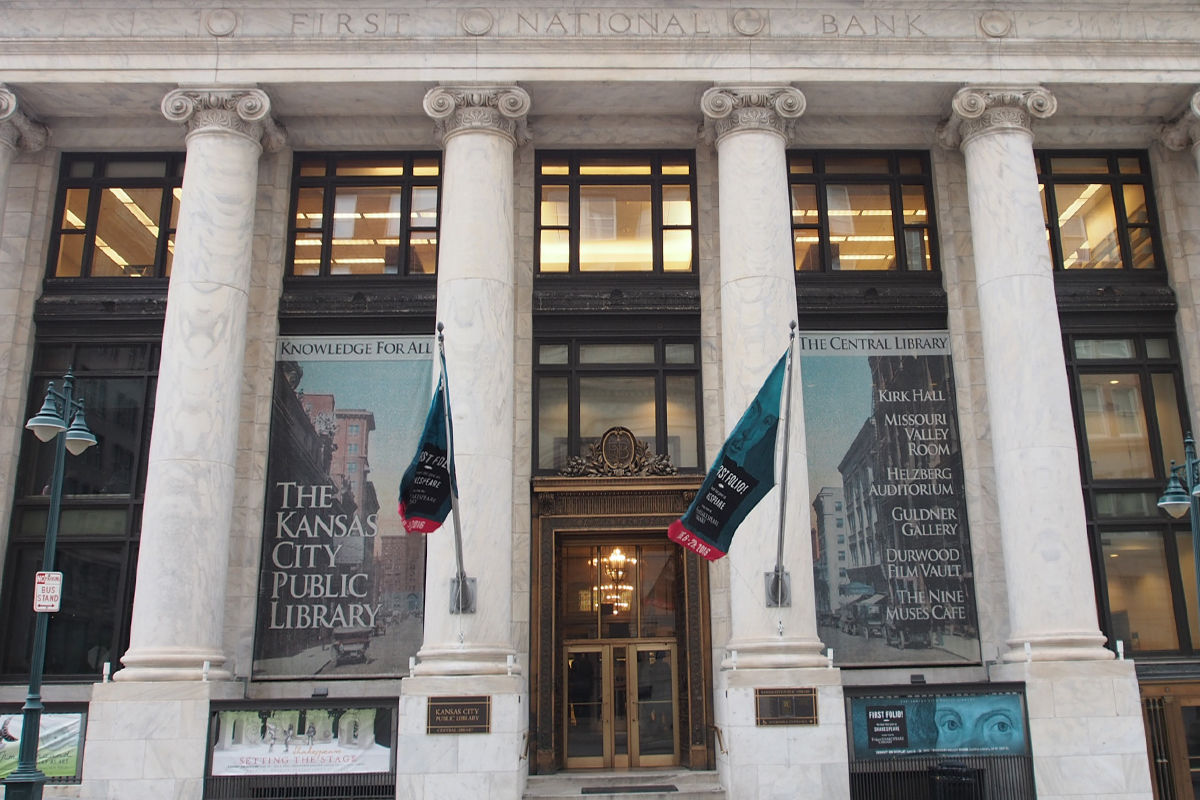
:: Conversion of the stately First National Bank Building at 10th and Main into the Central Library, which has become a Downtown destination point for library programs and events.

**

Each of those is an impressive landmark. But to truly appreciate DST’s civic contributions, it is necessary to trace its corporate roots. That takes you back to a Kansas City civic and business giant, the late William N. Deramus III, who led Kansas City Southern during a transformative period between 1961 and 1973.

Deramus

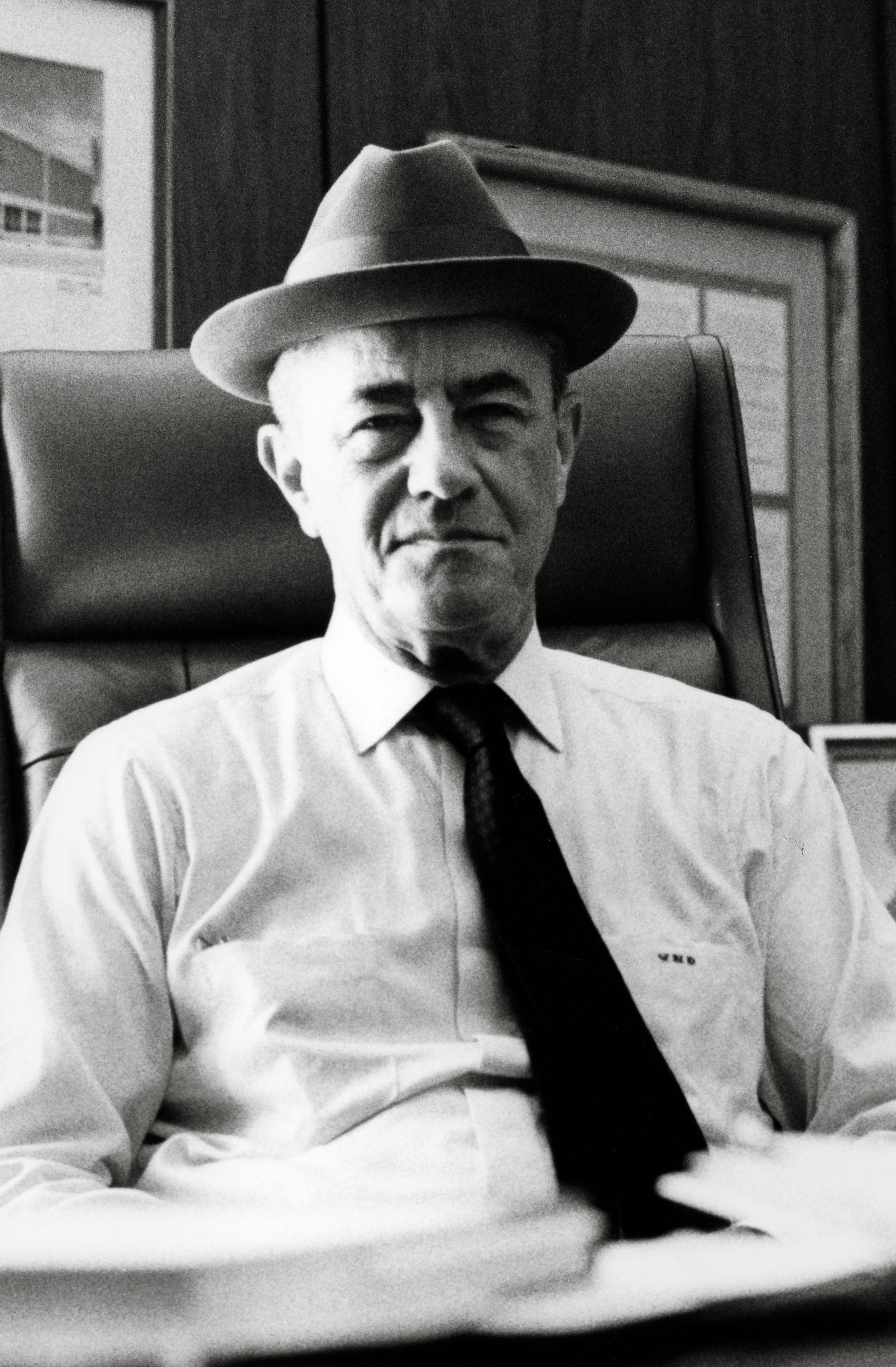
Deramus, who died, in 1989, was a man of few words but had a powerful presence. For one thing, he always wore a hat. In later years it was dress-type cowboy hat. I saw him only one time, to the best of my recollection, at a Kansas City Park Board meeting in the late 1980s, when he was advocating for improvements at the Kansas City Zoo. I remember that everyone at the meeting was extremely deferential to Deramus, including Park Board President Anita Gorman, a civic legend in her own right.

Deramus inherited the reins of Kansas City Southern from his father, William N. Deramus Jr., and led the company through a transformative 12-year period from 1961 to 1973.

The year after he took charge, he changed the company’s name to Kansas City Southern Industries to reflect the diversification he pioneered.

Wikipedia offers this summary of the Deramus-initiated changes:

“In 1969 KCSI started the two largest companies that came out of the diversification, DST Systems and Janus Capital Group…DST Systems is a software development firm that specializes in information processing and management, with the goal of improving efficiency, productivity, and customer service. Janus Capital Group is a finance firm that provides growth and risk-managed investment strategies.”

Both firms were spun off from KCSI. Janus Capital moved to Denver and last year merged with a London-based company. But DST stayed put and, under the leadership of another legendary business and civic leader, Thomas A. McDonnell, became one of the city’s premier businesses.

McDonnell was with DST for more than 40 years, before retiring in 2012. He subsequently headed the $2 billion Ewing Marion Kauffman Foundation for 18 months.

**

What happens with DST from here, no one knows. The acquisition is expected to close by the end of September, assuming DST shareholders and federal regulators approve.

Mark Davis’ story in The Star includes predictable statements from the respective C.E.O.’s of both companies. Bill Stone of SS&C is quoted as saying, “We are…excited to have the DST employees from around the world join the SS&C team and look forward to having a continued local presence in Kansas City.”

DST chief Steve Hooley said, “We thank all of our employees around the world for working hard to make this compelling combination possible.”

I’m sure both men mean what they say, and maybe Kansas City will come out OK in this deal. But the formulaic statements and mutual flattery can’t gloss over the fact that this marks the end of a truly great era for a company that helped lift Kansas City from also-ran status to refreshed, reinvigorated and respected urban center.

Regardless of what comes next…thanks, DST, for all you’ve done to make Kansas City a better place. And thank you, Bill Deramus and Tom McDonnell, for your outstanding leadership.

Before driving to Nevada, MO, yesterday for a hearing in an attempted burglary case involving David Jungerman, whom police have questioned in the slaying to lawyer Thomas Pickert, I had not decided if I would try to talk to Jungerman. I thought I’d just see what unfolded.

Moments after I arrived at the Vernon County Courthouse, things did, indeed, begin unfolding.

I was about 15 minutes early, and as I waited for the elevator, two men — one of whom I immediately recognized as Jungerman — entered the courthouse and approached the elevator.

I held the elevator door to give them time to get on, and after the door closed, I turned to the elderly, white-haired man standing next to me and said, “Mr. Jungerman, right?”

He leaned back slightly, looked at me and said: “Yes…Remind me…My mind’s not so good.”

“I’m Jim Fitzpatrick,” I said. “I’m a blogger from Kansas City, and I’ve been writing about the case.”

Small talk continued until we got off the elevator. Then, standing outside the only courtroom in the building, Jungerman turned to me and said, “What’s a blog?”

**

Pickert

Thus began a new chapter, at least for me, in the tragic, unsolved murder of Pickert, 39, who last summer had represented a client who won a $5.75 million civil verdict against Jungerman.

While talking on his cell phone and standing in the front yard of his Brookside home, Pickert was gunned down — probably with a rifle and probably from a vehicle — by a person described in a police document as “an older, gray-haired, white male” driving a white van.

…Where Jungerman was curious about the nature of a blog, I was interested in asking him what he knew about Pickert’s murder. So, at one point, I put it to him straight:

“Did you kill him?”

After the slightest of hesitations, he replied: “My attorney has told me not to answer any questions, so I’m not going to say I did, and I’m not going to say I didn’t.”

**

Pickert’s murder was not a random event. Police immediately zeroed in on Jungerman because of the $5.75 million damage case, in which Jungerman had shot and seriously injured a man who was trespassing on property Jungerman owns in northeast Kansas City.

Jungerman

The victim, a homeless man named Jeffery Harris, was, indeed, on Jungerman’s property but was not threatening him in any way. Jungerman actually ambushed Harris and another man, shooting them from inside a building he owns while Harris and the other man stood outside on a loading dock.

During a five-day trial, Jungerman represented himself and, consequently, had frequent interaction with Pickert. After the jury verdict had been read — and after the judge and jury had left the room — Jungerman, according to police, directed an “angry outburst” at Pickert and others remaining in the courtroom. (For his part, Jungerman says there was no angry outburst.)

The civil case, combined with the white van being driven by the “older, gray haired, white male” may be the most incriminating evidence authorities have relating to Jungerman.

With the Pickert case seemingly in limbo, the Jackson County Prosecutor’s Office has been in contact with the Vernon County Prosecutor’s Office regarding the attempted burglary case, which is now scheduled to go to trial on Tuesday, April 3.

**

Yesterday’s hearing pertained to motions in that case, where Jungerman allegedly kicked at the door of a tenant’s home outside Nevada in June 2016 and demanded, “When are you getting out of here, you mother fucker?”

Jungerman had a .40 caliber Glock, semi-automatic handgun in his waistband, and witnesses said he had his hand on it part of the time he was at the house.

After arriving at the scene, a Vernon County deputy sheriff found the handgun, loaded with 10 hollow-point bullets, in the console of Jungerman’s vehicle.

One possible problem for the prosecution is that Jungerman was initially charged with straight-out burglary for allegedly “kicking in” the tenant’s door, but the charge was later lowered to attempted burglary, with amended wording alleging Jungerman only kicked the door.

If Jungerman had the good sense to hire an attorney — he is a multi-millionaire and could easily afford one — the attorney probably would be able to exploit the ambiguity. Jungerman, on the other hand, will be at a disadvantage, with his limited courtroom experience and lack of legal training.

Should a jury convict him, he could be sentenced to as much as seven years in prison. If convicted, however, he probably would have the means to post even a large bond and remain free while appealing the case.

**

I ended my afternoon in Nevada the same way I started — in conversation with Jungerman. After the hearing we spoke for 10 to 15 minutes outside the courtroom and then for about another 15 minutes outside the courthouse, while making our way to our vehicles.

The conversation was wide ranging. He spoke, among other things, about his libertarian philosophy, his knee replacements and his antipathy for Israel. “I’m not anti-Semitic,” he declared, “I’m anti-Israel.”

And at one point he complained that a radio talk-show host and some Kansas City TV reporters had trashed him in their reporting on the Pickert case.

Looking squarely at him, I said, “So have I.”

“Have you been killing me?” he said, returning my direct gaze.

“Yes,” I replied.

…And so it went, Day 1 of my association with David Jungerman.

Chip shots

With the Chiefs down and out once again, this seems like a good day to forgo the long ball and go with some flair passes and quick hits up the middle. Here goes…

Mike McGraw

The death Saturday of this longtime, legendary Kansas City Star reporter is a loss not only to local journalism but to the entire metro area. Besides winning a Pulitzer Prize in 1992 for an expose on the U.S. Department of Agriculture, he relentlessly bored into the questionable convictions and harsh sentencing of the five people suspected in the 1998 explosion that killed six Kansas City firefighters. As a direct result of his work, the youngest of the five people convicted was released from prison last year. That defendant, Bryan Sheppard, paid McGraw the ultimate compliment when he said, “He had fought for so long to go after the truth.” 

Mike McGraw

One story of McGraw’s that got a bit overlooked was essentially solving one of Kansas City’s most enduring and maddening murder mysteries — the July 1970 shooting of black political leader Leon M. Jordan outside his Green Duck  tavern. In a 2010 story, McGraw and another Star reporter placed ultimate responsibility for the murder on a mob-connected, liquor store owner named “Shotgun Joe” Centimano. The reporters concluded that Shotgun Joe hired some African-American men — never identified — to take out Jordan and make the crime look like something other than a mob killing. The apparent motive was to try to reduce the ascendant power of the black political organization Freedom Inc., which Jordan co-founded.

McGraw, who was 69, died of cancer. He had a hell of a career and, moreover, a relaxed manner and gentle smile that projected authenticity and warmth and put sources at ease.

Scott Tucker

From standout human being, McGraw, we turn to a true turd, Tucker. (Like Chiefs’ games, journalistic transitions aren’t always seamless.)

Co-king of the payday lenders along with brother Joel Tucker, Scott Tucker was sentenced Friday to 16 years and eight months by a U.S. District judge in New York.

Scott Tucker

To me, this amounts to a hard slap on the wrist. The government was asking for 20 years; the defense was asking for 15; and the judge came down in between but leaning toward the defendant.

I don’t understand that. Here’s a guy who exploited an estimated 4.5 million people through “deceptive loan terms and illegal interest rates” and who already had a conviction for bank fraud in 1992.

Moreover, he didn’t exhibit an iota of regret for his crimes, describing himself in a letter to the judge as “an entrepreneur, a jobs provider, and a contributor to the American economy.”

At least he didn’t get out on bond, like most rich criminals do; he was taken into custody right after the sentencing…Tucker, who lived in Leawood, is 55 years old. I hope when he comes out, it’s toes up.


Anthony Piercy

Sorry to bring you back-to-back turds, but we might as well deal with them together.

This totally discredited former Missouri state trooper who watched Brandon Ellingson drown after bouncing the handcuffed young man from his speeding patrol boat on May 31, 2014, is now suing to try to get his job back. He was fired in December by Highway Patrol Superintendent Col. Sandra Karsten and now alleges that Karsten exceeded her authority in firing him last month.

It’s going to be a sorry situation if a judge concludes the head of the highway patrol can’t fire a totally unfit trooper.

Anthony Piercy

I mean, take a look at this guy…He’s not only temperamentally unfit for the Highway Patrol, he’s not physically fit. I suggest that he move on to professional wrestling, where everything is fixed and all punches are pulled.


Newspaper advertising campaign

I have said for years The Star should embark on a marketing campaign to remind people of its importance in the life of the metro area and to try to re-establish its public profile. For a variety of factors, its relevance has slipped significantly the last 10 to 15 years, and circulation figures indicate it’s going to take some dramatic steps to turn the tide — and even that might not work.

The New York Times and The Washington Post, by contrast, have been experiencing tremendous expansion of their influence and readership by being consistent and 0strong voices in the face of chaos in Congress and the White House.

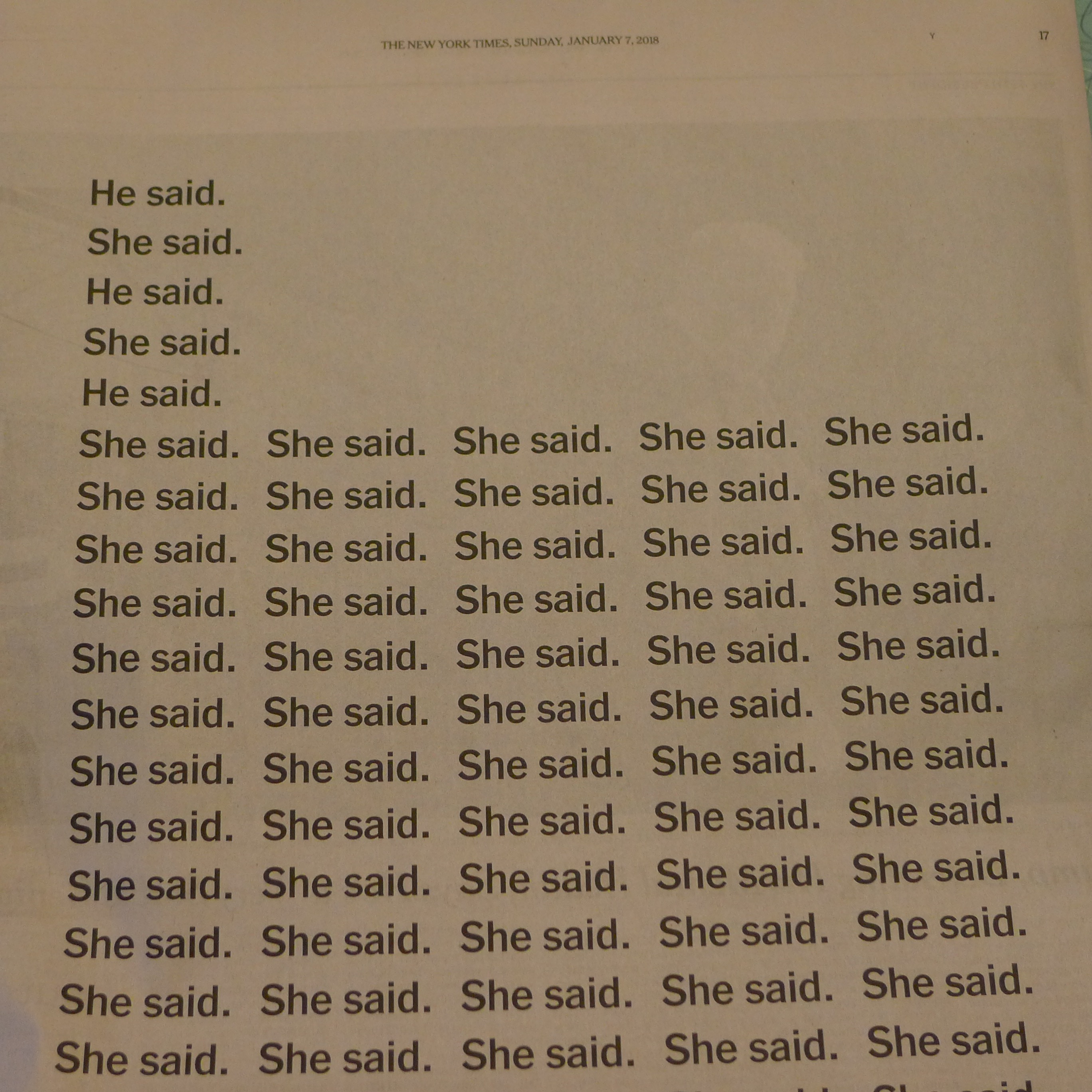
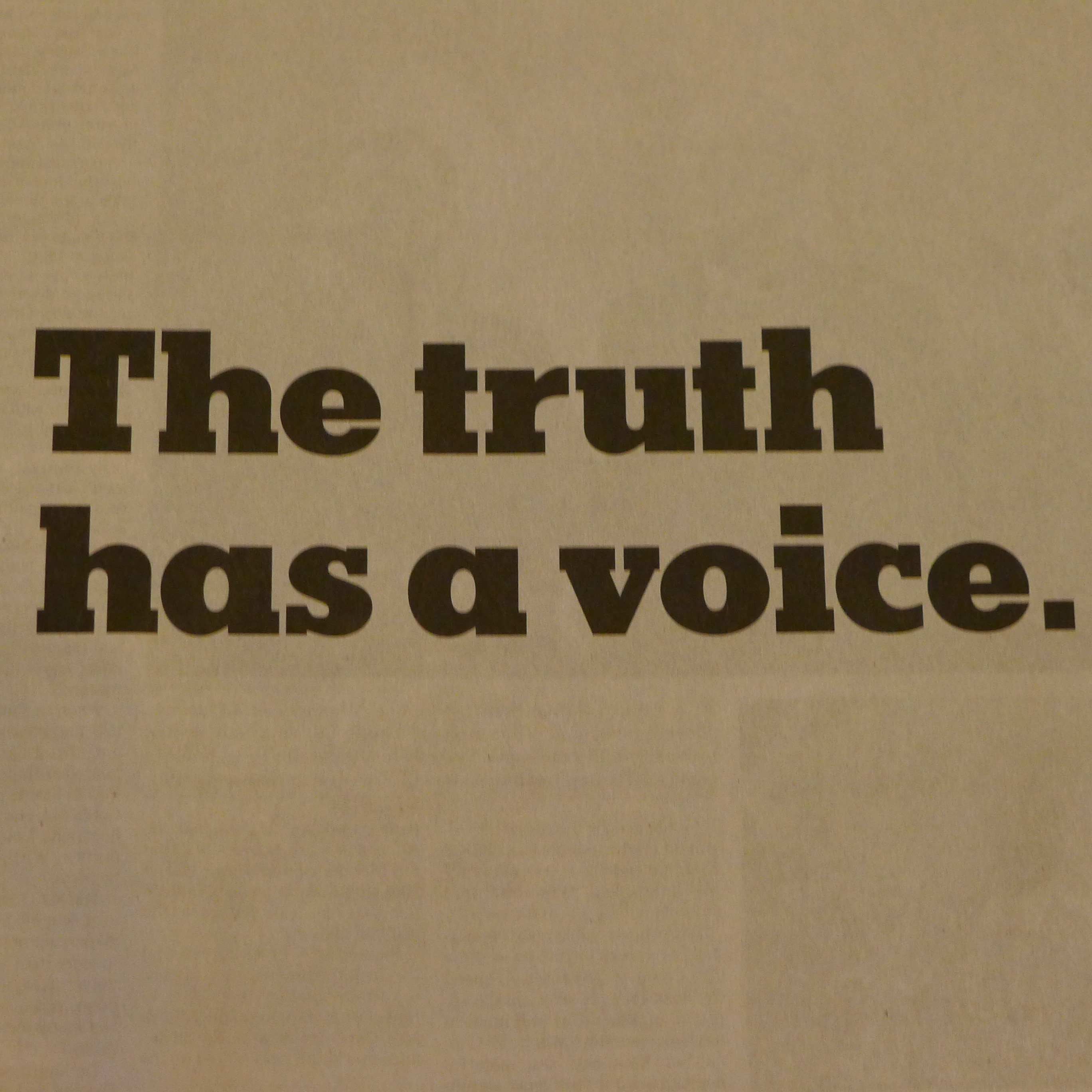
At this point, they could just sit back and count their new subscribers and watch the money roll in. But one of those papers, The Times, is taking the opportunity to launch a new marketing campaign, emphasizing the importance of speaking truth to power.

The campaign got underway on two full pages of the Times’ print edition today. Here’s what those pages look like…


Happily, this campaign is taking to the airwaves, too, starting with an ad on tonight’s Golden Globe Awards show.

…I have a feeling 2018 is going to be a huge year for The Times and The Post, and I think we should all be grateful these two papers are doing what they’re doing. If not for them, those who now hold sway in Washington could well demolish everything in their path, and our nation could be reduced to the likes of Turkey, Iran or Russia.

May the press — and presses — continue to roll!

One witness estimated Terry A. Gray was going 80 miles an hour when he careened down the 23rd Street ramp off northbound I-435 last Sept. 17 and triggered a chain-reaction crash that left two people dead and another with a serious brain injury.

Sometimes, as we know, witnesses tend to overestimate the speed of cars passing them and being driven recklessly. Not in this case. Crash investigators determined Gray was actually going 90 miles an hour when his black, 2015 Dodge Ram pickup slammed into an SUV, which, in turn, hit two other vehicles and sent them flying.

When the metal settled, 3-year-old Ryan Hampel and 16-year-old Samantha Raudales were dead, and Samantha’s father, Edwin Raudales-Flores had suffered a serious brain injury. (In early reports, the father’s name was listed as Geovanny Raudales.)

Earlier today, I’m happy to report, the Jackson County Prosecutor’s Office charged Gray, a 51-year-old Independence man, with several felony counts — enough to put him behind bars for life, provided he is sentenced to consecutive rather than concurrent terms.

Gray faces two counts of DWI, resulting in death or, “in the alternative,” two counts of involuntary manslaughter and two counts of DWI resulting in serious physical injury or, “in the alternative,” two counts of assault.

(The “in the alternative” language is just as confusing to me as it must be to you. Suffice it to say there are plenty of charges and evidence to put this asshole away for a long, long time. The prosecutor’s office lists 25 prospective witnesses.)

Terry A. Gray’s Dodge Ram pickup, after he dished out carnage on the 23rd Street ramp

Unfortunately, I don’t think Gray is off the streets as of this writing. A records clerk at the Jackson County Detention Center told me tonight Gray was not in the jail. The prosecutor’s office is requesting that a judge set Gray’s bond at $75,000 after he is booked.

(I regret, also, that because Gray apparently has not been arrested, I don’t have a booking photo to show you.)

**

The question I’ve been grappling with since I first learned about this crash is: Why in the world was Terry Gray going 90 in a 40 mph zone?

In today’s charging documents, the prosecutor’s office shed gave some insight into that…Gray was high on marijuana, and he was mad —- mad because traffic leaving a Chiefs game had slowed him down on northbound I-435.

“He stated he was upset at all of the traffic and probably should have gone the other way,” a police probable cause statement says.

One witness described the black truck as it proceeded northbound on I-435.

“He (the witness) observed a black truck in front of him swerving shoulder to shoulder. The swerving was abrupt as if he was jerking the wheel. He (the witness) decided not to pass the truck due to its driving and stayed behind it. Other traffic stayed behind it as well and the truck suddenly took the 23rd St. exit. He did not see the crash.”

Another witness picks it up from there:

“As she (the witness) took the exit, the truck drove around her on the driver’s side shoulder at what she believed to be 80 mph. The truck continued down the exit to the stoplight. She observed the stoplight to be red and the truck kept driving at the same speed. She never saw any brake lights on the truck and the truck ran into the back of a car that was sitting at the red light. The truck kept driving across the entire intersection until hitting the rock wall on the other side.”

Just reading about it takes my breath away…What we have here is a 51-year-old man (51!) hurtling along, high and pissed off, without a lick of concern for anyone’s well-being, including his own.

…Not even after the crash, when people were injured and dying. One witness told police:

“He did not seem to have any regard about anyone else involved in the crash and had no remorse. He was kicking things around and throwing things into the back of his truck.”

**

Regular readers know I’ve been following this case since it occurred. Because it was complicated — with a lot of elements, witnesses and forensics — Gray has been walking around a free man the last three and a half months.

Today, finally, is a gratifying day for three groups of people: the families of the victims who died, those who were injured and survived and the public at large.

Let’s just hope this pathetic excuse for a human being is apprehended before he gets behind the wheel of another vehicle and harms anyone else.

My heart goes out to the Raudales and Hampel families. A couple of months ago, a daughter of Raudales-Flores told me in a Facebook message her father was making good progress but doctors didn’t know if he would make a full recovery. Subsequent attempts to contact the daughter were unsuccessful. I wish Mr. Raudales-Flores the best.

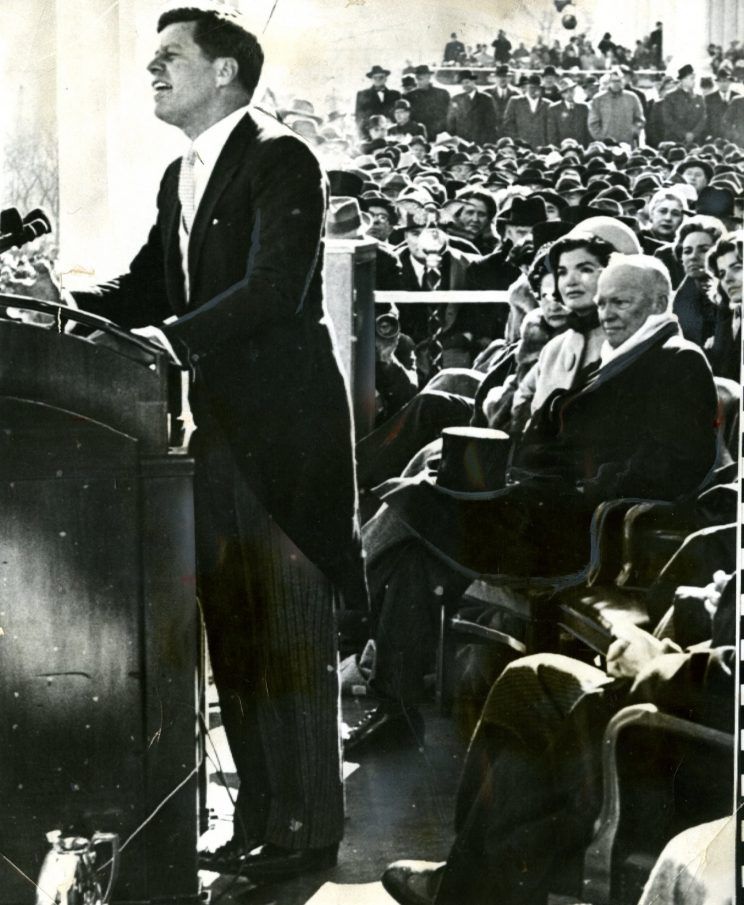
John F. Kennedy was an inspiring and widely loved president, but he did a terrible and lasting disservice to public health and welfare when he was inaugurated.

It was cold on Jan. 20, 1961, and Kennedy had announced beforehand he was going to wear a top hat, returning to a long tradition that his predecessor, Dwight D. Eisenhower, had broken.

But by the time the inaugural address rolled around, the hat was gone. So was the topcoat he had worn in the inaugural parade. When he stepped up to the microphone, with the temperature at 22 degrees, his only real protection from the elements was a “morning coat.”

Ever since then, men have, in the main, eschewed hats, exposing their heads to frigid conditions and increasing their chances of coming down with colds, or worse.

Women, on the other hand, seem to demonstrate better judgment when it comes to head protection (and just about everything else, for that matter). They understand not only the utilitarian advantages of hats but their power to rivet people’s attention…If you need an example, just go to a Kentucky Derby (left) and see firsthand.

**

I’ve been thinking about hats a lot lately, with our own single-digit temperatures here in the Midwest. As many of you know, I’m seldom without one, regardless of the season. I wear them for both warmth (in the winter) and as a fashion statement (regardless of temperature). I tell you, watching people running around without hats in conditions like we’ve been experiencing just makes me shake my smooth, warm head.

For all the virility and stupidity Kennedy demonstrated on his inauguration day, you would think that public awareness of what befell President William Henry Harrison 120 years earlier would serve as an enduring lesson in the importance of the hat.

Although his inauguration was held in early March, it too was a bitterly cold day. Demonstrating his manliness — I suppose — he declined to wear a jacket or hat, made a two-hour speech and afterward developed pneumonia. He died 31 days later. In his case, the operative mathematical equation was: cold + no hat + long speech = death.

**

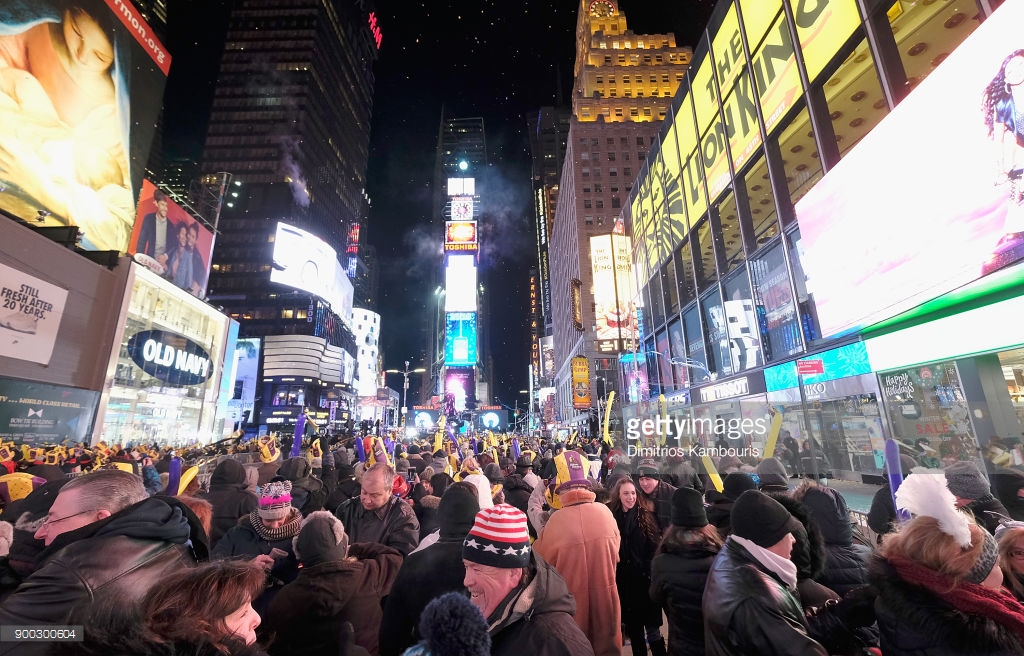
Another example of men feeling they had to appear macho in the face of freezing weather was the duo of Andy Cohen and Anderson Cooper Sunday night on CNN’s New Year’s Eve Live show. With temperatures dipping to 9 degrees, Cohen and Cooper had on bulky coats and thick gloves but were bare headed. Cooper seemed almost incapacitated at times. I don’t know whether it was the cold or his personality or a combination of the two, but he looked stiff and frozen.

Smarter were those in the crowd, most of whom arrived hours before the annual ball drop. It seemed like a much higher proportion was wearing hats this year than in many previous years.

**

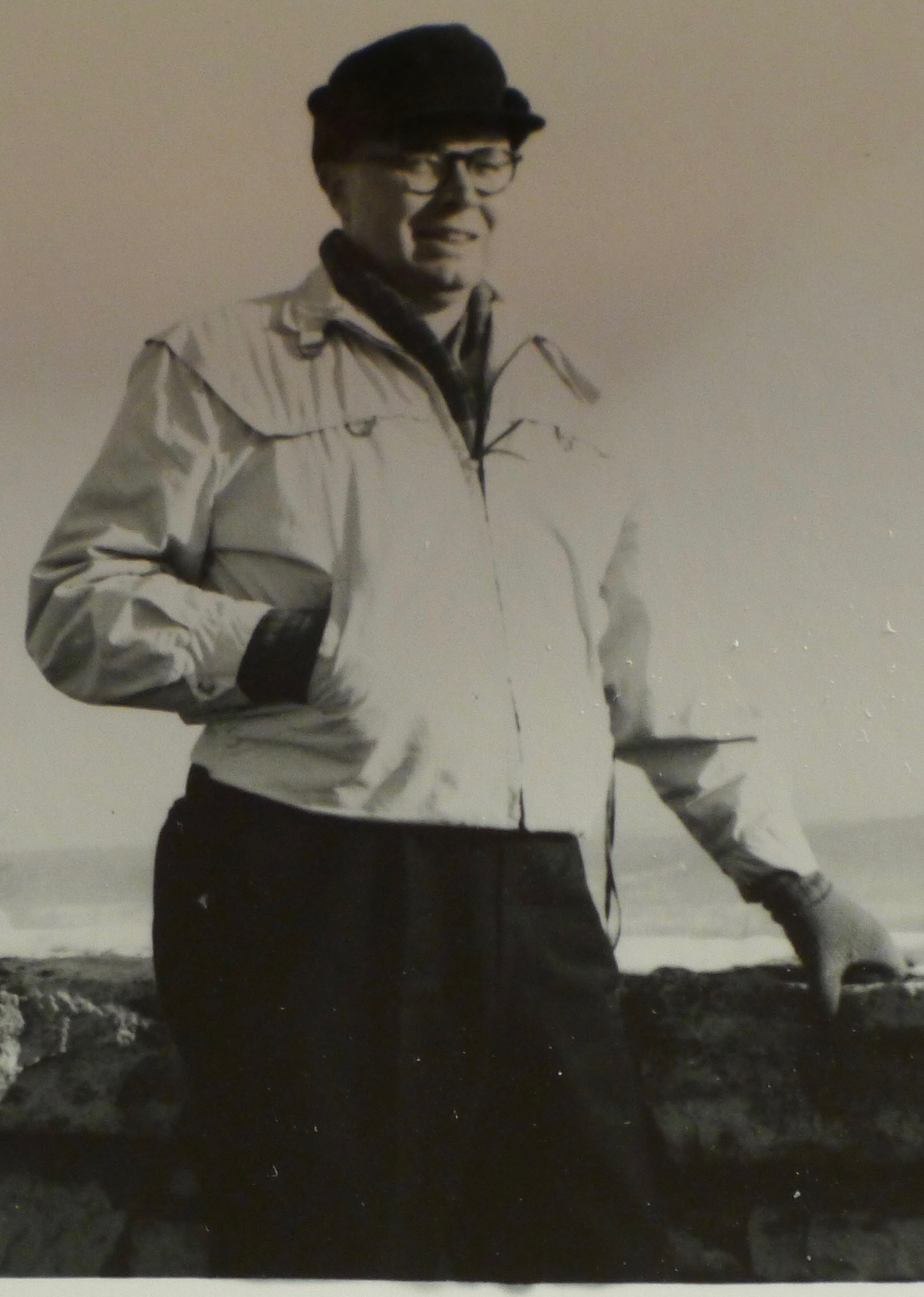
My father, the late Robert J. Fitzpatrick, was a hat wearer and hat collector. He had a hall tree full of hats — mostly for show — including a pith hat, an authentic sombrero and an Irish hat he wore the time he was grand marshal of the St. Patrick’s Day Parade in Louisville.

But, like me, he wore hats mainly to keep the heat in. Here are photos of father and son, then, being practical and displaying the good looks of two Fitzpatrick generations.


Hats off — I mean on — to a great 2018!

Having forsaken football because of the incidence of head injuries, I spent most of New Year’s Day listening to oldies and watching replays of Harsky & Stutch.

(Just kidding about the latter…Dean Martin once used that line on The Johnny Carson Show and I’ve never forgotten it.)

But I did listen to the oldies, which is a great way to spend time when you’ve got some on your hands.

As frequent readers know, I often gravitate to songs from the early ’60s — songs that helped get me survive the loneliest year of my life, which was my freshman year at all-boys St. Xavier High School in Louisville.

The 1960-’61 school year was especially rough partly because, along with a bunch of my friends, I made the big jump from my neighborhood parochial school, St. Agnes, to a big school downtown, which drew students from all over town. Some of those guys were cut from rougher cloth than those of us from the relatively prosperous “East End,” and some were pretty intimidating.

Besides the increased distance from my safe and comfortable neighborhood, another factor in my unease was the building itself. It was a dingy dump that didn’t even have a gym suitable for the St. X Tigers’ basketball games.

The only place to gather outside the school was under a low, corrugated-metal “smoking shed,” which angled upward on an unenclosed side and was supported by steel posts. Because the shed was the only covered space outside, many students, including me, took up smoking. (I gave it up my senior year, 1964, after the surgeon general issued his famous report warning of smoking’s health hazards.) In the winter, we would stand under the shed after lunch — shivering and smoking and wishing for the school day to soon be over.

Every day of that year seemed like an eternity. I wasn’t involved in extracurriculars — don’t know why, just wasn’t. Didn’t play sports. Tried out for the freshman basketball team but didn’t make it. And so it was day after day after day of getting on the bus, pushing through the school day, getting on the bus and coming home.

The weekends provided a brief respite, but the onerous prospect returning to school on Monday always hung over my head. There were some parties at people’s houses, and as I said in my last “oldies” post, I got my first kiss to Roy Orbison’s “Blue Angel,” which was released in 1960, so I did experience a limited level of romantic maturation during that freshman year…Overall, though, it was bleak; the opportunities to meet and spend time with girls was very limited. I just remember a lot of cold, gray days.

But the music…The music provided escape. The radio — specifically radio station WAKY — was my lifeline. The rock ‘n roll era was dawning, and the songs were phenomenal and plentiful. They lifted me out of the doldrums of school and carried me to the summer of 1961, when things started getting better. In the fall of 1961, a new, modern St. X school building opened and — wouldn’t you know it? — it was in my old familiar “East End,” about a 10-minute drive from home. The campus is still there and has doubled or tripled in size since that first year. With the opening of the new school, the cloud cover over my life began to lift somewhat.

Now let’s get to four of the songs that relieved the pain of that freshman year in high school.

**

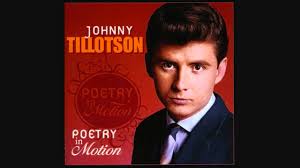
“Poetry in Motion,” 1960, by Johnny Tillotson

The writers, Paul Kaufman and Mike Anthony, said their inspiration came from looking up from their work in the afternoons and seeing a procession of young ladies leaving a nearby school. In the recording, Boots Randolph (“Yakety Sax”) is on saxophone, and Floyd Cramer (“Last Date”) is on piano. “Poetry in Motion” peaked at No. 2 on the Billboard Hot 100.

My favorite part is the soaring, ethereal voice of the female back-up singer, who comes in about the middle of the song and again at the end.

“When I see my baby
What do I see
Poetry
Poetry in motion”

**

“You’re Sixteen,” 1960, by Johnny Burnette

This song was written by the Sherman Brothers — Robert and Richard — who, according to Wikipedia, wrote more motion-picture musical song scores than any other songwriting team in film history. Their film scores include Mary Poppins and Chitty Chitty Bang Bang. “You’re Sixteen” topped out at No. 8 on the U.S. in December 1960.

“You come on like a dream, peaches and cream
Lips like strawberry wine
You’re sixteen, you’re beautiful and you’re mine”

**

“Finger Poppin’ Time,” 1960, Hank Ballard and the Midnighters

Ballard, born John Henry Kendricks, was a rhythm and blues singer and songwriter and one of the first rock ‘n roll artists to emerge in the early 1950s. One of his compositions was “The Twist,” which he put on the “B”side of a 1960 single and which, several months later, Chubby Checker took to No. 1.

Ballard and his group were a favorite of Paul Shaffer, longtime leader of The World’s Most Dangerous Band, on Late Night with David Letterman.

“Hey now, hey now, hey now, hey now
It’s finger pop poppin’ time
Finger poppin’ poppin’ time
I feel so good
Whoa, and that’s a real good sign”

**

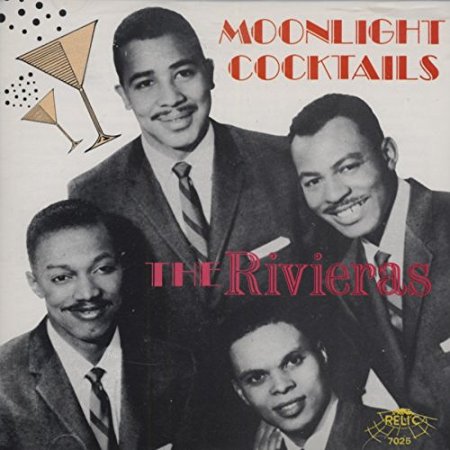
“Moonlight Cocktails,” 1960, The Rivieras


Relative to the preceding three, this one is obscure. But as far as a droopy-drawers, hold-your-baby-close song, it is hard to beat.

According to Wikipedia, the song was originally written as a ragtime piece in 1912 by a man named Charles “Lucky” Roberts. Originally called “Ripples of the Nile,” Roberts wrote it as a fast song, but musicians found it very difficult to play in up-tempo fashion, and it was later re-scored as a slow song with its new name.

The lyrics were written by a New York attorney named James Kimball Gannon, who became a full-time songwriter when he was about 40. Interestingly, Gannon’s most famous lyrics are for the song “I’ll Be Home for Christmas,” recorded by Bing Crosby in 1943.

“Moonlight Cocktails” was first recorded by the Glenn Miller Orchestra in 1941. It was a huge hit, topping the charts for 10 weeks.

As dreamy and transporting as it is, The Rivieras’ version failed to crack the Billboard Hot 100.

Hope you enjoy it…

“As to the number of kisses, it’s up to you
Moonlight cocktails need a few”


This will be the second New Year’s holiday that David and Jennifer Beaird will experience since the Labor Day 2016 vehicular homicide that took the lives of their two children — 13-year-old Gavin and 7-year-old Chloe — and left David confined to a wheelchair.

And although they suffered a wound that no amount of time will heal, the Beairds, I am glad to report, are doing significantly better as they turn their calendar to 2018.

They have left Missouri and started a new life in upstate New York, where Jennifer is from and where some members of her family live. After selling their house in Warrenton, they purchased a house outside the Town of Canajoharie, about an hour west of Albany, and moved in about two months ago.

It’s got three bedrooms, hardwood floors (good for David’s motorized wheelchair) and a fireplace.

Also to David’s liking are the nearby outdoor attractions, including woods, trails and the Mohawk River. Not far away are the Catskill Mountains to the south and the Adirondacks to the north.

Jennifer and David in a recent photo submitted by David

David has always been an outdoorsman — a hunter and fisherman — and his last job was patrolling power lines in three St. Louis area counties. Although he can’t go deep into the woods any more, he has been exploring the area in his wheelchair, going up and down hills and checking out ball fields and other points of interest.

The biggest advantage for Jennifer is being close to family, including two brothers who helped with renovations to the house they bought.

Having a house that meets their physical (wheelchair friendly) and emotional (away from the state that holds bitter memories for them) has been a godsend.

“It’s been great,” David said. “It works for both of us.”

Their home in upstate New York

As she did in Warrenton, Jennifer is doing season work for H & R Bloch. She also continues to handle the payroll for a hotel-refurbishing company one of her brothers has in New York City.

David’s health is good and he has taken up a new hobby — photography. “That’s going to keep me busy for a while,” he said.

Of course, they still think often of their children and, as David said, “we have our ups and downs.”

The important thing now, however, is that they are resettled in a place where they want to be — a place that is comfortable and soothing for them — and where they can get a new fresh start on a life that turned tragic — in an instant 15 months ago on I-70.

**

I am intentionally not rehashing the details of the tragic crash that changed the course of David and Jennifer’s lives and stripped them of the joy of raising their two children and watching them grow into adulthood. If you want a refresher on what happened that fateful day, you can find it in a blog I posted last February and in a few other posts I have written since. (Just enter their last name in the search box and you’ll find all the posts about them.)

This New Year’s Day is about hope for renewed happiness for a couple that has been through, as David put it in our conversation, something “most people wouldn’t go through in two lifetimes.”

I’m sure I speak for all readers of this blog when I say, “Happy New Year,” David and Jennifer!

May 2018 see you healthy and with newfound peace of mind and soul.

Writing about — and getting comments on — the holiday lull that descended on The Star’s newsroom decades ago got me reflecting on my early days at the paper, particularly how I happened to land a job here.

It was a fantastic time to get into journalism, in the late ’60s and early ’70s, with circulation strong and lots of big political stories swirling around, including the Watergate scandal.

Before going onto active duty for several months in the U.S. Army Reserve, I had been working as a reporter at a paper in northern Kentucky, The Kentucky Post and Times-Star, which was the sister paper to The Cincinnati Post and Times-Star. Subscribers in northern Kentucky got our one-section paper wrapped around the Cincinnati paper, which went to residents living on the north side of the Ohio River.

After my brief active-duty stint in the Army, I wanted to go to work for a major metropolitan daily. So, my father kindly financed a two-part fly-around to various cities — the first leg being to St. Louis and Kansas City, the second to Washington D.C., Boston, Providence and Philadelphia.

I didn’t have appointments or connections at any papers in any of those cities. It didn’t matter. Also, I didn’t have a journalism degree; I majored in English Lit. That didn’t matter, either. Back then, if you presented yourself well and had some decent “clippings” from work you’d done at a smaller paper, you had a good chance to catch on with a large newspaper; they’d give you a chance.

Upon arriving in those cities, I would make my way to the newspaper buildings, present myself at the reception desk and tell whoever greeted me I was looking for a reporting job.

In St. Louis, I got an interview with the executive editor, a stately, gray-haired man who sat behind a huge, shiny wood desk. At the time, the Post-Dispatch was one of the top papers in the country, and I knew I was biting off a big chunk, trying to get on board there, with only about seven months of reporting experience under my belt. But the editor was intrigued by me and talked to me for 20 to 30 minutes.

He eyed me closely, sizing me up, and kept coming back to the matter of my limited experience. Later I realized he was giving me a chance to convince him I would be a quick learner and would be able to do the job despite my lack of experience. But I wasn’t quick enough or aggressive enough — and certainly not very experienced in the art of the job interview — and finally he shook his head and sent me on my way.

**

When I got to Kansas City, I went to The Star’s building at 18th and Grand early one afternoon and found out that the man I needed to talk to, Donald D. “Casey” Jones, came in at 4 p.m. Casey was night city editor of The Kansas City Times, the morning edition of The Star.

To kill time, I walked downtown and took in a matinee of “True Grit,” starring John Wayne, at the old Towne Cinema. (Still one of my favorite movies ever.) When I came out, workers were spilling out of the office buildings onto the streets, having finished their day’s work and starting to head home. One of the first thoughts that went through my mind was, “This town has a lot of beautiful girls. This is pretty good.”

When I arrived back at The Star building, I was sent right up to the second-floor newsroom to see Casey Jones. He sat at an uncluttered, metal desk. Across from him, facing him at a similar desk, sat the assistant night city editor, Paul J. Haskins. Casey, a pudgy man with jowly face, thinning gray hair and relaxed manner, was an easy, non-threatening presence. But Haskins…he was something else.

He had a long, thin face — rather handsome — and hair combed up in a gentle wave and then straight back. The handsomeness was counterbalanced, however, by other factors. He constantly jiggled a leg, was missing a couple of teeth and had a searing, intimidating look in his eyes. He smoked and drank coffee almost continuously. And those eyes…They kept darting around — at senior editors in an area behind Jones, at reporters seated at desks in the back of the room and, occasionally, at me.

To the best of my ability, I kept my eyes trained on Casey Jones. When he interviewed job candidates, he took notes with a felt-tipped pen — blue, I believe, although it could have been red — on what were called “half sheets” of grainy paper that reporters sometimes used instead of notebooks. Those sheets were bound together in such a way you could rip off whatever thickness you desired, usually about an inch. The half sheets were OK in the office, when reporters were making notes from phone calls, but they didn’t work well at all in the field because they were floppy, with no backing.

As I recall, one of Casey’s first questions was, “How did you know we were hiring?” My answer: I didn’t…But the question gave me a jolt of optimism.

Casey was a sophisticated, well-traveled man who loved the arts and had a special affinity for the Nelson-Atkins Gallery. One of his favorite questions to ask job candidates, to test the breadth of their curiosity, was what magazines they read. I didn’t know about that habit, of course, but when he asked me what magazines I read, I said, “Sports Illustrated, Time and The New Yorker.”

When I said, “The New Yorker,” his eyes opened a little wider, and the felt-tip pen went quickly to the half-sheet pad.

**

I didn’t get a job offer at The Kansas City Times that day, but Casey said he would call me in a week or so.

I then made my East Coast swing…I got nowhere at the Philadelphia Inquirer and The Boston Globe. I got an offer from a second-rung paper in Washington — can’t remember its name — but rejected it. I also was offered a hinterlands bureau job at the Providence Journal-Bulletin and turned that down, too. (I recall the editor who interviewed me saying, “You think you’re hot shit, don’t you, and want to work in a big-city newsroom?” I guess I blanched at the “hot shit” line because he immediately came back with, “I mean that in a good way.”)

A couple of weeks later, back in Louisville and having heard nothing from Casey Jones, I put in a call to him. The only reason I called was my father strongly urged me to. “You’ve got nothing to lose,” he said. “They expressed interest in you. Go ahead and call.”

When I got Casey on the phone, he said, “Oh, yeah, uh, let me call you back in an hour or so.”

I stewed around the house for well over an hour — more like three or four hours — and Casey finally called back.

“Yeah,” he said, “we can offer you a general assignment job for $550 a month.”

I had been making $92.50 a week at my old job in northern Kentucky, and my mental computation was fast enough to tell me Casey’s offer was a winner.

“I’ll take it,” I said.

**

I started in September 1969. Drove out here in a driving rain in a white, big-finned 1959 Pontiac my father sold me for “$1 and other valuable considerations.” Spent the first night in a sketchy motel at Admiral and The Paseo. Rented a furnished apartment at Armour and Cherry and lived there for a few months…until somebody stole about 10 pairs of my socks that were drying on a communal line in the basement, where the clothes washer was located.

Then I moved into a rental house with four other guys — including a fellow KC Times reporter — at 5840 McGee. We split the $250-a-month rent five ways, making it even more reasonable than the apartment on Armour.

Once I landed in Brookside, I was on my way to becoming a Kansas Citian.

**

I worked for Casey and Paul for several years. Casey died of leukemia in 2000. Paul died of pneumonia and other complications of emphysema in 2003.

When I read in The New York Times today that there have been fewer than 300 homicides in New York City this year, compared with 2,245 in 1990, my first thought was that New York officials had discovered some law enforcement technique or strategy that magically brought the number crashing to earth.

After all, as of Christmas Day, Kansas City’s homicide count stood at 148, which is within shouting distance of New York City’s count of 285.

And while NYC is headed for the lowest murder rate in the city’s modern history, KC could still tie or surpass its all-time high of 153 murders in 1993.

The Times’ story was not buried down page. In fact, it was the lead story on the paper’s digital edition. That tells you the level of importance that Times editors assigned it.

The obvious questions the story triggered were: How could this possibly be? What factors were responsible for this incredible drop?

Beyond the raw numbers, however, the story, unfortunately, was woefully and exasperatingly unenlightening. It is a prime example of a reporter missing a golden opportunity to explore the reasons for a dramatic situational shift on a matter of high public interest.

Reporter Ashley Southall so buried her curiosity and her responsibility to help readers see the full picture that she, at one point, stood back in awe and allowed a source to say the reasons for the sharp decline were “utterly mysterious.”

Utterly mysterious! No clue!

Only once, for a fleeting few words, did Southall touch on a point that merited significantly more consideration and reporting. That was when she said:

“More broadly, research suggests that crime trends are closely tied to economic conditions. Interest rates, inflation and unemployment are among the macro-level factors influencing crime, according to James Austin, the president of JFA Institute, a criminal justice policy nonprofit.”

But then, in a flash, she was back on her statistical horse, reporting that the New York reductions were part of a crime-rate decline “across the country’s largest cities.”

It wasn’t until I got to the readers’ comments that I and other readers found out what’s really at the root of the declining statistics — radically altered demographics.

Take a look at excerpts from three reader comments:

CommonSense ’17, from Califronia

“Gentrification is the more likely cause of the drop in crime rate. How many 65-year-old-plus millionaires and billionaires residing in Manhattan do you know running around the streets holding up banks and gas stations (if you can find a gas station, that is)? The middle and lower classes have been pushed out by exorbitant rents and stagnant wages — which leaves the area sterilized and stripped clean of its once storied and diversified cultures.”

Worried but hopeful, from Delaware

“Seriously? Does someone need to tell this criminologist that expensive havens for the wealthy (i.e., New York in 2017) always have lower crime rates than tough inner cities (i.e., New York in 1990) do?”

Paul, from Brooklyn

“(W)hat history has taught us, imo, with all things remaining equal, crime rates, especially murder rates, go up or down for three main reasons: Demographics, Demographics, Demographics…The overall drop since 1992 was due to the aging of the baby boom pop. In recent years it has been the tremendous gentrification of minority areas in NYC and also Asian and Indian migration. The above groups do not suffer from America’s cultural abuse gun sickness that most second generation Americans do on all sides of the spectrum — black and white and Hispanic.”

A quick Google check confirmed that the Big Apple has, indeed, experienced significant demographic changes the last couple of decades.

A 2016 Huffington Post story said this:

“Gentrification has swept through two-thirds of New York City’s formerly low-income neighborhoods in the last decade and a half, according to a report released Monday…New York City has seen alarming increases in rent, stagnating incomes, a rise in the number of people paying more for housing than they can afford and other significant demographic shifts in the 21st century.”

A blog called “6sqft,” which focuses on NYC real estate and architecture said this last February:

“By now, we’re all well aware that New York City is changing, becoming ever more expensive and far less friendly to its middle and low-income inhabitants.” It then linked to a map that showed how upper-income New Yorkers had multiplied through the city’s five boroughs between 2000 and 2010 “to alter the face of the city’s demographics.”

**

A lot of workers — at least a lot of those who don’t take vacations at this time of year — sleep walk through the week between Christmas and New Year’s. And in that respect the newspaper business is no different from any other business. For that reason I really can’t blame Ashley Southall too much for mailing it in. But I do fault her editors.

Even if her main editor was walking around the office chatting it up and eating fudge, one look at that story should have been sufficient for him or her to say, “Hey, Southall, this is an interesting report, but your story doesn’t address, in any depth, the possible reasons behind the statistical drop. Take it back, make some more calls and beef it up…Okay?”

Instead, her editor reached for another piece of fudge…

Truth be told, 15 years ago it could have been me.