Feeds:
Posts
Comments

Just back from Colorado, where we missed most of the weekend news but heard something about Donald Trump having been caught engaging in “locker-room banter.” Hunh. I’d have to hear it to believe it.

…But, like I was saying, Colorado. Wow! It never disappoints. We took the overnight train — the Southwest Chief — to and from Trinidad, in southern Colorado, where our hosts, Kaler and Eileen Bole, also of Kansas City, picked us up and took us to their “little cabin in the woods.”

It was a very active five days, and while the fluttering, golden leaves of the “quaking aspens” are always enchanting, we took in a lot more. Lemme show you…

p1060368

Driving to the cabin, which is southwest of Pueblo, a homecoming parade in the town of Rye brought traffic to a halt. One of the featured “floats” was a chariot drawn by a team of goats.

p1060365

Kaler and I were so thrilled to be in the area for homecoming that we attended the first half of the Rye-Lake County football game that night. (We left after the homecoming king and queen candidates were introduced at halftime and with the Rye Thunderbolts leading 32-0.)

p1060398

We also went to a place called Music Meadows Ranch, which offers customers stays of several nights, along with the opportunity to ride, fish, hike or just relax.

p1060404

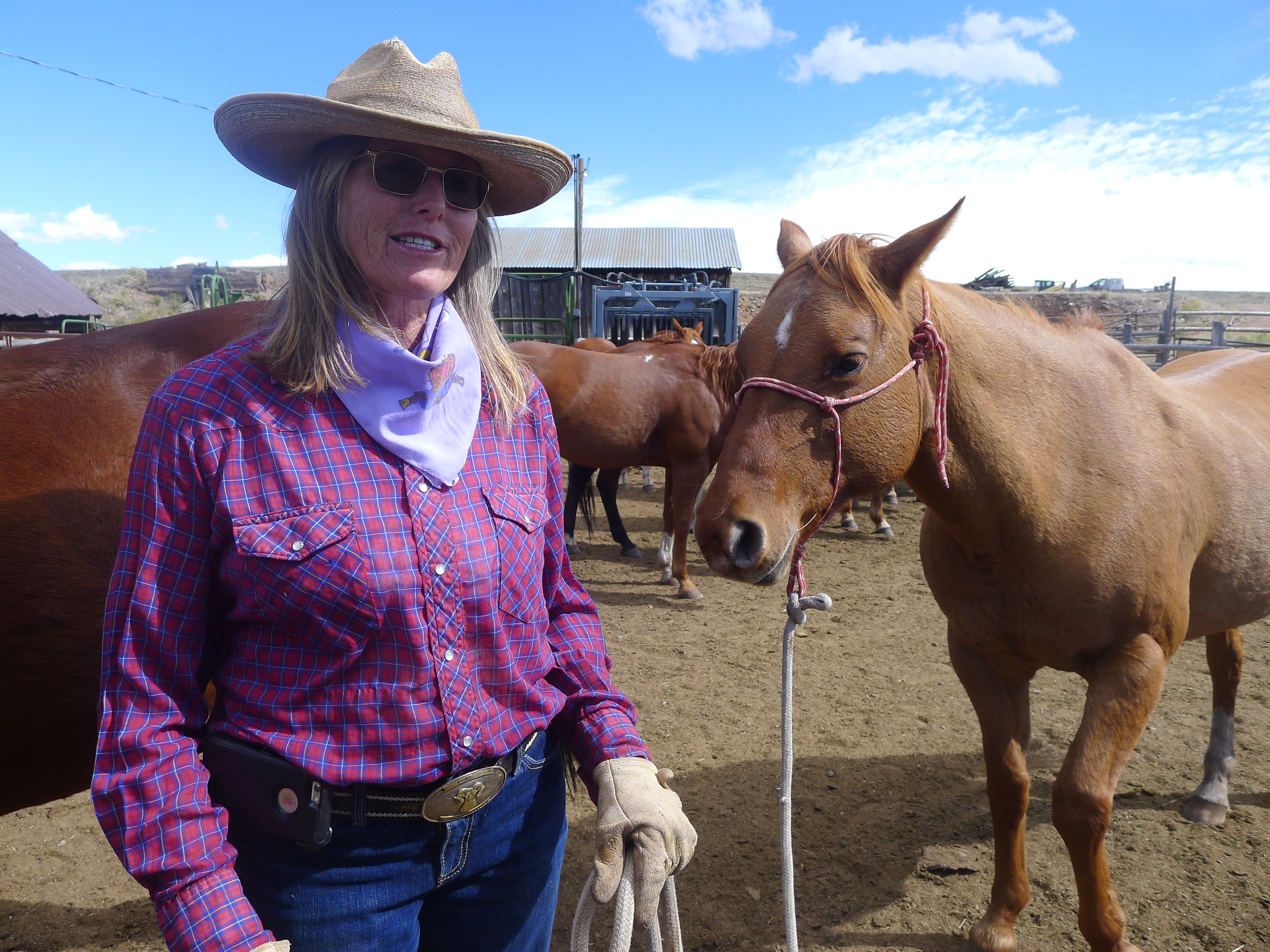
The four of us went just for lunch — steaks from grass-fed cattle and prepared by Elin, owner of Music Meadows. After lunch, Elin got in her ATV and rounded up about a dozen riding horses she keeps on the 4,000-acre ranch.
p1060411

That’s Elin…Note the iPhone affixed to the right side of her cowgirl belt.

p1060421

A view from behind Elin’s barns, toward the Sangre de Cristo mountain range. (The house with the green roof is where paying guests stay.)
p1060422

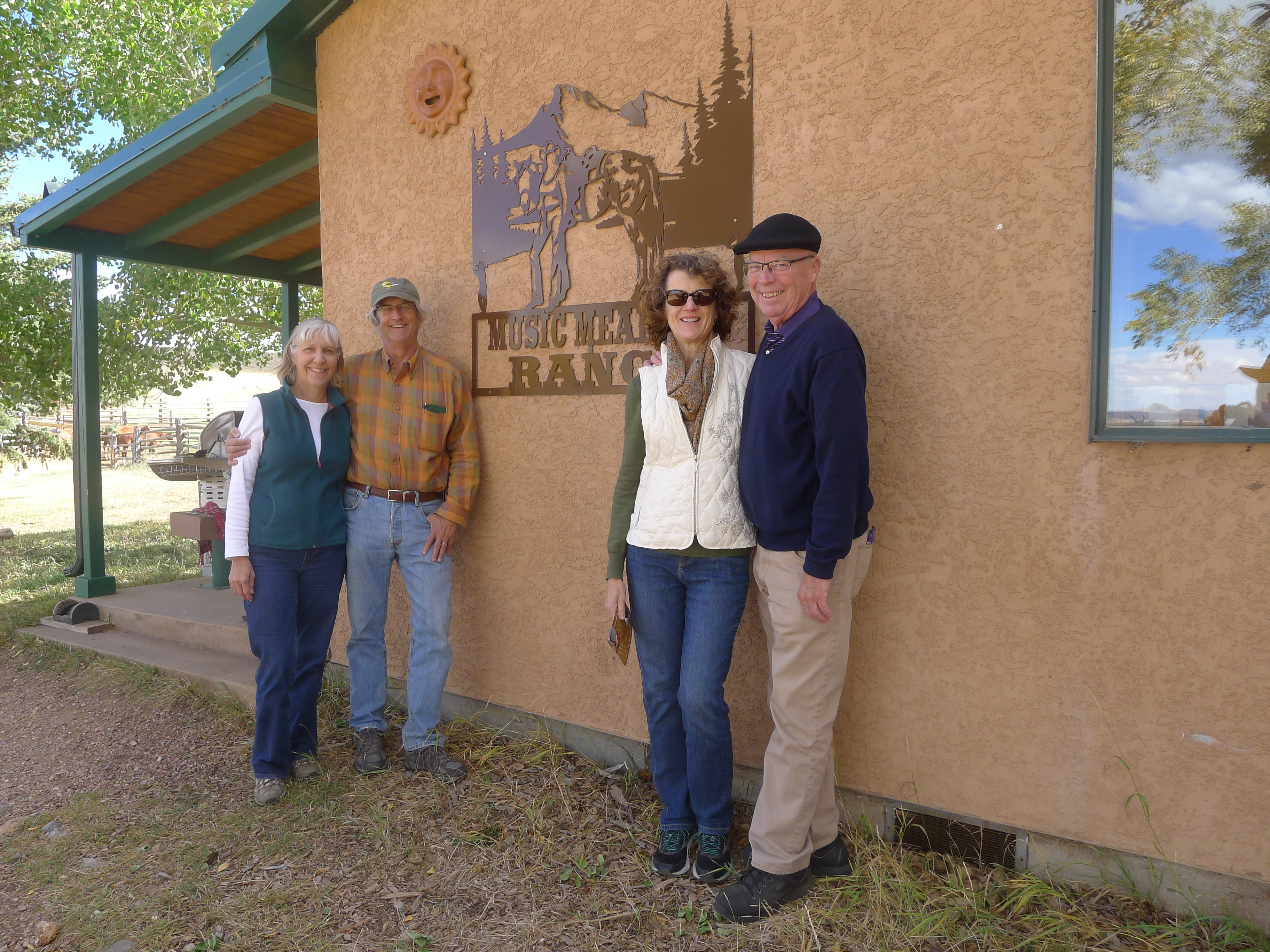
Eileen and Kaler, Patty and I, at “the ranch house.”

p1060389

This is back at Aspen Acres, the “development” where Kaler and Eileen and a score or so of other people have cabins.

p1060386

At the cabin, everything slows down…

p1060437

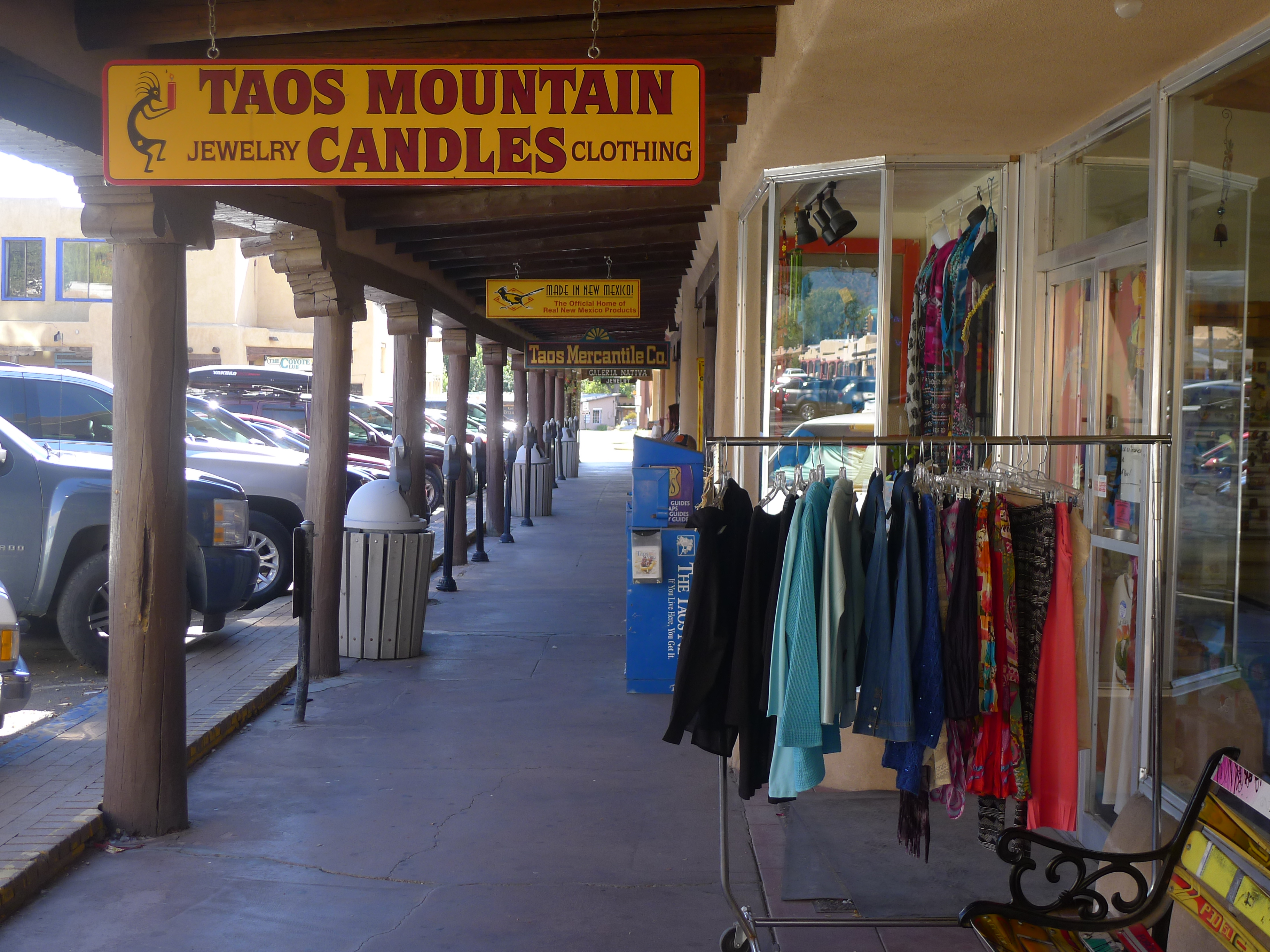
On Tuesday, our last day of vacation, we went to Taos in northern New Mexico. This is one wing of Taos Plaza, an excellent shopping district.

p1060434

We had a great lunch — tacos, enchiladas, chile relleno and taco salad — at a restaurant called Doc Martin’s, which is part of the Taos Inn, established in 1936.

p1060439

Finally, it was back to Trinidad, just north of the New Mexico border. Legalized marijuana stores, located throughout Colorado, have been an economic boon not just for the state but the cities where they’re located. Trinidad has experienced significant development in recent years, thanks partly to taxes paid by stores like Tri Canna.

p1060446

At dusk, it was all aboard the Southwest Chief, which runs daily from Chicago to Los Angeles and back.


Having bailed on the silly idea of convincing Kansas City voters to approve a bond issue for a new, modern airport, Mayor Sly James is now pinning his legacy on another proposal. It’s a…it’s an arts festival.

But not just a plain-old arts festival. This will be a mind-boggling arts festival — a huge, Donald-Trump-scale arts festival. (I’m sure he’s put one on somewhere, sometime.)

“My vision for the festival,” the mayor intoned last week (undoubtedly emphasizing the word “vision”), “is simply to maximize Kansas City’s talent and resources, put them on display, provide a venue for them to collaborate, bring regional and national attention to the city, and finally to produce some revenue related to the arts.”

Wow…I mean WOW!

This gigantic, national-attention-drawing festival — let’s call it Big-A-Fest — should once and for all strip Kansas City of its cowtown image. Plus, it should, at long last, give us a festival we can be truly proud of.

I mean, who pays any attention to the piddly little cultural events and occasional parades we have now?

I’m talking about things like the Ethnic Enrichment Festivalthe Plaza Art Fair…the Brookside and Westport art fairs…Kansas City Irish FestKC RiverFest…the 18th and Vine Jazz & Blue FestivalSanta-Cali-Gon-Daysthe St. Patrick’s Day Paradethe Snake Saturday Parade.

artfestYeah, those crummy events barely draw a couple million people a year, so what we need is a big, BIG, BIG arts festival (that’s why we’re calling it Big-A-Fest, don’t you know) that will probably draw six or seven million people over what…maybe a week or so? Yeah, let’s give it several days so the horns, violas and violins can really get cookin’ and the painters, sketchers and leather-hat vendors can get their creative juices flowing and whip up some of their best-ever work right here in our own KCMO!

…Did I tell you how the mayor proposes to finance this BIG, BIG arts festival. Why easy as falling off a Lake of the Ozarks dock. He’d pluck $250,000 from the Neighborhood Tourist Development Fund, a tax-funded pool the City Council created about 25 years ago.

There’s one catch, though…Until now, the NTDF committee members have been real sticklers for how those millions of dollars are spent each year. They’ve been requiring, among other things, detailed applications and line-item budgets, as well as supporting documents and recommendations from interested parties.

Unfortunately, nothing like a complete application and proposed budget exists for Big-A-Fest. But not to worry: Mayor Sly…Oops, I mean Mayor James…waved off such petty concerns, saying the arts generate an estimated $250 million in economic impact (!) for Kansas City and can be an even bigger engine for cultural tourism and growth.

Even bigger…Yes!

This afternoon, the City Council, in a frenzy of efficiency, voted 11-2 to approve the $250,000. The only council members who failed to be swept away by the mayor’s vision and wisdom were Jermaine Reed and Quinton Lucas. Those guys must be wearing blindfolds.

So, it’s just about a done deal, I guess. Look for Big-A-Fest at a park near you. Oh, did I mention it ain’t gonna be free? They’ll be charging admission.

Now, some of you might be saying, “But…but, Jimmy, what about that dump of an airport we’ve got up by Cookingham Drive?

It can wait, I tell you, it can wait. It has to wait. When an idea this BIG comes along, you gotta jump high and fast or you end up on your back in the wading pool.

I was too harsh in my criticism of two Kansas City Star reporters in my last post, and today I’m going to try to make amends.

I’m not going to steer away from warranted criticism of The Star and other papers in the future, but I am going to be more careful with my wording and also make a better effort to verify things I present as fact.

First, I related that a friend, a former KC Star colleague, told me that a young reporter named Ian Cummings wore a T-shirt and jeans when he went to interview R. Crosby Kemper III, Kansas City Public Library director, last week. My friend got that from a friend who is a top manager at the library.

I could easily have emailed or called Cummings and found out if that was true, but instead I went with my friend’s information. Bad move. Cummings sent me an email a several hours after the post was up, saying he had worn a Polo-type shirt and slacks.

I quickly posted a comment noting what Cummings had said — although I still questioned the propriety of wearing a Polo shirt to an interview with a person of Kemper’s stature.

Cummings was under the impression I was going to change the original paragraph in the blog, and from a later email he sent, I got the impression he was disappointed in the way I handled the “correction.”

I don’t shrink from corrections, but they often don’t look like the formal corrections you see in The Star and other papers. Most blogs have a personal, informal tone and that’s what I shoot for here.

In any event, my apologies to Ian Cummings, but, like I said in my follow-up comment yesterday, reporters should be ready to shift gears, sartorially and otherwise, depending on the nature of their assignments. Casual Fridays are not always observed in executive suites, and whatever Cummings wore to his interview with Crosby Kemper, he had library officials talking.

**

I also criticized reporter Steve Vockrodt for what I deemed to be “lazy” reporting on a weekend story about a Nevada U.S. District Court judge having ordered a former payday lender from our area to pay $1.3 billion to the Federal Trade Commission for cheating several million people out of their money.

My main objection to the story was it included no indication that the defendant, Scott Tucker, would probably never pay anything close to $1.3 billion. A lot of his profits are undoubtedly gone, and besides, first-level court judgments often get altered as the cases forward on appeal.

Vockrodt called and said he didn’t get the court ruling until Saturday (the story appeared in Sunday’s paper), when it would have been very difficult to identify and contact sources who might have offered comments tempering the prospect of Tucker ever making full restitution. He also made it clear he was unhappy with my assessment he was guilty of lazy reporting.

Vockrodt said he planned to do a follow-up story, and today he did so. Today’s story says, among other things, that The FTC has estimated Tucker’s liquid assets are $106 million. My guess is the FTC will get far less than that.

…If I had to write it again, I would not have used the word “lazy.” I would have said, simply, that Vockrodt, a veteran business reporter, should not have left readers with the impression that the FTC would be collecting anything close to $1.3 billion from Tucker. He wasn’t lazy; he just knew better.

The payday loan guys who operated under our noses for years, bilking people throughout the country of hundreds of millions of dollars, are now getting the big squeeze they have long deserved.

A couple of the biggest operators — Scott Tucker and Richard Moseley Sr. — are facing criminal charges in New York, and on Friday a federal judge in Nevada ordered Tucker, a Rockhurst High graduate, and others to pay a massive amount of money to the Federal Trade Commission to resolve an FTC civil lawsuit.

On the front page of Sunday’s Kansas City Star, reporter Steve Vockrodt reported that the fine (if that’s what you call it) was nearly $1.3 billion.

Now, the reaction many readers had to that story was probably something like, “Wow, that’s a lot of money!”

Of course, it is…But the next question I had — and I expect many other readers, too — was “How much money might Tucker and the other defendants actually end up paying to the FTC?”

Seldom do parties who are awarded huge amounts in court cases ever see a majority of the money. There are two reasons for that. First, as the cases go up the ladder on appeal, awards often are lowered, or cases are settled. Second, most defendants, like Tucker, have squirreled away or lost much of their ill-gotten gains, making full restitution very unlikely.

And yet, reporters covering the first go-round of civil awards seldom bother to qualify the big, juicy numbers or inform readers that the initially victorious parties will never see anything close to those eye-popping amounts.

And so it was with Vockrodt. He didn’t bother, apparently, to try to contact legal experts who could have set him and the readers straight. Not only that, but Vockrodt didn’t even mention that the ruling — made by a U.S. District Court judge in Nevada — would undoubtedly be appealed. Vockrodt wrote that Tucker’s attorney “was not immediately available for comment,” but he certainly should have told readers the judge’s ruling was not the last word on the case.

…Vockrodt came to The Star in June from The Pitch, and he’s already established himself as a strong addition to the staff, especially at a time when The Star is laying off older editorial employees and replacing them with young, relatively low-paid people. But I have to say, that was lazy reporting on the Tucker story. Vockrodt  did little more than regurgitate the court ruling and throw in some well-established background about the Kansas City hucksters who have shamed themselves, their schools and their families…On stories like these, reporters have to take the time to identify and contact experts and, through them, caution readers that what they see is not what the prevailing parties are likely to get.

**

Two good sources have suggested that, to help fill the gaps on The Star’s depleted editorial-page staff, a familiar face could be returning to 18th and Grand.  Don’t be surprised, the sources said, if Rich Hood, former vice president and editorial-page editor, rides in to help out. Somebody has to step in, we know, because last week Publisher Tony Berg laid off his primary editorial writer, Yael Abouhalkah, and a few days later the only other editorial-page writer, Lewis Diuguid, announced he, too, was leaving. The last day for both men is Friday.

Hood, who is in his early 70s, was vice president and editorial-page editor for eight years before then-Publisher Art Brisbane canned him in 2001. Hood landed on his feet, however, going on to become director of communications for the Missouri Department of Transportation and later as a top regional administrator for the EPA. He retired from the EPA about three years ago.

Since last summer, Hood has been writing editorials for The Star on a freelance basis. When I reached him at his Lenexa home on Saturday, he said he had not met with Berg about taking on a part-time or full-time role at The Star, and he declined to say if he was interested in returning in a bigger way.

If Hood does come back, it would be quite a turnabout: He was basically fired by Brisbane for setting too conservative a tone on the editorial page, and Berg is now looking for “more balance” on the page, which has been decidedly liberal since Hood’s departure.

**

ian-cummings-kc-star

Cummings

Finally, a former KC Star colleague told me about a reporting episode that made me cringe. It seems that in the course of reporting a story about an incident that took place at a Kansas City Public Library event, a young Star reporter named Ian Cummings made an appointment to interview library C.E.O. R. Crosby Kemper III. According to a library official who’s tight with my friend, Cummings arrived at Kemper’s office wearing a T-shirt and jeans…I don’t know what Kemper’s specific reaction was, but Cummings and The Star sure didn’t make any points with one of our most important non-elected public officials.


I’m sure some of you were perplexed that, after being “laid off” on Monday, lead KC Star editorial writer Yael Abouhalkah remained on the paper’s masthead (bottom of the editorial page) Tuesday, Wednesday and Thursday.

Not only that, but Yael’s regular weekly column was on the Op-Ed page yesterday, and the lead editorial — about Kansas Secretary of State Kris Kobach — sounded like a Yael piece of work.

Puzzling, yes…Because Monday’s news that Yael had been let go struck many dedicated Star readers like a thunderclap, and Yael, in a Facebook post, made it sound like he was finished that day. “I am on to a new adventure after The Star decided to lay me off this morning after almost 37 years there,” he wrote.

Traditionally, when newspaper employees are offered and accept a structured, widely offered buyout, they get a week or two to phase out. But when they’re “laid off,” it’s usually summarily, with the cut-loose employees going back to the newsroom, clearing out their desks (sometimes with security looking on) and leaving the building within hours.

So I was surprised to learn yesterday that Publisher Tony Berg offered Yael two weeks notice and Yael took him up on it.

Now, I’ve gotta say…if somebody drops a bag of shit on my head, I’m going to make a quick exit and not hang around waiting for the stench to become overwhelming.

Yael is now a lame duck — lamer than President Obama — and people are not going to take his work that seriously the next week and a half. Many readers are probably going to be thinking, “Didn’t they get rid of that guy?

Yael’s decision to power on for two weeks reflects the one thing that some people didn’t like about him: his prima donna status, which he cultivated and nurtured.

He was a straight arrow and always had the taxpayers’ best interests in mind, in my opinion, but he did — does — have a substantial ego. Who knows? Maybe he wanted to play the role of sacrificial lamb — targeted for the kill but not quite ready for the fire.

I don’t get it: I would have left Tony Berg to scramble for the time being and see if Lewis Diuguid, the only other editorial page writer currently, could produce an editorial page. That would have been fun to watch!

As I said in my Monday post, a big question is whether Yael will get the traditional sheet-cake-and-pizza party that retiring employees get, as well as those that are offered and accept structured buyouts. Now that Yael has decided to swallow his pride and work a bit longer, it wouldn’t surprise me if Tony Berg didn’t give him that party and also, just to carry the sham to its natural conclusion, deliver a speech lauding Yael for his 36-plus years of outstanding service to The Star…Now, that’s a party I would have no interest in attending.

**

I picked up some other tidbits about this firing that you might be interested in. (Got these mostly from Tony Botello’s “kick-ass sources.” Seems Tony hasn’t been giving them enough “black and white” lately, and, like all good sources, they crave seeing their tips in print.)

:: Last Friday, Yael dropped by Tony Berg’s office to tell him he was planning to come in later than usual on Monday so he could stay late that night and write about the presidential debate for Tuesday’s paper. “No, no,” the publisher said. “Come in at your usual time.” That was the first inkling Yael had that his time at The Star might be drawing nigh.

:: He’s getting six months of severance pay, which is typical in layoffs at The Star.

:: Tony Berg has made it clear he wants a “more balanced” editorial page. What that means, of course, is that the liberal bent Yael and other recently retired editorial-board employees (i.e., Steve Paul and Barb Shelly) brought to the table will be changing with the arrival of recently hired editorial board vice-president Colleen McCain Nelson. Pretty soon, we may well see a slew of letters to the editor complaining about the paper’s conservative tilt, instead of vice versa.

:: Finally, ever since the dust-up over guest columnist Laura Herrick’s controversial piece about rape last July — a column Tony Berg apologized for and had removed from the website — Berg insisted that every editorial and every Op-Ed piece be submitted to him, for review, before publication. I’ve never heard of that before. But, you know, it’s a new day at The Star. It’s now Tony’s show, and he made it clear from the day he took over last January, when he vowed to fix the circulation problems, that he was going to be a very hands-on publisher.

This email from my friend Dan Margolies, formerly of The Star and now a standout reporter and editor at KCUR, said it all.”

“I’m sure you’ve heard the astonishing news by now: Yael was axed this morning.”

…I don’t know how this didn’t register on the Richter scale, but regular KC Star readers certainly are being been shaken to the core by news that Star publisher Tony Berg today”laid off” longtime lead editorial writer and columnist Yael Abouhalkah.

yael

Yael Abouhalkah

Yael, along with perhaps columnist Steve Kraske, has been The Star’s highest-profile. For more than 30 years Yael has written hard-hitting editorials about City Hall, and in recent years, as The Star trimmed its editorial-page staff, he branched out into other areas. He was a strident critic, particularly, of Kansas Gov. Sam Brownback.

Neither The Star nor Tony Berg has announced Yael’s departure, and no reason has been given. Most of us may never know why Berg, who took over as publisher early this year, decided to “axe” Yael, as Margolies put it. My personal opinion is that Berg is effectively clearing the deck for the arrival of Colleen McCain Nelson, whom Berg recently hired to become the next vice-president of the editorial page.

Nelson is a former Pulitzer-Prize-winning editorial writer for the Dallas Morning News, and she is currently covering Hillary Clinton’s campaign for the Wall Street Journal. She will not start work at The Star, however, until at least late this year.

__

:: Here’s what Yael posted on his Facebook page:

“Good Monday morning. I am on to a new adventure after The Star decided to lay me off this morning after almost 37 years there, including 32 years on the Editorial Board.

“Quick observations:

“1. Everything is OK! Great wife, two super kids, house paid for and even decent savings. And good severance pay (thanks, KC Star readers!) More time for gardening and running.

“2. Yes, will definitely miss writing about the local/state political worlds and miss the positive and negative reaction I got from readers.

“3. My wife already has plans for the future.

“4. Really appreciate all of the kind words – even from people who said they often disagree with me — that I’m hearing already.

“5. And FINALLY I get to say what I really think about Sam Brownback and Donald Trump.

“Cheers to all.”

…Gotta love the attitude, the quip about Brownback and the classy exit. This has got to be a gut shot for him, but it would appear he’s looking to the future and not the past.

(By the way, I put in a call to Yael today — he still had a voice mailbox at The Star as of this morning — but haven’t heard back as of this writing.)

__

:: Here’s what former editorial page writer Barb Shelly posted on her Facebook page:

“This morning the Kansas City Star laid off Yael Abouhalkah, one of the nation’s smartest and boldest editorial writers. This comes after Star management has stalled for six months on replacing myself or Steve Paul after we took buyout offers. Yael and Lewis Diuguid have been working around the clock trying to keep the pages together. I can only surmise that Yael’s continuing advocacy for better web placement and visibility for opinion was too much for Star publisher Tony Berg to handle. Or maybe the complaints about Yael’s relentless scrutiny of Kansas Gov. Sam Brownback had their effect. Either way, this is a terrible day for the Kansas City Star and for local journalism.”

__

:: And here’s some of the first-hand reaction I got from friends.

— “I feel like throwing a chair across the room.” Mike Rice, former KC Star reporter who’s now working as a para-legal at an Independence law firm.

— “The question is, are they going to have an editorial page? What are they going to run? Cartoons? Old Andy Rooney columns? The prayer of the day?David Chartrand, longtime KC journalist and writer of humorous commentary.

— “I’m really sad about it. I think our city is not going to be well served without Yael at City Hall. I put a lot of stock in what he says.Pat Russell, dedicated KC Star reader.

__

The departures of Shelly and Steve Paul earlier this year left The Star with two editorial-page writers, Yael and Lewis Diuguid. For now, I suppose, it will  be down to Diuguid…Good luck, Lewis!

And here’s my final thought, for now. Like Yael, I put in almost 37 years at The Star — came up three months short. The difference is I retired. That was in 2006, two years before The Star began laying off editorial employees. Had I hung around, I’m sure that I, too, would have been laid off. But I was lucky: I got my sheet cake and pizza party. I hope Yael gets one, but that’s not usually the way it works with layoffs: You collect your shit and clear out.

I was sorry to see in today’s Kansas City Star that Bill Clarkson Sr., longtime president of one of the region’s biggest road builders — Clarkson Construction Co. — died last Friday.

Clarkson, who was either 90 or 91, left a decided mark on the bistate area and beyond. The company is now in its fifth generation of family ownership. (Bill Sr. was the fourth-generation president).

Clarkson also left a mark on me, when I was a young reporter at The Star. It was shortly after I had been assigned to cover the Jackson County Courthouse in 1971. I was two years into my 36-plus year career at the paper and on my first major “beat.”

One of my duties as courthouse reporter was to track the final construction phases of the Harry S. Truman Sports Complex, the then-massive, $100-million project that was unique in that it featured separate baseball and football stadiums.

The Clarkson company was not involved in the actual construction, but Clarkson was chairman of the Jackson County Sports Complex Authority. Being a publicly funded project — thanks to a massive 1967, voter-approved bond issue — the complex was, and still is, owned by Jackson County taxpayers. The Sports Complex Authority, representing the taxpayers, was the body that oversaw construction and also enforced the terms of the stadium leases with the Chiefs and Royals.

As many of you will recall, both stadiums — Arrowhead and Royals Stadium — originally were outfitted with artificial turf, which was laid over a bed of asphalt.

One day shortly after the asphalt had been laid at Royals Stadium, I went to the complex for a scheduled on-field meeting between Clarkson and Don Sharp Sr., the primary contractor who led a three-company consortium called Sharp/Kidde/Webb.

The reason for the meeting was the quality of the asphalt job. It seems there were problems.

willclark_20160924

Bill Clarkson Sr.

Clarkson was thin, less than 6 feet tall and about 45 at the time. His most distinctive physical features were a fine head of hair and slightly sagging jowls that contributed to a look of perpetual weariness and sadness.

Sharp, on the other hand, was about six feet tall, with a barrel chest, crew cut, neatly trimmed mustache and gravelly voice. I later heard reports that he and his son Don Sharp Jr. brawled in their Arrowhead suite during a Chiefs’ game.

For the asphalt meeting, several people gathered on the third-base side of the field, close to what would become the on-deck circle. I remember looking out at that vast expanse of fresh, black asphalt and thinking how odd it was that this was the underpinning for a baseball field. Not grass and dirt.

Clarkson was ordinarily a quiet sort of person, a slow speaker, and I had never seen another side of him. He began by telling Sharp that the asphalt job had deficiencies, namely, that the surface was very uneven in spots. He pointed to various places to make his point. Sharp immediately balked at the suggestion that the asphalt work was unsatisfactory, and in seconds the men were yelling at each other.

It was so explosive that we bystanders froze. Unwisely — not anticipating any trouble — I had not bothered to get my reporter’s notebook out of the pocket of my sports coat. (Back then, I wore a coat and tie to work every day.) I was paralyzed and afraid to reach for my notebook, thinking Clarkson or Sharp might turn on me and say, “Put that damn thing away!” So, I tried, as best I could to commit to memory what they were saying.

The only thing I clearly remember Clarkson yelling was something like, “I represent the taxpayers, and I won’t have this.”

In a couple of minutes it was over, and the group dispersed. I went back to the office and wrote a story from memory. It wasn’t a bad story. It would have been better if I’d had my notebook out. But, then, the words were flying so fast and I was so nervous I wouldn’t have been able to capture more than a few snippets of the exchanges, anyway.

I don’t even remember for sure what came of the clash, but I believe parts of the asphalt job were redone. Also, in an ironic twist, several years later Clarkson Construction bought (or merged with) Bowen Construction Co., the company that had laid the asphalt.

…I will always remember fondly, and vividly, the day Bill Clarkson set aside his deep affiliation with the construction industry and spoke angrily and profanely on behalf of Jackson County taxpayers.

Here’s his obituary.

Most of you have probably heard about QuikTrip’s plan to significantly increase its presence — i.e., new store — east of Roanoke Parkway on Westport Road. A Wednesday Kansas City Star story said the plan had “hit a roadblock” when the city Plan Commission voted 4-1 against it Tuesday.

The writer, City Hall reporter Lynn Horsley, made it clear, however, that the plan is by no means dead. The Plan Commission is merely an advisory body; the final decision will be made by the City Council. And that’s a whole other deal.

But a few facts first…QuikTrip wants to expand from about four fuel pumps to seven and build a new store of 5,773 square feet, compared with the existing 3,200-square-foot building. The most ambitious part of the plan, however, is that the grounds and building would “jump” over Mercier Street, which borders QuikTrip on the east and expand into the former Berbiglia store on the other side of Mercier. That would mean closing Mercier south of Westport Road.

The West Plaza Neighborhood Association adamantly opposes the plan, saying it might be fine in the suburbs but not in an urban neighborhood. And, indeed, Horsley’s story said the four commissioners who voted against the plan “agreed with many neighbors who said the expansion didn’t fit with their mixed-use residential neighborhood and could create many traffic and safety headaches.”

But from here on out, this will be a political decision. And that’s where the neighborhood — and perhaps logic — will “hit a roadblock.”

The plan’s first stop at the City Council level will be the council’s Planning, Zoning & Economic Development Committee. The committee consists of Scott Taylor, chairman, and Katheryn Shields, Heather Hall, Lee Barnes Jr. and Quinton Lucas.

taylor

Councilman Scott Taylor

I have no idea how any of them will vote on the QuikTrip plan, but Shields is the only one of the five who lives in Council District 4, where the QuikTrip is located. Also, Taylor, the committee chairman, who lives in south Kansas City, has a reputation as being pro-development. Last night, I checked out his campaign finance reports for the last three years, and he’s taken in tens of thousands of dollars from development lawyers and law firms, contractors, engineering companies, as well as labor and building-trades organizations.

Of particular note, since January 2014, the development law firm White Goss has contributed $6,775 to Taylor’s campaign committee…And White Goss is representing QuikTrip.

QuikTrip, for the record, has contributed $750 to Taylor. That’s not much, relative to White Goss’s contributions, but enough to get Taylor’s attention.

I covered City Hall from 1985 to 1995, and I saw up close how this works. Just like Donald Trump has said, if he makes a large contribution to someone, he expects something in return. At the city level, Scott Taylor has been “good for business,” and business has been good to him and expects him to continue to deliver.

…On the QuikTrip deal, here’s what I foresee: The company makes a couple of very modest concessions, perhaps reducing the footprint slightly or going down one fuel pump, and the P&Z Committee recommends approval of the deal. (QuikTrip will never compromise on jumping Mercier, though.)

When it goes to the full council, the vote could be close, but my guess is the plan ultimately gets at least the seven votes it needs to go forward.

Many years ago, a friend, now deceased, used to quote his uncle as saying, “You can’t beat the Yankees.” At City Hall, it’s almost impossible to beat the development crowd.

It was big news earlier this month when headlines in papers across the country announced that Wells Fargo had agreed to pay $185 million in fines because its employees, under extreme pressure from management, had opened more than a million bank accounts, some of which were opened without customers’ knowledge.

This huge story continues to make headlines: On Tuesday members of the Senate Banking Committee grilled Wells Fargo C.E.O. John G. Stumpf for more than two hours.

The occasion gave Banking Committee members an opportunity to grandstand and expel their wrath at Stumpf for firing more than 5,000 employees — although not a single one in senior management, where the pressure originated and was maintained.

reckard

Scott Reckard

One thing I think is important for people to know — although relatively few people ever will — is this snowball ball started rolling because, three years ago, an editor at the Los Angeles Times sent an email to the paper’s banking reporter, E. Scott Reckard, about something that had been called to his attention.

Here’s how Reckard, who retired last year, explained it to the Columbia Journalism Review in an article published Sept. 12.

“I got an email from one of the editors, Pat McMahon, saying there was this weird story. I talked to this [Wells Fargo employee] who claimed he had signed people up for accounts and services they didn’t need, but never without them knowing it—he would just talk them into it. Anyway, he told a story about these incredible pressures to make sales numbers and about how the branch had basically been setting records and getting kudos for doing this, but then people started complaining, and some trouble came down. Before too long, all these people got fired, these front line workers. He said all they were doing was responding to pressure from above and coaching from above about how to get the numbers up.”

If he wasn’t conscientious, Reckard probably could have blown off the editor, saying it was an aberration. Instead he jumped right into it, and on Oct. 3, 2013, the paper ran a 12-paragraph story saying Wells Fargo had fired about 30 branch employees in the Los Angeles region for opening accounts that were never used and attempting to manipulate customer satisfaction surveys.

What happened next took Reckard by surprise:

“(T)he phones started ringing off the hook and the emails started landing from people all over the place. Mainly current and former Wells Fargo employees, but customers too. They wanted to tell stories about what had happened to them.”

With the help of another editor, Brian Thevenot, Reckard dug deeper, and what he found was “the scope was really big” and not just limited to Southern California.

On Dec. 23, 2013, the Times published a much more comprehensive story, which Reckard began with an anecdote from a former Florida branch manager. Reckard quoted the former manager, Rita Murillo, as saying: “If we did not make the sales quotas…we had to stay for what felt like after-school detention, or report to a call session on Saturdays.”

From there, the Consumer Financial Protection Bureau and state regulators got involved, and early this month the story exploded when the CFPB announced the $185 million settlement.

A Sept. 8 New York Times story quoted CFPB director Richard Cordray as saying, “Unchecked incentives can lead to serious consumer harm, and that is what happened here.”

I’m not taking anything away from the CFPB. I’m glad its investigators got in there and cracked open the pineapple. But there wouldn’t have been any pineapple if it hadn’t been for Scott Reckard and the Los Angeles Times. 

**

As I mentioned, Reckard retired last year, after 18 years with the Times and 14 before that with the Associated Press. He told the CJR he retired “because it wasn’t as much fun…working for newspapers these days.”

Almost any veteran newspaper reporter would say the same thing. Yet the work remains as important as ever, and let’s hope many in the new generation of reporters are as dedicated, resourceful and enthusiastic as Reckard. The dividends can be great, not just for the individual but, as the Wells Fargo story clearly demonstrated, for the public at large.

Reckard acknowledged the personal and professional satisfaction when he told the CJR:

“It’d be easy to look back and say, ‘Why the hell did I spend my life doing something?’ But when you get a chance to actually see that there was some action that resulted on something important you covered, it sort of restores your faith in the whole process.”

The latest case of police killing an unarmed black person — the one in Tulsa last Friday — is jaw-dropping and maddening.

Even though one officer was preparing to Taser 40-year-old Terence Crutcher, who was presenting no apparent threat, a 42-year-old officer named Betty Shelby fatally shot him in the chest as he stood beside the driver’s window of his broken-down SUV.

Shelby was one of three officers (the other two were men) dealing with Crutcher, who seemed, in police video, to be walking a bit aimlessly. Far from being menacing, Crutcher was walking slowly, away from the officers, back toward his vehicle in the seconds before Shelby shot him.

betty-shelby4

Officer Betty Shelby

Shelby’s attorney said today that Crutcher ignored officers’ commands, kept touching his pocket and was reaching through a window of his SUV when he was killed. Shelby is a five-year veteran of the Tulsa Police Department and was a sheriff’s deputy before that. 

Police Chief Chuck Jordan said Monday, before police video and audio recordings were released, that Crutcher had no weapon on him or in his SUV when he was shot.

In the video, from the cautious way officers approach, Crutcher appears to have been acting strangely. An attorney for Crutcher’s family said Crutcher looked like “someone in distress, someone needing help from either a mental or a medical condition — perhaps intoxicated, but in a condition of needing assistance of the police.”

The strangest and most damning part of the recordings is the audio. The listener hears the voices of two or three male officers, one of whom is in a police helicopter. Here’s part of the dialogue among the male officers in the seconds before the shooting. It’s not clear if Shelby can hear the exchanges.

— “All right, Betty Jo, where you at?”

— “He’s got his hands up there for her now.”

— “Time for Taser, I think.”

— “That’s kinda the feelin’ that’s about to happen.”

— “That looks like a bad dude, too.”

— “Where are you facing?”

At that moment, in the video, Crutcher goes down to the ground, grabs his chest and rolls onto his back.

— “Westbound” comes the answer to the previous question of direction. After a pause, the officer says, “I think he may have just been Tasered.” (In fact, one officer did use a Taser on Crutcher about the same time Shelby fired her service weapon.)

A couple of seconds later, Shelby says in a loud, quavering voice, “Shots fired!”

**

crutcher

Terence Crutcher

Now, I know things happen quickly in tense situations like that, but the video and audio raise a few key points:

First, if Shelby was hearing the chatter, she should have known one of her fellow officers was getting ready to employ his Taser.

Second — again, if she was hearing the chatter — how might she have been influenced by the oral observation that Crutcher “looks like a bad dude.” In my opinion, that could easily have planted the notion with Shelby that Crutcher was dangerous.

Third, if Shelby wasn’t hearing the chatter, why would she not ask the officers standing beside her if either of them was preparing to use the Taser? She must have known one of the other two officers had a Taser, but there is no indication the officers were talking among themselves, although they had plenty of opportunity to do so. All it would have taken was six words: “Are you going to Taser him?”

Instead, it appears each of the three officers was operating in his or her own world, determining how he or she should proceed. This inebriated or addled man had those three officers so flummoxed they didn’t know what to do. Either of the male officers could have jumped the guy at any time and taken him to the ground. Crutcher was big, but, as one of the family’s attorneys said, he appeared to be in a compromised condition. He certainly didn’t look like he was ready to start throwing punches or resisting vigorously.

**

I noted there is no indication the three officers were communicating with each other or formulating a take-down plan. Oddly, at the end of the video, after Crutcher is down, bleeding profusely and not moving, the three officers decide to act in unison.

With shoulders touching, they slowly back away from Crutcher’s motionless body — guns still pointing straight ahead — as if tiptoeing away from the door at a surprise party as the honored guest prepares to enter.

It’s almost comical, except for the mindless, reflexive shooting that took place seconds earlier.