Feeds:
Posts
Comments

For some reason, I can’t get interested in the Democratic National Convention, just as I was unable to muster any interest in the Republicans’ meeting last week.

Maybe it’s post-surgery brain — inability to maintain focus for an extended period — or maybe it’s just that these affairs have become so prescribed, even with a little yelling and booing.

The last political convention that held some element of drama was the Republican convention here in 1976, when Ronald Reagan battled Gerald Ford to the wire. I was assigned to follow Reagan during that convention and, naturally, that held my interest.

I loved the conventions back in the late ’50s and early ’60s, when network TV was just figuring out how to cover these conventions at floor level and god-like anchors such as Walter Cronkite of CBS and Chet Huntley and David Brinkley of NBC narrated the proceedings. As a kid, I thought those black-and-white images, with reporters getting bumped around on the convention floor, were just too good to be true and had no idea it would become commonplace with the polishing of TV production.

…That said, I do like some of the stories that come out of these conventions, and Maureen Dowd of The New York Times had one yesterday that should hold appeal to nearly everyone about my age.
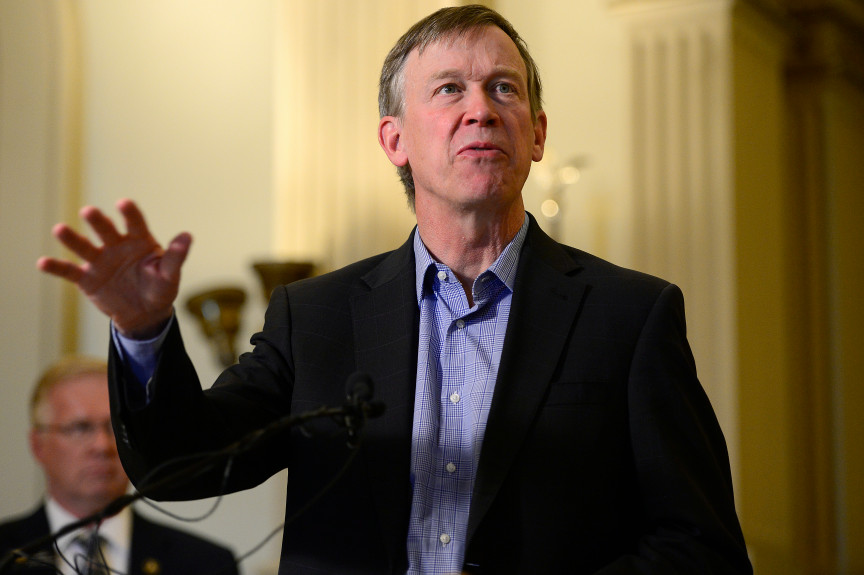
DENVER, CO - SEPTEMBER 21: Colorado governor John Hickenlooper appeals to voters to vote "yes" on Proposition BB on September 21, 2015 at the Colorado State Capitol Building. Governor Hickenlooper and members of the Joint Budge Committee wanted to appeal to voters to vote yes for Proposition BB that would put the tax money from the sale of recreational marijuana into rebuilding schools, funding programs for drug rehabilitation and other programs that voters agreed on. (Photo By Brent Lewis/The Denver Post via Getty Images)

John Hickenlooper

She wrote about Colorado Gov. John Hickenlooper’s memory of attending a 1969 Janis Joplin concert in Philadelphia. In 1969, Janis was on her way to becoming a full-fledged star but had not crested. Some of you will remember that I wrote a career-changing story about Janis in June 1970, when I was a rookie reporter at The Star. That story catapulted me from the ranks of obit writer to genuine general-assignment reporter. It was published on Page 3 of The Kansas City Times the morning of June 15, 1970. Four months later, Janis died of a heroin overdose in a Hollywood motel.

…Another quick preface, I have more than a passing interest in Hickenlooper, a Democrat, because the first time I spent considerable time in Denver (2012 women’s Final Four), I scouted a few bars and planted myself at one called Wynkoop Brewing Company in the LoDo area. LoDo — Lower Downtown — is a steroids version of the Crossroads District. It is anchored by Coors Field, which is down the street from the Wynkoop brewery.

Wynkoop was home base for the Notre Dame women’s team (every year, each Final Four team designates a bar for its fans to gather), and I settled there. I soon discovered that its co-founder was Hickenlooper, a Pennsylvania native who had started out as a geologist in Colorado and then hop-scotched into the bar business and then to politics…It felt kind of special hanging out, with the excitement of a Final Four all around, at a vibrant bar founded by the governor.

Now, here’s Hickenlooper’s Janis Joplin story, as told to Maureen Dowd…

“It was 1969. I lived in Philly. I was going to Haverford High School and my 24-year-old brother, Sydney, was alarmed at my lack of dating. He was the one who introduced me to things that were … temptations. He went to Wesleyan, same school I went to. He got a master’s in urban planning but he never used it. He became an automobile mechanic in Berkeley in 1973.

“My dad died when I was a kid. I had just turned 8 but he’d been sick for two and a half years. He had intestinal cancer. Anyway, my brother raised me to a large extent. He was seven years older and he knew what was hip. He decided he was going to set up a double date. So he asked which girls I knew, and he stood beside me while I made the phone call and then I had a list of, like, six conversation topics so I wouldn’t run out of things to talk about with this girl I hardly knew, Sherry Lefevre.

“And he said, `You gotta come see this band, they’re really good.’ So he got the tickets and we went down to the Electric Factory & Flea Market to see a band called Big Brother and the Holding Company with Janis Joplin. Well, I didn’t know who she was but I immediately went and bought the record.

“So we did double date and the four of us went down together and in those days, South Street was pretty funky. They didn’t have a green room so the musicians, all the instruments were on the stage, but they stepped through the crowd. And we were all sitting cross-legged on the floor of this big concrete warehouse and Janis Joplin steps right over me and she pauses to say something to someone, and she had a paisley skirt on, a full-length paisley skirt, and she was just stopped there. And I wanted to see if it was silk or cotton and I just touched it, and she looked at me and went ‘Down, boy.’

“I was 17, I didn’t know what to do. So then they played an amazing set. It was just when the record ‘Cheap Thrills’ came out and it had that song `Down on Me.’ That was their closer, it was just a kick-ass.”

**

“Down boy.” Maybe the two sweetest words John Hickenlooper ever heard.

Hickenlooper, who had been mentioned as a possible running mate for Hillary Clinton, will speak at the convention tomorrow night…That’s one speech I’ll be watching.

Back home and happy

P1060348

With slightly more than 24 hours to go before knee-replacement surgery, I’m starting to get kinda cranky.

And you know what happens when that happens: Things can quickly get more visceral than rational. Like the time several months ago when I laid into the morons who came up with — and executed — that goofy and offensive yard-sign campaign to promote the “Big Slick ’16” Children’s Mercy fund-raiser.

I capped off that post by saying I hoped the fund-raiser was a failure, earning me well-deserved criticism from commenters who were more sanguine, and rational, about it.

But I’ve got my boots on and am ready to wade into a few things again today…

:: Like, why in the hell would a woman who is 21 years younger than Roger Ailes — the big boss who is on his way out at Fox News because of sexual harassment allegations — marry that fat fuck in the first place?

elizabeth tilson

Roger Ailes and wife Elizabeth Tilson

Elizabeth Tilson — a fairly attractive woman — married the guy in 1998, when she was 37 and Ailes was 58. They’ve got a 16-year-old son named Zac. Maybe she genuinely fell in love with Ailes, but, really, doesn’t it make you scratch your head?

Why? To be close to money and power? A hell of a lot more likely than true love, I would venture.

In any event, she’s now got to descend the power ladder with her husband. I wonder if she’ll go all the way to the bottom or bail with a golden parachute?

:: Why would a major party’s presidential nominee invite a former opponent to speak at the party’s nominating convention when the nominee hasn’t secured the guest speaker’s commitment to endorse him?

That’s what happened at the Republican National Convention tonight, when Sen. Ted Cruz of Texas spoke and then got booed after it became clear he wasn’t going to endorse Trump and was just grandstanding for himself.

A New York Times commenter who goes by “peterhenry” hit it on the head when he wrote:

“Another mistake from the Trump campaign. It really does seem that it’s being run by his children. Lawyers are taught to never ask a witness a question that they don’t already know the answer to. Trump’s campaign put an ‘unfriendly’ competitor to Trump on TV in prime time, having no idea of what this person would say, and whether or not he’d endorse their candidate. Now they know. Third night of amateur hour in Cleveland.”

:: To show you I haven’t just got it in for the Republicans tonight, here comes the skewer for former top Obama adviser David Plouffe…I just learned that for the last two years he’s been working for Uber.

Here’s what The Huffington Post had to say in August 2014 about Plouffe teaming up with Uber.

“As presidential advisors and confidantes peel away, their destinations say a lot about their values. There were a lot of ways for David Plouffe to make boatloads of money in the private sector, but it’s hard to interpret the fact that he chose this particular battle to be anything but some form of incipient, free-market libertarianism.”

plouffe2

David Plouffe

Well that son of a bitch…I tell you what, I’m so mad I hope the Uber bubble pops like the dotcom crash of 2000-2002.  And one more thing…I’m never going to let Patty arrange an Uber ride for the two of us again. I’m finished…Well, as you might be gathering, I never really got started because I don’t have a phone that allows me to fetch an Uber car. But still, I’m finished.

…I feel better now; I’m ready for the cutting, sawing and attachment of prosthetic devices to begin.

The Republicans’ rally cry today — just today because it’s something else tomorrow — is “Make America Safe Again.”

I am curious to find out what specific recommendations will come out of the Republican National Convention in Cleveland, and, in the meantime, here are some of the recommendations I’m hoping for…

:: A call for reinstatement of the federal ban on assault weapons.

:: A demand for more comprehensive background checks on prospective gun purchasers — wherever and however the sales are taking place.

:: A push for a new seat-belt awareness program, along with stricter enforcement of laws against impaired-driving and speeding.

If the Republicans would promote an agenda like that — not just today but every day until the November general election — I predict their party would soar to the lead in the national polls and that Donald Trump just might beat Hillary Clinton.

…Let me cite some justification — some statistical, some anecdotal — for why my recommendations would go a long way toward making our society safer.

Regarding the availability of guns, including assault-type weapons, all you have to do is watch a few episodes of “The First 48” on A&E to see that much of the senseless crime we read about in the papers and hear about on TV revolves around easy access to weapons and the drug trade.

— Many murderers are youngsters associated with gangs who 1) have guns and 2) quickly resort to gunfire as the way to settle disputes or take revenge for the slightest of slights.

— Many murderers are drug users who 1) have guns and 2) decide they would rather obtain the drugs without paying.

— Many murderers are drug users who 1) have guns, 2) seize any opportunity to take someone else’s cash and 3) kill robbery victims when there is no need to. (They will kill for amazingly small amounts of money — $5, $10, a large jar of change.)

— Some murderers are drug dealers who 1) have guns and 2) are trying to keep other dealers off their turf.

On speeding, drunk driving and seat belts…

— A very informative story by Matt Campbell in today’s Kansas City Star probes the reasons behind the increasing incidence of traffic deaths in the United States. After falling by 31 percent  from 2000 to 2013, traffic fatalities jumped nearly 8 percent between 2014 and 2015.

— One reason for the surge: Seat-belt-usage rate in the U.S. was 87 percent, compared with 99 percent in France. Closer to home, the seat-belt usage rate in Kansas was 86 percent in 2014; in Missouri, 79 percent.

— According to a Centers for Disease Control study, speeding contributed to about 9,500 deaths in the U.S. last year, while drunken driving contributed to more than 10,000.

…The path for the Republicans is clear, then, is it not? The formula for a safer American is more careful screening of prospective gun buyers; banning assault-style weapons; pushing seat-belt usage; and cracking down even more on speeding and drunk driving.

Alas, I don’t expect the Republicans in Cleveland to embrace any of my recommended planks.

From what I’ve read, Trump and the Republicans will focus on three topics: what they see as a general “lack of leadership”; what they see as a significant criminal threat from immigrants; and the urgent need for more “law and order.”

Unfortunately, I don’t think Donald Trump is equipped with an internal compass — or common sense — that would point him toward basic steps leading to a safer America. His idea of leadership on this subject apparently is to advocate return to the law-and-order/war-on-drugs era that filled our prisons with hundreds of thousands of people who posed little physical threat to anyone. (I acknowledge that many murders revolve around the drug trade, but if we could significantly reduce the number of guns in circulation in the central cities, the number of homicides would plummet.)

And the obsession with immigrants? Ludicrous. According to the American Immigration Council, the incarceration rate for native-born men is five times higher than the rate for immigrants. Yes, you read about horrifying cases here and there, but it’s clear our home-grown criminals pose a much greater overall threat to society than immigrants.

…I sure am hoping for enlightenment out of Cleveland today, but my gut tells me what we’re going to get is random raving and pointless finger-pointing. So, instead of watching the convention, I might watch a rerun of yesterday’s incredible final round of The Open golf championship in Scotland. Now that was inspirational.

Here’s the kind of newspaper column that really irritates me…

On the heels of Mack Rhoades’ decision to bolt from the athletic director’s job at the University of Missouri and take the same post at Baylor University, The Star’s Sam Mellinger posted a column slamming Rhoades as an abject failure during his 15 months at Mizzou. (Rhoades had come from the University of Houston, so it’s not too surprising that he would return to Texas.)

Mellinger is a pretty good columnist, but, unfortunately, I’ve seen indications of slippage. For example, he has offered precious little insight into the Royals’ swoon this season. And he doesn’t seem to be writing as much as he used to…I hope he’s OK. If he’s got some problem — physical, personal, family or other — I would profusely apologize. In the meantime, though, I can only go by what I see.

Let me explain why today’s column galls…In the seventh paragraph of his column about Mack Rhoades, Mellinger dropped this bomb:

“Nobody thought Rhoades was a long-term fit at Mizzou, and he did very little in his 15 months on the job to endear himself to the university or its sports fans.”

Really? Well now, that’s fine and dandy but, as far as I can tell, at no time during Rhoades’ layover in Columbia did Mellinger or anyone else at The Star suggest Rhoades wasn’t at MU for the long haul or that he hadn’t endeared himself to the school and its fans.

I read (present tense) the sports columnists faithfully — the rest of the section, unfortunately, has thinned and slipped appreciably — and I don’t recall one negative column about Rhoades from any of the three columnists who would be in a position to write biting commentary.

Besides Mellinger, the other columnists with standing to take on Rhoades would be Vahe Gregorian, who has a long history of covering MU sports here and at the St. Louis Post-Dispatch, and college sports columnist Blair Kerkhoff, who would have had any number of opportunities to analyze Rhoades’ performance.

But nothing…And yet, today, out of the blue clear sky (thank you, George Strait), Mellinger makes a grand pronouncement that the guy who treaded water in front of his waterproof goggles the last year or so is a numskull.

Here’s more retrospective insight from Mellinger…

“He (Rhoades) earned a reputation as a poor communicator, both internally and externally, which limited his ability to solve or at times even identify problems.”

…I sure wish somebody had clued us in on that. By God, that’s interesting! (and would have been more interesting several months ago).

“He was hired as a fund-raising savant, but while alumni pride can be seen with the academic side setting an annual donations record, Rhoades has frustrated many by essentially stalling the renovation project at the south end of Faurot Field.”

…Well, I’ll be go to hell — as a friend of mine used to say. The revelation about Rhoades stalling the Faurot Field project is worthy of being carried down a mountaintop on stone tablets, although I would have settled for seeing it in black and white in The Kansas City Star.

“If it’s remembered at all, Rhoades’ tenure will mostly be marked by the football team’s strike and subsequent administrative shakeup, a continued slide for men’s basketball and the mess around the softball team — that last one was an unforced error and could’ve been easily avoided by a more capable leader.”

Now, the investigation of softball coach Ehren Earleywhine, who allegedly bullied and mistreated players, has been in the sports pages quite a bit. But I haven’t read any suggestion in The Star that Rhoades has somehow botched the investigation.

I would have appreciated somebody at The Star weighing in on Rhodes in regard to the Earleywhine investigation. That would have made a compelling column a few months ago. With The Star, though, sometimes you just gotta be happy getting “late-breaking” revelations.


It’s hard to imagine Joe Paterno’s legacy being any more tarnished than it was…except that it has been.

A Penn State University-commissioned report several years ago suggested the late former football coach became aware of assistant coach Jerry Sandusky’s sexual abuse of young boys in 1998.

Recent reports, however, including one today, indicate Paterno might have known about Sandusky’s sexual perversity as early as 1976.

Court documents made public today show that in a 2014 deposition, a man called John Doe 150 in the documents testified that Sandusky touched him inappropriately in the shower when he was a 14-year-0ld attending a football camp.

The next day, according to the documents, the victim told Paterno about the incident, but Paterno brushed him off, saying he didn’t want to hear about it and had to focus on football.

“I was shocked, disappointed, offended,” John Doe 150 said in the deposition.

 …This is a case that, when it surfaced in 2011, made me equal parts sick and sad. Now, it’s even more appalling. Not only do I not understand why some Penn State students are still be agitating for a return of Paterno’s statue outside the university’s stadium, I don’t even understand how his family can continue trying to defend him. Besides being maddening to the press, there’s never been anything wrong with saying “No comment” and letting it go at that.

Instead, in a statement this morning, according to The New York Times, a Paterno family spokesman said:

“The materials released today relating to Joe Paterno allege a conversation that occurred decades ago where all parties except the accuser are now dead. In addition, there are numerous specific elements of the accusations that defy all logic and have never been subjected to even the most basic objective examination. Most significantly, there is extensive evidence that stands in stark contrast to this claim.”

As far as I know, the spokesman didn’t cite any of that “extensive evidence.”

**

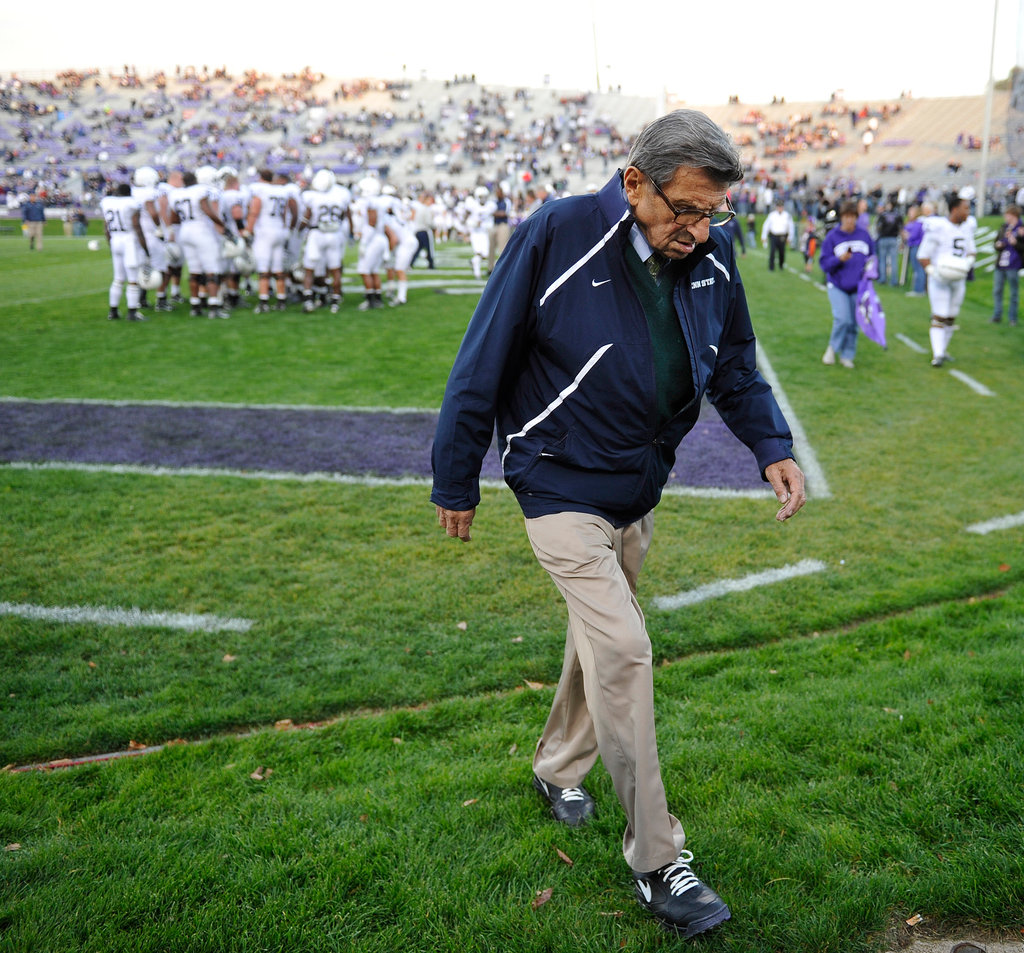
Years ago, whenever I saw images of “Coach” Paterno, I suspected his rigid expression and cleats-and-khaki-pants look suggested a personality and world view that was fairly narrow. Narrow as in limited essentially to the locker room, the football field and the runway in between.

The Coke-bottle-thick spectacles didn’t help, although plenty of people with myopia have had tremendous breadth of understanding about the state of the human race and the evil instincts that reside in some people.

jopa

Paterno, in 2011

Paterno’s myopic perspective was fully revealed when it came to light that he and several other high-ranking Penn State officials had averted their gaze from the systematic abuse Sandusky had perpetrated for years in the Penn State locker room and elsewhere, including his own home. (Unbelievably, Sandusky’s wife also appears to have averted her gaze.)

In 2012, Sandusky was convicted of 45 counts of the sexual abuse of 10 young boys in cases going back to the 1990s. He is serving 30 to 60 years in prison.

The one and only time Paterno went to a higher-up — the school’s athletic director — was in 2001, but he took it no further — nor for that matter, did either the athletic director or the university president. Like Paterno, they were subsequently fired.

**

The Penn State debacle has an indirect Kansas City connection, as some of you may know. In 2011, just before the Sandusky scandal broke, former Kansas City Star sports columnist Joe Posnanski decided to write a biography of Paterno. He had garnered Paterno’s cooperation and had ready access to him.

After the scandal broke, Posnanski, stayed with the project. Although Posnanski didn’t attempt to minimize the scandal, the book turned out to be, as a New York Times reviewer put it, “breezy and largely sympathetic.”

Posnanski urged reader to put Paterno’s inaction in context, The Times review said. That is, “he was old, a bit befuddled and — a sin in football — he simply took his eyes off the ball.”

Yes, by 2011, when he was 85, he was old, befuddled and pathetic.

But what about 1976, when he was 50, full of energy and had no excuse for not being aware of everything going on around him?

No excuses work for Paterno now. None. He was a gutless man and a horrible coach, at least in the fullest sense of a college coach. A good coach not only pays attention to what’s going on between the lines, he nurtures and guides young men and tries to help keep them on the straight and narrow. And that brings us back to narrow. Paterno might as well have had blinders mounted on those thick glasses. The blinders were invisible for a long time, they were there for almost as long JoePa was the face of Penn State football.

statue

The site where the statue of Joe Paterno once stood in State College, PA

On Saturday, The Star fell face down in its ink vat.

Most of you have probably heard about the flap caused by guest columnist Laura Herrick’s piece on rape and her suggestions about what women can do to prevent rape — primarily, urging them not to drink to the point that they make themselves especially vulnerable to men’s insistent advances.

Here’s one of the column’s more problematic lines: “And if you wake up the morning after (a night of heavy drinking) doing the ‘walk of shame” don’t yell rape if you regret your actions of the night before.”

The column appeared in the print edition Saturday and was also online for several hours, until it was pulled because of the strong, negative reaction it generated from readers.

One Twitter writer said: “For real, @KCStar?! How about instead we spend our energy teaching men not to rape. HOW DOES THIS GET PUBLISHED?”

berg

Tony Berg

The vociferous reaction sent The Star scrambling. On the heels of the column being pulled Saturday, in Sunday’s print edition publisher Tony Berg wrote an apology on the Op-Ed page, saying the column should not have run and assuring readers “we are putting even more measures in place to ensure this doesn’t happen in the future.”

It was an extraordinary step, especially because Berg either came into the office or wrote from home on Saturday. To his credit, he understood immediate action was needed, and by acting swiftly, he minimized the damage.

Nevertheless, the damage was significant, and it raises two major issues to be considered:

First, is it time to discontinue the paper’s “Midwest Voices” project?

Second, this embarrassing episode is a direct result of McClatchy’s and KC Star management’s erosion of the journalistic ranks, particularly on the editorial page, which has been down to two working members since editorial page editor Steve Paul and writer and columnist Barb Shelly retired earlier this year. With two working editorial-page staff members, Yael Abouhalkah and Lewis Diuguid, The Star does not have adequate resources to write editorials, select and edit the Letters to the Editor, monitor the syndicated Op-Ed pieces and vet guest columnists and their submissions.

Let’s take a closer look at each of those issues.

:: Midwest Voices

The Star has operated the “Midwest Voices” program for probably 15 or 20 years, selecting several applicants each year to write occasional guest columns for the Op-Ed page. When The Star began this program, it probably had at least seven or eight editorial-board members. (For the record, the publisher is head of the editorial board, but the publisher very seldom takes an active role in monitoring what goes on the editorial page.)

Early each year, The Star publishes an article introducing the “Midwest Voices” columnists for the coming year. The idea is to get a broad representation of readership, by geographic area, race, interests and political persuasion. In January, Steve Paul introduced readers to 10 people comprising this year’s group. A Midwest Voices column appears each Saturday, with each columnist writing four or five columns per year. The column on rape appears to be Herrick’s third of the year. (She is a veteran public-school teacher and lives in Overland Park.)

:: The dwindling ranks

As I said, when “Midwest Voices” began, the editorial board was flush with members, and there were plenty of people to do all the work that was required. In recent years, though, the editorial page, like the rest of the paper, has atrophied. There are fewer locally produced editorials and less space dedicated to editorials, Letters to the Editor and Op-Ed pieces.

Since Shelly and Paul accepted buyouts in March, the load for what remains of the editorial-board responsibilities has rested exclusively with Abouhalkah and Diuguid.

Digging deeper, that duo presents problems in and of itself. Abouhalkah is focused on local and state politics. City Hall has been his main “beat” for about 30 years now, and that’s his chief interest. Diuguid has his special area, too — race relations — and I know that his responsibilities include editing the Letters to the Editor.

Both men are overloaded. Whichever of them read Herrick’s column before publication probably gave it pretty short shrift. And now, whichever of them put the stamp of approval on it has earned the wrath of the publisher. That’s not good.

I suppose there’s a one in a hundred chance that Berg read the Herrick column before it was published, and I sent Berg an email this afternoon asking if that was the case. As of this writing — late Sunday night — I hadn’t heard back.

**

In any event, Berg is ultimately responsible. He is chairman of the editorial board, and the buck screeches to a halt at his desk. If Berg is serious about putting measures in place “to ensure this doesn’t happen in the future,” he must either expand the editorial board (The Star advertised for two editorial-page writers a few months ago) or reduce Diuguid’s and Abouhalkah’s responsibilities. The latter approach, however, would lead to an even smaller editorial page, fewer Op-Ed pieces and probably the end of the “Midwest Voices” program.

Amid all the strife, discord and horrifying events in the world, I’m afraid I’ve got to saddle you — my loyal readers — with one more worldly concern.

Fortunately for you, this is just a straw that should not break your strong backs. But for me it’s a preoccupying, calendar-watching ordeal that can’t get here soon enough: Knee-replacement surgery coming up July 22, a week from Friday.

It’s been hanging over me for two months now, since I went to the knee-replacement surgeon (he also does hips) in early May. At that point, I wanted to get the surgery done as soon as possible (once you make that decision, you’re ready to go, right?), and the first available date was June 21. Couldn’t do it, then, though, because Patty was going to be out of town on business (she has a company that manufactures and sells clergy vestments). The next time and date the scheduler offered was 7:30 a.m. July 5.

I snapped that up, even though I had some misgivings about early-morning surgery the day after the Fourth…What if the surgeon had a couple too many beers on the Fourth…or fireworks kept him awake ’til 2:30 a.m.?

Those concerns became moot, however, after Patty vetoed the date because our 26-year-old son Charlie and his girlfriend were coming for a visit from Las Vegas. I knew they were planning to come but the dates were uncertain at the time I scheduled the surgery. Turned out to be the second week of July.

Even with them here, I would have gone ahead with the July 5 surgery, but, like I said, it was vetoed. Reluctantly, I rescheduled for the “next available” date, which was July 22.

**

I first went to the orthopedist for the knee about a year and a half ago, when it started giving me more than passing pain. I’m no stranger to knee problems, having had three arthroscopic surgeries on the left and one on the right over a period of many years.

The orthopedist — not the one who is doing the surgery but another in the same group — diagnosed the problem as osteoarthritis and said the arthritis had eroded much of the remaining cartilage, the buffer between the femur and tibia. Once the buffer is gone, it’s “bone on bone,” and that means one thing — pain.

I love that orthopedist. He has helped me with shoulder and knee problems and in 2007 put a plate and screws in my left ankle after I had broken it in a fall on the ice. But on this knee, he gave me false hope. He said periodic steroid shots would help — they did — and then he added: “At some point, maybe in 15 or 20 years, you’re going to need a knee replacement.”

Fifteen or twenty years, I thought…wow, that’s great!

I should have known better because that orthopedist is one who never pushes surgery, saying, “There isn’t any condition that surgery can’t make worse.”

Late last year, as the knee pain was increasing, I had an MRI, which indicated a possible re-tear of the cartilage. As a last-gasp measure to forestall knee-replacement surgery, I asked the orthopedist to perform another arthroscopic surgery. He did, and at first it seemed to help a bit. But a few months ago, the knee pain increased significantly.

About the time the pain was increasing, I unwisely purchased tickets for two days of the U.S. Open golf tournament in Pittsburgh (last month) and had made airline and hotel arrangements. The week before the trip, I realized it was a pipe dream and canceled the airline, hotel and rental car reservations. I tried to sell the tournament tickets on eBay but wasn’t successful, so I ate $235.

On the other hand, I’ve been able to play nine holes of golf every week or so, using a cart and hobbling from green to cart and cart to tee, and applying my putter to double duty as a cane. The last time I played was early last week, and I don’t know if I’m going to try it again; the pain is worse, and I’m worried that I might screw up my back since I can’t swing the club as freely as I used to.

For the last couple of weeks, I’ve been sitting around watching re-runs of “The First 48” on A&E (one of the best damned TV shows to ever come along, in my opinion) and women’s and men’s golf tournaments.

Yesterday and today I got up and put on a golf outfit — pink, salmon or red pants and a white Polo-type shirt (ghastly, I know) — with every intention of getting in the car and driving to the course. But then fear, discomfort and inertia send me back to the front-room chair for more TV.

July 22. Finally, it’s within range. I look at it on the calendar like a kid looks at Dec. 25 thinking it will never arrive. My only worries now are that the surgeon might cancel for some reason or I might turn up with a fever and have to reschedule.

My only other concern is that the surgeon is going to view me as just another body being trundled onto the O.R. bed. Well, I’m going to make it very clear before the surgery that he is about to work on none other than The Fabulous JimmyC and that thousands upon thousands of loyal readers are relying on his skill to get me back to “work” as soon as possible.

jeronimo

Jeronimo Yanez in a 2014 photo.

I’m about as liberal as people get, as most of you know, but there’s a particular aspect of the shooting of Philando Castile outside St. Paul Wednesday that casts a cloud over the actions and judgment of 32-year-old Castile.

This morning, the officer who shot Castile at point-blank range has been identified as Jeronimo Yanez, who has worked for the St. Anthony, Minnesota, police department for four years. (I have not been able to find his age, but he appears young in a photo from 2014.)

Yanez and his partner, Officer Joseph Kauser, have been placed on administrative leave.

Much attention has been focused — and rightly so — on the live Facebook video that his Castile’s girlfriend Diamond Reynolds posted in the minutes after the shooting, when Castile was apparently drawing his last breaths.

But let’s take a closer look at some of the factors working on both sides of this tragedy.

:: Castile was not some punk, thug or dangerous person. He was a 14-year employee of the St. Paul public school system. He worked in nutrition services and had been promoted to supervisor two years ago. The Minneapolis Star-Tribune reported that Castile had only misdemeanors on his criminal record.

:: As far as policing goes, this was as podunk as it gets. The stop occurred in the town of Falcon Heights, just northwest of St. Paul. But Falcon Heights, a town of 5,500, is so small it relies on neighboring St. Anthony — population 8,200 — for police services. It’s understandable that cops in towns like those are so bored that they have all the time in the world to deal with people driving around with broken tail lights (as was the case with Castile).

:: And, let’s face it, Yanez might be the type of cop who was always looking to swing into action — particularly if some “suspicious” black people are seen driving in a white suburb. There’s a lot of truth to what Castile’s mother, Valerie Castile, told CNN: “I think he was just black in the wrong place.”

On the other hand:

:: The precise circumstances make me wonder why Castile acted as he did and said what he said when he said it.

The New York Times’ news account, which is based on what the girlfriend said at a news conference on Thursday, goes like this:

As he’s reaching for his back pocket wallet, to produce his license and registration, “he lets the officer know, ‘Officer, I have a firearm on me,’ ” she (Diamond Reynolds) said. “I began to yell, ‘But he’s licensed to carry.’ After that, he (Yanez) began to take off shots — bah, bah, bah, bah.”

Philando Castile

Philando Castile

About those particular few seconds…I am anxious to know if Yanez already had his gun out. I tend to suspect he did, otherwise how could he have fired off three or four rounds so quickly? But why would he have his gun out — for a broken tail light stop — unless he was “primed for action” as I suggested earlier.

Nevertheless — and this is the most significant defense of the officer’s action…Why in the hell would a guy say “Officer, I have a firearm on me” at the very moment he’s reaching into a pocket????

That was, frankly, dumb, but is apparently exactly what happened — not according to police but the victim’s girlfriend, who was right there.

Putting myself in Castile’s shoes — and presuming I had a gun on me — I would have kept my hands in front or me, or up, and told the officer I had a gun on my person, and I would have told him exactly where it was — pocket, waistband, whatever — and that I had a license to carry it.

I would not have announced I had a firearm and, at the same time, reached for my wallet.

…Another mitigating element, in my view, is Diamond Reynolds — as calm as she was in the moments after the shooting, when she was streaming the video — was shouting something when Castile announced he had a gun. So…you’ve got a guy reaching toward a pocket after saying he has a gun, plus a woman shouting something. It had to be chaotic.

Yanez, I’m convinced, was young, inexperienced and overly anticipative of trouble. And yet, Philando Castile and Diamond Reynolds made the simultaneous mistakes of reaching and shouting when they should have been thinking, talking quietly and remaining perfectly still.

When I look at the situation in Oklahoma City, which has been turned emotionally upside down by a basketball star’s decision to go elsewhere, I am glad — once again — that we don’t have an NBA team in Kansas City.

In the NBA, one player on one team — such as LeBron James (Cleveland), Stephen Curry (Golden State) or Kevin Durant (Ok City, until yesterday) — can have a disproportionate effect on a city’s overall sense of well-being.

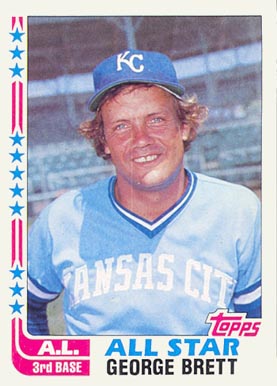
One of the WHB radio talk-show hosts offered a hypothetical (and retrospective) Kansas City comparison this morning: Suppose, he said, that after the New York Yankees had beaten the Royals in three consecutive American League Championship Series — 1976, 1977 and 1978 — George Brett had announced he was leaving the Royals and signing with the Yankees.

Can you imagine how we would have felt collectively? The sense of betrayal? How much worse Kansas City’s self-esteem — not very high back then to start with — would have been? Why, that could have been a tipping point for hundreds or even thousands of people to move out of Kansas city, had they been mulling that possibility to start with.

We would have been emotionally devastated. And that’s how the people of Oklahoma City have felt since Durant’s announcement.

Oklahoma City Mayor Mick Cornett (a former sportswriter, by the way) said: “We’re stunned..Kevin was our Ernie Banks and Michael Jordan…We’ve been spurned by someone we cared deeply about.”

kd1

Kevin Durant

A good part of Oklahoma City’s identity was wrapped up in Kevin Durant and still is wrapped up in the Oklahoma City Thunder — a team that moved from Seattle in 2008. Durant was there from the beginning. He had been selected No. 2 in the 2007 draft, and he went on to become Rookie of the Year. He was NBA’s MVP in 2014. He was a seven-time All-Star selection. He led the Thunder to the NBA Finals in 2012.

But he wasn’t just a sports hero. In 2013, he donated $1 million to the American Red Cross after the devastating tornado in Moore, OK. He is a partner in KD’s restaurant in Bricktown (Ok City’s version of the Power & Light District). Plus, he has endorsement deals with Ok City-based Sonic Drive-In and Orange Leaf Frozen Yogurt.

To show you how fast feelings can change, after Durant made his announcement, Yelp was inundated with fake reviews of KD’s, including one that said:

“When I first ate his food, it tasted amazing, food made with respect, honesty and trust. Now it just tastes like the food of a traitor.”

The Oklahoman, Ok City’s daily newspaper, said a clerk at a Chesapeake Energy Arena retail store was busy marking down racks of Kevin Durant jerseys.

…To put things in larger perspective, however, Ok City would not be what it is today were it not for the Thunder. The Thunder is the city’s only “major league” franchise, and, as Cornett said, “He put us on the map.” Of course, Oklahoma’s vast crude oil and natural gas reserves were also a significant factor in the Oklahoma City area adding 60,000 residents (to 1.31 million) between 2010 and 2014.

Now, let’s swing this back to Kansas City. We’ve got three major-league franchises — the Royals, the Kansas City Chiefs and Sporting Kansas City. (When golfer Tom Watson was in his prime, former Kansas City Kings’ basketball coach Cotton Fitzsimmons called him KC’s “third franchise,” behind the Royals and Chiefs.)

There isn’t a single player on either the Royals or Chiefs whose departure would generate 6.0 on the Richter scale. With baseball, football and even soccer teams, the talent is more dispersed and one person, generally, doesn’t make or break a team.

Go back to the end of the 2015 baseball season, when Kansas City hung on tenterhooks over the prospect of star Royals’ outfielder Alex Gordon signing with another team. I remember Soren Petro talking about that likely prospect on his WHB radio show and warning fans, “It’s going to be heart-breaking.”

I was bracing myself, like all other Royals’ fans. But, wouldn’t you know it, a semi-miracle took place; he came back, and it looks like he’ll finish his playing career in Kansas City.

If he’d left, yes, it would have been heart-breaking. But it wouldn’t have been soul-crushing. It wouldn’t have plunged the city into mourning. It wouldn’t have instantly revived the inferiority complex we hauled around until Emanuel Cleaver became mayor in 1991 and began singing, sometimes shouting, Kansas City’s praises. (To this day, I firmly believe that was the turning point after a dozen depressing years with the self-unsure Mayor Richard Berkley at the helm.)

So, my heart goes out to the good people of Ok City, just 350 miles southwest of us. It’s a great city and will continue to prosper without Kevin Durant. But, as an editorial in The Oklahoman said today, “It will take time for the pain to subside, no doubt.”

Fortunately, Kansas City’s sporting eggs are not loaded into a single basket. We are much better positioned to take a hit — say, for example, Eric Hosmer leaving after the 2017 season. We have reached a point where the loss of any single sports star would not devastate us.

gbThat being said, it would be quite an upset if George and Leslie Brett put their Mission Hills house on the market and said they were moving to Southern California, where George is from…Listen to me, Leslie. If George ever suggests anything like that, just smack him.