Feeds:
Posts
Comments

Patty, Brooks and I were tossing around ideas for spontaneous trips early last week, when Patty had an epiphany and blurted out, “Let’s go to Table Rock Lake.”

In short order, we found a place to stay, and Friday morning we headed south on I-49, then Missouri 13 to Kimberling City.

To the best of my recollection, we had been to Table Rock Lake twice previously, but we had never stayed close to Kimberling City, the biggest city on the lake, with about 2,500 people. It seems a lot bigger than that during the summer, though, when tens of thousands of people converge on the area and fill the resorts and marinas and launch their boats on the lake, which was constructed by the Corps of Engineers in the mid-1950s.

It’s a beautiful place and, because it is a Corps of Engineers lake, it doesn’t have private houses lining the shores. It’s a much more natural and beautiful setting, in my view, than Lake of the Oarks, which is smothered in private homes. Lake of the Ozarks is a much rougher body of water, too, making it unappealing to people who like to fish in relatively small boats — like me.

The place where we stayed, the Lighthouse Lodge Resort, was just off Missouri 13 and adjacent to the Port of Kimberling, which bills itself as “Table Rock’s largest full-service marina and resort.” Even though we were next door to the busy “port,” our resort was quiet and relatively secluded. The cabins face the water, and it cooled down nicely in the afternoon, when the sun passed over the backs of the cabins.

For the most part, Brooks and Patty swam, took whirlpool baths and relaxed at the resort. Both days I rented a fishing boat from the Port of Kimberling’s “What’s Up Dock” (best name ever for a marina) and fished and gave Brooks and Patty boat rides. The boat had an 80 horsepower motor — the biggest I’ve ever driven — and moved along at a nice clip.

Now, here are a few photos, which, I think, will give you a better flavor of the place…

P1050317

The Kimberling Inn on Missouri 13 affords a nice view of the lake.

P1050309

The cabins at the Lighthouse Lodge Resort, where we stayed, sit atop a ridge that slopes down to the lake.

P1050279

We were in No. 10 — two bedrooms, two baths.

P1050281

Our resort has a small dock, but these larger ones nearby are part of the massive Port of Kimberling.

P1050311

Big powerboats don’t have a monopoly at Table Rock.

P1050304

This is your captain speaking…

P1050301

The Kimberling City bridge — part of Missouri 13.

P1050295

The only reason I photographed this fish is because it was a good fit for a selfie.

P1050313

Until next time, from the Lighthouse Lodge.

P.S. I am shocked and appalled at the suggestion (see comment below) that I would tell “fish tales.” I was much too modest to include my photo of the biggest fish I caught, but since my credibility has been challenged, here it is…

P1050282

That fish was so heavy I couldn’t hoist it high enough to get its tail in the picture…Now, Gayle, I think you owe me an apology…or I’ll be forced to sue you for virtual damages!

I guess many of you have heard by now about the woman who is suing Lambert’s Cafe, the legendary “Home of Throwed Rolls,” alleging she suffered a serious eye injury after being struck by a throwed roll last fall.

The plaintiff, Troy Tucker, is seeking $25,000 to cover bills related to a “lacerated cornea with vitreous detachment.”

In June, of course, Kansas City Royals’ mascot Sluggerrr was cleared of legal responsibility for a detached retina that a man contended he suffered from a hot dog Sluggerrr had tossed into the stands. That case was in the courts for five years.

…You might not have heard of them, but several other people have filed lawsuits after becoming victims of strange occurrences.

The long arm of Google has not yet reached out and captured these incidents, but I can assure you each is chronicled in the 1956 edition of Encyclopedia Britannica. You can find them in the “W” book, under the heading “weird and wacky.”

Here you go…

:: Two guys were playing an intense game of ping-pong when one of them smashed a ball that struck the opponent’s side of the table and then rocketed into the opponent’s mouth. The opponent sued, saying he suffered contusions and abrusions (combination of abrasions and bruises) to the roof of his mouth. The defendant (the free swinger) contended that the opponent was in the wrong because he should have kept his mouth shut. He further contended that if the opponent believed he was in harm’s way, he should have donned a fencing mask before the game began.

:: At a KU men’s basketball game, a cheerleader tossed a wadded-up Jayhawk T-shirt toward a student who was hanging over a railing. The T-shirt unfurled in flight, and as it floated just short of the student’s reach, he toppled over the railing, striking the back of his head on a concrete step below the railing. The student sued, contending that the T-shirt was poorly packed. The cheerleader’s defense was that only an idiot would risk his neck for a $5 T-shirt.

:: At Binion’s Horseshoe Hotel & Casino in Las Vegas, a playing card that a dealer had flipped toward a player caught a draft of air and sailed up toward the player’s face. Luckily, the flying missile – the ace of spades – missed the player. Unluckily, however, jerking back to avoid the ace, the player’s head collided with a tray of drinks in the hand of a passing hostess. Citing contusions and the aforementioned abrusions, the player sued Binion’s. In its defense, Binion’s contended that it would never take advantage of an honest man.

:: At a piñata party, a 10-year-old girl took a wild swing at the piñata, missed and struck the party organizer – who, admittedly, was standing a bit too close – on the crown of the head. The organizer, bleeding profusely from a superficial cut, immediately called off the party and sent the kids on their way. The girl’s parents sued the organizer, contending that he had endangered the children by failing to immediately stanch the bleeding. The organizer’s defense was: Never take candy from strangers.

Finally, here’s one with a happy ending. Out at Kauffman Stadium one night, during the ketchup, mustard, pickle race, the ketchup kid fell hard halfway through the race and sprained his ankle. His parents ran to his side to check on his condition and consider their litigious options. Fortunately, however, along came Sluggerrr, who handed the boy a hot dog, which he consumed on the spot. The parents decided to leave well enough alone.


Our gung-ho, “we’re-ready-to-rock-and-roll” mayor has just embarked on a thoroughly delusional journey. His backpack is loaded with peanut butter crackers and granola bars, and he’s ready to stay out in the wilderness for months, it appears.

Yesterday, city officials acknowledged for the first time — although they knew it weeks ago — that the company manufacturing the streetcars to run between the River Market and Union Station is running significantly behind schedule.

Initially, the first car was to be delivered in June. Then it was late September and now it’s the end of the year.

To which, Mayor Sly James proclaimed: “It is not acceptable to be late. We’re ready to rock and roll.”

The problem is you can’t start a party without a band, a disc jockey or somebody spinning records in the garage.

No music, no party…By the same token, no streetcars, no trips up and down Main Street.

Don’t get me wrong…I’m a fan of the streetcar line, and I think it’s going to generate additional energy and excitement downtown and be good for tourists and residents alike. For months, I’ve been watching progress on the installation of the rails, and that part is essentially done. The next big element is the overhead power lines. A tremendous amount of street repaving also needs to be done.

James has been pointing to an arbitrary opening date: mid-March, when the Big 12 men’s basketball tournament begins.

He’s still hoping for that, but it isn’t going to happen. In fact, I will be surprised if one streetcar is carrying passengers by late next year.

Construction of Kansas City’s four streetcars was begun in Spain, and final assembly will be done in Elmira, NY, in part, The Kansas City Star reported today, “to comply with buy-American requirements attached to federal grants for streetcar projects.”

But streetcar production is just one of several areas in which big problems and delays could develop.

Another is that each vehicle must be tested for 300 miles along the route. That alone is probably going to take several months. Remember, it’s four cars, 300 miles each.

Plus, transportation engineers have to figure out and precisely plot how streetcars, vehicular traffic and pedestrians are going to intermingle safely up and down Main Street. You can’t just plop those cars on the rails, yell “all aboard” and turn on the juice. Safety is a huge consideration that won’t take care of itself.

It’s reasonable to expect some of the problems that Washington D.C., has experienced in its effort of several years to get two streetcar lines going. One of the lines, a 2.2-mile run along “H” Street was supposed to have started operating more than a year ago. But it’s still mired in test runs.

Reporter Michael Laris of The Washington Post wrote last October that during test runs “the first cars on the city’s inaugural line, running east of Union Station, have snarled traffic and been in two minor accidents.”

dc car

On a test run last October, a Washington D.C. streetcar stopped in traffic near the intersection of H Street and 3rd Street NE. (Washington Post photo.)

A month later, Laris quoted a City Council member as saying, “The main thing the H Street streetcar line has done is found a way to turn a lot of people against the streetcar who otherwise could have been for it.” 

So, when James says delay is unacceptable, he’s like a first-time flute player trying to get a sound out of the instrument, other than rushing air.

Streetcar and light-rail projects almost invariably cost more than budgeted and aren’t done when they’re supposed to be.

At this point, the best thing we can hope for is that the $100 million budget for our two-mile system doesn’t become $150 million or $200 million. In that context, a delay of several months is nothing to whine about.

But Sly has set the tone: It’s going to be the blame game from now until the streetcars are carrying live passengers. He’s going to spout and fume and grunt about how unacceptable the delay is.

You know why he’s unwilling to accept delay like a rational adult, don’t you? Right, because if he doesn’t point the finger at someone else, then it all falls back on him. And that’s what’s really unacceptable.

It might have been a while since some of you have driven around the Crossroads area and taken a close look at what’s there and some of the things that are coming.

I worked out of the The Star’s 18th and Grand building for 36-plus years, and, I can tell you the neighborhood was long run down — home, primarily, to auto repair places, auto salvage operations, warehouses and a handful of C-minus bars and restaurants.

It’s much different now, of course. The Star is now surrounded, within a few blocks in any direction, by renovated buildings and an array of businesses.  The Crossroads’ website describes the area as “an eclectic enclave of boutique shops, one-of-a-kind restaurants, creative businesses, studios and art galleries.”

The Crossroads’ official boundaries are Troost on the east, I-35 on the west, 22nd Street on the south and Truman Road on the north. For all practical purposes, however, the hub is between Broadway and Locust, from 16th to 22nd streets.

On “First Fridays,” the central part of the Crossroads is jammed with foot traffic, and parking is a mess for blocks around.  The next First Friday is two days away. Today I went down there and took some photos, which, I think, capture the feel and look of the Crossroads, which has evolved, with little investment of public dollars, into one of Kansas City’s great success stories.

Here you go…

P1050229

The Freight House, built in 1887 by the Chicago, Milwaukee and St. Paul Railroad, was one of the first buildings to be restored. And Lidia’s was one of the first occupants.

P1050260

YJ’s coffee shop at 18th and Wyandotte was another early arrival.

P1050259

The Art of Pizza, on the southeast corner of 18th and Baltimore, was home to Kenneth Smith Golf clubs when I came to town in 1969.

P1050266

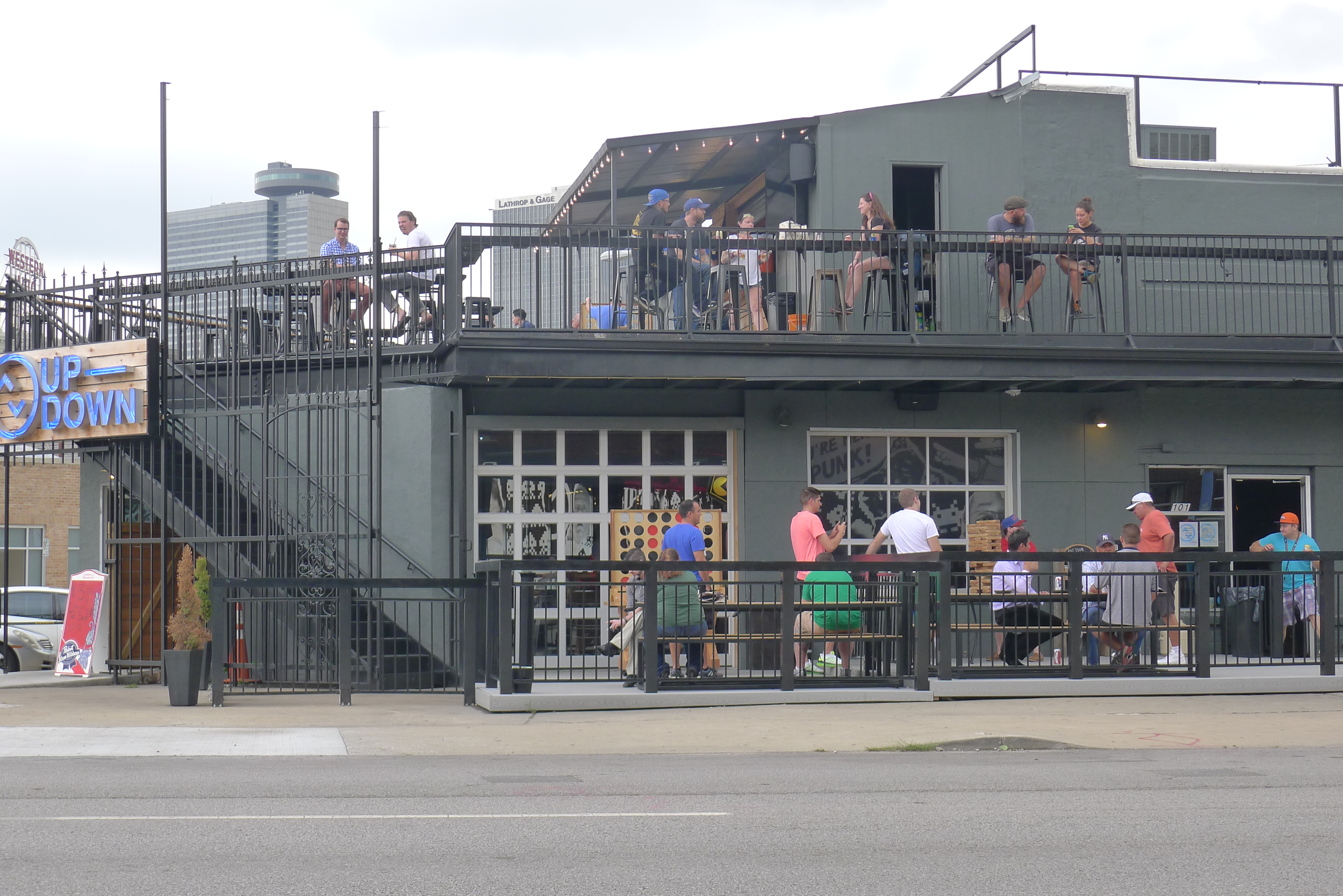
Up-Down, an arcade and bar at Southwest Boulevard and Baltimore, seems to draw nice crowds.

P1050233

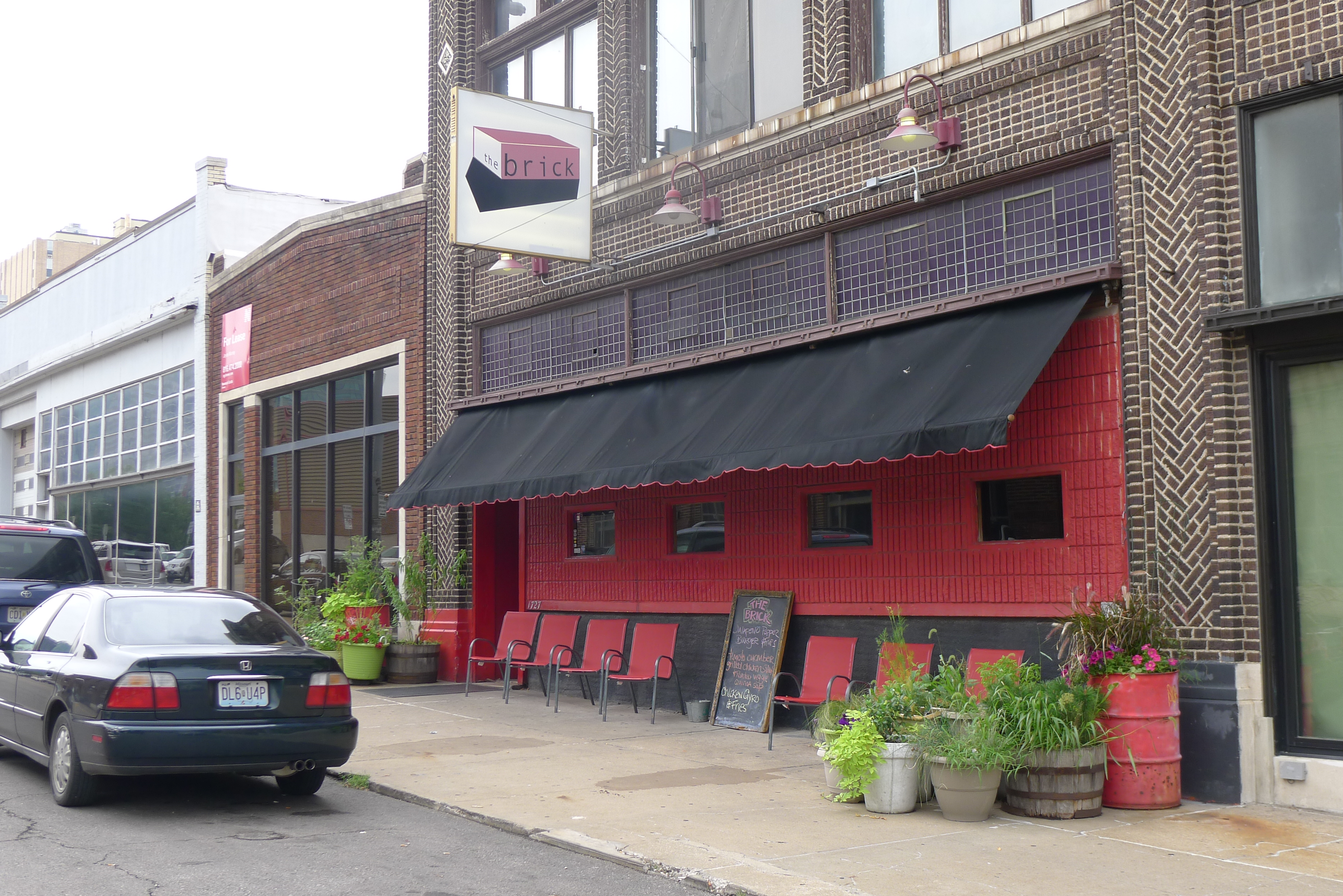
The Brick, a popular bar on McGee just north of 18th, was for many years The Pub, owned by Jimmy and Joe Spinello. It was the go-to lunch and drinking place for many KC Star employees. Now, it’s geared to the younger set.

P1050235

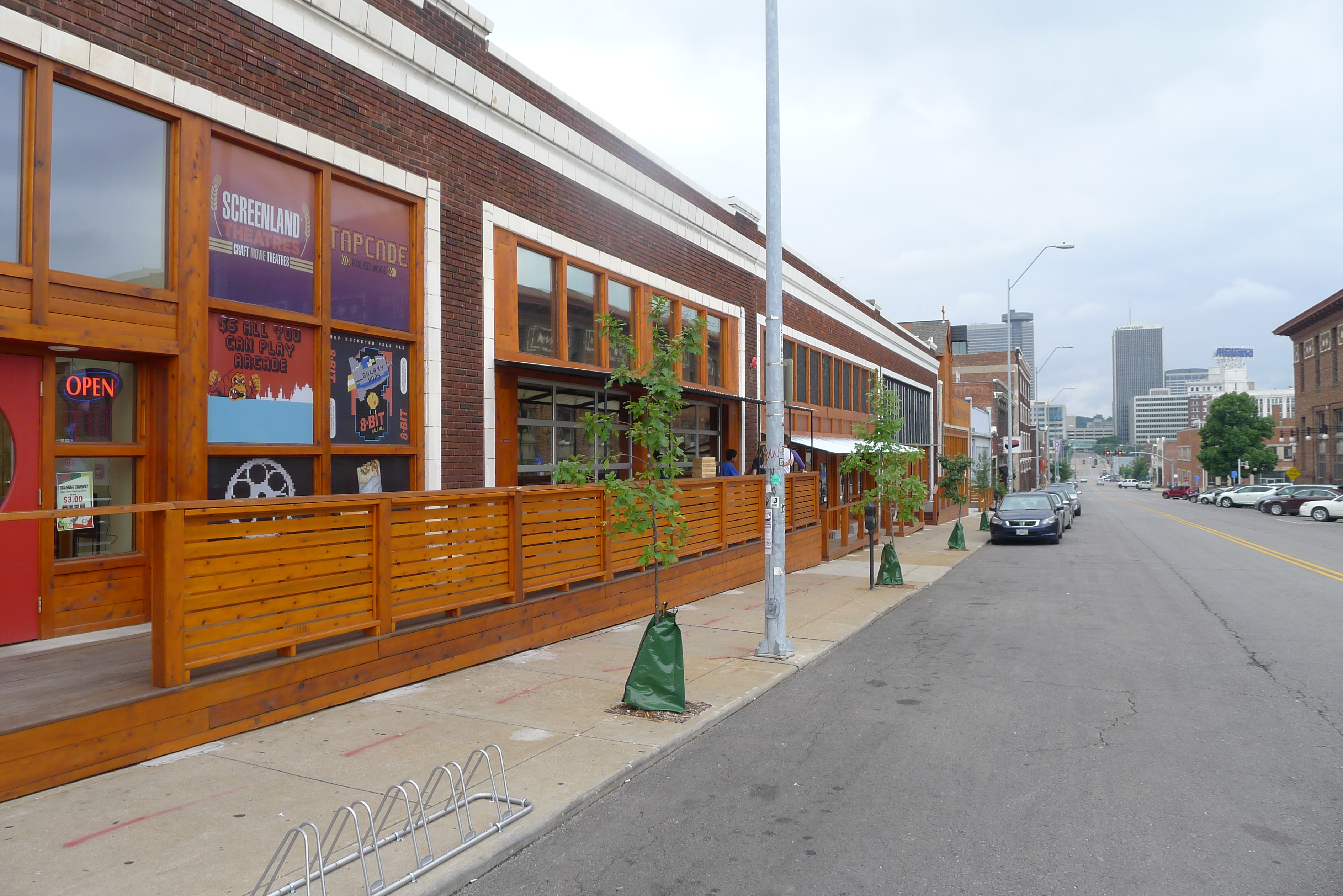
This building, north of The Brick and across McGee from The Star (far right corner), used to house The Star’s circulation department. It has been renovated and subdivided into a variety of operations, including Screenland Theatre.

20th and mcgee

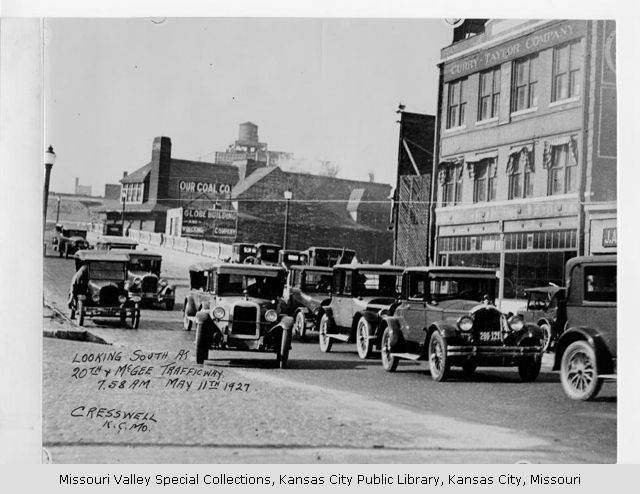
Here’s a 1927 photo of McGee Street, looking south from the northeast corner of 20th and McGee.

P1050270

Here’s a shot from the same vantage point today. That’s the Western Auto building behind the two story building, and I’m not even sure that the two-story building is the same building as the one in the foreground of the 1927 photo. (The building in the ’27 photo is three stories, where this one is two.)

1820 oak

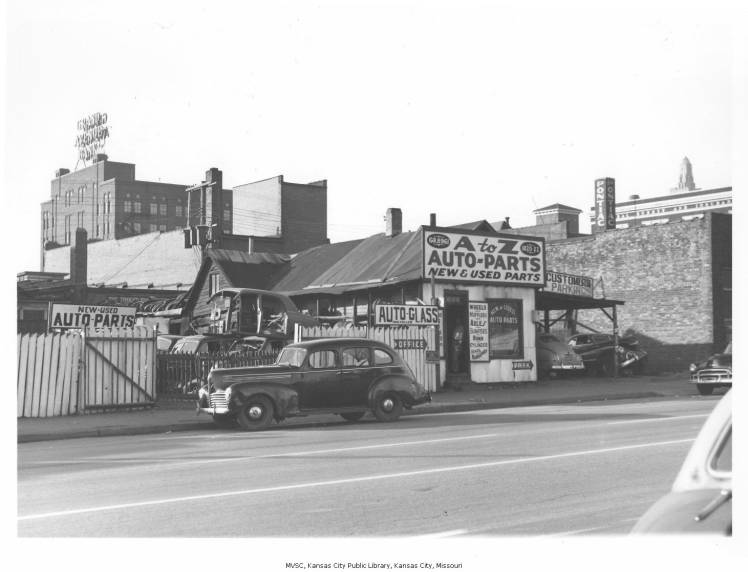
Here’s another old photo, (1951) from the Missouri Valley Special collections, of an auto parts store at 1820 Oak. It’s now a parking lot. In the background is the old City National Bank (later Republic Bank) on the southeast corner of 18th and Grand.

P1050248

Apartments and a small retain space are going in on the west side of Main, south of 19th.

P1050267

North of the apartment development is the two-story building where the late political boss Tom Pendergast had his office. He was on the second floor.

P1050262

A combination Residence Inn and Courtyard by Marriott is going up at 16th and Baltimore. The grassy foreground is where KC’ new convention hotel is to be built.

P1050236

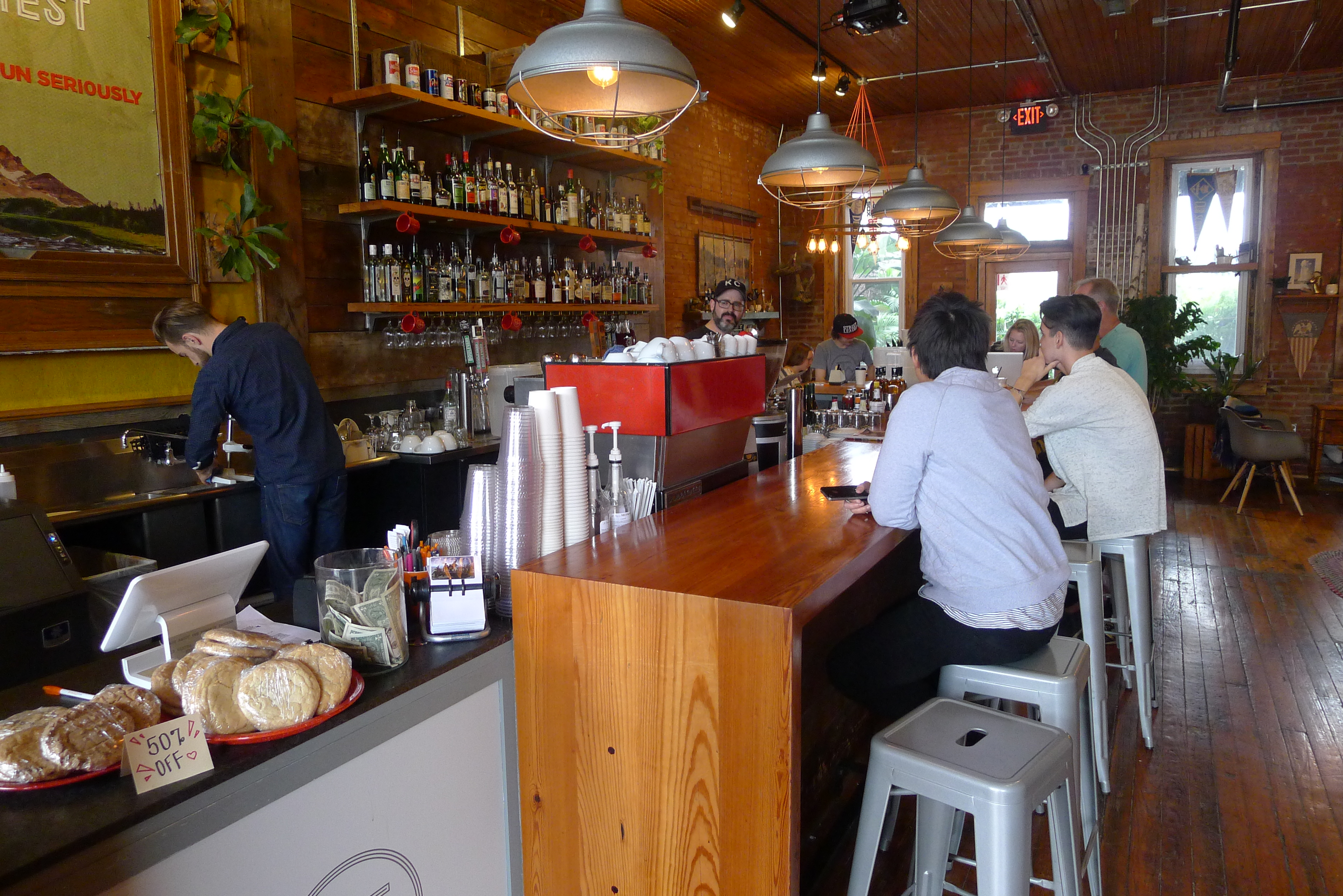
Grinders, between Oak and Locust on 18th Street, is an eastern anchor of the Crossroads. To the left of the Grinders’ “east” is a coffee shop and bar called Thou Mayest.

P1050238

Thou Mayest.


P1050224

Another sign of progress: The rails are down on Main, just north of Union Station, where the new streetcar line will end. The line is scheduled to start operating next year.


Once again, in my view, The New York Times’ insistence on using courtesy titles has made the paper look silly.

In this morning’s print edition, I was immediately drawn to a front-page story out of Santa Cruz, CA, about a 15-year-old boy being charged with murder, kidnapping and sexual assault in the death of 8-year-old Madyson Middleton.

The alleged killer is Adrian Jerry Gonzalez. After using his full name on first reference, The Times’ story refers to him as “Mr. Gonzalez” on second and subsequent references.

It was jarring when I saw the first “Mr. Gonzalez.”

I went on to finish the story, which is beautifully written and reported by Sarah Maslin Nir, but I soon began doing Google searches on The Times’ practice of bestowing courtesy titles, which most newspapers and magazines have done away with.

Except on the sports pages, The Times typically refers to people on second and subsequent references as Mr., Ms. or Mrs.

Medical doctors and dentists get to be called “Dr.” and, in some cases, people with doctorates get that title. Also, famous people who are long gone don’t get courtesy titles, so you don’t see completely ludicrous references like “Mr. Einstein.”

The 1999 edition of The Times’ style book — The New York Times Manual of Style and Usage — calls for people under 18 to be referenced by their first names after the first reference.

The style book has since been updated, and I don’t know if the book’s explanation of courtesy titles for people under 18 has changed. What the 1999 edition says is some people under 18 should receive courtesy titles and some should not.

The determining factor, that edition said, is “their role in the news.” For example, the style book says, “A teenager who achieves distinction in a normally adult field (scientific discovery…or musical composition) might well merit Ms. Miss or Mr.”

His “role in the news” doesn’t seem to be the determining factor in the case of Adrian Gonzalez.

When I went back and read the story a second time, I noticed that he has been charged “as an adult.” Almost surely, that is why the editors decided to put the “Mr.” before his name on second reference.

Still, as I’m sure you’ll agree, it’s ridiculous. As I have done here, The Times should have referred to the defendant as “Adrian Gonzalez” in all subsequent references.

In 2012, Philip B. Corbett, The Times’ associate editor for standards, wrote, “In all cases, the rule of common sense should prevail.”

Well, common sense certainly didn’t prevail today…Common sense dictates that Adrian Gonzalez be referred to by first and last name every time. (I put a call in to Corbett this morning but haven’t heard back.)

In the larger picture, and particularly in these days of increasing informality, I think The Times should drop the courtesy titles altogether.

Last December, Eric Zorn of the Chicago Tribune praised Crain’s magazine for dropping courtesy titles. One of the problems with courtesy titles, Zorn said, was using them “frequently confers dignity upon the despicable.” As an example, he said The Times has several times referred to serial killer John Wayne Gacy as “Mr. Gacy.”

Is that common sense? Of course not. And neither is calling a 15-year-old alleged rapist and killer “Mr. Gonzalez.”

:: It came as no surprise when I learned today that Will Dana, managing editor of Rolling Stone magazine, is leaving the paper.

Dana was the guy with whom the buck stopped on Rolling Stone’s bogus story about a purported gang rape at a University of Virginia fraternity house.

dana

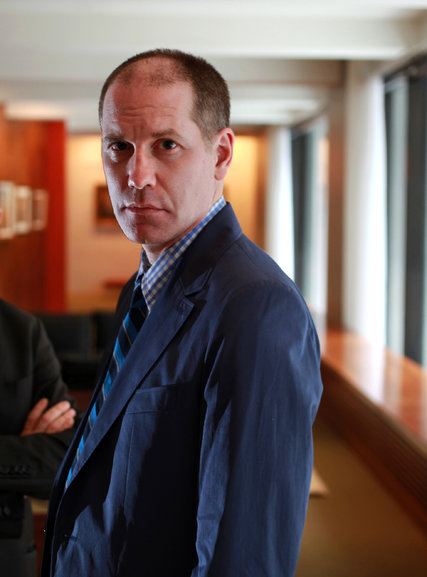
Will Dana

In the wake of publication last year, the credibility of the story, written by Sabrina Rubin Erdely, quickly began to fall apart. Erdely based the story primarily on the account of one student, a woman she called “Jackie,” who claimed to be the victim.

After Rolling Stone was forced to retract the story last December, I wrote that Jann Wenner, co-founder of the magazine and still the editor in chief, “will fire just about everyone who was involved in reporting and editing the story.”

Dana, who has been with the magazine 19 years, is the first person to lose his job over the debacle. His last day is Aug. 7.

I have not seen anything indicating that the two other main journalists involved in the story — Erdely herself and the main editor of the story, Sean Woods — are on their way out.

Dana’s departure is a good first step for Rolling Stone to try to redeem itself as a responsible publication. That’s not enough, though; Erdely and Woods also need to go.

:: Great news! Cheslor Cuthbert is staying with the Royals. That means we can continue hearing his name announced at the stadium and on radio and TV whenever he gets into a game. I thought for sure he was headed to Omaha to make room for newly acquired outfielder Ben Zobrist. But it was Paulo Orlando who got tapped to return to the minor leagues. I’d like to think Cheslor’s wonderful name was the deciding factor in whether he stayed or went. These Royals’ front-office guys are looking more and more like geniuses.
:: With the addition of Oakland A’s player Ben Zobrist to the Royals’ roster, I sure hope Royals’ utility infielder Cheslor Cuthbert doesn’t get demoted to Omaha. Not because he’s a great player or anything but because he’s got one of the greatest names I’ve ever heard. It rolls off the tongue and has a felicitous ring.

fields

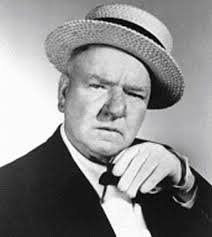
W.C. Fields

It’s as good as some of the great names that comic actor W.C. Fields invented for some of his memorable film characters. Like Augustus Winterbottom in Tillie and Gus (1933); or T. Frothingill Bellows in The Big Broadcast of 1938 (1938); or Egbert Sousé (“accent grave,” Fields would always say when introducing himself) in The Bank Dick (1940). And my favorite, Larson E. Whipsnade in You Can’t Cheat an Honest Man (1939).

:: And while we’re on the Royals, I fear that the addition of “ace” pitcher Johnny Cueto is going to insure that we can’t beat the Cardinals in the World Series.

Here’s the deal…In 2010, Cueto intentionally kicked Cardinals’ catcher Jason LaRue in the head, giving him a concussion. It was about the 20th concussion LaRue had suffered, and he quit baseball. Understandably, the Cardinals have hated Cueto ever since…And, as we all know, the Cardinals never forget.

denkinger

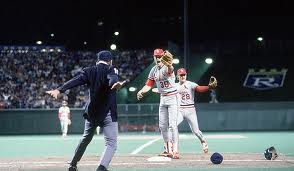
Umpire Don Denkinger making the call that altered the course of the 1985 World Series.

We remember, too: Game 6, 1985, Don Denkinger’s erroneous call at first base, which led to the Royals coming back and winning that pivotal game and going on to win Game 7 the next day. Hell, not only does that incident still burn in the minds of St. Louis residents who were alive at the time, it simmers in the minds of their children and grandchildren. If a Royals-Cardinals World Series comes about, look for venom thick as lava to ooze from the pores of every Cardinals’ fan’s body.

:: I sensed from my last post about Kansas City International Airport that a handful of you remain resistant to the emerging plan to build a single new terminal at KCI, replacing the ugly and impractical three-terminal set-up that has been in place since KCI opened in the early 1970s. Well, the government of New York State is dealing with a similar problem at Laguardia Airport, which is in line for a $4 billion rebuilding.

On Monday, NPR Morning Edition host Steve Inskeep led into the story like this: “One of the nation’s busiest and most maligned airports is getting a $4 billion overhaul. New York authorities are applying the theory of creative destruction. If you want to build something great, destroy something first, like LaGuardia.”

Then, reporter Joel Rose picked up, saying, “(Gov. Andrew) Cuomo unveiled a design for single, unified terminal, in contrast to the hodgepodge of separate terminals that make up LaGuardia today.”

Hmmm. Seems to me that “creative destruction” is precisely the plan for KCI. Moreover, Rose might as well have been talking about KCI when he mentioned the “hodgepodge of separate terminals.”

So, let’s shout it all together now: “Onward and upward at KCI! Onward and upward!”

Many of you probably don’t realize how closely the fortunes — misfortunes, actually — of The Star and the St. Louis Post-Dispatch have paralleled the last 10 years.

But that’s why I’m here, right — to keep you abreast of important matters like this!!??

The parallel is nothing less than amazingly eery.

Consider:

:: The McClatchy Co. bought The Star and Knight Ridder’s 31 other papers for $4.5 billion in 2006. In doing so, McClatchy took on more than $1 billion in debt, and its debt is still about $1 billion today…Layoffs, buyouts and other cutbacks have been the order of the day since the Knight Ridder purchase.

:: Lee Enterprises, a Davenport-based chain of relatively small newspapers, bought the Post-Dispatch and 13 other Pulitzer Inc. newspapers for $1.46 billion in 2005. In doing so, Lee also took on more than $1 billion in debt, and its current debt is about $750 million. Layoffs, buyouts and other…well, you’ve got the script.

…In both cases, it was the story of a small fish trying to swallow a whale.

Each chain got its wish, but if they had to do it over again, they’d swim as fast as they could from the monsters they had their sights set on.  

In the aftermath of the McClatchy deal, Gary Pruitt, McClatchy CEO, left the company six years later (2012) to become president and CEO of the Associated Press. I think it is safe to assume he is earning far less than he was a decade ago.

On the other hand, Mary Junck remains chairman and CEO at Lee Enterprises and appears to be in good standing with the board of directors, primarily because she engineered a 2014 refinancing that reduced the company’s debt. (To the chagrin of the Post-Dispatch staff, Junck got a $700,000 bonus last year for pulling off the refinancing).

**

We in Kansas City hear a lot about how bleak the situation is at The Star — such as total employment down from more than 2,000 to probably about 500 — but it’s even worse in St. Louis if you consider a rash of bad breaks.

vayoung

Virginia Young

For example…nine editorial employees either took buyouts or were laid off recently. Those who took buyouts included senior political writer Virginia Young and popular local columnist Bill McClellan. (McClellan will continue to write a Sunday column on a contract with the paper.)

As if that weren’t enough, lead sports columnist Bernie Miklasz resigned recently to go to radio; another sports columnist, Bryan Burwell, died of cancer last December; and editorial page editor Tony Messenger had surgery last week for throat cancer.

jwilliams

Joe Williams

The paper took another tragic blow Sunday when movie critic Joe Williams was killed in a one-car crash in Jefferson County, south of St. Louis.

This morning I spoke with Kevin Horrigan, deputy editorial page editor, who was a reporter at The Star before leaving for St. Louis in 1977.  (There, he started at the Post-Dispatch, went to a couple of radio stations and went back to the P-D, on the editorial page, in 2000.)

Ticking off the rash of setbacks, Horrigan said, “It’s like we’re snakebit here.”

The paper, he said, had gone from an emotional high of winning a Pulitzer Prize — for photographing the Ferguson, MO, story last year — to perhaps an all-time low in the space of a few months.

Putting aside the two deaths and the health problems, Horrigan said the depletion of ranks at his paper was “the reality of life in 21st Century journalism.”

When I asked him how the staff was responding, he replied, “You can piss and moan about it or pull up your socks and go to work. That’s where we are.”

kevin

Kevin Horrigan

With Messenger’s work load limited, Horrigan, 66, is one of two people writing editorials full time. The other is Deborah Peterson, another former KC Star reporter.

The Star’s editorial page manpower is almost as severely depleted, with four people — Barb Shelly, Steve Paul, Lewis Diuguid and Yael Abouhalkah — writing editorials.

Both papers are down to doing about one editorial a day, instead of two or three. And one day a week — Monday for The Star and Saturday for the P-D — each paper does not have an Op-Ed page.

Both papers have large buildings (although the Post-Dispatch building is for sale) that have way too much space for their current staffs. Illustrating the atrophy, Horrigan recalled a recent incident where fire alarms went off and everyone had to leave the building at 900 N. Tucker Boulevard.

“We were standing around across the street, and I thought (from judging the assembly) that a lot of people must still be inside the building,” Horrigan said. “But there weren’t!

“I thought, ‘Holy cow, where did all the people go?’ “

And there, readers, is a stark image of “the reality of life in 21st Century journalism.” Newspaper journalism, anyway.

I had always been curious about Columbus, OH, partly because it is a big city that really isn’t known for much, other than being the home of Ohio State University and the birthplace of Jack Nicklaus.

Last week and this week, Patty and I had the opportunity to visit Columbus because Patty had a booth at the biannual Christian Church (Disciples of Christ) General Assembly. (For 20 years, Patty has owned and operated a business that designs and manufactures clergy vestments. WomenSpirit is the women’s line, and AbidingSpirit is the men’s line.)

Columbus is a lively, hospitable city that is very easy to navigate. Its downtown is larger than Kansas City’s; it has an attractive area of bars and restaurants just north of the convention center district; and it boasts a historic, high-end residential and restaurant area south of downtown called German Village.

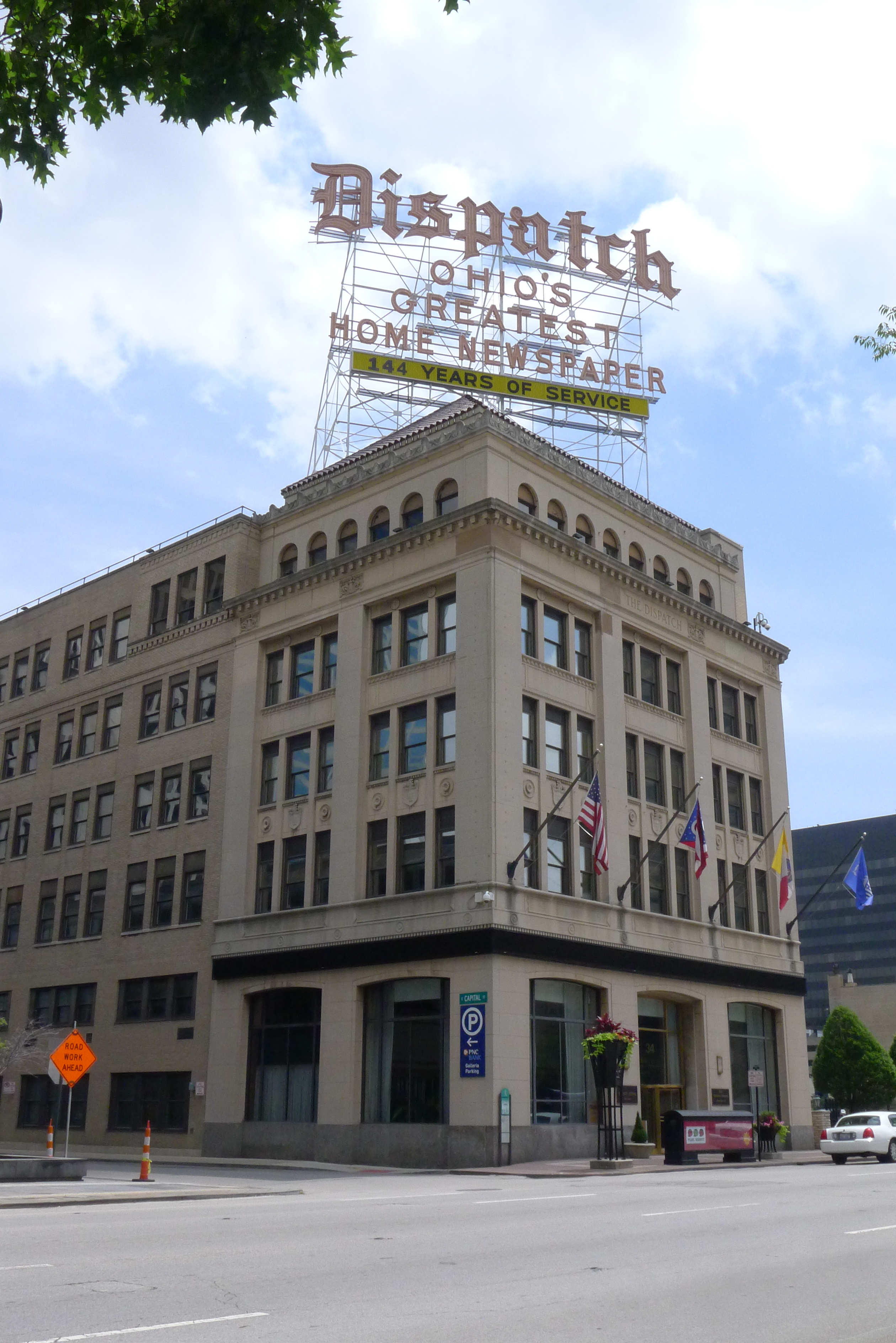
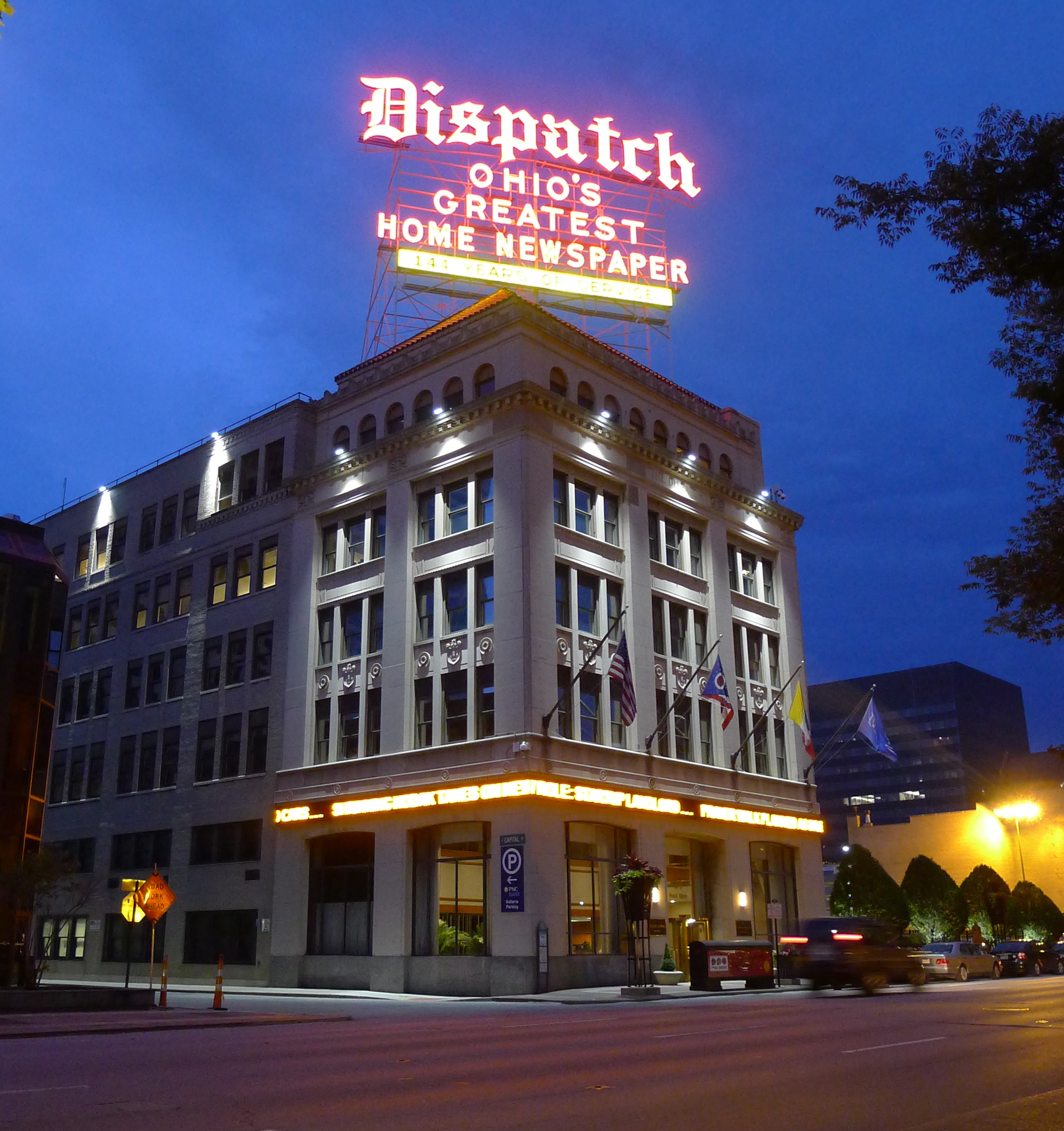
One aspect of Columbus I particularly liked, as a retired reporter and editor, was a the big sign on top of the building that houses the local paper, The Columbus Dispatch. The sign is impressive enough during the day, but at night its bold, red letters are visible for blocks…It made me wonder why The Star has never had a large, distinctive sign on its stately building at 18th and Grand. The only identifying sign on the old Star building is a bronze plaque next to the south-side door bearing the words “The Star.”

…I guess The Star is just humble and self-effacing…like its founder, un-huh, William Rockhill Nelson. 

Now the photos…

P1050092

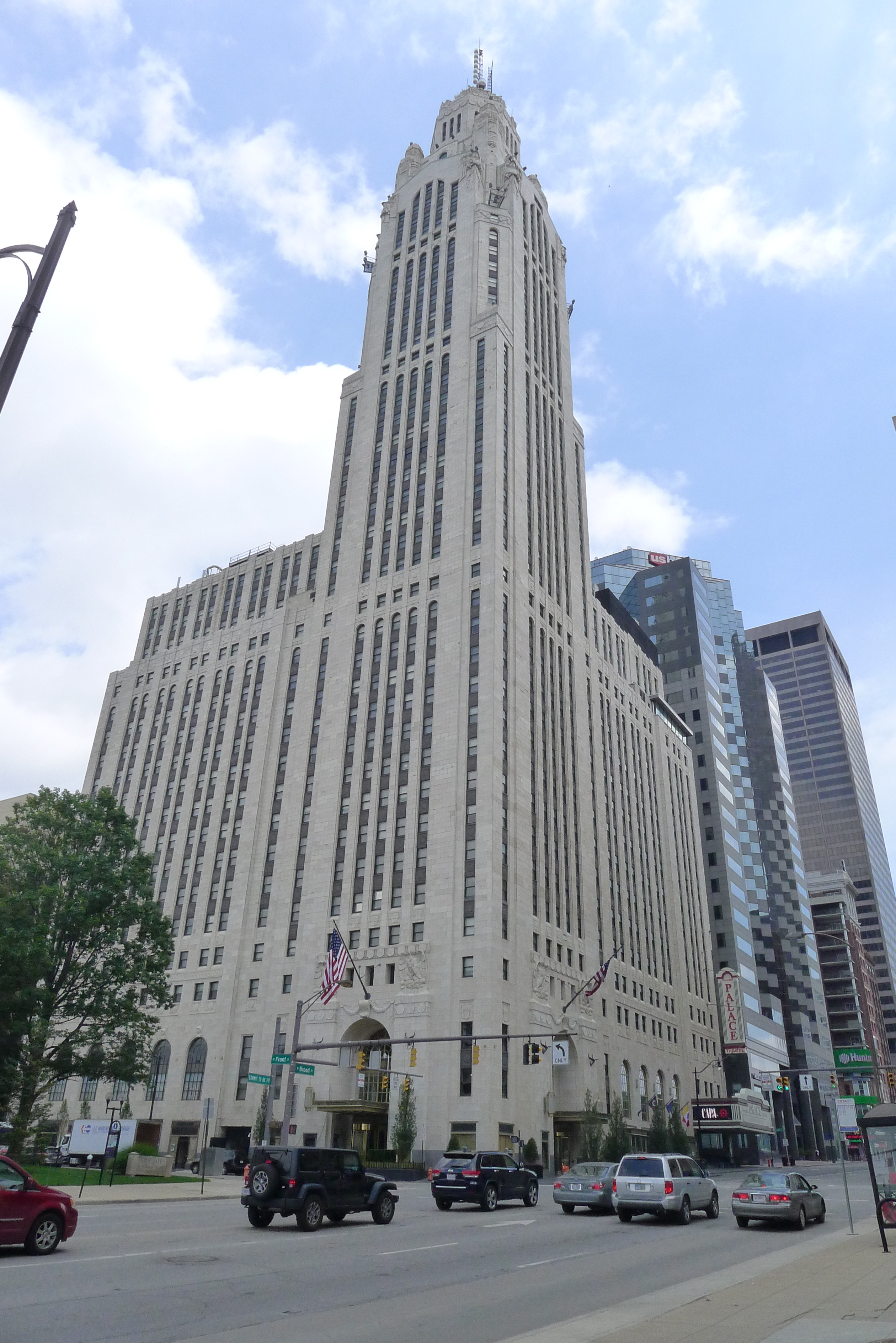
The most striking building on the Columbus skyline is the Leveque Tower, an Art Deco style structure that stands 47 stories and once was the tallest building between New York and Chicago.

P1050106

The Dispatch building, by day.

P1050153

…and by night.

P1050114

The Ohio Statehouse, with its conical roof, which is sometimes likened to a “Chinese hat.”

P1050134

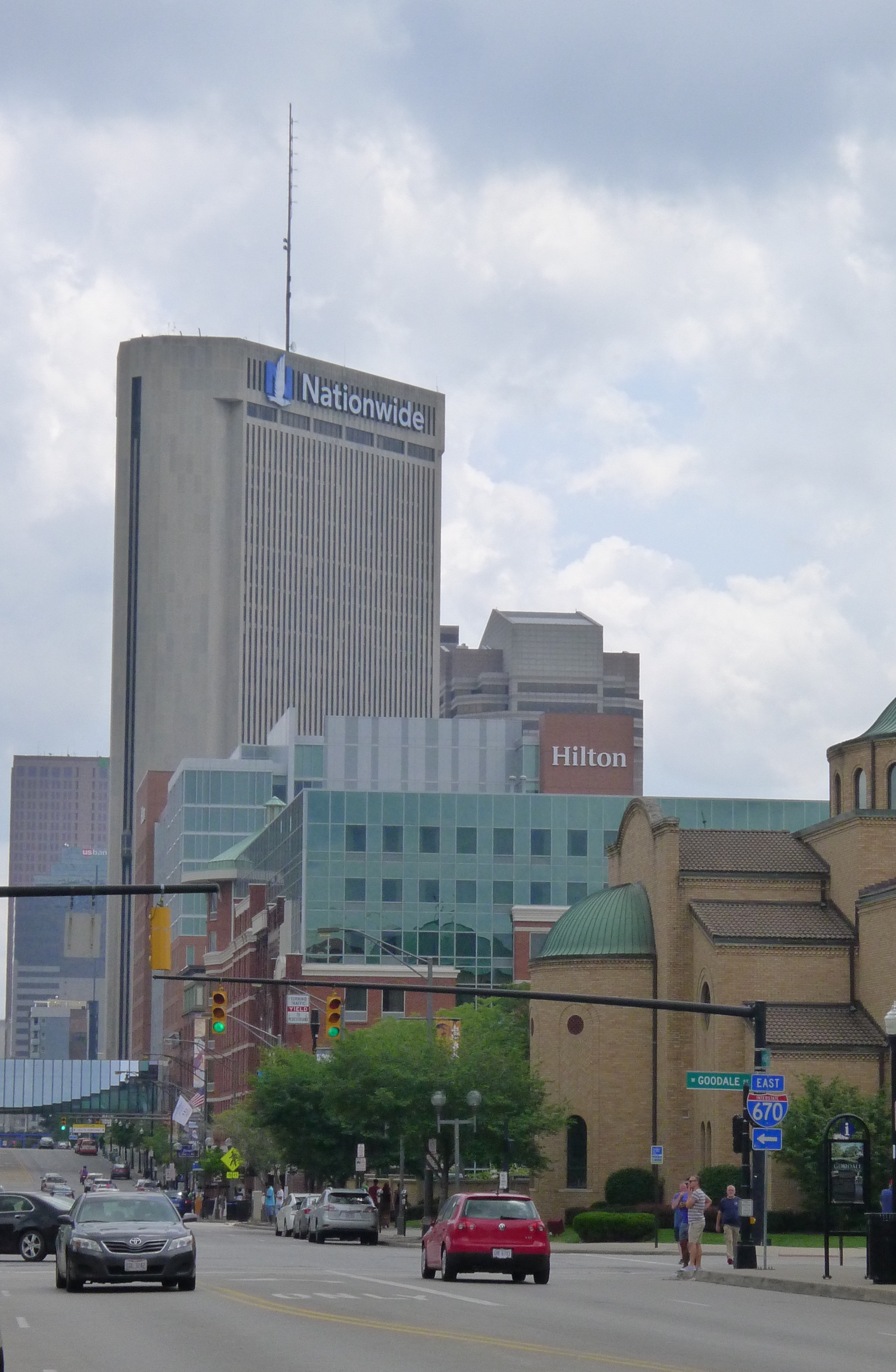
Nationwide insurance dominates the skyline and the town. 

P1050160

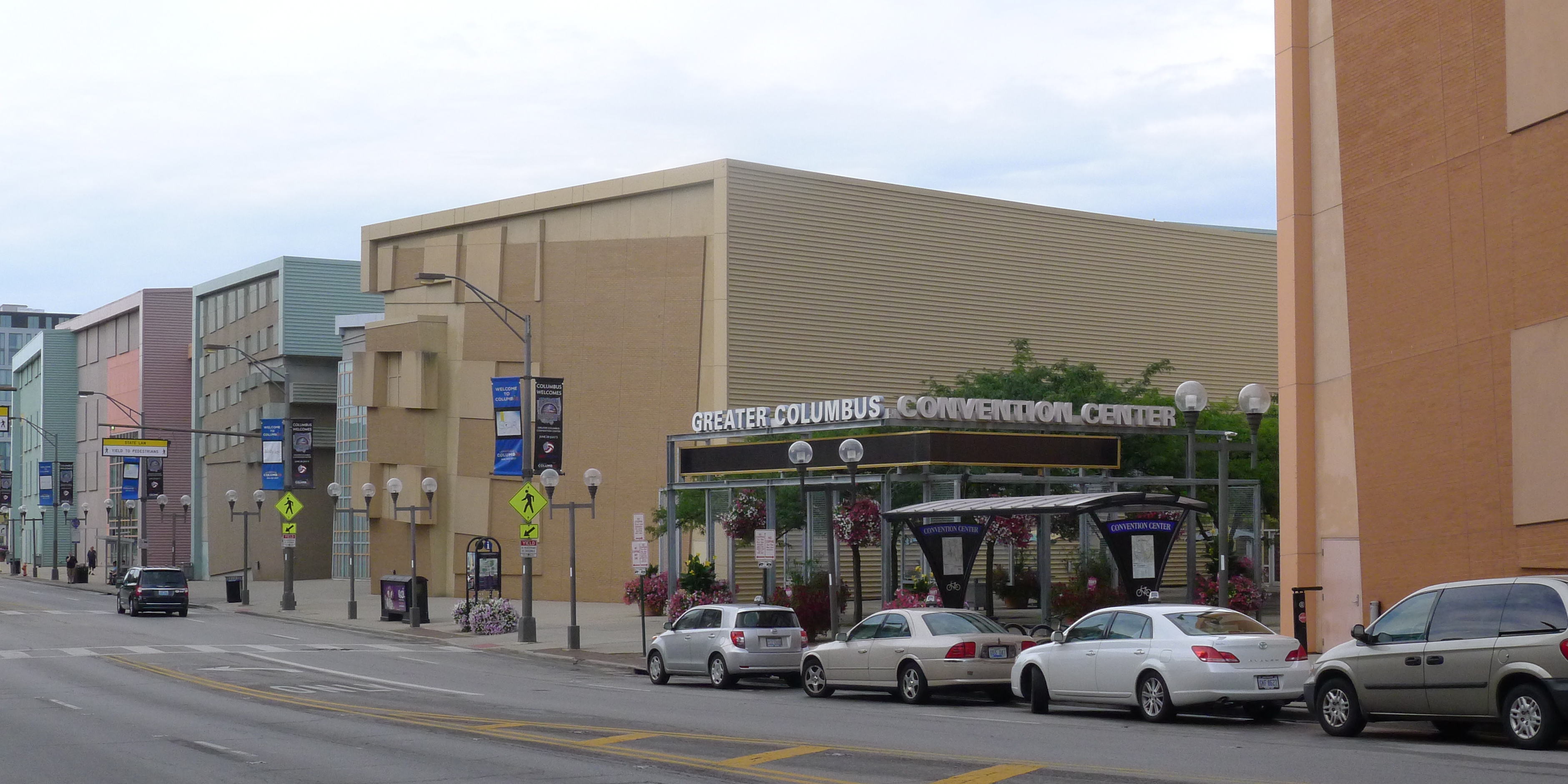
The convention center represents a laudable architectural achievement. From the outside, it looks like a series of buildings — done in pastels — but inside it’s the requisite “big box,” with an expansive exhibition space that can be subdivided.

P1050159

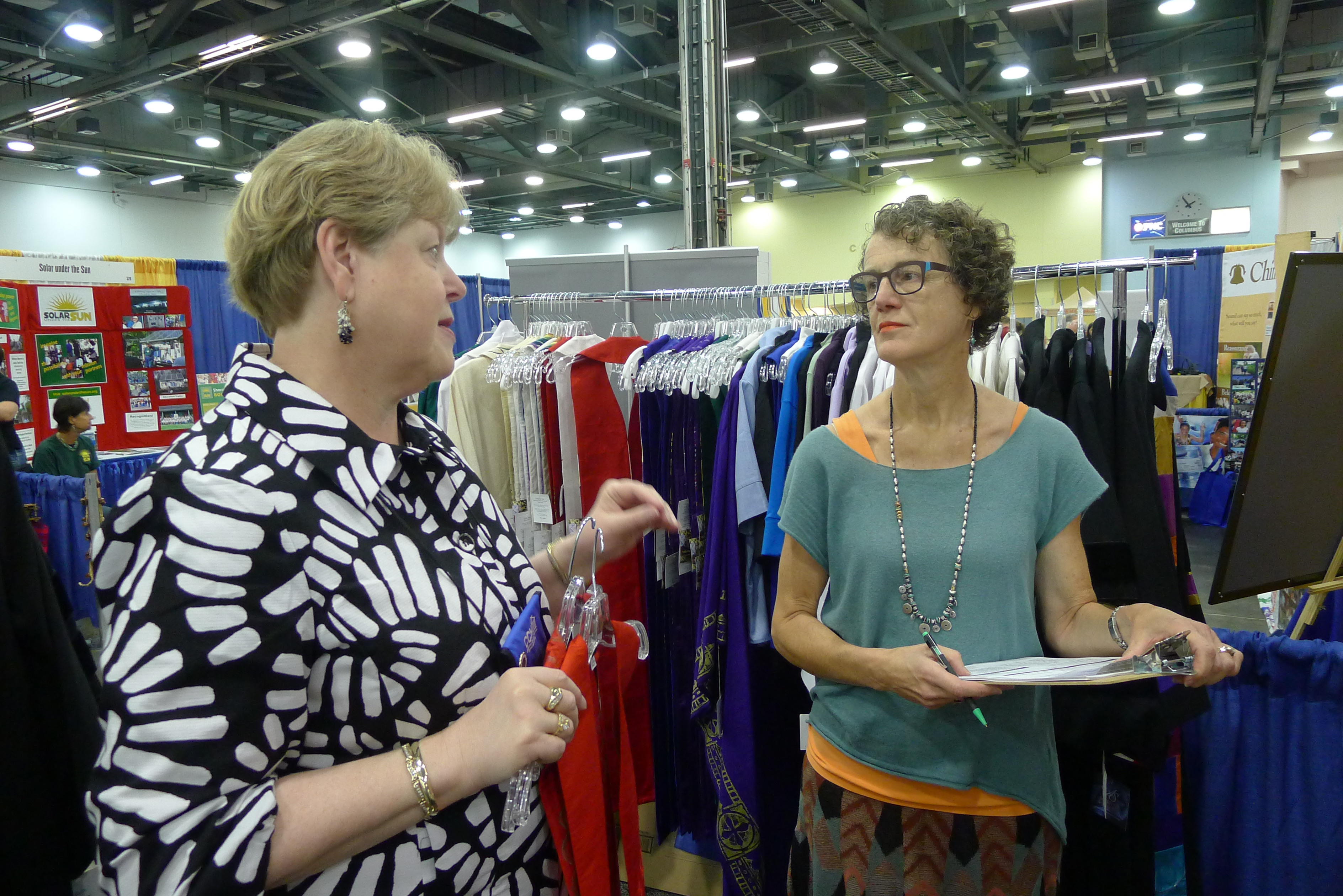
That’s Patty (right) talking to longtime customer Rev. Janet Long of Elyria, OH. At the convention, Janet ordered a red robe for Pentecost. It will be her seventh WomenSpirit robe.

P1050139

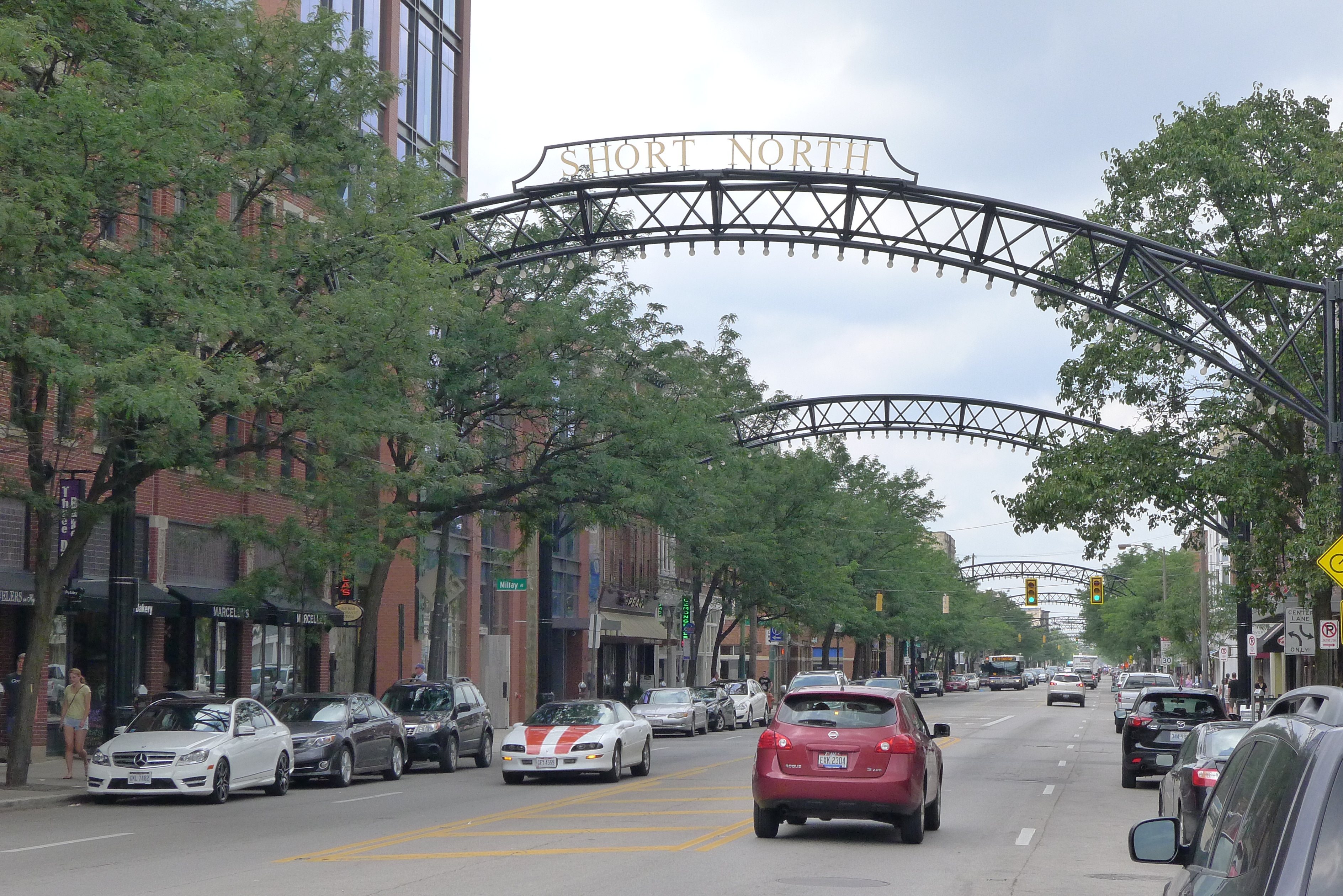
Just north of the convention center is the “Short North” area, distinguished by wrought-iron arches over High Street.

P1050144

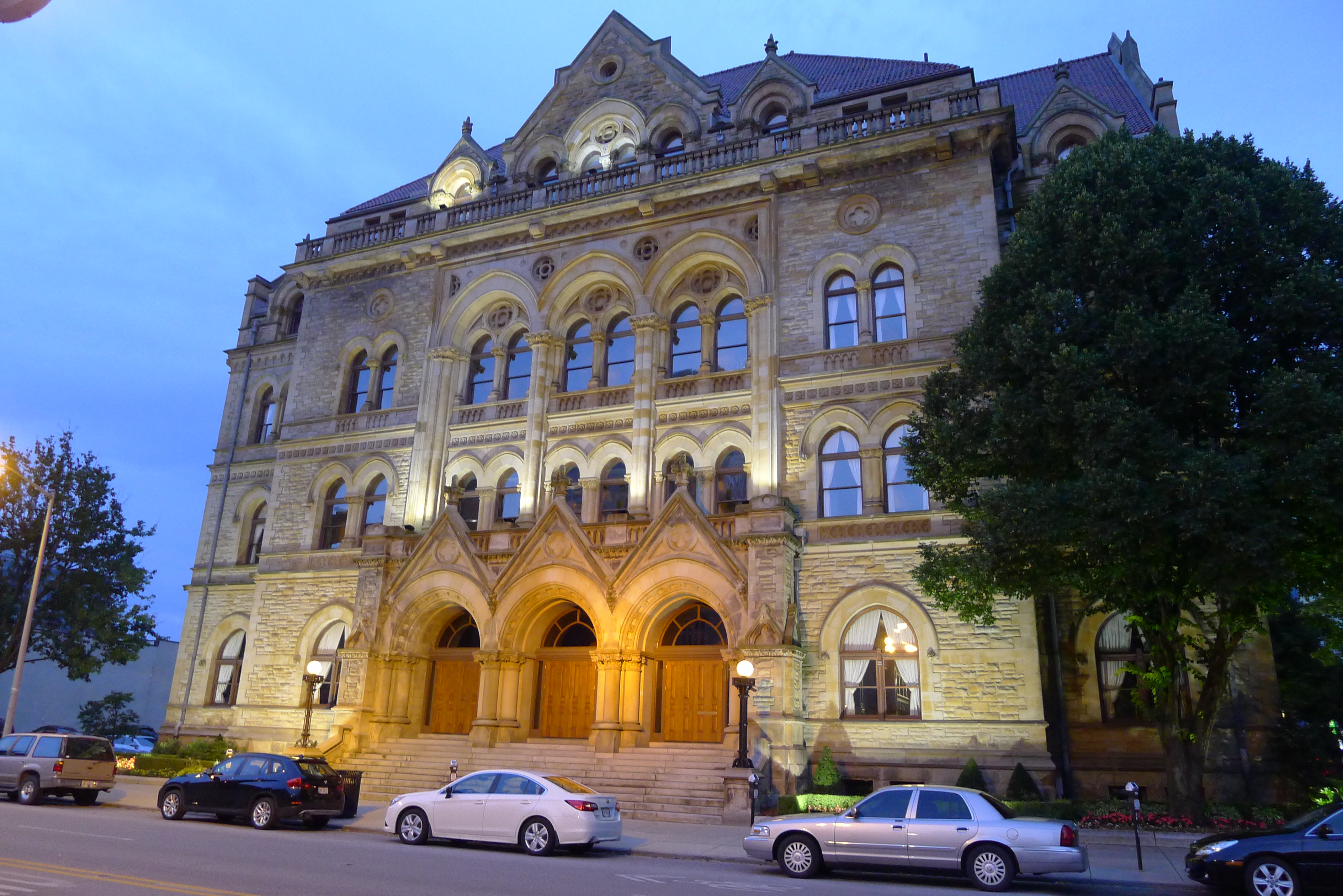
Very near our hotel stands the former federal court building and U.S. Post Office — a “Romanesque Revival” style building, which a law firm has owned and occupied since 1984.

P1050147

I took this photo from our eighth-floor hotel room. The building at the left, with the glowing top, is the Leveque Tower. At center, of course, is the Statehouse.

P1050165

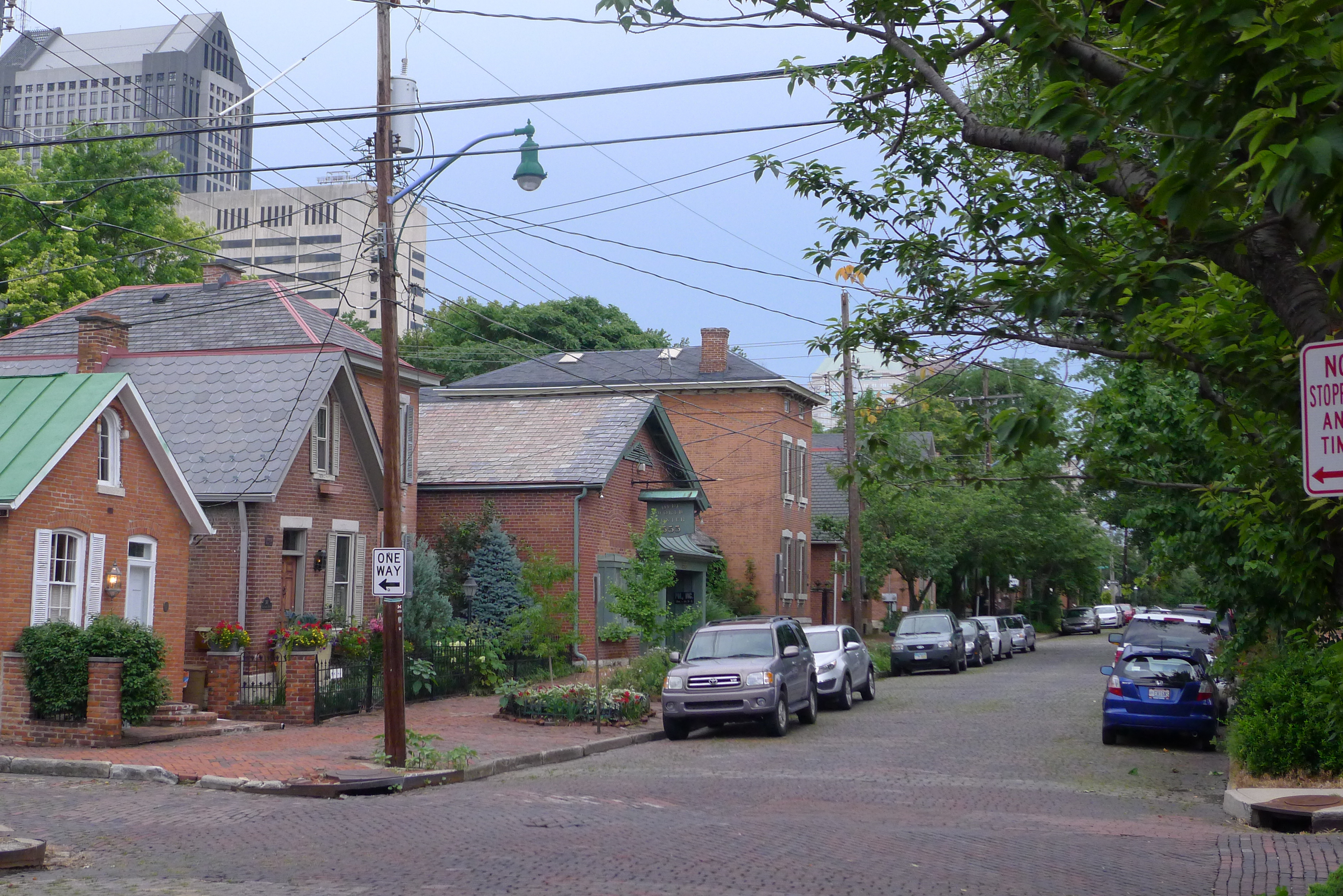
This is German Village, where almost everything is made of brick. (I understand southern Ohio used to be a major brick production center.) German Village is just south of downtown, part of which is visible in the background.

P1050161

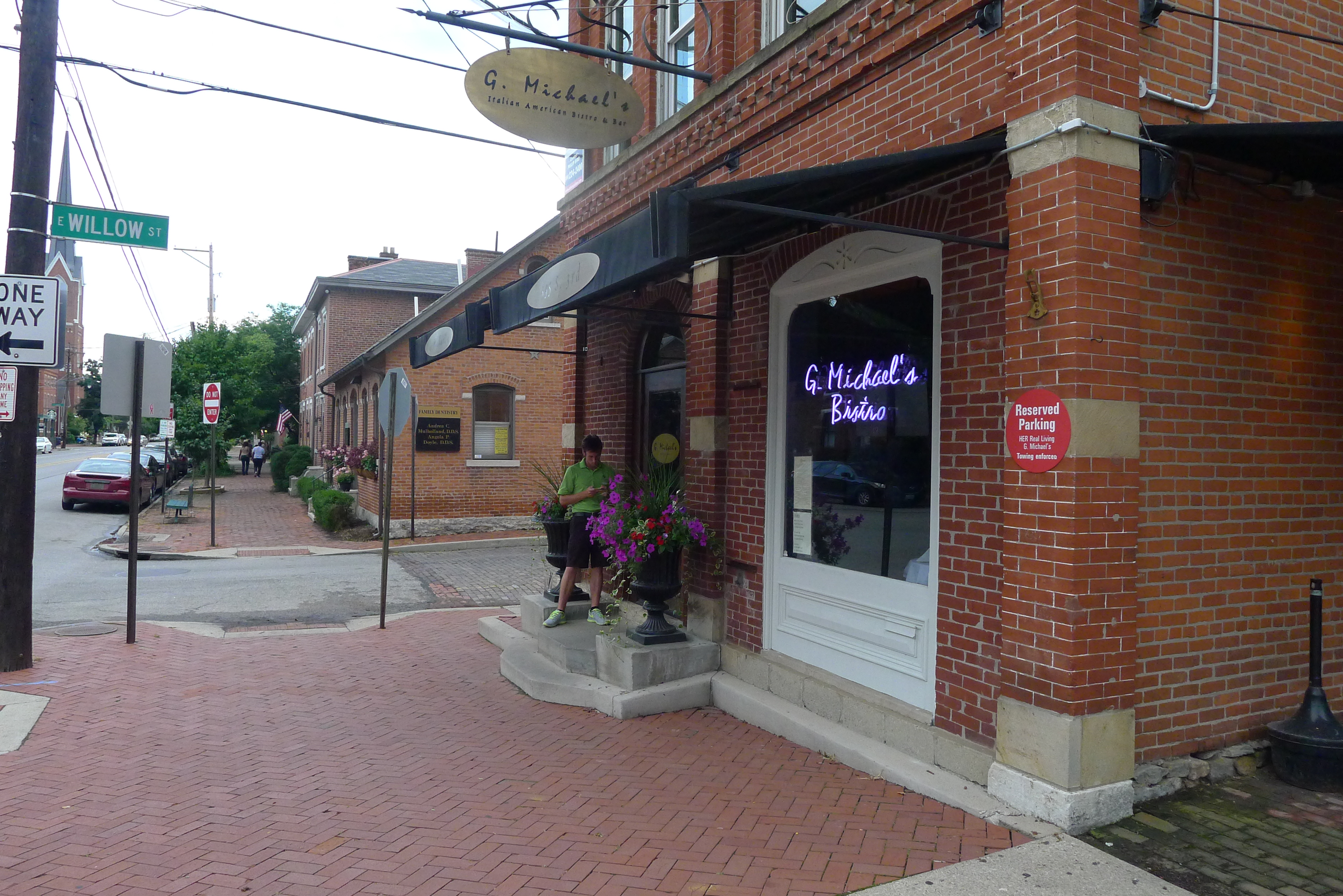
Here’s an excellent German Village restaurant where we ate.

P1050169

Strolling around after dinner, we happened upon this house with an incredible flower garden.

P1050174

We struck up a conversation with the owner, Paul, and he invited us to see his patio garden.

P1050177

A hibiscus flower in full bloom.

P1050182

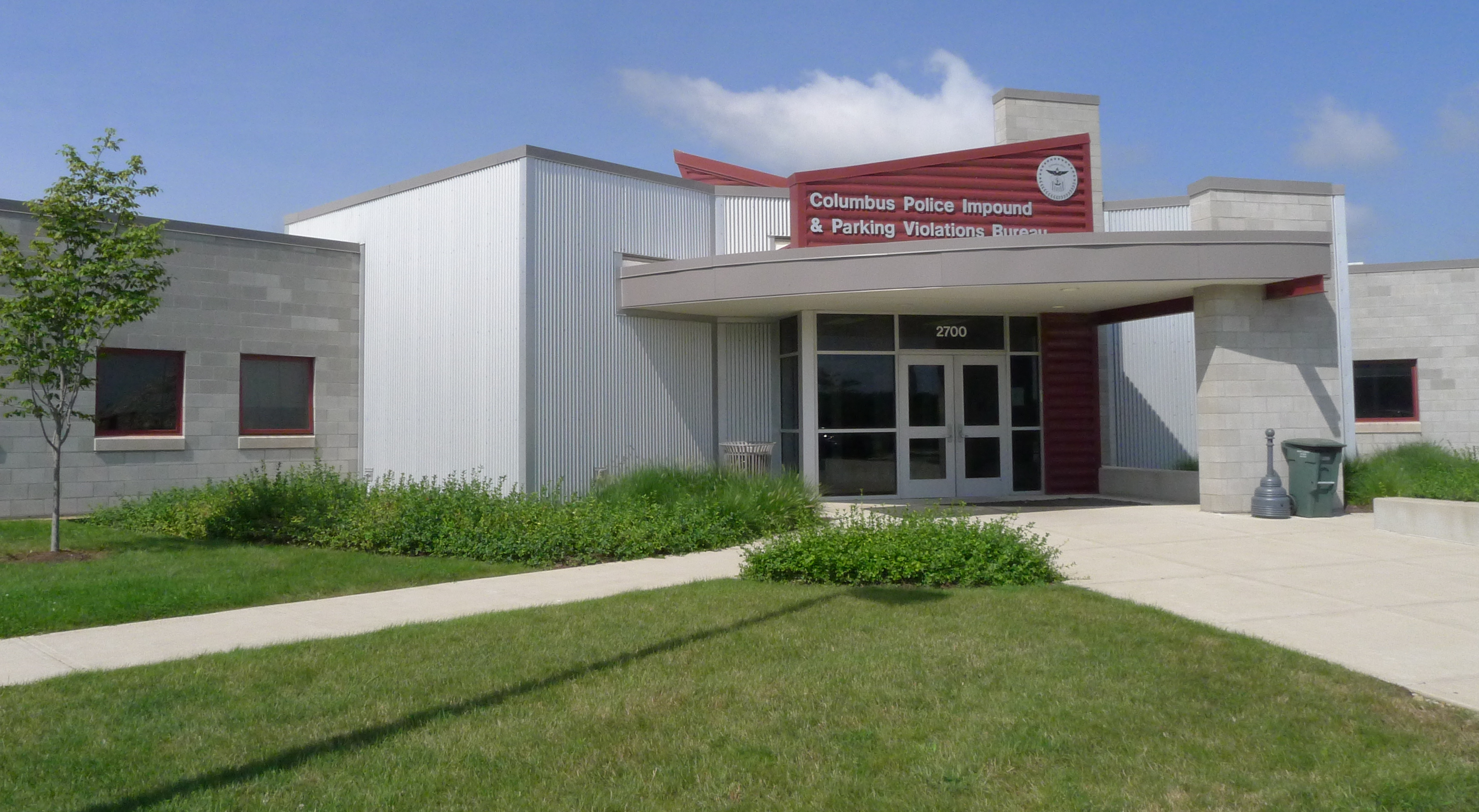
One morning, I feel obliged to report, I had to take an unexpected side trip to the Columbus Police Impound and Parking Violations Bureau.

P1050180

And there’s our rented Mazda CX-5, which got towed from State Street very early Monday morning. Sometimes even editors fail to read the fine print: Parking along that part of State is prohibited between midnight and 6 a.m. Mondays for street sweeping.

P1050189

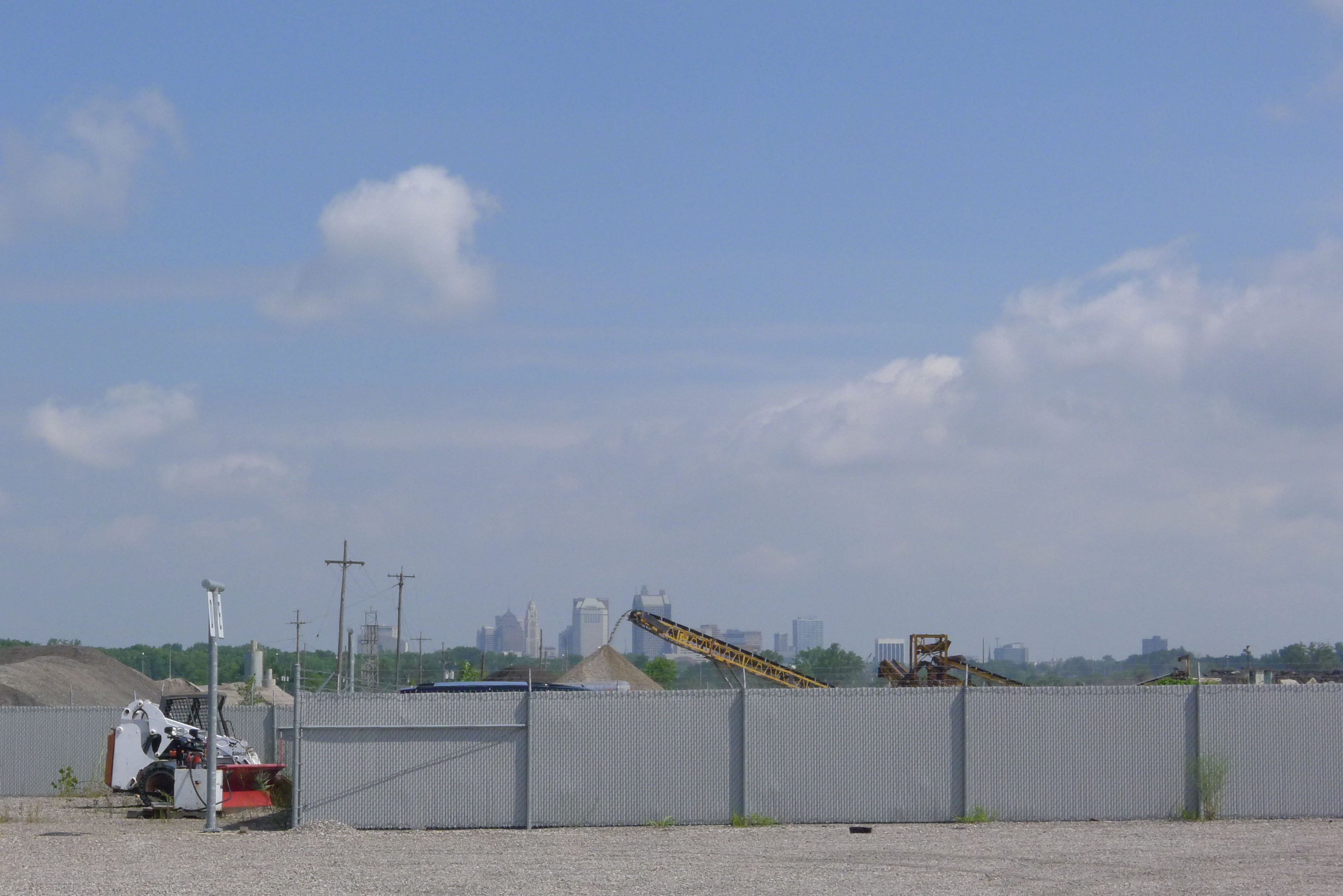
Unexpected side trips often yield unexpected benefits, like this distant view of downtown…with a few minor obstructions. Two-hundred twenty-eight dollars later I was headed back downtown. And they are the friendliest people at the impound center; the clerk even complimented me on my Sam Snead hat!

Gradually and rationally, momentum is building to move ahead with construction of a new, single terminal at Kansas City International Airport.

I didn’t see yesterday’s development coming — and maybe that’s the way city officials wanted it — but for a Southwest Airlines official, as well as an outside consultant, to say publicly that renovating KCI’s existing terminals would cost more than building a new, single terminal is a significant jerk of the needle.

The needle of progress, is what I’m talking about.

I realize a lot of people — thousands and thousands of people — still need to be convinced of the wisdom of a single, modern terminal. But more than ever, I now have real hope that an attitude shift will come.

The Star’s editorial this morning framed the debate perfectly, I thought…

“Kansas City should focus on what it would take to construct a new terminals and, for now, stop looking at major renovations to the current terminals.”

I have been saying this for well over a year now: The current, multi-terminal design, while convenient, is no longer practical and has outlived its usefulness. In addition, as I have said many times — and as is as clear as the realization that the Royals need another starting pitcher — KCI sucks.

The bullpen holding areas…the lack of a common security checkpoint…the dearth of any decent food places (not to mention shopping possibilities)…the dark, depressing environment…It’s a disaster.

And…it’s getting worse by the day. The movement to scrub the multi-terminal design began with the Aviation Department in 2012, and the Aviation Department is still pushing hard for modernization. So, do you think we’ll see the department pouring a lot of money into maintaining and improving what we’ve got now?

By benign neglect, the Aviation Department has the power to make KCI unbearable. I don’t think that will happen, but continued deterioration is what we’re going to get at the 47-year-old airport.

…We’ve seen tremendous improvements and modernization in our city during the last decade. Sprint Center is an unqualified, booming success; the Power & Light District has played a pivotal role in downtown resuscitation; the Kauffman Center for the Performing Arts is a stunning jewel; the Crossroads district is a terrific, southward extension of downtown and a powerful attraction for residents and tourists alike. And if you drive Main Street these days and see those steel rails going down, you can feel in your bones (drive it, you’ll feel it, I guarantee it) that the streetcar is going to be a powerful lure…again, for residents and tourists alike.

In the midst of all that progress, to stand pat with a rundown, pathetic airport is like buying a house and totally renovating it inside but keeping the broken-down furniture and refusing to paint the exterior.

Yes, building a new terminal at the site of Terminal A and razing terminals B and C is an expensive “paint job.” But it needs to happen for Kansas City to continue to call itself a first-class city and for us to remain competitive with cities like St. Louis, Louisville, Tampa and Nashville.

Next year, very likely, we will get a chance to vote on whether to keep Kansas City moving forward or to continue wallowing in the quicksand of “convenience.”

Come on, Kansas Citians, let’s put the broken down Laz-Y-Boy on the curb, hire a good painting crew and finish the makeover of this great place we call home!

They’re late to the party, but several major American newspapers are now putting the pedal to the electronically charged metal.

In recent weeks, at least three papers — The Star, the Wall Street Journal and the Denver Post — have signaled their intentions to accelerate the transition from print to digital and thereby try to reclaim some of the customer loyalty they’ve lost as the Internet left them in the dust.

They’re doing this because they have no choice; it’s change or die. Newspapers have the best news-gathering operations of any media but still have lost much of their former dominance in news dissemination.

…Let me be clear that I am not blaming newspapers for this state of affairs because, like most people in the newspaper industry, I didn’t see the wave coming until well after it had engulfed us.

During the infancy of the Internet, I would have endorsed — and laughed with — Arthur Ochs “Punch” Sulzberger’s dismissive attitude toward the Internet.

In a May 1994 speech he made right here in Kansas City, he said:

“This evening I should like to try out another old-fashioned view. It is my contention that newspapers are here to stay. They are not going the way of the dinosaur – rendered extinct, in this case, by the wonders of a new technology that will speed us down an interactive information superhighway of communications.

“I’ll go one further. I believe that for a long time to come this information superhighway, far from resembling a modern interstate, will more likely approach a roadway in India: chaotic, crowded and swarming with cows. Or, as one might say, udder confusion.”

That was a funny line, but the joke was on Punch and the rest of us old-media sorts who clung to tradition and denied what was unfolding before our eyes.

Finally, though, many newspapers are flying full tilt toward digital — and specifically toward readers using mobile devices.

Here are a few examples:

:: The Kansas City Star is implementing on July 27 a reorganization plan designed to put the digital product on a higher plane than the print edition. In a June 10 memo to the newsroom, editor Mike Fannin wrote: “We all share in the mission of making the transformation to a fully digital newsroom…All of our content will be scheduled on a digital timeline.”

:: The Wall Street Journal recently initiated a paid, digital-style news app called What’s News. The app is named for the news briefs column that has been a fixture on the Journal’s front page. The Journal has also set an ambitious goal of increasing subscriptions — print and digital — from 2.2 million to 3 million by 2017.

:: The New York Times conducted a one-week experiment where it blocked employees inside its Manhattan headquarters from accessing the paper’s homepage on their desktop computers. The point of the experiment, of course, was to highlight the growing importance of mobile.

:: Denver Post editor Greg Moore issued a memo that said: “We need the entire staff more in tune with producing digital content during the work shift. There is no reason that every reporter and photographer can’t contribute daily to our digital effort. The key is time management. And we need to settle on what is a reasonable level of production.” (In other words, like cops on traffic duty, reporters better get ready for quotas.)

**

In addition to its newsroom reorganization, The Star has commissioned a redesign of the print product and digital versions of the paper. I’m not sure when we will see the new layouts, but indications are that The Star will start putting heavier emphasis on fewer stories.

Fannin wrote:

This should be liberating. For years, we’ve focused on generating 18-20 front-page stories every week. It was a good plan, for its time. But even good plans can become formulaic. Going forward, we won’t assign stories to fill holes. We won’t shoot photos to fill holes. We’ll bless assignments based on their journalistic merit — and their ability to drive readership, engagement, credibility and impact.

I wish The Star the best with the new design and the fresh approach to news gathering and story selection. I hope it’s a successful business model and goes over well with readers.

On the other hand, I’ve seen a lot of reorganizations at The Star over the years, and the worst was the last I saw, in 2004, when the newsroom was turned upside down. Of course, it didn’t help that Knight Ridder sold the paper two years later and that two years after that The Star began laying people off…In retrospect, the reorganization was the first domino to fall, and they’ve been toppling ever since.

In addition, Fannin seems to be so preoccupied by digital that he’s no longer thinking in plain English, which is troubling. He ended his memo like this:

“In conclusion, let me add these assurances: This is an iterative plan, we have a great staff, we’ll keep evolving the strategy, and we can do this.”

If I was still an employee, I would feel a lot better about things if I saw that thought phrased like this:

“Let me add these assurances: You are a great staff with the flexibility and skill to pull this off. We’re doing this by trial and error, and we will continue making adjustments until we get satisfactory results.”

But “iterative“? Please, hold the mumbo jumbo.